Author: Mei Ling Tan

  • Samsung beats Apple in brand health rankings

    Samsung beats Apple in brand health rankings

    Google, YouTube and Facebook have topped a first-ever global brand health ranking by YouGov, an online market research firm based in the UK.

    In a list dominated by online brands, Samsung has come in fourth, messaging service WhatsApp is in fifth position, and Apple’s iPhone is in sixth spot. Other brands in the top 10 ranking include brands such as Amazon, Toyota, Adidas and Colgate.

    The rankings are based on YouGov BrandIndex data from across the world. BrandIndex operates in 32 countries across the globe, including markets in North America, South America, Europe, Africa, Asia and Australia.

    The ranking takes into account consumers’ perceptions of a brand’s quality, value, impression, satisfaction, reputation and whether consumers would recommend the brand to others. The rankings list shows the brands with the highest average Index scores between July 1, 2016 and June 30, 2017.

    “Tech brands dominate this global list and with good reason. By their very nature the likes of Google, YouTube and Facebook are open and accessible in most places on earth to anyone with online access,” YouGov CEO for data products Ted Marzilli said.

    “The presence of Samsung and Apple iPhone demonstrate are a sign that our mobile devices have become the remote controls for our lives. All of the brands in the ranking are mainstream with broad utility at their core – and this is as true of the likes of Toyota and Colgate as it is for WhatsApp and Samsung.”

  • Huawei consumer revenue grows 36.2% in 1H17

    Huawei consumer revenue grows 36.2% in 1H17

    Huawei has reported a 36.2% increase in revenue from its consumer business for the first six months of the year on the back of strong smartphone sales.

    Sales revenue increased to 105.4 billion yuan, with smartphone shipments up 20.6% year-on-year to 73 million. IDC estimates that Huawei’s share of the global smartphone market grew to 9.8% during the first quarter.

    In Greater China meanwhile, Huawei grew its shipments by 24% year-on-year to claim 22.1% of the global market, while Canalys recently estimated that the company maintained its lead in the market for the second straight quarter in Q2.

    Huawei also reported growth in APAC markets including Thailand, Malaysia, Japan and South Korea for the period.

    Huawei is accelerating its sales strategy in light of its growing brand presence, revealing plans to increase its global retail network to 56,000 stores worldwide by the end of the year, up from 35,000 in May 2016.

    ABI Research director David McQueen said Huawei’s results “document a company that is outperforming the smartphone market, showing solid growth in shipments and healthy development in its revenues.”

    He said Huawei aims to break 10% global market share for the full year, consolidating its position as the world’s third largest smartphone vendor after Samsung and Apple.

    “The company has managed to achieve this continued growth through a focus on providing advanced, innovative products at the high-end, with its P and Mate series of smartphones to the fore with shipments for the two growing 100% year-on-year,” McQueen said.

    “This high-end mix in its portfolio has also helped drive up average selling prices by 28% year-on-year, and the provision of a premium design and experience has worked to strengthen its brand image and awareness in the consumer market. It is this premium brand image that the company needs to foster as a central tenant if it is to continue with this success as it allows it to command higher prices and create much needed profit in a highly competitive marketplace.”

  • NTT Com launches data network services in India

    NTT Com launches data network services in India

    Japan’s NTT Communications has launched international data network services in India as part of a push to expand its presence in the market.

    The services are being provided through NTT Com’s Indian affiliate NTT Communications India Network Services (NTTCINS).

    NTT Com has also commenced construction of two new data centers in Mumbai and Bangalore through managed hosting and cloud service provider subsidiary Netmagic.

    The $160 million investment will add nearly 500,000 square feet of gross floor space, nearly doubling the company’s data center floorspace footprint in India

    NTT Com likewise acquired a VNO ILD network license in March and has been providing its Arcstar Universal One cloud-based network services as it international network services in partnership with local carriers, using these carriers’ network resources while adding value-added services such as NFV.

    “India has been a key strategic market for us with the accelerating shift of IT services from traditional enterprise data centres into the cloud-based services,” NTT Com President and CEO Tetsuya Shoji said.

    “For the past few years, our business in India has consistently grown over 35% annually. With further expansion of data center foot print and addition of international data network services to our service portfolio, we aim to meet the growing market needs for mobility, e-commerce, IoT, cloud and big data.”

  • Fall in Chinese tourists drags retail-sector sales in Taiwan

    Fall in Chinese tourists drags retail-sector sales in Taiwan

    Revenue generated by Taiwan‘s retail sector fell in the first half due to a fall in the number of Chinese visitors, who tend to buy expensive home appliances or luxury goods, the Ministry of Economic Affairs said.

    The number of Chinese visitors in the past six months fell about 40 percent from the same period last year, which had an adverse effect on local private consumption and retail sales, Department of Statistics Deputy Director-General Wang Shu-chuan said.

    Although the total number of foreign arrivals only fell 5.7 percent year-on-year, meaning that an increase in travelers from other countries offset the decline, they failed to make up for the reduced consumption generated by Chinese visitors, Wang said.

    Retail sales for the first half fell 0.4 percent year-on-year to about NT$2 trillion (US$65.88 billion), the ministry said.

    The local home appliances business sustained the most visible impact, with sales falling by NT$11.9 billion year-on-year for the six-month period, the ministry said.

    Meanwhile, sales generated by the local wholesale sector rose 5.7 percent from a year earlier to NT$851.9 billion last month on the back of strong demand for machinery, communications chips, memory chips and chemical materials, at a time when the global economy has been on the road to recovery, the ministry said.

    In the first half, sales in the wholesale sector rose 5.1 percent from a year earlier to NT$4.79 trillion, while revenue of the local food/beverage sector grew 2.7 percent to NT$224.9 billion.

  • Do Local Merchants Stand A Chance In E-Commerce Wars With Amazon?

    Do Local Merchants Stand A Chance In E-Commerce Wars With Amazon?

    Grocery stores around the country – and all independent brick-and-mortar retailers, for that matter – uttered a collective gulp the day Amazon announced it had acquired Whole Foods for a whopping $13.7 billion dollars.
    Amazon, the Goliath of online shopping and the behemoth responsible for shuttering the doors of retail brick-and-mortar establishments, is getting into the grocery game.

    In the same way bookstores and clothing outlets have been asking themselves how they’re going to survive, now the question is, what does this mean for small, independent grocery stores? And more importantly, how are local companies going to be able to compete with the marketing and distribution channels Amazon has in place?
    It’s no secret that commerce is increasingly living in the digital domain, with rising shares of retail revenue taking place online over time. Businesses have had to fight tooth and nail to be competitive, stand above the crowd, and be successful.

    They need to have an online platform, social media visibility, e-commerce and multi-channel experiences in place in order to thrive in today’s market.
    Some try to build their own internal systems, and others rely on third-party software to integrate with their POS system and handle on-demand customer ordering.

    While many people seem to believe that brick-and-mortar retail will soon be a thing of the past, tech giants like Amazon are proving that is far from true.

    Physical locations will still be part of the business landscape – they just might operate with different purposes.

    For Amazon, Whole Foods won’t just be a stand-alone grocer. It will likely be a powerful distribution medium for other parts of their business, such as AmazonFresh

  • Fiorucci names new design directors

    Fiorucci names new design directors

    Fiorucci has hired Annabelle Lacuna and Max Hörmann, who worked together for four years at Kenzo, to head up its design team, as the Italian brand continues to plans to reboot as a successful fashion brand.

    The Italian label, which rose to fame in the 1970s and 1980s for its leopard print designs and tight jeans, said it has also poached a string of top executives from luxury’s LVMH, Burberry and Michael Kors.

    The first is Priya Downes, previously from Burberry, Chanel and Tommy Hilfiger, wo has been named head of merchandising.

    Next, having worked at Pringle of Scotland, Kilgour and Jonathan Saunders, Antonio Guerra has been given role the product development manager.

    Moreover, John Spriggs, is Fiorucci’s director of wholesale – Spriggs was formerly director of sales for accessories at Michael Kors, while the new finance and operations director Frankie Herbert had previously spent six years at LVMH.

    All four will report to co-chief executive officers Stephen and Janie Schaffer – founders of Britain’s Knickerbox retail in the Eighties — who bought Fiorucci in 2015.

    The news comes as Fiorucci plans to open a new flagship store in London’s Soho in October this year, with another store due for New York in 2018.  Asia stores could be on the cards, but nothing has been confirmed.

    The brand was founded by Elio Fiorucci in Milan in 1967. Today, it boasts several major stockists including Barneys New York and Opening Ceremony, 10 Corso Como in Milan and Selfridges in London. It is also operating a pop-up online shop at Fiorucci.com.

  • Starbucks to buy out Chinese venture in its biggest deal yet

    Starbucks to buy out Chinese venture in its biggest deal yet

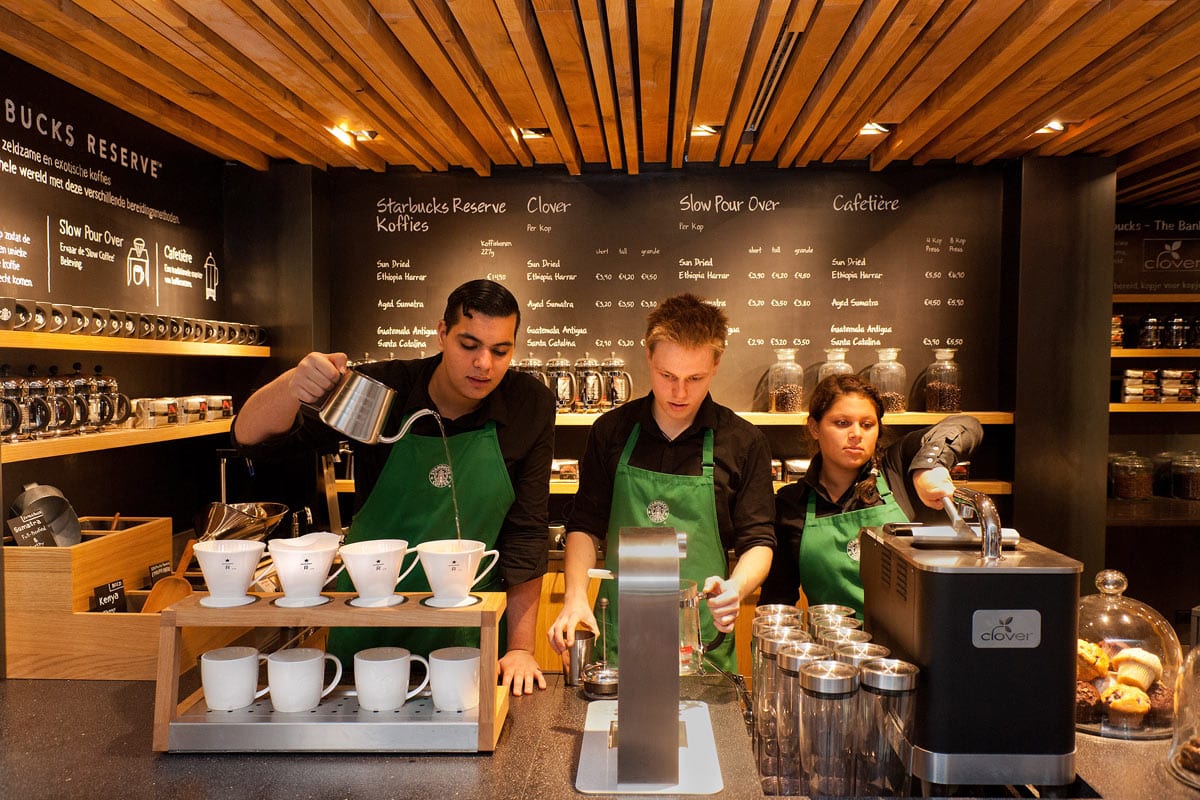
    Starbucks is buying the rest of its East China joint venture in a $1.3 billion transaction, marking the biggest deal ever for a company that sees China as a huge growth opportunity.

    The Seattle-based coffee chain will acquire the remaining 50 percent of the business from partners President Chain Store Corp. and Uni-President Enterprises Corp. Starbucks also is divesting its 50 percent stake in a separate joint venture in Taiwan, according to a statement on July 27th.

    The move underscores Starbucks’ bet that China will be one of the company’s top sales drivers in coming years. It’s wagering that the nation’s growing middle class and urbanization will give it a huge population of potential coffee drinkers to tap.

    The deal mirrors the company’s strategy in Japan, where Starbucks entered the country with a joint venture, spent time learning the local market and then brought the business back in house, said Jennifer Bartashus, an analyst at Bloomberg Intelligence. In 2014, Starbucks agreed to buy out its Japanese joint venture with Sazaby League and other partners for about $913.5 million.

    “With the level of expectations they have for China, it isn’t really a surprise that they want to exert as much control over the stores as possible,” Bartashus said.

    Starbucks shares gained as much as 1.9 percent at $59.03 in New York on July 27th. The stock had climbed 4.4 percent this year through the close of trading on July 26th.

    Expansion Plan

    Starbucks plans to operate 5,000 cafes in mainland China by 2021, a goal it reaffirmed on July 27th. The company currently has 2,800 locations there.

    The deal gives Starbucks 100 percent ownership of about 1,300 cafes in Shanghai and the Jiangsu and Zhejiang provinces. In the Taiwanese transaction, its partners will acquire Starbucks operations in the territory for about $175 million. The Starbucks business there, which was founded in 1997, has about 410 cafes.

    “Unifying the Starbucks business under a full company-operated structure in China reinforces our commitment to the market and is a firm demonstration of our confidence in the current local leadership team,” Chief Executive Officer Kevin Johnson said in the statement.

    The status of Taiwan is a sensitive political issue in China. The Chinese government considers Taiwan a renegade province. The decision to sell the business there was about allowing its partners to “maximize the opportunities” for the brand in Taiwan, according to a spokeswoman for Starbucks.

    Dunkin’ Forays

    Dunkin’ Donuts Inc., a major Starbucks rival in the U.S., has a much smaller presence in China. The chain failed in two previous attempts to crack the Chinese market, but is now working with two franchisees there and has 34 stores, including 16 in Beijing. Dunkin plans to grow to 1,400 location in the world’s most populous country over the next 20 years.

    Chinese consumers still drink a relatively small amount of coffee, but the category is growing fast and could eventually surpass tea, according to Dunkin’ CEO Nigel Travis.

    China is the fastest-growing market outside the U.S. for Starbucks. With full control of the local operations, Starbucks can enhance the coffee and in-store experience, said its China CEO, Belinda Wong. It also plans to rely more on technology in the country. Starbucks’ mobile-ordering app has been key to locking in customers in the U.S.

    The deal is another sign that Starbucks views China as key to its future and can’t let execution slip there, said Jack Russo, an analyst at Edward Jones.

    “Asia is incredibly important for them — there’s no mistaking that,” he said.

  • Boots to open the largest flagship store in Myeongdong

    Boots to open the largest flagship store in Myeongdong

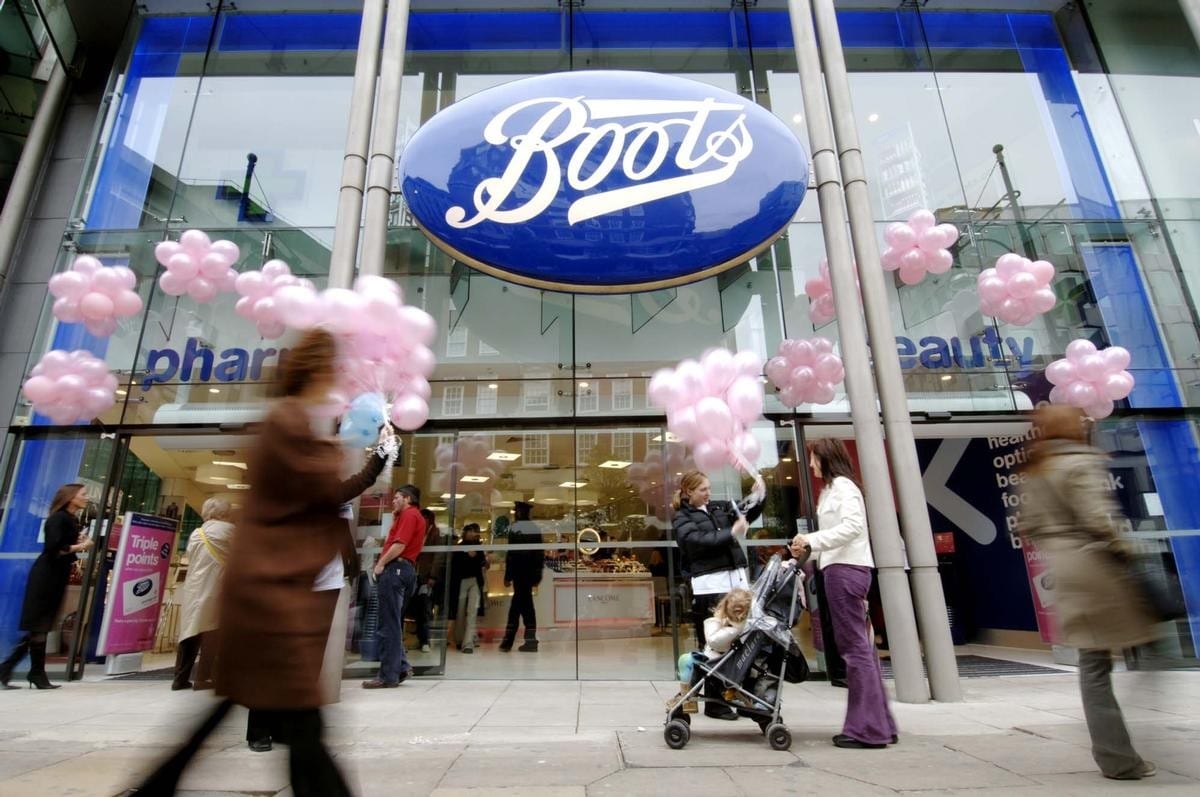
    E-Mart opened its booth flagship store in Shinhan Financial Center building in Myeongdong on July 28. Boots is the UK’s no.1 drugstore brand, with more than 13,300 stores in 11 countries around the world.

    The booth store is the largest of domestic H & B stores with a size of 1284 square meters (about 388 pyeong). The store consists of four floors ranging from floors 1 to 4 on the ground. Currently, only three floors are partially open.

    The first to third floors are operated as H & B sales spaces. The 4th floor plans to create a K-pop studio and a cafe. Considering the characteristics of Myeong-dong commercial area, many foreign tourists will be able to buy products related to Korean entertainers and it will be opened at the end of next month.

    The first floor is composed of color cosmetics brands such as Mac, Shuuemura, and Benefit. On the second floor are hair and body care products such as Aveda and Renefurterer, and on the third floor are skin and health care brands such as Biotherm, Darphin and Dermalogica.

    Each floor sells its own brand of boots (PL) products for each Kategori such as No. 7 and Soap & Glory. This large boots store was located on where is only 50 meter away from the Olive Young Myeongdong store, which is the largest store.

    In Myeong-dong, where there is much demand for tourists, it is anticipated that Korean version of H & B Olive Young and Boots, with high recognition by foreigners will fight a fierce battle. Especially, it is easy to compare merchandising and price while shops are located side by side.

    Olive Young is the number one player in the market with annual sales of KRW 1.127 trillion as of last year. There are more than 800 stores nationwide. Boots opened Starfield Hanam in May, and it also introduced a small store at express terminal.

    The number of stores nationwide is three including Myungdong-dong, which opened this time.

  • Cebu Pacific launches new flights from Davao

    Cebu Pacific launches new flights from Davao

    Davao is now more connected within domestic destinations as Cebu Pacific Air (CEB) launched on Thursday, July 27, at the Marco Polo Hotel Davao two more flights between Davao and the cities of Dumaguete and Tacloban harnessing over 10 million-strong combined market.

    The airline, starting last Wednesday, July 26, is now flying three times a week (Monday, Wednesday, and Friday) between Davao and Dumaguete and four times a week (Tuesday, Thursday, Saturday, and Sunday) from Davao to Tacloban and vice versa starting Thursday, July 27. Department of Tourism assistant secretary Eden Josephine Davaid, in a statement, said with over eight million tourist arrivals in Mindanao, and Western and Central Visayas key areas (Dumaguete and Tacloban) one million combined tourist arrivals, the new connections will serve over 10 million tourists, both domestic and foreign. “Plus we add Cebu cities and provinces 700,000 tourists and Masbate’s 250,000-strong tourist arrivals, endless opportunities await with this newly-launched route,” David said.

    CEB corporate communications director Charo Lagamon said with the new routes, Davao’s position as one of the airline’s hubs in Mindanao is strengthened. Representing Davao City Mayor Sara Duterte-Carpio, Councilor Danilo Dayanghirang said these direct flights answer the market’s growing need for inter-island connectivity. The routes, he said, is reflective of the competitiveness and reliability of CEB. “It will not only increase tourists and trade among three cities, it will make the residents closer with each other,” Dayanghirang said quoting Duterte-Carpio. Davao City Tourism Operations Officer head Generose Tecson said the launching of new routes are a welcome development for all three cities.

    “It opens more avenues for business and tourism arrivals, for Davao most especially. Being the gateway in Southern Mindanao, everyone going around has to touch base with our city first,” Tecson said. Dumaguete City Mayor Felipe Antonio Remollo, for his part said, the city tourism offices of the cities will work closely to promote tourism in each city, thus, inviting more tourists.

    “To cater the growing number of tourists, we will continue to encourage investors to put up hotels, convention centers to accommodate the people,” Remollo said adding Dumaguete has a bed capacity of over 5,000 rooms. He added that with the air link between Davao and Dumaguete, connectivity between Mindanao and Siquijor will be enhanced. The flights will be carried by the Cebgo fleet of ATR aircraft. Aside from the direct Davao flights, CEB also launched flights between Cebu and Masbate, Zamboanga and Cotabato, and Cagayan de Oro and Zamboanga. Dayanghirang, however, asked the airline to push more routes to and from Davao.

    One of the routes pushed is the Davao-Bohol air link. “We hope to launch more routes to and from Davao City,” Lagamon said. Go Hotels, a sister company of CEB also operates in Dumaguete, Tacloban. Davao City as Mindanao hub Lagamon reported that for 21 years, CEB have a seamless network (direct and connecting flights) linking Davao to six hubs, 37 domestic destinations and 26 international routes. “We are launching 894 flights per week to and from Mindanao,” she said. This year, Lagamon said, CEB targets to serve 20 million passengers. For the first quarter of this year, a total of 4.8 million passengers were already served by the airline amounting to P6.8 billion revenue, 55 percent of the total revenue are from domestic market share.

  • AirAsia offering up to 45% discount in latest campaign

    AirAsia offering up to 45% discount in latest campaign

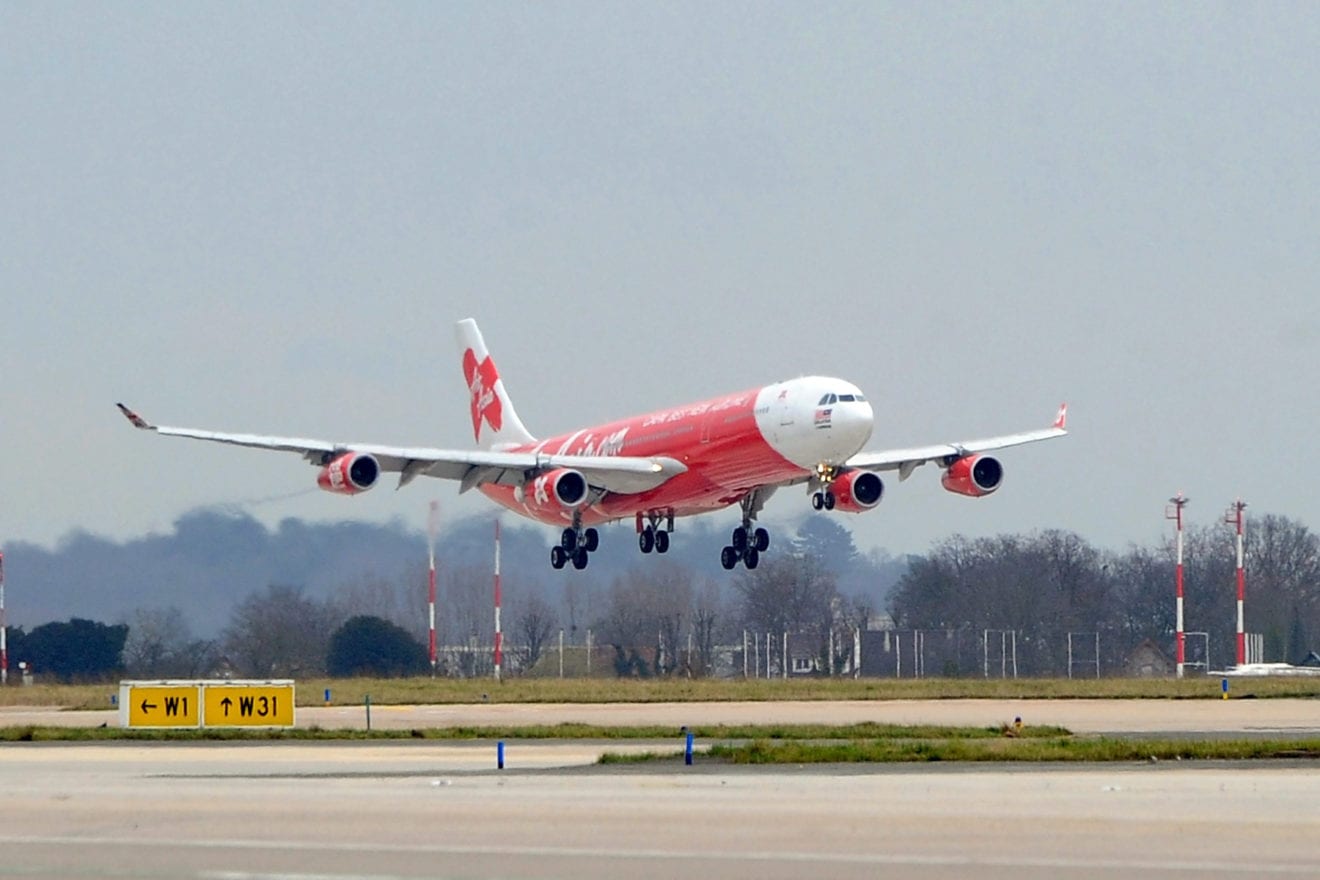
    AirAsia is offering discounts of up to 45% on local and international flights in its latest campaign – Buy More, Save More.

    From today until Aug 6, travellers can get 15% off flight bookings for one passenger, 25% off for two passengers, 35% off for three passengers and 45% off for four or more passengers on the same booking.

    Travellers can also get a 20% discount via a Fly-Thru flight booking or opt for the AirAsia X Premium Flatbed.

    The promotion is available for travel between Feb 26 and Aug 28, 2018.

    “This promo has something for everyone. Whether you prefer to travel alone or with your family or friends, we will get you to the destination for less,” said AirAsia group chief commercial officer Siegtraund Teh.

    The low-cost carrier flies to more than 120 destinations across Asia, Australia and New Zealand, the Middle East and the United States.

  • Samsung to heat up Vietnamese logistics market

    Samsung to heat up Vietnamese logistics market

    By teaming up with  MP Logistics, South Korean enterprise Samsung not only demonstrated its interest in the Vietnamese logistics sector, but its participation also heats up the market.

    On July 14, 2017, Samsung SDS, a subsidiary of Samsung Group, established a joint venture with MP Logistics with the aim of expanding its logistics business in Vietnam. The cooperation with MP Logistics is expected to help Samsung’s information and technology (IT) and logistics services access to the Vietnamese cargo transportation industry.

    “The logistics market in Vietnam has an annual growth rate of about 15-20 per cent due to the promotion of free trade agreements with South Korea, China, Japan, and the European Union (EU),” a leader of Samsung SDS said.

    Samsung SDS expected that this cooperation would expand its business in the Vietnamese IT-based logistics market, as well as other transportation services for consumer goods and food.

    “This new joint venture will give us the motivation to expand our business in the Vietnamese logistics market,” Kim Hyung-tae, vice chairman of Samsung SDS’s Smart Logistics Business Unit, said.

    The cooperation with MP Logistics is considered Samsung’s next step in the Vietnamese logistics market, because previously in 2016, Samsung SDS had established another joint venture with Aviation Logistics Corporation (ALS), one of the leading aviation logistics service providers in Vietnam. With this new joint venture, Samsung now has the right to manage the cargo terminals in Noi Bai International Airport.

    Thanks to the right to manage activities in this big airport, Samsung can ensure its delivery deadlines, gradually complete its supply chain, and cut down on expenses. Noi Bai is an important gateway to deliver Samsung exports from Samsung’s two Vietnamese complexes in the northern provinces of Bac Ninh and Thai Nguyen.

    Regarding MP Logistics, it is now one of the biggest providers of logistics services in air and ocean freight, warehousing, distribution, project cargo, and inland transportation in Vietnam. Its founder cum CEO, Dang Thi Minh Phuong, was highly complimented as the “Queen of Logistics” in Vietnam. Thus, teaming up with MP Logistics may be the best way for Samsung to join the domestic logistics market.

    Competition heating up

    In any economy, logistics always plays an important role. In Vietnam, the economic development has led to the expansion of the logistics market. According to statistics from Vietnam Logistics Association (VLA), there are over 1,300 logistics enterprises operating in the country, including foreign-invested enterprises. Logistics services in Vietnam currently have a value of $20-22 billion per year, accounting for about 20.9 per cent of the country’s GDP.

    As reported by newswire Enternews, due to the expansion of the logistics market, many foreign-invested enterprises have expanded their businesses in Vietnam, such as DHL Global, Maersk Logistics (Denmark), APL Logistics (Japan), Nippon Express (Japan), and Kerry Logistics (Hong Kong). Foreign-invested enterprises may dominate the segment of international deliveries, but Vietnamese enterprises still hold most of the domestic deliveries market share.

    “Currently, most domestic logistics services, including trucking transportation, cargo terminals, and seaports, are provided mainly by domestic enterprises,” Nguyen Tuong, deputy chairman of VLA said.

    However, the situation may change and many overseas logistics enterprises have entered Vietnam to gain more market share in this sector. Besides Samsung, previously, DHL Global and Kerry Logistics also established logistics joint ventures in Vietnam to develop their businesses. In addition, some Japanese enterprises, such as Yusen Logistics and Logitem, have also been present for a long time.

    In May 2017, Korea Economic Daily of South Korea reported that TaeKwang Industrial Co., Ltd., a South Korean enterprise in the textile and petrochemical industries, had expressed interest in holding a stake in Gemadept Corporation, one of the leading Vietnamese companies in its core business sectors, including port operation and logistics.

    If domestic logistics enterprises keep their old strategies without providing any new services, they may lose significant market share to foreign investors when the logistics industry in Vietnam sees a boom in the coming period.
  • Banks apply free on-net money withdrawal, account transfer

    Banks apply free on-net money withdrawal, account transfer

    Despite being allowed to charge on-net fees for automatic telling machine (ATM) transactions, some commercial banks have recently applied the exemption to on-net money withdrawal and account transfer to attract new customers and develop the retail banking segment.

    Platinum debit cards, while Viet Capital Bank and SCB have exempt money withdrawal fee for international and domestic debit cards.

    The exemption of money withdrawal fee at all ATMs nationwide is also being offered by other banks such as TPBank and BaoVietbank.

    Talking about the move, Viet Capital Bank said free money withdrawal via ATM will encourage people to make non-cash payments. This policy is being implemented with great support from banks.

    A representative from another bank said State Bank of Việt Nam approved commercial banks to charge on-net fees for ATM transaction since March 2013 to offset the cost of purchasing machines and periodic maintenance, however, some banks are now willing to offset the losses to increase customers.

    According to the representative, the bank having cardholders still has to pay VNĐ3,300 to their partner for each external money withdrawal. Therefore, ATM operations of the bank have never been profitable.

    Industry insiders admitted that ATM card service companies often incur losses because an ATM costs tens of thousands of US dollars besides large annual maintenance fees. In addition, the cost of renting sites to install ATMs is becoming more and more expensive. Interest from non-term deposits of ATM cardholders therefore is not enough to offset the costs.

    To offset the costs, the money withdrawal fee charged at other banks averages VNĐ1,000-3,000 per transaction and the fee for inter-bank money transfer is VNĐ11,000.

    According to banking experts, the fee exemption policy at some banks is within the banks’ retail banking development plan, and is also a way for banks develop individual customers as well as products and services for the customers.

    This is also the premise based on which banks can promote other products and services, such as Mobile Banking and Internet Banking, they said.

    The country currently has more than 17,000 ATMs nationwide.

  • Eric Zhao on leveraging technology for JD.com

    Eric Zhao on leveraging technology for JD.com

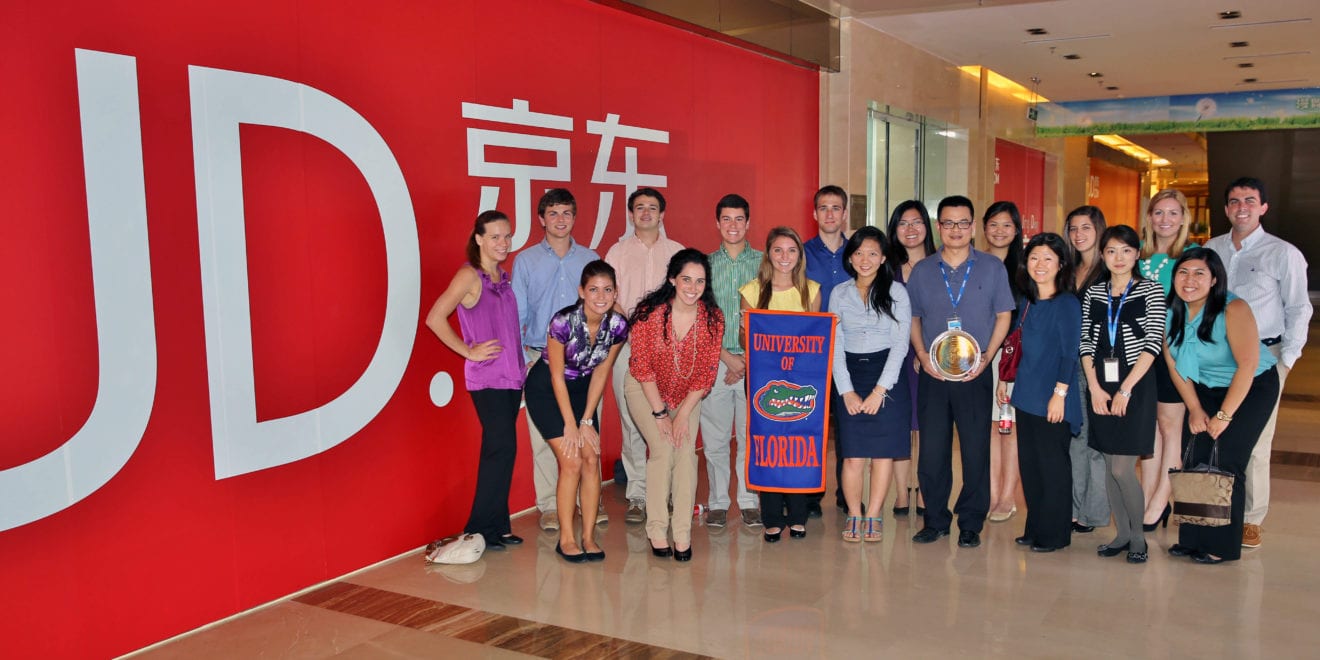
    Chinese e-commerce giant JD.com keeps racing its competitor Alibaba by evolving and being innovative. Both players are likely to increase their revenues for the next quarter. JD.com is today the largest retailer in China, counting US$37.5 billion net revenues in 2016, more than 122,000 employees and 7 fulfilment centres and 263 warehouses covering 2,672 counties and districts across China by March 31, 2017.

    Eric Zhao explains that JD.com is using big data and Artificial Intelligence (AI) algorithms to better understand its customers, to improve its systems and apply personalized search. Indeed, the customer’s online search is unique. Almost every page on their website is personalized depending on the user’s interests.

    JD.com is also leveraging the technology in other areas. First, with the supply chain management, they combine AI algorithms and big data in order to decide how to price the products.

    Then, with the logistics networks, they have started a drone program and are in the middle of building a complete solution to reach their goal of improving the efficiency of the company’s logistics network. Light, short-range drones are already being used to make deliveries in rural areas, and the company is now working on developing larger, heavy-load drones that can carry more than a ton. These would be used to transport high-quality products to remote areas and agricultural produce to cities.

    Artificial Intelligence technologies are used by JD.com to optimize its network efficiency. Using predictive logistics, for example, the company can anticipate what consumers want before they even place their orders and can dispatch goods to the nearest delivery station so that when consumers do place their order they can get their products soon afterwards.

    The consumer habits and needs are actually the biggest challenge for JD.com because they keep changing. JD.com needs to predict the user behaviour and the shifting demand to face the competition as well as to stand as the leader of the e-commerce industry.

  • DHL warns of supply chain talent shortage crisis

    DHL warns of supply chain talent shortage crisis

    DHL called upon industry leaders to recognize the growing talent gap crisis in the supply chain sector. The U.S. Bureau of Labor Statistics reports that jobs in logistics are estimated to grow by 26 percent between 2010 and 2020. Furthermore, one global study estimated that demand for supply chain professionals exceeds supply by a ratio of 6:1, with some predicting that ratio could be as drastic as 9:1.

    DHL surveyed more than 350 supply chain and operations professionals in five global regions. The findings revealed that there are a number of reasons contributing to the talent shortage crisis in a rapidly evolving field. The report ‘The Supply Chain Talent Shortage: From Gap to Crisis’ was commissioned by DHL and authored by Lisa Harrington, president of the lharrington group LLC. The report highlights the key supply chain talent challenges experienced today, and identifies opportunities for businesses to compete on a global stage.

    Harrington said, “Leading companies understand that their supply chains – and the people who run them – are essential to their ability to grow profitably. However, the task of finding people with the right skillsets required to run these highly complex operations is increasingly difficult – especially at the middle- and upper management levels. Unless companies solve this problem, it could threaten their very ability to compete on the global stage.”

    The survey revealed the top factors driving the talent shortage:
    – Changing skill requirements: Today, the ideal employee has both tactical/operational expertise and professional competencies such as analytical skills. 58 percent of companies say this combination is hard to find. But tomorrow’s talent must also excel at leadership, strategic thinking, innovation, and high-level analytic and technological capabilities.
    – Aging workforce: As much as a third of the current workforce is at or beyond the retirement age.
    – Lack of development: One third of companies surveyed have taken no steps to create or feed their future talent pipeline.
    – Perception that supply chain jobs lack excitement: The industry is still contending with the impression that other fields are more prestigious and offer more opportunities, fuelling lack of interest in the industry within the world’s future workforce.

    Harrington continues, “Companies are now recognizing that sourcing strategy has a large impact on their bottom line and ability to remain competitive. As one study recently found, companies that excel in talent management increased their revenues 2.2 times as fast and their profits 1.5 times as fast compared to ‘talent laggards.’ That’s a powerful advantage.

    Unfortunately, recruiting the right talent – especially at the critical mid-level and senior management levels – is proving very difficult in today’s environment. New technologies and fundamental areas of the supply chain have changed, meaning they now require that a person has a different and much larger skillset than required when most of the current workforce began their careers.”

    The report outlines numerous opportunities for the industry to start closing this talent gap. Offering clearer career paths and a visible commitment to the professional development of its supply chain staff combined with competitive remuneration packages are just a few ways to develop and retain their current talent. To attract talent, the industry needs to start emphasizing that the future workforce will need to have skills in robotic management, AI and AV control – job aspects that would be attractive to the younger demographic and help combat the negative perception of the sector.

    Louise Gennis, vice president talent management/acquisition, learning & development, DHL Supply Chain, said, “We recommend that companies start with prioritizing the development of their current talent pool to adapt to the changing job requirements through training programs, and then retaining staff through clear career paths. We strive to combat misconceptions surrounding working in the supply chain through highlighting the technological developments which are digitalizing the industry and that are attractive to younger demographics.”

    Gennis cites the success of DHL’s diverse recruitment and development initiatives as evidence that a long-term, well-informed talent management strategy can help businesses mitigate the potentially devastating effects of a shrinking talent pool. “The supply chain talent shortage is now critical enough that it’s on the minds of supply chain managers across all industries, but the gap didn’t develop overnight. Since supply chain solutions are our business, we’ve seen the issue developing over many years – and have used this time to adjust our approach toward attracting, developing and retaining talent accordingly. Our unique expertise helps ensure that job openings are filled by qualified experts wherever we and our customers operate, which will become an increasingly critical success factor as talent resources grow scarcer.”

  • Germany recalls Porsche Cayenne models over emissions software

    Germany recalls Porsche Cayenne models over emissions software

    German Transport Minister Alexander Dobrindt on Thursday announced a recall of Porsche Cayenne models equipped with 3-litre diesel engines after finding potentially illegal emissions controlling software in the vehicles.

    Dobrindt told he was withdrawing certification for the vehicles, which will need to undergo a software update.

    Sports car maker Porsche AG is owned by Volkswagen, which in 2015 admitted to systematic manipulation of engine management software to cheat emissions tests.

    Porsche on Thursday said it had discovered “irregular” engine management software during an internal probe into emissions. Porsche also said it had agreed to recall the vehicles to fix the problem.

    “The producer will of course bear 100 percent of the costs,” Dobrindt said. “There is no explanation why this software was in this vehicle,” Dobrindt said.

    The minister said: “We have examined Porsche Cayenne vehicles of the 3 liter TDI Euro 6 Mark – during tests these vehicles deploy a so-called defense strategy, which isn’t activated in real traffic.”

    “In our view that is a kind of test recognition, which we regard as an impermissible deactivation strategy.”

    “Even if there is a modern exhaust gas cleaning system in these vehicles, if this software is nonetheless there it is illegal, does not meet the legal requirements and needs to be removed,” Dobrindt said.

    He also said that Porsche would quickly be in a position to bring the software into conformity with the law.

    Dobrindt also said there were some 7,500 vehicles of this type certified in Germany and some 22,000 certified in Europe. “We don’t know how many are with dealers. These are the cars that fall under the certification ban.”

    The Porsche Cayenne model shares components with a sister model, the Volkswagen Touareg.

    Asked about Volkswagen’s Touareg model, Dobrindt said: “On the technical question, it is assumed that this vehicle has a similar parameter set but identical construction does not mean that the same software was used in it but it is assumed that the same software was used.”

    He said the Transport Ministry was, however, checking that and a hearing with Volkswagen would show whether that was the case or not, adding: “The probability is high.”

    Volkswagen CFO Frank Witter had no immediate comment about the Porsche recall on a VW earnings call also held on Thursday.

    Stuttgart prosecutors have been investigating Porsche AG after some models were fitted with 3 liter diesel engines supplied by Audi.

    Audi, another premium brand owned by Volkswagen is also being probed by prosecutors in Munich who are separately investigating Audi about its role in designing the 3 liter diesel engine.