Author: Mei Ling Tan

  • Vietnam, India work to adjust back-to-back bans on commodity imports

    Vietnam, India work to adjust back-to-back bans on commodity imports

    Vietnam has requested the Indian government to abolish a ban on the import of its six commodities, including coffee and pepper, the Vietnamese government said in a Friday statement.

    India may have agreed with the request and will remove restrictions against the Vietnamese goods in question, the Saigon Times quoted a Vietnamese pepper industry official Saturday as saying, a development could not immediately verify independently.

    India imposed the ban against six commodities from Vietnam, which also included cinnamon, bamboo, cassia and dragon fruit, effective from March 7 after Vietnam’s agriculture ministry had ruled to suspend the import of India’s five agricultural commodities for 60 days starting March 1, citing the infection of peanut beetle.

    Vietnam’s Industry and Trade Ministry, in an official letter, told India to uphold international practice -= referring to the ban, the government statement said, adding that it had Thursday asked the Vietnam embassy in India to deliver the letter.

    The letter also urged India to “soon abolish the suspension of the import”, the government statement said.

    India has agreed to remove the suspension against several items, the Saigon Times quoted Nguyen Mai Oanh, deputy chairwoman of the Vietnam Pepper Association, as saying late Friday.

    “India will abolish the suspension order on the import of agro-products from Vietnam”, after Vietnam’s agriculture ministry officials met Thursday with the Indian embassy in Hanoi, she was quoted as saying.

    In return, Vietnam will adjust its decision on the suspension of five commodities from India and resume their import, Oanh said in the report.

    India’s ban has delayed several shipments of Vietnamese coffee and pushed down pepper prices on Vietnam’s domestic markets in recent days, traders and industry officials say. Vietnam is the world’s largest exporter of robusta coffee and black pepper.

    The country’s coffee export volume on March 1-15 fell 10 percent from the same period last year to 81,000 tons, based on Vietnam Customs’ data released Friday.

    Traders in Vietnam said if the situation is prolonged, Indian roasters would have had to buy their raw material from African nations.

    While domestic pepper prices have eased, due in part also to the ongoing harvest, Vietnam has shipped 13,600 tons of the spice in the first half of March to various destinations, up 31 percent from a year ago, based on customs data.

    Last year India, the third-biggest buyer of Vietnamese pepper after the United States and the United Arab Emirates, imported 11,100 tons of the spice, up 37 percent from 2015, the customs data showed.

  • Apple China investing in research hubs

    Apple China investing in research hubs

    Apple China plans to set up two more research hubs and boost investment there.

    The announcement comes as CEO Tim Cook takes his latest trip to Apple’s single biggest overseas market. He is expected to be present at the opening of a new Apple store at Jinmao Place in Nanjing this Saturday, March 25.

    Apple HK

    Apple says it plans to build research hubs in the eastern cities of Shanghai and Suzhou, on top of centres already slated for Beijing and the southern city of Shenzhen. It has also pledged to spend at least US$507 million on research institutions.

    All four centres will open thisyear with the aim of enabling co-operation with local partners and attracting talent.

    Meanwhile, Cook has addressed an economic forum in Beijing attended by senior government officials and leaders of corporations such as Royal Dutch Shell and Saudi Arabian Oil.

    For the first time, iPhone shipments to China fell last year. This followed years of China driving Apple’s growth, even as smartphone demand elsewhere faltered. Now, local vendors like Huawei Technologies, Oppo and Vivo are eroding its market share.

  • Vietnam’s coffee prices hit highest since late 2011 on lack of good beans

    Vietnam’s coffee prices hit highest since late 2011 on lack of good beans

    Vietnam’s domestic coffee prices edged up this week to the highest since late 2011 on a shortage of beans qualified for exports as the harvest has been hit by rain, traders said.

    Unseasonal rain from October to December last year in the Central Highlands coffee belt delayed the 2016/2017 crop harvest, resulting in more black and broken beans, with one exporter saying quality was at its worst since 2008. The rainy season normally ends in early October in Vietnam, the world’s top robusta producer and exporter.

    Prices rose to a range of VND46,700-47,300 ($2.05-2.08) per kilogram of robusta on Monday in Dak Lak Province, Vietnam’s largest coffee growing area, from VND46,500-47,100 last Friday when May robusta futures ended nearly unchanged at $2,184 per ton on London’s market. Vietnamese coffee prices closely follow London’s futures.

    At VND47,300 per kg, prices are the highest since the week ending September 16, 2011 when the beans stood at VND47,400. The bitter beans are used mostly for making instant coffee.

    “Nobody is selling, and the raw material is too bad for processing, while there is a lack of export-standard coffee,” said a Vietnamese dealer in Buon Ma Thuot, the capital of Dak Lak. The province produces one third of Vietnam’s total coffee.

    Without using the color sorting machine, the black and broken bean ratio reached 7-8 percent, he said, well above the export standard that requires the defect rate to be at only 5 percent. The dealer declined to be identified by name, but his company has a factory in Dak Lak for processing and exporting robusta beans.

    The shortage of export-standard beans has emerged earlier than expected.

    Last week Do Ha Nam, general director of Intimex, Vietnam’s largest coffee export firm, said that Vietnam could fall short of beans in May or June due to rising shipments and dwindling domestic stocks.

    On the other hand, the price hike shows India’s ban on the import of Vietnamese coffee in place since March 7 has little impact on Vietnam’s market. India often buys Vietnamese robusta grade 3, with 25 percent black and broken beans.

    “India has stopped its import, thus raising the volume of Vietnam’s low-quality coffee,” the Dak Lak-based dealer said, referring to India’s ban, which also targets pepper and four other commodities from Vietnam.

    India’s ban was issued after Vietnam had ruled to suspend the import of India’s five commodities for 60 days starting March 1, citing the infection of peanut beetle.

    Businesses in both countries have opposed the restrictions, saying the import right should be brought back to avoid negative impact on prices, while cargoes infected by insects should undergo fumigation as usual.

    Last Friday the Vietnamese government said it had requested the Indian government to abolish the ban.

    A Vietnam Pepper Association official was quoted by a local newspaper as saying amendments to the restrictions would be made after officials from Vietnam’s agriculture ministry met with the Indian embassy in Hanoi last Thursday to tackle the issue.

    The low-quality coffee beans are estimated to account for 20-30 percent of Vietnam’s output in the 2016/2017 harvest that ended in January, well above the ratio of 1-13 percent observed in previous years, the Dak Lak-based dealer said.

    “Rain during the harvest has caused early flowering, and which could result in multiple stages of harvesting as cherries will ripe at different time,” he said.

  • Uniqlo targets Zara in faster fashion move

    Uniqlo targets Zara in faster fashion move

    From fast fashion to faster fashion: speed is seen as the key by Uniqlo owner Fast Retailing in its bid to outrace apparel powerhouse Zara.

    Uniqlo founder Tadashi Yanai says Fast Retailing plans to shorten the time it takes from design to delivery to about 13 days, roughly the same as Zara, owned by clothes retailer Inditex.

    He says the company’s new design and delivery centre in Tokyo will also help Uniqlo expand direct-to-consumer, custom-clothing sales and improve the efficiency of its same-day delivery in the city.
    “We need to be fast,” he says. “We need to deliver products customers want quickly.”

    Japan’s biggest clothing retailer aims to increase total revenue by nearly 70 per cent to ¥3 trillion (US$26 billion) in the fiscal year ending August 2021. While that may still not be enough to overtake Inditex, which reported sales of $25 billion last year, Yanai says Fast Retailing’s focus on clothes that meet consumers’ daily needs will help propel its growth.

    “Zara sells fashion rather than catering to customers’ needs,” he says. “We will sell products that are rooted in people’s day-to-day lives, and we do so based on what we hear from customers.”

    Overseas markets, notably in Asia, will grow to contribute about two-thirds of Fast Retailing’s revenue in the next four years, up from about half currently. Uniqlo will open 100 stores in China and another 100 in Southeast Asia annually, says Yanai.

    Concentration for speed

    The company’s new complex, in the Ariake district along Tokyo’s waterfront, houses more than 1000 employees, including designers and marketing teams, and also has a warehouse and delivery department. Yanai says that concentrating resources into one location will help speed processes.

    “The ability to provide anybody, anywhere, anytime with the ultimate, high-quality day-to-day clothing will set us apart,” he says. “We want to deliver products that customers want quickly. That’s why it’s Fast Retailing.”

    After revenue growth of more than 20 per cent for three straight years, Uniqlo sales took a hit in the latest fiscal year. The growth rate slowed to 6 per cent after the brand raised prices because of higher raw-material costs.

    Following the slowdown, the company did a U-turn on its pricing strategy, saying it was committed to delivering the lowest price possible. However, it had to roll back its 2021 revenue target to ¥3 trillion from ¥5 trillion.

  • Tissot Japan plans to double outlets

    Tissot Japan plans to double outlets

    Tissot Japan plans to almost double its stores to 300 locations over the next few years.

    The Swiss watchmaker says its aim is to broaden its brand recognition in one of its most important markets.

    Part of the Swatch Group, Tissot has its products in about 170 stores in Japan, and intends to increase that to about 220 locations this year. As well as department stores and watch stores, it is considering sales at boutiques as well.

    In July, Tissot opened its first street-level store in Japan, in Osaka. In the medium term, it is considering opening one in Tokyo as well.

    Swatch also owns other brands, such as luxury watchmaker Omega.

  • Skin care brand Mamonde opens Lazada online store

    Skin care brand Mamonde opens Lazada online store

    Korean beauty products brand Mamonde has launched an e-commerce site on Lazada to introduce its skincare and makeup products into Singapore.

    Mamonde’s USP is using flower extracts in its products. Camellia, hibiscus, honeysuckle, lotus and magnolia blooms are hand-picked and frozen or heat dried, with the active ingredients then being extracted.

    There are plans to also open a physical store in Singapore eventually, says Amorepacific, which also owns the brands Etude House, Innisfree, Laneige and Sulwhasoo.

    “Launching digitally first in Singapore was a deliberate move that allows us to observe consumer purchasing habits before scaling up operations in the market,” says Amorepacific Asean regional head Robin Na.

    “While the beauty industry in Singapore is mature, we believe that consumers there are still hungry for new brands.”

  • Shopify revenues grow 90 per cent

    Shopify revenues grow 90 per cent

    Shopify, the cloud-based, multi-channel platform designed for small and medium-sized businesses, has reported a 90 per cent increase in revenues for 2016.

    GMV rose 99 per cent to US$15.4 billion, figures which “speak to the enormous opportunity in retail right now and our strategic position within it,” according to CFO Russ Jones.

    Total revenue for the full year reached $389.3 million, compared with $205.2 million in 2015. Within this, subscription solutions revenue grew 68 per cent to $188.6 million and merchant solutions revenue grew 115 per cent to $200.7 million.

    But it still recorded a net loss of $35.4 million, almost double the $18.8 million of 2015.

    Merchants can use Shopify software to design, set up, and manage their stores across multiple sales channels, including web, mobile, social media, marketplaces and physical retail locations. Shopify powers 377,500 merchants in some 175 countries. Its clients include Tesla, Nestle, GE, Red Bull and Kylie Cosmetics.

    “Our work at Shopify is to help entrepreneurs thrive in a space that’s changing all the time, and we did our job especially well this past holiday season,” stated Tobi Lütke, founder and CEO of Shopify. “That eight of our 10 top sellers over the Black Friday Cyber Monday weekend were merchants that had upgraded from lower-priced plans reminds us that today’s startups become tomorrow’s superstars, at a velocity that appears to be increasing all the time. As the engine powering the growth of these merchants, Shopify has an opportunity that stretches years into the future.”

    For the full year 2017, Shopify currently expects revenues in the range of $580 million to $600 million and an operating loss in the range of $73 million to $77 million.

  • Apple India opens franchise stores

    Apple India opens franchise stores

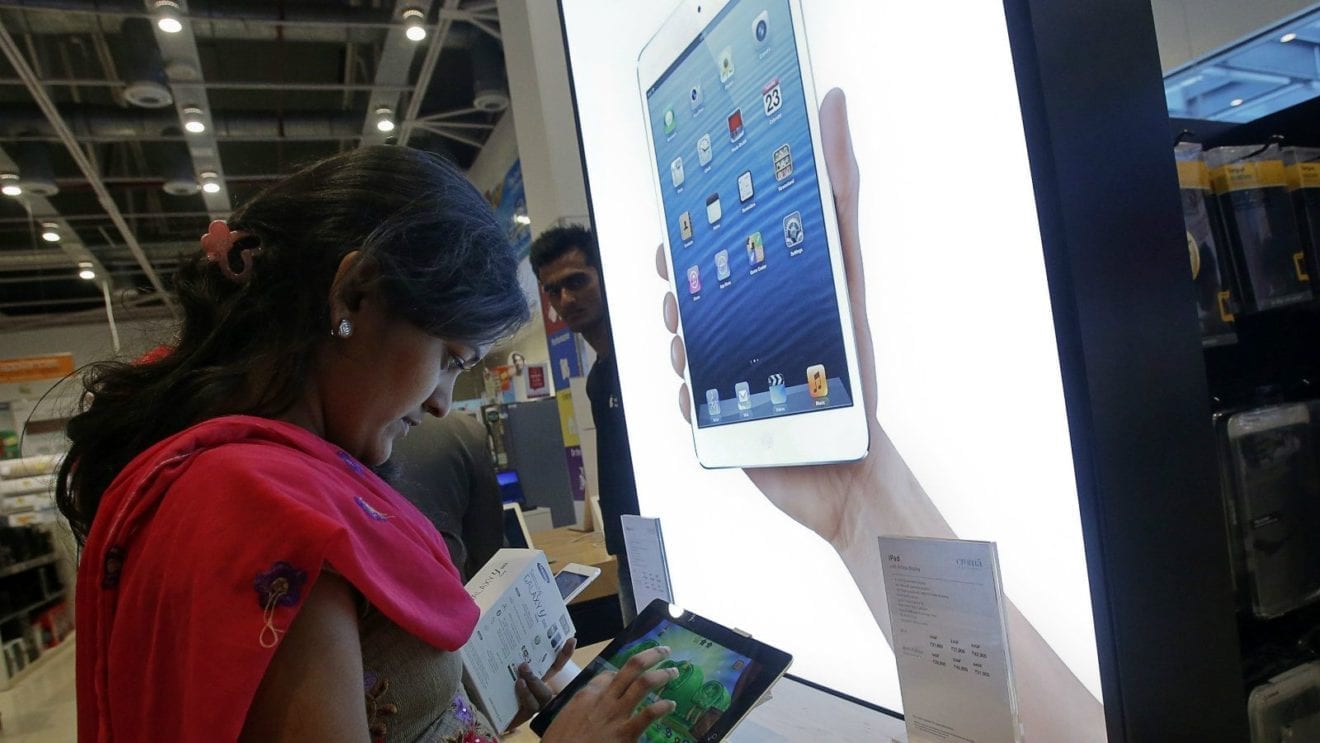
    Apple has set up more than 100 small franchise stores in India in the pilot phase of an initiative aiming at six-fold expansion over the next 12 months.

    The US electronics company’s move is a bid to take on Samsung and Chinese rivals, reports The Economic Times.

    Branded as Apple Authorised Resellers, the stores are no larger than 46 sqm and are distinct from the company-owned outlets Apple plans for India.

    It is a format through which the company plans to widen its presence in high-rental, high-street locations in large cities, neighbourhoods and tier-two and -three markets, say senior trade partners.

    Such stores have been set up in Bengaluru, Chandigarh, Mumbai, the National Capital Region (NCR) and Pune. In the NCR, the stores can be found in Gurgaon’s Galleria Market, Malviya Nagar, South Extension and Vasant Vihar.

  • Mall directory website GoToMalls.com launches in Indonesia

    Mall directory website GoToMalls.com launches in Indonesia

    While e-commerce has been growing at a substantial pace in Indonesia, its effect of turning away shoppers from offline retailers is yet to be felt.

    Malls still dominate the daily life of Indonesians, who prefer the experience of going to physical stores.

    Demonstrating the strong grip that malls and offline stores have on the local market, Singapore-based company DominoPos Pte Ltd launched on Tuesday a real-time proximity marketing and digital media platform named GoToMalls.com.

    Offering a comprehensive geo-located, profile-based smart directory of malls and stores in Indonesia, the website aims to enhance the online and offline business in shopping complexes by reviving offline transactions, bringing “the community’s spirit back to the malls through digital media support.”

    “What we are doing with GoToMalls.com is actually assisting all the offline retail brands to publish their own call-to-action campaigns, promote their products or services on a digital platform and fully utilize their target audience,” GoToMalls.com CEO Bruno Zysman said.

    The website provides its users with a comprehensive reference about shopping malls, stores and promotions. It lists up to 375 malls and shopping complexes, along with 19,000 stores.

    To ease their entry into the Indonesian market, the site has partnered with telecommunications operator PT Indosat, also known as Indosat Ooredoo, and ride-hailing app provider Grab.

    Aside from Indonesia, GoToMalls was deployed in DominoPos’ home country of Singapore in February. It also plans to expand into other countries.

  • 5GAA, EATA ink MOU on C-V2X

    5GAA, EATA ink MOU on C-V2X

    5G Automotive Association (5GAA) and the European Automotive and Telecom Alliance have signed partnership MOU, which will see cooperation around jointly promoting the Cellular-V2X industry in term of use cases, standardization, spectrum, and pre-deployment projects with cellular based communication technologies.

    5GAA and EATA commit to prioritize use cases that are identified from two organizations to figure out the technical requirement to be addressed from short to long term. In order to better support connected and automated driving standard, standardization prioritization for the standard bodies such as ETSI, 3GPP, SAE, etc. is necessary as well.

    The agreement between MNO and OEM is deemed important to help work out a business model and unify an industry timeline.

    5GAA is a multi-industry association to develop, test and promote communications solutions, initiate their standardization and accelerate their commercial availability and global market penetration to address societal need.

    Meanwhile, the main goal of the EATA alliance is to promote the wider deployment of connected and automated driving in Europe.

    The first concrete step is the advancement of a “Pre-Deployment Project” aimed at testing use-case categories such as C-ITS services, automated driving, road safety and traffic efficiency. The tests will identify and address both technological and regulatory issues.

    Among other important elements, the project will tackle interoperability issues as well as infrastructure investment to address connectivity needs, and the improving of safety and security.

    “This MOU with the 5GAA not only brings the different industry partners closer together, but also reinforces the European Commission’s strategy on cooperative, connected and automated mobility that was launched at the end of 2016,” said Erik Jonnaert, chairman of the EATA Steering Committee.

    “Car connectivity and automation will require a mix of communications technologies, but it is clear that 5G technology can become a key enabler of Europe’s digital highways,” said Jonnaert.

  • Cellcos to spend $250m on pre-standards 5G networks by year-end

    Cellcos to spend $250m on pre-standards 5G networks by year-end

    Mobile operators will spend more than $250 million on pre-standards 5G network rollouts by the end of 2017, according to SNS Research’s latest report.

    Despite the lack of sufficient LTE coverage in parts of the world, mobile operators and vendors have already embarked on R&D initiatives to develop 5G, the next evolution in mobile networks.

    5G is expected to provide a single network environment to deliver not only existing mobile broadband and IoT services, but also new innovations such as self-driving cars, cloud robotics, 3D holographic telepresence and remote surgery with haptic feedback.

    In fact, many mobile operators are betting on 5G to diversify their revenue streams, as conventional voice and data service ARPUs decline globally.

    At present, the 3GPP and other SDOs (Standards Development Organizations) are engaged in defining the first phase of 5G specifications. However, pre-standards 5G network rollouts are already underway, most notably in the United States and South Korea, as mobile operators rush to be the first to offer 5G services.

    Although 2020 has conventionally been regarded as the headline date for 5G commercialization, the very first standardized deployments of the technology are expected to be commercialized as early as 2019 with the 3GPP’s initial 5G specifications set to be implementation-ready by March 2018.

    Between 2019 and 2025, SNS Research expects the 5G network infrastructure market to aggressively grow a CAGR of nearly 70%, eventually accounting for $28 billion in annual spending by the end of 2025.

    These infrastructure investments will be complemented by annual shipments of up to 520 million 5G-capable devices.

  • Equinix expands Hong Kong footprint to meet demand

    Equinix expands Hong Kong footprint to meet demand

    Equinix is expanding its Hong Kong footprint to accommodate local interconnection needs and increasing numbers of inbound cloud service providers.

    This latest expansion of Equinix’s Hong Kong footprint adds over 1,400 new cabinets and brings the company’s total investment in the city to over $250 million.

    The expansion in Hong Kong includes 515 new cabinets in HK1 and represents an incremental investment of $16 million and adds 900 new cabinets in HK2 and represents an incremental investment of $39 million. It is the latest in a series of expansions across Asia-Pacific to meet the rising demand for interconnection services, with other recent expansions including Melbourne, Tokyo and Sydney.

    The new development will enable Equinix to support the growing needs of an increasing variety of enterprises – such as FSI and FinTech, e-payments and logistics – to interconnect with cloud and technology providers.

    Equinix’s cloud and IT ecosystem has continued to gain momentum in Hong Kong. Its cloud customer-base has grown significantly since 2014, as local and international internet security and CSPs are increasingly choosing to deploy with Equinix Hong Kong as their initial entry point or hub location for the Asia-Pacific region.

    Major cloud service providers in Equinix Hong Kong now include Alibaba Cloud, the cloud computing arm of Alibaba Group, Microsoft Azure & Office 365 and Google Cloud. According to Cisco, global cloud IP traffic will almost quadruple in over the next 5 years, this expansion will enable Equinix to meet the needs of Hong Kong customers looking to take advantage of this growth.

    One Hong Kong customer taking advantage of Equinix’s increased capability is ClusterTech Limited, which specializes in using cloud, high performance computing and big data technologies to solve challenging technical problems and improve operational efficiency for their customers. The company is in the process of adding more resources within Equinix’s IBX data centers to launch a new solution that will enable environmental engineering companies to run complex simulation applications.

    In addition to supporting the core cloud needs of customers, Equinix is now also in an excellent position to accommodate the growing trend towards multi-cloud convergence and “interconnected commerce” that Equinix experts predict will be a key feature of the IT landscape over the coming year.

    The additional capacity comes online at a time when Equinix is predicting IoT will become a concrete reality – evolving from independent, single-vendor solutions to those that talk to each other and rely on the same data.

    With the Hong Kong expansion, Equinix will relieve the growing pressure on corporate-centric networks by distributing the traffic more broadly, as well as better control the performance of the streaming IoT information for more real-time business and operational insight.

  • Nokia announces major restructuring

    Nokia announces major restructuring

    Nokia has announced a restructuring of its mobile unit into two groups, focused on mobile networks and services respectively, in response to the planned departure of the company’s current mobile networks chief.

    The company said it will establish two units called Mobile Networks and Global Services respectively.

    The company’s current chief innovation and operating officer Mark Rouanne will lead up the mobile networks business group, which will be focused on areas including 4G, 5G, cloud core and small cells.

    The Global Services division will meanwhile be led by Igor Leprince, the current executive vice president of global services.

    These executives are taking over from current head of mobile networks Samih Elhage, who is leaving the company on April 1 but will stay on as an advisor until May 31. In a statement, Nokia CEO Rajeev Suri said Elhage has decided to leave now that the integration with Alcatel-Lucent is mostly complete.

    “From helping lead the transformation at Nokia Siemens Networks and creating a disciplined operating model that remains a competitive advantage, to being one of the driving forces behind the acquisition of Alcatel-Lucent and its fast and successful integration, Samih’s contributions to Nokia have been remarkable,” Suri said.

    “He has been a close friend and advisor through times both good and bad, and I fully support his desire for a change.”

    As part of the restructuring, the position of chief innovation and operating officer (CIOO) will be dissolved and the duties split. Responsibility for operations will be transferred to the newly-created position of group chief operating officer (COO), innovation will be taken over by Nokia’s chief technology officer (CTO) and incubation will be assumed by Nokia’s chief strategy officer.

    The group COO position is going to Monika Maurer, currently the company’s COO for fixed networks, while Marcus Weldon will retain the post of CTO and Kathrin Buvac will remain chief strategy officer.

  • Cross-border e-commerce to hit $900b by 2020

    Cross-border e-commerce to hit $900b by 2020

    Cross-border e-commerce is now the fastest growing segment in the retail market, according to a report published by DHL Express.

    Cross-border sales volumes are predicted to increase at an annual average rate of 25% – from $300 billion to $900 billion – between 2015 and 2020. This is twice the pace of domestic e-commerce growth, DHL Express said.

    The study found that online retailers are boosting sales by 10-15% on average simply by extending their offering to international customers.

    By including premium service offering such as faster shipping options, retailers and manufacturers also grew 1.6 times their online stores faster on average than other players.

    “Shipping cross-border is much, much easier than many retailers believe, and we see every day the positive impact that selling to international markets can have on our customers’ business growth,” DHL Express CEO Ken Allen said.

    In Asia (Singapore, Hong Kong, and India) and Europe (Italy, Spain, France, Germany), key markets for high-value purchases are being expanded — with growth rates up to two or three times higher than the global average driven by rising consumer education and e-tailer awareness of opportunity.

    The report also noted that the $30 billion market of high-basket value transactions is evenly divided between Asia, Europe, and North America.

    Allen added that DHL Express sees that virtually every product category has the potential to upgrade to premium, both by developing higher quality luxury editions and by offering superior levels of service quality to meet the demands of less price-sensitive customers.

    “The opportunity to ‘go global’ and ‘go premium’ is there for many retailers in all markets,” he said.

    The main challenges highlighted by consumers to cross-border purchases relate to logistics, trust, price, and customer experience.

  • Some banks in Vietnam enter new rate race

    Some banks in Vietnam enter new rate race

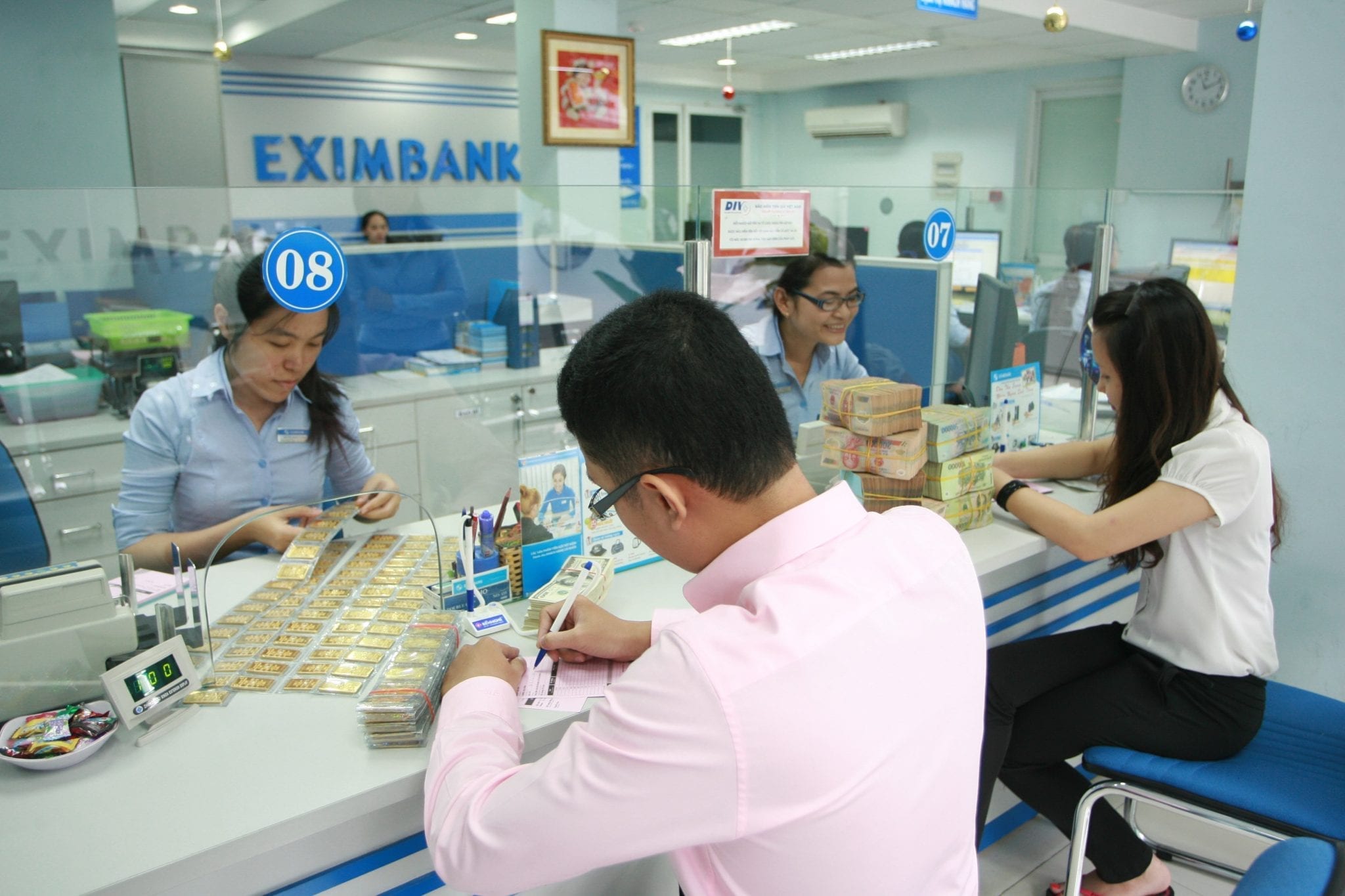
    VPBank announced it has offered a rate of 9.2 per cent per year for five-year certificates of deposit. VietA Bank has also listed a high rate of 8.2 per cent per year for certificates of deposit with tenure of just six to 18 months.

    The rate at Sacombank is also at 8.2 per cent per year; however, it is applicable for certificates of deposit with tenure of 5-7 years.

    The rate is much higher than the average deposit interest rates offered by other commercial banks. Currently, State-owned commercial banks offer a rate of 6.5-6.8 per cent per year for long-term deposits, while it is 7-7.5 per cent at large-sized joint stock commercial banks and 8-8.2 per cent at small-sized banks.

    Analysts attribute the hike to factors such as the need for medium- and long-term funds to grow lending this year.

    Many experts anticipated the scenario and warned there would be rising demand for long- and medium-term funding after they saw the economy clearly recovering and the Government signing a series of bilateral and multilateral trade agreements, which is likely to increase businesses’ demand for funds.

    Another reason is that 80-90 per cent of deposits currently are short-term while demand for long- and medium-term loans is growing rapidly.

    State Bank of Viet Nam (SBV)’s HCM City branch reported that last year the ratio between short-term and long- and medium-term loans was 44:56 per cent. It is normally 50:50.

    In addition, SBV’s amendments to Circular 36/2014/TT-NHNN reducing the ratio of short-term deposits that can be used for medium- and long-term loans from the current 60 per cent to 40 per cent has caused deposit interest rates to rise.

    Besides this, the risk weight for loans to the real estate sector has also been raised to 250 per cent from 150 per cent since 2017.

    As a result, banks have been forced to hike interest rates on long-term deposits so that they have enough funds to provide long- and medium-term loans.

    Expert Bui Quang Tin said the interest rate hike would put pressure on the central bank’s monetary management this year, especially when the central bank has to meet the three targets of controlling inflation, keeping foreign exchange rate and interest rate stable.

    Tin was also concerned it would be hard for lending interest rate, especially medium and long term, to be steady in the wake of the deposit rate hike. Both lending and deposit rate would rise by roughly 0.5-1.5 per cent per year this year, he forecast.