Author: Mei Ling Tan

  • Garuda Indonesia Keeps Expanding Despite 89% Profit Slide

    Garuda Indonesia Keeps Expanding Despite 89% Profit Slide

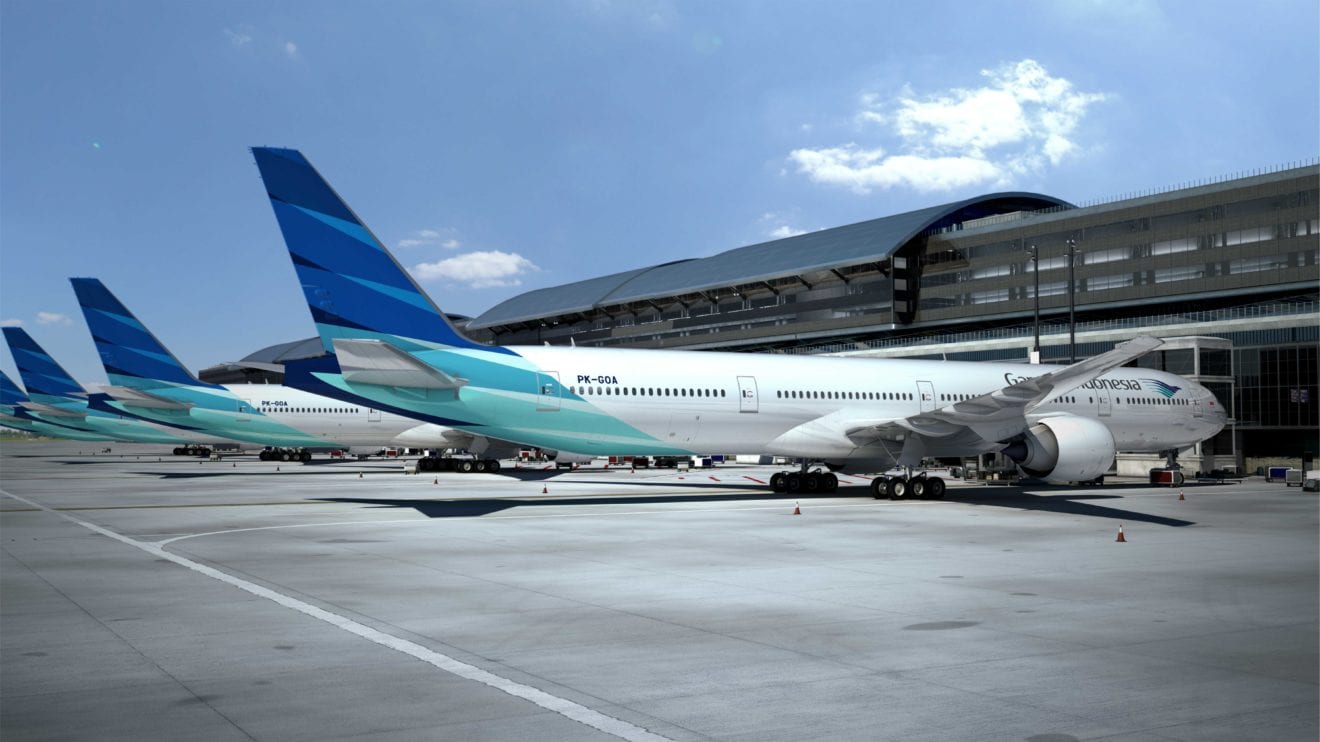
    Indonesian flag carrier Garuda Indonesia will continue expanding despite a lackluster performance last year during which profit dropped by 89%, President Arif Wibowo said on Wednesday.

    Garuda posted $8.1 million in net income in 2016, from $76.5 million the year before. Wibowo said the decline was “manageable,” and attributed it in part to the company’s increased flights on existing routes and the opening of new ones. Garuda last year started connecting Indonesia’s resort island, Bali, with a few Chinese cities, and commenced flights to Mumbai.

    Its available seat kilometers — a measure of passenger-carrying capacity — last year was up by 13%. Wibowo said he expects a similar increase this year.

    “First half of 2016 was loss-making due to the expansion,” Wibowo said. “But that is part of a growth strategy that I must take. In 2017 we’ll keep maximizing our capacity growth, by 10-12%.”

    To achieve this, Garuda will increase its service to less-connected, underdeveloped eastern Indonesia regions. For international destinations, China will remain a focus, though Garuda is also working on flying to the U.S. and Russia.

    Profit was also dragged down by declining passenger yields — measure of average fare paid per mile — which dropped from 9.6 U.S. cents in 2012 to 6.2 U.S. cents in 2016 industrywide in Asia Pacific.

    Garuda’s low-cost subsidiary, Citilink, was especially hit hard by declining yields. It posted a net loss of $9.7 million last year from a $3.5 million profit it made in 2015, despite an 18% growth in passengers to 11 million.

    Garuda saw its passenger numbers grow just 1.4% in the same period. The group’s market share in the country shrank slightly from 43.5% to 41.7% for domestic flights, and from 27.1% to 26.9% for international ones.

    “It’s very tough competition in the aviation industry over the past five years. Passenger traffic has increased, but there has been tremendous pressure on yields,” Wibowo said.

    He added that the state-owned company is approaching the government to increase lower tariff limits for airlines operating in Indonesia, citing increasing fuel prices, to prevent a price war.

    GMF AeroAsia, which offers maintenance services for aircraft, was the best-performing subsidiary last year with a 60% profit increase to $57.7 million. Wibowo said the consistently good performance makes GMF a candidate for an initial public offering. Garuda is mulling the sale of 20% of GMF share to the public, which may happen this year.

    The airline is also pushing the growth of its cargo business after the establishment of a special division for cargo last year. Director of Cargo Sigit Muhartono said he would focus on expanding e-commerce delivery for the higher yields. Garuda delivered 416 tons of cargo last year, an 18% increase year-on-year.


  • PLDT launches “Fibr city” in Cebu

    PLDT launches “Fibr city” in Cebu

    PLDT has ramped up its FTTH rollout with the launch of what it calls its first “Fibr City” in Cebu, which provides residents of Toledo City with speeds of up to 1Gbps.

    The initiative, named after PLDT’s Home Fibr branded FTTH service, has been conducted in collaboration with the Toledo City government.

    PLDT has invested $6 billion over the past ten years to roll out 150,000km of fiber infrastructure, and its FTTH services had a footprint of around 2.8 million premises by the end of last year.

    Last month, the operator announced plans to expand the reach of the network by around 80% this year, taking the total number of premises passed to around 4.4 million. The operator has also started adopting hybrid fiber technologies such as G.fast to boost data rates significantly over existing copper connections.

    By next year, PLDT aims to ensure that all its subscribers are accessing smart home services enabled by the fiber network.

    The company selected Toledo City to pioneer the Fibr City concept as part of its expansion plans in Central Philippines, the report states.

  • Cloud components market to hit $41b by 2021, says report

    Cloud components market to hit $41b by 2021, says report

    Ongoing customer build-outs of hybrid environments is fueling cloud components growth as IT vendors modernized hardware and software portfolios.

    According to a report from Technology Business Research (TBR) the cloud components market, which encompasses the foundational building blocks for on premises cloud environments, will grow from an estimated $27 billion in 2016 to $41 billion in 2021 at an 8.4% CAGR.

    Cloud hardware components revenue will generate most of total cloud components revenue; however, we expect long-term market growth will be sustained by cloud software components as hybrid cloud demands rise and underlying cloud infrastructure becomes commoditized, TBR said.

    Sanjay Medvitz, TBR cloud analyst, said, “Enterprise hybrid IT environments continue to grow, increasingly encompassing disparate on-premises and cloud assets as well as infrastructures from multiple vendors, driving up the importance for software solutions that provide efficient management, orchestration and cloud services capabilities to ease complexities.”

    “Accordingly, vendors such as IBM and Oracle are shifting focus to cloud software businesses that offer high-value opportunities for long-term success,” Medvitz said.

    From a hardware perspective, customers’ ongoing migrations to public cloud services and software-defined storage-enabling hyper converged platforms will render standards-based servers as critical aspects of cloud computing environments across a range of customer segments.

    Meanwhile, TBR notes that customers will invest in flash storage capabilities, along with gradual build-outs of virtualized network implementations to further accelerate performance, simplicity and reliability of their hybrid and heterogeneous cloud data centers.

    Industry stalwarts Hewlett Packard Enterprise, IBM, Dell EMC and Cisco held top market share among cloud components vendors in 2016, leveraging legacy hardware and software strengths and large install bases alongside investments in private and hybrid cloud-enabling technologies such as hyper-converged to win customer modernization engagements.

    Market leaders will continue to modernize legacy assets, innovating hardware and software together to create common architectures and building out cloud based versions of traditional solutions to promote flexible cloud on-ramps and meet evolving customer hybrid IT needs.

  • Polaris Industries to recall about 19,200 ATVs

    Polaris Industries to recall about 19,200 ATVs

    Polaris Industries Inc is recalling about 19,200 all-terrain vehicles due to fire hazard and risk of injury, the U.S. Consumer Product Safety Commission said on Tuesday.

    Polaris will recall all model year 2015 and 2016 Sportsman 850 and 1000 all-terrain vehicles, the U.S. consumer-safety regulator said.

    The right side panel heat shield in the ATVs can melt, posing burn and fire hazards to riders.

    In addition, the exhaust springs can stretch and damage the exhaust seal in 2015 Sportsman 1000 ATVs, resulting in exhaust leaks that could pose burn and fire hazards.

    Polaris has received at least 793 incidents, including reports of warped, melted or burned side panels, 47 fires and four minor burn injuries, the regulator said.

  • Philippines forges agri deals with Thailand in Duterte visit

    Philippines forges agri deals with Thailand in Duterte visit

    The Philippines on Monday signed agricultural deals with Thailand, three months before it scraps a quantitative restriction on rice imports under an agreement with the World Trade Organization (WTO).

    The agricultural agreement encompasses information exchange concerning best practices in irrigation, livestock and fisheries, and technology for soil and water conservation, said President Rodrigo Duterte in a joint statement with Thai Prime Minister Prayut Chan-o-cha.

    “The Philippines and Thailand have vibrant economic relations with a trade value of almost $8 billion in 2016. We have yet to reach the limit of our potentials. That is why we also recognize the importance of cooperation in agriculture…our agricultural sector should drive national growth,” he said.

    Thailand is one of the Philippines’ primary sources of imported rice. In December, the National Food Authority (NFA) said private traders would import 284,780 tons of rice from Thailand. This is in addition to 250,000 tons that the NFA bought in August last year from Vietnam and Thailand.

    Agriculture Secretary Emmanuel Pinol said last year that he would need 2 more years to strengthen Filipino rice farmers’ capacity to compete with their peers in Vietnam and Thailand.

    While cheaper imports would bring down retail costs of the country’s staple grain, it would pose a threat to Filipino farmers’ livelihoods, because production costs in those countries are cheaper and output more plentiful.

    The Philippines is set to host the Association of Southeast Asian Nations’ (ASEAN) Second Meeting of the Joint Agricultural Working Group in 2019.

    Aside from agriculture, the Philippines also forged agreements with Thailand regarding tourism, and the promotion of exchanges that aim to enhance their capacities for science and technology.

    The two countries also agreed to ensure security and stability in the region, and address issues particularly terrorism, sea piracy, and illegal trafficking of drugs and people.

    They also stressed the need to maintain peace and stability in the region, including the South China Sea.

    “We emphasize the need for the full and effective implementation of the Declaration of Conduct of Parties in the South China Sea, and express determination to complete the Framework of the Code of Conduct in 2017,” Duterte said.

    Duterte visited Myanmar on Sunday, before he flew to Thailand on Monday.

  • Pandora officially opens new factory in Thailand

    Pandora officially opens new factory in Thailand

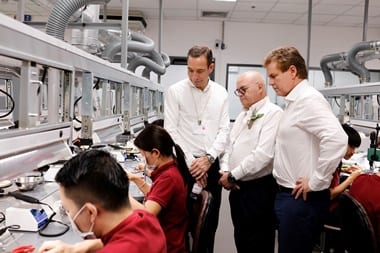
    The new factory, which opened operationally on October 1, 2016, was officially inaugurated today (March 22) and revealed to the world’s press and key members of the global Pandora team.

    Taking design inspiration from the brand’s signature charm bracelet, the manufacturing facility is primarily optimised for the production of the more time-consuming products in Pandora’s portfolio.

    The facility, when at full capacity, will employ up to 5,000 members of staff and aims to “set new standards for the jewellery industry in terms of scale, size, green profile and modernity.” The overall aim is to incorporate flow principles and semi-automation to reduce lead times by up to 50%.

    According to the brand, the factory is a flagship green facility for the international company. Built to LEED (Leadership in Energy and Environmental Design) standards, it consumes 18% less energy and 45% less water than conventional jewellery crafting facilities.

    Pandora2

    Pandora’s new crafting facility

    Guests, including Pandora chief executive Anders Colding Friis, view the new facility on the official opening day

    Speaking at today’s factory launch, chief executive officer for Pandora Anders Colding Friis said: “It’s a proud day. I was thrilled to see how it would look and it looks even better in reality and is a reason to congratulate all of us.

    “This factory plays an important role in Pandora’s future. We need to be agile and flexible and this new factory will provide this service. We need to expand in necklaces, earrings and rings and into new markets.

    “We are one of the world’s most loved jewellery brands and this is a true statement for our future […] It’s really incredible, a state of the art centre.”

    The Lamphun factory forms part of a larger capacity project for Pandora that will potentially double the brand’s output capacity to more than 200 million pieces a year by the end of 2019.

    The project also includes building a new crafting facility in Gemopolis in Bangkok, and optimising the brand’s existing factory located in the Gemopolis region.

    In addition to the official factory opening, the Danish jewellery behemoth has also used today to officially launch its new SS17 campaign, #DOPANDORA.

    The campaign is a change in direction for Pandora with the new lifestyle imagery capturing moments in time.

  • Route to success

    Route to success

    CEO Nguyen Thi Phuong Thao, who created the concept of bikini-clad flight attendants, told local media that she wants to make Vietjet become the “Emirates of Asia”.

    Such goals are admirable, and insiders believe the IPO will bring further success to the “bikini airline”.

    Taking off

    After five years of operations, Vietjet has had a level success that other airlines would envy.

    Vietnam’s only private airline ordered 100 new jets from Boeing in May last year, worth $11.3 billion, and signed a contract in September to purchase 20 A321 aircraft from Airbus, witnessed by State President Tran Dai Quang and French President François Hollande.

    With the two contracts, it continues to drive towards its goal of having a “Red Revolution” in Vietnam’s aviation sector and becoming a global airline.

    The five-year-old Vietjet surpassed national flag carrier Vietnam Airlines in domestic passenger transport during the recent Tet holidays, according to the Civil Aviation Authority of Vietnam (CAAV).

    Over the six-day holiday, Vietnam Airlines carried 175,146 passengers and Vietjet 209,179, for market shares of 35 per cent and 42 per cent, respectively.

    The only competitor of Vietjet Air is low-cost carrier Jetstar Pacific, a subsidiary of Vietnam Airlines. But Vietjet Air far outstrips Jetstar Pacific in revenue and market share.

    While Vietnam Airlines, in which the State owns more 90 per cent, found it quite difficult to find strategic partners, Vietjet attracted 26 foreign investors after announcing its plan to conduct an IPO.

    Vietjet has also closed the gap with Vietnam Airlines in terms of profit.

    While Vietjet’s pre-tax profit increased 91.6 per cent in 2016 to VND2.3 trillion ($101.9 million), Vietnam Airlines’ pre-tax profit was VND2.5 trillion ($110 million), up 140 per cent and 7 per cent higher than the annual plan.

    And its share price is much more attractive than Vietnam Airlines’.

    According to the Hanoi Stock Exchange (HNX), Vietnam Airlines’ shares trade on the UPCoM Market with a reference price of VND28,000 ($1.2) and are expected to reach VND40,000 ($1.7).

    Vietjet’s reference price, meanwhile, has been predicted to stand at VND90,000 ($4).

    “The capital raised by Vietjet in the offering will help support the expansion of its international routes and the enlargement of its fleet, which are critical for it to compete in the Asian aviation market – one of the fastest growing and most dynamic aviation markets in the world,” said Mr. James Grandolfo, a Partner in the Hong Kong office of Milbank, which is the advisor in Vietjet’s IPO.

    The appeal of Vietjet is its low cost, as budget airlines have become the key driver of Vietnam’s fast-growing aviation market and transported 55 per cent of domestic passengers in 2016.

    Budget airlines are rapidly increasing their market share, with an annual growth rate of 15-20 per cent, according to Mr. Lai Xuan Thanh, Head of CAAV.

    Given the strong development of low-cost airlines, Vietjet, the dominant player in Vietnam’s low-cost market, quickly captured a 40 per cent share of the local market and will likely surpass Vietnam Airlines within the next few years as Vietnam’s largest domestic carrier.

    So who will benefit from Vietjet’s IPO? Obviously, it’s a win-win for Vietjet and its partners.

    The economy, according to many economic experts, will also be a winner from the deal.

    “A sizable capital source will be mobilized, in particular funds from foreign financial institutions,” said Mr. Nguyen Hoang Hai, Deputy Chairman of the Vietnam Association of Financial Investors.

    “The IPO will be a test of how much foreign capital Vietjet can rally by promising continued expansion and rising profits, banking on the past few years of impressive growth that have turned it from a startup to a major carrier that is expected to soon hold the largest market share in Vietnam.”

  • IoT adoption in retail set to take off

    IoT adoption in retail set to take off

    Retailers will connect 12.5 billion business assets such as products, digital signs and Bluetooth beacons to IoT platforms by 2021, up from 2.7 billion in 2016, Juniper Research has predicted.

    The company has argued ‘next-gen’ processes, such as personalized retail, could be achieved by integrating enterprise software and emerging technologies, with data from connected IoT assets.

    Juniper forecasts that software spend for enterprise resource planning (ERP) systems to integrate this data would reach $11.3 billion annually in 2021, from $1.5 billion in 2017.

    The research firm also predicted that radio-frequency identification (RFID) will re-emerge as the industry’s ‘killer app’ becoming the key factor in the IoT retail ecosystem.

    RFID tags, used to identify and locate retail assets in real-time, are now at a low enough price point for mass deployment and integrate well with new IoT systems and analytics. New services, such as dynamic pricing or enabling promotional offers via in-store digital signs are also poised for growth.

    “Innovative retailers such as Rebecca Minkoff have combined RFID with smart mirrors,” said research author Steffen Sorrell. “Integrating these systems allows real-time information to improve the store experience and bridge physical and virtual worlds – in this case, the concept drove a 200% increase in sales.”

    Juniper believes that physical retail spaces still have many benefits, not least in terms of being able to avoid the sterility of online shopping. It predicts online retailers’ focus would be on technologies such as machine learning to provide digital assistance, or digital performance management.

  • E-commerce firms struggle to gain profits

    E-commerce firms struggle to gain profits

    Large international e-commerce firms such as Amazon and Alibaba only began making profits after 10 first years of operation. The big losses of Vietnam’s e-commerce firms were foreseeable.

    Before it was taken over by Alibaba in 2016, Lazada Group reported loss of $334 million in 2015, twice as much as the loss the year before. VNG’s latest financial report showed the company has incurred a VND100 billion loss since it began injecting money into Tiki.vn in 2016.

    Analysts pointed out that orders from clients must be dealt with through tens of different stages before goods can reach clients, and each stage can gobble up one part of investors’ earnings.

    Investors, for example, have to spend big money on storehouses. It is estimated that Lazada and Tiki have to spend no less than VND1 billion just to run one storehouse in HCMC. As such, with three operational storehouses, they have to spend no less than VND48 billion a year.

    With tens of thousands of orders each day, e-commerce firms will need high numbers of deliverymen, thus bearing high financial cost. Both Lazada and Tiki have to employ deliverymen and outsource the service.

    Lazada Vietnam has 200 workers in Lazada Express, but it still has to join forces with Giaohangnhanh, VNPost and Viettel Post to fulfill orders.

    Besides, the expenses on marketing are also enormous which eat up investors’ profits. Lazada Vietnam had to spend big money on ads in the first years of operation to lure more customers. Some sources said the firm once spent up to $2 million a month on ad campaigns.

    Chotot.vn also reportedly spent billions of dong on the ad clips with the play of comic actors. Meanwhile, Shopee.vn offers free delivery to clients nationwide applied to orders with bills of VND150,000 and higher. With more than 10,000 orders a day, Shopee.vn had to pay nearly VND1 billion on the program.

    E-commerce firms not only have to pay high for input costs and marketing campaigns, but also have to cut selling prices to compete with others. A branding expert who asked to be anonymous said some firms accept to sell goods at a loss of 10-20 percent in order to lure customers. In peak promotion season, the figure could be up to 50 percent.

    The highest risk for e-commerce firms is that they may lose orders because of the COD (cash on delivery) payment method. Customers can cancel orders at the last minute, though firms have to pay expenses to deal with the orders.

  • Singtel teams up with Microsoft on Office 365

    Singtel teams up with Microsoft on Office 365

    Singtel and Microsoft have announced a new partnership for the Singaporean incumbent to offer Microsoft’s cloud-based Office 365 suite to its customers.

    With this new offering, customers who subscribe to Singtel’s fiber broadband and postpaid mobile services can sign up for either Office 365 Home or Office 365 Personal plans through Singtel.

    Singtel also said customer can enjoy savings of at least S$46.80 ($34) per year or over 30% off regular online price. In addition, customers can enjoy the added convenience of paying for their Office 365 subscriptions together with their monthly Singtel bills.

    “With this new offering, customers will also enjoy ease of payment and enhanced productivity. We will continue to engage different partners to offer solutions that are suitable for our customers’ digital lifestyles, whether for work or play,” said Yuen Kuan Moon, CEO consumer Singapore at Singtel.

    Singtel customers can select the plans that best suit their needs, the company said.

  • Nokia, Ciena providing gear for Jio’s major 4G rollout

    Nokia, Ciena providing gear for Jio’s major 4G rollout

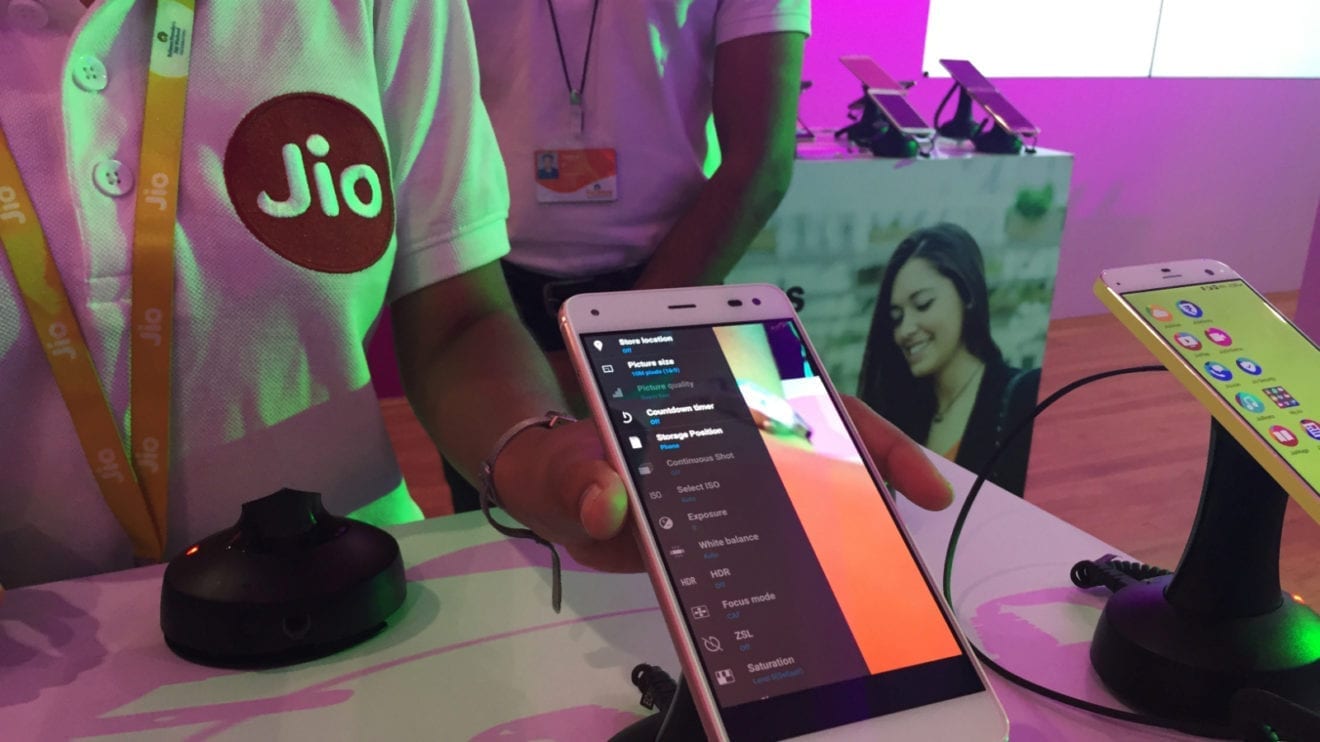
    Nokia and Ciena have both detailed their roles in providing equipment for disruptive Indian newcomer Reliance Jio Infocomm’s greenfield pan-India 4G rollout.

    Reliance Jio finally launched LTE services for the public in September last year, and has signed on 100 million new users in just 170 days due to its aggressive strategy of initially offering all services for free.

    Nokia announced that its optical deployment for Jio covers over 90,000km across India, making it one of the biggest 100G deployments in the world.

    The vendor provided switches with 100G DWDM capabilities as well as generalized MPLS intelligence to support capacity management and restoration

    “In only 170 days, Jio has signed on 100 million new users. With growth rates of this magnitude we had to ensure we deployed the highest capacity, most resilient transport network to build out the 4G network,” Reliance Jio president Jyotindra Thacker commented.

    “Nokia’s next-generation DWDM portfolio provides the ability to scale easily as Jio continues to expand the network to reach the underserved areas of India with digital services in key areas such as communication, education, healthcare, payments and multi-media entertainment.”

    Ciena meanwhile deployed multi-terabit converged packet optical technology for Jio’s 4G network core, operating at speeds of up to 200Gbps.

    The Ciena packet optical platforms use Ciena’s WaveLogic coherent technology for the core network, which connects all major cities of India.

    • “With Ciena we are not only able to provide robust scalability to offer new levels of data consumption, which is already 8 to 10 times above market levels, but also a supreme level of confidence in our network’s reliability and level of service that stands out in our marketplace,” Thacker said.
    • “Ciena’s coherent technological offerings and proven control plane technology is helping to make us the fastest growing 4G network in the world.”
  • Retail IoT connections to more than treble by 2021

    Retail IoT connections to more than treble by 2021

    Retail IoT connections will rise 350 per cent by 2021 according to new data from Juniper Research.

    The UK-based company predicts retailers will connect 12.5 billion business assets to IoT platforms by then, ranging from products to digital signs and Bluetooth beacons.

    That compares with an estimated 2.7 billion connections in 2016.

    Juniper also predicts that RFID (radio-frequency identification), will re-emerge as the industry’s ‘killer app’ becoming the key factor in the IoT retail ecosystem.

    “RFID tags, used to identify and locate retail assets in real-time, are now at a low enough price point for mass deployment and integrate well with new IoT systems and analytics,” Junpier said in its research paper IoT in Retail: Strategies for Customer Experience, Engagement & Optimisation 2017-2021.

    “New services, such as dynamic pricing or enabling promotional offers via in-store digital signs are also poised for growth.”

    The company says ‘next-gen’ processes, such as personalised retail, could be achieved by integrating enterprise software and emerging technologies, with data from connected IoT assets. Juniper forecast that software spend for enterprise resource planning systems to integrate this data would reach US$11.3 billion annually in 2021, from $1.5 billion in 2017.

    “Innovative retailers such as Rebecca Minkoff have combined RFID with smart mirrors,” said research author Steffen Sorrell. “Integrating these systems allows real-time information to improve the store experience and bridge physical and virtual worlds – in this case, the concept drove a 200 per cent increase in sales.”

    Aiming for the Endgame

    Juniper predicts that each retailer’s approach to the IoT should differ depending on their main channel focus. It argues that physical retail spaces still have many benefits, not least in terms of being able to avoid the sterility of online shopping.

    “Therefore, Juniper predicts that online retailers’ focus would be on technologies such as machine learning to provide digital assistance, or digital performance management. In this latter instance, measurements such as user experience, IT performance and business outcome are analysed holistically to determine necessary improvements.”

  • Gifts Less Ordinary Launches Global Corporate Gifting Marketplace

    Gifts Less Ordinary Launches Global Corporate Gifting Marketplace

    Gifts need to be relevant, or they will be forgotten. With that in mind, Gifts Less Ordinary, a Singapore-based online marketplace selling curated and personalised gifts, announced the launch of its global Corporate Gifting platform.

    E-commerce sales in Southeast Asia is currently growing at an expedited pace, and is expected to have reached US$ 25 billion by 2020 according to Frost & Sullivan, bolstered by a strong demand within the B2B e-commerce space.  

    With the launch, corporates are now able to individually personalise each gift with an individual’s name or initials, creating a truly personal gift, whilst benefitting from a minimum order quantity of ten units, alongside real-time visibility to overall pricings and discounts. The platform built with technology partner Get Commerce, is the first-of-its-kind that connects small creative businesses to the online Corporate Gifting market.

    Businesses that have partnered with Gift Less Ordinary have seen first-hand growth in demand for their products in Southeast Asia, specifically during the post-holiday lull seasons. One such business is Make Me Something Special, a UK family business specialising in bespoke personalised wooden gifts.  

    “When Amy approached us about joining their new Corporate site, it was a no-brainer, as we can see the demand is there and it will be amazing to have our brand showcased in front of a wider B2B audience. We are very excited to be a part of this very exciting project and are keen to see our brand grow even further across the region,” said Ben Griffiths, the founder of Make Me Something Special.

    The price of each unit starts from as low as S$15, and depending on the order size, corporations can enjoy bulk discounts of up to 50%. The products available have been segmented according to the occasion and purpose of gifting, but if corporates need help deciding on a perfect gift, they can simply request a Free Bespoke Consultation.

    Gifts Less Ordinary was found in 2015 by Amy Read, and has since seen a strong 400% year-on-year growth each year. The startup also has operations in Japan, Australia, Hong Kong, New Zealand and the U.S.

    “Personalisation has always had its appeal and is observing an upward growth in demand in retail globally. This is at the heart of everything we do – from the products we pick to the service we provide.” said Amy Read, the CEO and founder of Gifts Less Ordinary.

    “We quickly recognised the need for a corporate version of our site from the overwhelming volume of enquiries we were receiving on a weekly basis. I strongly believe businesses who embrace individual personalisation have a real opportunity to create a differentiated business proposition and increase customer loyalty and business edge,” said Amy.

    Gift Less Ordinary’s corporate clientele includes a wide range of corporates and institutions, including Nanyang Academy of Fine Arts (NAFA).

    “The team is very accommodating to our requests and we are very grateful for their patience. Apart from the good customer service given, we are equally impressed with the quality of the products and the speed of delivery,” said Lynn Tan, NAFA’s Alumni Relations Executive.

  • Henry Sy still Philippines’s richest man

    Henry Sy still Philippines’s richest man

    Business tycoon Henry Sy topped Forbes’ list of richest Filipinos, with a 2017 net worth of $12.7 billion. This is his 10th consecutive time to top the list.

    However, this is lower than his 2016 net worth of $13.7 billion.

    Sy is the 94th richest billionaire in the world. The global billionaires’ list released by Forbes magazine on Monday was topped by philantrophist Bill Gates with a net worth of $86.8 billion.

    The 92-year-old billionaire founded Shoe Mart in 1958 and has expanded his business to retail, banking, and property. Forbes said that SM Investments is now the largest retailer in the Philippines. Sy’s children are now running his businesses.

    John Gokongwei Jr. of conglomerate JG Summit also retained his spot at second place, with $5.8 billion net worth. The 90-year-old has interests in an airline, banking, food, hotels, power, chemicals, real estate, and telecommunications.

    Lucio Tan moved from last year’s fifth spot to the third spot with $3.7 billion net worth, down from $4.9 billion a year ago. The LT Group has interests in tobacco, spirits, banking, and property development.

    The youngest Filipino billionaire on the list is the man behind fastfood chain Mang Inasal, Edgar Sia. The 40-year-old businessman’s net worth this year is at $1 billion. He also owns a stake in DoubleDragon Properties.

  • Jumbo Group China to open Beijing restaurant

    Jumbo Group China to open Beijing restaurant

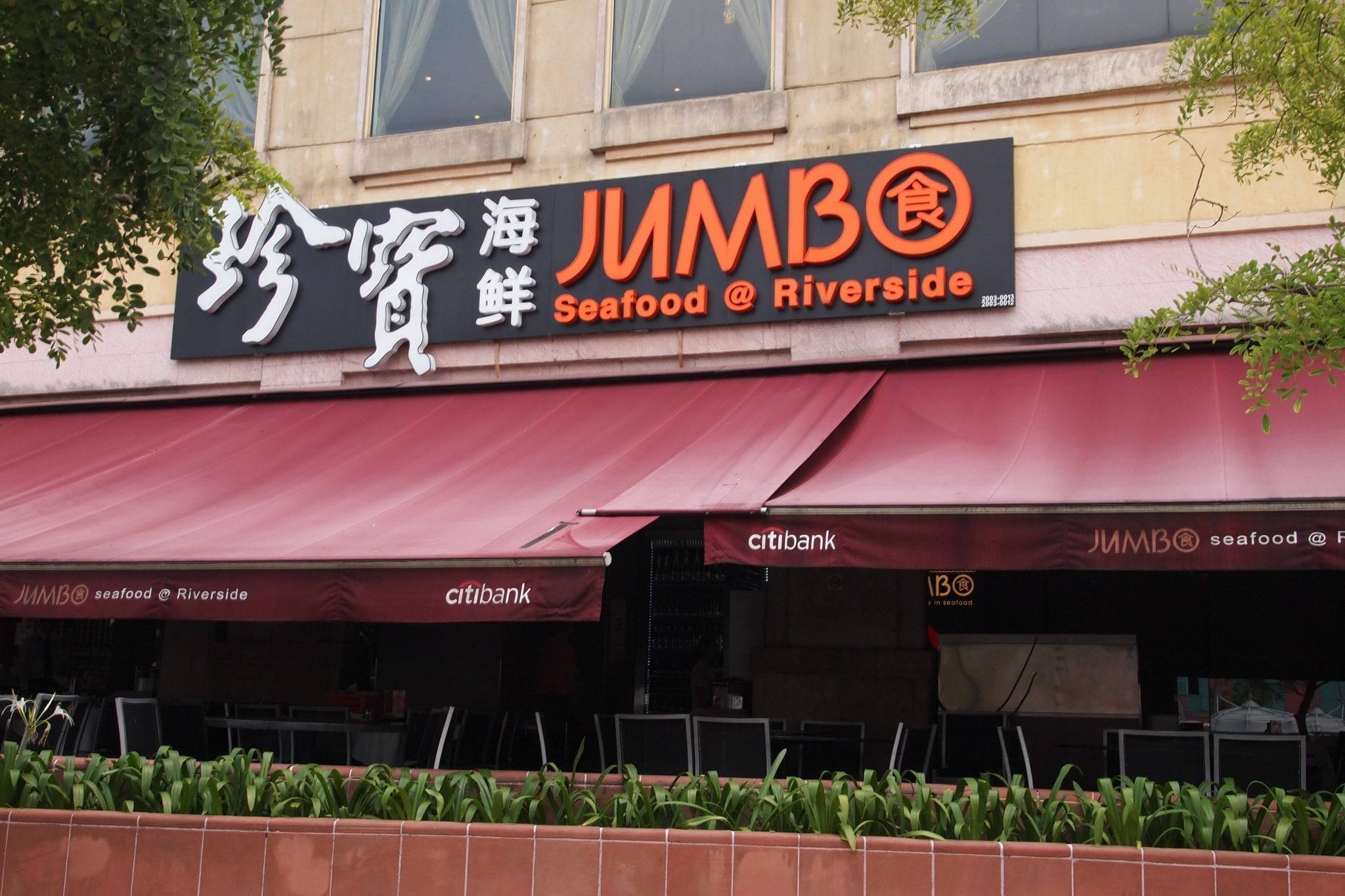
    Singapore-owned seafood restaurant Jumbo Group China has signed a JV agreement to open its first outlet in Beijing.

    The agreement is between the Singapore group’s indirect wholly owned subsidiary Jumbo F&B Services (Shanghai) and Beijing Hualian (SKP) Departmental Store, a member of the Beijing Hualian Group. JFB Shanghai will hold a 51 per cent stake in the JV, while Beijing Hualian holds the 49 per cent balance.

    The JV will have a registered capital of RMB10 million (US$1.4 million).

    Slated to open by the third quarter of this year, the Beijing restaurant joins the group’s three outlets in Shanghai.
    Jumbo CEO/executive director Ang Kiam Meng says the JV agreement comes shortly after the group inked a franchise agreement in Vietnam. “We are heartened our overseas expansion plans are shaping up well.”

    For the Chinese capital, the Jumbo Seafood restaurant will be in the upmarket Beijing SKP mall.

    “The restaurant’s privileged location enables us to reach out to the more affluent segment of the market, which is cosmopolitan in outlook and more adventurous in their culinary pursuits,” says Ang.

    In December, Jumbo signed a franchise agreement with Nova Bac Nam 79 joint-stock company to grant rights to run Jumbo Seafood restaurants in Ho Chi Minh City and Danang, Vietnam. There are plans to open three Jumbo Seafood outlets in the two cities over the next two years.

    Jumbo Group has a central kitchen in Singapore to maintain quality standards and consistency as well as increase productivity and lower costs. It also has a research and development kitchen where it creates new dishes and improves food-preparation processes.