Author: Mei Ling Tan

  • Vietnam plans to send more skilled workers abroad to curb unemployment

    Vietnam plans to send more skilled workers abroad to curb unemployment

    Vietnam’s labor ministry is outlining a new plan to send more skilled workers abroad in the next few years as the number of unemployed Vietnamese has surpassed the million mark.

    According to Deputy Minister Doan Mau Nghiep, the plan will focus on sending engineers to South Korea and health workers to Japan and Germany and also exploring new markets like Slovakia, the Czech Republic and Israel.

    “The ministry wants to find solutions for well-trained workers, who have graduated from universities or colleges but can’t find jobs,” he said. “But we have to assess whether the quality of our labor force meet the requirements of recipient countries.”

    According to official data, Vietnam had around 1.1 million unemployed workers, 2.3 percent of the workforce. Around one third were college graduates.

    Experts have said that the quality of Vietnamese labor force is generally low compared to Asian peers such as South Korea, India and Malaysia.

  • Vietnam tables Brazilian meat imports

    Vietnam tables Brazilian meat imports

    Vietnam is considering whether to ban imports of livestock and poultry products from Brazil as the Latin American country investigates the quality of its meat exports.

    The animal health department said on Wednesday meat imports from Brazil have been low so far this year, but it has asked the agriculture ministry to halt imports if any low-quality products are found.

    Following a two-year investigation, Brazil’s federal police last week accused more than 100 people, mostly health inspectors, of taking bribes and allowing the sale of rancid products, falsifying export documents and failing to inspect meat packing plants, as reported. Brazil is the world’s top producer of beef and poultry.

    BRF and JBS, the world’s biggest meat producers, are among dozens of firms targeted in the police investigation into what would be the biggest scandal to hit Brazil’s agricultural sector. Both companies have denied any wrongdoing.

    The trade office at the Vietnamese Embassy in Brazil has called on agencies in Vietnam to tighten inspections of livestock and poultry products from Brazil.

    Hong Kong, Japan, Canada, Mexico and Switzerland all announced partial or all-out bans on Brazilian meat imports on Tuesday, following steps taken a day earlier by China, the European Union, South Korea and Chile, Reuters reported.

    But South Korea said on Tuesday it will lift the ban on poultry imports from BRF, the world’s largest exporter of the meat.

    Vietnam has imported around 3,000 tons of meat and meat products from Brazil so far this year, the animal health department said.

    “The amount is very small compared to the 6 million tons that Brazil exports every year to countries around the world,” said an official from the department.

    Brazil, recognized by the World Organization for Animal Health for doing a good job in controlling animal diseases, exports livestock and poultry products to 150 markets around the world.

    Last year, it took the lead in beef and chicken exports with outbound sales of the two products hitting 1.8 million tons and 4 million tons, respectively. Its major buyers are the E.U., Russia, Japan, China and Singapore.

    Two-way trade between Vietnam and Brazil stood at $2.29 billion in the first nine months of last year, down 15.7 percent against the same period in 2015, with Vietnam’s imports totaling $1.35 billion, Vietnam Customs data showed.

  • Ayala Malls the 30th offering Uber service

    Ayala Malls the 30th offering Uber service

    Ayala Malls has teamed up with ride-sharing service Uber to improve access to its newest mall, and may expand the service to the rest of its empire.

    Ayala 30th Uber

    Initially, Ayala Malls the 30th is teaming with carpool service UberHop, which offers fixed-rate ride shares for people heading in the same direction during rush hour.

    Ayala 30th Uber 1

    For a flat rate, people going to and coming from Ayala Malls the 30th in Ortigas will be linked to the business hubs of Makati City and Bonifacio Global City on weekdays.

    “The beauty of this is that it brings six to eight people together who would have otherwise taken their own cars from Makati and back, so that’s about six fewer cars on the road during rush hour,” says Uber Philippines communications head Cat Avelino.

    The test program may eventually lead to UberHop and other services being used by more Ayala malls.

    “Definitely we hope this will be the first of many more partnerships with Ayala. Ayala has more than 40 malls in Metro Manila and around the Philippines, so we’re definitely open to extending the benefit people get from ride-sharing,” says Avelino.

    The partnership ties in to Ayala’s Easy Ride project, which aims to give customers convenient access to various modes of public transport to and from its malls.

    “The real value-add of Uber is that it can direct where the drop-off and pick-up points are, and that really helps with the flow, the customer experience and our traffic,” says Ayala Malls the 30th GM Mariana Zobel de Ayala.

  • GoToMalls.com expands to Indonesia

    GoToMalls.com expands to Indonesia

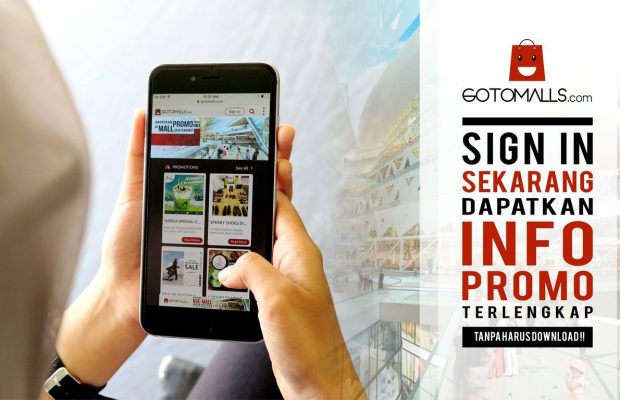
    Singapore-based company DominoPos has launched its proximity marketing and digital media platform GoToMalls.com in Indonesia.

    Offering a geo-located, profile-based smart directory of malls and stores in Indonesia, the website aims to revive offline transactions, “bringing the community’s spirit back to the malls through digital media support”.

    CEO Bruno Zysman says the platform helps offline retail brands publish their own call-to-action campaigns, and promote products or services on a digital platform to their target audience. It lists up to 375 malls and shopping complexes, along with 19,000 stores.

    To ease its entry into the Indonesian market, the site has partnered with telecommunications company PT Indosat, also known as Indosat Ooredoo, and ride-hailing app Grab.

    GoToMalls launched in Singapore in February and plans to expand further internationally.

  • Eye-pleasant artful NikeLab exhibition

    Eye-pleasant artful NikeLab exhibition

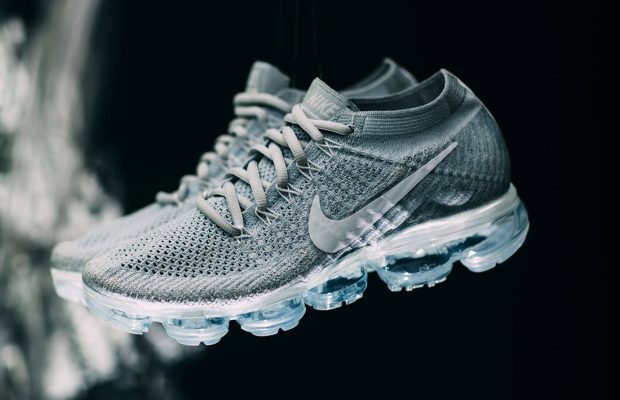
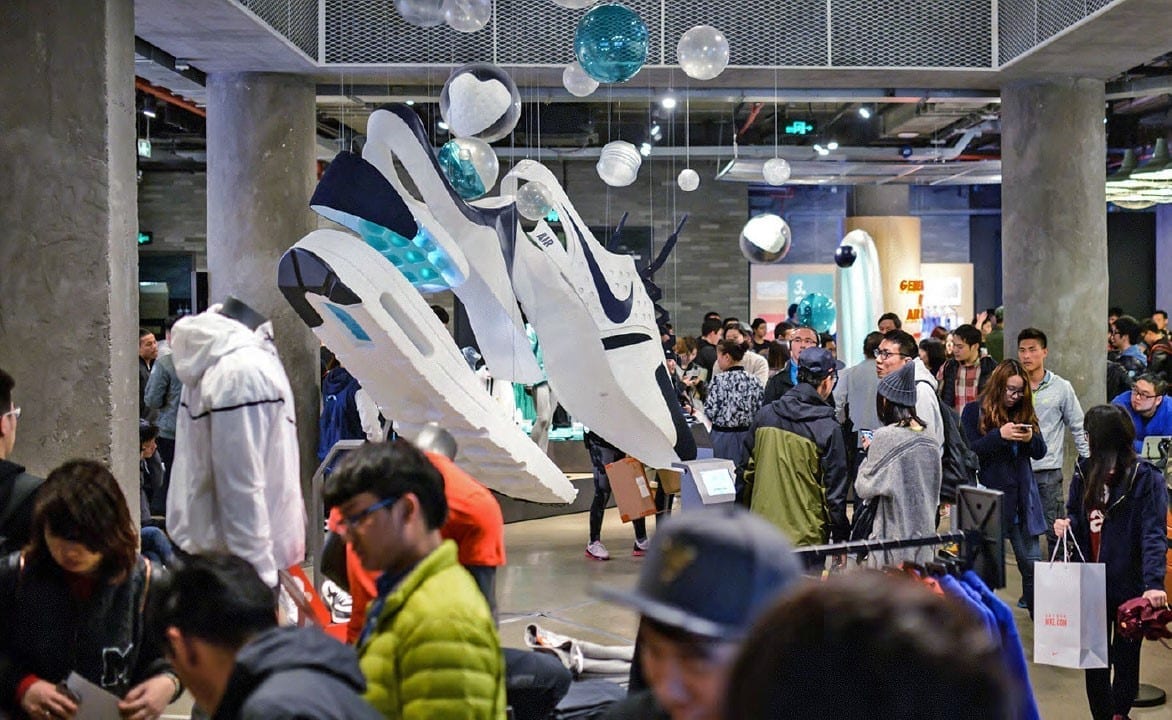
    A NikeLab exhibition in Hong Kong draws on artists to help launch its latest sneaker.

    It marks the rebirth of Nike Air via the Air Vapormax sneaker, which builds on nearly 30 years of Air Max legacy to provide lightweight, consistent cushioning that is both reliable and rigorous, says the shoe company.

    Inside Hong Kong Art Central’s space for Art Basel Hong Kong 2017, the NikeLab exhibition is dubbed “The Vision-Airs”. The installation was designed by Collective and showcases the work of artists Feng Chen Wang, WanBing Huang and Anals Mak of Jourden, plus photographer Laurent Segretier. Sound artist h0nh1m (Chris Cheung) is also featured with his latest “vapor-reactive” piece.

    The exhibition explores the techniques used to create the shoe, as well as its possibilities.

  • Lazada launching website to sell Taobao products to Singapore shoppers

    Lazada launching website to sell Taobao products to Singapore shoppers

    Alibaba’s bringing its teeming Taobao internet marketplace to Singapore.

    Alibaba Group Holding and Lazada Group are teaming up to sell select Taobao products direct to shoppers in the affluent island-state, striking their first partnership since the Chinese company took control of Southeast Asia’s largest e-commerce operator a year ago.

    Lazada is launching a dedicated website that links directly to Alibaba’s largest shopping platform, said Alexis Lanternier, chief executive officer of Lazada Singapore. To start with, the new site will add 400,000 Taobao products that aren’t available now to an existing lineup of about 5 million products, he said.

    In linking Taobao with Lazada, the two are trying to ease a process that’s gained momentum in recent years. Bargain hunters in Singapore already buy directly from Alibaba’s Chinese marketplace, an eBay-like online bazaar where small merchants and individuals hawk items from electronics to bed-sheets. Its items often go for a fraction of retail prices in Singapore, the world’s most expensive city according to the Economist Intelligence Unit.

    Many people however buy through agents who help with English translations, payments and deliveries – for a fee. That’s led to problems with returns, Lanternier said. Scams may be another issue: Taobao re-joined the Notorious Markets list last year, a name-and-shame pool of global markets the US Trade Representative considers rife with counterfeits.

    Taobao can be difficult to police because it’s an open marketplace, but Lazada will take swift action to protect consumers if it’s notified of fakes, Lanternier said.

    “We want to solve those difficulties, enabling an effortless way for them to shop,” Lanternier said, sharing the new initiative for the first time. “Now it’s all translated into English and you don’t have to worry about shipping options, payment method, returning. You are going to be able to track your order end-to-end.”

    The move is another small step abroad for Alibaba, which has ambitions to expand beyond a slowing Chinese home market. The company and Lazada are now preparing to deepen their operations in the fast-growing region, anticipating Amazon.com’s entry this year.

  • Tencent brand is still China’s most valuable

    Tencent brand is still China’s most valuable

    Chinese technology giant Tencent remains China’s most valuable brand, growing its worth 29 per cent to US$106 billion, according to the BrandZ top 100 most valuable Chinese brands report.

    It shows that technology brands continued to lead the way, with the Tencent brand strengthening its hold on the top spot thanks to the popularity of its social-media platform WeChat. Tencent was also one of three technology brands in the top 20 “risers” listing.

    With Tencent on the top 100 list are NetEase (31) and Sina (61). Making its debut in the 40th spot is e-commerce brand VIP.com.

    Web portal Sina’s initiatives in live video and self-broadcasting through its Weibo platform helped build its following among young people and attract advertising revenue, driving a 43 per cent rise in brand value to $900 million.

    NetEase, which makes online and mobile games and offers an e-mail service, grew 36 per cent to $2.6 billion.

    Sectors still dependent on the traditional economy, such as banks, insurance, and oil and gas, have declined 6 per cent in value. The exceptions are alcohol, and food and dairy.

    Several brands of baijiu, China’s traditional rice wine, have expanded distribution and adjusted pricing and marketing to reach a broader audience. This allowed them to make up for a decline in sales after government measures to limit extravagance at official events reduced demand for alcohol, especially premium brands. Moutai increased 41 per cent in value, entering the top 10 for the first time in ninth position.

    Some entrepreneurial Chinese brands are looking for overseas success before returning attention to their home market, such as digital brands Anker, DJI, Elex and Ninebot.

    Millennials are playing an increasing role in commercial and brand success in China, says the report. They tend to favour brands that are famous or trendy, and the research reveals the brand most successful at increasing millennial loyalty is mobile phone Oppo, up 157 per cent since 2014.

    “Chinese brands are taking the leap and going global on the back of three key factors: the country’s rising international stature, pressure to find alternative sources of growth as the domestic market slows, and increasing overseas consumer receptivity to Chinese brands,” says BrandZ global head Doreen Wang.

  • Alipay HK Strikes Deal with Standard Chartered to Expand into Hong Kong

    Alipay HK Strikes Deal with Standard Chartered to Expand into Hong Kong

    Alipay, China’s biggest payments service, has struck a partnership with Standard Chartered as the company looks to expand its footprint and deepen its mobile-payment push into Hong Kong.

    The company controlled by billionaire and Alibaba co-founder Jack Ma gained a license for e-payments from the Hong Kong Monetary Authority last year, and already began to roll out accounts denominated in the local currency back in October.

    Alipay HK is partnering with Standard Chartered in order to make it easier for Hong Kong residents to top up their account in HK dollars through online and mobile banking. Specifically, the unit of Chinese e-commerce giant Alibaba will work with Standard Chartered to facilitate Alipay payments via the bank’s merchant network in Hong Kong, while the bank will provide its users with digital ways to fund their accounts.

    The size of its newest partner in Hong Kong could bring Alipay to a considerable number of stores. The deal with Alipay will also allow Standard Chartered to target Chinese tourists particularly with Alipay users cannot link the HKD account to their existing yuan- denominated one, nor can they transfer money into the new account.

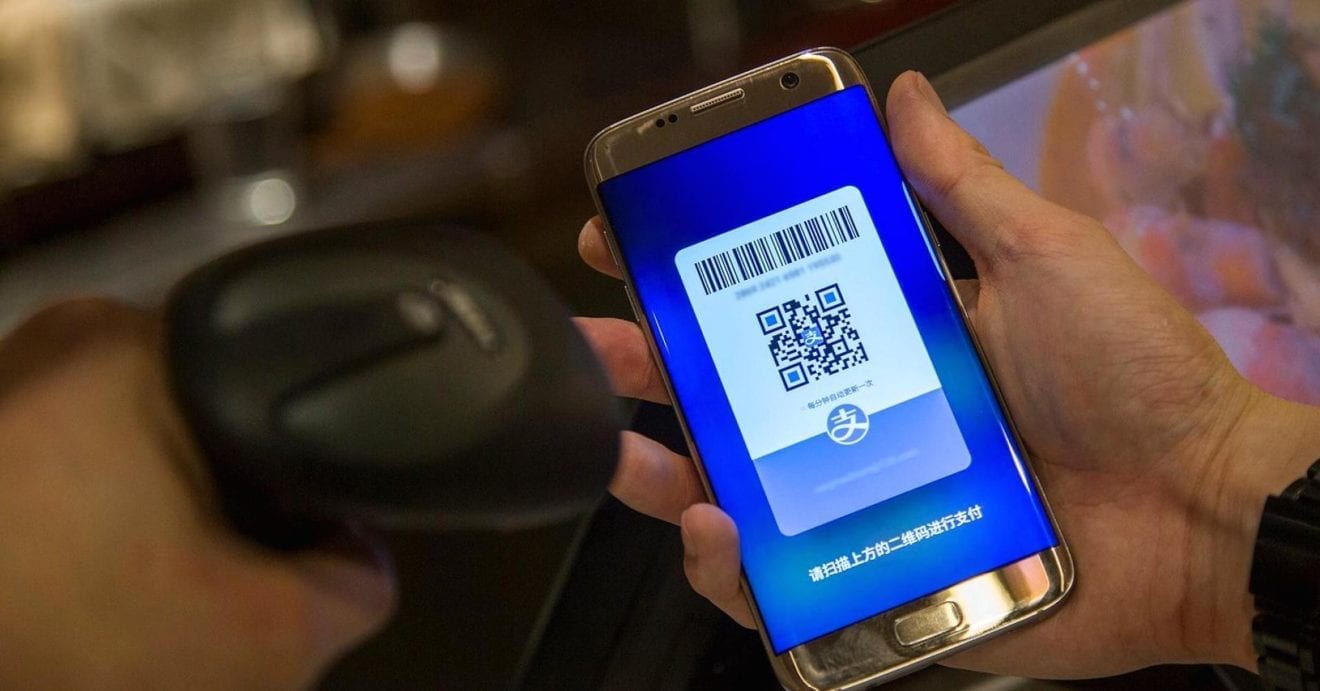
    Alipay, which is operated by Alibaba’s financial services arm Ant Financial, is a separate app on devices that allows customers to pay for their purchases in-store through opening the Alipay app, then scan a QR code provided by the retailer.

    Alipay holds nearly 70 percent of China’s third-party mobile payment market share and processed more than 380 million daily transactions as of June 2016.

    Vicky Kong, head of retail banking at Standard Chartered Hong Kong, said: “We believe the partnership with Alipay, the world’s largest online and offline payment platform with over 450 million active users, will enhance customer engagement with our existing clients on one hand, and help reaching out to new clients, especially the active online users on the other.”

  • China leads Nike sales growth

    China leads Nike sales growth

    Nike boosted earnings by 20.1 per cent in its latest quarter, on sales up a much more modest 5 per cent.

    While the bottom line was impressive – aided by a substantial reduction in costs – the top line growth trailed Adidas’ impressive 18 per cent growth achieved in 2016.

    In the three months to February 28, Nike sales totalled US$8.4 billion, up 7 per cent on a currency-neutral basis. Of that, the Nike brand accounted for $7.9 billion, driven by 15 per cent growth in Greater China, 10 per cent in Western Europe, 12 per cent in emerging markets and 8 per cent in Japan.

    Sales at Converse were up 3 per cent to $498 million.

    “The power of Nike’s diverse, global portfolio delivered another solid quarter of growth and profitability,” said Mark Parker, chairman, president and CEO of Nike.

    “To expand our leadership and ignite Nike’s next phase of growth, we’re delivering a relentless flow of innovation through performance and style, increasing speed throughout the business and creating more direct connections with consumers leveraging digital and membership.”

  • Mavenir unveils new cloud platform

    Mavenir unveils new cloud platform

    Mavenir has launched its cloud-based Rich Communication Services (RCS) Platform and Hub, further expanding its suite of flagship RCS solutions.

    The firm said the solution currently supports tens of millions of subscribers worldwide.

    It added that with its new RCS Platform and Hub, Mavenir provides communications service providers (CSPs) with an innovative approach to quickly and efficiently deploy secure and advanced communications, while capitalizing on new monetization services but without the high costs and complexity associated with large-scale network infrastructure projects.

    The Mavenir RCS Platform can be easily deployed either directly in the operator network, as a Mavenir-hosted model or managed across a hybrid model that results in a combination of both.

    This approach, allows CSPs to decide which functionalities they want to remain in their network, such as customer data – bringing back control to the operators and expanding their role in the digital economy.

    These new additions to Mavenir’s suite of RCS solutions, provides CSPs with greater control over their RCS deployment options, driving openness and interoperability, the company further said.

    Mavenir’s unique offering in RCS solutions is underpinned by its dedication to driving an industry-wide ecosystem, open to any business who plays a part in advanced communications. This will support the roll out of richer experiences to device users and provide CSPs with access to new monetization channels from enterprise application to person (A2P) flows to dynamic mobile marketing and chatbot frameworks.  Such a capability is critical, as CSPs move to NFV environments, and start to support Internet of Things (IoT) and 5G network traffic.

  • Jabong adds American fashionwear brand Forever 21 to its product portfolio

    Jabong adds American fashionwear brand Forever 21 to its product portfolio

    India’s leading online fashion portal Jabong has announced the addition of American fashionwear brand Forever 21 to its product portfolio. The brand, which is the 5th largest specialty retailer in the United States, will be available on Jabong in variants across the apparel, accessories and footwear categories such as play-in tops, dresses, t-shirts, cosmetics, intimates and shoes with prices ranging from Rs.499 to Rs.2400. 

    “At Jabong, we continuously strive to offer the best of global fashion brands to our shoppers. Forever 21 is a pioneer and global leader in the fast fashion category and its addition will strengthen the comprehensive line of finely curated international portfolio on Jabong,” said Gunjan Soni, Head of Jabong.

    “We are thrilled to launch on Jabong, which has carved a unique niche among the upmarket fashionistas of India who swear by the hottest international designs. The combined strengths of Jabong and Myntra help us cover a major share of the online fashion retail market and uniquely curate our products to cater to the shopper preferences on each platform. This complements our aggressive offline strategy and we are excited to herald a long association with Jabong,” said Abhinav Zutshi, India Business Head, Forever 21. Since 1984, Forever 21 has redefined fashion for the youngsters and has expanded its footprint in more than 47 countries worldwide. 

    With Forever 21, Jabong has now added 20 new brands on its platform in March itself and will be taking the number to 35 by the end of this month. Brands added to Jabong this month include New Era Caps, WROGN, Mothercare, Roadster, Cover Story, AAY, Zivame and Mast and Harbor among others. Jabong now has approximately 2000 brands in its product portfolio, out of which 50 brands have been launched in 2017 alone. Jabong’s Head, Gunjan Soni adds, “We are super-charged with an array of top label launches on Jabong this month, which has injected fresh energy in our team. We have more compelling labels in the offing and will continue to delight our shoppers with the latest and hottest in fashion.”

    Jabong is known to have introduced a multitude of fashion brands in India in the past such as TOPSHOP, TOPMAN, Dorothy Perkins, Missguided, Next to name a few.

  • Invapay, World First team on cross-border payments

    Invapay, World First team on cross-border payments

    Payment technology firm Invapay has teamed up with World First to allow clients making payments on its platform will be able to take advantage of purportedly favorable exchange rates and faster payments.

    Invapay has integrated World First’s API into its payments platform, so customers have real-time visibility of exchange rates. Allied to the Cashflow and Treasury optimization features of its existing platform, it is expected to give greater control and flexibility to company finance and treasury departments.

    “We identified a significant problem facing companies today and responded by developing a unique and exciting cutting edge solution which will bring huge and real benefits,: said Neil Radley, Director at Invapay.

    “We are delighted to have worked with the World First team, who share our belief in minimising transaction costs, to develop this unique solution which will benefit the 84% of companies who are dissatisfied with their current processes and foreign exchange costs.”

    Seth Harvey, Global Head of Partnerships at World First, commented: “We are delighted to be partnering with Invapay to offer a new solution that allows businesses to save money when making international payments. Invapay has demonstrated innovative thinking within the business to business payments space and our combined approach will offer companies a seamless service that removes the hassle of payments when trading internationally”.

    A day following the Invapay-World First partnership, the CEOs of Invapay and Optal announced an agreement to sell Invapay to Optal,  a provider of Mastercard payment products.

    “The acquisition of Invapay enables Optal to deliver a one-stop-shop for corporate B2B payables needs. Combined with our existing highly successful virtual payment solutions including virtual account numbers or VANs, Invapay completes our product offering, enabling us to offer genuine ‘pay anyone, anywhere’ capabilities,” said Optal CEO Rob Bishop.

  • Nokia, Facebook set transatlantic efficiency record

    Nokia, Facebook set transatlantic efficiency record

    Nokia and Facebook have announced they have set a new spectral efficiency record over a transatlantic subsea cable using Nokia Bell Labs’ new probabilistic constellation shaping technology (PCS).

    During the trial involving a 5,500km subsea cable between New York and Ireland, shaped 64 quadrature amplitude modulation (64-QAM) was used to achieve record spectral efficiency of 7.46 b/s/Hz.

    PCS uses shaped QAM formats to flexibly adjust transmission capacity to near the physical limits of a fiber link.

    The results showed an increase of nearly 2.5 times more capacity than the stated limit of the system, indicating the potential to upgrade the cable to 32 Tbps per fiber.

    Transmission tests validated the successful transmission of 8-QAM wavelengths running at 200 Gbps and 16-QAM wavelengths running at 250 Gbps, a first for a transatlantic transmission.

    “Facebook wants to increase the pace of innovation and adoption of next-generation optical technologies,” Facebook global optical network architect Dr Stephen Grubb said.

    “This field trial with Nokia demonstrates that the scalable optical technology of PCS together with narrow linewidth laser sources can achieve capacities extremely close to the Shannon limit. This ensures that we are both maximizing our investment in submarine cable systems, as well as continuing to drive the cost per bit of submarine transport lower.”

  • China’s Geely doubles earnings as Volvo tech boosts sales

    China’s Geely doubles earnings as Volvo tech boosts sales

    China’s Geely Automobile Holdings posted its biggest profit growth in eight years on Wednesday, as improved product design and engineering following its 2010 purchase of Sweden’s Volvo helped propel it to record sales.

    Geely, which also owns the maker of London’s black cabs, has already forecast a 31 percent jump in sales for the current year as affordable models introduced after the Volvo acquisition, such as its GC9 sedan and Boyue sport-utility vehicle, exceed initial estimates.

    Long seen as a no-frills brand, Geely has transformed itself into an automaker with up-market aspirations, using its Volvo research-and-development advantage to climb the sales table in the world’s largest auto market where it ranks around seventh.

    Come next year, Geely plans its next phase of expansion as it aims to become China’s first automaker to market its own brand – new Volvo collaboration Lynk & Co – in developed markets, beginning with Europe and the United States.

    Entering major markets with an unknown Chinese brand is an expensive risk, analysts say, but investors are unperturbed: Geely’s share price has trebled over the past 12 months.

    “It’s a total turnaround story,” said a fund manager at a Taiwan-based investment firm that bought a significant amount of Geely stock last year.

    “Before it was just a normal domestic brand, but after several new product launches it successfully elevated its brand image,” said the person who was not authorized to speak publicly on the firm’s investments and so declined to be identified.

    Geely’s China sales grew 50 percent last year to 766,000 vehicles, powered by the GC9 and Boyue, as well as small cars featuring Volvo technology. It aims to top 1 million this year, though could sell far more depending on market conditions, a Geely official with direct knowledge of the matter told Reuters.

    For 2016, net profit more than doubled to 5.1 billion yuan ($741 million), its strongest growth since 2008. The figure is set to rise 37 percent to 7 billion yuan in 2017, showed a Reuters poll of analyst estimates prior to Geely’s Wednesday filing.

    Geely shares were down 1.2 percent in early afternoon trading after the earnings release.

    OVERSEAS GAMBLE

    To be sure, growth has come at a cost. Geely and parent Zhejiang Geely Holding Group have spent 10 billion yuan on R&D in each of the past three to four years, or about 15 percent of current revenue, said spokesman Victor Yang.

    That compared with 2 billion yuan in 2015 at domestic rival BYD.

    But Geely’s domestic growth spurts could lessen as expansion in China’s overall passenger car market slows following the reduction of subsidies for small-engine vehicles, adding impetus to any international push.

    “The current focus of our work is firstly the pace of development in China and increasing our share of the Chinese auto market, then next we can focus our work abroad,” Geely Chairman Li Shufu told reporters in Beijing earlier this month.

    But entering markets where the brand is unknown is a gamble, and it could take years to gain traction, said James Chao, Asia-Pacific chief of consultancy IHS Markit Automotive.

    As there is plenty of room for growth in China, however, there is no need to be concerned about the move abroad, said fund managers at two investment firms that hold Geely stock.

    “If they do well abroad it’s a bonus, and if they don’t then it’s not a big reason to worry,” one of the managers said.

  • China Telecom revenue grows 6.4% in 2016

    China Telecom revenue grows 6.4% in 2016

    China Telecom has reported a 6.4% increase in operating revenue for 2016 to 352.28 billion yuan, as the company doubled its 4G subscriber base.

    Net profit for the year fell 10.2% to 18 billion yuan, due to the positive impact in the prior year associated with the sale of its tower assets to telecommunications infrastructure joint venture China Tower. Excluding this impact, profit would have grown 11.7%.

    Service revenue increased 5.6% to 309.64 billion yuan, with mobile service revenues up 10.5% to 137.61 billion yuan.

    Total mobile customers grew by 17.1 million to 215 million, giving China Telecom a mobile market share of 16.2%. Total 4G users doubled to 122 million, representing a penetration rate of 57% and giving China Telecom a total 4G market share of 16% – up 1.9 percentage points from end-2015.

    As a result of this growth, total 4G data traffic meanwhile increased by 130% during the year and mobile data revenues grew by 43%.

    Fixed service revenues meanwhile increased 1.9% to 172.03 billion yuan, with wireline broadband revenues up 3.3% over the prior year.

    China Telecom added 10.06 million fixed broadband subscribers during the year, taking its total to 123 million. FTTH subscribers accounted for 106 million of these customers, with total subscribers up 35%.