Author: Mei Ling Tan

  • Lotte affiliate to raise 360 bln won to cope with THAAD fallout

    Lotte affiliate to raise 360 bln won to cope with THAAD fallout

    A unit of Lotte Group, a South Korean retail giant currently receiving the brunt of China’s apparent economic retaliation in protest over Seoul’s deployment of a U.S. missile defense scheme, said Friday that it plans to raise a total of 360 billion won (US$320 million) via stock sales and loans.

    In a regulatory filing, Lotte Mart, the operator of the group’s hypermarket chain, said its board of directors has decided on the proposal to sell stocks and borrow money.

    The proceeds from the stock offering and loans will be used to cover the costs of buying products and giving wages to its employees in China, according to company officials.

    The China-based retail outlet unit has been teetering on the brink of collapse as protracted business suspension by Chinese authorities is leaving the firm with snowballing losses.

    China has ratcheted up pressure against Lotte, South Korea’s fifth-largest family-controlled firm, since it handed over one of its properties to the Korean military so it can be used as a site for a U.S. Terminal High Altitude Area Defense (THAAD) battery.

    Seoul’s deployment of the THAAD on its soil has angered Beijing, who claims that it will be used to monitor its own military.

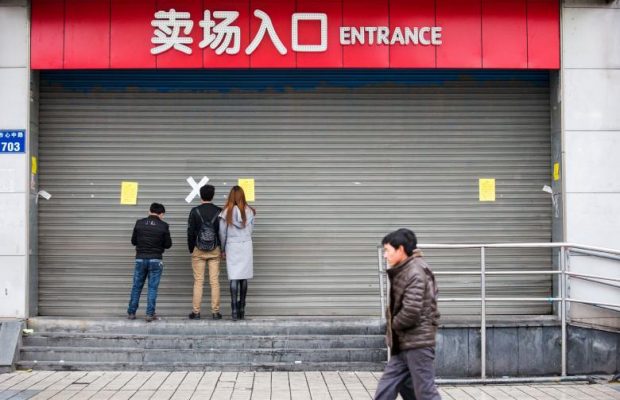
    According to Lotte, 90 Lotte Mart stores operating in China, Lotte’s hypermarket chain, have been placed under suspension or on voluntary suspension as some Chinese consumers continued to stage anti-Korea protests near the stores.

    That represents nearly 90 percent of 99 Lotte Mart outlets in China that have been forced to close down temporarily. Lotte has some 120 retail outlets operating in the neighboring country, including five department stores.

    Lotte is predicted to suffer some 116.1 billion in losses in its Lotte Mart revenue if the shutdown continues for a month. Last year, sales from China-based Lotte Marts reached 1.13 trillion won, or 94 billion won on a monthly basis, according to the firm.

    The profitability of Lotte’s retail outlet business has been expected to further worsen since it is required to pay full wages to local employees for the first month of the suspension.

    The suspension means a serious blow to Lotte, since its China-based business has long been running a deficit even though it has been in the world’s second-largest economy for some 10 years.

    In 2016, Lotte recorded a combined 207 billion won deficit in its department store and outlet divisions, of which about 80-90 percent came from its Chinese units.

    Industry watchers voiced concerns that Lotte may have to consider a pullout given that losses from the shutdowns are growing too fast for the firm to withstand.

    But, in an interview with foreign news media, Shin Dong-bin, chairman of Lotte Group, flatly denied such speculation saying that the company has no intention of pulling out of China.
  • 6ixty8ight expansion plan to Korea

    6ixty8ight expansion plan to Korea

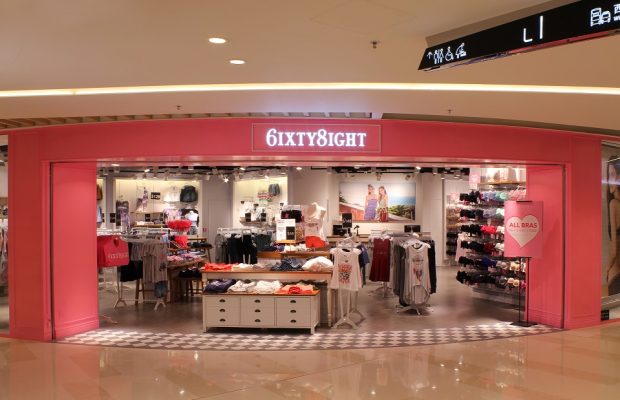
    Hong Kong-headquartered youth fashion brand 6ixty8ight has chosen South Korea for its first international foray outside Greater China.

    The company will open a flagship store in Myeongdong, downtown Seoul, at 992 sqm, its third largest footprint. A second store will follow on the fashion street of Garosu-gil in Sinsa-dong of southern Seoul.

    Owned by Hop Lun Group, which has for 25 years manufactured lingerie for many of the world’s largest brands, 6ixty8ight sells affordable, fashionable lingerie and casual wear designed specifically for the Asian female figure.

    Over the last two years, the retail brand has undergone a revamp and launched a major expansion, now numbering more than 130 stores through Hong Kong and Mainland China.

    Last year, in an exclusive interview, 6ixty8ight COO Anders Heikenfeldt said the secret to the brand’s new success has been a single-minded focus on who it is, what it stands for and who its customers are – a narrow band of 15 to 30 years.

    “We have a unique offer. Our value proposition is different to H&M, Zara, Forever 21 or Uniqlo – they go broad trying to cover menswear, women, kids – very mass – and they have something for everyone under the one roof.

    “Our strategy is to be very different and to be very true to our target. That’s our DNA. We are not going to divert into men or older customers.”

    At the time, Heikenfeldt said the company was in the final stages of planning to enter two international markets. It has not yet revealed the second.

  • Philippines gov’t to sell $596M retail treasury bonds

    Philippines gov’t to sell $596M retail treasury bonds

    The Philippines plans to sell at least 30 billion pesos ($596 million) worth of three-year retail treasury bonds to provide small investors with safe investment options, the Bureau of Treasury said on Thursday.

    It would be the second retail bond issue under President Rodrigo Duterte’s nine-month-old government, which in September 2016 raised as much as 100 billion pesos from such offering.

    “We want more Filipinos to get into the habit of investing, and become more financially aware of how their money could work harder for them,” National Treasurer Rosalia de Leon said.

    Public offering runs from March 28 to April 6, with investors given an option to earn from a minimum investment of 5,000 pesos.

    The RTBs earn a fixed interest rate based on prevailing market rates with interest coupons paid quarterly.

    The treasury bureau has tapped First Metro Investment Corp and Land Bank of the Philippines as joint lead issue managers.

    BDO Capital & Investment Corp, BP Capital Corp, Development Bank of the Philippines, China Bank Capital Corp and SB Capital Corp are joint issue managers.

  • Facebook launches new shopping format

    Facebook launches new shopping format

    Global brands Adidas and Tommy Hilfiger are among the first names to use Facebook’s newly launched shopping ad format, which incorporates creative media into product pages when selling.

    The social media giant said the new platform, dubbed ‘collection’, increases the “likelihood of discovery and a purchase” by featuring a primary creative video or image above relevant product images.

    Global sports brand, Adidas, said it used the platform to drive sales for its a new garment and complementary products, and saw a 5.3x return on ad spend

    “We used collection to showcase a video highlighting the technical features of the Z.N.E. Road Trip Hoodie,” said Rebecca Watts, performance marketing senior specialist, Adidas.

    “People who tapped on the ad were instantly taken to a full-screen shopping experience that included complementary Adidas products to complete the look.

    Meanwhile, American fashion brand, Tommy Hilfiger, said the platform creates a consumer experience that reflects how current generations of digital natives interact with their favorite brands. The fashion brand said it used the platform to for a marketing campaign targeting smartphones and saw a 2.2x higher return on ad spend.

    “Our mission was to democratise the runway and make every look immediately available to all consumers worldwide,” said Avery Baker, chief brand officer, Tommy Hilfiger.

    “We took our video assets to the next level, through integrating shopping functionality. The results exceeded expectations, generating an ROI increase of over 200 per cent.”

    Facebook said the platform was spurred by research that showed three in four consumers say that watching videos on social media influences their purchasing decisions and that 45 per cent of all shopping journeys now contain a mobile action,

    The US corp also said it will start a test of a new outbound clicks metric over the coming weeks, which will show the number of clicks leading people off of Facebook. Marketers with ads that appear on Instagram will also see outbound clicks reported.

  • Vietnam grocer Saigon Co.op plans nearly 600 new stores

    Vietnam grocer Saigon Co.op plans nearly 600 new stores

    Vietnam grocer Saigon Co.op has revealed an ambitious store rollout program for 2017, adding nearly 600 stores by the year’s end.

    The company will open 500 convenience stores, most of them in Ho Chi Minh City and the southern provinces of Vietnam.

    It will also open 10 Co.op supermarkets, one Co.op Xtra hypermarket, one Sense City mall and 65 Co.op Food stores.

    Saigon Co.op cashier

    The company also appears to be broadening its focus to serve middle-class and high-earning consumers with plans to strengthen its organic product distribution. Chairman Diep Dung said the retailer will improve the quality of its goods and boost customer service.

    The expansion is expected to add 13 per cent sales growth for Co.op this year.

    Last year, Saigon Co.op opened 42 new Co.opmart supermarkets, Co.op Food stores, Sense City and Co.opSmile convenience stores. As a result, the retailer saw 11 per cent growth in revenue.

  • WeChat’s transformative role for beauty brands in China

    WeChat’s transformative role for beauty brands in China

    Both beauty and luxury fashion brands in China have been utilizing WeChat—Chinese consumers’ all-in-one mobile app—to promote brand awareness and interact with their audiences. A new finding on audience engagement with beauty brands on WeChat in 2016 challenges the traditional role of the app as a content-producing platform. The emerging trend seems to suggest that content is no longer as important as it used to be, leading beauty brands to use a number of alternative methods to drive engagement. From a one-sided, brand-directed conversation to a more interactive, one-on-one communication tool, the change of users’ preference along with the evolving platform itself has shaped the app’s new identity—a central hub that encompasses customer relationship management (CRM), commerce, online-to-offline (O2O), content, and more.

    In the latest “Beauty China 2017” report that studies the Digital IQ Index of 98 beauty brands in China, digital intelligence firm L2 found there was a dramatic drop in viewership of WeChat posts by these brands. Statistics show 84 percent of all posts accumulated less than 25,000 views. In previous years, posts by well-known brands, including Shiseido and Lancôme, could easily generate more than 50,000 views. These brands accordingly decreased the frequency of their posts from 2.78 times per week in Q4 2015 to 1.73 in Q3 2016. In spite of the dramatic drop in post viewership, the overall level of engagement between brands and customers on the app was still able to increase slightly from the year before.

    A basic interpretation of the figures suggests that followers of these beauty brands on WeChat seemed to lose interest in reading posts in 2016. Indexed brands thus recognized the lackluster response early on and pushed out a number of alternative ways to interact with their audience so that the overall level of engagement was not largely affected. According to the report, brands that have performed well digitally have used diverse ways to prevent a sharp drop in audience engagement due to decreasing interest in blog posts last year. The methods range from sampling campaigns and live-streaming events, to daily check-ins, loyalty programs, and gamification.

    Ever since WeChat became one of the most powerful communication platforms in China, blog posting has been frequently used by brands to interact with their audience. This one-sided, content-dominated method of communication helps many brands grow their number of followers and raise brand awareness among Chinese consumers when they’re starting out.

    However, late last year, digital marketing agency Curiosity China noted that the value of WeChat had shifted away from “pushing as many messages as we can to an underdetermined audience.”

    In a content-saturated media world, Chinese WeChat followers expect to receive more value-added services and experiences from brands. A close look at the digital strategy of premium cosmetic brand Estée Lauder, the “sole genius” brand in L2’s 2016 Digital IQ Index, can provide insights into what Chinese customers like. On WeChat, the brand offers a wide range of customer-centered services. For example, followers can easily enroll in its loyalty program simply by providing their phone number.

    In 2017, if beauty and luxury brands hope to continue to benefit from WeChat, it is time for them to recognize “(the app) is not a mass communication platform, but instead ideal for one-on-one communication,”. “Instead of being a content-driven platform, for brands it is ideal for CRM and commerce.”

    -Jing Daily

  • Signs abound that the worst may be over for Hong Kong retailers

    Signs abound that the worst may be over for Hong Kong retailers

    Hong Kong’s retailers and mall operators are crossing their fingers in the hope that the signs of recovery in tourist arrivals and the return of spending aren’t flashes in the pan.

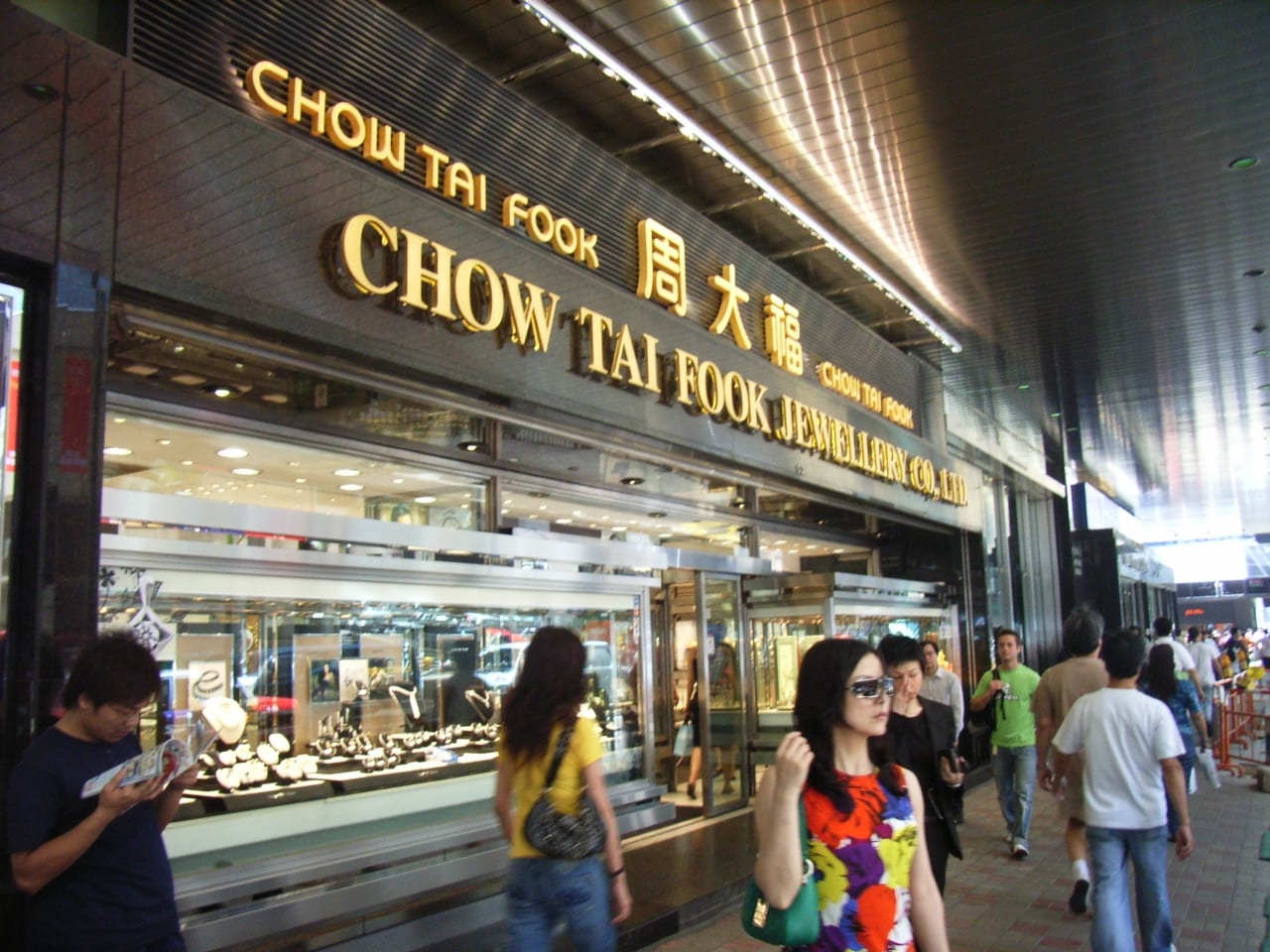
    Jewellers like Chow Tai Fook and retailers are reporting that the pace of their sales declines have slowed, indicating that the struggling industry may have finally found a bottom.

    Hong Kong used to be the favourite shopping destination for mainland Chinese tourists, lured to the city by its wide selection of tax-free brands and cheaper currency.

    Retail sales dwindled since 2014 amid Beijing’s anti-corruption campaign started a year earlier, local backlash against the hordes of mainland tourists thronging Hong Kong malls and the strength of the Hong Kong dollar.

    As tourist numbers started to recover in the past few months, mall developers and clothes vendors are becoming more optimistic towards their profit prospects.

    SEE ALSO: Red Valentino opens new Hong Kong store, debuts Walky Land collab

    “The signs of bottoming out are visible, as same-store gross profit has stopped declining, after a period of negative growth for more than one year,” said Tsin Man-kuen, chairman of fashion brand Bossini, whose same-store gross profit declines slow to 6 per cent in the second half of 2016 from the 14 per cent the same period a year ago.

    Wharf Holdings, the city’s biggest mall operator, said tenants’ 2016 sales decline at Harbour City slowed to 10 per cent at HK$27.7 billion, compared with the 15 per cent first-half slump. At Times Square in Causeway Bay, the sales drop narrowed to 11 per cent, from 16 per cent over the same period.

    The Sogo department store in Causeway Bay, which contributes to 87 per cent of the revenue of Hong Kong-listed Lifestyle International, said its sales decline slowed in the second half.

    Samsonite International, the world’s largest luggage maker, said its Hong Kong sales drop narrowed to 7 per cent in the second half of 2016 from the 16 per cent decline in the first half, adding the market has shown “early signs of stabilising”.

    Analysts largely agree with the cautiously optimistic view, citing a recovery in inbound tourism and improving consumer sentiment in the mainland.

    Mainland visitor numbers grew 6.1 per cent in December and 7.7 per cent in January, compared with a 6.7 per cent drop in the entire year of 2016.

    The city’s retailers can also benefit from a wealth effect caused by rising property price in the mainland – meaning consumers spend more because of a strong sense of financial security, analysts said. However, some warned that mainland tourists who opt for Hong Kong are no longer the wealthiest batch, and a weaker yuan means they are not able to buy as much as they used to.

    “The spending power per head for mainland Chinese tourists is decreasing,” Walter Woo, an analyst with China Merchant Bank, said. “But I’m still quite positive on the Hong Kong retail segment because the traffic has been rising.”

  • MyTheresa.com takes aim at Korea

    MyTheresa.com takes aim at Korea

    European luxury online retailer MyTheresa.com is launching a Korean-language site.

    Selling luxury womenswear and accessories from such brands as Chloe, Gucci, Miu Miu and Stella McCartney, the e-tailer says it has seen “huge growth potential” in South Korea.

    “The Korean luxury market is moving quickly to digital. Ever since our first activities in Korea we have seen a massive consumer shift to digital and a triple-digit growth in the market,” says MyTheresa.com president Michael Kliger.

    The online fashion destination’s Korean website will offer free exchanges and returns within 30 days, including a free collection service, as well 72-hour deliveries. It aims to offer a more personalised service with a Korean-speaking customer care team.

    Korean customers will be able to pay in euros if using American Express, MasterCard or Visa.

    Launched in 2006, MyTheresa.com was acquired by American company Neiman Marcus Group in 2014. The German multi-brand retailer delivers to more than 120 countries with websites available in Arabic, Chinese, English, French, German and Italian.

  • Amazon Japan adopts UnionPay to attract Chinese shoppers

    Amazon Japan adopts UnionPay to attract Chinese shoppers

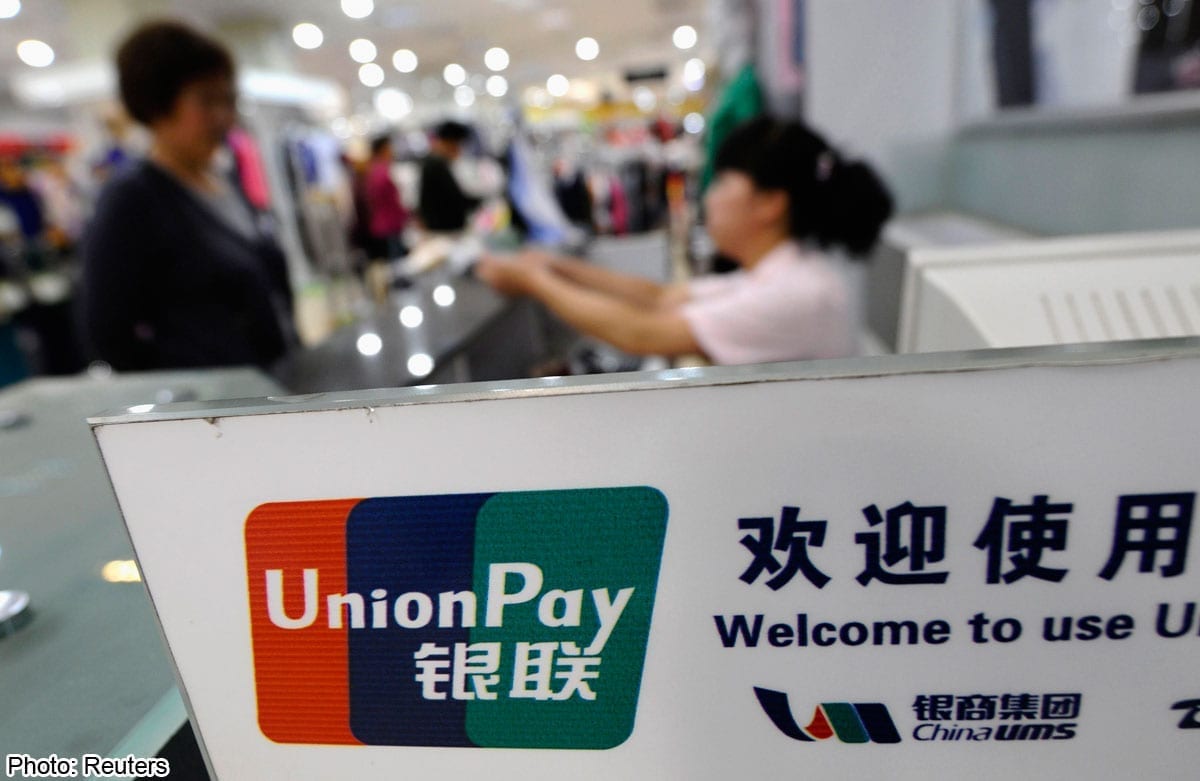
    Amazon.com Inc.’s website in Japan will start accepting UnionPay cards, as the web retailer steps up efforts to sell more merchandise to Chinese shoppers across Asia.

    China UnionPay Co., with more than 6 billion cards in circulation, is now a key rival to Visa Inc., Mastercard Inc. and other issuers and has become an important way for retailers around the globe to attract Chinese tourists and consumers. UnionPay can now be used across Amazon Japan’s website from Wednesday, the Seattle-based company said.

    Amazon, which debuted in Japan in 2000, rolled out a Simplified Chinese-language version of its website last year to cater to booming demand by shoppers seeking everything from Japanese books and music to cosmetics and baby products. The number of online customers from the mainland rose fivefold since early 2016, according to Jasper Cheung, president of Amazon Japan. Amazon’s revenue in the country rose 31 percent to $10.8 billion in 2016.

    “We continue to drive more selection available for export, and we’ve increased it by 50 percent,” Cheung said. “The biggest-selling categories have been books, health and beauty, baby products and kitchen appliances.”

    Amazon Japan is catering to an emerging class of consumers who are willing to shop online within Asia, and offers reduced shipping rates to homes and businesses in mainland China, Macau, Hong Kong, Taiwan and South Korea. E-commerce demand from China to Japan alone is projected to almost triple to 2.34 trillion yen ($22.5 billion) in 2019, according to Japan’s Ministry of Economy, Trade and Industry.

    Chinese tourists, now a constant presence in Tokyo’s stores, often stock up on authentic Made-in-Japan products during their visits to the archipelago. The number of Chinese tourists in Japan rose 28 percent last year to 6.4 million visitors.

  • Japan duty-free on arrival shops planned

    Japan duty-free on arrival shops planned

    With upcoming tax reforms, Japan duty-free on arrival stores could soon be opened.

    A Narita International Airport Corporation official says arrival channels would be permitted as part of the update of tax regulations, says Narita International Airport Corporation retail official Hiroomi Eguchi.

    He says details still need to be worked out with Customs and Immigration at the airport, and the management team is hopeful Narita will be first to open arrivals duty-free stores in Japan, which could happen “within months”.
    Liquor, tobacco and cosmetics are likely to be key categories, with inbound Japanese the main target audience.

    “It could appeal to returning Japanese who do not want to carry bottles of liquor around on their trip, and also be a convenient last-minute shopping option,” says the airport company.

    The tax change is also seen as a big boost in particular for the newly privatised Kansai and Sendai International Airports.

  • China’s online retail market is expected to reach RMB 1.3 trillion in 2021

    China’s online retail market is expected to reach RMB 1.3 trillion in 2021

    Despite rapid growth in recent years, the Haitao market is expected to peak within China’s overall online retail market. New research from Mintel reveals that in China the total combined online cross-border e-commerce market, including Business-to-Business and Business-to-Consumer e-commerce, grew by a factor of 10, from RMB 53 billion in 2011 to an estimated RMB 626 billion in 2016, representing a CAGR (compound annual growth rate) of 64%. From 2016 to 2021, growth is expected to slow to a still-strong CAGR of 15%, to reach a total value of RMB 1.3 trillion (RMB 1281 billion).

    Today, the majority of Chinese consumers shop for foreign imported products from domestic shopping websites (73%), compared with only one quarter (27%) who shop from overseas retail websites. Indeed, more than double the proportion of consumers buy from physical stores within China (56%), rather than from overseas shopping websites.

    There is a clear association among Chinese consumers for some products to be more desirable from certain countries. Mintel research reveals that 31% of consumers buy imported food from Taiwan; 36% buy alcoholic drinks from France (principally wine); and 45% buy beauty and personal care products from South Korea.

    SEE ALSO: China retail sales grow slower 9.5% in first two months

    According to Mintel, the only territory seeing an increase in purchasing among urban Chinese consumers over the past two years was France. Of those who have bought imported products online, 16% bought imported products from France in 2016 up from 15% in 2015. Of those who have bought imported products this year, 20% have bought beauty and personal care products from France, while 36% have bought alcoholic drinks, including wine.

    Matthew Crabbe, Director of Research, Asia-Pacific at Mintel, said:

    “While the Haitao market has seen rapid growth over recent years, and should maintain strong growth for the foreseeable future, it is likely to peak soon as a proportion of online retail in China. This does not stop the Haitao route to Chinese consumers from offering significant potential market opportunities to foreign brands, but it does mean that Haitao is likely to be more relevant to brands looking at initial market entry. Retailers and brands should therefore play to their different country specialities when attempting to differentiate from their competitors.”

    When choosing where to buy imported products online, Chinese consumers who have bought imported products online rank proof of quality of products as important (68%), followed by ability to use third-party payment systems (44%). They also want detailed product information (36%) and Chinese-language customer service (25%).

    Additionally, four in 10 (39%) purchasers said they would like to see a better choice of payment options on overseas online shopping websites. Currently, 35% are less confident about the returns policies of overseas websites than they are of domestic online shopping websites.

    Crabbe added, “As well as providing a better and more entertaining experience for Chinese online shoppers of imported foreign products, brands and retailers can improve by providing better practical solutions. Offering better delivery, refund and returns options is a key area where overseas online retail websites can improve, as compared to domestic websites. This does create logistical issues, however, but having links through domestic online retail portals can help combat this.”

    Mintel research reveals that 62% of surveyed consumers who have purchased overseas products agree that online shopping for imported products lacks the excitement of shopping when travelling overseas, with 20% strongly agreeing with this. Additionally, 34% of consumers agree that they are excited when shopping from websites that run interesting advertising campaigns.

    “When selling foreign products online to Chinese consumers, brands and retailers really need to create a sense of excitement and entertainment about the whole process if they are to stand out in an increasingly competitive market. Simply offering a new product is no longer enough.” Crabbe concluded.

  • Concept store Uniqlo Move opens in Tokyo

    Concept store Uniqlo Move opens in Tokyo

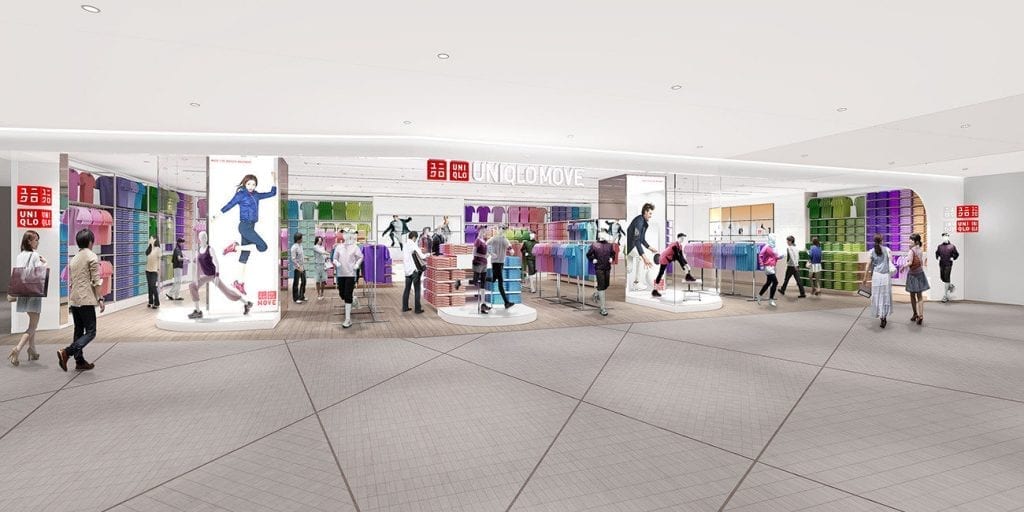
    A lifestyle-focussed concept store, Uniqlo Move, has been launched in Tokyo by the Japanese fashion basics retailer.

    It features its LifeWear range of activewear in a space on the eighth floor of Shinjuku Takashimaya department store.

    Sections of the 75 sqm store will be arranged according to movement, ranging from everyday life to exercise. Not only will the store offer products and visuals different to Uniqlo stores, but it will also act as an information hub for tips on making everyday life “more active and comfortable”, says the retailer.

    Dubbed “The Science of Lifewear” in its entirety, the brand’s first global campaign launched last year, being described by creative director John Jay at Uniqlo parent company Fast Retailing as “the ongoing innovation of simplicity”.

    As the range was developed last year, mountaineer Marin Minayama has appointed the brand’s first female ambassador.

  • India poised to be third largest consumer economy

    India poised to be third largest consumer economy

    In less than a decade, the world’s widget makers, entertainers, and beauty products will be focused on three core economies: the United States and China, of course, and in third place and gaining fast: India. They’re young. They’re the poorest of the big emerging markets, so have lots of momentum on their side. And they’re tech savvy smart. India is the new China. If you have something to sell, India is now an on-radar must.
    The Boston Consulting Group (BCG) said in a report released on Tuesday titled The New Indian that the country will be the third largest consumer market in the world by 2025.

    Rising incomes is the biggest driver here. Although poor, income distribution is evolving even as the population of one-percenters rises. In 2005, some 44% of the country were considered struggling, with 42% just getting by. Today, the extreme poor rural Indians account for 31% while greater number of them have moved up the ladder, accounting for 45% of the working class. Between 2005 and 2016, what BCG refers to as the “aspirers” — or the upwardly mobile — went from 8% of Indian households to 15% and by 2025, 20%. Affluent Indians have gone from 3%, or roughly seven million households back in 2005 to 17 million last year. That is seen rising to 33 million by 2025.

    And for the super elite, those who are buying Tata Motors’ Jaguars and Land Rovers, the numbers went from 3.1 million in 2005 to 6.5 million last year. By 2025, it will more than double to 15.8 million, based on BCG analysis.

    For businesses, these new consumers, and shifting consumer tastes, have big implications for companies looking to build their business in India.

    BCG’s report said that Indians are no longer as fascinated as they once were with foreign goods. Some 60% prefer and are willing to pay extra for Made in India. They are increasingly interested in learning about their own local roots.

    Trends such as family generations splitting up and getting their own homes has been a factor in big cities like Mumbai, but as adult children move out of their parents homes, they need apartments.

    Women in India are also becoming more of a force. Women rights are becoming front and center in India, and women are receiving better healthcare than they ever did, and more relevance in the media. The most important factor is educational opportunity, BCG says. From 2005 to 2014, the enrollment rate of girls in secondary education went from 45.3% to 73.7%. It’s now greater than that of boys in the high school level.

    Younger women have bridged the gap in higher education too. Their enrollment rate is 20% versus 22% for young men. This shift will have a broad impact on societal factors long term, such as workforce demographics and economic independence.

    Long term businesses in India may have to “fundamentally rethink their business models, including product offerings, consumer engagement and marketing” to the Indian consumer, the consultant firm believes.

  • Record US$1.1 billion profit for Hermes

    Record US$1.1 billion profit for Hermes

    French luxury goods brand Hermes made a record net profit last year of €1.1 billion (US$1.19 billion), doing “better than we expected”, according to CEO Axel Dumas.

    “We are entering this year on a solid base, but remain cautious in view of an uncertain environment.”
    Known for its $10,000 Birkin bags and $400 printed silk scarves, Hermes says its net profits rose by 13 per cent while its operating margin hit an historic high of 32.6 per cent of sales against 31.8 per cent in 2015.

    Its sales growth mainly stemmed from the strong performance of its leather goods, which accounts for half of group sales. Other divisions also performed well with the exception of its watches unit.

    Hermes joined other luxury companies such as Kering and LVMH in reporting an improvement in the luxury goods sector, which has been hit by slowing demand in China as well as terrorist attacks in France deterring tourism in Europe.

  • Amazon Japan is second biggest foreign market after Germany

    Amazon Japan is second biggest foreign market after Germany

    Online retail giant Amazon has revealed Germany was its biggest market outside the U.S. in 2016. However, Japan, coming in second for total country sales, experienced the most percentage growth last year, up double-digits on the back of heavy investment in distribution and the increase of China-focused tactics.

    On a US dollar basis, Amazon Japan sales leapt 30% in 2016 to US$10.7 billion (¥1.16 trillion). Amazon Germany gained just under 20% and the UK by 5.6%. US sales rose 28%. As a result Japan has moved ahead of the UK to become the U.S. giant’s second biggest overseas market.

    It’s also the first time a foreign firm has surpassed ¥1 trillion in Japan, making Amazon the most successful international retailer to operate in the archipelago nation.

    While Yahoo and Rakuten serve as rival platforms in the local market, Amazon Japan’s strong investment in its own distribution centre network is paying off. Amazon Japan has 12 centres and four Prime Now centres, making it easy for the e-tailer to sell directly via its marketplace vendors.

    Amazon Japan has also managed to poach talent from other consumer goods businesses, since its debut in 2000.

    On a consumer level globally, the Amazon brand sits favourably. Some 67% of Amazon’s sales came from direct sourcing last year and 17% from third party vendors on Amazon Marketplace, according to a recent survey.

    And Amazon is winning across lifestyle and fashion categories.

    “The biggest-selling categories have been books, health and beauty, baby products and kitchen appliances,” Jasper Cheung, president of Amazon Japan, told Bloomberg.

    Cheung was speaking to media as Amazon revealed this week its website in Japan will start accepting UnionPay cards, in an effort to sell more merchandise to Chinese shoppers across Asia. In 2016, Amazon Japan launched a Simplified Chinese-language version of its website, as the volume of mainland Chinese shoppers continues to rise in Japan, up 500%, according to Cheung.

    Meanwhile, e-commerce demand from China to Japan alone is projected to almost triple to 2.34 trillion yen ($22.5 billion) in 2019, according to Japan’s Ministry of Economy, Trade and Industry.