Author: Mei Ling Tan

  • Shinsegae department store opens Tesla charging stations

    Shinsegae department store opens Tesla charging stations

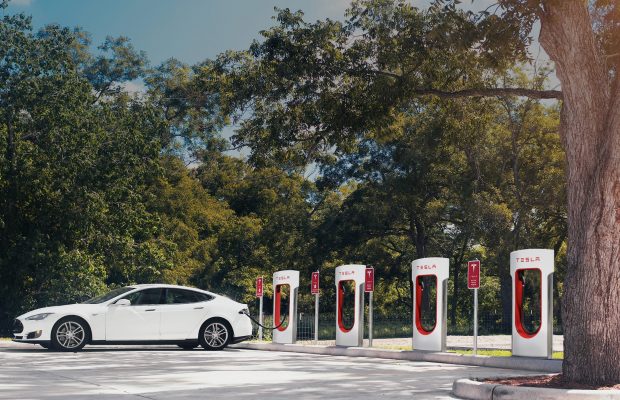
    Tesla has completed the installation of three Destination Chargers at Shinsegae department store in the Gangnam, Seoul.

    The move follows the opening of two showrooms in the city last month as the brand picks up momentum with its South Korean operations.

    It was the second set of Tesla chargers introduced at a Shinsegae outlet after another batch was installed at the Yeoju Premium Outlets.

    Tesla charging stations 3

    The Korean giant Shinsegae Group signed a partnership with the American automaker last year, planning to equip 25 of its locations with Tesla’s charging stations this year.

    One of the two Tesla stores that opened last week is located in Starfield Hanam, the largest shopping complex in Korea, which opened last year under a Shinsegae-Taubman partnership.

  • Diesel makes Myanmar debut at Yangon airport

    Diesel makes Myanmar debut at Yangon airport

    Diesel has opened a new monobrand store in Yangon airport as the brand makes its debut in the Myanmar market and reinforces its presence in global travel-retail.

    With the new 100sq m store, Diesel opens the doors to its renewed retail design concept. The store is the first monobrand boutique for Diesel across Asian travel-retail developed in collaboration with Japanese architect firm Wonderwall, headed by interior designer Masamichi Katayama.

    The Tokyo-based team, in collaboration with Diesel Artistic Director Nicola Formichetti, envisioned a simple yet unexpected concept: the idea of an apartment space, like a symbolic new house for the brand. The aim is to create a distinctive atmosphere, combining it with the brand’s identity, where the customer can feel “at home”.

    The new opening coincides with the perfect season for travellers to explore the Spring Summer 2017 Collection, ranging from apparel to accessories for women and men, not to mention the wide selection of denim and joggjeans. The Spring Summer offer is renewed every season with new fits and washes for denim, while innovative materials and unique fabrics are incorporated into  the authentic joggjeans.

    Diesel stated: “The travel-retail channel is extremely crucial for the brand, in fact Diesel is reinforcing its presence in the global travel-retail market and to confirm this, future openings are planned in Singapore, Waikiki and Guam.”

  • Snapcart raises US$3million in quest for Southeast Asian offline retail data

    Snapcart raises US$3million in quest for Southeast Asian offline retail data

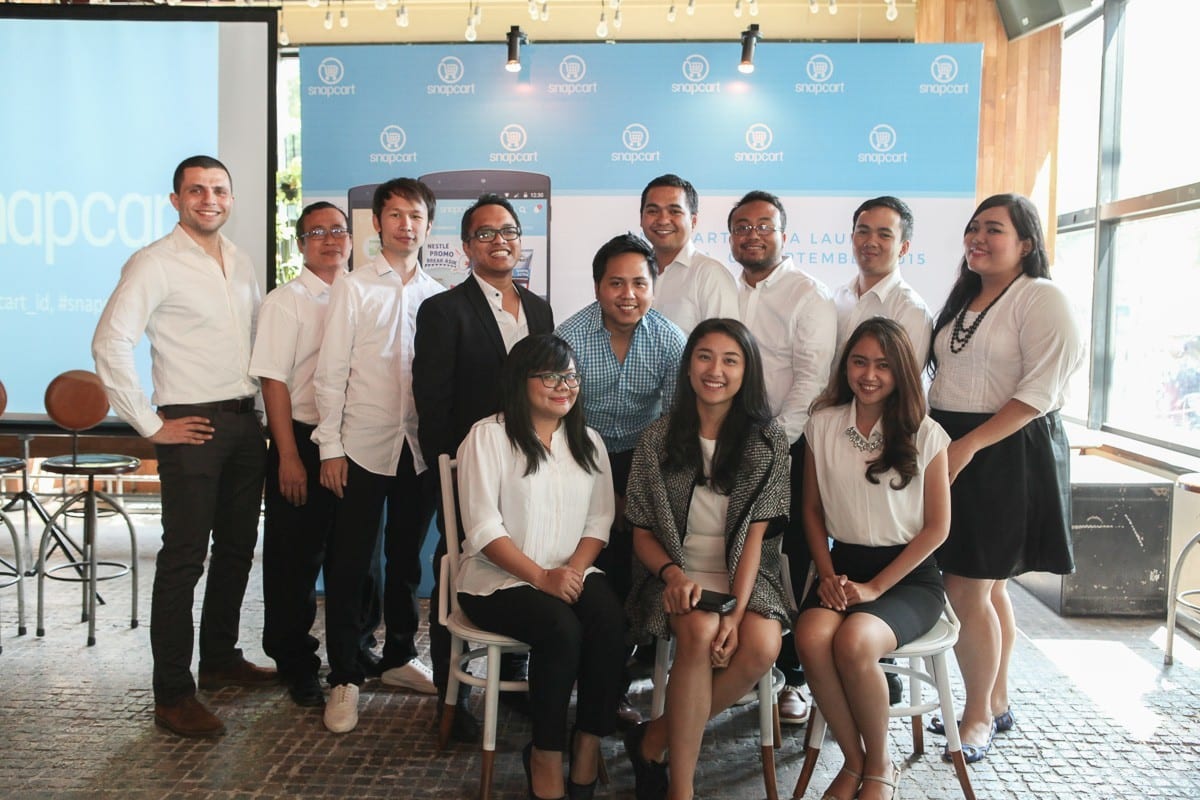
    In a bid to shed light on the offline retail market of Southeast Asia, startup Snapcart has raised US$3 million in pre-Series A funding,

    “Southeast Asia is a black hole and brands don’t know what is happening,” explains Snapcart CEO Reynazran Royono.

    The new funding round comes after Snapcart raised US$1.7 million in January of 2016. Since then Snapcart has expanded from Indonesia to the Philippines.

  • Rising exports to China portend greater risks

    Rising exports to China portend greater risks

    Despite China’s retaliatory moves against Seoul’s hosting of a US missile defense system, South Korea has seen its exports to the world’s No. 2 economy increasing in recent months.

    The country’s shipments to China rose by 16.4 percent from a year earlier during the first 20 days of this month, following four consecutive months of on-year increases, according to the latest customs data. In February, the growth rate was 28.7 percent, the highest since late 2010.

    This continuous increase in shipments of South Korean goods to China, which betrays a widening range of retaliatory steps taken by Beijing, reflects the structure of bilateral trade between the two countries.

    More than 70 percent of South Korean products shipped to China are intermediary goods, including semiconductors and flat-panel displays, which Chinese manufacturers need to make their key export items.

    The on-year increase in South Korea-made semiconductors to China accelerated from 5.5 percent in November to 75.9 percent last month, according to data from the Ministry of Trade, Industry and Energy.

    Mentioning the dominant position of the country’s chipmakers, a South Korean proposed in a recent newspaper contribution that Seoul consider banning exports of semiconductors to China in response to Beijing’s moves, though many here dismissed the idea as destructive to both economies.

    China’s retaliatory measures have so far targeted consumer goods such as cosmetics and food, cultural content, package tours and retail stores run by a South Korean business group that agreed to offer land for the installment of a US anti-missile battery.

    But Beijing has shied away from imposing restrictions on imports of key manufactured items from South Korea to avoid doing direct damage to its own economy.

    China also seems to be trying to stop short of violating international trade rules in an outright manner, which would hamper its efforts to be granted the most favored nation status by the US and other major advanced countries.

    The Chinese Commerce Ministry on Thursday said China valued trade with South Korea and was respecting World Trade Organization rules. The statement came in response to an earlier appeal by South Korea to the WTO service council to determine if the Chinese measures are in conflict with WTO regulations.

    “Both economies are mutually dependent, so wisdom is needed to approach political and economic matters separately,” said Yu Byoung-gyu, head of the Korea Institute for Industrial Economics and Trade.

    China’s reliance on manufacturing components and equipment from South Korea has led observers to see Beijing’s efforts to affect Seoul’s security policy by applying economic pressure is just doomed to fail.

    A report released last week by the state-run Korea Development Bank estimated the escalation of China’s retaliation against the deployment of the anti-missile shield officially called Terminal High Altitude Area Defense would result in South Korea suffering about $20 billion in economic losses, mostly in the tourism and duty-free sectors.

    But the amount of loss would be far from painful enough to get Seoul to reconsider THAAD deployment aimed at countering nuclear and missile threats from North Korea.

    In an apparent reflection of growing resentment against Beijing’s retaliatory measures, the proportion of South Koreans opposing the installment of the missile defense shield dropped from 40 percent in January to 34.7 percent in March, according to surveys by local pollsters.

    A recent study by a local research institute also showed South Koreans feeling less favorable toward China than Japan.

    Some observers see China’s moves against the South may be subdued ahead of President Xi Jinping’s planned visit to the US in April for his first meeting with President Donald Trump.

    A group of US House of Representatives legislators last week introduced a bipartisan resolution condemning and calling for an immediate end to China’s retaliatory measures against South Korea.

    The move was viewed as a warning that Beijing’s inappropriate pressure against Seoul would not be left unaddressed by Washington.

    China’s retaliation, even if eased sooner than later, is set to be serving as a decisive occasion to prompt South Korean firms to be more earnest in their efforts to reduce reliance on the Chinese market.

    “Regardless of the fallout from the THAAD dispute, the country’s companies are in the final stages of gaining profits from rising demand from China,” said a Trade Ministry official, asking not to be named.

    China accounted for 26.9 percent of South Korea’s total exports last month, the largest proportion ever. This hefty dependence is simply unsustainable as China is striving to curtail processing trade and expand domestic supply chains by pushing for a plan to transform itself into a global manufacturing power in high-tech sectors by 2025.

    Shin Seung-kwan, a chief researcher at the Korea International Trade Association, said South Korean companies need to focus on maintaining competitive edges over Chinese rivals in certain intermediary goods while diverting shipments to other emerging markets.

    He noted it is also necessary to increase exports of high-end consumer goods to China to offset a possible decrease in demand for intermediary goods. But those items would still remain easy targets for China’s boycotts in the future.

    South Korean companies would likely face broader and more fundamental risks from China unless they diversify export markets and production bases to other regions, including Southeast Asia and India, with a greater sense of urgency, experts say.
  • Hyundai Suspends Production at a China Factory for a Week Amid Political Spat

    Hyundai Suspends Production at a China Factory for a Week Amid Political Spat

    South Korea’s Hyundai Motor on Monday said it had suspended production at one of its Chinese factories for a week, fueling concern that a diplomatic standoff may be hurting sales in the automaker’s top market.

    South Korean companies, from cosmetics firms to retailers, say they are being targeted in China because of Beijing’s objections to a planned deployment of the U.S. Terminal High Altitude Area Defence (THAAD) system in South Korea. China worries the system’s powerful radar can penetrate its territory.

    News of Hyundai’s China plant closure, first reported by online media ChosunBiz on Sunday, drove shares of the company down as much as 3% on Monday. The shares recovered slightly to end down 1.2%.

    Shares in Hyundai’s affiliates, Kia Motors and Hyundai Mobis, also finished lower.

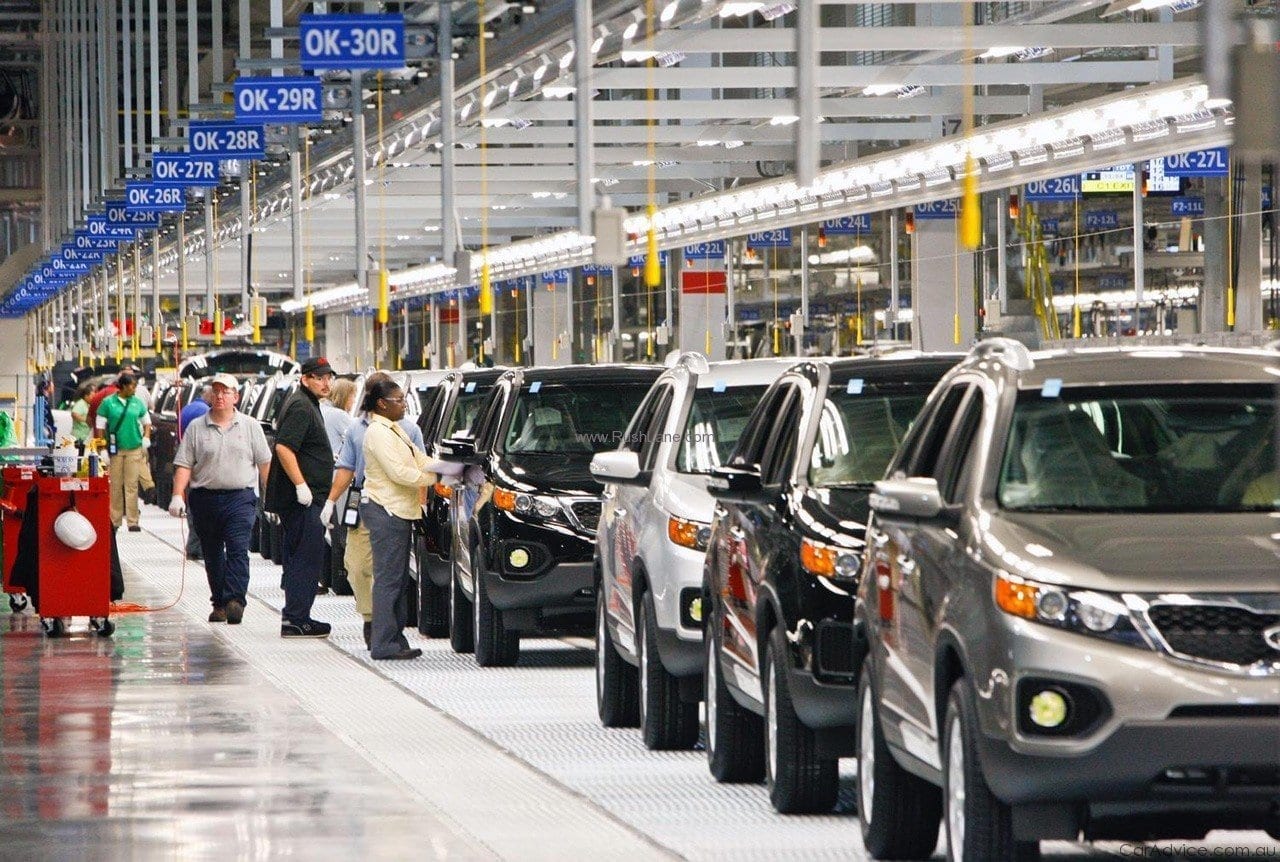
    Hyundai said it had suspended the plant in Hebei Province, from March 24 to April 1, in order to check its production line to modify technology. The automaker has three other passenger car factories in China – a country that accounts for about a quarter of its total sales. No further details were available.

    Industry officials and analysts say the suspension may be aimed at bringing down inventories given slowing sales in China, due to political tension and rising competition.

    Ko Tae-bong, an analyst at Hi Investment & Securities, said Hyundai’s March sales in China may have fallen year-on-year due to the political spat, after gaining in January and February.

    China Competition

    The automaker is already grappling with falling market share in China with a product line-up that features more sedans at a time when sport utility vehicles have become more popular.

    China’s Geely Automobile Holdings recently reported its biggest profit growth in eight years, underlining a threat from Chinese makers armed with cheaper SUVs.

    Hyundai makes Verna subcompact cars at its Hebei plant, which came online less than six months ago.

    The automaker plans to start production at a fifth China factory later this year. Hyundai’s China operations are a 50-50 joint venture with state-owned Beijing Automotive.

    Hyundai officials have previously said the company’s business ties with Chinese firms meant they were less likely to be the main target of any punishment resulting from the diplomatic standoff over the deployment of the THAAD.

    The chill in business ties between the nations is evident from the fact that China’s tourism ministry has instructed tour operators in Beijing to stop selling trips to South Korea, while state media has called for a boycott of South Korean goods.

    Chinese authorities have also closed nearly two dozen retail stores of South Korea’s Lotte Group, with some workers saying the closures were fire-safety related. Earlier this year, Lotte approved a land swap outside Seoul that will allow South Korea to install the THAAD.

  • MaxMara Thailand opens two spin-off stores

    MaxMara Thailand opens two spin-off stores

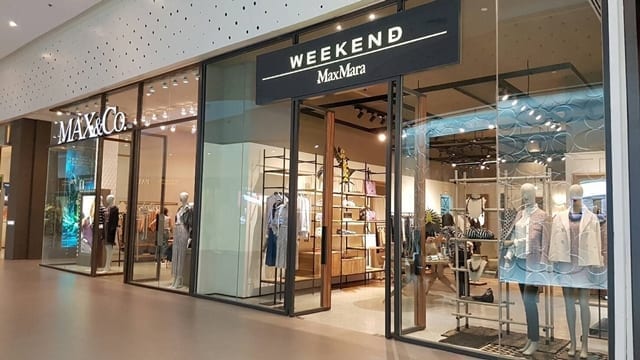
    Max&Co and Weekend MaxMara stores have opened at CentralWorld, joining the MaxMara Thailand store at Gaysorn Shopping Centre.

    They have been opened by the Italian fashion house’s sold distributor for Thailand, Pacifica Group.

    On the second floor of the Groove Zone and managed by Opras, Sopana and Prasert Lavichant of Pacifica Group, the Max&Co flagship store attracted a crowd of Thai fashionistas to its opening, revealing the brand’s spring-summer line.

    “We’ve been importing Max&Co clothing for more than a year and have had great feedback,” says chief executive Opras.

    “The store interior is typical of the brand, meant to resemble a cosy Milanese apartment, in subdued tones that convey wellbeing and serenity. It is designed to make women shoppers feel more at home.”

    At Weekend MaxMara, the focus is on leisure and cruise looks with matched blouses, trousers, skirts, shorts, swimwear, bags and shoes. It covers 95 sqm and features strips of walnut wood contrasted with grey glazed Cotto tiling above Italian cementine flooring. Sofas, chairs, lamps on tables and a smattering of books and magazines invite shoppers to linger. Founded in 1984, Weekend MaxMara features mainly outdoors clothing.

    Meanwhile, the main MaxMara store at Gaysorn is showing the spring-summer line from creative designer Lina Bo Bardi, who injects modernism into sensual, sleek and luxuriant clothes that might be athletic or hi-tech, as reported. MaxMara also uses high-performance jersey and nylon for its body-hugging dresses.

  • Lotte founder’s 50-year reign comes to an end

    Shin Kyuk-ho, founder and general chairman of the Korean retailer Lotte, has been removed from his company by shareholders, solidifying the succession of his second son, Shin Dong-bin, and coming closer to ending a family feud that started in 2015.

    Lotte is the country’s fifth-largest family controlled conglomerate, with 90 affiliates here and abroad.

    The shareholders voted in favor of denying the 95 year-old patriarch the position of board director of Lotte Shopping on Friday, which he has held since the affiliate was founded in 1970.

    The elder Shin’s term was terminated on March 20.

    Kang Hee-tae, CEO of Lotte Department Store, and Yoon Jong-min, Lotte Group’s human resource director, were newly appointed to the directors’ post at Lotte Shopping. Friday’s decision has completed the full control of the younger son, Dong-bin, who took his current role in 2011.

    “Lotte Group was able to grow with Shin Kyuk-ho’s leadership until now, but it is time for a new era under the new leadership of Shin Dong-bin,” said Lotte Group spokesman.

    Despite taking the role of chairman, Dong-bin was not allowed to make independent business decisions without the final call coming from his father, who held the board director position at most of Lotte’s affiliates.

    The father has been losing his board director position starting with Lotte International in 2015, followed by Lotte Confectionery and Hotel Lotte in March 2016.

    Lotte Confectionery is the founding company and the foundation of Lotte Group, while Hotel Lotte is the de facto holding company.

    Shin Kyuk-ho has been losing his title since he sided with his older son, Shin Dong-joo, who was trying to take full ownership of the group, and fired Dong-bin and six other executives at Lotte’s key operation in Japan.

    The founder still has several director positions, but his tenure is coming to an end and is unlikely to be extended. His role at Lotte Engineering & Construction is poised to be terminated on Sunday, followed by Lotte Aluminum and the Lotte Giants in coming month.

    Unlike his father, Dong-bin on Friday was appointed as the new director of Lotte Chilsung Beverage during the shareholders’ meeting, which industry insiders say is a necessary step to realigning the organization under his new leadership.

    Hwang Kak-gyu, who has worked with Shin Dong-bin for 27 years, was newly appointed as the CEO of Lotte Confectionery, a position that he will share with Dong-bin and Kim Yong-soo. The company said the decision was made to strengthen the company’s overseas business.

    Meanwhile, Dong-bin has been increasing his efforts to appease China, which has been bombarding Lotte’s business there as a retaliation against the Korean retail conglomerate’s decision to offer its golf course for the deployment of the U.S. antimissile defense system known as Thaad.

    In an interview he had with the Wall Street Journal on Thursday, Dong-bin said, “We definitely want to continue our business in China.”

    He added that he “loves” China and believe there has been a “misunderstanding.

    “If the government asks a private corporation like ours to give up land, then I don’t think we have the luxury of rejecting the government,” Dong-bin was quoted as saying in the Wall Street Journal.

    Lotte Mart, which runs 99 local branches in China, shut down 90 of them in the past couple weeks, partly forced by the Chinese government, which cited safety concerns, and also because of fierce protests in front of its stores.

    Lotte Shopping on Friday announced it will issue new shares worth 230 billion won and borrow 130 billion won in order to maintain its Chinese Lotte Mart branches.

    “Due to the suspension of Lotte Mart operations in China, there is no revenue generated, which we plan to compensate through capital increase,” Lotte Mart explained. “We need to pay local staff and purchase products.”

    Shares of Lotte Shopping jumped 2.61 percent on Friday, closing at 216,500 won.


  • Takashimaya Duty Free Shop opening soon

    Takashimaya Duty Free Shop opening soon

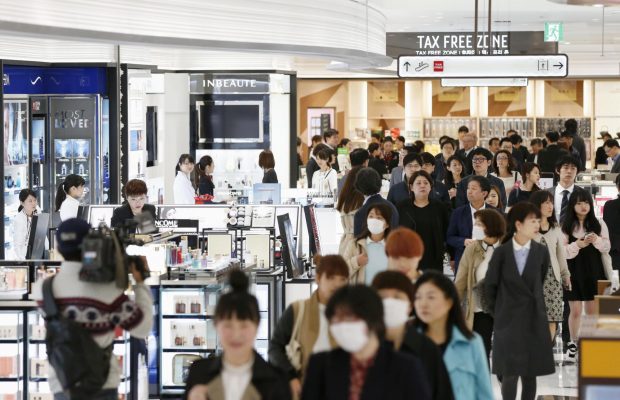
    Takashimaya Duty Free Shop, Tokyo’s latest downtown duty-free store, will open late next month.

    The 2800 sqm retail outlet is a JV between department store company Takashimaya, travel retailer ANA Trading and Hotel Shilla. It will be on the 11th floor of the new Takashimaya Times Square development, in the Shinjuku area.

    Other major downtown duty-free projects scheduled to open in Tokyo include Japan Duty Free Ginza and Lotte Duty Free Tokyo Ginza.

    Takashimaya Duty Free Shop is directly connected to Shinjuku Station and to Shinjuku Expressway Bus Terminal, allowing easy access to Tokyo’s airports.

    A spokesperson for The Shilla Duty Free says Japanese cosmetics will be a key focus of the store. There will also be a tax-free zone for Japanese brands including cosmetics, food/confectionery, souvenirs, fashion and electronics.

    Goods bought at downtown duty-free stores must be collected at Narita or Haneda airport, while tax-free Japanese-made items can be collected in the stores.
    Chinese group tours will be a target audience, with Takashimaya Duty Free establishing infrastructure such as bus parking spaces, and developing offers to appeal to such visitors.

    A&S Takashimaya Duty Free Company was established last June, with Takashimaya holding a 60 per cent stake, with ANA Trading and Shilla each holding 20 per cent.

    Takashimaya Times Square includes a Takashimaya department store, brands like Nitori, Tokyo Hands and Uniqlo, as well as restaurants and a spa avenue.

  • China, South Korea Meet in World Cup Qualifier Amid Tensions

    China, South Korea Meet in World Cup Qualifier Amid Tensions

    Thousands of riot police were deployed for a soccer showdown Thursday night that was more than the average grudge match.

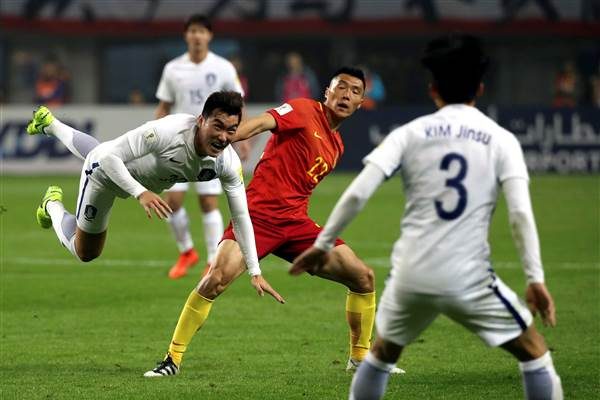
    The World Cup qualifying game in Changsha pitted hosts China against South Korea. It also whipped up Chinese nationalist sentiment at a time of high political tension over the rollout of a U.S.-made missile defense system in Asia.

    Officials were so worried about clashes that the Hunan provincial sports administration urged fans to show “rational patriotism” to avoid trouble.

    To ensure that, a 10,000-strong security force was deployed to watch over the capacity crowd of 55,000.

    Dozens of trucks carrying paramilitary and riot police were stationed around the stadium.

    Chinese fans were given free red T-shirts with the slogan “Changsha War” in Chinese characters.

    In the sea of red, only around 150 South Korean supporters were in the 250 seats designated and guarded for them.

    Image: Police and South Korea fans during World Cup qualifier on March 23, 2017
    Police (seen top) sit behind South Korean fans during the World Cup qualifer against China on Thursday. 

    The event illustrated the extent to which China’s relationship with South Korea has deteriorated since the first components of the Terminal High Altitude Area Defence, or THAAD, anti-missile system arrived to the region earlier this month.

    THAAD is designed to protect U.S.-ally South Korea and American bases there from the growing threat of North Korea’s weapons programs.

    Kim Jong Un’s regime has stepped up testing of its missiles as a protest of the U.S. joint military drills with South Korea, and there is concern preparations for a sixth nuclear test are underway.

    China is fiercely opposed to THAAD, arguing a system to intercept short-and-intermediate range ballistic missiles installed so close to North Korea’s launch sites will only serve to undercut China’s strategic defenses.

    The longer term concern for China’s military: If THAAD expands to Japan, it creates a common operating picture for U.S. allies in Asia.

    “Even if North Korea collapses, missile defencs would not go away,” a former U.S. national security adviser said. “The worry [for China] is that THAAD is a basis for a collective security system… that does not include China.”

    THAAD was among the issues on the agenda during Secretary of State Rex Tillerson’s recent visit to Asia.

    Experts stress that THAAD is a major concern for China’s government.

    The issue has stoked nationalist fervor in China, and triggered an anti-South Korean backlash with state media urging a boycott.

    “Some critics in the West have said that China, as a country under the rule of law, has no reason to punish South Korean enterprises that are doing businesses in the Chinese market,” a Global Times op-ed published earlier this month read. “However, all states have the right to sanction those that have posed a threat to their national sovereignty and strategic security interests.”

    Some Chinese travel companies have already stopped booking tours there, causing a drop in crucial tourism business.

    China has also blocked streaming of popular South Korean television shows and soap operas, and K-pop stars have cancelled concerts on the mainland because of problems getting travel visas.

    Across China, there have been protests at outlets of Lotte Group, the South Korean retail giant that gave up its golf course as a THAAD deployment site.

    A few days after it agreed to the deal, a cyberattack took down its online shopping sites. Other Lotte stores have been mysteriously closed by Chinese authorities for various municipal infractions.

    Officially, China hopes it can pressure Seoul to reconsider.

    The snap election in May could bring the country’s opposition Democratic Party to power. Its leader Moon Jae-in has expressed reservations about hosting an anti-missile system that might reinforce South Korea as a North Korean target.

    The regional rivalry came to a head on the soccer field, in the city where Mao Zedong, the late Communist leader and founder of modern China, started his political career.

    The sheer size of the security force showed that authorities had no tolerance for violence, even if nationalist protests had been allowed in the past.

    In the end, China won the game, 1-0. The only commotion: cheering by surprised Chinese fans who became more distracted by the World Cup qualifier than global affairs.

    -NBC

  • Emilio Pucci launches into Korea

    Emilio Pucci launches into Korea

    Italian fashion label Emilio Pucci has opened in Seoul its first store in South Korea, in Seoul.

    On the third floor of Galleria Luxury Hall East, the store carries the brand’s ready-to-wear range, silk accessories, handbags, shoes, small leather goods and beachwear collections.

    Emilio Pucci has stores in Bangkok, Hong Kong, Kuala Lumpur and Tokyo.

    The brand was founded by Don Emilio Pucci, the Marchese di Barsento, a Florentine Italian fashion designer and politician.

  • Next faces a downturn

    Next faces a downturn

    Next profits have fallen for the first time in nearly a decade.

    The UK high street fashion retailer said pre-tax profits fell 3.8 per cent to  £790.2 million last fiscal year.

    Emily Stella, a senior retail analyst with GlobalData, says the company has faced numerous challenges over the last year: erratic weather, rising import costs as the pound depreciated, and Next Directory being hit by increased competition from online pure-plays Asos and Boohoo.

    “Not to mention a more general shift away from clothes buying in favour of spending on leisure,” she commented.

    “Next’s stance on discounting – only marking down items during sale periods – has been a good thing for the retailer, sustaining consumer perceptions of product value and allowing Next to retain high margins. However, full-price retail sales were down 4.6 per cent, indicating that shoppers are not buying into its current proposition – and Next admits it has not been fast enough at responding to new trends.”

    But she says the retailer remains one of the best-run brands on high street – the issue is that the clothing market is “far tougher than before”.

    Next says it anticipates a difficult first half of the new trading year with improved performance in the latter half.

    “But the retailer could find the next few years a challenge as competition intensifies and Next struggles to keep up,” concludes Stella.

  • Why Apple’s red iPhones are not ‘Red’ in China

    Why Apple’s red iPhones are not ‘Red’ in China

    Apple’s latest iPhone might be red, but it’s not Red in China. The special-edition version of the iPhone 7 and 7plus goes on sale in more than 40 countries, but China has done it slightly differently. The BBC explains why.

    What is Red about?

    Red is a charity looking to combat Aids and was originally founded by U2 musician Bono and activist Bobby Shriver. It gives the money it raises to the Global Fund for HIV/Aids that doles out grants.

    This includes providing testing and treatment for patients with the aim of wiping out transmission of HIV. Apple is the world’s largest corporate donor to the Global Fund.

    The special-edition devices celebrate Apple’s long-running partnership with Red and a portion of the sales will go towards its relief operations in Africa.

    But Apple’s Chinese-language sites don’t mention the product or cause. This left some perplexed.

    Internet users were among the first to spot that there was different branding on Apple’s landing page depending on the Chinese territory.

    When translated from Mandarin, Apple’s China retail website for the Red devices simply read as “now in red” while the Taiwanese site used the words “product” Red which the US and other countries have as well.

    Some analysts read this as yet another example of Chinese politics interfering with Western brands looking to do business in the world’s most populous nation.

    Apple had no comment on the matter.

    So why the different name?

    One possibility is that Apple is looking to navigate sensitivities in a state where messages are controlled: HIV/Aids and homosexuality remain taboo topics in China.

    The first case of HIV in China was recorded in 1989. By 2000 the disease was found in most of China, and as it continued to spread, the government kept denying the problem.

    Today discrimination against Aids patients is common.

    Any other contentious issues?

    Well there’s the Dalai Lama.

    Earlier this year Red’s Instagram page showed a picture of the Tibetan spiritual leader, whom China considers a dangerous separatist.

    This has led some to point to how the post was trolled.

    How will Red do in China?

    Apple has faced numerous challenges in China of late, which may be one of the reasons why it is offering the Red iPhones as a colour option as opposed to a product.

    Last year Apple’s online film and book services were shut down in China. Apple was also made to pull the New York Times from the China App store following a request from the authorities.

    But the red iPhones are poised to sell well because the colour is considered to be the most auspicious in Chinese culture and it is considered a prestige product there.

    The tech behemoth is clearly trying to maintain relations with its fastest-growing sales region.

    Apple chief executive Tim Cook has been making semi-regular trips to China and is opening four research and development centres later this year.

  • SEA consumers online at least 16 hours a week

    SEA consumers online at least 16 hours a week

    Smartphones are the go-to device for accessing the internet throughout South East Asia, and consumers expect fast performance of websites across all devices.

    This is among the key findings of a new “State of the user experience” research report released by Limelight Networks.

    “Our new research shows that nearly half of adult consumers in South East Asia are online 16 hours or more each week, outside of work, and they have high expectations for website performance, especially when it comes to e-commerce,” said Jaheer Abbas, Regional Sales Director at Limelight.

    “Nearly everyone surveyed said that they’re likely to recommend a brand to a friend if they have a positive web experience, and on the flip side, that they’ll leave and go to a competitor if it isn’t a good experience.”

    While there is a great deal of behavioral consistency throughout the region, some interesting regional differences were identified. Personalized web experiences were ranked as very important in all countries, but were slightly less so in Singapore. Also, while the majority of respondents regionally will abandon a website if the experience is slow, there is slightly more tolerance in the Philippines.

    Despite these differences, the report clearly illustrates the need for organizations to prioritize the optimization of mobile experiences, understand the expectations of consumers within each country rather than implementing a “one-size-fits-all” approach, and accelerate website performance to keep visitors engaged.

    Time spent online varies by country and generation. People in the Philippines spend the most time online closely followed by those in Malaysia. People in Singapore are online the least. In Thailand, millennials are online the least, with 34% online 16 hours or more a week compared to 42% for all other age groups. The gap is even greater in the Philippines, where 39% of millennials versus 56% of all other age groups are online this amount of time.

    The survey also suggests that nearly half (43%) of consumers will leave a website and go to a competitor if a webpage takes too long to load. Websites should also load quickly on all connected devices as 84% of respondents report they expect equally fast load times on any device.

    Social media is the top online activity closely followed by online video, and fresh and updated content ranks as the top expectation for web experiences. Most consumers (67%) surveyed want a website to remember them and make recommendations based on previous visits.

  • Giant panda Bao Bao arrives in Chengdu onboard FedEx Boeing 777F

    Giant panda Bao Bao arrives in Chengdu onboard FedEx Boeing 777F

    FedEx Express, a subsidiary of FedEx Corp., has donated the use of its extensive global transportation network to ship a giant panda from the United States to Chengdu, China.

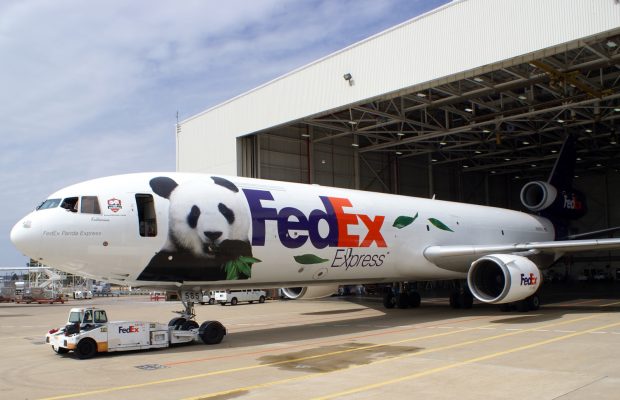
    The giant panda Bao Bao landed at China’s Chengdu Shuangliu Airport on 22 February 2017 at 6:59 pm onboard a custom-decaled FedEx B777 Freighter (B777F)—known as the FedEx Panda Express—from Washington D.C. in the US. Upon arrival, the panda was transported to her new home in Sichuan province, the China Conservation and Research Center for the Giant Panda’s Dujiangyan City Reserve.

    “It’s a great honor for FedEx Express to be able to support this latest mission by donating our expertise and resources, and to be entrusted once again with such a valuable and symbolic shipment,” said Karen Reddington, president, FedEx Express Asia Pacific. “We’ve assisted with giant panda shipments several times in the past and have considerable experience of managing the process, which involves months of planning and cross-disciplinary teamwork. Transporting Bao Bao is also an act of good global citizenship that leverages our unique network and specialized capabilities to help connect the world.”

    Bao Bao, a three-and-a-half-year-old female panda born in August 2013 at the Smithsonian’s National Zoo, is the offspring of Mei Xiang and Tian Tian, both currently living in the US.


    FedEx provided a dedicated aircraft to bring Bao Bao’s brother Tai Shan to China in 2010, and her parents, Mei Xiang and Tian Tian, to the United States in 2000.

  • Esprit announces branded jewelry collection from Versteegh

    Esprit announces branded jewelry collection from Versteegh

    Esprit has concluded a new license partnership in the area of fashion jewelry with Versteegh modeaccessoires effective 1 July 2017. With more than 60 years of experience in the wholesale trade, Versteegh brings to the cooperation valuable know-how and important expertise in the field of fashion accessories. Thanks to their excellent supplier network, Versteegh is able to guarantee short and reliable delivery times. The Esprit branded jewelry collection from Versteegh will be available internationally in Esprit’s own retail stores and e-shop.
    Maria Pambori, VP Head of Global Licenses/Product Esprit: “Together with our new partner, we want to excite our customers with a product portfolio that reflects the latest trends and interprets them through the philosophy of our brand Esprit. With Versteegh we have found a partner who attaches great importance to quality, has a keen sense of trends and thus perfectly meets our high requirements.”

    “Due to its positioning, the brand Esprit offers an ideal platform for our products. We are excited about the cooperation and are looking forward to making a great impression on Esprit customers with our collections” says Frans Lenting, Director of Versteegh.