Author: Mei Ling Tan

  • Huawei unveils All-Cloud Network architecture

    Huawei unveils All-Cloud Network architecture

    Huawei unveiled its All-Cloud Network architecture for enterprises at last week’s CeBIT 2017, in a bid to help enterprises accelerate their digital transformation.

    The vendor’s new architecture is comprised of three parts – ubiquitous connections, an open cloud platform and a social technology industry application.

    The architecture consists of CloudFabric – designed to build a simple, efficient, and open cloud data center network as well as CloudDCI to build an on-demand and smart data center interconnection network based on cloud services.

    The portfolio also includes CloudCampus, which aims to enable cloud management of the network throughout the entire lifecycle, from network deployment to O&M, as well as all Wi-Fi access in the campus network. CloudEPN meanwhile includes on-demand value-added network services for enterprises.

    Finally, Edge-Computing-IoT (EC-IoT) is a security solution designed to meet predictive maintenance requirements and enable digital transformation for vertical industries.

    “Digital transformation not only means applying new technologies such as cloud computing, SDN, and NFV, but also involves reforming business models, operational modes, and thinking patterns,” said Kevin Hu, president of Huawei Switch & Enterprise Gateway product line.

    “The All-Cloud Network architecture will deliver ubiquitous connections, an open cloud platform, and social technology industry applications to enterprises. In addition, it will simplify network resource management and enhance the value of network data. All of these factors will create an open network for enterprises to reap business benefits with tremendous potential.”

  • Accor Hotels to operate 200 hotels in Indonesia by 2020

    Accor Hotels to operate 200 hotels in Indonesia by 2020

    Global hotel management chain AccorHotels is seeking to operate a total of 200 hotels in Indonesia by 2020 on the back of the country’s rapid development.

    At the end of 2016, the company was managing 106 hotels, an increase of 11 units compared to 2015.
    “We aim to have 200 hotels in Indonesia by 2020,” AccorHotels Malaysia-Indonesia-Singapore chief operating officer Garth Simmons said in Makassar on Saturday after launching its latest addition, Ibis Styles Makassar Sam Ratulangi.

    In 2017 alone, it plans to open between 15 and 20 new hotels, five of which will be located in the eastern part of Indonesia, mostly on Sulawesi.

    The chain is planning to make Sulawesi its eastern hub to help expand operations to the other parts of the country, especially Papua.

    “Frankly, we really want to expand to Papua, but we have to strengthen the distribution network first,” Simmons said.

    In 2016, the group had a 70 percent average occupancy rate, with Bali and Jakarta as its strongest bases, where the rate reached 90 percent.

    The Sumatra region has a 70 percent occupancy rate, while eastern Indonesia had around a 55 percent occupancy rate.

  • Globe taps NuRAN for rural broadband trial

    Globe taps NuRAN for rural broadband trial

    The Philippines’ Globe Telecom has selected Canadian wireless broadband provider NuRAN Wireless to conduct the next phase of its trial rural connectivity program.

    Globe will use NuRAN’s equipment within 50 sites at various villages in across the Philippines. These sites will use NuRAN’s LiteCell 1.5 base stations, connected using a de-centralized GSM network topology.

    Globe will also be able to make use of the ecently-announced NuRAN Open Access (NOA) software suite, which includes the Community Cellular Manager (CCM) solution.

    Globe will be able to use this software to manage prepaid charging and forge business partnerships with local and regional organizations, NuRAN said.

    The agreement marks the next stage of a trial that commenced with the deployment of the same equipment at two sites in the Philippines in the fourth quarter of last year.

    During the same period, Globe also worked with NuRAN on a trial involving using TV white space spectrum with wireless backhaul. Both initiative form part of Globe’s goal of improving connectivity for remote or underserved regions of the Philippines.

    “We are proud to be partnering with Globe Telecom on this important initiative. The Philippines is an important market for NuRAN with a large rural and remote population desperate for connectivity,” NuRAN Wireless CEO Martin Bedard said.

    “This deployment further strengthens our relationship with Globe Telecom, the number one mobile brand in the Philippines.”

  • HSBC to add up to 1000 in China staff

    HSBC to add up to 1000 in China staff

    HSBC plans to add as many as 1,000 new employees to its Chinese retail banking and wealth management arm this year, the business’s regional head said, most of them in the Pearl River Delta, the heart of the bank’s growth strategy in China.

    If that target is hit, the new additions will mean HSBC will have hired twice as many people as it did last year for this part of the business. They will join an existing team for this unit of 2,400 employees in the world’s second-largest economy.

    HSBC has made the southern Pearl River Delta region – home to 11 industrial cities that are set to fuse into one megalopolis – its focus in China, betting on its growth and its own Hong Kong heritage.

    This region already has an economy larger than Indonesia’s and is shifting from a manufacturing base to a tech powerhouse.

    But since the strategy to reinvigorate profit growth after years of restructuring was announced in 2015, China’s economic growth has slowed, delaying the bank’s plans. HSBC makes more than half of its profit in Asia, the bulk of it in Hong Kong and China.

    “As of this point, we are very pleased with the progress in the Pearl River Delta. We certainly aren’t taking any backward steps,” Kevin Martin, HSBC’s Asia Pacific head of retail banking and wealth management, told Reuters.

    HSBC’s latest numbers for China retail and wealth management business suggest growth remained strong, with its customer base as well as mortgage volume expanding by 51 percent in the Pearl River Delta last year. It issued over 100,000 credit cards since launching it in December across all cities in the Pearl River Delta and 30 other cities in the country, Martin said.

    “We have done a lot of things in the Pearl River Delta … It remains one of the key opportunities for us.”

    Of the total 2,400 staff for retail and wealth management in China, about 800 are in the Pearl River Delta, the bank said, adding 60 percent of the hiring last year was for the southern region that counts Shenzhen and Guangzhou among its biggest cities.

    HSBC Group Finance Director Iain Mackay said last month the bank’s operating profit in China in 2016 was about $200 million lower than the previous year. That was mainly due to investments to grow the Pearl River Delta business and in financial-crime risk-management standards in China, he said.

    CHINA CALLING

    The bank’s outgoing top management campaigned heavily to promote the region and its role in HSBC’s China strategy.

    Chief Executive Stuart Gulliver, took analysts and investors on a tour of its operations there a year ago, promoting the region’s role as a gateway to tech businesses like Alibaba Group Holding and Tencent Holdings as well as new start-ups.

    Although investors have supported the plan, there has been increasing concern over the last few months about risks the lender faces in its Asia “pivot” strategy, due to the sluggish pace of China’s economic recovery and the patchy pace of development in the Pearl River Delta.

    Some sectors have struggled in the face of falling exports and tighter credit conditions.

    Gulliver said in February 2016 that the bank, which is facing downward pressure on its revenue in 2017 due to regulatory costs and lower rates in Britain, planned to hire 4,000 new staff in the region over five years instead of its initial three-year target.

    But Martin brushed aside concerns that HSBC’s investment could be scaled back as China’s economic growth slows, saying the bank remained committed to the region.

    HSBC’s newly appointed chairman, Mark Tucker, has also had an intense focus on Asia, most recently as head of insurer AIA Group.

    “We will see and we have seen it already even at 6.5 percent growth rate, (there is) massive underlying growth for China,” Martin said. “Clearly there’s real upside on that for us.”

  • South Korea becomes Vietnam’s biggest foreign investor in Q1

    South Korea becomes Vietnam’s biggest foreign investor in Q1

    South Korea has taken over Singapore to become Vietnam’s biggest foreign investor in the first quarter, with investment totaling $3.74 billion, or 48.6 percent of the total foreign direct investment (FDI) pledged for the period, the Vietnamese government said Friday.

    Singapore, which held the top position in January and February, came second with $911 million, followed by China with $823.6 million, the Foreign Investment Agency under the Planning and Investment Ministry said in a monthly report.

    Actual FDI inflow in the first three months rose 3.4 percent from a year ago to $3.62 billion, while new pledges rose 6.5 percent to $2.92 billion, the report said.

    FDI is a major source of foreign exchange, which along with overseas remittances, helps Vietnam improve its trade balance.

    During the period, foreign firms from 71 countries and territories have new pledges and additional funds in 18 sectors, with the manufacturing and processing industry attracting $6.54 billion, or 84.9 percent of the total.

    The real estate sector comes second, while the wholesale and retail sector has the third position.

    Foreign investments have been poured into 52 cities and provinces in the three-month period, with the northern province of Bac Ninh, 30 kilometers (18 miles) northeast of Hanoi, attracting $2.61 billion, or 33.86 percent of the total.

    Binh Duong Province, about 40 km north of Ho Chi Minh City, ranks second with 18 percent and Ho Chi Minh City comes third with 7.78 percent.

    As of March 20, Vietnam has had more than 23,000 FDI projects in operation, with a combined registered capital of $300.7 billion.

    Most of them are in the manufacturing and processing industry, making up 59.3 percent of the total investment.

    Overall, South Korea also led the foreign investor list, with investment totaling $54 billion, followed by Japan with $42.49 billion.

    Large-scale FDI projects in the first quarter include a $2.5 billion expansion project of Samsung Display Vietnam, a subsidiary of Samsung Display South Korea, in Bac Ninh Province.

    Taiwan’s Polytex Far Eastern Ltd, which manufactures polyester fiber and cotton spinning in Binh Duong Province, got the green-light to increase its registered capital by $485.8 million to $760 million.

  • Indonesia’s First Green Airport Ready for Operations

    Indonesia’s First Green Airport Ready for Operations

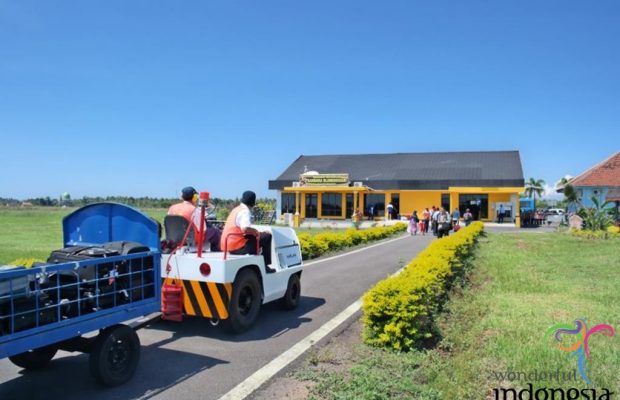
    Indonesia’s first airport built on the green concept in Banyuwangi, East Java, is ready to start operations, Banyuwangi District Head Abdullah Azwar Anas stated on Saturday.

    “It has been ready. God willing, before Eid, it will become operational with the realization of a direct flight service on the Jakarta-Banyuwangi route. There are some technical matters that need to be addressed,” he noted during a visit to the Blimbingsari Airport in the district.

    He explained that the new airport will become a tourism icon to offer sufficient room to accommodate passengers following an increase in the number of air travelers by more than 1,300 percent in the past five years.

    Anas said the architectural concept of a public space must not be made arbitrarily, adding that so far, it has been difficult to implement architectural principles that break standards in projects funded by the government due to a conventional concept or administrative constraints.

    “However, in Banyuwangi, we have given room to work that goes beyond the mainstream. Besides the airport, other public facilities, such as parks, campus, halls, marketplace, and tourist destinations, have been built based on thoroughly considered architectural principles,” he emphasized.

    Anas pointed out that the concept for the airports development was aimed at meeting three goals, with the first being a tourism icon and secondly, ensuring a transfer of knowledge from national to local architects.

    It was hoped that in future, all buildings, including restaurants and shop houses, would have a clear architectural concept, Anas stated.

    “Buildings, with characteristic architectural designs, can serve as examples for public and private parties. People can follow concepts that are simple but iconic,” he noted.

    The third goal is that they will be functionally effective and sustainable as well as efficient, he remarked, adding that the new terminal will be energy efficient in line with the concept of a tropical house that uses natural air for ventilation.

    He pointed out that the new terminal will be iconic, as it adopts the concept of the local traditional Osing communitys house.

    “Local wisdom has been adopted to boost Banyuwangis local arts and culture by providing a large gallery, so that all will be accommodated,” he stated.

    A public building is not just a project but must also offer economic benefits to the community and help in social-cultural development, Anas added.

  • Ted Baker stronger on America and China

    Ted Baker stronger on America and China

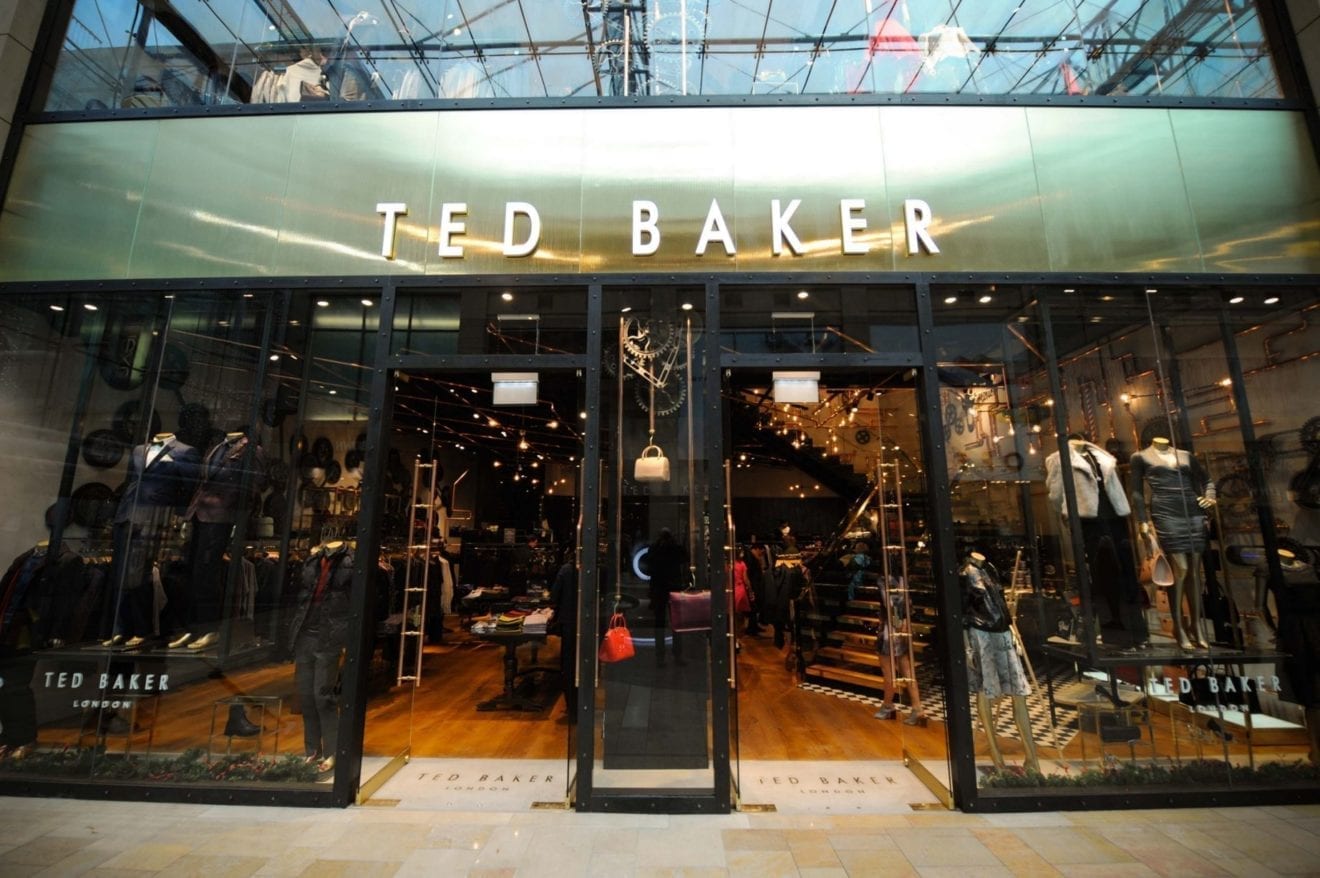
    New stores in North America and China have paid off for British fashion retailer Ted Baker, which has reported a 4.4 per cent increase in pre-tax profit, despite the challenging global retail environment.

    It achieved a profit of £63 million for the year to January 28, as total revenues rose 16.4 per cent to £531 million.

    Online sales rose 35.1 per cent, while 14 new stores in the US and Canada fuelled a 28.3 per cent increase in sales there.

    Ted Baker also commenced a new focus on Greater China, opening a store in Beijing.

    Fiona Paton, an associate retail analyst with GlobalData, says the falling demand for premium goods presents challenges in Asia.

    “However with British heritage brands remaining popular in the region, Ted Baker should lean upon this trait through its marketing and store environment while working hard to gain more exposure.”

    Even in the tough UK and European markets, Ted Baker thrived last year, sales rising 10.7 per cent.

    Observers can expect to see even better results next year, Paton believes.

    “While it has a measured approach to expansion, new stores and concessions are planned throughout Europe, North America and Asia in 2017-18, bolstering growth amid difficult domestic trading conditions.”

    In range terms, womenswear was a highpoint for Ted Baker achieving 19.7 per cent growth for the year, accounting for 57.3 per cent of sales, while menswear grew 12.2 per cent.

    “Menswear will simultaneously be a challenge and an opportunity for Ted Baker. While men are becoming more interested in fashion and buying more regularly, the sector is also becoming increasingly competitive as players such as Superdry extend their menswear ranges,” says Paton.

    “Unlike rivals such as Whistles, Ted Baker benefits from unisex appeal but will need to monitor the competition to ensure that its designs remain distinctive enough to differentiate itself.”

  • Cebu Pacific earned P9.8B in profits, up 122%, in 2016

    Cebu Pacific earned P9.8B in profits, up 122%, in 2016

    Budget carrier Cebu Pacific has vowed to increase inter island connectivity within the Philippines to stimulate trade and tourism within the country.

    Cebu Pacific Vice President for Corporate Affairs Paterno S. Mantaring said this commitment comes on the heels of the company registering a 122-percent increase in net income in 2016.

    A filing with the stock exchange showed Cebu Air Inc. booked P9.8 billion in profits last year, thanks to the strong demand for low-cost air travel and robust growth in ancillary revenues.

    Total revenues, including that of subsidiary Cebgo, rose by 9.6 percent to P61.9 billion, while expenses inched up by a mere 1 percent to P54.06 billion.

    “The year 2016 was a great year for Cebu Pacific, as we continue to enable every Juan to fly to more destinations around the Philippines and to key destinations in Asia, the Middle East, Australia and the US,” Mantaring said. “Cebu Pacific remains committed to further increase inter-island connectivity within the Philippines to promote trade and tourism and help more people connect with their families and friends all around the world, while consistently providing our trademark best-value fares.”

    In 2016 Cebu Pacific flew to 36 domestic and 30 international destinations through 102 routes and more than 2,820 flights weekly. It boosted its intra-regional network in the Visayas with flights from Cebu to Ormoc, Roxas and Calbayog.

    The airline also launched direct service between Kalibo and Incheon, Korea, as well as its first US destination, Guam. It also teamed up with some of the world’s leading low-cost carriers to form Value Alliance, the world’s largest budget-carrier alliance, which aims to provide greater value, connectivity and choice for travel throughout Southeast Asia, North Asia and Australia.

    In total, the airline flew 19.1 million passengers in 2016, up by 4.1 percent versus the 18.4 million passengers carried in 2015.

    The Gokongwei-led carrier capped 2016 with 57 aircraft, adding two brand-new ATR 72-600 aircraft in February 2017, to bring its current fleet to 59.

    For the rest of 2017, CEB expects to take delivery of one Airbus A330, two Airbus A321neo, and four more ATR 72-600; and delivering out three of its four Airbus A319 to end the year with 63 aircraft.

  • SoftBank, Ericsson to trial 5G over 28-GHz

    SoftBank, Ericsson to trial 5G over 28-GHz

    Ericsson and Japan’s SoftBank have announced plans to demonstrate 5G over 28-GHz millimetre wave spectrum, as part of the next stage of their joint 5G trials.

    The companies said they are moving forward with more advanced 5G tests following the successful completion of basic 4.5-GHz and 15-GHz 5G trials in Tokyo last year.

    The upcoming trial will involve both indoor and outdoor testing environments and cover both device mobility and stationary tests. The trial will use Ericsson’s mmWave 28-GHz 5G Test Bed base station and device prototype solution.

    SoftBank and Ericsson will make use of advanced 5G technologies including Massive-MIMO, massive beamforming, Distributed MIMO, Multi-user MIMO and beam tracking.

    “SoftBank started to verify 4.5-GHz radio back in August 2016 and now 4.5GHz is becoming the leading candidate band for 5G services in Japan together with 28-GHz,” the operator’s SVP Hideyuki Tsukuda said.

    “We are leveraging Ericsson’s Test Bed with 28-GHz radio to validate a lot of advanced features at super low-latency and high throughput, which helps position us as a pioneer of 5G.”

    Ericsson Japan head Mikael Eriksson added that he is confident that the company “will be the first to deliver 5G services and that we will deliver the best performing end to end network in Japan.”

  • Volkswagen’s Seat returns to profit; to launch third SUV in 2018

    Volkswagen’s Seat returns to profit; to launch third SUV in 2018

    Volkswagen’s Spanish division Seat reported on Thursday its first annual operating profit since 2007 and announced plans to launch a third sport-utility vehicle (SUV) in as many years in 2018 to try to build on its recovery.

    Seat said it made an operating profit of 143 million euros ($154 million) last year compared with a 7 million euro loss in 2015, helped by selling more models with higher specifications and integrating its R&D operations with parent Volkswagen (VW).

    “Seat is now preparing itself for development and growth,” chief executive Luca de Meo said in an emailed statement.

    The 2018 SUV, which follows the launch of the Ateca crossover in 2016 and its smaller sibling Arona later this year, “will boost brand image and will have a very big effect on our ability to generate margins,” the CEO said.

    “This car will bring new customers to us.”

    Seat’s third SUV model will be built at VW’s main Wolfsburg factory and use the German group’s cost-saving MQB modular platform that underpins VW’s top-selling Tiguan SUV.

    VW, which bought Seat in 1986 to increase its exposure to the then fast-growing Spanish market, has long battled to reverse losses caused by under-utilised capacity at Seat’s factory in Martorell near Barcelona.

  • Airtel to buy Tikona Digital’s 4G business

    Airtel to buy Tikona Digital’s 4G business

    India’s Bharti Airtel has arranged to acquire ISP Tikona Digital’s 4G business for around 16 billion rupees ($244.6 million), to help shore up its ability to compete against Reliance Jio and the combined Vodafone-Idea Cellular.

    The company will acquire 4G assets including 20 MHz of 2300-MHz 4G spectrum in five of India’s 22 telecoms circles, as well as 350 existing cell sites in these circles.

    The five circles are Uttar Pradesh East and Uttar Pradesh West, as well as Rajasthan, Gujarat and Himachal Pradesh.

    The merger is expected to fill gaps in Airtel’s spectrum holdings, particularly in the former three circles, and allow the operator to secure a pan-India footprint in the 2300-MHz band.

    This could prove crucial to Airtel’s efforts to stay competitive against disruptive pan-India 4G operator Reliance Jio Infocomm, as well as the entity that will be created with the planned $23 billion merger of Vodafone India and Idea Cellular – which is expected to overtake Airtel to become the market’s largest operator by subscribers.

    But Airtel could have some hurdles to clear in order to close the deal. Tikona Digital co-founder Rajesh Tiwari is objecting to the deal on the grounds that the companies have not provided details of how the proceeds will be split among shareholders, the report states.

    Tiwari, which owns just over 1% of the ISP, has filed a legal notice seeking to block the deal until he is provided this information.

  • AirAsia: Reaching a new digital high

    AirAsia: Reaching a new digital high

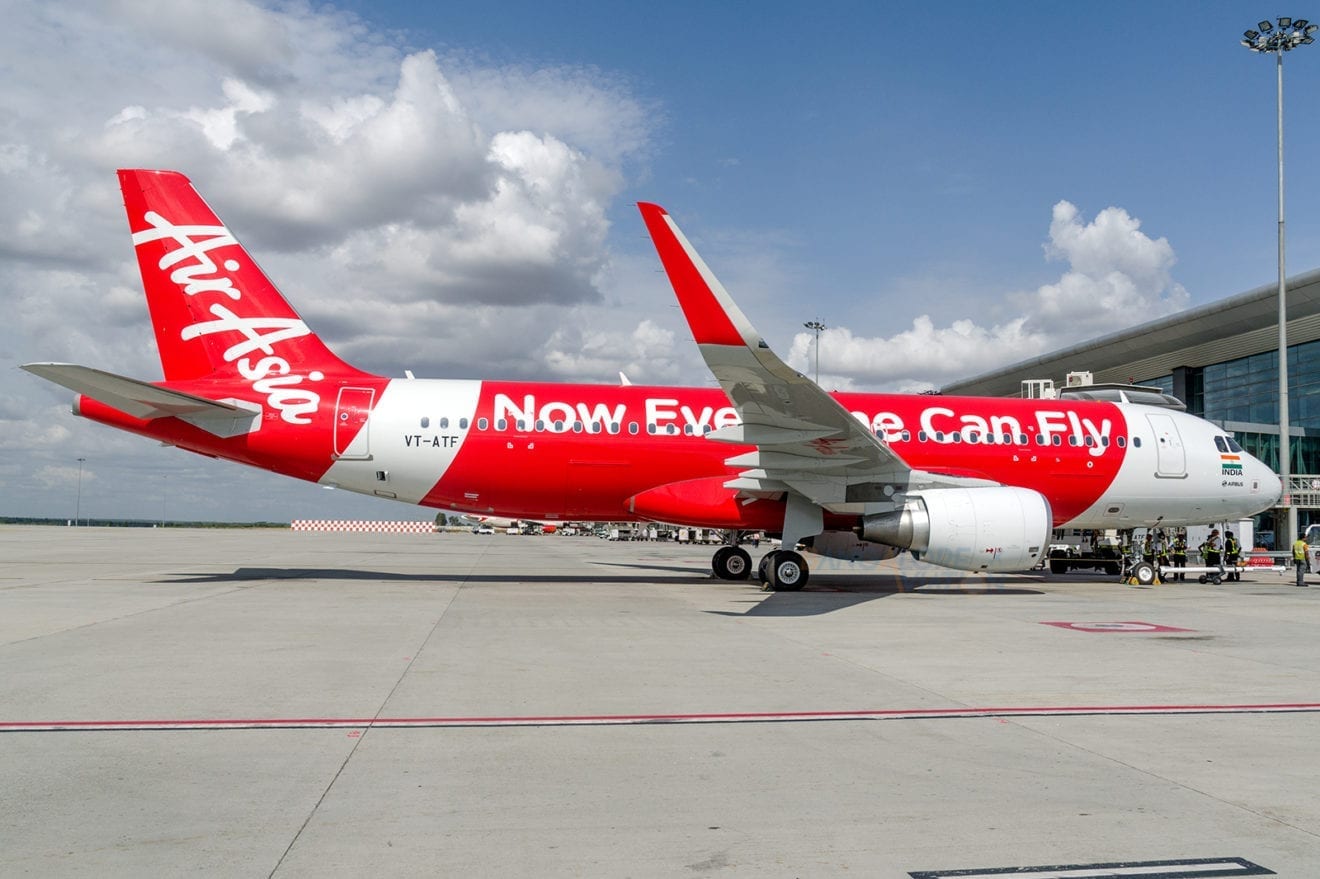
    AirAsia reaches out for fresh ideas on digital transformation. A program called Aviato, which uses machine learning to profile user interests, won first prize at AirAsia’s inaugural Airvolution 2017 hackathon.

    The Singaporean team, which goes by the same name, won the grand prize of RM25,000, 100,000 AirAsia Big points and five return flights to any of the ­airline’s destinations.

    “Aviato is able to profile a user’s interests and extract ­keywords based on the images posted on an Instagram account,” says team leader Durwin Ho Hsu Tian, 27.

    The rest of the team – made up of Choo Yan Sheng, 28, John Goh Choo Ern, 27, and Kevin Kwa Leung Boon, 33 – said they didn’t come up for the idea for Aviato till late night on the first day.

    “Back home, we had already prepared around 30 to 50 ideas based on the three challenges given by AirAsia a couple of months before the hackathon,” said Ho.

    “We roughly knew what we wanted to do and once we had nailed down the idea, everything just fell into place.”

    image: https://www.thestar.com.my/tech/tech-news/2017/03/27/reaching-a-new-digital-high/~/media/cdf8132c01034d979f1afd0c8f4df1a8.ashx

    Contestants rushing against time at the two-day hackathon held at AirAsia’s RedQ headquarters.  — AZMAN GHANI/The Star

    Contestants rushing against time at the two-day hackathon held at AirAsia’s RedQ headquarters.  — AZMAN GHANI/The Star

    Ho says AirAsia has a huge chunk of raw data which Aviato can process so that the company can know its customers better so that it can offer targeted ­promos.

    For instance, Aviato is able to profile whether a person loves the outdoors by running an image recognition algorithm on his or her Instagram account. If a person likes photos related to mountains and forests, the ­program could, for instance, made to push a notification offering flight promotions to Kota Kinabalu.

    Given more time, Aviato will be able to pull data from other social media platforms such as Facebook and Twitter, he says.

    Digital transformation

    The hackathon was part of the company’s ongoing efforts to turn AirAsia into a digital airline this year, says AirAsia group CEO Tan Sri Tony Fernandes.

    However, this is not something new as technology and digital innovations have always been at the core of the airline since its early days, he says.

    “Our roots are digital. We started with the Internet and we are now a very social media based airline,” he says.

    Fernandes is hoping to get the airline’s level of digitisation to around 70% by 2018. — RICKY LAI/The Sta

    Asked on how “digital” the company is right now, Fernandes puts it around 20-30%, adding that there is a huge potential for further digitisation moving forward.

    “It sounds like we are not so digital but others are way behind,” says Fernandes.

    Today, he’s more focused on ­getting the staff to think digital. “I can take someone to drink water but I can’t force him to drink,” he says.

    However, he is confident that the company will be able to push the level of digitalisation to around 70% by the end of 2018.

    The digitalisation process will see the company focus on three key areas, namely commercial, customer experience and operations.

    On the commercial front, the company is looking to offer ­personalised and targeted ­promotions by taking advantage of its large amount of data.

    To improve customer experience it is looking to phase out check-in desks by using biometric tech such as fingerprint and facial recognition but this is dependent on getting approval from regulatory bodies.

    “On the operations side, we want to digitalise all the engineering, pilot flight and even human resource data to improve efficiency,” he says. This will help the airline to cut costs, say, by improving fuel efficiency.

    On why the company decided to host a hackathon for the first time ever, Fernandes says, “I think we are not moving fast enough. We can’t do everything in-house.”

    “There is no way we can do it all alone. We want to get ideas from people who fly with us and know us to help us build this new digital airline and what better way to start it off than with a hackathon.

    “We believe the digital revolution will take AirAsia to another level in terms of making it easier to fly, easier to sell and giving our customers the products they really want.”
  • Lazada on mission to spur e-commerce

    Lazada on mission to spur e-commerce

    As Lazada celebrates its fifth year in the Philippines, the people behind Southeast Asia’s largest online marketplace are embarking on a mission: to make the country one of the “dominant players” in the global e-commerce industry.

    “In terms of Facebook penetration, the Philippines is No. 1 in the world. There are 57 million Facebook accounts—why shouldn’t the same thing apply to e-commerce?” says Inanc Balci, cofounder and CEO of Lazada Philippines. “So we’re now on a mission to make Philippines a dominant player in the world when it comes to e-commerce penetration.”

    Balci cited Taiwan as having the highest percentage of online retail sales at 18 percent; the Philippines, on the other, hand, is only at 1 to 2 percent. “Buying online is as easy as getting an account on Facebook; sometimes easier, because you don’t need an e-mail account for some websites. The Philippines can have a much higher percentage of e-commerce penetration than that of Taiwan,” Balci says.

    Other factors also come into play when it comes to the Philippines’ strong potential in e-commerce, adds Balci. “The middle class is growing very fast; the economy is doing really well among other nations in Asia; there is a very young population; smartphone penetration is higher than any other country in Southeast Asia.”

    As a treat to its customers, Lazada held a birthday sale last March 21-23. These kinds of events, says Balci, are also a form of investment for the company when it comes to addressing one of the three main challenges in the local ecommerce industry: general market size. Promos and special deals allow Lazada to attract new customers and further grow the business, says Balci.

    The other two issues, he adds, are payments and logistics. To address the latter, the company formed its own logistics arm called Lazada Express. “That has, today, 70 percent coverage nationwide, and we are continuing to push it even more,” says Balci. “We are also looking toward improving the payments landscape. There is only about 5 percent credit-card penetration which makes it difficult to transact online, so Lazada was the first to launch nationwide cash on delivery. Not a lot of companies are doing this because it’s a costly way of doing business, but for us to grow, we need to invest.”

    Lazada was initially established in the Philippines as an online retailer selling electronic goods.

    The company then “pivoted” its business strategy in 2014, says Balci, shifting its model to an online marketplace, which was “one of the biggest accelerators” of its growth.

    “Now our business model is a cross of retail marketplace and cross-border marketplace, which is similar to a local marketplace but the merchants are from other countries in the region,” Balci explains.

    As Lazada and the country’s e-commerce industry continue to grow, so does competition—something which Balci welcomes with open arms.

    “It’s always better for the market to have competition to keep you on your toes. We believe that for the market to grow much faster, we need better, healthier competition,” he says.

  • Thai street-food apps help tourists

    Thai street-food apps help tourists

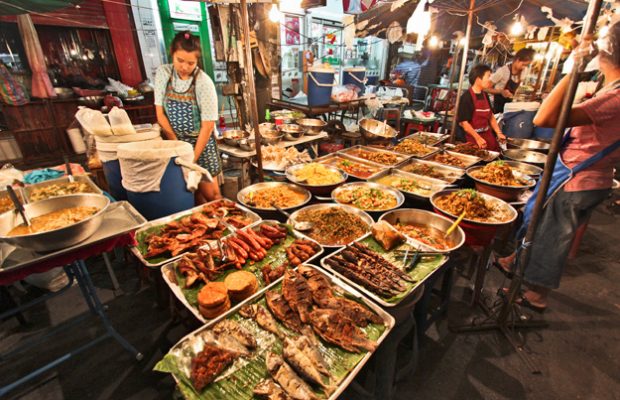
    Three Thai street-food apps have been launched offering tourists details of the nation’s top roadside eateries.

    Street Food Bangkok, Street Food Chiang Mai-Chiang Rai and Street Food Phuket have been launched simultaneously to promote Thai food to foreign visitors as well as enhance Thailand’s tourism image. It is a venture of the Ministry of Foreign Affairs in co-operation with the Thailand Foundation, an independent agency founded in 2007 to promote better understanding of Thailand.

    The Thai street-food apps, both Android and iOS, are free for foreign visitors to download and all information is available in English or Chinese.

    The Bangkok Street Food App includes information on street food from 120 shops and stalls, covering 25 types of dishes.

    Street Food can be searched by dish or by location, and users can save favourite stalls to a quick-access menu. The descriptions usually include information on the restaurant’s history and owners, as well as their particular take on their speciality dish.

    The apps link with Google Maps to help users find their preferred outlet. The name and directions to each restaurant are given also in Thai script so visitors can show it to their taxi driver.

    The database may be expanded in the future under the second phase of the program.

  • Diamond group De Beers buys out retail partner LVMH

    Diamond group De Beers buys out retail partner LVMH

    Anglo American’s diamond specialist De Beers has bought the 50 percent stake held by French luxury goods group LVM in De Beers Diamond Jewellers for an undisclosed sum, taking full ownership of the retail operation.

    Analysts said the joint venture no longer fitted LVMH’s strategy, while Anglo American, which has long dominated global rough diamond sales, has been developing its presence on the high-margin diamond retail market.

    LVMH had no comment. De Beers said in a statement that fully integrating De Beers Diamond Jewellers would enable the group to enhance value.

    Anglo American, which along with other mining companies has largely recovered from a deep commodities downturn in 2015, has put diamonds, along with copper and platinum, at the heart of its portfolio.

    One of the advantages of diamonds is that they are a counter-cyclical luxury product that can generate profits even when bulk industrial commodities are in a downturn.

    De Beers Diamond Jewellers’ retail network comprises 32 stores in 17 countries. This includes a growing business in greater China, an established presence in London and Paris, and a new flagship location in New York.

    In addition, De Beers’ Forevermark high-end diamond brand has expanded into 2,000 outlets globally and it says it expects the growth to continue this year.

    Analysts said LVMH had finally ended a joint venture that dated back to when the group did not have any branded jewelry of its own.

    “The situation is very different today, as they own one of the megabrands in this space: Bulgari,” Luca Solca, analyst at Exane BNP Paribas, said.

    “It seems appropriate therefore to turn the page on this and relegate it to the ‘experiments that didn’t work’ pile.”