Author: Mei Ling Tan

  • APAC to have nearly 1b IoT connections by 2025

    APAC to have nearly 1b IoT connections by 2025

    Asia Pacific will remain the single largest region for IoT cellular connections through to 2025, with the market accounting for nearly 1 billion connections by this time, Strategy Analytics predicts.

    The automotive, utility and security vertical markets will drive growth in connections over the forecast period, the research firm said.

    Strategy Analytics expects IoT cellular connections to grow to more than 2.4 billion in 2025, with automotive, utilities and security together accounting for over 46% of global connections.

    Across the forecast period, the automotive vertical market will not only remain the single largest global consumer of IoT cellular connections, but increase its market share position by 2025.

    ”With the industry focusing on the path to 5G and low power 3GPP offerings, such as LTE Cat M1 and NB IoT, coupled with a variety of established connectivity platforms, there are lots of choices for cellular connectivity in IoT and the outlook has never been brighter,” Strategy Analytics executive director of enterprise and IoT research Andrew Brown said.

    “However, the bewildering array of choices also runs the risk of creating confusion for customers with regard to which technologies should be employed in which use cases.”

    Matt Wilkins, Senior Analyst IoT Research at Strategy Analytics added that “the growth in cellular connections underlines the importance of cellular networks in IoT, with networks not just being used to facilitate simple connections, but increasingly supporting rich data that will enable new and compelling use cases.”

  • Singapore fintech startup OOjiBO raises S$3.6M to serve the unbanked

    Singapore fintech startup OOjiBO raises S$3.6M to serve the unbanked

    Singapore-based fintech startup OOjiBO has raised a S$5 million (US$3.6 million) in a  Pre-Series A round led by Centurion Private Equity. Wong Kok Hoe, Director at Centurion, managed the investment and joined OOjiBO’s board of directors.

    The mobile payments platform plans to use its investment to launch into two new emerging markets in Southeast Asia — Indonesia and Thailand. It will also begin cross-border remittance within countries where OOJiBO has a presence. Currently, OOjiBO is only available in Myanmar.

    Launched in November 2014, OOjiBO was founded by co-founder and CEO Yeng Fook Hoo, a veteran in the banking industry with over 40 years of experience. Prior to OOjiBO, Yeng, who is in his 60s, started and listed the largest credit card terminal and payment system in South East Asia, GHL System. He retired after running it for 15 years.

    After three years, he came out of retirement to build OOjiBO with two co-founders, William Pu and Wong Hok Seng, also experienced professionals in the finance industry.

    OOJiBO says its solution works as a full stack retail banking system on a mobile phone. It offers a full suite of services from p2p transfers, retail payments, interest bearing accounts, e-commerce payments, cross-border remittance, cash in/cash out service, debit/credit card virtulisation, utilities payment and mobile phone top-ups.

    It is phone agnostic and can be used on both smartphones and feature phones. In areas where data connections are poor or non-existent, the OOjiBO system will automatically switch to an STK (SMS) format. This solution allows it to deliver financial inclusion to people living in rural areas or places with frequent electricity outages.

    “We have also designed ourselves to solely work on the mobile network and not requiring other infrastructure or the need to fully integrate into an existing core bank system. This has allowed us to bring the cost of reach and banking significantly lower. Basically, beyond your existing device, there is no other infrastructure that is needed to be installed or built”.

    One key feature that OOjiBO says makes it different from many e-wallets or digital platforms, which typically relies on a frontend system, is its agency network.

    “We run our own network of agents to create branchless banking. We believe in an offline-online model. Through owning our own agency network we are able to control our cost structure and not rely on other people,” says OOJiBO.

    “Our agency network has also allowed us to reach areas that were not previously available, for example, the Kachin state in Myanmar. Kachin state is still going through civil war and is a mountainous area, however through our agency network, we are able to operate within the region to bring much needed financial inclusion to the people of Kachin.”

    The other key feature of its system is its security feature.

    OOjiBO has created a hardware and software security chip that enables encryption and key rotation system. Depending the level of KYC and limit of transaction amount, it issues a physical sim sticker that contains a security chip and module that will do encryption each time a transaction is sent and received.

  • Sportswear retailer streamlines trade operations in China

    Sportswear retailer streamlines trade operations in China

    Adidas Group wants to kick off its expansion in China on the right foot. The sportswear brand plans to bolster its retail sales network to 12,000 outlets in China by 2020, with much of the growth slated for smaller cities. However, the company also knows that conducting international trade within China can be difficult and complex due to challenges presented by huge import and export volume, and minimal advance notice of regulatory changes.

    As a result, Adidas began searching for an automated solution to help reduce manual-based operations, minimize clearance delays and compliance risks, and respond to regulatory changes quickly. The company found its solution through the CTM platform from Amber Road.

    Specifically, Amber Road’s CTM InSight function will equip the Adidas China team with self-compliance capabilities, which will help them conduct comprehensive and regular internal audits to proactively identify and resolve non-compliance issues with agencies in a timely fashion. Meanwhile, the CTM Business Intelligence (BI) Dashboard will supply information to centralize management, improve clearance process visibility, and enhance internal controls.

    By implementing Amber Road’s CTM solution, Adidas Group will be well prepared to apply for China Customs Advanced Certified Enterprise (AEO) status, which will enable the company to enjoy international trade facilitation measures, according to Kae-Por Chang, managing director, Amber Road China.

  • CapitaLand inks contract to manage mall at new SingPost Centre

    CapitaLand inks contract to manage mall at new SingPost Centre

    CapitaLand, through its wholly owned shopping mall business, CapitaLand Mall Asia, has signed a contract to manage the upcoming mall at the new SingPost Centre.

    This is the third mall management contract that CapitaLand has inked in slightly over six months, after securing the first two in China, the comnpany said on Tuesday (March 28). With this contract, CapitaLand said its network in Singapore will increase to 20 shopping malls with a combined gross floor area (GFA), excluding car park, of about 14.2 million square feet (sq ft).

    Mr Jason Leow, CEO of CapitaLand Mall Asia, said, “The signing of our first third-party mall management contract in Singapore – also our third across Asia in quick succession – demonstrates the scalability of our asset-light expansion strategy to grow our assets under management. We continue to be on the lookout for suitable opportunities to enlarge our retail footprint through third-party management contracts, to complement our core strategy of developing, owning and managing malls in Asia.”

    SingPost Centre is located in the up-and-coming Paya Lebar Central, next to the Paya Lebar MRT interchange station. CapitaLand currently owns and manages three malls in the eastern part of Singapore, namely Tampines Mall, Bedok Mall and Jewel Changi Airport, which is scheduled to open in early 2019.

    CapitaLand will oversee the pre-opening and retail management for the five-storey SingPost Centre mall, which has 269,000 sq ft of GFA, excluding car park, and a net lettable area of about 175,000 sq ft.

    Targeted to open in the second half of this year, SingPost Centre will house the new General Post Office, which combines traditional counter service with technology-enabled innovations such as POPStations and eSAM machines over a space measuring 3,330 sq ft. The General Post Office will also have a heritage corner, where customers can enjoy a learning journey through SingPost’s 150 years of history.

    Other tenants at SingPost Centre include NTUC FairPrice, Golden Village, Kopitiam, other retail brands, family entertainment outlets and enrichment centres.

    CapitaLand announced last August it is embarking on enlarging its retail footprint through management contracts with the signing of an agreement to manage the retail component of Fortune Finance Center in Changsha, China. In January this year, CapitaLand signed another agreement to manage a mall in La Botanica township in Xi’an, China.

  • Esprit jewellery set for revamp with new partner

    Esprit jewellery set for revamp with new partner

    The Esprit jewellery line-up is set for a major revamp after the appointment of a new licensee, Versteegh modeaccessoires effective July 1.

    Esprit says that with more than 60 years of experience in the wholesale trade, Versteegh brings valuable know-how and important expertise in the field of fashion accessories to the partnership.

    “Thanks to their excellent supplier network, Versteegh is able to guarantee short and reliable delivery times. The Esprit-branded jewellery collection from Versteegh will be available internationally in Esprit’s own retail stores and online,” said Maria Pambori, VP head of global licenses/product with Esprit.

    “Together with our new partner, we want to excite our customers with a product portfolio that reflects the latest trends and interprets them through the philosophy of our brand Esprit. With Versteegh we have found a partner who attaches great importance to quality, has a keen sense of trends and thus perfectly meets our high requirements.”

    Versteegh director Frans Lenting said the positioning of Esprit offers his company an ideal platform for its products.

    “We are looking forward to making a great impression on Esprit customers with our collections.”

    Headquartered in Houten in the Netherlands, Versteegh is an international wholesaler in the field of fashion jewellery and accessories. Its own design and styling team regularly provides for new collections.

    Alongside jewellery, the company also sells bags, sunglasses, watches, hair accessories and gloves.

  • Online retailers feed craving for fresh food on demand

    Online retailers feed craving for fresh food on demand

    Gmarket launched a service on Monday called Gtable that provides seasonal fresh food from farms around Korea. The online retailer will oversee the entire process, including selection of fruits and vegetables, washing and packing them, and delivery.

    For Gmarket, whose main business model is providing an online sales channel to individual merchants, the launch of an in-house service with such high degree of direct management is rare.

    “We noticed that more consumers were purchasing fresh food online,” said Park Young-geun, head of the fresh food team at Gmarket. “The service aim is not just delivery but to suggest a more healthy lifestyle to our users.”

    The service is starting with nine products including salads, oranges, nut mixes and vegetable sets, mainly priced between 10,000 won ($9) and 30,000 won.

    For the past decade, the dominant retail channel for fresh food has been brick-and-mortar discount chains. Buying groceries online, though, is becoming a more popular option, especially among young people living alone who don’t need to buy in bulk and childless couples who don’t consume as much as families with children. Both demographic groups are growing in Korea.

    As a result, many online retailers with fresh food services are packaging their groceries in small sets. Lotte.com’s Garak Store, for example, which delivers vegetables and fruit purchased from daily wholesale auctions at Garak Market, a traditional Korean marketplace in Garak-dong, southeastern Seoul, lets consumers buy in small quantities, even by the gram.

    The market for online groceries is a promising one. Last year, 1.73 million won worth of fruits, vegetables seafood and meat were bought online, according to Statistics Korea, a 20 percent increase from 2015.

    Among its peers, Auction was the first to spot an opportunity in selling fresh food online. In 2014, it launched the service Farmer Story, which directly connected producers and consumers. Farmer Story posted six-fold sales growth during last year’s second half compared to 2014.

    WeMakePrice was the next online retailer to enter the market, in October last year, with Sinseonsaeng, a portmanteau of “fresh” and “mister” in Korean. The company is targeting single-person households with its small packaged groceries and fast delivery. During the first nine weeks, the number of orders jumped almost fivefold and sales volume increased fourfold.

    Ticket Monster jumped on the bandwagon in January with Tmon Fresh. Apart from the small packaging that rival services offer, Tmon Fresh also gives customers the option of choosing when to receive deliveries. The company reported a 240 percent increase in grocery sales after Tmon Fresh’s launch.

    SK Planet, operator of online retail platform 11st, in December acquired the start-up Hello Nature, which runs a service that sends groceries to consumers within 24 hours.

    For a long time, fresh food has been considered an exception in an age when people can buy clothing, electronics and even daily necessities like diapers and toilet paper online. One concern is that something could go wrong with the produce during transportation. Another is prevailing convention that fresh food ought to be bought in person, where customers can thoroughly examine the produce themselves and ask vendors questions.

    This hesitance means credibility has become an essential differentiating factor for competing e-commerce grocers. On top of fast delivery, companies are making sure consumers know that their food teams are putting in extra effort to ensure product quality. WeMakePrice, for instance, touts its more than 2,000-square-meter (21,000-square-foot) refrigeration facility in Gwangju, Gyeonggi.

    “We believe online shopping platforms have a chance in the groceries market if they can prove that they can provide products of freshness and quality equal to the level of discount chains,” said Ha Song, head of the direct buying team at WeMakePrice.

  • CapitaLand to manage SingPost Centre

    CapitaLand to manage SingPost Centre

    CapitaLand, through its wholly owned shopping-mall business CapitaLand Mall Asia, has signed its first third-party shopping centre-management contract in Singapore to run the new SingPost Centre.

    Described as a world-first, Singapore Post is currently building the 25,000 sqm shopping centre which will allow online and offline retailers to showcase their products, side by side.

    The SingPost mall marks the third management contract CapitaLand has inked in about six months, the other two being in China.

    With this contract, CapitaLand’s network in Singapore will increase to 20 malls with a combined gross floor area (GFA), excluding parking, of about 14.2 million sqft (1.3 million sqm).

    CapitaLand Mall Asia CEO Jason Leow says the signing of its first third-party mall management contract in Singapore – also its third across Asia in quick succession – shows the scalability of the group’s asset-light expansion strategy to grow assets under management.

    SingPost Centre is in the eastern part of Singapore, where CapitaLand owns and manages three malls – Tampines Mall in Tampines Regional Centre, Bedok Mall in the rejuvenated Bedok Town Centre and Jewel Changi Airport, scheduled to open in early 2019.

    Five-storey mall

    Under the contract, CapitaLand will oversee the pre-opening and retail management for the five-storey SingPost Centre mall, which has 269,000 sqft of GFA, excluding parking, and a net lettable area of about 175,000 sqft.

    “With CapitaLand as our mall manager, we will be able to optimise the returns from this property while we focus our attention on our core business of postal services and e-commerce logistics,” says SingPost covering group CEO Mervyn Lim.
    Targeted to open in the second half of this year, SingPost Centre will house the new General Post Office, which combines traditional counter service with technology-enabled innovations such as PopStations.

    Other tenants at SingPost Centre include Golden Village, Kopitiam, NTUC FairPrice, retail brands, family entertainment outlets and enrichment centres.

  • Nissan will introduce 8 new premium products by 2021

    Nissan will introduce 8 new premium products by 2021

    India’s third largest passenger car exporter Nissan Motor India confirmed that the company is planning to introduce eight new models in different segments by 2021. The company also confirmed that its Nissan brand will be focussing on premium products and Datsun will concentrate on compact segments.

    Guillaume Sicard, President, Nissan India Operation on the side-lines of Nissan Terrano facelift launch said:

    “The structure of Indian market is you have a certain set of population who need global products, they are well travelled and they also have the bank power. So, we can offer that with Nissan. We are also lucky to have two brands which is also difficult to manage at times but it’s also a strength. Datsun is for the first – time four-wheeler buyers, The brand concentrates on emerging markets and India is the leading country in terms of decisions for the Datsun brand. This is where we have the biggest potential. We have 20 cars for over 1000 habitants and so India is paradise for OEMs. If we manage infrastructure correctly, it can be a paradise for everybody.”

    Sicard expressed his reservations about the future of sub-4 meter cars in India and confirmed that Nissan would not be coming up with a sub-compact sedan. Nissan aims to bring in premium SUVs and cars. The company also hinted a possible comeback of Nissan Teana sedan and Nissan Patrol SUV along with other affordable luxury products but did not share more details on upcoming products.

    “We are very careful with our compact cars. Talking about Nissan, it is not positioned in the compact market. We want to bring in slightly upper market SUVs and cars. We want to position Nissan as a high technology brand. The future of the sub-4 meter vehicles is not so clear. In terms of taxations we still have some doubts. This is the uniqueness of Indian market and so being a global car maker we are looking at it and are very careful to what we plan as well. No sub-4 meter cars for Nissan, we might have one but will not be our focus. If the sub-4-meter rule still exists we will develop new cars under Datsun brand.” Sicard added.

    In the upcoming financial year, Nissan will launch its first hybrid SUV in India – Nissan X-Trail hybrid which will come to India as a completely built unit. The company also confirmed that a flow of new products will roll out from beginning of 2018. Nissan in India has been manufacturing products in alliance with Renault at its Renault-Nissan Alliance plant in Chennai and going forward the company claims 100% differences from its products with Renault.

    Guillaume Sicard said: “There will be 100% differences in terms of both the brands, similar products is not something which we would like to repeat and I will be very transparent in terms of strategy, which was an interesting idea from the start which worked very well but with maturity of the Renault-Nissan Alliance obviously we are going to separate more and more even though we will continue to keep making synergies in terms of platforms and engines which the customer doesn’t see to obtain the best price possible for the alliance for the retail market.”

    Sooner or later the Alliance will also see the Mitsubishi contributing to the overall synergy. While the details on the role of Mitsubishi specially in India is still under the wraps the President of India operations did mention that Nissan is meeting Mitsubishi at global level and India is a major part of the on-going discussions. The objective of the Alliance is to find and create win-win situation for both the companies.

    “This is the spirit of the alliance that Carlos Ghosn has developed so far and we are in the understanding mode, expertise mode and project mode for the time being and for sure we will find synergies. This is the objective of the alliance and we will soon find synergy in India.” Said President of India operations.

    In the 2017-18 financial year, Nissan confirms that its exports will decline as the new generation Nissan Micra which has debuted in many global markets will not be built or sold in the India. Nissan currently exports to over 100 countries and Nissan Micra is the top exported model for the company from India. Current generation Nissan Micra will continue to be sold in the domestic market and to a few export markets retaining the model. However, the export for the same will be at a slower pace confirms the Indian arm of the Japanese car maker.

    Guillaume Sicard commented that “Next year exports will decline slightly because of the Micra, but year after it will really pick up as we will be on the high export programme. We have capacity in the plant close to 500,000 units. There is always possibility to do more, we can invest more if required. For me to keeping 1/3rd of production for exports from India is the safe side of the strategy.”

    By 2021, with new products coming in the company is also looking to phase out Nissan Micra and Nissan Sunny then. Nissan Motor India is not looking to flood Indian market with a lot of products but want to get it right with its offering.

    “I think number of cars in our portfolio is not important as much as to be spot on to what you offer. If you look at the structure of the market, I think there is a threshold in the industry, for a product to be significant in terms of economy of scales and financial efficiency it has to cross a sales of 50,000 units. You have about 22 cars that are sold above 50,000 sales.”

    “Out of the 22 cars, You have 11 Maruti Suzukis, six from Hyundai and then after you have one of the six brands. To reach 50,000 mark is extremely difficult for global OEMs. Instead of expanding the portfolio, We are planning to introduce may be up to three models to be successful to reach that 50,000 mark. This is the way to monitor your success. There is no need for us or any global OEM to have a lot of products to be efficient in India.” Sicard concluded.

  • Ericsson to book up to $1.7b in charges in Q1

    Ericsson to book up to $1.7b in charges in Q1

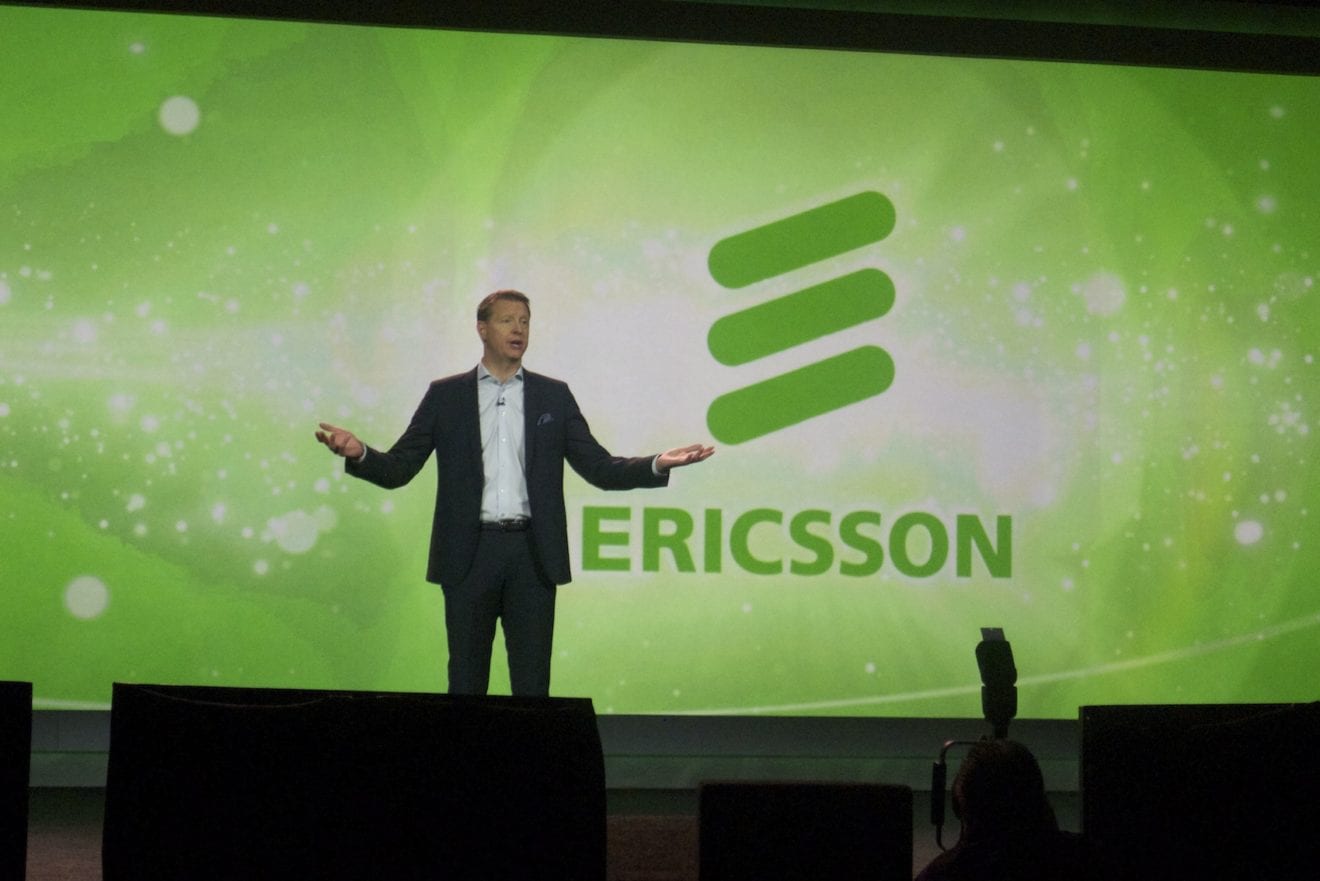
    Ericsson has announced plans for a major strategic refocus after allocating up to $1.7 billion in provisions, writedowns and restructuring charges for the first quarter.

    The company announced it will take provisions of around 7 billion to 9 billion krona ($792.8 million to $1.02 billion) during the first quarter, triggered by “recent negative developments related to certain large customer projects.”

    Ericsson did not provide further details of the reason for the provision, which has raised the eyebrows of investment analysts.

    In addition, the company will write down assets during the first quarter that will have an estimated impact on operating income of 3 billion to 4 billlion krona ($339.8 million to $453.1 million), and has allocated around 2 billion krona for restructuring charges for the period.

    As a result of the challenges it is facing, Ericsson said it will pursue a more focused business strategy to restore profitability and healthy operating margins, focused on leveraging the potential of 5G, IoT and cloud.

    Ericsson’s portfolio will be reduced to fewer areas, and the company will be more focused on developing solutions combining products and services. The company aims to simplify its organizations structure and accelerate its R&D investments in certain core areas.

    “For some time Ericsson has been challenged on both technology and market leadership and the group strategy has not yielded expected returns,” Ericsson CEO Börje Ekholm said.

    “In our strategy review we have listened carefully to customers around the world and made an in-depth analysis of our portfolio and performance. To enable us to immediately take action and move with speed in execution we are today outlining our path to restoring profitability and to lead with innovation and best in class solutions in areas we have decided to focus on.”

    Focus areas will include networks and network rollouts, digital services, the IoT, managed services as well as ICT cloud infrastructure hardware.

  • Frette China opens Shanghai flagship

    Frette China opens Shanghai flagship

    Frette China has opened its first flagship store, in Shanghai’s Puxi district.

    In the five-level Plaza 66 shopping centre and designed by New York architectural firm Kohn Pedersen Fox, the Frette boutique covers 230 sqm.

    It offers classic and seasonal collections of bed linen and towels, as well as accessories.

    Frette was established in Grenoble, France, in 1860. It relocated to Concorezzo, Italy, in 1865 and now has its headquarters in Monza. It specialises in luxury home furnishings, including bedding and towels, and provides linen to such hotels as Raffles Hotel Singapore, The Four Seasons, The Peninsula Hong Kong and The Ritz London.

    Frette China Shanghai


    While the company has 25 stores across Asia, it regards the market as “significantly underdeveloped”.

    “We’ve opened flagships in Taiwan and Hong Kong, but have really only just started in Southeast Asia,” says CEO Herve Martin. “Until now, we haven’t been present at all in China and Japan.

    “In my eyes, China is the place of the moment and will play a major role in the coming decades — not just in the luxury business industries, but in all industries. China is at the forefront of world evolution. Now is the right time to build up here.”

    After Shanghai he expects there may be a demand to open in Beijing, and the company’s mid-term goals could possibly also include Chengdu, Guangzhou and Shenzhen.

  • ‘Korean Chaos’ Worries the Fashion Industry

    ‘Korean Chaos’ Worries the Fashion Industry

    SE“The last four or five months have been complete chaos,” admits Jung Kuho, executive director of Seoul Fashion Week. “Everyone is so concerned with politics and the economy that they don’t want to spend their money. You don’t buy luxury goods when there’s this much uncertainty.”

    Seoul is home to one of the most important luxury goods markets in the world, an entertainment industry that dominates Asian culture, beauty brands with global reach and a fashion week that sits firmly on the international calendar. But as editors, buyers and street style stars gather for Seoul Fashion Week, the collections this season will be overshadowed by serious political and economic upheaval.

    In October, a major corruption scandal in South Korea led to public outcry and widespread street protests which resulted in the recent impeachment of the country’s president Park Geun-hye. Now, in the wake of counter-protests and other domestic instability, a diplomatic crisis with China has emerged. One result of these crises is that related security concerns are deterring both local and foreign shoppers.

    According to Bain & Company, sales of luxury goods in Seoul reached $7.6 billion last year. To put that into perspective, it means that luxury sales in the South Korean capital alone are not far off those for the entire Middle East region (at $8.7 billion). Clearly there is a lot at stake.

    But last month, Global Blue reported that in January alone, travel retail sales in Seoul declined by an alarming 19 percent year-on-year and by 15 percent year-on-year for January and February combined. Earlier this month, shares of companies trading in cosmetics and travel dropped sharply in Seoul and, in January, the Baidu Index reported a 25 percent decline in growth for Korean beauty brands in China.

    Between a rock and a hard place

    At the beginning of March, the first pieces of a US-built missile defence system designed to ward off a threat from North Korea arrived at the Osan Air Base in South Korea. It is called the Terminal High Altitude Area Defense system (Thaad) and China has been particularly vocal in its opposition to it. The reason for this appears to be related to Thaad’s tracking devices, which have the potential to follow China’s missile systems and would give the United States an advantage in any potential conflict.

    Since the official launch of the programme, the Chinese government has retaliated to what it sees as a military threat by putting economic pressure on Korean firms. Dozens of supermarkets owned by the Lotte luxury department store group have been shuttered across China on the pretext of fire safety; Chinese visitors have been stopped from visiting South Korea in groups; K-Pop bands have been restricted from airing on Chinese television; licences for South Korean video games have been frozen; and even imports of 19 Korean cosmetics products have been refused on ambiguous-sounding quality-control issues.

    “The temperature that is felt within China can only be measured by those within the region,” says Inhae Yeo, the director of Oikonomos Fashion Consulting, “But here on the Korean side, there are constant media reports about it and on the Chinese government banning large groups of tourists travelling to Korea.”

    China has used these tactics to turn the popularity of Korean products into a method to spark anti-Korea sentiment. The Hallyu wave of Korean culture has been flooding China since 2010, helping to make everything from Korean shoes and lipstick to musicians and actors popular. But now, because of the restrictions on Korean imports in China, the media and ordinary Chinese citizens are being compelled to take a stand against Korean products in the name of patriotism.

    Luxury sales in the South Korean capital alone are not far off those for the entire Middle East region.

    This is proving problematic for Seoul as China is South Korea’s largest trading partner, with exports to the country worth $142 billion in 2014, and cultural products hitting a record $5.3 billion in sales the same year. So understandably, the Korean fashion and beauty industries have become increasingly reliant on both sales in China and the constant influx of Chinese tourists who fly to Seoul primarily to shop for Korean products and international luxury brands.

    “At the present, a wide range of Korean industries — not just beauty and fashion — have started to suffer from this strong Chinese national action,” says Julia Juyeon Kang, the editor-in-chief of Elle Korea. “Experts are saying that whether it continues or not depends on our new next government, which can negotiate between China and US.”

    Seoul Fashion Week’s Jung agrees: “I don’t think the numbers will pick up until May when we have an election and hopefully then we will get back on the right track,” he says.

    Domestic instability upsets retail

    Compounding upon the dramatic drop in their largest customer-base, fashion brands in South Korea have also been dealing with a major political fallout. On March 10, Park Geun-hye became the first president of South Korea to be forcibly removed from office. Park was accused of colluding with controversial figure Choi Soon-sil, the founder of the Church of Eternal Life, to extort millions of dollars in bribes from major South Korean firms and allowing Choi to interfere in government matters.

    The impeachment was preceded by months of protests both for and against President Park, which led to the closure of businesses, shopping malls and restaurants around Seoul as the public took to the streets. This unrest was undoubtedly another factor in China’s reluctance to allow its citizens to travel to Korea, partly for their safety but also because it is an example of the kind of public demonstration that Beijing both fears and detests.

    Meanwhile China is showing no sign of backing down its call for protests against South Korea, which are apparently erupting around the country with videos of bloggers destroying Korean goods going viral and the state-run Global Times running anti-Korea editorials. “We will not sacrifice the national interest for Korean cosmetics,” says one. “We should start increasing sanctions toward Seoul in an orderly way, comprehensively lower the level of Sino-South Korean exchanges [and] roll back all privileges that Seoul has gained from China,” says another.

    But can this newfound Chinese antipathy for Korean brands really last? And how widespread is it? There have been suggestions in the Korean press that some of these protests have been staged or at least exaggerated by the Chinese media.

    But if they are real and indeed grow, will loyal consumers remain undeterred in the long run?  Korean beauty brands saw an 84 percent year-on-year Baidu Index growth in December 2016, a rate more than double that of Western, Chinese, or Japanese rivals. That growth did sharply decline as the crisis took hold in January, falling below Japanese brands, but nonetheless it has managed to stay ahead of other competitors.

    China is showing no sign of backing down its call for protests against South Korea.

    “Chinese consumers have continued to show a high interest in Korean brands throughout the dispute,” says Liz Flora, the editor of Asia-Pacific research for business intelligence centre L2.

    “But of course, boycotts in the name of nationalism can have a significant impact on brands’ sales — we saw this in the case of China’s anti-Japan boycotts in 2012, and Korean sales are certainly taking a hit. But Japan was able to bounce back after about a year, and saw a massive influx of Chinese tourists in 2015 thanks to the declining value of the yen. This shows Chinese consumers will be nationalist in their consumption habits to a point, but price advantages and higher quality will ultimately win them over.”

    However, it is important to remember that Korean beauty brands are in a significantly more powerful position than their fashion counterparts. “Sure, Korean fashion is not yet as popular as Korean beauty [but] within the fashion industry, the delicate designer brands which are hard to find and more difficult for the Chinese to copy, are still highly valued,” says Park Yeon-joo from the Council of Fashion Designers of Korea.

    “But due to the restriction order, numerous events related to Korean fashion have been cancelled. So, yes, the chances of Korean fashion brands expanding into the Chinese market have now decreased. Therefore, we’re decreasing the dependency on the Chinese market, and focusing on the so-called ‘Post-China market’ of Vietnam, Indonesia, Thailand, and so on.”

    According to Yeo of Oikonomos, the continued professionalisation of South Korea’s fashion market and the role of the government will be key to its resilience in the face of recent challenges.

    “Fashion is a very complicated industry and there are layers and layers of strategies as well as key points that need to be addressed and developed. This is only possible when experts with experience can come together,” she says, referring to the need to build “network infrastructure” between the public and private sectors.

    The sting of anti-corruption legislation

    In addition to the current political and diplomatic crises, fashion brands in South Korea have other reasons to be worried. The country’s new anti-graft law, popularly known as the Kim Young-ran Act, took effect at the end of September 2016 and has had a marked effect on the luxury goods market.

    In an effort to stamp out corruption, this new law bars public servants, government officials and others from accepting gifts worth more than $45 and is being seriously enforced. Members of the fashion community are becoming increasingly concerned because some brands — both local and international — have become reliant on luxury gift-giving for a significant proportion of their profits.

    “I do think that the decrease of Chinese tourists is the main reason for the decline in sales we are seeing, but the anti-graft law has also had a huge impact on Korean society, which conventionally gives and takes gifts,” says Kang of Elle. “I’ve heard a PR person from one of the big French luxury house saying that some of the low-priced products like ties and scarves are still selling well but high-priced bags are selling very little.”

    Bom Lee, the editor-in-chief of Dazed Digital Korea goes one step further, insisting that this new law bears the most responsibility for the recent drop in sales in Seoul. “The Kim Young-ran law has caused at least 50 percent of the problem,” he says. “Thaad, the presidential impeachment and tension with North Korea are responsible for the other 50 percent. But I hope that the sensitive issue with Thaad will fade as soon as possible.”

    The anti-corruption law has certainly come at a sensitive time, while the presidential scandal makes the likelihood of it being repealed very slim. Members of the fashion industry are still pinning their hopes for a return to normalcy on the upcoming election that will lead to a recovery in sales.  But this relies on the assumption that the political and diplomatic events that provoked the crisis are temporary in nature and can be solved with the arrival of a new president in May. And that the underlying economy is in good shape — as assertion which some economists dispute.

    “Well, we have a lot Chinese buyers coming to Seoul Fashion Week now and they are confident that their customers will continue buying Korean fashion because a new president will solve the Thaad dispute,” says Jung. “But maybe this incident has taught us an important lesson that in future years we need to be more prepared for these types of event, and not be so reliant on China ever again.”


  • DHL eCommerce Enables Singapore e-Commerce Retailers to Reach Out to the US Market

    DHL eCommerce Enables Singapore e-Commerce Retailers to Reach Out to the US Market

    DHL eCommerce, a division of the world’s leading logistics company Deutsche Post DHL Group, has launched a new commercial international shipping product facilitating Singapore-based e-tailers, online merchants, manufacturers, and traditional ‘brick and mortar’ retailers to ship their products to consumers in the U.S. using the reliable DHL network in a simple and cost-effective manner.

    Parcel International Direct U.S. is geared towards the burgeoning e-commerce market and seeks to respond to the growing appetite for cross-border e-commerce in the Americas region, allowing businesses to ship products up to 6.5 kg to their customers across the U.S.DHL Logo


    With 71% of retailers and 76% of manufacturers expecting the share of cross-border revenue to grow in the future[1], Parcel International Direct U.S. aims to enable Singaporean retailers to grow their business in the U.S. market with ease.

    The cross-border market is the newest blue chip of the digital retail industry and shows great promise, projected to grow at a rate of 25% annually between 2015 and 2020. This growth will bring the value of the market from USD300 Billion in 2015 to 900 billion in 2020 — almost triple in a matter of half a decade.[2]

    The product offers simple and cost-effective international shipping option with end-to-end tracking and a competitive transit time of 4-6 business days. Through IT integration, the DHL eCommerce Web Portal enables e-tailers to seamlessly integrate their orders into the DHL network by preparing orders for shipping individually or in bulk, track and generate reports all from a single portal. This product follows the company’s launch of Parcel International Direct Australia in October 2016.

    “DHL eCommerce aims to provide best-in-class e-commerce logistics for both merchants and end consumers through high quality, cost-efficient logistics solutions as well as a positive delivery experience. We want to enable local businesses to reach their international consumers with ease and allow them to fully leverage the massive potential that e-commerce brings,” said Sham Alexandra, Managing Director, DHL eCommerce Singapore. “Through Parcel International Direct U.S., we enable retailers in Singapore to expand beyond borders and reach out to the huge consumer market potential in the U.S.”

  • Market readies for a year of record IPOs

    Market readies for a year of record IPOs

    Last week, Korea’s largest mobile game developer, Netmarble, applied for its highly anticipated public listing on the Korea Exchange.

    The IPO has generated buzz not only because of the promising investment it’s set to raise but also because it will be the first major mobile game developer to list on the Korean market’s main index, the Kospi. Investors are already speculating that Netmarble could raise as much as 2.7 trillion won ($2.4 billion) by the time it debuts, likely in early May. The company is selling 17 million shares at a price band of 121,000 won to 157,000 won per share, and if it succeeds, Netmarble’s value is expected to be 13.3 trillion won.

    This would make the IPO the most lucrative so far on the Korean market since 2010 when Samsung Life Insurance raised 4.9 trillion won. Netmarble has the potential to even exceed rival NCsoft, which currently holds the largest market capitalization among Korean game companies with 6.4 trillion won as of Friday.

    Netmarble is certainly not the first company to go public this year, but its listing is sending positive vibes in the local market for other major companies that are also planning IPOs this year. The Korea Exchange is expecting 2017 to have the highest number of IPOs and biggest amount of investment raised in seven years.

    Last year, 13 newly-listed companies, including major industry players like drug maker Samsung Biologics and construction equipment supplier Doosan Bobcat, were able to collectively raise 4.3 trillion won. This year, the market expects more than 20 companies to raise between 10 and 13 trillion won. Whether the value hits its peak depends on whether Lotte successfully lists its hotel business, the de facto holding company of Korea’s fifth-largest conglomerate.

    The last time such a large number of companies went public was 2010, when 22 companies listed on the Kospi and raised 8.7 trillion won. But since peaking seven years ago, the number of IPOs has largely been falling, as weak economic growth has also limited upward momentum on the stock market.

    Expectations are high for a rebound this year. Starting with Netmarble, major companies including ING Life Insurance, E-Land Retail and two major state-run energy companies are lining up for a public debut on Seoul’s main bourse.

    Year of the IPO

    While last year’s IPOs were mostly concentrated on biopharmaceutical and health care companies, Park Jong-seon, an analyst at Eugene Investment & Securities, believes 2017 will be the year of energy and IT.

    So far this year, two companies have already succeeded in listing on the Kospi. Hojeon, a supplier of sportswear and outdoor outfits for global brands like Nike and The North Face, was the first to list on the index this year. It went public on Feb. 2, raising 41.6 billion won. A medical device manufacturer, Dentium, went public on March 15 and raised 81.4 billion won.

    But the big ones like Netmarble are expected to be concentrated in May, including ING Life Insurance, Korea South-East Power, Korea East-West Power and shoe retailer ABC Mart.

    ING Life Insurance is in a unique position considering that if it succeeds, it will be the first case of a company entirely owned by a private equity fund listing on the Korean stock exchange. In June 2014, the government relaxed regulations to allow private equity funds to recollect their investment through IPOs in hopes of boosting the merger and acquisition market.

    In 2013, the Dutch life insurer sold its 100 percent stake in the Korean branch that was first founded in 1991 to MBK Partners. The IPO is expected to raise 1 trillion won.

    Also debuting in May are Korea South-East Power and Korea East-West Power. This will be the first listing of a state-run energy company in seven years since Korea District Heating Corporation. They will mark the beginning of a government plan to list eight state-run energy companies by 2020. The country’s deputy finance minister, Jo Kyu-hong, said in January that the IPO of the energy companies was necessary to secure investment for long-term projects that will reduce carbon emission by 25 percent.

    Each of the two energy companies is hoping to raise roughly 1 trillion won.

    Korea’s largest shoe retailer, ABC Mart, is expected to try for an IPO by May. The company received a preliminary evaluation approval in November that is only effective for six months. The market estimates ABC Mart Korea will raise between 200 and 300 billion won.

    This isn’t the first time the shoe retailer has shot for an IPO. Its first attempt was in 2008, but the company walked back from it as the global crisis unfolded with the bankruptcy of Lehman Brothers. The retailer then tried again in 2011 but had to back out due to a scuffle between the then-Korean CEO and management of Japan’s ABC Mart.

    Last year, ABC Mart Korea made their latest attempt. The company was hoping to go public within the last three months of 2016 but had to again push that back because of unfavorable market conditions, including a bearish stock market and weak consumption that affected sales.

    Public offerings on the Kospi’s little cousin, the tech-heavy Kosdaq, are also improving this year.

    The market expects the Kosdaq to raise the largest amount of investment from IPOs, between 3 and 4 trillion won. Last year, 70 companies succeeded in listing on the secondary index. This year, that figure is expected to increase to 100 or so, including several attractive companies that investors have been anticipating.

    One of them is CJ E&M’s entertainment production affiliate Studio Dragon, which was responsible for several hit shows, including the recent television drama “Guardian: The Lonely and Great God,” which saw high ratings both here and abroad including in China.

    The production company, in which CJ E&M holds a dominating stake of 91 percent, has been preparing for its IPO since the third quarter of last year. Although the exact date of the launch hasn’t been set, once it goes public, the valuation of the company is estimated to be 600 billion won.

    “Until the end of the first half, there will be abundant IPO choices, while in the second half, the market will be more stabilized,” said Choi Jong-kyeong, an analyst at BNK Securities. “Many of the companies are those that have postponed past attempts and are taking another shot.”

    Choi said IPO activity is higher on the Kosdaq because large companies trying to list on the Kospi usually pull back when they are face situations that lead to a lower offering price. They especially have reservations because they usually have larger cash holdings than smaller companies.

    In just the first three months, 11 companies have been listed on the stock market.

    Debut from abroad

    Even foreign companies are gearing up to list on the Korean stock market, a trend that started to gain momentum last year.

    Chinese companies, especially, are making moves despite tension between China and Korea over deployment of a controversial American missile shield in Korea. Korean brokerage firms have increased their marketing efforts in China as managing IPOs for Chinese clients has proven more lucrative than working for local companies. Underwriters usually get 1 to 2 percent commission from a successful IPO, but in the case of Chinese clients, the average rate goes up to 5 percent.

    Last year, 6 out of 10 foreign companies that were listed on the stock market were Chinese. This year, more than 10 to 13 foreign companies are said to be preparing for a Korean IPO. Of that, 60 percent is said to be Chinese.

    But it’s not all about China. Last year, American cosmetics company Englewood Lab listed on the Kosdaq in October. It was the second company from the United States to be listed on the Korean stock market after Access Bio in 2015.

    Among the Korean underwriters, Shinhan Investment is said to be the most aggressive, leading the IPO of five foreign companies and trying to get them listed by the first half. Most of the companies Shinhan Investment is managing are Chinese, including health care companies Triplex International Biosciences and Hong Kong-based Kang Fu International Medical.

    Yuanta Securities Korea is another brokerage firm aggressively pursuing the underwriting of Chinese IPOs, marketing its strength as a Taipei-based company. This year, the brokerage firm is working with two Chinese companies, one of which is a major oolong tea manufacturer. The Taipei-based company entered the Korean market by acquiring Tongyang Securities in 2014.

    The nation’s first underwriter of a Chinese company, Shinyoung Securities, is planning to apply for preliminary evaluation of a Chinese company.

    Daishin Securities has recently made changes within its organization to expand its portfolio of foreign IPOs. Although it has no past experience underwriting Chinese companies, it has created teams that will be in charge of foreign IPOs and hire Chinese experts.

    “The biggest obstacle for Chinese companies getting listed on the Korean stock market has been the low perception of Chinese companies or the ‘China discount,’” Choi of BNK Securities said.

    The China discount refers to Chinese companies being traded on the Korean stock market at a lower value despite strong performances because of mistrust from Korean investors.

    “In fact, some of the companies being traded on the local stock market have shown strong profitability,” Choi said.

    Rothwell International, which was listed last year, had an operating profit rate of 22.3 percent last year and Heng Sheng Holding Group had 19.6 percent.

    Riding a wave of good feelings

    This year’s rising excitement in IPOs is largely contributed by improvements in market conditions and eased regulations from the government. The Korean government has been encouraging more companies to secure investment by going public.

    The positive sentiment surrounding IPOs boosted the Kospi to its highest in nearly six years. When compared to the beginning of the year, the index has risen 7 percent as of Friday. The Kosdaq, on the other hand, has fallen over the same period by 3.8 percent.

    This is a stark contrast to the past couple of years when movement on the Kospi was limited, and investors have been less aggressive in pursuing IPO shares.

    Lee Eun-tae, president of the Kospi market, cited IPO activity as the reason behind Seoul’s main bourse breaking free from its up-and-down fluctuation during a press conference in February.

    “Last year, despite uncertainty in the local economy, low growth and the global IPO market shrinking, IPOs on the Kospi continued to expand,” Lee said. “IPOs raised the largest amount since 2010.”

    Additionally, the government last year changed regulations to allow even small companies with deficits to apply for an IPO when it meets so-called Tesla requirements of high potential and exceptional technology, in reference to the California-based electric car company.

    “Tesla, which is now the world’s major electric vehicle maker, was able to grow based on an IPO on the Nasdaq even when it suffered losses,” said Yim Jong-yong, chairman of the Financial Services Commission, during a press conference last October. “In order to foster future growth industries through the capital market, we need to allow these companies to be listed if the companies’ deficits have been created in the process of building up growth potential, such as expanding production bases or investing in R&D.”

    But not every IPO is expected to go through smooth sailing. One such company is Lotte. The market has been waiting for the public listing of Hotel Lotte since October 2015, when the conglomerate’s chairman, Shin Dong-bin, publicly announced it would try to improve transparency by offering up the hotel unit, the de facto holding company of Lotte.

    However, the retail giant has faced numerous controversies that have forced Lotte to repeatedly push back its IPO attempts. Last October, Shin again announced the group’s intention of listing the hotel business. But it was one of the Korean companies swept up in the bribery scandal that brought down President Park Geun-hye.

    The market expects Lotte’s latest IPO attempt in the second half might raise more than 3 trillion won. But at this stage, with the retail giant under investigation for bribery, it is unclear if that will be possible.

    E-Land Retail, which owns two major retailers, NewCore Outlets and NC Department Store, submitted a preliminary evaluation on Dec. 28, but the Korea Exchange has yet to approve it. One of the biggest issues the company faces is controversy over unpaid payments to its part-time employees in the retail group’s food business division. The company is estimated to owe nearly 8.4 billion won in unpaid wages including overtime pay. On top of that, E-Land has been selling off its assets, including 180 billion won worth of real estate in the first two months of this year, in hopes of improving its balance sheet.

    But with the company at risk of having its credit score downgraded, it is unclear if E-Land Retail will reach its goal of listing within the first half of this year.

    On the Kosdaq, the biopharmaceutical company Celltrion Healthcare is expected to be the biggest IPO on the index this year. The company was planning to apply for an IPO next month but is being audited by the Korean Institute of Certified Public Accountants on suspicion that the company overstated 10 billion won profit of its Rituximab biosimilar Truximain 2015.

    The market estimates that if the company goes public, the IPO will raise maximum 1 trillion won.

     

  • Apple opens new stores in China, Germany

    Apple opens new stores in China, Germany

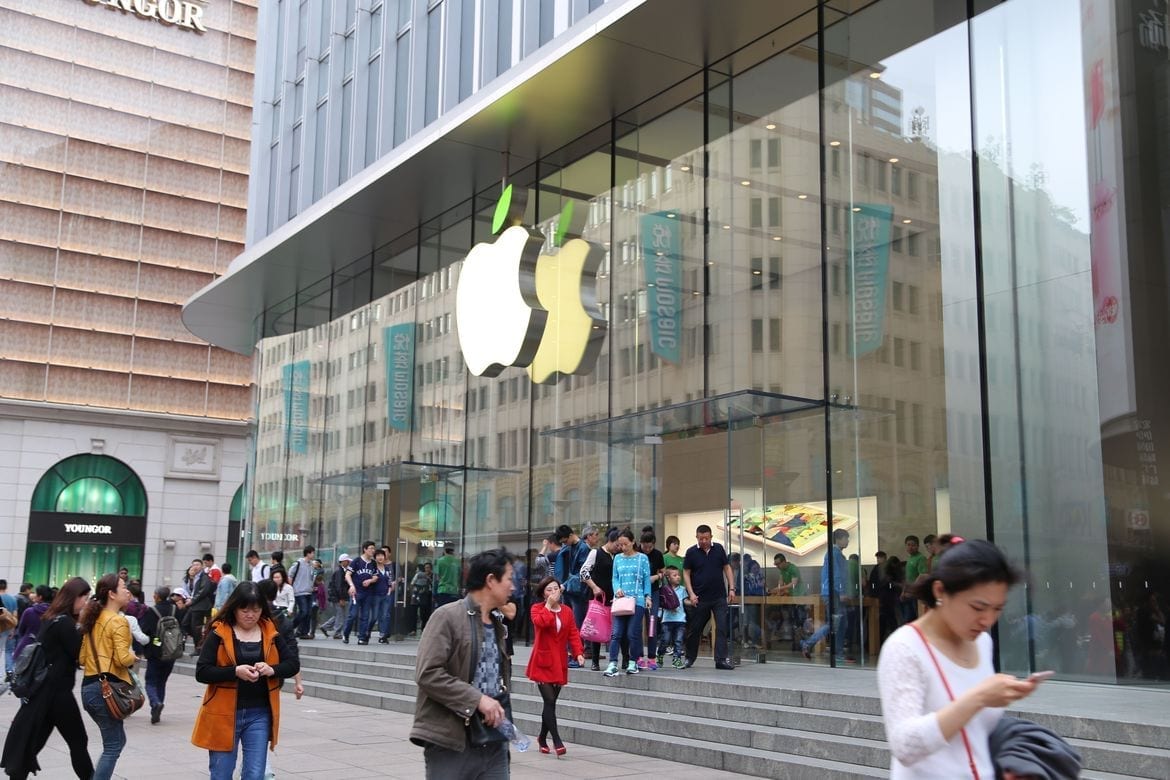
    While Apple’s retail team is currently remodelling all its stores, the company expanded its reach with three new stores in China, Germany and the US. More than 350 store employees at the new stores in Nanjing (China), Cologne (Germany) and Miami (US) welcomed thousands of customers at the grand openings. “Each store complements the local architecture, from the restored facade in Schildergasse to the 90-by-30-foot glass entryway of Apple Nanjing,” the company said in a statement on Saturday. For the first time in each city, customers can explore The Forum — a place where the local community can gather and learn.

    All the three stores also feature The Boardroom — a space for local entrepreneurs, developers and business customers to get hands-on advice and training. On March 12, Apple reopened its store in St. Johns Town Center in Florida — the 35th store company updated to its latest design in the US. Apple opened its first store on May 15, 2001, at the Tysons Corner Center mall, Virginia.


  • M&S launches boutique concept in Malaysia

    M&S launches boutique concept in Malaysia

    Marks & Spencer (M&S) has launched a premium boutique concept in Kuala Lumpur, in Sunway Velocity Mall.

    M&S Malaysia

    Covering more than 10,600 sqft (985 sqm), the M&S boutique concept – the first of its kind in Malaysia – features large mirrors and seasonal imagery. A welcome zone at the entrance showcases the season’s trends, and boutique displays allow customers to see the range of styles, fits and outfit ideas available.

    M&S Malaysia 3

    As well as offering the UK retailer’s clothing and accessories across womenswear, menswear, childrenswear, lingerie and toiletries, the boutique has a food hall featuring more than 800 lines plus an in-store bakery with Coffee-To-Go, offering coffee and tea alongside breads and pastries baked on-site.