Author: Mei Ling Tan

  • Thailand’s Central Group set to build mall in Cambodia

    Thailand’s Central Group set to build mall in Cambodia

    Thai ambassador to Cambodia Nuttavudh Photisaro says Central representatives have already studied the proposed site, not yet revealed publicly.

    “By investing in a shopping mall, they hope the trade volume between the two countries will increase,” says Nuttavudh.

    CBRE Cambodia associate director Ann Sothida says shopping malls still have a chance to grow in Cambodia because the market has increased purchasing power and has only a limited number of shopping malls of international standard.

    Trade between Thailand and Cambodia eased by 6 per cent last year to US$5.6 billion. Cambodian exports to Thailand amounted to $936 million, while the country’s imports from Thailand amounted to $4.7 billion.

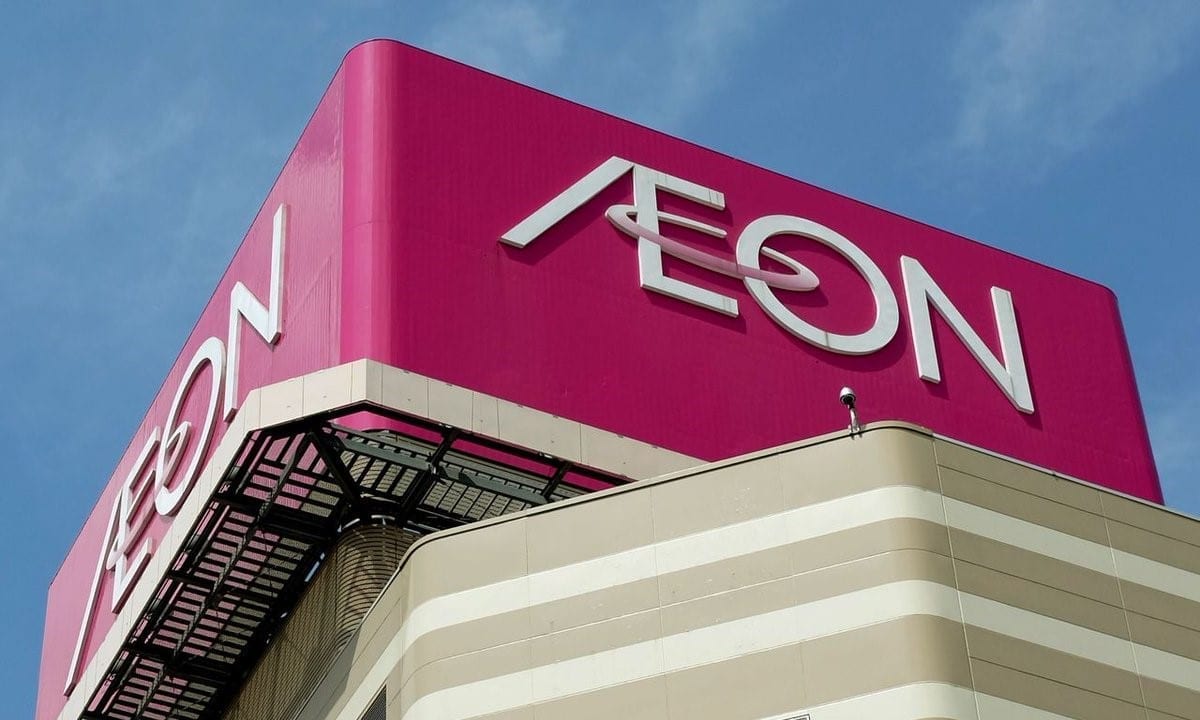
    Phnom Penh’s shopping centres comprise Aeon Mall, which is building a second outlet in the city, City Mall, Parkson and Soriya Mall.

  • Chow Tai Fook looks to Japan for growth

    Chow Tai Fook looks to Japan for growth

    Hong Kong jeweller Chow Tai Fook is looking to Japan for growth to compensate for its challenges in greater China.

    The company is about to open a shop inside the Laox duty-free shopping centre in Tokyo’s Shinjuku district, a prime destination for Chinese tourists to the city.

    Currently, Chow Tai Fook operates just 19 of its total 2326 stores outside Hong Kong and Mainland China.

    Chow Tai Fook’s sales fell by 25.7 per cent in Hong Kong and Macau and by 20.9 per cent in Mainland China in the half year to September 30.

    In Japan, the jeweller will targeting tourists from China, rather than Japanese consumers who are unlikely to be lured by the style of its offer. Tourism numbers from China to Japan have been rising in recent years due to more relaxed visa conditions and currency fluctuations. Last year, more than 6 million Chinese visited Japan, spending an average of US$2000, more than twice that of the average tourist.

    “With an emphasis on gold and somewhat ostentatious design, Chow Tai Fook looks unlikely to appeal to the Japanese market,” commented David Blecken of Campaign Japan. “That should not be a major problem considering the continuing growth of inbound tourism to the country and relatively high spending of visitors, although Chow Tai Fook has low awareness among non-Chinese groups.”

  • AEON in Collaboration with Kasikorn Bank Launch “Cashing @ K-ATM with AEON

    AEON in Collaboration with Kasikorn Bank Launch “Cashing @ K-ATM with AEON

    Mr. Nuntawat Chotvijit (second right), Director of Marketing, AEON Thana Sinsap (Thailand) Public Company Limited, together with Ms. Supaneewan Chutrakul (second left), First Senior Vice President of Kasikorn Bank recently launched the “Cashing @ K-ATM with AEON Your Cash Card get  a special chance to win smartphone prize” campaign. The campaign, which runs until April 30, offers AEON Your Cash cardholders the chance to win one of 10 iPhone 7 Plus (128GB), or one of 51 Samsung Galaxy A7 (2017), at a total value of 1,195,990 baht by withdrawing a Your Cash loan of over 1,000 baht via a Kasikorn Bank ATM.

  • Inditex Group sales rise on new stores

    Inditex Group sales rise on new stores

    Zara parent Inditex Group sales rose by 12 per cent in its latest trading year, to January 31, reaching €23.3 billion.

    Growth was achieved in every geographic region where the group is present, and includes contributions from debut stores in Vietnam and New Zealand.

    Same-store sales rose by 10 per cent, up from 8.5 per cent the previous year, with positive same-store sales growth in all geographies and across all brands.

    Net profit was €3.2 billion, up 10 per cent year-on-year, while earnings before interest and tax grew 8 per cent to €5.1 billion.

    Chairman and CEO Pablo described the result as positive against a backdrop of strong prior-year performance.

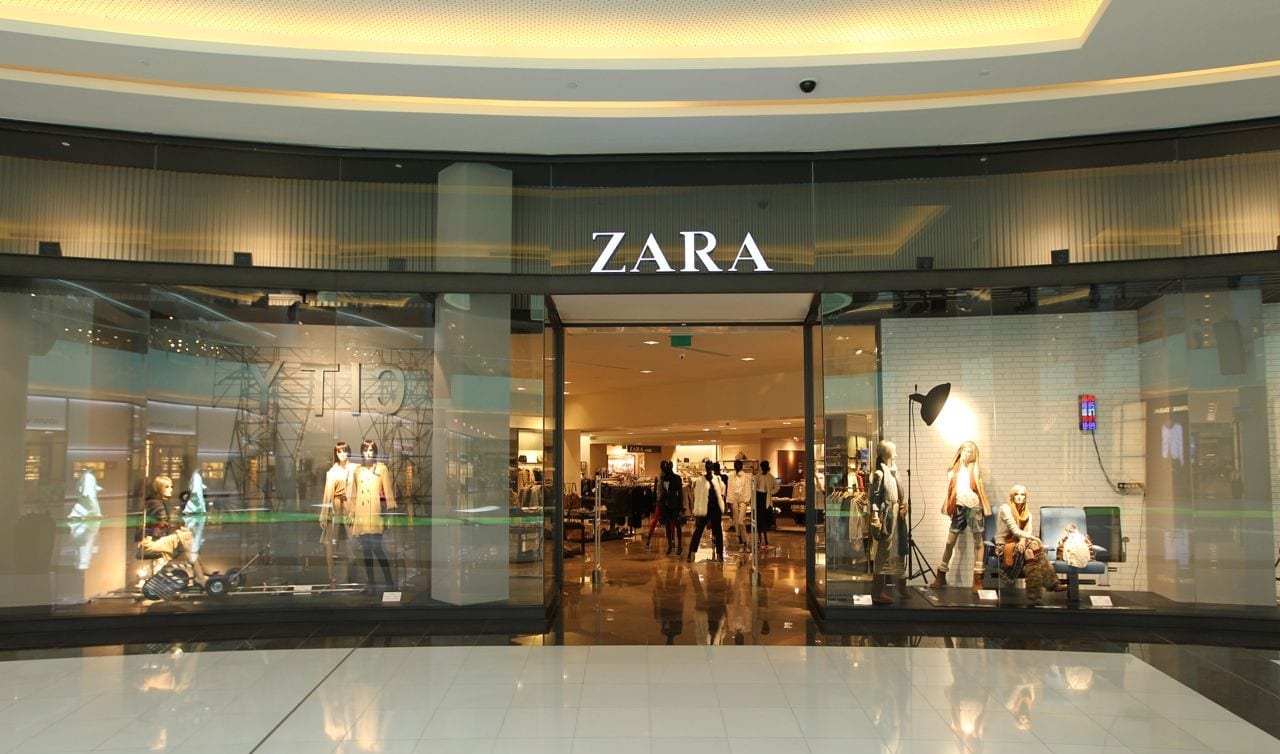
    Inditex opened 279 stores, net of closures, in 56 markets, across all its brands, ending the year with 7292 stores in 93 countries, a large proportion of the new ones in Asia, including its first Zara in Vietnam, in Ho Chi Minh City.  Other Zara stores opened in China, Thailand, Indonesia and Japan and it refurbished it flagship in the Shinjuku district in Tokyo, one of Japan’s most important shopping districts, which reopened to the public in November.

    A flagship Pull&Bear store opened in Windsor House in Hong Kong and new stores were opened by Massimo Dutti in India and by Oysho in Indonesia. Bershka refurbished its flagship on Nanjing Road East in Shanghai and Zara Home opened a global flagship on Garosu de Seoul in South Korea.

    Since the financial year ended, it has opened online stores in Malaysia and Singapore, taking its online platform to 43 markets.

  • Papua focuses on developing tourism in Biak and Supiori

    Papua focuses on developing tourism in Biak and Supiori

    The Papua administration has focused on developing tourism in the districts of Biak Numfor and Supiori.

    “So far, two regions have become a priority for tourism development, notably the districts of Biak Numfor and Supiori,” Ysh Is Matutina, head of the tourism office of Papua, stated here, Thursday.

    Tourism development has been carried out since 2016.

    Several tourist attractions and destinations in Supiori have been identified by the local tourism offices of Papua and Supiori.

    The development is aimed at attracting more domestic and foreign tourists.

    In Biak Numfor, the priority is to develop the Sausapor Beach. Several other tourist attractions and destinations are also being developed.

    Meanwhile, the number of foreign tourists visiting Biak Numfor District, Papua Province, increased to 3,399 people in 2016, as compared to 1,779 in the previous year.

    The increase was the result of intensified tourism promotion activities carried out by the Biak District administration, Enias Rumbewas, spokesman of the Biak Numfor district government, noted recently.

    Foreign tourists from Japan, the Netherlands, Australia, China, and several European countries, among others, visit Biak.

    The number of domestic tourist arrivals also surged from some 28 thousand in 2015 to 30 thousand in 2016.

    Among the existing tourist attractions in Biak are the World War II wreckage, maritime scenery, and its unique cultural diversity regularly showcased at the Biak Munara Wampasi festival.

    This year, the festival will be organized in July and will feature activities, such as traditional snap mor fishing, Mansusui boat race, and a visit to the Padaido/Aimando islands.

    The Biak Numfor district government has allocated funds worth Rp1 billion through the local Tourism Office to ensure the success of the cultural festival.

    Last year, the festival was held on Jul 1-4 to showcase traditional Japanese “katana” vintage samurai swords from World War II.

  • CIMB bags ‘Best Retail Bank in Malaysia’ award

    CIMB bags ‘Best Retail Bank in Malaysia’ award

    CIMB Bank Bhd has won “Best Retail Bank in Malaysia” at the International Excellence in Retail Financial Services Awards Programme 2017 conferred by The Asian Banker.

    CIMB’s Enhanced Virtual Assistant (EVA), the first chat-bot banking application in Asean, also won “Internet Banking Product of the Year” recently at a ceremony held in Tokyo.

    CIMB group consumer banking chief executive officer Samir Gupta said the best retail bank award was reflective of its continuous efforts to deliver great customer experience, in line with today’s consumer expectations and also preference for online and mobile banking.

    “This, coupled with CIMB’s strong Asean network, contributes to a seamless banking experience for over 12 million of our retail customers,” he said in a statement yesterday.

    CIMB EVA, on the converse, is the epitome of banking made simpler, more secure and more convenient, he said.

    “Customers can easily check their current or savings account balances, pay bills and perform mobile top-up through chat,” he said.

    The Asian Banker’s International Excellence in Retail Financial Services Awards Programme is the most rigorous, prestigious and transparent awards programme for consumer banking in Asia-Pacific, Central Asia, West Asia and Africa.

  • HCM City start-up launches power management software

    HCM City start-up launches power management software

    The Vietnam High Efficiency Software Corporation (VHES) on Thursday launched its Head End System (HES) software to be used to manage the city’s smart electricity grid.

    The software, which uses Vietnamese-made chips, is intermediate software that VHES developed based on the Integrated Circuit Design Research and Education Center’s research project.

    VHES is the first high-tech start-up developed under the HCM City Integrated Circuit Development Programme.

    Speaking at the launch ceremony, Nguyễn Văn Lý, deputy general director of the HCM City Power Corporation, said the corporation would modernise the city’s grid from now to 2020, including building a smart grid, an automated electrically operating system, and an electrical measurement system with remote data collection.

    Trần Vĩnh Tuyến, deputy chairman of the city’s People’s Committee and head of the steering board of the Integrated Circuit Development Programme, said that smart management would create a safe and stable power supply.

  • Arrow holds IoT innovation showcase in Shenzhen

    Arrow holds IoT innovation showcase in Shenzhen

    Arrow Electronics has held an internet of things (IoT) innovation showcase in Shenzhen aimed at connecting innovative Hong Kong startups with technology companies in China.

    The event attracted 500 attendees from all sections of the IoT ecosystem in Hong Kong and China, providing a platform for IoT businesses in China and Hong Kong to collaborate.

    As well as startups and entrepreneurs, international technology manufacturers, IoT solution providers and system integrators attended.

    Notable attendees included Analog Devices, Cypress, Honeywell, Infineon, Intel, Nexperia, NXP, ON Semiconductor, Qualcomm, and STMicroelectronics.

    Arrow Electronics components president for APAC Simon Yu said that recent research from the Chinese University of Hong Kong and Hong Kong Baptist University found that entrepreneurship in Hong Kong and Shenzhen has grown 206% and 284% respectively between 2009 and 2016. But innovation in some major areas including the IoT is being held back due to limited engineering expertise and production resources.

    “Arrow has long supported technology innovation in Hong Kong and China,” he said.

    “Our engineering expertise and IoT industry reputation, especially in the greater China area, can definitely assist IoT startups in removing key barriers and connecting them with the ecosystem players on their road to innovation entrepreneurship and social impact.”

    Arrow Electronics last year opened the Arrow Open Lab at Science Park to help support entrepreneurship and innovation in Hong Kong. This week’s event built on that initiative.

  • International Fish Force Academy Officially Opens

    International Fish Force Academy Officially Opens

    The International Fish Force Academy of Indonesia (IFFAI) has officially opened today on Thursday, March 16, 2017. The inauguration was attended by Maritime Affairs and Fishery Minister Susi Pudjiastuti and National Police Chief Tito Karnavian. “This [academy] is aimed at how to handle criminal cases,” said Minister Susi on Thursday, March 16, 2017.

    The IFFAI academy is a joint effort by the Ministry of Maritime Affairs and Fishery together with Indonesian National Police (Polri) and the 115 Task Force.

    Susi explained that IFFAI is an international-standard school to study about fishery related criminal activities. Fishery crimes are complex and not only involve fish theft. “It also includes human trafficking, forced work, and endangered animal trade.”

    Minister Susi revealed that it would require great skills in handling and a good coordination between agencies to counteract the problem. “Now, information sharing is outstanding in developing an international fisheries fish force,” Susi said.

    According to the head of research and human resource agency at the Marine Affairs and Fishery Ministry, Zulficar Mochtar, there are currently 24 investigators and public prosecutors from the Ministry, Police, Navy, and Supreme Court that are enlisted at the academy.

    Zulficar said that following new criminal modus related to maritime affairs, he hopes that the academy can produce law enforcers that are able to understand and analyze this sort of criminal activities.

    The other purpose of this academy is to continue to build an effective understanding and collaboration between law enforcement agencies and to produce agents of change in the field. Participants will be trained at Jakarta Center for Law Enforcement Cooperation (JCLEC) in Semarang.

  • Indonesia wants to be world’s fourth-largest ceramics producer

    Indonesia wants to be world’s fourth-largest ceramics producer

    The government aims to fully utilize the national production capacity of ceramics to make Indonesia the fourth-largest ceramics producer worldwide.

    Last year, Indonesia’s ceramics production reached 350 million square meters, or only 60.3 percent of its estimated total capacity of 580 million square meters a year.

    “Hence, we should increase it further. If we can reach 100 percent production capacity, we will be the world’s fourth-largest ceramics producer,” Industry Minister Airlangga Hartarto said on Thursday in a statement.

    Of the total production figure in 2016, about 87 percent were allocated to the domestic market, while the rest was exported to various countries in Asia, Europe and America.

    At that time, Indonesia produced 290 million tableware items, 120 million roof tiles and 5.4 million sanitary wares.

    Airlangga said the country had competitive advantages in the ceramics industry, especially considering its abundant natural resources that could be used for raw materials of ceramics. Moreover, Indonesia’s ceramics consumption is still relatively low compared to its Southeast Asian neighbors.

    “Now, we have to take strategic steps to boost the ceramics industry, by strengthening the industry’s structure, improving the quality of human resources, bringing technological innovations through research and development and developing the infrastructure,” Airlangga went on.

    Hence, the Industry Ministry has proposed to make the ceramics industry one of priorities to get a lower industrial gas price, as it needs a long-term supply of gas so that it can see a production boost in the long run.

  • Cheap money transfer system to boost cashless transactions in Thailand

    Cheap money transfer system to boost cashless transactions in Thailand

    Thailand launched a cheap electronic interbank transfer system for depositors in January, in a much awaited milestone since it unveiled a digital payment masterplan two years ago.

    Called PromptPay, it allows someone to transfer sums of less than 5,000 baht (S$xxx) to accounts of other banks for free, as opposed to the 25 baht fee usually levied by banks.

    Some 19 million bank accounts were linked to the PromptPay service as at Jan 16, a modest fraction of the 78.8 million savings accounts nationwide that month (Jan 2017). Experts say one of the factors hampering take-up is lack of a privacy law, raising fears that signing up for the PromptPay system might make one more susceptible to having one’s personal information stolen.

    PromptPay was part of a larger plan, involving inducing consumers and taxpayers to go electronic, to reduce transaction costs and increase the transparency of tax and government related payments.

    Previously, interbank transfer fees had created a virtual ringfence around depositors, forcing cost-conscious consumers to physically transfer cash between different automated teller machines. This also limited the appeal of an increasing variety of e-wallet options.

    Commuters on Bangkok’s skytrains currently use a stored value “Rabbit” card, which can also be used to buy items from over 3,000 retail outlets.

    Thailand’s three mobile phone service providers also offer their own version of e-wallets, alongside social messaging applications like Line and WeChat.

    For example, True Money is an electronic payment system linked to mobile service provider True Move.. Last October (2016), True Money also launched a remittance service that would allow Myanmar migrant workers in Thailand to make real-time transfers of their earnings home.

    But while the value and proportion of e-money transactions processed by banks and non-bank service providers have been steadily growing, they totalled just 91 billion baht last year – or less than  1 per cent of the value of payment transactions processed – according to Bank of Thailand data.

    The rollout of PromptPay’s peer-to-peer transfer system is expected change the dynamics of Thailand’s e-payment landscape, says Mr Punnamas Vichitkulwongsa, who heads the Thailand e-Payment Association and who is also the chief executive of True Money.

    “There would be more excitement in the market,” he told.

    “PromptPay creates a level playing field for (non-bank e-wallet providers)…Banks will be more aggressive and step up their offerings to end users,” he said.

  • RoRo shipping service to ply Mindanao-Indonesia route

    RoRo shipping service to ply Mindanao-Indonesia route

    The Philippine and Indonesian governments will launch next month a roll-on, roll-off shipping service that will link Davao and General Santos cities to Bitung City in Indonesia, an official of the Mindanao Development Authority (MinDA) said.

    Presidents Rodrigo Duterte of the Philippines and Joko Widodo of Indonesia have been invited to grace the launch in Davao City after the 30th ASEAN Summit in Manila, MinDA Assistant Secretary Romeo Montenegro said.

    He said the DGB shipping will fill a gap in transport connectivity, at least between the Philippines and the rest of the Brunei-Indonesia-Malaysia-Philippines-East Asean Growth Areas and ASEAN itself.

    If pursued, the shipping service will be the first of its kind in the 50-year old ASEAN grouping and will help boost efforts for economic integration.

    RoRo carries rolling cargoes and do not require cranes for loading or off-loading as they simply roll on and off the vessel, hence the name. The mode is economical, according to the Asian Development Bank, because it has removed cargo handling costs for labor and equipment, as well as cut the transport time.

    In 2012, the Japan International Cooperation Agency recommended in a study to set up a sea link dedicated to freight services between General Santos City in Mindanao and the Indonesian port of Bitung as the much needed maritime connectivity aimed to revive and strengthen trade between Indonesia and the Philippines.

    The Master Plan of ASEAN Connectivity 2025 cited the need for physical, institutional and people-to-people linkages to help achieve economic, political-security and sociocultural pillars of integration under the ASEAN Economic Community.

    Since its launching in 1994, BIMP EAGA cited improvements made in physical connectivity through improved roads and ports. The BIMP-EAGA Vision 2025 document, however, noted that most of the projects became “stand alone projects” showing benefits at the national level that “fail to clearly demonstrate sub-regional impacts.”

    “Only a few projects have accounted for the need to link the two priority economic corridors of BIMP-EAGA, namely the Western Borneo Economic Corridor (WBEC) and the Greater Sulu and Sulawesi Corridor (GSSC),” the document said.

    For the transport sector strategy of BIMP-EAGA, the goal based on BIMP EAGA Vision 2025 is “interconnected, seamless and safe multi-modal transport.”

    According to the BEV 2025 project list for 2017 to 2025, aside from the DGB route, other sea linkages were also eyed in BIMP-EAGA, such as Bitung-Tahuna-Gensan, Brooke’s Point-Sandakan-Kota Kinabalo, Brooke’s Point-Bataraza-Kudat and Brooke’s Point-Brunei.

    For air linkages, there will be flights for the following routes: Puerto Princesa-Kota Kinabalo, Mulu-Bandar Seri Begawan, Davao-Manado, Pontianak-Bandar Seri Begawan and Balikpapan-Bandar Seri Begawan.

    Poor transport connectivity 

    Poor sub-regional transport connectivity, as identified in the BIMP-EAGA Vision 2025 document, is one of its major challenges.

    It added that uneven economic development has led to different priorities, policies and regulations related to the transport sector.

    Montenegro said there is greater chance to address connectivity from 2017 to 2025 because a total of $23 billion, compared to only $1 billion in the previous decade, has been earmarked for priority infrastructure projects in the area.

    Over half of the amount goes to projects identified in Mindanao because the island needs more infrastructures. Also, a big ticket project, the Mindanao Railway System is in the pipeline.

    The Duterte administration is giving special focus on infrastructure.

    The DGB, Montenegro added, is strategic for the Philippines, not just for Mindanao because it provides a faster and cheaper access for domestic products to be moved in ASEAN and other parts of the world. Notably, Mindanao is physically separated from the other BIMP members.
    Regular flights needed

    Vicente Lao, chairperson of the Mindanao Business Council Philippine representative to the BIMP-EAGA Business Council private sector forum, said the opening of the route will be good for Mindanao and trading with the Indonesian areas in the ASEAN sub-region.

    “The governments should act together to make it happen. The private sector should come in to take advantage,” he told this week.

    Since regular flights between Davao City and Manado in Indonesia have been suspended since 2008, travelers between the two areas have relied only on chartered flights, he added.

    Lao said the service should be made regular to stop the dependency on chartered flights.
    “It is not dependable. It has to be regular trips to make sure it addresses the needs of the businessmen,” he said via telephone.

    He said this means a big cut in transport cost, too. MinDA said it takes three to five weeks to move products from Davao City to Manado.

    With the DGB RoRo route, the travel time will be cut to three days. PortCalls Asia estimated the savings to be around P75,000 (PUS$1,500) per 20-foot equivalent unit.

    Apart from intra-regional trade, the route can also serve as a cheaper alternative for transshipment of goods in Asia, Montenegro said.

    Davao City will use the privately-owned Kudos Port. In General Santos City, the Makar Wharf will be used and in Sulawesi, the Bitung Port, which was recently identified as an international port of entry to Indonesia.

    Enough goods?

    Trade and Industry Assistant Secretary Arturo Boncato Jr. said the revival of regular Davao-Manado flights should follow the opening of the shipping service.

    He said the new shipping link will be crucial in increasing trading in the BIMP EAGA, which is now considered as a building block of ASEAN.

    “Connectivity plays a critical role in trading and the goal of the ASEAN Economic Community,” he added.

    But Boncato, who is the Philippine senior official to the BIMP-EAGA, said while the easier direction is for the route to be used in the transshipment business in Asia, it should really facilitate and improve intra-regional trading in BIMP-EAGA.

    For his part, Bronx Hebrona, who chairs the Committee on ASEAN and BIMP-EAGA of the Regional Development Council in Region 12, asked: “But now when a ship is available, are there enough goods to be transported?”

    He said there is greater push for BIMP EAGA with President Duterte, who he said was instrumental in expediting the preparations for the DGB route opening.

    “It’s possible. But it’s a wait and see situation. We are waiting for concrete terms,” he added.

    Boncato said loading the vessel is already the easier part. The challenge is how to sustain the shipping service.

    Montenegro said a joint meeting is scheduled next week for the Philippine and Indonesian task forces created to prepare for the opening of the route.

    During the Davao General Santos Bitung Business Forum last month, Philippine Transport Undersecretary Fernando Juan Perez described the route as a “gold mine” saying it opens up a lot of opportunities for exporters from both countries.

    Rosan P. Roeslani, chair of the Indonesian Chamber of Commerce and Industry welcomed the proposed opening of the route, as quoted by Jakarta Post on March 15.

    “It is going to be easier to access the Philippine market through the Bitung Port [in North Sulawesi], especially for products and commodities from Indonesia’s eastern regions,” the source added.

    Institutional, governance problems

    According to the MinDA website, the DGB, as one of three pilot areas for the ASEAN RORO Network Initiative, was initially pushed in 2012 by the private sectors in the three cities.

    Policy restrictions in Indonesia like Bitung Port’s status, however, hampered the launch. In 2014, the Indonesian Ministry of Trade officially identified Bitung Port as an international port, allowing entry of food and beverages, electronics and garments.

    Montenegro told the problem has been addressed by greater private and public sector coordination.

    Under the ASEAN Single Aviation Market, BIMP-EAGA is pushing for the revival of air connectivity within its focus areas to increase not only tourism arrivals but also trade activity within and beyond the sub-region.

    Various airlines have previously serviced the route such as Bouraq Airlines (2002), Merpati Nusantara (2005) and Sriwijaya airlines (2006), which have ceased operations due in part to the companies’ financial and operational losses, according to the MinDA website.

    There were on and off availability of chartered flights after the suspension of regular flights.

    Two of the players included Mid Sea Express, an Indonesian air carrier and Wings Air, a subsidiary of the Indonesian carrier’s Lion Air.

    In his April 2016 dissertation titled “Trade Governance Model in the BIMP EAGA,” Soehardi, an Indonesian doctorate student at the University of Southeastern Philippines in Davao City, found that connectivity management in transport infrastructure is an important consideration among traders.

    “The current condition of BIMP EAGA trade governance is marred with institutional and governance problems,” he wrote in his conclusion.

    He added that it created difficulties and cumbersome engagements with small and medium traders in BIMP-EAGA corridors.

    He identified six attributes with “availability of ships/planes as the major indicator.” The others include sufficient cargo ships and airplanes to ferry goods from one country to another and  that a sufficiently equipped port of entry as a good indicator of trade governance.

    No connectivity, no tourists

    Retired government employee Virna Gomez of Davao City said that as a traveler she looks for destinations that do not only have commercial appeal.

    “There are also those who look for historical and cultural purposes. This is the kind that we can see in Indonesia, for example,” she said.

    For her, the idea of connecting Davao and General Santos to Bitung is welcome news, especially for cargo shipping. She said it would open up opportunities for local people to trade in the sub-region. She would also be interested to explore the tourist attractions there. She, however, hoped that a comfortable passenger shipping service should be offered side by side with the cargo ships.

    “It would be an entirely different set of expectations from passengers,” she added.

    But she said the prospects of local tourists like her to go to Indonesia will not depend only on the availability of flights or shipping services.

    “We will be encouraged to travel if there are budget fares available such as the promotional peso-fare package (offered by a Philippine airline), she said.

    She said that for tourists it all redounds to affordability of travel cost and availability of hotels that cater to backpackers.

    “We must also have more of those hotels so that we also draw tourists from Indonesia to our shores,” she added.

    Unlike archipelagic Indonesia, she said, Malaysia seems to be a more attractive destination because you can take a bus or a train in going from one destination to another.

    “But I like to go to Bali and Yogyakarta, given the chance,” she said.

    Gomez, who in 2010 set up a small travel agency to keep herself busy, said she rarely get bookings for travel to Indonesia or Malaysia.

    ’Get acts together’

    Businesswoman Mary Ann Montemayor said this should not be a cause for discouragement.

    She said the nature of BIMP EAGA is really “going slow” and small, not grand, so hard work is needed to push ahead.

    But Montemayor, who sat at the BIMP EAGA Tourism Council from 1998 to 2008, said private and public sectors should get their acts together.

    “By all means, the impasse should be broken. It’s impossible to do trading without connectivity,” she added.

    Any aggressive marketing, she said, could help tourism and trade but it should be backed by physical connectivity.

    Assistance has been extended to micro, small and medium enterprises to help them compete in the ASEAN market. But Montemayor said connectivity will their chances.

    She said the ease of travel due to the Davao-Manado flights enabled business to pick up, although not as fast as expected.

    “When it happened, the flights were already suspended,” she said.

    She argued that it’s not entirely for the lack of attractions but that other destinations just had the edge in the competition.

    “The challenge is how to build up the market and prove to the airlines that it’s worth the risk,” she said in the sidelines of an ASEAN meeting in Davao last month.

    Like home

    Joanna Ruth Paloma, an English teacher at Bukidnon State University, recalled fond memories of her visit Manado in June 2012. She was then a member of a 40-person delegation of the university chorale who performed there for the Philippine Independence Day celebration organized by the Philippine Consulate.

    The group flew with Wings Air, an Indonesian airline serving the route with a 70-seater aircraft.

    Joanna said they traveled to another city and country but felt like she was home. “I felt like we were closely related in culture and language (separated only by the seas).”

    Indonesian food, she added, is familiar although a lot spicier. The style of the houses and buildings was also similar. In 2012, she compared Manado to Cagayan de Oro City. She said Manado folks were hospitable and were fond of Philippine tourists.

    She was saddened that there are no more regular flights serving the route.

    “I hope it will be revived. It’s good to connect with our neighbors. There were differences but there must be more similarities. It’s worth exploring,” she added.

  • Apple will open two additional R&D centers in China this year

    Apple will open two additional R&D centers in China this year

    Apple announced today that it will set up two additional research and development centers in China, to go with the two locations in the country that it announced last year. The new R&D centers will open in Shanghai and Suzhou, the company said in a statement on its Chinese website on Friday.

    Apple hopes the centers will help it to attract graduates from institutes such as Peking University, Tsinghua University, and Shanghai Jiaotong University, and has partnered with schools in the region to offer internship programs, in the hope of developing experts to work closely with its regional supply chain.

    “We are looking forward to working with more local partners and academic institutions through the expansion of R&D centers in China,” said Dan Riccio, senior vice president of hardware engineering at Apple. “We are honored to have access to excellent talent and a positive entrepreneurial spirit in the region, where our developers and suppliers will be working together.

    Apple’s attempt to boost its presence in the country began last September with the opening of its first R&D center in Beijing’s Zhongguancun Science Park, often referred to as “China’s Silicon Valley”. Another R&D center, this time in Shenzhen, was announced the following month.

    Apple has pledged to invest more than 3.5 billion yuan ($508 million) in research and development in the country, in a bid to address dwindling returns on its Chinese iPhone business as consumers opt for low-cost mobile alternatives. Apple has also experienced pushback in other areas of its China plans, including the closure of iTunes and iBooksStores.

    Apple is expected to have completed construction of all its research and development centers in Beijing, Shenzhen, Shanghai, and Suzhou later this year.

  • Spoiled for choice for e-payments in Hong Kong

    Spoiled for choice for e-payments in Hong Kong

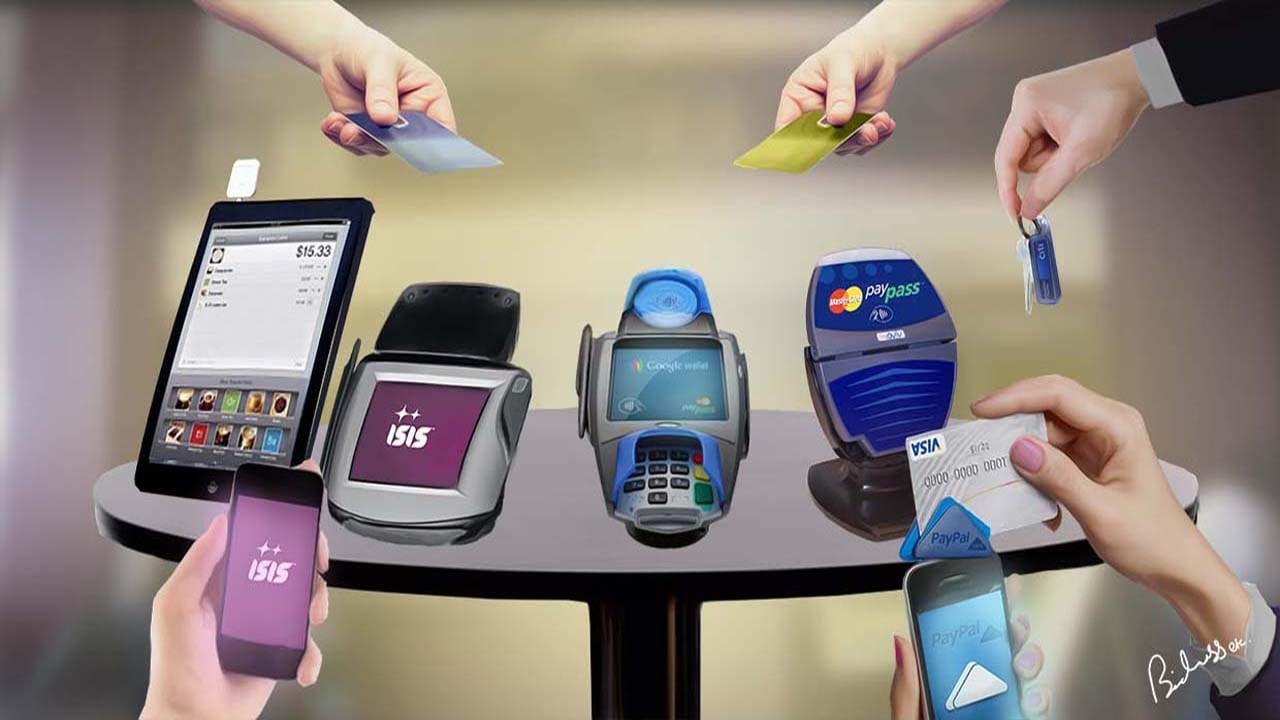
    Whether it is paying for groceries, a cup of coffee or a meal in a restaurant, most places provide payment options using the Octopus card, mobile e-wallets and credit cards.

    The city was one of the first in the world to implement a cashless payment system when it launched the Octopus card in 1997. The card has since grown into a widely used payment mode for all public transport and purchases in shops, from convenience stores, supermarkets, to parking meters, car parks and other point-of-sale applications such as service stations and vending machines.

    There are now 32 million of the cards in circulation – nearly four and a half times the population of Hong Kong, reported South China Morning Post.

    China Daily Asia reported last September (2016) that Octopus had daily spending of HK$173 million (S$31.3 million).

    To stay ahead in the race to a cashless society, last year the Hong Kong government approved stored-value licences for 13 e-wallet providers, including PayPal, Optal, UniCard, Alipay Wallet, Tap&Go by PCCW’s HKT, Tencent’s WeChat Pay and TNG Wallet.

    In response, last November (2016) Octopus launched O! ePay, a smartphone app carrying out peer-to-peer payments and topping up Octopus cards.

    Following the launch of Apple Pay last July, Android Pay introduced its touchless payment system at more than 5,000 locations in the city, after Singapore and Australia.

    Hong Kongers can use the system with Visa or MasterCard cards issued by least six banks in Hong Kong, and there is no limit on the number of cards users can add.

    A report by research firm Statista estimated the total value of digital transactions in Hong Kong will reach US$13.85 billion (S$19.45 billion) this year(2017) and with an annual growth rate of 16 per cent, it is expected to hit US$25.1 billion (S$35.2 billion) in 2021.

    Last year(2016), the value of total retail sales was HK$436.6 billion (S$78.9 billion).

    The report defined digital payments to include payments for goods and services made over the internet, mobile payments for point-of-sale made over smartphone applications and cross-border peer-to-peer transfers between private users.

    The Hong Kong Monetary Authority does not have statistics on transactions using cashless payment other than credit cards.

  • Toyota aims to boost Brazil exports with locally made engines

    Toyota aims to boost Brazil exports with locally made engines

    Toyota Motor will soon begin selling Brazilian-made Corollas in Peru, executives said on Thursday, and is in advanced studies to export from Brazil to Chile and Colombia in a push to make its South American plants more competitive.

    Steve St. Angelo, Toyota’s most senior executive in the region, said the exports to Peru were part of a long-term plan to integrate Brazilian operations with the rest of Latin America, which has long imported Corollas from the United States.

    Toyota’s Brazilian factories, which exported only to Argentina when St. Angelo arrived in 2013, also send the mid-sized Corolla sedan and smaller Etios to Uruguay and Paraguay now.

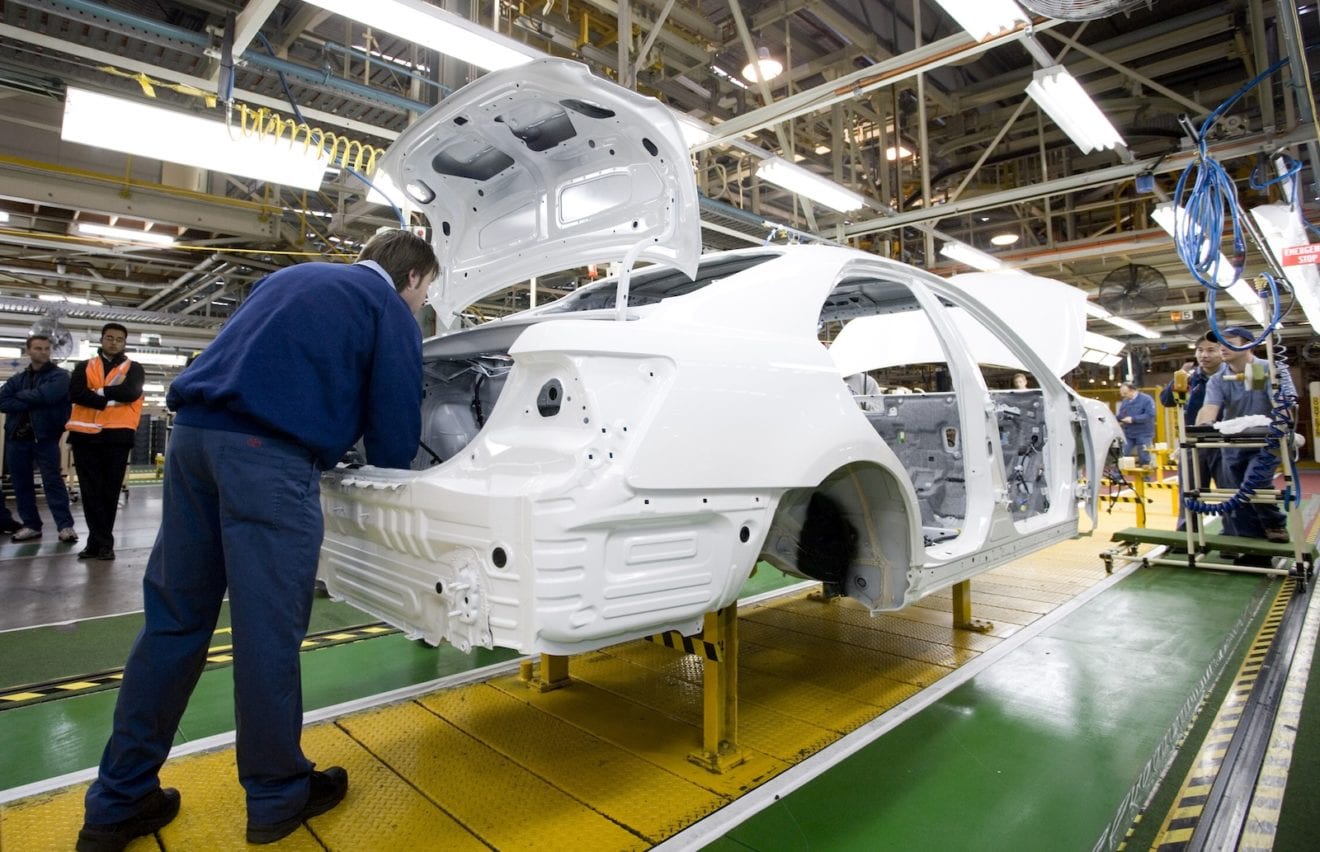
    Toyota has invested in a new engine plant and engineering facilities in Brazil, which St. Angelo said would be key to lifting the domestic content of the Corolla and Etios from about 60 percent currently. As Brazilian plants import fewer parts, they should be able to export more competitively to new markets, he said.

    Rafael Chang, the company’s new chief executive in Brazil, said he hoped to have news “soon” on exports to Chile and Colombia.

    Toyota’s exports from Brazil rose nearly 10 percent in 2016 to about 43,000 cars, of some 176,000 vehicles produced in the country last year.

    “We’re trying to diversify our Brazilian operations, so we’re not so dependent on this one economy,” St. Angelo told journalists at a launch event for the new Corolla in Brazil.

    Brazil’s worst recession in more than a century has nearly halved auto sales since 2012, battering automakers’ profitability and leading them to cut some 35,000 workers.

    Auto factories in Brazil are still using less than half of installed capacity, as high unemployment and tight credit pinch demand. St. Angelo acknowledged that Toyota had struggled to turn a profit in the country during the recession.

    “We’re not going to break even this year,” he said of the Brazilian business, adding that Toyota had not finalized its projections for the fiscal year. “We’ve been doing an unbelievable amount of cost cutting. Everyone is sacrificing.”

    St. Angelo said an overhaul of Argentine operations had also diversified exports from that country beyond just Brazil to include Honduras, Guatemala, Peru, Chile and Colombia.