Author: Mei Ling Tan

  • Vietnam wants a healthy Internet society

    Vietnam wants a healthy Internet society

    The Ministry of Information and Communication urged enterprises to collaborate with the Government in efforts to build a healthy Internet society through advertising only on online channels which comply with established laws.

    Minister Trương Minh Tuấn issued the advice at a meeting on Thursday with major brands, saying that online advertising was an inevitable trend but also implied risks, especially inadequate attention to control the appearance of advertising.

    The call came several days after advertisements by some major brands accidentally appeared in clips containing pornographic, slanderous or anti-government content on YouTube, the world’s largest online video site.

    “It is really worrying, as it badly affects the prestige of brands,” Tuấn said as quoted by online newspaper vnexpress.net.

    Tuấn said that this was not only a problem for the advertising industry of Vietnam, but also for the global industry.

    What was more alarming was that running advertisements on clips with questionable content could help owners of these accounts earn money, which indirectly encouraged them to unload more, a representative from Qnet said.

    Nguyễn Thanh Lâm, Director of the Authority of Broadcasting and Electronic Information, cited statistics that as of Thursday, there were 15 accounts uploading 8,000 clips with immoral content, and attracting nearly 1 million subscribers. Those clips boasted a combined 500 million views.

    Lâm said that the department was working with Google, which owns YouTube, to remove such clips, and to date, only 42 had been removed.

    At Thursday’s meeting, all major brands including Vinamilk, Ford Việt Nam, VinHome, Sungroup and Unilever Việt Nam, said that they had stopped advertising on YouTube after receiving the Ministry of Information and Communication’s request.

    They also said that they would not resume advertising until ad agencies developed comprehensive solutions to ensure compliance with the established laws.

    “Through our advertising agents, we have asked Google and YouTube to ensure a safe advertising environment so as to protect businesses’ brands,” a representative from the dairy giant Vinamilk said.

    Ad agencies said that when signing contracts with Google to run advertisements for their partners on YouTube, they selected the appearance of ads through key words and categories of clips, adding that the cooperation of Google was necessary in filtering and preventing the appearance of ads in toxic clips.

    Online newspaper vneconomy.vn reported that Google had sent an official response late on Thursday, saying that YouTube had clear policies for governmental requests for content removal.

    A YouTube spokesperson also said that the company did not comment on specific cases, but it will continue working with the Government of Việt Nam and was always willing to receive questions or concerns from the Government, according to the newspaper.

    The ministry called for enterprises to participate in an action programme which includes saying no to advertising on immoral clips, only running advertisements on channels which comply with Vietnamese law, building a healthy Internet society and protecting copyright.


  • Chunghwa Telecom Global launches SD-WAN

    Chunghwa Telecom Global launches SD-WAN

    CHT Global (Chunghwa Telecom Global) has launched its SD-WAN services on a global scale to help enterprises transition from traditional static hardware to software-based WAN.

    The company is partnering with VeloCloud Networks, a Cloud-Delivered SD-WAN company, to provide the underlying infrastructure for the service.

    CHT Global has one of the widest international cable line networks in the Pacific and beyond through its undersea submarine cables that direct global voice and data traffic.

    Its leverage in the Asia-Pacific in conjunction with its SD-WAN services will allow customers to ensure reliable wide-area network connections, whether they are DSL, cable, or LTE.

    “CHT Global SD-WAN will minimize the congestion that commonly occurs with traditional broadband Internet that would otherwise interfere with the delivery of time-sensitive applications and lower the QoE for end users,” CHT Global CEO and president Joe Yang said.

    “By pairing up VeloCloud’s technology and knowledge of managed services with CHT Global’s submarine cable network, businesses around the world can increase operational efficiency and maximize performance.”

  • Vietnam e-commerce competition hotting up

    Vietnam e-commerce competition hotting up

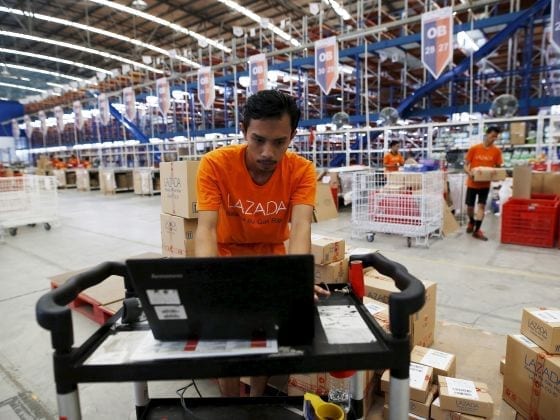
    The competition between shopping websites has now switched focus from prices to rapid delivery.

    Analysts said competing by cutting prices by up to 50 per cent is an old story, and with customers’ demand for good service increasing, delivery times have become a key factor.

    Alexandre Dardy, the CEO of the country’s largest online shopping platform, Lazada, said besides increasing the number of merchants and products, his company would soon reduce delivery times.

    Currently the average delivery time that Lazada offers customers is more than two days, with urban areas served faster than rural for obvious reasons.

    At the end of last year the company tied up with AhaMove, a motorbike-based delivery service, and began a new delivery schedule that enables customers to get their product within just 60 minutes in certain cases.

    Another online shopping website, tiki.vn, is also taking measures to improve its delivery process. Currently its average delivery time is two to three days.

    Trần Ngọc Thái Sơn, director of tiki.vn, said product quality and delivery time are the most important factors for customers.

    His company has begun to deliver within 24 hours, he said.

    In case of late delivery, customers will receive a Tiki coin worth VNĐ30,000 (US$1.3) for use next time while shopping.

    The speedier delivery does cost more, the company said.

    Express delivery costs two or three times higher than standard delivery.

    For instance, while standard delivery costs only around VNĐ15,000 for a package weighing less than three kilogrammes, express delivery costs VNĐ30,000.

    However, 50-75 per cent of this is covered by the online shopping companies.

    Dardy said Ahamove gets VNĐ30,000 for express delivery, with Lazada covering VNĐ20,000 of it and only passing on VNĐ10,000 to the customer.

    But despite this, companies have no hesitation in offering express delivery, realising this will encourage customers to return in future.

  • Lazada Indonesia aligns business model with Alibaba

    Lazada Indonesia aligns business model with Alibaba

    The Indonesian unit of Lazada said it plans to focus on adding small merchants to its online marketplace, emulating the strategy of Alibaba Group Holding, the Chinese e-commerce company that acquired it last year.

    Florian Holm, Lazada Indonesia’s co-chief executive, told reporters on Wednesday the company will launch a campaign in April which will also mark the first anniversary of its acquisition by Alibaba to attract more small businesses online. It already partners some 15,000 third-party sellers in Indonesia. Holm said Lazada also plans to enable some merchants to sell products to shoppers in China through Alibaba’s Taobao e-commerce platform.

    “We are learning from Alibaba and trying to apply its learnings in how we can foster more entrepreneurship,” Holm said. “We want to help all the people out there who have great business ideas … because in e-commerce you can try with minimal cost.”

    Lazada operates in six Southeast Asian countries, and entered Indonesia in 2012 as an online retailer buying merchandise from electronic and fashion companies to sell on its website. It began selling products from third-party merchants the following year, and according to Holm these now account for more than 80% of products sold on the platform, and up to 30% of products shipped from Lazada’s three warehouses in the country.

    Lazada was one of the largest e-commerce operations in Indonesia, but Alibaba’s $1 billion acquisition came at a time when it was facing increasingly stiff competition from local rivals like SoftBank-backed Tokopedia, Lippo Group’s MatahariMall.com, and Bukalapak, which is funded by a local media mogul.

    Small businesses play a large role in the Indonesian economy due to the lack of modern retail outlets outside major cities, and this is fueling the exponential growth of e-commerce, which is estimated to rise from $1.7 billion in 2015 to $46 billion in 2025.

    The Lazada acquisition has prompted speculation about the possible rollout in Indonesia of Alipay, Alibaba’s affiliated payment service. Holm said adding payment options is always a priority at Lazada, but said there is “no further news” on Alipay.

  • Car industry players diverge on timescale for self-driving cars

    Car industry players diverge on timescale for self-driving cars

    Carmakers and suppliers gave widely differing timelines for the introduction of self-driving vehicles on Thursday, showing the uncertainties surrounding the technology as well as a split between cautious established players and bullish new entrants.

    Chipmaker Nvidia, facing direct competition with the world’s top chipmaker after Intel’s (INTC.O) $15 billion deal to buy autonomous driving technology firm Mobileye this week, gave the most optimistic predictions.

    Chief Executive Jen-Hsun Huang forecast carmakers may speed up their plans in the light of technological advances and that fully self-driving cars could be on the road by 2025.

    “Because of deep learning, because of AI (artificial intelligence) computing, we’ve really supercharged our roadmap to autonomous vehicles,” he said in a keynote speech to the Bosch Connected World conference in Berlin.

    Germany’s Bosch, however, the world’s biggest automotive supplier, gave a timetable as much as six years longer to get to the final stage before fully autonomous vehicles, and declined even to forecast when a totally self-driving car might take to the streets.

    Progress is fraught by issues including who is liable when a self-driving car has an accident, bringing down the costs of sensor technology and guarding against hacking.

    “Of course, we still have to prove that an autonomous car does better in driving and has less accidents than a human being,” Bosch CEO Volkmar Denner told a news conference.

    Nvidia has applied its market-leading expertise in high-end computer graphics to the intense visualization and simulation needs of autonomous cars, and has been working on artificial intelligence – teaching computers to learn to write their own software code – for a decade.

    “No human could write enough code to capture the vast diversity and complexity that we do so easily, called driving,” said Huang.

    Together with Bosch executives, Huang presented a prototype AI on-board computer that is expected to go into production by the beginning of the next decade. The computer will use Nvidia’s processing power to interpret data gathered by Bosch sensors.

    DEGREES OF AUTONOMY

    On the way to fully self-driving cars, levels of autonomy have been defined, with most cars on the road today at level two and Tesla (TSLA.O) ready to switch from level four to five – full autonomy – as soon as it is permitted to do so.

    Level three means drivers can turn away in well-understood environments such as motorway driving but must be ready to take back control, while level four means the automated system can control the vehicle in most environments.

    Independent technology analyst Richard Windsor wrote in a note this week he doubted automakers would have autonomous vehicles leaving factories by a typical self-imposed deadline of 2020, mainly because the liability issue was unresolved.

    “This is good news for the automotive industry which is notoriously slow to adapt to and implement new technology as it will have more time to defend its position against the new entrants,” he wrote.

    But Nvidia’s Huang said he expected to have chips available for level three automated driving by the end of this year and in customers’ cars on the road by the end of 2018, with level four chips following the same pattern a year later.

    That is at least a year ahead of the plans of most carmakers that have an autonomous-driving strategy.

    The head of autonomous driving at BMW told the conference the luxury carmaker was on its way to deliver a level three autonomous car in 2021, but could produce level four or five autonomous cars in the same year.

    “We believe we have the chance to make level three, level four and level five doable,” he said. He told Reuters the decision on which levels to release would depend in part on the market, and that cars with more autonomy might first be produced in small batches for single fleets.

    Bosch said it saw level three vehicles being released with its on-board computer at the end of the decade, and level four driving not before 2025.

    Uber , Baidu and Google spin-off Waymo are testing self-driving taxis, while carmakers including Volvo, Audi and Ford expect to have level four cars on the road by 2020 or 2021.

    Nvidia’s Huang predicted those plans would speed up: “In the near future, you’re going to see these schedules pull in.”

  • Cebu Pacific opens Bacolod-CDO flights

    Cebu Pacific opens Bacolod-CDO flights

    CEBU Pacific (CEB) has expanded its inter-regional route network by opening its Bacolod and Cagayan de Oro (CDO) flights, one of the two new routes that will further connect the Visayas and Northern Mindanao. On March 15, the airline opened the Bacolod-CDO route with three flights every week specifically on Tuesday, Thursday, and Saturday.

    The other route is between CDO and Tagbilaran City, with four flight schedules weekly during Monday, Wednesday, Friday and Sunday. Both new routes will use the airline’s ATR aircraft. Alexander Lao, president and CEO of Cebgo, said these new routes will not only boost tourism, but also increase trade and productivity between Visayas and Mindanao.

    Lao said they are also optimistic that this will encourage a number of tourists and businessmen from Tagbilaran and Bacolod to visit Mindanao more often with direct flights. “We are very thrilled to begin flying to and from these destinations,” he said, adding that movement of goods between these islands will also be facilitated as Cebu Pacific cargo services are also available in these routes. The airline company, in a press statement, said the new routes going to and from CDO also provide travelers with the best connectivity option through direct flights that eliminates the need to pass through Manila or Cebu. Cebu Pacific offers its lowest all-in one way year-round fares of P1,806 and P1,235 from CDO to Bacolod and Tagbilaran, respectively, it added.

  • Global smart transportation market expected to reach US$237,701 million by 2022

    Global smart transportation market expected to reach US$237,701 million by 2022

    According to a new report published by Allied Market Research, titled, Smart Transportation Market by Solution and Service: Global Opportunity Analysis and Industry Forecast, 2014-2022,” the global smart transportation market was valued at US$63,667 million in 2015, and is expected to reach US$237,701 million by 2022, growing at a CAGR of 18.6 percent from 2016 to 2022. Cloud services segment is anticipated to dominate the market during the forecast period. Europe was the dominant region, accounting for approximately 33 percent share of the smart transportation market revenue in 2015.

    Rise in number of vehicles results in high traffic congestion, leading to the requirement of smart transportation network to ease traffic congestion, enhance the safety, sustainability, and efficiency of transportation network. In addition, most consumers are now demanding smart transportation options that can easily navigate the roads with the least possible scope of congestion. The increasing government support and investments towards development of smart cities provides a major boost to the market. For instance, the Government of India aims to develop 100 smart cities by using smart technology to improve the efficiency of services and meet the residents’ needs. However, the need for high capital investment, owing to the complete restoration of the existing transport system, restrains the market growth.

    “Smart transportation system is a necessity, owing to the rising demand for efficient transportation networks worldwide. These systems have witnessed the highest growth in cloud services segment, due to the advancement in technology and increased demand for storage, access, and management of data remotely. In addition, parking management systems are expected to increase their market share at a notable rate. Asia-Pacific and Brazil possess enormous opportunities for the players operating in the smart transportation systems market.” states Sheetanshu Upadhyay, research analyst at Allied Market Research.

    The solutions segment is divided into hybrid ticketing management system, parking management & guidance system, integrated supervision system, and traffic management system. In 2015, traffic management system accounted for the largest revenue, owing to rapid urbanization and the emerging concept of smart cities and smart traffic. However, the parking management system market is anticipated to witness the highest growth, with a CAGR of 18.8 percent from 2016 to 2022.

    The service segment is further divided into business, professional, and cloud services. In 2015, cloud services generated the largest revenue, owing to rapid increase in demand for cloud services smart transportation system. However, this segment is anticipated to witness the highest growth over the forecast period, with a CAGR of around of 18.8 percent  from 2016 – 2022.

    Europe held the largest market share in 2015, and is anticipated to maintain its dominance throughout the forecast period. This is due to increase in demand for smart transportation and concern of users towards the environment. Additionally, investments in emerging smart cities would create growth opportunities for the smart transportation market in the region.

  • Globe launches 4CC LTE-A

    Globe launches 4CC LTE-A

    The Philippines’ Globe Telecom announced it has become the first operator in the nation to implement 4-component-carrier aggregation LTE-Advanced using the 2600-MHz band.

    The upgrade effectively doubles LTE capacity in areas covered by the deployment, the company said, and will be capable of generating speeds of up to 400 Mpbs once compatible devices hit the market.

    So far Globe has implemented the upgrade at 110 sites mostly in Metro Manila, including most areas in Makati and certain areas in Quezon City, Marikina, Antipolo, and San Mateo.

    The operator aims to deploy the technology in more than 500 sites this year across more of Metro Manila as well as key areas of North Luzon and South Luzon.

    Globe is using its new 2600-MHz band spectrum allocation acquired through its joint purchase with rival PLDT of conglomerate San Miguel Corporation’s telecommunications assets last year.

    Since acquiring the spectrum, the company has also deployed around 1,200 2600-MHz LTE sites mostly in Visayas and Mindanao.

    “This is the first time that a telco operator in the Philippines is making use of this 4-component carrier spectrum LTE-Advanced technology and we are maximizing the potential of the new spectrum assigned to us for the benefit of our customers,” Globe SVP for program governance Joel Agustin said.

    “This technology milestone significantly improves customer experience as smartphone penetration in the country continues to increase.”

  • Latest iPhone series to enter Indonesian market

    Latest iPhone series to enter Indonesian market

    United States technology giant Apple Inc. has secured official approval to once again sell its signature iPhone mobile phone series in Indonesia after fulfilling a requirement to use a minimum of 30 percent local components in smartphones distributed throughout the country, locally known as TKDN.

    The Industry Ministry’s director for metals, machinery, transportations and electronics, I Gusti Putu Suryawirawan, confirmed on Sunday that the ministry had granted the approval after Apple agreed to build supporting infrastructure to fulfill the requirement.

    Meanwhile, Apple’s official partner, telecommunications company Smartfren, has announced that the company will open up pre-order services for Apple’s iPhone 7 and 7 Plus on March 24, according to company spokesman Yondi Hartanto.

    “The products will arrive in customers’ hands after they create pre-orders. We don’t want to discuss the .exact date, but it’s usually no longer than a week after the pre-order,” Yondi said on Sunday via telephone.

    As the only telecommunications firm officially partnering with Apple, the company will help sell the products with completed data packages, Yondi said, adding that Apple had also partnered with some electronics distributors.

    Pre-orders for the iPhone 7 and 7 Plus for Smartfren can be organized through the company’s official website or through its 13 galleries spread across several big cities in Indonesia, he added.

  • UN calls for “new deal” on mobile broadband

    UN calls for “new deal” on mobile broadband

    The UN Broadband Commission has called for a “New Deal” involving fresh industry collaboration and public-private partnerships to help connect the 5 billion people who lack mobile broadband access.

    At the Broadband Commission for Sustainable Development’s 2017 Spring Meeting in Hong Kong yesterday, participants debated the need for a new deal between all broadband stakeholders to work towards full global connectivity and digital transformation.

    Discussions had a particular emphasis on remote and rural areas – especially in the UN’s list of Least Developed Countries – which represent the biggest challenge for the industry.

    The Commission underlined the need to build an ecosystem with government, with all ministries and the private sector working together for more efficient investment and taxation, as well as issues associated with the cost of spectrum auctions in markets with the widest digital divides.

    “Our central conviction is that broadband and ICTs are critical if we are to achieve the Sustainable Development Goals,” ITU secretary general and Broadband Commission co-vice chair Houlin Zhao said.

    “ICTs underpin vital achievements and modern services in many sectors, and governments and industry must increasingly work together to create the conditions so badly needed to facilitate the growth of broadband for sustainable development.”

  • AirAsia plans to go fully cashless; stresses on digitisation

    AirAsia plans to go fully cashless; stresses on digitisation

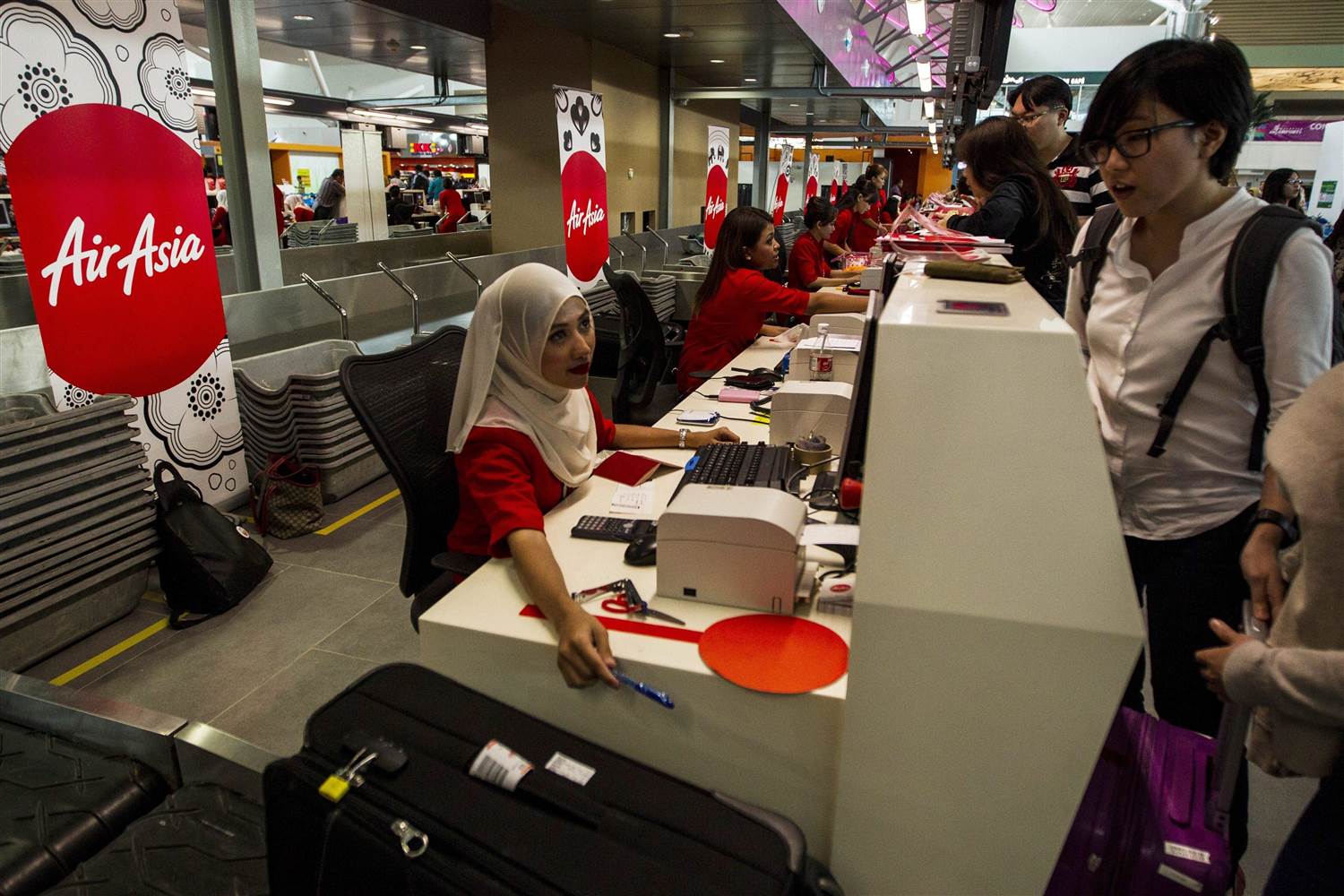
    “I think cash is old fashioned,” said AirAsia Group CEO Tony Fernandes, as he introduced plans of making all in-flight purchases on AirAsia flights cashless.

    From demonetisation to flights, going cashless seems to be the norm. Notably, airlines in the United States started going cashless for in-flight transactions as early as 2009. Even in India, airlines offer customers the option of paying for purchases using cards.

    “I would like all our in-flight sales to be electronic,” Fernandes elaborated. “So you can just use your mobile phone to pay for food, WiFi, etc.”

    He said that AirAsia hopes to launch this service by April-May and that this exercise is a part of digitising the airline. “All our cabin crew will have a mobile phone. When you go on to an Air Asia plane, they will know you,” he added, giving examples of the digitising that the carrier aims to embrace.

    “Transacting in different currencies on international flights can get cumbersome, making it harder for the customer,” Nikunj Shanti, Chief Data Officer, Group Digital, AirAsia, told. “What we are trying to do is make it faster and easier.”

    “This could also give us better information in terms of stock control, etc, so that we are stocking the right goods on the plane,” Shanti said. “Right now, it’s all manual. If we get this information digitally, we can apply learning algorithms and classification algorithms and put better products on the plane.”

    “This digital revolution is a chance for ASEAN and AirAsia to move up the economic value chain,” Fernandes said, clarifying that he doesn’t think the digitising will lead to loss of jobs. “We are already training our sales agents and guest services to become more knowledge-based. We are already anticipating that.”

    Social media platforms

    AirAsia is also personalising its website. “That’s step one. By next month, when you log-on, we will know about you, where you flew, etc,” Fernandes said. Purchasing of tickets from social media platforms is another aspect.

    “Three per cent of our sales come from Facebook. You can buy tickets from Line, WeChat,” he added.

    Hackathon event

    Airvolution 2017, a hackathon for participants from across the Asia-Pacific region, was organised by AirAsia at their headquarters in Kuala Lumpur. This was the first such event organised by the carrier, which also tied into its aim of becoming a digital airline.

    The event saw participation from 20 teams from Singapore, Australia, Malaysia, Hong Kong, Thailand, the Philippines, Sri Lanka, Indonesia, Australia and four teams from India.

    The 18-hour hackathon involved giving the teams a problem statement on how they will profile AirAsia customers based on their digital social footprints to improve their experience.

  • Malaysia-Cambodia-Thailand subsea cable launches

    Malaysia-Cambodia-Thailand subsea cable launches

    A new subsea cable connecting Malaysia, Cambodia and Thailand has been launched in Cambodia, adding at least 30Tbps of regional capacity.

    The Malaysia-Cambodia-Thailand (MCT) cable system was designed and deployed by Huawei Marine for Cambodia’s EZECOM, Telekom Malaysia and Symphony Communication of Thailand.

    The 1,300km cable system uses 100Gbps technology, and will connect to other submarie cable systems, including the Asia-America Gateway (AAG).

    Speaking at the launch of the system, EZECOM CEO Paul Blanche-Horgan said the launch is the culmination of six years of work. He said the launch of the cable will improve the security of Cambodia’s connection to the internet.

    “With this cable, we are now directly connected POP to POP, which means a much more secure connection for Cambodia. This is of great importance, as [Cambodian deputy prime minister and minister of interior] Samdech Krolahom does understand, for the context of national security as well as certain key sectors like banking.”

    Samdech Krolahom himself said that with the new cable, “Cambodia now has faster, more reliable, more affordable and, most importantly, a more secure internet connection for all.”

  • NetSol to Deploy Mobile Origination/Approval for Indonesian Company

    NetSol to Deploy Mobile Origination/Approval for Indonesian Company

    NetSol Technologies signed an agreement for its mobile origination (point of sale) system with PT Mizuho Balimor Finance (MBF) in Indonesia.

    NetSol was named MBF’s preferred vendor in the region. The contract includes product license, a five-year maintenance agreement and agreed customizations rates for both applications.

    MBF is an Indonesian multi-finance companies specializing in the auto financing domain.

    The application being deployed will be used by field teams (salesman/dealers) to initiate credit applications and provide quick approval and turnaround to customers seeking finance and lease products from MBF.

    “Our solution will increase operational efficiencies for PT. Mizuho Balimor Finance and bring concrete results in terms of costs and reduced contract conversion times. Mizuho Balimor is a pioneering company which turned towards the latest, next-generation technologies for future growth and progression. We are glad to work with them and implement our ground-breaking solution,” said Najeeb Ghauri, founder, chairman and CEO of NetSol Technologies. “We look forward to further creating business value for them and fostering this relationship in the coming years.”

    NetSol Technologies is a worldwide provider of IT and enterprise software solutions primarily serving the global leasing and financing industry.

  • Indonesia’s Bonded Logistic Centers Facilitated to Reduce Logistic Cost

    Indonesia’s Bonded Logistic Centers Facilitated to Reduce Logistic Cost

    The government will provide facility for Bonded Logistic Centers (PLB) to improve efficiency and reduce logistic cost for industry, support provision of basic materials and facilitate exports and basic material imports.

    “The gist is to cut logistic cost,” Trade Minister Enggartiasto Lukita said on the sidelines of commissioning a PLB at the Grahadi State Building here on Wednesday night. In the commissioning ceremony almost midnight, the minister and East Java Governor Soekarwo witnessed the signing of a number of agreements in the trade sector.

    The cooperation agreements were signed between Director of PT Indra Jaya Swastika (IJS) and the Indonesian Textile Association, the Indonesian Footwear Association, the Indonesian Association of Timber and Furniture, on the utilization of PLBs. PLBs are a concrete form of the follow up of the third Economic Policy Package, the Trade Minister said.

    He said currently there are 32 units of PLB located in various areas including Surabaya, Karawang, Cikarang, Cibitung, Purwakarta, Cilegon, Cakung, Bandung, Denpasar, Balikpapan, Aceh , etc. “PLBs support various industrial sectors including oil and gas, mining, textile, chemical, food, cosmetic and automotive sectors,” he said.

    He said in 2016, the country’s trade had a surplus of US$8.8 billion or an increase from US$7.5 billion in 2015. In 2017, the government hopes to post an economic growth of 5.5 percent – 5.8 percent , up from 5.1 percent in 2016 with target at 6.1 percent set for 2018. The minister said he was optimistic the 2017 targets would be reached with a series of breakthroughs in the trade sector.

    Meanwhile, PT Indra Jaya Swastika, a logistic company, said it supports the East Java administration in its program to improve industrial competitiveness. “PLB IJS comes to support various industries mainly shoe making industry, food industry and small and medium industries,” its president director Utami Prasetiawati said.

  • Samsonite sales grow despite Asia slow sales

    Samsonite sales grow despite Asia slow sales

    A soft Asian market failed to take the gloss off a stellar performance for Hong Kong-listed luggage giant Samsonite International.

    Buoyed by the addition of the Tumi business it acquired last August, Samsonite sales grew 17.3 per cent to US$2.81 billion in the year to December 31. Excluding Tumi, sales rose by a more modest 6 per cent.

    Gross profit for year increased by $242 million, or 18.9 per cent, to US$1.52 billion. Gross profit margin increased from 52.6 per cent to 54.1 per cent, partly due to the addition of the Tumi brand which enjoys higher margins. Excluding Tumi, gross profit margin increased to 53 per cent.

    In Asia, Samsonite sales rose 9.9 per cent year-on-year, including Tumi, but by just 4 per cent excluding Tumi.

    Globally, sales rose 26.8 per cent in North America (4 per cent excluding Tumi), 16.1 per cent in Europe (10.3per cent); and 17.4 per cent in Latin America (17.4 per cent).

    CEO Ramesh Tainwala described 2016 as Samsonite’s most momentous year since its IPO in 2011.

    “The acquisition of Tumi fulfilled a long-held ambition for Samsonite, and establishes a strong multi-brand platform to drive long-term growth across a broad range of price points and product categories. All of our regions delivered solid constant currency net sales growth in 2016, and looking ahead, we will continue to focus on implementing our multi-brand, multi-category and multi-channel strategy,” said Tainwala.

    “We continue to focus on growing e-commerce as a channel, and net sales in the group’s total e-commerce business increased by 19.7 per cent year-on-year in 2016, excluding Tumi. We believe that the group has the potential to become a significant player in the bags and luggage e-commerce channel.”