Author: Mei Ling Tan

  • Japan’s Toyota to look at Saudi production as the countries seek closer ties

    Japan’s Toyota to look at Saudi production as the countries seek closer ties

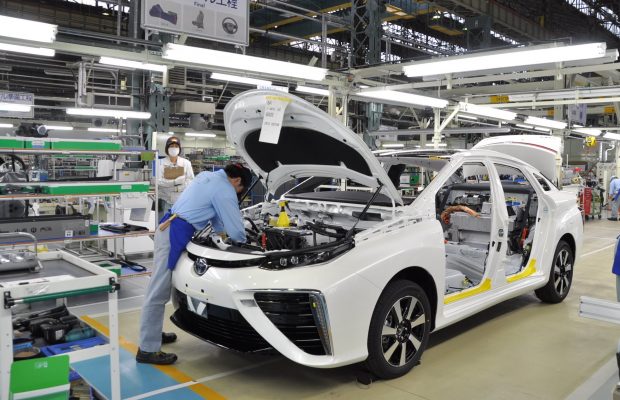
    Toyota Motor signed a memorandum of understanding (MOU) on Tuesday with a Saudi Arabian government agency to conduct a feasibility study into producing vehicles and parts in the Middle Eastern nation.

    The move, if firmed up, would be a big step for the Saudi economy as the government tries to diversify beyond oil exports and create jobs as part of the kingdom’s 2030 Vision.

    So far, Saudi Arabia and other Gulf oil exporters have failed to significantly develop industries such as automaking because they lack broad industrial bases and a skilled local workforce.

    “The study would take into account the evaluation of development of a local supply base using materials produced by major Saudi companies like Sabic, Maaden, Petro Rabigh, and other major industrial companies in the kingdom,” the official Saudi state news agency reported.

    The MOU is with Saudi Arabia’s National Industrial Clusters Development Program (NICDP).

    Meanwhile, state-run Saudi Aramco has signed MOUs with five Japanese entities during a business forum that both nations hosted on Tuesday, coinciding with a visit by Saudi Arabia’s King Salman this week.

    Saudi Aramco and Japan’s biggest oil refiner JX Nippon Oil & Energy (5020.T) agreed to consider a refinery joint venture in a third country and cooperation in trading and technology of oil and petrochemical products.

    Aramco also agreed to consider a possible future cooperation in crude oil supply and downstream business with Idemitsu Kosan Co (5019.T).

    In addition, Aramco and state-run Japan Oil, Gas and Metals National Corp (JOGMEC) formally agreed to expand crude storage capacity in Japan by 300,000 kilolitres (about 1.9 million barrels) from the current 6.3 million barrels from April 1.

    Japan treats crude oil stored by Aramco as quasi-government oil reserves, counting half of the barrels stored by Aramco as national crude reserves.

    Companies and government organizations in both nations signed a total of 20 MOUs on Tuesday, including cooperation between the Saudi Arabian General Investment Authority (SAGIA) and Japan’s three megabanks – Mitsubishi UFJ Financial Group (8306.T), Sumitomo Mitsui Financial Group (8316.T) and Mizuho Financial Group (8411.T) – on increasing investments in the kingdom.

    The MOUs also included cooperation in seawater desalination.

  • 9 in 10 operators look to real-time assurance for revenue protection

    9 in 10 operators look to real-time assurance for revenue protection

    Among global operators, 91% view real-time assurance as the most important priority for revenue protection, according to a research from telecom.com and Openet.

    The study shows that, without a transformed approach to revenue and service assurance, over half of respondents admit that they will risk losing more than 3% of the revenues expected to come from digital services (i.e. TV services, etc) in 2017 alone.

    The forecast leakage represents a significant level of risk as over 60% anticipating that revenues from digital services will account for 10% of total revenues, and 30% seeing this revenue figure at over 20% of total revenues.

    Also, over three quarters (77%) of those surveyed believe that existing revenue assurance systems would struggle to collect relevant data in real-time from virtualized networks for new services.

    The majority (87%) agreed that most existing revenue assurance systems were designed for traditional telecoms networks. With the advent of virtualization across operators’ infrastructure promising increased efficiency in the long-term, at a network level, it significantly increases complexity in the short term.

    With this in mind, 83% of operators believe the complexity of network virtualization is adding greater need to solve the challenge of dynamic data collection for assurance in this sense.

    “As the industry moves to roll out digital services enabled by new real-time systems and virtualized networks, revenue assurance needs a serious rethink,” said Jon Ross, GVP product and solutions management at Openet.

    “Many service providers are anticipating more than 20% of their service revenue coming from digital services in 2017, therefore it’s important that any potential for revenue leakage is addressed now,” said Ross.

  • China upset at high Vietnam tariffs on steel imports

    China upset at high Vietnam tariffs on steel imports

    The Ministry said effective March 22, 2017, it will impose a 21.3% border tax for a period of one year followed by a 19.3% and 17.3% tax for years two and three to take effect on March 22, 2018 and March 22, 2019, respectively.

    The Decision to levy the border tax signed by the Prime Minister comes after a lengthy investigation by the Ministry that started on December 25, 2016, after complaints were lodged by Vietnamese domestic sector steelmakers.

    For years, Chinese steel products, along with other manufactured products in overcapacity segments of the economy have been at the centre of trade disputes between Vietnam and China, said the Ministry.

    It noted that on many occasions Vietnam private sector companies have lodged complaints that Chinese steelmakers were dumping products at prices below fair value, hurting the segment.

    Chinese steelmakers have voiced discontent at the high tariffs and insist their prices are fair and that they have violated no trade laws. The problems, they say, are rooted in sluggish demand, the weak global economy and poor quality product.

    The investigation showed that for ingots and long steel products, the import volume into Vietnam increased from 387,448 tons in 2012 to 665,679 tons in 2013 and 1,282,090 tons in 2015, over half of which originated in China.

    The Decision applies to steel ingots and long steel products imported from all countries with a de minimis exclusion for those from countries for which the import volumes are inconsequential.

  • HKT, Huawei co-found C-V2X consortium

    HKT, Huawei co-found C-V2X consortium

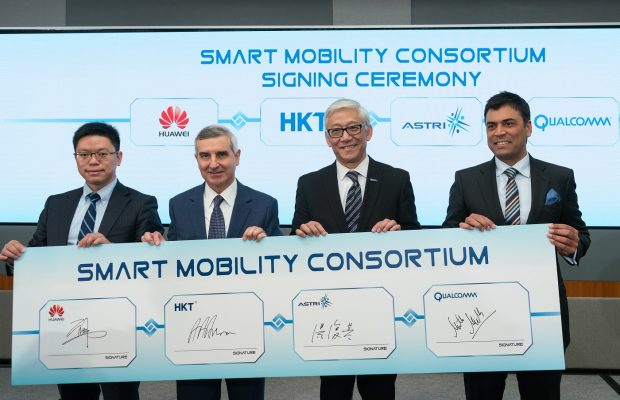
    The Hong Kong Applied Science and Technology Research Institute (ASTRI), operator HKT and vendors Huawei and Qualcomm have formed a consortium aiming to build a smart mobility system for Hong Kong using cellular vehicle-to-everything (C-V2X) technologies.

    The consortium aims to revolutionize Hong Kong’s transportation sector using C-V2X, a standard covering both network-based and direct communications for vehicles.

    A C-V2X powered smart mobility system will therefore enable vehicles to connect to both the cloud and each other, as well as to pedestrians and to traffic infrastructure.

    Vehicles can use the “co-operative awareness” this enables to improve mobility safety as well as autonomous driving, and can help law enforcement and traffic and urban planners to plan and monitor the safety and efficiency of traffic movements.

    The consortium aims to use C-V2X to introduce intelligent transport services including a warning mechanism for collision and control, assistance for cruise control and parking, and alert systems for speed and lane violations.

    It plans to work with government, the automobile industry and other stakeholders to realize this vision. The project is also expected to generate opportunities for other sectors including shipment, ridesharing, home-delivery, insurance, infotainment and mobile healthcare.

    “Hong Kong is a well-connected city with good infrastructure. If we complement these strengths with the latest innovation in science and technology, Hong Kong can become one of the most sophisticated and advanced smart cities in the world,” ASTRI chairman Wong Min-yam commented.

    “This Smart Mobility Consortium is a giant step in that leap. ASTRI is developing state-of-the-art applications, platforms and prototypes which can benefit not just Hong Kong, but potentially other cities in this region too. We, as the SAR’s largest technological R&D institution, are partnering with three eminent organisations to bring revolutionary changes to the way we manage our city’s traffic.”

    The consortium plans to carry out C-V2X pilot in the second quarter of this year. “Our trial sites will likely be at Hong Kong Science Park and the Chinese University of Hong Kong. We hope to extend the pilot to East Kowloon at a later stage,” said Peter Lam, managing director for engineering at HKT.

    “For C-V2X implementation, dedicated spectrum in 5.9GHz is needed. We will try to seek a spectrum testing license from the government to do the pilot,” he added.

  • Muslim Indonesia Joins Global Craft Beer Revolution

    Muslim Indonesia Joins Global Craft Beer Revolution

    Defying an escalating anti-alcohol movement and conservative bureaucrats in the world’s most populous Muslim-majority country, Indonesia’s only craft brewer is tapping into demand for better quality booze among the country’s small number of drinkers.

    Despite the fact about 90% of Indonesia’s population is Muslim, and in theory banned from drinking, most practise a moderate form of Islam and alcohol is available in cities and holiday destinations, with local brewers producing mostly Pilsner lagers.

    Unimpressed by the generic, mass-produced drinks on offer, local businessman Bona Budhisurya and his brother-in-law Jacob Suryanata decided to come up with an alternative, and in 2011 introduced Stark craft beer with a wheat and dark wheat variety.

    “We had been abroad and drank a lot of good quality beer,” said Budhisurya, a member of Indonesia’s Christian and ethnic Chinese minorities, adding that on his return to Indonesia he found that “there was no quality beer here”.

    By producing such brews – generally defined as beverages created in small, independent breweries – they have made Indonesia an unlikely new addition to the global craft beer revolution.

    The trend has seen micro-breweries spring up worldwide as consumers sick of flat, flavourless ales and gassy lagers seek out something with more character. Major beer-consuming countries – such as Britain and the United States – have seen explosive growth in the sector.

    Since its launch, Stark has expanded to include six varieties, including lychee- and mango-flavoured beers and an Indonesian Pale Ale, a less bitter alternative to Indian Pale Ale. But setting up a brewery is a risky move nowadays in Indonesia.

    Although most Indonesians are moderate Muslims and alcohol has long been available, growing opposition from politicians pushing a more conservative brand of Islam has created an uncertain climate.

    The government banned beer sales in the country’s ubiquitous minimarts in 2015, leading to sharp profit falls for major brewers, and Muslim political parties have proposed legislation to prohibit booze consumption entirely, although it seems unlikely this will pass.

    Trouble brewing

    It is hard to get permission to brew alcohol and only a handful of companies – such as Multi Bintang which produces popular local lager Bintang, and is majority-controlled by Dutch brewer Heineken – possess licences that they have had for decades.

    Budhisurya – who studied in the US for several years – eventually managed to obtain a licence in Hindu-majority Bali, a popular holiday island where drinking is more common, and Stark set up its brewery near the town of Singaraja.

    The site has a staff of about 50, including a head brewer hired from Australian beer maker Little Creatures. The company says brewing in Bali gives them an edge as they have easy access to clean water, unlike some other brewers whose operations are near Jakarta where water is often polluted and must undergo a long filtering process.

    “We have a principle – if the water is not good, we can’t make the beer,” told Albert Kurniawan, operations manager at Stark’s brewery,  from the red-brick building.

    Budhisurya said that the biggest challenge has been dealing with the official Food and Drug Monitoring Agency, which must approve alcoholic beverages before their release. He said the official time to get approval from the agency, which is staffed by conservative bureaucrats, is about four months, but in reality it takes six months to a year.

    Still, Stark has persevered and carved out a small niche by mainly selling to bars and some supermarkets favoured by a growing number of Indonesian consumers. Stark says its beers offer a quality alternative to pricey imported ales. It is so far proving a modest success, with about 3,000 to 5,000, 24-bottle cases sold every month, mostly in Jakarta and Bali.

    Due to religious considerations and high taxes that push up prices, relatively few Indonesians drink – alcohol consumption in 2015 was an average of just 1.4 litres per person, according to BMI Research. But the market is still potentially huge in a country of 255 million people, and Stark sees a bright future.

    “It does not matter whether it is local or imported – we are a craft beer, which means quality,” Budhisurya said.

  • Cebu Pacific expands VISMIN routes

    Cebu Pacific expands VISMIN routes

    CEBU Pacific announced it has expanded its inter-regional route network with the addition of two new routes that will connect the Visayas to Northern Mindanao. Starting Mar.15, 2017, CEB will be flying four times weekly (Monday, Wednesday, Friday and Sunday) between Cagayan de Oro and Tagbilaran; and three times a week (Tuesday, Thursday and Saturday) between the former and Bacolod.

    Both new routes to and from Cagayan de Oro will use the airline’s ATR aircraft.

  • Renault denies report of emissions cheating software

    Renault denies report of emissions cheating software

    Renault is denying a report that its vehicles are equipped with software that allowed its vehicles to cheat on emissions testing.

    The statement Wednesday from the French carmaker followed a report in the newspaper Liberation, which claimed to have obtained an investigative document from the Economy Ministry indicating that emissions from two models – the Renault Captur and the Clio IV – spewed emissions more than 300 percent higher than the legal limit in real-life conditions.
    The ministry’s fraud department handed its findings to prosecutors in November.

    French authorities raided Renault premises after Volkswagen was found to have used software to cheat on U.S. diesel emissions tests. Renault recalled 15,000 cars last year over excessive levels of harmful gases, but the company insisted there was no intentional wrongdoing.

  • Delfi to exit venture with Meiji in Indonesia

    Delfi to exit venture with Meiji in Indonesia

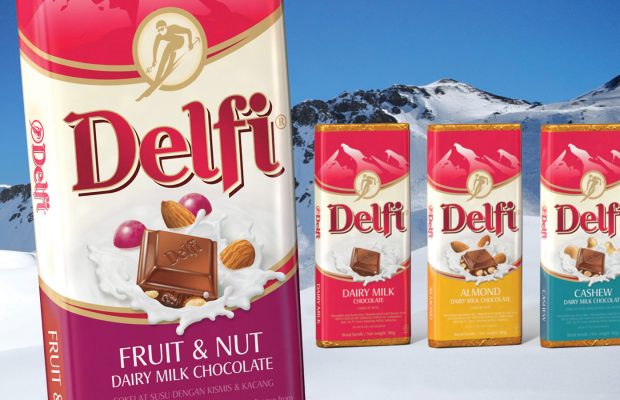
    Singapore-based confectioner Delfi today announced plans to pull out of PT Ceres Meiji Indotama (CMI) – a confectionery manufacturing joint venture in Indonesia with Japanese pharma-to-food group Meiji Holdings.

    Delfi said the proposed sale of its 50% stake in CMI for US$8.3m will allow Delfi to “re-deploy financial and human resources to focus on growing our business, both in Indonesia and our regional markets”.

    Following completion of the sale, which is subject to various regulatory approvals, Delfi said CMI will cease to be an associated company and the joint venture agreement with Meiji will be terminated.

    Delfi said its involvement in CMI, a confectionery manufacturer and retailer, “has spanned more than 15 years and over that period, it played an instrumental role in developing the business of CMI and the Meiji brand in Indonesia”.

    However, following “an extensive review” Delfi said it believed CMI “is best suited to continue growing under the stewardship of Meiji”. The proposal to terminate the joint venture is the result of a “mutual and amicable agreement”, Delfi said.

    The proceeds of the sale “will further strengthen the financial position of the company and allow it to focus its resources on existing investments”, Delfi said. “Despite the sale… the relationship between Delfi and Meiji remains strong and Delfi’s subsidiary in Indonesia, PT Nirwana Lestari, will continue to distribute CMI’s products.”

  • Pertamina allocates US$190 million for Mahakam exploration

    Pertamina allocates US$190 million for Mahakam exploration

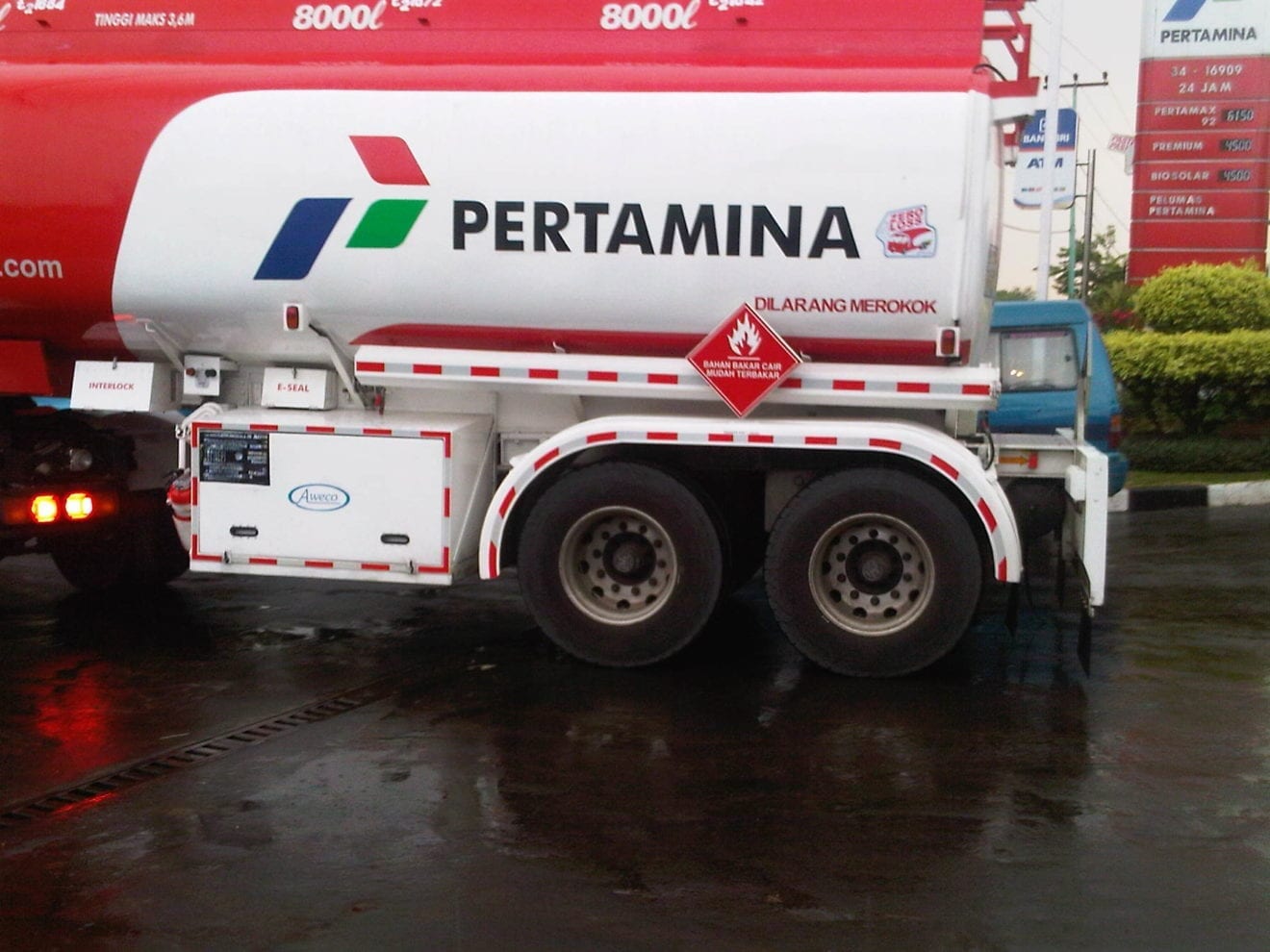
    State-run oil and gas company Pertamina has allocated US$190 million for exploration of Mahakam Block in East Kalimantan.

    “The fund has been prepared, but it would not be that easy to process it. We are still calculating the tax and we could not give the fund yet to the blocks operator Total E&P Indonesie,” Pertaminas upstream director Syamsul Alam said here, Thursday.

    PT Pertamina Hulu Mahakam (PHM), a subsidiary of PT Pertamina, has been appointed to operate the block to maintain production in the gas field.

    Pertaminas Corporate Vice President Wianda Pusponegoro said in a statement earlier this week, that the special task force for upstream oil and gas business (SKK Migas) has agreed on the bridging agreement (BA) scheme and funding agreement (FA) on Mahakam Block, signed by Pertamina, Total E&P Indonesia, and Inpex Corporation.

    “The agreement has clarified stakeholders commitment to smooth the transition of operators from Total to PHM. PHM has entered the Mahakam Block in 2017 under the BA and FA,” Syamsul said.

    The bridging agreement has regulated Total operations as the previous operator of Mahakam fields, for the interest of PHM.

    While the funding agreement would arrange the PHM funding mechanism on Total operation in accordance to the binding agreement.

    The agreements were signed on March 3, after an intensive discussion involving PHM, Total and Inpex.

    “PHM and Total would open a joint account,” she said.

    Totals contract ends on Dec. 31 this year, after operating the Mahakam field for 50 years.

    As an operator, Total has a 50 percent “participation right” while the remaining 50 percent is owned by Impex Corporation Ltd.

    Total is expected to produce 1,430 million standard cubic feet of gas per day and 53,000 barrels of oil per day in 2017.

  • Cloud-based online charging system debuts through Netcracker

    Cloud-based online charging system debuts through Netcracker

    Netcracker Technology has unveiled its Cloud-Based Online Charging System (OCS), a next-generation offering that has been optimized to meet the requirements of the digital world.

    As the industry’s first always-active OCS platform, Netcracker’s Cloud-Based OCS addresses all of the key pain points associated with legacy, hardware-based charging systems.

    The platform enables always-on availability at a lower cost as well as cloud elasticity and scalability in order to keep up with the demands of digitalization.

    The platform also enables converged revenue management scenarios; support for VoLTE, virtualized, 5G and IoT services; deployment flexibility across any physical and virtual environment; and embedded analytics.

    “Netcracker’s Cloud-Based OCS underscores the right approach for service providers that are looking to monetize cloud and virtualized services in today’s digital world,” said Karl Whitelock, global director of operations, orchestration, data analytics and monetization (ODAM) at Stratecast.

    “As a software-centric solution that relies on configurable parameters and not complex customized code, Netcracker’s scalable OCS can help to address any level of transaction processing need, which is essential for delivering future-proof operations in the journey to becoming true digital services providers,” said Whitelock.

    Sanjay Mewada, chief strategy officer at Netcracker, said traditional revenue management platforms have not been able to keep pace with the needs of communications service providers as they transform into digital service providers.

    “Netcracker has evolved its OCS to address these precise needs,” said Mewada. “Our Cloud OCS, with its unparalleled elasticity, always-on availability and embedded analytics, removes the barriers to digitalization and allows our customers to rapidly monetize digital offerings, such as VoLTE, 5G, virtualized and IoT services.”

  • AirAsia revives plan to buy private jet for US$10mil

    AirAsia revives plan to buy private jet for US$10mil

    AirAsia has revived its earlier plan to buy the private jet used by its group chief executive officer Tan Sri Tony Fernandes and executive chairman Datuk Kamarudin Meranun, entering another sale and purchase agreement similar to the one inked in June last year.

    In a filing with Bursa Malaysia, the low-cost carrier said it had signed a deal on Thursday to buy the Bombardier BD-700-1A10 Global Express aircraft from charter provider Caterhamjet Global Ltd (CJG) for the similar cash consideration of US$10mil (RM44.4mil).

    CJG is ultimately owned by Fernandes and Kamarudin, who are both also AirAsia shareholders with a 32.2% stake each. CJG had bought the aircraft, which was manufactured in 1997, for US$24mil in July 2012 and refurbished it for US$0.7mil the following year.

    In June last year, AirAsia sealed an agreement to acquire the jet but that initial deal was not completed by mutual agreement of the parties. The latest announcement did not elaborate on the decision.

    AirAsia has a charter agreement with CJG, signed in April 2015, for the use of the aircraft as well as for maintenance support until June 30, 2017.

    The annual fee charged by CJG was US$3mil (RM13.3mil) plus the goods and services tax. On March 31, 2016, the AirAsia board approved CJG’s request to increase the annual fee from US$3mil to US$5.75mil (RM25.5mil) due to the rising operating costs of the aircraft.

    In its latest announcement, AirAsia said CJG was planning to sell the aircraft, which meant that unless AirAsia bought the jet, its group CEO and executive chairman would no longer be able to benefit from the convenience and efficient transport provided by the aircraft when travelling to AirAsia’s associates for work.

    The acquisition, the statement continued, would be novated to a soon-to-be-formed fully-owned subsidiary of AirAsia, which would act as the registered owner of the aircraft.

    AirAsia said operating the aircraft under its subsidiary would allow the subsidiary to have the option of either operating it under a private category or of signing a charter agreement with an approved aircraft operating certificate (AOC) holder without being constrained by the regulatory considerations of the commercial AOC of AirAsia.

    “The subsidiary is contemplating to apply for a charter AOC from the Department of Civil Aviation Malaysia to operate as a full-fledged charter and private unscheduled business jet operator,” it said.

  • HSC estimates Vinamilk shares worth $6.70

    HSC estimates Vinamilk shares worth $6.70

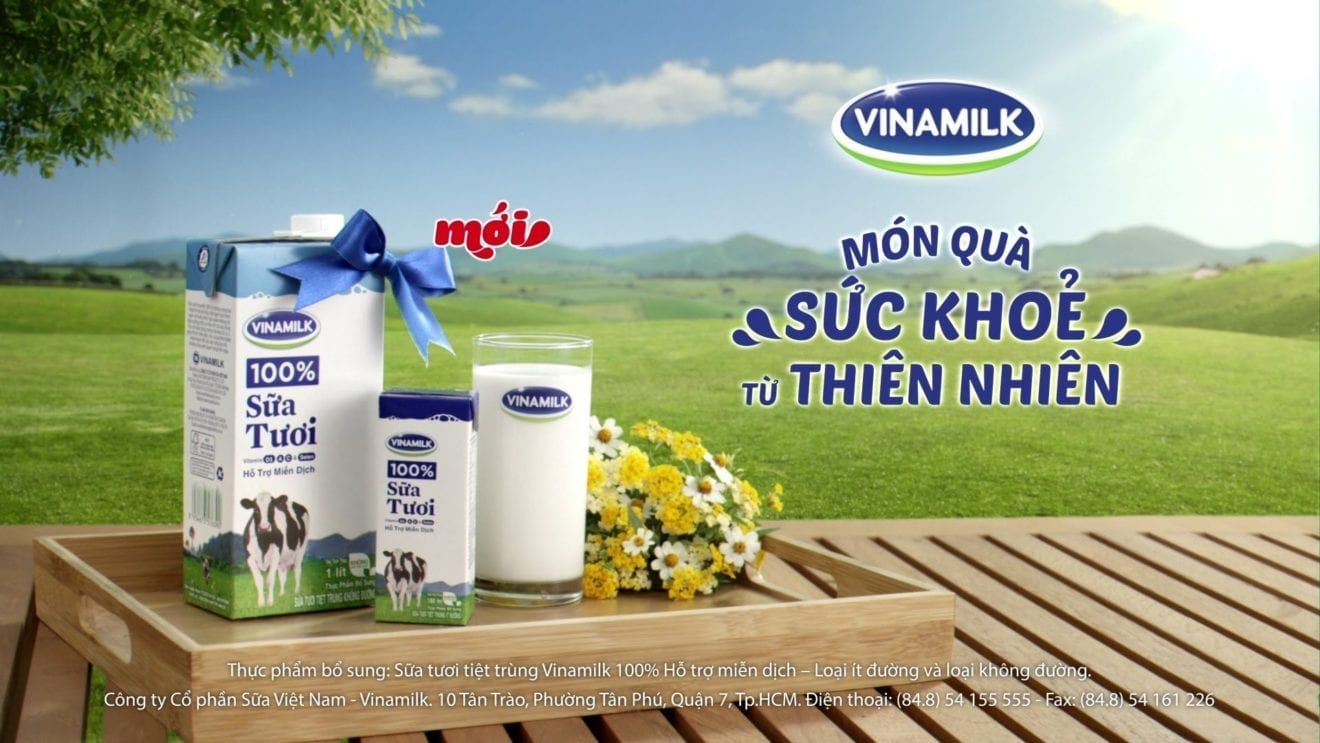
    According to HSC, Vinamilk’s shares are valued at VND152,000 ($6.7), higher than the current price of VND130,000 ($5.7). A representative from HSC, however, told that its price is only a forecast based on the price of raw milk and may change.

    Vinamilk owns ten farms around the country with over 17,000 heads of cattle. HSC estimates that, in 2016, its farms supplied 42,654 tons of raw milk, up 13 per cent and contributing 7 per cent of the company’s raw milk input.

    HSC also estimates that Vinamilk’s total raw milk from its farms and from buying from dairy farmers reached 221,433 tons in 2016, up 10.6 per cent against 2015. Net revenue is expected to reach over VND53.1 trillion ($2.3 billion) this year, up 13.6 per cent, and after-tax profit VND10.1 trillion ($444.4 million).

    According to HSC, Vinamilk will maintain stable growth thanks to the potential of its core business. It can maintain double-digit revenue growth in 2017 and the dairy sector will continue to grow at an average rate of over 10 per cent.

    It forecast that Vinamilk’s average annual growth rate in net sales from 2017 to 2020 will be 10.9 per cent and after-tax profit 9.3 per cent.

    Vietnam’s largest dairy producer began operating the country’s first-ever organic dairy farm under European standards in the central highlands province of Lam Dong on March 14.

    The farm has investment capital of $8.7 million, is certified by the Netherlands-based global network of inspection operations, Control Union, and has a herd of 500 imported cows. “We apply close monitoring measures to ensure the herd only produces high-quality milk,” said Ms. Mai Kieu Lien, Vinamilk’s CEO.

    The farm reflects the company’s commitment to clean and sustainable production, she added, with Vinamilk wishing to make high-quality products available to Vietnamese consumers at reasonable prices.

    Vinamilk’s revenue was estimated at $2 billion in 2016, up 15 per cent compared to 2015. Pre-tax profit stood at VND11.2 trillion ($492.8 million) and after-tax profit VND9.3 trillion ($409.2 million).

    It targets revenue of $3 billion this year. If reached, Vinamilk would break into the Top 50 milk producers in the world.

  • VW’s MAN sees significant rise in 2017 operating profit

    VW’s MAN sees significant rise in 2017 operating profit

    Volkswagen division MAN expects operating profit to rise significantly in the fiscal year 2017, as the company continues its diesel-engine unit restructuring, which started in September.

    The German truck maker said on Thursday its operating profit rose to 204 million euros ($219 million) in 2016, up from 92 million in the previous year.

  • Tecnotree launches two customer experience solutions

    Tecnotree launches two customer experience solutions

    Tecnotree has launched two new solutions to enable service providers to transform customer experience, boost revenues and simplify processes, while also supporting business decisions.

    Through its Business Analytics and Insight (BAI) dashboard, service providers around the world can now use highly relevant, pre-integrated and pre-defined KPIs to get the critical information they need to run their business.

    BAI presents a simplistic visual summary of key trends, comparisons and current states of key data points vital to a business, both on large screens and mobile devices.

    All this is gathered in one single screen to help users make more informed decisions, with metrics grouped into four key areas: revenue, products, customers and service usage.

    Following a successful pilot, Tecnotree also introduced the Social Media Engagement (SME) tool. With SME, customer service agents can engage all social media channels in one single place, increasing efficiency.

    SME provides notifications when relevant messages are posted and includes a thorough positive/negative sentiment analysis, which enables agents to quickly and accurately prioritize tasks. SME also helps to measure a service provider’s brand sentiment, allowing them to enhance and improve customer interactions.

    In addition, Tecnotree has launched the My Life Dashboard product, which provides a self-care solution to give customers of service providers real-time, easy access and control of their services whenever and wherever they choose. It also allows people to recharge, top up, pay bills and use loyalty points to purchase new services.

  • Burger King announced as the Cannes Lions Creative Marketer of the Year 2017

    Burger King announced as the Cannes Lions Creative Marketer of the Year 2017

    The Cannes Lions International Festival of Creativity has today announced Burger King as the Creative Marketer of the Year 2017. The award will honour Burger King for embracing and encouraging creativity across their brand communications and for the inspiring global marketing of their products.

    Burger King has a hugely successful track record at Cannes Lions. The company has totalled 76 awards, including two Grands Prix in 2016 for the ‘McWhopper’ campaign, in Print & Publishing and Media. Burger King also took home a Titanium Grand Prix in 2007 and achieved their first win in 1969, a Silver Lion for ‘Skinny Burger’. Since its launch in 1954, the company has expanded to become one of the largest quick-service restaurants in the world, welcoming more than 11 million people in over 100 countries daily.

    “Burger King is a brand that’s built a reputation for marketing campaigns that are bold, courageous and innovative, constantly challenging the limits of creative excellence,” said Philip Thomas, Chief Executive of Ascential Events. “Burger King believes that being a brand with purpose can achieve long-term advantages and deliver strong business results. That’s why the company is making such an impact.”

    Axel Schwan, Chief Marketing Officer of Burger King, and Fernando Machado, Head of Brand Marketing at Burger King, will collect the award during the 64th Cannes Lions International Festival of Creativity, taking place from 17-24 June 2017.

    Axel Schwan commented, “Creativity is a critical factor when it comes to helping us stand out from the pack and punch higher than our weight. This principle is applied to everything we do, from the way we differentiate ourselves by flame-grilling our burgers to the ground-breaking advertising campaigns we create.”

    Fernando Machado added, “This award is a tribute to the consistently strong creative work done by the Burger King brand over time.”

    Cannes Lions celebrates the ‘Best of Burger King’ on Stories, the new editorial arm of the Festival. From classic campaigns that kick-started digital marketing to modern masterpieces of integration, find out more about some of Burger King’s most famous ads here: https://www.canneslions.com/stories

    Cannes Lions International Festival of Creativity

    Cannes Lions runs for eight days from 17-24 June, in Cannes, France. The main Festival venue is the world famous Palais des Festivals. A ‘Complete’ pass includes entry to all official Festival talks, Awards shows, networking and evening events across the eight days. Passes giving access only to the specialist events – Lions Health, Lions Innovation and Lions Entertainment – which take place right next door to the main Festival venue, are also available.

    Lions Health 17-18 June

    Lions Innovation 19-20 June

    Lions Entertainment 21-22 June