Author: Mei Ling Tan

  • Xiaomi Vietnam has launched

    Xiaomi Vietnam has launched

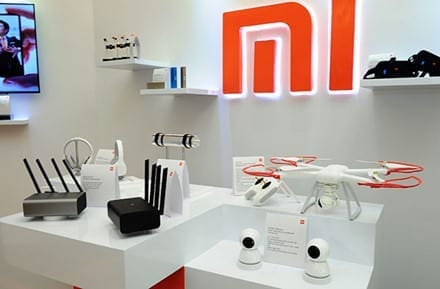
    Chinese smartphone brand Xiaomi has launched in Vietnam.

    The official distribution partner of Xiaomi Vietnam is Digiworld, which has opened four warranty centres in Ho Chi Minh City, Hanoi and Danang.

    Doan Hong Viet, CEO – Digiworld, and Wang Xiang, Senior Vice President – Xiaomi

    Xiaomi2

    Xiaomi1

    Xiaomi Vietnam will initially launch its three latest smartphone models – the Redmi, Redmi Note 4, and Mi Mix.

    In the next months, Xiaomi Vietnam will launch other products include wifi routers Mi Routers Pro and Mi Routers HD.

    All products will be sold through retailers such as The Gioi Di Dong, Hnam Mobile, Mai Nguyen, VinPro, Aeon Mall – both online and offline.

    There is no word as yet on whether the company will bring other products into Vietnam, which include flat screen TVs, AV equipment and robot vacuum cleaners.

  • Starbucks Coffee Korea sales booms

    Starbucks Coffee Korea sales booms

    Starbucks Coffee Korea said its annual sales topped the 1 trillion won (US$884.17 million) mark for the first time ever last year.

    The local franchise of the US coffee giant, which is operated by retail conglomerate Shinsegae, debuted in South Korea in 1999.

    Annual sales rose 29.6 per cent from the 773.9 billion won of 2015.

    Operating profit also increased 81.2 per cent year-on-year to 85.4 billion won in 2016.

    As at the end of February, Starbucks operated 1008 shops across the country.

    Industry observers said Starbucks’ record is astonishing as annual sales of other players such as Twosome Place and Angel-in-us Coffee are averaging between 100 and 200 billion won.

    “Starbucks gained popularity among women in their 20s and 30s who are attuned to the latest consumer culture of the United States,” an analyst said, adding that Starbucks has constantly launched new menus.

    Starbucks acquired tea retailer Teavana in 2012 and has since rolled out various tea menus along with bakery products.

  • Indonesia’s Lippo & Korea’s Lotte form e-commerce JV

    Indonesia’s Lippo & Korea’s Lotte form e-commerce JV

    Indonesia’s Salim Group is planning a major foray into e-commerce this year in partnership with South Korea’s Lotte.

    Indo Lotte Makmur, a 50-50 JV by the two conglomerates, will launch the iLotte online shopping platform as soon as July, putting US$88 million into the project initially. The service will be geared primarily toward women in their 20s and 30s, and feature name-brand cosmetics sold in South Korea as well as offerings from Lotte’s online mall.

    A robust infrastructure built up over the course of years will let Salim achieve economies of scale for the e-commerce business, says Indo Lotte CFO Dani Sumarsono, who is overseeing online business at Indonesia’s largest conglomerate.

    “E-commerce is not only about digital technology but about moving physical products,” he says. “We have been investing in infrastructure for a long time.”

    Indo Lotte president, a former executive at Lotte’s e-commerce business in South Korea, says Salim has a lot of infrastructure, while Lotte can bring know-how and technology.

    Indonesia’s e-commerce market is expected to grow to $46 billion in 2025 from just $1.7 billion a decade earlier, according to research by Google and Singapore’s Temasek Holdings. Under this scenario, Indonesia would make up more than half of the total Southeast Asian e-commerce market and would follow China and India as the third-largest national market in Asia, excluding Japan. A doubling of internet users, from 92 million to 215 million, is seen as the driver of this expansion.

    Expensive market

    With chronic congestion of its major cities and a lack of basic infrastructure on its islands, Indonesia is an expensive market to service. Logistics costs are 27 per cent of GDP, compared with 20 per cent in Thailand and 13 per cent in Malaysia, according to the World Bank.

    However, Salim’s 13,000-plus Indomaret convenience stores across Indonesia can be used as places to pay for and pick up goods ordered online. Meanwhile, a shipping unit that delivers instant noodles made by group member Indofood Sukses Makmur to more than 30,000 small towns nationwide can help bolster efficiency.

    Salim has also created a JV with Tokyo-based startup Liquid to explore payments using fingerprint authentication, with credit-card ownership of less than one in every 10 adults in Indonesia. Liquid’s system allowing pre-registered shoppers to pay via fingerprint scanner has been deployed at Japanese convenience stores. The JV will test the system for 500,000 Salim employees initially and targets commercial application within the year.

    Meanwhile, another Indonesian conglomerate, Lippo Group, is developing an electronic payment service for use on MatahariMall.com, which Lippo launched in 2015.

  • MK Restaurants plans US$11m expansion

    MK Restaurants plans US$11m expansion

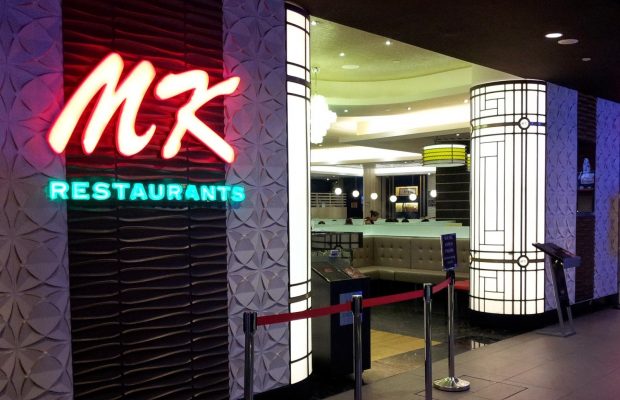
    Thailand’s MK Restaurants Group plans to invest about Bt400 million (US$11.3 million) a year over the next five years to expand in Thailand as well as its overseas markets, including Singapore.

    Chairman/CEO Rit Thirakomen says the group will open 15 MK branches in Thailand this year, together with 25 Yayoi and five Miyazaki Japanese restaurants. Three or four franchised restaurants will be added to each overseas market.
    “We are also open for acquisition deals with select companies in food, services and retailing, so they will be able to use our infrastructure and logistics,” says Thirakomen.

    MK Restaurants Group’s sales rose 4 per cent to Bt15.49 billion last year, but its profit spurted 13 per cent to Bt2.1 billion. It projects growth at 5 to 9 per cent annually for five years.

    The group’s first MK Live flagship restaurant was officially unveiled at The Emquartier shopping mall in Bangkok yesterday, targeting health-conscious and “lifestyle” consumers. It has 135 seats.

    MK’s other brands are Hakata Ramen, Le Petit coffee shop and bakery, Le Siam Thai Restaurant, Miyazaki Teppanyaki, MK Restaurants, MK Gold Restaurants, Na Siam Thai Restaurant and Yayoi Japanese Restaurant. As well as 600 outlets in Thailand, the group has 40 franchised outlets in Indonesia, Japan and Vietnam.

    It has also set up a JV in Singapore to run its restaurants there, including MK, Miyazaki and Yayoi.

    Rit says that under its third-generation management team, MK Restaurant Group has outlined a major expansion plan for this year to cash in on the burgeoning Thai food industry, predicted by Kasikorn Research Centre to grow at 2 to 4 per cent to about Bt390 billion this year.

    Assistant marketing director Tantawan Thirakomen says MK Live is a suki (hot pot) restaurant designed to attract teenagers, young adults and families.

    “The store is decorated to reflect a vegetable greenhouse, with natural decorative items – wood, trees and rocks – as well as hydroponic vegetables displayed on the walls,” she says.

    A feature is its Live Showcase open kitchen where customers can see the chefs working on their meals, including dim sum and meatballs. Also on the menu are lobsters from Canada, scallops from the US and Wagyu beef from Japan.

  • Aesop Korea opens fifth Seoul boutique

    Aesop Korea opens fifth Seoul boutique

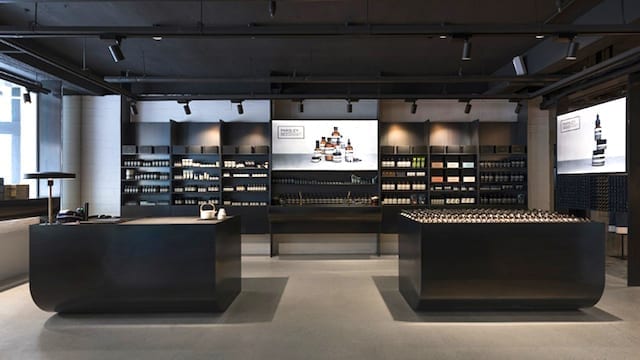
    Australian luxury beauty brand Aesop has expanded its footprint in Seoul with a fifth signature boutique.

    On the ground floor of LG Twin Towers, a mixed-use complex in the upscale riverside neighbourhood of Hannam-Dong, the store is just 45 sqm.

    Aesop-new-boutique-Seoul-at-LG-Towers-1


    The new Aesop Korea store’s interior was designed by Suh Architects, a Korean practice which has already collaborated with the cosmetics brand on two other projects. Principal/founder Eulho Suh has degrees from Rhode Island School of Design and Harvard University Graduate School of Design in the US, and worked for Morphosis Architects in Santa Monica, California, and Kohn Pederson Fox in New York.

    Aesop was established in Melbourne in 1987 and has offices and stores throughout the world, including Hong Kong, London, New York, Paris and Tokyo.

  • Aeon Vietnam plans second Hanoi centre

    Aeon Vietnam plans second Hanoi centre

    Aeon Vietnam is to build a second property in Hanoi, in the Ha Dong district in the city’s west.

    This follows the Japanese group launching in the Vietnamese capital two years ago, with a mall in Long Bien.

    An Aeon Vietnam representative says the project, covering 9.5 hectares, will cost VND4.500 tillion (US$200 million). The expected opening date will be in 2019.

    However, the group is yet to determine the specific location for its fifth shopping centre in Vietnam. Ha Dong is developing, and investing in extended ring-road system with a Bus Rapid Transit link with downtown Hanoi. An urban railway is planned to launch next year.

  • Fashion house Calvin Klein rebranding

    Fashion house Calvin Klein rebranding

    Fashion house Calvin Klein, a wholly owned subsidiary of PVH, plans to rebrand its men’s and women’s contemporary apparel and accessories business.

    It is changing from Calvin Klein Platinum to CK Calvin Klein, with a global roll-out of the new branding to start this month.

    In Asia and Japan, in coordination with licensing partners Club21 and Onward Kashiyama respectively, the CK Calvin Klein rebranding will be introduced with this year’s spring season. Freestanding stores opening this year in Asia will feature the new branding, while existing stores will be transitioned on a rolling basis.

    Founded in the US in 1968 by Calvin Klein and his business partner Barry Schwartz, the company had global retail sales exceeding US$8 billion in 2015 with distribution in more than 110 countries. Calvin Klein employs more than 10,000 people globally, and was acquired by PVH in 2003.

    With a history of more than 130 years, PVH is an apparel company with a presence in more than 40 countries and more than $8 billion in revenues. As well as Calvin Klein it owns the Arrow, Izod, Olga, Speedo, Tommy Hilfiger, Van Heusen and Warner’s brands.

  • Alibaba plans technology boost

    Alibaba plans technology boost

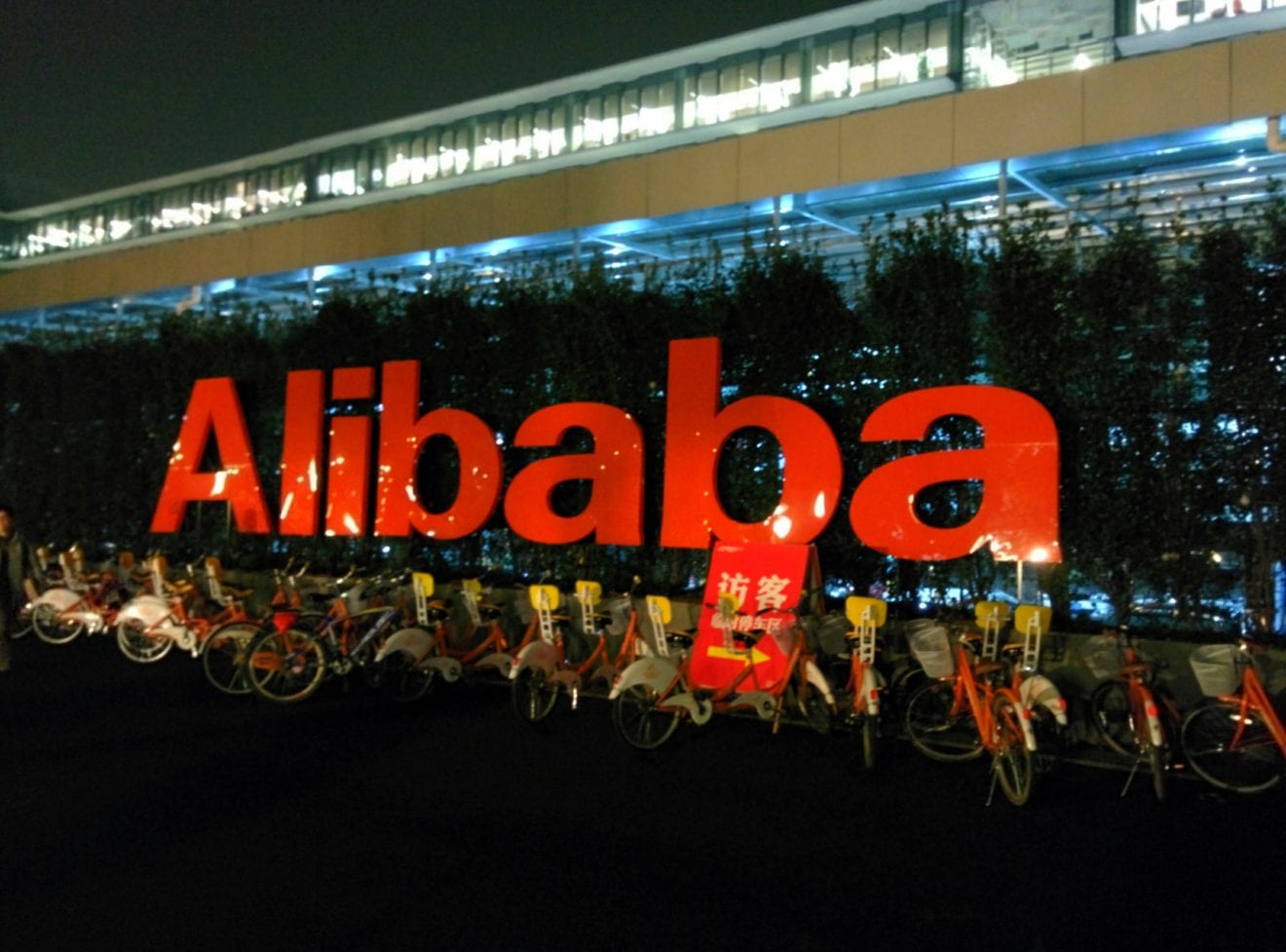
    Alibaba plans to form independent research and development teams to build up core technologies that support its vision of serving 2 billion people in the future.

    The giant e-commerce and technology company unveiled its grand plan at its inaugural tech summit, “New Technology, New Future”, at its Hangzhou headquarters in China. About 5000 engineers attended, plus thousands of other staff members, technical and otherwise, watched via live stream.

    “Alibaba’s success in commerce has outshone its light of technology over the past 18 years,” Alibaba Group chief technology officer Jeff Zhang told the summit, describing it as “a tech-driven company that seamlessly combines business and technology”.

    Over the past several years, Alibaba has rolled out a wide range technologies for an array events and business areas, including Alibaba’s 11.11 Global Shopping Festival, payments, cloud computing and logistics. Zhang said Alibaba had reached “a critical point in technology innovation” and should gear up to develop more core technologies for future success.

    Executive chairman Jack Ma said he expected Alibaba to become the world’s fifth-largest economy in the next 20 years, serving 2 billion customers, creating 100 million job opportunities and enabling 10 million businesses to make profits. To hit that goal, he said the new economy he envisioned should be built on the continuing development of technological infrastructure.

    “An economy that serves 2 billion people must be backed by solid technological capacity. To shoulder the future responsibility, we will build Alibaba’s own ‘NASA”, Ma said, referring to the National Aeronautics and Space Administration, an organisation he admires for what it has contributed to mankind through technological advances.

    “We will establish new teams to develop the core technologies of machine learning, chips, the Internet of Things, operating systems and biometric identification.”

    He said Alibaba once developed figurative “hand grenades”, but the new R&D-focussed team and mechanisms would allow it to develop “missiles”.

    Ma said Alibaba needed to have a discerning, independent eye when judging technology trends. Technology developed by Alibaba should empower people in the virtual economy, making it more inclusive and creating opportunities. Technology needed to ensure the new economy would be sustainable and lead to its participants having happy and healthy lives.

    Speaking about computers and robots, and the possibility they might one day replace or displace humans, Ma said machine learning should help humans do things that otherwise could not be done. Machines should serve as assistants to humans, rather than robbing them of human pleasure or becoming rivals.

    Alibaba has more than 20,000 engineers on staff, including more than 500 with doctoral degrees. Among its 36 partners — the group’s powerful decision-making body — nine come from a technology background.

    Alibaba has been investing in new technologies for many years, and has developed many key technologies of its own. These include…

    Cloud computing

    Apsara: A super computational engine developed by Alibaba Cloud. It offers clients powerful computing capability, robust technology services and software that can affect broader society.

    Database systems

    OceanBase: The first applied large-scale financial database system in China, developed by Alibaba Group and Ant Financial.

    Artificial intelligence

    ET: Artificial intelligence services that can be broadly applied to different areas in society. Cases include the Hangzhou City Brain master plan, which has enhanced the city transportation department’s efforts to ease traffic congestion. It has also helped Guangzhou International Airport with flight management.

    Personal recommendations: Tailored shopping pages on Taobao/Tmall with a most-suitable product recommendation for each buyer. About 6.7 billion personalised shopping pages were created during Alibaba’s 11.11 Global Shopping Festival last year.

    Ali Xiaomi: A smart personal shopping assistant on Alibaba’s e-commerce sites. About 95 per cent of daily inquiries can be handled by Ali Xiaomi.

    Ant Financial’s smart customer service: This can answer about 97 per cent of daily inquiries.

    Quantum computing/communications

    The Chinese Academy of Sciences -­ Alibaba Quantum Computing Laboratory was established in 2015. Quantum cryptographic data-transfer services became available on Alibaba Cloud this year.

    Virtual reality

    Buy+: Offers the world’s first end-to-end VR shopping experience, in which the entire transaction can be completed, from browsing, to order, to payment.

    Biometric recognition

    Facial recognition payment: Alipay enables facial-recognition payment with an accuracy of more than 99 per cent. It is listed among the top 10 technology breakthroughs this year by the MIT Technology Review.

    Alibaba is also using biometrics to recognise eye patterns, irises, palm prints and handwriting.

    Geolocation technology

    QianXun location network technology: Using BeiDou satellite technology, this can achieve a positioning accuracy of 1 millimetre.

    Operating systems

    YunOS: The world’s third-largest mobile operating system works in mobile phones, cars, TVs, tablets and other Internet of Things items.

    Blockchain

    Ant Financial has started deploying this technology for charitable donations. Blockchains are a database — an open ledger that records transactions between two parties in an immediate, secure, verifiable and permanent way.

    Smart logistics

    Alibaba’s smart-logistics technology includes last-mile delivery robot and its intelligent warehousing system.

    -Susan Wang
  • Generation Z prefers in-store shopping decisions

    Generation Z prefers in-store shopping decisions

    An overwhelming number of generation Z, also known as post-millennials, prefer visiting a store as the final step in their shopping process, new research has found.

    In its Evolution of Retail 2017 Generation Z shopper survey, Euclid Analytics found that 66 per cent of the demographic prefers in-store shopping, while 28 per cent wants to interact with store staff members.

    This mobile-first generation – by broad definition, aged under 22 – uses digital to research products, but then prefers to go to the store to touch and try out items before buying, says the survey. The challenge for retailers will be to figure out a way to help cater to this new approach.

    Generation Z prefers to get in and get out when it comes to shopping behaviour, the survey also shows, with 53 per cent saying they dislike browsing in stores and 31 per cent saying it is hard to find items in stores. Meanwhile, 26 per cent want retailers to provide a more tailored shopping experience.
    Euclid Analytics CEO Brent Franson says retailers should reach out to generation Z at this early stage to introduce their brands and forge enduring relationships.

    “Our findings highlight some great opportunities for them to connect with this mobile-first population that is still very much interested in meaningful in-store experiences. Winning their loyalty will mean getting creative about using mobile and social marketing outreach in their physical stores.”

  • Daniel Wellington Expands Across Hong Kong

    Daniel Wellington Expands Across Hong Kong

    Leading watch company Daniel Wellington revealed its brand new Classic Petite collection and global marketing campaign featuring four a-list global icons today at LCX, Harbour City. Hong Kong expansion plans are also under way as the brand announced their goal to open around 10 new stores across the city over the next year.  

    Celebrity Cantopop singers Fiona Sit and Pakho Chau helped launch Daniel Wellington new Classic Petite collection and the brand’s global marketing campaign today at LCX, Harbour City.

    The new Daniel Wellington faces are world-famous, incredibly successful, young global icons: model and TV personality Kendall Jenner is featured across Daniel Wellington media wearing the brand new Classic Petite watch alongside highly sought-after model siblings Lucky Blue Smith and Pyper America Smith and model, TV personality, actress and singer ROLA.   

    Kendall Jenner is one of the most influential people on the internet, boasting a staggering 75.9 million Instagram followers. Lucky Blue (2.8 million followers) has been a successful model since a young age while his sister Pyper America’s (722K followers) modelling career has been skyrocketing over the past year. Rola, with 4.4 million Instagram followers, was discovered in Japan at the age of 16 and rose to fame in no time due to her character, sense of style and distinctive beauty.

    The campaign release comes hand in hand with four new watches launched under the brand’s newest Classic Collection named Classic Petite. Available in the signature rose gold and silver, they are inherently Daniel Wellington , the quintessence of classic sophistication and timeless design, intended to match any occasion and outfit. Thin, refined and perfectly round, the Classic Petite 32mm watch is the ideal staple especially for females.

    Inspired by an intriguing gentleman with impeccable style who caught Founder Filip

    Tysander’s eye on a trip across the globe back in 2011, Daniel Wellington watches are known and loved worldwide for their classic, minimalist design and interchangeable straps. Carried in all major cities worldwide, the company has firmly established itself as one of the most beloved watch brands in the industry, which is not traditionally known for being active on social media. Having started the brand with a no-traditional-advertising rule, Daniel Wellington is proof that carefully planned online content truly is the best brand catalyst. With over 2.9 million followers and over 1 million uses of the hashtag #danielwellington, their combined strategy of influencer activity and user generated content has clearly paid off and changed the watch industry forever. 

    The brand celebrated the campaign kick-off at a pop-up event at LCX, Harbour City, with celebrity Cantopop singers Fiona Sit and Pakho Chau taking centre-stage alongside the anticipated global icons campaign and coveted new watches. In line with the way the brand rose to fame, many of Asia’s top social influencers were invited to participate in the pop up event. The store will remain open to the public until Sunday, March 19 th .  

  • Lowest growth in decade for China retail sales

    Lowest growth in decade for China retail sales

    For the first time in 11 years, China retail sales growth has slipped below 10 per cent.

    With market expectations of a 10.6 per cent rise, official data shows sales for the first two months this year increased by only 9.5 per cent.

    The National Bureau of Statistics (NBS) attributes the slower growth to cooling auto sales, which fell 1 per cent from a year earlier after purchase tax for small cars was increased from 5 to 7.5 per cent this year. With the auto sales factor deducted, China’s retail sales expanded 10.2 per cent during the period, flat compared with the increase in the same two months last year.

    Consumer goods retail sales totalled 5.8 trillion yuan (US$840 billion) during the period, NBS data shows.
    There was strong consumption potential in rural areas, with retail sales expanding 11.8 per cent during the period, outpacing urban regions where sales were 9.2 per cent up.

    However, online sales continued growing strongly, surging 31.9 per cent in the two months to 858 billion yuan.
    As a main driver of economic growth, consumption contributed to 64.6 per cent of China’s GDP growth last year.

  • Jabong adds Virat Kohli’s breakaway fashion brand ‘WROGN’ to its product portfolio

    Jabong adds Virat Kohli’s breakaway fashion brand ‘WROGN’ to its product portfolio

    India’s leading online fashion portal Jabong, has announced the addition of Virat Kohli’s breakaway fashion brand WROGN to its product portfolio. The men’s fashionwear brand will be available on Jabong in 450 variants with prices ranging from Rs. 799 to Rs. 3599.

    The launch will be supported by digital and social media campaigns including Virat’s selfie video announcing the brand’s launch on YouTube, Facebook, Twitter & Instagram. A separate Shop-In-Shop promotion will highlight the WROGN’s latest campaign images, videos, main categories & brand description on Jabong’s website & mobile app as well as the Jabong’s digital fashion blog. The top two highest spenders on the day of launch will be invited for a Meet & Greet with Virat Kohli while the remaining five highest spenders will receive merchandise signed by the Indian cricket captain.

    Rahul Taneja, Chief Business Officer, Jabong said, “We are pretty stoked to launch WROGN on Jabong, which comes from a similar philosophy of being comfortable in your own skin, and therefore, is a great fit for Jabong’s core shoppers. Virat Kohli is a true Indian icon, especially amongst the youth and is a great example of rising above the ordinary by just being himself. Jabong speaks the same language and it’s exhilarating that we will bring more joy to our customers with WROGN on board.”

    Kalyan Kumar Gunasekaran, Chief Merchandising Officer, Jabong added, “It brings great pleasure to us to launch WROGN on Jabong. The collection exudes candid and comfort fashion and allows one to carry their own style effortlessly. Each brand uniquely differentiates itself in its language, WROGN for us is just the right click and we are elated to welcome the brand in the cartel.” 

     Anjana Reddy, CEO Universal Sportsbiz & owner of WROGN, said, “WROGN is one of the fastest growing men’s youth fashion brand in India, and we are very excited to partner with Jabong and launch our latest SS’17 Collection. Jabong has a strong base of fashion forward consumers and I am sure WROGN as a brand will fulfill their needs”.

    Jabong is known to have introduced a multitude of fashion and sports brands in India in the past such as TOPSHOP, TOPMAN, Dorothy Perkins, Missguided, Next, ASICS, ALCIS, Hummel, DC and New Era Caps to name a few.

    Virat Kohli has made into the heart of millions and is touted as the best of all times with Kapil Dev even comparing him to the legendary Don Bradman. Virat has been the highest run scorer for India for 6 years straight and was the fastest in the world to reach 25 centuries in ODIs. He also holds the record for the fastest century by an Indian cricketer in ODIs (in 52 balls), the fastest to reach 7,000 runs in ODI’s, first cricketer to score three centuries in his first three innings as Test captain, first Indian Test captain to score a double century overseas and first Indian Test captain to score two or more double centuries.

  • Nepal Telecom reaches 500,000 4G subscribers

    Nepal Telecom reaches 500,000 4G subscribers

    Nepal Telecom has revealed that its 4G subscriber base has passed 500,000 less than three months after launching the services.

    The operator, currently Nepal’s only 4G provider, announced that it now has over 524,000 subscribers. Nepal Telecom launched 4G services at the start of January, initially in the Kathmandu and Pokhara areas.

    But of the operator’s total 4G subscriber base, only around 67,500 are postpaid, whereas the remainder are prepaid. Nepal Telecom launched prepaid LTE services in February.

    The total 4G base also currently only makes up a small portion of Nepal Telecom’s roughly 8.1 million mobile internet users, the report indicates.

    Nepal Telecom is also currently limited to providing 4G using a mere 5 MHz of 1800-MHz spectrum, capping peak data rates at 32.4Mbps, but is currently seeking more spectrum from the government to offer faster services.

    To mark the occasion of this year’s Holi spring festival in Nepal, the operator has meanwhile introduced new data and SMS offers for subscribers, including 200MB of bonus data for GSMA/CDMA prepaid users on a top up of 200 rupees ($1.88).

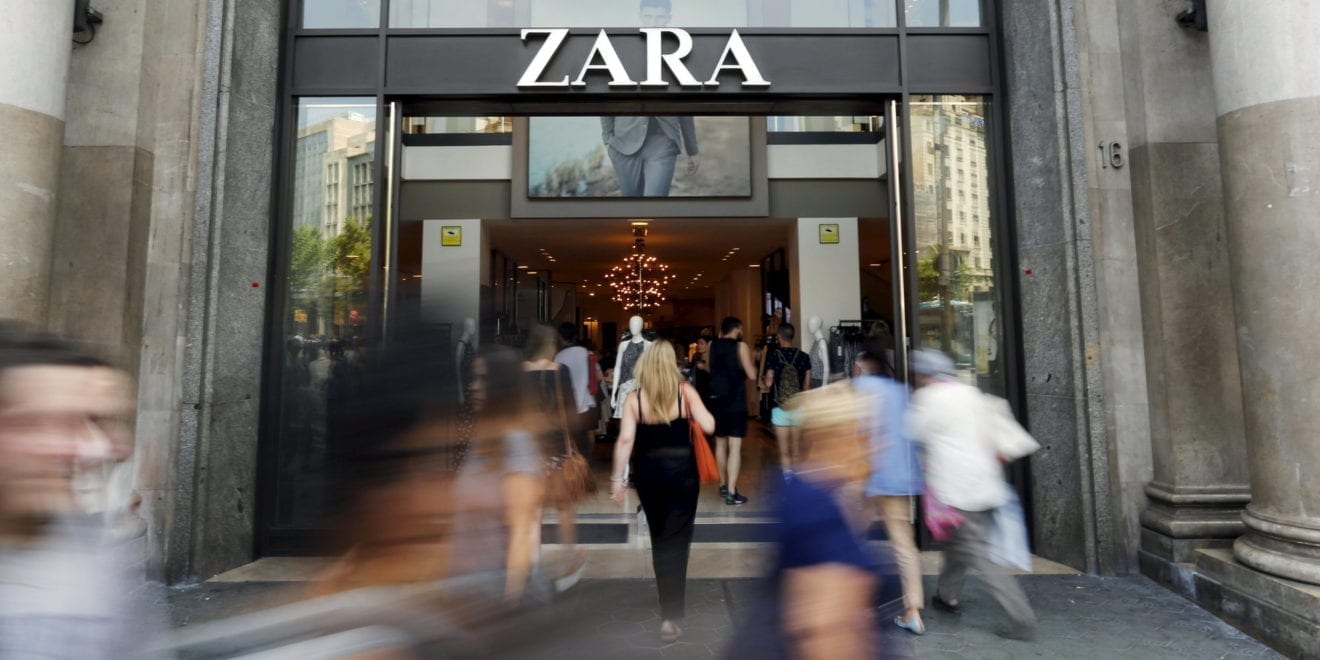
  • Emerging markets like Vietnam help Zara-owner Inditex outpace H&M

    Emerging markets like Vietnam help Zara-owner Inditex outpace H&M

    Indite has consistently outperformed H&M in the past few years as a result of online growth and its push into new markets. Fashion retailer H&M’s sales fell unexpectedly in February while Inditex, which owns Zara, pulled further ahead of its Swedish rival, helped by its expansion online and a bigger emerging market presence.

    Inditex, the world’s biggest clothing retailer, has consistently outperformed H&M in the past few years as a result of online growth and its push into new markets. The Spanish company has also diversified more quickly into higher-priced brands, reducing exposure to the rise of discount chains like Primark.

    H&M has embarked on plans to roll out ecommerce in more markets this year and speed up expansion of newer brands such as the mid-market COS and & Other Stories.

    But on Wednesday H&M revealed that local-currency sales fell in February for the first time in four years, slipping 1 percent year-on-year, against a forecast in poll of analysts for a 6 percent rise. H&M’s shares fell 5 percent.

    In contrast, Inditex’s local currency sales rose 13 percent from February 1 to March 12, as customers snapped up items from spring collections like double-breasted jackets, palazzo trousers and embroidered tulle tops.

    This was adjusted for an extra trading day in February 2016. H&M sales were up 3 percent in February, taking that calendar effect into account.

    Inditex results highlight the success of its strategy, with like-for-like sales up 10 percent in the year to end-January, helped by a shift towards opening bigger stores in prime locations that are then integrated with online operations.

    Inditex’s gross profit margin missed analyst expectations, falling to 57.0 percent in its 2016 financial year from 57.8 percent in 2015. This weighed on the company’s shares which were down 1.4 percent by 1014 GMT.

    Inditex, known for speeding the latest trends from runway to stores in a matter of days, reports in euros but makes more than half its sales in other currencies, exposing it to falls in the likes of the Mexican peso and the Russian rouble.

    Chairman and Chief Executive Pablo Isla said this margin metric would have increased on the year had it not been for the negative currency effects.

    Analysts expect this effect to swing in Inditex’s favor over the next 12 months with a consequent boost to profit margins.

    “We are very keen buyers of Inditex for 2017,” Anne Critchlow, analyst at Societe Generale, said. She said Inditex trades on 26 times forward earnings, compared to H&M on 21 times.

    Inditex opened stores in 56 countries during the year, including first openings in New Zealand, Vietnam and Paraguay, bringing its total store count to over 7,200. It launched online sales across its stable of brands in Turkey and said on Wednesday it would start online sales in India in 2017.

    H&M is more reliant on Europe than Inditex. In Germany, for example, which is H&M’s biggest market, apparel sales fell 9 percent in February, according to trade journal Textilwirtschaft.

    “Market conditions are the main driver of the weak February number,” UBS analyst Adam Cochrane said. “There’s a fear that they are losing market share on a like-for-like basis.” UBS has a “buy” recommendation on H&M.

    H&M reported that sales in local currencies rose 4 percent in its fiscal first quarter to February 28. That compares with a new target for annual sales growth of 10-15 percent. H&M is due to publish its full fiscal first-quarter report on March 30.

  • Six Startups with the Largest Funding in Indonesia

    Six Startups with the Largest Funding in Indonesia

    The emergence of many start-up companies lately has become an interesting phenomenon, many of them were built with fantastic funding figure.

    Well, following are six startup companies with the largest funding or investment value in Indonesia.

     1.Go-Jek

    Go-Jek is a startup of ride-hailing application (in Indonesia this is called online transportation); the company founded by Nadiem Makarim has a staggering funding of $550 million (or IDR7.2 trillion) in last August 2016.

    2. Lamudi

    In February 2016, Lamudi, global property portal, received funds amounting to $31.4 million to boost its business. Supported by Rocket Internet, Lamudi has strong position to dominate the property market in Indonesia. In 13 other countries wherein Lamudi is operating, the startup position is also strong because it is supported by a sophisticated quality portal and user-friendly.

    3. Tokopedia

    Tokopedia last year received an injection of investment worth $147 million (or equivalent to IDR1.9 trillion), thus the startup initiated by Wiliam Tanuwijaya and Leontinus Edison has gathered a total investment of $247.7 million. With the funding it is expected Tokopedia will become the biggest Android-based shopping app in Indonesia.

    4. Elevenia

    Launched in early 2014 with funding of $18.3 million is enough to make Elevenia has an important position in the e-commerce world. This platform received 20,000 transactions per day and has more than four million listings.

    5. MatahariMall

    Funds amounting to $100 million (or IDR1.3 trillion) have made a startup backed by Lippo Group as one of the kings in the e-commerce field. Plus, the support from Mitsui investment also increasingly strengthens MatahariMall and makes MM one of startups with unicorn status.

    6. Oto

    Oto.com is a platform that connects customers with the automobile manufacturers and distributors. The customers can look for prices, specifications, drawings and others about their desired car via the website. This startup has received a funding of $25 million in 2016 ago.