Author: Mei Ling Tan

  • International brands battle for Vietnam milk tea market

    International brands battle for Vietnam milk tea market

    As Vietnam’s economy grows the Vietnam milk tea market has become a battleground for foreign franchises.

    The latest debutant is Taiwanese milk tea brand T4, founded in 2004,  and which has steadily built an international network now including Malaysia, Thailand, Indonesia, China, the UK and the US.

    The first T4 outlet in Vietnam is a two-storey building, located on Phan Xich Long street in Ho Chi Minh City, a popular destination for milktea fans, where consumers are spoilt for choice.

    Next on the scene is Tealive, a new brand from the former Malaysian master franchisee for Chatime.

    And while new names are coming, current players are expanding their networks, in a market share battle even more fierce than the notorious coffee market stoush.

    Gong Cha, Hong Kong-based Taiwanese milk tea chain, plans to boost franchise this year, after building a strong foothold in Ho Chi Minh City with 10 outlets. Now, Gong Cha is opening two stores in Hanoi and one in Danang, with more to come in other cities, including Haiphong.

    Considered a prime competitor for Gong Cha, Koi The came to Vietnam in September 2015, and currently operates seven outlets in Ho Chi Minh City, all located in busy downtown sites or shopping malls.

    Nguyen Hoai Phuong, a spokesperson for Gong Cha Vietnam, previously told a local newspaper that milktea is the weapon to win in Vietnam’s beverage cafe market, largely due to the youthful Vietnamese population.

    That might well be the reason why more and more international brands are planning Vietnam expansion.

    More big names have just joined the segment – Queeny, Chachago, Sharetea and Goky.

    Middle market players include Bobapop, Teacup and Dingtea, the oldest player in the sector. Dingtea landed in Vietnam in 2014 and has now built a network of nearly 100 outlets across the country. It has 350 stores in China and 650 globally.

    In this battle, local brands seem to struggle, with only a few names having gained a reputation and real market penetration. Hot and Cold might be considered the most successful, a pioneer in the Vietnam milk tea market since 2011. Charting a different course to most of its rivals, Hot and Cold grew market share with a customised menu and finger food.

    Given the size of the market and Vietnam’s young population, many more milk tea and juice brands are expected to try their luck in due course, making the battle for share even more fierce.

  • 7-Eleven Philippines to open 412 stores

    7-Eleven Philippines to open 412 stores

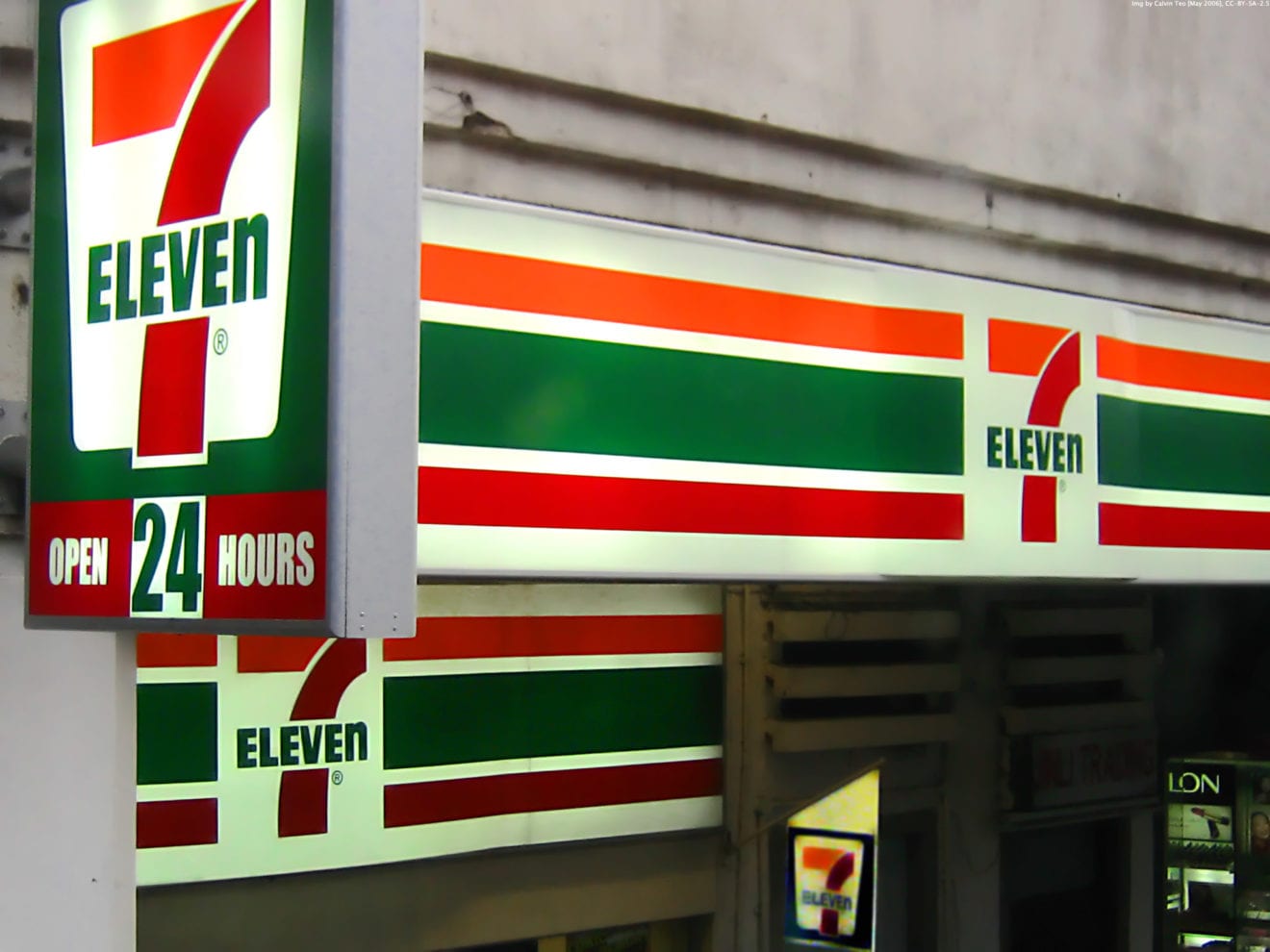
    Philippine Seven Corp, the 7-Eleven Philippines operator, says it will open 412 new stores this year.

    For the second successive year the listed company will budget P3.5 billion (US$70 million) for capital expenditure.

    The company has just opened its 2000th outlet, at Legaspi Village in Makati City.

    The majority of the new stores will be opened in Luzon, with 50 scheduled for the Visayas and 50 for Mindanao.

    Philippine Seven president and CEO Jose Victor Paterno says half the new stores will be company owned and operated, the other half franchised.

    “We will stick to the provinces first because we have experience and we know the market. The sales of the others can’t support the high rents in the metro. If we cannot pay it, we won’t enter,” Paterno said during a press briefing.

    Sales at 7-Eleven Philippines stores rose 23 per cent in 2016 to P32 billion (US$636 million).

    Paterno said there is a lot of room for the convenience store industry to expand. He anticipates the total number of all brands of c-stores in the nation will exceed 15,000 within 10 years – almost four times the current number.

  • Adidas sales soar on reformation plan

    Adidas sales soar on reformation plan

    Adidas sales have soared 18 per cent last year as the German sportswear brand plays catch-up with America’s Nike.

    For the first time in its history, Adidas’ net income topped euro 1 billion.

    In Greater China, sales soared 28 per cent year-on-year.

    “These results are proof positive that our strategy ‘Creating the New’ is paying off,” said Adidas CEO Kasper Rorsted. “2016 was an exceptional year for Adidas. We have improved the desirability of our brands and products around the globe. Building on our 2016 performance, our momentum continues and we will again achieve strong top- and bottom-line improvements in 2017.”

    Total sales reached euro 19.3 billion with operating margins up 1.3 percentage points to 7.7 per cent. Net income soared 41 per cent to euro 1.019 billion, allowing the company to promises shareholders a two euro per share dividend.

    The company is projecting another sales increase during 2017 ranging from 11 to 13 per cent, another increase in operating margin to between 8.3 and 8.5 per cent and net income up between 18 and 20 per cent to euro 1.225 billion.

    Even the troubled Reebok brand gained ground in 2016, currency-neutral sales up 6 per cent year-on-the-year, reflecting double-digit sales increases in its Classics range as well as mid-single-digit growth in the training and running categories.

    The Adidas group achieved double-digit revenue growth in nearly all market segments. In Western Europe, sales increased by 20 per cent, in North America by 24 per cent, in Russia by 3 per cent, in Latin America by 16 per cent and in Japan by 16 per cent. Revenues in Middle East and Africa also grew 16 per cent on a currency-neutral basis, reflecting double-digit growth in almost all of the region’s countries.

  • India,Indonesia to enhance ties in cyber security,intelligence

    India,Indonesia to enhance ties in cyber security,intelligence

    India and Indonesia today decided to enhance cooperation in cyber security and intelligence sharing.

    This was decided at a meeting between Minister of State for Home Kiren Rijiju and visiting Indonesian Minister for Security Gen Wiranto here.

    “The bilateral meeting with Indonesian Minister for Security and Coordination was very fruitful. The meeting focused on cyber security and intelligence sharing,” Rijiju said.

    The delegation level meeting was attended by senior officials of Ministry of Home Affairs and Indonesian Ministry of Security and Coordination.

  • Indonesia holds investment week in Singapore

    Indonesia holds investment week in Singapore

    The government is holding an event to attract foreign investors called “Indonesia Investment Week Singapore Chapter 2017,” which started on Monday and will end on Wednesday.

    It is the first Indonesian Investment Week organized outside Indonesia.

    The event at Marina Bay Sands will feature various activities, including an exhibition, a business forum and one-on-one meetings with businesspeople, said Zaidin A. Zaiti, the president director of PT Eksibit Internasional, which organized the event.

    “The event is expected to welcome more than 5,000 international business people in Singapore,” Zaidin said on Tuesday, adding that it was expected to speed up infrastructure development in Indonesia.

    Indonesian Ambassador to Singapore Ngurah Swajaya said the two countries would soon commemorate their 50th year of diplomatic relations and the Indonesian Embassy would organize various events to mark the occasion.

    “The Indonesian Embassy in Singapore welcomes Indonesia Investment Week with the hope that it will be integrated into events to commemorate the 50th anniversary,” Ngurah said.

    Ngurah said the event was supported by a number of institutions including the National Economy and Industrial Commission, the Trade Ministry’s Export Development Directorate General, the Cooperatives and Small and Medium Enterprises Ministry, the Investment Coordinating Board, Agriculture Ministry and Industry Ministry.

  • Vietnam’s 2017 coffee exports may dip on low stock as uncertainty mounts

    Vietnam’s 2017 coffee exports may dip on low stock as uncertainty mounts

    A coffee association sees shipments fall 25-30 percent this year. Coffee exports from Vietnam, the world’s second-biggest producer after Brazil, may dip in the calendar year of 2017 due to thin carryover stocks while production of the next crop could be threatened by a lack of water, industry officials said.

    A lower export volume from Vietnam, the largest producer of robusta beans, could tighten global supply of the bitter variety and inflate roasters’ production costs, given a deficit already projected for the ongoing 2016/2017 crop year ending in September.

    The world would face another coffee deficit this season, the third in a row, as production estimated at 151.62 million bags stays below consumption of 155 million bags, the International Coffee Organization said in its February report. Each bag contains 60 kilograms of beans.

    Unseasonal rain in late October and early November last year had delayed harvest of the current crop, traders said. Earlier in 2016, the worst drought in decades damaged some robusta plantations in the Central Highlands coffee belt but did not cut into overall output.

    Growers often pick robusta cherries from late October to January. Rain in most of the October-December period of 2016 had not only slowed the process but also disrupted drying.

    “The rain has caused early blossom in some areas and the flowers are often ruined during the first phase of watering,” Luong Van Tu, chairman of the Vietnam Coffee and Cocoa Association (Vicofa), said Monday. Watering has now been under way in the region comprising five provinces.

    While Vicofa has not made any output forecast for the next 2017/2018 crop, saying it was still too early, the losses of early flowers might lead to a smaller crop, Tu told.

    He has been to Dak Lak Province in the Central Highlands over the weekend to attend a national coffee festival aimed at increasing sustainable production as well as boosting consumption of the beverage and promoting tourism to the region, which provides up to 90 percent of Vietnam’s total output.

    Tu said Vietnam’s coffee exports this year could drop by around a quarter due to “very low stocks” brought forward from the previous season. He gave neither specific volume nor statistics for the stock.

    The U.S. Department of Agriculture (USDA) estimated Vietnam’s coffee stocks at the end of the 2015/2016 season at 230,000 tons, or 3.83 million bags, down 40 percent from the previous season.

    Vietnam exported a record 1.74 million tons between October 2015 and September 2016, based on Vietnam Customs data.

    Exports in 2016/2017 are projected to fall around 12 percent to 1.56 million tons, the USDA said in its December 2016 coffee report.

    Besides, higher domestic consumption and a rising export volume of finished coffee products would also reduce Vietnam’s export of semi-processed beans, industry officials said.

    In 2016, Vietnam’s coffee shipments fetched $3.34 billion, with around 10 percent coming from finished products, Tu said.

    Vietnam has one of the world’s fastest growing retail coffee markets, trailing only behind Indonesia, Turkey and India, global market intelligence Mintel said earlier this month.

    Water

    At a seminar on Sunday in Buon Ma Thuot, the capital city of Dak Lak, Vietnamese industry officials discussed ways to cope with climate change and ensure sustainable coffee production.

    Climate change, with falling rainfall in recent years, and a third of the region’s coffee trees being old have reduced yields, the Dak Lak government said in a statement late Sunday. Dak Lak is Vietnam’s largest coffee planting province, producing a third of the country’s total output.

    Rainfall in March, the peak of the six-month dry season, is forecast to be similar to the average level in recent years in Dak Lak and also in Lam Dong Province, Vietnam’s second-biggest grower, the region’s weather station said. The wet season often returns in early May.

    “Underground water is uneven this year, with some places reporting the water could recede 1.5 to two meters (5-6.6 feet) below last year’s level,” Tu said. The problem has emerged in all but the eastern part of the Central Highlands where rain has been sufficient, he said.

    Ample supply of underground water will ensure success for the third phase of tree watering, while water shortages often lead to smaller cherries, affecting overall yields and output.

    Traders said output forecasts made around June/July would provide more precise figures, after the rainy season returns.

  • Nokia providing IP/MPLS for Malaysia’s first MRT line

    Nokia providing IP/MPLS for Malaysia’s first MRT line

    Nokia has announced it has provided a mission-critical communications network for Malaysia’s first Mass Rapid Transit line.

    The company has supplied the network to systems integrator LG CNS as part of the project to provide railway operational support on the new SBK (Sungaii Buloh-Kajang) line.

    Nokia is providing an IP/MPLS network capable of providing scalable Layer-2 and Layer-3 VPN services for various railway sub-systems. The company is also providing its Network Services Platform for end-to-end network and services management.

    The northern section of the SBK line launched in December, and the southern and underground sections are due to be operational by the end of July.

    Once complete, the line will cover 51km and serve the 1.2 million residents in and around Malaysian capital Kuala Lumpur.

    “Nokia’s IP/MPLS solution for railways is designed to address railway operators’ demanding requirements in terms of performance, reliability and, most importantly, safety,” Nokia head of global enterprise and public sector for APAC Stuart Hendry said.

    “We are pleased to play such an important role in helping ensure safe, on-time and connected journeys for Kuala Lumpur’s residents.”

  • Calling All Lovebirds! HK Express Sets Off Romantic Sparks with Four-month Promotion

    Calling All Lovebirds! HK Express Sets Off Romantic Sparks with Four-month Promotion

    From romantic weekend getaways to proposals, pre-wedding photography, destination weddings and honeymoons – travel is an essential part of many couples’ love story. This spring and summer, Hong Kong’s low-fare airline HK Express is getting in on the action!

    Aimed at lovebirds, Hong Kong’s favourite low-fare airline is launching a series of monthly promotions to selected romantic destinations across Asia. Every month from March through June, HK Express routes including Busan, Jeju, Hiroshima, Takamatsu, Phuket, Chiang Rai and Guam will go on sale. For details, stay tuned to HK Express’ website and Facebook updates.

    The swoon-worthy promotion series kicks off in March with one-way fares from HKD88* to all Korean destinations – Busan, Jeju and Seoul-Incheon. Promotional fares will be on sale from 15 March (00:00) to 16 March (23:59) – valid for travel between 28 March 2017 and 28 February 2018.

    With savings from HK Express’ affordable fares, couples can splurge on other romantic details, such as hotels, unique dining experiences, exciting excursions and talented photographers.

    Starting from 8 April 2017, with seven additional flights a week to Seoul-Incheon, lovers can enjoy the best of Korean shopping and dining in the capital city, visit one of many interesting themed cafes or steal a kiss at the N Seoul Tower. Lush landscapes beckon at Jeju, which provides an idyllic backdrop for a romantic proposal or dreamy destination wedding. Couples can say “I Do” from a cliffside chapel with ocean views, or wed barefeet in a sandy cove.

    For culture aficionados, Busan is perfect for pre-wedding photography and unique wedding celebrations. The narrow alleys and pastel-hued buildings of Gamcheon Culture Village lend themselves to memorable photoshoots, while stunning sunsets await at Haeundae Beach – one of South Korea’s most beloved stretches of sand.

    From north to south Asia, the HK Express network connects travellers to 27 picture-perfect spots to fan the flames of romance.

  • Huawei to take 16.83% stake in Bakrie Telecom

    Huawei to take 16.83% stake in Bakrie Telecom

    Huawei has arranged to acquire a 16.83% stake in Indonesian operator Bakrie Telecom by converting some of the operator’s debt into shares.

    Debt-laden Bakrie Telecom issued a 7.6 trillion rupiah ($568.1 million) mandatory convertible bond in 2016 as part of a debt restructuring. Huawei has now decided to convert its holdings of the bond into shares.

    With the move, 1.23 trillion rupiah worth of Bakrie Telecom’s debt has been converted into shares.

    Bakrie Telecom president commissioner Anindya Novyan Bakrie told that the conversion will help improve the company’s financial situation for this reason, and therefore the company welcomes Huawei’s move.

    But under Indonesian trading rules, the shares to be converted will not be available for trading for one year.

    While Huawei’s Indonesian subsidiary PT Huawei Tech Investment will also have the right to elect representatives on Bakrie Telecom’s board, Anindya said no decision on this has yet been made.

    The possibility of a debt conversion was first floated last year but at the time it was suggested that Huawei would be taking just a 9% stake, with fellow creditors Protelindo and SUPR receiving shares of 7% and 6.8% respectively.

  • Second Vietnam motor show to be held in Hanoi

    Second Vietnam motor show to be held in Hanoi

    The show, the second of its kind, is held by the Vietnam Association of Motorcycle Manufacturers (VAMM), carrying the message “Free Your Wheels”.

    It will gather famous brand names from official suppliers including Honda, Piaggio, Yamaha, SYM and Suzuki as well as some imported complete built units such as Benelli, Ducati, Kawasaki, Peugeot and Harley Davidson.

    In addition, tens of brands in support industry, spare parts and other fields like finance, insurance and banking will also be present at the event.

    According to VAMM Chairman Yano Takeshi, the show aims to create a prestigious and professional playground for manufacturers to popularise their products.

    He said that it is billed as a bridge to nudge high-end motorcycles with modern technology closer to Vietnamese consumers, contributing to branching out the local motorcycle industry.

    The event is expected to welcome 150,000 visitors to experience free trial drive and join in vibrant interactive activities.

    Last year’s show displayed over 100 motorcycle models, luring 140,000 people.

  • PropNex spreads wings to Indonesia; next stop Vietnam

    PropNex spreads wings to Indonesia; next stop Vietnam

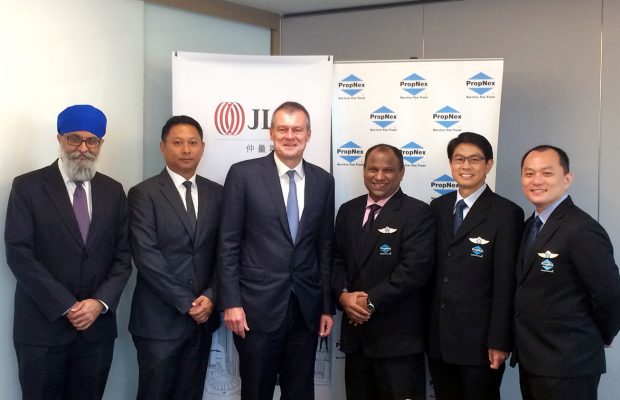
    Amid a lacklustre housing market at home, PropNex Realty, one of Singapore’s largest real estate agencies, embarked on its first regional expansion in the second half of last year with its entry into the massive Indonesian market.

    “The reasons were quite clear. We have been in existence for 17 years. The first 15 years we had no intention to go regional because the market was very much upbeat,” said PropNex CEO Ismail Gafoor in a media briefing ahead of the company’s grand opening in Indonesia next Tuesday.

    “When all the cooling measures started we straightaway had a strategy … It was time for PropNex to go and stretch its wings regionally.

    “Naturally, we selected Indonesia because a lot of Indonesians, wealthy investors, do have a home in Singapore and they always see Singapore as a safe haven, secure and a place for schools and financial businesses … Also, among the Asean countries it has the highest population of 260 million.”

    PT PropNex Realty Indonesia, set up through a master franchise arrangement, has grown to seven offices with a sales force of 600 within a few months, said Mr Ismail, adding he was confident it will cross the target of 1,000 by the end of the year.

    Affluent Indonesians continued to show keen interest in Singapore’s properties, he added.

    There have been “numerous sales” with Indonesian buyers picking up mass-market condominiums, he said, noting that there will be “natural interest” among Indonesians in the higher end of the market if prices drop further.

    PropNex has Vietnam next in its sights as it continues its regional expansion, but it is still in the early stages of finding a partner, said Mr Ismail.

    He said there has been little immediate impact from last Friday’s easing of property cooling measures and loan curbs in Singapore.

    “Over the weekend, we have not seen any push in activities or buying interest patterns. To me, these are all not the key drivers. The key drivers … would be to tweak the Additional Buyer’s Stamp Duty (ABSD) for the second and third properties for locals and foreigners,” he said.

    Nonetheless, Mr Ismail welcomed the easing as a “positive step”.

    Under the latest changes effective from last Saturday, the Seller’s Stamp Duty (SSD) will be payable if a homeowner sells his or her property within three years of purchase, down from four years previously.

    The SSD rates will also be lowered by 4 percentage points for each tier — to 4 per cent for properties sold in the third year; 8 per cent for those sold in the second year; and 12 per cent for those sold within the first year.

    In addition, the Government will no longer apply the Total Debt Servicing Ratio (TDSR) framework to mortgage equity withdrawal loans, with loan-to-value ratios of 50 per cent and below.

    The Government had imposed a series of cooling measures and borrowing curbs since 2009, to rein in a steep jump in home prices as the economy emerged from the global financial crisis.

    These measures included the SSD, ABSD, tighter loan-to-value ratios and mortgage servicing ratios, as well as the TDSR, among others.

    From the recent peak in 2013, private home prices in Singapore have fallen 11.3 per cent, while resale HDB prices declined 9.9 per cent, reflecting the sustained impact of the loan curbs and cooling measures.

  • APAC governments ramping up IoT investments

    APAC governments ramping up IoT investments

    Asia-Pacific governments are investing more in IoT technologies. A poll conducted by IDC indicates that 40% of government organizations in the region will be implementing IoT solutions in the next 12 months. Another 50% will be rolling out solutions in the next 12-24 months.

    “Improving productivity, improving time to market for products/services and improving energy efficiency reducing costs are the top benefits of an IoT solution,” said Shreyashi Pal, Market Analyst, IDC Asia-Pacific Government and Education Insights.

    “IoT enables access to new and granular data sources, empowered by swift connectivity and quick data gathering capability giving access to a wider range of information that enhances the quality of government services at a scale, which previously has been thought to be unattainable.”

    IDC’s 2016 Global IoT Decision Maker Survey, which was conducted in July and August 2016 and includes over 4,500 respondents from more than 25 countries, also reveals that Asia is expected to have 21 out of 37 safe megacities of the world. As a result 50% of government organizations plan to deploy security systems in the region while 48% plan to deploy people tracking devices.

    About 62% of the APAC companies are also considering IoT to create a strategic impact to their organizations while 25% considers IoT to create a transformational impact in their organizations. About 28% of the organizations consider security concern as the major hindrance to deploying IoT solution.

    Gerald Wang, Head, IDC Asia-Pacific Government and Education Insights, said that 2016 has seen a significant change in terms of vendors leading the IoT market.

    “The prominent IT vendors prevalent in hardware, software and network solutions equipped with an integrated cloud and analytics solution are most likely to lead the Internet of Things market. IT hardware vendors as the top players,” he said.

    “We also note that for many enterprises in the region, networking equipment vendors and systems integrators feature prominently as potential leaders while traditional IT hardware vendors are becoming the leading network equipment vendors in the IoT market.”

  • FedEx transports giant panda from United States to China

    FedEx transports giant panda from United States to China

    FedEx Express, a subsidiary of FedEx, will donate its logistical services to transport a giant panda named Bao Bao from the United States to China on 21 February 2017. Working in conjunction with the Smithsonian’s National Zoo, FedEx Express will fly the panda on a direct charter flight non-stop from Washington’s Dulles International Airport to Chengdu, China.

    Bao Bao, a female panda born in August 2013 at the Smithsonian’s National Zoo, is the offspring of Mei Xiang and Tian Tian, both currently living in the U.S.  Bao Bao will be placed in a special crate provided by FedEx and travel onboard a custom-decaled FedEx Express 777 Freighter, known as the “FedEx Panda Express.”

    “The transport of Bao Bao represents the seventh time that FedEx is transporting a giant panda, a national treasure of China,” said Eddy Chan, senior vice president, FedEx China.  “We are honored and proud to serve as the trusted carrier.  Using our extensive global network and strong operations, our professional team will surely deliver Bao Bao to Chengdu, China fast and securely.”

    In addition to donating all the necessary air transportation for Bao Bao, FedEx Express will provide ground and logistical support in Washington, D.C., including a vehicle to deliver the panda from the Smithsonian’s National Zoo to the airport.  FedEx pilots, drivers and operations specialists selected to transport the panda are among the company’s most seasoned team members.

    FedEx Express, the Smithsonian’s National Zoo, and the China organizers will work collaboratively to ensure that all necessary precautions are taken to provide a safe and comfortable flight for Bao Bao.  The Smithsonian’s National Zoo is already preparing the panda for her move to make sure she is comfortable and safe throughout her journey.  Part of the preparations includes acclimating Bao Bao to a travel crate.

    One panda keeper and one veterinarian from the zoo have been granted special flight privileges to accompany Bao Bao onboard the aircraft.  The panda team will continuously monitor Bao Bao during the trip and will travel with a supply of water, bamboo and her favorite treats, including apples, pears and cooked sweet potatoes.

    Upon arrival in Chengdu, Bao Bao will be driven to one of the bases run by the China Conservation and Research Center for the Giant Panda.  A panda keeper from the Smithsonian’s National Zoo will follow and remain with Bao Bao for a short time while she acclimates to her new home.

    Due to security regulations, the departure and arrival events for the panda will be closed to the general public.

  • China may roll back electric vehicle quotas as industry pushes back

    China may roll back electric vehicle quotas as industry pushes back

    China is considering easing proposed quotas aimed at producing more electric vehicles, as Beijing gets pushback from the automotive industry over the scale and pace of the plans.

    If adopted, proposed changes under discussion could see a target of new energy vehicles (NEV) making up 8 percent of sales next year pushed to 2019, two auto executives said.

    The changes would lower targets from a draft policy released in September requiring 8 percent of automakers’ sales to be battery electric or plug-in hybrid vehicles by 2018, rising to 10 percent in 2019 and 12 percent in 2020.

    Any loosening of NEV targets would mark a pull back by Beijing, which has faced opposition to the planned targets as it looks to drive its domestic carmakers to overtake global rivals in the ‘green’ vehicle sector.

    Automakers and industry bodies have said the targets are too tough and could hurt manufacturers’ interests. New energy vehicles last year accounted for just 1.8 percent of sales in the world’s biggest autos market, according to Reuters calculations based on official data.

    “It’s normal to make revisions as it’s a draft plan,” An Jin, chairman of Anhui Jianghuai Automobile Group (JAC Motor) , said on the sidelines of the National People’s Congress in Beijing.

    He said he was aware of talks to revise the quota targets, but said nothing was set in stone. “JAC hasn’t been told what revisions might be made to the draft, but I think it is possible the draft will be changed after the discussions,” he said.

    “Whether the whole market can hit this quota by 2018 depends a lot on the strength of government policy. If it’s strong then we should be able to surpass the targets,” An said, “(But) if you consider China’s infrastructure and the transformation of China’s auto sector, then perhaps the pace will have to slow.”

    TWO PERCENT CUT
    Two executives familiar with the plans told Reuters the government was considering options for lowering the requirements.

    One idea was to reduce the quota requirement by 2 percent each year, cutting the 2018 requirement to 6 percent, said a China-based government relations official at a major global automaker. It would then be 8 percent in 2019 and 10 percent in 2020.

    Another option would be to push back each target by a year, with the 8 percent quota starting from 2019, an executive at a Japanese car maker said.

    Both asked not to be named due to the sensitivity of the matter and because the draft was still under consideration.

    The overall policy includes quotas for plug-in cars, targets for average fuel economy requirements, and a credit trading system to promote green energy cars while penalizing petrol cars.

    The two people said the quota stand-off was tied to a disagreement between the Ministry of Industry and Information Technology (MIIT) and China’s top state planner, the National Development and Reform Commission (NDRC).

    MIIT, which regulates manufacturers, supports a more flexible credit trading system favoured by automakers. The NDRC is more aggressive in promoting a transition to electric vehicles, pushing the introduction of the stricter quotas.

    An NDRC spokesman said the body played a “small role” when the draft was open to public for discussion. MIIT did not immediately respond to Reuters’ requests for comment.

    China has strongly supported and subsidized electric vehicles, but is gradually swapping out incentives for hard targets automakers must meet. The central government cut subsidies 20 percent this year, a first reduction towards eliminating them by 2020.

  • South Korea Invests in Infrastructure, Electricity Projects

    South Korea Invests in Infrastructure, Electricity Projects

    The Investment Coordinating Board (BKPM) said that South Korean investors will invest in numerous sectors in Indonesia. BKPM chief Thomas Trikasih Lembong said in this week alone, several project agreements will be signed.

    “I’m expecting for several infrastructure and electricity projects to be signed this week. The value is about US$200 million (approx. Rp2.6 trillion),” Thomas said during the sidelines of the Indonesia-Korea Business Summit at the Shangri La Hotel in Jakarta, Tuesday, March 14, 2017.

    According to Thomas, many South Korean factories have opened in Indonesia, such as textile and footwear factories. The factories’ operation has employed more than 500,000 people.

    At the Indonesia-Korea Business Summit, the BKPM and the Korea Trade Investment Agency (KOTRA) signed a MoU as a way to promote investments between the two nations.

    “We hope this will help both Indonesian and South Korean companies in developing their business,” Thomas said.

    Thomas said that most of the country’s investments are in the manufacturing sector, accounting for 71 percent of their investment value from 2012 to 2016.

    The investments are aimed at both countries’ leading sector, and will cover areas including information exchange, documentation, publication, and others.

    South Korea is Indonesia’s third-biggest investor today after Singapore and Japan. From 2012 to 2016, South Korean companies invested a total of US$7.5 billion for 7,607 projects in Indonesia.