Author: Mei Ling Tan

  • Genuine Broaster Chicken launches restaurant in Lucknow

    Genuine Broaster Chicken launches restaurant in Lucknow

    US restaurant chain Genuine Broaster Chicken (GBC) has launched at Singapore Mall in the Uttar Pradesh capital of Lucknow.

    It is the region’s first outlet of the fast-food chain, and franchise owner Atul Maurya says he plans to expand the brand throughout Uttar Pradesh and Uttarakhand this year.

    The Genuine Broaster Chicken company entered India two years ago in a partnership with F&B franchise-management company Yellow Tie Hospitality. The first outlet opened in Mumbai, with plans to roll out more than 300 outlets in 40 cities across India by next year.

    Founded in 1953, Genuine Broaster Chicken is known for serving pressure-fried chicken, but also offers burgers. It has a presence in 36 countries.

  • Mamonde launches Singapore site on Lazada

    Mamonde launches Singapore site on Lazada

    Korean beauty products brand Mamonde has launched an e-commerce site on Lazada to introduce its skincare and makeup products into Singapore.

    Mamonde’s USP is using flower extracts in its products. Camellia, hibiscus, honeysuckle, lotus and magnolia blooms are hand-picked and frozen or heat dried, with the active ingredients then being extracted.

    Mamonde Lazada SG

    There are plans to also open a physical store in Singapore eventually, says Amorepacific, which also owns the brands Etude House, Innisfree, Laneige and Sulwhasoo.

    “Launching digitally first in Singapore was a deliberate move that allows us to observe consumer purchasing habits before scaling up operations in the market,” says Amorepacific Asean regional head Robin Na.

    “While the beauty industry in Singapore is mature, we believe that consumers there are still hungry for new brands.”

  • Nike develops performance hijab

    Nike develops performance hijab

    Nike has developed a performance hijab for Muslim women athletes.

    The head covering, called the Nike Pro Hijab, has a single-layer pull-on design made from lightweight polyester in dark, neutral colors. Tiny holes in the fabric make it breathable while remaining opaque.

    Nike says it began work on the hijab after Muslim athletes complained about wearing a traditional head scarf during competition. The design process took 13 months, and the final product will be ready to roll out in the company’s spring 2018 collection.

    Meanwhile, a prototype is already being worn by Emirati figure skater Zahra Lari, who says few hijabs work for her when performing. “But once I put on the Nike hijab and took it for a spin on the ice, I was blown away by the fit and the light weight.”

    News of the new product comes just weeks after Nike released a commercial in the Middle East featuring five female professionals from different parts of the Arab world pursuing their athletic dreams while a voice asks, “What will they say about you?” – a rhetorical question many young Arab women face if they step out of cultural and traditional norms. The video went viral with million of views on social media, prompting a debate over its message.

  • L’Oréal named 2017 World’s Most Ethical Company by the Ethisphere Institute

    L’Oréal named 2017 World’s Most Ethical Company by the Ethisphere Institute

    L’Oréal, the world’s leading beauty company, has been recognized as 2017 World’s Most Ethical Company by the Ethisphere Institute, a global leader in defining and advancing the standards of ethical business practices.

    L’Oréal has been recognized for the 8th time and is one of only 2 in the Health and Beauty industry, underscoring their commitment to leading ethical business standards and practices. 

    “Culture is the foundation of a high performing, innovative and sustainable company” said Jean-Paul Agon, Chairman and Chief Executive Officer of L’Oréal. “I am proud that ethics is the key pillar of our culture and leadership, requiring our teams throughout the world to always include ethics in the decisions they make”.

    “Receiving this recognition from Ethisphere for the 8th time is a source of pride for everyone at L’Oréal. Ethics is the new decision-making framework and we are convinced that a strong culture of integrity is an essential component for long-term success” said Emmanuel Lulin, Senior Vice-President and Chief Ethics Officer.

    Twenty-seventeen is the eleventh year that Ethisphere has honored those companies who recognize their role in society to influence and drive positive change, consider the impact of their actions on their employees, investors, customers and other key stakeholders and use their values and culture as an underpinning to the decisions they make every day. 

    “Over the last eleven years we have seen the shift in societal expectations, constant redefinition of laws and regulations and the geo-political climate. We have also seen how companies honored as the World’s Most Ethical respond to these challenges. They invest in their local communities around the world, embrace strategies of diversity and inclusion, and focus on long term-ism as a sustainable business advantage,” explained Ethisphere’s Chief Executive Officer, Timothy Erblich. “Congratulations to everyone at L’Oréal for being recognized as a World’s Most Ethical Company.” 

    Methodology & scoring

    The World’s Most Ethical Company assessment is based upon the Ethisphere Institute’s Ethics Quotient® (EQ) framework which offers a quantitative way to assess a company’s performance in an objective, consistent and standardized way. The information collected provides a comprehensive sampling of definitive criteria of core competencies, rather than all aspects of corporate governance, risk, sustainability, compliance and ethics.

     Scores are generated in five key categories: ethics and compliance program (35%), corporate citizenship and responsibility (20%), culture of ethics (20%), governance (15%) and leadership, innovation and reputation (10%) and provided to all companies who participate in the process.

    ­­

    Honorees

    The full list of the 2017 World’s Most Ethical Companies can be found at: https://worldsmostethicalcompanies.ethisphere.com/honorees/.

    Best practices and insights from the 2017 honorees will be released in a series of infographics and research throughout the year. Organizations interested in how they compare to the World’s Most Ethical Companies are invited to participate in the Ethics Quotient.

  • EU expects free trade pact with Vietnam to take effect early 2018

    EU expects free trade pact with Vietnam to take effect early 2018

    The European Union is trying to capitalize on free-trade interest amid gloom over Trump policies.

    The European Union is seeing increased impetus around the world to move forward with Free Trade Agreements (FTA) with the bloc, which will make the most of uncertainty over the outlook for U.S. trade policy, the EU’s trade envoy said late last week.

    The EU was close to finishing or implementing FTAs with Japan, Vietnam and Singapore and was readying to start talks with Australia, New Zealand and Chile – all members of a U.S-inspired Trans-Pacific Partnership (TPP) devastated by Donald Trump’s decision to pull Washington out of the deal on day three of his presidency.

    “Today, there is political opportunity to say that those of us who believe in open markets and good trade, we are willing to do trade agreements,” EU Trade Commissioner Cecilia Malmstrom told in an interview.

    “Whether that (TPP) is dead, or partially dead, it is not for me to judge. But we have seen an increase of willingness to step up trade agreements.”

    One project thrust back on the table is an FTA between the EU and the Association of Southeast Asian Nations (ASEAN) that was abandoned in 2009 due to disparities in wealth and standards between its 10 markets.

    Malmstrom also said it should not be assumed an EU-U.S. trade deal had collapsed, despite indications the Trump administration would pursue a protectionist agenda.

    EU and U.S. officials were negotiating for more than three years on a Transatlantic Trade and Investment Partnership (TTIP) and that could be easily resumed, she said, and should not be impacted by Britain’s looming departure from the EU.

    “We have left in a tidy order, when we stopped negotiating before the change of administration,” she said. “It makes a lot of sense to facilitate trade between the EU and the U.S.”

    She added: “We need to be patient. But while waiting for more clarity from the American administration, there are lots of other partners as well.”

    Malmstrom said ASEAN, a region with combined $2.6 trillion GDP and some of the world’s fastest-growing economies, had become integrated “in an impressive way.”

    EU figures show trade between the EU and ASEAN region was worth $220 billion last year. The EU is its biggest source of investment, according to the EU-ASEAN business council.

    FTAs with Vietnam and Singapore should come into force early next year, Malmstrom said, while negotiations with Indonesia and the Philippines were “at full speed” and discussions had taken place about reviving plans for an FTA with Malaysia.

    Malmstrom said establishing a bloc-to-bloc trade deal would be a challenge, so an FTA with ASEAN might be less comprehensive that others.

    “There’s still a lot of differences between the richest and poorest countries here, so there will have to be different levels and it will not be as ambitious,” she said.

  • Aeon to spend $200 mln for 2nd mall in its Hanoi expansion plan

    Aeon to spend $200 mln for 2nd mall in its Hanoi expansion plan

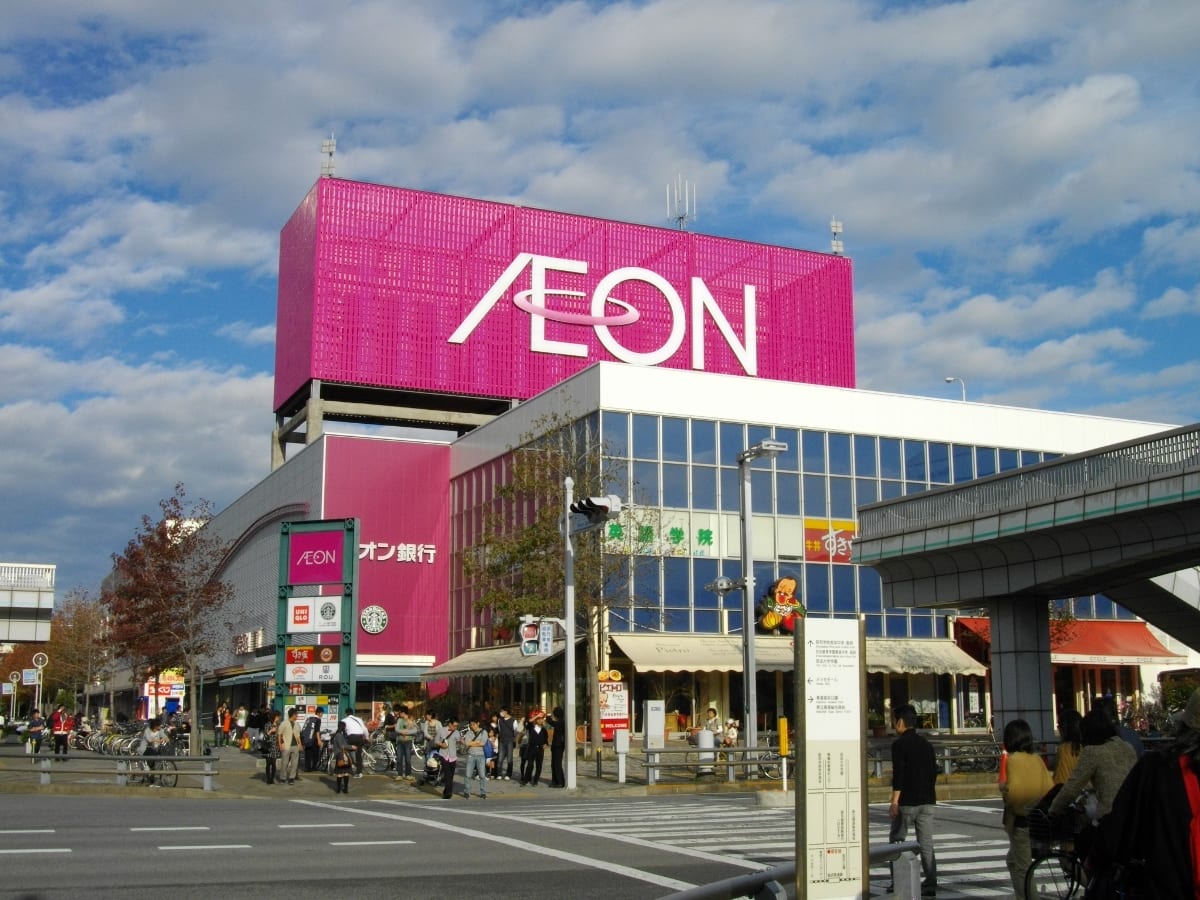
    Vietnam is considered Aeon’s priority destination in Southeast Asia with the largest number of shopping centers to date.

    Japanese retailer Aeon is planning to pour $200 million into its second shopping mall in Hanoi this year, a company official said, which would see its investment in Vietnam’s capital nearly doubling.

    The new facility covers an area of 9.5 hectares (23.5 acres) in Ha Dong District, Hanoi’s largest suburb by population. It is scheduled to come into operation at the end of 2019.

    That will be the fifth shopping mall Aeon has opened in Vietnam, after its first unit was launched outside Ho Chi Minh City’s downtown in January 2014.

    Vietnam’s retail market, drawing attention by retail giants such as Japan’s 7-Eleven, Swedish fashion firm H&M and Thailand’s Central Group, is listed in the top five in Southeast Asia and ranked 11th globally in terms of growth rate, based on the A.T. Kearny 2016 Global Retail Development Index.

    Vietnamese people are gradually shifting away from traditional retail channels to modern retail stores and centers. Spending at supermarkets, convenience stores, and shopping malls, as opposed to traditional local shops, is expected to rise to 40 percent of consumer spending by 2020, from 25 percent currently, government data show.

    The government has projected the retail market’s value to hit $179 billion by 2020, up 52 percent from last year.

    Aeon is the largest retailer in Asia with a network of around 300 consolidated subsidiaries and 26 equity-affiliated companies, ranging from convenience store chains and supermarkets to shopping malls and specialty stores.

    In Southeast Asia outside Vietnam, the Japan-based company is also running one shopping mall in Cambodia and two others in Indonesia. It plans to open the second facility in Cambodia in the summer of 2018 and two more in Indonesia within that year.

  • Footwear, leather promotion conference scheduled this week

    Footwear, leather promotion conference scheduled this week

    A footwear and leather export promotion conference will be held in HCM City next week. In 2016, the sector earned an export revenue of US$16.2 billion, representing an year-on-year increase of 8.8 per cent.

    The information was released on Friday by the Viet Nam Leather, Footwear and Handbag Association (Lefaso), which said this would be an opportunity for the Vietnamese footwear sector in general and Lefaso in particular to promote images and improve prestige and positions in the Asian region and the world.

    The conference will also give an opportunity for local businesses to meet and share experiences with local partners, approach foreign importers and investors and seek co-operation agreements.

    Some 300 firms manufacturing footwear and materials for the industry inside and outside Viet Nam are expected to participate in the conference, which will focus on issues such as footwear planning and related policies, investment environment, impact of free trade deal on the sector, labour relationship management in the labour-intensive sector, and supply chain optimisation to boost competition and sustainable development.

    They will also discuss the state of the industry in Viet Nam in the context of integration, market demand and technical requirements for the industry to benefit from free trade deals.

    Viet Nam’s leather and footwear industry expects to reach a total export value of US$18 billion this year, up 10 per cent from last year, the association said.

    In 2016, the sector earned an export revenue of $16.2 billion, representing an year-on-year increase of 8.8 per cent.

    Of which, $13 billion came from footwear and the remaining was from handbags and leather items, marking respective annual rises of 8.2 per cent and 11.1 per cent.

  • Grab launches carpool services & GrabShare in Indonesia

    Grab launches carpool services & GrabShare in Indonesia

    GRAB on March 13 launched GrabShare in Indonesia, making it the fourth Asean country to offer the service after Singapore, Malaysia, and the Philippines. It was launched in the three countries in December 2016.

    GrabShare will pair two different passenger orders with similar routes in a single trip. This feature allows for a maximum two stops and each passenger may only bring one person with them. There will then be four people in one car and drivers will wait up to three minutes for each passenger at pick-up points.

    “We seek the chance to optimise the use of cars to address Indonesia’s heavy traffic congestion. After it was launched in Singapore, Malaysia, and the Philippines, GrabShare has been effective in attracting more new riders to the Grab platform. We tailored GrabShare to suit drivers and passengers’ needs and made it a seamless and responsive experiences,” says Grab Indonesia managing director Ridzki Kramadibrata.

    Conceptualised, designed and engineered across Grab’s three research and development centres in Singapore, Seattle and Beijing, GrabShare’s matching algorithm ensures that passengers get to their destinations in the shortest possible time.

    The algorithm calculates and determines a match by factoring in the closest available drivers, travel time, overlap of trip routes, detour distance and current traffic conditions before intuitively sequencing pick-ups and drop-offs.

    “Commuters in Jakarta indicated that they are open to carpooling as it offers a more pocket-friendly fare and enables them to socialise with new friends. Drivers had the same feedback and wanted the option of taking short breaks between trips,” adds Ridzki.

    This launch in Indonesia will impact Grab users and drivers. For drivers, GrabShare has the potential to double their income since they will earn the fare for two trips at one go as well as saving on costs and time.

    For passengers, GrabShare will be priced up to 50% cheaper than GrabCar Economy fares and users can bring a friend on the rides at no additional cost, as long as both share the same pick-up and drop-off locations. Grab also provides insurance for drivers and users.

    Local market strategy

    Every city’s traffic conditions and transportation patterns are different. Grab came up with a strategy where all their features have to provide specific solutions for particular cities.

    “At Grab, we embrace and implement a hyperlocal approach to every single aspect of our business. We value the genuine meaning behind local Indonesian words therefore the name of our service, GrabShare, comes from careful consideration as the word ‘share’ holds a deep cultural meaning for Indonesians.

    “Indonesians are known to be very sociable and friendly with smiley greetings and mutual assistance as part of their core values and identity, as well as common etiquette. Through this campaign, we want to rejuvenate this cultural value and evoke the simple joy of sharing stories as well as rides with others,” explains Grab Indonesia marketing director Mediko Azwar.

    GrabShare is currently available in Jakarta, Bogor, Depok, Tangerang and Bekasi.

  • President Jokowi receives Toyota Motor executives

    President Jokowi receives Toyota Motor executives

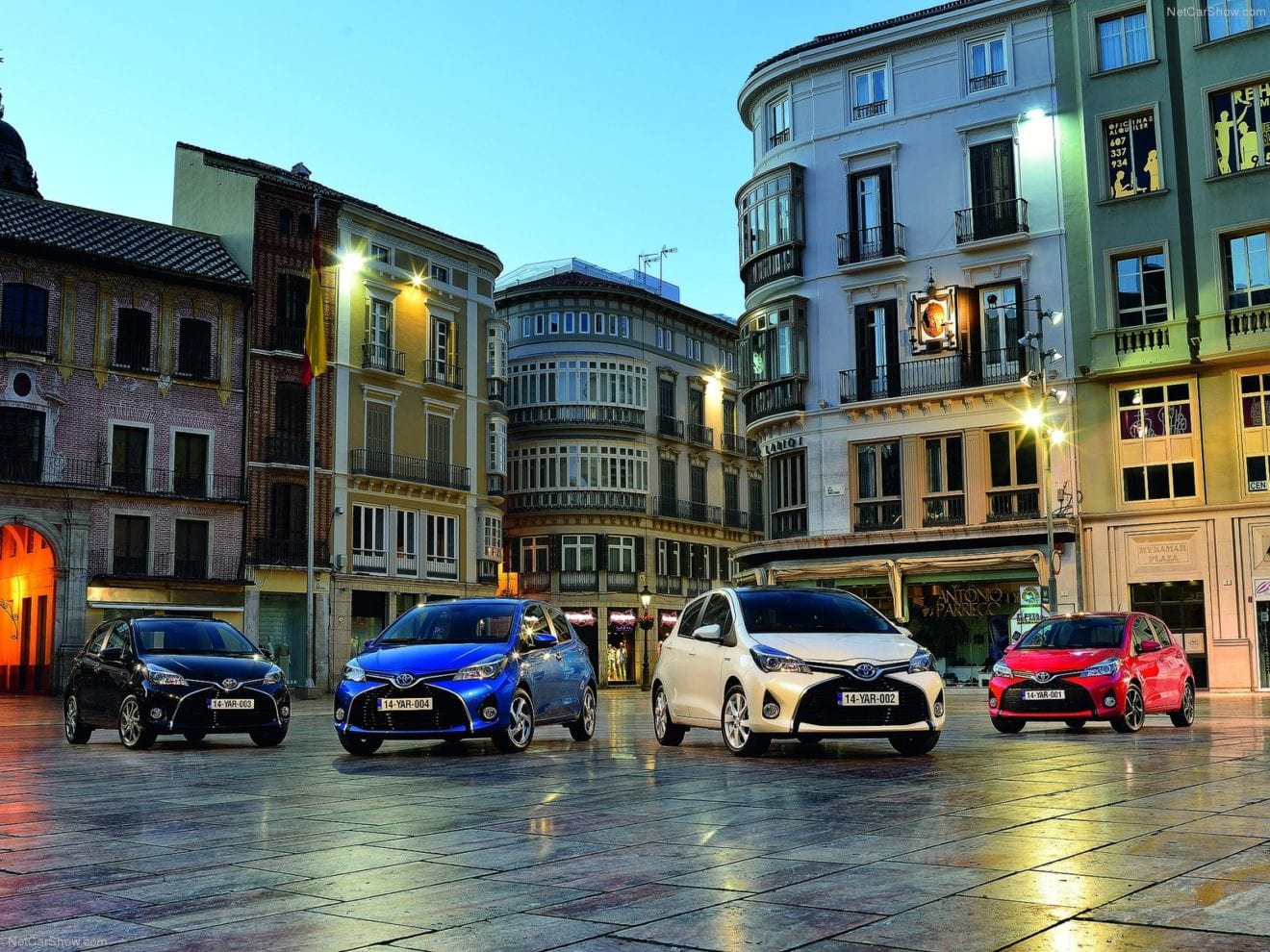
    President Joko Widodo (Jokowi) received Toyota Motor Corporation executives led by the companys president, Akio Toyoda, at Merdeka State Palace here on Monday.

    “In 2015, Jokowi visited Toyota in Japan, and today we have presented a report on the several commitments of Toyota in Indonesia,” PT Toyota Motor Manufacturing Indonesias (TMMIN) deputy president director Warih Andang Tjahjono said after the meeting.

    He stated that Toyota has expressed its commitment to continue to participate and contribute to the development of automotive industry in Indonesia through investment, exports, manpower, and human resource development.

    Tjahjono was introduced to the president as the new president director of TMMIN. He would replace Masahiro Nonami starting from April 1, 2017.

    Warih would be the first local person to be in the top position of the affiliation company of Toyota Manufacturing in the Asia-Pacific region.

    Nonami, who had held the post as TMMIN president director since 2010, would take over a new position in TMMIN.

    The meeting between the president and Toyota Motor Corporation executives lasted around 30 minutes from 9.35am to 10.15am

  • Garuda Indonesia Travel Fair 2017 Records IDR457 Tln in Transactions

    Garuda Indonesia Travel Fair 2017 Records IDR457 Tln in Transactions

    The first phase of Garuda Indonesia Travel Fair (GATF) 2017 which is held on March 10-12, 2017 in 24 cities generates positive results by achieving a total transaction amounting to IDR457 billion, surpassing the target set at IDR380 billion. The largest revenue contributors come from the city of Jakarta, Lombok and Denpasar.

    VP Corporate Communications of Garuda Indonesia Tbk (GIAA), Benny S Butarbutar, in remarks, Monday (3/13/2017), said successful implementation of the GATF 2017 phase-1 shows public enthusiasm in traveling needs at an affordable price is still very high.

    “In addition, successful implementation of the ninth GATF is certainly not without the support and hard work of all fellow employees of Garuda Indonesia Group. We wished that the implementation of the next 2017 GATF will be more successful,” he added.

    The cities which become favorite destinations for visitors are Singapore, Hong Kong, Tokyo and Seoul for international routes; for domestic destination are Bali, Jogjakarta, Surabaya and Lombok.

    Implementation of GATF in Jakarta this time also showed an increase, reaching 74 thousand visitors, compared to the same period last year of 60 thousand visitors.

    Sporting the theme ‘Digital Experience’, Garuda Indonesia in 2017 GATF Phase 1 introduced LINE ID ‘Official Garuda Indonesia’, which is the only LINE ID for Indonesian airlines at this time.

    “By adding official account of Garuda Indonesia in LINE, users of Garuda Indonesia’s services can enjoy various promotional programs from Garuda Indonesia throughout the year,” he said.

  • Vietnamese start-ups receive a $250-mln boost last year

    Vietnamese start-ups receive a $250-mln boost last year

    Fledging startups are concerned most over a lack of funding to get their idea off the ground. Total venture capital investments into Vietnamese start-ups soared 78 percent to about $240 million last year, an official from start-up accelerator program Topica Founder Institute said Friday.

    The Southeast Asian country has an ambitious plan to transform itself from an offshore manufacturing hub for foreign companies into a major player in the global digital economy.

    The government has started adjusting business policies to pivot around small and medium-sized companies and encouraged a start-up bloom.

    Vietnam launched a project last year to support fledging local companies, under which the government will help fund about 2,000 start-ups by 2025.

    Topica Founder Institute statistics showed that as many as 60 percent of investment deals that Vietnamese start-ups managed to seal last year came from venture capitalists.

    Meanwhile mergers and acquisitions accounted for 30 percent of start-ups’ funding and the remaining were financed by private equity firms.

    Just six years ago, Vietnam recorded only 10 start-up investments. The number of successful deals increased seven-fold to 67 deals in 2015, according to Topica Founder Institute.

    Among the most notable investments was South Korea’s UTC Investment’s $38-million acquisition of a controlling stake in VNPT EPay, marking the biggest deal last year, the program said.

    Momo, a local payments and online wallet company, has raised an unprecedented $28 million from Standard Chartered and Goldman Sachs.

    A lack of funding to help start-ups get their idea off the ground is their most concern, startup experts have said.

    Some argued that institutions like the stock market or commercial banks are either not designed to financially support idea-stage companies or have insufficient resources to do so.

    Although there are banks that focus on small and medium-sized companies, they really are not able to offer financing to early-stage companies which often don’t have a track record of reliable annual revenues or a history of good credit.

    Hence start-ups are more likely to seek funds from other resources like venture capital investors and private equity firms.

  • NEC updates postal automation system for Hongkong Post

    NEC updates postal automation system for Hongkong Post

    In recent years, Hong Kong has witnessed a rise in the number of postal items addressed in traditional Chinese characters. This has in turn boosted the need for automated sorting and processing of addresses written in traditional Chinese characters in addition to those handwritten or printed in English.

    This new function has been introduced to 15 systems delivered to Hongkong Post by NEC on several occasions since 2008 that are currently in operation at the Central Mail Centre in Kowloon Bay. The introduction of this function enables the automatic sorting and processing of up to 564,000 postal items with addresses written in traditional Chinese characters per hour, thereby contributing to the improvement of Hongkong Post’s operational efficiency.

    NEC has been doing business with Hongkong Post for approximately 30 years since the postal operator’s introduction of a postal automation system in the latter half of the 1980s. The introduction of this function was made possible by the high acclaim NEC has received over the years for its achievements and technological capabilities.

    NEC began developing its postal automation system business in 1961, and has since then delivered systems to postal operators in more than 50 countries around the world. In Japan, domestic postal operators have utilized a function for reading and sorting addresses written in Chinese characters as part of postal automation processing since the 1980s. The introduction of this function by Hongkong Post was made possible by applying the wealth of knowhow NEC has developed in Japan over the years in reading and sorting addresses written in Chinese characters. Moreover, it has resulted in increased efficiency and a reduction in the amount of time needed for processing.

  • Hong Kong government to boost cinema numbers through land lease terms

    Hong Kong government to boost cinema numbers through land lease terms

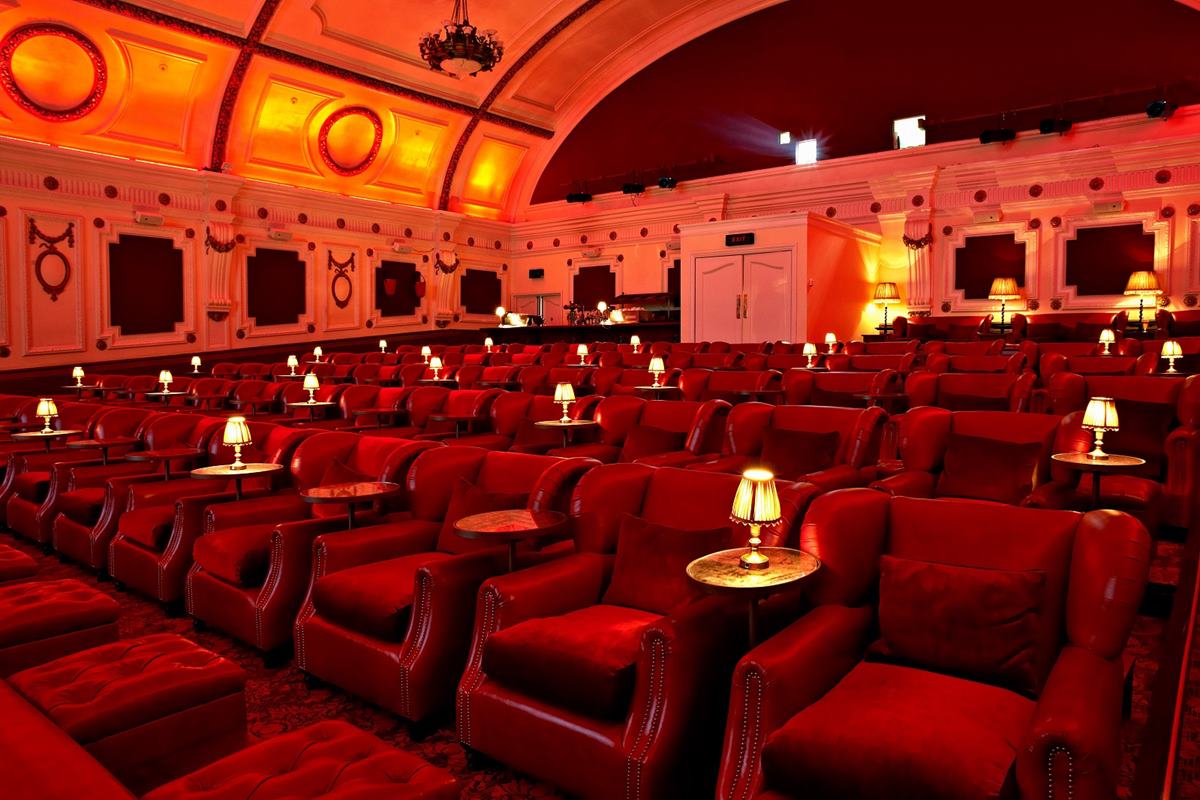
    It will be mandatory for two commercial sites earmarked for sale in Kai Tak and Sha Tin to include cinemas in their land leases, as the government attempts to shore up the creative industries amid soaring rents.

    Rules set a fixed number of seats for cinemas, while also stating that future modifications can only be made after seven years, and must be vetted by the government.

    Industry insiders welcomed the move, but a property advisor questioned if the market should be left to adjust on its own.

    Three years in a row, Chief Executive Leung Chun-ying has promised in his annual policy address to back creative industries by “facilitating cinema development through land sales and planning”.

    The idea came to a head on Monday when two sites planned for sale in Kai Tak and Sha Tin will make the inclusion of cinemas mandatory.

    “In identifying suitable land for the development, we believe that it will be more synergetic if we can find places where there are, for example, restaurants and cafes, together with shopping facilities,” Secretary for Commerce and Economic Development Greg So Kam-leung said.

    The exact locations of the sites were not known, but So added that the two plots of land would be up for sale in a few years “if everything went smoothly”.

    Asked how many cinema seats the government planned to impose in the land lease clause, the minister said studies remained at a preliminary stage and the final proposal would depend on the prevailing business environment.

    According to the Census and Statistics Department, revenue from cinemas doubled from HK$950 million in 2005 to HK$1.9 billion in 2015.

    The government would also look into the feasibility of a cinema complex at the Tourism Node in the Kai Tak development – a 5.9-hectare hub for retail, hotel and office purposes – as well as the West Kowloon Cultural District.

    Norman Chan Hok-yan, film director and lecturer at Baptist University’s academy of film, welcomed the move, saying cinema operations in Hong Kong have become increasingly difficult due to high rents.

    “The high land price policy undertaken by the government in recent years contributed to the falling cinema numbers,” he said.

    While there were now cinemas in 17 of Hong Kong’s 18 districts, Chan said most cinemas were smaller in size compared to the golden age of Hong Kong films in the 1970s and 1980s.

    “Back then there were seven to eight cinemas in Mong Kok alone, each accommodating 500 to 600 guests. Now most cinemas can hold 200 to 300 people only,” Chan added.

    But Helen Mak, head of retail services at property adviser Knight Frank, questioned if such a rigid requirement should be imposed.

    “Developers can always do the math and work out the best business model … the retail industry is always rapidly changing. Who knows what the market condition would be by the time these plots come up for sale?” she said.

    Asked about the recent closure of a cinema in Tung Chung, Mak said: “If it was popular, I’m sure the mall’s operator would not drive it out.”

  • Indonesia’s BCA posts record annual profit, buoyed by tax amnesty

    Indonesia’s BCA posts record annual profit, buoyed by tax amnesty

    Bank Central Asia (BCA) on Monday reported an all-time high annual net profit, as Indonesia’s key tax amnesty programme helped to lower cost of funds for the country’s biggest lender by market value.

    BCA posted a 2016 net profit of 20.6 trillion rupiah (S$2.17 billion), up 14.4 per cent from a year ago. This was a record high and also slightly above an average estimate of 20.0 trillion rupiah from 21 analysts.

    Indonesia’s tax amnesty scheme, launched last July and aimed at bringing back billions of dollars stashed abroad by citizens, boosted the funds at BCA’s current accounts and saving accounts (CASA) in the second half of 2016, the bank said in a statement.

    “Tax amnesty funds were parked at CASA,” BCA President Director Jahja Setiaatmadja told reporters. “What’s positive is that our cost of funds is low because our interest rate is low.”

    However, some of those funds were only “transitioning” at BCA and would likely be placed eventually in assets including property and government bonds, Mr Setiaatmadja said.

    At the end of 2016, BCA’s gross non-performing loans (NPL) stood at 1.3 per cent, one of the lowest in Indonesia’s banking sector.

    BCA’s rival, Bank Mandiri, last month reported its lowest annual net profit in five years due to an increase in provisions. Mandiri’s gross NPL of 4.0 per cent was the highest since 2008.

  • Wonderful Indonesia wins best exhibitor title in Berlin

    Wonderful Indonesia wins best exhibitor title in Berlin

    Indonesias tourism brand “Wonderful Indonesia” won “The Best Exhibitor 2017” title at the worlds biggest tourism exhibition in Berlin, Germany.

    Indonesias tourism minister Arief Yahya hailed the award announced at around 2.30am on March 12.

    “This is a pride achievement. ITB (International Tourismus Borse) Berling is the worlds biggest tourism exhibition attended by 187 countries, 10,000 exhibitors, 180,000 visitors in Messe, Berlin. All tourism industries, tour and travel agencies, airlines, cruise service, hotels, resorts, attractions, governments, associations gathered at ITB Berlin. Wonderful Indonesia has shown its class at the world level,” he said.

    This is the second title after the one Indonesia won in 2016 when Wonderful Indonesia successfully came out as the Best Exhibitor 2016 beating “Imagine” of South Korea which was placed second, “Incredible of India at the third place, followed by Maldives, Sri Lanka and the Philippines.

    This year Wonderful Indonesia topped South Koreas “Imagine” and Thailands “Imagine”.

    Malaysia was ranked 10th out of 75 countries and 1,466 exhibitors taking part in the event.

    Indonesias participation along with a number of delegations in the event from year to year has proven able to increase transactions significantly.

    In 2015 Indonesia was able to record transactions worth Rp4.2 trillion and in 2016 it increased to Rp6.5 trillion. “The target for 2017 was set at Rp10 trillion,” the minister said.

    Next year he wished Indonesia would be able to win the Best of the Best title and become the champion of five continents.

    This year Indonesia set up a 487 square meter pavilion to present various art exhibitions including dances from Papua, Bali, Betawi and Aceh.

    At the event Indonesia raised the theme of maritime and cultural diversity which was expected to be able to give the public in Europe a full picture of Indonesia.

    Deputy for overseas tourism marketing I Gde Pitana said he had promoted Wonderful Indonesia more intensively at ITB Berlin by cooperating with Indonesian industry players.

    “We brought a delegation consisting of 135 travel agencies, hotel and regional tourism service representatives,” he said.

    The Indonesian pavilion at Hall 26 A Number 120 was storied in the form of a traditional Phinisi ship and Wae Rebo traditional house of Flores.

    He said the two icons represented the theme of Wonderful Indonesia which was “Maritime and Cultural Diversity.”

    Pitana hoped Indonesias tourism brand Wonderful Indonesia would become more popular following the participation in ITB Berlin to make more foreign tourists to come to the country.