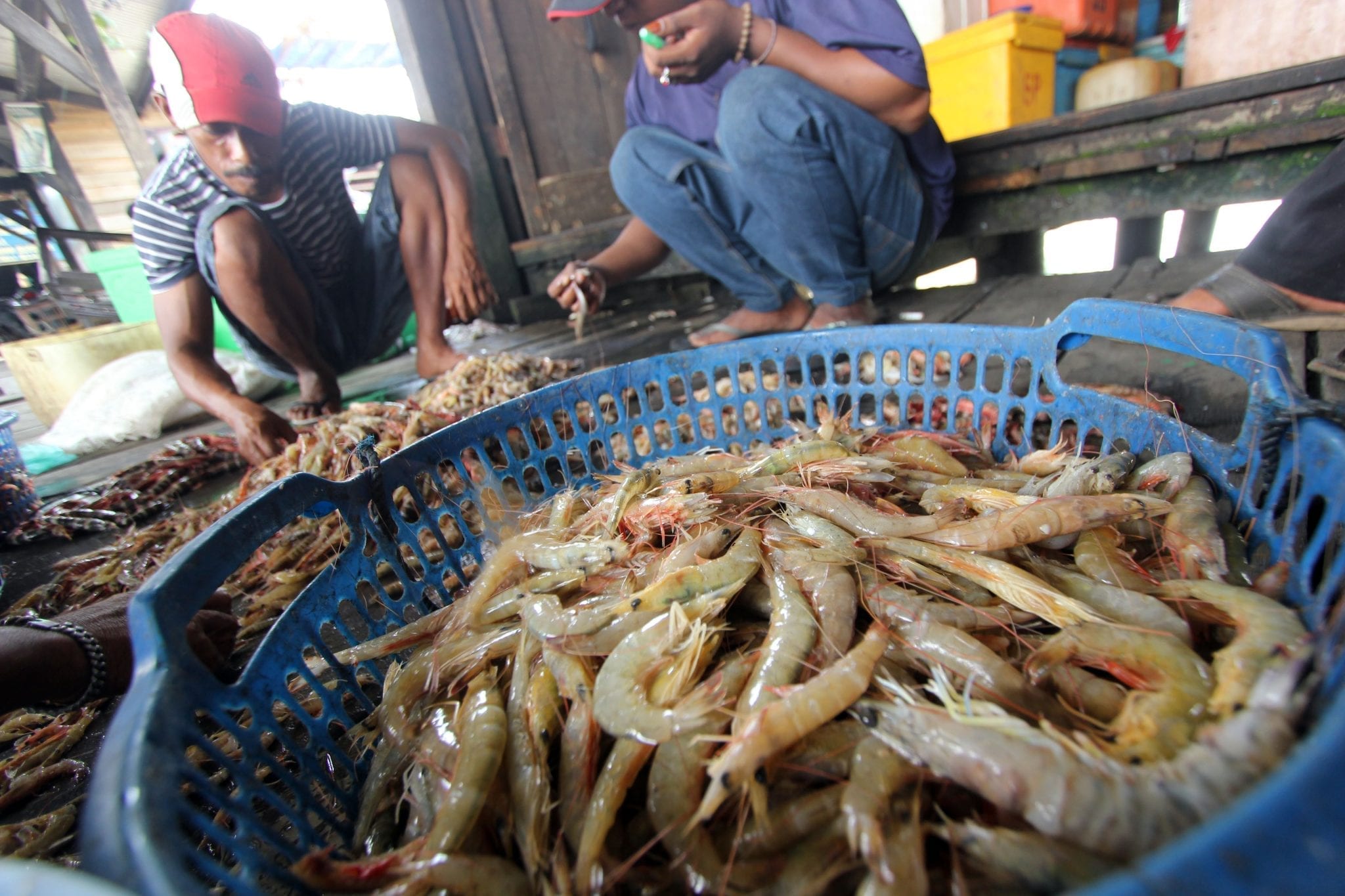
The Vietnam government contends the ban by the Australian Department of Agriculture on raw imports is ‘causing serious damage’ to the country’s shrimp farmers and exporters, and has requested it be reversed.
Australian Agriculture Minister Barnaby Joyce announced a six-month suspension on the import of raw shrimp this past January, following an outbreak of white spot disease in the northeast state of Queensland.
Vietnam Deputy Minister of Industry and Trade, Tran Quoc Khanh, has now asserted the ban has damaged the country’s shrimp farming industry that on average exports roughly US$55 million worth of raw product to Australia annually.
Deputy Minister Tran recently told Australian ABC news that the ban is not in line with common practices and the spirit of nurturing and enhancing the existing good trade relationship between the two countries.
The Deputy Minister pointed out that the temporary ban on uncooked shrimp was issued with no advance warning for Vietnamese shrimp exporters to take needed actions to avoid large economic losses.
In addition, Deputy Minister Tran noted there is no hard evidence as to the cause of the breakout of white spot disease in Queensland and maintained that it is premature to blame Vietnamese exports.
Ban could contradict WTO rules
Absent evidence of a causal relationship between Vietnamese shrimp exports and the breakout of the disease, Mr Tran suggested the ban may be in contravention of certain World Trade Organization agreements.
Australian ABC news reports that the Seafood Importers Association of Australia has taken a position that favours lifting the ban, saying it damages the international trade reputation of Australia.
Biosecurity failures
The Australian Department of Agriculture defended the move, saying it was necessary for biosecurity protection of the farm raised fish and seafood industry.
A spokesperson insisted the ban complied with the provisions of WTO agreements that allow a member to temporarily suspend imports in certain circumstances.
The spokesperson also argued the decision to suspend shrimp imports would not be in place any longer than necessary to ensure the protection of the domestic aquaculture industry.
Deputy Minister Tran noted he respected the sovereignty of Australia and the biosecurity concerns, but nonetheless asked the Australian Department of Agriculture to reconsider the propriety of the ban.
Vietnamese uncooked shrimp products have been exported to many countries around the globe, said the Deputy Minister, without any reports of white spot disease or other biosecurity concerns having arisen.
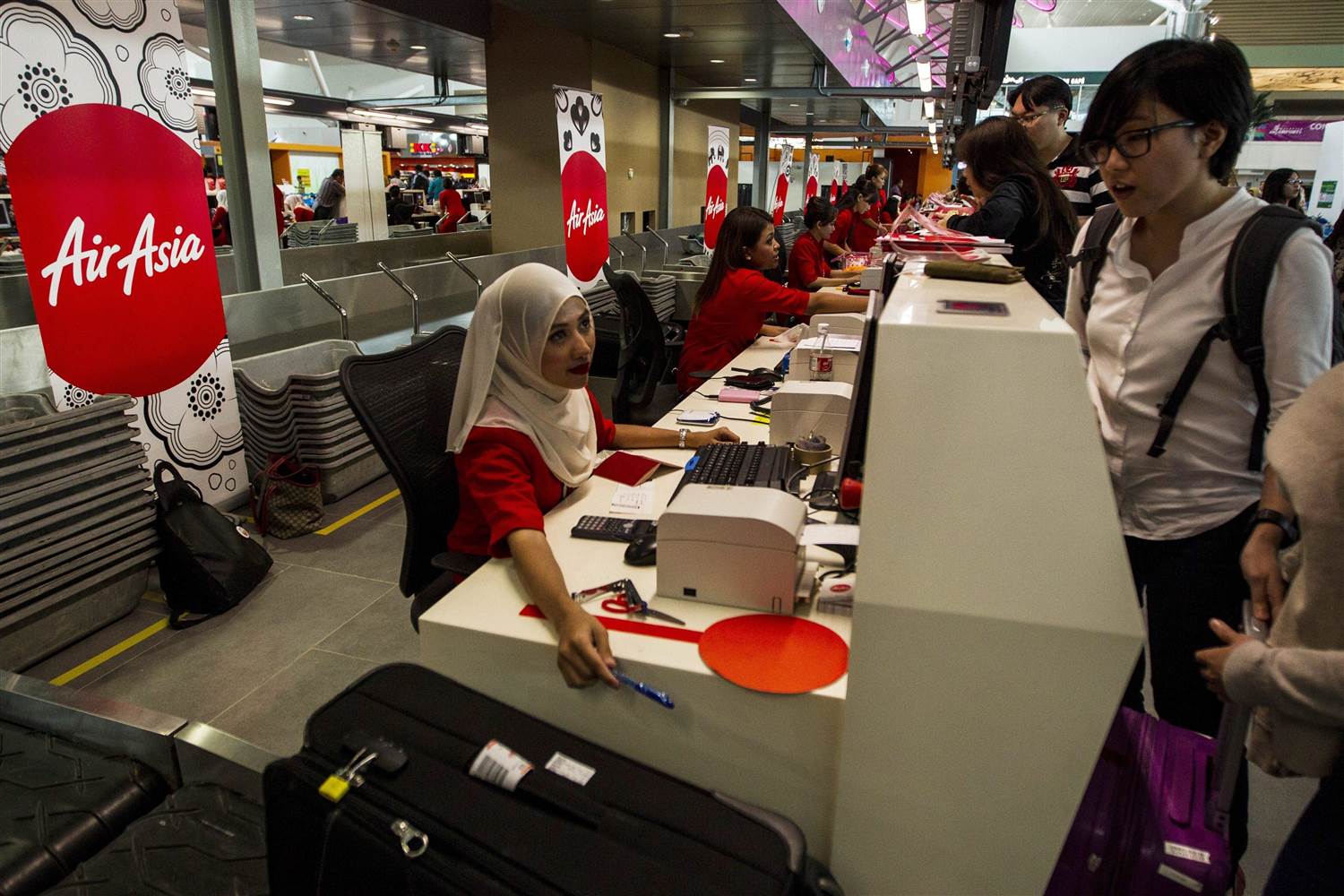
In an interview, Dexter M. Comendador, Philippines AirAsia chief executive officer, said the parent firm is bringing in more aircraft for the expanded Philippine operations.
“We’re one of the best performers in the group right now. Last year, we targeted 80-82% load factor and we were able to go over it… Our performance is giving us more planes, that is why we’re expanding,” Mr. Comendador said during the launch of the new Davao routes last Friday.
While he did not specify how many aircraft will be added, he said AirAsia currently uses 14 for its Philippine local and international routes.
The new flights starting April 22 using Airbus A320s are: twice a day between Davao and Cebu; daily Davao-Caticlan (Boracay); thrice a week Davao-Puerto Princesa; and four times a week Davao-Clark.
With these flights, Philippines AirAsia now considers the Francisco Bangoy International Airport in Davao City as another one of its hubs.
“Davao has so much potentials to be the next ‘wonder’ or the emerging tourism giant for the Philippines and the ongoing development will bear more fruit and contribute significantly to benefit our economy,” Mr. Comendador said.
“Foreign tourists arriving in Cebu can skip the crowded airport of Manila and fly straight to Davao. With our newest routes, AirAsia would like to provide the much needed connections and tap the unserved markets, tourism and business, in Visayas and Mindanao,” he added.
Meanwhile, Department of Tourism (DoT)-Davao Region Director Roberto P. Alabado III told the additional flights and routes are a very welcome development.
“We need new routes that must be served for us to lure more visitors to the region,” said Mr. Alabado.
DoT-Davao through Mr. Alabado, Mr. Comendador, and Visit Davao Fun Sale Executive Committee Chair Benjamin A. Lizada signed a memorandum of agreement last Friday for the annual summer event promoting the Davao Region.
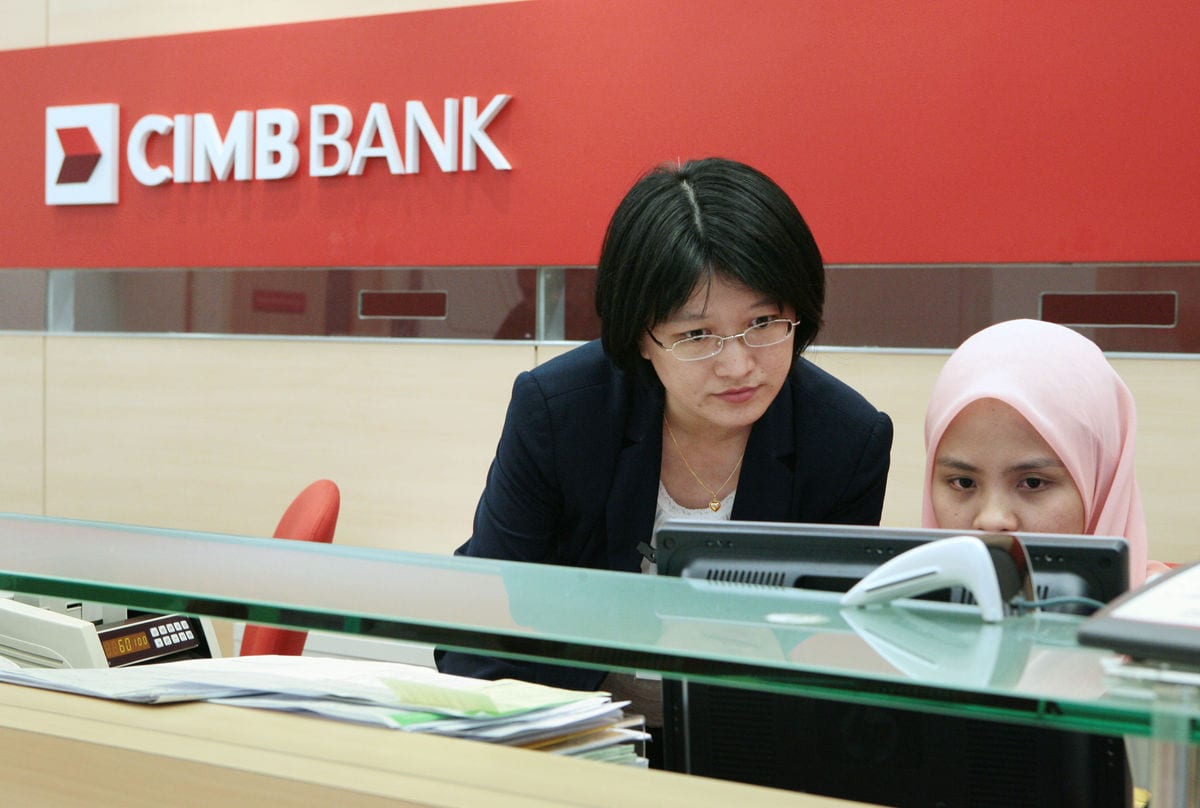
CIMB Niaga Syariah, the sharia unit of PT Bank CIMB Niaga Tbk recorded a 165.5 percent increase in its net profit to Rp305.43 billion in 2016 from Rp115.03 billion in the previous year.
Director of the sharia unit of CIMB Pandji P. Djajanegara attributed the surge in profit to 40.2 percent rise in sharia financing to Rp10.21 trillion in 2016 from Rp7.28 trillion in 2015.
“An increase was recorded in all business segments,” Pandji said here on Monday.
He said the non performing financing (NPF) of the sharia unit of the bank dropped to 1.15 percent from 1.86 percent despite the surge in financing.
“The performance of the sharia unit was in line with the management adoption of prudential banking principle while expanding its financing portfolio,” he said.
In 2017, apart from expanding consumer financing, CIMB Niaga Syariah wanted to increase financing of business segment including corporation, micro, small and medium enterprises (UMKM) and commercial financing, he said.
He said the sharia business is expected to account for 10 percent of the credits to be provided by PT. CIMB Niaga Tbk.
The third party fund held by CIMB Niaga Syariah rose 40.2 percent to Rp10.63 trillion in 2016 from Rp7.58 trillion in 2015.
Pandji attributed the increase in the third party fund partly to the status of the unit as a recipient of hajj pilgrimage payments including regular hajj and special hajj pilgrimage.
CIMB Niaga Syariah has a product of hajj saving that includes hajj plan saving, and hajj pahala (merit) saving and iB Mapan Wakaf saving.
With the financing and the third party funds , the assets of CIMB Niaga Syariah rose 40.34 percent to Rp12.78 trillion in 2016 from Rp9.11 trillion in 2015.
The sharia unit contributed 5.45 percent to the total assets of Bank CIMB Niaga in 2016 , up from 3.90 percent in 2015.
PT CIMB Niaga is the countrys fifth largest bank in assets controlled by the CIMB Group of Malaysia.
The Bali provincial administration will intensify tourism promotion in Saudi Arabia following a vacation of King Salman bin Abdulazis al-Saudi on the island.
“Logically, when their King came here, his people would also like to visit. Moreover, the royal family seemed to very much enjoy their vacation in Bali,” Cokorda Bagus Pemayun, secretary of the Bali tourism office, said here, Sunday.
The Kings visit was fresh air for Balis tourism because there had been a difficulty in attracting Middle Eastern tourists to Bali so far, he said.
He believed the Kings visit has changed a perception of the Saudi people about Bali, and therefore it would be a golden opportunity for Bali to explore the Saudi market.
The fact that the King and his family decided to extend their visit to Bali showed that King Salman al-Saud and his family felt happy with their vacation in Bali, he added.
King Salman bin Abdulaziz al-Saud left Bali for Japan on Sunday at 11:15 a.m. local time after enjoying an eight-day holiday on the island.
The Saudi King was holidaying in Bali from March 4 to 12, after paying a state visit to Jakarta on March 1-3, which is considered to be historical as a Saudi king had lasted visited Indonesia 47 years ago.
The Bali tourism official has seen the Kings visit as a major tourism promotion for Bali.
Middle Eastern tourists are in general high spender, with an average spending of US$ 1,800 per person per visit, compared to US$1,2000 per visit by other foreign tourists.
The Arabs usually spend 10.08 days per visit, which is also much longer than other foreign tourists.
“They usually come during Hajj pilgrimage season and summer,” he noted.
Over the last five years, the number of Middle Eastern tourists visiting Bali, has increased by an average of 38.7 percent a year, he remarked.
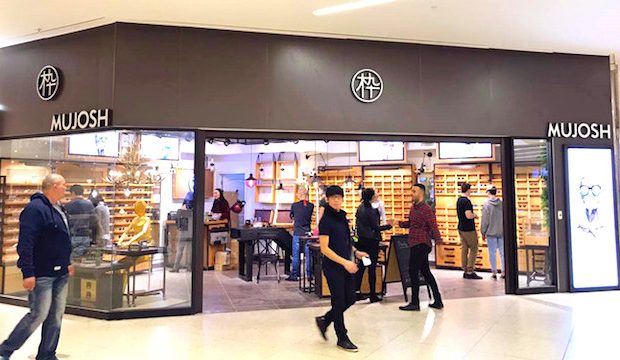
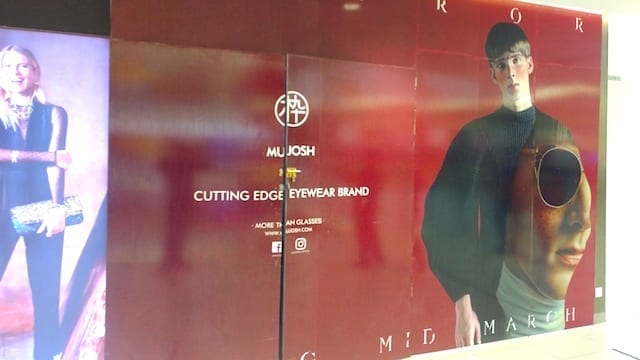
Hong Kong-headquartered Mujosh eyewear is about to open its first store in Vietnam.
The edgy brand, which made its international debut in Malaysia just last year, will open a store inside Saigon Center in Ho Chi Minh City. The mall houses the Takashimaya department store along with the first Japanese-headquartered Owndays shop in Vietnam.
The store is undergoing fitout with a billboard promising an opening in “mid-March”.
Established in 2010, Mujosh describes itself as “an innovative fashion eyewear brand” which combines unique elements and styles into frame designs.
“Appreciating creative ideas, valuing the value of handicraft, cherishing the original touch of materials, Mujosh is deeply loved by fashion icons and wearers.”
The brand also has stores in Singapore (on Haji Lane), Thailand and Australia. It plans to open 1000 stores globally within five years.
Owned by Photosynthesis Group Co, Mujosh is the company’s first brand to go international since it started its international business expansion at the beginning of 2015.
Edmonton marks Canadian debut
Meanwhile, Mujosh opened its first store in Canada, a flagship in West Edmonton Mall, the largest shopping centre in North America. The mall hosts about 32 million visitors per year; between 90,000 and 200,000 daily.
Among early customers was one who said she had become familiar with the brand while travelling in Shanghai and Singapore.
hai retail giant Central Group aims to raise the share of its e-commerce sales to 15 per cent over five years, up from the present 1 per cent.
Presenting the company’s annual business plan, CEO Tos Chirathivat says the group will aggressively pursue expansion in the digital realm this year.
About 10 per cent of the 45.53 billion baht (US$1.3 billion) capital investment allocation this year will be devoted to online business. The funds will mainly go toward developing a logistics network and an omni-channel platform, with capital spending on that front to double from next year.
Central Group’s retail portal, Central Online, will be overhauled this year. The conglomerate acquired the Thai business of fashion e-tailer Zalora last year, and will adapt its know-how for Central Online’s makeover.
The group is also eyeing markets outside of Thailand, including an online re-entry into China, from where it retreated two years ago. Central Group president Yol Phokasub says it aims to collaborate with a partner this time.
Vietnam is another promising market. The group has two department stores there and is also a stakeholder in electronics retailer Nguyen Kim.
Meanwhile, Central says its group sales last year increased 17 per cent to 332.7 billion baht. The refurbishment of key assets such as Bangkok’s Central Plaza Pinklao helped boost sales, along with Zalora and the acquisition of Vietnamese supermarket chain Big C.
Central aims to reap sales of 382.2 billion baht this year, with a heavy reliance on overseas business, which accounts for 30 per cent of sales, as well as developed online business.
Ikea Hong Kong will open its fourth store in the second half of this year, parent Dairy Farm International has revealed.
The new store will be located in Tsuen Wan.
News of the new store was included in Dairy Farm International’s annual results released at the end of last week. A precise location was not revealed.
The Hong Kong-listed multi-format retailer owns the Ikea franchises in Hong Kong, Indonesia and Taiwan. It will also open the Swedish furniture and homewares brand’s second store in Jakarta later this year.
The expansion follows the opening of three new pick-up points in Hong Kong, Macau and Taiwan last year to provide more convenient options for its customers closer to home.
“In parallel, e-commerce initiatives are being pursued by most of our formats to deliver a multi-channel shopping experience for our customers,” said CEO Graham Allan.
Last year, Ikea launched its online offering in Hong Kong, Macau and Indonesia, and this was expanded to Taiwan in February 2017.
Dairy Farm’s home furnishings division achieved record sales and operating profit during 2016. In constant currency terms, operating profit rose by 12 per cent to US$71 million driven by increased sales of $597 million, 6 per cent up on 2015. Sales and operating profit were higher than last year in all three markets. Like-for-like sales growth was particularly strong in Taiwan and Indonesia.
“We continued to strengthen our low price image through ongoing price investment, and increased our focus on market specific products to enhance our local consumer appeal,” said Allan.
“In the coming year, home furnishings plans both to continue its push in consumer accessibility.”
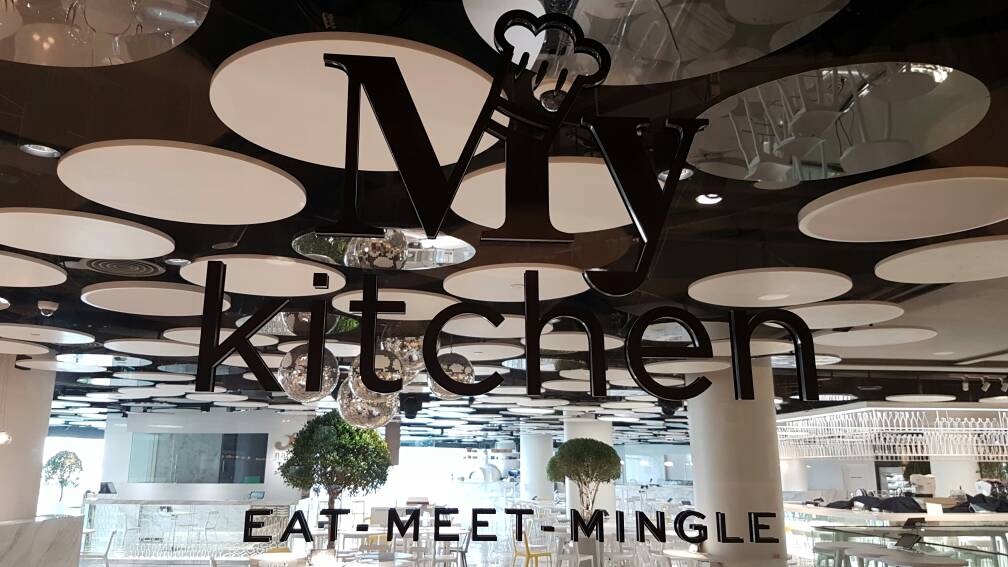
A “new dimension of downtown hangout” called My Kitchen has opened at Siam Discovery, described as a social dining experience concept.
Siam Discovery parent Siam Piwat says the new hangout – an “eat, meet, mingle concept” targets millennials.
My Kitchen offers a social dining experience on the fourth floor of Siam Discovery which integrates digital innovation to make the dining experience more fulfilling and enjoyable.
Apart from the flavours of international dishes from five well-known restaurant brands – Cafe Chilli, Kuppadeli, Man Fu Yuan, Nara, Yuzu By Yuutaro and a Brix Dessert Bar – all come with an all-new concept where signature dishes are selected to please individual tastes and styles.
My Kitchen also introduces the My Kitchen is Your Kitchen concept providing a workshop space designated to offer every diner enjoyable and interactive cooking demonstrations, tasting parties, and other food events in rotation every day.
“It is also ideal for friends to throw a party on special occasions or use the workshop to prepare foods for important guests in a beautiful panoramic atmosphere right in the heart of Bangkok,” says a Siam Piwat spokesperson.
My Kitchen tablet menus allowing diners to order and pay quickly.
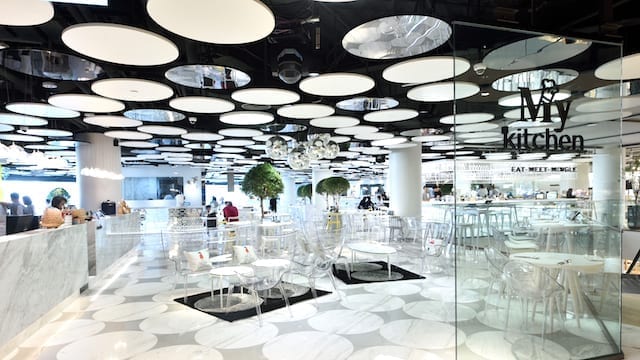
The decor of the precinct includes art installations designed by Nendo Studio, a team of well-known designers from Japan led by the world-famous Oki Sato, (who designed the Siam Discovery revamp unveiled last year). The area is painted in shades of white. The floor is paved with white volakas marble to give a feeling of friendliness and warmth. Clear glass walls offer a panoramic view of downtown Bangkok.
My Kitchen comprises various zones including reception, lounge, private room and workshop spaces, covering more than 1000 sqm and seating up to 250 people.
The reception is decorated with disco balls and a graphic mapping time lapse projection as highlight to keep diners in a relaxing mood while waiting for food to be served.
The lounge features a visual mapping technique from Le Petit Chef, a group of visual art enthusiasts and winners of multiple international awards. They created food mapping that combines 3D animation with motion capture techniques to project onto dining tables two stories of food preparation: one for soup and the other for dessert, so customers can enjoy their time with friends or someone special while waiting for their meals “just like having a tiny chef prepare food for them on the table”.
“It will offer an original experience unlike anywhere else,” says the spokesperson.
Sales of South Korea’s online shopping malls rose dramatically in recent months helped by the growing number of Chinese customers.
Data released this week shows the Korean online industry growth is happening amid China’s retaliation against South Korea over Seoul’s plans to deploy an advanced US missile defense system on its soil.
WeMakePrice, a major online shopping mall, said its sales on Alibaba Group’s Tmall rose 100 per cent in January compared with the same period last year. The comparable figure was 50 per cent for February.
“We don’t expect any drastic decline in the sales in Tmall, one of the biggest online shopping sites in China, unless Chinese consumers stage a boycott of South Korean products,” a WeMakePrice official said.
GMarket, another online shopping mall, said its sales to Chinese consumers surged 18 per cent in 2016 from a year earlier, and the trend is similar for the first two months of this year.
A possible decline in the number of Chinese tourists visiting South Korea, however, may adversely affect the South Korea online industry as many Chinese tourists place orders at South Korean duty-free shops online before picking up goods in person while touring South Korea, industry sources said.
China has been retaliating against Seoul’s decision reached in July to have the Terminal High Altitude Area Defense (THAAD) system deployed on South Korean soil later this year. South Korea says the missile system will not target China but only counter threats from North Korea.
In the latest retaliation, Chinese travel agencies suspended sales of tour packages to South Korea last week.
Memebox Hong Kong has opened its first stand-alone flagship store in the city – in Causeway Bay.
The brightly coloured store is located at 20 Pak Sha Road, amid the street’s growing collection of sports apparel pop-ups and eclectic cafes.
Headquartered in San Francisco, with global hubs in the US, China, and Korea, Memebox claims to be the fastest-growing beauty brand in the world with over 500 employees across six countries.
The company’s newest store stands out externally thanks to a bold red colour scheme and the distinctive laboratory-style treatment area inside.
Memebox Hong Kong already has three counters in the city – at Harbour City in Tsim Sha Tsui (Facesss), LAB Concept at Admiralty (Facesss) and Tuen Mun Town Plaza (Kiosk 10).
The company’s philosophy is melding beauty with technology. It has collaborated with YouTube celebrities and beauty specialists to create its products and pursues a digital-first approach to marketing.
“We’re changing the face of the beauty industry, one smile at a time,” the company proclaims on its website. “We’re dedicated to bringing the best beauty products available to a global, connected audience, since everyone deserves happy skin.”
A new Nike plus-sized range will expand the US sportswear brand’s reach – and appease those who criticise it for focusing on the purely athletic.
The new workout wear range includes sizes from XL to 3XL.
“Nike recognises that women are stronger, bolder and more outspoken than ever,” the sportswear giant said in a statement.
“The days where we have to add ‘female’ before ‘athlete’ are over. She is an athlete, period. And having helped fuel this cultural shift, we celebrate these athletes’ diversity, from ethnicity to body shape.”
Like Nike’s core range, the plus-size collection will use the same technology in design and fabric and includes sports bras, running tights, high-tech hoodies.
Helen Boucher, VP of women’s training apparel, says when the company created its range it did not just make existing products larger.
“That doesn’t work because as we know, everyone’s weight distribution is different.”
The pressure will now be on rivals like Lululemon, Puma and Adidas to follow suit…
Mitsubishi Motors and its new parent Nissan are studying joint production of pickup trucks in Southeast Asia as they look for savings within the broader Renault-Nissan alliance, a senior executive told.
The Japanese groups may pool technical underpinnings and production of future replacements for the Thai-built Nissan Navara and Mitsubishi Triton, Mitsubishi Chief Operating Officer Trevor Mann said in an interview at the Geneva car show.
Mitsubishi’s pickup architectures are likely to become the basis for future alliance models, said Mann, who was despatched by Chief Executive Carlos Ghosn to help turn Mitsubishi around after Nissan paid US$2.3 billion for a 34 percent controlling stake in the scandal-hit company last October.
“If you look at our cost performance in that region, we are the benchmark within the alliance,” Mann said. “Our four-by-four technology, our cost base on pickups is better than Nissan’s.”
Nissan snapped up Mitsubishi last year after the company admitted in April it had falsified fuel consumption data, triggering a sales slump and steep losses expected in the current fiscal year, which ends this month.
Mitsubishi expects sales to bounce back above 1 million vehicles next year, Mann said, almost reversing their 8 percent decline from 1.05 million before the outcry. Nissan and Mitsubishi currently produce frame-based pickups and cars – which have fundamental design and manufacturing differences – on separate lines at each of their Thai plants.
Moving to common architectures could potentially allow the Mitsubishi factory to specialize in pickups while the Nissan plant builds cars and SUVs, increasing productivity at both sites, Mann said, while stressing that nothing had been decided.
Cooperation will rapidly extend to other countries in the region including Indonesia and the Philippines, where the companies have plants, Mann said. But pickups are likely to stay based in Thailand, where they account for 40 percent of sales.
The current Navara and Triton models were launched in 2014 and are not due for replacement before 2022, which means development and production decisions may still be two or more years away. In the meantime, Nissan and Mitsubishi are already pooling car transport and other logistics while stepping up efforts to find more savings from joint purchasing.
Renault and Nissan, whose 18-year-old alliance is cemented by reciprocal minority shareholdings, are also likely to use Mitsubishi’s plug-in hybrid technologies, Mann added. “That’s an obvious opportunity.” But Renault may have to wait longer than its alliance partner for the market access and savings that their new affiliate can bring.
“What we have to do is prioritize,” Mann said. “We have the capital share with Nissan, so it’s logical to start there.” Under Nissan ownership, Mitsubishi is still “cleaning house” in the wake of the fuel-economy data scandal, he added.
“We’re introducing a proper delegation of authority, risk control and business ethics in the company,” Mann said. “If we did uncover anything (else) which was not correct, we would disclose in an appropriate manner.”
While its direct-selling model echoes brands like Avon and Tupperware, Indonesia’s MindStores gives the approach a modern twist—with augmented reality.
Recognized as the first partnership store network to use augmented and virtual reality, MindStores equips its store owners with their own unique partner cards which customers use to access the stores virtually. The whole process is relatively simple, and takes place in-person only.
A store owner, who can be located anywhere—from their living room to a public coffee shop—shows a customer their partner card. Using a dedicated app on their own smartphone, that customer scans the card to see a 3D retail store appear on their screen. From there, the customer enters that partner’s virtual store and can browse and purchase merchandise to have shipped to them. The store owner then gets a cut of the sale.
Slingshot, the Indonesian technology and media company that operates MindStores, announced this week that the store network has opened more than 7,000 stores in Indonesia since its launch last June. They estimate that they will have more than 150,000 active stores by the second quarter of 2017, with the potential to open more than 4 million new stores in the country over the next two years.
As part of the pilot program, MindStores partnered with Alfamart, a large Indonesian convenience store chain, to have their wares sold through branded Alfamind virtual stores by individual store owners. However, augmented reality gives MindStores the potential to expand their retail partnerships to other companies, with many stores appearing side by side on each scanned store owner card.
“The future will be an augmented reality city that is working flawlessly with people, with stores, with consumers,” said Daniel Surya, CEO of Slingshot and its parent company, WIR Group, in an interview with NextReality. “Now is just the first phase. We’re looking at a data-driven city using augmented reality.”
Surya noted that MindStores already has an agreement with one of the largest insurance companies in Indonesia, Astra Life, in collaboration with UK-based Aviva, as their next retail partner. Eventually, MindStores will also give its store owners the ability to sell their own merchandise and crafts—not just partner brands—like on Etsy.
The company expects to expand to China and India by the end of the year, Latin America and Africa next year and, eventually, the United States. Each expansion will require recruiting partners that resonate with consumers in those markets.
Working in emerging markets presents challenges in rendering AR and VR animations, since most consumers are equipped with lower-end phones running on processors two or three generations old.
The stores are designed to render smoothly through its Android or iOS app. To ensure consistent operation, the company built the stores on their own engine, which is compatible with more modest hardware. For instance, minimum requirements to run on Android include OS version 4.2 Jelly Bean, quad-core 1.8 GHz CPU, and 2 GB RAM.
“We need to be able to present this technology on the simplest, most modest phone available on the market,” said Surya. The app is also optimized to compensate for available connectivity in the emerging markets. According to a spokesperson, the app is designed to allow for offline browsing, though an internet connection is required to place an order.
Nonetheless, they are also testing the experience with smart glasses, namely Vuzix and HoloLens, and their research and development team maintains relationships with the leading hardware makers so that they are familiar with the next wave of devices.
Empowering Women Through Community-Based Selling
Along with the eye-catching AR and VR aspects, community-based selling has been a significant component of the company’s success.
The direct selling model appeals to mothers of single-income families as supplemental income, according to Surya. Since brand loyalty is low in Indonesia, the ability to offer goods at a discount to friends and neighbors gives store owners and their partner retailers an advantage.
Through Mindstores we’ve used innovative technology to create something as equally innovative as it is meaningful, through its proven ability to make a positive impact to empower women worldwide. Slingshot will continue enhancing the Mindstores experience, for the benefit and futures of an often-overlooked population: women in less developed regions of the world.
Compared to the cost of opening a brick-and-mortar store or securing a franchise license, the start-up cost for MindStores is relatively modest. Store owners invest a minimum fee (the equivalent of about $100) to serve as capital to purchase inventory credit from Alfamart, the partner retailer.
Their customers order products through the store and pay the customer in cash. The retailer applies the purchase towards the inventory credit and ships to the customer. Customers pay the store owners directly in cash. Store owners can purchase additional credits once the initial investment is exhausted.
The store owners receive about 15% of each sale for most of Alfamart’s product categories, such as fashion and household goods, which have 30-40% margins. MindStores takes a 2% cut, with the remainder of the proceeds going to Alfamart. Slingshot reports that participants average $900–$1,200 per month in sales.
Next Stop: SXSW
Slingshot is one of five Indonesian companies appointed by BEKRAF (Indonesian Government Agency for Creative Economy) to attend the South by Southwest (SXSW) Conference and Festival, taking place March 10–19 in Austin, Texas. The companies will exhibit in the Indonesian section named Archipelageek.
“It is a tremendous honor to represent our Country at such a prestigious event,” said Surya. “We’re proud to showcase the creative and innovative technological achievements from Indonesia, which we believe are highly relevant in today’s worldwide marketplace.”
In addition to its MindStores business unit, Slingshot also operates AR&Co., which specializes in augmented reality content development, and DÄV, an AR media placement company. Founded seven years ago as the AR Group, Slingshot has offices in New York, Los Angeles, Silicon Valley, Jakarta, Singapore, Barcelona, and Malta.
Slingshot has completed more than 500 projects in 20 countries, working with brands such as Disney, Cartoon Network, Samsung, LG, Intel, Lenovo, and Sony, to name a few.
Among their notable campaigns include AR-enabled ads for the successful Nigerian presidential campaign of Muhammadu Buhari, holographic Star Trek collectible pins, and the first AR children’s books in Spain.
“We’ve always been excited about the possibilities of augmented reality and the power it has as an engaging and immersive platform,” said Surya.
South Korean Rental services, which in the past were typically limited to water purifiers or bidets in South Korea, are rapidly embracing other products.
According to big data analysis firm Daumsoft, online mentions of “rental service” on blogs and Twitter more than doubled over the past three years from 75,300 in 2014 to 177,003 in 2016, and now include more lower priced goods, with shorter rental periods.
Although water purifiers still ranked first in terms of the number of references, apparel such as clothes, coats, and bags have developed a significant presence in the rental market recently, officials said.
For instance, the word “clothes” as a related term for rental services increased from 5587 mentions in 2014 to 23,047 in 2015 and 31,112 in 2016, while “coats” and “bags” soared from 108 to 14,777 and 454 to 3228 from 2014 to 2016, respectively.
“While dress rentals for parties or other special occasions are most popular overseas, renting clothes for weddings (as guests), job interviews, and company meetings is also popular in Korea,” the company said. “The reason behind the dramatic increase in the number of ‘coats’ and ‘bags’ is probably because they’re among the more expensive fashion items.”
Women were the biggest customers of the rental services, the analysis showed, with the word “women” topping the list in terms of the number of online mentions (at 23,848), followed by “babies”, with Daumsoft adding that baby products are increasingly sought after by local mothers.
“During economic hardships, people tend to think twice about their spending and try to get the most out of their budget,” said professor Oh Se-jo at Yonsei University School of Business, adding that people compare more carefully the quality and the diversity of their consumption.
“Rental services best serve consumers who want to save but at the same time pursue their interests and hobbies, which is why they’ll continue to grow,” he said.