Author: Mei Ling Tan

  • Samsonite eyes global traveler in China

    Samsonite eyes global traveler in China

    One of the world’s largest luggage makers Samsonite International SA is banking on e-commerce to fuel its China business, which is set to record 12 to 14 percent growth in the coming years.

    The company hopes to have one-third of its sales generated online by 2022 against 20 percent in 2016, said chief executive officer Ramesh Tainwala.

    With the explosion of online shopping and a wealthier population eager to travel, China may overtake the United States as its largest market in the short run, with sales likely to double in three to five years, Tainwala said at a media briefing in Shanghai.

    He said: “At the beginning of the e-commerce, the Chinese were buying online because it was cheaper. But now consumers are maturing, it’s all about convenience.”

    China is the world’s largest online retail market, with 36 percent of the population shopping online at least once a week, far outstripping peer buyers, according to a study by the International Post Corporation, a Brussels-based group that provides business-critical intelligence to its members who are part of the postal industry.

    To harness that growth, Samsonite has launched a “three-pillar” strategy for digital retail. One is to team up with Chinese business-to-customer sites like Tmall and JD. According to Tainwala, the two platforms combined claim 60 percent of Samsonite’s online sales. Another channel is the digital stores of shopping malls and department stores.

    The third step Samsonite is taking this year is to open its indigenous direct online shopping portal, attracting sophisticated buyers who wish to purchase bigger-ticket items via the brand rather than a third party.

    It has also utilized social media to guide traffic to brick-and-mortar stores. For instance, followers of Samsonite’s official WeChat account can sign up for a promotion event in a shopping center and get a discount coupon. Online marketing has helped woo customers and add another 5 percent of their offline sales, according to Frank Ma, a senior Samsonite executive.

    Seven of Samsonite’s nine brands have been introduced to China, ranging from entry-level American Tourister, namesake and contemporary luxury Samsonite, to the newly acquired Tumi, which targets up-market business travelers.

    The multi-brand approach has made online a critical battlefield to win buyers, especially those in lower-tier cities who have fewer opportunities to access physical stores and are taking outbound trips for the first time.

    Ma said: “Globalization has made travelling a lot easier. With simplified visa procedures, we see more first-time travelers from China going beyond borders. To this end, we have designed products tailored to their needs.”

    For instance, American Tourister and Kamiliant are the two affordable brands for these first-time travelers. A typical 20-inch Kamiliant case sells from 199 yuan ($28.9) on Tmall.

    Meanwhile, it has added new features to its most iconic business assortment, including a new hero backpack with three volumes, two check-in-sized spinners, and a brand-new spinner rolling tote.

  • China set to cut into India, Vietnam rice exports in 2017

    China set to cut into India, Vietnam rice exports in 2017

    Falling demand and overseas competition are expected to bite into Vietnam’s rice exports. India and Vietnam, the world’s leading rice exporters, may see overseas sales fall below previously expected levels due to slowing demand and rising competition from China, the U.S. Department of Agriculture (USDA) said in a recent report.

    India’s rice exports year could fall by 300,000 tons to only 10 million tons “on slower pace and stronger competition in West Africa”, the USDA said in its March report, putting it on a par with shipments expected from Thailand.

    It more than doubled its forecast for China’s rice exports this year to 500,000 tons from 225,000 tons, the report said, citing rising sales in East Asia and West Africa.

    The USDA also cut Vietnam’s rice export forecast by 3.6 percent to 5.6 million tons this year, citing “reduced trade to Southeast Asia and Africa”.

    With the lower projections, India and Thailand will share the world’s largest rice exporter title this year, followed by Vietnam and Pakistan. Last year, India was the world’s biggest rice exporter, followed by Thailand.

    Vietnam’s rice exports in the first two months of this year fell 23.5 percent from the same period in 2016 to 738,000 tons, based on data from Vietnam Customs released this week.

    Rice exports in the two-month month period brought in $314 million, 24.7 percent below the corresponding period in 2016, data showed.

    On a brighter note, Mexico has given the green light for 150,000 tons of rice to be imported at a zero percent tariff, starting from March 1, to meet domestic demand and diversify its supply sources, a move that would cut the market share currently held by the U.S. and open the door to Vietnamese rice.

    “The United States is expected to remain the dominant supplier (for Mexico), but recent history suggests that other suppliers will likely gain additional sales,” the USDA said.

  • Newegg to launch in 20 new countries including China

    Newegg to launch in 20 new countries including China

    Newegg have just announced that they will be launching a standalone China Marketplace later this year, which will be the first of a few new Market entries in 2017. They have ambitions to launch in 20 new countries in the course of the next year.

    Newegg are a retailer without physical stores, but alongside their own products they enable third party merchants to list inventory and sell to their customers.

    The 20 new Newegg marketplaces

    The new marketplaces will allow US and European manufacturers and retailers to sell products to consumers in other countries. Existing marketplace sellers will be able to list products on foreign marketplaces through Newegg’s Seller Portal system, which allows sellers to target listings and prices by region.

    Newegg currently allows customers from eight English-speaking countries to shop from Newegg’s US and European marketplace merchants online. The countries Newegg is expanding this year will either have access to purchasing goods from Newegg’s current marketplace or a separate site translated into local languages.

    Newegg in China

    However, Newegg sees its biggest opportunity in China, although this is a tough territory to crack with Alibaba’s marketplaces accounting for about 80% of the Chinese e-retail market. The Newegg Chinese marketplace will incorporate local payment options, including mobile and social payment methods. Newegg also will have a mobile app just for Chinese consumers, as the majority of consumers in the country shop using smartphones.

    Newegg’s competitive advantages for sellers over dominant Chinese marketplaces is their relationship with its existing US and European seller base and the ability to address the challenges of selling into China, such as cross-border fulfillment. Chinese consumers have voracious appetites for genuine US and European branded goods and are sometimes wary of purchasing from Chinese retailers in case the goods are counterfeit.

    Newegg has a Chinese website, Newegg.cn, where Newegg sells merchandise it owns. The new Chinese site will soon list products from marketplace sellers. When it launches it will sell goods from US and European merchants, but it may allow Chinese retailers to sell on the marketplace if the interest is there.

    What’s in it for UK, EU and US retailers?

    China has traditionally been a tough market, not just for familiar marketplaces such as eBay and Amazon, but also for retailers who want to list for example on Alibaba’s TMall. With $100k bonds required, local support, shipping, returns, the language barrier and different customer service and support expectations, the Chinese consumer can be quite demanding in Western terms.

    Newegg will remove many of the traditional obstacles of selling into China – they’re a retailer who already knows the country and partnering with them could become a key entry point to target Chinese consumers. Plus of course this is just one of 20 new territories that Newegg will open up to third party retailers this year.

  • Sout Korea Costco stores’ move to all US beef a positive for exporters

    Sout Korea Costco stores’ move to all US beef a positive for exporters

    On the heels of two Costco stores in South Korea beginning the transition to sourcing chilled beef from US sources, with the remaining 11 to make a similar shift from Australian beef to US imports, officials from the Iowa Beef Industry Council (IBIC) were part of a trade mission to get a closer look at the supply chain in South Korea. The US Meat Export Federation’s (USMEF’s) Spring Seminar drew more than 200 representatives to make the Feb. 11-18 trip, which also included members of the Iowa Pork Producers Association and representatives from the beef-processing segment and pork exporting officials from the US.

    USMEF officials coordinated tours of the processing plant and cold storage facility at Haesung Provision and Kyunwoo Foods, followed by a visit to a Costco warehouse in Kwangmyung. The recent resumption of red meat exports to South Korea was a windfall for USMEF and its members and the decision by Costco, the region’s largest importer, to convert the remaining 11 stores to selling US beef exclusively signals more positive trade relations moving forward.

    “The retail market is vital for US beef. Costco’s announcement to move from 17 percent to 100 percent US beef in their stores is exciting for cattle producers,” said Dave Rueber, an IBIC member and Iowa beef producer who was part of the mission. “USMEF has been working on this for 13 years. This will result in a 15,000 metric ton increase in beef purchases this year.”

    Expectations of record exports of chilled beef to South Korea are based on the momentum realized in 2016, when beef exports jumped 31 percent in value (to $1.059 billion) and 42 percent in weight (to 179,280 metric tons).

    Knowing South Korea is one of the most social media-savvy cultures in the world, USMEF invited well-known bloggers and foodservice professionals to network with attendees in addition to hosting a cookbook launch, which focuses on US meats.

    “As beef producers, we cannot become complacent, we must continue to focus on building long-term beef demand and being aware of future opportunities,” said Daryl Strohbehn, another Iowa beef producer who made the trip. “As an industry, we have to continue listening to what our consumers want, including our overseas customers.”

  • Colt Asia Cloud PBX Service to launch in April

    Colt Asia Cloud PBX Service to launch in April

    Colt Technology Services has announced it will launch its Colt Asia Cloud PBX Service for enterprises in the region starting in April.

    The company will offer an all-in-one solution combining PBX functionality, IP phones and remote access connectivity to the office.

    The service is aimed at alleviating customers from the need of purchasing their own PBX. Instead customers will use the PBX system installed within Colt’s data centers in exchange for a a small upfront cost and monthly fee.

    Calls made using the service within the same organization will be treated as internal extension numbers and be placeable for free.

    Numbers provided by the company will be able to use the full set of PBX features including call transfer, hold and conference calling.

    “Cloud computing is already a standard in today’s IT environment. This reality also applies to voice communications, including telephony, that are indispensable to corporate business,” Colt CCO for Asia Kenji Hioki said.

    “With this service, Colt is dramatically reducing the cost of acquiring PBX and corporate telephony, in turn reducing the associated maintenance and overhead expenses that come with a communications network spanning multiple sites.”

  • Korea’s exports of consumer goods to China tops $7b in 2016

    South Korea sold more than $7 billion worth of consumer goods to China last year, a report showed Tuesday, amid growing concerns that this sector will suffer the most from a trade spat between the two countries over the deployment of an advanced US anti-missile system.

    The outbound shipments of consumer products reached $7.02 billion as of end-2016, accounting for about 11 percent of all consumer goods sold abroad last year, according to the latest report by the Korea International Trade Association and the Korea Institute of Finance.

    The figure represents only 5.6 percent of total exports to the world’s second-largest economy, which stood at $124.4 billion. More than 90 percent of all goods sold to China were intermediate goods such as machinery and industrial components like memory chips.

    Although the portion is marginal, consumer goods have emerged as a key export for the South Korean economy, Asia’s fourth largest, as the market has posted rapid growth over the past few years, the report said.

    The on-year export of five major consumer goods, including cosmetics and pharmaceuticals, grew by 13.6 percent last year, compared with a 5.9 percent on-year drop in the country’s overall overseas shipments, it showed.

    China’s import of consumer goods also rose at a faster pace of 9.2 percent in 2015 from 4.2 percent in 2000.

    The stellar performance in the consumer goods sector, however, is making local exporters more anxious since rising diplomatic tension with China could affect growth going forward.

    Since last July, Beijing has ratcheted up a hostile stance toward Seoul, in protest of Seoul’s stationing of the Terminal High Altitude Area Defense on its soil. Beijing strongly denounced the deployment, claiming that the installation’s powerful radar system will be used to spy on its own military.

    South Korea’s tourism and retail industries are bearing the brunt of what appears to be retaliatory measures taken by China.

    Beijing has banned the sale of group tours to South Korea and placed retail outlets run by Korean firms under suspension, among other moves.

    Experts here cautiously raised a view that maybe it’s time South Korea focused more on exports of intermediate and capital goods.

    “Consumer goods are to some extent overrated because we people can see them more easily. But intermediate and capital goods are traded between businesses, which means they’re less likely to be affected once a deal has been signed,” Ji Man-soo, a KIF researcher, said.

  • Ex-Chelsea star Essien joins Indonesia’s Persib

    Ex-Chelsea star Essien joins Indonesia’s Persib

    Former Chelsea, AC Milan and Real Madrid midfielder Michael Essien has signed with Indonesia’s Persib Bandung, the club announced today, the highest-profile player to join a team in the country for years.

    The Ghanaian signed a one-year contract for an undisclosed sum to join Persib, which is one of the best clubs in the country.

    The 34-year-old had not been playing with a team since he left Greece’s Panathinaikos at the end of last season.

    “I will give my very best to Persib,” Essien, wearing a club shirt, told media at the team’s headquarters in Bandung.

    When asked what he knew about football in Indonesia, he conceded “not very much” but added that he had visited the country with Chelsea before.

    However the move to Indonesia could turn out to be a shock.

    Football in Southeast Asia’s biggest nation has been wracked by crisis for years, with an explosive row between the domestic association and government prompting FIFA to ban Indonesia from international competition in 2015.

    The domestic league ground to a halt for a while amid the row, but FIFA lifted the suspension in May last year and football in the country is slowly starting to recover.

    Foreign players have also been badly treated by Indonesian clubs, with at least two known to have died in recent years after going unpaid and being unable to afford medical treatment.

    Essien is the best-known international footballer to join an Indonesian side since the 1990s, when Cameroon World Cup star Roger Milla and Argentine World Cup winner Mario Kempes both played in the country.

    The Ghanaian said he was approached by teams from other countries, including Turkey and Australia, but he had been impressed by Persib, without giving further details.

    The club would not be drawn on how much they had paid for him.

    “The contract value is large because he is a former Chelsea player, I cannot reveal (the amount),” said Teddy Tjahjono, one of the club’s directors.

    Persib finished fifth in last year’s Indonesian Soccer Championship.

  • New face of Louis Vuitton Hong Kong Landmark

    New face of Louis Vuitton Hong Kong Landmark

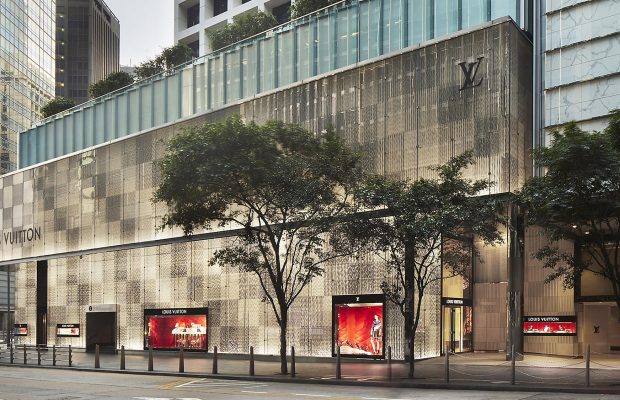
    Following a transformation, the Louis Vuitton Hong Kong Landmark has a new look.

    At one of the busiest junctions in Hong Kong, the flagship maison in Central has a new glass facade designed by Japanese architect Jun Aoki, who also designed the exterior of the brand’s store in Ginza, Tokyo.

    There is a new interior by New York architect/interior designer Peter Marino, who has designed Louis Vuitton stores in London and Los Angeles. It includes an intimate space across two floors where customers can sit on plush sofas and lounge chairs while browsing through the latest collections of ready-to-wear, leather goods, accessories, fragrance, jewellery, watches and shoes. There is also a private space by invitation only for a personalised shopping experience.

    There was a red-carpet opening in The Landmark atrium for the redesigned store, attended by special guests including Hong Kong actress/model Janice Man (Wing-San Man).

    As well as the complete revamp of the Landmark maison, Louis Vuitton is also rebuilding its flagship store in Canton Road, which opened in 2008.

    “The leader in the market believes in Hong Kong,” says LV CEO/chairman Michael Burke, who says the company needs to keep investing in Hong Kong as a “unique, iconic destination in the world that will remain important for Chinese shopping”.

    “There was a moment two years ago in Hong Kong when the day trippers were excessive,” he says. “We had what we call ‘froth’ in the market. If we have a drop in froth, there’s no problem.”

    He says the key is looking long-term, with short-term swings, temporary rises and falls, not really affecting strategy.

    “We’re coming back now to a more healthy situation. The norm is going to be the steady, uphill growth of the upper middle class in China.”

    LVMH chairman/CEO Bernard Arnault also believes Hong Kong’s downturn is just a “cyclical problem”.

    “Hong Kong will remain one of the high points in Asia and one of the drivers of our growth,” he says.

  • Retail woes a boost for Hong Kong indie fashion

    Retail woes a boost for Hong Kong indie fashion

    High-end international brands have long held court alongside local Hong Kong indie fashion designers – who are now enjoying greater visibility in the city’s vibrant retail market.

    The city’s deep-rooted love of luxury has seen names like Gucci and Hermes open multiple stores in the city – stores that have co-existed with a stable of local apparel brands, such as Giordano, Baleno, Bossini and Esprit.

    By 2014, consumers’ tastes had diversified and fast-fashion overseas brands began descending on Hong Kong. The arrival of names like Topshop, American Eagle, H&M, Zara and Mango added yet more to the mix in Asia’s favourite shopping destination. Now that shop rents are finally becoming more affordable, independent fashion retailers are increasingly making their presence felt.

    Structural change

    In a report by commercial real estate firm CBRE, Joe Lin, executive director, retail services at CBRE Hong Kong, said that the city is undergoing a period of structural change.

    “Over the previous decade, high-street shop landlords have reaped the benefits of strong demand from luxury retailers and massive rental growth.”

    Lin noted that in the past 12 months, luxury retailers have adjusted their leasing strategies to save costs. “Landlords have become more realistic on rental negotiations, enabling more mid-range brands to tap into prime locations at relatively affordable rental levels.”

    The trend has opened the door for mid-market brands to expand, and for the rise of independent labels.

    “More independent stores are coming back to the market, streets, malls, and even some up-and-coming revitalised buildings in the traditional industrial districts, such as Lai Chi Kok and Kwun Tong,” said Lin. “They modernise the decoration and with the decent F&B outlets that draw good foot-traffic to these areas, independent retailers also benefit from this new trend.”

    Refined taste

    British fashion designer Elizabeth Lau established The Refinery in 2014 after moving to Hong Kong with her husband. Lau said she saw an opportunity to “curate for individuals” in Hong Kong by introducing unique fashion, accessories and lifestyle brands from around the world.

    Her first store, at the creative and design hub PMQ in Central, found a steady following, and in January 2016, The Refinery opened a second retail outlet in Tai Koo.

    Fashion edit

    Partners in fashion Genevieve Chew and Jacqueline Chak, an accountant and architect respectively, launched Edit in Central in 2012 as a concept store stocking emerging brands. They later created their own in-house label, which is described as “one part eclectic femininity and the other relaxed ease.” Their collections are worn by fashion personalities such as Yasmin Sewell, Margaret Zhang and Amanda Strang. The partners have also designed uniforms for Hong Kong’s new boutique Tribute Hotel in Kowloon.

    Fé Valvekens is another career-change entrepreneur who found her fashion foothold in Hong Kong. German-born Valvekens is a qualified engineer who founded fashion label A Day with Fé, blending daywear with yoga wear. Her PMQ store in Central also holds yoga and fashion styling workshops

    Quality indie labels

    Building on her established career in fashion, US expat Jamie Dredge co-founded Polkadot Boutique on Hollywood Road, Central, in 2011. After moving to Hong Kong two years earlier, Dredge spotted a gap between high-end luxury designers and mass-market clothing in Hong Kong.

    Her idea was to offer quality, well-designed womenswear and accessories from indie labels in the US, as well as supporting upcoming local designers.

    “We still have our local-based designers, but are also working with hot new labels out of Los Angeles and New York,” she said. Examples include Yumi Kim and Blank NYC Denim from New York, Veronica M from Los Angeles, and Hong Kong’s What the Frock?!.

    Being an independent retailer in Hong Kong has its challenges, said Dredge. Rents remain high, especially for smaller operators who don’t have the negotiating leverage of a famous brand. The demise of free print lifestyle magazine HK Magazine, which folded last year after 25 years, closed one door for independents to build a profile – and paid advertising is expensive.

    “We now have to work harder on our social media channels – and be more creative in our promotions,” Dredge said.

    On the other hand, word-of-mouth networking is an advantage in a city as close knit as Hong Kong.

    Pop-ups and collaborations

    One of Polkadot’s strategies is to host events where customers can meet the designers for a social night out, which might involve hair and makeup as well as fashion. One of the “biggest perks of Hong Kong” is the willingness of businesses to collaborate with each other, Dredge said.

    “Hong Kong is great for doing pop-up events and collaborations, which get the customers involved,” she said.

    It also illustrates how a physical boutique can still be successful, despite the challenges of online shopping.

    “People still like to feel the clothes, to try them on, to talk to the designer,” she said.

    “A lot of our garments are unique, and many of them exclusive. Our customers aren’t walking around seeing other people dressed the same, and that’s why they come to us.”

    -HKTDC

  • H&M joins Better Than Cash Alliance

    H&M joins Better Than Cash Alliance

    Sweden’s H&M has become the first global fashion brand to join the United Nations’ Better Than Cash Alliance.

    The retailer says it will encourage its suppliers to pay their workers through mobile money or other digital forms to improve the livelihoods of its workforce, enhance transparency and cut factory costs.

    The Better Than Cash Alliance is a partnership of governments, companies and international organisations aiming to accelerate the transition from cash to digital payments.

    “Digital payments are an efficient and scalable way to improve the lives of the employees of our suppliers,” says H&M social sustainability manager Gustav Loven. “They offer a faster, safer and more transparent way for people to receive their salary, increase financial inclusion and support women’s economic independence.

    “Also, for our suppliers, paying wages digitally can generate savings, increase security and provide more accurate data on wages.”

    Of the 1.6 million people employed along H&M’s supply chain, 65 per cent are women, many with limited access to the financial services they need to create a better life for themselves and their families. Many factory workers worldwide are paid entirely in cash, which entails cumbersome, expensive and dangerous processes for both factories and workers.

    Encouraging suppliers to pay wages through digital channels, such as bank accounts, cards or mobile money, will build on H&M’s sustainability commitment to work with its business partners to promote good working conditions, fair living wages and sustainable economic growth.

    “H&M’s leadership will help inspire other companies in the industry, and beyond, to make the shift to digital payments,” says Better Than Cash Alliance MD Dr Ruth Goodwin-Groen.

    Expanding digital payments to the world’s cotton supply chain could potentially reach 250 million people, including smallholder farmers who have limited access to digital payment systems and financial services in general.

  • KKday Launches E-commerce Travel Platform in Thailand

    KKday Launches E-commerce Travel Platform in Thailand

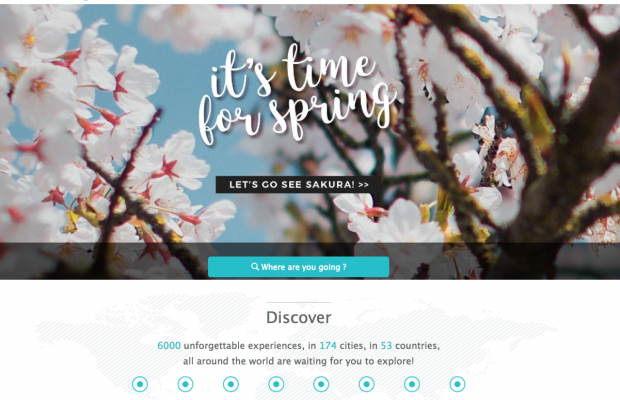
    KKday, a leading E-commerce travel platform in Asia offering localized travel across the globe officially launched in Thailand today, bringing unique and authentic tour experiences abroad to Thai tourists looking to travel independently and explore other cities around the world through organized excursions.

    Established in 2014, KKday is a Taiwan-headquartered company offering over 6,000 experiences, in 25 different categories, in 174 cities and 54 countries worldwide.

    After recently launching in Singapore, the Thai branch of KKday will appeal to the growing number of FITs (Free Independent Travelers) in Thailand in search of fun activities and memorable sightseeing trips on holiday. Whilst FITs book their own flight and accommodation, they look to online travel experts with local knowledge to book unforgettable travel experiences that give them genuine insights into a destination; discovering local culture and heritage, hidden gems and off-the-beaten-track adventures and sampling incredible food and activities along the way.

    Ming Chen, CEO of KKday, who was at the launch in Bangkok, believes city break tours will appeal to the Thai market. “Thais are renowned for their warm welcome to tourists visiting their country and this openness extends to a genuine interest in other cultures and a love of travel. Asia is home to some spectacular cities and I envisage that KKday members in Thailand will want to soak up the atmosphere and truly experience city breaks in Taiwan, Korea and Japan which are all popular vacation destinations for Thais; exciting cities like Taipei, Seoul and Tokyo. I am pleased to be launching KKday in Thailand and with the huge growth of E-commerce within the country, an online travel experience platform fits perfectly with what the market wants and how consumers behave here.”

    Hassle-free and competitively priced, KKday is easy to browse, read reviews and book online; the ideal travel companion for the digital Y Generation of under 35s who are primarily booking with KKday. In 2017, the travel trend for Gen Y tourists is all about experiential vacations and immersive getaways rather than finding some far-flung undiscovered destination or simply ‘being’ a tourist abroad.

    Today’s travelers want get a more organically native feel for a place that is less ‘touristy’ and is far more interactive and experienced-based. KKday taps into this quest for localized, customized travel.

    The launch of KKday in Thailand is aimed at expanding the platform which already has a presence in Taiwan, Hong Kong, Malaysia, Korea and Singapore. A branch in Thailand will build on KKday’s already 7 million plus page views per month, Facebook fan base of over 600,000 and membership that exceeds 300,000. Promotions are also on the horizon with relationships being established with some big-name brands in Thailand too.

    Expansion is part of the future strategy of KKday with two rounds of funding in 2015 and 2016 totaling $11.5 million led by Singapore-based venture capitalists, Monk’s Hill Ventures and AppWorks, the largest start-up accelerator in Asia.

    In Thailand, KKday has partnered with DTAC Rewards, Eatigo, Tourkrub, Show DC (Lotte) and Nokscoot.

    Celebrating its debut in Thailand with an exciting campaign, #KKvacay rewards one lucky winner and a friend will win a holiday in either Japan, Hong Kong, Korea, Singapore or Taiwan!

  • Pizza Hut’s new “Pie Tops” shoes can order pizza for you

    Pizza Hut’s new “Pie Tops” shoes can order pizza for you

    Ordering a pizza has stepped up a notch with new “Pie Tops” sneakers being launched by fast-food chain Pizza Hut.

    It is just a matter of the wearer pressing a special button on the tongue of the shoe. This makes a connection with a Pie Topps app, which then arranges to have a pizza delivered to the wearer wherever they are via geolocation technology.

    Dreamed up by advertising agency Droga5, the limited-edition shoes were made by US customised sneaker expert Dominic Chambrone, known as “The Shoe Surgeon”. Alas, they are unlikely to find their way to Hong Kong any time soon.

    Pie tops = pizza hut

    “This is one of those ideas that as soon as we saw it, we wanted to buy it,” says Pizza Hut VP of media and advertising David Daniels.

    The shoes are part of a two-month online ordering promotion for Pizza Hut, and tie in with the March Madness national basketball event in the US. As there are 64 teams in the field for the event, only 64 pairs of the shoes have been made.

    These are being given out to media members and influencers mainly, reports industry magazine Adweek, which says only a few Pizza Hut regulars are likely to score a pair.

    There is no word on who foots the bill for the pizza deliveries.

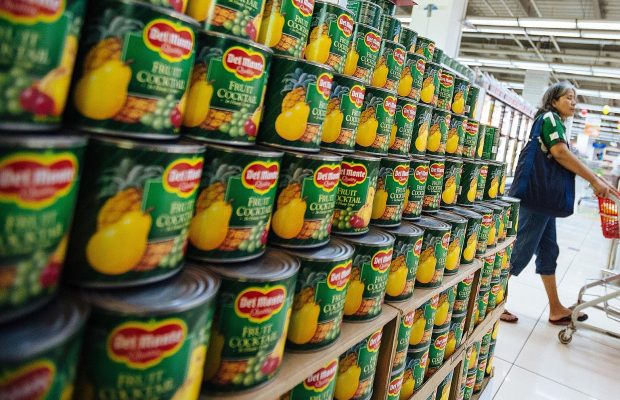
  • Del Monte Pacific recovers from losses, records $12m profit

    Del Monte Pacific recovers from losses, records $12m profit

    Del Monte reported a profit for the quarter ending in January, reversing losses incurred in the previous period.

    For the past quarter, Del Monte achieved an US$8.46m ($12m) net profit, on the back of strong sales in Asian markets particularly in the Philippines and the operational efficiency improvements resulting in cost reduction.

    Overall sales were US$604m, slightly higher than in the prior-year period as strong sales in Asia offset lower sales in the United States.

    “We continue to build on the consumption-driven growth in Asia as our team optimises opportunities in both the retail and foodservice sectors,” said Joselito Campos, Jr, managing director and Group CEO of DMPL.

    The Group’s US subsidiary, Del Monte Foods, Inc (DMFI), contributed US$450.6m or 75% of Group sales. US sales declined by 3% versus the same period last year driven by the continued weakness in the canned fruit industry, lower sales of regional brands in the packaged vegetable category across retail and foodservice due to supply-related issues, and lower sales of private label.

    “Our US business continues to be impacted by shifting consumer preferences, and our performance in the foodservice and private label sectors. We are implementing a strategy based on innovation and differentiation in existing categories, whilst seizing opportunities in other categories and channels to address consumer demands,” Campos explained.

    However, amidst industry contraction, DMFI increased its market share in two of the four major categories in retail, i.e. packaged vegetable and broth, which was further supported by the growth of the branded business amongst major retail customers.

  • Chinese officials close Lotte Group stores amid political issue

    Chinese officials close Lotte Group stores amid political issue

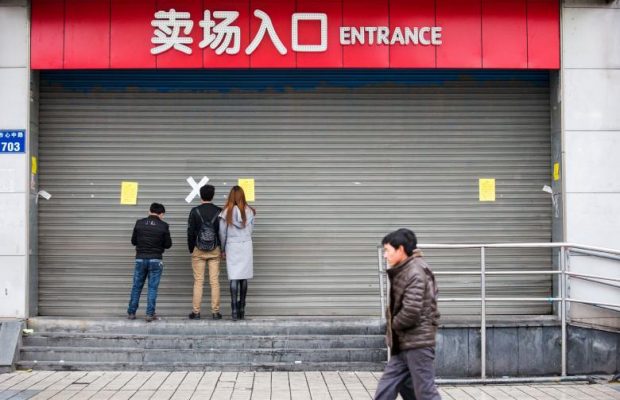
    Following inspections, Chinese authorities have closed nearly two dozen Lotte Group stores.

    Lotte says that 23 of its supermarkets in its biggest overseas market have been shuttered, reaching from Dandong on the North Korean border to the east coast and southern Changzhou.

    Workers at three stores say the closures are temporary and fire-safety related. Its its Sina Weibo microblog, the Anhui fire department says it temporarily shut two Lotte Mart stores because of fire risks, part of a broader regional sweep over the past month that had led to the closure of 30 stores belonging to a range of companies including Lotte.

    However, the Lotte closures follow a series of incidents affecting South Korean companies in China, including cyber attacks and a ban on sales of travel tours to South Korea, Reuters reports. Lotte Mart had 115 stores in China as of January, its biggest overseas market, and had group sales there of more than 3 trillion won (US$2.6 billion) in 2015.

    Problems started for Lotte after it approved a land swap outside Seoul last month so South Korea could install a defence system in response to missile threat from North Korea.

    Meanwhile, photos and videos are circulating on Chinese social media of protests outside Lotte stores, while others show Lotte outlets with their steel grates pulled shut. Outside one store, a red banner reads: “South Korea’s Lotte has declared war on China … Get the hell out of China”.

    Lotte Duty Free is back online after a cyber attack last week from Chinese IP addresses crashed its website, and the group is seeking help from the South Korean government regarding the issues it is facing in China, where it employs about 20,000 people – a third of its overseas staff.

  • Singtel announces tie-up with polytechnics to help F&B businesses go digital

    Singtel announces tie-up with polytechnics to help F&B businesses go digital

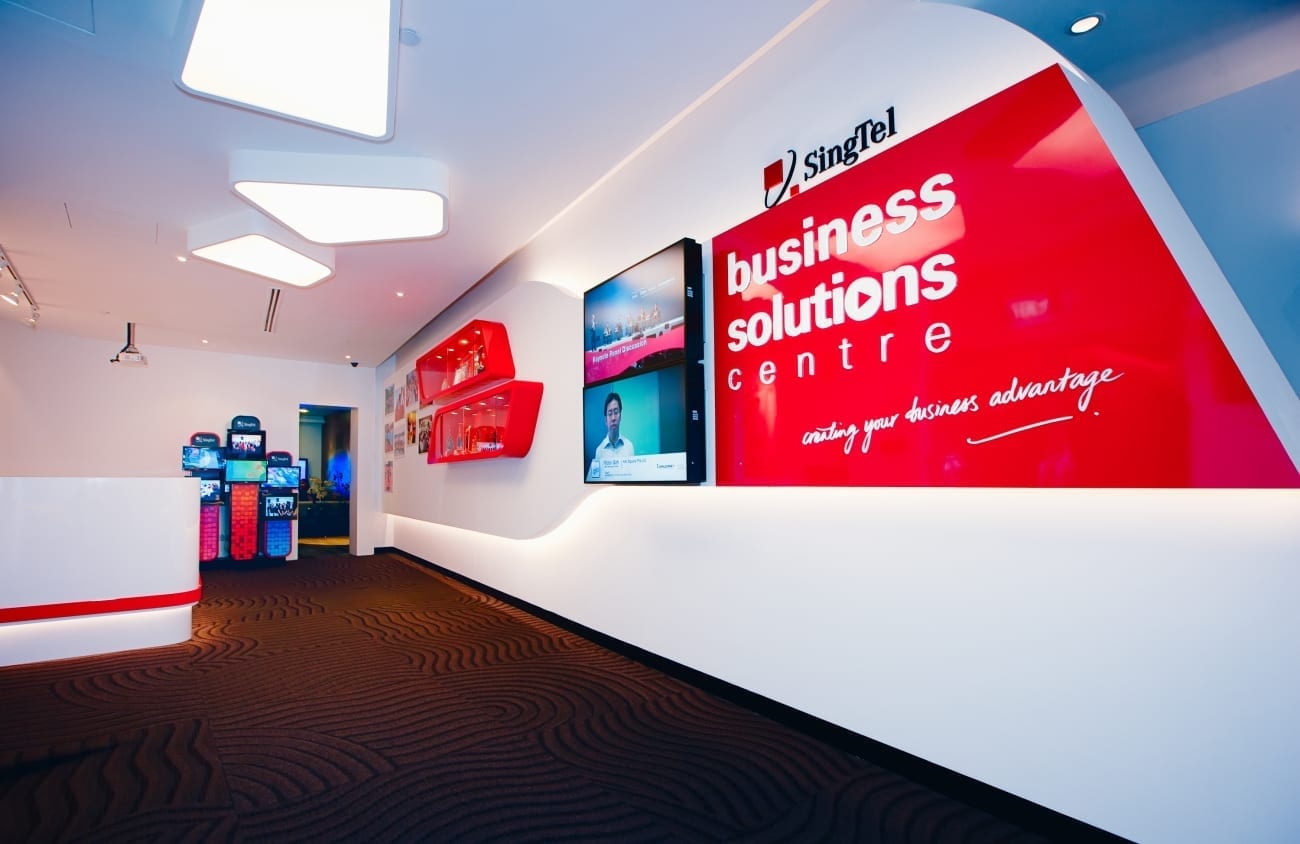
    Singtel has announced a new initiative with the two Singapore-based polytechnics — Nanyang Polytechnic (NYP) and Singapore Polytechnic (SP) — in Singapore to help F&B and retail businesses go digital.

    First, it will collaborate with the NYP – Singapore Institute of Retail Studies (SIRS) to help these SMEs hire digital professionals who will offer their expertise in e-commerce, retail analytics and digital marketing solutions such as SEO and Search Engine Marketing.

    These digital professionals will comprise of professionals, managers, executives and technicians (PMETs) who have been re-skilled.

    SMEs which sign up for this scheme will be able to claim up to 90 per cent in government subsidies.

    In addition, they can also seek additional support on social media marketing, online merchandising and analysis of online consumers from students and lecturers at the NYP’s Customer Experience and Analytics Centre.

    Next, Singtel will work with an integrated team of business, IT and communication students from SP to help F&B owners showcase their offerings on the 99% SME website — a portal set up by DBS and Singtel in 2015 which provides digital tools and resources to SMEs to boost productivity.

    Additionally, the SP students will help these businesses adopt Singtel’s Connected Restaurant solution. This solution offers an online reservation and pick up service.

    SP students will also offer recommendations and develop a suite of solutions to boost businesses’ products and digital and marketing capabilities.

    “Through the 99% SME movement, our collaboration with Nanyang Polytechnic and the Singapore Institute of Retail Studies are three-fold. First, it helps SMEs improve productivity, reduce costs, gain new revenue and scale their businesses,” said Andrew Lim, Managing Director, Business Group, Group Enterprise at Singtel, in an official press statement.

    “Second, PMETs are being re-skilled and re-employed while using their skills to help SMEs in their digital journey. Third, the students will acquire deep skills and develop entrepreneurial spirit, which prime them for their career development in the digital field.”

    Last week, Singtel and Lazada announced the launch of 99% SME e-marketplace – a dedicated portal hosted on Lazada Singapore’s website for SMEs to advertise their offerings and tap on a wider online customer base.