Author: Mei Ling Tan

  • Indonesia’s startups continue to attract investors

    Indonesia’s startups continue to attract investors

    After dominating the investment market for the past few years, startups continue to attract investors this year.

    Investors see a startup as a company which fulfills three categories required in businesses, said Morgan Stanley president director Oki Ramadhana.

    “There are three things, which are usually used as benchmarks in potential businesses that will give profit to investors. Those are scalable, profitable and tractable records,” he added.

    Tokopedia and Gojek are two examples of successful startup businesses in Indonesia, said Northstar co-founder and managing partner Patrick Walujo during a seminar at the University of Indonesia (UI) over the weekend.

    “Tokopedia only started with the capital worth 200 million rupiah (US$15,000) from its founder and former boss. But now, the company has gained US$1 billion,” he said.

    However, Patrick stressed that it is not only a matter of big money for startup companies but also sustainability.

    “It’s not only about being rich, but how to make the company grow over time. Therefore, startup owners need to find an investor partner that will help them to step up to the next level,” he added.

  • BMW plans more purchasing with Daimler

    BMW plans more purchasing with Daimler

    BMW plans to expand its cooperation with Daimler in purchasing components, the carmaker’s new head of purchasing said in an interview with Frankfurter Allgemeine Zeitung.

    “It’s not been fully exploited; there are regular talks and we are discussing jointly purchasing more components,” Markus Duesmann was quoted as saying in an advance copy of the interview, due to be published on Friday.

    He did not give details of the plans or the possible savings that were being targeted.

    Daimler and BMW first started cooperating on purchasing of parts that aren’t crucial to their brand identity in 2008, such as tyres and seat frames.

    Duesmann also said BMW would have to alter its procurement to buy more software in the next few years to meet the trend for electric cars and autonomous driving. BMW could envisage using other battery suppliers too, he added.

    “We are in talks with all the major manufacturers and will make a decision for each model generation,” he said.

    BMW currently gets its batteries from Samsung.

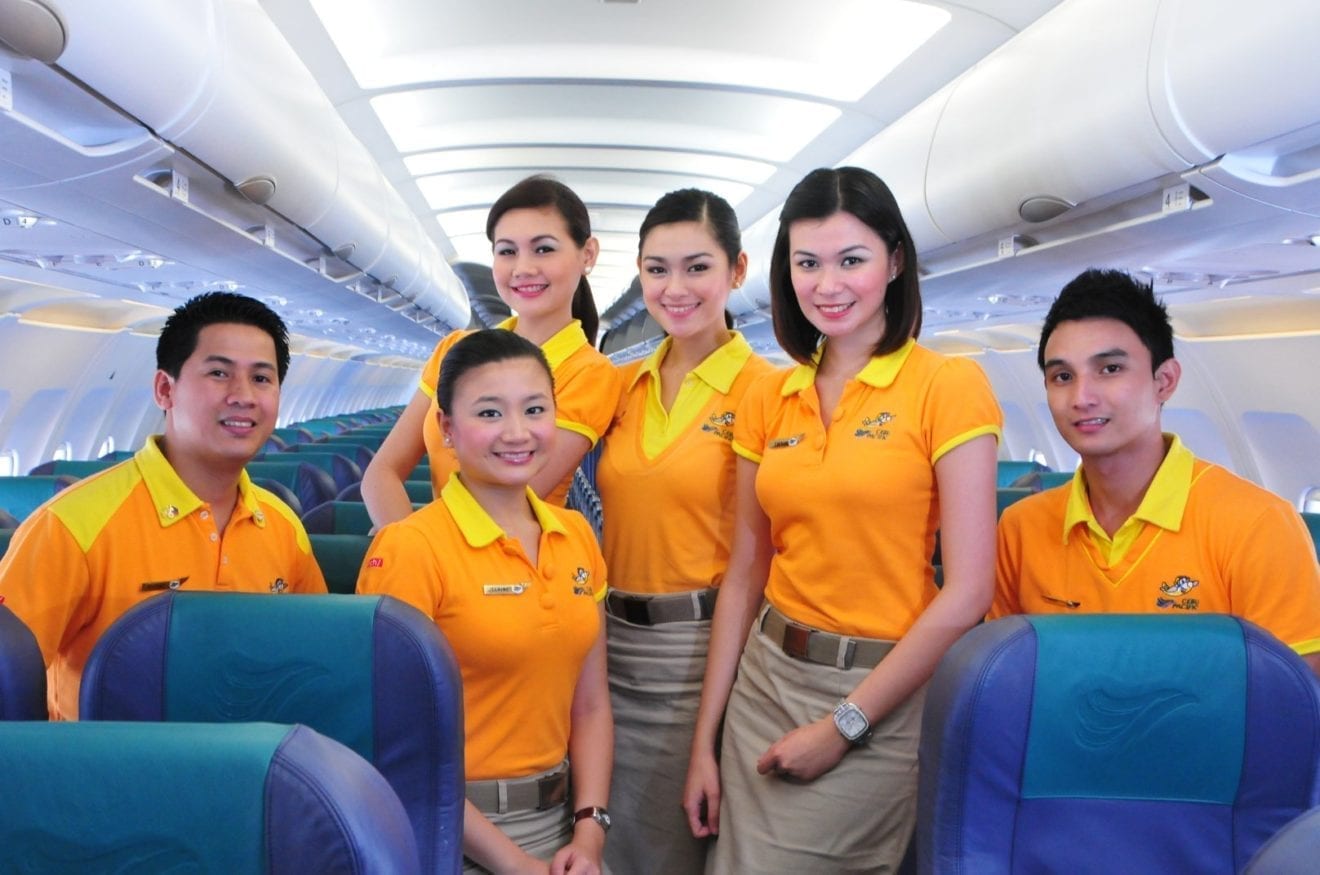
  • Cebu Pacific beats daily record as it carries more passengers

    Cebu Pacific beats daily record as it carries more passengers

    The Philippines’ largest airline, Cebu Pacific (CEB), flew 19.1 million passengers in 2016, an increase of 4 per cent from the 18.4 million passengers flown in 2015. On average, CEB flights were 86 per cent full during the year.

    Growth in passenger volume was largely driven by the airline’s low-cost short-haul services, and increased frequencies in key domestic markets. Specifically, the former recorded a 9.3 per cent growth compared to 2015, while the latter reflected a 2.6 per cent increase.

    “Last December 27, 2016, the Cebu Pacific Air Group carried a total of 64,684 passengers– the highest number of travellers we have ever flown in one day. This surpasses our prior record of 62,947 passengers flown last January 3, 2016, translating to 1,737 additional passengers,” said J R Mantaring, the CEB vice president for corporate affairs.

    “This significant increase in number only shows our firm commitment in trafficking trade and tourism in all the destinations we operate in, while at the same time enabling everyJuan to connect with their families and friends all around the world,” added Mr Mantaring.

    CEB posted passenger growth in international destinations such as Beijing, Shanghai and Xiamen in China, Taiwan (Taipei) and Hanoi and Ho Chi Minh in Vietnam. In the Philippines, domestic traffic increased in Cauayan, Siargao and Ozamiz.

    CEB currently offers flights to a total of 37 domestic and 29 international destinations, operating an extensive network across Asia, Australia, the Middle East, and United States.

    Its 58-strong fleet is comprised of Airbus and ATR aircraft. Between 2017 and 2021, CEB expects delivery of one more brand-new Airbus A330, 32 Airbus A321neo, and 13 ATR 72-600 aircraft.

  • Starbucks Coffee Japan aims to blend in

    Starbucks Coffee Japan aims to blend in

    Starbucks Coffee Japan is aiming to blend in with its first cafe in Uji, Kyoto, giving it a local tea culture theme.

    The branch of the US coffee chain will be opened by the front gate of Byodoin temple, a UNESCO World Heritage site, on March 31.

    It will occupy a space along the front approach to the temple, offering customers a view of the Ujigawa promenade. The 142 sqm outlet will have 41 seats inside and 19 outside.

    Starbucks Japan

    A gable roof will match local custom, and decor features will be related to Uji tea culture.
    Another cafe and a parking lot stood on the site until last year.

    Ten years ago, Starbucks had a 19 sqm outlet in the 587-year-old Forbidden City in Beijing, but protests led to the Seattle-based company closing it.

  • 20,000 farmers join in international standard tea production

    20,000 farmers join in international standard tea production

    Nearly 30 firms and 20,000 farmers will take part in producing 25,000 tonnes of tea of international standards in a project to promote the private-public partnership (PPP) model in tea production.

    The information was released at a conference to launch the second phase of the project “promoting tea farmers to join the sustainable and quality tea supply chain” in Hanoi on February 28.

    The project, jointly implemented by the sustainable trade initiative (IDH) organisation of the Netherlands, the Unilever group and the Ministry of Agriculture and Rural Development (MARD), aims to train and provide technical assistance for farmers to produce tea certified by the Rainforest Alliance (RA).

    Le Quang Chuyen, Deputy Director General of the My Lam Tea JSC in northern Tuyen Quang province said the PPP model has helped improve tea quality and productivity while saving production costs and labour. Their tea products meet food safety requirements of the EU and Japan.

    Tran Vu Hoai, Vice President of Unilever Vietnam, underlined tea quality improvements after three years of implementing the PPP model, saying that the group raised its import volume of Vietnam’s tea from 5,000 tonnes to 11,000 tonnes.

    He expressed his hope that with the model will continue improving Vietnam’s tea quality and the group can import up to 20,000 tonnes of tea from Vietnam.

    Under the second phase of the project, 15 factories and 6,500 households are expected to work together and produce 25,000 tonnes of tea, including 15,000 tonnes of RA certified tea, which are shipped overseas and supply for Unilever.

    So far, only eight firms have registered to join the project.

    Besides, the Vietnam Tea Association is implementing an IDH-funded project on the quality and sustainability of the tea industry. The project aims to enhance Vietnam’s tea quality to meet international standards.

  • Honda hits one-million unit production milestone in Indonesia

    Honda hits one-million unit production milestone in Indonesia

    PT Honda Prospect Motor (HPM) has crossed the one million-unit automobile production milestone in Indonesia, 14 years after it began manufacturing operations in the country.

    HPM began local automobile production in February 2003 with the Honda Stream at its factory located in Karawang, West Java, Indonesia. The Karawang Factory, built on an area of 512,500 square metres, has with a production capacity of 80,000 units. The second factory was inaugurated in January 2014 with a production capacity of 120,000 units, augmenting total production capacity to 200,000 units per year.

    Honda rides demand curve
    Over the years, the Japanese carmaker has seen demand grow for its products. In 2003, the company sold around 22,000 units. Since then, sales have risen considerably and Honda recorded 200,000 unit sales in 2016 with a 19% market share in the country. Currently, HPM produces seven models at its two factories, which include the Mobilio, BR-V, HR-V, Jazz, Brio RS, Brio Satya and CR-V.

    Indonesia is the best-performing global market for Honda. Sales reached an all-time record of 190,229 units, accounting for 44% of the carmaker’s overall 2016 ASEAN sales. The company attributes the sales increase of 14% over 2015 to its existing model line-up including the HR-V, Brio Satya and Mobilio, along with contribution from the newly-introduced BR-V.

    The Karawang Factory currently plays an important role in Honda’s global automobile component export worldwide. Its export destinations include neighbouring ASEAN countries such as Thailand, Malaysia, the Philippines, Vietnam, other Asian countries such as India and Pakistan, as well as Latin American countries, including Mexico, Brazil, and Argentina.

    HPM also delivers component parts to Japan. In 2016, Honda’s component export from Indonesia significantly grew and increased the number of containers exported from 5,600 in 2015 to more than 7,700 containers. In 2017, HPM plans to increase the export quantity to nearly 10,000 containers.

    Honda further strengthened its production operations with the opening of its stamping factory, which produces automobile component parts such as side panels, roof panels and floor panels. The factory began its operation in May 2016. The factory has implemented advanced production technology, including automatic continuous process and robotic system and has the production capacity of up to 2 million pieces component parts per year for both domestic sales and export.

    In September 2016, HPM made an additional 228 billion rupiah investment and started operation of its new factory for crankshafts. Honda employed advanced and environmentally friendly technology and adopted high-precision machines at this new factory to produce maximum of 240,000 crankshafts per year. This crankshaft factory meets regulations enforced by the Indonesian government for Low Cost Green Car (LCGC) models. Currently, HPM has achieved up to 87% local content in its products.

    Seiji Kuraishi, executive vice-president of Honda Motor Co, said, “It is a great achievement to arrive at this milestone in just 14 years and follows in Honda Motor Company’s 100 millionth unit of cumulative automobile production worldwide in September last year. Honda sales in Indonesia were ranked in fourth position for Honda globally, behind only US, China and Japan. Indonesia has always been and always will be an important market for Honda. We will continue to dedicate ourselves to doing business in Indonesia and the expansion of automobile production capacities with new factories is a testament to that commitment.”

    – See more at: https://www.autocarpro.in/news-international/honda-hits-million-unit-production-milestone-indonesia-23812#sthash.kzip7tzI.dpuf

  • Zalora CEO denies Indonesia exit rumour

    Zalora CEO denies Indonesia exit rumour

    Last week, there was a  speculation that Zalora was withdrawing from Indonesia following a share acquisition of Zalora Philippines by Ayala Group.

    “The rumour that we are selling off our business in Indonesia is certainly not the case. And we announced a deal that’s actually very exciting – an investment from Ayala Corp into Zalora Philippines – which is in no way a signal of a retreat from the country, but more of a commitment,” Gundersen told this portal.

    But why did the rumour surface in the first place? Had there been actual talks about possible investments from MAP Group?

    Gundersen declined to comment. Right now, he said, discussions with MAP are only related to how Zalora could continue adding more brands from MAP’s large portfolio. The two companies have been working together with MAP as a supplier.

    “We are not retreating from Indonesia nor the Philippines,” stressed Gundersen.

    In 2016, Zalora sold its businesses in Thailand and Vietnam to conglomerate Central Group. When news about stake sale in Zalora Philippines and rumour on Indonesia exit emerged, it led to a speculation that Zalora had continued its retreat from the region. Gundersen denies this narrative, saying that the Philippines share sale was very different to what it had done in Thailand and Vietnam.

    “Our investors looked at the operations in Thailand and Vietnam (like they always do, regularly), and decided that it did not have the best outlook. Whereas in the Philippines is very different because we remain the majority. It just made sense to us to have a local partner in the Philippines,” he explained.

    Will Zalora implement the same partnership strategy in Indonesia, as it has now with Ayala? It is always a possibility that the company would always explore, Gundersen said.

    Indonesia, in particular, is a massive market for e-commerce, with high social media and smartphones usage, coupled with growing income. Gundersen reiterated that Zalora is committed to bring more brands – local, international, and in-house – that are more relevant for its Indonesian customers.

    The company is also on the lookout for ways to improve its services, particularly in payments, a sector which Gundersen called “very interesting” to watch.

    “Definitely the space that we want to watch – anything that can help make it easier for our customers to make a purchase we want to be involved. It’s still early days but definitely we want to monitor close,” Gundersen said, when asked about a possibility to partner with local fintech companies.

    Indonesian e-commerce industry has grown in two-digits annually over the past five years, according to a number of reports. This year, e-commerce transactions in the country are expected to reach $45 billion from an estimated $30 billion in 2016. While the opportunities are abundant, the competition is fierce.

    A few months earlier, local firms Berrybenka and SaleStock were reported to have laid off hundreds of their employees. While smaller firms are gasping for breath, giants like MatahariMall.com and Lazada are steadily marching forward. Last year both companies received major funding from global investors, with MatahariMall snatching $100 million from Mitsui (and at least another $25 million from Matahari Department Store) and Lazada pocketing $1 billion from Alibaba.

    Experts have projected that competition will start to sharpen even further – especially if US giant Amazon decides to enter Indonesia – and will force smaller firms to consolidate.

  • France launches energy group in Indonesia

    France launches energy group in Indonesia

    France launched the French Renewable Energy Group (FREG) here on Tuesday, as a forum for French companies interested to be a part of the renewable energy sector (EBT) in Indonesia.

    During the launching ceremony, a memorandum of cooperation was also signed between Indonesia Renewable Energy Community (METI) and FREG.

    METI has become FREGs local partner to assist the French companies in identifying and developing renewable energy projects in Indonesia.

    In his speech, Energy and Mineral Resources Minister Ignatius Jonan said Indonesia was committed to have 23 percent of renewable energy in the national energy mix of electricity as soon as possible, or at least by 2025.

    Meanwhile, French Minister of Foreign Affairs and International Development Jean-Marc Ayrault stated that FREG was aimed at gathering French energy companies, which are in Indonesia at present and those interested to enter the country, to cooperate with the Indonesian partners.

    He explained that the mobilization of all stakeholders, both public and private, is needed for achieving 23 percent renewable energy in the energy mix of electricity.

    It requires a regulatory framework and proper finance, and companies should develop innovative solutions which are tailored to the realities in each country, Ayrault added.

    FREG will be an extension of the French Syndicate of Renewable Energy, which is the largest organization in France.

    FREG is expected to improve the relationship between Indonesia and French business companies in renewable energy sector and encourage the participation of French companies in renewable energy projects in Indonesia.

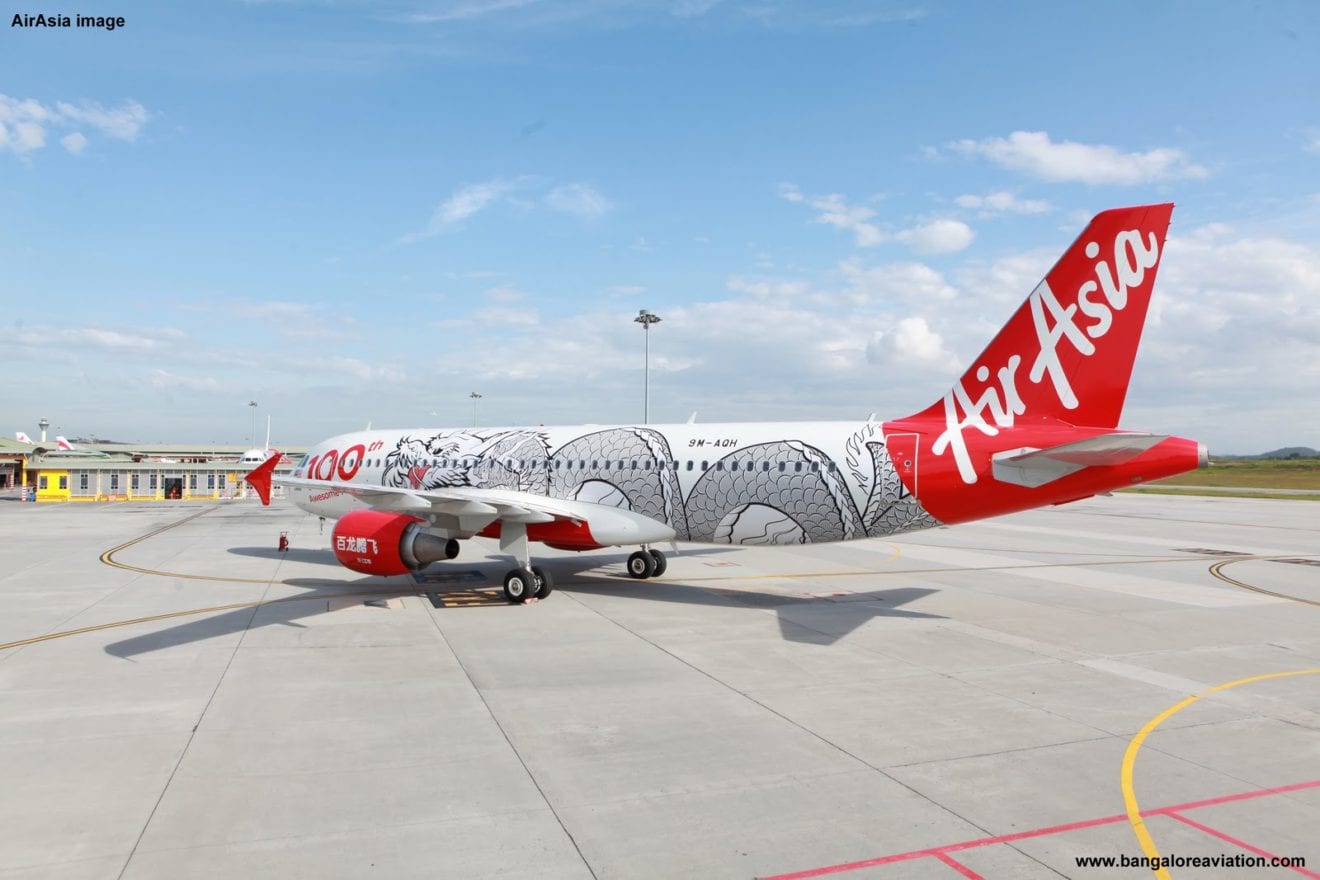
  • AirAsia eyes sharp growth

    AirAsia eyes sharp growth

    Airasia says it will push for higher passenger loads while keeping a tight lid on costs to sustain earnings this year and mitigate the effects from rising oil prices and volatility in currencies.

    Chief executive officer Tony Fernandes said he was forecasting 10-per-cent revenue growth this year after a similar jump to 6.9 billion ringgit (Bt54 billion) last year.

    “Our strategy of investing in technology three years ago will give us a huge advantage in the next five years, and it will be a big help in reducing costs and growing revenue.

    “We think we are finally moving towards our ancillary income target of 60 ringgit per person this year.

    “Ancillary continues to be an engine of growth and revenue will grow this year,’’ he said.

    AirAsia, which recorded 2.03 billion ringgit in net profit last year, is seeing forward loads this quarter at 89 per cent.

    Last year, passenger loads rose 10 percentage points to 86 per cent and the group flew 56.5 million passengers.

    In its presentation to analysts last week, AirAsia said it was targeting ancillary income of 60 ringgit next year after reporting 50 ringgit last year, but Fernandes wants to achieve 60 ringgit this year.

    “We see big areas of growth, led by the boom in data. We will be able to offer more personalised and more conversion on our websites, leading to more sales.

    “Our mobile strategy is for AirAsia to be the first choice of travel to buy products led by ease and lowest fares, more so with our express pay, which is equivalent to amazon one click,” he said.

    AirAsia said at least 70 per cent of its sales came directly via airasia.com.

    There was more room for growth in the conversion rate, which is now at 5 per cent. A single percentage-point increase translates to additional sales of 1 billion ringgit.

    “Indonesia and the Philippines are new engines of growth. Asean inter-travel is booming as long as costs are low,” he said.

    With the rising demand for air travel, “I had to use other airlines in the last few weeks, as I could not get into our own flights. That has happened the first time to me since the past 16 years.”

    For the past two years, AirAsia reported 2 billion ringgit in net profit, largely from higher sales, lower fuel cost and with its rivals, mainly Malaysia Airlines, still in recovery mode.

    But analysts have said the playing field will get tougher this year, something that Fernandes is not overly concerned about.

    CIMB Research, in a note, said Malindo Air’s remarkable capacity expansion last year and planned growth this year meant AirAsia would face more competition this year.

    AirAsia is also planning to expand capacity by eight aircraft this year, after shrinking the fleet last year.

    It added that with the weaker ringgit and higher oil price, it expected AirAsia’s core earnings per share for financial 2017 to fall by 52 per cent.

    “The group plans to increase available seat kilometres by 10 per cent. It is willing to sacrifice yields to maintain loads, which suggests a potential decline in revenue available seat kilometre,” Morgan Stanley Research said in a report.

    “Fuel costs should remain stable, with 75 per cent of fuel requirements hedged at US$60 per jet barrel. We expect 2017 operating margins to remain healthy at 23 per cent.”

    To Fernandes, his biggest challenge is to get regulators to understand the difficulties that airlines face in growing markets.

    “What we have been doing for 16 years shows us that we are competitive, in fact we are durable to competition.

    “There has been competition for 16 years but we have continually grown margins and profits and our main secret is low cost, great people and huge networks. We made money when oil was at $140 a barrel.


  • More than 14,000 enterprises established in Vietnam in two months

    More than 14,000 enterprises established in Vietnam in two months

    More than 14,450 enterprises were set up in the first two months of this year, with a total registered capital of over VND152.5 trillion (US$6.71 billion), up 3.9% in terms of number of enterprises and 35% in terms of registered capital over the same period in 2016, according to the Business Registration Management Agency.

    The average registered capital per new enterprise reached VND10.6 billion (US$466,000), an increase of 29.9% against the same period of last year.

    However, in February alone, more than 5,400 enterprises were established, with VND62.2 trillion (US$2.74 billion) worth of registered capital, a decrease of 39.3% in the number of enterprises and 31% in registered capital compared to January.

    The fall in number of newly established enterprises was due to a long Tet holiday in late January and early February.

    The first two months of this year also saw more than 7,900 enterprises resume their operations, up 7.6% compared to the corresponding period last year.

    In the meantime, about 2,500 enterprises were dissolved, up 14.9% compared to the same period of 2016, including more than 2,300 enterprises with a registered capital of less than VND10 billion (US$440,000) while more than 16,300 enterprises registered to suspend operations.

    The sectors that attract the participation of a large number of labourers include the processing and manufacturing industry, wholesale and retail sales, automobile and motorcycle repairs and construction, among others.

  • China Mobile, Ericsson demo IoT-powered factory

    China Mobile, Ericsson demo IoT-powered factory

    China Mobile and Ericsson have completed a trial involving what the companies say is the world’s first cellular IoT-based connected factory.

    The companies are presenting the outcomes of the trial at Mobile World Congress 2017 in Barcelona.

    The factory is implementing multiple applications for low-power wide area (LPWA) networks and devices, including production line monitoring, warehouse monitoring and package and materials tracking.

    Ericsson’s demonstration in Barcelona highlights a connected high-precision screwdriver, with motion sensors attached to NB-IoT modules that transmit real-time data from the tools to the cellular IoT network.

    The factory has around 1000 high-precision screwdrivers that each require routine calibrations and lubrications based on usage.

    The solution being developed for the factory covers terminals, networks to the platform and analytics.

    It is powered by Ericsson radio equipment and NB-IoT software, as well as Intel’s pre-commercial NB-IoT software, an Intel modem embedded in a Fibocom module and China Mobile’s OneNet IoT platform.

    “The combination of cellular IoT and Industry 4.0 has so far been fairly unexplored,” Ericsson head of north east Asia Chris Houghton said.

    “Enabling IoT network technology such as Cellular LPWA, together with cloud-based solutions, give manufacturing firms access to more information than ever before. The opportunity to use data to increase productivity is not only beneficial to a firm, but the whole of society as well.”

    China Mobile has been helping to lead the development of cellular IoT technology, having completed the world’s first lab testing on NB-IoT and moving towards large-scale field trials.

  • Maven Ventures backed Embark unveils its self-driving truck technology

    Maven Ventures backed Embark unveils its self-driving truck technology

    Self-driving technology for commercial trucking Embark has unveiled its self-driving truck technology to the public. The company—which gained approval by the State of Nevada earlier this year to begin testing its truck on public roads—has created a technology that allows trucks to drive from exit to exit on the freeway without any human input.

    Embark’s truck uses a combination of radars, cameras and depth sensors known as LiDARs to perceive the world around it.

    “Analyzing terabyte upon terabyte of real-world data, Embark’s DNNs have learned how to see through glare, fog and darkness on their own,” said Alex Rodrigues, CEO and Co-founder of Embark. “We’ve programmed them with a set of rules to help safely navigate most situations, how to safely learn from the unexpected, and how to apply that experience to new situations going forward.”

    “Spending weeks on the highway is tough on you,” said Owner-Operator Jeff Scorsur. “If I could still get the job done while driving in my own city and sleeping in my own bed, that would make my family very happy,” he said.

    According to Rodrigues, the idea for Embark came after blowing a tire on the interstate and waiting four hours for the tow truck to arrive.

    “Every single 18-wheeler that drove past had a sign on the back ‘Drivers Wanted’. It was so clear there was a shortage of drivers,” he said. “The numbers back that up. The American Transportation Research Institute estimates there is currently a shortage of 100,000 truck drivers in the industry, which is poised to only get worse as baby boomer drivers – the bulk of the industry’s workforce – retire over the next decade. Embark’s goal is to increase productivity per driver and prevent the shortage from becoming a crisis.”

    The team is backed by a multi-million dollar investment led by Maven Ventures. Maven’s previous investment in self-driving technology, Cruise Automation, sold to General Motors for $1 billion last year. Embark plans to quadruple its engineering team within the next year and aggressively expand its testing fleet to show their technology is ready for the nation’s highways.

    “We are committed to proving beyond a shadow of a doubt that this technology is safe and reliable,” said Rodrigues. “That means performing extensive tests and working with our partners in the government to get it—and the market—ready.”

  • Huawei unveils CloudMetro for telco cloud transformation

    Huawei unveils CloudMetro for telco cloud transformation

    Huawei has released during Mobile World Congress its CloudMetro solution, which it says can help operators accelerate their digital transformation and business success.

    CloudMetro allows metro networks to utilize cloud technology to enable resource pooling, service agility, operation automation and open platforms.

    With the rapid introduction of heavy applications like 4K and VR, enterprise cloud interconnect, and the increasing service diversity brought by 5G , together with the new services we can’t yet predict, metro networks must remain at the forefront of business innovation and constantly explore ways to enhance the user experience.

    Wei Feng, CMO of Huawei’s network product line said “only a metro area network capable of rapid integration, efficient operations, and network capability openness can meet the commercial needs of the new services.

    “To exhibit these features, a metro network must use a cloud-based architecture,” he noted.

    The CloudMetro solution, based on cloud-native architecture, comprises two parts: upper-layer network cloud engine (NCE) and underlying E2E slicing-capable bearer network. It separates the functional modules, cloud operating system, and underlying physical devices into different layers, and moves management and service functions to the NCE to provide an on-demand LEGO-style service provisioning capability.

    By introducing service function chains to allow for on-demand service function selection and deployment, the CloudMetro solution can lower trial costs, shorten service time to market from months to days and automate O&M for greater efficiency gains, Wei said.

    The resource pooling function, for example, improves network utilization by 100%, while automated operation improves efficiency by 10 times, the executive added.

    Wei said China Unicom has deployed CloudMetro solution to provide commercial SD-UTN (software-defined unified transport network) smart government and enterprise leased line services in Guangzhou.

    Huawei has also opened the standard northbound interfaces to third parties, allowing more applications to be supported. The company provides a lab for remote online integration verification, marking a departure from independent development to joint development with partners.

    The company said unified service management, centralized resource control, and flexible resource scheduling across layers, domains, and vendors allow for online self-service service subscription, one-touch service provisioning, cloud-based service upgrades, and visualized O&M, improving O&M efficiency tenfold.

    Wei said Huawei has also released what it called is the industry’s first network slicing router for operators to construct an E2E slicing-capable network. At MWC, Huawei and DT are conducting a joint demonstration on 5G network slicing.

  • SK Planet and Samsung sign for online partnership

    SK Planet and Samsung sign for online partnership

    Samsung Electronics Southeast Asia and Oceania has signed a memorandum of understanding with global platform innovator SK Planet on an eCommerce partnership in Southeast Asia.

    Signed in Singapore, the deal aims to promote Samsung’s brand presence and provide increased convenience and access to the Korean company’s products in Southeast Asia through online shopping sites 11street Malaysia, 11street Thailand and Elevenia in Indonesia.

    This follows Samsung and SK Planet collaborating in the South Korean domestic market.

    During the past four years, SK Planet has grown in overseas markets by leveraging its expertise from 11street Korea. SK Planet has launched its eCommerce platform into new markets every year, beginning in 2013 with Turkey’s N11.com, where it became market leader in two and a half years, followed by Elevenia in Indonesia, 11street Malaysia and, this month, 11street Thailand.

    “Our official launch was a great success with more than 3000 partners, customers and media joining,” says 11street Thailand CEO Hong Cheol Jeon. ‘This collaboration with Samsung will help to strengthen our partnership in Thailand and enhance our customers’ online shopping experience.”

    Samsung has an official shop-in-shop page on 11street, complemented by delivery and installation by authorised distributors. The page lets consumers search, browse and buy Samsung products easily, as well as access online-only products, pre-sale offerings and promotional discounts.

  • Japanese convenience store sales grow

    Japanese convenience store sales grow

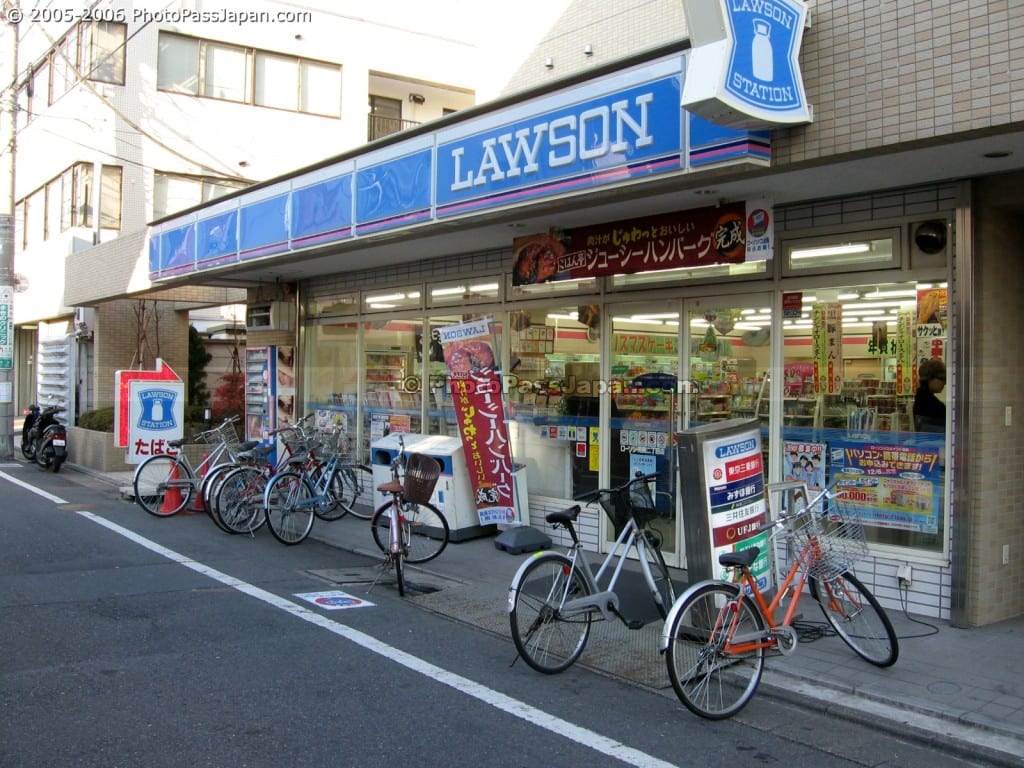
    Sales at Japanese convenience stores rose 0.1 per cent in January from a year earlier, up for the fourth consecutive month.

    Industry data shows there were brisk sales of hot food and side dishes.

    Same-store sales for eight major chains totalled ¥753.16 billion (US$6.7 billion), the Japan Franchise Association says.

    While the number of customers dropped 1.1 per cent to about 1.2 billion – declining for the 11th straight month – spending per customer rose 1.2 per cent to ¥620, up for the 22nd consecutive month, according to the association.

    The number of convenience stores increased 2.5 per cent from a year earlier to 54,496.