Author: Mei Ling Tan

  • First J/Speedy Card in the ASEAN Region to be issued by BDO

    First J/Speedy Card in the ASEAN Region to be issued by BDO

    JCB International, the international operations subsidiary of JCB, announced the launch of the J/Speedy JCB card in the Philippines with BDO Unibank (BDO), the largest bank in the Philippines in terms of consolidated resources, customer loans, deposits, assets under management and capital, as well as branch and ATM network nationwide. Card issuance has started this month, for the first J/Speedy JCB card to be launched in the ASEAN region. J/Speedy, JCB’s EMVCo compliant contactless scheme, provides a convenient and easy payment solution to valued customers of BDO.

    JCB brand cards are currently issued in 23 countries and territories with over 100 million cardmembers around the globe. BDO has cooperated with JCB for JCB card acceptance at BDO merchants from 1998 and started issuing JCB card in the Philippines in the same year. The launch of this new product, entering the contactless payment market, is the next step for the partnership between BDO and JCBI. BDO will also start acceptance of J/Speedy JCB card from July 2017 at BDO merchants.

    Mikihisa Asano, Country Manager of JCBI Philippines, said, “We are very excited and appreciative of BDO’s launching the new contactless card. Together, we will aggressively expand and grow our business in this country. In fact, BDO and JCB will soon launch another card product in the market, which is a response to the increased competition of credit cards in the Philippines”.

  • Workz launches new eSIM operating system

    Workz launches new eSIM operating system

    UAE-based mobile solutions vendor Workz Group has entered into a value-added reseller agreement with UK telecoms software company Simulty Labs covering the provision of commercial and technical support for Workz’s eSIM operating system and remote provisioning server.

    The agreement will pave the way for distribution of eSIM across the MEA and Southeast Asia, the companies said.

    With the agreement, Workz will be able to provide regional customers with remote management capabilities of mobile connected devices through eSIM technology.

    The company is targeting the product at device manufacturers, technology enablers, mobile network operators and other businesses in the M2M, automotive, mobile devices and medical fields.

    “Our eSIM, OTA, and remote provisioning solutions allow customers to realize their IoT development strategy whether it be competitively-priced multi-IMSI SIMs, roaming data, device management, big data management or automation,” Workz CEO Brad Taylor said.

    “For rapid deployment and cost-savings, we will provide a fully secure online SaaS connected management solution. We are currently in the final stage of becoming certified under the GSMA Security Accreditation Scheme for traditional UICC SIM cards and will shortly be applying for its eSIM (embedded SIM) counterpart, in order, to give customers full confidence in our secure data management systems.”

  • Vietnam set for co-working office boom

    Vietnam set for co-working office boom

    With both local and international operators strongly expanding into co-working in Vietnam, the industry is expected to develop rapidly, experts have said.

    An office building for lease in Ha Noi. Co-working offices are in great demand thanks to the flexibility, creativity and amenities tenants get. It also offers a far more cost-effective solution for tenants compared to traditional leased office space.

    They said the development of this new segment in the property market is being driven by start-ups, freelancers and increasingly by small companies.

    Vu Cam Giang, co-founder of Moonwork co-working space in Ha Noi, told that initially co-working had attracted students, employees allowed to work from home, start-ups, freelancers and artists who were curious about the new experience.

    But now only start-ups and freelancers hire co-working space, with many of them needing a place where they can bounce things of each other or explore co-operation opportunities, she said.

    Since it was launched more than a year ago her co-working space has been always full, indicating the high demand, she said.

    A recent report from property consultant CBRE Vietnam said the co-working segment has grown rapidly in Ha Noi and HCM City since it was first introduced in 2012 and started to gain traction in 2015 with the entry of local operators Toong and Dreamplex.

    The report said there are now 17 co-working space operators with 22 venues, all but one local, but the situation is set to change with the entry of regional operators later this year and in 2018.

    Talking about the growth, the report said the global co-working industry has been growing at 53 per cent a year for the last five years. In Vietnam the rate has been 58 per cent.

    But with the concept still being relatively new in the country, and major regional and international operators yet to enter, the rate is set to accelerate, it said.

    Co-working offices are in great demand thanks to the flexibility, creativity and amenities tenants get. It also offers a far more cost-effective solution for tenants compared to traditional leased office space.

    Office rents now range between $1,100 and $1,400 per month.

    Besides, co-working tenants do not have to shell out money for furnishing or even buying computers and other office equipment.

    CBRE said the cost of co-working space varies across cities, and is less in Ha Noi and HCM City than most other cities in the Asia Pacific.

    But the offices are generally not located in prime buildings or areas since operators seek to keep rental costs low. They are often situated in underutilised buildings in non-central locations, it said.

    The entry of larger operators would likely usher in a period of consolidation and M&A activity within the industry, forcing poorly managed or unsuitable co-working spaces out of the market and improving the quality of existing operators, it said.

    “With the development of start-ups and freelancers and people’s changing perception in choosing working space, the co-working segment will continue to expand in Vietnam,” Giang said.


  • Takata decides to file for bankruptcy

    Takata decides to file for bankruptcy

    Japan’s Takata Corp decided on Monday to file for bankruptcy protection in Japan with liabilities of more than 1 trillion yen (US$9 billion), Japanese media reported, as the auto parts supplier has struggled due to its defective air bag inflators at the center of the auto industry’s biggest ever product recall.

    The decision came at a special board meeting, public broadcaster NHK said.

    Takata is expected to file for a U.S. Chapter 11-style bankruptcy protection procedure, along with a similar filing in the United States, sources have told Reuters. This would open the door for a financial rescue from U.S. auto parts supplier Key Safety Systems, which Takata has tapped as its preferred financial sponsor.

    Faulty air bag inflators made by Takata have been linked to at least 17 deaths in the United States and other countries, prompting a massive global recall which began nearly a decade ago.

  • China’s tech giants in race to transform grocery shopping

    China’s tech giants in race to transform grocery shopping

    As Amazon.com looks to swallow United States grocery chain Whole Foods, China’s tech giants are already digesting hefty bricks-and-mortar deals, taking the lead in the battle to transform supermarket shopping with big data and better supply chains.

    China’s Alibaba Group Holding and JD.com have invested heavily in offline retail – bricks-and-mortar stores – in recent years to complement their online offerings.

    With their ready-made payment and social media platforms to lure shoppers, Alibaba and JD.com have helped China become the world’s largest online grocery market, far ahead of the US.

    This early lead, cemented by densely populated urban areas and cheap labour, could be key as retailers and tech firms race to boost margins on low-cost consumer goods by reinventing supply chains with big data analytics.

    “China is already the largest online grocery market in terms of value in the world, so it’s really advanced in terms of scale,” said Mr Nick Miles, head of Asia-Pacific for food and grocery industry research body IGD. Sales made online are set to more than double to around 6.6 per cent of China’s broader grocery market by 2020, compared with around 1.4 per cent for US sales by then.

    Both US and Chinese e-commerce firms are grappling with the challenge of increasing their margins on fast-moving consumer goods (FMCG), which include low-margin, high-demand goods with a short shelf-life – a staple of grocery stores.

    Alibaba, which has a burgeoning cloud business that competes directly with Amazon, plans to use its trove of consumer data to provide a suite of connected services back to the brands whose goods it sells. Services will include inventory management, smart manufacturing and logistics, which aim to slash waste and margins across the entire supply chain, according to the company’s “New Retail” strategy.

    Likewise, JD.com uses data from a partnership with China’s hugely popular messaging app WeChat, which has over 930 million users, to build data profiles for a range of brands including baby products, cosmetics and soft drinks.

    Alibaba has invested over US$9.3 billion (S$12.9 billion) in offline retail stores since 2015, including supermarket chain Sanjiang, department store Intime Retail Group and Suning Commerce Group, one of China’s biggest offline retailers. Last month, it took an 18 per cent stake in Lianhua Supermarket Holdings, part of retailer Bailian Group.

    JD.com bought Wal-Mart Stores’ Chinese online platform Yihaodian for about US$1.5 billion in shares last year.

    US firms are now looking to play catch-up as bricks-and-mortar stores are hit by a slowdown and online players battle with tight profit margins and high delivery costs.

    Amazon launched a US$13.7 billion bid for grocery chain Whole Foods Market last week, marking its intention to take on Wal-Mart.

    Wal-Mart, which got a stake in JD.com in the Yihaodian deal, raised its share in the Chinese firm to 12.1 per cent in February, having bought online retailer Jet.com in a US$3 billion deal last year.

  • DHL beefs up cold chain to US and Asia

    DHL beefs up cold chain to US and Asia

    DHL Global Forwarding, the air and ocean freight specialist of Deutsche Post group, says it is going to accelerate the supply chain for the north Norwegian seafood industry.

    DHL has started shipping live crabs and seafood from the Lakselv Airport Banak in north Norway to Asia and Northern America.

    On dedicated weekly flights, DHL transports the fresh seafood to the DHL terminal in Oslo, from where the freight is sent to South Korea and other destinations such as Japan or the United States.

    From the origin, which is only 100km from the North Cape, to its destination in Asia the whole logistics is exactly timed, ensuring the shipments are delivered in perfect condition.

    Tim Robertson, head of Air Freight, DHL Global Forwarding, Americas, said: ‘Thanks to our team of experts, who understand temperature control requirements, regulations, food safety and quality control guidelines, this seafood and fish is able to get to market and to consumers in the most expedient way possible.’

    DHL said transporting the fresh seafood by plane allows it to cut the lead time nearly by 50 per cent. This ensures that living crabs and other fresh seafood arrive at their destination in the best condition.

    Bjørn-Erik Stabell, marketing manager for salmon and trout at the Norwegian Seafood Council, said: ‘Time is of the essence when it comes to delivering fresh seafood of the very best quality. Norway is a long country, and with a large proportion of seafood being produced in the north, this air freight route is an important contribution to efficiently reaching seafood consumers across the world.’

    DHL is aiming to increase the frequency of deliveries from Oslo to Asia to three flights per week. From Oslo, almost 90 per cent of the fish is flown directly to Seoul in South Korea, while approximately 10 per cent is further directed to destinations in the US, Japan and China.

  • South Korea to raise subscription discount to 25%

    South Korea to raise subscription discount to 25%

    The South Korean government plans to increase the mandated monthly telecoms subscription fee discount to 25% from 20% as part of a plan to reduce total household expenses by 4.6 trillion won ($4.03 billion) annually.

    Customers signing up for one or two year subscriptions will be able to choose to apply the discount as either a monthly rte cut or a one-time discount on a new smartphone purchase.

    The market’s operators will also be required to provide an extra 11,000 won discount on monthly fees for elderly and low-income Koreans.

    A plan unveiled by the government will also involve the establishment of more Wi-Fi access points at schools, public buildings and public transport lines.

    But the plan has excluded an earlier proposal to abolish the 11,000 won basic mobile service fee to further reduce costs for consumers, due to strong opposition to the plan from the industry.

    According to the report, the economic committee of the nation’s State Affairs Planning Advisory Committee believes that increasing the discount rate for subscription services and low-income customers has the same effect as the proposed abolition of the fee.

    The mandated increased discount rate is expected be introduced in September, but could face legal and other challenges from operators.

    The government reportedly also intends to reduce mobile network lease rates for MVNOs and abolish the current cap on handset subsidies to make purchasing smartphones more affordable.

  • Japan’s BITPoint to Add Bitcoin Payments to Retail Outlets

    Japan’s BITPoint to Add Bitcoin Payments to Retail Outlets

    BITPoint Japan, the company behind Peach Aviation Ltd.’s move to let travelers use bitcoin to pay for tickets, is planning to give hundreds of thousands of Japanese retail outlets the ability to accept the digital currency.

    “We’re holding discussions with a retail-related company,” Genki Oda, BITPoint’s president, said in a recent interview. “By going through a company providing payment terminal services to shops, we have the possibility of increasing its use at one stroke. It’s easier than talking to lots of individual retailers.”

    BITPoint is joining a flurry of companies embracing regulations, enacted in Japan last month, that recognize digital currencies as a form of payment. That has helped to make yen trades one of the world’s largest transaction pools, exceeding China’s pole position at the end of 2016, according to Oda. Bic Camera Inc., one of the country’s biggest electronics retailers, began accepting bitcoin at two stores in Tokyo last month.

    “We’re also talking to a big convenience store operator about using it,” said Oda, 36, who also runs BITPoint parent Remixpoint Co., which had a market value of about 21 billion yen ($189 million) on Friday. He said he’s aiming to make an announcement by early next year.

    The shares of Remixpoint rose as much as 18 percent to their daily price limit. Last week, Remixpoint said it will convert debt issued to BITPoint into equity, raising its ownership in the subsidiary to 97.7 percent.

    Bitcoin, which debuted eight years ago, is gaining wider use as a way to pay for goods and services, and lets people transact without oversight from governments, regulators or central banks. The virtual currency has been rallying against the dollar and other fiat currencies and was trading at $2,210 on Monday, near record highs.

    While BITPoint operates as a bitcoin exchange, it’s pushing to promote the use of the cryptocurrency in stores and other retail outlets, instead of as a speculative instrument. The company currently has ties with tens of retailers and plans to expand that number, Oda said.

    A change in Japanese law on April 1 formalized rules around anti-money laundering and put in place standards for security and audits. Restaurant booking site Gurunavi Inc. will start letting diners pay with bitcoin later this year, the Nikkei newspaper reported last month.

    “It’s funny how the whole narrative of bitcoin being risky or dangerous has changed, and it is now seen as a form of pride to regulate and embrace it,” said Thomas Glucksmann, head of marketing at Hong Kong-based bitcoin exchange Gatecoin.

    Asked about the recent climb in bitcoin’s value, Oda said he’s wary of the sudden jump and doesn’t think it’s sustainable. At the same time, Japanese investors and day traders are taking a serious look at bitcoin as an asset class, thanks to the new regulations, he said, adding that several large foreign exchange brokerages will begin bitcoin trading in the coming months, boosting volumes.

    Still, it’s unclear whether bitcoin payments can become more than a marketing gimmick. The biggest hurdles include long network confirmation times and high transaction fees. While many bitcoin community members rallied around a new proposal last week to fix the problem, deep differences within the group have led to several similar solutions falling through since 2015.

  • Social media fatigue spreading among Korean users

    Social media fatigue spreading among Korean users

    The explosive popularity of social media among Korean users is starting to subside amid a sense of fatigue on excessive information from the new medium, according to industry sources.

    Data showed the numbers of users on major social media sites such as Facebook and KakaoStory are decreasing this year. According to market tracker Nielsen KoreanClick, the monthly active users of Facebook remained at 9.96 million in May, down 13.1 percent from 11.45 million a year earlier. That of Kakao Story was 12.59 million, down 17.76 percent from 15.31 million. Twitter also lost over 10 percent of its users in the month.

    Facebook has been the most-used social media site in Korea, recording 5.6 billion minutes of cumulative use time on mobile devices in April, according to mobile app data researcher WiseApp. Naver’s Band came second with 2 billon minutes. Instagram had 1 billon minutes and Kakao Story had 900 million minutes.

    WiseApp pointed out Facebook’s use time is continuing to decrease for the first four consecutive months of this year. Its use time was 6.6 billion minutes in January, 5.9 billion minutes in February and 5.8 billion minutes in March.

    When the internet entered the business world in the 1990s, executives unaccustomed to the massive amount of information suffered from what is called “information fatigue syndrome,” which made making decisions difficult.

    “Adding to the information fatigue syndrome, social media users increasingly face concerns over excessive or unwanted disclosure of personal data. They also experience a sense of relative deprivation as they compare their actual lives with the seemingly happy lives of others,” an internet service industry source said. Out of so-called “social media fatigue,” some of them stop using social media or unregister from the services, he said.

    “Though it has not been medically defined, those who excessively indulge in social media can feel stressed and fatigued. Some of them undergo withdrawal symptoms when they are not able to access social media,” the source said.
    An overflow of ads in social media timelines has also been pointed out as a cause of the user’s tiredness.

    In particular, Facebook is increasingly strengthening its ad business on the social media platform, tapping into its 2 billion global user base. Besides Facebook, most social media platforms have introduced ad platform algorithms that automatically analyze user patterns and preferences to publish ads.

    “Ad platform businesses on social media will definitely continue to grow on the spread of mobile devices and their use. Social media platform operators will come up with more elaborate advertising techniques to penetrate into the lucrative market,” a Seoul analyst said.

    “It is notable that the number of ads that users have to watch is rapidly increasing while people have already started to access the services less. In the meantime, users may find the platform less intriguing.”

    Meanwhile, new types of social media such as video-sharing Snapchat and Naver’s SNOW are gaining momentum in niche markets. Closed-doors social media services such as Blind are also popular.

    Compared to mainstream social media platforms such as Facebook, Instagram and Kakao Story, Blind provides anonymous communication channels among members of the same industry or company.

  • Textile and garment industry undergoes restructuring

    Textile and garment industry undergoes restructuring

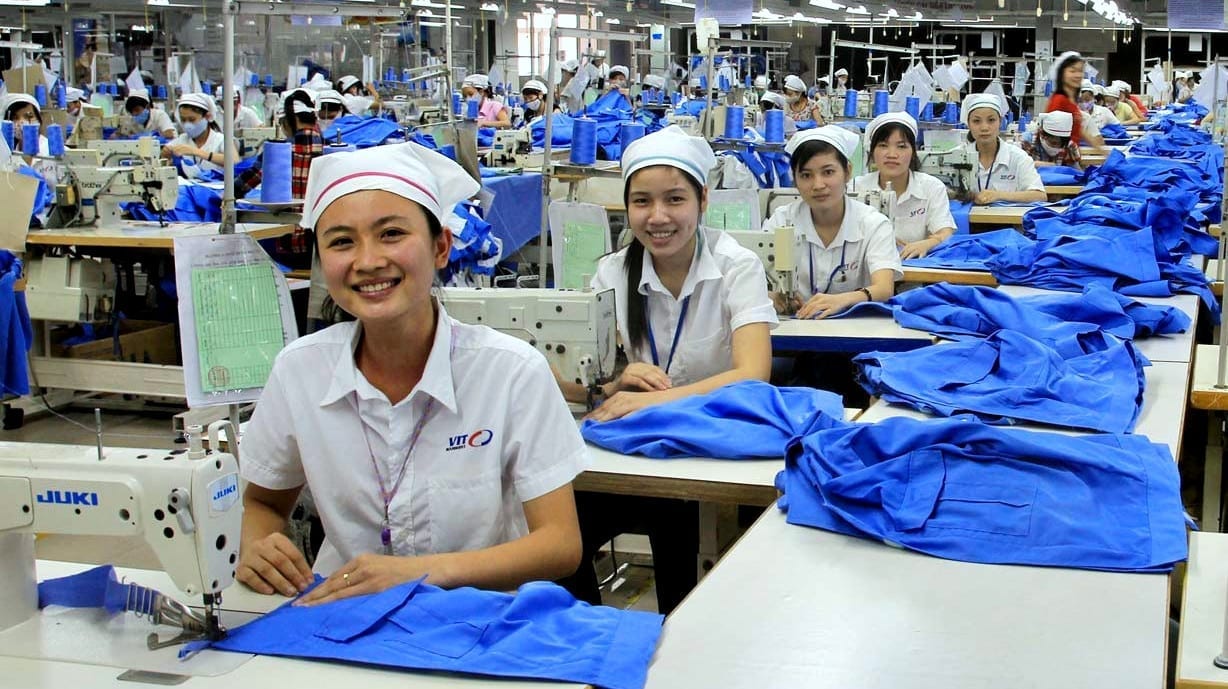
    Restructuring the textile and garment industry involves drawing up a new development strategy, using new technologies, and closing fiber and textile factories that use outdated technologies.

    The Nam Dinh Textile & Garment JSC has undergone ‘major surgery’. The number of workers has been cut from 18,000 to 4,000. However, the remaining workers’ output equals that of 18,000 workers in the past.

    The textile & garment industry has been improving satisfy the requirements of global value chains. The productivity has improved thanks to renovation of machines and equipment and the removal of factories with outdated technologies. However, many things still need to be done.

    MOIT is going to submit to the government a plan to restructure industry in general in 2016-2020, which includes the textile & garment industry.

    Commenting about the plan, Le Tien Truong, deputy chair of the Vietnam Textile & Apparel Association (Vinatas) said the figures shown in the plan were not reliable.

    The plan, for instance, says that productivity is VND35-40 million a year, while Truong believes the figure is inaccurate and it is lower than the real figure.

    If noting that Vietnam exported $28 million worth of textiles & garments in 2016 and imported $17 billion worth of input materials, the average productivity would be VND140 million per worker.

    The plan shows several targets such as repositioning enterprises geographically and shutting down factories with outdated technologies, but it does not include implementation measures.

    There are three ways to improve productivity in the textile & garment industry, according to Truong.

    First, using few workers and high-productivity machines. Second, shutting down unprofitable enterprises and reducing the number of enterprises consuming a lot of power. Third, adjusting the product structure to choose enterprises with higher added value.

    Truong Duy Hung, director of MOIT’s planning department, the compiler of the plan, believes the weak point of textile industry is the lack of input materials.

    Analysts say that if Vietnamese enterprises make input materials, their products would be able to replace Chinese products and can compete with Chinese products in price.

    In current conditions, however, it is easier and faster to seek input materials from China than domestic sources. This is because China organizes large-scale production and  always has large stocks, while Vietnam only makes products to order.

    Vietnam earned $6.84 billion from garment and textile exports in the first quarter of this year, 11.2 percent more than in the same period last year, according to Vinatas.

  • Starbucks Caffeinates Plans for New Stores in Japan

    Starbucks Caffeinates Plans for New Stores in Japan

    Starbucks Coffee Japan plans to open new outlets at an accelerated pace while shifting its focus from urban centers to suburban areas. Over the next three years, the company will spend roughly 15 billion yen ($146 million) to open 260 new coffee shops, which is 60% more than were opened during the last three years. Starbucks now operates some 1,000 stores in Japan, of which around 10% are located in suburban areas along main streets.
    Now that the urban market has become saturated, and even convenience stores have become rivals offering quality coffee, the company is looking to expand outside cities. The plan is to open 75 new outlets in fiscal 2014, 85 in fiscal 2015 and 100 in fiscal 2016. These will be located mainly along arterial streets in suburban areas and near residential districts.

    The stores will offer both seating and drive-thru windows, and they will be open longer hours than the urban stores, which close at 11 p.m. Some of Starbucks’ existing suburban outlets are open until 2 a.m. and remain busy until closing.

    In a typical day, the stores capture business from people on their way to work in the morning, seniors at lunchtime, housewives in the afternoon, as well as from workers and students returning home at night. Rents are cheaper than in the city, and sales tend to be 30-40% higher, with the average suburban store generating annual revenue of 150 million yen.

    But Starbucks is not alone among companies making the push outward to suburban markets, where coffee shops are filling the gap left by the demise of roadside family restaurants. For example, Hoshino Coffee, owned by Doutor-Nichires Holdings, is opening more coffee shops with sit-down service, hand-dripped coffee, and sweet and savory foods. Thirty-five new branches are planned for the current fiscal year. And Komeda is opening coffee shops with brick walls, wooden tables and other cozy touches.
  • Competition heats up as convenience stores race for dominance in Vietnam

    Competition heats up as convenience stores race for dominance in Vietnam

    With a slate of brands operating nearly 2,000 stores, the remaining space for expansion is limited. The first outlet of 7-Eleven, the largest convenience store chain in Japan, opened in Vietnam last week with a lot of fanfare.

    Thousands of people lined up and squeezed into the small shop in downtown Ho Chi Minh City, trying to buy snacks and light meals.

    The chain has said it will open around 20 outlets in Vietnam by the end of this year and 100 in the next three years.

    The important question here is not about whether similarly big crowds will be coming to its stores in the future. It’s where to put these stores.

    7-Eleven is entering a market that has become increasingly packed in recent years. Its arrival is intensifying the heated competition for both customers and for retail space.

    After all, the choice of location can make or break a convenience store. In big cities, many of the best spots are either too expensive or already taken.

    Crowded market

    The A.T. Kearney’s Global Retail Development Index this month named Vietnam the sixth most attractive retail market. The country made headlines worldwide when it topped this list in 2008.

    The market has drawn a lot of foreign players who are now occupying 70 percent of the convenience store segment.

    The American chain Circle K is operating around 250 stores, mostly in the country’s two biggest cities Ho Chi Minh and Hanoi.

    FamilyMart, Japan’s second largest convenience store chain, now has 130 stores in Ho Chi Minh City, the nearby resort town of Vung Tau and in Binh Duong Province. It aims to expand the network to 150 locations by the end of this year.

    Southeast Asian chains Shop&Go and B’s mart are running another 300 stores.

    The dominant local player VinMart+, an offshoot of conglomerate Vingroup, has quickly expanded its network from 500 outlets in 2015 to around 900 last year. The chain plans to round up the number to 1,000 this year or next.

    According to industry insiders, setting up a convenience store is much simpler than a supermarket but in order to launch a profitable chain, it takes a lot of money and efforts.

  • Tata Comm launches IZO cloud node in Malaysia

    Tata Comm launches IZO cloud node in Malaysia

    India’s Tata Communications has launched three new nodes for its IZO Private Cloud service designed to support enterprises’ hybrid cloud adoption while ensuring regulatory compliance.

    The new private cloud nodes in Germany, United Arab Emirates (UAE) and Malaysia aim to enable CIOs to gain more control over all their applications by creating a hybrid, high-performance IT infrastructure where different cloud, colocation and managed hosting environments work together.

    Today, different clouds often operate in silos, resulting in a complex environment which can hold back enterprises’ digital transformation. The fully-managed IZO Private Cloud service seeks to address this complexity by enabling CIOs to create a hybrid IT environment that combines the flexibility of public cloud with enterprise-grade security.

    It also gives CIOs complete control of the residency of their data, while keeping up with employees’ demands for mobile, collaborative and social ways of working.

    IZO Private Cloud now spans across 13 locations. In addition to Germany, UAE and Malaysia, Tata Communications has private cloud nodes in India, Singapore, Hong Kong and the UK.

    The new private cloud nodes address the needs of enterprises in industries with stringent regulatory requirements, including aviation, healthcare, manufacturing, media, banking, IT, financial services and insurance, retail and e-commerce.

    “In today’s digital economy, enterprises’ growth is fuelled by cloud-based applications and data,”  Tata Communications SVP of global product management and data center services Srinivasan CR said.

    “Yet, the sovereignty and security of these critical assets is a major concern for CIOs. As a global cloud provider with a local presence, we address these concerns by giving CIOs complete visibility and control over their entire IT estate, across all networks and devices, and empower them to drive organisation-wide digital transformation with maximum agility.”

  • FedEx posts strong fiscal Q4 and FY 2017 earnings results

    FedEx posts strong fiscal Q4 and FY 2017 earnings results

    FedEx Corp. reported earnings of US$3.75 per diluted share (US$4.25 per diluted share on an adjusted basis) for the fourth quarter ended May 31, compared to a loss of US$0.26 per diluted share (earnings of US$3.30 per diluted share on an adjusted basis) a year ago.

    This year’s and last year’s quarterly consolidated earnings have been adjusted for:

    Impact per diluted share Fourth Quarter
    Fiscal 2017 Fiscal 2016
    Mark-to-market (“MTM”) pension accounting adjustments ($0.02) $3.47
    TNT Express integration expenses  0.32 —
    FedEx Trade Networks legal matters  0.09 —
    TNT Express intangible asset amortization  0.06 —
    FedEx Ground legal matters  0.05  0.02
    TNT Express expenses and operating results from the date of acquisition  —  0.34
    Tax impact – legal entity restructuring for TNT integration  —  (0.28)

    “Strong fourth quarter results completed a record fiscal 2017,” said Frederick W. Smith, FedEx Corp. chairman and chief executive officer. “We enter fiscal 2018 confident FedEx Corp. will continue to deliver outstanding value and opportunities for shareowners, customers, and team members for years to come.”

    Fourth quarter results
    FedEx Corp. reported the following consolidated results for the fourth quarter (adjusted measures exclude the items listed above for the applicable fiscal year):

    Fiscal 2017 Fiscal 2016
    As Reported
    (GAAP)
    Adjusted
    (non-GAAP)
    As Reported
    (GAAP)
    Adjusted
    (non-GAAP)
    Revenue $15.7 billion $15.7 billion $13.0 billion $13.0 billion
    Operating income (loss) $1.58 billion $1.76 billion ($68 million) $1.51 billion
    Operating margin 10.1% 11.2% (0.5%) 11.7%
    Net income (loss) $1.02 billion $1.15 billion ($70 million) $897 million
    Diluted EPS $3.75 $4.25 ($0.26) $3.30

    Operating results benefited from higher base rates, increased package volume and the inclusion of TNT Express results.  Net income and earnings per share reflect tax benefits of US$104 million, or US$0.37 per diluted share, related to the implementation of new foreign currency tax regulations, the adoption of a new accounting standard for share-based payments, and certain transactions related to the TNT Express integration.

  • Vietnam’s fruit, vegetable exports growing

    Vietnam’s fruit, vegetable exports growing

    Minister of Agriculture and Rural Development, Nguyen Xuan Cuong said the export potential of fruits and vegetables is huge, with the products key to restructuring the sector.

    Cuong said the ministry has focused on promoting the use of modern technologies in agriculture, aiming to create quality products, thus improving the sector’s competitiveness and expanding export markets.

    “Exports of fruits and vegetables will grow in the upcoming time. The sector should develop association models for investing in hi-tech agriculture. Businesses should work with farmer collectives to establish concentrated raw material areas,” he added.

    The minister said growing the agricultural sector, and fruits and vegetables in particular, would largely depend on export value and changes in the market.

    However, if businesses and farmers build production chains of safe fruits and vegetables together with hi-tech agriculture development, the export target of US$3 billion this year will be reached, he said.

    Exports of fruits and vegetables hit $1.38 biliion in the first five months of this year, a year-on-year increase of 38 per cent.

    China, the US, Japan and South Korea markets accounted for nearly 84 per cent of total vegetable and fruit export value. Vietnamese fruits and vegetables have been exported to about 60 markets globally.

    Many farmers have applied the safe agricultural production processes of VietGap and GlobalGap, giving Vietnamese fruits and vegetables a foothold in foreign markets.

    According to the ministry of agriculture, restructuring of the sector is going well, with export structure focused on commodities such as coffee, rubber and fruit.

    Dinh Cao Khue, general director of Dong Giao Food Export Company said their products have been exported to 50 countries thanks to a closed supply chain of materials, collection, processing and trading.

    “We have invested in specialised and concentrated material areas. Product quality should be priorities for both local consumption and exports,” Khue said.

    Experts said export markets such as the US and Europe have potential but also high risk as they have strict requirements on product quality, so domestic producers should strictly follow health and safety requirements.

    Vu Kim Hanh, chairwoman of the Vietnam High-quality Product Association said local agricultural producers should change their mindset in production and organising supply chains. Each segment should have standards to satisfy export markets’ requirements.