Author: Mei Ling Tan

  • Ginza Six mall on track for April launch

    Ginza Six mall on track for April launch

    Tokyo’s Ginza district is gearing up for the opening of its biggest shopping centre, Ginza Six mall.

    It occupies the site of the former Matsuzakaya Ginza department store, which closed in June 2013.

    Ginza Six mall has a total floor area of about 150,000 sqm over 19 floors. Its commercial offering takes up the second of six basement levels through to the sixth level above ground, as well as part of the 13th floor.

    Six high-end fashion brands, including Christian Dior, will fill units facing the main road, while the sixth floor will house Tsutaya Books and a food court.

    Aiming to attract the growing number of tourists visiting Japan, the mall plans to offer a tourist information centre on the ground floor containing an outlet of convenience store Lawson, which will sell souvenirs. There will also be a tourist bus terminal outside.

    From the seventh floor upward will be office space, with about 6000 sqm on each level, the largest floor area of its kind in Tokyo. Already 60 per cent of the office spaces are reserved, and up to 3000 people are expected to work in the offices.

    Ginza Six’s exterior design is inspired by “hisashi” canopies and “noren” store curtains, and the complex is scheduled to open on April 20.

  • Nissan, BMW, Porsche face fuel economy probes in South Korea

    Nissan, BMW, Porsche face fuel economy probes in South Korea

    South Korea has filed a complaint against Nissan Motor’s South Korean unit alleging that the Japanese car maker manipulated the fuel economy test results of its Infiniti Q50 sedan, a government official said on Tuesday.

    The transport ministry is also investigating BMW and Porsche on a similar matter, the official, Koh Sung-woo, told Reuters.

    The Seoul Central District Prosecutors’ Office has launched a probe into Nissan after a criminal compliant was filed by the ministry, a spokesman at the office said.

    Makers of imported cars, which have surged in popularity in recent years in South Korea, have been facing growing scrutiny in the country following Volkswagen’s emissions-test cheating scandal.

    The latest government action follows an announcement by South Korea’s environment ministry last month that the sale of 10 models of Nissan, BMW and Porsche had been banned after the carmakers were found to have fabricated documents on emissions and noise-level tests. The models banned include BMW’s X5M and Porsche’s Cayenne and Macan models.

    The probe was then expanded to whether the three car makers have falsified documents on fuel economy tests of the 10 models as well, Koh said.

    Koh said Nissan overstated the fuel economy of the Q50 so that it is 3.4 percent higher than the actual test result. “They manipulated the test results of the car to make the fuel economy look better,” he said.

    Nissan Korea said it reported “some inappropriate problems” in certification documents to authorities last year, saying the errors were caused by the misconduct of a manager at the company.  “We express sincere regret over those issues,” a spokeswoman said.

    Representatives of BMW and Porsche in Seoul said the companies have not been notified of the probe.

    The complaint adds to the troubles in South Korea for Nissan, which is already accused of cheating on emissions of its Qashqai diesel model. Last week, a South Korean court sided with the government which had said the Japanese automaker used a so-called defeat device in its Qashqai sport utility vehicle to turn off its emissions reduction device during regular driving.

  • Philippine Airlines to resume daily Manila-KL flights

    Philippine Airlines to resume daily Manila-KL flights

    Philippine Airlines will resume daily flights between Manila and Kuala Lumpur in June 2017 after a three-year hiatus, targeting at least 80% in load factor over the next 12 months.

    Its senior vice-president for commercial group, David A. Lim, said the flight resumption between both capitals was in line with the carrier’s route expansion and flight modernisation.

    “We are looking to not only ‘selling’ Manila to Malaysian travellers but also the Philippines as a whole and the Americas, as well as the Oceania routes,” he told reporters after announcing the Manila-Kuala Lumpur route on Wednesday.

    Present were Philippine Airlines vice president of sales Ryan T. Uy and Pacific World Travel Sdn Bhd president Tunku Datuk Seri Iskandar Tunku Abdullah.

    Pacific World Travel is a general sales agent for Philippine Airlines Malaysia.

    “We have expanded eight new destinations this year and we will expand more as we move towards the year-end,” Lim said.

    To date, Philippine Airlines has 29 domestic flights and 44 international destinations, including that of the Middle East and Europe.

    He noted that the reopening of the route was also aimed at capitalising on the Asean economic integration as it would provide direct access to new business opportunities.

    Lim expressed confidence that the airline would regain its market share in Malaysia as it planned to expand its code-share partnership with Malaysia Airlines in domestic flights.

    The carrier halted its flights to Kuala Lumpur in 2014 after a year in operation partly due to microeconomic factors, said Uy.

    He said 2013 was a challenging year for everyone due to high fuel prices.

    “That was part of the reasons why we stopped the route. We believe this is the best time to come in, especially with Asean celebrating its 50th anniversary, to grow our tourism industry,” he added.


  • Indonesia to hold limited spectrum

    Indonesia to hold limited spectrum

    The Indonesian government plans to hold a limited tender for unused spectrum in the 2.1-GHz and 2.3-GHz bands by the middle of the year.

    Communications and informatics minister Rudiantara has announced that the government expects to issue the terms of the tender process by the end of March, and to announce the winner by mid-year.

    Only existing operators will be entitled to participate in the limited tender, the minister said.

    The 2.1-GHz band is used by operators including Telkomsel, Indosat Ooreedoo, XL Axiata and Hutchison 3 Indonesia for 3G services, while the 2.3-GHz band is used for 4G wireless broadband services in parts of the country.

    Plans to reallocate the unused capacity in the 2.1-GHz band returned by Axis Telecom in 2014 following its merger into XL Axiata have been in the works since 2015, but the process has been delayed by technical and other difficulties.

    According to the report, only half of the unused 30 MHz of capacity in the 2.3-GHz band will be allocated.

    Indonesian operators, facing a spectrum crunch in major cities, have responded enthusiastically to the announcement, and are urging the government to ensure there are no further delays.

  • Suicoke takes first step into Canada

    Suicoke takes first step into Canada

    Cult Japanese performance sandal brand Suicoke has entered the Canadian market.

    Its styles are being made available through its first-ever eCommerce website, Suicoke.ca, as well as in luxury Canadian retailers including Gravity Pope, Haven Shop, Holt Renfrew, Ssense and TNT. The brand is being distributed by wholesale multi-brand sales and distribution agency, Slavin Raphael.

    Canadian shoppers can now buy Suicoke’s latest collection, characterised by the brand’s signature details such as neoprene panels, adjustable nylon straps and Vibram Morflex soles.

    “Suicoke provides a fresh and innovative take on the sandal,” says Slavin Raphael partner Avi Raphael.

    Suicoke was established in 2006.

  • Malaysian bubble-tea stoush now question of loyalty

    Malaysian bubble-tea stoush now question of loyalty

    Malaysia’s Chatime bubble-tea stoush continues, with a fresh argument regarding outlet loyalties.

    Taiwanese Chatime franchise owner La Kaffa International says nearly 50 outlets will stay with it, while former Malaysian master franchisee Loob Holdings claims that only four outlets have opted to keep the Chatime banner.

    Loob CEO Bryan Loo says more than 95 per cent of the total 165 Chatime outlets in Malaysia have decided to quit the brand and adopt Loob Holding’s new brand.

    “Only three franchisees, who run a total of four stalls, do not want to move on with us. They will be handed back to the franchise owner,” he told journalists at Kuala Lumpur’s Pavilion Shopping Mall after launching his new brand, Tealive.

    He did not name the franchisees or pinpoint their outlets.

    Loo says the new name was chosen to appeal not only to Malaysians, but across the other regions – and internationally.

    “So we felt like we had to find a very good name; and it had to be different from Chatime. We started with over 300 names and over three days, we shortlisted it down to 30 names and then the last one. In the end, we wanted a name that was simple and easy to digest no matter who you are.

    “While shortlisting, we felt that we exceptionally liked the names that had different pronunciations.

    People used to pronounce Chatime in so many different ways and it stirred conversation. So we wanted the same spirit; and that’s how we landed on the name Tealive (live pronounced similar to ‘a live show’). Some people could pronounce it tea-live (as in live at home) but the important thing is the underlying meaning to it – we want to bring a new life to tea.”

    Loo said in an interview that Tealive will be very different to other brands in the crowded bubble-tea market.

    “We want to be the brand that protects the weak and isn’t afraid of the strong; but also the brand that embraces changes. On the other side, with our hands untied, I believe that over the next quarters there is going to be a lot of innovation in terms of products, which we couldn’t do before.

    “When we used to collaborate with local brands, we were served warning letters; so moving forward that’s something we don’t have to worry about, so we can be innovative. I would also like to establish a regional R&D centre to come up with more creative drinks that will excite the market. Also, we’re looking to carry on with our aggressive expansion and move into other regions. We were already planning to do that with the previous brand, but now we get to do it with Tealive,” Loo said.

    La Kaffa contradicts claims

    At a press conference in a Kuala Lumpur hotel earlier this month, La Kaffa International executive VP Teresa Wang said the company was confident that nearly 50 franchisees would continue to collaborate with Chatime.

    At the same time, La Kaffa claimed Loob Holdings had stopped ordering the halal ingredients it supplied from Taiwan for Chatime’s Malaysia outlets. Loob Holdings has denied this, with Loo saying its products are certified by the Department of Islamic Development Malaysia (Jakim).

    The dispute bubbled to the surface in early December when the Taiwanese company terminated the master franchise agreement between the two parties, even though there was more than 20 years left on the deal.

    Loo has lodged a police report over the sudden termination, and both companies have taken the dispute to the Singapore International Arbitration Centre.

    Vietnam foray

    Meanwhile, Loo says Tealive will be opening its first overseas outlet in Vietnam before October.
    “We plan to deliver five outlets in Vietnam this year, and hope to increase that with another 20 outlets by the end of next year,” he says.

    Chatime is already in Vietnam with seven outlets in Hanoi, two in Ho Chi Minh City and one in Di An, Binh Duong province.

    Loo says Tealive will also venture into other Asean countries within the next few years.

  • Walmart China eyes up to 40 new stores

    Walmart China eyes up to 40 new stores

    Walmart Stores says it plans opening between 30 and 40 new stores in China this year.

    Included in that number will be up to five new Sam’s Club outlets.

    While Walmart achieved a solid performance in its home market last year, its international operations – especially in the UK, are struggling.

    In China, Walmart is seeking to develop new retail models to cater to consumers’ changing shopping habits.

    Walmart China will invest a further RMB300 million (US$43.4 million) in upgrading and refurbishing about 50 of its existing stores and improving its supply chain operation.

    “We will move faster to improve the overall customer experience and continue our strategic alliance with JD.com and to strengthen omni-channel approach,” said Dirk Van den Berghe, president and CEO of Walmart Asia and China.

    Last year, Walmart China opened 24 new stores: 21 hypermarkets and 3 Sam’s Club stores.

    The company said its average basket size in China increased by 5.4 per cent in the quarter ended January and same-store sales rose 2.3 per cent.

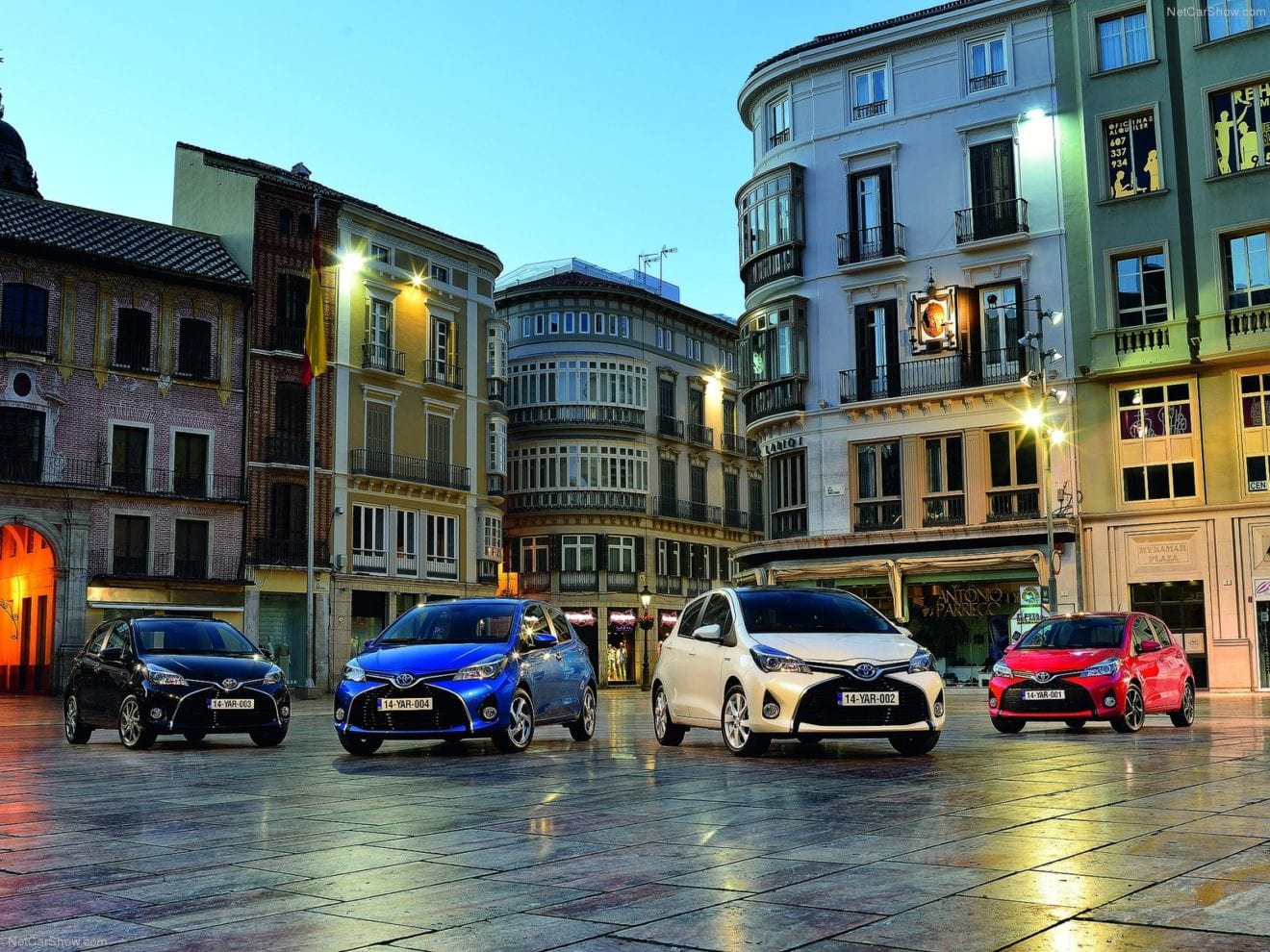
  • Toyota sees plug-in hybrids catching on faster than conventional hybrids

    Toyota sees plug-in hybrids catching on faster than conventional hybrids

    Toyota Motor’s chairman, who led the development of the Toyota Prius, expects the latest plug-in hybrid vehicles will catch on with consumers far more rapidly than the original Prius did.

    Known as the “father of the Prius” for his role in popularizing the world’s best-selling hybrid car, Takeshi Uchiyamada said he expected to sell 1 million plug-in hybrids in less than 10 years, the time it took for sales of its conventional hybrid vehicles to hit that mark.

    “Environmental awareness has become a bigger issue today than it was 20 years ago, and demand for environmentally conscious products has increased,” Uchiyamada told reporters at an event to launch the latest plug-in version of the Prius in Japan.

    While the technology for plug-ins has developed rapidly, lowering costs, Uchiyamada said he had “no idea” exactly when plug-in sales would hit the 1 million mark. Since launching the original Prius, in 1997, Toyota has developed hybrid versions for around 40 of its models, and has sold a total of 10 million hybrid vehicles globally.

    Launching the second generation of the Prius PHV in Japan on Wednesday, Toyota said it expects to sell up to 60,000 worldwide a year, with more than half of the sales coming from Japan.

    Toyota set a similar target for the first generation of its plug-in Prius, of which only around 75,000 have been sold since its launch in 2012, largely due to its limited electric range of 26.4 kilometres.

    The latest version has a range of 42 miles according to Japanese standards. Due to a different methodology in measuring a car’s electric mode range, the vehicles’ range is listed in the United States as around 25 miles.

    Launched as the Prius Prime in North America late last year, the plug-in Prius will be introduced in Europe from March. Uchiyamada declined to comment on plans to offer plug-in versions of other models.

    The latest plug-in Prius sees Toyota widely endorsing lithium ion batteries, marking a turning point for the company which for years had resisted the technology commonly used in all-battery electric vehicles, due to concerns over their cost, size and safety.

    While rivals including Nissan Motor Co. and Tesla Inc. have marketed electric cars for nearly a decade, Toyota has promoted fuel cell-powered vehicles as the most sensible next-generation option to hybrids, although a lack of hydrogen fueling stations remains a major hurdle for mass consumption.

    But as more automakers develop electric cars in response to tightening global emissions regulations, Toyota late last year set up a new division to speed up development of long-range electric cars.

  • 5 operators are already testing 5G

    5 operators are already testing 5G

    Despite 5G standardization not being expected until 2020, 25 mobile operators have already commenced lab testing 5G technologies, according to industry data from network testing company Viavi.

    Of the 25 operators testing 5G, 12 have progressed to field testing, the company said. An additional four operators have announced plans for 5G trials but have not yet commenced them.

    Five operators have achieved data speeds of at least 35 Gbps in 5G trials, including Optus, M1 and StarHub.

    To date, Etisalat has the speed record at 36Gbps, Viavi said, with Ooredoo close behind at 35.46Gbps. All operators conducting 5G trials have reported data transmission speeds of at least 2Gbps.

    Viavi’s data also show that operators are testing 5G across a wide range of bands, ranging from sub 3-GHz up to 86-GHz.

    The most commonly trialed bandwidth among operators that have disclosed their test spectrum is currently 28-GHz – with eight operators using it – followed by 15-GHz, which is being used by seven operators.

    Among equipment suppliers, five major vendors have announced an involvement in 5G trials – Ericsson, Huawei, Nokia, Samsung and ZTE. Many operators are working with multiple vendors on their trials, with KT including all five equipment providers.

    “The pace of 5G development is already beyond the expectations of many observers,” Viavi CTO Sameh Yamany commented.

    “Now, as the technical delivery of data is starting to coalesce, it is time to think ahead to how future 5G networks can manage the disparate requirements of high data rates, very low latency applications and large-scale IoT services while maintaining QoS.”

    He said network slicing, involving the automation and programming of multiple cloud-based functions within a virtualized network, will be important to achieving these goals.

    “Service providers and their partners will require solutions that are virtualized from one end of the network to the other and have automated and correlated intelligence across each network slice for monitoring, optimization and service assurance.”

  • BT connects world’s five top forex markets

    BT connects world’s five top forex markets

    BT is linking up the world’s five main foreign exchange locations to help boost the competitiveness of its global financial industry customers.

    The company is now offering BT Radianz FX express, which provides dedicated high-speed links between financial hubs in Singapore, Japan, Hong Kong, the UK and the US. The five hubs are involved in almost 77% of the world’s forex trading, according to the 2016 BIS Triennial Central Bank Survey.

    The new Radianz FX express service claims to offer low-latency and cost-effective, fully managed connectivity that will give traders faster access to market data across the five locations, while making it easier for them to execute trades.

    Radianz FX express links directly into the five key third-party global data centers in the forex trading world. These data centers were selected because each of the locations hosts the IT infrastructure of significant clusters of the forex trading community.

    “Foreign exchange is the largest asset class by value traded globally.  An average of US $5.1 trillion is traded on FX markets every day,” BT VP of global industry practices Hubertus von Roenne said.

    “We’ve created managed BT Radianz FX express routes to boost the competitiveness of our financial services customers. With dedicated links within and between the world’s five biggest FX trading locations, BT can help FX firms lower costs while creating opportunities for international growth.”

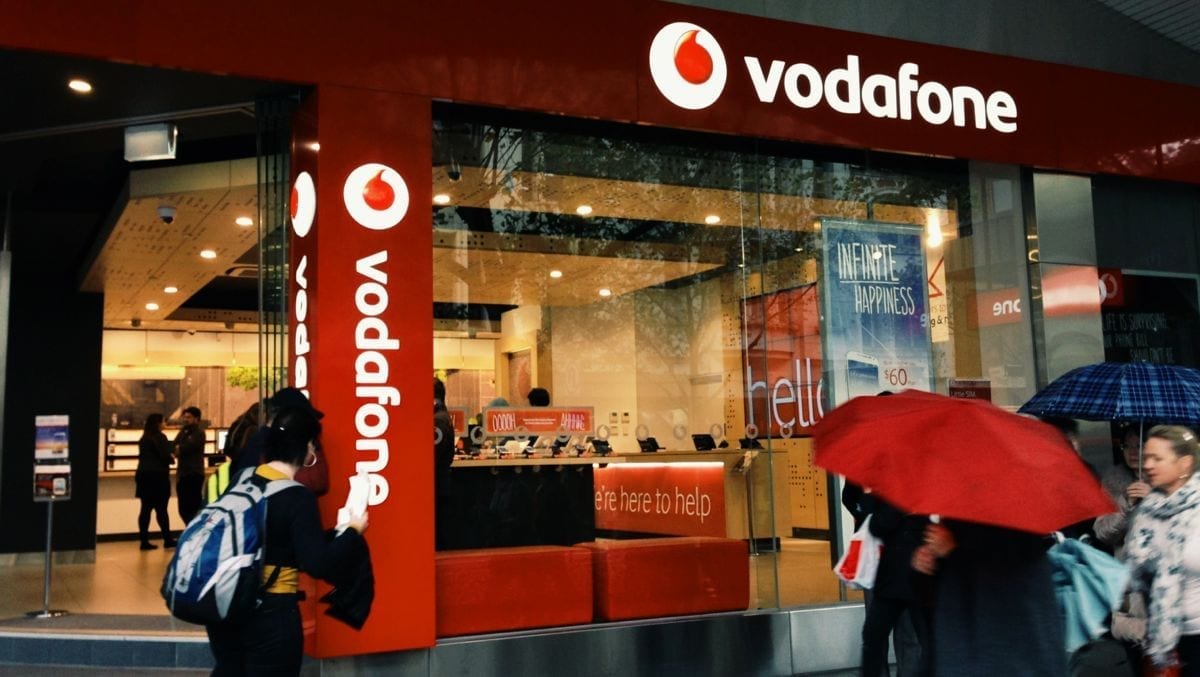
  • Vodafone New Zealand’s merger with SKY TV rejected

    Vodafone New Zealand’s merger with SKY TV rejected

    New Zealand regulator the Commerce Commission has declined to approve the proposed merger between Vodafone New Zealand and SKY Network Television on competition grounds.

    The commission held that a merger between the companies would negatively impact competition in the premium sports content market.

    “The proposed merger would have created a strong vertically integrated pay-TV and full service telecommunications provider in New Zealand owning all premium sports content,” Commerce Commission chair Dr Mark Berry said.

    “We acknowledge that this could result in more attractive offers for Sky combined with broadband and/or mobile being available to consumers in the immediate future…[but] the evidence before us suggests that the potential popularity of the merged entity’s offers could result in competitors losing or failing to achieve scale to the point that they would reduce investment or innovation in broadband and mobile markets in the future.”

    The Commerce Commission said it had particular concerns that the merger could impact the competiveness of key third players in these markets such as 2degrees and Vocus.

    “This is also against a backdrop of fibre being rolled out, making it an opportune time for the merged entity to entice consumers to a new offer,” Berry said.

    “If significant switching occurred, the merged entity could, in time, have the ability to price less advantageously than without the merger or to reduce the quality of its service. Given we are not satisfied that we can say that competition is unlikely to be substantially lessened by the proposed merger, we must decline clearance.”

    In a terse statement, Vodafone New Zealand acknowledged the regulator’s decision but made no further comment.

    Under the proposed merger, Vodafone Group would have taken up to a 51% stake in Sky TV, which itself would acquire up to 100% of Vodafone New Zealand. The merged entity would have been controlled by Vodafone Group.

  • World’s largest container ship docks in southern Vietnam

    World’s largest container ship docks in southern Vietnam

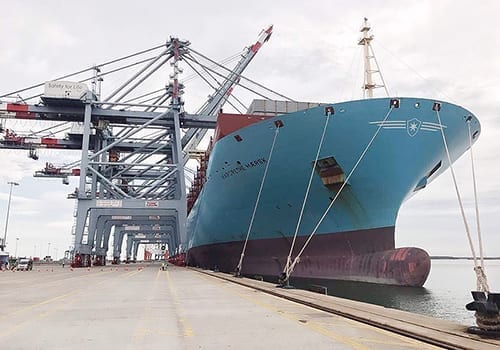
    A giant container vessel arrived at Cai Mep International Terminal in Vietnam’s southern region Monday, helping mark the port on the world’s shipping map.

    The 194,000-DWT Margrethe Maersk of 399 meters long of the world’s biggest container ship family was built in 2015 and is owned by Denmark’s Maersk Line. The vessel can carry 18,300 TEU (twenty-foot equivalent unit).

    Cai Mep in the southern province of Ba Ria-Vung Tau is now among the world’s 19 ports which can accommodate Triple-E class container ships of more than 18,000 TEU.

    Vietnamese transport officials said the arrival marked “a milestone” in the country’s shipping history as they aim to develop Cai Mep into a transit port for cargo shipping between Asia and northern Europe.

  • Taxis claim unfair competition

    Taxis claim unfair competition

    Ta Long Hy, chairman of HCM City Taxi Association, told a conference on Thursday that the taxi market has seen unfair competition between traditional firms and foreign companies with strong financial potential and state-of-the-art technologies.

    Hy said the number of licenced traditional taxis with less than nine seats in HCM was reduced from 20,000 in 2010 to 11,000 this year. The rapid development of Uber and Grab has quickly narrowed the traditional taxi market share, hurting cabs in their own playground due to decreasing number of passengers and incomes.

    Tax policies are also causing concern for traditional taxi firms, including a 10 per cent value added tax and 20 per cent corporate income tax. “The Ministry of Finance (MoF) levies 3 per cent VAT for Uber. We urge authorities to impose a common tax policy for both traditional and tech-based taxis of 5 per cent,” he said.

    Do Quoc Binh, chairman of Ha Noi Taxi Association, said taxi companies are bound by strict business conditions regarding parking areas, registration licences, logos, price lists, uniform and price registration, while Grab and Uber are not subject to any conditions.

    “The Government’s policies seem to be tightening the operation of traditional taxis while loosening management of Grab and Uber,” Binh said.

    He said Uber and Grab should be managed as regular taxi firms to create fair competition.

    Truong Dinh Quy, Vinasun Corp’s deputy general director, claimed Uber and Grab had broken the law to enjoy low tax rates, hurting the State budget.

    Figures from the General Taxation Department showed that the total tax collection from 15,000 Uber and Grab taxis in 2014-15 was VND19 billion (US$832,000), while Vinasun contributed VND692 billion from its 6,000 taxis.

    “We can see that the State budget has lost a big tax amount. This has been unfair to traditional taxi firms,” Quy added.

    Nguyen Van Thanh, chairman of the Viet Nam Automobile Association, said the association would work with the MoF’s agencies to review tax calculation and ensure their fairness.

    “We should ask legal agencies to resolve the issue. We should prevent Uber from conducting tax evasion. We will not ask to stop Uber operations in Viet Nam but require that they complete their business registration,” he added.

    In addition, he urged taxi companies to update their business systems, improve service quality and thus enhance their competitiveness.

  • India’s Jio introduces its first price plans

    India’s Jio introduces its first price plans

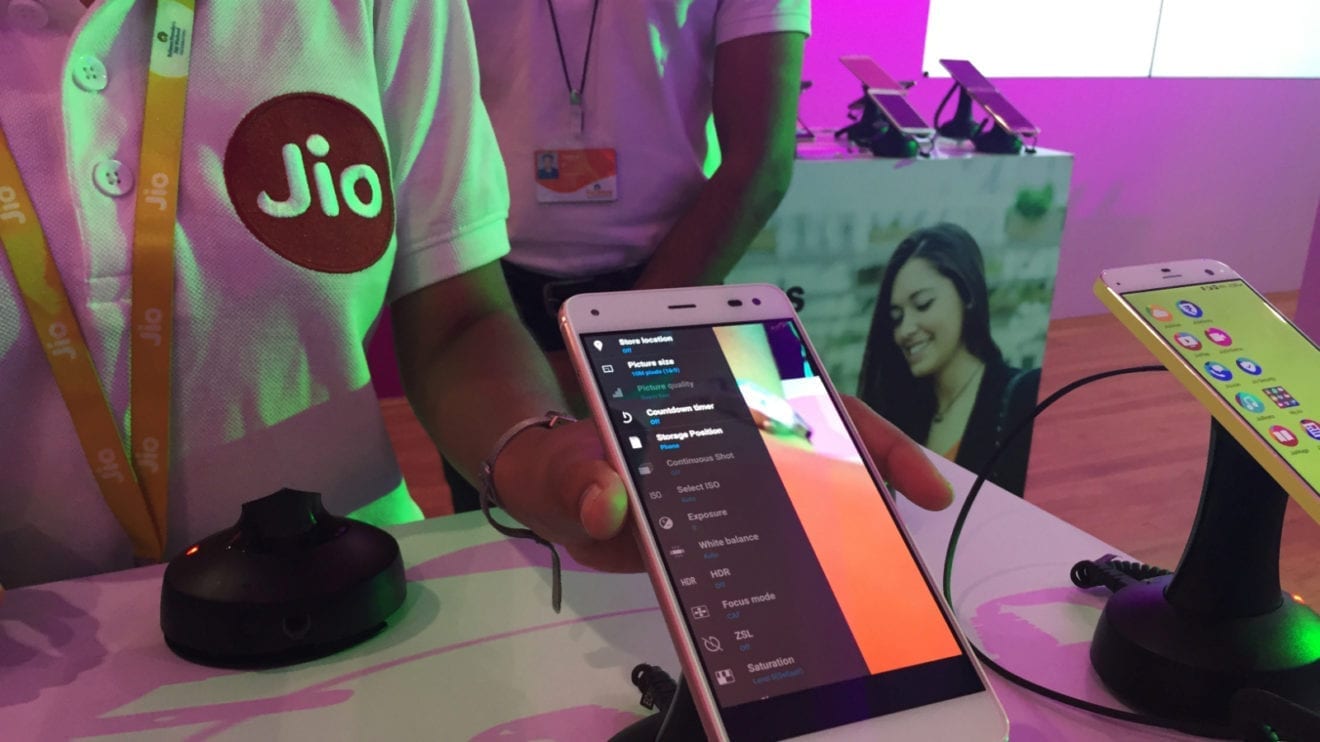
    Disruptive new Indian 4G operator Reliance Jio’s free services offer will soon be coming to an end, but the operator has announced an aggressive new pricing strategy in a bid to retain as many of its new customers as possible.

    Jio launched nationwide services in September last year, but made all services available for free as a promotional offer. The company subsequently extended this promotion until March 31.

    The aggressive marketing strategy has helped Jio sign up new customers at a record rate – the operator recently revealed it is nearing 100 million customers. But a number of these are expected to port out once the free services period comes to an and, due in part to the current patchy nature of Jio services.

    In an attempt to limit churn, Jio has introduced a new Prime offer that will take effect from April 1. Under this offer, customers will be able to pay a one-time 99 rupee ($1.48) fee for prime membership, and another 303 rupees a month for unlimited voice calls and 30GB of allocated data.

    Jio’s rivals, which have already been feeling the impact of the operator’s entry into the market and been pushed into making their offers more competitive, may find themselves needing to further cut prices or increase allocations in response.

    This could put even more pressure on a hotly-competitive telecoms market and accelerate the consolidation trend.

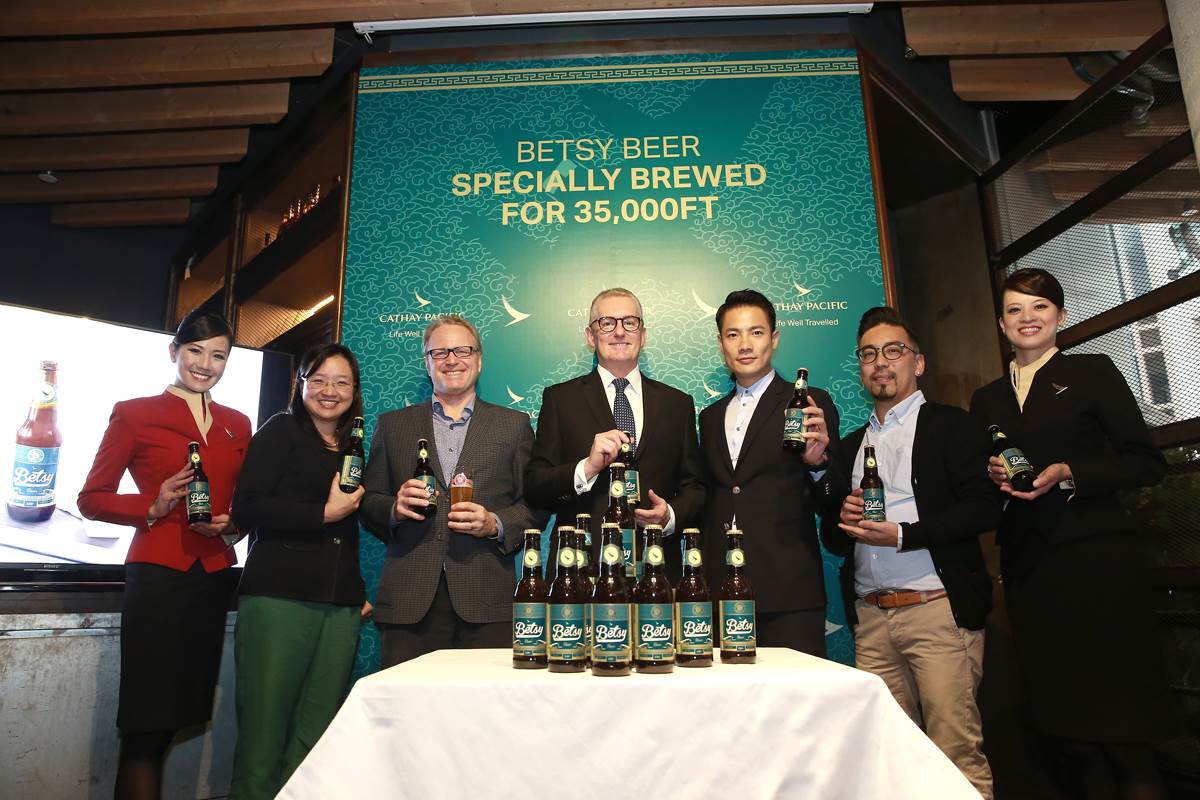
  • Cathay Pacific Is Brewing Its Own Beer

    Cathay Pacific Is Brewing Its Own Beer

    In efforts to beat out their aerial competition, Cathay Pacific has employed something that will appeal to almost everyone, the universally beloved: beer. They’re not giving it away for free or anything, but instead they have decided to make their own custom brew named Betsy Bee (after their first aircraft), in collaboration with Hong Kong Beer Co. The craft ale has Dragon-Eye fruit, honey, and a special type of hop called Fuggle.

    Going along with their marketing drive, ‘Travel well,’ Betsy beer is a “product designed purely with the traveller, and beer lover, in mind,” according to their Generar Marketing Manager, Julian Lyden.

    They will be offering Betsy to business and first class passengers on flights between Hong Kong and the United Kingdom from March 1 until April 30. It will also be sold online at Deli Delight.