Author: Mei Ling Tan

  • New Look loses market share in tough year

    New Look loses market share in tough year

    New Look’s share of the UK clothing market has fallen to 2.6 per cent for calendar year 2016 – from 2.7 per cent in 2015.

    Stores have failed to drive the necessary footfall to return its like-for-like performance to positive territory, with year-to-date (39 weeks to 24 December 2016) UK like-for-likes are down 7.3 per cent with the likes of Next, Primark and Matalan also finding it tough to grow organic stores sales during 2016. Moreover, weaker sales and significant levels of discounting throughout the year led to a 32.6 per cent decline in underlying operating profit to £111.5 million, bringing margins down 4.2 percentage points to 9.8 pr cent.

    The strength of the online competition has dampened the appeal of New Look’s physical stores.

    The fashion-led product mix, attractive pricing and inspiring shopping experience at the likes of boohoo.com, Missguided and Asos continue to encourage New Look’s core shopper base to browse and shop more online reducing the need to visit physical stores. This shift has benefited New Look’s online platform as has its investment in product styling, delivery options and editorial content.

    The double digit growth in online sales highlights that the problem does not lie with product – it is the number of stores New Look operates and their lack of responsiveness during periods of unseasonal weaker.

    Store closures, enhanced visual merchandising, increased product newness and adapting its seasonal mix and phasing is essential to return like-for-likes to growth and limit the threat of the online pure-plays.

    Honor Strachan

  • Upswing for Sa Sa International New Year sales

    Upswing for Sa Sa International New Year sales

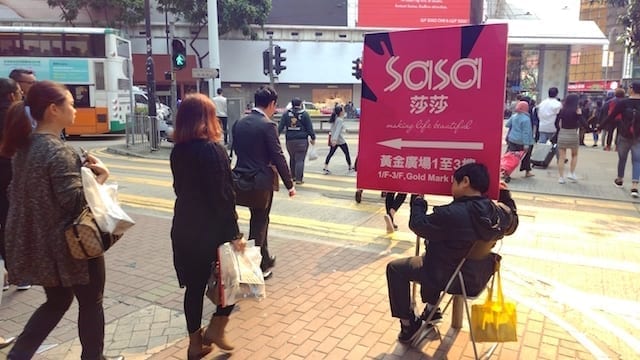
    With more tourists from the mainland, cosmetic retailer Sa Sa International Holdings saw a 3.5 per cent upswing in sales in Hong Kong and Macau during the Lunar New Year (January 28 to February 3).

    It says there were 10.7 per cent more transactions by tourists from China, while the average value of each transaction shrank by 4.6 per cent.

    Sales to local customers also decreased, by 3.3 per cent, according to the company’s preliminary figures.
    Hong Kong Immigration Department says there was a 12.9 per cent increase in the number of Hong Kong residents travelling overseas through the airport during the Lunar New Year period.

    Sasa chairman/CEO Kwok Siu Ming Simon says that as the group’s sales performance during the period had been affected by several factors, the figures may not reflect overall performance.

  • Hooters of Singapore leads Asia expansion

    Hooters of Singapore leads Asia expansion

    Hooters of Singapore – Marina Bay has opened in Marina Boulevard, led by franchisee Destination Properties Group.

    Hooters Marina Bay - Singapore 3

    Covering 2336 sqft (217 sqm) and close to Marina Bay Sands and Marina Bay Financial Center, the restaurant features more than 22 large-screen televisions. The US chain is known for its hostesses, wings and live televised sports.

    “The growth of Hooters locations in Asia is continuing its momentum,” says Destination Properties Group CEO Gary Murray.

    Hooters Marina Bay - Singapore 4

    Hooters Marina Bay - Singapore 5

    Hooters Marina Bay - Singapore 6

    Hooters Marina Bay - Singapore 7


    Hooters Marina Bay - Singapore 9

    Hooters Marina Bay - Singapore 8

    The new venue is part of a 35-location Southeast Asia development agreement between Hooters and the Singapore-based international franchisee. There are now 24 outlets in Asia, with plans to open more this year in Phnom Penh, Samui, Jakarta, Singapore (Fusionopolis), Taipei and multiple locations in Manila.

    Meanwhile, the brand is seeking further restaurant sites in Bali, Bangkok, Ho Chi Minh City, Hong Kong and Kowloon, Jakarta, Krabi, Kuala Lumpur, Macau, Manila, Cebu and Davao, Siem Reap, Singapore, Taipei and Yangon.

    Hooters plans to open more than 30 restaurants globally this year.

    Hooters Marina Bay - Singapore 1

  • Big opportunities for F&B, says JLL China report

    Big opportunities for F&B, says JLL China report

    China offers “enormous room for growth” for foreign F&B brands, according to a new whitepaper from JLL China and retail data specialist LocalGravity.

    The Foreign F&B Expansion in China report explores the trends behind foreign F&B operators expanding in China and the lessons these hold for upcoming market entrants.

    With China’s middle class embracing foreign dining, Asian and Western F&B brands have expanded aggressively and become fixtures in China’s malls and shopping streets, says the report, which takes an in-depth look at the roll-out strategies of 32 international brands.

    Key insights from the report:

    ·  Overall expansion rates were high at more than 20 per cent year-on-year in 2015
    ·  Foreign brands remain active in coastal and tier-one cities, and are also expanding with increased confidence in lower-tier cities and remote regions
    ·  There is some risk in the less-wealthy provincial capitals, where many brands have over-expanded
    ·  Cafe-format shops selling coffee, tea and ice cream were the most active category, expanding 30 per cent year-on-year in 2015.

    •  Regional bias is strong among most chains, especially in the south, and there is room to catch up in wealthy east China cities.

    Closure rates

    The JLL China report has also explored closure rates by format. Analysis has revealed higher closure rates in the fast-food segment relative to other formats.

    Expansion potential has been explored to understand how store presence varies across city tiers. Of the 32 brands studied, many were found to have a strong presence in China’s top cities. However, “white spaces” across cities down to the third tier show there is an ample room for growth.

    Furthermore, many of the foreign F&B brands appear to be concentrated in south China, with other parts of the country offering untapped potential.

    “Many foreign F&B brands view the China market with understandable enthusiasm—after all, capturing even a small slice of the market translates into huge, absolute sales volumes,” says JLL head of retail research for Asia Steven McCord. “Yet the road to successfully taking advantage of the China opportunity is difficult, as some restaurant chains have discovered too late.”

    “The China F&B market is now one of the world’s largest and fastest moving, but it is still quite fragmented with enormous room for growth,” says JLL China head of retail James Hawkey.

  • Wal-Mart Stores boosts JD.com stake

    Wal-Mart Stores boosts JD.com stake

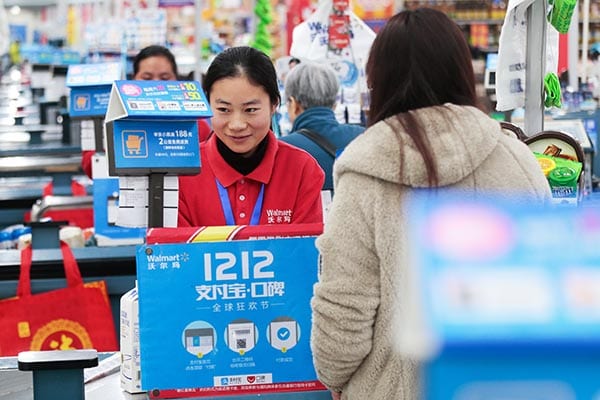
    American retail giant Wal-Mart Stores has further increased its stake in China’s second-largest eCommerce firm JD.com.

    It now has a 12.1 per cent shareholding, up from 10.8 per cent, and comes about three months after the Arkansas-based retailer disclosed it had almost doubled its holding in JD.com from 5.9 per cent.

    Like Amazon, a large part of JD.com’s income comes from selling products it holds in its own inventory. Its logistics network has also helped it win more users through speedy shipping, says Deal Street Asia.

    With about 400 physical stores in China, Wal-Mart struck a swap deal with JD.com last June, selling its fully owned Chinese eCommerce player Yihaodian to JD.com in return for a 5 per cent stake in JD.com, worth around $1.5 billion. This gave Wal-Mart access to JD.com’s nationwide logistics and warehousing networks, as well as its 150 million users.

    Meanwhile, JD.com is better able to compete with Alibaba in the online grocery business, which is expected to grow to nearly $180 billion by 2020, according to data from food research body IGD.

    In October, Wal-Mart invested $50 million in Chinese online grocery and delivery firm New Dada. This will help it gain more foothold by offering shoppers faster delivery times. At the time, New Dada had more than 25 million registered customers. It delivers in more than 300 cities.

  • Sales up, revenue down for Michael Kors Holdings

    Sales up, revenue down for Michael Kors Holdings

    While retail net sales grew 9.2 per cent to US$836.7 million for luxury lifestyle brand Michael Kors in its third quarter, ended December 31, its revenue decreased 3.2 per cent to $1.35 billion.

    It sales growth was mainly driven by 193 store openings since the end of the third quarter, including 143 stores associated with the company acquiring its the previously licensed outlets in Greater China and South Korea. This resulted in licensing revenue dropping 22.9 per cent to $43 million, but revenue in Asia growing 89.1 per cent to $112.3 million.

    At the end of December, the company had 816 retail stores, including concessions, compared to 623 at the same time the previous year. There were also 128 retail outlets run by licensing partners.

    Chairman/CEO John Idol says the company believes Asia represents a $1 billion opportunity over the long term.
    For the first nine months ended December 31, the company saw retail net sales increase 9.6 per cent to $2 billion while comparable store sales fell 6.6 per cent. Wholesale net sales dropped 15 per cent to $1.32 billion. Gross profit eased 2.8 per cent to $2.04 billion.

    “More work to do”

    Neil Saunders, MD of research company GlobalData Retail, says the poor holiday quarter shows that Michael Kors has a lot more work to do before it is back on track.

    “The numbers provide a marked contrast to those of Coach, a company going through a similar brand reinvention, which had a much more positive third quarter. To be fair, the overall decline is partly because of the decision to cut back on distribution through department stores and other channels, which Michael Kors believes have been undermining its brand through excessive discounting, ” says Saunders.

    While the resulting 17.8 per cent slide in wholesale revenues and 22.9 per cent drop in licensing revenues was painful. “We believe the decision to dial back is a necessary step in making the brand less ubiquitous, and driving higher margins.

    “However, the issue is that the reduction in the number of doors through which Michael Kors is available is not immediately translating into an uplift in sales through its own stores. With a 9.2 per cent rise in retail sales, the numbers look robust enough, but most of this is down to store openings and the shops acquired in Asia where Michael Kors bought out the brand licence.”

    Saunders says the underlying comparable sales tell a more revealing story. “These remain weak and have actually deteriorated since the previous quarter. Only a small element of this decline is because of the stronger dollar; indeed, on a constant currency basis same-store sales are still down by 6.4 per cent.

    “As much as we believe that Michael Kors is headed in the right direction, and that its new lines are generating interest, it has much more work to do in reconnecting with customers who have been alienated by the overexpansion of the brand. As yet, it is simply not exciting customers in the same way that Coach or Kate Spade are. ”

    Saunders says that reconnecting customers with the brand is particularly important as Michael Kors expands its range.

    “The new Access smartwatches and fitness trackers, and the new fragrance lines are sensible additions to the portfolio. However, they will only really drive sales as part of a strong lifestyle brand that consumers want to buy into. In our opinion, on this front Michael Kors has more convincing to do. ”

  • Amazon India proposes $500m food venture

    Amazon India proposes $500m food venture

    Amazon India has applied to the government to invest US$500 million in a wholly owned venture that will allow the US eCommerce giant to stock locally produced food items and sell them online.

    If successful, it would become the first foreign retailer to enter the segment.

    Amazon already has an eCommerce marketplace in India, but while 100 per cent overseas capital is permitted for such platforms, they cannot sell products of their own. Last year, the government allowed for 100 per cent foreign investment in the retailing of processed foods made in India.

    Amazon has filed its application with the Department of Industrial Policy & Promotion (DIPP), which handles foreign investment in retailing and e­Commerce. The company plans to invest $500 million over five years and could start selling locally produced food items within six months of obtaining approval, says an insider.

    “We are excited by the government’s continued efforts to encourage foreign direct investment in India for a stronger food-supply chain,” says an Amazon spokesperson. “We have sought an approval to invest and partner with the government in achieving this vision.”

    Only Indian grocery delivery companies Big­Basket and Grofers have applied under
    the category, prompting the government to invite companies including CP Foods (Thailand), Heinz, Nestle and Walmart to provide feedback and investment plans.

    This followed the minister for food-processing industries Harsimrat Kaur Badal visiting London with a team of officials last year to meet representatives of such companies as Cobra Beer, Harrods, Marks & Spencer, Sainsbury’s and Tesco to drum up support for the policy.

    Amazon’s current online platform is open to Indian-­owned entities, and similar platforms are run by Flipkart, the country’s largest eCommerce company, and Snapdeal.

  • Singtel Q3 profit grows 2% to $686.6m

    Singtel Q3 profit grows 2% to $686.6m

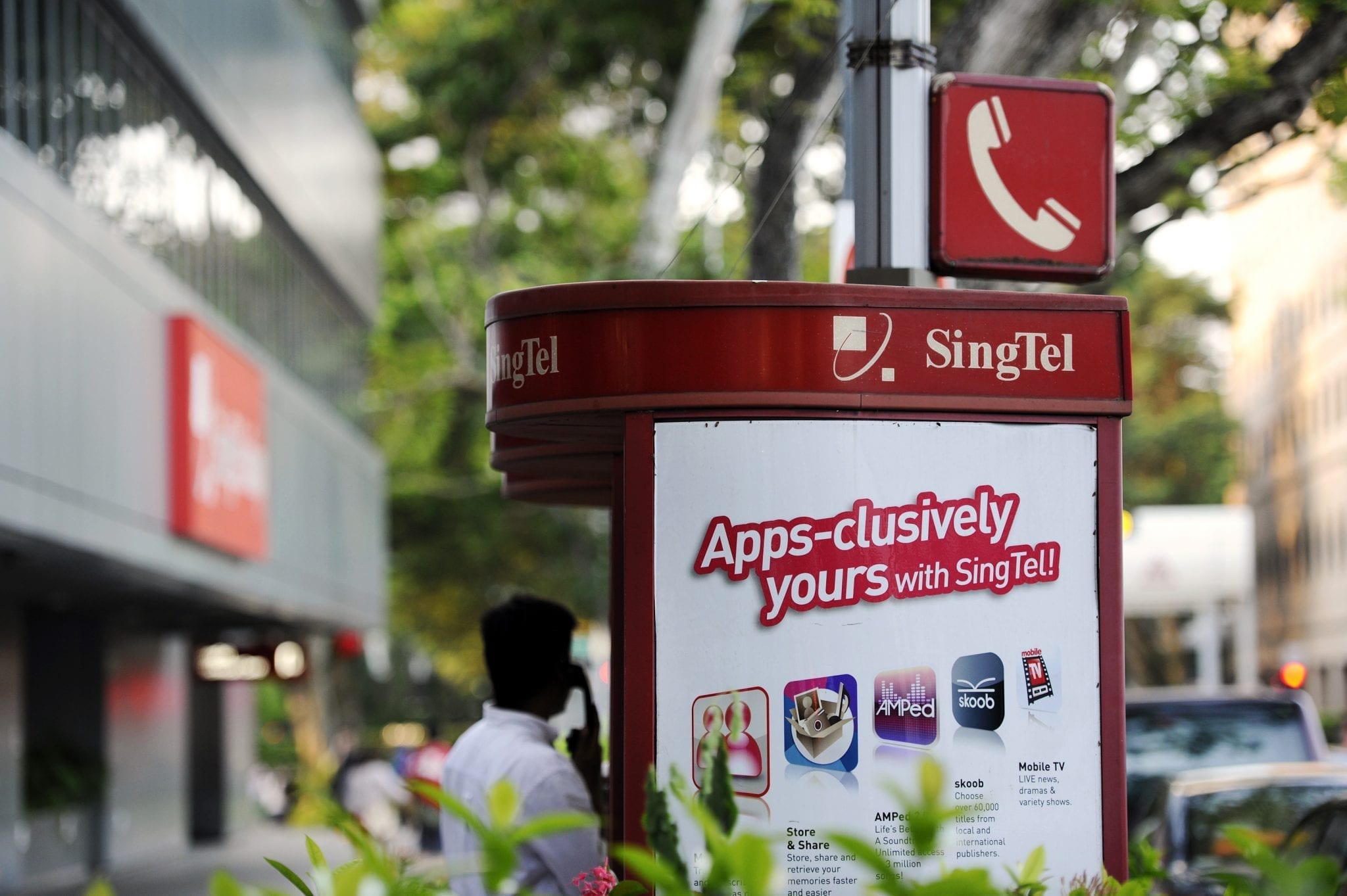
    Singapore’s Singtel grew its net profit for its fiscal third quarter by 2% to S$973 million ($686.6 million) in the face of declining operating revenue.

    Revenue fell 2% to S$4.41 billion as a result of a regulator-mandated reduction in mobile termination rates in Australia, the home market of Singtel’s wholly-owned subsidiary Optus.

    The reduction led to a 10% decline in group consumer revenue from Australia to A$1.81 billion ($1.38 billion), but consumer revenue from Singapore grew 4% for the quarter to S$657 million, as home services revenue increased by 7%.

    Group enterprise revenue was mostly flat at S$1.65 billion, with revenue from cybersecurity up 10% to S$113 million. Group digital life revenue meanwhile grew 22% to S$167 million, driven by a strong performance from digital marketing arm Amobee.

    Singtel’s share of pre-tax earnings from its regional mobile associates meanwhile grew 2% – or 0.6% in constant currency – to S$660 million. Indonesia’s Telkomsel delivered a strong performance with pre-tax profits up 31%, but Bhari Airtel’s pre-tax profits fell 27% due to the ongoing price war in India.

    Thailand’s AIS likewise saw its pretax profit decline by 28% due to spectrum and financing costs, reducing its contribution to S$89 million. The Philippines’ Globe’s contribution grew 18% to S$66 million.

    This quarter also included contribution from the company’s new 21% stake in Intouch, acquired in November. Intouch contributed a pre-tax profit of S$4 million.

    “This is a resilient set of results. We have managed to hold good ground against the backdrop of a slowing Singapore economy and more challenging business environment all around,” Singtel group CEO Chua Sock Koong commented.

    “While there are concerns of a global economic slowdown, the growth story in the developing markets where we are invested remains compelling as mobile data usage continued to grow across all our mobile associates.”

    The Singtel group’s total mobile customer base across its operations and those of its affiliates meanwhile grew another 2% during the quarter to 640 million.

  • Most cybercrime losses not fully recovered

    Most cybercrime losses not fully recovered

    Each year thousands of internet users fall victim to a cybercrime that leaves them out of pocket. Research from Kaspersky Lab reveals that over half (52%) of internet users who’ve lost money at the hands of cybercriminals have only got some, or none, of their stolen funds back.

    With the variety and sophistication of online financial threats against consumers growing, losses from online fraud, identity theft and hacking are now running at billions a year. And with many cases going unreported, the true economic cost is likely to be significantly higher.

    The research reveals how costly these attacks are for internet users, and how lucrative they’ve become for cybercriminals. On average, internet users lose $476 per attack and one-in-ten people surveyed said they lost more than $5,000.

    A large majority of internet users say they conduct financial operations online (81%) and just under half (44%) store financial data on their connected devices.

    As more users go online to manage their finances, more cybercriminals are looking for opportunities to cash in, making it important for users to have robust internet security in place to protect themselves and their money. Nevertheless, only 60% of internet users protect all their devices.

    Attitudes to online safety could be influenced by users mistakenly thinking lost money will be automatically refunded to them. Almost half (45%) say that they assume they will be reimbursed by banks for financial cybercrime without any problems, but as the survey shows, over half (52%) of people affected haven’t had all their stolen money returned.

    “Cybercriminals are continually looking for new ways to exploit and defraud consumers and that’s why it’s important for internet users to be on their guard at all times,” says Vyacheslav Zakorzhevsky, Head of the Anti-Malware Research Team at Kaspersky Lab.

    “Cybercriminals can conduct financial crimes via malware, phishing and more. Don’t assume you will always get all your money back if you become a target and funds are stolen from you. The best way to safeguard your finances online is to make sure you don’t become a victim, and for that we recommend specialist software that protects your identity and keeps sensitive data out of the hands of the cybercriminals.”

  • Myanmar to adopt UnionPay chip card standard

    Myanmar to adopt UnionPay chip card standard

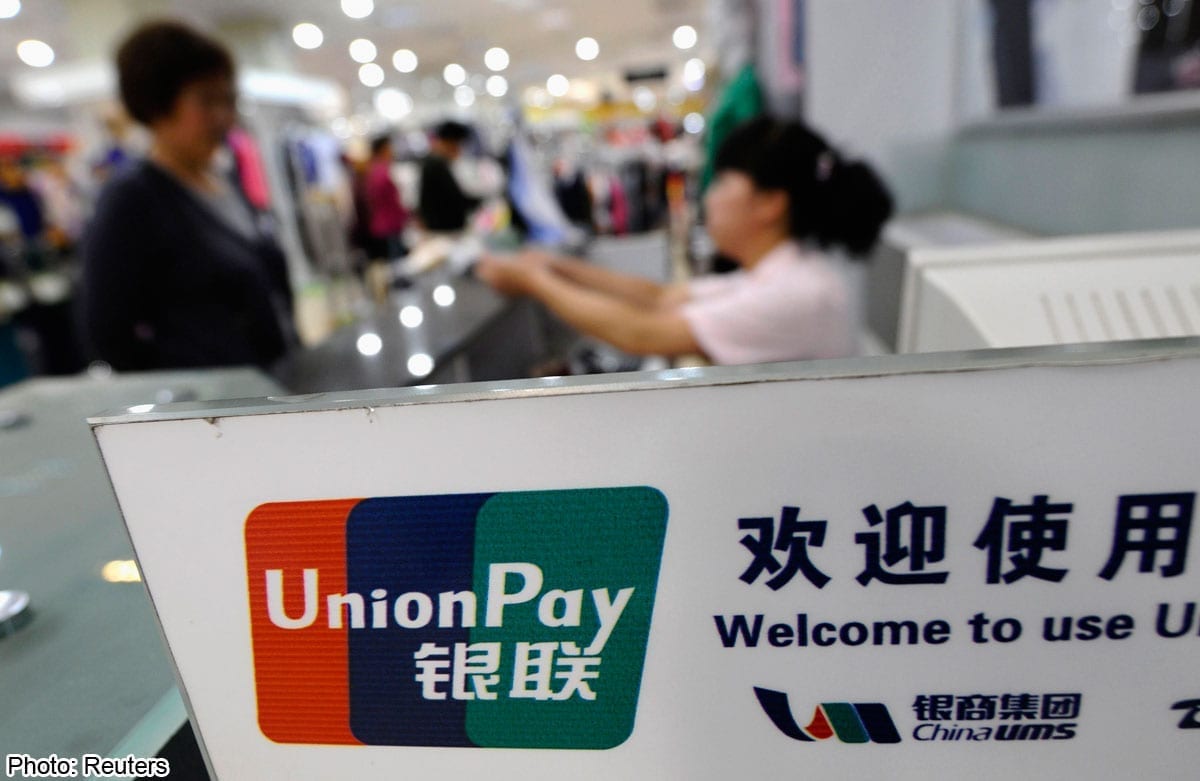
    The Myanmar Payment Union (MPU) and UnionPay International (UPI) have teamed up to implement a common UnionPay chip card standard in the country.

    The UnionPay chip card standard complies with the global EMV chip card standard, and will be adopted by all banks operating in Myanmar.

    The UnionPay chip card standard emerged as the standard of choice after stringent reviews and extensive consultations with Central Bank of Myanmar, MPU and major financial institutions.

    Following this process, the current local chip card standard will be upgraded to the new UnionPay chip card standard which offers enhanced security. In addition, Myanmar Cardholders can use the locally-issued cards featuring the new UnionPay chip card standard anywhere in the world, at locations that accept the EMV chip card standard.

    This announcement follows the implementation of the UnionPay chip card standard in Thailand and Laos in recent years. In Thailand, all new locally-issued debit cards will need to carry the Thai Bank Chip Card Standard starting August 2017, a chip card standard licensed by UPI and run by Thai Banker Association. In Laos, UnionPay provides support for the construction, operation and maintenance of the local payment systems.

    In 2016, UPI also signed a chip card standard licensing cooperation agreement with seven other member institutions of Asian Payment Network. With this collaboration, the major switch networks in Singapore, Thailand, South Korea, Malaysia, Indonesia and the Philippines will adopt UnionPay chip card standard in card acceptance and card issuance.

    Acting Chairman of MPU, U Zaw Win, said, “The UnionPay chip card standard brings the Myanmar Payments industry to the world stage as it complies with international EMV standard and security. The tripartite collaboration on the chip standard lays a strong foundation for innovation, value-added services, and increase convenience for Myanmar consumers and businesses.”

  • Finance Ministry tells online hotel booking services to pay tax

    Finance Ministry tells online hotel booking services to pay tax

    Agoda, Traveloka, Booking and Expedia have to pay VAT (value added tax) and CIT (corporate income tax), which is 5 percent of total revenue, for profits from doing business in Vietnam, according to the Ministry of Finance (MOF).

    MOF released the decision one month after Vntrip.vn, a Vietnamese owned firm, criticized Agoda for evading tax in Vietnam. It said the tax payment duty must be implemented by accommodation service providers on behalf of foreign contractors like the contractor withholding tax.

    If clients who book hotel rooms make payment directly to the accommodation service providers in Vietnam (hotels or guesthouses), and the service providers pay commissions to foreign contractors, the service providers will have to make tax declarations and pay tax.

    If clients pay money to foreign contractors, foreign contractors will transfer money to accommodation service providers, while retaining commissions. Taxation bodies will ask accommodation service providers to inform foreign contractors about tax duties and pay tax on behalf of foreign contractors.

    MOF said it released legal documents with an aim to stop the loss of revenue from tax collection as Vietnam could not collect tax from foreign companies which make profits from providing services to Vietnamese via the internet.

    Prior to that, in December 2016, Vntrip.vn held a meeting with the local press, saying Agoda evaded tax in Vietnam.

    The representative of Vntrip.vn affirmed that unhealthy competition was occurring in Vietnam as foreign service providers don’t have to pay tax, causing a loss of trillions of dong in revenue to the state budget.

    Vntrip.vn warned that Vietnam may lose VND10 trillion worth of tax by 2020, if it cannot find the way to collect tax from the company.

    Vntrip sent an official document to MOF denouncing Agoda and similar service providers for evading tax. The behavior by Vntrip then surprised the public, because Booking.com, who was the strategic partner of Vntrip, and Agoda were considered ‘brothers’ as they both belonged to the US-based Priceline.

    Another surprise was that before MOF released the decision officially asking Agoda to pay tax, the Vietnamese domain name of Agoda, the tourism website, unexpectedly stopped operation.

    Le Dac Lam, Vntrip’s CEO, applauded MOF’s decision.

    “Some people advised us to focus on doing business rather than spending time thinking about policies for foreign companies,” Lam said.

    Nguyen Duc Tai, president and CEO of The Gioi Di Dong, the largest domestic technology product distribution chain, said Vntrip should focus on its own business instead of suing other companies, because the move won’t bring benefits.

  • Weak green tax can lead to more single-use plastic bags

    Weak green tax can lead to more single-use plastic bags

    The weight-based environmental tax can do more harm than good if businesses try to ease the burden by making and using thin plastic bags. The Vietnam Chamber of Commerce and Industry (VCCI) has weighed in on a debate involving changes to the country’s Environmental Protection Law.

    Lawmakers are considering raising the environmental protection duty imposed on petroleum products by up to three times to VND8,000 per liter, and on plastic bags from the current VND30,000-50,000 to VND40,000-80,000 per kilogram, according to a proposal prepared by the finance ministry.

    However, the VCCI, which represents thousands of businesses across the country, said in a statement that plastic bags should be taxed individually instead of by weight.

    It said that when plastic bags are taxed based on their weight, producers are tempted to produce thin plastic bags.

    While disposable, thin bags require less material, they are unlikely to be reused and are more difficult to recycle, which means these single-use bags are more harmful to the environment than thicker bags, it said.

    “Current taxes do not go far enough to protect the environment,” it said.

    The VCCI also said taxes should also be imposed on other plastic products like Styrofoam cups and boxes.

    The environment ministry estimates that Vietnamese use more than 800 tons of plastic bags every day.

    Official figures from 2014 showed that in Ho Chi Minh City, nine million, or more than 50 tons of plastic bags, were being used every day, which was twice the number from four years earlier.

  • Global e-commerce: How to win with shoppers in China

    Global e-commerce: How to win with shoppers in China

    With a population of roughly 1.3 billion people, China offers unprecedented growth opportunities for retailers looking to conduct business internationally. China’s National Bureau of Statistics reported last month that online retail sales in China grew 26.2% in 2016 to $752 billion. That’s more than 40 percent of all online sales around the world.

    The e-commerce experience in China is on a scale like no other. From shopping on Alibaba’s Tmall.com storefronts to the immense participation in mobile commerce, consumers in China have high expectations from retailers when it comes to the online shopping experience.

    For retailers looking to break into this competitive international market, here are some tips to win with online shoppers in China and succeed in the world’s largest e-commerce market.

    Invest in the mobile shopping experience

    According to research firm TNS Global, a typical Chinese mobile user spends roughly 30 minutes a day shopping on his/her phone. China is also the world’s largest smartphone market, accounting for 30 percent of the global market. Retailers should make sure their mobile experience is top-notch and localized for shoppers in China.

    The mobile checkout experience, in particular, is important. How important is mobile? According to eMarketer, mobile sales are projected to reach nearly $1.5 trillion globally by the end of 2019. China is driving a huge part of that growth, with mobile sales accounting for nearly half of all of China’s e-commerce sales.

    Mobile payment apps, like WeChat Pay and Alibaba’s Alipay, are examples of the types of payment options consumers want. These two payment options use data and analytics to personalize the mobile shopping experience and are currently the two biggest players in the Chinese marketplace. According to the UPS Global Pulse of the Online Shopper study, 73 percent of online shoppers in China say the most important option when checking out online is having a variety of payment options in addition to a credit card.

    Understand duties, local taxes and the implications for consumers and your business

    According to the UPS study, consumers in China rank duties and taxes as their second most important international shopping issue. Miscalculating duties and taxes, or simply not making them available early enough in the checkout process, can be detrimental to a retailer’s success. For online shoppers, not having a clear understanding of the duties and taxes they are responsible for can be a reason for picking one retailer over another.

    In April 2016, as part of an effort to encourage Chinese citizens to purchase goods domestically rather than internationally, the Chinese government changed the tax rules, making purchasing luxury goods overseas more expensive for import. For retailers, changes to tax rules can cause major roadblocks in their e-commerce strategies. This makes is absolutely critical to show currency conversions and total shipping costs, including duties and taxes, during checkout to reduce cart abandonment.

    There are solutions available, like UPS i-parcel, which take the complexity out of cross-border e-commerce, making it easier and more flexible for retailers to localize the shopping experience. This technology provides all of the information that consumers need to make purchasing decisions up-front—including localized duties and taxes, shipping options, delivery times, and local currency and payment options.

    Win over loyalists by focusing on quality

    Online shoppers in China rank product safety and quality as the top reasons for buying goods from overseas sellers. In fact, 40 percent of Chinese luxury goods purchased in the first half of 2016 were made across borders, according to a report by ContactLab and Exane BNP Paribas Research.

    Retailers looking to win over shoppers in China should make product quality a top priority, especially with the rise of China’s more mature or “rational shopper” as dubbed by research firm Nielsen. These consumers, which make up 40 percent of urban online shoppers in China, keep quality top of mind and will search high and low while paying a premium for highly sought-after items.

    Quality in the online shopping experience extends beyond the products themselves. Chinese consumers expect retailers’ packaging, delivery and shipping options to reflect the quality of the item they are purchasing. For retailers looking to do business in China, it’s important to partner with a logistics provider that has the global shipping and logistics expertise to deliver on heightened consumer expectations.

    Don’t be left behind

    The biggest risk for retailers looking to grow through international e-commerce is not targeting shoppers in China.

    Success begins by partnering with an experienced logistics provider that understands the expectations and behaviors of Chinese consumers and can help deliver a shopping experience that converts these consumers to your customers.

  • ‘Lucky’ license plates set to go under the hammer in Vietnam

    ‘Lucky’ license plates set to go under the hammer in Vietnam

    Channeling people’s love of lucky numbers into the state budget: Why not? Vietnamese people are die-hard fans of lucky numbers and are ready to pay a hefty price to obtain license plates or phone numbers with “meaningful” strings of digits.

    In that context, Vietnamese authorities have been pushing the country’s legislature for a new circular that would legalize the auction of personalized license plates to raise funds for the state budget.

    The Traffic Police Department under the Ministry of Public Security has been advocating the auction of license plates for many years but to no avail due to conflicts with the existing Property Auction Law, under which license plates are not listed as valid objects for auctioning.

  • Heavy rain damages rice crops in southern Vietnam

    Heavy rain damages rice crops in southern Vietnam

    Mekong Delta provinces, which just recovered from a historic drought a year ago, is bracing for more unfavorable weather. Vietnamese farmers in the Mekong Delta are seeing their rice crops being damaged after heavy downpours hit the region in recent days.

    Nguyen Van Cung from Can Tho City said that his family is trying to dig ditches to save nearly 1,000 hectares (247 acres) of rice submerged under water.

    “We can’t harvest now because the crops are not ready,” he said.

    Latest statistics showed that more than 7,000 hectares of rice in the two Mekong Delta provinces of Ca Mau anh Hau Giang have been ravaged by rain. Many shrimp farms are also threatened by flooding.

    They said the Mekong Delta should expect to see more unusual weather patterns, with more rain likely coming until the end of February.Experts said the heavy rains were caused by the weather phenomenon La Nina, which came after the devastating El Nino last year.

    Last year, a historic drought and saltwater intrusion damaged more than 400,000 hectares of crops and resulted in severe water shortages for 1.5 million people.

    The region, Vietnam’s main rice and fruit grower, is among those most vulnerable to the impacts of climate change, various studies have suggested.