Author: Mei Ling Tan

  • IIDGR establishes its first retail partnership in Asia

    IIDGR establishes its first retail partnership in Asia

    The International Institute of Diamond Grading & Research (IIDGR), part of The De Beers Group of Companies has established its first retail partnership in Asia for its generic polished diamond grading services. The partnership with Soo Kee Group in Singapore formally launches in February under the retailer’s bridal specialist brand, Love & Co. for its proprietary Lovemarque diamond collection.

    Soo Kee Group will become the first Singaporean retailer to offer bespoke IIDGR grading reports.

    Jonathan Kendall, President of IIDGR, said: “We’ve seen a significant uplift in demand for our grading services in many markets, especially in the Far East – alongside the Soo Kee Group partnership, we have plans to expand the grading service elsewhere in Asia. However, we see this as just the start. Increasing numbers of retailers are expressing their desire to use our diamond grading reports as they understand the importance of integrity in their offer to consumers – and with its use of leading De Beers technology, IIDGR is perfectly placed to provide this.”

    IIDGR initially launched its generic grading services in early 2016, with a focus on reliability, integrity, consistency and repeatability. The grading services employ De Beers’ industry-leading proprietary technology as well as highly skilled and experienced gemmology experts. IIDGR issues Diamond Grading Reports and Diamond Identification Reports for any unset, natural, untreated diamonds weighing a minimum of 0.10ct. The Institute grades every clarity and all colours including fancy colours.

  • Hong Kong ivory trade faces uncertain future as bans loom

    Hong Kong ivory trade faces uncertain future as bans loom

    Wong Lai-ngan hunches over a battered workbench, his electric rotary tool whining as he carves two phoenixes facing each other into a smooth white tusk.

    Decades ago, Wong’s canvas would have been elephant ivory. But since a 1990 ban on international trading, Hong Kong’s dwindling tribe of ivory carvers has switched to tusks of extinct woolly mammoths.

    The decline of the city’s once-flourishing ivory business is set to speed up after the Hong Kong and mainland Chinese governments announced in December plans to restrict local ivory trading. Wildlife activists hailed the news, saying domestic markets must be phased out to reduce the demand for tusks driving an epidemic of poaching that is decimating Africa’s elephants.

    It also signals the end for Hong Kong’s ivory craftsmen and traders.

  • 2016, a year to forget for luxury retailers in Hong Kong

    2016, a year to forget for luxury retailers in Hong Kong

    The retail sector in Hong Kong recorded the poorest annual sales in nearly two decades last year, according to a report by the ‘Nikkei Asian Review’. The Hong Kong government argues that this ‘annus terribilis’ partly responds to the declining number of Chinese tourists visiting the territory.

    The report reveals that retail sales in Hong Kong came in at 436.6 billion Hong Kong dollars in 2016, what implies an 8.1 percent dip in comparison with retail sales from the previous year. This is, in fact, the sharpest decline since the Asian financial crisis in 1998 when sales plummeted 17 percent year- on-year.

    On the upside, some analysts say they start to see the first signs of a gradual recovery in the territory’s economy as the number of Chinese tourists stabilizes and the performance of retail sales in the latter half of last year improved when compared to the previous six months.

    Last year, retail sales fell in every month. However the year-on-year declines waned in the latter months, moving from a 5.5 percent year-on-year decrease in November to 2.9 percent in December.

    “The near-term outlook for retail sales business will still depend on whether the recent improvement in inbound tourism could gain more traction and the extent to which local consumer sentiment will be affected by various external uncertainties,” a Hong Kong government spokesperson told the ‘Nikkei Asian Review’.

    It’s worth calling out that the number of mainland visitors to Hong Kong in December indicated a reversal after months of decline. The number of visitors increased by 9 percent year-on- year, led by the Christmas holidays, and outperforming the 7.8 percent growth rate observed year-on- year that month in Macau.

    Worst affected retailers were those operating within the luxury and upmarket niches. Jewelry group Chow Sang Sang issued a profit warning last month that its full-year earnings for 2016 could drop as much as 40 percent. Meanwhile, fashion retailer Bauhaus closed four shops across Hong Kong and Macau as its same store’s sales declined 10 percent year-on-year in the final quarter of 2016. Its direct competitor, I.T, recorded a slightly smaller decline (-4.6 percent) in store sales in Hong Kong during the three-month period between September and November 2016.

    Market sources recall that the vast majority of luxury retailers in Macau and Hong Kong depend on the influx of wealthy tourists coming from mainland China as their main source of revenue.

    “Looking ahead, the near-term outlook for retail sales business will still depend on whether the recent improvement in inbound tourism could gain more traction and the extent to which local consumer sentiment would be affected by various external uncertainties,” the government said in a statement issued earlier this month.

  • Ito Yokado To Accelerate Expansion In Mainland China

    Ito Yokado To Accelerate Expansion In Mainland China

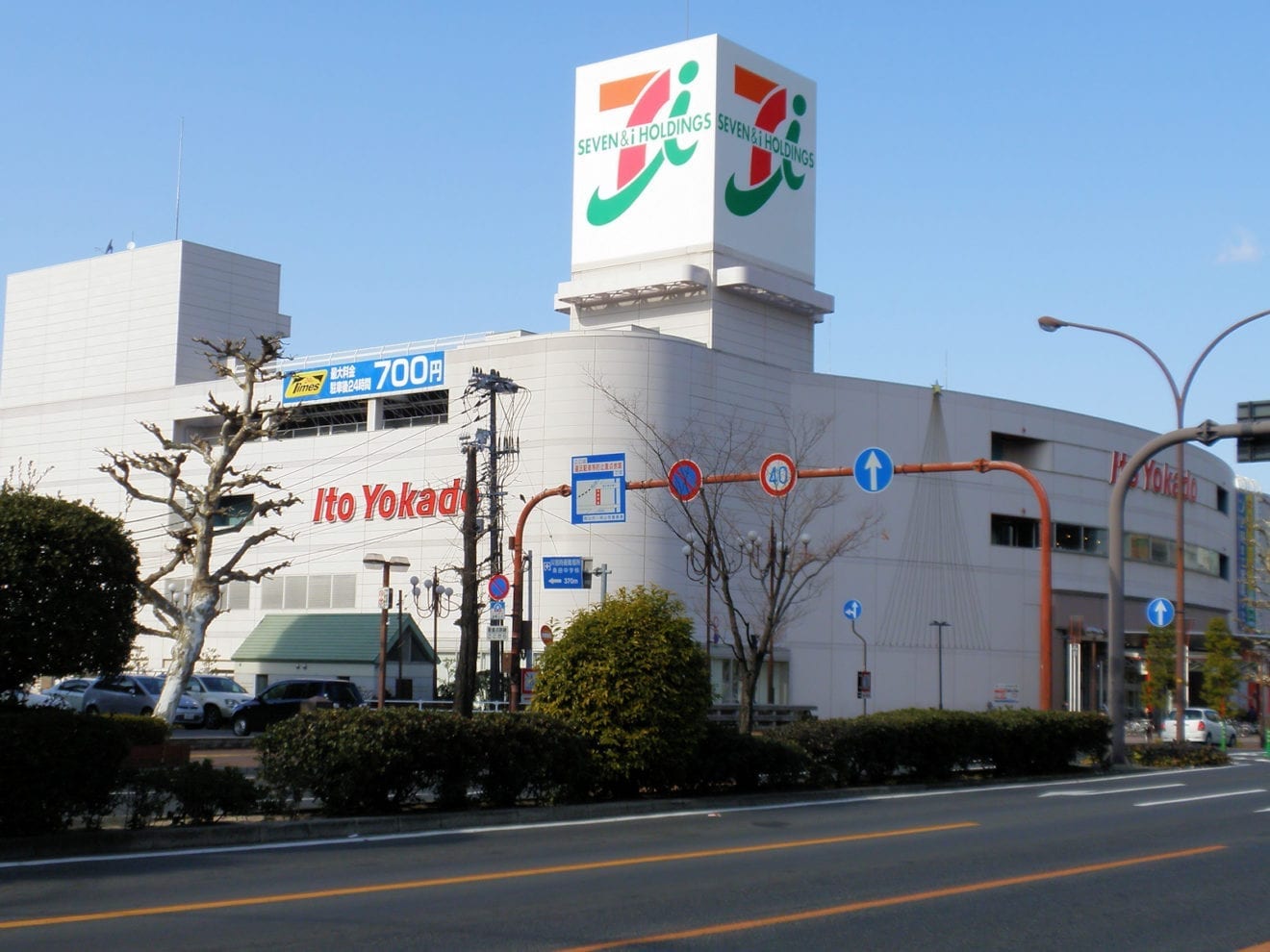
    Seven & I Holdings, parent company of Ito Yokado, will accelerate store expansion in the Chinese mainland market and plans to have 20 stores by 2020, tripling their current number in China.

    Ito Yokado entered the Chinese mainland market in 1997, with its first store openning in Chengdu, Sichuan province. In 1998, the company entered the Beijing market. At present, Ito Yokado has six stores in Chengdu and two in Beijing.

    On January 12, 2017, Ito Yokado opened a new store in Sichuan’s Meishan city and the company plans to launch another new store in Sichuan’s Leshan city in 2019. According to Ito Yokado, the company will increase the number of its general merchandise stores and food supermarkets to ten in Sichuan.

    In 2005, Ito Yokado opened its first food supermarket in Beijing. However, due to the severe competition from foreign supermarket giants like Carrefour and Chinese local enterprises, the Japanese retailer ceased the operations of this food supermarket in December 2016 and only maintains two department stores in the capital city.

    In addition, with the rapid development of e-commerce in China, Ito Yokado also plans to tap the online business. The company will establish a new company in Sichuan this summer and it aims to achieve sales of JPY10 billion by 2020 via online sales.

  • No strong recovery in Hong Kong retail sales until 2018

    No strong recovery in Hong Kong retail sales until 2018

    Despite a return of mainland Chinese tourists to mark the start of the Year of the Rooster, it might be too early to celebrate for Hong Kong retailers. Sales will continue to fall this year, according to industry observers.

    Thomson Cheng Wai-hung, chairman of Hong Kong Retail Management Association, estimates the territory’s retail sales will fall 3-4% on the year in 2017, an improvement from the 8% drop in 2016.

    Last year, retail sales fell to 437 billion Hong Kong dollars ($56.3 billion), marking three years of decline and the worst full-year slump since 1998. This was despite some signs of improvement when the decline in sales in December narrowed to 3% from a year ago as more mainland visitors spent their holiday in Hong Kong.

    “We might be getting closer to the end of the tunnel,” Cheng said on Thursday. But citing uncertainty in the global environment, such as a possible U.S.-China trade war, he expects the retail market to bottom out only in 2018 at the earliest. “It is hard to say whether it will be a recovery in L shape, V shape or U shape,” he said.

    There were winners and losers during the Chinese New Year holiday.

    Luxury retailers were hit by dwindling sales as Chinese tourists tightened their purse strings amid a slowing economy. Prices in Hong Kong are also less attractive for mainlanders due to a weaker yuan and the Hong Kong dollar’s peg to the U.S. dollar, which had strengthened during the year.

    Chow Tai Fook Jewellery Group recorded an 11% slump in Hong Kong and Macau sales from a year ago between Jan. 14 and Feb. 3, which covered the Chinese New Year holiday.

    Mass-market retailers fared better. Hong Kong’s largest cosmetic chain Sa Sa International saw a 3.5% sales increase at home and in Macau from Jan. 28 to Feb. 3, helped by a rebound in mainland tourist traffic. While the number of transactions they made increased, the average spend per transaction was down 4.6% from a year ago.

    Given the latest data over the holiday season, Chairman and CEO Simon Kwok Siu-ming is upbeat on the outlook. “It is recovering, and December was almost flat [compared to a year before],” he told Nikkei Asian Review on Tuesday.

    He is positive about mainland customers as well. “I am not worried about China and the Chinese economy,” he said. Ease of travel to Hong Kong in the near future with the expected opening of a high-speed railway link and bridge connecting to Macau and Zhuhai in southern Guangdong province will make the territory “more accessible” for mainlanders.

    Some mid-tier fashion retailers are turning to e-commerce to expand their reach. Walton Brown, a subsidiary of Lane Crawford Joyce Group that has a portfolio of premium brands including Kate Spade and Brooks Brothers, will launch in March its own mobile platform MyMM.com to target China’s growing middle class.

  • Eight in ten Singaporeans shop online

    Eight in ten Singaporeans shop online

    Online shopping is fast becoming a favourite activity of Singaporeans, research shows, as the country’s bricks and mortar retail sector continues to struggle.

    A survey, conducted by Edelman Intelligence and Criteo, revealed that 84% of Singaporeans love to shop online and nearly a third of respondents – especially millennials and wealthier Singaporeans – make at least one purchase each week on e-commerce platforms.

    Nearly every Singaporean questioned (95%) had used their smartphone or tablet to browse for products or services online in the past month. But while Singapore enjoys the world’s highest smartphone penetration, locals were less likely to use their phone to make purchases, feeling that computers are better suited to purchasing high-value items.

    Almost two thirds (65%) said they would prefer to use their computers for big ticket items such as airfares or luxury goods, and 42% would be happy to spend more than SG$500 on a single purchase compared to 16% on their mobile.

    Personal income also has a direct correlation to where products are bought; those on a higher income tend to buy from Japan, the UK and Europe, whereas those on a lower income tend to buy from China. (For more 2017 retail trends in Singapore, read Warc’s report: Trend Watch 2017: Singapore seeks retail revival, economic resilience.)

    The data also reveals that showrooming, where shoppers browse in-store then buy online, is also a growing trend in the country. The primary incentive for showrooming is deals and promotions (69%) and cheaper products (66%) whilst free or cheaper delivery is a big consideration (43%). Almost two thirds of respondents had searched for a product online while being in a store to compare deals.

  • AirAsia X offers Honolulu-Osaka introductory one-way fare of $99

    AirAsia X offers Honolulu-Osaka introductory one-way fare of $99

    Low-cost, long-haul Malaysian carrier AirAsia X is beginning its maiden U.S. service with introductory one-way fares starting at $99 from Honolulu to Osaka and $149 for continuing service to Kuala Lumpur.

    The return leg from Osaka to Honolulu is an introductory $162.36 while flying from Kuala Lumper to Honolulu, with a layover in Osaka, is $198.02 one way.

    Round trips would be as low as $261.36 and $347.02, respectively.

    The airline will operate its Kuala Lumpur-Osaka-Honolulu route four times a week beginning June 28.

    Hawaiian, Japan and Delta airlines also fly between Honolulu and Osaka. During the late June time period, their round-trip prices start in the low $600s to the mid-$800s. Prices are more expensive if booked one way.

    “This is the game-changing route we have all been waiting for,” Datuk Kamarudin Meranun, AirAsia X Group CEO, said today in a statement. “By connecting the U.S to North Asia and Asean with our world-class low fares offering, we will make it possible for those in the Pacific to explore Asia through our wide network.”

    This will be the first route linking Honolulu with Malaysia. Guests transiting in Osaka do not require a Japanese visa during the two-hour stopover, and can return to their seats on the flight after clearing security with any carry-on luggage or belongings.

    The introductory fares are available for travel from June 28 to Feb. 6. Flights depart Mondays, Wednesdays, Fridays and Saturdays.

    The Malaysian carrier, which has been operating since 2007, will use 377-seat Airbus A330-300 aircraft on the Malaysia-Osaka-Honolulu route.

    AirAsia X serves 22 cities in Asia, Australia, New Zealand, Africa and the Middle East with a fleet of 30 A330s.

  • DHL Supply Chain appoints Jerome Gillet as CEO of its new Singapore cluster

    DHL Supply Chain appoints Jerome Gillet as CEO of its new Singapore cluster

    DHL Supply Chain, which is involved in contract logistics solutions, has named Jerome Gillet as CEO of the new Singapore cluster which includes Singapore, Malaysia, and the Philippines.

    In this role, Gillet will continue to report to DHL Supply Chain Asia Pacific CEO Terry Ryan, while remaining as a member of the regional board.

    The appointment will bring synergy for the three markets and drive new growth for the region.

    The DHL Supply Chain businesses locally will continue to be led by the respective country heads – Jason Goh, managing director, DHL Supply Chain Singapore; Mike Davies, managing director, DHL Supply Chain Malaysia; and Suzie Mitchell, managing director, DHL Supply Chain Philippines — who now report to Gillet.

    “We see tremendous opportunity in Singapore, Malaysia and the Philippines to grow our business with even more focus on greater service quality in the markets. Jerome has repeatedly demonstrated his commitment to customer needs, and, in a changing economic climate, he is well placed to help customers deliver greater value from their supply chains,” said.

    “An innovator and strategic leader, Jerome is well suited to lead the next stage of growth transformation in our Singapore cluster. With his track record of delivering accelerated growth and building strong customer relationships, I am confident he will drive this new cluster in achieving high and sustainable growth.”

    “I am looking forward to accelerating growth in the newly formed cluster with a strong focus on quality, innovation and customer centricity,” said Gillet.

    Gillet’s career in logistics spans over 20 years (the last 17 years in the Asia Pacific) and includes roles in general management, operations and business development. His last appointment as chief customer officer (CCO) of DHL Supply Chain Asia Pacific saw him turn Asia Pacific into the fastest-growing region worldwide within DHL Supply Chain.

    The growth was driven by his business development efforts in key sectors such as Consumer & Retail, Technology and Life Sciences.

    Prior to his role as the CCO, Gillet was the vice president of Consumer sector for Asia Pacific, and increased annual new business gains by over 200% between 2008 and 2014.

  • Wi-Tribe to launch Pakistan’s first LTE-A network soon

    Wi-Tribe to launch Pakistan’s first LTE-A network soon

    Pakistan’s Wi-Tribe is on track to deploy the market’s first LTE-Advanced network in around May this year.

    The former Wimax operator plans to launch a network capable of speeds of up to 100Mbps within the next few months.  The company expects to raise this speed to 200Mbps by end-2018 and to 400Mbps by around 2019 as more advanced customer premises equipment becomes available.

    On Facebook, Wi-Tribe group chairman Hasan Bokhari and Wi-Tribe advisory board chairman Shahid Malik Chairman confirmed that the company has awarded Huawei a $15 million contract to help deploy the network.

    The executives said the network will be the first LTE-A deployment in the 3.5-GHz band in South Asia and the Middle East, and is expected to be fully operational in June.

    Wi-Tribe plans to invest over $25 million in LTE-A over the next three years, and its owners have committed to reinvesting all profits from the company’s operations over this time back into the business.

    “We see a very bright future through LTE-A insha’Allah, and intend to offer not just competitive packages with unrivalled technology, speed and reliability but with the advantage of having all this backed up by our Tribers who will continue to deliver the best customer support in Pakistan,” the executives wrote.

  • Connected things on pace for 31% surge in 2017

    Connected things on pace for 31% surge in 2017

    Globally, 8.4 billion connected things will be in use in 2017, up 31% from 2016, and will reach 20.4 billion by 2020, according to projections from Gartner.

    Total spending on endpoints and services will meanwhile reach almost $2 trillion in 2017, the research firm predicts.

    Regionally, Greater China, North America and Western Europe are driving the use of connected things and the three regions together will represent 67% of the overall Internet of Things (IoT) installed base in 2017.

    The consumer segment is the largest user of connected things with 5.2 billion units in 2017, which represents 63% of the overall number of applications in use. Businesses are on pace to employ 3.1 billion connected things in 2017.

    “Aside from automotive systems, the applications that will be most in use by consumers will be smart TVs and digital set-top boxes, while smart electric meters and commercial security cameras will be most in use by businesses,” said Peter Middleton, research director at Gartner.

    In addition to smart meters, applications tailored to specific industry verticals — including manufacturing field devices, process sensors for electrical generating plants and real-time location devices for healthcare — will drive the use of connected things among businesses through 2017, with 1.6 billion units deployed.

    However, from 2018 onwards, cross-industry devices, such as those targeted at smart buildings — including LED lighting, HVAC and physical security systems — will take the lead as connectivity is driven into higher-volume, lower cost devices.

    In 2020, cross-industry devices will reach 4.4 billion units, while vertical-specific devices will amount to 3.2 billion units.

    While consumers purchase more devices, businesses spend more. In 2017, in terms of hardware spending, the use of connected things among businesses will drive $964 billion.

    Consumer applications will amount to $725 billion in 2017. By 2020, hardware spending from both segments will reach almost $3 trillion.

    Total IoT services spending (professional, consumer and connectivity services) is on pace to reach $273 billion in 2017.

  • Dak Lak to shift coffee strategy

    Dak Lak to shift coffee strategy

    The Central Highlands province of Dak Lak plans to increase the proportion of processed coffee such as instant coffee and powdered coffee from less than 10 per cent to 15 per cent in total coffee output by 2020 and up to 30 per cent by 2030.

    Pham Ngoc Nghi, chairman of the province’s People’s Committee, said the province’s policies were being adjusted to attract more domestic and foreign enterprises to invest in coffee processing.

    He said that most locally based processing companies were private firms whose market access and product advertising capacity were modest.

    Dak Lak, which has the largest coffee area and output in Viet Nam, has more than 200,000ha and an annual coffee bean output of 450,000 tonnes.

    However, the province only has 145 coffee processing facilities with a total capacity of 32,100 tonnes, accounting for 5.55 per cent of the province’s total coffee bean output.

    To achieve the targets, the province has created a more favourable investment environment for both domestic and foreign enterprises, particularly those specialising in roasting and grinding, to invest in processing factories.

    The province has also helped coffee enterprises improve their corporate governance, promoted the use of advanced post-harvest and processing techniques and expanded market access for local companies.

    Coffee farmers, producers and businesses are being encouraged to produce beans that can be certified by the coffee global certification programme (UTZ), the fair-trade labelling organisation (FLO), Rainforest Alliance (RFA) and 4C (Common Code for the Coffee Community).

    The province, which has helped organisations, enterprises and co-operatives build brands, has offered assistance to companies to acquire rights to the geographical indication for processed coffee products.

    Last year, Dak Lak produced 28,000 tonnes of processed coffee, including 23,000 tonnes of powdered coffee and 5,000 tonnes of instant coffee.

    It exported 4,520 tonnes of instant coffee worth nearly US$ 27 million, accounting for 7.5 per cent of the province’s coffee export revenue.

    In the 2016-17 coffee season, Dak Lak estimates it will export 230,000 tonnes of coffee to 75 countries and territories.

    Export potential

    Viet Nam’s processed coffee exports are predicted to increase in the coming years due to more investment from domestic and foreign enterprises, according to experts.

    Many coffee companies, including Trung Nguyen, Me Trang and Vinacafe, for instance, are expanding the scale of their production.

    In addition, Viet Nam’s free trade agreements with the EU, Europe-Asian Economic Union and the Republic of Korea will create opportunities to boost Viet Nam’s processed coffee exports.

    Under free trade agreements, exports of Viet Nam’s processed coffee are taxed at only 0-5 per cent compared to 15 -20 per cent in the past.

    The country’s coffee industry is raising the value of coffee beans by speeding up the processing of powdered and instant coffee and other products.

    Processed coffee products from Viet Nam are sold in many international markets.

    The G7 instant coffee of Trung Nguyen, for example, has passed the requirements of Walmart Stores, Inc and is now sold at Walmart stores in many countries such as Chile, Brazil, Mexico and China.

    Luong Van Tu, chairman of the Viet Nam Coffee and Cocoa Association, said China was one of the most important markets for Viet Nam’s processed coffee.

    Coffee consumption in China is rising rapidly, particularly among younger consumers exposed to Western coffee drinking habits, he said.


  • Taiwan’s Quanta Computer taps Brocade for IP rollout

    Taiwan’s Quanta Computer taps Brocade for IP rollout

    Taiwan-based notebook manufacturer Quanta Computer has deployed Brocade-powered New IP networks at factories within its key manufacturing site.

    The deployment of Brocade IP networking technology at both the company’s network edge and its data center dramatically simplifies operations at the Quanta Shanghai Manufacturing City (QSMC) plants, Brocade said.

    The project also paves the way for the company to employ SDN as it diversifies into producing a broader range of digital products.

    Quanta Computer has grown to become a $ 31.5 billion business by delivering manufacturing excellence to major brands including Apple, Dell, Fujitsu, HP, and Sony.

    “Competition in the notebook market is relentless and so is the demand to improve manufacturing quality and efficiency,” said Dave Chen, AVP of Quanta Computer. “Our factories are highly automated and that makes them highly network-dependent with a network edge of more than 10,000 ports now deployed at Quanta Shanghai Manufacturing City, which is a big network administration challenge.”

    Chen said they deployed Brocade networking solutions at Quanta Shanghai Manufacturing City because they provide a radically simplified administration model, which reduces costs and improves network availability, and sets us up for further improvements and increased production line flexibility by leveraging SDN.

    Henry Zhu, Brocade country manager for China, the deployment opens the way for the development of software-defined production lines that are capable of virtual retooling on the fly to dramatically increase flexibility.

  • Vietnam convenience stores enjoy boom

    Vietnam convenience stores enjoy boom

    Convenience stores and minimarts have become increasingly popular in the country, with more than one third of households shopping there regularly, according to some analysts’ estimates. If they reduce their prices further, they would have even more opportunities to grow, they said.

    Le Viet Nga, deputy head of the Ministry of Industry and Trade’s domestic market department, said convenience stores have got a good reception from the market, and now make up the fastest growing retail segment with double-digit growth.

    “This is a modern trading channel, selling goods with clear origins and having good management. Convenience stores offer good opportunities for small and medium-sized enterprises and farmers to bring their products into the market.”

    According to the ministry, investors are also favouring convenience stores since their return on investment is much higher than traditional supermarkets or hypermarkets and investment is lower.

    Besides, getting licences for convenience stores and minimarts is much easier than for supermarkets since opening retail outlets of less than 500sq.m is not subject to the economic needs test (ENT), it said.

    Traditional retail channels still account for 72 per cent of the market but this is forecast to reduce to 60 per cent by 2020, it said.

    In China there is one convenience store for every 21,000 people, while the figure is 1,800 in South Korea and 69,000 in Viet Nam, meaning there is immense potential for the segment to grow in Viet Nam, it said.

    The steady increase in incomes and changes in consumer behaviour are other big factors, it added.

    Intense competition

    The number of convenience stores more than doubled in 2012-14 to 348. The number of minimarts went up from 863 to 1,452.

    In 2015 and 2016 convenience stores continued with their impressive performance, with local and foreign players like Saigon Co.op, Satra, Vingroup, B’s mart, Shop&Go and Circle K beefing up their presence as shoppers eyed convenience while a robust economy increased their spending power.

    For instance, Saigon Co.op, which owns Co.opmart, Co.opXtra and Co.op Food, last year launched Co.op Smile, a new retail model.

    Saigon Co.op general director Nguyen Thanh Nhan said plans are in the works to increase the number of Co.op Smile stores to 200-300 by the end of this year from just 20 outlets last year.

    Satra, which has a joint venture with Heineken in Viet Nam, also plans to expand its retail system, with a focus on developing its convenience store chain Satrafoods to create a distribution channel for its subsidiaries like meat producer Vissan and Vietnamese producers in general.

    This year it will open 55 Satrafoods stores, including 10 in the Mekong Delta city of Can Tho alone, raising the total number to 172.

    According to the ministry, foreign enterprises have a 70 per cent market share of convenience stores, 17 per cent of malls and supermarkets, 15 per cent of minimarts and 50 per cent of the online shopping channel.

    According to insiders, the biggest disadvantage for convenience stores and minimarts is their higher prices compared to supermarkets, traditional markets, and grocery stores.

    To improve their competitiveness, they must reduce prices and sell quality local products, they said.

    Vu Vinh Phu, chairman of the Ha Noi Supermarkets Association, said domestic producers and distributors should develop closer links to cut intermediary costs.

    According to the Global Retail Development Index (GRDI) from consulting firm A.T. Kearney, Viet Nam has been in the top 30 most attractive retail markets since 2008.

  • Singapore Airlines Q3 operating profit up 1.7%

    Singapore Airlines Q3 operating profit up 1.7%

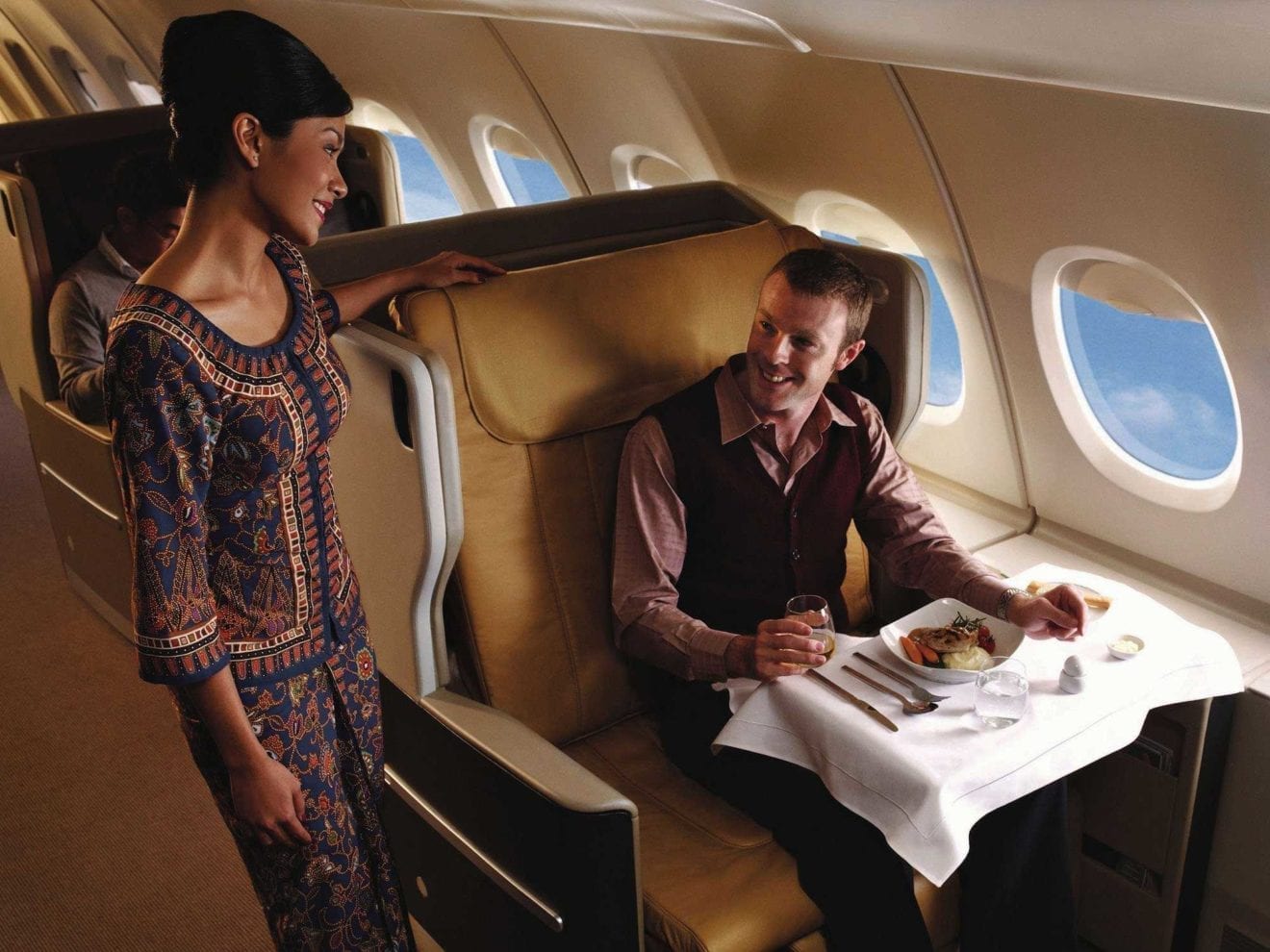
    Singapore Airlines reported on Tuesday a 1.7 percent rise in third-quarter operating profit, helped by an unexpected growth from cargo and mail, while net fuel costs fell.

    Profit reached S$293 million ($207 million) for the three months ended Dec. 31, S$5 million up from the same period last year.

    The carrier, a barometer of the health of Asia’s airline industry, said “2017 is expected to be another challenging year amid tepid global economic conditions and geopolitical concerns, alongside other market headwinds such as overcapacity and aggressive pricing by competitors.”

    The company has come under pressure due to weakening demand for full-service long-haul travel amid competition from low-cost carriers and Middle Eastern network carriers.

    Operating profit in its main SIA brand fell 16.6 percent to S$151 million. Profit fell 9.1 percent in its Silkair regional airline, and was flat-to-slightly-higher for low-cost subsidiaries, Tiger Airways and Scoot.

     SIA Cargo posted an operating profit of S$53 million, its best third quarter performance in nine years, due to stronger-than-expected demand. In the same period of last year, SIA Cargo only managed a S$2 million profit.

    Net fuel costs declined $200 million, largely due to a $256 million reduction in fuel hedging loss, the company said.

  • PLDT to expand FTTH footprint by 80% in 2017

    PLDT to expand FTTH footprint by 80% in 2017

    PLDT plans to expand the reach of its high-speed FTTH service by around 80% in 2017 to reach 4.4 million homes passed, the company announced.

    The expansion will see around 1.9 million new serviceable homes added to the network footprint, which reached 2.5 million homes last year following an aggressive fiber rollout.

    PLDT offers FTTH services under the PLDT Home Fibr brand, which offers speed of up to 1Gbps.

    PLDT Home Fibr has also introduced the nation’s first symmetrical fiber service, and the platform is being used to support a growing line of smart home services such as home monitoring services.

    The operator has also started to deploy G.fast technology from Huawei and hybrid fiber technology GiGa Wire, developed by KT. The technologies can provide speeds of up to 700Mbps per user over existing copper last mile connections.

    “We are stepping up our efforts to deliver unrivalled internet services to more homes in various parts of the country, from the Ilocos provinces in the North to Zamboanga in the South,” PLDT chairman and CEO Manuel V. Pangilinan commented.

    PLDT had a capex budget of around $1 billion last year, and a significant portion of this was allocated for the rollout of domestic fiber infrastructure.