Author: Mei Ling Tan

  • Clothing shoppers prefer stores

    Clothing shoppers prefer stores

    Shopping in-store is still the dominant means of buying apparel in Asia-Pacific, according to the latest study from research company YouGov.

    A poll of 9037 people across the region in December reveals that more than 79 per cent have shopped in a physical store in the past year. This is particularly prevalent for Hong Kong, Australia and Malaysia, where the figures were 88, 85 and 84 per cent respectively.

    Local markets and street vendors attracted 28 per cent of consumers in APAC. They were the most popular in Vietnam, the Philippines and Malaysia, where 41, 38 and 36 per cent of respondents respectively bought apparel.

    Websites turned out the second most popular way to buy apparel. Over the past year, 45 per cent of APAC respondents went online to shop for clothing and accessories, while in China the figure was 75 per cent.

    As yet, apps have not broken into the mainstream, being used for clothing purchases by only 15 per cent of those polled. Apps were most popular in Indonesia, China and Singapore (19, 18 and 18 per cent respectively).

    YouGov says young people are more than six times as likely to have shopped via an app than older generations, and more than twice as likely to have shopped using a website in the past year.

    Between the ages of 16 and 24, 51 per cent shopped using a website over the past year and 19 per cent used an app. By contrast, just 24 per cent of respondents 55 years and older shopped using a website and only 3 per cent via an app.

    Conversely, shopping in-store is most popular with older generations – 90 per cent of those 55 and older have shopped in store compared to 75 per cent of 16- to 24-year-olds. Yet local markets and street vendors seem to buck the trend, being more popular with young people (35 per cent in the 16 to 24 age bracket buy from markets compared with 23 per cent of over 55s.

    The most popular reason for shopping online is that it is quicker than going into a store, with more than half of online and app shoppers says prices are also an advantage.

    However, 78 per cent of buyers like to try out apparel before they buy it, 73 per cent want to check the quality first, and 56 per cent simply enjoy shopping around.  
  • LVMH launches incubator division Luxury Ventures

    LVMH launches incubator division Luxury Ventures

    LVMH has launched Luxury Ventures to invest in small and promising fashion, cosmetics or accessories companies.

    LVMH Luxury Ventures will be headed up by group deputy-head of mergers and acquisitions Julie Bercovy and will target companies turning over between 2 million and 5 million euros, the company announced Friday.

    “The aim is to accompany financially the development of these small nuggets to create value,” said a spokesman.

    Luxury Ventures will launch with a starting capital of 50 million euros and invest between 2 million and 10 million euros in target businesses.

    LVMH has also announced a design and manufacturing joint venture with eyewear manufacturer Marcolin in which it will buy a 10 per cent stake. The move is aimed at giving Louis Vuitton greater control of its eyewear brands and represents a shift away from the traditional licensing model. Previously, LVMH contracted Safilo for most of its eyewear brands.

    Marcolin says it will start by making eyewear for the Celine and Louis Vuitton brands from 2018, before taking over other labels in the French giant’s stable.

  • Philippines airline PAL announces new direct Doha-Manila service

    Philippines airline PAL announces new direct Doha-Manila service

    Starting March 26, Philippine Airline (PAL) will launch its first direct flight from Manila to Doha. The service will operate four times a week, on Monday, Wednesday, Friday and Sunday on the A330.

    PR684 will leave Manila at 1:30pm and arrive in Doha at 6pm local time. And PR685 will depart Doha at 8pm and arrive in Manila at 10am.

    Tickets range from QR885 to QR2,745 in economy, and include WiFi and meal service. A business class option could be rolled out this summer.

    The moves come a year after the carrier introduced its first service to Doha, though that route currently first stops in Abu Dhabi.

    PAL will continue to fly that service Doha on Tuesdays, Thursdays and Saturdays. The non-stop service will make Manila’s Ninoy Aquino International Airport one of the few destinations connected directly to Doha by three airlines.

    It also heats up competition on the route, as Qatar Airways also flies to Manila direct. So does low-cost carrier Cebu Pacific Air, which launched its service to Doha in 2015.

    Growing community

    Qatar is home to a large Filipino population, which now numbers over 200,000 people.

    That’s the third largest expat group in the country, behind the local Indian and Nepali communities.

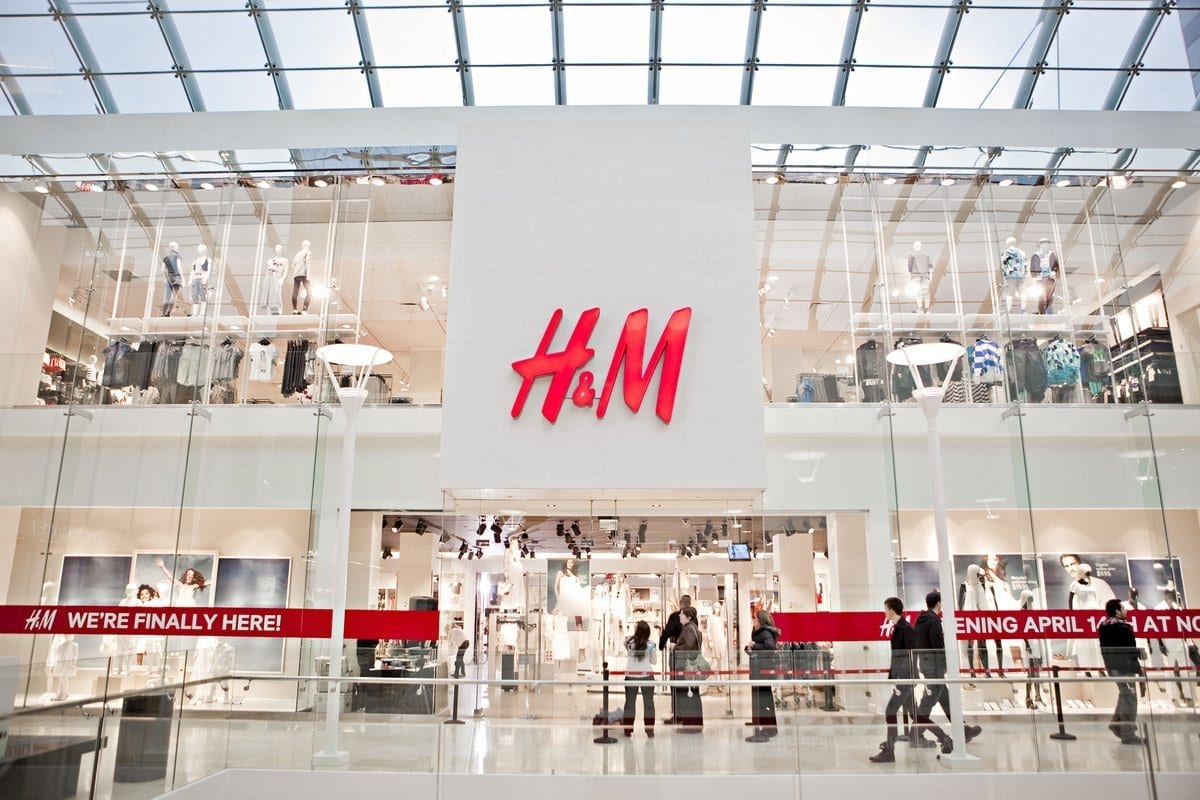
  • H&M to open in Vietnam during 2017

    H&M to open in Vietnam during 2017

    In 2017, H&M will also open in Colombia, Iceland, Kazakhstan and Georgia. CEO Karl-Johan Persson confirmed the openings while announcing a 7 per cent increase in global sales for its financial year on November 30.

    Last year, H&M opened online stores in 11 markets, along with 427 new brick-and-mortar stores worldwide.

    “This means that H&M is now present in 64 markets of which 35 offer eCommerce. We welcomed more than 13,000 new colleagues which means there are now more than 161,000 colleagues in the group,” he said.

    The H&M Asia online stores will also open in Hong Kong, Singapore, Macau, Taiwan and Malaysia, according to Inside Retail Asia. A sixth will open in Turkey.

    In addition, this year the company – which also operates the Cos, Monki, Weekday and Cheap Monday retail brands – will also reveal one or two more brands.

    “In 2017 we are looking forward to delivering strong collections and customer experiences and launching one or two new brands. This, combined with ongoing improvements and investments in the omni channel offering, the supply chain and advanced analytics make us positive towards our opportunities in reaching our newly rephrased growth target, both in 2017 and going forward,” Persson said.

    Most new stores will carry the H&M banner, but 70 to 80 will be for other brands, including H&M Home.

  • New look for Pierre Herme Japan flagship

    New look for Pierre Herme Japan flagship

    A decade after opening, French chocolatier Pierre Herme Japan has renovated its flagship store at Aoyama in Tokyo.

    Behind the new look is interior designer Masamichi Katayama, whose Wonderwall firm has worked on projects in Australia, Europe, the US and other parts of Asia. The renewed space reflects on the notion that every day is a whole new day presenting an opportunity to discover new tastes, sensations and pleasures.

    pierre-herme-renovated-flagship-store-tokyo-4

    Right from the store’s entrance, visitors are presented with a spread of products, from macarons to viennoiseries.

    pierre-herme-renovated-flagship-store-tokyo-2

    By the staircase is a new area, the “Crossover”, where original items are displayed including more than 40 recipe books written by Pierre Herme.

    pierre-herme-renovated-flagship-store-tokyo-1

    Called “Heaven”, the upper level features an aerial kitchen where the chefs can be seen at work.
    Throughout, the store features eclectic art such as a neon sign created by artist Makiko Tanaka, as well as a service counter that seamlessly doubles as a DJ booth for private events.

  • Vietnam trials hi-tech agriculture production zones

    Vietnam trials hi-tech agriculture production zones

    Vietnam plans to have at least 10 hi-tech agriculture production zones comprising 200 enterprises by 2020. To date, it has attracted 20 enterprises.

    1. Vietnam-Australia JSC, a foreign invested enterprise with a branch in Bac Lieu province, has pioneered shrimp super-intensive farming in greenhouses. The company has spent VND180 billion to farm shrimp on an area of 50 hectares, which brings a yield of 40-80 tons per hectare each crop, or 300 tons per hectare per annum, 10-15 times higher than traditional farming methods.

    In Vietnam, there are many different shrimp farming models. Under the extensive farming model, there are 3-6 shrimp per square meter. Meanwhile, under the super-intensive model, there are 300-500 shrimp per square meter. High technologies must be applied for super-intensive farming, including Israeli membrane technology, US and German periodic water filtration technology and biotechnology.

    With the investment rate of VND7 billion per hectare, it is 10 times more costly to follow the super-intensive farming model than the traditional model. However, the new model is believed to help Vietnam strengthen competitiveness to overcome technical and trade barriers set up by import markets.

    2. Japan, Dubai, South Korea and the Middle East are markets where FOHLA banana is favored. This banana is being grown by Huy Long An Company on an improved land area on which plants could not grow 20 years ago.According to Vo Quan Huy, director of Huy Long An, the investment rate is up to millions of dollars. There are about 2,500 banana trees on every hectare of land which give 20-30 tons of finished products. With the selling price of VND8,000-10,000 per kilo, the expected profit rate is 25-30 percent in good management conditions.

    With high quality, good taste and more competitive price than Filipino bananas, FOHLA bananas have hit the shelves at Japanese supermarkets

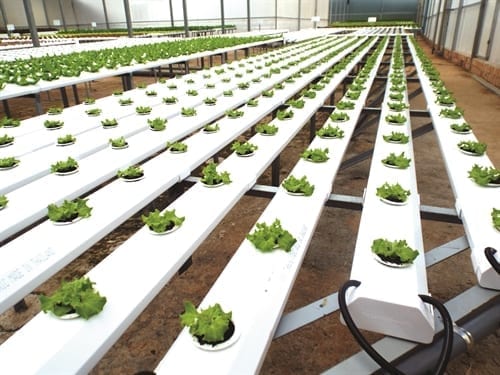
    3. A Vietnamese group of scientists headed by Prof Nguyen Quang Thach has successfully created a high-quality potato variety in aeroponic environment.

    Meanwhile, aeroponics farmed vegetables are now used by many Vietnamese.

    “With farming area of 200 square meters, I can provide 100 kilos of vegetables to the market everyday,” said Duong Minh Trung, director of Rau Sach Ngon.

    Trung said the farming model saves more water than other models, because water is sprayed on vegetables and collected back in water tanks for re-use. Regarding fertilizer, Trung buys waste meat and bone products from fish plants and processes it into fertilizer.

    4. The Dancing Lady Orchid garden of Pham Thi Nhung covers an area of 3 hectares in Lam Dong province. This is a greenhouse equipped with spraying irrigation system and high-capacity fans. The flowers bring nearly VND10 billion a month to Nhung’s family.

  • NEC wins deal with Philippines public broadcaster

    NEC wins deal with Philippines public broadcaster

    NEC Philippines signed a contract to provide digital terrestrial TV equipment for the People’s Television Network (PTNI), the public broadcasting service for the Republic of the Philippines.

    This contract supports the expansion of digital terrestrial TV broadcasting in the Philippines, which has been gaining momentum since November 2013, when the country adopted the Integrated Services Digital Broadcasting Technologies (ISDB-T) standard.

    Under this contract, PTNI is scheduled to introduce digital terrestrial TV transmitters and compression multiplexers across six locations in the Philippines by July 2017.

    NEC is providing total support for the introduction of these units, including their provision, installation, and the training of personnel.

    The equipment that NEC is slated to provide features some of the world’s highest levels of power efficiency, and is highly evaluated for superior reliability in the broadcasting field.

    “NEC is proud to be working with PTNI to expand the delivery of high-quality broadcasting to a larger audience in the Philippines,” said Elizabeth Pangan, president of NEC Philippines.

    “As part of NEC’s focus on providing Solutions for Society, this equipment will help to ensure that broadcasting and access to information is reliably maintained, especially during times of emergency, such as when powerful storms strike the region,” said Pangan.

    NEC began providing digital terrestrial TV transmitters for international markets in 1998, when it provided equipment for the world’s first commercial digital terrestrial broadcasting service in the United Kingdom. Since then, NEC has shipped more than 4,500 transmitters to over 50 countries throughout the world.

  • Trump’s inauguration sets live streaming record

    Trump’s inauguration sets live streaming record

    Video streaming coverage of the 2017 presidential inauguration in the United States is the largest single live news event that Akamai Technologies has delivered, the company said.

    Live video streaming of the inauguration peaked at 8.7Tbps on the Akamai Platform at 12:04pm Eastern Time on Friday, January 20, during the opening of the President Donald Trump’s speech.

    This exceeded the previous record of 7.5Tbps set during Election Day coverage on the evening of November 8, 2016.

    Akamai supported 4.6 million concurrent viewers of the inauguration at peak on behalf of its broadcaster customers.

    “The presidential inauguration is the latest in a series of record-breaking live, online video streaming events that we have supported over the last year,” said Bill Wheaton, EVP and GM of Media at Akamai.

    “More people than ever are watching video online, and it’s being done across more devices at increasingly higher levels of quality.”

    On a historical note, the 2009 US presidential inauguration reached 1.1Tbps on Akamai and the British Royal Wedding in 2011 hit 1.3Tbps.

    More recently, the 2016 Euro soccer tournament final peaked at 7.3Tbps and the Rio women’s team gymnastics final hit 4.5Tbps.

  • StarHub Q4 profit falls 33.2%

    StarHub Q4 profit falls 33.2%

    Singapore’s StarHub revealed its fourth quarter profit fell 33.2% to S$54 million ($38.6 million), as a result of higher costs and growing competition.

    Revenue for the quarter stayed flat at S$634.8 million, but service revenue grew 1% year-on-year to S$567.1 million.

    Higher handset subsidies, a higher finance expense and other costs all contributed to the decline in profit during the quarter.

    Mobile revenue decreased slightly to S$311.8 million, with both postpaid and prepaid ARPU declining by S$2 year-on-year to S$70 and S$15 respectively. Pay TV revenue also decreased 6% year-on-year to S$93.9 million.

    Broadband revenue by contrast grew 4% year-on-year to S$54 million, with ARPU growing S$2 year-on-year to S$37. But residential broadband customers fell by 1% year-on-year to 473,000.

    Enterprise fixed line revenue also grew 10% year-on-year to S$107.2 million due to a higher take-up of data and managed services.

    For the full year, SartHub’s net profit fell 8.3% to S$341.4 million, with total revenue down 1.9% to S$2.39 billion. Mobile revenue was up 2% to S$1.2 billion, broadband revenue was 8% higher at S$216.6 million and enterprise fixed revenue increased 3.9% to S$400 million.

    “Despite increased competition, we have registered growth in key areas. Mobile, which accounts for half of our total revenue, showed resiliency as we saw an increase in subscriber base and data revenue. Momentum for our broadband revenue was maintained and we also witnessed a consistent revenue growth in our enterprise fixed business,” StarHub CEO Tan Tong Hai said.

    “In the new year, we remain focused on our customer-centric approach to deliver innovative solutions to both our consumer and enterprise customers.”

    Based on the current outlook, StarHub is currently projecting roughly flat service revenue for the current year. The operator has a capex target of around 13% of total revenue.

    The Singaporean mobile market is facing renewed competitive pressure due to the upcoming entry of Australia-based TPG Telecom as well as the impact of disruptive 4G MVNO Circles.Life.

  • Korean motorists pay high oil taxes

    Korean motorists pay high oil taxes

    South Korean motorists pay much higher oil taxes than their counterparts in the United States and Japan, a report said Monday, sparking calls for the government to lower them.

    According to the report by online crude price provider Opinet, gasoline prices in South Korea averaged 1,455 won ($1.28) per liter in December last year, with taxes accounting for 62.3 percent of the price, or 905.75 won.

    In January, the proportion of taxes dropped to 60 percent in line with rising gasoline prices.South Korea imposes a flat sum of three different taxes on petroleum products, including transportation-energy-environment and education taxes. Also added are an import levy of 16 won per liter, a tariff equivalent to 3 percent of crude prices and a value added tax amounting to 10 percent of the retail price.

    An industry source said that the percentage of taxes to gasoline prices has remained in the 60 percent range since 2014, when international crude prices entered into a low-price phase.

    Taxes account for a far greater share of retail gasoline prices in South Korea than in the U.S. and Japan. In November, the portion of taxes stood at 61.5 percent for South Korea, while comparable figures were 52.9 percent for Japan and 20.9 percent for America.

    Some experts call on the government to reduce oil taxes that are “excessive and irrational,” which they claim has resulted in mass production of ersatz oil products.

    Others argue that the current oil tax system should remain intact because South Korea relies entirely on imports for its oil needs and a cut would run counter to government efforts to reduce greenhouse gases and fine dust.

    The government has started research on revising the current oil tax system, but a finance ministry official said nothing has been determined yet.

  • SCB Securities to use Thai Decide system for institutional customers

    SCB Securities to use Thai Decide system for institutional customers

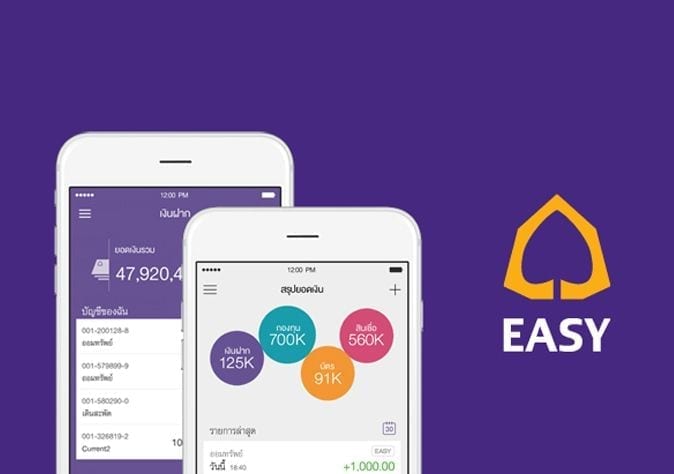
    Decide is a state-of-the-art trading platform provided as a service and co-located at the SET Data Centre, which supports retail and institutional trading on both the Stock Exchange of Thailand and Thailand Futures Exchange.

    SCB Securities chief executive officer ML Thongmakut Thongyai said: “After the successful implementation for our institutional customers we look forward to exploiting the power of Thai Decide for our retail customers.”

    Thibaud Langlet, general manager of Serisys for Southeast Asia, said: “Leading financial institutions like SCB Securities need world-class platforms like Decide to allow them to win in today’s rapidly changing landscape. Providing Decide as a service allows us to ensure high quality and cost efficiency.”

    Coaching conference in May

    The “APAC2017 Coaching Conference” will be held in Bangkok from May 25-27, and its organisers promise it will be an inspiring place where coaches and leaders explore how coaching creates sustainable value within teams, corporations and society.

    The highlights include a leading-edge “East meets West” pre-conference day on May 25, featuring Dr Marshall Goldsmith, Venerable Vudhijaya Vujiramedhi, and the governor of the Bank of Thailand, Veerathai Santiprabhob.

    The conference programme features 35 speakers from five continents, including international coaching experts Goldsmith and Dr Stephen Murphy-Shigematsu.

    Thai cooking class

    Hospitality company Dusit International has rolled out a new Thai cooking class, giving participants the chance to learn how to make a selection of Thailand’s most famous dishes.

    Open to hotel guests and the general public at selected Dusit Hotels and Resorts worldwide, each hands-on session is conducted by a seasoned Thai chef and includes a choice of three authentic recipes, followed by a sit-down lunch or dinner.

    Among the available recipes are signature favourites such as khao pad gai (chicken fried with rice), pad thai goong (fried noodles with prawns), tum yum goong (spicy soup with prawns), massaman lamb shank curry, and chicken satay.

    FWD launches ‘Cancer Fighter’

    FWD Life Insurance has launched “Cancer Fighter”, a new insurance product that covers all stages of cancer from first diagnosis onwards.

    The package provides benefits at early diagnosis to cover medical treatments, including ongoing chemotherapy and radiotherapy recovery benefits, said chief marketing officer Aman Kapoor.

    The “Cancer Fighter” gives a significant lump sum (50 per cent of sum assured) when the cancer is detected early to help pay for the best medical treatments at the early stage to beat the disease.

    In cases where cancer is detected at a later stage, full benefit (100 per cent of sum assured) will be given to the customer. Moreover, an additional 40 per cent of sum assured will be provided for ongoing chemotherapy and radiotherapy treatments to help with full recovery.

    The “Cancer Fighter” plan can be bought with a main life-insurance policy from FWD, is available for customers aged 16-65 years, and can be renewed up to age 84 years.

  • AirAsia’s 20% discount is back

    AirAsia’s 20% discount is back

    AirAsia and AirAsia X are offering a 20% discount on all flights for bookings from Feb 6 to 12 and for travel between Feb 7 to July 31, 2017.

    In a statement, AirAsia said the low fares included all destinations, such as Kuala Lumpur to Shantou, Luang Prabang, Pattaya, Perth, Busan or Penang to Johor, Medan and Johor to Jakarta, Guangzhou.

    The budget airline said the discount applies to all bookings made through airasia.com, the AirAsia mobile app and AirAsiaGo, while BIG Members could also redeem flights using their AirAsia BIG Points.

    AirAsia group chief commercial officer Siegtraund Teh said the “All Seats, All Flights” promotional campaign, a straight 20% off fares across both the short-haul and long-haul networks, would also include the Premium Flatbed on AirAsia X.

    “Through our low fares, more Malaysians can now travel to exciting destinations within our extensive flight network, many of which are exclusively operated by AirAsia and AirAsia X,” he added.

  • Global logistics executives pick India as leading investment spot

    Global logistics executives pick India as leading investment spot

    Agility Logistics has launched the 2017 Agility Emerging Markets Logistics Index, an annual survey of more than 800 logistics professionals. The Index provides an annual snapshot of industry sentiment and a ranking of the world’s 50 leading emerging markets by size, business conditions, infrastructure and transport connections.

    Logistics executives pick India is their top investment destination and say the health of China’s economy is likely to set the tone for emerging markets overall in 2017 in a new supply chain industry survey.

    China, the world’s second-largest economy, again topped the 50-country ranking. India climbed past the United Arab Emirates (UAE) to the second spot, its highest-ever Index ranking. Malaysia at fourth and Indonesia at sixth were unchanged from a year ago.

    In the survey, industry executives identified India as the emerging market with the most potential as a logistics market and as the place their companies are most likely to invest in the next five years. 23 percent of survey respondents said passage of a key tax reform made their companies more likely to invest in India.

    “India’s economy has grown faster than any in the world over the past two years,” said Chris Price, Asia-Pacific CEO of Agility Global Integrated Logistics. He added, “Tax and economic reforms have added to enthusiasm about India, although that optimism has been tempered somewhat in the short-term by the government’s surprise decision to remove large bank notes from circulation and encourage broader use of cashless forms of payment.”

    76 percent of survey respondents said China’s economy is slowing, but only 17 percent said the slowdown is significantly hindering the transport and logistics sector. Nearly 66 percent said a slowing Chinese economy will not alter their business or expansion plans in China.

    Price said, “Vietnam, India and other countries have lured away some production with cheaper wages and incentives,” He continued, “But the e-commerce revolution in China is driving huge inbound freight volumes and reflects a healthy shift toward growth that’s balanced between exports and domestic demand.”

    The Index, in its eighth year, ranks emerging markets countries by factors that make them attractive to logistics providers, freight forwarders, shipping lines, air cargo carriers and distributors.

    “Emerging markets continue to deliver the highest growth rates in the world, but as links in the global supply chain, countries can be extremely hard to evaluate,” said Essa Al-Saleh, CEO of Agility Global Integrated Logistics. “The Index and the survey are useful when it comes to identifying the relative strengths and weaknesses of individual markets.”

  • Lotte may close three retail stores in China’s capital

    Lotte may close three retail stores in China’s capital

    “Three of Lotte Super’s 16 branches in Beijing are considering shut-downs,” said a spokesman for Lotte Mart, which oversees Lotte Super’s overseas business.

    “The final result is scheduled to be announced within this month,” the spokesman added.

    The company denied any connection with the ongoing Terminal High Altitude Area Defense (Thaad) anti-missile system controversy.

    “This is just the result of an annual management checkup,” said the spokesman.

    “The three branches have posted weak operating profits in recent years. This is not the first time we have closed down branches that didn’t generate enough profit. There were shutdowns last year and the year before that as well.”

    Beijing’s hostility towards Korean business in China has been growing over the past three months, and especially to affiliates of Lotte Group, which is providing the land on which the missile defense system will be deployed in Seongju, North Gyeongsang.

    In November, Beijing rolled out unprecedented tax audits and safety check of some 150 factories, storage facilities and store branches of Lotte affiliates, including Lotte Department Store, Lotte Confectionery and Lotte Super. At the time, a group spokesman said it was “unusual” for the Chinese government to conduct inspections simultaneously on multiple affiliates.

    In fact, one of the Lotte sites that was subject to an abrupt safety inspection had been given an award by the local fire department for its first-rate safety systems.

    In the face of such retaliation against its businesses, Lotte Group has been delaying final approval of swapping a golf course, which will be the Thaad battery’s home, for a plot of land in Namyangju, Gyeonggi, currently owned by the Korean military.

    Board members of Lotte International, which owns the golf course, held a meeting on Feb. 3, which delayed a final decision. The company said it would hold another meeting soon.

    Maintaining good relations with the Chinese government is crucial for Lotte because it operates many retail operations in China and gets much of its business in its duty free shops from Chinese customers.

    Lotte Department Store set up a joint venture with China’s state-owned Citi Group in October to advance into Shanghai, a new market for Lotte affiliates. The department store held a business fair on Jan. 20 to attract Korean brands that wish to go into Shanghai.

  • Indonesian Tourism Industries Support Visa-free Policy

    Indonesian Tourism Industries Support Visa-free Policy

    Indonesian tourism industries have expressed support to the adoption of visa-free policy by the government so far, citing positive impact on the tourism sector.

    The general chairman of the Association of Indonesian Tourism Industries (GIPI), Didien Junaedy, said here on Saturday (Feb. 4) that the adoption of the policy is essential to boost tourism in the country.

    He said that the policy has been proven to significantly increase the arrival of foreign tourists in their countries.

    Through Presidential Regulation Number 21, 2016, the Indonesian government has provided visa-free facility to visitors from 169 countries for a short visit.

    The regulation was produced in March 2, 2016, and so it is not yet a year old. According to me, the evaluation should be done after two years of its implementation,” he said, adding that it would take several months to familiarize.

    Junaedy added that tourism industrialists grouped in GIPI have seen and felt the positive impacts of the policy.

    He stated that consistency in the implementation of the policy would be needed with regard to building public trust in foreign countries.

    Supervision on the other hand, however, is also needed to minimize possible violations of the regulation, he noted.

    “GIPI has planned to gather tourism industrialists eight times in the first semester this year to strengthen its support for the implementation of the Presidential Regulation Number 21,” he asserted.

    Junaedy admitted that there had also been negative excesses coming from the policy, such as visa overstay problem and illegal worker problems.

    “Their number however is relatively small compared to millions of foreign tourists visiting Indonesia legally, like in other countries that implement the same policy,” he added.

    He also said that the negative impacts of the policy must be overcome, and solution to the problems must be found through joint efforts.

    “We must not blame each other over trivial problems but must cooperate to overcome them,” he stated.

    He said that the visa-free policy has so far been one of the strong factors that has played a major role in meeting the target of foreign tourist arrivals, which was set at 15 million this year and 20 million by 2019.