Author: Mei Ling Tan

  • BMW to invest RM126mil to build PHEVs in Thailand

    BMW to invest RM126mil to build PHEVs in Thailand

    It appears that the production of BMW plug-in hybrid models in the region is set to increase, with BMW Group Manufacturing Thailand set to invest 1 billion baht (RM126.2 million) in the production of petrol-electric vehicles at its plant in the Amata City Industrial Estate, Rayong.

    The investment has been earmarked for the improvement of line operations there, in order to facilitate the increase of plug-in hybrid production. Of that amount, 488 million baht (RM61.6 million) has already been spent to kick off production of these vehicles last November. The company has spent 3.7 billion baht (RM467 million) on the plant from 2000 to 2015.

    The rest of the investment will be used to double the production capacity in Thailand this year; the company currently builds 20,000 BMW and MINI cars and 10,000 BMW Motorrad motorcycles a year. President of BMW Group Thailand Stafan Teuchert said that the two-year investment is meant to prepare for future demand both domestically and abroad, with Munich seeking any opportunity to export vehicles from Thailand.

    The company has exported a limited amount of cars to Malaysia since 2006 and around 1,000 motorcycles to Malaysia and China since 2015, but began shipping large amounts of completely built up (CBU) X3s and X5s to China last year. It aims to export 10,000 units of those models in 2017 – mostly to China – and is also eyeing other markets in ASEAN for opportunities.

    Locally, BMW plans to bring in more advanced technology to build plug-in hybrid batteries in Rayong by mid-2018, further reducing retail prices in Thailand. The company currently imports the batteries from Europe.

    Existing Thai-built BMW plug-in hybrids include the 330e Luxury and X5 xDrive40e M Sport, priced at 2.59 million baht (RM326,900) and 4.69 million baht (RM592,000) respectively – around 490,000 baht (RM61,800) and 690,000 baht (RM87,100) lower than if they were imported. Teuchert said that the company plans to produce the 740e this year and the 530e in 2018.

    In order to support the increase in the number of plug-in hybrid vehicles in Thailand, BMW plans to increase the number of charging stations in Bangkok to 12 this year, up from the current five. It expects sales of electric cars, mainly PHEVs, to rise from 5% of total car sales to 15% in 2017.

    Meanwhile, BMW currently assembles the 330e Sport, 330e M Sport and X5 xDrive40e in Malaysia, priced at RM248,800, RM258,800 and RM388,800 respectively, on-the-road without insurance. It also expects to export the 3 Series, 5 Series and 7 Series from Malaysia to Vietnam and the Philippines from next year.

  • AmorePacific operating profit tops 1 trillion won in 2016

    AmorePacific operating profit tops 1 trillion won in 2016

    AmorePacific Group’s yearly operating profit surpassed 1 trillion won in 2016 for the first time on diverse retail offerings in Korea and momentum in the global market.

    The company’s operating profit rose 18.5 percent year on year, reaching 1.08 trillion won ($940 million). Its revenue also jumped 18.3 percent compared to the previous year, hitting 1.7 trillion won.

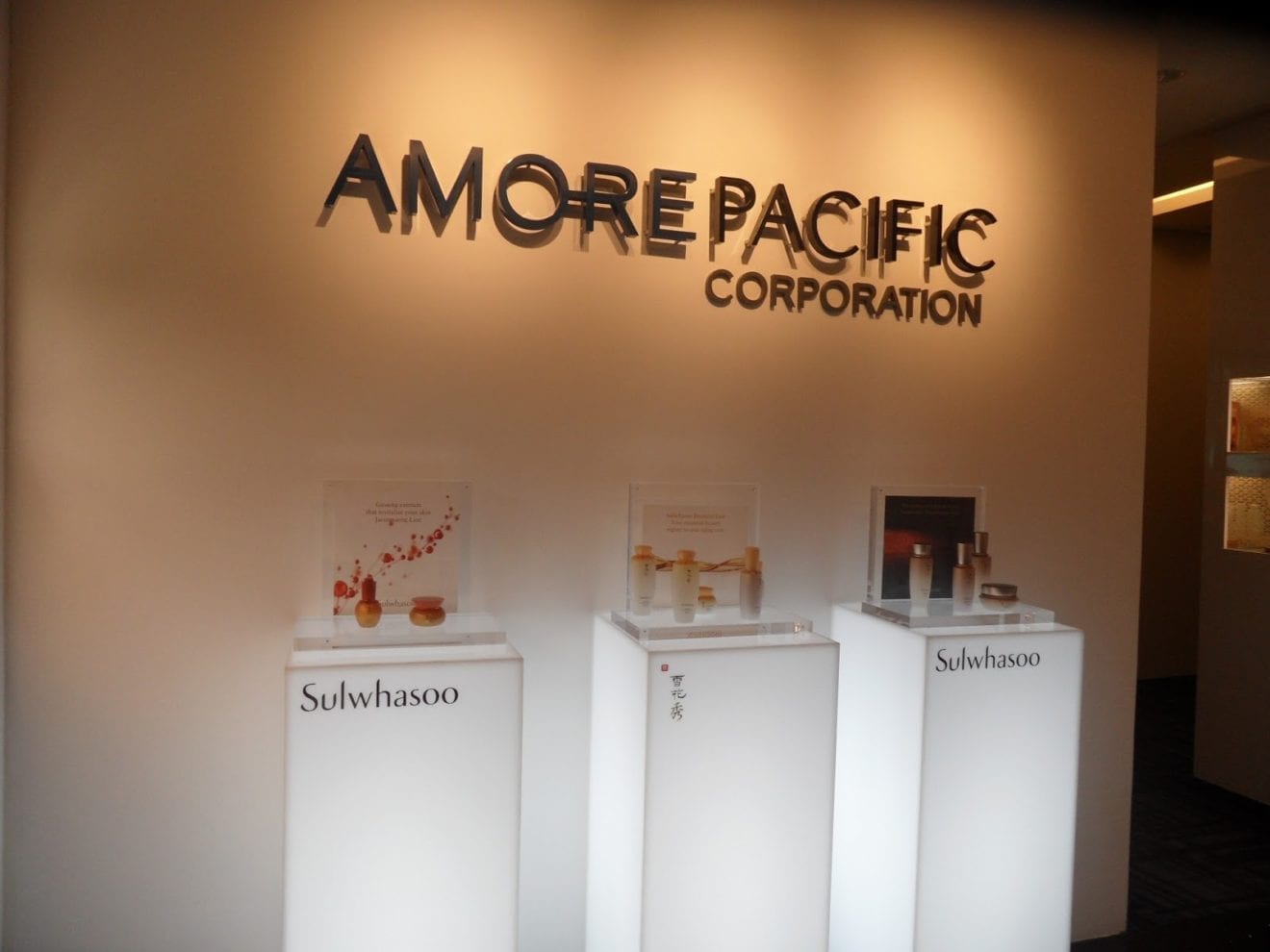
    The group’s main affiliate of the same name that owns brands like Sulwhasoo and Laneige raked in 5.6 trillion won in 2016. The country’s No. 1 cosmetics company explained such growth was due to expanded channels of some of its high-end lines.

    Sulwhasoo, the company’s luxury line that is popular among older women for its anti-aging products, opened a flagship store in affluent Cheongdam-dong last year. The company said the store played a pivotal role in building up the brand’s luxury image to Asian consumers.

    The company’s global business also grew thanks to its so-called five champion brands: Sulwhasoo, Laneige, Mamonde, Innisfree and Etude House. Their sales in Asian countries soared 38 percent year-on-year to generate 1.6 trillion won.

    Hera, another high-end brand under AmorePacific, entered the Chinese market last year for the first time with its fortified makeup line.

    Sulwhasoo expanded its retail offerings in China by opening storefront and shops inside department stores.

    AmorePacific’s sales performance in North America region also saw a boost. It grew 10 percent in 2016 compared to the previous year as the company opened Sulwhasoo and Laneige shops in Canada.

    Its European sales saw a 4 percent year-on-year growth.

    Sales of the group’s other affiliated brands that are not under AmorePacific, such as Innisfree and Etude House, also surged.

    Innisfree, a nature-friendly brand that is in the lower price range, had a 30 percent year-on-year soar in revenue of 767.9 billion won. Its operating profit was 196.5 billion won, a 56 percent growth compared to the previous year. Innisfree focused on adding a cultural kick to its stores so consumers could better understand its brand. The company opened a shop with a cafe inside and a shop with a virtual-reality zone where consumers could experience Jeju Island with model Lee Min-ho.

    Etude House’s operating profit skyrocketed 1,153 percent year-on-year in 2016 to 29.5 billion won.

    Meanwhile, the group’s household product business performed poorly last year due to the massive recall of its toxic toothpaste line in September.

    The recall cost the company an additional 10 billion won in the fourth quarter, following 35 billion won in the third quarter. The group’s operating profit in the fourth quarter tumbled 16.5 percent to 134.4 trillion won.

    “In addition to the recall cost, the depressed domestic economy took toll on the company’s Q4 performance in Korea,” said a spokesperson.

  • The outlook for Singapore’s real estate market in 2017

    The outlook for Singapore’s real estate market in 2017

    Singapore’s soft real estate market in Singapore was given a boost last year. Investment volume rose 34 percent year-on-year to US$9.4 billion, underpinned by major deals such as the sale of Asia Square Tower 1 and a series of transactions, including a top bid for the prime Central Boulevard white site in the Marina Bay area.

    “The Singapore property market is poised for a recovery in 2017. GDP growth and inflation are expected to pick up in 2017, driving stronger demand for real estate,” says Regina Lim, JLL’s National Director, Advisory and Research, Capital Markets. “In most sectors, we also saw an increase in transaction volumes, including residential property sales and office building transactions.”

    The Lion City is traditionally seen as a safe haven for property investment. It is likely that investment volume will hold up 2017 even as new supply continues to enter the market. Among them are Grade A buildings in the Central Business District, Marina One and Tanjong Pagar Centre. These new office buildings have attracted stronger than expected pre-commitments. And about 50 percent of the office space in buildings completed in 2016 to 2017 have already been leased.

    The sale of Central Boulevard at S$2.57 billion, or S$1,689 per square foot per plot ratio, which is the highest bid ever for a Government Land Sale site in Singapore, signals strong investor optimism – with projections that prime rents would rise over the next five years.

    Retail and residences
    “While demand for office, retail and food and beverage real estate slowed between 2012 and 2015, we believe this bottomed out in 2016 and we expect a modest recovery in the next couple of years,” says Chris Fossick, Managing Director, Singapore and Southeast Asia, JLL.

    Gross domestic product is expected to grow 2.3 percent in 2017, an increase from 1.8 percent in 2016.

    The stronger tourist arrival figures and slightly higher economic growth will help bolster retail assets. “We expect more retail malls to transact. Good quality, well-positioned retail assets are likely to be attractive to core investors as yields are still higher than office assets, and occupancies have always been resilient even in recessions,” adds Lim.

    Singapore’s prime residential market remains attractive for investors compared to other global cities. The latest data from JLL shows that prime residential prices are 126 percent higher in Hong Kong, 62 percent higher in New York and 22 percent higher in London.

    And based on JLL estimates in a report, luxury prime properties in Singapore have corrected on average 18 percent, while mass market prices have softened about 10 percent.

    Developers are keen to attract buyers and beat the deadline of selling units within two years of completion as mandated by the Residential Property Act by offering discounts and block deals. Nearly S$2 billion worth of residential units were sold via block deals or structured vehicles in 2016; more of such deals are expected in the next two years.


  • Korean cosmetics drop in price, shipment volume in China

    Korean cosmetics drop in price, shipment volume in China

    The price of imported Korean cosmetics in China dropped by some 40 percent last year, Chinese customs data showed Thursday, for reasons industry watchers see as driven both politically and by the market.

    Records from the Tianjin Entry-Exit Inspection and Quarantine Bureau indicated an average 40 percent drop in the price of cosmetics shipped in from South Korea. The volume of the imported shipments totaled 2,200 tons last year, down 46 percent from the year before.

    The numbers translate to an average $11 per kilogram of imports, down from the previous $18.The monetary value of the imports reached $23 million, down 69 percent. The import volume, which had nearly doubled in 2015, fell back to the level of 2013, data indicated.

    The two countries’ relations, persistently challenged by the differences in the way their governments deal with North Korea, have recently roiled over Seoul’s decision to host an advanced US missile defense system, known as THAAD, which Beijing argues is also aimed at China. Beijing has retaliated by imposing bans on Korean culture content and a number of import items, and restricting travel to South Korea.

    In November last year, Chinese authorities prohibited imports of 19 South Korean cosmetics products, turning back 11 tons of them.

    Industry officials say that the South Korea-China free trade agreement that took effect in December 2015 and China’s lowering of the consumption tax on cosmetics also pushed down the prices, with competition with global brands stiffening for South Korean companies.

    Market watchers are predicting more price markdowns this year, as some of the Korean exporting companies already have made downward adjustments.

    Amorepacific, South Korea’s biggest cosmetics firm, lowered the price on 327 products by between 3 and 30 percent in January.

    “The cosmetics prices are becoming more transparent as online and direct shopping grow at a fast speed,” an industry official said. “It’s inevitable for foreign cosmetics companies to change their retail prices in China.”

  • Korean shopping mall launches international delivery service

    Korean shopping mall launches international delivery service

    Paju Premium Outlets has launched a new service through which products bought at its shopping mall in Paju, Korea can be delivered to countries across the world. The retail company has offered the service through an agreement with DHL Korea.

    The mall, located in South Korea’s Gyeonggi Province, is operated by Shinsegae Simon. Brands sold at the mall include Armani, DKNY and Polo Ralph Lauren.

    “The delivery service will make it possible for foreigners to enjoy shopping without the worry of how to take the purchased products home,” a Shinsegae Simon spokesperson was quoted as saying.

  • First ever sale kicks off on AirAsia India social channels

    First ever sale kicks off on AirAsia India social channels

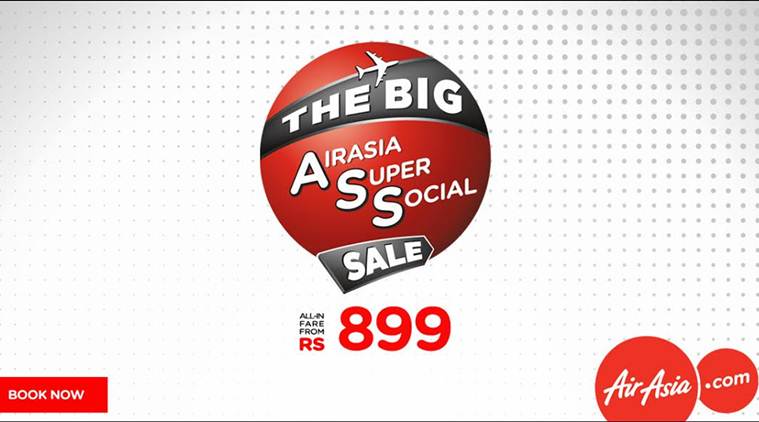
    Riding on the increasing digital penetration in the Country, AirAsia India is launching its first ever ‘Big ASS’ Sale on its social channels at 2130 hours on Thursday, 2 nd February 2017.

    Here’s the chance for travel enthusiasts to pick up their bags, without thinking twice and head out to their favourite destinations immediately! By immediately, we mean as early as NOW till 30 th April 2017.

    Unable to hold on to your excitement? Don’t lose time! between 3 rd & 5 th Feb 2017 and get going! What’s more thrilling than indulging yourself in an unexpected holiday? It is the amazing fares that come with it! Your Goa dreams are finally coming true – fly to Goa from Bengaluru or Hyderabad at INR 899 (All-inclusive).

    It’s the perfect time to plan those long weekends coming up in Feb, March and April! There’s so much for you to explore in India and beyond – Kuala Lumpur & Bangkok. AirAsia India currently flies to 11 destinations with its two hubs in Bengaluru & New Delhi covering Chandigarh, Jaipur, Guwahati, Imphal, Pune, Goa, Visakhapatnam, Kochi and Hyderabad. The airline will start flying to Srinagar & Bagdogra form 19 February 2017.

    Keep yourself updated with AirAsia’s latest promotions and activities via Twitter

    (twitter.com/AirAsiaIN) and (facebook.com/AirAsiaIndia).

  • Diebold Nixdorf establishes direct presence in Myanmar

    Diebold Nixdorf establishes direct presence in Myanmar

    Diebold Nixdorf, a leading innovation partner for nearly all of the world’s top 100 financial institutions and a majority of the top 25 global retailers, today announced the opening of an office in Yangon, Myanmar, creating a direct presence in the country for the newly combined company.

    Previously, Diebold Nixdorf had been operating in Myanmar through third-party business partners, supporting local banks with their self-service technology needs for many years.Six months into the implementation of the new government’s economic policy, digitization of the banking and financial system in Myanmar is making headways. Success stories of mobile money transfers and airtime top-ups suggest Myanmar banking and retail sectors are ready to migrate to digital channels. But as Myanmar treads the path between the physical and digital worlds, cash remains king as the main mode of payment, though in improved and more versatile ways.

    As of 2015, the total number of automated teller machines (ATMs) in Myanmar is approximately 1,780. The figure of 21% is a CAGR for growth between end-2015 and end-2021, according to strategic research and consulting firm RBR.

    With a population of nearly 54 million people, Myanmar has huge growth potential in the banking sector as it expands its services outside of Yangon to more rural areas where it is estimated that more than 95 percent of the population is unbanked. Diebold Nixdorf has worked with a number of banks in other countries across the Asia Pacific region to help them reduce the number of unbanked consumers and bring more customers on board. For example, in India the company has helped a number of local banks by providing low-energy ATMs which can work beyond the limited daily power and maintain them through its extensive services and logistics network. Diebold Nixdorf, which has already a team of 30 service staff in Myanmar, can help banks address these needs.

    Now, by establishing an in-country presence the company can cater to the growing needs of Myanmar banks as they expand their products and services in and beyond the main cities. In addition, Diebold Nixdorf plans to help established or new retailers who wish to enter the Myanmar market with its automation, omni-channel and lifecycle management solutions.

    Neil Emerson, Diebold Nixdorf senior vice president and managing director, Asia Pacific, said, “We’re delighted to be expanding our operations in Myanmar. By establishing a local office in the country it will help us build a closer relationship with our customers and serve them better. We continue to drive innovation in both banking and retail technology and services to meet Myanmar’s unique market requirements.”

    Piers Leach, country manager, Myanmar commented, “We have seen a significant growth in the banking industry in Myanmar over the last few years and we have already been a long and established partner for most of the country’s leading commercial banks. We are excited to more effectively grow our partnership with clients with a new, direct presence in the country.”

  • Big guns line up for Hong Kong International Airport duty free tenders as bids close

    Big guns line up for Hong Kong International Airport duty free tenders as bids close

    Many a fortune has been squandered at Hong Kong’s famed Happy Valley race track. But it’s fair to say that picking a winner from the bidding line-up for the two core category tenders at Hong Kong International Airport (HKIA) some 30 minutes away is a far more difficult exercise than most events on the race card.

    The likely bidder line-up for the first two core category tenders at HKIA, which we held off publishing until bids closed. Note: We understand Heinemann bid for liquor/tobacco/gourmet, not beauty & accessories.

    When it views the submitted offers following the bid closure this afternoon, Airport Authority Hong Kong (AAHK) will no doubt issue a sigh of relief at both the depth and quality of the field it has attracted. With the financial difficulties at HKIA of incumbent DFS Group so well-documented, and Hong Kong’s tourism spending woes similarly familiar to potential contenders, the authority had the difficult job of talking up the tender while simultaneously trying not to deter potential bidders with superficial marketing hype.


    As previously reported, the liquor & tobacco concession is being increased substantially both in terms of space and range, with the addition of liquor-related accessories and gourmet items

    The perfumes & cosmetics concession will become a “beauty and accessories one-stop shopping destination”, including a minimum of 465sq m dedicated to fashion accessories

    Confectionery, a big in-demand category, will enjoy its own dedicated concession. The tender will be launched in March or April.

    Airport Authority Hong Kong believes that given the airport’s extremely strong line-up of speciality stores and mono-brand boutiques (its dazzling Chanel and Rolex duplex stores are shown left and right), there is no need for the airside general merchandise concession. Instead it has allocated the best-selling general merchandise categories to the other packages.

    It set about that goal in an impressive manner, most notably by restructuring the concessions themselves. Out went Airside General Merchandise, in came gourmet foods (to liquor & tobacco), and in came key accessory categories to the pivotal perfumes & cosmetics concession. As revealed by The Moodie Davitt Report, confectionery, an attractive but specialised category, is being offered as a separate single concession.

    The revamped tender model resulted from extensive dialogue between the Authority and the incumbent, other likely bidders and, most critically, consumers. Given the sheer weight and quality of ‘internal’ airport rivals to the general merchandise concession in the form of HKIA’s splendid line-up of stand-alone boutiques, the decision to scrap the all-embracing general merchandise category (and to move its best bits elsewhere) was highly astute.

    This is how the 2012 bidding line-up looked. Nuance-Watson and World Duty Free Group have since been subsumed into Dufry, which did not bid last time around.

    AAHK also emphasised time and again in the run-up to the tender (and in the documents) its whole-hearted commitment to its partners’ commercial success, via intensive physical and digital marketing, shared participation in promotional efforts and to driving HKIA’s passenger numbers.

    The formula seems to have worked. A star-studded field comprising many of the most powerful players in The Moodie Davitt Report’s acclaimed annual Top 25 Travel Retailers League – increasingly the reference point for investors and airports studying the market’s strength and profile – has emerged. While the beauty and accessories concession has attracted greater interest – not surprising considering its greater certainty – there are still enough powerful contenders for liquor, tobacco and gourmet foods to suggest that the stakes there, too, will be similarly high.

    What of the bidding levels? DFS’s sobering experience may have led to some wariness (certainly for the incumbent itself, though do not by any means count out its chances of retaining the beauty business on which it is bidding) but the prevalent market view is that the LVMH/Robert Miller retailer was unlucky in its last bid rather than over-ambitious.

    After all, when The Moodie Davitt Report announced the retailer’s spectacular June ‘One…two… three’ concession victory back in June 2012 amid surging Chinese travelling and spending levels, who could have possibly contemplated what would have followed? What a list: Xi Jinping’s election in March 2013; his subsequent crackdown on corruption and conspicuous consumption; the sharp decline in Mainland Chinese visitors to Hong Kong in 2015 (driven by anti-Mainlander sentiment and the pro-democracy protests); and the meteoric growth of cross-border e-commerce.

    Any one of those factors would have compromised an initially justifiable bid. Collectively they were enough to critically damage it, especially given the contractual premise of a MAG rising in line with increased passengers (as, for example, happened in 2015 and 2016) but where their actual spending (down) was not factored in. All in all, the perfect storm.

    Despite the chastening effect of such an experience (hardly confined to Hong Kong), the individual and collective ambitions of the bidders still represents a heady cocktail of strategic justification, geographic focus (Asia generally, China particularly), overseas expansion, national pride, ‘face’, category expertise and – dare one say it – sheer need for success. All that suggests AAHK will not have to worry too much about any shortfall in its budget going forward.

    So, with a nod in the direction of the race-card publisher down the road at Happy Valley (let’s call the HKIA racetrack Happy Value), here’s The Moodie Davitt Report’s view of the runners and riders in the great Hong Kong International Airport Duty Free Stakes (Note: several of these observations were made in our initial appraisal of the HKIA tenders back in July 2016. We have updated these where possible while respecting retailer confidentialities. All our comments were deliberately held back until just before the bids closed.)

    Likely contenders for the Hong Kong International Airport (HKIA) contracts

    Sky Connection: A certain bidder on liquor & tobacco, and a serious front-runner. The New World Development Company-owned retailer harboured deep disappointment over losing its long-time liquor & tobacco stronghold to DFS last time around, and is desperately keen to make a comeback. Well, not desperately – it’s a well-run company that insists on making money out of concessions – but you get the point. The company’s recent success in the MTR duty free bid augurs well and you can expect a highly focused, innovative, ambitious but not excessive pitch for the liquor & tobacco contract.

    China Duty Free Group & Lagardère Travel Retail: What a blockbuster this combination, revealed on the day the tender closed by The Moodie Davitt Report, represents.

    Deeply ambitious, and now part of the new Chinese tourism ‘super force’ created by China International Travel Service’s merger into China National Travel Service (HK), state-owned China Duty Free Group (CDFG) has made no secret of its desire to grow internationally. It’s off to a strong start in Cambodia (where it now has operations in Phnom Penh, Siem Reap and Sihanoukville) but its ambitions extend way beyond that. To use retail terminology, Hong Kong is a natural ‘adjacency’ to the Chinese Mainland operations; and CDFG’s powerful and complementary partnership with French partner Lagardère Travel Retail is a formidable one in anyone’s book.

    CDFG’s stunning success at its Haitang Bay off-airport store on Hainan Island, as well as its expanding Mainland airport portfolio, has underlined its credentials for running such a blue-chip business as HKIA. Funding will not be a problem, especially given the Sino–French JV now in place.

    For its part Lagardère Travel Retail sees Asia as pivotal to growth, and a blue-chip airport concession such as HKIA would provide a massive fillip. In 2011/12 it bid on perfumes & cosmetics and airside general merchandise; this time around it and CDFG are in for both contracts on offer. And they’re serious about both. International acumen, regional knowledge, combined strength: this is a force to be reckoned with alright.

    King Power Group (HK): Managing Director and lead shareholder Antares Cheng has history here. He was part of the former Kiu Fat Investment Corp’s famous, albeit short-lived, contract victory over incumbent DFS at Hong Kong’s old Kai Tak Airport in 1987, the start of a commercial war that is enshrined in industry legend. King Power (no relationship to the Thai company of the same name) still operates half of the duty free business at Macau International Airport, as well as having a strong (and growing) presence at Shanghai Pudong, and it would dearly love to complete a Chinese trio – and a Hong Kong Airport comeback – here. Hong Kong-based Cheng is highly capable, ambitious and well funded. Expect a big play for both concessions.

    Sunrise Duty Free: The privately held Mainland China retailer may be the most low-profile retailer in the industry but it is not shy in terms of growth ambitions. After all, this is the company that could have (and, some say due to its superior financial bid, should have) acquired World Duty Free ahead of eventual winner Dufry.

    The retailer (partly held by Hong Kong-based Boyu Capital and ably led by Madam Fengyi Zhang) wants to diversify its portfolio outside of its Shanghai Pudong, Shanghai Hongqiao and Beijing Capital International airport operations, and no international gateway would appear better suited to it than HKIA. Last time around the company bid in vain for all three core category concessions. Five years on it is stronger, more experienced – and even hungrier.

    Just as critically, through its Boyu shareholder base, it ticks just about all the social and digital media boxes that AAHK now deems vital to the future success of the airport retail business.

    Recently, for example, Sunrise entered into a long-term alliance with Chinese Internet services company Tencent to accelerates its already rapid development as an online to offline (O2O) shopping provider. Besides its Sunrise investment Boyu has holdings in a glittering portfolio of companies in the Consumer and Retail, Financial Services, Healthcare, and Media and Technology worlds – including, get this, Chinese e-commerce giant Alibaba; China’s largest private express delivery player, SF Express; and the country’s leading online travel agency, 17u.cn. Boyu has also developed a close partnership with powerful travel booking provider Ctrip.com, listed in Nasdaq and with more than 250 million active members in Asia.

    If it can channel those relationships – and its bid will certainly major on that prospect – Sunrise shapes as an entirely credible candidate to extend its impressive growth story. Expect a very strong proposal on beauty and accessories.

    DFS Group: The incumbent must always be respected, in terms of insight, knowledge and experience. And when it’s such a class act as DFS, you had better throw in quality as well. There’s no doubting the importance that the retailer places on HKIA, one of the two spiritual homes (along with Honolulu International Airport) of DFS Co-Founder Bob Miller; and despite the battering the retailer has taken in recent years here, it is back pitching for the key beauty business, albeit no doubt seeking improved terms.

    The big question is, how prudent can DFS afford to be without losing out to those who may have other motivations to bid much higher, even excessively? That whole weighing up of quality vs financials is set to play a vital role in the ultimate assessment.

    Lotte Duty Free: If you were a fiction writer telling the story of Korean duty free over the past two years, critics would dismiss the plot as implausible. And Lotte is the central character in all the drama.

    It first lost, then won back, its trading licence for the magnificent new Lotte World Tower Duty Free store and now faces the prospect of painful five-yearly (not ten as hoped) licence renewal bids for all its downtown businesses. Throw in a potential dilution of its Incheon International business if Korea Customs Service has its anti-chaebol way and you have the perfect incentive for a company to expand internationally. Fast.

    Because of its heavy concentration of Chinese passengers, few airports would attract the Korean giant more than HKIA. For such a brilliant domestic operator with a frankly superb command of social and digital marketing to not have a bigger international presence is a real blot on the corporate portfolio.

    Can it change things here? Lotte’s challenge, we suspect, is more cultural than commercial – it has to convince international airports that it can do the same job abroad as it does at home. What better place to start than HKIA? Then the domino theory might apply. Expect, therefore, a hugely robust bid for both contracts.

    The Shilla Duty Free: The long-time perception that a Korean travel retailer couldn’t win a major airport duty free contract abroad was laid to rest by Shilla’s January 2014 triumph in the Singapore Changi perfumes & cosmetics tender (followed by a joint-venture victory with Sky Connection at Macau International Airport).

    Life there has hardly been plain sailing since, following a difficult start-up and a series of big quarterly losses for its international businesses – overseas duty free sales increased by +9.9% year-on-year in Q4 2016 to KRW133 billion (US$114.4 million) but losses reached KRW8 billion (US$6.9 million).

    But don’t be misled by those figures. Shilla knew what it was getting into at Changi, which it viewed as a foreign laboratory. The learnings were expensive – but crucial. Like its great rival Lotte, Samsung affiliate Shilla faces mounting and often absurd regulatory and political pressure at home. As the engine room of publicly listed Hotel Shilla, it simply must produce a growth story. In the face of ever-proliferating Korean market competition, escalating tour commission costs and regulatory chaos, it has no choice but to look abroad. Tenders and M&A. The former starts here with P&C and accessories.

    Dufry: Last July we asked whether the industry’s equivalent of a Sumo wrestler would throw its considerable weight at the kind of tender that CEO Julián Díaz historically abhors. “Too much competition, too much likelihood of a ‘strategic overbid’, and too much risk to travel retail’s most robust P&L. And yet, and yet…” we wrote.

    With the highly capable Andrea Belardini now in situ in Hong Kong as Divisional CEO for the key regions of Asia, Middle East and Australia, it was always likely that Dufry would come to the table. Remember that The Nuance Group, which it acquired in 2014, ran the beauty and general merchandise concessions here very successfully for years. Given the super-sized retailer’s disproportionately small presence in Asia we expect a positive play here, probably focused on beauty & accessories only.

    Gebr Heinemann: The family-owned German company is another to have identified Asia Pacific as a key growth target. Last July we doubted that it would bid on Hong Kong given the difficult trading conditions and the stresses of the retailer’s deeply ambitious start-up at Sydney Airport. However the latter, buoyed by a hugely favourable swing in the value of the Aussie Dollar, has got off to a flying start – way beyond just about anybody’s projections. That, along with a desire to build on a small but promising Asian base, has prompted a serious review of this opportunity. And Heinemann does nothing in a half-hearted manner.

     

  • Koreans consume more foreign beef over expensive local hanwoo

    Koreans consume more foreign beef over expensive local hanwoo

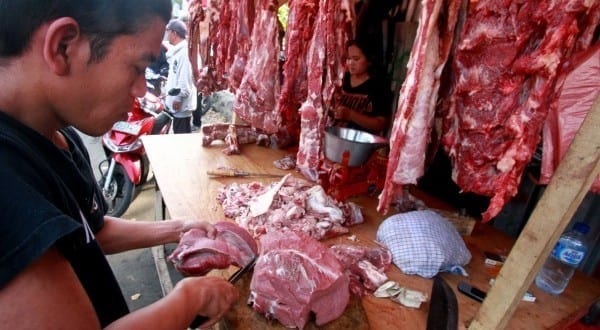
    South Koreans consumed more American and other foreign beef than expensive local beef last year, a move that has lowered the country’s self-sufficiency rate for beef to below 40 percent over 13 years, a state-run think tank said Thursday.

    Last year, South Koreans consumed 362,000 tons of foreign beef, accounting for 62.3 percent of the total beef consumption in the country, according to the Korea Rural Economic Institute.

    South Korea halted imports of U.S. beef in 2003 following the outbreak of a mad cow disease. Seoul lifted the ban in late 2008, which led to mass demonstrations among people in fear of their safety.Australian beef came to 178,000 tons, making up 49 percent of total beef imports. American and New Zealand beef stood at 42 percent and 6 percent, respectively.

    Still, the market share of American beef in South Korea has gradually been on the rise in recent years.

    In comparison, South Koreans consumed 219,000 tons of domestic beef, known as hanwoo last year, accounting for 37.7 percent of the total beef consumption in the country, according to the institute.

    It marked the first time that South Korea’s self-sufficiency rate for beef fell below 40 percent since 2003 when it stood at 36.3 percent.

    The decline came as South Korean consumers shunned expensive local beef.

    The wholesale prices of local beef once hit nearly 20,000 won ($17) per kilogram last year.

    Retail prices of the best quality local beef for bulgogi, a grilled marinated beef dish, came to 4,578 won per 100 grams last year, compared to 2,464 won for American beef for bulgogi, according to the institute.

    The prices of local beef have been on the rise since late 2015 as the number of cattle is continuing to fall.

    Domestic farms cut the number of cattle as the prices of local beef went down and the government helped some farms shut down to stem the decline of local beef following a free trade deal with the United States.

    South Korea’s anti-graft law — which took effect in September — is also adding to the woes of the local beef industry.

    Local beef was one of the favorite gifts during major holidays, but was overtaken by health products, according to major retailers.

    The law imposes tight limits on free meals and gifts that can be accepted by government officials, journalists and private school teachers to try to curb the deep-rooted tradition of excessive hospitality. The maximum value of a gift that a person subject to the law can receive has been set at 50,000 won.

  • South Korea’s Samsung consider building US appliance factory

    South Korea’s Samsung consider building US appliance factory

    South Korea’s Samsung Electronics said Friday it’s considering building a factory to make household appliances in the United States as various industries brace for potential protectionist trade policies under the administration of President Donald Trump.

    A spokeswoman for Samsung said the plans were “purely in the evaluation stage” and no decisions have been made. She didn’t want to be named, citing office rules.

    Samsung also said in an emailed statement on Friday that it continues to assess “new investment needs in the United States. The news drew the attention of Trump, who tweeted “Thank you, @Samsung! We would love to have you!”

    Most Samsung televisions, refrigerators and other household appliances sold in the United States are made in Mexico.

    The spokeswoman refused to say whether Samsung was worried about the possibility of the United States moving to impose tariffs on products imported from Mexico.

    A spokesman from LG Electronics, another South Korean technology company, said it is also considering building a manufacturing plant in the United States and will decide on the matter within the first half of the year. He also didn’t want to be named, saying that the matter was sensitive.

  • Las Vegas Sands Corporation may offload portion of Marina Bay Sands

    Las Vegas Sands Corporation may offload portion of Marina Bay Sands

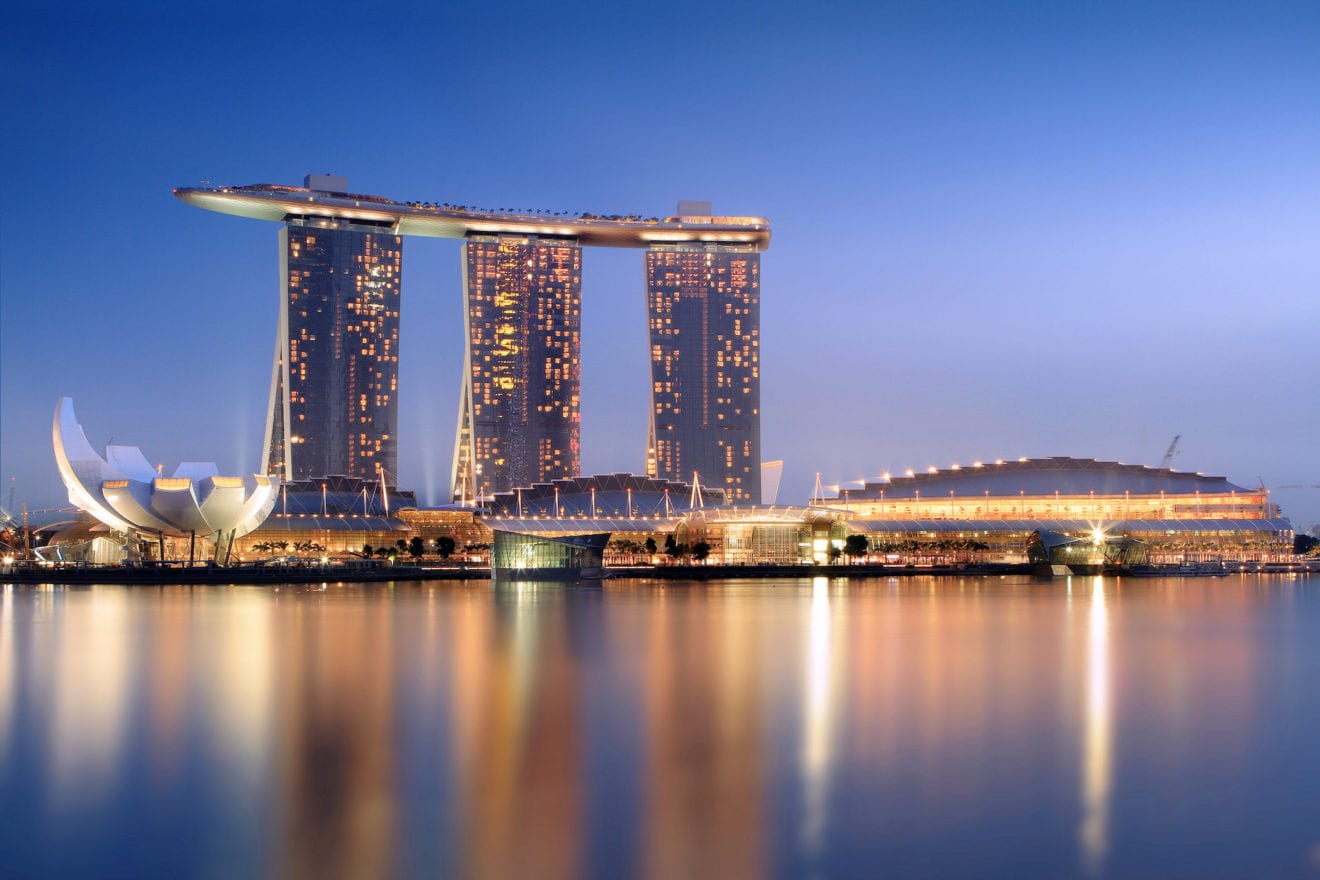
    In Singapore, giant casino operator Las Vegas Sands Corporation is reportedly hoping to sell off a large stake in its shopping mall inside the Marina Bay Sands development before potentially using the proceeds to invest in future venues in Japan or South Korea.

    According to a report from The Straits Times newspaper, the Las Vegas-based giant wants to offload a 49% share in its 800,000 sq ft The Shoppes At Marina Bay Sands for up to $3.5 billion but first needs the approval of the city-state’s government.

    “We expect to receive a very significant price for the 49% we are willing to sell,” Sheldon Adelson, Chairman and Chief Executive Officer for Las Vegas Sands Corporation, reportedly told analysts during a conference call on Wednesday. “We are looking at potentially $3 billion to $3.5 billion. We’re in preparation with our bankers to prepare that property to sell. The interest we have is that it is the highest trophy mall there is in the world. We anticipate almost an unprecedented price to sell 49% of it.”

    Adelson also reportedly declared that the desired price would make The Shoppes At Marina Bay Sands “the most expensive mall ever sold in the world” although any transaction would not take place until April or May.

    Under the terms of its original licensing deal, which began in March of 2007, Las Vegas Sands Corporation was reportedly given a ten-year exclusivity period so that it could begin to recoup the billions of dollars it had spent to construct the Marina Bay Sands. A similar agreement was moreover inked by Genting Singapore for its nearby Resorts World Sentosa integrated casino resort complex and both firms would need official approval before offloading any portion of their Singapore developments once this privileged phase expired.

    “There are more noises coming out of [South] Korea now that Japan is legalizing casino gaming,” Adelson reportedly told analysts. “We will want to see what the development opportunities are. We can always get money to develop properties.”

    Chew Tiong Heng, Infrastructure Planning And Management Executive Director for the Singapore Tourism Board, told The Straits Times that Las Vegas Sands Corporation, which also operates The Parisian Macao, The Plaza Macao, Sands Macao, The Venetian Macao and Sands Cotai Central in Macau via its Sands China Limited subsidiary, has indicated that it may sell off a portion of Marina Bay Sands but had yet to make a formal request.

    “My guess is the government doesn’t want [Las Vegas Sands Corporation] to cut and run or become asset-light and just focus on gambling,” Alan Cheong from global real estate services provider Savills Singapore told The Straits Times. “It wants Las Vegas Sands [Corporation] to still have commitment to its investment in Singapore. On the other hand, Las Vegas Sands [Corporation] may also want to retain majority control because it wants to maintain the mall’s position in the retail market.”

    Although more than 60% of Las Vegas Sands Corporation’s current revenues come from Macau, its Marina Bay Sands development is still a prized asset with the development recently posting an 8% increase year-on-year in fourth-quarter net profits to $366 million. This was helped by a 2.8% rise in overall revenues $723 million while gaming turnover swelled by 5.6% to reach $563 million.

    In terms of The Shoppes At Marina Bay Sands, turnover for the final three months of 2016 climbed by 4.8% year-on-year to hit $44 million while Cheong additionally told the newspaper that potential buyers could include “sovereign wealth funds or a consortium of large private equity firms” as there is currently “a lack of available good-quality retail mall stock” in Singapore.

  • Fast fashion wears green

    Fast fashion wears green

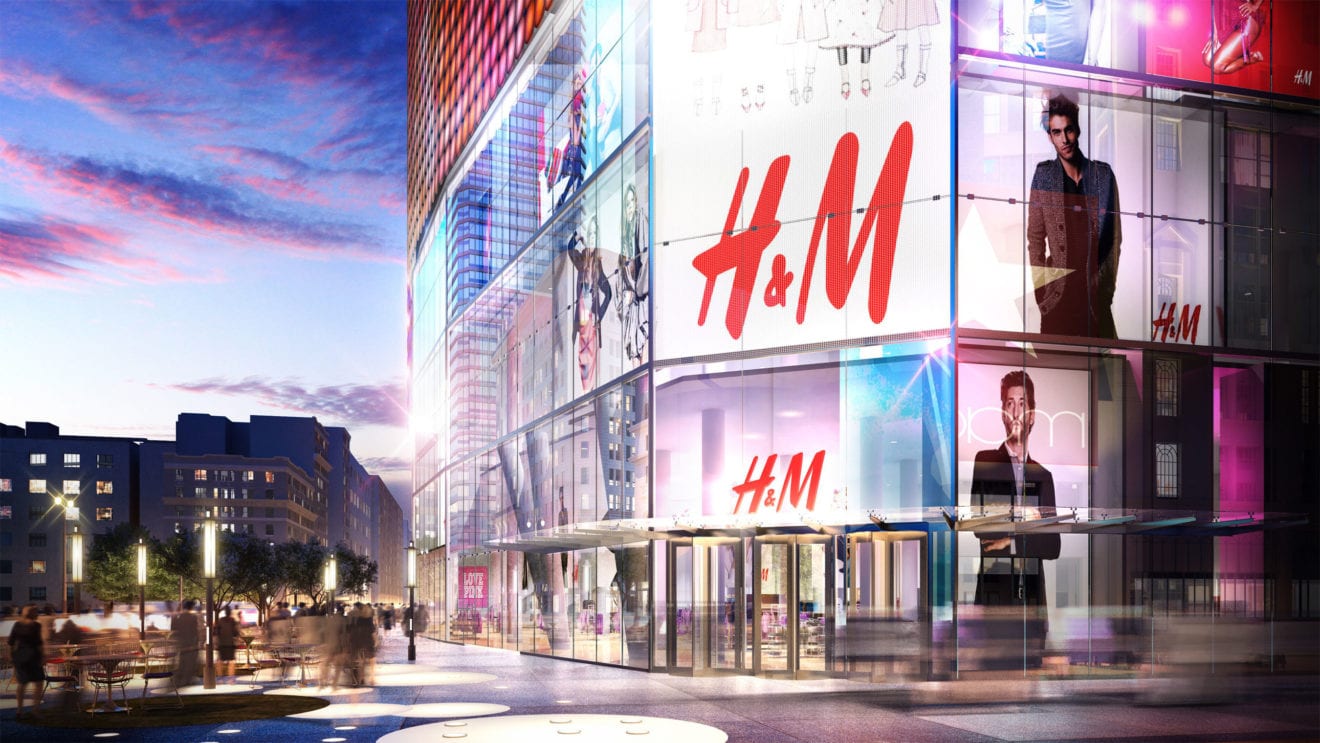
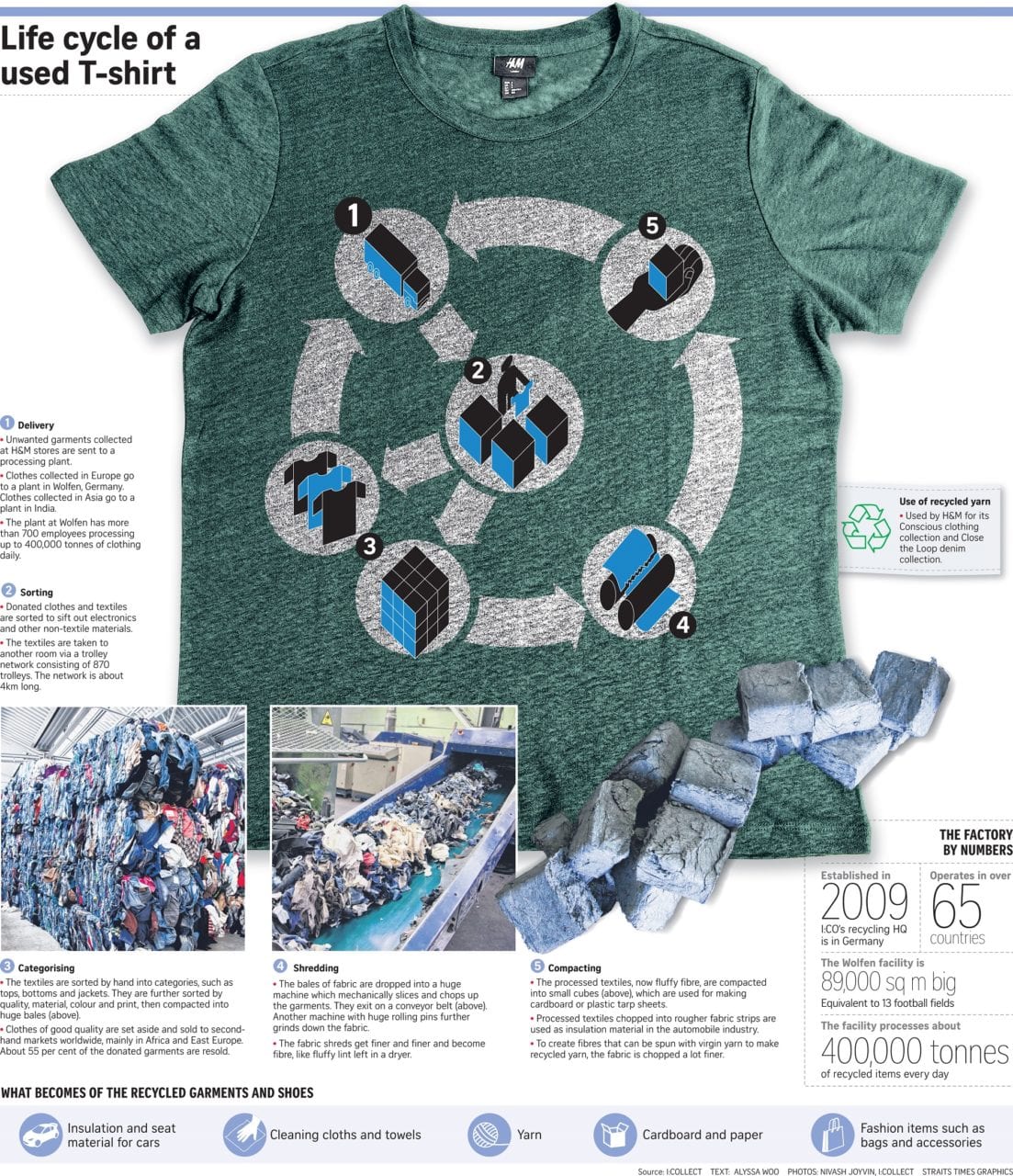
    Few shoppers at Swedish fast-fashion chain H&M notice the collection bin next to the cash counter, an inconspicuous receptacle for old and unwanted clothing. But this is slowly changing.

    The retailer, with 12 bins spread across its 10 outlets in Singapore, collected 64 tonnes of unwanted garments last year – about three- fifths the weight of a blue whale. This is almost triple the amount collected in 2015 (22.71 tonnes) and more than five times that collected in 2014 (12.09 tonnes).

    This year, H&M Singapore hopes to bag a record 88 tonnes, adding to the more than 40,000 tonnes of unwanted clothing it has amassed globally so far.

    Everything collected is sold to the chain’s recycling partner, I:Collect (I:CO), for a fee, which is donated to H&M Foundation, a non-profit global organisation .

    At I:CO’s processing plants in Germany, the United States and India, the clothing is sorted. About 55 per cent of it is resold in second- hand markets worldwide. The remainder is processed – chopped up into fabric shreds which are used as insulation material; or ground into finer fibres and made into cardboard and plastic tarp sheets; or spun with virgin cotton to create recycled yarn.

    It is this yarn that H&M uses for its two eco-friendly clothing lines Close the Loop and Conscious, comprising products made of up to 20 per cent recycled materials.

    The trend of more people donating their used clothes and more retailers accepting them seems to be growing.

    American fashion brand Levi’s launched its recycling drive, where shoppers can drop off their unwanted garments and shoes, in 2015 nationwide in the US after a successful pilot programme in 2014.

    Shoppers care more than just about how they look. They want to be part of a larger movement and they care about the social responsibility behind the brands they buy.

    LECTURER SARAH LIM, who says the time is ripe for fashion retailers to position themselves as environmentally responsible and not just profit-driven

    The North Face, which started collecting unwanted garments and footwear in 2013 in North America, expanded its collection drive to Germany and Canada last year. So far, it has collected 19.3 tonnes of unwanted clothing and footwear in the US alone.

    Fashion retail chain Forever 21 started its recycling efforts in San Francisco, California, in 2014.

    I:CO works with about 60 retail partners in 65 countries, including Levi’s, The North Face and Forever 21. H&M is its biggest partner.

    But recycling is more than just about reducing the amount of clothes headed for the dumpster.

    Mr Olle Blidholm, H&M’s environmental sustainability manager, says that, from a business perspective, it makes sense to take care of social and environmental issues.

    “To do good business long term, you need to take into account social and environmental responsibility in a more active way. You have to plan your business in line with what the planet can cope with,” he says.

    This comes as the global fashion industry cottons on to the environmental impact that the apparel industry has on the planet.

    Cotton production is a huge water guzzler. According to non-governmental organisation World Wide Fund, 20,000 litres of water are needed to produce just 1kg of cotton, equivalent to a T-shirt and a pair of jeans.

    A report in October, by management consulting firm McKinsey & Company, estimated that if 80 per cent of the population of emerging economies reached the same clothing-consumption level as that of the Western world by 2025, carbon dioxide emissions would increase by 77 per cent to 3,030 million metric tons, up from 1,714 million metric tons in 2015.

    This increases the amount of greenhouse gases released into the atmosphere, one of the key drivers of global warming.

    Singapore Polytechnic senior retail lecturer Sarah Lim says the time is ripe for fashion retailers to position themselves as environmentally responsible and not just profit- driven.

    “Shoppers care more than just about how they look. They want to be part of a larger movement and they care about the social responsibility behind the brands they buy,” she says, adding that by collecting old clothes, H&M lets customers participate in the greening process.

    She adds: “This also helps the brand establish a green reputation, which helps to build loyalty among the millennials of tomorrow.”

    According to a 2015 global report by research firm Nielsen, 72 per cent of Generation Z consumers – those aged between 15 and 20 – were willing to pay more for products and services from companies they viewed as committed to making a positive social and environmental impact.

    This is up from 55 per cent the year before.

    Over at H&M, the Conscious collection, launched in 2012, has been “well-received” here, according to the brand’s spokesman, who declined to disclose sales figures. The Close the Loop collection is not available in Singapore.

    Mr Fredrik Famm, country manager for H&M South-east Asia, puts the popularity of its eco-lines down to reasonable pricing and the fact that the products are also fashionable.

    Customers, he says, are also beginning to be more conscious and perceptive of the brands they consume.

    “There’s an increase in awareness about sustainability and being socially responsible,” he says, adding that the conveniently placed garment-recycling bins at stores make it easy for people to go green.

    For shopper Fabian Tan, H&M has given him an easy way to recycle his unwanted clothes.

    The market researcher has been donating his unwanted garments to the retail chain since it started its collection drive in 2013.

    The 29-year-old says he has donated about 150 items so far.

    “A lot of people have the intention to do good and recycle, but when it becomes troublesome to do so, they don’t do it in the end.

    “Retailers such as H&M make it easy for people to do the right thing.”

  • Retail offers banks a lifeline

    Retail offers banks a lifeline

    Retail customers offer a silver lining for banks amid tepid demand in corporate lending and the fragile state of small and medium-sized enterprises (SMEs), says Kasikorn Research Center (KResearch).

    Lending to individual customers in 2017 is expected to continue to outshine overall loan growth and the traditional mainstay of Thai lenders — commercial loans — said the research unit of Kasikornbank (KBank) in a report.

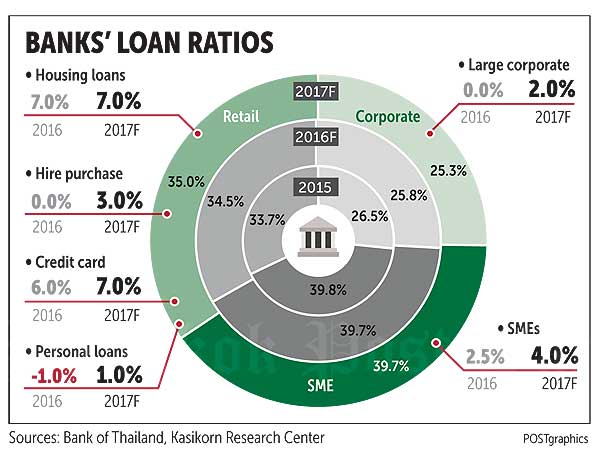
    KResearch forecasts 5.5% growth in retail loans this year, compared with 3% in commercial loans and 4% in overall lending.

    Over the past few years, retail lending also grew at a faster pace than overall and commercial loans. Retail loans rose by 6.2% in 2015 and 4.5% in 2016, well above 2.9% and 1.5%, respectively, for commercial loans those two years and 4.0% and 2.5% for overall lending, according to KResearch data.

    Thai banks’ exposure to retail loans is expected to climb to 35% this year from 34.5% last year, with SME loans steady at 39.7%, said the report. The share of large corporate loans or so-called wholesale banking is projected to fall to 25.3% from 25.8%.

    As Thailand’s economy has struggled with subpar growth since 2013, it is not a surprise banks have pushed into the retail banking business — mortgages, credit cards and personal loans in particular — as companies’ investment projects have stalled. Companies have also turned to debt instruments to raise capital because of low interest rates.

    Retail banking business offers a better profit margin than corporate loans, but carries lower default risks than loans to SMEs struggling with the uneven economic turnaround.

    Moreover, retail borrowers, white-collar workers in particular, on average have seen their income continue to grow slowly, while the unemployment rate remains low at less than 1%.

    “We expect retail lending will deliver the strongest growth in that segment this year as large corporates move toward the capital market for fund mobilisation, while only a handful of banks, especially large lenders, have expertise in SMEs lending,” said Thanyalak Vacharachaisurapol, deputy managing director of KResearch.

    “Even though retail loan growth is expected to increase at a fast clip, overall lending will only record single-digit growth as banks remains cautious amid high household leverage. However, the end of the lock-up period for the first-time car buyer scheme will add to consumer purchasing power this year.”

    The lock-up period is five years for most cars bought under the excise tax rebate scheme. KResearch estimates some 320,000 car owners, representing 30% of those in the first-time car buyer scheme, will have their lock-up period end this year, and some may consider replacing their cars.

    Auto-hire purchase is expected drive retail lending growth this year, said the report.

    KResearch predicts auto loans will expand 3% this year, up from zero last year, while housing loans — accounting for more than half of retail lending — are expected to grow steadily at 7%.

    Although banks will likely focus on retail banking business this year, lenders’ focus areas will be diverse, said the report.

    Krungthai Bank (KTB) and Siam Commercial Bank plan to pay more attention to the wealth customer segment to offset fee-based income expected to be hit by PromptPay, electronic money transfer under the government’s national e-payment scheme.

    KTB, the country’s second-largest lender by total assets, aims to increase assets under management (AUM) for wealthy clients by 25% this year from 600 billion baht. Its provincial customer base is the bank’s strength for expanding both its wealthy client numbers and its AUM.

    KBank, the country’s fourth-largest lender by assets, set a total loan growth target of 4-6% and retail loan growth of 5-7%, with mortgages contributing the highest growth among other retail lending.

    Bank of Ayudhya (BAY) targets double-digit growth for its retail banking business this year compared with total loan growth of 6-8%. The bank recorded the highest loan growth among its industry peers last year at 11.2%, with retail blazing the trail, increasing 15.9%.

  • Japan firms line up for Philippines business after Abe pitch

    Japan firms line up for Philippines business after Abe pitch

    Japanese firms, especially those in the infrastructure business, are scrambling for a slice of prospective new businesses arising from Japan Prime Minister Shinzo Abe’s 1-trillion-yen (P440-billion) financing and investment pledge to the Philippines.

    This was stated by Japanese banking giant Bank of Tokyo-Mitsubishi UFJ, a leading player in project financing globally, which has been matching Japanese firms with potential local partners in support of Mr. Abe’s commitment to the Philippines.

    The Japanese bank is also preparing to fund large-scale projects in the Philippines under the golden age of infrastructure envisioned by President Duterte.

    Takayoshi Futae, BTMU chief executive officer for Asia & Oceania, said in a recent briefing that BTMU and many Japanese firms were upbeat on the

    1-trillion-yen package pledged by Abe to promote economic and infrastructure development in the Philippines within the next five years.

    “This is one of Japan’s largest investment directed at a single country and we really want to be part of this project,” said the Singapore-based Futae, who was in town for a series of meetings with BTMU’s local partner, Security Bank.

    “MUFG (Mitsubishi UFJ Financial Group—of which BTMU is part of) is very committed to supporting Asia’s growth. We not only have the financial capability but also strong network and strategic relationships across the region,” he said.

    Futae is unfazed by China’s bid to do more business in the Philippines—given the recent rekindling of bilateral ties with China—adding that there was enough business in the region for both Japanese and Chinese firms.

    Tadahiro Miyamoto, general manager of BTMU Philippines, said representatives of many Japanese prefectures (local government units) had been visiting the Philippines “trying to find market for their products.”  With its 100-million consumer market, he said many Japanese firms were interested in doing business in the Philippines.

    Miyamoto said Japanese infrastructure-related companies and those targeting domestic markets like retailers were among those most interested in the Philippines. Those involved in the car industry are likewise interested because of the government’s “CARS” program, he said.

    The government’s Comprehensive Automotive Resurgence Strategy (CARS) program seeks to attract new investments, stimulate demand and effectively implement industry regulations that will revitalize the Philippine automotive industry, and develop the country as a regional automotive manufacturing hub.  The program covers not only car assemblers but also manufacturers of vehicle parts.

    Futae said the 6-7 percent growth rate of the country was “amazing” from the perspective of someone who hails from a slow-growing economy like Japan.

    “Philippines and Japan should work more together,” he said.

    To better understand the country and flesh out its commitment, Futae said BTMU was in need of a strong and reliable local partner—now the role of Security Bank. Since acquiring a 20-percent stake in Security Bank in April last year, he said BTMU had been able to expand into retail lending and financing to Philippine companies.

    During recent meetings, Futae said BTMU and Security Bank discussed “further collaboration” and everyone was “bullish on the success of the collaboration.”

    Asked whether BTMU was keen on raising its interest in the local bank, Futae said the group was comfortable with its 20-percent stake but added that if given the opportunity to increase its stake in Security Bank, this would be something that the group would “seriously” consider.

  • German tech firm opens in Myanmar

    German tech firm opens in Myanmar

    Neil Emerson, the firm’s senior vice president and managing director for Asia Pacific, said that its customers’ positive feedback and satisfaction drove them to establish an on-the-ground presence in Myanmar.

    Previously, the firm had been operating in Myanmar through third-party business partners, supporting local banks with their self-service technology needs for many years.

    “Our intention is to work with the Myanmar community and become a trusted partner. That is really important to us,” he said.

    “Our local office will enable us to build a closer relationship with our customers and serve them better. We continue to drive innovation in both banking and retail technology and services to meet Myanmar’s unique market requirements … Myanmar banks really aim to expand to support their customers. We are willing to support them by having our presence here.”

    Emerson said that the firm could cater to the growing needs of Myanmar banks as they expand their products and services in and beyond major cities. The firm also plans to help established or new retailers who wish to enter the Myanmar market with its automation, omni-channel and lifecycle management solutions.

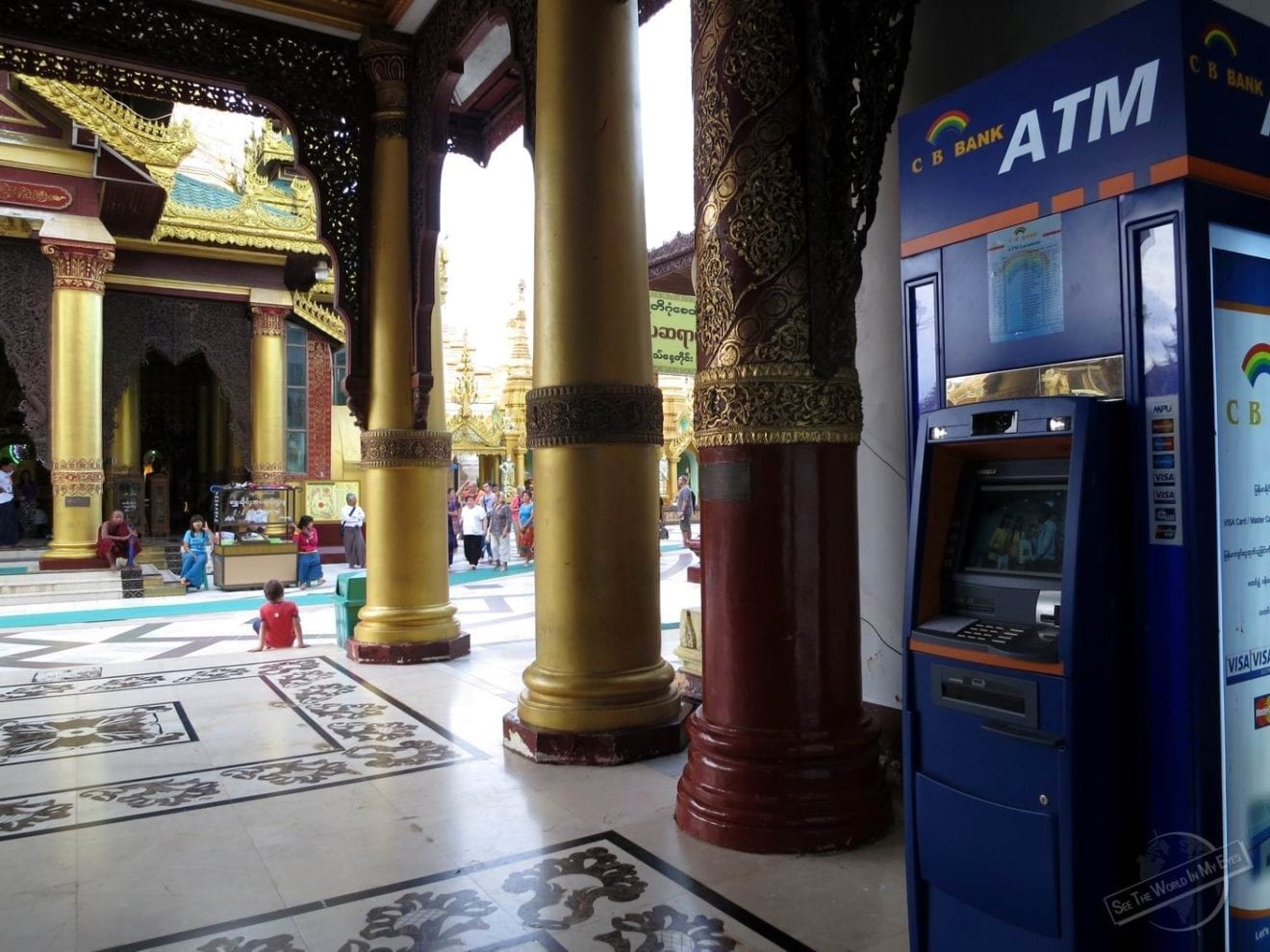
    Piers Leach, country manager for Myanmar, was proud to say that the firm is the market leader in Myanmar’s ATM (automated teller machine) network.

    To date, the firm has acquired 70 per cent market shares, providing its services to nearly 1,700 ATMs across the country. All the leading private banks including KBZ, Aya, CB, AGD and UAB have become its customers.

    Big contract

    Last month, CB bank signed an extensive contract with the firm for systems, software and services to expand its self-service cash offerings beyond Yangon. The bank operates one of the largest ATM networks in the country and aims to double its size of ATM network in 180 branches across the country. The bank will add 500 new ATMs and cash recyclers to its current network of 500 terminals supplied by the firm.

    Leach said that the firm aims at providing its technology to all the banks in Myanmar – private and state-owned.

    They are also looking at the retail sector including shopping malls, convenience stores, grocery shops and gas stations. The firm already has a team of 30 service staff in Myanmar, and will expand its workforce over time.

    “We have seen a significant growth in the banking industry in Myanmar over the last few years, and we have already been a long and established partner for most of the country’s leading commercial banks.

    “We are excited to more effectively grow our partnership with clients with a new, direct presence in the country,” he said.

    Leach does not consider Myanmar’s infrastructure as a challenge.

    “Network connection is improving over time in Myanmar. We have seen a lot of progress with regard to network connection. So, we do not see it as a problem,” he said.

    Biswajit Jha, vice president and managing director for Asean, shared a similar view.

    “It depends on how you look at it – whether it is a challenge or an opportunity. We see it as an |opportunity. Today, everybody has a smart phone in Myanmar, and infrastructure is developing very rapidly.

    You have to come across the learning phase for smooth transition to cashless society,” he said.

    “Everything is about convenience. If it is convenient to you, you would go for that,” added Jha.

    Sachin Handoo, senior director for Indochina and South Asia, said that a stable power supply should be provided to ensure that equipments are running properly.