Author: Mei Ling Tan

  • Swatch Group confident despite profit dive

    Swatch Group confident despite profit dive

    While Swatch Group profits nearly halved last year in a weak global watch market, the Swiss company is predicting “healthy growth” ahead.

    Swatch Group owns such luxury brands as Breguet, Longines and Omega as well as marketing watches carrying its own name.

    Net profit fell 47 per cent to 593 million Swiss francs (US$598 million) last year while sales came in at 7.5 billion francs.

    Watch and jewellery sales dropped by nearly 11 per cent as 2015’s marked slowdown ran into last year. However, by the end of the year there was fresh movement in sales, especially in China, says Swatch.

    From November to January there was “very good growth” in the segment, particularly in Mainland China, says the group, noting “a substantial improvement in operating margin.”

    “Based on the positive development of the past three months, healthy growth is expected for this year.”

  • Visitor arrivals stem Hong Kong retail sales decline

    Visitor arrivals stem Hong Kong retail sales decline

    Hong Kong retail sales declined 2.9 per cent in December, year-on-year, as visitor numbers showed signs of recovering and the watches and jewellery sector posted a long-awaited increase.

    That follows a revised Census and Statistics Department (C&SD) figure of 5.4 per cent for November, demonstrating that while the comparison is against a high decline a year earlier, the fall appears to be tapering off at last.

    For the full year, total retail sales were estimated at $436.6 billion, down 8.1 per cent in value and 7.1 per cent in volume over 2015.

    A government spokesman said the narrower year-on-year decline in December partly reflected the revival in visitor arrivals in that month, along with the stable labour market conditions which continued to help support local consumer sentiment.

    “Looking ahead, the near-term outlook for retail sales business will still depend on whether the recent improvement in inbound tourism could gain more traction and the extent to which local consumer sentiment would be affected by various external uncertainties.”

    According to the CSD, the value of total retail sales in December was provisionally estimated at HK$42.4 billion. After netting out the effect of price changes over the same period, the provisional estimate of the volume of total retail sales in December 2016 decreased by 2.8 per cent compared with a year earlier.

    Analysed by broad type of retail outlet in descending order of impact on the total retail market, wearing apparel drove the decline this month, down 4.2 per cent, followed by sales of commodities in department stores, down 3.2 per cent; electrical goods and photographic equipment down 25.2 per cent;  miscellaneous consumer durable goods down 23.9 per cent, footwear and accessories down 0.5 per cent; and books, newspapers, stationery and gifts down 2.2 per cent.

    Sales of sales of jewellery, watches and clocks, and valuable gifts increased by 2.3 per cent in December – while not a huge degree, a significant move given the impact they have on total retail sales figures. This was followed by sales of commodities in supermarkets, up 0.7 per cent; food, alcoholic drinks and tobacco up 5 per cent; medicines and cosmetics up 4.8 per cent, furniture and fixtures up 7.3 per cent; Chinese drugs and herbs up 9.3 per cent; and sales by optical shops up 6.2 per cent.

    For the whole of 2016, sales of jewellery, watches and clocks, and valuable gifts decreased by 17.2 per cent over the year and apparel by 4.9 per cent in value.

  • Singapore Airlines looking to hire more overseas pilots

    Singapore Airlines looking to hire more overseas pilots

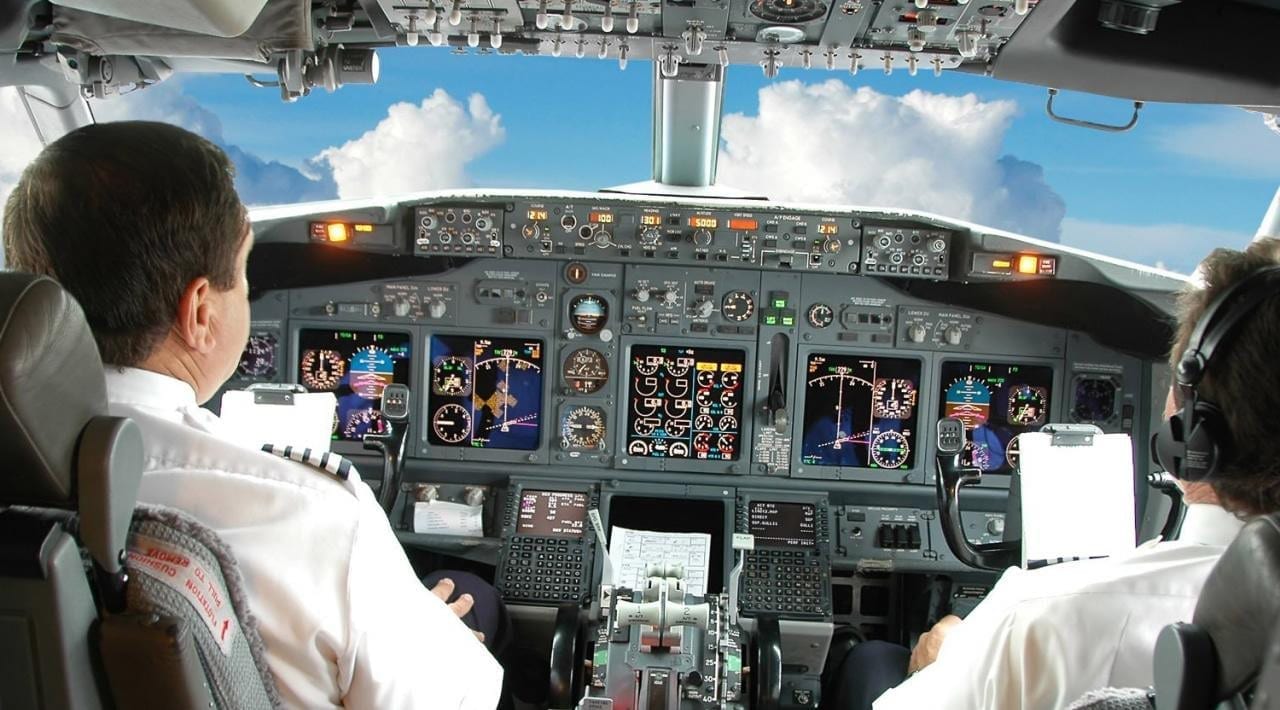
    Singapore Airlines (SIA) is reportedly expanding its search for cadet pilots beyond Singapore’s borders.

    This is part of an aggressive recruitment drive to hire more pilots to meet the needs of a growing fleet. The carrier had ordered 67 Airbus 350s, six of which arrived last year.

    Job advertisements recently posted on online pilot forums stated that all nationalities are welcome to apply.

    Previously, the airline tended to hire Singaporean Citizens or Singapore Permanent Residents (PRs) for its cadet pilot training programme, industry observers told.

    The cadet pilot training programme typically takes three years to complete.

    As a comparison, the carrier continues to seek Singaporeans or PRs for the direct entry second officer position, as posted on its website.

    More than 80% of its 2,000 cockpit crew are either Singaporeans or PRs.

    But SIA said it will continue to recruit mainly Singaporeans, according to spokesman Nicholas Ionides.

    “As an international airline, we do have employees of various nationalities, including pilots who must meet our stringent requirements. This policy has not changed.”

    Last year, SIA became the last Singapore airline to hire women pilots through its cadet pilot intake.

  • Vietnam’s beauty and cosmetics industry needs green makeover

    Vietnam’s beauty and cosmetics industry needs green makeover

    Though the market is relatively small, growth in most beauty and personal care categories is expected to continue to expand over the next decade as per capita spending rises commensurate with the upward trend in GDP per person per year and the country moves into the middle-income ranks.

    According to experts at a recent conference in Ho Chi Minh City, the average spending by Vietnamese for items related to body care, colour cosmetics, fragrances, facial care, soap, bath and shower, hair care and sun care remains relatively low.

    They estimated, citing a study by Nielsen that was performed in 2013, that the average per capita spending in Vietnam is slightly more than US$4, which is one-fifth the average spending of US$20 per person per year in Thailand.

    A speaker from the Society of Cosmetics Chemists of Ho Chi Minh City noted a Society report estimates there are roughly 400 cosmetics manufacturers in the country commanding a paltry 10% retail market share.

    The Society report indicates that the foreign sector dominates the cosmetics market with a 90% market share divided up as follows – the Republic of Korea 30%, EU 23%, Japan 17%, Thailand 13%, US 10%, and others 7%.

    Cosmetic products from the ROK have benefited from a good brand image most often associated with the qualities of youth, affordability, and fashion the Society report shows.

    Meanwhile US products are viewed as expensive, good quality and brands for older middle aged people whereas Japanese brands are viewed as economical, possessing good quality and value for the money.

    An additional report by the Vietnamese market research firm Q&Me mentioned at the conference notes on average 44% of Vietnamese women wear makeup once a week while only 24% women use it every day, underscoring the proposition that wearing makeup is not mainstream.

    The report indicates that most cosmetic consumers in Vietnam are women and they base their purchasing decision based on recommendations from friends and internet websites primarily aimed at the female audience such as eva.vn and phunutoday.vn.

    Domestic brands left out to dry

    The most popular domestic brands of Saigon Cosmetic, Thorakao and Lan Hao have had only limited success in both the domestic and foreign markets as they suffer from a cheap low quality brand image.

    Most of the cosmetics made in Vietnam are currently sold only at the traditional live markets while cosmetics imported from abroad are sold in the large retail supermarkets and trade centres, principally located in the large metropolitan areas of the country.

    This dire plight of the domestic sector and its inability to establish a base in the beauty and cosmetics market has left many of its advocates frustrated.

    There has been virtually no foreign investment in the manufacture of beauty and cosmetics says Nguyen Thi Thanh Thao, vice chair of the Cosmetics Society, sombrely and what little there was picked up and moved to Thailand after only a short stint in Vietnam.

    Still other actors in the industry are adamant that the quality of Vietnamese products is on par with that of the foreign sector.

    Though Vietnamese products have only a 10% market share they can easily compete with foreign products in terms of quality, says the deputy chair of Vietnam Essential Oils, Aromatherapy and Cosmetics Association. They just haven’t focused sufficiently on brand development and packaging.

    However, others take an opposing view, saying that the quality just isn’t there. They also suggest that the overwhelming majority of Vietnamese cosmetic manufacturers are only able to produce shampoo, shower gels and similar simple products.

    Representatives of Phuong Mai JSC, a newcomer to the domestic industry, says their company is taking a different tack, focusing on producing natural products with 100% organic ingredients.

    What the domestic beauty and cosmetics industry in Vietnam needs, the reps say— is a green makeover and innovation to get on path to prosperity and sustainability.

  • Singapore leads Asia by digital readiness

    Singapore leads Asia by digital readiness

    Singapore leads the way in Asia in terms of possessing the requrired building blocks to ensure business success in a connected world, according to the Economist Intelligence Unit.

    The EIU’s “Connecting Capabilities” report includes the first ever Asian Digital Transformation Index, a quantitative ranking of 11 Asian markets and three global comparators using 20 indicators across three key categories relevant to business performance — digital infrastructure, human capital and industry connectedness.

    The EIU has surveyed more than 850 businesses and 94% said a country’s infrastructure is important to their organization’s digital transformation, reinforcing the fact that access to high quality telecommunications and technology services is vital for business success.

    Singapore’s strong performance is primarily due to its well-developed digital infrastructure, as well as a highly supportive and coordinated set of government policies in support of infrastructure development, business use of technology and entrepreneurship.

    The city state ranks behind Japan in industry connectivity, which is broadly, the ability to draw on resources external to the organization such as digital partnerships with other companies, networks or communities.

    Recruiting the right talent is a challenge in Singapore, which ranked fourth on human capital. Building talent pools with advanced digital skills and expanding data sharing to enrich its firms’ digital partnerships are key areas for improvement.

    While several Asian countries are performing well, a comparison with the other three markets United States, Australia and the United Kingdom shows the region as a whole is behind when it comes to digital infrastructure and human capital.

    “In the EIU survey, 87% of companies globally agreed digital transformation will be important to their organization over the next three years, but if your business lacks access to the necessary infrastructure, skills and ideas, then it would be difficult to take full advantage of the opportunities created by digital technology,” Telstra group MD for international Paul Tyler said.

    “In this regard, 55% of companies in Singapore say the country has been only ‘somewhat successful’ in providing an environment for digital transformation,” said Tyler.

  • Cognizant opens new office in Hong Kong

    Cognizant opens new office in Hong Kong

    Cognizant, a leading global provider of information technology, consulting and business process services, today announced the expansion of its operations in Hong Kong with the opening of a new office.

    Cognizant’s expanded presence in Hong Kong will enhance its existing operations in the Greater China region and enable Cognizant’s global, regional and local clients to leverage the technical and business capabilities available in the region, while delivering deep local insights and time zone advantages to the company’s growing roster of customers in Asia Pacific.

    Cognizant currently employs more than 300 professionals in Hong Kong, delivering a broad range of services—across digital business, operations, and systems and technology—to more than 30 leading organisations in industry sectors such as financial services, insurance, retail, consumer goods, energy, utilities, and travel and hospitality.

    “We are pleased that Cognizant has established a new office in Hong Kong, underscoring its long-term commitment to the region” said Arthur Wong, Chief Information Officer at China Construction Bank (Asia) Corporation Limited [CCB (Asia)], a leading provider of commercial, corporate, consumer and private banking services. “CCB (Asia) has been using Cognizant’s high-quality financial services and technology expertise for years to manage and operate essential business processes more efficiently, lower operating costs through automation, enhance risk management, and deliver better business outcomes. Technology is key to realizing our vision of innovative and smart banking in today’s digital era. In Cognizant, we have a partner who can help us unlock the full power of our technology environment and create competitive advantage through process and technology excellence”

    “We congratulate Cognizant on the inauguration of its new office in Hong Kong,” said Gary Ma, Chief Information Officer at BOC International Holdings. “Over the past few years, Cognizant has been providing us with a range of technology services. We look forward to a continuing and collaborative partnership.”

    “We continue to steadily grow our presence and investment in Hong Kong,” said Jayajyoti Sengupta, Asia Pacific Head at Cognizant. “Hong Kong’s booming information and communication technology sector is among the world’s most advanced. That, combined with Hong Kong’s specialist business and technology talent, makes the city a great location for us to deliver mission-critical transformative services to our clients in Asia Pacific and elsewhere, helping them navigate the shift to the digital era and enabling them to build stronger, more agile and innovative businesses. Our expansion in Hong Kong underscores our confidence in the ability of the city’s talent pool to help our clients win in today’s technology- and data-intensive world.”

    Cognizant runs an active graduate recruitment programme in Hong Kong to hire entry-level technical and management talent from premier institutions and has been hiring graduates from institutions such as Hong Kong University, Chinese University, and City University. As part of its commitment to building talent for the future, Cognizant provides technical and soft skills training to entry-level hires in line with global benchmarks and deploys them to technology and consulting projects upon the successful completion of the training.

  • IDC sees more strategic Philippine government ICT push by 2021

    IDC sees more strategic Philippine government ICT push by 2021

    The government will have a more strategic ICT push to enable technology adoption among organizations by 2021, research firm International Data Corporation (IDC) predicts.

    In its latest forecast for the country, IDC Philippines noted that with a new dedicated, centralized agency at the helm of the country’s ICT development, the government will be able to lay the much-needed groundwork to enable technology adoption for organizations.

    The country’s Department of Information and Communications Technology (DICT) was set up last June following the signing of the law creating the new Department by outgoing President Benigno Aquino before the presidential elections in May. The inaugural secretary of the department was appointed by Aquino’s successor, Rodrigo Duterte in June.

    The department is designated as the chief policymaking body involving the use of ICT in the country, and carrying the mandate of the previous Department of Science and Technology’s ICT Office, its first project was the rollout of more free WiFi connections in public places throughout the country and the crafting of a new national broadband plan. It has also been working to slash the processing time of permits for local telecommunications companies to speed up the rollout of infrastructure, especially in the countryside.

    Citing the latest findings of the United Nations E-Government Survey, IDC Philippines said the country already went up 24 notches to rank 71st out of 193 countries in e-government development.

    The research firm, however, sees major disruptions in the country’s ICT-BPO industry, which launched a new roadmap last October eyeing approximately $38.9 billion in revenues in five years from almost $25 billion in 2016.

    By 2020, IDC Philippines believes that the  ICT and BPO markets will be disrupted by the pivot and policy changes from the Duterte administration, as well as the election of Donald Trump in the US if the industry does not take critical steps safeguarding the country’s inherent growth drivers.

    The BPO industry is one of the great contributors to the total ICT spending in the country, which IDC sees as evolving to higher-value services around contact centers, medical transcription, software development, animation and game development, and global captive operations centers.

    “In the longer-term view, however, this may change due to the shift in pivot and policy changes from the Duterte and Trump administrations. This may lead to an impression of the country’s volatility and together with issues on manpower and availability of skill sets, it may result in the industry stagnating in the near future due to lack of new investments and expansionary plans from incumbents. Far-reaching measures to address key issues are of paramount importance this year,” said Jubert Alberto, Business Operations Head, IDC Philippines.

    In the private sector, the research firm predicts that 25 percent of the country’s top 1,000 companies will see the majority of their business depend on their ability to create digitally enhanced products, services, and experiences by 2020. It expects digital transformation (DX) to attain macroeconomic scale over the next three to four years.

    “The year 2020 will see Filipino companies level up their DX journey to a macroeconomic scale, as their ability to offer digitally transformed offerings and experiences becomes an important measure of competitiveness and success in the market,” said Karen Rondon, Research Manager for Enterprise Computing – Networking, IDC Asia-Pacific.

    Other predictions of IDC Philippines for 2017 are as follows:

    Filipino DX Teams. By 2018, 25 percent of Philippine organizations will have dedicated digital transformation/innovation teams.
    “These specialized ‘PH DX teams’ will be in charge of formulating plans both for internal and external applications of digital technology. These include identifying and using new technologies to improve operations, creating digital marketing strategies, developing their IT capabilities, and other related initiatives,” said Jan Edward Tañeca, Market Analyst – Imaging, Printing, Document Solutions (IPDS), IDC Philippines.

    Cybersecurity. By 2018, cyber security will become a tier-1 business priority receiving fixed capital spending for 30 of the top 1,000 companies in the Philippines.

    “In the coming years, enterprises will realize that rather than reacting to global security trends, the best-run businesses try to anticipate them. Thus, they will make cybersecurity a core part of their overall business strategy, taking into account the existing security industry trends and evolving criminal tactics and couple those factors with the organization’s risk tolerance, security program maturity, a holistic security strategy and, most importantly, business targets,” said Jan Edward Tañeca, Market Analyst – Imaging, Printing, Document Solutions (IPDS), IDC Philippines.

    Information-Based Products. By 2020, revenue growth from information-based products will be double that of the rest of the product/service portfolio for a quarter of the top 1,000 Philippine companies.

    “In the Philippines, companies in the telecommunications, retail, and banking industries, among others, have unlocked new opportunities in creating revenue through analyzing and making sense of the aggregated customer information. Some organizations that have explored these options benefited in the form of penetrating new markets and generating new revenue streams as the information may vary from customer data to consumer buying patterns,” said Nicolo Santos, Market Analyst – Imaging, Printing, and Document Solutions (IPDS), IDC Philippines. “This opportunity requires a constant effort for organizations to address data privacy and security issues, and government regulations that surround the collection, storage, use, and sale of consumer data.”

    Hyper-disruptive marketplaces. By 2019, 40 percent of customer-facing top 1,000 companies will experiment with augmented reality/virtual reality (AR/VR) as part of their marketing efforts.

    The potential impact of AR/VR across industries will become so big that by 2019, IDC sees 40 percent of the Philippines’ top 1,000 companies experimenting with these technologies to create their own unique experiential marketing strategies. “Consumer brands will be compelled to think out of the box and reinvent their marketing approaches – incorporating more AR/VR elements and placing emphasis on gamification – in a bid to gain the patronage and loyalty of consumers, especially young and tech-savvy millennials,” said Sean Agapito, Market Analyst – Client Devices, IDC Philippines.

    Customer-/Ecosystem-Facing Digital Services. By 2019, 65 percent of Philippine IT organizations will create new customer-facing and ecosystem-facing services to meet the business DX needs.

    “Failure to scale up the number of direct and indirect customers with whom an organization does business will lead to revenue shortfalls and uncompetitive cost structures. Improve profitability, we expect organizations to increase their use of virtual agents or digital assistants. Intelligent assistants will use artificial intelligence (AI)/cognitive technology to automatically adjust experiences to the users’ preferences and context,” says Alon Anthony Rejano, Market Analyst – IT Services, IDC Philippines.

    Digitalized Customer Support Interaction. By 2018, 60 percent of customer support interactions will be digitalized and occur in online communities. With an increasing proportion of the Filipino population – reaching nearly half of the country’s total population in 2016 – actively using social media, IDC expects more organizations to interact with customers through social and online communities. Online customer support not only helps solve customer problems but it also improves brand image.

    Additionally, a successful community will create brand champions or advocates and will not only recommend the product or the service to customers but will help solve customer problems on behalf of the brand. “This will make the theme of customer reciprocity strong moving forward. Also in the near future, more organizations will use IT to integrate existing customer services and support systems like integrating pre-built connectors, mining the community for insight into customers’ behavior, and proactively solve any emerging issues,” says Jerome Dominguez, Market Analyst – Client Devices, IDC Philippines.

    Next-Wave Sari-Sari Store. By 2020, 30 percent of Philippine sari-sari stores will evolve to become another channel for one-stop payments and remittance centers.

    Something unique in the Philippine retail scene will be the presence of sari-sari stores in different localities. IDC foresees a future where sari-sari stores, a Pinoy cultural phenomenon, can offer services such as payment of utility bills, e-loading, and buying of travel tickets can also be done through these neighborhood stores. Serving as complimentary touchpoints especially in the rural areas, sari-sari stores play a pivotal role in filling the “unbanked” gap in the countryside.

    Organizations looking to engage more in the rural areas will have a viable channel, as in alternative to building brick-and-mortar branches, which may be cost-prohibitive to most companies.


  • Bacardi builds Dewar’s presence in Malaysia with pop-up Whisky Emporium

    Bacardi builds Dewar’s presence in Malaysia with pop-up Whisky Emporium

    Bacardi Global Travel Retail is aiming to build the presence of Dewar’s whisky in Malaysia with a two-month shopper engagement activation at Kuala Lumpur International Airport (KLIA).

    The pop-up John Dewar & Sons Fine Whisky Emporium features the travel retail launch of Craigellachie Speyside single malt in two age variants: 13yo and a travel retail-exclusive 19yo.

    Bacardi said the campaign is timed to maximise the extended holiday and gifting season in December and January covering Christmas, New Year 2017 and Chinese New Year.

    The pop-up is located in front of the Zon Duty Free Arrival Store run by Duty Free Zone (DFZ) in partnership with Heinemann Asia Pacific. Travellers can sample a variety of Dewar’s single malts and blends, including Dewar’s 15yo and 18yo, Aberfeldy 18yo, Glen Deveron 20yo, Royal Brackla 16yo and Craigellachie 13yo and 19yo.

    Customers who spend over RM288 (US$65) will receive a complimentary trolley bag.

    Bacardi Global Travel Retail Regional Director Asia Pacific and Middle East Africa Vinay Golikeri commented: “Kuala Lumpur International Airport is an important location for us as a brand building opportunity for Dewar’s with its passenger profile focused on emerging market travellers, especially the Chinese and Indian traveller.

    Dewar's KLIA Feb 2017 1

    “Covering both the December/January holiday season and Chinese New Year, we are engaging the additional surge of passengers travelling at this time with our Dewar’s single malt portfolio, which offers an intriguing range of whisky options perfect for gifting or for self-treats to add to a personal collection.”

    Dewar's KLIA Feb 2017 4

    Heinemann Asia Pacific Brand Activity Manager June Ong added: “The Dewar’s Emporium is a perfect attraction front of store at this time of year and our customers love it. The presentation of the Dewar’s range from the artisan wooden trolley encourages closer examination and the retail ambassadors are doing an excellent job in helping shoppers explore the offer for themselves. We are particularly keen to encourage this level of connection with our customers as it gives them a memorable experience in our store.”

  • Chinese businessman Jack Ma reveals what China really wants from Australia

    Chinese businessman Jack Ma reveals what China really wants from Australia

    Alibaba chairman Jack Ma was the guest of honour at an opening ceremony for a regional headquaters of the Chinese e-commere company, in Melbourne on Saturday. “We succeed by helping others, by being helped by others. We succeed because we empower the small business,” Jack Ma told the audience.

    “So our vision in the next 20 years, we want to create 100 million jobs for the world and we want to serve two billion population of the world and we want to make 10 million small businesses profitable on our platform,” he added. He stressed that Alibaba had a global vision for its business, saying “we believe globalisation is the future.” The newly opened office in Melbourne will serve as Alibaba’s Australian and New Zealand headquarters.

    China’s second richest man, Jack Ma, who is the founder of online retail giant Alibaba, said at the opening of the first Australian and New Zealand branch of his company in Melbourne that Australia had something “unique” that China was willing to spend big bucks on.

    “Australia is a gold mine. The next gold mine,” Mr Ma said in Melbourne on Saturday.

    “The clean water, the soil and the air, this is what you have, the most unique asset.”

    With China’s pollution problem, there’s no question as to why China would want to suck up some of Australia’s environment.

    China’s “airpocalypse” has seen the country’s pollution hit toxic levels and a blanket of smog the size of Victoria covered Beijing at the end of last year.

    People are seeing this as an opportunity in Australia to export our air to China.

    Currently New Zealand uses Alibaba, basically the Chinese version of Amazon, to sell fresh air to Chinese consumers.

    Oxygen Air bottles the air in aerosol cans and sells them for about $25.

    In Australia, up to $1 million worth of air has been bottled and Alibaba could be another opportunity for air farmers to expand their business.

    Air is being bottled in the Blue Mountains, Bondi Beach and the Yarra Valley.

    Green and Clean company director John Dickinson told the Herald Sun there was a high demand from people in China and India, who hoped the fresh air might clear their lungs.

    “A lot of people see the product as a supplement to clean their lungs out with fresh Australian air,” he said.

    There are also a number of other Australian products high in demand on the Alibaba site. One of them belongs to Gold Coast woman Brynly King, who expanded her business in her garage — turning it into a multi-million dollar company.

    Banaban Virgin Coconut Oil products are now on the shelves in some department stores in China and a number of other countries, all because she started selling on Alibaba.

    Alibaba has become the world’s largest retailer since 1999 and debuted on the New York Stock Exchange in 2014, becoming the biggest IPO in history.

    Mr Ma went from a struggling schoolteacher to a man who is worth $43.6 billion and he said all it took was hard work and created his company to give small businesses the opportunity to put their products in front of consumers.

    Whether you’re a mum and dad making soaps in the garage or a millennial with an invention, Mr Ma aims to give people a place where they can sell, and gives people a chance to buy.

    Ma has a long interest in Australia, it started when he was a 15-year-old living in China, and he would hang around western hotels so he could practise his English with tourists.

    He met an Australian family from Newcastle and from there realised what the country had to offer, particularly in a business sense.

    Many Australian small businesses have put their products on Alibaba to sell to China, and made a motza, like Ms King.

    Mr Ma said China has been long known for making products but he said the country needed high quality products and service and didn’t think China today could produce that.

    He said China will work with other nations, like Australia, to move from manufacturing to domestic consumption.

    There have been concerns that Alibaba could accelerate globalisation, the process of countries integrating into one because of an interchange of world views, culture and products.

    Mr Ma doesn’t buy into that.

    “Globalisation does not create problems, it shares culture and should always be inclusive. It is the future,” he said.

    Australia is the fourth highest seller on Alibaba and Mr Ma believes the Australian office will connect more people to consumers in China and boost our exports.

    Alibaba accounts for 60 per cent of China’s sales and Australian shoppers would have most likely heard of Aliexpress, which is one of Alibaba’s market places that is English and rivals eBay.

    It sells everything from fast fashion, phone accessories and camping gear.

    Mr Ma believes the Australian branch of Alibaba will boost trades in both Australia and China.

    The Australian and New Zealand branch of Alibaba will be headed by Maggie Zhou, who was the 48th person employed at the company which now gives jobs to millions.

    Ms Zhou said she would introduce new Australian brands to the Alibaba platform.

    “A physical Alibaba headquarters is a key step in ensuring Australian businesses have the support and information they need to succeed in China and the rest of the world,” she said.

    “Longer term, Alibaba Group’s vision for the ANZ region is to build the entire operating infrastructure needed to enable local businesses to expand globally.”

  • Trai to allow Jio to continue free data offer

    Trai to allow Jio to continue free data offer

    Indian telecommunications regulator Trai has determined to allow disruptive new market entrant Reliance Jio Infocomm to continue with its free data offer, despite objections from rivals.

    Trai has rejected petitions from incumbent operator Bharti Airtel as well as Idea Cellular calling for the regulator to prohibit Reliance Jio from maintaining what it calls a predatory promotional offer.

    Indian regulations prevent operators from running a promotional campaign for longer than three months, and Reliance Jio has now been offering free services to subscribers for longer than this time, having recently decided to extend the offer to March 31.

    But to circumvent the restriction, Jio is calling its current promotional offer the Happy New Year offer, and has argued that this was distinct from its initial Welcome offer.

    Trai has now sided with Jio, finding that the new offer is a distinct promotion and cannot be considered an extension of the earlier offer. On this basis, Jio will be allowed to continue to offer free services.

    Jio’s aggressive marketing is triggering a fresh price war in India, which could have a significant impact on an already hurting industry. The report cites an executive from one of the big three operators stating that if the price war continues, there will be job losses.

    Operators are meanwhile exploring consolidation in order to survive in the strictly competitive environment. Indian media recently reported of a four-way merger between Aircel, Reliance Communications, Telenor India and Sistema Shyam Teleservices (SSTL).

  • Vietnamese beer market big enough for all brewers

    Vietnamese beer market big enough for all brewers

    Analysts repeatedly warned that the competition in Vietnam would be fiercer as more and more big players, including foreign ones such as Asahi (Japan), Singha (Thailand), Corona (Mexico) and Royal (the Netherlands), have joined the market. However, surprisingly, all of brewers can make big money in Vietnam.

    A representative of Heineken Vietnam said that purchasing power was 20 percent higher than the same period of the previous year.

    At Big C, beer sales have increased by 30-40 percent compared with the end of 2016 as people rush to buy beer to prepare for Tet. The demand is so high that the retailer sells no less than two boxes of beer to one client every day.

    On January 7, at a conference reviewing its operation in 2016, Sabeco, the largest brewer, said 1.584 billion liters of beer were sold in the year, an increase of 8 percent over 2015.

    In fact, beer sales not only have increased on pre-Tet days, but have been increasing steadily over the last 15 years.

    A survey by Sabeco showed that the consumed beer volume increased from 2.33 billion liters in 2010 to 3.6 billion liters in 2015. Every Vietnamese adult drinks 35.5 liters of beer a year, with which Vietnam ranks the second in the world in terms of beer consumption per capita.

    A report by Euromonitor International released in June 2016 showed that the beer sales increased from VND82.376 trillion in 2010 to VND153.943 trillion in 2015, which means a sharp increase of 86.1 percent. The figure was VND166.388 trillion in 2016 and is expected to reach VND218.292 trillion by 2020.

    With an average population increase of 1 percent per annum and a popular beer culture, beer sales are expected to increase in the coming years.

    It is expected that 4.84 billion liters of beer would be consumed by 2020, including 492.9 million liters of high-end products, 3 billion liters of mid-range and 1.34 billion liters of low-cost products.

    Sales are predicted to see an average growth rate of 7.2 percent in the 2015-2020 period.

    Brewers continue to expand production and run marketing campaigns to retain their market share.

    Sapporo Vietnam, which has succeeded with Sapporo Premium Beer, has launched Blue Cap, another brand.

    In late December 2016, Saigon-Binh Tay JSC, belonging to Sabeco, marketed the first products bearing the Sagota brand. Meanwhile, Heineken Vietnam has launched Strongbow, a fermented fruit juice.

    Leo Evers, general director of Heineken Vietnam, said the company was planning to increase production capacity in Vietnam by 2025.

    Sapporo announced that its production capacity would increase from 40 million to 100 million liters.

  • Vietnam formally legalizes sports betting

    Vietnam formally legalizes sports betting

    After years of deliberation, Vietnam has finally made a historic decision to legalize sports betting. A new decree released on the government’s official website on Friday will allow citizens to bet on international soccer games and horse and greyhound races starting March 31.

    The minimum bet value is VND1,000 (4.42 cents) while the daily maximum limit is VND1 million ($44).Online betting is out of question for now. Only those above 21 years old are allowed to gamble and bookmakers have to be at least 500 meters away from schools and public venues for children.

    The decree only allows betting on international soccer games recognized by the governing body FIFA and approved by Vietnam’s sports ministry.

    Operators of bookmaking businesses will have to meet strict capital requirements: VND1 trillion ($44.2 million) for horse racing and soccer and VND300 billion ($13.2 million) for greyhound. A bidding process will be held to select one soccer betting provider for a five-year trial phase.

    Officials started working on sports betting rules in 1999 but debates after debates delayed the legalization.

    Vietnam now has one greyhound race course in the southern beach town of Vung Tau. A $100 million horse race course will be opened in the southern province of Binh Duong in April. Hanoi will also build a horse racetrack, a $500 million project that has been delayed for some time.

    The government last month also said it would allow citizens over 21 years old with a monthly income of at least VND10 million ($445) to hedge bets in local casinos from mid-March under a three-year pilot program, breaking a long-year ban of gambling among locals.

    All these recent moves show the government has shifted its stance on gambling, once considered a “social evil.”

    Many locals have broken the long-running gambling ban, creating a lucrative illegal industry for online betting. A number of online operations have been busted in recent years.

  • Thai airlines raise domestic fares

    Thai airlines raise domestic fares

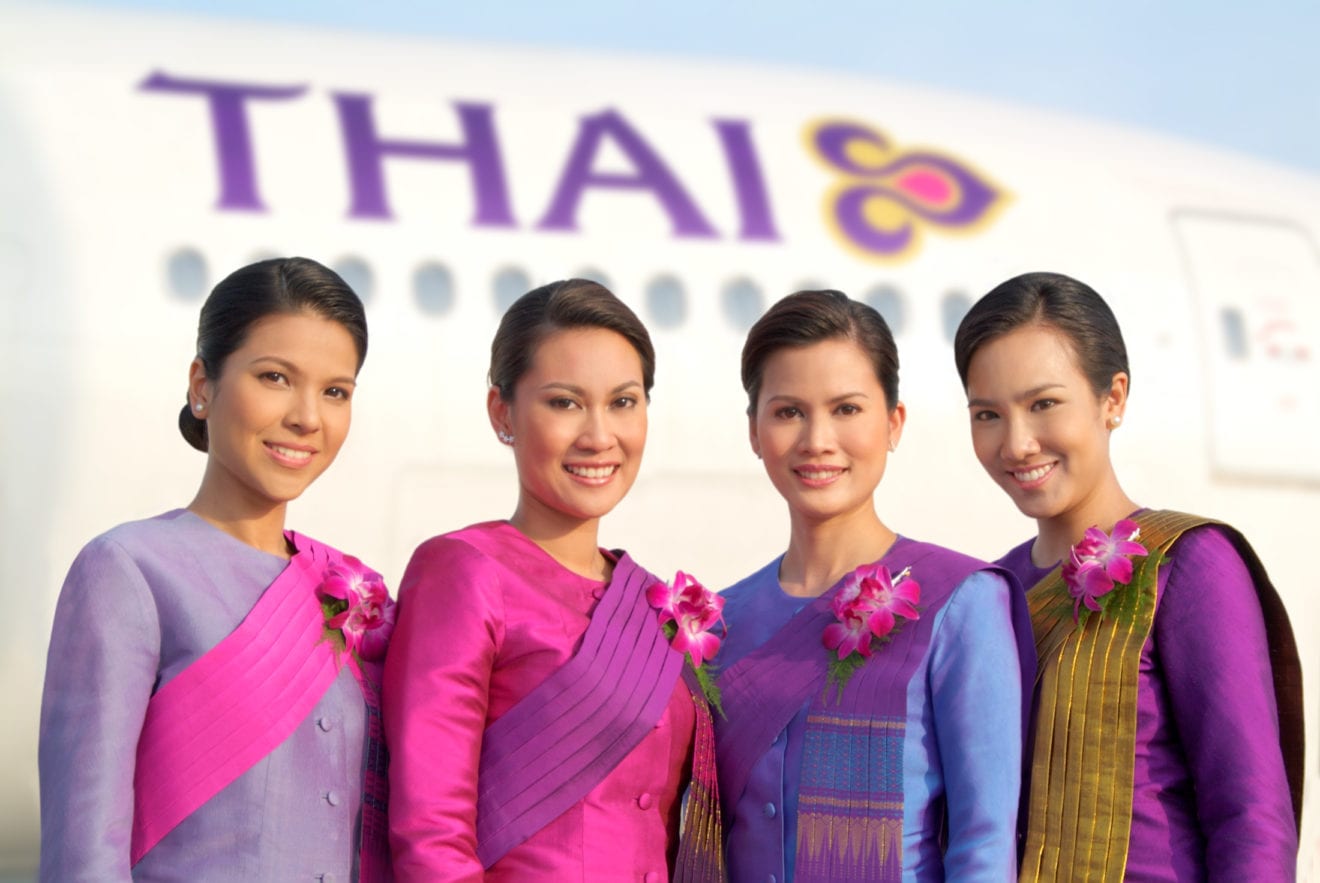
    Thailand’s low-cost airlines are increasing fares on domestic routes in a respond to a massive increase in excise tax on jet fuel that came into effect last week. The government increased the fuel tax on all domestic flights from 20 satang to THB4  per litre, claiming it was overdue, while bringing the tax more inline with the THB6 a litre tax on diesel fuel.

    Nok Air, Thai Lion Air and Thai AirAsia issued statements, Tuesday, saying they would raise fares on domestic routes to reflect the “real cost increase by THB150 per sector”. It will increase roundtrip fares by THB300.

    This additional cost will be included in all fares posted on Nok Air’s website as of 6 February 2017 onwards, the statement read.

    Thai AirAsia and Thai Lion Air announced the same increase, effective 1 February (Air Asia) and 6 February (Lion Air).

    Bangkok Airways announced later in the day  that it would increase fares by THB200 per sector, effective 8 February.

    Excise Department  director general, Somchai Poolsavasdi, said the increase should generate more than THB4 billion from domestic jet fuel consumption, which is expected to reach 1.2 billion litres a year.

    Excise tax on lubricants has also been raised, to THB5 a litre from zero previously, he said.

    He noted that land transport companies pay THB6 in excise tax on a litre of diesel fuel, while airlines have enjoyed a 20 satang tax (100 satang = THB1) for years. The  tax is not applied to international flights originating or transiting in Thailand.

    The department hiked the fuel tax to create fairer competition in business, he said. It was a reference to rail and bus transport that has suffered a mass migration to airline travel.

    Inter-city bus fares will be slightly more competitive when compared with airline fares after the THB150 is added to air fares. By 2016,  jet fuel costs had declined by 36% since 2014 and this allowed low-cost airlines to quote fares that were almost identical to long-distance bus fares (air-conditioned buses).

    While offering a token helping-hand to bus operators, the government’s other hand will snatch THB4 billion in taxes ultimately from travel consumers.  It is unlikely  to persuade travellers to return to long-distance bus transport noted as the second most dangerous form of transport after the infamous Toyota commuter van.

    Thai aviation has been rising rapidly in recent years powered by low-cost airlines at the expense of land transport. Jet fuel consumption, will exceeds 1 billion litres this year, the director general reported.

    Association of Domestic Travel advisor, Yutthachai Soonthronrattanavate, told Voice TV media that the tax increase would impact badly on domestic tourism.

    “As airlines increase fares to compensate, the burden falls squarely on the consumer’s’ shoulders,” he said.

    “The tax measure will hurt airlines operating domestic flights flying about one hour and using 8,000 to 9,000 litres per trip …it will increase an airline’s costs…in turn passengers will then have to spend more on flights.”

    In the past when fuel prices were high, airlines immediately passed part of the cost to consumers in the form of a “fuel surcharge.”   They eventually were forced to include the surcharge as part of the base fare rather than lumping it with service fees and taxes at the close of the transaction.

    Thailand’s Ministry of Tourism and Sports is counting on domestic tourism to boost earnings and share the benefits of tourism beyond the main gateways.  Low-cost airlines are the main driver allowing urban Thais to explore their country safely and at competitive prices.

    Government officials will argue there are alternatives such as rail and road transport, but the standard and safety of those alternatives lags far behind air travel.

    It would take a massive investment to upgrade rail transport to offer fast inter-city rail travel that could be considered  a credible alternative to low-cost airline travel. It’s decades away which means for most travellers  low-cost airlines continue to be the only choice to get around the country quickly and safely.

    In the TV interview, Yutthachai said the excise department should have staggered increases step by step to give airlines a chance to adjust while cushioning the impact on consumers.

  • Subdued Amazon results clouds impressive growth

    Subdued Amazon results clouds impressive growth

    Amazon is usually a retailer that operates at full volume, the noise of its sales growth a clarion call in an often muted retail sector.

    However, this quarter that volume seems to have been turned down a couple of notches. While the latest Amazon results show impressive growth, and is a long way above the retail sector overall, by the high benchmark the company has set, the latest numbers have a certain softness. Revenue totalled US$43.7 billion, up 22 per cent year-on-year, below analysts’ expectations.

    Some of the loss in momentum comes down to a more unfavorable exchange rate. On a constant currency basis, Amazon’s overall growth is a more respectable 24 per cent; while its international growth leaps to 23 per cent from 18 per cent, once the impact of the strong dollar is factored out. Even so, these upticks still leave a gap in growth compared to what Amazon delivered over the first three quarters of the fiscal.

    Part of the softness comes down to shipping-related revenue, which grew by its slowest pace in over a year. This has placed a little downward pressure on the revenue line. More worryingly it means that shipping revenue from consumers is now strongly adrift from Amazon’s shipping costs. In the final quarter, the former grew by 29 per cent, while the latter surged by 35 per cent to just over $5.6 billion. This is one of the reasons the company missed its profit forecasts, and why operating profit came in at 2.9 per cent of sales versus 3.1 per cent over the same period last year.

    Arguably, low cost and fast delivery are a fundamental part of Amazon’s appeal to consumers. However, they are also its Achilles’ heel – and with Prime becoming more popular, and with a greater focus being put on speedier shipping times, we have concerns that Amazon could see further profit erosion as it enters its new fiscal year. This view is supported by Amazon’s own guidance for the next quarter, which suggests profit will come in well below last year.

    As niggling as these points are, they do not diminish Amazon’s success in other areas. Over the holiday quarter, the company saw demand for its devices, including the Echo product, boom. This helped Amazon to a very strong performance in electricals at a time when the overall market was struggling with a lack of newness and innovation. It also aids Amazon to extend its ecosystem to more households, something we believe will yield fruit over the coming years as it becomes a more integrated and critical part of people’s lives.

    The AWS (Amazon Web Services) division is also a success story. Here revenue grew by 47 per cent off the back of a very strong prior year comparative. This part of the business is helpful as its relatively strong profitability gives buoyancy to Amazon’s balance sheet.

    As much as this quarter has been more subdued, Amazon remains firmly on the front foot in terms of innovation. This alone will continue to make it a retail outperformer, at least in sales terms, over the next year and beyond.

  • Time International introduces Sweet Monster

    Time International introduces Sweet Monster

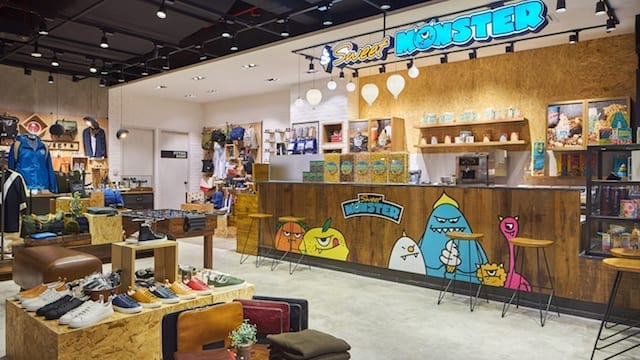
    Korea’s popcorn soft-serve ice cream brand Sweet Monster has arrived in Indonesia as the first F&B retail venture of Indonesian brand group Time International.

    It has launched stalls in Project X Plaza Indonesia and Pondok Indah Mall 2 in Jakarta, featuring its range of characters, EggMon, CookieMon, BlueMon, LeMon, PinkMon, OrangMon, ChocoMon and PopMon.

    SM_IG_Photo Product

    Inspired by confectionery sold at American carnivals and festivals, the brand attracted queues when it opened outlets in China, Hong Kong, Singapore and Thailand.

    Sweet Monster’s offerings are based on its ice cream, made fresh daily at each store from its own formula of milk powder. The flavour line-up includes Popcorn Ice Cream and Signature Ice Cream in Real Deep Milk, Original Tiramisu, Peanut Butter Pretzel, Caramel Macchiato, Cookie Mountain and Green Tea Mountain.

    There is also the full-cream Monster Shake, inspired by American milkshakes made only from ice cream and milk. Flavour options include Pure Milk, Cookie & Milk, Caramel Cafe au Lait, Strawberry Cake and Ferrero Nutella.

    Using only non-GMO corn, Sweet Monster’s popcorn is popped by air. It does not contain trans or saturated fats or artificial colouring, but does have dietary fibre.

    The PopMon characters represent the flavours of the popcorn: salt caramel, combination, strawberry, chocolate or tangerine.

    sweet-monster-project-x-2