Author: Mei Ling Tan

  • H&M Asia looks to eCommerce

    H&M Asia looks to eCommerce

    H&M will open online stores in five Asian markets this year.

    The H&M Asia online stores will open in Hong Kong, Singapore, Macau, Taiwan and Malaysia. A sixth will open in Turkey.

    And, as previously reported , H&M will open its first store in Vietnam later this year at a site yet to be revealed. Some 430 new stores will open worldwide, including the first in Kazakhstan, Colombia, Iceland and Georgia.

    CEO Karl-Johan Persson confirmed the openings while announcing a 7 per cent increase in global sales for its financial year to November 30.

    Last year, H&M opened online stores in 11 markets, along with a new 427 new brick-and-mortar stores worldwide.

    “This means that H&M is now present in 64 markets of which 35 offer eCommerce. We welcomed more than 13,000 new colleagues which means there are now more than 161,000 colleagues in the group,” he said.

    And this year, the company – which also operates the Cos, Monki, Weekday and Cheap Monday retail brands – will also reveal one or two more brands.

    “In 2017 we are looking forward to delivering strong collections and customer experiences and launching one or two new brands. This, combined with the ongoing improvements and our investments in the omnichannel offering, the supply chain and advanced analytics make us positive towards our opportunities for reaching our newly rephrased growth target, both in 2017 and going forward,” Persson said.

    Most new stores will carry the H&M banner, but 70 to 80 will be for other brands, including its H&M Home offer.

    Global sales reached SEK 222,865 million (US$25.52 billion) in the financial year, however profits were eroded by a higher number of price markdowns and the higher US dollar which impacted on stock purchasing costs, falling from SEK 20,898 million ($2.39 billion) to 18,636 million ($2.13 billion).

  • Apple China sales slide further

    Apple China sales slide further

    Apple China sales have fallen for the fourth consecutive quarter, but the tech giant is putting on a brave face, buoyed by rising global revenue.

    Apple sold 78.29 million iPhones in the quarter ended December 31, up from 74.78 million last year, marking the first quarterly growth in iPhone sales in 12 months. It was as many as 2 million handsets more than analysts were predicting.

    But revenue in Greater China fell 11.6 per cent to US$16.23 billion as the iPhone came under heavy pressure from a raft of locally produced Android-based handsets with similar or higher specification and half the price.

    Apple executives put a positive spin on the China problem. “We were encouraged by our performance in China because it was clearly an improvement over the last couple of quarters,” CFO Luca Maestri said in a conference call. “In Mainland China in particular, our revenue was flat and actually grew in constant currency terms.”

    Neil Saunders, MD of GlobalData Retail, (formerly Conlumino), said both the new model iPhones and MacBook Pros helped deliver global growth for Apple: iPhone sales rose by 5 per cent in terms of units and revenues, and Mac sales were up by 7 per cent in revenue, and by 1 per cent in units.

    “In our view, the new MacBook Pros have a niche appeal, but the much higher price points helped to inflate sales. That said, given there is a more limited market for this fairly expensive kit, we question how much of a contribution to growth the new laptops will make over the remainder of this fiscal year.”

    Saunders said the first quarter results were a fairly positive note for the company, “finally pulling out of the tailspin of lower sales which have dogged it over the past year”.

    “However, the revenue uplifts have come off the back of fairly soft prior year comparatives, especially so in the North American market. Even so, the performance will come as a relief to Apple.”

    Services key to future

    Apple CEO Tim Cook said he expects revenue from services – which include the App Store, Apple Pay and iCloud – to double in the next four years after an 18 per cent improvement to to US$7.17 billion in the last quarter. Pokemon Go and subscription revenues had driven the growth.

    Saunders notes that in monetary terms services is now bigger than iPad sales and is almost as big as Mac sales.

    “Encouragingly, the division is nowhere near as mature as other parts of Apple’s business and we believe there is significant scope for future growth as Apple rolls out more content and services.”

    Despite these positives, Apple’s results do not provide the company with a completely clean bill of health, according to Saunders.

    “The iPad business, which was once a key driver of growth, is now firmly in decline with sales down 22 per cent over the prior year. And despite both product and operating system updates, sales of the Apple Watch continue to be anemic and it is clear that this product line is unlikely to be a significant winner.

    “The other major negative comes from the profit line where net income fell by 2.6 per cent. Admittedly this is much better than the circa-20 per cent declines that Apple has posted across the past three quarters. However, it underlines the fact that the top line is not moving ahead by enough to keep pace with the increased investment costs in store refreshes, product development, and research. Given that Apple remains extremely profitable, this is not a huge problem – but it does indicate that the days of heady bottom line growth are over, at least for this fiscal year.”

  • Two Moto Concept Stores open in Manila

    Two Moto Concept Stores open in Manila

    Lenovo has opened two Moto Concept Stores for its mobile phone brand in Metro Manila as part of its Philippine “full-throttle” expansion.

    Both run by smartphone retailer MemoXpress, the stores are in the Cyberzone areas of SM North Edsa Annex and SM Megamall.

    “The Philippines is a very important market for Moto,” says Lenovo Mobile Business Group Philippines country manager Dino Romano.

    Lenovo says it aims to become the No. 3 player in the global smartphone market through expanding its Moto line across emerging markets, including the Philippines. Currently the fastest-growing smartphone market in the region, the Philippines had 3.5 million smartphone shipments in the first quarter of last year, according to the latest report of the International Data Corporation (IDC).

    Both Moto Concept Stores carry the latest Moto smartphones.

  • Sushi Kit Kats for new Nestle Japan store

    Sushi Kit Kats for new Nestle Japan store

    Nestle Japan will open its first stand-alone Kit Kat Chocolatory store in Tokyo’s Ginza district on February 2 – and marking the occasion with gifts of special sushi Kit Kats.

    Since the first Kit Kat Chocolatory opened in January 2014 as a specialty store offering premium and exclusive Kit Kats, the franchise has expanded to eight outlets across Japan, all within major department stores.

    sushi-kit-kats


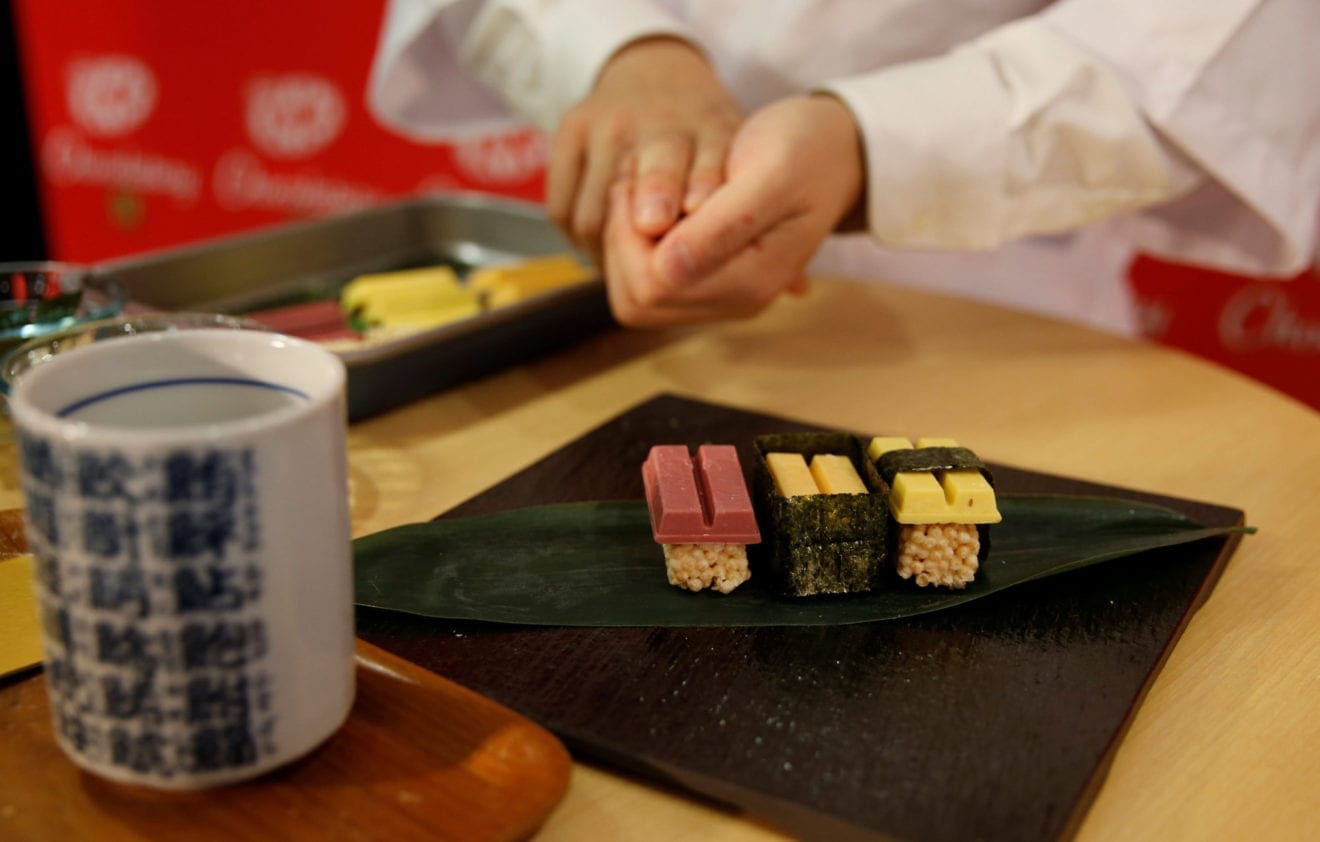
    For the grand opening of its stand-alone store, the company has created a set of three Kit Kats shaped like sushi – a combination of Kit Kats and rice puffs coated with white couverture chocolate. The maguro (tuna) version is topped with a raspberry-flavoured Kit Kat, the uni (sea urchin) version is made with a Kit Kat with the flavour of Hokkaido melon with mascarpone cheese, while the tamago (egg) version features a pumpkin pudding flavoured Kit Kat.

    kit-kats-chocolatory-japan

    Actually, the idea of a sushi Kit Kat was shared on social media by Nestle Japan as an April Fool’s Day joke last year, but the response was so huge the company decided to make it a reality. There will be 500 sets of the three sushi Kit Kats, with a limited number being offered each day to customers spending more than 3000 yen (US$26.50) or more at the new Ginza store.

    There are also plans to open a cafe on the second floor of the store in the next several months where customers will be able to try special items such as baked madeleines made with Kit Kats, or even make their own Kit Kat creations using toppings of their choice.

  • Hugo Barra leaves Xiaomi to join Facebook

    Hugo Barra leaves Xiaomi to join Facebook

    Hugo Barra, the international head at Xiaomi, is returning to Silicon Valley to head Facebook’s VR efforts, after spending three and half years in Beijing leading the Chinese smartphone maker’s global division.

    The announcement was made by Facebook head Mark Zuckerberg via his Facebook page last Wednesday.

    “I’m excited that Hugo Barra is joining Facebook to lead all of our virtual reality efforts, including our Oculus team,” Zuckerberg said in an announcement made in virtual reality.

    Barra will spearhead virtual reality efforts as Facebook’s VP of virtual reality. His relationship with Zuckerberg goes back years to when he broke ground on the Android operating system.

    More recently he worked at Xiaomi’s Beijing office as VP of International, serving as the face of the company and taking active part in product launches. Barra joined Xiaomi in 2013 from Google, where he worked as head of product management for Android, to oversee the company’s international expansion.

    Barra’s appointment comes over a month and a half after former Oculus CEO Brendan Iribe stepped down from his position in order to assume a leadership position within the company’s VR group.

    Telstra’s Cynthia Whelan to chair Foxtel

    Telstra has appointed group executive of new businesses Cynthia Whelan as the new chairman of Foxtel, the Australian incumbent’s 50/50 pay-TV joint venture with News Corporation.

    Whelan replaces Robert Nason, who retired from Telstra in 2015 and has been Foxtel chairman since June 2012. She has been a member of the Foxtel board since September last year.

    “Cynthia Whelan is an ideal chairman for Foxtel and will provide suitable leadership for the organization as it navigates a period of intense competition and technological evolution. She has significant experience in Australia and overseas in senior management and director roles,” Telstra CEO Andrew Penn said.

    Telstra’s partnership with News Corp over Foxtel allows Telstra to appoint the pay-TV firm’s chairman, while News Corp has the management control.

    Whelan will assume her new role on February 17. Telstra CFO Warwick Bray is also on the Foxtel board and the company will soon appointed a third director to replace Nason, the telco said in a statement.

  • Starbucks future strategy applauded

    Starbucks future strategy applauded

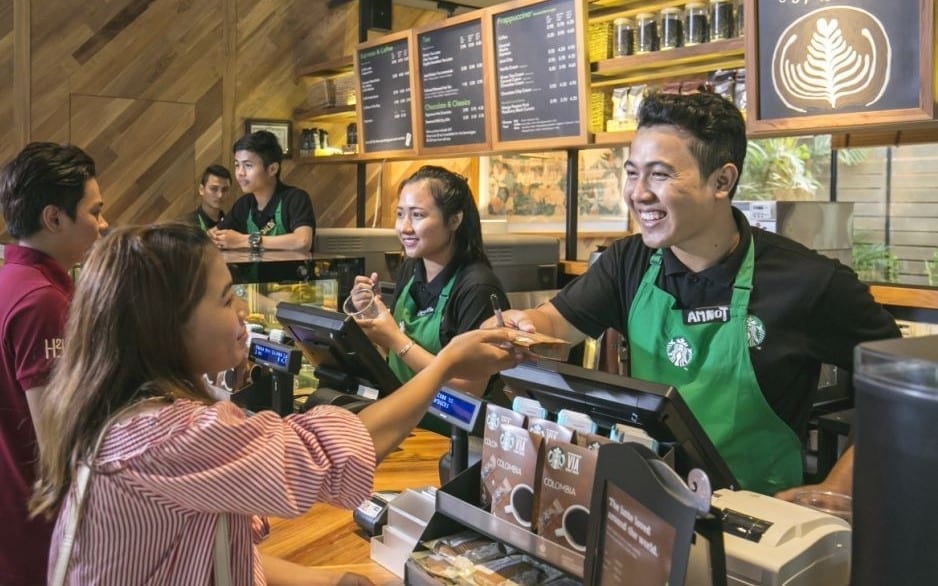
    While Starbucks has kicked off its new fiscal year with the lowest same-store sales growth since 2009, there is no reason to be overly discouraged by these results.

    Certainly, there are a few areas of softness, but the uplift of 3 per cent in the Americas comes off the back of a 9 per cent rise in the prior year. For a mature, fairly saturated company operating in a competitive segment of the market, the numbers show resilience.

    In any case, the overall revenue numbers are somewhat more robust – both within the Americas and on a global basis – thanks to a healthy program of store expansion. Starbucks may be reaching its peak in some localities, but it has demonstrated that even in its more mature markets it can still find headroom for new openings.

    Starbucks has done a reasonable job of managing its profitability at a time when margins are being squeezed by higher staffing costs. During this period, overall operating income increased by 7 per cent on a global basis and by 3 per cent within the Americas – partly thanks to the price increases of last year.

    All of that noted, there is no doubt that Starbucks is now firmly in middle age: it is finding growth more difficult to come by and, in financial terms, the business is not moving upwards at the pace it once did. In our view this is not demonstrative of a company in trouble, or even a company doing the wrong things, it is simply a reflection that Starbucks is a more mature business.

    Given that this dynamic is only likely to intensify over the next few years, it is incumbent on Starbucks to find new avenues for growth. The company is managing this well and has already set out its stall in terms of the innovations it intends to pursue to drive both the top and bottom lines.

    Some of these future plans lie outside the existing business model. Starbucks should be applauded for having the courage to look beyond its existing core operation, and to indicate its commitment to these ventures by putting Howard Schultz in charge of the new division. In truth, the push into premium through the development of the Princi chain and the Roastery and Reserve-only stores are not going to deliver sales volumes anywhere near those of the main business. However, their contribution will take the edge off the more subdued growth coming from core markets.

    As much as new initiatives will help, it is also important for Starbucks to look for ways to improve productivity at existing stores. This includes improvements to the food offer, which remains fairly low key and lacklustre.

    The year ahead will be both exciting and challenging in equal measure. However, Starbucks is a solid operator that will deliver single digit comparable sales growth, with total revenue uplifts just nudging into double digits.

  • Chatime Malaysia outlets to rebrand

    Chatime Malaysia outlets to rebrand

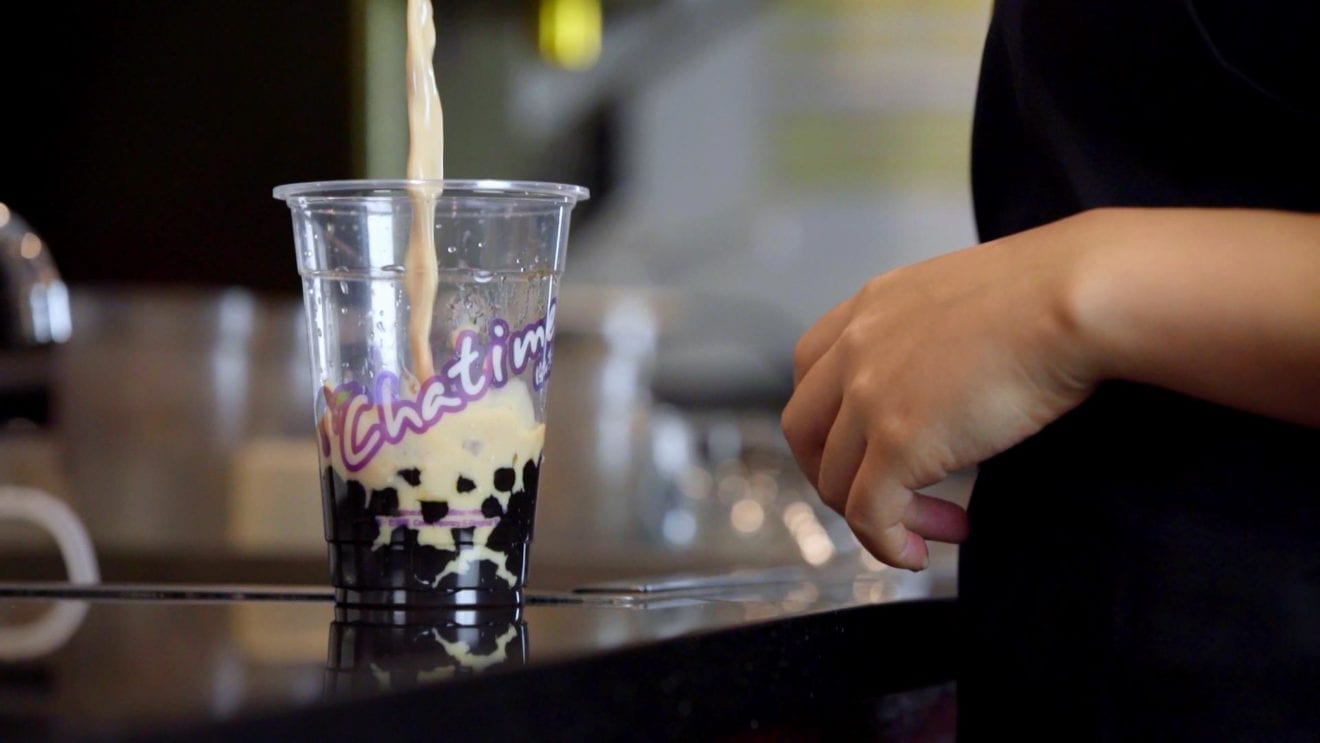
    Chatime Malaysia bubble-tea outlets will be rebranded following a dispute between franchisor La Kaffa International of Taiwan and Malaysia’s Loob Holdings.

    The move follows a termination of the franchise contract because of irreconcilable differences. Loob Holdings, which runs 165 Chatime outlets in Malaysia, contributes more than half of the turnover for the franchise company’s 800 outlets internationally.

    “We will surely come up with something better,” says CEO Bryan Loo, noting his company has nine other brands. He says it built the Taiwanese brand from scratch in Malaysia — “from zero to hero, and from no outlet to the current 165”.

    Loo says disagreements and disputes over business and operational matters had all been dealt with in accordance with the terms of the franchise agreement.

    “In 2011, there were a few dozen bubble-tea brands, and now there are only three. We are by far the market leader in our segment, and we are confident of holding this leadership with our own brand, which will be revealed when the time comes.”

    The dispute came to light when La Kaffa announced on January 6 that it had terminated the franchise and would immediately take over all the 165 Chatime outlets in Malaysia. However, Loo has clarified that Loob Holding and its sub-franchisees are still running all 165 outlets. According to the franchise agreement, the outlets will stop using the Chatime branding after 45 days.

  • Cellcard aims for nationwide LTE by April

    Cellcard aims for nationwide LTE by April

    Cambodia’s Cellcard reportedly plans to roll out nationwide LTE services by April, becoming first past the post in the race to deploy 4G services covering the whole country.

    The operator recently contracted Nokia to expand and modernize its 3G and LTE networks, including by deploying around 1,500 new cell sites.

    Now Cellcard aims to achieve nationwide coverage by April. The operator has reportedly invested around $150 million in the 4G expansion project.

    Cellcard’s main rivals Smart and Metfone are also investing heavily to expand their 3G and 4G presence. According to the report, Smart has to date rolled out 4G coverage to areas in all 25 provinces of the country and has upgraded around 65% of its roughly 2,100 base stations to 4G.

    The company now plans to invest around $80 million towards upgrading around 80% of its base stations to 4G by the end of the year.

    Metfone meanwhile aims to cover nearly the whole country with 3G and 4G coverage, with a goal of having 3,000 base stations supporting both technologies, but has not disclosed a timeline for meeting this target.

    According to data from the Telecommunication Regulator of Cambodia, mobile internet subscriptions reached nearly 7.5 million in November, compared to a total mobile subscription base of around 19.5 million.

  • Hong Kong food trucks finally hit the streets

    Hong Kong food trucks finally hit the streets

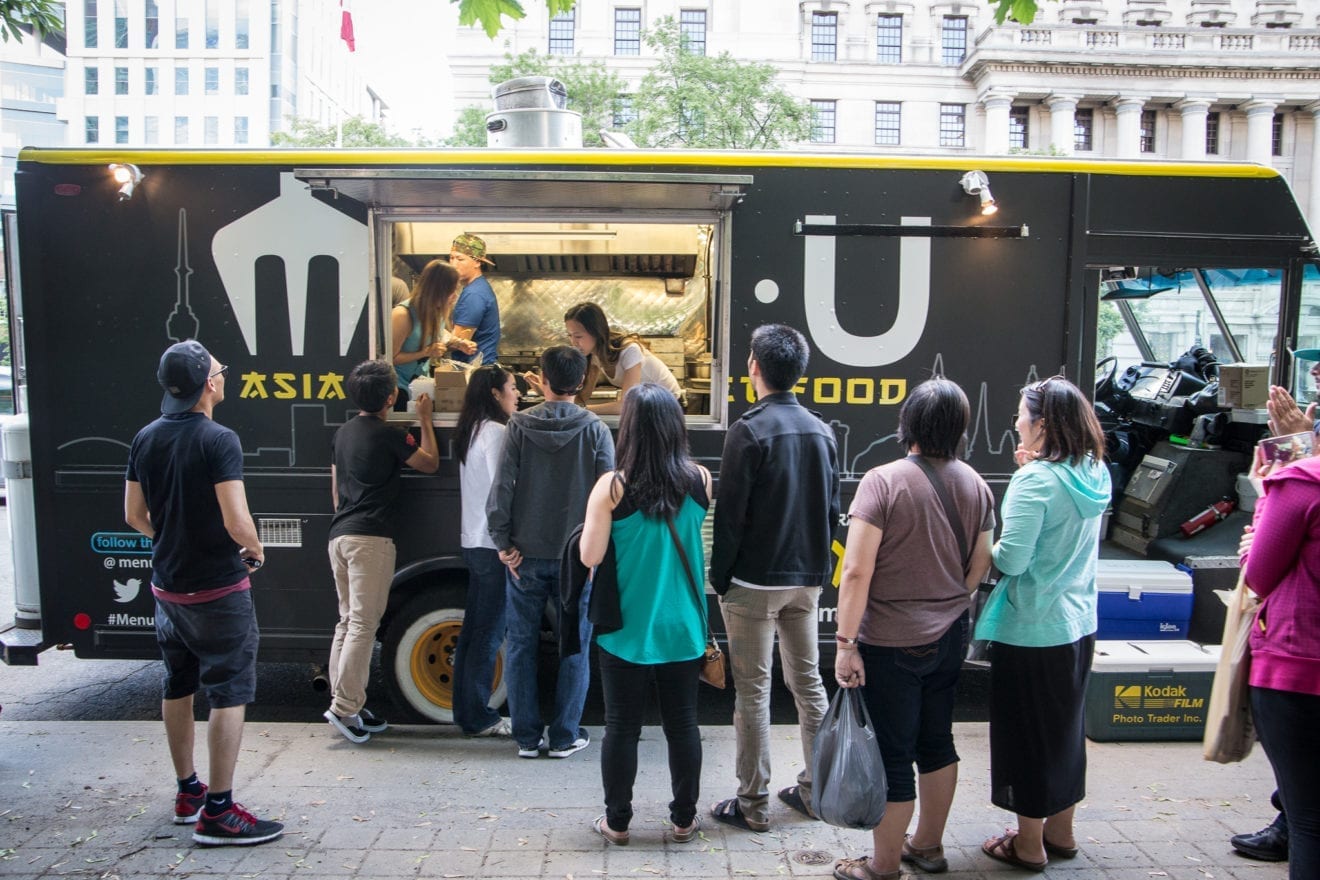
    The first Hong Kong food trucks have hit the streets – 16 in all will be operational tomorrow.

    Stationed at eight locations, they will offer a range of dishes as diverse as dumplings, dragonfruit smoothies and American-style steamed bread.

    It is the launch of a two-year pilot scheme to diversify the city’s tourism offerings, announced two years ago by former financial secretary John Tsang Chun-wah.

    Among the 16 chosen pioneers is Stanford graduate Angela Huang, an heiress of catering group Chee Kei, a restaurant chain known for its wonton noodles. The 25-year-old left her dream job in the US to return to Hong Kong to run the 5.5-tonne food truck Princess Kitchen.

    Seeing the project as “a good learning opportunity”, she says she feels that the word “princess” has a negative connotation in Hong Kong. “I want to use Princess Kitchen to send a message about what I feel about princess. It is not meant to be a girly and traditional type of princess. People should be able to define their own kind of beauty, happiness and health.”

    Huang learned about the pilot scheme while working as a consultant in San Francisco. “I want to come back for something I am excited about. This is something I really want to do.”

    To learn about running a mobile food business, the heiress started by taking orders in a food truck in San Francisco, and visited different ones in Los Angeles.

    Her food truck, which she painted herself including cartoon portraits of her friends and family, will offer dragonfruit smoothie bowls, which she would make at home and which are rarely available in the city.
    Huang, who says she feels lucky to be part of the pilot scheme, has hired two full-time staff members to help run the venture.

    Incentives

    The government offered incentives to start-ups and micro-enterprises to kickstart the scheme.. In the end, seven of the 16 winners were smaller firms.

    Part-time hawker and small restaurant owner Liu Chun-ho says he has so far spent HK$1 million (US$128,875) on his truck, Mama’s Dumpling. He had to obtain a bank loan and raise money from relatives.

    “I was planning to spend from $600,000 to $700,000 originally, but when I started preparing it realised the actual costs are much higher.”

    Almost $180,000 was spent to fit out the truck in accordance with the government’s safety and hygiene requirements. “It’s stressful to bear a cost that big,” he says. “It scares me when I think about it.”

    Liu has been selling dumplings for almost seven years during traditional celebrations. Four generations of the Liu family have been dedicated to making dumplings, and even his nine-year-old daughter has mastered the skill. Liu says the food truck will be run entirely by relatives.

    His signature dumplings will have wrappers in five colours. He plans to sell a box of six dumplings for $40. Pig knuckles, fried dumplings and soybean milk will also be on offer.

    Not all locals

    Not all the food trucks are local enterprises, such as Los Angeles-based Book Brothers Food Truck.
    “Hong Kong is a much better place to promote the brand compared with mainland cities,” says Raymond Wong, who was assigned by the US firm to manage its first food truck outside the US. The firm, which has seven food trucks and one restaurant in the US, won over the judges last year with its American-style barbecue steamed bun, which integrates Chinese and Western elements.

    Wong says a food truck is a cheaper way to establish brand reputation, given the city’s high running costs. The company has invested about $1 million on the project so far, Wong says, while opening a small cafe could easily cost up to $3 million.

    It needs to pay only about $20,000 a month for the site at Hong Kong Disneyland – the most expensive location – while monthly rents for a restaurant in a prime location could climb to hundreds of thousands of dollars.

    However, the American firm has found Hong Kong’s requirements more stringent, such as using new vehicles plus installing back-up batteries. Wong also says it is not easy to make a profit with only one truck.
    Some arranged locations, such as Energizing Kowloon East harbourfront, have few pedestrians during weekdays, says Wong, which makes things even harder.

  • Does your fish burger contain mercury-tainted shark meat?

    Does your fish burger contain mercury-tainted shark meat?

    A study of shark meat in Indonesia – the world’s largest shark fishery – has found dangerously high levels of mercury build-up in catches bound for overseas fish markets.

    Research conducted at the Seafood Inspection Laboratory in Bali found that mercury concentrations in processed, export-ready shark tissue exceeded twice the commonly accepted safe consumption limit.

    This is the first time that mercury levels have been tested in Indonesia-caught sharks bound for markets overseas, where importers and consumers are unaware that the fish that goes into fish burgers and fish and chips meals is shark.

    Bull shark meat tested on 26 January 2017 was found to contain 2.431 parts per million (PPM) of mercury. The consumption limit for predatory fish species in key Indonesian export markets such as Australia, Singapore and New Zealand, and also Indonesia, is 1.0 PPM.

    Bronze whaler meat – commonly sold as “flake” in Australia and cooked in batter for fish and chips dish- tested a week earlier was found to have a mercury concentration of 1.829 PPM.

    Bull shark meat sourced from the same location just a year ago was found to contain a significantly lower concentration – 1.368 PPM.

    Green School of Bali taking shark samples at Jimbaran fish market, Bali, Indonesia. Image: Bali Shark Rescue Center

    “Consumers are being deceived and are unaware of the type of fish being sold and ultimately ingested,” commented Paul Friese, founder of Bali Shark Rescue Center, whose non-government organisation partnered with sustainability college Green School of Bali to conduct the study.

    In Indonesia, most sharks are harvested for their valuable fins and liver first, and those parts sold to specialist buyers. The animal is then skinned, beheaded and the meat is filleted and moved back into the fish market unmarked.

    Shark fin can fetch up to IDR 2,500,000 (US$200) for a set, but locally sold shark meat sells for as little as IDR 25,000 (US$2) per kilo, and is used in street foods such as sate, fish cakes and meat balls. Overseas, shark meat is typically breaded and deep fried as fish burgers or used in the classic fish and chips dish.

    The sale of shark meat is also masked by transshipping, the process of transferring fish caught at sea from ship to ship, which makes the source harder to trace.

    Shark is particularly risky to eat because mercury bioaccumulates – the concentration of the heavy metal increases as it passes along the food chain, from plankton to shellfish, to small fish and onto larger predatory species.

    Mercury has entered marine ecosystems as a result of discharge from coal-fired power stations, residential heating systems, waste incinerators and mining, and also from volcanic activity.

    The main health risk from mercury consumption is damage to the nervous system. Unborn babies are particularly at risk from mercury pollution and, if exposed, may suffer impaired cognitive thinking, memory, attention, language, and fine motor and visual spatial skills in childhood.

    Meanwhile, shark populations in Indonesia have been under increasing pressure, as more than three million sharks are killed every year for their fins alone. Sharks are a tempting target for fishermen, particularly in remote island areas where the fins of the predators can bring lucrative returns.

  • Email Users in Indonesia Check Inboxes Hoping for a Retail Promo

    Email Users in Indonesia Check Inboxes Hoping for a Retail Promo

    Email has long served as a reliable beast of burden for marketers —a bankable but unexciting way for brands to tap into a dedicated audience that has opted-in to communication. The same holds true in Indonesia, but on steroids.

    A survey of email users in the country conducted by research firm JakPat in January 2017 found that a significant portion were interested in receiving marketing communications. Interestingly, 30.6% of respondents named receiving shopping promotions as one of the main reasons they used email.

    Marketers looking to craft messages for email users in Indonesia should be aware that the vast majority of respondents, more than 80%, primarily used mobile phones to check their email, according to the survey. That means that to effectively reach consumers in Indonesia, mobile-optimized email design is a must.

    Mobile phone email users also overwhelmingly relied on a dedicated email app over a web browser. Fully 86% of respondents used an app, compared with just 14% who checked email on a browser.

    A March 2016 survey of mobile device owners in Indonesia from Experian Marketing Services underscores how effective email ads can be. It found that 57% of respondents had been influenced to make a purchase by an email ad—more than had been swayed by either website banner ads or search ads.

  • Foreign funds pour money into Vietnamese startups

    Foreign funds pour money into Vietnamese startups

    John Wu has been the ‘technology pillar’ of Alibaba for almost 10 years. The former technology director and a leading group of investors have poured nearly $3 million into Vntrip.vn – a Vietnamese startup operating in online hotel reservations.

    Le Dac Lam, the founder and CEO of the startup, has confirmed the news.

    “The investment came after the first round of capital call from foreign investment funds, and John Wu has agreed to stand side by side with us,” Lam said.

    Established in late 2014, Vntrip.vn has established an online hotel network throughout Vietnam with cooperation of Booking.com, the world’s hotel reservation network belonging to the US Priceline Group with capitalization value of $65 billion.

    Wu’s F&H fund says the business is valued at VND300 billion.

    Vietnamese restaurant chain calls for $6.9 million

    Wrap & Roll has successfully called for $6.9 million from Mekong Enterprise Fund III (MEF III) managed by Mekong Capital.

    MEF III which was launched last June, with total investment capital of $112 million, is a private fund focusing on retailers, restaurants, consumer goods and consumer services in Vietnam.

    Wrap & Roll was the first investment deal made by MEF III.

    Established in 2006, Wrap & Roll has 10 restaurants in Hanoi, HCM City and four franchise shops in Singapore.

    3 more startups receive $75,000 

    1337 Ventures, a Malaysian fund, has announced investment in three Vietnamese startups, following Alpha Startups, a startup incubation program launched recently in HCM City.

    Each of the three businesses would receive $25,000 in capital and services and have the right to join the 3-month startup acceleration program to be run by 1337 Ventures.

    The three businesses include Saloneses, an app that books beauty services on smartphones, Perkfec, which allows business owners to keep watch over staff performance to reward them reasonably, and Navi which books venues and accommodations within hours.

    Bitexco acquires Huong Giang Tourism

    Huong Giang’s H1 Report shows that Bitexco, a major real estate developer, now holds 70.48 percent of the tourism company.

    On March 30, 2016, the Thua Thien-Hue provincial People’s Committee released a document on divestment of all the state’s stakes (12,572,200 shares) in Huong Giang. Bitexco has become the new shareholder in the tourism company.

    Tuong An Vegetable Oil

    Nguyen Manh Cuong, an individual shareholder, has announced the completion of the sale of 1.9 million TAC shares of Tuong An Vegetable Oil Company, equal to 10.4 percent of charter capital.

  • Indonesia`s Rice Production Experiences Surplus after 9 Years

    Indonesia`s Rice Production Experiences Surplus after 9 Years

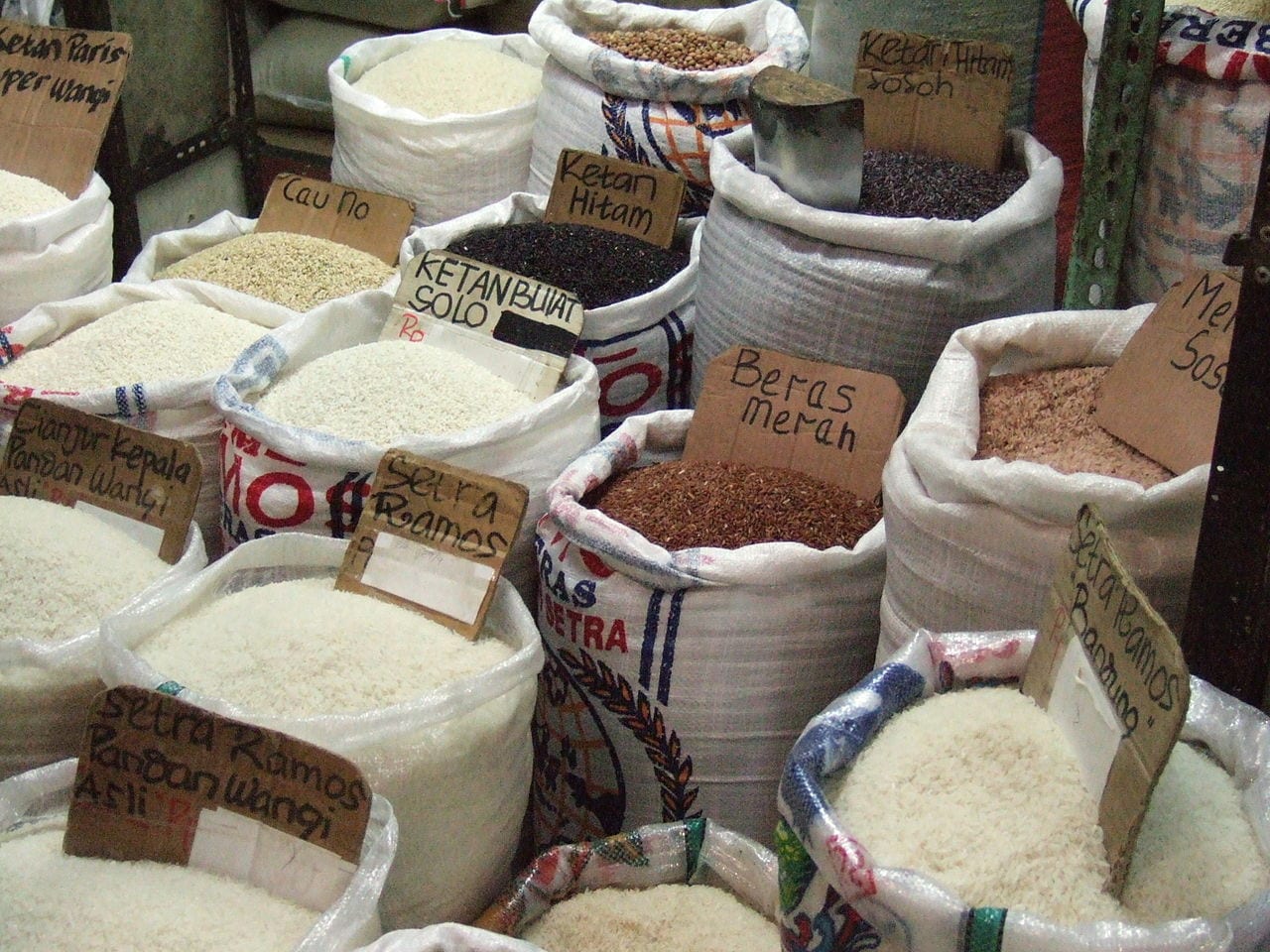
    Agriculture Minister, Andi Amran Sulaiman, claims that Indonesia has experienced a rice production surplus in 2016 after nine years past. “After nine years, 2016 was the moment when Central Java, East Java, and West Java, sent rice supplies to Kalimantan,” he said on Thursday, February 2, 2017.

    Minister Amran explained that rice supply warehouses in Central Java and West Java are currently in full-stock. “Warehouses in Central Java and West Java are full. The supplies keep increasing while the warehouses are full, last year it was empty. This is great progress,” he said.

    Other than rice supplies, according to Amran, garlic prices have also declined due to over stock. Therefore, the government plans to export garlic. “We’ll prepare the export earlier.”

    Based on the report from farmer’s association dubbed Kelompok Kontak Tani Nelayan Andalan, prices of rice in seven districts are below Rp3,700 per kilogram. “We had a coordination meeting until late at night, we’ll move quicker for the farmers. We won’t let them experience a loss,” the Minister said.

    In May, the Agriculture Ministry will hold a National Week (Penas) for Farmers and Fishermen in Aceh for six days; on May 6-11, 2017. President Joko “Jokowi” Widodo will inaugurate the event and it will be participated by 35,000 participants consisting of farmers, researchers, instructors representatives, and other stakeholders.

    A number of events will enliven the National Week which opens the opportunity to develop partnerships and open an agricultural product trade among ASEAN farmers.

  • Players continue to come and go in Vietnam’s ecommerce

    Players continue to come and go in Vietnam’s ecommerce

    In Vietnam today there are three popular e-commerce models: C2C (which connects customers to customers), B2C (business to customer) and Marketplace (which provides a platform to process transactions).

    In the pure C2C model, similar to classified advertisements which connects the buyers and the sellers only in terms of information, chotot.vn remains the most prominent.

    However, to Vietnam’s e-commerce, buyer’s trust and delivery have been the issues, and supplying information seems not enough. Many companies provide a platform with third-party services such as shipping or payment.

    Among this group, Sendo.vn, owned by tech giant FPT Group, is a prime example. Recently Zalo of VNG Corporation, a technology company, also ventured into this market. But the name that has received the most attention recently was Shopee, a company started by Singaporean tech company Garena.

    After nearly two years in Vietnam, this company has been downloaded two million times on mobile and processed 10,000 orders per day. Customer base and volume of orders have been growing 20 per cent per month.

    In the B2C group, after the departures of Lingo.vn, and Deca.vn earlier, and while Adayroi.vn of property giant VinGroup has not made any breakthrough and Lotte.vn remained an unknown, Tiki.vn has continued to be the leader.

    Founded in 2010 as an online bookstore, Tiki.vn has expanded into other fields such as cosmetics and electronics.

    According to Tran Ngoc Thai Son, chief executive officer of Tiki.vn, book sales accounted for 70 per cent of the company’s revenue in 2014, but that ratio is only 30 per cent today with the rest of revenue coming from other fields. Now, Tiki receives 15,000 to 20,000 orders per day.

    Even though Cdiscount.vn, the online shop of Big C supermarket which was acquired by Thailand’s retail giant Central Group, was closed and merged with Zalora, the e-commerce space remains attractive to other retail companies.

    Not long after Korea’s Lotte Group entered Vietnam’s e-commerce with the Lotte.vn website, Japan’s biggest retailer Aeon also arrived with aeoneshop.com at the beginning of the year.

    Finally, in the Marketplace group, Lazada.vn has seen no match with its 30 per cent market share (by revenue) in Vietnam’s online retail market.

    Fierce competition

    The race will intensify in the coming months, because up to now no company has made a profit in e-commerce in Vietnam, so they will compete fiercely for larger market share. The prizes await the final winners of this race.

    Alexandre Dardy, chief executive officer of Lazada Vietnam, said Lazada will focus on attracting more brands to do business on its website in 2017. Its goal is to attract 10,000 companies, triple the current number.

    As for Tiki.vn, the focus will be on sustainable growth. In 2017, Tiki.vn will continue to invest heavily in fulfillment, a service in which sellers just need to send their products to Tiki’s warehouses and let Tiki handle marketing and sales. Currently the company has two warehouses in Ho Chi Minh City and one in Hanoi, with total area of 10,000 square meters.

    Meanwhile, although arriving late, traditional retail companies are always considered strong contenders. While Lotte.vn focuses on cosmetics and fashion that are the strength of Korean brands, aeoneshop.com targets electronics and baby products carrying Japanese brands. Currently aeoneshop.com owns a chain of large modern retail stores from shopping centers to convenience stores.

    In addition directly owning four shopping centers in Ho Chi Minh City and Hanoi, Aeon bought 30 per cent stake in Fivimart and 49 per cent share of Citimart in 2015, and now indirectly owns 18 Fivimart stores in Hanoi and 66 mini-shops in Ho Chi Minh City.

    In essence, the race between purely e-commerce companies and traditional retail companies in Vietnam has not seen the clear winners, and purely e-commerce firms currently have an edge. However, with the determination of retail companies to expand online, the competition will be exciting to watch in 2017.