Author: Mei Ling Tan

  • Cost savings to boost mobile wallet business

    Cost savings to boost mobile wallet business

    In the mobile wallet business, volume business and long-term supplier contracts can deliver cost savings for buyers, according to market research firm Technavio.

    According a new report from the company, cost savings can be achieved through adoption of technology, supplier competition, adoption of negotiation strategies, optimization of procurement practices and bundling of services.

    In terms of technology, the researcher points to adoption of NFC, HCE, BLE and QR codes through the efforts of Apple, Google and Samsung.

    Consumers need to perceive mobile payments as an easy and convenient mode of payment via the integration of the mobile banking and payment experiences.

    Consumers are comfortable making financial transactions using mobile channels developed by trusted financial institutions such as banks. Converging these two into one seamless experience is crucial to bridge the gap and push consumers into making mobile payments online or at POS.

    A fast, simple, and seamless mobile payment process can enhance brand reputation and differentiation in the market. Customers consider personalized user experiences on payment interfaces, fast and efficient check-outs, and multiple payment options (debit/credit cards, internet banking) as important features in mobile wallets. A 2016 market study on mobile commerce predicts about two billion mobile phone/tablet users will make mobile commerce transactions globally in 2017.

    Beyond basic P2P money transfers and bill payment services, Technavio says suppliers are strategically partnering with network operators and banks to provide localized and real-time offerings such as loyalty points, discounts, and ratings and reviews across popular retail, entertainment, and hospitality businesses.

    Technavio says suppliers must offer mobile wallet services that can smoothly process financial transactions and possess fast, secure user interfaces with relevant communication on discounts, loyalty, and re-purchase benefits to meet the requirement of procurement professionals. They must also enhance the safety and security of personal and financial data of the customers with multi-layered mobile technology.

  • French fashion labels to establish joint online presence in China

    French fashion labels to establish joint online presence in China

    Twenty French fashion labels are taking their business to China, through the ‘French Boutique’ launched by the French Federation of women’s ready-to-wear apparel (FFPAPF) on Alibaba’s Tmall Global website. Participating labels include Teddy Smith, IKKS, Ateliers de la Maille, Ollygan and Bensimon.

    Labels Prêt pour Partir, Nathalie Chaize, Groupe Mado, Mât de Misaine, Urbahia, Daniel Faret, Zyga Lin’n Laundry, Les Petites Bombes, Lab Dip, Europann and Rica Lewis will also take part in the initiative. They will all be featured on a website that claims it draws 439 million active Chinese customers per year. The market is expected to grow even further, given that only 50% of Chinese consumers currently have internet access.

    The online ’boutique’ will be launched next March, with the support of DEFI. The brands featured on ‘French Boutique’ will be assisted locally by the FFPAPF’s Chinese office, established at the end of 2015 in Hangzhou, also home to the Alibaba Group‘s headquarters.

    FFPAPF President Pierre-François Le Louët underlined how the objective is to introduce a “French multi-brand” presence, presenting Chinese consumers with “the best that French ready-to-wear [labels] can offer.” “The FFPAPF has carried out research work to simplify logistics, and handling social media presence,” said Marion Bayle, Asia business representative for IKKS, which established a foothold in China five years ago through a local partner. The French label is planning to expand internationally, and the initiative is expected to allow IKKS to learn more about its Chinese customers through the information on consumer preferences yielded by the online presence.

  • Mobile wallet spending set to grow 32% in 2017

    Mobile wallet spending set to grow 32% in 2017

    Global mobile wallet spending is on track to grow nearly 32% in 2017 to reach $1.35 trillion, a new study from Juniper Research predicts.

    Although at the moment transactions are concentrated in China and East Asia, the research firm predicts that brands such as PayPal and Apple wallets which can be used both instore and online means that wallets will increasingly become the default payment mechanism in other markets.

    The study found that mobile spend is currently concentrated in China and East Asia owing to the success of Alipay and WeChat.

    The report claims that PayPal’s choice to use a HCE (Host Card Emulation) NFC solution to enable POS payments is a key disruptive moment in the wallet wars. It also attributes Paypal’s future mobile wallet success to the on-going success of its social payments subsidiary Venmo.

    Research author Dr. Windsor Holden noted that “Network operators remain wedded to offline payments based on an NFC SIM card, at a time when more agile competitors are deploying integrated HCE wallets that also enable online usage.”

  • XL Axiata swings back to profit in FY16

    XL Axiata swings back to profit in FY16

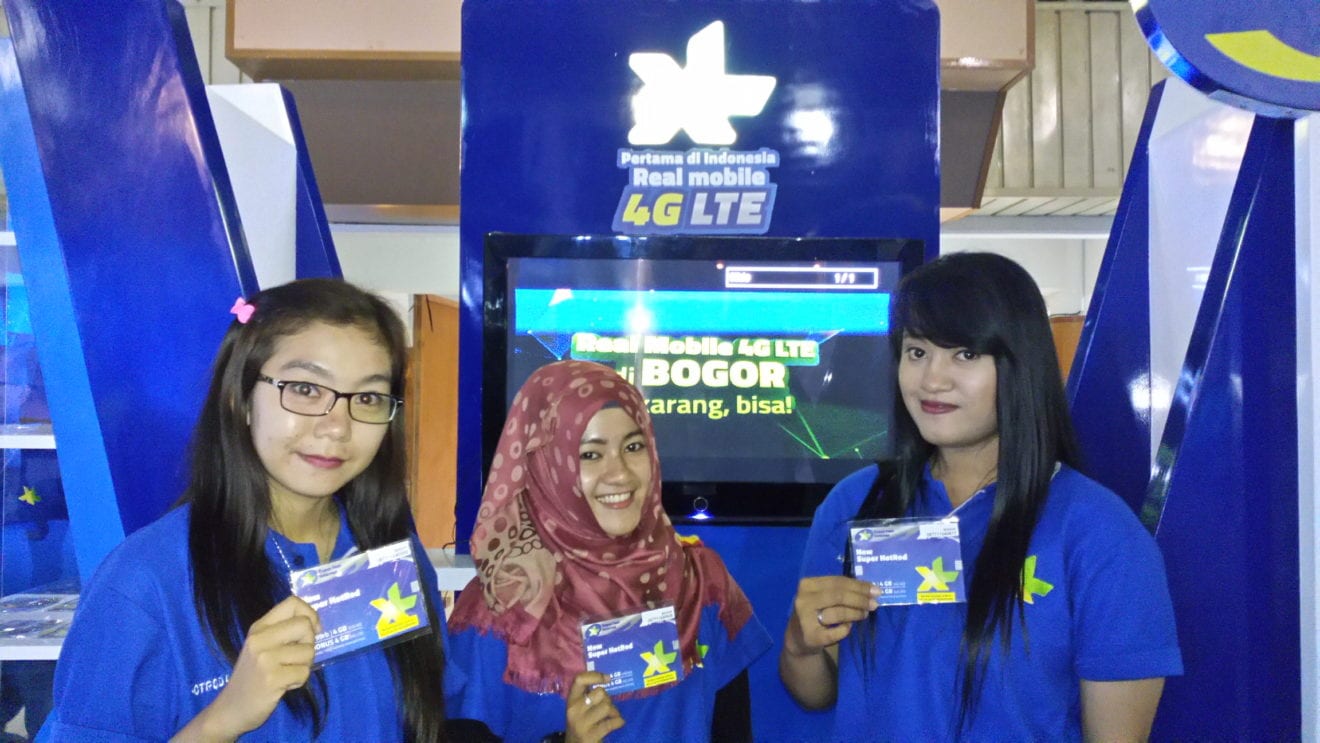
    Indonesia’s XL Axiata swung back to a 376 billion rupiah ($28.1 million) profit in 2016, as the company benefited from its $250 million tower sale and a stronger rupiah.

    The sale of 2,500 telecoms towers to local tower operator Protelindo, announced in March, helped the operator recover from a 25 billion rupiah loss the year before.

    But service revenue declined 4% to 19.19 billion rupiah due to the ongoing shift from legacy services to data. As a result of this rebalancing, data grew to account for 53% of the operator’s service revenue as of the fourth quarter, up from 35% a year earlier.

    Data traffic also surged to 515,304 terabytes, up from 196,341 terabytes a year earlier. The surge was driven by a 21 percentage point increase in smartphone penetration among XL’s subscribers to 63%, totalling 29 million customers at the end of FY16.

    During the fourth quarter, service revenue grew for a second consecutive quarter, albeit a slim 1% sequentially.

    XL Axiata’s results show that the company rolled out over 25,000 new base stations during the year, taking its total to 84,484 by the end of the year. Of these, 8,204 are 4G e-Node base stations, 38,731 are 3G node base stations and 37,549 are 2G sites.

  • E-commerce in Japan: 20% of retail by 2022

    E-commerce in Japan: 20% of retail by 2022

    While the U.S. and China are already known as global e-commerce markets, it’s Japan that boasts the largest e-commerce potential, especially over the next three to five years, say two separate consultant groups.

    In 2015, Japan generated roughly $80 billion in e-commerce sales. This compares to some $350 billion of e-commerce sales in the U.S. and China’s whopping e-commerce sales result, which exceeded $650 billion in 2015.

    Yet, e-commerce will be Japan’s largest single retail channel by 2022, according to a recent report produced by JapanConsuming.

    Having overtaken convenience stores to become the second biggest already in 2015, the firm has forecast that Japan’s e-commerce share of retailing will reach 20% by 2022.

    “This is a forecast that few would challenge, although there are plenty of traditional retailers who are in deep denial,” said report authors, of the predictions.

    “The only point of contention is just how far ahead e-commerce will be by then. Given the sea-change in consumer preferences and shopping behaviour already visible, the coming change will be profound,” added the group.

    Japan’s demographic is ripe for e-tail. Approximately 93% of the total Japanese population (126 million) is urban, giving it the highest urban population of the top 10 e-commerce markets, according to e-commerce consultancy PFS. Much like JapanConsuming, PFS predicts Japan’s e-commerce sales to increase almost 40% by 2018, for a market total of over $122 billion.

    Japan also has the highest digital buyer percentage in the Asia-Pacific region, with 77 million digital buyers last year, said PFS, in its Global E-Commerce Report.

    As well as computers, mobile shopping is quickly growing, with half of all e-commerce transactions being conducted via mobile devices in 2015, a trend set to continue by 2022.
    In terms of payment, debit and credit cards are the most popular payment methods when shopping online, with over 66% of shoppers conducting transactions utilising this method.

    As for what online stores are attracting the Japanese e-shopper, marketplaces continue to dominate the e-commerce landscape. Japan’s three big sites, in order of market share, are Rakuten, Amazon Japan and Yahoo Japan Shopping. Collectively, these sites accounted for around 50% of total Japanese annual e-commerce revenue in 2015.

  • Brandline – Bring Your Brands to Life

    Brandline – Bring Your Brands to Life

    Consumers are exposed to more than 3000 messages a day. The real question now is, what will make your brand stands out? As consumers only spend a few seconds in front of retailer shelf, are the in-store messages targeted properly and relevant? Hence, design solutions that boost the traffic and sales potential in retail environments are sorely needed.

    As the expert in merchandising and in-store communication, HL Display Thailand has the most innovative design and ideal solutions to create a more desirable shopping experience and brand awareness that includes

    • Creating a place where the consumers want to shop
    • Developing impulse buying and customer loyalty
    • Making differentiation from competition
    • Increasing basket size and footfall

    Communicate the brand values and product benefits with Brandline™, the collection of shelf liners, highlighters and accessories, specifically designed to create highly effective on-shelf communication and segmentation. Extending the message areas with additional accessories such as lighting is also reinforcing brand awareness and instantly adding positive disruption visually.

    https://www.youtube.com/watch?v=DUECYwjKfjA

    Health and Beauty category for instance, is a category characterized by many new products introductions coupled to variety of pack sizes and shapes. State of the art message conveyer, cosmetic front rails, sample tester holder, lighting accessories are becoming a must have in store environment, and this is when Brandline™ becomes even more important than ever.

    For further information, Bangkok based HL Display Thailand can be directly contacted during office hour at +66 2276 2445 with the attention to Mr. Thanasun Sakchuenyod, or e-mail to [email protected] or [email protected]. Visit the company website at www.hl-display.com/asia

  • Cosmetics sales surge as Korean duty free market rockets

    Cosmetics sales surge as Korean duty free market rockets

    The Korean duty free market surged by 33.5% year-on-year in 2016 to KW12.2 trillion (US$10.5 billion), according to new figures from Korea Customs Service.

    The results reflect a strong bounce-back from the MERS-ravaged 2015, allied to booming Chinese visitor numbers last year.

    Chinese arrivals for 2016 rose +34.8% to 8,067,722, according to Korea Tourism Organization figures published today, a 46.8% share of total visitors. Japanese arrivals also rose sharply, up +25% to 2,297,893, a 13.3% share of total arrivals. Korean departures rose +15.9% in the year to 22,383,190

    Duty free sales to foreigners (dominated by the Chinese followed by Japanese) rose +44.1% to KW8.8 trillion (US$7.5 billion)

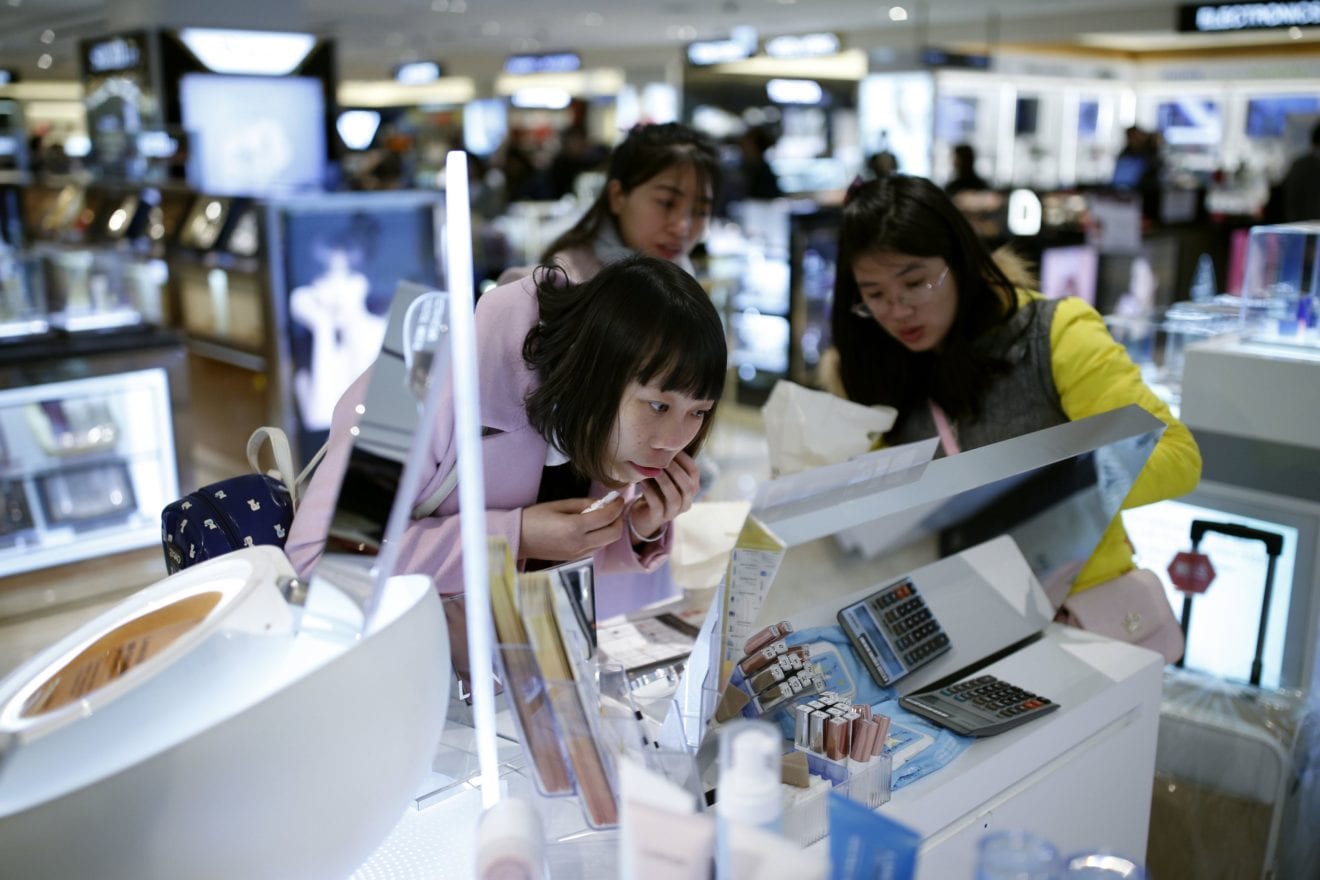
    Cosmetics, driven by booming sales of skincare (particularly Korean brands), accounted for 51.2% of turnover. Here are the leading categories:

    Korea_Table_600

    Lotte Duty Free stretched its lead as the dominant force, racking up a +26% increase in sales to KW5.973 trillion (US$5.1 billion), a stunning performance given that the retailer had to close down its Lotte World Tower Duty Free store in late June.

    Lotte’s nearest rival, The Shilla Duty Free, posted a +31.5% increase year-on-year to KW3.405 trillion (US$2.9 billion). Its Seoul flagship generated revenues of KW1.739 trillion (US$1.49 billion) while its Incheon International Airport stores posted sales of KW0.697 trillion (US$596.7 million)

    Fast-rising Shinsegae Duty Free posted sales of KW0.9608 trillion (US$822.4 million). Its new store in Myeong-dong, Seoul, which only opened on 1 May, generated sales of KW0.349 trillion (US$298.7 million). Its downtown Busan store (relocated in March to Centum City) posted revenues of KW0.336 trillion (US$287.8 million). Dongwha Duty Free in Seoul posted sales of KW0.3547 trillion (US$306 million)

    Of the recent sector newcomers HDC Shilla generated sales of KW0.3971 trillion (US$340 million); Galleria 63 Duty Free reached KW0.224 trillion (US$191.7 million), Doota Duty Dree KW0.111 trillion (US$95 million) and SM (Hana Tour) KW0.056 trillion (US$47.9 million).

  • Vietnam imposes tax duty on foreign room-booking sites

    Vietnam imposes tax duty on foreign room-booking sites

    Firms such as Agoda and Expedia will have to pay a 10 percent duty. The Ministry of Finance has told foreign accommodation booking services to pay taxes if they wish to continue operating in Vietnam.

    A document recently released by the ministry asked booking sites like Agoda, Traveloka and Expedia to pay a combined 10 percent of their total revenue made in Vietnam.

    Vietnamese accommodation providers that have signed contracts with these foreign sites are obliged to fulfill these tax duties on behalf of them.

    The ministry said that the move aims to prevent tax losses from foreign-based companies that are gaining from online business transactions.

    Vietnamese accommodation booking site Vntrip had previously held a press conference and sent a document to the ministry accusing Singapore-based travel agency Agoda and some other sites of tax evasion.

    Vntrip said that the acts of these foreign companies had resulted in huge losses to the state revenue and created unwholesome competition.

    This is not the first time the Vietnamese government has imposed taxes on international businesses operating in the country. Last September, the popular ride-sharing service Uber was officially ordered to pay taxes after two years of providing transport services in Vietnam.

  • The Five Best Shops For Men In Hong Kong

    The Five Best Shops For Men In Hong Kong

    Hong Kong is known to be a melting pot of activities, yet there’s one pastime in particular that locals and visitors alike always gravitate toward: shopping. The big malls like Pacific Place and Times Square definitely give shopaholics a run for their money, yet in such a dense megalopolis with so many shops to choose from, sometimes the hidden gems are exactly that – hidden. To help you cut through the noise and find your go-to place, here are Forbes’ choices for the five best shops for men in Hong Kong.

    The Monocle Shop

    Image result for the monocle hong kong

    Through collaboration with other niche brands, Monocle offers one-of-a-kind travel items, apparel and other assorted items in their small shop on Wan Chai’s hip St. Francis Yard. Given that Monocle is a magazine and travel guide first, the shop also sells souvenirs and city-specific memorabilia like their iconic city guides, available for New York City, Hong Kong, Copenhagen and many more. If you’re extra curious, poke your head into the back part of the shop, their Hong Kong editorial team’s office space.

    1-4 St. Francis Yard, Wan Chai, Hong Kong, +852 2804 2323, monocle.com

    The Armoury

    The Armoury - Landmark

    If you’re looking for classic, ready-to-wear menswear, The Armoury is the place to go. The owners’ tastefully-curated collection hails from all around the world, and that global appeal has played a major role in the impeccable reputation that The Armoury holds today. Parisian Gentleman sums up their offering perfectly: “Mark Cho, Alan See and Jake Grantham continue to offer a tastefully curated selection from some of the best brands out there, which include the likes of Ring Jacket, Carmina, St Crispin’s, Orazio Luciano, Drake’s and of course, the Florentine Master Tailor Antonio Liverano featured in the Gianluca Migliarotti movie, I Colori di Antonio.”

    Pedder Building Unit 307 (3/F), 12 Pedder Street, Central, +852 2804 6991, www.thearmoury.com

    Landmark Central B47, 15 Queen’s Road Central, Central, +852 2810 4990, www.thearmoury.com

    Delstore

    Image result for delstore hong kong hong kong

    Considered underrated by many, Delstore stocks difficult-to-find pieces from timeless brands, and is definitely a must-visit for any guy passing through Hong Kong. South China Morning Post says: “Owned by Hong Kong native Derrick Leung, the two-storey boutique offers stylish yet inconspicuous men’s outfits and accessories that have way more staying power than those slavishly following seasonal trends. A true champion of locally curated style, Delstore is a hidden treasure for Hong Kong’s male style mavens.”

    3 Schooner St, Wan Chai, +852 2528 1770, delstore.co

    HOLA Classic

    Image result for hola classic hong kong

    For a high-quality yet budget-friendly tailoring, HOLA Classic is the place to go. Thanks to its location in Causeway Bay’s underbelly, So Kon Po, HOLA can offer its modern vintage suits at significantly lower prices than other tailors in Hong Kong (theirs start at $1,980 HKD, which is $255 USD). HOLA also offers quite a selection of eccentric ties and “happy” socks, plus their own line of shoes.

    11A Caroline Hill Road, Causeway Bay, +852 2870 0245, facebook.com/holaclassic.

    kapok

    Certainly one of the quirkiest lifestyle shops in Hong Kong, kapok specializes in creative and authentic pieces from places like Denmark and France, widely known for the enduring quality of their craftsmanship. With one store next to the Monocle shop on St. Francis Yard and the other around the corner on the tucked-away Sun Street, expect to find a wide array of sweaters, messenger bags, tough-to-find magazines, notebooks, and a lot more. Expect to while away thirty or sixty minutes just browsing, chatting with the knowledgeable staff or jamming to the ever-changing Soundcloud mixes that fill the place with an upbeat, enduring energy.

    3 Sun Street, Wan Chai, +852 2520 0114, ka-pok.com

    5 St Francis Yard, Wan Chai, +852 2520 0114, ka-pok.com

    Of course, if you can’t find what you need at these shops, you can always look online to sites like AliExpress, which stocks a seemingly-endless variety of clothing, shoes and accessories. Amazon also ships to Hong Kong, though for some items you may need to use a package forwarder to get them all the way here.

    As Andrew Keith says, “Hong Kong is a city filled with amazing contradictions.” Fortunately, its size and its offering of great shops for men is not one of them. Wherever you choose to go, whether it’s a megamall, a boutique or just online, I hope these five shops open up your eyes to some of Hong Kong’s more unique options.
  • Telkom Indonesia to launch third satellite this month

    Telkom Indonesia to launch third satellite this month

    Telkom Indonesia plans to launch a third satellite in less than two weeks as part of efforts to reduce its dependence on foreign satellites.

    The state-owned operator will launch the Telkom 3S from the Guiana Space Center on February 14. The satellite was constructed by Thales Alenia Space and will be launched abord Arianespace Europe’s Ariane 5 rocket.

    Once operational the Telkom 3S will carry 24 C band, 8 extended C band and 10 Ku band transponders. The satellite will substitute for the Telkom 3, which failed to reach orbit in 2012, and will take the orbital slot of the current Telkom 2.

    In turn the Telkom 2 will be moved to another orbit, and is expected to remain operational until 2021.

    The Telkom 1 and Telkom 2 satellites have a combined 140 transponders, but according to the report, Telkom said at least 300 transponders are needed to serve the operator’s consumer and business customers. The new Telkom 3S will cut down on the satellite capacity the company needs to source from foreign satellites.

  • Telenor India said to seek merger with RCom, Aircel

    Telenor India said to seek merger with RCom, Aircel

    Norway’s Telenor is reportedly seeking to get in on the proposed merger between Aircel and Reliance Communications.

    Telenor is proposing to combine its Indian business, customer base and spectrum with the merged Aircel-RCom entity. Under the proposed terms, Telenor would own 10% of the combined company, while Aircel parent Maxis and RCom would each own 45%.

    The report cites a telecoms industry executive as stating that negotiations between the three commenced around Christmas, but have been in limbo after the Supreme Court threatened to revoke Aircel’s license if promoted Ananda Krishnan didn’t appear for a corruption case. As part of the decision the court also issued an interim ban on the sale of Aircel’s 2G spectrum.

    Telenor is also reportedly in parallel discussions with Bharti Airtel, even though Airtel has only offered cash value for Telenor’s spectrum rather than a proposed merger. The sources stated that Telenor is eager to exit India as soon as possible and will take the Airtel deal if it will close faster.

    RCom last year agreed to merge with Sistema Shyam Teleservices as part of the wave of telecoms industry consolidation.

    A combined RCom, Telenor, Aircel and SSTL would have a total subscriber base of around 236 million, making it India’s second largest operator behind Bharti Airtel, which has nearly 260 million customers.

  • Tesla Model S, BMW i3 fall short of IIHS Top Safety Pick+ award

    Tesla Model S, BMW i3 fall short of IIHS Top Safety Pick+ award

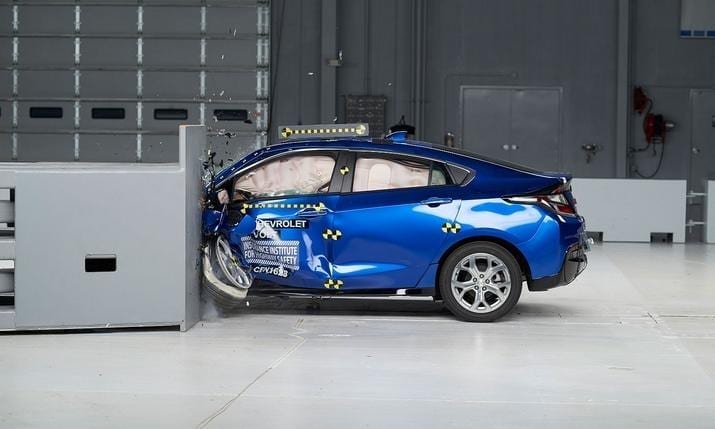
    The Tesla Model S and BMW i3 fell short of earning the Insurance Institute for Highway Safety’s 2017 Top Safety Pick+ award. For a vehicle to qualify for the Top Safety Pick award, IIHS said it must earn “good” ratings in all five crashworthiness tests — small overlap front, moderated overlap front, side, roof strength, and head restraints and seats — and come with a front crash prevention system that earns an advanced or superior rating.

    The “+” is awarded to vehicles that meet all the above criteria and come with “good” or “acceptable” headlights.

    Ratings for crashworthiness and headlights are good, acceptable, marginal and poor.

    Tesla’s Model S earned a good rating in all IIHS crashworthiness evaluations except the small overlap front crash test, in which it earned an acceptable rating.

    The Model S earned a good rating in all IIHS crashworthiness evaluations except the small overlap front crash test, in which it earned an acceptable rating.

    IIHS said the Model S “ran into problems in the test when the safety belt allowed the dummy’s torso to move too far forward. That allowed the dummy’s head to hit the steering wheel hard through the airbag.”

    IIHS noted that the Model S ratings apply to 2016 and 2017 cars built after October 2016.

    Tesla told IIHS that it made a production change on Jan. 23 to address the head-contact problem and IIHS will test the updated Model S for small overlap protection as soon as it can be delivered.

    The current Model S has not been rated for front crash prevention, IIHS noted, because while automatic braking equipment comes standard, the automaker has not activated the software for all vehicles.

    IIHS also noted the 2017 Model S isn’t available with anything other than poor-rated headlights. The automaker told IIHS that it is working with its supplier to improve the headlights. IIHS will evaluate the new ones when they are available.

    The BMW i3 was hindered by its acceptable rating in the head restraints and seats evaluation, IIHS found. The car’s only available headlight system earned an acceptable rating.

    One Model S variant in particular, the high-performance P100D, was also dinged for its roof strength. The P100D has the same roof structure as other Model S variants, IIHS said, but noted that because the car has a larger, and heavier, battery it earned only an acceptable rating for that test.

    The BMW i3 was hindered by its acceptable rating in the head restraints and seats evaluation, IIHS found. The car’s only available headlight system earned an acceptable rating.

    The i3 earned good ratings in other crashworthiness tests and is available with an optional front crash prevention system that earned an advanced rating, IIHS said.

    “There’s no reason the most efficient vehicles can’t also be among the safest,” said David Zuby, IIHS’ chief research officer, in a statement. “We hope Tesla and BMW will continue to refine the designs of their electric models to maximize driver protection and, especially in the case of Tesla, improve their headlights.”

    Two other green vehicles, the Toyota Prius Prime and Chevrolet Volt, earned the Top Safety Pick+ designation for crash test and crash avoidance performance, the organization said.

    IIHS plans to test the latest EV to enter the market, the Chevrolet Bolt, once it becomes widely available this year.

  • Vietjet Air Appoints HACTL for Hong Kong Handling

    Vietjet Air Appoints HACTL for Hong Kong Handling

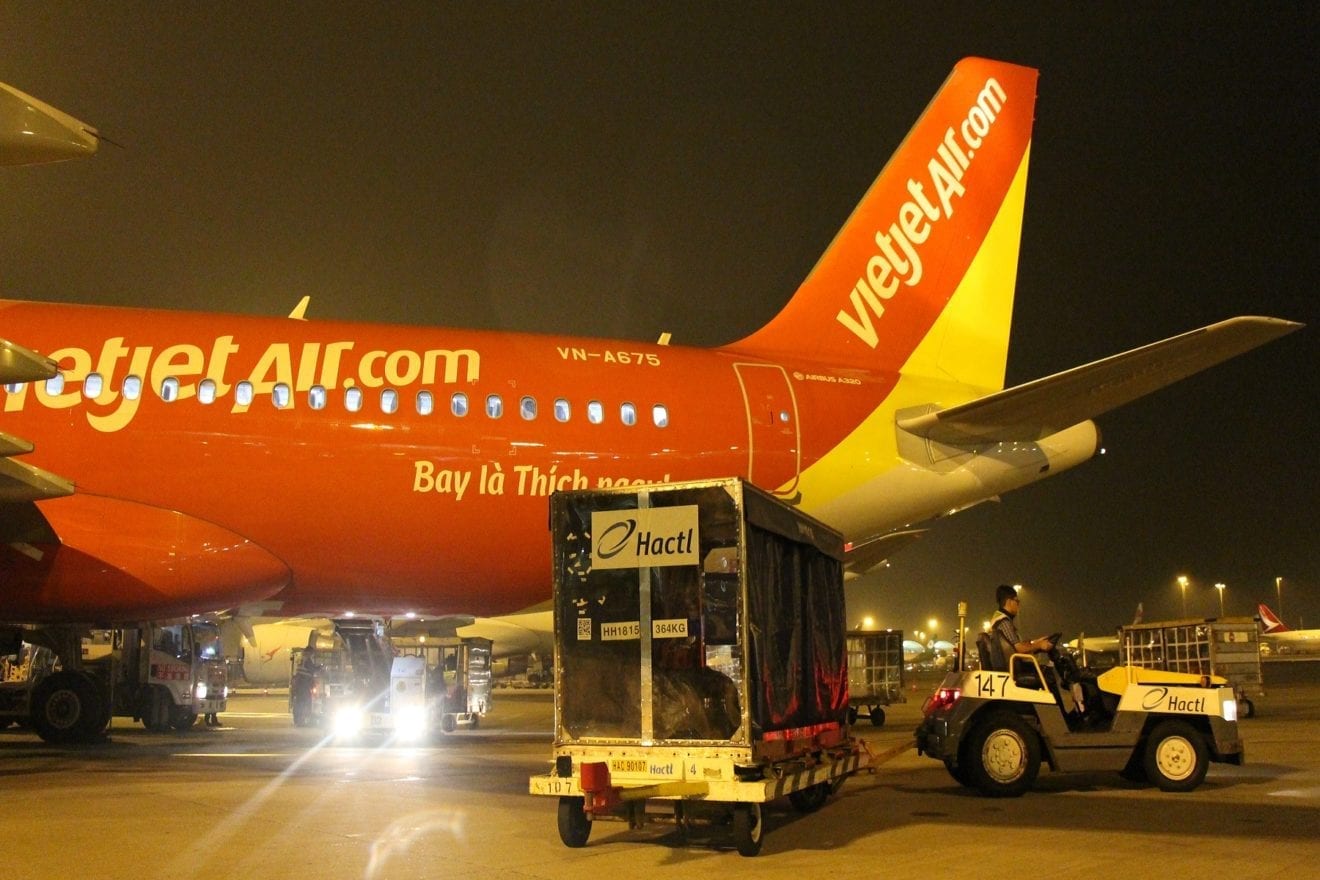
    The daily flight was launched in December 2016 and is operated with an Airbus A320. “We congratulate VietJet on the launch of this exciting new service to Ho Chi Minh, which provides access to an important destination for our customers,” said Mark Whitehead, chief executive of Hactl.

    Major exports from Vietnam to Hong Kong include electronic components, telecommunications equipment and footwear, while imports from Hong Kong include telecommunications equipment, meat products and electronic components.

    “Hong Kong is a very important market for Vietnam, and also a key step in our airline’s development,” said Thi Thuy Binh Nguyen, vice president of VietJet Air. “We look forward to playing our part in facilitating increased trade on this route.”

    VietJet Air launched operations in 2011. The low-cost carrier now flies to 23 international and 37 domestic destinations with its fleet of 42 A320s and A321s.

  • Startup dreams bring real money to Vietnam’s office market

    Startup dreams bring real money to Vietnam’s office market

    Young companies looking for their first home are spiking the demand for small-sized office space. Tan, a self-employed real estate broker, paid $5,000 per month for the use of a six-story building in downtown Ho Chi Minh City. He then turned it into 15 office rooms with polished tiled floors, private bathrooms and internet connections.

    The offices, ranging from 25 to 40 square meters, are now rented out to startups at between VND5 million and VND10 million ($220 – $440) per month, said Tam, who asked to be identified by his first name only.

    For fledgling startups, which try to make every penny count, these small-sized offices with good locations fit their budget.

    Tan said currently 10 companies are his tenants, claiming a return of 20-25 percent.

    Local brokers said some estates in the city’s downtown areas are becoming mini-hubs for startups. These young companies give the office market in Ho Chi Minh City and Hanoi a much-needed boost as many landlords struggle to fill space, they said.

    However, according to Le Huu Dung, chief executive at brokerage Weland Investment, not just any space will do.

    “We have seen a strong growth in mini-office rentals in Ho Chi Minh City in the past two years following the recent startup boom,” Dung said. “While some investors have earned decent profits, others are losing money.”

    No one who starts out in such a tiny office expects to stay there for long, Dung said, referring to the fact that when startups become bigger, they will move to larger offices.

    Another flip side of the business is that this segment mainly relies on idea-stage companies, which may not even last longer than just a few months.

    Dung warned that if the occupancy rate is lower than 80 percent, the investor will start losing money.

  • NBTC plans to allocate 380 MHz more mobile spectrum

    NBTC plans to allocate 380 MHz more mobile spectrum

    Thailand’s telecoms regulator NBTC plans to release 380 MHz of additional spectrum to the industry to set the stage for 5G and accommodate burgeoning demand for mobile data and IoT services.

    The regulator is aiming to auction 180 MHz of 2600-MHz spectrum this year as part of this process, citing NBTC secretary-general Takorn Tantasith.

    According to the plan, this will be followed by auctions of 90 MHz of 1800-MHz spectrum and 20 MHz of 850-MHz spectrum by March 2018, then 90 MHz of 700-MHz spectrum by 2020.

    While to date up to 420 MHz of bandwidth has been allocated for mobile use, Takorn said this will not be sufficient to keep pace with rapid developments in network technology and online service innovation, let alone the eventual deployment of 5G and the new use cases it will bring.

    The planned auctions will bring the total bandwidth allocated for telecoms use up to 800 MHz, significantly higher than the 700 MHz recommended by the ITU, the report notes.