Author: Mei Ling Tan

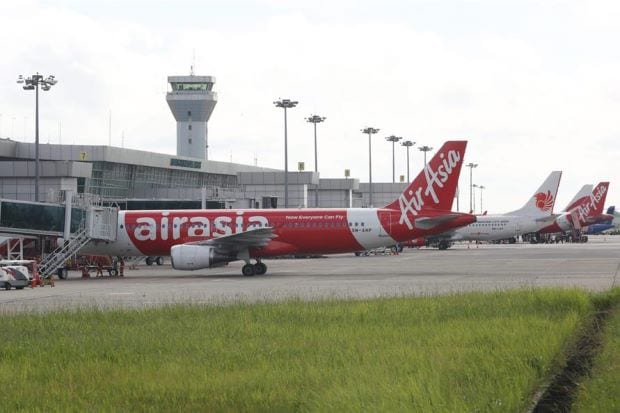
  • AirAsia awaits green-light for KL-Bhubaneswar route

    AirAsia awaits green-light for KL-Bhubaneswar route

    AirAsia is waiting for the go-ahead from India’s Directorate General of Civil Aviation to start direct flights from Kuala Lumpur to Bhubaneswar in March this year.

    The Malaysian budget airline will launch the new service once it receives formal permission from the Indian aviation regulator in its plans to boost the eastern Indian state of Odisha’s international links and tourism traffic.

    Airports Authority of India’s eastern region executive director, Sanjay Jain, said the airport operator would extend all support to AirAsia for the flight services.

  • Right time to outshine China in shoes and clothes

    Right time to outshine China in shoes and clothes

    India is witnessing a ‘historic opportunity’ to take over China in the apparel, leather and footwear sectors but it is being outrun by its neighbouring East Asian economies, the Survey has said.

    The survey touched upon India’s declining share in global cattle population and exports of cattle hides. The Survey said that limited availability of cattle for slaughter in India is leading to a loss of potential comparative advantage due to underutilisation of the abundantly available natural resource“ for the leather sector.

    The Survey added that in spite of significantly lower wages than China, countries such as Bangladesh, Vietnam and Myanmar have outpaced India in these sectors. “The window of opportunity is narrowing and India needs to act fast if it is to regain competitiveness and market share in these sectors,” the Survey said.

    The monthly wages for semi-skilled workers in India ranges between $81 and $119, while in China its $250-300. India’s wage costs are even less compared with Vietnam and Indonesia but challenges of logistics, labour regulations, tax and tariff policy have put India at a disadvantage in a global scenario.

    These difficulties have led to several Indian firms choosing to relocate to Bangladesh, Vietnam, Myanmar and Ethiopia. All of these factors have brought India’s share in global exports of apparel, footwear and leather to less than 5%, falling behind countries such as Bangladesh and Vietnam.

    Being labour intensive, apparel and leather sectors have been provided subsidy by government for increasing employment but a lot more needs to be done if India wants to create more jobs and opportunities for exports and growth.

    The Survey said the government needs to take up a number of labour reforms to overcome the obstacles of employment generation and also bring in the Goods and Services Tax (GST) for tax rationalisation.

    Noting that all economic growth take-off in East Asia has had a direct correlation with the clothing and footwear exports, the Survey said India has underperformed in these sectors.

    At a GDP growth rate of 7-10% in East Asian economies, the average annual growth of apparel exports was between 20% and 50%, while it was more than 25% in case of leather. For India, this figure has been 12.7% and 5.4% respectively, showing a huge untapped potential.

  • BN explains why petrol prices have gone up

    BN explains why petrol prices have gone up

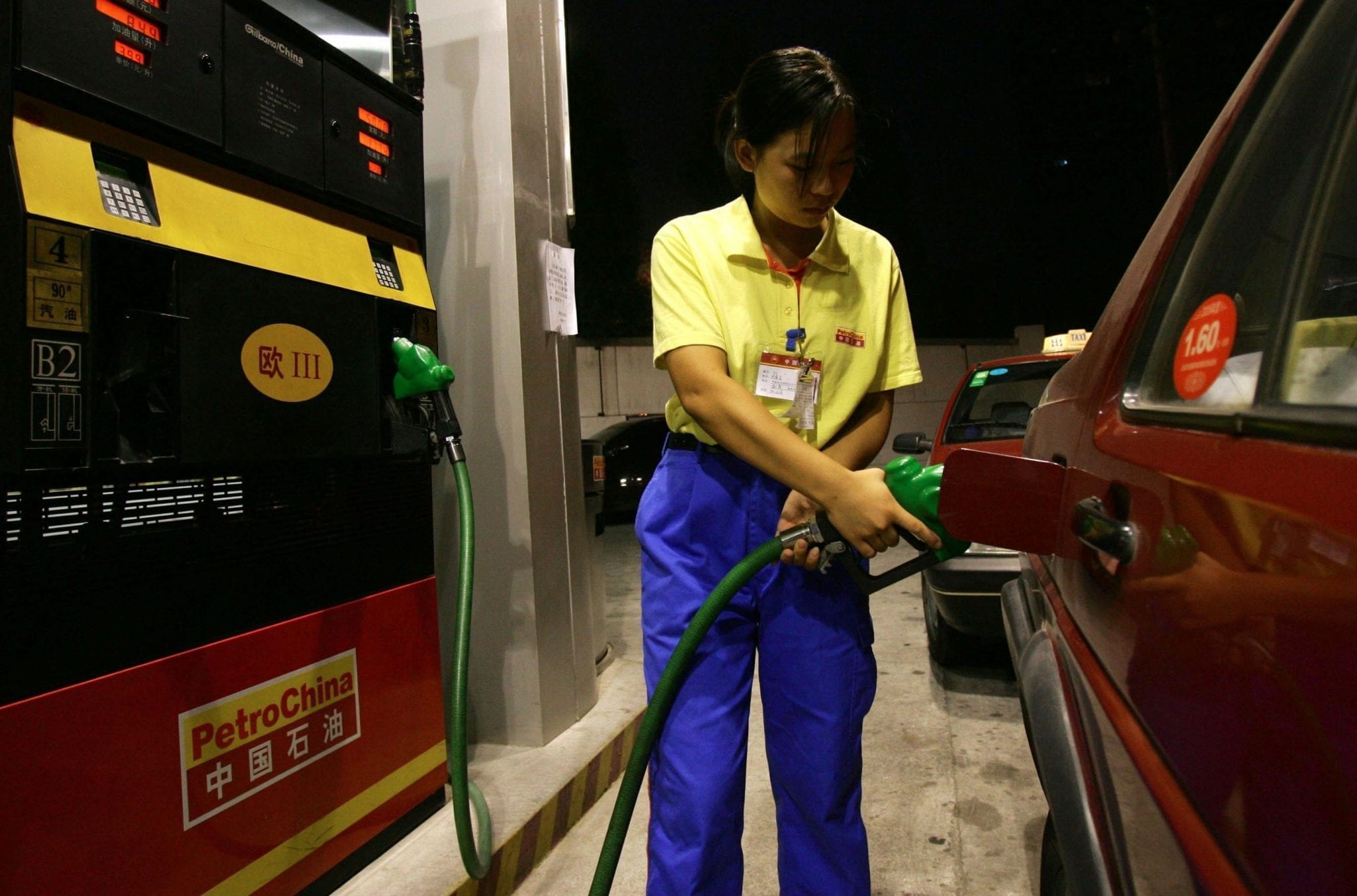
    The price of petrol has gone up because the price of refined petrol has increased, even though crude oil prices have dropped.

    In refuting allegations by the opposition, the Barisan Nasional Strategic Communications Team said today Malaysians used refined petrol, not crude oil.

    It noted that refined petrol prices might differ from crude oil prices due to global supply and demand factors.

    Also, Malaysia uses a managed float system which is dependent on global petrol prices.

    “Knowing that it is a managed float system, it is ridiculous that opposition leaders blame the government when petrol prices increase due to global market price increases but when petrol prices go down, they claim this is due to global prices and give no credit to the government,” said the statement.

    It said MPs Dr Wan Azizah Wan Ismail (PKR) and Tony Pua (DAP) had pointed out that the crude oil price for January had dropped and that the ringgit did not weaken compared with the previous month when criticising the increase in petrol prices.

    “We would like to inform both these Members of Parliament, the other opposition leaders and their propagandists that Malaysians do not pump crude oil into their cars.

    “The majority of Malaysians pump refined petrol in the form of RON95 or refined diesel.”

    The prices of RON95 and RON97 went up by 20 sen to RM2.30 (up 9.5%) and RM2.60 (8.3%) respectively, while diesel went up by 10 sen to RM2.15 (4.9%) today.

    The statement said as part of the move away from inefficient blanket subsidies, where the rich had benefited more than the poor, to more direct targeted assistance, Malaysia had adopted the managed float system from Dec 1, 2014, to determine the price of retail petrol and diesel.

    “Our managed float system uses the average price of the refined product — not crude oil — for the previous month to determine the retail pump price for the next month. Specifically, Malaysia uses the Singapore Means of Platts (MOPS) pricing for petrol and diesel.

    “While global oil prices had increased in recent months due to an agreement to cut production by oil-producing countries — which also benefits Malaysia — the price of refined oil products has increased further due to other reasons.”

    It said a check on the MOPS would show that the average price of motor gasoline 95 unleaded for January had stabilised in a range of US$69 to US$70 per barrel and was materially higher than the average price in December 2016 where the price had steadily increased from US$62 at the beginning of the month to US$68 by December’s end.

    The statement noted that oil refineries in Southeast Asia had enjoyed “higher pricing and margins due to an unusually higher than normal number of refineries around the world shutting down due to fires and major maintenance”.

    This, it said, had reduced supply and increased the refineries’ margins and pricing — hence the higher motor gasoline 95 prices.

    The statement advised Wan Azizah and Pua to “better understand the economics and market reality of petrol prices instead of making baseless statements that are untrue — or worse — designed to intentionally mislead and incite Malaysians.

    “It is like a monthly game that never ends and a game that opposition leaders do not seem to tire of playing.”

    The statement said that while Malaysians had reason to complain that the price of RON95 in February at RM2.30 per litre was higher than what they had enjoyed in the past, Malaysia’s petrol prices were still consistently the cheapest in Southeast Asia (except Brunei) and among the 15 cheapest among 180 countries in the world.

    “This is unusual as Malaysia is not a big producer and exporter of oil when compared with the other countries in the top 15 cheapest retail petrol list.

    “In Asean, our RM2.30 per litre price for February compares favourably to Indonesia (RM2.73), Thailand (RM4.10), the Philippines (RM3.72) and Singapore (RM6.56).

    “Malaysia’s RON95 price was also at RM2.30 per litre in October and November 2014. It is also interesting to note that in 2008, RON92 had reached RM2.62 per litre.”

    The statement noted that while a managed float would mean that Malaysians had to bear with higher petrol prices when global prices increased, this also meant “we had also benefited from a prolonged period of low refined petrol prices over the past two years when it had reached as low as RM1.60 per litre”.

    This, it added, was unlike before 2004 when Malaysians did not benefit from low global oil prices, which had ranged from US$10 to US$20 per barrel compared with US$55 to US$60 per barrel now as Malaysians were taxed 58.62 sen per litre for petrol and 19.64 sen per litre for diesel for decades. These taxes, it noted, were abolished only in the year 2004.

  • South Korea’s Race To 100% Internet Access

    South Korea’s Race To 100% Internet Access

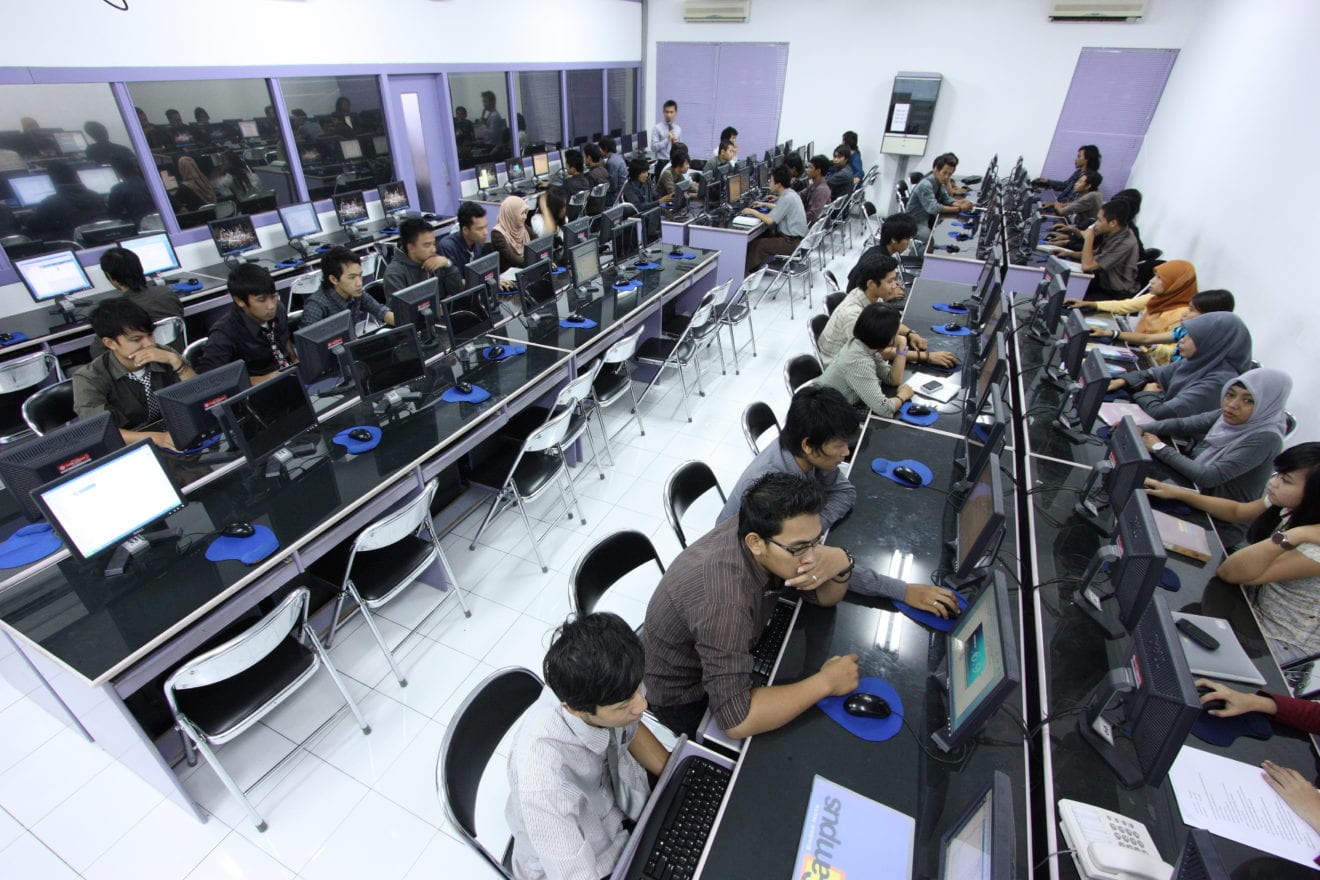
    The proliferation of smartphones in the hands of the entire population — but mostly the elderly and children — are the main cause of these rising internet implementation rates. It’s been reported that senior citizens are one of the larger user groups surfing the web. Dubbed “silver surfers,” those above the age of 60 are mainly using the internet as a means of communication in instant messaging apps.

    From map navigation to shopping, banking, cloud usage and more, nearly every connected area imaginable is rising in South Korean user activity. Data shows three-fourths of respondents were utilizing maps, and over half were playing online games three to four times per week. Of particular interest is the popularity of instant messaging, as survey results show 88.3 percent are using some form of a messenger app.

    Now, although internet connectivity is normally seen as a good thing, there’s always a not-so-shiny side. It was found that 99 percent of respondents go online at least once per week, where they spend an average of 14.3 hours. Teenagers have shown signs of internet addiction, and parents are now enrolling their children in rehab centers for treatment. Given our world’s continual increase in connected devices and services, receiving help for this particular type of addiction may be a very tough road ahead for us all.

    As more people get online to communicate with one another, we just may see internet addiction rehab centers popping up all over.

  • Wellcome supermarket criticised for failing to provide seats for on-duty cashiers

    Wellcome supermarket criticised for failing to provide seats for on-duty cashiers

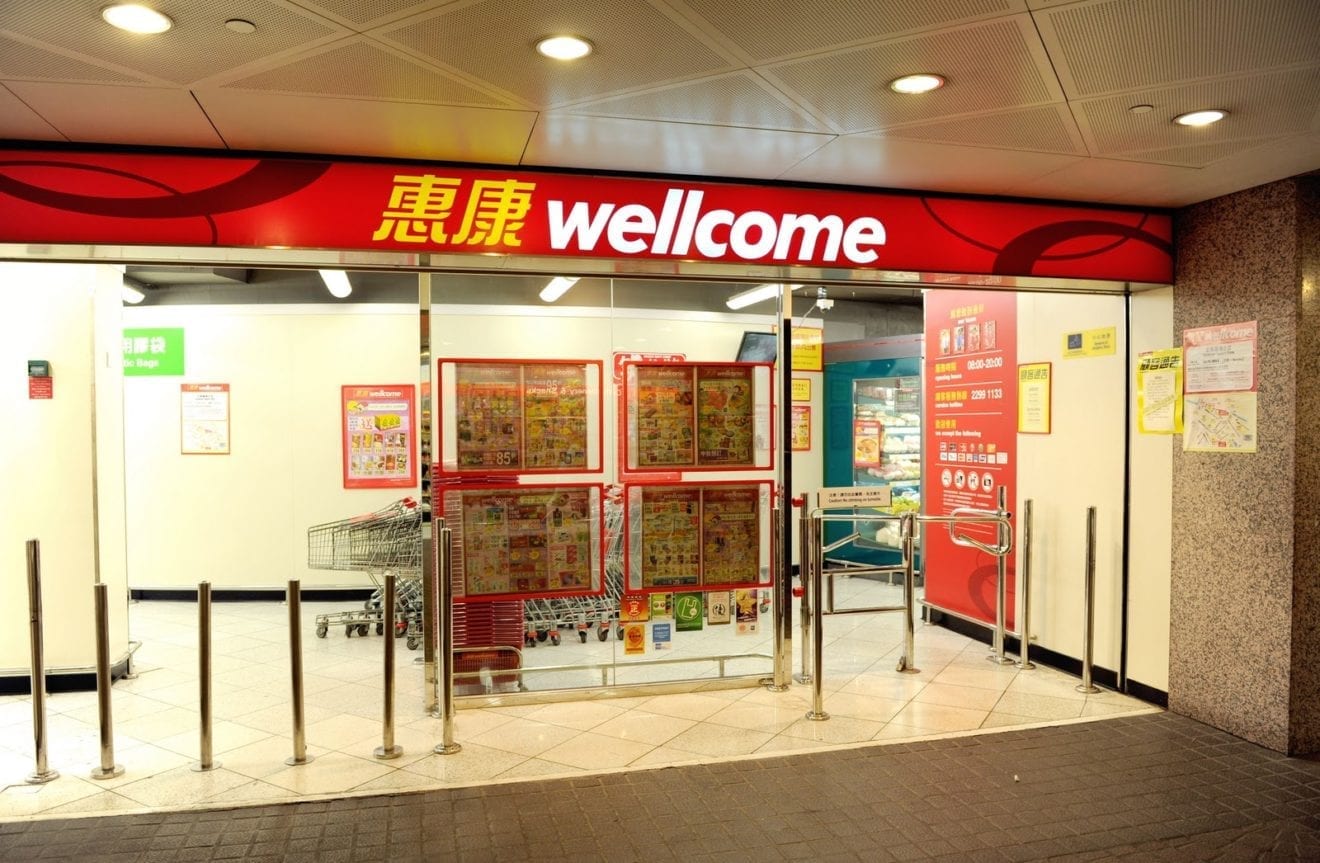
    The Wellcome supermarket chain has come under fire for failing to protect workers’ health as it emerged that they do not provide chairs for on-duty cashiers.

    The Retail, Commerce and Clothing Industries General Union said Thursday that none of the 154 Wellcome branches it surveyed provided seats to cashiers during working hours. It slammed the company for disregarding the wellbeing of its workers. Prolonged standing carries health risks such as muscle ache, back pain and swollen veins, it said.

    In response, Wellcome said that it is conducting a pilot test to introduce chairs for cashiers at four branches: Beacon Hill, Johnston Road in Wanchai, San Fung Avenue in Sheung Shui, and Avon Park in Fanling.

    It promised to gradually provide chairs to cashiers at all 281 Wellcome branches in the city.

    According to an occupational health guide issued by the Labour Department, retail employers are advised to ensure the safety and health of their workers by providing seats at their workplaces.

    Employers should ensure that employees are allowed to be seated “unless operational needs warrant otherwise,” the guide said.

    labour department guide retail

    The Labour Department’s guide on preventing health hazards for retail workers. Photo: Labour Department screenshot.

    But the union said the guide, which is not legally binding, is not enough to protect workers’ rights. It urged the Labour Department to include leg fatigue in its list of compensable occupational diseases and enforce the Occupational Safety and Health Ordinance against employers who violate the law.

    It also demanded that Dairy Farm International, which operates the Wellcome chain, review policies in all of its retail stores to ensure the safety of their workers.

    Activist Ching Chin-wai, who helped lead the campaign, said that Wellcome failed to respond to public enquiries about the progress and details of its pilot test. He slammed the supermarket chain for “disrespecting” its employees and avoiding public accountability. Ching previously led similar campaigns for other occupations such as security guards.

    The retail union is a member of the Hong Kong Confederation of Trade Unions.


  • Third Party Logistics Market in China Growth at a CAGR of 10.16% by 2021

    Third Party Logistics Market in China Growth at a CAGR of 10.16% by 2021

    The third-party logistics market in China to grow at a CAGR of 10.16% during the period 2017-2021.

    Third Party Logistics Market in China 2017-2021, has been prepared based on an in-depth market analysis with inputs from industry experts. The report covers the market landscape and its growth prospects over the coming years. The report also includes a discussion of the key vendors operating in this market.

    One trend in the market is increase in overseas shopping. The preference for overseas shopping is increasing in China owing to the increased internet penetration. Consumers have access to various communication devices and payment methods and have become familiar with the mechanics and benefits of shopping online. In addition, the Internet has raised awareness of new online shopping destinations across the globe. Online shopping user base and the total amount of online shopping are showing strong growth momentum in China.

    The cross-border e-commerce transactions are expected to have more than 20% share in the total import and export trading volume of China by the end of 2016. E-commerce companies like Alibaba Group, JD.com, and NetEase have also entered the cross-border e-commerce business. To adapt to the changing demands, the logistics service providers need to be efficient in the supply chain process.

    According to the report, one driver in the market is growing demand from e-commerce sector. China is a leader in the global online retail market. In 2015, the share of online sales in the total retail sales in China was 11% while the online sales constituted only 8% of the total retail sales in the US. Online retail sales are growing at a YoY rate of 53%. Thus, in order to stay competitive in the e-commerce industry, the vendors need to find an effective approach to delivering their goods on time and meet the customer expectation of on-time delivery of goods. Thus, many e-commerce industries are demanding highly efficient logistics services like 3PL. 3PL also allows vendors to focus on other activities to promote their business while the logistics are handled by 3PL service providers.

  • What US department stores can learn from China

    What US department stores can learn from China

    Lucy Kruse loved the smell of perfume enveloping her as she entered the department stores of her youth. She remembers trying on soft leather gloves, and following a splash of color to the store’s elaborate hats with their feathers and veils. At Sakowitz in Houston, she peered into the Sky Terrace restaurant to see fashion models  sashay past the tables.

    From the Christmas windows of Marshall Field’s in Chicago to the extravagance of Neiman Marcus in Dallas, department stores once defined the modern retail experience. Created to be emporiums of pleasure, however, today they are falling off the map.

    This month, Macy’s announced the closing 100 of stores nationwide and layoffs for about 10,000 workers. The closings include three stores in Houston: Greenspoint Mall, Pasadena Town Square and West Oaks Mall.

    During the same month, Sears announced that it will close 150 stores by April — 10 percent of its locations. The company shuttered 78 stores last year and more than 200 in 2015. JCPenney, meanwhile, has announced it will be closing branches too.

    The cause, most experts say, is online shopping. “The short answer is Amazon.com,” said Harold Livesay, a professor of business history at Texas A&M University and author of Andrew Carnegie and the Rise of Big Business. “The long answer is FedEx, UPS and the Internet. The infrastructure is reliable and so is the ease of delivery. You can shop from home, and don’t have to schlep to the store.”

    In Chongqing, 20 couples compete in a kissing contest at the New Century Department Store in Yongchuan Shopping Center. The winning couple beat others with 56 minute of kissing in seven rounds with different postures. Photo: Getty Images, Visual China Group / 2015 Visual China Group

    There’s no doubt that e-commerce plays a substantial role in the demise of department stores. But customers may not be abandoning department stores just because they want to shop in their pajamas from the couch. Yet there may be more to the story.  Paradoxically, while department stores are failing in the U.S., in China many are thriving.

    According to recent research, about a third of China’s urban dwellers shop at department stores more than once a week.

    “Department stores in China are suffering from online competition too, but they are doing better than in America because they have a different kind of concept of what a department store is,” said Haiyang Li, professor of strategic management at Rice Business in Houston. “They have added different entertainment elements, like ice skating rinks and cinemas and children’s playgrounds and restaurants. Shopping is more experiential in China. It is not just grab something and go.”

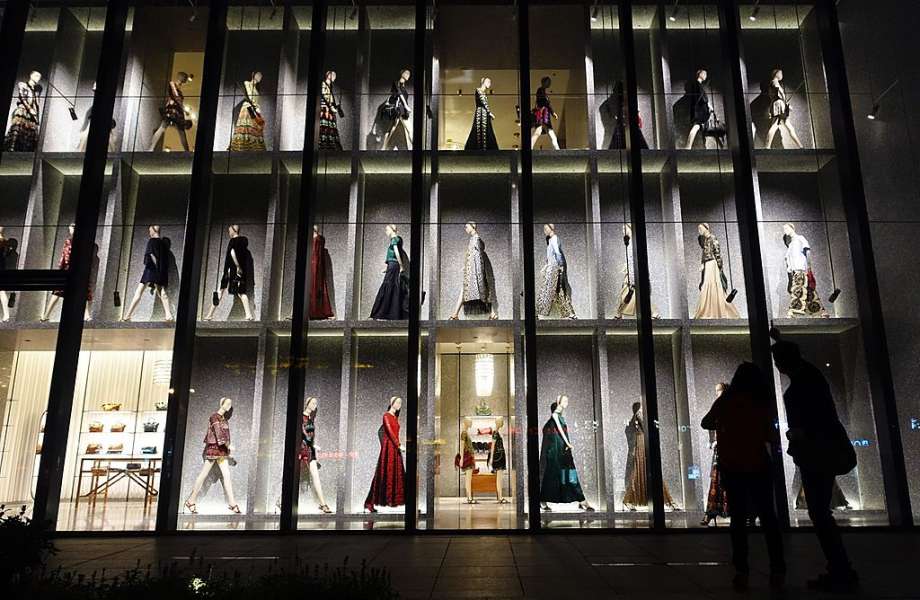
    A shop window in Shanghai. Photo: Getty Images, Johannes Eisele / AFP

    Department stores in the U.S. once offered this sense of excitement. Even small towns boasted department stores that were destinations. When Kruse, now 94, was growing up in Kingsville, she found it thrilling to take the area’s only escalator up to the tea room for lunch at Ragland’s.

    But Kruse doesn’t shop much at department stores anymore, even though she is healthy and fit. Instead, she shops online or orders out of catalogues.

    “Department stores used to be more elegant, and the staff was well-versed about the products,” she said. “The clerks really aren’t very helpful anymore. Shopping has become a chore and there is almost too much to choose from.”

    Shoppers test a bed at Ikealand in Shanghai. In China, IKEA is not only a place for shopping but also place to play. go on dates, and even sleep. Photo: Getty Images, Olivier Chouchana/Gamma-Rapho / 2011 Gamma-Rapho

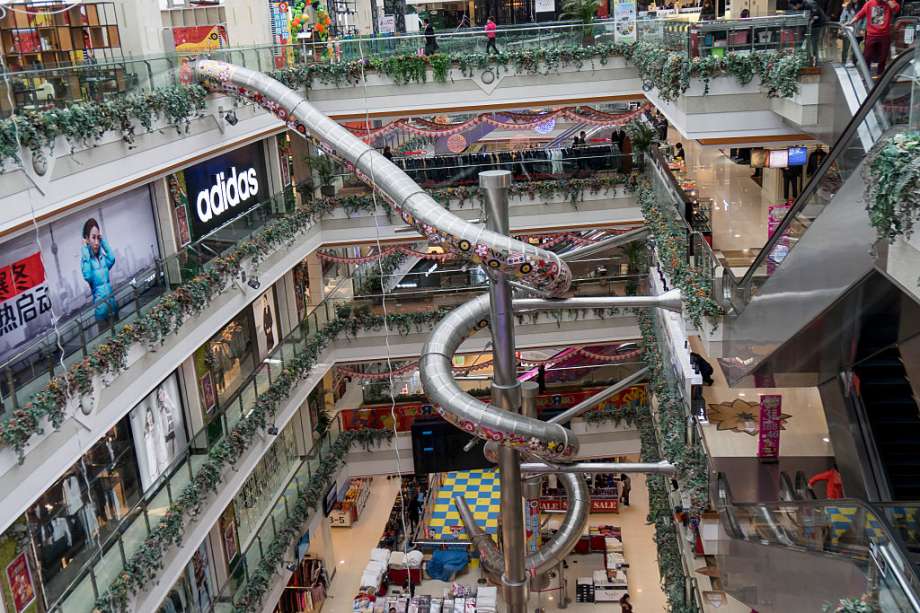
    In contrast, the Beijing-based Shimao department store recently reduced its retail floor space from 80 to 20 percent and added restaurants and entertainment areas. In Hong Kong’s Crawford Lane, concierges assist customers on every floor and 60 personal stylists stand ready to help shoppers craft their own individual chic looks.  And in Shanghai, when the upscale French department store Printemps opened a branch it included a five-story high-speed slide in the shape of a dragon so shoppers could swish from the top floor to the bottom.

    The Chinese stores hark back to a time when service, extravagance and play characterized European and American department stores. The department store became the epitome of elegance and luxury in the late 19th century, as entrepreneurs invented a new style of consumption in which shopping equaled pleasure.  French author Emile Zola set his novel Au Bonheur des Dames (The Ladies’ Delight) in the Paris department store Le Bon Marche. As the owner enticed his female customers into purchasing an exotic array of appealingly arranged goods, the dramatic customs of this new institution unfolded among the staff.
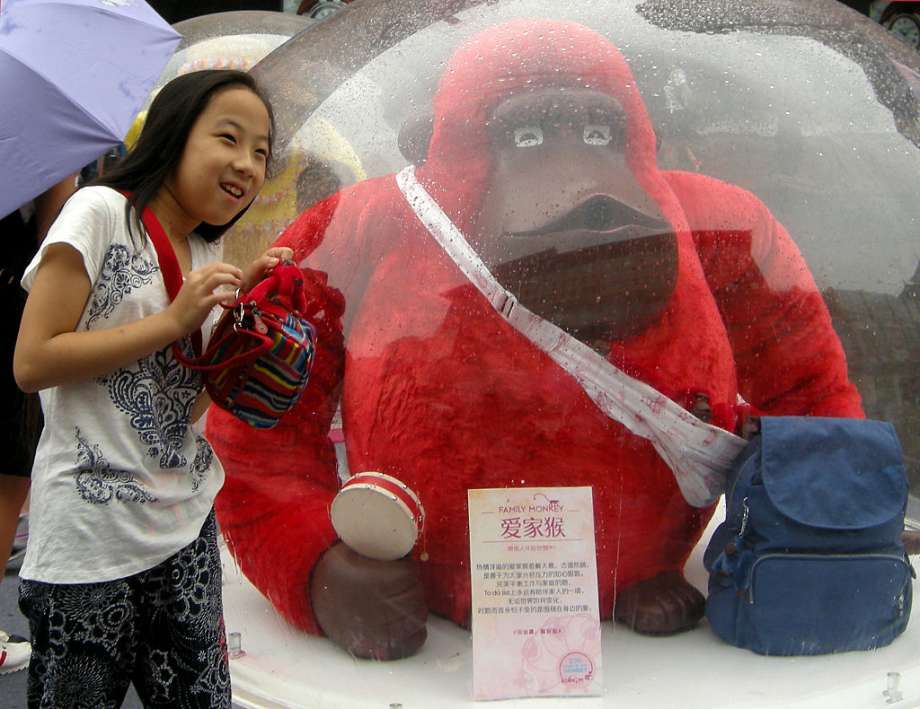
    In Beijing, a girl poses with a cartoon monkey in front of Wangfujing department store. The leisure bag brand Kipling's monkey exhibit was a hit with tourists. Photo: Getty Images, Visual China Group / 2016 VCG

    In the United States, from the 1890s into the 1960s, American department stores hired the best architects to design their flagships on prime downtown real estate. Each store’s restaurant boasted a signature dish, from deviled crab to chicken velvet soup. Filene’s offered a health menu, from which weary shoppers could refresh themselves with potassium broth, acidophilus milk or a cold glass of kraut juice.

    These stores played a central role in a city’s identity, too. Their tall clocks were meeting places where memories began. Any child born in Georgia received a birthday card from Rich’s.”  In Dallas, the Neiman-Marcus offered its famous his and hers gift at Christmas, with offerings ranging from airplanes to mummies to live camels. In Chicago, Marshall Field’s was such an institution that after the bombing of Pearl Harbor, one woman reportedly exclaimed, “Nothing is left anymore, except, thank God, Marshall Field’s.”
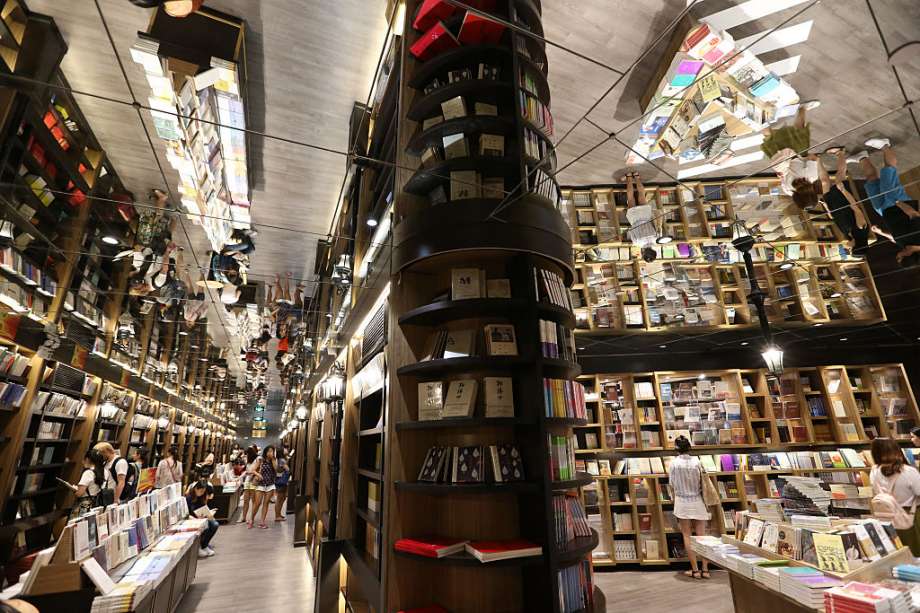
    The new Zhongshuge bookstore at Reel Department store in Shanghai, China. The bookstore chain goes to great lengths to make itself attractive: Interior wooden shelves are painted in a spectrum of bright colors, and ceiling lights are arranged to suggest a starry sky. Photo: Getty Images, Visual China Group / 2016 VCG

    Chinese department stores, where shopping tends to be a group activity, today play a similar communal role, Li said. The stores offer a stage for the new middle and upper class to parade their status and a familiar hub where family and friends to reconnect. They’re even associated with romance.  Chinese branches of IKEA have become such popular places for Chinese in their 70s and 80s to go on dates that IKEA has made new rules limiting the length of their stays.

    “My thought is there is differentiation in China,” Li said. “People go online for some kinds of things, but they also want to go shopping so they can enjoy the unique environment the stores create. In the United States, there is no need to go to Macy’s. You don’t add any value by going there.”
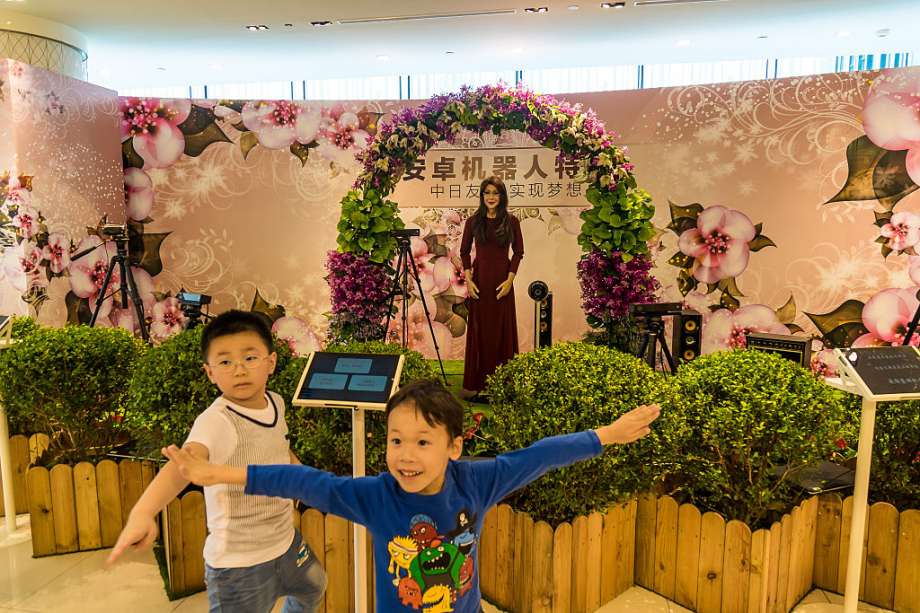
    At the Takashimaya Department Store in Shanghai, children react in front to an android that could speak, sing, shake hands and hug with people. Photo: Getty Images, Visual China Group / 2015 Visual China Group

    At least for now, Chinese retailers seem to think both shopping styles can coexist. The same week Macy’s and Sears announced their closures,  Chinese online retail giant Alibaba revealed that it would become the controlling shareholder of the Chinese department store and mall company, Intime, and would begin integrating its enormous e-commerce assets with  Intime’s brick and mortar stores.   Rather than foreseeing competition with physical stores, Alibaba plans to tap the latest technology to draw customers to stores, including artificial intelligence, virtual reality and Internet-of-Things.

    If department stores in the West are to survive, they may have to somehow recapture a time when they were destinations in themselves — a time when women like Lucy Kruse were excited to ride the escalator and savor lunch in luxurious surroundings. They may have to revive the art of customer service. And they will have to figure out how to blend the convenience of technology with the real-life scent of perfume and the warmth of crowds.

     

  • Record 32.59 million foreign tourists visit Thailand in 2016

    Record 32.59 million foreign tourists visit Thailand in 2016

    Thailand received a record 32.59 million foreign visitors last year, with revenue beating expectations and likely to exceed previous forecasts this year by growing 10 percent or more, officials said Monday.

    Thailand is proving popular even as terror scares, including a series of bombings in resorts towns killing four people, and the death of King Bhumibol Adulyadej had hotels and tour guides across the country on edge. Tourism fared better than expected after a bloodless coup deposed Thailand’s elected government in 2014 as well.

    The Tourism Authority of Thailand said Monday that the tourist industry earned 2.52 trillion baht ($71.4 billion) last year, up 11 percent from 2015.

    It said the country’s tourism industry is projected to bring in 733 billion baht ($20.8 billion) in the first quarter of this year, up 8 percent from the first quarter of 2016. Officials said their estimates, covering foreign and domestic tourists combined, indicate tourism revenue for all of 2017 may surpass earlier forecasts of 2.77 trillion baht ($78.5 billion).

    Thailand is the eleventh most-visited country in the world and boasted the sixth largest tourism industry by revenue in 2015, according to a U.N. report. Most travelers come from China, South Korea, and Japan, lured by Thailand’s year-round warm weather, as well as Western countries and Thailand’s neighbors in Southeast Asia.

    Foreign tourists are by far the most lucrative for the economy. Foreign arrivals are projected to total 9.3 million in the first quarter of this year, accounting for 490 billion baht ($13.9 billion) in revenue. In the same period, some 32.5 million Thai travelers accounted for 240 billion baht ($6.8 billion).

    “Thailand is still a popular destination,” Yuthasak Supasorn, governor of the Tourism Authority of Thailand, said at a news conference. “We have a lot of different things to offer our foreign visitors.”

    A steady economy and a growing number of travelers worldwide explain the boom, Yuthasak said.

    “Stability and improvements in the economy mean more foreign tourist arrivals,” he said. “So there’s clearly demand, and it’s up to us to accommodate everyone who wants to come.”

  • BMW and Daimler may combine forces to compete with Uber

    BMW and Daimler may combine forces to compete with Uber

    Automakers have been dabbling in the ride-sharing industry, but Uber remains the titan to beat. In true “Power Rangers” fashion, two automakers are reportedly forming a Megazord of ride-sharing in order to bring the fight to Uber’s doorstep.

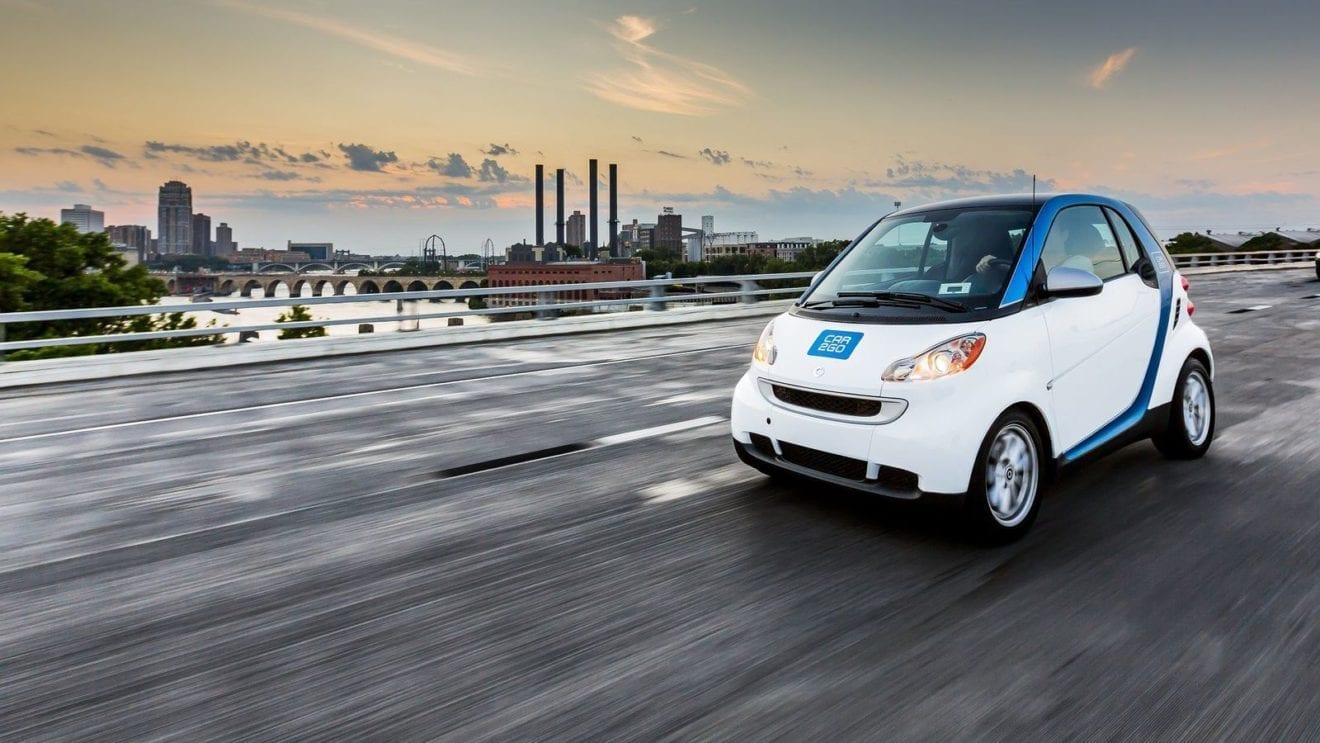
    BMW and Daimler may combine their ride-sharing efforts to better compete with Uber, citing sources speaking to Germany’s Manager Magazin. BMW operates DriveNow (called ReachNow in the US), and Daimler runs Car2Go, both of which have achieved some success in the US, but not enough to tackle Uber.

    In addition to that pairing, the companies are reportedly considering adding other mobility services into the fold. Back in July, Daimler merged its Mytaxi service with Hailo, another cab-hailing startup. Daimler also operates Moovel, which includes a booking and payment system for various mobility services. BMW also operates ParkNow and ChargeNow. It’s reasonable that many of these operations could be lumped together under the same name.

    Neither BMW nor Daimler immediately responded to a request for comment.

    Uber has been on a tear lately. It finally worked with cities to get ride-sharing pick-ups and drop-offs at certain airports. It’s also dabbling in autonomy, most recently rolling out some self-driving Volvos in San Francisco, but the legality of that arrangement is still up in the air. But it’s not all flowers and gentle breezes with the ride-sharing titan, which constantly finds itself the subject of some gnarly lawsuits.

  • Thai MVNOs must use fingerprint SIM registration

    Thai MVNOs must use fingerprint SIM registration

    Thailand’s MVNOs will need to implement a new online fingerprint ID registration system for both prepaid and postpaid mobile SIMs by March, after regulator the NBTC declined to exempt them from complying with the new registration regime.

    The online registration system is being introduced as a requirement for both mobile operators and MVNOs as part of an NBTC decision from late last year.

    But MVNOs had been calling on the regulator to exempt them from the order on the grounds that it will impose additional costs that may make it difficult for them to compete with the major operators.

    NBTC secretary general Takorn Tantasith as stating that the regulator has decided that consumer interests must be put first, and a fingerprint system will be required to ensure greater security in mobile banking as Thailand moves towards becoming a cashless society.

    He also said operators will be able to deduct the costs of implementing the system from their annual universal service obligation fee.

    The new online fingerprint ID system will complement the existing compulsory SIM registration system. While operators are required to implement access to the system, end-users will choose whether to submit their fingerprints.

  • South Korea Dec department store sales rebound from Nov, reverse two declining years

    South Korea Dec department store sales rebound from Nov, reverse two declining years

    Sales at South Korea’s department stores in December rebounded from November on year-end gift purchases, trade ministry data showed on Monday, while sales for the whole year ended on a positive note, reversing two years of decline.

    Combined sales last month at department stores run by Hyundai Department Store, Lotte Shopping and Shinsegae Co rose 3.3 percent on-year, the Ministry of Trade, Industry and Energy said, bouncing from a 2.8 percent decline in November.

    Nearly all product categories saw rises in sales, which were led by offshore brand items and food products.

    Retail data has shown consumption has not fallen markedly since an influence-peddling scandal involving President Park Geun-hye engulfed the country late last year, although consumer sentiment is at its worst in nearly eight years.

    The central bank governor, Lee Ju-yeol, said earlier this month private consumption is likely to head down in 2017 due to uncertainties at home and abroad, hampering overall growth.

    Discount store sales, meanwhile, slipped 1.9 percent in December over a year earlier, the same trade ministry data showed, although not as bad as November’s 6.1 percent decline.

    In 2016, department store sales rose 3.3 percent, breaking two years of falls and rebounding from a 1.2 percent fall in 2015. Demand for luxury goods and large household appliances such as televisions and refrigerators bolstered sales, the ministry said.

    Discount store sales fell 1.4 percent in 2016, declining for a fifth straight year, the data said, as more consumers bought food items online from a widening variety of vendors.

    In 2015, discount store sales dropped 2.1 percent.

  • Mobile contributed 6.2% to Bangladesh GDP in 2015

    Mobile contributed 6.2% to Bangladesh GDP in 2015

    Mobile technologies and services generated 6.2% of the GDP of Bangladesh in 2015, a contribution that amounted to around $13 billion of economic value, according to GSMA Intelligence.

    In the same year, mobile operators and the ecosystem provided employment to more than 760,000 people across Bangladesh, the report further stated. One-third of this was created directly in the ecosystem, while the rest is generated indirectly in other sectors as a result of the demand for production inputs generated by the mobile sector.

    “GSMA Intelligence findings clearly demonstrate the substantial contribution that mobile makes to the Bangladeshi economy,” GSMA head of spectrum Brett Tarnutzer said.

    “By systematically pursuing a policy framework that increases certainty, acknowledges market realities and removes regulatory barriers to investment and innovation, the Bangladeshi government and its citizens stand to achieve so much in the coming years.”

    In terms of public contribution, the mobile ecosystem generated about 10% of the government’s revenue in 2015, valued at $2.42 billion through general taxation, mobile-specific taxes, and spectrum licenses.

    Mobile’s overall impact includes the direct impact of the mobile ecosystem as well as the indirect impact and the increase in productivity brought about by the use of mobile technologies.

    GSMA added that Bangladesh performs close to the regional averages across metrics of mobile market development, despite a lower income than neighboring countries. Bangladesh is above the Asian average in terms of unique subscriber market penetration at 53%, while only slightly below with regard to mobile internet penetration at 33% and 3G at 20% of all mobile connections.

    Thus, it sees the potential for further growth if a supportive policy environment is put in place.

    GSMA Intelligence expects that the economic contribution of the mobile industry in Bangladesh will continue to increase. In value-added terms, it is estimated that the ecosystem will generate $17 billion by 2020. This forecast relies on a favorable macroeconomic environment and on a moderate expansion in demand and supply in the mobile market, as the number of mobile internet users and mobile coverage both increase.

    Employment opportunities are also set to expand from 780,000 jobs in 2016 to 850,000 jobs in 2020, an increase of around nine percent during that period.

    The amount of spectrum, and the terms on which it is made available, fundamentally drive the cost, range, and availability of mobile services. To ensure that this mobile vision becomes a reality, it is imperative that the spectrum is allocated in a way that encourages the rapid deployment of mobile broadband infrastructure, resulting in high quality, affordable mobile services for consumers across Bangladesh,” added Tarnutzer.

  • Daimler to supply self-driving cars for Uber

    Daimler to supply self-driving cars for Uber

    German auto giant Daimler on Tuesday (Jan 31) said it had struck a partnership with Uber to supply self-driving cars for the US ride-hailing company.

    The tie-up comes as both carmakers and ridesharing firms are jockeying to establish themselves as leading players in the burgeoning world of autonomous driving, seen as the future of the auto industry.

    “Under the terms of the cooperation, Daimler plans to introduce self-driving vehicles … on Uber’s global ride-sharing network in the coming years,” the companies said in a joint statement.

    The agreement will see Daimler build and operate self-driving Mercedes-Benz cars for use by Uber, but the statement revealed no financial details.

    “As the inventor of the automobile, Daimler aims to be a leader in autonomous driving – one of the most fascinating aspects of reinventing mobility,” Daimler CEO Dieter Zetsche said in the statement.

    San Francisco-based Uber has invested heavily in self-driving car technology in recent years and is currently piloting the use of autonomous vehicles in the US city of Pittsburgh.

    But it has no car-building experience, prompting it to seek partnerships.

    “Self-driving technology holds the promise of creating cities that are safer, cleaner and more accessible,” Uber CEO and co-founder Travis Kalanick said.

    “But we can’t get to that future alone. That’s why we’re opening up the Uber platform to auto manufacturers like Daimler.”

    Uber is already working with Sweden-based Volvo Cars to develop self-driving cars for sale by 2021.

    And in a world first, a self-driving truck built by Uber’s Otto unit successfully delivered a beer shipment in October.

    Cars with some autonomous functions, such as the ability to adjust the speed, are already on our roads.

    But nearly all the major global automakers – including BMW, Volkswagen and Ford – are racing to get fully self-driving cars on the market in the next few years, often in cooperation with tech firms.

    US automaker General Motors last year announced a US$500 million (€460 million) investment in Uber’s rival Lyft, while Google parent company Alphabet has partnered with Fiat Chrysler to develop self-driving cars.

    The BMW group, which has partnered with US computer chip giant Intel, said earlier this month it plans to start testing self-driving vehicles on roads in the US and Europe by the end of the year.

    Auto industry expert Ferdinand Dudenhoeffer of Germany’s CAR institute predicted that the tie-up between Uber and Daimler wouldn’t be the last in the sector.

    “It’s almost to be expected. And Uber is sure to work with more car manufacturers in the future,” he told AFP. “It only makes the world of tomorrow even more exciting.”

  • S.F. Express to build Asia’s largest air freight hub in China

    S.F. Express to build Asia’s largest air freight hub in China

    Chinese private logistics giant S.F. Express Co Ltd has pledged to build the busiest air cargo hub in Asia, reaching areas accounting for 80% of the country’s Gross Domestic Product within two hours, including major cities like Beijing and Shanghai.

    The firm said it would construct an airport in Ezhou city, Hubei province in central China, that could handle more than 2.6 million tonnes of freight and 1.5 million passengers by 2025. The airport would be the fourth busiest in the world and could cater for all jets except the Airbus’ superjumbo A380.

    The joint venture in charge of building the air hub has an investment capital of 100 million yuan (US$14.4 million). The venture will be responsible for the design, construction as well as the operation and management of the mega development project.

    A unit of S.F. Express – S.F. Airport Investment – and China VAST Industrial Urban Development Company have contributed 40 million yuan and 60 million yuan, respectively, to set up the joint venture.

    S.F. Airport Investment had invested 470 billion yuan in VAST late last year. S.F. Express, founded in 1993, is the largest private courier in China, and started building its own fleet in 2009. As of November 30, it owned a fleet of 36 aircraft, according to the company’s website.

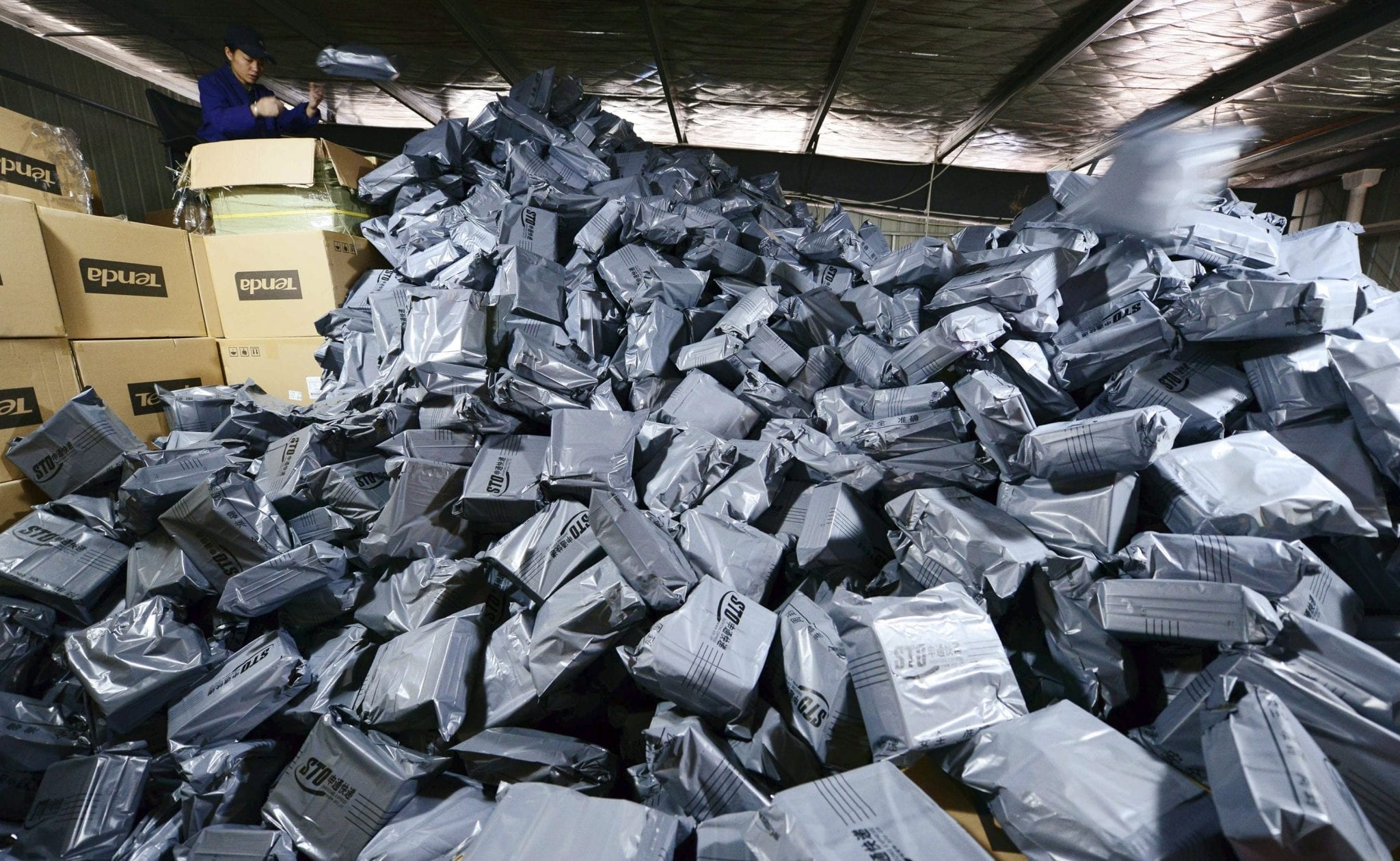
    China’s logistics industry has boomed following the development of e-commerce giants, such as Alibaba’s Taobao. In 2016, more than 250 million people used courier services each day, according to the state Xinhua news agency.

    At the annual Singles’ Day e-commerce sale last year on November 11, postal services handled 251 million parcels, a 52% increase compared to 2015, according to another Xinhua news report. S.F. Express even rented high-speed trains to ensure punctual delivery of goods.

    The new airport project is part of an aero city mega development, spanning an area of 36 square kilometers, for a population of only a million.

  • Telstra launches Gigabit LTE in key CBDs

    Telstra launches Gigabit LTE in key CBDs

    Australia’s Telstra has launched the world’s first commercial Gigabit LTE network in the central business districts of key state capital cities.

    The operator’s LTE-A network in these CBDs has been upgraded to support 4X4 multiple input multiple output (MIMO), three carrier aggregation and 256 quadrature amplitude modulation (QAM) on the downlink.

    The network also supports 64QAM and two carrier aggregation on the uplink for a peak upload speed of 150Mbps.

    Telstra, Ericsson, Qualcomm and Netgear jointly developed the first Gigabit-class commercially ready LTE network and Gigabit-class mobile device in October.

    Netgear’s Gigabit LTE device, the Nighthawk M1, will launch in Australia late this month, which will allow customers to use the Gigabit LTE service. The Nighthawk M1 utilizes 4×4 MIMO to support 4-way receive diversity.

    “Gigabit LTE is also an important step on our journey to 5G and demonstrates Telstra’s commitment to delivering Australians a world class network now and into the future,” Telstra group managing director for networks Mike Wright said.

    “We are well placed to evolve our 4G network and are putting the building blocks in place for Australia to be ready for 5G – this will deliver more bandwidth and lower latencies which are critical for emerging applications such as downloading 4K video, IoT, autonomous vehicles, augmented reality and shared virtual reality.”