Author: Mei Ling Tan

  • m1nd-set reveals Chinese arrivals shopping behaviour

    m1nd-set reveals Chinese arrivals shopping behaviour

    The eyes of the travel retail industry are turning eastwards in 2017, with the planned opening of new arrivals duty free shops across many Chinese airports and border stores. m1nd-set has announced the results of recently-conducted research on the shopping behaviour of Chinese travellers. The findings provide a deeper understanding of travelling consumer preferences and behaviour of perhaps the world’s most sought-after shopper.

    Peter Mohn, owner & CEO, m1nd-set: “We see that it will be increasingly vital for retailers to provide a different shopping experience to woo the Chinese travellers. This will mean brands and retailers will need to work closer than ever together on providing location-specific travel retail exclusives and an improved, more unique shopping experience in order to retain the Chinese travellers spend in the duty free shops outside China.”

    The research was carried out among over 2,000 Chinese travellers in December 2016, and reveals what they say will influence them to purchase at the arrivals shops in China and why they would prefer to shop abroad. Convenience, quality and value for money are among the main reasons for suggesting they would rather shop on arrival back in China; language and ease of communication was another. A number of Chinese travellers still feel the products will be more affordable outside China, which is one of the main reasons for choosing to shop at the departure store on the return leg. Reassurance that the products will be authentic is another key motivator to purchase outside China.

    When asking the Chinese travellers where they would prefer to shop when the various arrivals shops have opened later this year, almost half of them said they would still favour purchasing at the departure airport duty free shop on the return journey, while only a third would purchase on arrival in China. One in five travellers indicated they would favour the departure duty free shop on their outbound trip. The findings also show that business travellers express a stronger preference to purchase at departure shops on both their outbound and return trips, as well as on arrival at their destination, than other segments. Their inclination to purchase on arrival back in China, however, is lower than the average.
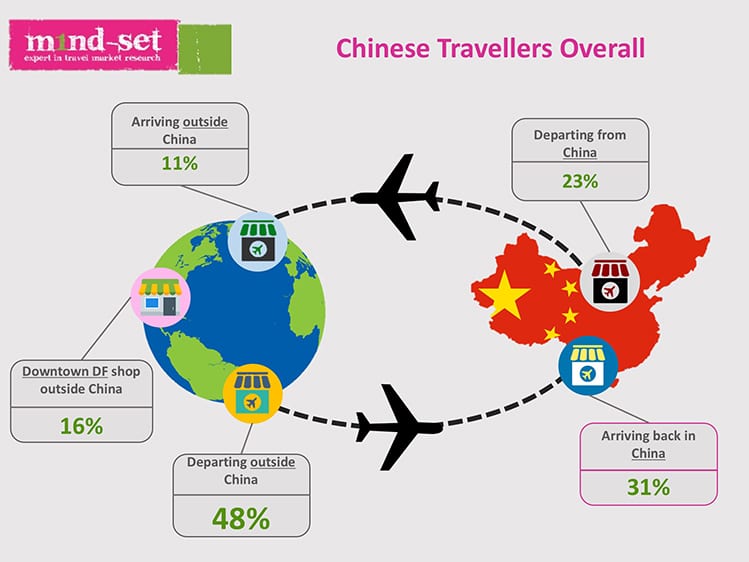
    m1nd-set has announced the results of recently-conducted research on the shopping behaviour of Chinese travellers. The research was carried out among over 2,000 Chinese travellers in December 2016, and reveals what they say will influence them to purchase at the arrivals shops in China and why they would prefer to shop abroad.

    m1nd-set has announced the results of recently-conducted research on the shopping behaviour of Chinese travellers. The research was carried out among over 2,000 Chinese travellers in December 2016, and reveals what they say will influence them to purchase at the arrivals shops in China and why they would prefer to shop abroad.

    “While brands stand to gain from the increased sales outlets and the ease for Chinese travellers to purchase in their home country on arrival, retailers outside China will be showing concern for the potential lost business if Chinese travellers shift their purchasing decisions to the arrivals shops back home,” comments Peter Mohn, owner & CEO, m1nd-set. “We see that it will be increasingly vital for retailers to provide a different shopping experience to woo the Chinese travellers. This will mean brands and retailers will need to work closer than ever together on providing location-specific travel retail exclusives and an improved, more unique shopping experience in order to retain the Chinese travellers spend in the duty free shops outside China.”

    Hear more from Peter Mohn, owner & CEO, m1nd-set, at the 26th Airport Commercial & Retail Conference & Exhibition, hosted by Aéroport Nice Côte d’Azur and taking place on 3-5 April 2017 at the Hyatt Regency Nice Palais de la Méditerranée. Mohn is participating in the First Working Session “Is there a big problem in the airport retail space? Are conversion rates and yields performing far below expectations?” His defining presentation will provide a detailed analysis of the real financial performance of airport retail at a representative range of major and regional airports. With the average per passenger spend being €10.38, Mohn will consider the question of what
  • Startup pushes mobile, social selling concept in Southeast Asia

    Startup pushes mobile, social selling concept in Southeast Asia

    Singapore-based mobile classifieds marketplace Carousell recently announced that it has acquired Duriana, a Malaysian-based mobile-first, fashion and lifestyle marketplace in Southeast Asia.

    It was the company’s third acquisition in less than six months, which is expected to boost its ambition to become a leading global mobile classifieds marketplace.

    Basically, Carousell offers a mobile marketplace for vendors to sell stuff – mostly used or ‘preloved’ items – using only an iPhone or an Android phone. It offers fast onboarding – its claim is 30 seconds to list an item for sale – and one can share the link on Facebook, Twitter, and Instagram.

    This aspect of social selling is bundled with a trusted user feedback that makes it easy for vendors to engage with customers. As simple as the concept sounds, it is fast catching on. ‘Snap to sell’ and ‘chat to buy’ resonates with a young and digital-savvy target market.

    Siu Rui Quek, CEO & Co-founder of Carousell, told in an email interview that the basis of the idea was that selling should be as simple as taking a photo, and buying as easy as chatting.

    “We felt that this was important, as we noticed more people like us using the smartphone as the main device to access the internet,” he said. “We aim to be more than just a transactional platform because we believe that buying and selling preloved goods is a more responsible way to consumption and that every interaction on our marketplace can help to inspire others to become more thoughtful consumers,” he said.

    The marketplace also has a feature called “Carousell Groups” which allows users of similar interests and hobbies to connect and make friends. “We have a vibrant community of Lego fans, Disney fans, sneakerheads, photography enthusiasts and many others,” he added.

    Launched in 2012 in Singapore, Carousell has since spread to 19 cities around the wold, including recent launches in Hong Kong, the Philippines, and Australia. It is backed by leading international Venture Capitalists Sequoia India, Rakuten Ventures, 500 Startups, Golden Gate Ventures, and QuestVC.

    Since its launch in Malaysia in 2014 and the Philippines in 2016, the classifieds marketplace has been growing rapidly in both countries. Carousell claims almost two million items sold in the fourth quarter of 2016, almost doubling within a quarter.

    Duriana, on the other hand, was founded in 2013 and has raised funding from investors like Alps Ventures and BEENOS.

    “It’s been an exciting three years with Duriana, and we’re proud to have brought the company to this stage,” said Saeed Gouda, Co-founder and CEO of Duriana. “We’re confident that Duriana users will enjoy buying, selling and connecting as part of the vibrant Carousell community.”

    The acquisition of Duriana is part of Carousell’s international expansion strategy, according to Quek.

    “Mobile classifieds operate best with a large community of buyers and sellers on one platform,” he said. “In Southeast Asia, where more people are experiencing the internet for the first time through their smartphones, we have the opportunity to reimagine the way they buy and sell online. There are over 600 million people, but almost 400 million are not connected to the internet yet. That’s a lot of potential. We’re reaching out to a generation of internet users who leapfrogged the desktop internet, creating an environment where we can take a mobile-first approach to solving unique local problems.”

    From startup to global player

    “If you’ve ever bought or sold something on a forum or classifieds website, you’ll remember how difficult and frustrating it could be to list an item or find something you wanted these sites on those forums. You often needed a pretty good idea of how the forums or online stores worked, as they were built for different purposes and not as a marketplace,” Rui explained.

    Thus, in March 2012, Quek and co-founders Marcus Tan and Lucas Ngoo participated in a Startup Startup Weekend Singapore and built the first Carousell prototype in 54 hours to solve this problem. They demonstrated the prototype and won the competition.

    “The basis of the idea was that selling should be as simple as taking a photo, and buying as easy as chatting. We felt that this was important, as we noticed more people like us using the smartphone as the main device to access the internet,” he said.

    The trio started working on Carousell full-time, and the first version was launched in the Singapore iTunes App Store in August 2012.

    Today, Carousell expects mobile commerce to be a significant contributor to the exponential growth in the region, as the web and mobile infrastructure improve, and as smartphones become more affordable and accessible.

    Retail e-commerce is poised to reach $4 trillion by 2020  globally, according to a report from eMarketer. APAC is expected to take a sizeable chunk of that pie in 2020 with US$2.7trillion, and Southeast Asia is poised to become one of the world’s fastest-growing regions for e-commerce revenues, exceeding $25 billion by 2020.

    “Across this region, governments are also making a greater push for companies and entrepreneurs to adopt new technology to keep up with consumer trends and demands. For example in Malaysia, the government has announced that 2017 will be the “Year of the Internet Economy”. The digital economy is already contributing 16% to the country’s GDP, and this figure will only go up,” he added.

    Global push

    By acquiring Duriana, which is a mobile-first, peer-to-peer, fashion and lifestyle marketplace in the region, the company expects to bring its users 600,000 users in Malaysia and the Philippines onto the Carousell platform.

    “We saw that Duriana users had similar demographics and interests in buying and selling fashion items, gadgets, and electronics as well as home furnishing,” Quek shared.

    With the speed with which it has expanded in the region in the last five years, the company also sees a global opportunity.

    “The problem we are solving is a global one, and we have a once in a lifetime opportunity to be the world’s largest classifieds marketplace because of the mobile phenomenon,” Quek said. “By 2020, more than six billion people around the world are expected to own mobile phones.”

  • HSBC closes 62 more UK branches, but all Hong Kong outlets to stay open

    HSBC closes 62 more UK branches, but all Hong Kong outlets to stay open

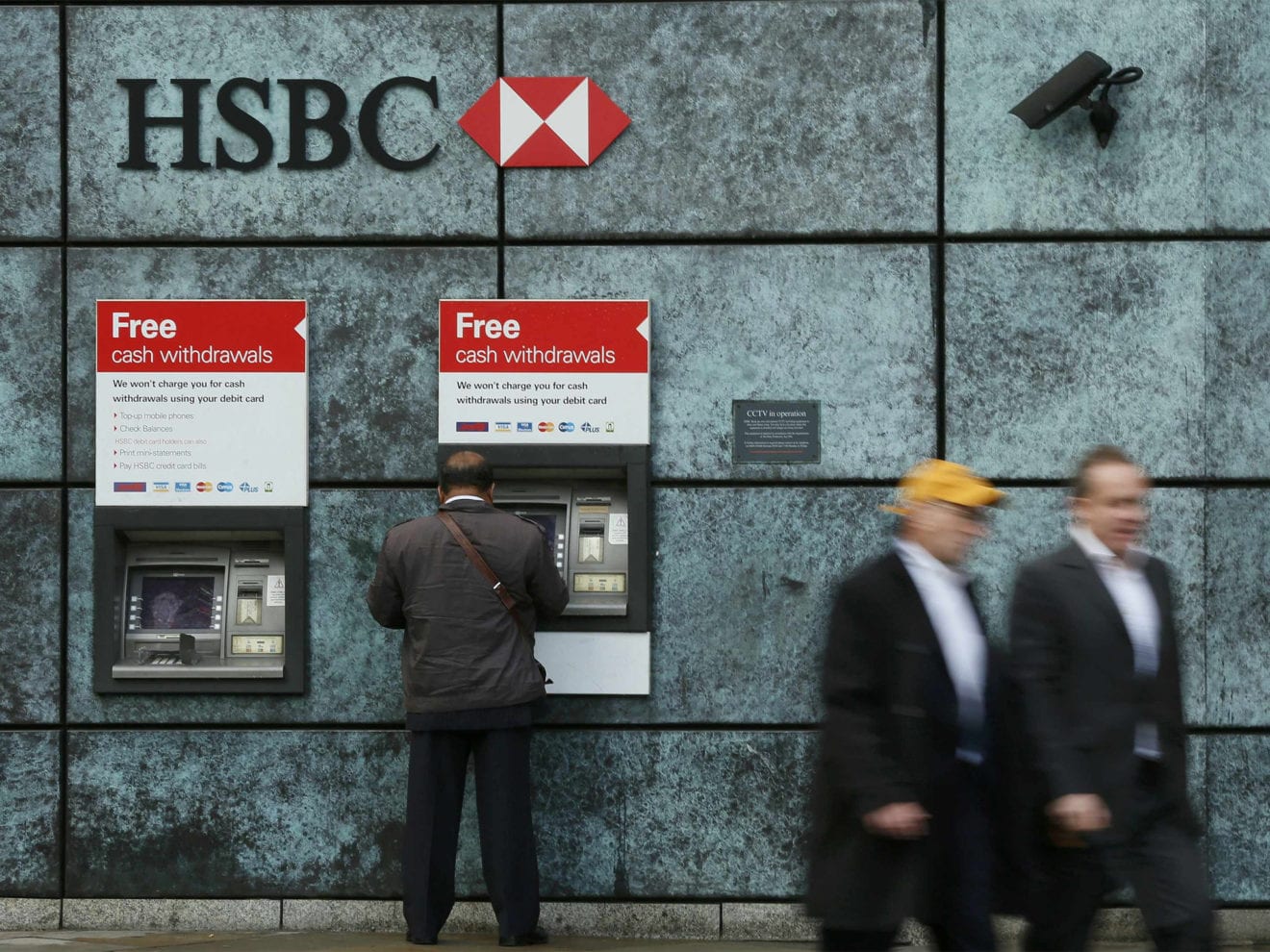
    HSBC is shutting 62 more British branches this year, meaning the bank will have closed 340 outlets across the country within the past two years.

    But in a divergence of strategies between two of its most significant retail banking markets, the bank said it had no such plans in Hong Kong.

    “While individual branches relocate from time-to-time, there is no programme of closures in Hong Kong,” insisted HSBC spokesperson Gareth Hewett.

    The bank has about 100 branches and more than 300 standalone express bank centres in Hong Kong. It blamed the UK closures on the changing habits of its customers, adding HSBC will still have 625 branches in the country by 2018.

    “More customers are using mobile and internet banking than ever before … and fewer people are using branches. More than 90 per cent of our interactions with customers are now through our digital channels – an increase from 80 per cent last year,” said Francesca McDonagh, HSBC’s head of retail banking and wealth management for UK and Europe.

    Last year HSBC halved its branch network in India, again citing the move to digital as an important factor in the decision.

    While the lender is pursuing a digital strategy in Hong Kong, which includes digital peer-to-peer payments systems and virtual assistants for its corporate clients, these new initiatives have not led to a need to reduce its branch network here.

    More customers are using mobile and internet banking than ever before … and fewer people are using branches. More than 90 per cent of our interactions with customers are now through our digital channels – an increase from 80 per cent last year

    Francesca McDonagh, HSBC’s head of retail banking and wealth management, UK and Europe

    Across the board, branch networks in Hong Kong have remained broadly solid, though last June Bank of East Asia said that its brokerage business, East Asia Securities, would close its 22 retail outlets.

    As has become standard practise, BEA too noted the vast the majority of its transactions were now being conducted via the internet or over the phone.

    The new closures mean HSBC has shut more branches than any other major UK high street lender, but the closures are by no means unique.

    Last week, the Yorkshire and Clydesdale bank group said that it would close 79 UK branches, and, in 2015 and 2016, more than 1,000 banks were closed across Britain according to consumer group Which?

    Dominic Hook, national officer at UK’s largest trade union Unite said in a statement: “Unite is again calling on the banking industry to rethink such branch culling exercises, which do nothing to reassure customers or staff that banking is accessible and open to all.

    “Without doubt customer service in financial services will suffer if our high streets are left with no local branches.”

  • AirAsia X launches in-flight tablet

    AirAsia X launches in-flight tablet

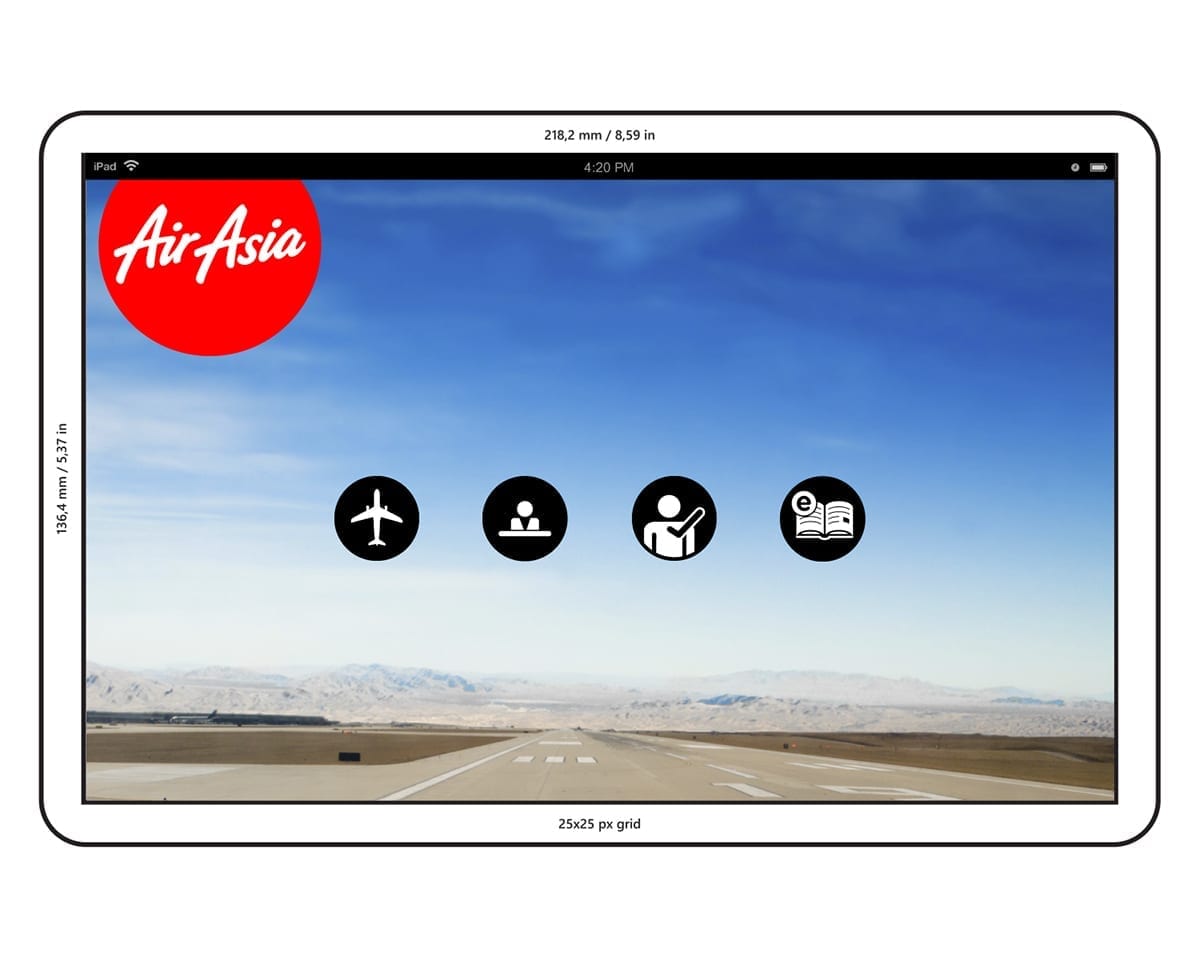
    Malaysian airline AirAsia X has launched the Xcite Inflight Entertainment tab to enhance the in-flight experience for traveling guests.

    The Xcite tab – which is a Huawei Mediapad 2 that comes with a 10.1-inch Full HD widescreen display, Harman Kardon audio technology for a richer acoustic experience and headset – offers hours of entertainment with options to shop with the AirAsia BIG Duty-Free catalog included in the tab.

    Travelers will get to view popular Hollywood blockbusters, as well as other international and local movies and TV shows; and listen to music, play games, browse magazines using the tab.

    It supports five languages (English, Bahasa Malaysia, Mandarin, Korean, Japanese) and is complimentary for all Premium Flatbed seats, while guests traveling on Economy seats will be able to pre-book the tab via airasia.com or request it onboard for a fee.

    “We are continuously looking for ways to give our guests an enhanced traveling experience with AirAsia X,” said Benyamin Ismail, Chief Executive Officer of AirAsia X Berhad.

    “The content will also be regularly updated to ensure our guests are getting the best quality entertainment when they travel with us.”

  • OnePlus taps CyberSource for payment management

    OnePlus taps CyberSource for payment management

    Smartphone startup OnePlus is tapping CyberSource’s suite of payment management solutions to securely accept digital payment methods through both web and mobile channels.

    OnePlus will deploy CyberSource’s full suite of payment, fraud management and tokenization services. Through the CyberSource global payment gateway, OnePlus will be able to process a wide range of international online and mobile payments from multiple credit card issuers, as well as certain alternative payment methods.

    Since its founding in 2013, OnePlus has grown rapidly in a short time and operates in more than 30 countries today. As the company continued to expand overseas, OnePlus wanted to offer preferred payment options and currencies in local markets to expand customer reach, without increasing payment security or fraud risk for customers in Europe and North America.

    “OnePlus needs to continue building trust among our customers for sustainable growth,” said Steven Gao, head of global eCommerce at OnePlus.

    “This relationship with CyberSource is important to that strategy as we are now able to accept a greater variety of payment modes and streamline payment acceptance, thus improving the entire customer experience.”

    Additionally, OnePlus will use CyberSource Decision Manager, which features a fraud detection Radar. With insights from over 68 billion transactions processed annually by Visa and CyberSource, supplemented by over 260 real-time global validation tests, OnePlus will be able to automatically screen more inbound orders faster, with increased accuracy and less manual interventions.

    This will significantly enable OnePlus to better mitigate its online fraud rate with the ability to accept more genuine orders with confidence, while minimizing the rejection of valid ones.

  • Prada opens its second store in Manila, Philippines

    Prada opens its second store in Manila, Philippines

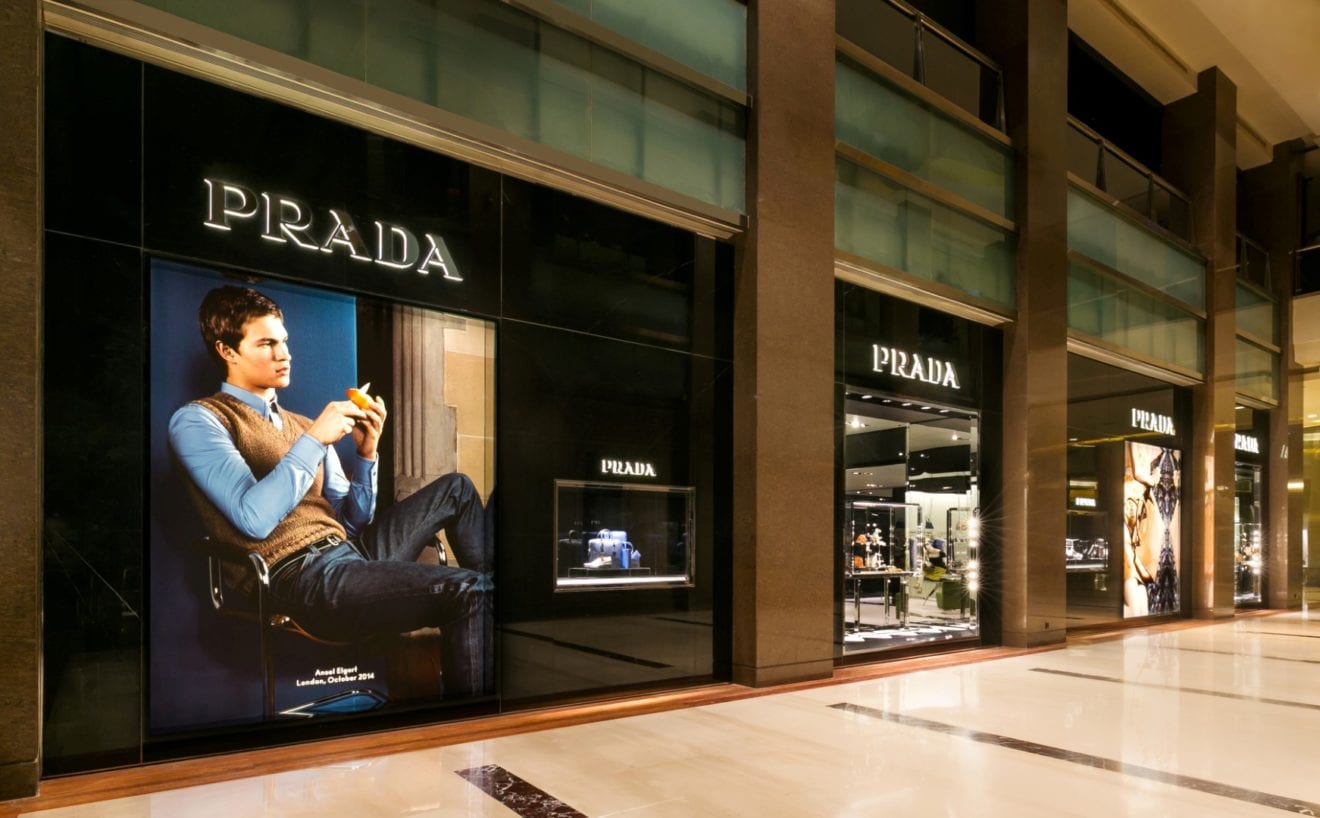
    The façade is defined by a backlit white canvas curtain enclosed in a crystal box, which frames the entrance, the wide light-boxes and the display windows.

    The space is characterized by the signature black-and-white marble chequered flooring, a legacy of Prada identity worldwide, reinterpreted in an original way through geometric- patterned carpeting. The walls, covered with fabric in the shades of green, are graced by the classic Prada display niches.

    Steel and glass countertops with brightly colored displays and Osvaldo Borsani’s green velvet chairs, reproduced exclusively for Prada, enrich the atmosphere.

  • China’s 361 Degrees Closes 464 Stores

    China’s 361 Degrees Closes 464 Stores

    Chinese sportswear brand 361 Degrees announced its operational overview for the fourth quarter of 2016, and stated that the company’s main brand achieved an individual store sales increase of 7.5%; and its individual store sales of children’s clothing increased by 7.7% during the reporting period.

    In the fourth quarter of 2016, 361 Degrees continued to cooperate with 31 exclusive distributors under a franchising business mode. During the reporting quarter, the group opened 184 new stores and closed 464 stores, and the total number of its stores reached 6,357. 361 Degrees said that it is an ideal scale to maintain its store number at about 6,500; meanwhile, they will continue to improve store efficiency.

    Based on statistics from 3,543 sample stores, which kept uninterrupted operation for over 24 months, the company’s individual store sales of its main brand saw an increase of 7.5%; its average retail discount was 25%; and its channel inventory turnover ratio was 4.1 times.

    In addition, during the fourth quarter of 2016, the company’s independently operated children’s clothing business added 103 new stores and closed 334 stores, reaching total sales sites of 2,000. The individual store sales of children’s clothing saw an increase of 7.7% and the channel inventory turnover ratio was 4.1 times.

  • Garuda Indonesia Focused on Contract Renegotiation, GCG

    Garuda Indonesia Focused on Contract Renegotiation, GCG

    The national flag carrier Garuda Indonesia Airlines has continued to focus on renegotiating contracts and implementing Good Corporate Governance (GCG), despite an alleged involvement of the airline’s ex-president Emirsyah Satar in aircraft engine purchase graft case. “It doesn’t interfere because Garuda had been focusing on GCG, contract renegotiation and cost efficiency since the last two years,” President and CEO of PT Garuda Indonesia Tbk Arif Wibowo said here on Tuesday.

    The airline had conducted major renegotiation of contracts, including the contract on airplane procurement from 2004 to 2014, a period during which Satar ran the enterprise, Wibowo added. “If the graft case is proven, it would be a good lesson for the management,” he noted.

    The contract renegotiation has resulted in a major cost efficiency for the company, he pointed out, adding that Garuda has redesigned its fleet plan every 10 years.

    “Now we are focused on how the three cost components, namely leasing cost, insurance cost and maintenance cost could be renegotiated,” Wibowo remarked. Minister of State-owned Enterprises expected Garuda Indonesia to have high integrity and good corporate governance in its operation.

    “These have become our foundations in running the enterprise,” he added. Earlier, the Corruption Eradication Commission (KPK) had named Satar as a suspect in the graft case.

    Satar had allegedly received 1.2 million euros and US $180,000, or a total of Rp20 billion, in bribes. He also received goods worth $2 million in Singapore and Indonesia from the UK-based manufacturing giant Rolls Royce for the purchase of 50 Airbus SAS aircraft engines during the period from 2005 to 2014 for PT Garuda Indonesia Tbk.

  • Retail giant Costco wins dismissal of prawn lawsuit over Thai forced labour

    Retail giant Costco wins dismissal of prawn lawsuit over Thai forced labour

    Judge Jeffrey White ruled that the plaintiffs failed to establish that the world’s second largest retail chain was bound to inform customers that modern-day slavery could be part of its supply chain.

    The lawsuit, filed in 2015, claimed U.S.-headquartered Costco was aware the prawns it bought from its Southeast Asian producers came from a supply chain dependent on ships involved in human trafficking and labour abuses.

    “The facts described in the (complaint) are tragic and ‘raise significant ethical concerns’,” White wrote on Tuesday in an order to dismiss the case, held in Oakland, California.

    But “plaintiffs fail to allege (Costco) had a duty to disclose the information about labour abuses in the supply chain … on its product packaging,” he added.

    The case against Costco, which is run as a members’ warehouse, was filed by club member Monica Sud, a California resident, as a proposed class-action lawsuit with Sud arguing it could affect millions of customers in her state.

    Exporter C.P. Food Products Inc and its parent company, Thailand’s Charoen Pokphand Foods, PCL. were also named as defendants in the case.

    Charoen Pokphand Foods said in a statement emailed through its public relations representatives that it condemned “all aspects of human trafficking and forced labour.”

    “CP Foods is not – and has never been – an owner or operator of fishing vessels that used forced labour as alleged in the lawsuit,” the company said.

    Attorneys representing the plaintiffs and other defendants did not immediately respond to requests for comment.

    Sud along with fellow Costco customers alleged that Costco purchased farmed prawns, also known in the industry as shrimp, from the Southeast Asian seafood producers despite knowing they used ships manned by slave labourers.

    The complaint followed investigations by Britain’s Guardian newspaper and the Associated Press into the shrimp supply chain. The probe found that large numbers of men were brought and held against their will on fishing boats off Thailand that were used to farm prawns sold in some of the world’s leading supermarkets.

    The Guardian found Charoen Pokphand Foods was buying fishmeal to feed to its farmed prawns from some suppliers that owned, operated or brought from fishing boats staffed by slaves.

    But in dismissing the lawsuit, the judge said the plaintiffs could not trace the prawns they bought to the suppliers in question.

    Judge White dismissed the lawsuit with prejudice, meaning that it cannot be brought again.

    The plaintiffs had filed their lawsuit under a California state law that prohibits unfair competition through misleading advertising.

    Last year, the U.S. State Department’s Trafficking in Persons report removed Thailand from the bottom rung despite what it described as “widespread forced labour” in the country’s vital seafood industry.

    Globally, nearly 21 million people are victims of forced labour, according to the International Labour Organization.

  • Indonesia eyeing slice of Singapore’s market

    Indonesia eyeing slice of Singapore’s market

    The government and state owned enterprises have sent a strong signal that they will strengthen the role of Tanjung Priok Port as an international trade hub, taking over a slice of the transshipment market currently dominated by Singapore.

    Transportation Ministry Director General for Sea Transportation Antonius Tonny Budiono said the government and state-owned port firms, Pelindo I, II, III and IV, were discussing the so-called Indonesia Integrated Chain Port plan, which would consolidate the export of cargoes from various domestic ports nationwide, including Bitung Port in North Sulawesi and Sorong Port in West Papua, with the country’s busiest port.

    Such consolidation is aimed at making the transshipment more efficient and “attractive” for both local and global shipping lines.

    “The transshipment sector has long been dominated by Singapore. But If the commodities originate in our country, why can’t we handle them?” he said over the phone on Tuesday.

    Tonny said the ministry would prepare technical and regulatory matters for the system, while also laying out the business plans with the State-Owned Enterprises (SOE) Ministry.

    The system, including IT management, is set to become effective in the second half of this year.

    “It’s already settled. The only remaining concern is the business plans of each Pelindo,” Tonny said, claiming that infrastructure-wise, Tanjung Priok was ready to play a bigger role as an international hub.

    The ministry sparked controversy when it recently revised the national ports plan (RIPN) through Transportation Ministerial Decision No. KP 901/2016 and introduced Tanjung Priok as the country’s new international port hub in Indonesia.

    Deep-sea Patimban Port in West Java, construction of which is being carried out jointly by an Indonesia-Japan consortium, is set to complement the future hub.

    Tanjung Priok Port has long been Indonesia’s largest container port, handling more than half the country’s externally traded goods.

    It received an annual 1.5 million total equivalent unit (TEU) capacity boost for imports and exports with the operation of the New Priok Container Terminal 1 ( NPCT1 ) last September, from the previous 7 million TEU capacity.

    Its container traffic rose to 5.4 million TEUs last year from 5.2 million TEUs in 2015.

    Of that figure, international traffic represented 3.8 million TEUs in 2016, up from 3.7 million TEUs in the previous year.

    The Transportation Ministry has anticipated a 11.1 percent surge in freight traffic in the country’s ports to 929.8 million tons annually by 2020, from 836.5 million tons annually in 2015. The figure is expected to jump to 1.1 billion tons each year by 2030.

    However, Port of Singapore is the one to beat as its container terminal handled 30.59 million TEUs of containers in the past year alone. The port, also dubbed the world’s busiest transshipment hub, currently accounts for almost one seventh of the world’s total container transshipment throughput.

    The maritime industry also currently contributes about 7 percent to Singapore’s GDP.

    Pelindo II president director Elvyn G. Masassya said the operational details would be discussed next week.

    “We aim for it to be efficient, productive and competitive,” he said.

    Pelindo II published data that forecast a Rp 1.5 million (US$112.59) cost-saving for transshipment from Boom Baru Port in Palembang, South Sumatra, via Tanjung Priok, and even Rp 1.6 million from Trisakti Port in Banjarmasin, South Kalimantan, compared to via Singapore.

    In response to the plan, publicly listed shipping line Samudera Indonesia managing director Bani M. Mulia expressed his pessimism, citing the geographical location of Jakarta.

    “As shippers we’d be happy if Jakarta could be a hub, but just be realistic. How much time deviation will containers have if they must pass through Jakarta first before going to Europe or China? It just doesn’t make sense,” he stressed.

    Bani said the government should focus on increasing Tanjung Priok capacity for export and import activities as well as enhancing its efficiency amid existing problems like labor costs.

  • Vietnam franchise rules under pressure to change

    Vietnam franchise rules under pressure to change

    At the end of the 1990s, franchise was still a strange concept to most people in Việt Nam. There were no opportunities to enjoy or even see the products and services of the world’s well-known brands in Việt Nam.

    KFC, McDonald, Starbucks and Lotteria were not familiar names for Vietnamese youth. However, this has changed.

    Now, you can start a beautiful morning with friends at a Starbucks or enjoy lunch with family at a KFC or Lotteria outlet. You could also purchase the latest Nike or Adidas products as well as those of other world famous brands at stores in Việt Nam.

    This change has been the result of a very effective business model – franchise.  After 40 years of  Đổi mới (Renewal) and more than 19 years since its entry into the World Trade Organization (WTO), Việt Nam has emerged as one of the most attractive countries for investors and franchisors, with a population of over 90 million, 65 per cent of whom are under 35 years old, and a very dynamic consumer class with a strong preference for foreign brands.

    Despite the global economic slowdown, thanks to its advantageous location, population size, and consumer habits, Việt Nam is now an ideal destination for many investors as well as franchisors.

    According to the Vietnamese Ministry of Industry and Trade (MoIT), around 160 franchises have entered Việt Nam so far. This is just the franchises that are required to register with MoIT before officially commencing their operation pursuant to the 2005 Commercial Law.

    The dominant business sectors for franchises are food services, retail, education, and entertainment. Food and beverage franchises account for 30 per cent of the registered franchises. The primary reason for the sustained increase in franchise activities in Việt Nam is the adoption of the 2005 Commercial Law and Decree 35/2006/NĐ-CP (later amended by Decree 120/2011/NĐ-CP), which, for the first time, provided a legal framework for franchising.

    Foreign franchisors are required to register their franchising activities before granting franchises in Việt Nam. If they carry out their franchise activities in the country without a certificate of franchise registration, they will face administrative sanctions, including fines ranging from VNĐ10 million to 20 million (approximately US$439-878).

    The franchisors must also consider the following conditions before registering their activities: The franchise network must have been in operation for at least one year.

    As regards Vietnamese sub-franchisors:

    – They must have operated the franchise business for at least one year before they initiate sub-franchising.

    – The goods or services that are the subject of a franchise agreement must not be on the Government’s list of banned goods and services.

    If they are on the list of goods and services subject to business restrictions, a special business license must be obtained before franchising is deployed.

    A franchise registration dossier must comprise:

    – An introduction of the franchise business containing the information as required by Circular 09/2006/TT-BTM guiding the commercial franchising registration;

    – A copy of the certificate of business registration or a legally equivalent document;

    – A copy of the certificate of protection of industrial property rights in Việt Nam or in foreign countries if the franchise includes a license of industrial property rights;

    – Approval from the primary franchisor to the sub-franchisee in case of a sub-franchisor;

    – Other documents required by the competent authority (including the franchise agreement or form of agreement).All documents issued in a foreign language must be notarized and legalized. The Vietnamese versions of such documents must also be notarized.

    According to Decree 35, the franchisor has an obligation to provide the franchisee with the information regarding the franchise system, namely a copy of a form of franchise agreement and an introduction of the franchise business, at least 15 days before signing the agreement. The franchisor must also notify the franchisee of all substantial changes in the franchise system.

    In case of a master franchise, in addition to providing the aforementioned information, the secondary franchisor must also provide a proposed franchisee with the following information in writing: (a) information about the franchisor which has granted the franchise; (b) contents of the master franchise contract; and (c) the manner in which secondary franchise contracts will be dealt with in the event of termination of the master franchise contract.

    If the parties select application of the law of Việt Nam, the franchise contract may contain the following main items:

    i. Contents of franchising;

    ii. Rights and obligations of the franchisor;

    iii. Rights and obligations of the franchisee;

    iv. Price and periodic franchising fee, and payment method;

    v. Term of the contract; and,

    vi. Extension and termination of the contract, and dispute resolution.

    The franchise contract must be made in Vietnamese. In the case of a franchise from Việt Nam to overseas, the parties must agree on the language of the franchise contract. Once registered, a franchisor must report any changes in the general information about the franchisor and/or changes affecting the relevant industrial property rights (i.e., changes in Part a) to the competent authority within 30 days after the date of change.

    In addition, by January 15 every year, a franchisor must send an annual report to the competent authority on the matters contained in the disclosure document.

    The above regulations regarding franchise activities in Việt Nam are provided in the 2005 Commercial Law. However, such regulations were issued in 2005 and there are some defects in this law: the definition of franchising is not clear for distinguishing between a trademark licence agreement or a technology transfer agreement; the conditions on franchisee and sub-franchisee do not offer sufficient protection for the rights of the sub-franchisees.

    In addition, the method and measures for controlling and checking the franchisee’s activities by the franchisor are not clear.

    Furthermore, numerous changes in the legal system, such as adoption of new investment and enterprise laws, the civil code, changes in the legislative mindset of lawmakers, have occurred in order to protect and ensure the freedom of enterprises as well as actual business conditions at a time Việt Nam is deepening its international integration.

    Therefore, the need to revise the said regulations should be taken into account. In fact, the drafting of a new commercial law is underway and, according to MoIT, the draft will be submitted to the Government in 2017 and publicised to collect feedback before it is submitted to the National Assembly for passage in 2018.

    The franchise business in Việt Nam has developed in a stable manner thus far. With a new commercial law to be adopted soon, this business will hopefully prosper further.
    Read more at https://vietnamnews.vn/economy/350237/vn-franchise-rules-under-pressure-to-change.html#wg0kz4K4qwK39BXg.99

  • Mercedes-Benz begins local assembly of CKD E-Class

    Mercedes-Benz begins local assembly of CKD E-Class

    Mercedes-Benz Distribution Indonesia (MDI), the local distribution arm of German car manufacturer Daimler AG, launched on Tuesday the fifth generation of its mid-size luxury sedan E-Class.

    The sedan is assembled from the completely knocked-down (CKD) version in its Wanaherang plant, following an earlier move to introduce the completely built-up (CBU) version last August.

    MDI president director Roelof Lamberts said the local production of the E-Class was expected to help boost sales of the model in Indonesia.

    “The E-Class contributed to a quarter of our sales last year. We hope with the new generation, this contribution can be increased to a third of total sales this year,” he said during the launch ceremony.

    MDI last year saw its sales rise slightly by 3 percent to 3,371 vehicles.

    The pricing of the new model will be listed at the upcoming auto show in April, Lamberts added.

    Currently, the CBU version of the E-Class is sold for Rp 1.3 billion (US$97,600) per vehicle.

    There are two types of CKD E-Class vehicles that will be introduced into the domestic market, namely the luxury E-250 Avantgarde and the sportier E-300.

  • Cambodia’s Cellcard to expand and modernize networks

    Cambodia’s Cellcard to expand and modernize networks

    Cambodia’s Cellcard has engaged Nokia to expand and modernize the operator’s 3G and LTE networks to help meet surging mobile broadband demand.

    As part of the agreement, Nokia will deploy around 1,500 new cell sites to expand the operator’s mobile broadband reach. Cellcard first launched LTE in Phnom Penh in 2015 and has since been expanding the network to other areas.

    Nokia will also provide its global services and Single RAN technology to allow Cellcard to host simultaneous 2G, 3G and 4G operations on a single platform, as well as IP edge routers to modernize the network in preparation for the arrival of 5G and the IoT.

    Cellcard will also use a Nokia microwave packet radio platform to help transform its legacy microwave transport network to keep up with Cambodia’s booming data consumption. The operator will meanwhile migrate its billing platform to Nokia’s convergent charging and billing solution SurePay.

    “We are proud to work with Nokia in our initiative to offer the best LTE coverage and services to our subscribers,” Cellcard CEO Ian Watson said.

    “The expansion of our state-of-the-art mobile broadband network will play a critical role in helping the government enable Cambodians to take advantage of mobile broadband. Nokia’s proven expertise will enable us to provide better coverage and quality of services to our subscribers.”

  • Trump’s 6-Star Bali Hotel Project Meets Resistance

    Trump’s 6-Star Bali Hotel Project Meets Resistance

    The lands and waters we now know as Indonesia used to be under the influence of Hindu empires (prior to the expansion of Islam in the Archipelago after the 1200s). However, on most Indonesian islands this Hindu chapter has been erased, either by time or conquest, from the Archipelago’s history. The only exception being the island of Bali. Until today most inhabitants on this resort island (known as ‘island of the Gods’) practice Balinese Hinduism (and its rituals and art also form reasons for foreign tourists to visit this island).

    In Balinese Hinduism the worshiping of gods plays a central role. Not only the traditional Hindu gods (Brahma, Vishnu and Shiva) are worshiped but also a range of other deities. These gods need to be respected fully (like in monotheistic religions). One of the local rules is that buildings are not allowed to be taller than the highest (nearby) coconut tree. If this rule is ignored, then it would anger the gods. This is one of the key issues surrounding the Trump Organization’s new 6-star hotel project in Bali’s Tabanan regency.

    The Trump Organization and its Indonesian partner business tycoon (MNC Group founder) Hary Tanoesoedibjo acquired an existing hotel (the 20-year-old Pan Pacific Nirwana Bali Resort) about two years ago. This resort is located nearby the Pura Tanah Lot temple. The structure of the existing property is, in line with local beliefs, not taller than the surrounding coconut trees. However, the Trump Organization “thinks big” and wants to expand the existing structure by building a tower with ocean view and an upgraded golf course.

    Besides the height, another issue is the additional land that is required. The MNC Group said the project requires about 34 hectares of additional land. Surrounding the existing property there is only farmland, implying local farmers need to sell it to the developers. However, based on information in local media few farmers want to sell their land. Moreover, according to local beliefs land nearby temples cannot be used for the purpose of leisure (such as a golf course). On the eastern side of the existing golf course there stands a small temple and therefore local people do not want to see an upgraded (expanded) golf course.

    Land acquisition is always a costly and time-consuming affair in Indonesia. The property, which will be named the Trump International Hotel and Tower Bali, would become the most luxurious resort on Bali. Construction is planned to start in early 2018.

    Meanwhile, I Gusti Ngurah Sudiana, Chief of Parisada Hindu Dharma Indonesia (Indonesia’s largest Hindu organization), is against any property development that would impact on the 16th century Hindu pilgrimage temple Pura Tanah Lot, a UNESCO-listed World Heritage Site.

    Hary Tanoesoedibjo’s MNC Group, however, said the height of the planned property on Bali is not yet determined.

  • Panasonic targets 50% sales jump for TVs in Indonesia

    Panasonic targets 50% sales jump for TVs in Indonesia

    Electronics giant Panasonic Corp. is seeking to sell up to 50 percent more TVs in Indonesia this year by offering online shopping and a greater variety of models. The company’s TV sales have been stagnant for three years.

    “We hope this year we can sell around 250,000 to 300,000 units,” said Erwin Lim, a Panasonic Gobel Indonesia product manager. The figures represent increases of 25 to 50 percent from 200,000 TVs sold last year.

    As part of its goal, Panasonic launched a website designed to help consumers select TV models according to their needs and budgets.

    “We want to strengthen our relationship with our customers and make it easy for consumers to choose products effectively and efficiently according to their needs and budgets,” Panasonic Gobel President Hiroyoshi Suga said.

    Lim said one challenge is that TVs are not a primary need for consumers in Indonesia.

    “Therefore, we will also innovate (our marketing) in order to increase sales,” Lim said. “We will begin to focus marketing on digital means, seeing a trend in today’s society.”

    Referring to Panasonic’s medium-term target over the next three years, Lim said the company wants to move to the No. 2 or No. 3 position by boosting its market share to 14 percent or 15 percent from the current 11 percent.

    Panasonic, currently No. 4 in the market, is seeking to catch up with third-ranked Sharp, a Japanese firm owned by Taiwan’s Hon Hai Precision Industry.