Author: Mei Ling Tan

  • Huawei goes solar in regional deal

    Huawei goes solar in regional deal

    Huawei’s solar business has received a boost with a deal to partner with Filipino renewables generator Citicore Power.

    The deal, announced in Shenzen on Wednesday and reported in the Filipino press, will see the two companies partner up to deliver solar projects not only in the Philippines, but in other Asian countries including Japan.

    “This comes on the heels of the company’s plans to develop and construct solar projects with a total capacity of 500 MW [megawatts] by 2020 in overseas markets particularly Japan, Malaysia, Indonesia, Thailand, Vietnam, and Myanmar,” Citicore Power said in a statement.

    Citicore said that under the partnership, Huawei “will provide project design support and inverter maintenance support,” including remote, hardware, and solution support.

    “It will also complete or obtain various product tests, network admission, and technology certification for the products. Huawei will also share its global recourses including solar investment partners, consultants, and EPC [engineering, procurement and construction] partners,” the company said.

    Citicore Power operates three large-scale solar farms in Bataan, Negros Occidental and Cebu provinces, with a combined capacity of more than 100 MW

    The company aims to install 1,000 MW of capacity using a range of renewable energy sources, including solar, biomass, wind and hydropower.

  • Rampant growth of DDoS attacks in 2016

    Rampant growth of DDoS attacks in 2016

    The threat of IoT botnets was realized in 2016 and popularized by Mirai, according to a study by Neustar.

    Mirai and similar types of malware compromise IoT device credentials to enrol them into botnets, which are activated by command and control servers.

    As these code assemblies are published, new developments continue to emerge, such as persistent device enrolment, which enables botnet operators to maintain control of a device even after it is rebooted.

    The study also reported that the frequency of DDoS attack mitigations by the company increased 40% in 2016 compared to the same period of time in 2015, according to a study released by the company.

    “With DDoS attacks predicted to become even more complex and ferocious in 2017, increasingly digital organizations within Asia-Pacific will be exposed to more frequent and severe cyber-attacks,” said Robin Schmitt, general manager for APAC at Neustar.

    Multi-vector attacks, which combine attack vectors to confuse defenders and supplement attack volume, also increased 322% and accounted for 52% of the attacks mitigated by Neustar. UDP, TCP and ICMP comprise the three most popular attack vectors, which were leveraged in more than 50% of attacks.

    The report also showed that DNS-based attacks increased 648% with many attackers leveraging DNSSEC amplification to generate massive volumetric pressure.

  • Opportunities in the Year Ahead for China

    Opportunities in the Year Ahead for China

    Though next year could be a tough one for investors in Chinese real estate, the country’s economy is also more entwined with that of the rest of the world than ever before, speakers said at the 2016 ULI China Mainland Winter Meeting in Shanghai held in December.

    The outlook for 2017 is similar to the view from 1997, the year before the Asian financial crisis, and 2007, the year prior to the global financial crisis, said ULI China Mainland chairman Henry Cheng, CEO of retail specialist Chongbang Group. Cheng, originally from Hong Kong, has been based in China Mainland for nearly 25 years, first with Shui On Group and since 2003 with Chongbang, of which he is a cofunder.

    The main difference between those times and now is that China has much stronger links to the global economy, potentially making it more vulnerable to outside shocks. He also added, “I have not seen the world so messy in all my 65 years.”

    Delphine Yip-Horsfield, chairman and chief design officer of Shanghai-based naked Group, which operates coworking and hospitality businesses, said she has noticed landlords struggling to deal with the effect of e-commerce and changing working patterns. “China’s millennials are entrepreneurial and social media–savvy,” she said. “They want to be excited by their workspace.”

    Sustainability is also higher on the agenda than ever before, with pressure coming from both government and customers, said Ryan Botjer senior managing director and China country head at Tishman Speyer. Sustainable is no longer a synonym for green, he noted. “People are much more concerned about wellness, so factors such as air quality, access to light, and community are much more important than they have been,” he said.

    Cheng noted that sustainability today really refers to adaptability and resilience to changes in the business environment.

    The retail sector is particularly vulnerable to rapid changes in shopping habits and the growth of e-commerce, panelists said. “If you look back ten years, the question was, who is doing retail in China? Five years ago you asked instead, who is not doing retail in China?” said Cheng. “In five years’ time we will be asking, who is still doing retail in China?”

    Chongbang is dealing with changes in the retail real estate business by increasing the experiential elements at its malls and providing off-line services to online businesses, such as fulfillment centers where customers can pick up, try out, and return their purchases.

    Placemaking is becoming increasingly important in China and is a focus for the government, Yip-Horsfield said, but added that she thinks developers are “a bit behind.”

    Prices for development sites in tier-one cities have risen sharply this year. In some cases, developable land costs more per square foot than neighboring developed real estate. “The flour costs more than the bread,” said Charles Chan, China chief executive at Ascendas-Singbridge, the Singaporean state-owned developer and fund manager. “What effect will that have on the market in the near future?” he asked.

    “There is a lot less land available in tier-one cities, and we are seeing some of the earliest commercial developments beginning to age,” said Botjer, “so there will be a lot more redevelopment in the future.”

    An important customer group for Chinese developers will be those in the 45-to-65 age group, Cheng said. “These were the first generation to benefit from the economic development of China since the 1980s—the first generation of affluent Chinese,” he said. He argued that developers will increasingly need to cater to this demographic over the next ten years.

  • Big appetite for online platform to trade funds

    Big appetite for online platform to trade funds

    Most local and mainland retail investors will trade funds on an online platform if the Hong Kong Exchanges and Clearing sets up and operates one, according to a Hong Kong Investment Funds Association survey.

    The poll showed that 81 percent of mainlanders would like to use such a scheme – where funds can be bought and sold like stocks – and 51 percent of Hongkongers would opt for it.

    HKIFA surveyed 950 mainland and local retail investors in October. Some 70 percent of respondents were Hongkongers.

    It said setting up such a trading platform will enable fund managers to offer diversified wealth-management services to investors, most of whom are currently investing only in stocks.

    At the moment, about 70 to 80 percent of investments in funds are done through banks, which determine the service fees and commissions for their services.

    HKIFA chief executive Sally Wong Chi-ming said introducing competition via a new channel for selling funds will help bring down service fees, benefiting retail investors.

    She noted that though foreign experience suggests that having a new sales channel will not necessarily wean fund investors from banks, it’s the new investors who may be lured to try out funds.

    Wong said HKIFA has been in talks in the past two years with HKEx and local brokerages for the establishment of a fund-trading platform. Many markets in the region – including Taiwan, Korea, Thailand and Australia – have set up such a platform.

    She said talks with HKEx are focused on operations, with the bourse operator looking at prospects of setting up one.

    HKEx needs to update its fund- trading system, which is more diversified than the one used in trading standardized equity products, said Wong.

    HKIFA will also work with the Securities and Futures Commission, the local securities regulator, to formulate related regulations to help set up the platform.

    The SFC has to clarify numerous issues, including the online fund transaction process, the boundary between recommendation and solicitation, and the circumstances that will trigger suitability testing, said Wong.

    The SFC will soon issue a circular relating to suitability.

  • Hopes in the shoulder of JuanFu Hong Kong

    Hopes in the shoulder of JuanFu Hong Kong

    China-based crawfish specialty brand JuanFu has opened its first restaurant in Hong Kong with hopes this will help it launch worldwide.

    Founded in Shanghai last year, the brand already has 11 outlets spanning different provinces and cities in China. Its Hong Kong outlet in Sheung Wan, Buddies Crawfish, imports crawfish directly from breeding bases in Hunan, Jiangsu and Greece.

    Buddies Crawfish Hong Kong chairman Wu Hsiao says he hopes to promote the brand globally and expand to overseas markets through the opening of the Hong Kong store.

    “Hong Kong is an international city with a good mix of people from different cultures and backgrounds all over the world. The large number of mainland and international visitors offers a good clientele, which also makes Hong Kong the best place for us to promote our brand globally.”

    He believes that a Hong Kong base will help the brand easily enter the Chinese markets in Singapore, Taiwan, Australia and the US.

    “At the moment there are limited supplies of crawfish in the Hong Kong market, so we hope to fill this gap by offering stable supplies of crawfish to the market in different ways. Further down the track we also plan to open another crawfish-themed restaurant and a crawfish fast-food store in Hong Kong, as well as distribute fresh and chilled crawfish to restaurants and supermarkets.”

    Hong Kong’s F&B scene is thriving, says Invest Hong Kong associate director-general of investment promotion Dr Jimmy Chiang. “I am happy JuanFu chose Hong Kong to set up its first restaurant outside the mainland. I believe the brand will make use of the city’s business advantages to expand overseas.”

    Headquartered in Beijing, JuanFu is owned by Shanghai Wan Li Network and Technology, which specialises in developing its own brands for agriculture products.

  • Hong Kong’s rich have ways to get around property tax

    Hong Kong’s rich have ways to get around property tax

    People visit a viewing deck overlooking Victoria Harbour in Hong Kong. The city’s property prices have continued to climb because of the influx of mainland Chinese developers.

    Hong Kong: Here’s how billionaire Edwin Leong, one of Hong Kong’s largest retail landlords got around Hong Kong’s new property curbs and saved almost $17 million (Dh62.43 million) on his tax bill.

    He managed to qualify as a first-time homebuyer, purchasing three luxury apartments for HK$1.2 billion ($155 million) on the same day last month. Previously Leong had held no real estate in his name — despite owning more than 300 other properties, including apartments, hotels and shopping malls, through his company, Tai Hung Fai Enterprises Co., and having an estimated net worth of $4 billion.

    Wealthy buyers are finding legal ways around restrictions designed to cool home prices in the world’s least affordable city, where leaders are grappling to shrink a yawning wealth gap. Property prices have risen to near-record highs and sales volumes have surged since Chief Executive Leung Chun-ying announced the latest round of curbs on November 4, underscoring the challenges in taming the market.

    “Since the policies were introduced, most of the tycoons have been finding ways around them,” said Alan Wong, director of the Hong Kong market at Landscope Christie’s International Real Estate. About 70 per cent of new apartments sold since last month’s measures have involved first-time buyers who qualified for the lower rate, compared with about 30 per cent before the new tax was imposed, said Henry Mok, regional director of markets at Jones Lang LaSalle Inc.

    The government has tried to increase supply by releasing more land for sale, although prices have continued to climb because of the influx of mainland Chinese developers seeking a toehold in Hong Kong.

    Prices in the secondary housing market have risen 0.8 per cent since early November to just 1.4 per cent below a September 2015 record, according to Centaline Property Agency Ltd. Adrian Cheng, executive vice-chairman of New World Development Co., said the company was seeing a higher percentage of first-time buyers than before the new tax.

    Another method employed by the wealthy involves buying a shell company that owns a property, which is treated as a share transfer and only incurs a stamp duty of 0.2 per cent. If the company is registered offshore, the tax is zero.

    That’s the tactic used in the November 28 sale of a free-standing home with a yard and swimming pool in the Kowloon district that was appraised at HK$410 million. If it had been sold as a home rather than through the British Virgin Islands-registered company that holds the property, the sale would have triggered 45 per cent in taxes, including a flip tax because it was purchased earlier this year — a total of more than HK$180 million. Instead, the tax bill will be $0.

    In 2011, more than half of Hong Kong’s homes worth more than HK$20 million were sold via companies. Although the practice was virtually halted after the government in 2013 began taxing companies buying properties at higher rates than individuals, thousands of properties are still held in this way and can offer significant tax savings when they are resold.

    Wong from Landscope said he gets many requests from foreigners, mostly rich mainland Chinese, looking to buy one of these companies, as they would otherwise face the new 15 per cent tax plus an extra 15 per cent tax on non-permanent residents. In fact, the property agency’s website promotes the practice.

    “Beat the stamp duty hike,” the site says. “Intimidated by the 15 per cent stamp duty? No worries! Our keypersons have sourced an array of properties that can be sold via share transfer (of course you will need a lawyer to handle the process).”

    Still, because due diligence on the companies can be costly and complicated, only about 5 per cent of luxury homes are bought in this way.

    Leong’s purchase at the Mount Nicholson development, a mountain-nestled enclave, set a record for the most ever paid per square foot for a property in Asia, according to JLL. By being able to pay a lower stamp duty for first-time buyers, Leong saved 10.75 per cent in taxes.

    Two of the new apartments are adjacent units on the 17th floor and could be combined into more than 8,700 square feet of living space for Leong as his principal residence, more than 10 times the average size of a Hong Kong apartment. The third apartment, measuring 4,566 square feet, is 10 floors below and belongs to Leong and his family.

    The new tax is the latest in a series of measures since 2011 aimed at making it easier for low-income families to get onto the property ladder while increasing the costs for investors and foreign buyers. These include a tax that penalises people who resell within three years and an extra stamp duty of 15 per cent for non-permanent residents.

    The government’s new 15 per cent stamp duty replaced taxes ranging from 3 per cent on homes worth less than HK$3 million to a maximum of 8.5 per cent on those worth more than HK$21.7 million. The rates are half that for first-time buyers, which includes people who may have owned homes in the past but currently do not.

    “This is clearly a loophole,” said Raymond Yeung, chief economist at Australia & New Zealand Banking Group Ltd. in Hong Kong. “The government hadn’t thought about this before they launched the measure.”

    Singapore, which has been successful in driving down home prices since rolling out curbs in 2009, also levies a 15 per cent tax on foreigners and companies, while first-time homebuyers face lower stamp duties. Singapore and Hong Kong both define a first-time buyer as someone who currently does not own property in their name, regardless of whether they previously owned a home.

    Unlike Hong Kong, however, Singapore doesn’t allow first-time, multiple property purchases at lower rates.

    “The government is trying to cool the market, but there is no evidence that previous measures have done that,” David Webb, a Hong Kong-based shareholder activist who bought his own home 10 years ago through a company registered in the Seychelles. “There has been a whole series of misguided measures that have not had their intended effect.”

    Still, nobody’s talking about making getting around tax measures more difficult, said Denis Ma, head of Hong Kong research at JLL. “These are loopholes that haven’t been closed, and I don’t think they can be,” he said. “Hong Kong prides itself on being a very free market, and government intervention is not very high.”

  • Alibaba Stimulates China’s Rural Online Retail

    Alibaba Stimulates China’s Rural Online Retail

    Using its strengths in marketplace, big data and logistics, Alibaba Group will help rural communities sell their products to cities dwellers so they can stock up on Spring Festival supplies and along the way help give rural economies a lift. At the same time, quality products from all over the world will be brought to Chinese consumers as they celebrate the most important festival on the Chinese calendar.

    Highlights of this year’s upcomg Chinese New Year Shopping Festival include:

    Promotion of two-way trade:

    To promote trade between rural and urban regions, Tmall.com’s fresh food channel will introduce fresh fruit and meat produce from abroad, such as cherries from Australia, orange roughies from New Zealand and kurobuta pork from the US, to Chinese consumers. At the same time, poultry and meat from villages, including chicken from Qingyuan County of Guangdong Province, beef from the Horqin Grassland of Inner Mongolia, organic mutton from licorice-fed lambs in Gansu Province, yak meat from Aba of Sichuan-Tibet Plateau, and mutton from Yanchi County of Ningxia Hui Autonomous Region, will be brought to dining tables in the cities.

    Live broadcasts about rural produce:

    To give urban consumers peace of mind about rural produce, 12 “village celebrities” will conduct live broadcasts via Tmall and Taobao mobile apps and show urban consumers how some of the farm produce are harvested and processed before they end up as delicacies on the dining table.

    Rural family reunion photo project:

    For rural children whose parents have gone to cities to find work, Chinese New Year is often the only time when they get to see their parents when they return home. For communities where a family photo is often considered a luxury, Rural Taobao’s local services booking platform are mobilising its merchants to give away family portrait packages to 10,000 families across 20 counties as a first step that Alibaba says is to assist bring families closer together.

    Rural employment platform:

    A one-stop village employment platform will be launched by Rural Taobao in January to provide job information for workers returning to their home villages for the Chinese new year holidays. Through the project, it is hoped that some of them will be able to find work closer to home. As a part of the project, Rural Taobao representatives will assist job seekers in completing their résumés and entering their information on the platform.

    New Year Eve’s banquet:

    For the elderly and children who are left behind in villages, Rural Taobao is organising a Chinese new year’s eve banquet for 6,000 tables of guests so they can share in a moment of warmth and togetherness.

    Sun Lijun, Vice President of Alibaba Group who oversees the company’s rural business division, said, “Alibaba strives to create closer connections between urban and rural areas in China, narrowing the wealth gap and improving the living standard of those who live in villages.”

    Alibaba Group launched Rural Taobao in 2014, mainly as a platform to promote rural online trade. Alibaba Group Holding Limited is a Chinese e-commerce company that provides consumer-to-consumer, business-to-consumer and business-to-business sales services via web portals. It also provides electronic payment services, a shopping search engine and data-centric cloud computing services. The group began in 1999 when Jack Ma founded the website Alibaba.com, a business-to-business portal to connect Chinese manufacturers with overseas buyers. 

  • 83% of smartphone users in India shop online

    83% of smartphone users in India shop online

    Indian retail customers are taking strongly to mobile commerce, with nearly 83 percent of people owning a smartphone saying that they shop online on their mobile phones, new study reveals.

    As expected, customers in the younger age group – 25-34 years old – are using their mobile phones more (90 percent) to shop online.

    However, the State of M-Commerce 2016 survey, conducted by US-based global digital strategy and services firm Regalix Inc., also showed that while a large number of customers have used their mobiles to shop online, there is still much room for growth in terms of the frequency of online shopping.

    Only 53 percent of those surveyed said that they had shopped online within the last month. Moreover, only 25 percent of respondents said that they shopped on their phones at least once a week. There seems to be a gender divide also in the frequency of online shopping, with more men (63 percent) doing so at least once a month than women (40 percent).

    Overall, gadgets and electronics was the most popular product category at 60 percent, followed distantly by clothing and accessories at 20 percent. While 66 percent of men shopped for gadgets online, only 31 percent of women did so. On the other hand, more women (65 percent) shopped online for clothing, accessories and home products as compared to men (27 percent).

    The survey likewise showed that the lion’s share of online retail is divided between three platforms – Flipkart (44 percent), Amazon (32 percent), and Snapdeal (19 percent). Interestingly, preference between these platforms is segmented by age, with Flipkart the preferred retailer for 49 percent of respondents in the 18-24 age group, but only 35 percent in the 25-34 age group. Snapdeal received more support in the 25-34 age group (25 percent) than in the 18-24 group (only 13 percent).

    Another interesting finding is that the number of retail customers shopping online has grown, many still prefer to browse online and purchase offline. Around 42 percent off respondents said that they preferred to do so while purchasing gadgets and electronics, while 33 percent said that they bought clothing and accessories this way.

    Clothing and accessories were the one category in which offline purchasers outnumbered online shoppers across all age and gender groups.

    The two biggest factors influencing a customer’s decision to shop online are Cash-on-delivery (34 percent) and free delivery (34 percent). CoD was the preferred payment mode for the majority of customers, with 62 percent preferring this over net banking, credit/debit cards or mobile wallets.

    Mobile apps are also the preferred way for customers to shop on their phones, with an overwhelming 94 percent declaring they preferred apps to mobile websites. The study also found that while 81 percent of respondents said they were unaffected by mobile ads, a higher percentage of women (25 percent) said that ads influenced their shopping behavior than men (17 percent).

  • Jollibee Winnipeg first Canadian foothold

    Jollibee Winnipeg first Canadian foothold

    Filipino restaurant company and global fast-food chain Jollibee Foods Corporation (JFC) has opened its first Canadian outlet, Jollibee Winnipeg.

    With 35 stores already in North America, it plans to continue its march into Canada with three more outlets next year, at Winnipeg Northgate, Scarborough, and Mississauga, to be followed by Edmonton in 2018.

    In the US, it is also set to open its first store in the state of Florida, in Jacksonville, and its first store for Manhattan, New York.

    “It has been a joy to see the happiness families experience when visiting our locations in the US, and we are thrilled to now bring that same feeling into Canada at such a festive time like this,” says JFC group president for north America and foreign franchise brands Jose Minana.

    “Winnipeg is a fitting choice for Jollibee’s first Canadian store because it has largest density of Filipinos to the total population of the city,” says JFC North America VP/GM Maribeth dela Cruz.

    JFC is currently the largest Asian restaurant company in market capitalisation, working in 12 markets including Brunei, China, Hong Kong, Singapore and Vietnam. It has 3236 stores globally, of which 1111 are Jollibee branded. Other brands in its portfolio are Burger King, Chowking, Greenwich, Hong Zhuang Yuanm Mang Inasal, Red Ribbon and Yonghe King.

    JFC also has investments with the brands 12 Hotpot, Highlands Coffee, Pho 24, Dunkin Donuts in China, and US-based burger chain Smashburger.

  • Performance remains key metric in Thailand

    Performance remains key metric in Thailand

    Performance ratings continue to determine pay decisions in the majority of Thai organisations, a recent Aon Hewitt survey found.

    With high turnover rates highest among junior managers and supervisors in the Land of Smiles, there is growing pressure on these staff to maintain their performance levels and prove their worth.

    According to the Total Compensation Measurement Study and Benefit Survey 2016 by Aon Hewitt, performance continues to determine pay-related decisions for 95.1% of organisations in Thailand.

    With junior management and supervisor levels recording voluntary turnover rates of 14%, and involuntary turnover rates of 5.3%, one tactic being utilised is to offer wage increases, with salary increments ranging from 4.7% to 6% in 2016 across industries polled.

    Across the Thai economy, the retail and life sciences sectors offered the most generous wage increase in 2016, with an average increment of 6%.

    On the other hand, the travel industry witnessed the lowest average salary increase, at 4.7%.

    The study also showed that other strategies were used to keep hold of employees.

    For example, 72.2% of employers offered individual performance awards, while 38.9% offered special recognition as short-term incentives to retain staff.

    “The high turnover rate among junior managers should warn employers in Thailand to think about their compensation policies in the context of their overall talent retention strategy,” said Panuwat Benrohman, Country Leader, Aon Hewitt, Thailand.

    Panuwat cautioned that companies have a responsibility to arm junior managers with the skillsets necessary to make the step up from individual contributor roles.

    “With ‘better external opportunities’ and ‘limited growth opportunity’ among the top three reasons for attrition, a focus on learning and development will help employers in Thailand build a strong leadership pipeline from within, while still compensating high performers attractively,” he added.

    A total of 174 organisations across all key industries in Thailand participated in the survey.

  • Dairy Queen signs to expand into South Korea

    Dairy Queen signs to expand into South Korea

    US fast-food restaurant company International Dairy Queen (IDQ) has signed a multi-unit development agreement to expand into Korea.

    It plans to open 50 DQ Grill & Chill locations within the next five years in conjunction with privately held M2G USA Investment, which has a diversified business portfolio including restaurants, hotels, public storage, household appliance manufacturing, shoes and global real estate. M2G USA Investment is also a partner for Taco Bell restaurants in Korea and the US.
    IDQ president/CEO John Gainor says the brand is continuing to expand into new markets internationally. In Korea its outlets will serve a full range of food options, including its signature GrillBurgers, chicken-strip baskets, chicken sandwiches, salads and sandwiches.

    Korea’s DQ Grill & Chill restaurants will also feature the full menu of DQ treats, including the signature Blizzard Treats, MooLatte frozen coffee-flavoured beverages, soft-serve cones, sundaes and cakes.
    The DQ system has more than 6700 locations, more than 2200 of them outside the US. IDQ is a subsidiary of Berkshire Hathaway, led by investor Warren Buffett.

  • Local banks post 4.5pc pre-tax profit rise

    Local banks post 4.5pc pre-tax profit rise

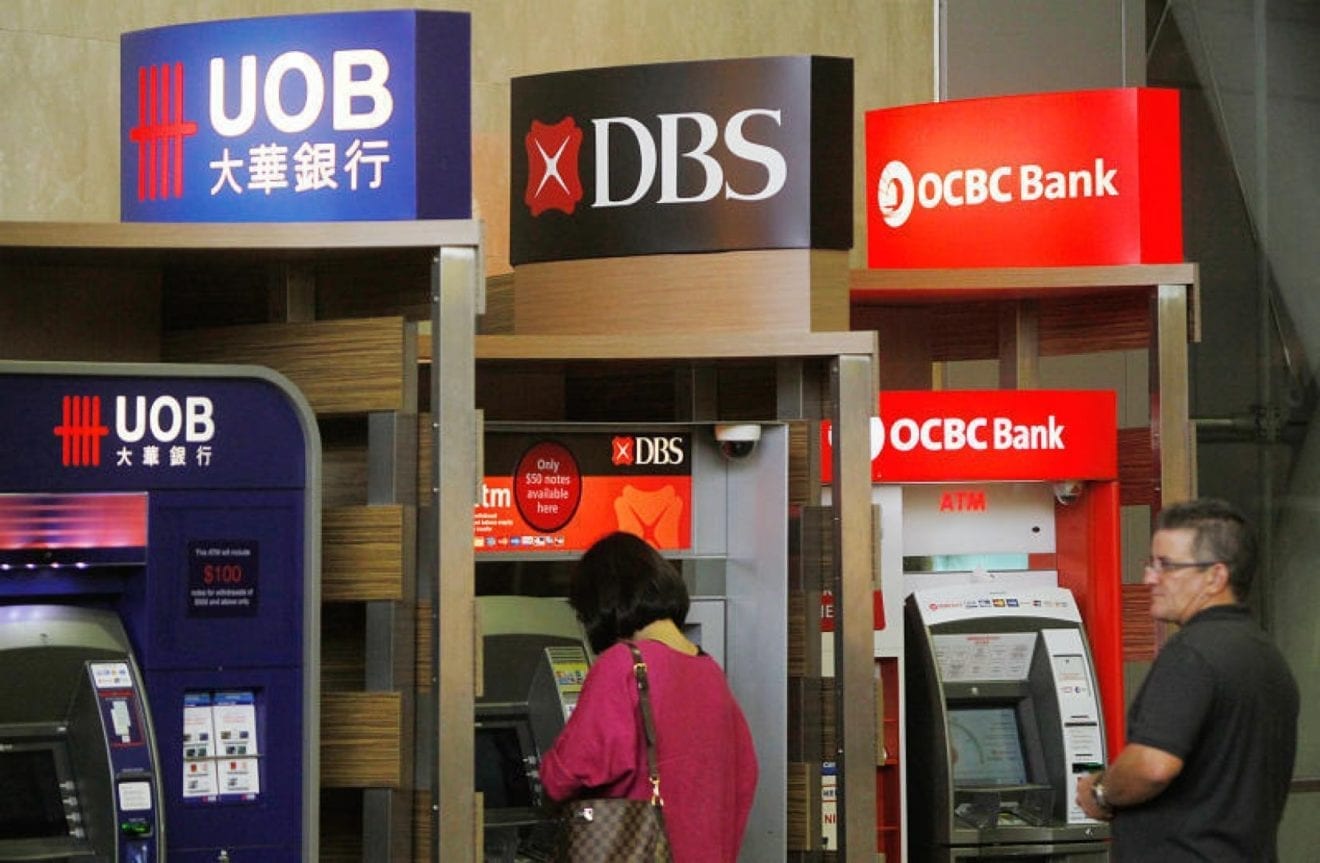
    Local retail banks achieved a moderate 4.5 percent growth in pre-tax profit between January and September this year, the Hong Kong Monetary Authority said yesterday.

    Annualized net interest margin — which measures the difference between the interest income generated by retail banks and the amount of interest paid out to their lenders – stood at 1.32 percent during the period.

    The figure stayed broadly the same as last year, Hong Kong’s de facto central bank said.

    It noted though that the January to September figure marked a slight improvement from the 1.3 percent recorded between January and June this year.

    HKMA attributed profit growth of local banks mainly to an expansion of their income from foreign exchange and derivatives operations and in dividends received from subsidiaries.

    A decline in their operating expenses also boosted the banking industry, but a fall in fee and commission income may offset profit growth.

    As retail banks’ total deposits increased at a faster pace than total loans, the loan-to-deposit ratio of retail banks declined to 55.2 percent at the end of the third quarter from 57 percent a quarter earlier.

    Retail banks’ total loans increased by 1 percent during the period, with loans for use in Hong Kong rising by 1.2 percent and loans for use outside Hong Kong expanding by 0.2 percent.

    The authority said lending by local banks in the mainland expanded by 3.2 percent to a combined HK$4.55 trillion at the end of the third quarter from the previous quarter.

    The HKMA said the loan-to-deposit ratio of local banks declined to 55.2 percent from 57 percent and the setback is attributed to a faster increase of deposits compared to loans that were disbursed to customers.

    Meanwhile, the Hong Kong interbank offered rate, or the rate of interest charged on short-term loans, continued to rise for the 11th day yesterday. One-month HIBOR yesterday edged up to 0.68 percent from 0.675 percent a day earlier, while three-month HIBOR increased from 1 percent to 1.00964 percent, according to data from the Hong Kong Association of Banks.

  • Hong Kong retail banks’ profits up 4.5 per cent in first three quarters

    Hong Kong retail banks’ profits up 4.5 per cent in first three quarters

    Hong Kong’s retail banks saw a modest rise in profits in the first three quarters of the year thanks to improved income from foreign exchange activities.

    According to figures from the Hong Kong Monetary Authority, retail banks in the city saw their pre-tax operating profits rise by 4.5 per cent in the first nine months of the year in comparison with the same period of 2015.

    The HKMA said that the growth could be attributed to increases in both income from foreign exchange and derivatives operations and from dividends received from subsidiaries, while a decline in operating expenses also contributed to the improvement.

    The three elements provided increases of 4.5, 3.5 and 4.1 percentage points respectively to the banks’ profitability.

    These increases were offset, however, by a fall in fee and commission income, which led to a 7.8 percentage point reduction.

    The profit improvement over the first three quarters marks a turnaround in performance after banks had a troubling early part of this year. In the first quarter of 2016, retail banks’ profits fell by 4.8 per cent, albeit in comparison to a strong first quarter in 2015, in which incomes were boosted by large trading volumes in stock markets in both Hong Kong and mainland China.

    Last summer’s turbulence in the Shanghai stock exchange, as well as the hit to sentiment from the sudden devaluation of the yuan in August meant that Hong Kong banks had a difficult third quarter in 2015, making it easier to post good figures for the third quarter of this year, as well as the first nine months of the year as a whole.

    Banks in Hong Kong received a further boost last week when interest rates rose in the city, following the Federal Reserve’s decision to raise the rate in the US.

    The rise in interest rates should enable the banks to gain greater returns on cash that has been deposited with them, which they are unable, or have chosen not, to lend out.

    In Hong Kong, this is a sizeable amount, and according to the HKMA’s figures, in the first three quarters, retail banks’ total deposits increased at a faster pace than total loans. This meant that their loan-to-deposit ratio declined to 55.2 per cent at the end of September from 57.0 per cent at the end of June.

  • ‘Cloud’ powers Thai e-commerce group’s regional expansion

    ‘Cloud’ powers Thai e-commerce group’s regional expansion

    In August this year, Thailand’s e-commerce enterprise Ascend Group has finished migrating its existing businesses as well as new ventures to the cloud, a move that is expected to support its ambitious regional expansion plans.

    The Ascend Group owns and operates business-to-consumer (B2C) marketplaces WeMall and iTrueMart, and the consumer-to-consumer (C2C) platform WeLoveShopping. It also operates TrueMoney, a wallet solution for digital payments, among other allied businesses.

    Chaiwat Ratanaprateepporn, Chief Technology Officer of Ascend Group, said the company is looking beyond the country’s borders to expand its e-commerce business in the ASEAN region.

    “Most of the operations we have now in ASEAN are under the TrueMoney business. We have Myanmar and Thailand as headquarters, then we have businesses in Cambodia, Vietnam, Indonesia and the Philippines,” he said. Services currently consist of mobile wallet, remittance, top up services, bill payments and the e-commerce payment gateway.

    With a combined population of approximately 600 million, the ASEAN region has a booming e-commerce landscape, which is only logical for the Thai group to target.

    The Ascend Group’s cloud journey started in November 2014 when the company adopted a “cloud first” policy. This has allowed the company to reduce infrastructure build time, improve flexibility and accelerate speed-to-market.

    Chaiwat said the cloud journey is among the preparations it is doing for the expansion move.

    “Why we are moving to the cloud? Our TrueMoney business in Thailand has been around for more than 10 years, while our e-commerce business has been around for just over three years. But we want our start-up companies (though they are no longer startups) to have the same capabilities. They were born in the cloud and are using cloud technologies to move fast and offer customers better services,” he explained.

    In the first quarter of 2015, iTrueMart, an e-commerce retail destination for home appliances and electronic products, hit critical mass.

    “We looked for alternative solutions on how we can manage the traffic and cost and using the technology so we decided to move to Amazon Web Services (AWS). Later that year, we also moved some of the services of TrueMoney to AWS as well,” Chaiwat recounted.

    In the second quarter this year, Ascend also moved the services of WeLoveShopping.com completely to AWS. Thus, its three flagship e-commerce websites are already 100 percent in the cloud. For TrueMoney, however, the company is opting for a hybrid cloud strategy because of the different banking regulations in each of the six ASEAN countries, which make it difficult to operate purely on the cloud.

    Chaiwat, who oversees the digital transformation of the company’s IT infrastructure, shared that when the company launched the WeMall in Thailand, they did so without adding new technical staff to implement, operate and support in addition to iTrueMart.

    “And that is because we leveraged the innovative tools and technology of AWS,” he said. “Ultimately all of this innovation will allow us to better serve our customers and create efficiency that will result in better value for people who shop on Ascend Group’s e-commerce properties.

    The company’s goal is to become the leading e-commerce business in the ASEAN region and leverage the digital technology to expand business opportunities for merchants in Thailand and the region.

    Next steps in the cloud

    What is next for Ascend Group’s cloud journey?

    Chaiwat disclosed that the company’s cloud strategy comprised of three steps. The first step or Version 1.0 is moving the services to the cloud, which they accomplished in the past two years. The second step or Version 2.0, which is being implemented now is using the technology the technology to do more optimizations for cost savings, more automation so they can gain better productivity in the workforce.

    The next step or Version 3.0, which will be implemented starting next year, is really moving to more high-end technology as the data and analytics, machine learning and other capabilities that will help us serve the customers better.

    “What we are aiming ahead are data and analytics. Right now, we are data-driven, meaning we use analytics to do reports on how the transactions are growing. But this is business intelligence, not yet analytics. We are aiming to move there using the capabilities of AWS,” he said.

    For companies starting on their own cloud journey, Chaiwat said it is important to identify or define the benefits that they would want to derive from the cloud. It should help in creating guidelines and the roadmap.

    He stressed, however, that going to the cloud is not all about the benefits. “The company has to transform the workforce, upskill them, and adopt a different mindset and way of working,” he said.

    Nick Walton, Head of ASEAN at AWS, affirmed that e-commerce in Southeast Asia is booming, especially e-commerce on mobile devices.

    “AWS has analytics for mobile, which I think will be relevant for Southeast Asia,” he said. “There are two types of e-commerce – the new e-commerce providers (online only) and the bricks and mortar retailers that are adding the e-commerce experience to the mix. We look at the ability to quickly scale up, get promotions to market quickly, make the needs very successful sales. The last thing you want is a very successful marketing campaign that is let down by the website not performing.”

    The other place for e-commerce is analytics. “This is where we see a good application of the AI technologies like Amazon Polly, a service that turns text into lifelike speech,” Walton noted.


  • When a gold retailer starts selling sunglasses

    When a gold retailer starts selling sunglasses

    Warmer than expected Christmas weather appears to be providing little comfort for Hong Kong’s retail sector this year. Business has been cold at many outlets despite a projected rebound in mainland visitor arrivals.

    Otherwise, what can explain a gold shop branching out into sunglass sales and news that the city’s biggest karaoke operator is scaling down its operation?

    Let’s talk about the gold retail chain first.

    I’m referring to Luk Fook Jewellery, which has just opened its first eyewear store — “Vision Gallery”.

    The new venture comes after the company announced last month a 31.5 percent slide in same-store sales for the six months ended September compared to the same period a year ago.

    The eyewear store has been put up in a prime location, next to an H&M outlet, on Dundas Street in Mongkok.

    Luk Fook is said to have signed a two-year lease for the 600-square-foot retail space, offering a monthly rental of HK$128,000.

    Though the rent is just half what the previous tenant, bankrupt home appliance chain DSC, was paying earlier, there is still this question: why an eyewear shop, instead of another gold store?

    Well, the answer lies in economics.

    Chairman Wong Wai-sheung told Ming Pao that a 1,000-square-foot gold shop, in terms of costs, would be equivalent to opening 10 eyewear stores.

    Guess what? Luk Fook, which currently has 47 gold shops in Hong Kong, has earmarked HK$20 million to open 10 eyewear stores next year, with a focus on the middle class.

    Last year, the company had 50 gold shops in the city.

    To boost Christmas sales at the new eyewear outlet, Luk Fook is giving away a pair of pearl earrings to the customers.

    We are not sure if this is a nice cross-selling idea but would reckon this is a defensive move.

    Luk Fook as well as its competitors such as Chow Tai Fook and Tse Sui Luen have seen their same-store sales fall steeply this year, with 20-30 percent slide in many cases.

    In comparison, an eyewear retailer such as Stelux Holdings has seen its sales dip just 5 percent.

    During its interim results, Luk Fook said it will strive to broaden its income sources, enhance the operational efficiency and reduce costs in order to minimize the impact of the business downturn.

    The foray into eyewear retail is part of that strategy.

    Elsewhere in the city, Karaoke operator Neway has also come up with a new way to survive.

    Rather than open a new venture, Neway is leasing the 4,000 square-feet lobby and first floor at its Causeway Bay flagship store CEO Neway, according to Apple Daily.

    By sub-leasing 30 percent of the original floor area, Neway is trying to shore up revenues which have been hit by a decline in night-time singing parties at its karaoke outlets.

    The plan will also help the company save some HK$1.8 million in monthly rental.

    The sub-leasing of Causeway Bay shop space comes after the group shut down an 18,000-square-foot Mongkok facility last year.

    As much as we miss the grand lobby of CEO Neway and the good old days of group singing, we cannot help but admit that Karaoke outlets are now a bit out of fashion after they dominated the social scene for about twenty years.

    This year, one of the best-selling items at the Golden Computer Arcade in Sham Shui Po is a microphone with karaoke function that sells at no more than HK$500.

    The made-in-China product, which connects through bluetooth with iPad and the home stereo system, has become an immediate hit and is now a must-have during family gatherings.

    If you can get the same kick at home, why bother spending money on a karaoke shop? This seems to be the view of a growing number of people.

    Given this reality, Neway may need to find something else to sell other than songs.