Author: Mei Ling Tan

  • Apple China opens seventh Shanghai store this weekend

    Apple China opens seventh Shanghai store this weekend

    Apple China will open its seventh retail store in Shanghai this weekend.

    The new store is located in Vanke Mall in Qibao (pictured below), a popular tourist destination in suburban Shanghai, known for its traditional Chinese architecture.

    vanke-mall-in-qibao

    The store will be the US tech brand’s 489th worldwide

    Apple has already opened 20 new stores worldwide this year, including in Saint-Germain in Paris, Hong Kong and in Zhujiang New Town in Guangzhou, China.

    The store will formally open at 10am Saturday morning.

  • Lego Korea launching first official shop

    Lego Korea launching first official shop

    Lego Korea is to launch its first shop at the Hyundai Department Store Pangyo branch in Gyeonggi Province, southeast of Seoul, on Friday.

    Officially certified by the Lego Group headquarters in Denmark, it will differentiate itself in design from outlets that sell a limited range of Lego sets. It joins a range of official Lego Stores in Asia including Hong Kong, Japan, Malaysia and Singapore.

    A comprehensive inventory of Lego sets, some of which are hard to buy at shops in Korea, will feature at the new official store. To mark its opening, there will also be limited editions of such sets as Lego Store and Lego Disney Castle.

    There will also be a Pick a Brick zone, where customers can put together customised sets.
    For its first six days, the Hyundai Department Store Pangyo will run Korea’s largest-ever Lego experience zone, a free attraction at its Topaz Hall.

  • Asian grocery boom predicted by IGD

    Asian grocery boom predicted by IGD

    Asia will continue to be the biggest engine of growth in the grocery market with its sales set to exceed those of Europe and North America combined within five years, according to new forecasts from research organisation IGD.

    Global growth will be driven by a combination of inflation, population and rising incomes.

    Highlights from IGD’s latest global grocery forecasts to 2021 include:

    * Asia’s grocery market is set to increase by $1.073 trillion, an annual compound growth rate (CAGR) of 6.3 per cent.

    * China will extend its lead over the US as the world’s biggest grocery market, with India in third place closing the gap.

    “Although there are several risks to the global economy and a danger of new barriers to trade in particular, we are optimistic these can be surmounted,” says IGD chief executive Joanne Denney-Finch. “We expect all regions to grow their grocery markets over the next five years, presenting big opportunities globally for manufacturers and retailers.”

    Asia’s grocery market will continue to prosper with China remaining comfortably in first place and three other Asian countries within the top 10, Denney-Finch says. “Millions more people across Asia will become middle class, and many more consumer goods companies will view this region as the key to their growth strategy.”

    IGD’s projected figures for 2021 show that China’s grocery market will be worth $1612 billion with a CAGR of 5.5 per cent.

    This compares with a market worth of $1.311 trillion for the US, with a CAGR of 3.6 per cent.

    India comes in third with a $735 billion market and a CAGR of 9.1 per cent.

    Japan is in fifth place after Brazil with a $399 billion market and a CAGR of 0.7 per cent.

    Rounding up the top markets in Asia is Indonesia, in eighth position with a market value of $305 billion and a CAGR of 9 per cent.

    A food and grocery research and training charity, IGD defines the grocery retail market as all food, drink and non-food products – such as health and beauty, pet care, clothing, DIY – sold through retail outlets selling predominantly food. Modern retail formats, such as supermarkets and hypermarkets, are included as well as traditional retail formats like markets and traditional food stores such as bakers. It excludes wholesale and foodservice formats and drugstores/pharmacies.

  • Korean online shopping reaches new high

    Korean online shopping reaches new high

    South Korean online shopping reached a new record high in October, aided by a nationwide discount event, according to government sources.

    Total online transactions reached a record 5.6 trillion won (US$4.8 billion) in October, up 17.3 per cent from 4.8 trillion won a year earlier, according to the report compiled by Statistics Korea.

    Purchases made through smartphones, tablets and other mobile gadgets also soared 37.4 per cent on-year to a record 3.2 trillion won to account for 56.1 per cent of all online sales in the month, up from the 54.7 per cent share the previous month.

    In October, the Korea Sale Festa, designed to tie up the retail industry with the tourism and cultural sectors in line with the major Chinese holiday season, encouraged people to go shopping online and offline.

    During the one-month period, some 200 retailers and internet markets offered discounts and promotions to attract local and foreign shoppers.

    Demand for clothes jumped 29.5 per cent on-year to 726.8 billion won and online sales of cosmetics surged 42.1 per cent to 465.1 billion won, while online food delivery vaulted 24.8 per cent to 521.4 billion won.

    According to separate data, the combined sales of department stores, large outlets and internet shops increased 8.4 per cent on-year in October, with those of offline stores gaining 6.3 per cent and those of online retailers jumping 13.2 per cent.

  • Amazon Beijing showroom opens at Sanlitun Square

    Amazon Beijing showroom opens at Sanlitun Square

    Continuing its focus on expansion in China, online retailer Amazon has opened a showroom in Beijing’s Sanlitun Square.

    Designed to look like a giant shipping container, the Amazon Beijing showroom displays imported goods from Amazon’s UK and US websites. As well as browsing, testing and consulting experts, customers can buy items via Amazon’s Chinese site by scanning a product’s barcode with their mobile device, reports PYMNTS.com.

    A section of the showroom is dedicated to the Amazon Prime service, which had its China debut in October. Chinese Prime customers are offered free shipping on orders for overseas products with a minimum purchase of US$29.50. Goods sold in China have free shipping. Prime membership is $57 in China, compared with $99 in the US.

    Amazon is the preferred marketplace for Chinese e-tailers seeking to sell internationally, beating out AliExpress by 62 to 40 per cent.

  • Worldpay predicts credit-card decline

    Worldpay predicts credit-card decline

    Credit-card use in Singapore is set to fall by 40 per cent in less than five years, according to new research from global payment company Worldpay.

    For its Global Payments Report 2016, Worldpay analysed 30 eCommerce markets including Australia, China, Hong Kong, India, Malaysia, Singapore, South Korea and Taiwan. For Singapore, Worldpay found that although credit cards hold a 60 per cent share of the payments market, this is expected to slide to 36 per cent by 2020.

    This is described as a significant drop by Worldpay Asia Pacific GM for global eCommerce Phil Pomford. “This growing credit-wariness could be symptomatic of a wider political push to help consumers avoid debt.”

    He says the Singapore government’s total debt-servicing ratio (TDSR) rules, implemented in 2013, were designed to ensure monthly debt payments do not exceed 60 per cent of a debtor’s monthly income. “This public focus on the issue of debt helps explain why credit-card use is predicted to fall nearly a quarter in less than five years, while debit-card use is expected to rise.”

    For now, debit cards, cash on delivery and bank transfers each account for 9 per cent of the total payments market in Singapore. But Worldpay’s research indicates that all these non-credit payment options will double or nearly double by 2020.

    Debit-card use is expected to double to become 18 per cent of the total payments market, while cash on delivery and bank transfers will represent 18 and 17 per cent respectively. E-wallet growth is likely to remain relatively flat, growing from 9 to 10 per cent share by 2020.

    Growing topic

    Consumer debt has been a growing topic in Singapore over the past few years, says WorldPay, leading the government to introduce regulations to help borrowers pay down their debts and prevent further debt accumulating.

    Worldpay research indicates the government’s program to increase credit awareness and discourage too much borrowing is still resonating with consumers. They are aware of and concerned about rising household debt, and want easier access to non-credit payment options.

    “Our research strongly suggests Singaporeans will start using a wider range of payment methods in the next five years, possibly influenced by the government’s work to reduce consumer debt and encourage Singaporeans to think more carefully before they shop on credit,” says Pomford.

    “Therefore, online merchants wanting to win the hearts and wallets of shoppers in Singapore must offer a range of traditional and alternative payment methods – from debit cards to cash on delivery and bank transfers – because credit cards alone just aren’t enough.”

    Meanwhile, Singapore’s eCommerce market is set to grow by 11 per cent to US$5.8 billion by 2020.

  • Awards to recognise eCommerce merchants

    As Southeast Asia eCommerce merchants set benchmarks in a booming industry, their efforts are about to be celebrated with the launch of annual awards.

    Based in Kuala Lumpur, online shopping aggregator iPrice Group has launched the iPrice eCommerce Merchant Awards (iEMA) 2016 in partnership with eTail Asia, a service for eCommerce professionals, and Trusted Company, a review platform for eCommerce businesses in emerging markets.

    The first awards ceremony will be held in conjunction with the annual eTail Asia conference at Marina Bay Sands, Singapore, on March 8 next. The inaugural iEMA 2016 will feature country and regional winners in two categories – Most Popular eCommerce Merchant of the Year and Highest-Quality eCommerce Merchant of the Year. Merchants do not have to submit entries as all qualifying merchants are automatically enlisted.

    “Based on studies by Google and Temasek, the Southeast Asian eCommerce market is expected to see exponential growth from US$6 billion to about US$90 billion in 2025,” says iPrice Group CEO David Chmelar.

    “With new players in the eCommerce industry coming up every left, right and centre, it is imperative we highlight excellence in the sector in hopes to further inspire and encourage both existing and upcoming merchants to excel further in Southeast Asia.”

    Consumer choice

    Finalists and winners for the awards will be chosen by consumers via the iEMA 2016 microsite. People can vote only once, with January 31 the deadline.

    Meanwhile, in an effort to also recognise special initiatives by eCommerce merchants that might have escaped attention, a third category has been set up to highlight efforts by businesses that have undertaken projects to support a social or non-profit organisation. This will be judged by a panel of experts from the eCommerce sector with only one overall regional winner being chosen. The judging panel comprises Chmelar, Asia Venture Group CEO/founder Tim Marbach, Worldwide Business Research GM Danny Levy, Trusted Company co-founder/MD Frederick Krass, Google Vietnam head of marketing Anh Nguyen and 500 Startups managing partner Khailee Ng.

    Submissions for this award are being accepted from for both consumers and eCommerce merchants through the iEMA 2016 website.

    Voting is being accepted at the iEMA 2016 microsites for Hong Kong, Indonesia, Malaysia, Philippines, Singapore, Thailand and Vietnam.

    iPrice Group is a Southeast Asian metasearch engine that enables shoppers to find products, compare prices and save. It seamlessly connects them to hundreds of eCommerce merchants in the region.

  • Hyundai joins ITU to help drive connected car standards

    Hyundai joins ITU to help drive connected car standards

    South Korea’s largest automaker Hyundai Motor Company has joined the ITU’s standardization arm (ITU-T) to contribute to creating standards for connected cars.

    As a new member, Hyundai will support the coordinated development of intelligent transport systems that will improve the passenger experience, road safety and reduce traffic congestion and emissions.

    “ITU is well placed to encourage the public-private partnerships required to improve road safety,” said ITU Secretary-General Houlin Zhao. “Joining the ITU membership, Hyundai has entered the company of governments, industry players and academic and research institutes working together to build cohesion in ICT innovation.”

    The ITU has been ramping up efforts in recent years to provide a unique, global platform for automotive-ICT collaboration, which has already sparked the development of a range of ITU standards tailored to the automotive industry.

    “Hyundai Motors is looking forward to participating in ITU and will bring important momentum from the automotive industry to advance the future of connected car technology,” said Eon Youl Shin, Director, Hyundai.

    Hyundai’s participation in ITU will also support the company in building its “hyper-connected intelligent cars” platform, which includes smart remote maintenance services, autonomous driving, smart traffic flow, and a connected “mobility hub” to provide security and data management for connected cars.
    ITU said it will host discussions on the status and future of intelligent transport systems at the Geneva International Motor Show in March 2017 at the Symposium of the Future Networked Car.

    “Standardization will be essential in building a trusted ecosystem of intelligent vehicles,” said Chaesub Lee, Director of the ITU Telecommunication Standardization Bureau. “ITU standardization work is supporting the increasing integration of ICTs in vehicles with road safety and data security as our top priorities.”

    An ITU standard for secure over-the-air software updates for connected cars is expected to be approved in early 2017, and new ITU standards are under development to reduce technology-related driver distraction.

  • Mongolian Hot Pot Coming to Phnom Phen

    Mongolian Hot Pot Coming to Phnom Phen

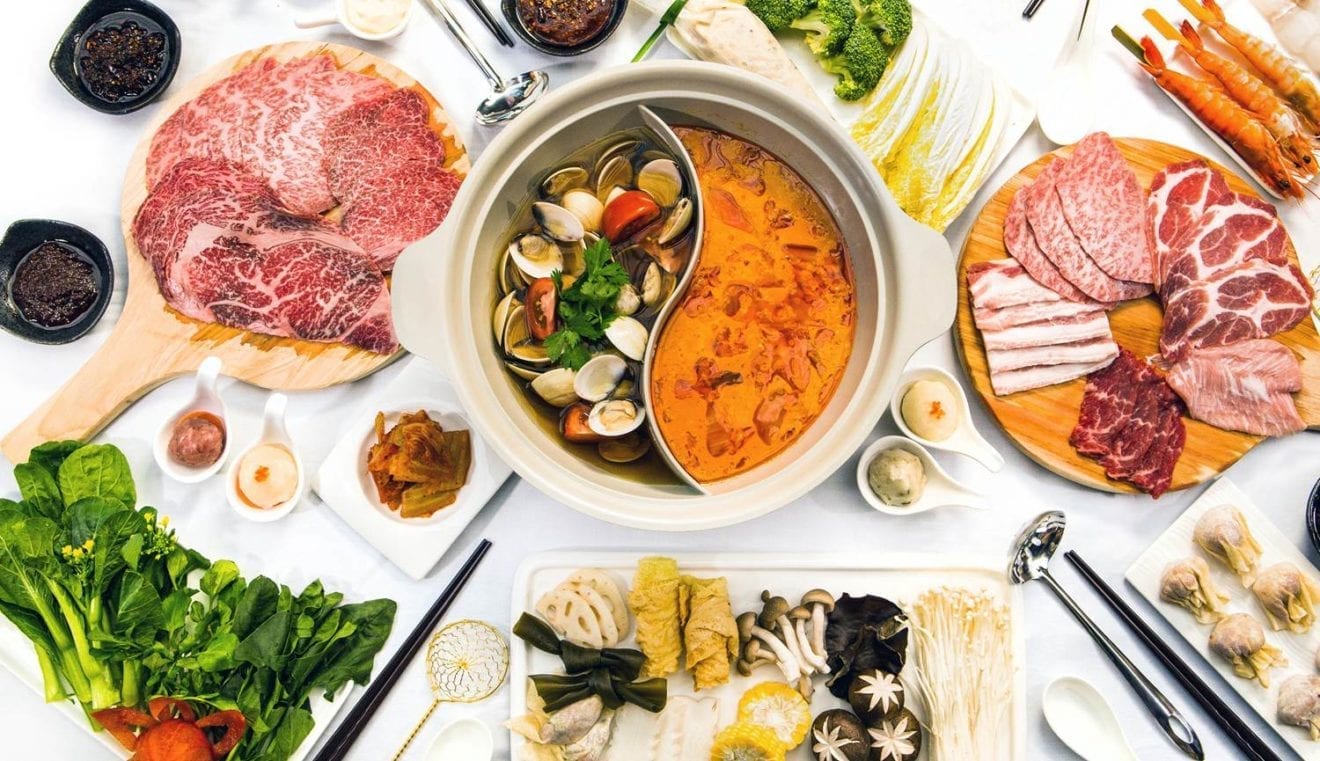
    Little Sheep Hot Pot, a Yum Brands Inc. company, yesterday signed a partnership agreement with HGB Food Industry Co. Ltd. to bring its Mongolian hot pot restaurant to Cambodia.

    HGB Food Industry is a subsidiary of private local investment company HGB Group, which focuses on the domestic automobile industry, food and retail goods.

    Little Sheep’s director of field operations Aileen Wu said the company would bring good quality food to the Kingdom through its cooperation with HGB Food Industry.

    “The partnership between Little Sheep Hot Pot with HGB Food Industry Co., Ltd. to step into the Cambodian market with branches of new restaurants is aimed at bringing fun and the delicious hot pot of Mongolia to Cambodia with many new branches,” she said, adding that they would be located in downtown Phnom Penh.

    HGB Food Industry representative Austin Tan said that the restaurant would bring healthy food to Cambodian people.

    “The market here shows high potential for the demand of healthy food. That’s why we are preparing to enter the market,” he said.

    Little Sheep Hot Pot began operations in 1999 with its first restaurant in Mongolia. In the past 17 years, the company has expanded to 300 branches in 110 countries. Yum Brands, which owns KFC, Taco Bell and Pizza Hut, bought the Mongolian hot pot chain in 2012.

    HGB Group is the sole-appointed distributor in Cambodia for Rolls-Royce Motor Cars, Bentley Motors, Mazda, Kia, Kawasaki and Harley-Davidson motorcycles.

    HGB Food Industry Co., Ltd. is a leading food and beverage distributor and retailer of quality imported food and beverages. The company has been operational in this field for eight years and is a preferred supplier of beverages to hotels and resorts, restaurants, cafes and retail stores in Cambodia.

  • Thailand tourism breaks records and welcomes 30 millionth visitor to the kingdom

    Thailand tourism breaks records and welcomes 30 millionth visitor to the kingdom

    Mr. Yuthasak Supasorn, Governor of the Tourism Authority of Thailand (TAT) said, “This has been an amazing year for tourism in amazing Thailand as shown by the huge numbers of visitors. We have reached 30 million and the high season has only just kicked off. We know that more people will be coming to enjoy the cool weather and holiday festivities. Thailand has so much to offer the world and we know that the Thai people make every visitor feel as welcome as we made Ms. Huang Junyi feel today.”

    Ms. Huang Junyi receives a certificate naming her as “Thailand’s Luckiest Visitor – The Amazing, Smashing Success” from Mr. Yuthsak Supasorn, TAT Governor

    Ms. Huang Junyi,“Thailand’s Luckiest Visitor – The Amazing, Smashing Success”, was greeted at Suvarnabhumi Airport with a fantastic welcoming ceremony co-hosted by the Tourism Authority of Thailand (TAT), Thai Airways International and True Corporation.

    Ms. Huang’s prize will be two economy-class return tickets to Thailand from her original destination, which are valid for a year. She will also be given a voucher for a five-night stay in one of Thailand’s luxury hotels in Bangkok, Pattaya or Hua Hin as well as a mobile phone with a 4G sim card and seven days of Internet usage and a certificate naming her as “Thailand’s Luckiest Visitor – The Amazing, Smashing Success” so that she can remember this day forever. The lucky 30 millionth visitor was also given an exclusive limousine transfer from the Airport to her accommodation in Bangkok.

    This is the second time that Ms. Huang Junyi has travelled to Thailand. During this trip, she will be spending 10 days in Bangkok and Pattaya.

    The “Thailand’s Luckiest Visitor” campaign was launched in 2015 to welcome and reward every millionth visitor to Thailand from June to December. The campaign was a great success and garnered interest from the public and media organisations across the world, boosting Thailand’s tourism sector and brand image. It has been brought back in 2016 to welcome the 30th and 31st million visitors and will continue till the end of 2016.

    In 2016, Thailand is projecting total international tourism revenue of 1.62 trillion Baht (USD 46 billion), representing a year-on-year increase of 11.68% over 2015.

    To boost tourism numbers, various initiatives have been put in place to encourage tourists to visit and spend. This includes the waiver of tourist visa fees for visitors from 19 countries from 1 December, 2016, to 28 February, 2017, and the price of visas issued on arrival will be halved. To encourage more domestic travel, a long New Year holiday of four days including 31 December, 2016, and 1 to 3 January, 2017, has been confirmed.

  • Ericsson, 20th Century Fox ink feature film deal

    Ericsson, 20th Century Fox ink feature film deal

    Ericsson has entered int o an exclusive, multi-year feature film deal with leading international content distributor 20th Century Fox Television Distribution for its subscription video on demand (VOD) service, Nuvu.

    The output deal includes 20th Century Fox-produced titles along with an extensive selection of global film franchises for territories across sub-Saharan Africa in multiple language.

    Titles include The Maze Runner, The Devil Wears Prada, Rio 2, Dawn of the Planet of the Apes, The Fault in Our Stars, The Monuments Men, and Kingsman: The Secret Service, as well as film franchises such as Die Hard and X-Men.

    “Through this partnership, Nuvu subscribers will have access to some of Hollywood’s hottest films as part of their package, localized on a market-by-market basis,” said Thorsten Sauer, head of broadcast and media services at Ericsson.

    The built-in ability to distribute content to consumers during off-peak periods is a core feature of the service. This minimizes data costs for both operator and consumer, addressing the key cost challenge that has so far been an obstacle for VOD uptake in Africa.

    Further, Ericsson has signed an exclusive media delivery services contract with Australian public service broadcaster, Special Broadcasting Service (SBS).

    The contract sees Ericsson aggregate, prepare and deliver content from multiple international content owners and distributors through its broadcast and media services hub in London and deliver media assets directly into SBS’s headquarters in Sydney in a format ready for transmission.

  • Sony Pictures signs VR content deal with Nokia

    Sony Pictures signs VR content deal with Nokia

    Nokia and Sony Pictures have inked a new multi-year worldwide agreement whereby the latter will use Nokia OZO hardware and software tools to explore the creative potential of virtual reality production and distribution.

    The studio will also integrate the OZO Player SDK into Sony Pictures Home Entertainment’s Privilege Plus app, available through Google Play.

    “VR is a fast growing medium that is rapidly changing how we communicate and bringing a deeper connection to how we experience content,” said Paul Melin, VP of digital media at Nokia Technologies. “We’re thrilled to partner with Sony Pictures and its talented storytellers to apply our technology and create experiences only possible with OZO — like 3D 360 live VR broadcast.”

    Nokia will collaborate with Sony Pictures and provide equipment and VR technology to support the creation of special VR content. Sony Pictures will also leverage OZO Live to transport fans to Sony Pictures events that they couldn’t otherwise attend.

    OZO Live allows content creators to produce fully immersive live experiences through 3D 360 degree video and audio playback technologies.

    While the OZO solution offers many advantages for content creators, it also extends several benefits for playback. OZO Player SDK will be integrated into Sony’s Privilege Plus app, which will bring unique content straight to fans.

    The OZO Player SDK allows professionals to create amazing VR apps and experiences on any major platform. The SDK supports the creation of immersive apps with the highest quality playback of OZO content including 360 spatial audio, while also providing support for standard VR video and audio formats.

  • TiVo, Netflix ink product, IP deals

    TiVo, Netflix ink product, IP deals

    TiVo and Netflix have signed licensing agreements that allow both companies to deliver a better entertainment experience to consumers.

    A product agreement calls for TiVo to continue integrating Netflix into TiVo set-top boxes available to consumers through a select, but growing number of pay-TV providers and retail stores.

    Customers will benefit from the integrated offering, which includes unified search across the content catalog and a Netflix button on remote controls.

    “The partnership between Netflix and TiVo dates back to our early days of streaming video,” said Bill Holmes, Netflix global head of business development. “Building on this history, the agreements provide consumers freedom to watch their favorite TV shows and movies whenever and wherever, with an integrated experience across more devices.”

    A separate intellectual property agreement provides Netflix a license to the TiVo patent portfolios and a license to the Intellectual Ventures patent portfolio for over-the-top offerings.

    This agreement represents one of the first licenses granted under the exclusive partnership with Intellectual Ventures announced earlier this year.

    “Our agreements with Netflix represent a major milestone for TiVo as we expand our offerings for the fast-growing OTT space, and further demonstrates our commitment to delivering innovative technologies to new and emerging markets,” said Tom Carson, CEO, TiVo.

    “From products to patented technologies, TiVo is helping companies quickly adapt to a rapidly changing media industry and create beautiful user experiences that keep consumers connected to their favorite entertainment,” said Carson.

  • Digital ads reach across APAC for 18-34 year olds improving

    Digital ads reach across APAC for 18-34 year olds improving

    The success rate of digital advertising campaigns in reaching their intended audiences has lifted significantly within a number of demographic groups across Asia Pacific, in particular for the highly sought-after 18-34 year old segment, as advertisers and their media agencies become more adept with media planning and buying, according to a new benchmarking study of the global digital advertising landscape by Nielsen.

    The Nielsen Digital Ad Ratings Global Benchmarks study, which assessed more than 47,000 digital campaigns across 17 countries in North America, Europe, Latin America and Asia Pacific, found that across Asia Pacific, digital advertising campaigns intended for consumers aged 18 to 34 years had the highest on-target success rate, with 63% of the advertising destined for these consumers hitting the mark, up from 53% in 2015.

    Campaigns aimed at females within the 18- to 34-year-old age group experienced the highest lift in on-target reach, posting a 15-percentage-point improvement to 51%.

    “The Nielsen Digital Ad Ratings benchmark report is shining new light for advertisers on how their digital advertising campaigns are faring in comparison to industry norms,” said Annette Kunst, managing director for Media at Nielsen Singapore.

    “The year-on-year performance improvement shows that an increase in independent measurement can lead to more transparency, and that ultimately improves overall reach and ad spend efficiency,” said Kunst.

    Across platforms, advertising served up via desktop still outperforms mobile advertising when reaching broad audience segments. Desktop advertising intended for people aged 18 to 49 years achieved a 70% on-target success rate, compared to 66% for mobile.

    Conversely, for more niche audiences or narrower segments such as the 18- to 34-year-age group, mobile has a higher success rate – 65% of mobile ads hit their mark, compared to 61% for desktop.

    “Mobile’s success reaching more narrowly defined audiences reinforces that mobile devices provide a highly personalized platform with the potential for more precise connections, and that’s reflected in the rapid increase we’ve seen in mobile advertising, where 45% of the digital advertising campaigns we measure today across Asia Pacific include a mobile component,” said Kunst.

    “With increasing media fragmentation, marketers need to consider all the screens at their disposal when trying to reach their audience,” she said. These benchmarks can help media buyers and sellers better evaluate total digital reach.”

    Looking across categories, Computer & Electronics and Travel marketers had an easier time reaching their desired audience, achieving an on-target success of 68% and 67% respectively. The Automotive and CPG sectors highlight opportunities to optimize reach and maximize return on ad spend, with 47% and 43% of digital ads respectively reaching their intended audience.

  • Thailand’s green material Industry and the green building trend

    Thailand’s green material Industry and the green building trend

    In the midst of today’s environmental movement, green buildings (buildings designed to be environmentally friendly through more efficient use of resources) are popping up more and more in Thailand.

    Using data from green building credentialing bodies like the U.S. Green Business Council (USGBC), which developed the Leading in Energy & Environment Design (LEED), and the Thai Green Building Institute (TGBI), which developed Thailand’s Rating of Energy and Environment Sustainability (TREES), EIC found that the number of certified green buildings and buildings in the process of accreditation in Thailand has risen substantially, increasing from six buildings in 2007 to 243 buildings in 2015.

    With EIC’s estimate of 294 green buildings in 2016, the average annual growth rate for green buildings in Thailand is 54%. Thailand’s green building area increased from 40 thousand square meters in 2007 to 4.3 million square meters in 2015, and it is estimated that it will reach 5.0 million square meters by the end of 2016, pushing average growth to 71% per year (Figure 1).

    Green buildings in Thailand consist of office buildings (around 40%), retail stores and shops (around 30%), and other structures such as factories, residential buildings, hotels, and schools (around 30%) (Figure 2).

    Although the costs of building green are higher than construction costs for conventional buildings, it is the benefits they offer that are responsible for the expansion of green structures today.

    The average cost of building green in Thailand is 20,700 baht per square meter, which is about 5.2% higher than the average conventional building cost of 19,700 baht per square meter (Figure 3).

    This is because building green involves more restrictions in choosing materials and in designing building systems, as well as additional fees for obtaining LEED or TREES credentials. However, owners can gain both monetary and non-monetary advantages from green buildings. Monetary benefits include a decrease in building management expenses like electricity and water costs that can be reduced by 10% or around 90 baht per square meter per year, and up to about 21% or 180 baht per square meter per year by the fifth year after the completion of the project (Figure 4). These numbers are comparable to the decrease in energy costs of  well-known green building Energy Complex.

    The Energy Complex building contains 192 thousand square meters of utility space and has reduced building management costs per year by about 28 million baht, or about 146 baht per square meter per year.  Another monetary advantage for green building owners is increased rents. Rents for green buildings are around 30% higher than those of conventional buildings in the same area, or about 230 baht per square meter per month (Figure 4). Non-monetary benefits include significantly higher worker productivity in green buildings compared to conventional buildings, deduced from sick day records and illnesses caused by sick building syndrome.