Author: Mei Ling Tan

  • Where to shop in Singapore this Black Friday weekend

    Where to shop in Singapore this Black Friday weekend

    The post-Thanksgiving shopping tradition that’s driving many Americans off the rails at the moment is returning to Singapore this weekend with several retailers here jumping on the Black Friday bandwagon.

    For those who are still keen on shopping even after Singles Day (11 Nov), here’s where you can take advantage of Black Friday bargains in Singapore, both online and offline.

    1. Amazon

    Head on to Amazon’s website from 14 to 26 Nov if you’re looking for great bargains. Be sure to refresh their Black Friday page at 7am every day to discover new deals.

    2. Cotton On

    Now is probably the best time to restock your everyday basics as Cotton On is slashing 30 per cent off its full-priced items if you’re purchasing them online from 24 to 26 Nov. If you’d rather hit their brick-and-mortar stores, be sure to shop at the outlets at Bugis Junction, Plaza Singapura, Bedok Mall and Lot One until 28 Nov. You might walk away with a top as cheap as $10.

    3. Esprit

    Esprit is having a sale online from 24 to 27 Nov, offering 50 per cent off every second piece.

    4. Lazada

    From home appliances, health supplements to electronics, everything has been on sale on Lazada since Singles Day. Their sale ends on 12 Dec. 

    5. Robinsons

    All three Robinsons stores – The Heeren, Raffles City and Jem – will be opened from 7am on Friday (25 Nov), with up to 80 per cent discount storewide.

    6. Timberland & The North Face at Singapore Expo

    Get your adventure gear at a bargain at the Timberland and The North Face sale, happening at the Singapore Expo from 24 to 27 Nov, with discounts up to 80 per cent and 60 per cent respectively.

    7. G2000

    Need new office wear? G2000 is offering 50 per cent off your second piece. This storewide promotion will be available from 24 to 29 Nov.

    8. SaSa

    Need to shake up your beauty regime? SaSa is offering up to 70 per cent off its products storewide for outlets at Bugis Junction, Lot One and Nex shopping malls on 24 Nov. Yes, one day only.

    9. Sephora

    If you’d rather shop for beauty products from Sephora instead, the retailer is offering 20 per cent off all of their products if you buy them online on 25 Nov.

    10. New Balance

    If you’re looking for fresh New Balance kicks, head over to any of the brand’s Experience stores for 20 per cent off your purchase.

    11. Books Actually

    Here’s something for the bookworms. Homegrown books and stationery retailer BooksActually is throwing a 20 per cent off storewide sale from 24 to 25 Nov.

    12. Qoo10

    If you’re an avid Qoo10 shopper, the e-marketplace is not offering discounts, but they are giving away cart coupons priced up to $100 from 23 to 25 Nov.

    13. Shopee

    Online retail site Shopee is having a Black Friday and Cyber Monday (28 Nov) with up to 80 per cent off their items.
  • AirAsia plans IPO of ASEAN airline holding company

    AirAsia plans IPO of ASEAN airline holding company

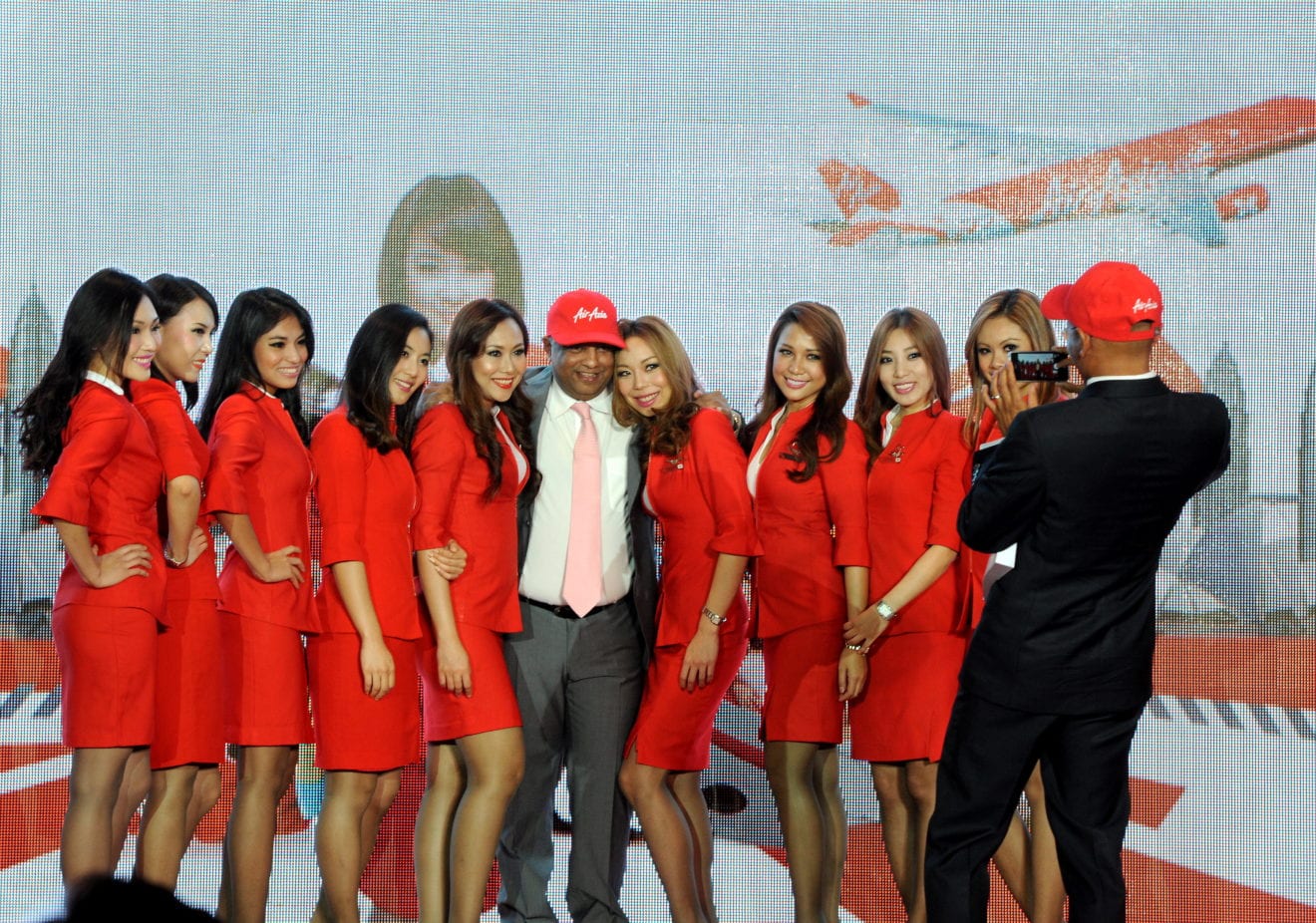
    Asia’s biggest low-cost airline AirAsia Bhd plans an initial public offering of a holding company that will house all its Asean operations, group CEO Tony Fernandes said on Thursday.

    ASEAN Holding Co will be listed in Hong Kong, Fernandes said in a statement without giving a timeline. AirAsia will also list its flight crew training centre in Kuala Lumpur, he said, following the company’s third-quarter results.

    Fernandes did not say how much the IPOs will raise.

    He has in the past expressed a desire to combine the airline’s operations in its home country Malaysia with those in Indonesia, Thailand and the Philippines.

    “The plan is to list Indonesia and Philippines first by next year before looking at ASEAN Holding Co to be listed,” a company spokesman told Reuters.

    AirAsia is also looking to divest some of its non-core businesses. It already has its aircraft leasing arm on the market and aims to complete the sale in early 2017 following bids that are due in December, Fernandes said, adding that he valued the unit at about $1 billion.

    Reuters reported in August that AirAsia was looking to sell a majority stake in its Asia Aviation Capital leasing operation, or possibly the entire business, which the carrier values at 4.1 billion ringgit ($922.38 million).

    Last month, AirAsia said it had received good interest in the sale.

    AirAsia also said on Thursday it swung to a profit in the third quarter, from a net loss a year ago, driven mainly by an increase in aircraft operating lease income and lower oil prices.

    Net profit for the three months ended Sept 30 was 353.9 million ringgit, versus a net loss of 405.7 million ringgit a year ago.

    Revenue rose 11.2% to 1.69 million ringgit, the company said.

    The results were underpinned by a load factor of 87%, a measure of how full planes are, up 6 percentage points from the same period last year.

    The number of passengers carried rose 11%, ahead of an increase in seat capacity of 2% year-on-year, according to AirAsia’s statement.

    AirAsia expects average load factor for its Malaysia business to remain at 89% in the following quarter, riding on strong demand due to year-end holidays and festivities.

    It forecasts load factors of more than 80% for its operations in Thailand, Indonesia and the Philippines for the fourth quarter.

    On Tuesday, the group’s long-haul unit, AirAsia X Bhd swung to a net profit of 11.03 million ringgit.

    Revenue was higher at 982.4 million ringgit.

    Shares of both AirAsia X and its parent have more than doubled this year, after sharp losses in 2015.

  • Smartphones can help India’s drive for cashless economy

    Smartphones can help India’s drive for cashless economy

    India is currently the largest growing market for smartphones and it is estimated that the number of smartphones sold in the country is very likely to be greater than 100 million in 2017.BEIJING: As India embarked on cashless economy with demonetisation of high value notes, smartphones could help in the country’s de-cashing drive like in China where online payment through phones have become order of the day, Chinese media said today.

    “While India is implementing the government-led de-cashing via demonetisation, China is experiencing a rapid market based de-cashing process via the digitalisation of transactions on the online or mobile payment platforms,” an article in the state-run Global Times said today.

    In the most recent 11/11 (Singles Day) online shopping day, consumers spent 120.7 billion yuan (USD 18 billion) on Tmall, the largest business-to-customer shopping website in China, with all transactions settled via Alipay, the online payment platform set up by Alibaba Group, the article said.

    “Meanwhile, Alipay and WeChat Pay (the online payment platform of WeChat by Tencent) are widely accepted by restaurants, shops and even grocers throughout the country,” it said.

    The high ownership rate of smartphones in China may explain this rapid digitalisation in transactions, it said, citing a recent survey by Pew Research Centre, which said smartphone ownership rate is 58 per cent in China, 37 per cent in Japan and 17 per cent in India.

    “This high ownership rate plus a relatively slow growth rate in credit card ownership has led to the ‘leapfrog development’ of de-cashing in China,” the article said.

    “Compared to traditional bank transfers, online payment systems are usually more convenient and user friendly. Hence, market-based de-cashing faces much less resistance than other types of de-cashing,” it said.

    “India is currently the largest growing market for smartphones and it is estimated that the number of smartphones sold in the country is very likely to be greater than 100 million in 2017,” it said, pointing to high sales witnessed by Chinese phone makers like Xiaomi.

    “If India would like to try the Chinese style of de-cashing through online/smartphone payment, it is very likely to be beneficial to both countries,” it said.

  • Comptel unveils intelligent UIs for digital services LCM

    Comptel unveils intelligent UIs for digital services LCM

    Comptel has added a set of operational user interfaces (UIs) to its FlowOne V solution, tailored for specific user groups within service providers.

    The UIs are designed to increase productivity, empower the critical service orchestration processes behind frictionless delivery of end-to-end virtualized services, and accelerate time-to-market.

    FlowOne V incorporates virtualized network function (VNF) onboarding and service chaining, digital service design and orchestration, and dynamic, closed-loop service assurance.

    By providing a holistic, end-to-end view and orchestration of digital services, it allows operators to transform their current service delivery processes by connecting the cloud and physical resources (compute, storage, network) with business management processes and systems (customer care, billing, customer order management).

    With the addition of four new intuitive UIs called “Hubs,” FlowOne V translates the service orchestration process into routine tasks, specific to individual user groups.

    The UIs strengthen the solution with inbuilt intelligence, including the normalization of service terminology between multiple platforms to make them easily manageable and reusable components, and the validation of service specifications to avoid unnecessary mistakes.

    “Intuitive operational UIs are a key factor for increasing the speed at which services can be developed, verified, deployed and improved – consequently reducing time-to-profit and increasing customer satisfaction,” said Antti Koskela, EVP of Comptel.

    “By adding this new functionality to FlowOne V, we’ve created a new paradigm for operationally managing NFV and SDN, empowering service providers to more effectively specify, test and deliver services across virtual, physical and IT domains,” said Koskella.

    The four new UIs include DesignHub, OrderHub, LifecycleHub, and SystemHub.

  • Fashion reseller Banananina joins e-commerce race

    Fashion reseller Banananina joins e-commerce race

    Jakarta branded fashion reseller Banananina has moved into eCommerce in a bid to reach potential customers outside the Indonesian capital.

    The company, which launched in 2009 through now-defunct eCommerce site Multiply, offers apparel, bags, shoes, accessories and beauty products. Its new website will also offer men’s products for the first time.

    Founder Fitri Maya Safira says the new sales channel is expected to grow daily transactions from 30 to 70 items.

    Banananina claims its luxury goods all have original guarantees as they come from licensed suppliers. Online buyers will be given a return guarantee, particularly for shoes.

    Fitri says her company’s customers live as far apart as Aceh, Bandung,  Biak, Jayapura, Makassar, Surabaya and Timika.

  • Headwinds will cramp luxury retail sector

    Headwinds will cramp luxury retail sector

    The luxury retail sector will grow next year – but at a disappointingly slow rate, according to the latest data from Euromonitor.

    As tough global trading environments continue to prevail – social and political unrest in Asia Pacific, economic slowdown in Latin America, and conflict in Eastern Europe will conspire to restrain growth in both key emerging and developed markets, the research house says.

    “Indeed, the market continues to face headwinds from major luxury goods markets, such as France and Hong Kong, as well as other large emerging markets, such as Russia and Brazil, while instability in the Middle East continues to cloud the horizon.”

    Whilst 2017 will not be a stellar year for the global industry overall, “we will see some tailwinds, with markets such as India and Mexico in a much stronger position,” Euromonitor concluded.

    “At the same time, luxury brands and retailers continue to seek ways to harness social media and tap into the psyche of the digital consumer, as connectivity continues to drive new opportunities in digital innovation and growth in the omnichannel continues to reach new frontiers.

    Divergence remains a key theme across the luxury markets for the year ahead with strong regional disparities in Asia Pacific appearing strong with 5 per cent growth, a marked difference to 2015, with a regional growth of just 1 per cent, reflecting the significant economic slowdown in China.

    The developed regions of Western Europe and North America were significantly weaker, with both regions showing a slight downturn in 2016 with a weak Eurozone continuing to hold back regional performance and the added concerns over terrorist attacks, as well as the more recent Brexit vote, have also dampened sales. In the next five years, the US is predicted to lose its top spot in the ranking to China.

    However, the disappointing data for the developed regions should not obscure the importance of these high-value luxury goods markets. These regions remain amongst the most powerful in the world and together account for over half of all luxury goods sales in 2016.

    Watch Fflur Roberts, head of luxury goods with Euromonitor International, share more about the luxury sector.

  • Nokia unveils machine learning-powered customer experience solutions

    Nokia unveils machine learning-powered customer experience solutions

    Nokia has powered major updates to its Motive Customer eXperience Solutions (CXS) software portfolio, promising communications service providers with advanced machine learning capabilities to reduce costs and improve customer experiences.

    Nokia Motive Service Management Platform (SMP) 7.0 and Motive Care Analytics (CAL) 2.0 use machine-learning algorithms developed by Nokia Bell labs — advanced capabilities that give computers the ability to learn without being explicitly programmed.

    With support for machine learning in its CXS portfolio, Nokia aims to set a new standard for proactive care in the industry, dramatically improving the detection, troubleshooting and resolution of subscriber issues.

    Nokia Motive SMP 7.0 features Dynamic Intelligent Workflows, a new self-optimizing system that determines the ideal sequence of tasks that deliver the highest probability of resolving billing, subscription and network service issues in the shortest amount of time.

    By analyzing data from previous workflow executions, the network, customer premises equipment, and trouble tickets, this capability enables service providers to quickly find the optimal remediation to issues when subscribers contact help desk agents or use self-care.

    Nokia Motive CAL 2.0 is the first solution of its kind that automatically correlates customer help desk calls and self-care actions with network, service and third-party application topologies to identify call anomalies, such as unusual patterns in help desk calls that indicate the location of customer-impacting network and service issues.

    Together, Motive SMP 7.0 and Motive CAL 2.0 help service providers lower costs by reducing average help desk handling times 5% to15% and eliminating inappropriate truck rolls (dispatching a service technician to a customer location) related to network outages by as much as 90%.

  • YTL launches 4G LTE data, VoLTE services

    YTL launches 4G LTE data, VoLTE services

    YTL Communications in Malaysia has deployed Elitecore’s Revenue and Customer Management (RCM) Platform to roll out its 4G LTE high speed data & VoLTE services.

    The platform will enable the operator to roll out new business models like, HD Voice (VoLTE), Enterprise LTE and LTE Roaming, in addition to the Double Double buckets, one for wireless broadband and another for mobile internet, VoLTE and data services bundled with devices.

    YTL Communications said it is the only operator in Asia Pacific to commercially launch nationwide Voice over LTE (VoLTE) services.

    Elitecore’s NFV ready and Virtualized platform comprises of integrated policy and charging, 3GPP AAA, convergent billing, fulfillment, mobile self-care catering to voice, data and VAS services supporting multiple networks such as LTE, Wi-Fi and Wimax.

    “Elitecore’s product roadmap alignment with YTL’s business vision and proven experience in convergent billing and integrated policy and charging supports our growth strategy and helped us migrate from our legacy billing and operational support systems,” said Ali Tabassi, COO of YTL Communications. “The platform offers high agility for faster time-to-market and feature rich functionalities.”

    Elitecore said its RCM is a modular and feature ready platform that offers operators the speed and flexibility to roll out, new monetization and personalization use cases needed to innovate in next-generation data services. The platform promises significant contribution to capex and AMC cost reduction.

  • Oppo F1s launched in India with increased memory and storage

    Oppo F1s launched in India with increased memory and storage

    Oppo has relaunched its self-proclaimed “selfie expert” – the F1s – with increased memory and storage in India. The phone will now be available with 4GB RAM and 64GB storage. It will also be available in a new grey color.

    Oppo launched the F1s earlier in India with 3GB RAM and 32GB storage, along with a 5.5-inch 1080p display, MediaTek MT6750 processor, 13 megapixel rear camera, 16 megapixel front camera, ColorOS 3.0, and 3075mAh battery. Other than the memory and storage, everything remains the same on the upgraded model.

    The new F1s is priced at INR 18,990 ($275) and the first 50,000 buyers will get a limited edition Doctor Strange cover for their phone.

  • Ferrari boasts rising sales and profit

    Ferrari boasts rising sales and profit

    Italian luxury sports carmaker Ferrari has reported strong third-quarter results despite a challenging market environment. The company logged its steepest sales rise in China, while the rest of Asia proved difficult.Ferrari on Monday booked a record third-quarter profit of 113 million euros ($126 million), marking a 20-percent rise over the same three-month period a year earlier.

    The Maranello, Italy-based automaker said revenue in the quarter was up 8 percent to 783 million euros. It noted the success was attributable to its sales of 12-cylinder models, notably the F12df, the four-seat GTC4Lusso and the newly launched LaFerrari Aperta.

    The Italian carmaker reported shipments of 1,978 vehicles for the July-to-September period, emphasizing that its sales to China had increased by 15 percent.

    Rosy outlook

    Also picking up were sales to Europe and the Americas, while Asia outside of greater China proved a difficult market with shipments there decreasing due to logistical delays caused by a shipment carrier.

    Ferrari confirmed its forecast of shipments for the whole year at around 8,000 units, with revenues to pick up by 3 percent.

    The group revised its earnings guidance upward on the strong third-quarter results, saying that pre-tax profit would come in at above 850 million euros for 2016.

    In the past quarter, Ferrari also booked higher engine revenues on Maserati sales and rentals to other Formula 1 teams as well an increase in sponsorship and brand earnings.

  • Starbucks in Cambodia: From Coffee Beans to Housing Dreams?

    Starbucks in Cambodia: From Coffee Beans to Housing Dreams?

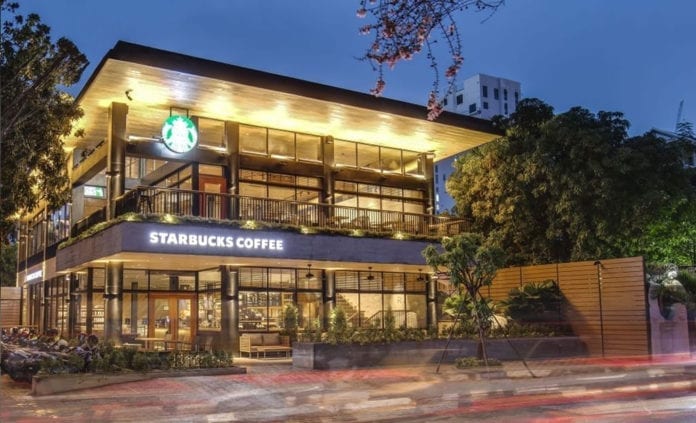
    There’s nothing particularly new with coffee places opening in Phnom Penh. There is a different brand of coffee shop at just about every corner.

    But the recent launching of the Starbucks Reserve brand in Phnom Penh seems to mean something significantly more for both the international F&B franchise sector, and local urbanite Phnom Penh citizens.

    Been There, Done That

    With 45 years of experience in the coffee industry, Starbucks has managed to open around 22,519 stores worldwide (as of June 28, 2015). The brand has become one of the world’s most recognized, through intensive advertising campaigns and aggressive product placement.

    Fast-forward to October of 2016, another branch just opened to serve the Cambodian public in Phnom Penh’s BKK1 district. It was launched under the high-end “Reserve” brand of the company.

    If the market can prove profitable for Starbucks, other international F&B and consumer goods franchises may look to enter the Cambodian market place as well

    The new branch features two floors and 650 square meters filled with local craftsmanship, including a mural centerpiece depicting the Cambodian Folklore of Sovann Maccha.

    Starbucks Cambodia has partnered up with a local NGO – Cambodian Children’s Fund – as part of its long-term community investment. They said, “We take a thoughtful, disciplined approach to growth in Cambodia that is locally relevant and in line with our company’s values. Our growth story is not just about expanding our store count in the market.”

    Something Brewing:

    Yet Starbucks’ opening of another high-end coffee place doesn’t only signal a positive outlook for the F&B industry…

    It also transcends into real estate. A few months back, the World Bank declared Cambodia a lower-middle income country – where Cambodians currently have an average yearly income of between $1,026 and $4,035.

    So, locals are now able to afford items that have a higher price tag, according to the Bank.

    With this rise in consumers’ expendable incomes, Starbucks isn’t worried about the huge difference in price of their coffee compared to local ones. The local coffee costs about $0.74 (and sometimes as cheap as $0.25), while a small latte from Starbucks is $2.95.

    If a cup of coffee is any indication of rising incomes, then sectors like real estate might follow a similar trend. Investors may be getting closer to a market in which the local population can afford resale units and higher rental rates. The current lack of a secondary market, resale and rental, for new development units is proving one of the biggest risks of the Cambodian market for pure investors.

    Furthermore, if the market can prove profitable for Starbucks, other international F&B and consumer goods franchises may look to enter the Cambodian market place as well – spurred by this signal of consumer confidence and affluence.

    So while Starbucks opening in BKK1 has been warmly welcomed by local cafe enthusiasts keen to try an international flavor, its significance for investors may have longer lasting influence.

  • Dah Makan hoping venture capitalists delive

    Dah Makan hoping venture capitalists delive

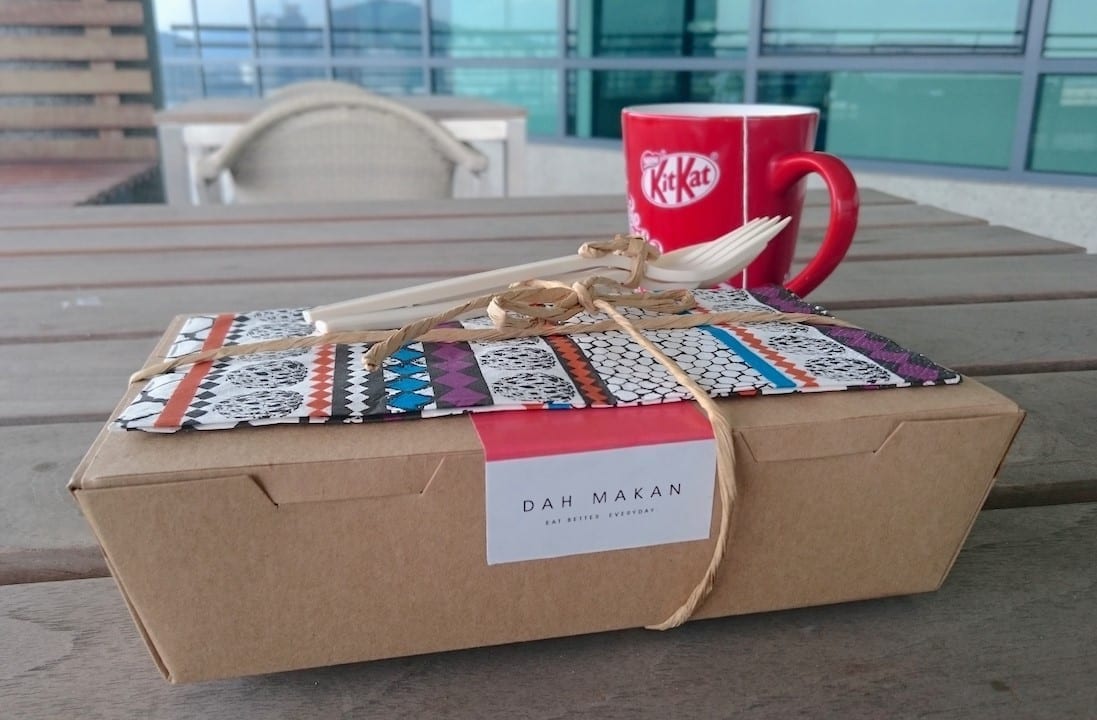
    Seeking to upgrade technology and improve the user experience, Malaysian food-delivery startup Dah Makan is working on a larger funding round with global venture-capital firms.

    Dah Makan raised $320,000 from two angel investors in a seed round more than a year ago and has since grown to cover about 80 per cent of the Klang Valley region and has also crossed its 100,000th delivery.

    “We are now finalising a larger round with several global VCs with extensive experience in eCommerce and consumer brands,” says founder/CEO Jonathan Weins. “It’s very important to have the right investors on board as they can have significant influence on the future of a company.”

    He says an announcement on the funding may come in a few months, but meanwhile the company is investing into its team and technology. It released a new version of its apps last months and implemented a new backend system to manage the delivery fleet.

    Before Dah Makan, which is Malay for “Have you eaten?”, Weins had helped launch Foodpanda in Hong Kong.

    For Dah Makan, he and his co-founders did most everything from sourcing and cooking to delivering with the goal of understanding the customer experience as well as the business model.

    From less than half a dozen orders a day, a few months later the rate was 100 orders a day. Since then, the group has had to move kitchens three times to expand capacity and has grown its team with culinary and tech talent.

  • DFS Group Unveals Exclusive Pre-Launch of Bulgari Jewelry Collection in Stores Worldwide

    DFS Group Unveals Exclusive Pre-Launch of Bulgari Jewelry Collection in Stores Worldwide

    DFS Group, the world’s leading luxury travel retailer, is excited to announce the pre-launch of an exclusive BVLGARI-BVLGARI collection by Italian luxury jewelry brand Bulgari, which will be available only at DFS and T Galleria by DFS stores beginning this holiday season until October 2017. The specially created, one-of-a-kind jewelry collection includes necklaces and bracelets with signature double-sided pendants – one side featuring a Carnelian stone and the other side a Mother of Pearl. With the two contrasting sides, the pendants offer travelers a piece they can interchange according to mood, outfit or occasion.

    “We are honored to work with our long-standing partner Bulgari to present our customers with an exclusive set of one of their most iconic jewelry designs,” said Christophe Chaix, Senior Vice President Fashion, Watches, Jewelry and Accessories, DFS Group. “In the coming holiday season, we look forward to exciting our customers with a jewelry set that strongly resonates with their preferences, while elevating their gifting experience with something only DFS can offer.”

    The BVLGARI-BVLGARI collection, an emblematic favorite for over four decades, became the ambassador of Bulgari’s tradition of luxury, quality and the finest Italian design. This particular exclusive rendition of the BVLGARI-BVLGARI collection aims to excite and attract customers seeking a limited edition for the holiday season.

    The Carnelian in red on one side of the pendant symbolizes happiness and joy and is always the most popular color among Chinese shoppers. In Western culture, this color resembles an iconic Christmas color reminiscent of holly berries. On the flipside, the Mother of Pearl, symbolizing purity with a hint of feminine glamour, is one of the four imperial colors classic to the brand that magnifies the ever modern style of the BVLGARI-BVLGARI collection.

    The exclusive BVLGARI-BVLGARI line is now available at all DFS Bulgari boutiques worldwide, except in Abu Dhabi.

  • Singapore Airlines to cut 5 weekly flights to Jakarta

    Singapore Airlines to cut 5 weekly flights to Jakarta

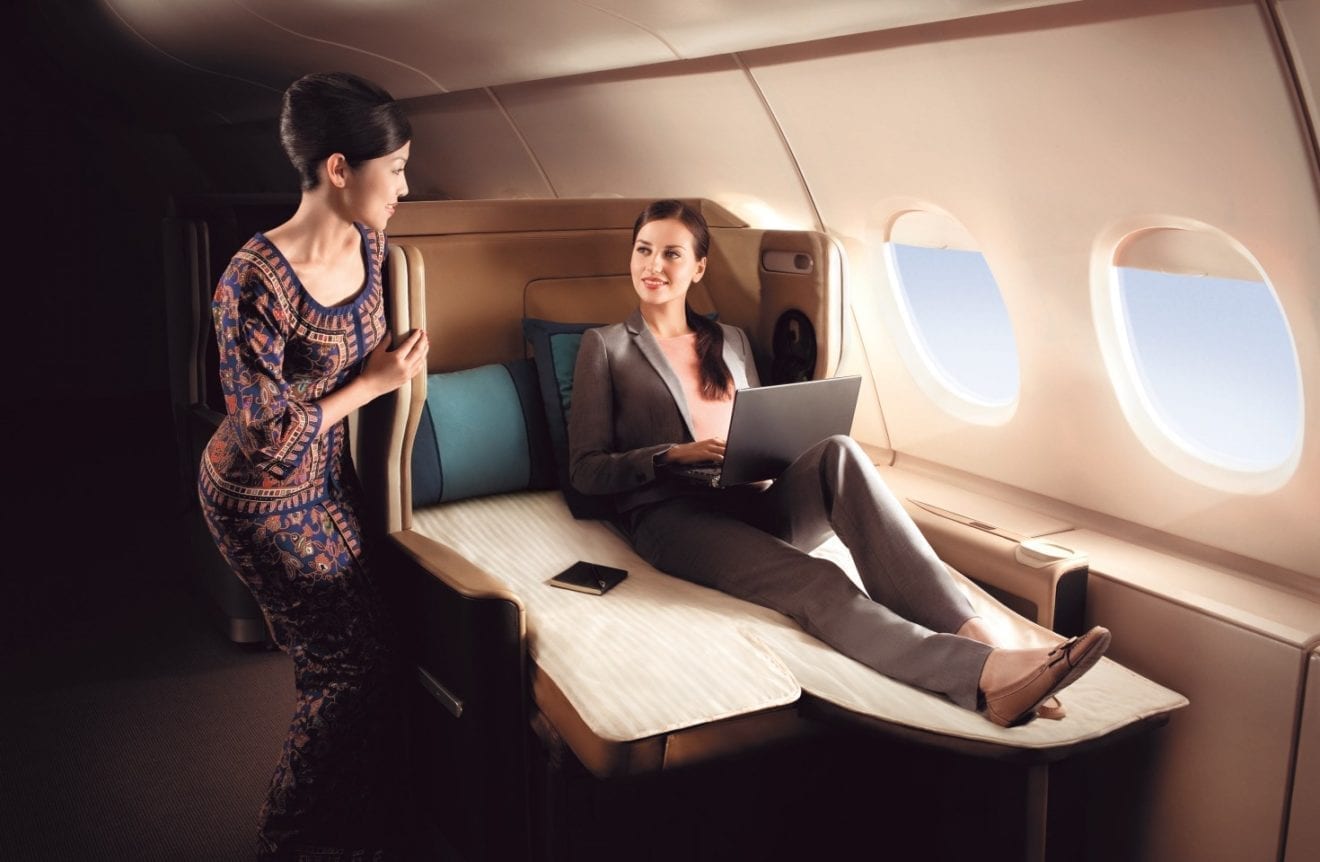
    Singapore Airlines will cut five weekly flights to Jakarta, from Dec 1, as directed by the Indonesian civil aviation authorities, the airline said.

    SIA which has been operating 63 flights a week to and from Jakarta has been told to cut five flights a week due to runway maintenance works at Jakarta’s Soekarno-Hatta International Airport.

    The five affected flights are SQ962 and SQ963 on Mondays, Tuesdays, Wednesdays, Thursdays and Saturdays.

    SIA apologised to customers for the inconvenience and said it will progressively contact those affected to accommodate them on other flights.

    Responding to media queries, a Civil Aviation Authority of Singapore (CAAS) spokesman said the authority is aware of SIA’s plans.

    “CAAS hopes that the runway maintenance works will be completed expeditiously and that the impact on airlines will be fairly distributed,” she said.

    CAAS also hopes that the Indonesian civil aviation authorities will be able to allow Singapore Airlines to resume all 63 weekly services to Jakarta as soon as possible to reduce the impact on business travelers and tourists, who rely heavily on air services to travel between Singapore and Jakarta.

    The latest development comes several weeks after SIA said it had had to postpone plans for a thrice-weekly Singapore-Jakarta-Sydney service, which had been due to start on Nov 23.

    The Indonesian authorities had also cited runway maintenance works as the reason for withdrawing approval for the route.

  • DHL eCommerce unveils new distribution center in Japan

    DHL eCommerce unveils new distribution center in Japan

    DHL eCommerce, a division of Deutsche Post DHL Group, unveiled its plans to establish an outbound cross-border eCommerce distribution center in Narita, Japan by April 2017.

    The distribution center will be co-located with the Japan Global Distribution Center, created by one of DHL’s divisions. The cross-border shipping product DHL Parcel International Direct will provide affordable deliveries from Japan to the United States and the United Kingdom, guaranteeing transit times of four to six business days, DHL eCommerce said. DHL GlobalMail Packet Plus, another cross-border shipping product, will provide the best rates for Japan-Europe deliveries, offering transit times of five to 10 business days and a high degree of visibility into the status of shipments.

    The expansion plans in Japan are part of DHL eCommerce’s larger strategy in the Asia Pacific. The company recently unveiled its 70 million euro (U.S. $74.3 million) investment in India to boost the capabilities of the air hubs in Delhi and Mumbai to enhance B2C e-commerce delivery in India.

    In June 2016, DHL eCommerce announced its plans to grow its overall footprint in China by 50 percent. In January 2016, the company launched domestic delivery operations in Thailand and announced plans to double its fleet and number of depots by 2017.