Author: Mei Ling Tan

  • Indonesian government to give preference to Japan for semi-high speed train

    Indonesian government to give preference to Japan for semi-high speed train

    The Indonesian government will give preference to Japan to build a Jakarta-Surabaya semi-high speed train project, Transportation Minister Budi Karya Sumadi said.

    “Japan will receive preference,” he said after a coordination meeting at the Coordinating Ministry for Maritime Affairs here Friday.

    Despite receiving preference, Japan must continue to meet the qualifications set by the Indonesian government, Sumadi, one-time president director of state airport operator Angkasa Pura II, said.

    He made it clear that at the coordination meeting with Coordinating Minister for Maritime Affairs Luhut Binsar Panjaitan, National Development Planning Minister/National Development Planning Agency (Bappenas) Head Bambang Brodjonegoro and Finance Minister Sri Mulyani the government decided to expedite the construction of the semi-high speed train project.

    The government will soon complete a plan for the construction of semi-high speed train line and will discuss it with Japan in the next few months, he said.

    Meanwhile, Bambang said at the meeting the government still had to assess the semi-high speed train project.

    “We are still discussing and whether the project will use an ordinary loan scheme, government project, or private sector participation scheme,” he said.

  • India’s parliament addresses call drop controversy

    India’s parliament addresses call drop controversy

    An Indian parliamentary panel has taken up the issue of call drops on new mobile operator Reliance Jio Infocomm’s network.

    The panel met with GSM industry body COAI – representing the market’s incumbent operators – and Reliance Jio to discuss the reasons for the high number of call failures.

    Reliance Jio has been engaged in a bitter dispute with operators over the issue of frequent call drops. Earlier this month, Jio said around 50% to 60% of calls from Jio users to the three largest mobile network operators Airtel, Vodafone and Idea Cellular were failing or dropping.

    While this has recently contracted to around 25%, this still represents a substantial number of call drops and call failures..

    Reliance Jio has accused the operators of not making enough points of interconnection available to meet the demand for its pan-India mobile services. But incumbents have blamed the company’s strategy of offering free calls, which has led to a surge in network traffic.

  • VW’s Skoda Auto says October deliveries grew 10.6 percent

    VW’s Skoda Auto says October deliveries grew 10.6 percent

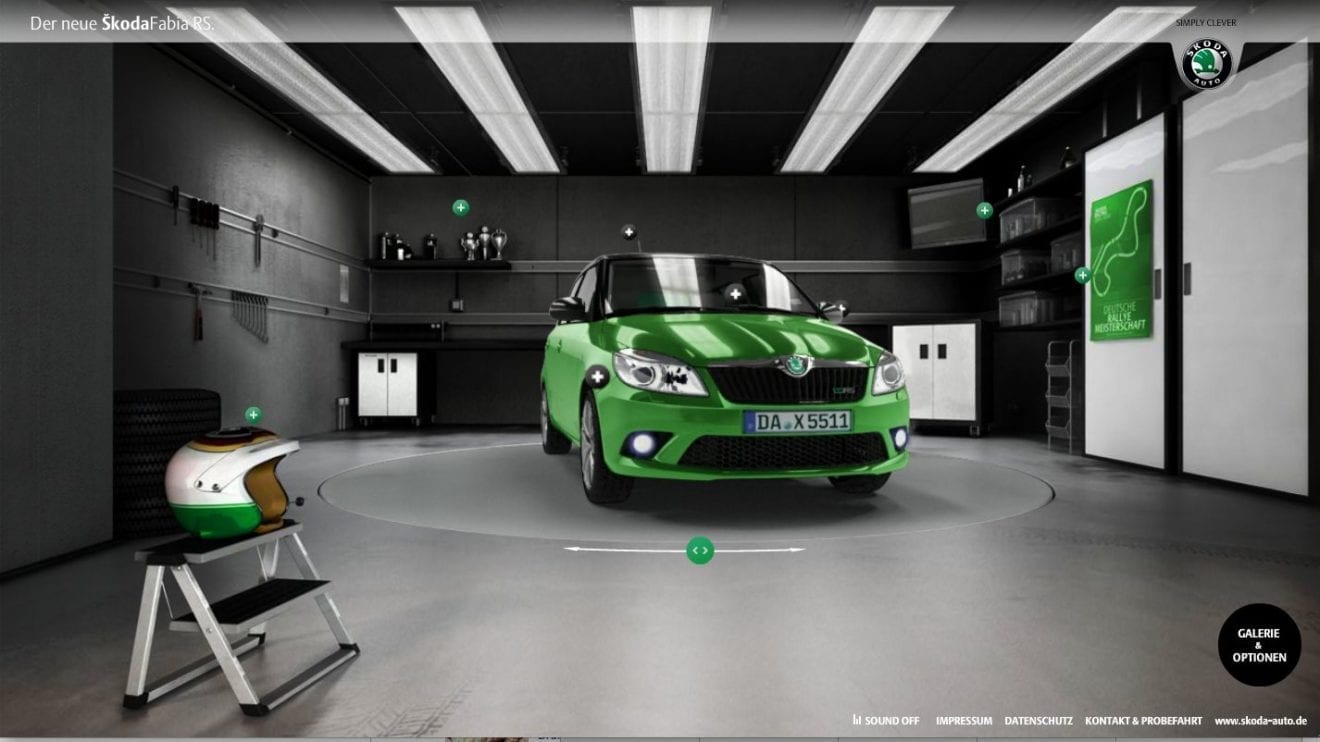
    Global deliveries of Skoda Auto, the Czech unit of Volkswagen, grew by 10.6 percent to 97,900 vehicles in October, boosted by growing sales in China and Europe, the company said on Thursday.

    In the January-October period, Skoda said sales had grown by 6.7 percent to 938,800 units.

    The company, the biggest Czech exporter, sold 1.06 million cars in 2015, the second year in a row it topped the 1 million mark.

  • China Singles Day: a retail goldmine

    China Singles Day: a retail goldmine

    China Singles Day is an entertaining festival widespread among young Chinese people, to celebrate the fact that they are proud of being single.

    To celebrate these singletons like to shop, for some reason.

    Regardless of motive, the opportunities an event like this presents is vast, and global retailers should be taking advantage.

    Delivering an effective online shopping in China is a challenge for outside retailers, but the benefits are worth investing in overcoming this.

    In a market with 600 million internet users, sales last year hit $14.3 billion, in comparison to the $1.35 billion taken on Black Friday. This is predicted to rise to $20 billion this year, which is absurd. But profitable.

    With a rapidly expanding population, China is by far the largest e-commerce market in the world, forecast to reach $1.1 trillion by 2020. China Singles Day is the largest retail day of the year, by some margin.

    Digital performance specialist Dynatrace has tested the websites of retailers around the world to see how geared up they are to maximise their revenue potential on the biggest shopping day of the year, and found that global retailers need to be doing more to tap into this market.

    Chinese retailers are outperforming the global competition, with an average time of 3.4 seconds before their websites become usable for Chinese customers (compared to 7.7 seconds for global retailers).

    H&M stood out as a shining light amongst the global retailers; with an average time of just 2.4 seconds before customers could start interacting with its website from China.

    Lean website design is critical to success in the Chinese e-commerce market; the best performing sites have minimal third-party host integrations, lighter pages with a low object count, and are hosted locally, in China or Hong Kong.

    Dave Anderson, VP Marketing EMEA and APAC for Dynatrace explained that by “digging a little deeper, we can see that the better performing sites are typically designed for speed. They use minimal third party hosts and keep objects in check. Page weight is also an important consideration – the lighter the better. Another fundamental, strategic decision is to host content locally or in HK.”

    Anderson went on to suggest that “user experience is fundamental to e-commerce success today, so retailers must be ready to tackle new markets with a localised site strategy. You can’t just replicate a site from another country, attach a local URL and assume it will work. This is especially the case in China.”

    “You need to be careful about how you use Google APIs, YouTube, marketing automation software or cart abandonment tools. Big images, video and pop up ads also create complexity that result in a poor experience for Chinese consumers. Best starting point is to strip the site back and measure the performance of everything very closely.”

    Alibaba is providing stats from the ‘festival’ in real-time.

  • SM Prime results boosted by strong economy

    SM Prime results boosted by strong economy

    SM Prime boosted net profit by 15 per cent to PHP4.9 billion in third quarter of 2016.

    Overall revenue rose by 14 per cent to PHP18.5 billion.

    The SM Prime results show year-to-date net income rose 13 per cent year-on-year to PHP17.5 billion, on sales up by 11 per cent to PHP57.8 billion.

    The company says the improved performance was down to sustained growth of its key rental operations and real estate sales businesses.

    “SM Prime sustained its overall performance as it benefited from the continued growth of the economy,” said SM Prime president Jeffrey Lim. “The synergy and contribution of our business units are reflected in our strong results. We expect SM Prime’s success to continue over the medium-term as economic growth spread to the rest of the Philippines, which should bode well with our expansion in other key cities and provinces.”

    Overall Philippine mall revenues increased by 9 per cent to PHP32.1 billion. Rentals posted an 11 per cent growth to PHP26.9 billion, driven by a 7 per cent growth in same-mall-sales, as well as new retail spaces of 1 million sqm in gross floor area (GFA) that were added in the past two years.

    Cinema and event ticket sales are at PHP3.44 billion, slightly higher from last year’s performance of PHP3.4 billion. Revenues generated from amusements and merchandise sales posted the same amount of PHP1.8 billon from same period last year. Operating income increased by 10 per cent to PHP17.8 billion from PHP16.1 billion in the same period last year as margins slightly improved to 55.3 per cent from 54.9 per cent.

    China rise

    Meanwhile, SM Prime’s China mall revenues rose by 5 per cent to PHP3.1 billion, while its operating income grew by 6 per cent to PHP1.5 billion, maintaining the previous year’s operating income margin of 49 per cent.

    Currently, SM Prime has 58 malls in the Philippines and six in China with a GFA of 8.5 million sqm. SM Prime is scheduled to open SM East Ortigas this December while SM City Tianjin will open in phases towards the end of the year. By the end of 2016, SM Prime will have a combined GFA of almost 9 million sqm.

  • Dyson plans to enter India

    Dyson plans to enter India

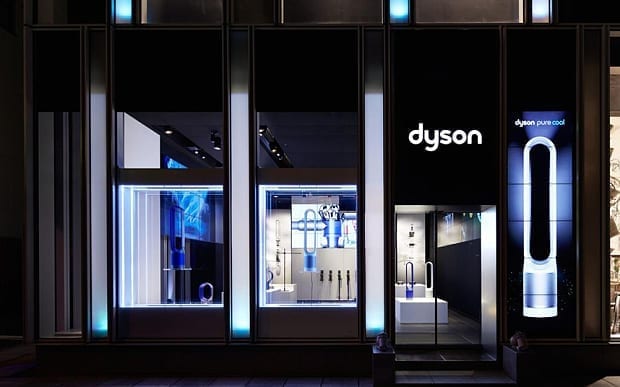
    UK company Dyson, known for its innovative vacuum cleaners and air purifiers, plans to open its own retail stores in India by the middle of next year.

    It has already sought permission from the Department of Industrial Policy and Promotion (DIPP) to import and sell products in India.

    “If we get the permit, we’ll set up middle of next year,” says founder James Dyson, in New Delhi for the India-UK Tech Summit.

    “Over the first five years, we’ll invest about £154 million [US$190.8 million] in India. Our investment will be in building infrastructure (retail), taxes (to the government), marketing and promotions.”

    India will be the 76th market for Dyson, which in its last overseas foray entered China three years ago.

    “India is an interesting market, but it may take time to develop – unlike China, which has emerged as the third-largest market for Dyson after the US and Japan,” says Dyson.

    Online portals

    The company’s plan is to set up a retail store in each of the top 20 cities in India, as well as selling through other retailers and online shopping portals.

    “Online helps our business,” Dyson says. “We sell through Amazon in some countries and may sell through Amazon in India as well.”

    The company will import products from Malaysia, Singapore and Philippines for the Indian market. Depending on volume, Dyson may look at making products in India after a few years.
    As well as vacuum cleaners, the company will also look at the beauty and hygiene market with hair dryers and hand dryers, as well as LED lighting products.

    Dyson is a family-owned technology company that employs more than 7000 people globally—a third of whom are engineers and scientists.

    “India produces 1.3 million engineers every year – that’s very exciting. We’ll look at working with Indian universities soon,” Dyson says. The company spends £5 million a week in research, design and development, and has more than 200 live technology projects and 50 active research programs with 40 universities around the world.

    Dyson’s revenue rose 26 per cent to £1.7 billion last year while profit increased 19 per cent to £448 million.

  • Korean cafe boom drives desserts market

    Korean cafe boom drives desserts market

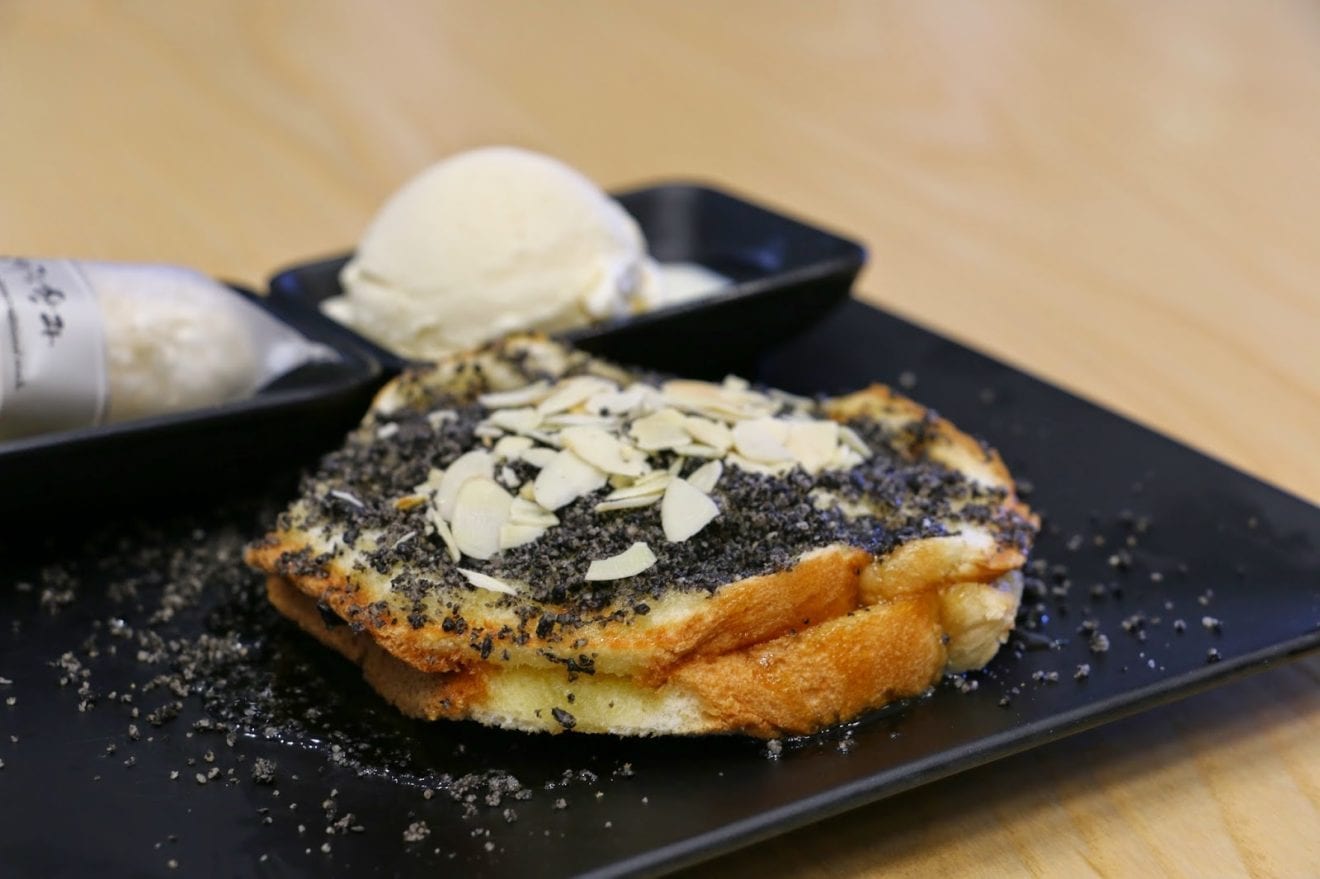
    The booming networks of Korean cafes has driven a huge rise in the country’s dessert market.

    According to data issued by the government, the sector expanded sales by 13.9 per cent in 2014 from a year earlier – the last year for which figures are available – on rising demand for sweets and non-alcoholic drinks.

    The combined value of the local confectionery and non-alcoholic beverages markets stood at 8.9 trillion won (US$7.9 billion) in 2014, up 13.9 per cent from a year earlier, according to the available data compiled by the Ministry of Agriculture, Food and Rural Affairs.

    The dessert market accounted for 10.7 per cent of the country’s entire food service market worth 83.8 trillion won in 2014.

    The ministry said demand for high-end bakeries and cafes led the sharp growth in the dessert market as people tend to spend their time and money more on their health and well-being.

    The confectionery industry posted sales of 4.6 trillion won in 2014, up 10.5 per cent on-year, while sales of the beverage market jumped 16.8 per cent on-year to 4.3 trillion won.

    In particular, coffee shops saw their sales rise 25 per cent on-year to 2.5 trillion won in 2014, taking up 47 per cent of the country’s coffee market including instant coffee packets and drinks.


  • Silvers reject ‘outmoded stereotypes’ on ageing

    Silvers reject ‘outmoded stereotypes’ on ageing

    Retailers and brands need to change the way they market to older consumers if they want to engage them, says a new report by consumer insight firm Canadean.

    Traditional techniques used to market products to older consumers – also called the ‘silver segment’ – are not necessarily relevant or effective today, as the demographic has started to reject outmoded stereotypes associated with aging, according to the report, Speaking to the new Silver: Seniors today vs. tomorrow.

    The report finds that 77 per cent of consumers aged over 55 agree that they feel younger than they are.

    “As the Asia-Pacific region is home to some of the oldest populations worldwide, it is becoming increasingly essential to understand the diverse needs of this growing and dynamic consumer group,” observes Jamie Mills, analyst with Canadean.

    “Often stereotyped and perceived as having a homogenous series of preferences, seniors have historically been categorised and targeted solely by age. However, consumers in this age group are seeking to convey their own identity, style, and personality through the products they buy, and brands should not overlook this.”

    Canadean, which just presented their report yesterday (November 10) at InCosmetics Asia, will explain how the silver segment is evolving through their behavior, preferences, and attitudes, and in doing so identify key innovation opportunities to explore to meet the needs of this redefined consumer.

    The majority of consumers aged over 55 in Asia-Pacific say that they are unconcerned about the age they look or want their looks to reflect their age.

    Mills continues: “One of the most pervasive stereotypes takes a highly youth-centric view towards attitudes towards aging in assuming that older consumers have a universal desire to look younger.

    “However, our research contradicts this view, highlighting a common misconception of this consumer group. It will be essential for brands to challenge these stereotypes in order to unlock the potential of this segment both now and in the future.”

    Canadean provides in-depth market research across the fast-moving consumer goods (FMCG) sector, including food, packaging, ingredients, soft drinks, beer, retail, wines & spirits, cosmetics & toiletries, foodservice, baby food, tobacco and travel & tourism, specialising in conducting online survey panels, producing in-depth market insight country reports through qualitative and quantitative research.

  • Canadian fund buying into Pavilion Dalian mall

    Canadian fund buying into Pavilion Dalian mall

    In a third investment deal in retail real estate in China within in two weeks, the Canadian Pension Plan Investment Board (CPPIB) has signed up to acquire a 40 per cent interest in the Pavilion Dalian shopping mall for $162 million.

    This takes the period’s spending to $684 million for Canada’s largest pension fund. Its latest acquisition is fully leased with the usual mix of local and international brands as well as international eateries.

    “Acquiring a stake in Pavilion Dalian is consistent with our real-estate strategy of investing in high-quality, well-located retail assets with leading partners” says CPPIB head of real-estate investments for Asia Jimmy Phua.

    CPPIB acquired its stake in the retail complex from Malaysia’s Pavilion Group, which opened the mall last year. The deal comes just 14 days after CPPIB put up $147 million for a 49 per cent stake inLongfor Properties’ West Paradise Walk. The six-level shopping mall in the western Chinese city of Chonqing had has a 99 per cent occupancy rate for the past two years.

    Also within the last fortnight, CPPIB invested more than $375 million for a 25 per cent stake in CapitaLand’s Raffles City China Investment Partners III fund. The $1.5 billion investment vehicle targets mixed-use developments in China’s gateway cities.

    A few years ago, CPPIB invested $202 million for a stake in Times Paradise Walk in Suzhou.

  • Richemont sales woes prompt radical response

    Richemont sales woes prompt radical response

    With Chinese shoppers buying fewer watches, Richemont sales continue to slide, prompting the luxury brand owner to announce uncharacteristically radical moves.

    While continuing to cull its store network, Richemont has axed its CEO role, placing more accountability in the roles of its brand executives.

    Richemont, which counts luxury timepiece brands Vacheron Constantin and IWC in its 35-strong portfolio, says trends are improving in Mainland China, Hong Kong and Macau. But with more of its portfolio in watches than rival corporate fashion groups LVMH and Kering, it is more exposed to current market trends and less resilient. Richemont also owns Cartier, Chloe, Dunhill, Giampiero Bodino, Jaeger-LeCoultre, Lancel, Montblanc, Officine Panerai, Piaget, Peter Millar, Purdey, Roger Dubuis, Shanghai Tang and Van Cleef & Arpels.

    Profits fell 43 per cent (including exchange rate effect) to €798 million for the six months to September, and the company has expressed its concern at overcapacity in the Swiss watchmaking industry. A large factor in the poor result was the €249 million buy-back and destruction of excess products to reduce overcapacity in the distribution chain.

    Sales were down by 13 per cent to €5.1 billion, but significantly this was led by Japan and Europe, rather than Hong Kong and Macau as in past reporting periods. Mainland Chinese buyers still played their part in the decline, however: fewer are visiting Europe due to concerns over terrorism, and the depreciation of the yuan has impacted on spending in Japan.

    The company closed 25 shops globally during the first half and another 25 are scheduled for closure by December 31. It did not reveal the locations of these stores.

    The end of the CEO post coincides with the retirement of outgoing chief Richard Lepeu and finance director Gary Saage. The company’s founder, South African-born Johann Rupert, will remain in the role of executive chairman and will take over supervising a group of division directors.

    Richemont has a reputation for managing for the long-term and resisting the sort of knee-jerk reactions typical among listed companies ever-concerned about satisfying shareholders.  “The significance of such a dramatic break with the past can’t be overstated,” observed an analyst with Bloomberg.

    “They indicate that it doesn’t expect conditions to get any easier any time soon, so it needs a fresh approach. It just might work. And it’s not as radical an idea as it might seem,” wrote columnist Andrea Felsted.

    She suggests the company may need to fix or divest underperforming brands

    “It also needs to control the cost base by addressing headcount, which it has already started to do, and slimming the store estate. The danger is that the new management structure is cumbersome, lacking cohesion, and is ripe for internal power struggles. Rupert will remain the constant, and is likely to take greater control as a result of the radical revamp. He says his role is that of ‘an arbiter of egos, akin to a soccer manager’.”


  • Trump Victory Effect Only Temporary Visible in Asia

    Trump Victory Effect Only Temporary Visible in Asia

    Coordinating Economic Minister Darmin Nasution believes that the impact of the US presidential election on Indonesia’s economy is only temporary. Darmin said that the government would anticipate changes in the market after Republican presidential candidate Donald Trump won the election.

    “We shouldn’t be worried about the election. There will be an impact on the economy, but it’s only for a short term,” Darmin said at his office on Wednesday.

    The election results announced today showed that Donald Trump gained 288 votes, exceeding the minimum winning threshold of 270 votes. His rival from the Democratic Party Hillary Clinton obtain 215 votes.

    Industry Minister Airlangga Hartarto echoed Darmin’s comment saying that the US presidential election would not have direct impact on the national industry. Instead, Airlangga suggested that the US presidential election would have a significant impact on the capital market.

    However, Airlangga warned that the election results could affect the Fed rate revision in December. In addition, Airlangga said that he would revisit the plan to join the Trans Pacific Partnership.

    During his campaign, Trump revealed his plan to cancel all trading agreements that could cause losses to the US. Trump also criticized the TPP as a danger for the US. Trump further called for cancellation of the North America Free Trade, since it would have negative impacts on job opportunities in the country.

  • Philippines to hold auction for 3rd telco in mid-2017

    Philippines to hold auction for 3rd telco in mid-2017

    The Philippines’ telecoms regulator NBTC plans to hold a spectrum auction for a third entrant into the mobile market in mid-2017.

    The spectrum surrendered by incumbents Globe and PLDT as a condition of their acquisition of San Miguel’s telecoms assets will be bundled together for the auction.

    According to the report, spectrum in the 700-MHz, 2500-MHz, 800-MHz and 3500-MHz bands will be put on the block.

    Several groups have already expressed an interest in potentially participating in an auction to create a third operator. Conglomerate San Miguel had originally intended to fulfil this role, but negotiations with Australia’s Telstra to form a joint venture for the purpose fell through earlier this year.

    San Miguel subsequently sold off all its telco assets to the two incumbent operators for around $1.5 billion. The main motivation was to gain a part of the 700-MHz spectrum band, which San Miguel held the exclusive rights to.

    But as a condition of the acquisition Globe and PLDT were required to relinquish part of the 700-MHz band – as well as spectrum in the 850-MHz, 2500-MHz and 3500-MHz bands – to allow for the potential entry of a third competitor.

    Advocacy groups have expressed concern that the bundle of spectrum due to be put up for auction will not be enough to sustain a major third player, noting that PLDT and Globe between them own nearly 80% of the total available spectrum. Parts of the remaining 20% will be unusable due to the presence of guard bands.

  • Foodland, plans to expand lots over the next five years

    Foodland, plans to expand lots over the next five years

    Expats’ favorite supermarket, Foodland, plans to expand lots over the next five years. The chain has doubled its yearly investment budget to THB500 million to open four or five new grocery stores and add three new types of restaurants to their roster.

    Some of the new locations are already open. There is now a Foodland at The Street community mall on Bangkok’s Ratchadaphisek Road. Another Foodland opened yesterday at Rama 3’s The INT Intersect community. A third is opening soon at the Terminal 21 in Nakhon Ratchasima. The other locations have not yet been announced.

    Foodland’s new restaurants will include a Japanese ramen chain, a Hong Kong-style roasted-goose dining spot and a Singapore-style street food restaurant.

    Chief executive officer Somsak Teerapattanakul said, “As I am getting older, I want to speed our expansion as much as possible. Starting from next year, we plan to open four or five new Foodland stores for five consecutive years,” Somsak said.
    These expansion plans means that the company’s sales might reach THB10 billion in 2017, which would be 25 percent higher than the THB8 billion they should hit this year.

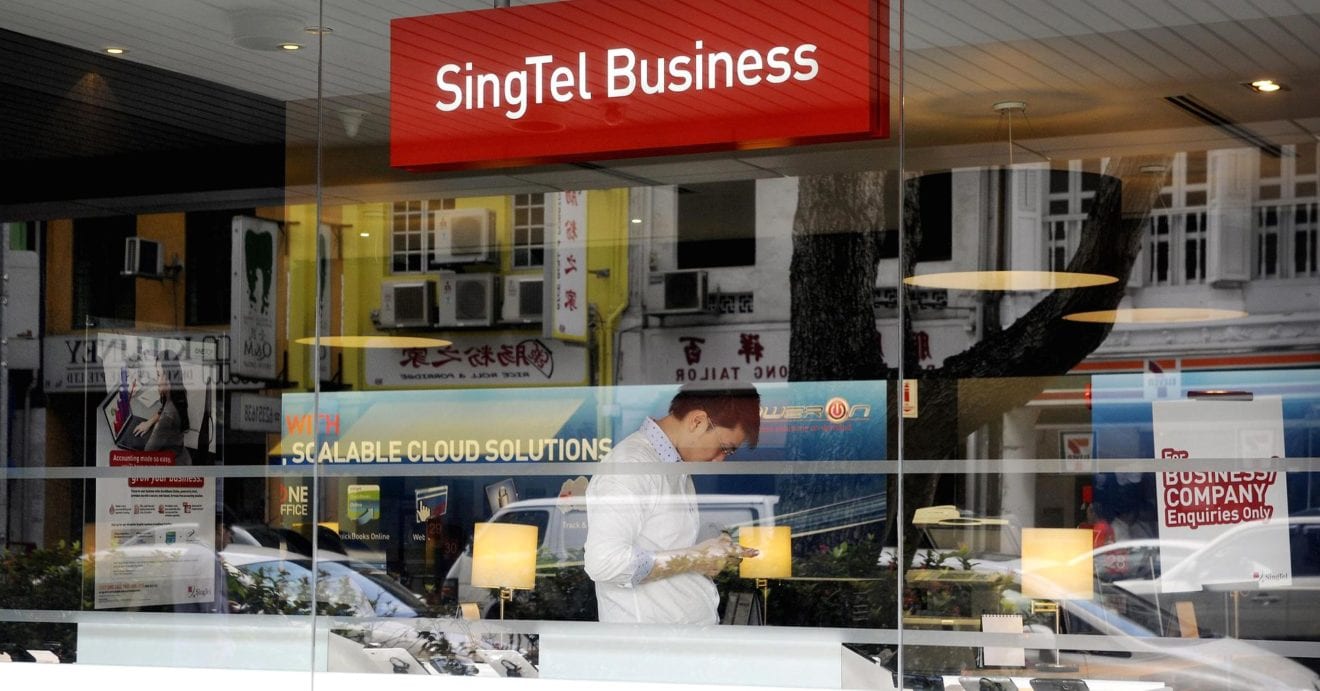
  • Singtel Q2 revenue falls 2.3%

    Singtel Q2 revenue falls 2.3%

    Singtel has reported a 2.3% decrease in group revenue for its fiscal second quarter to S$4.08 billion (2.89 billion), as the company felt the impact of regulatory changes in Australia.

    Australian competition regulator ACCC’s decision last year to cut termination rates from 3.6 to 1.7 cents per minute impacted the performance of Singtel’s wholly-owned Australian subsidiary Optus. Excluding this impact, revenue would have grown 2% to S$4.28 billion.

    The impact of the rate cut contributed to Singtel reporting an 8% decline in its group consumer revenue, covering both Singapore and Australia. In Singapore, revenue fell 3% due largely to lower handset sales and a rise in penetration of lower-priced Android handsets.

    Group enterprise revenue by contrast grew 5% on the back of strong demand for cyber security and international data services.

    Net profit fell 6% year-on-year to S$972 million, due to exceptional gains recorded by Indian mobile affiliate Airtel in the previous corresponding quarter.

    Underlying net profit by comparison was stable for the quarter and up 3% for the first half of the financial year.

    Regional mobile associates’ pre-tax profit contributions grew 7% to S$679 million as a result of strong operating results from Airtel and Indonesia’s Telkomsel. The latter’s pre-tax profit jumped 22% as it reaped the results of investments in its voice, data and digital businesses.

    The group’s total customer base – including its mobile affiliates – grew 3% to 629 million subscribers.

    Singtel is currently projecting a low single digit decline in group operating revenue but stable ebitda for the full year.

  • Ooredoo to deploy Ericsson cloud-ready revenue system

    Ooredoo to deploy Ericsson cloud-ready revenue system

    Ooredoo Group has signed a five-year contract with Ericsson to implement the Swedish vendor’s revenue management system across the group’s operations in the Middle East, North Africa and Southeast Asia.

    Ericsson Revenue Manager, a cloud-ready convergent charging and billing system, provides Ooredoo with a number of advantages as the telco group updates its product portfolio and drives the development of digital innovation across its markets.

    Simple configuration reduces dependency on technical departments, makes it easier and faster to launch new services with tailored pricing and packages. This enables Ooredoo companies to offer customers new services and the products they need in minutes, rather than months, the companies said.

    The solution will also help Ooredoo more easily create digital services that spans beyond telecoms and integrates with partners from different industries.

    “Across our footprint, Ooredoo is aiming for data experience leadership, and placing renewed emphasis on empowering our customers and giving them the services they need when they need them,” said Waleed Al Sayed, deputy CEO at Ooredoo Group.

    Through this agreement with Ericsson, we will enable every Ooredoo operation to deliver fast, customer-oriented offers and launch new data products and services that support our growing portfolio of digital services and enables the growth of the Internet of Things.”

    Ooredoo will begin rolling-out the solution for Indosat Ooredoo, its largest operation in Indonesia, over the next month, before deploying across its other operations later this year and 2017.

    Upon the completion of the project, Ooredoo is expected to realize significant cost savings from replacing its existing systems and local agreements with a pioneering new group-wide license model.