Author: Mei Ling Tan

  • Toyota says production of C-HR model begins in Turkey

    Toyota says production of C-HR model begins in Turkey

    Toyota Motor Corp launched production in Turkey on Wednesday of its C-HR compact SUV crossover and said the model would be exported to all global markets including North America.

    In a statement, Toyota said production was beginning with an initial investment in Turkey of 350 million euros ($390 mln).

  • Rhenus opens its first office in South Korea

    Rhenus opens its first office in South Korea

    The Rhenus Group is opening its own business operations in South Korea at the beginning of November. The logistics specialist also founded the national company known as Rhenus Logistics Korea at the same time. The office in the South Korean capital Seoul will organise sea and air freight operations, third-party logistics and domestic transport services in future.

    “The primary motive for opening the business site in South Korea is to continue consolidating our Asian network; we’ve been continually expanding this during the past few years. Seoul forms the centre of South Korea and is the focal point of the Sudogwon metropolitan district.

    “More than 25 million people live there and this accounts for half of the population of the country; it therefore provides an excellent starting point for our range of logistics solutions,” says Tobias Bartz, who is responsible for the logistics specialist’s Asian business on the Rhenus Management Board, citing the reasons for the latest developments.

    The Rhenus Group is particularly aiming to establish itself as a partner for transporting, handling and storing raw materials, semi-finished products and industrial and consumer goods in the South Korean market with its complete range of services. Rhenus Logistics Korea then plans to develop the individual solutions for specific sectors, combined with local expertise.

    Much of the country’s trade takes place with Europe – but the new company will also focus on transport between different Asian countries. In terms of its infrastructure, South Korea provides excellent conditions for sea and air freight services for the new national company with Incheon International Airport, one of the largest in Asia, and the port of Busan, which is one of the top 10 in the world according to the number of containers handled. “We also envisage further growth in this market in future after completing the starting phase in Seoul,” says Bartz.

  • Mobile financial services booming in emerging markets

    Mobile financial services booming in emerging markets

    The total transaction value of mobile financial services in emerging markets will reach $500 billion in 2021, up from $198 billion in 2016, Juniper Research estimates.

    The estimates include revenue from domestic money transfers, deposits on loans, insurance products, and savings accounts.

    The research argues that by introducing insurance offerings, operators had the opportunity to substantially reduce churn levels.

    It cited the example of Telenor Suraksha life insurance scheme in India, which has seen nearly 50% of its 45 million user base sign up since its December 2015 launch.

    “The model underpinning the Surakhsa scheme – requiring consumers to top-up airtime on a monthly basis to receive the insurance cover – should be widely replicated. It enables operators to maintain average revenue levels within low-income, low-ARPU prepaid environments and allows consumers to reap the benefits of micro-insurance cover,” said Lauren Foye, research analyst, Juniper Research.

    However, the research cautioned that a key challenge would be tailoring financial service products to the needs of individual markets. It cited the case of several early implementations of mobile financial services in markets such as India, the Philippines and Nigeria achieving limited adoption where products were often ill-suited to their target audience.

    Opportunity in New Markets

    The research also highlighted the Asia-Pacific as a region which, while currently under-served due in part to the complexity of national regulations, has strong potential for future product launches.

    Whilst restrictions have been in place previously, largely due to cultural beliefs, Juniper found that attitudes are changing in under-served regions, with Indonesia acquiring its first ever microloans product Kashmi in 2017.

    Additionally, specialized products have been launched to address religious requirements, such as Achuwat in Pakistan which provides interest free loans to meet Sharia requirements.

  • GO-JEK acquires Pune-based mobile app developer Leftshif

    GO-JEK acquires Pune-based mobile app developer Leftshif

    Indonesia-based leading startup GO-JEK on Tuesday announced that it has acquired Pune-based mobile application developer Leftshift for upscaling its product development, design and engineering platforms.

    This is the fourth Indian start-up acquisition by the Indonesian startup.

    “Our partnership with Leftshift over the last one year has been an amazing experience, they are arguably among the best mobile app developers in the country. We look forward to their team becoming a part of the GO-JEK family,” said Sidu Ponnappa, Managing Director, GO-JEK Engineering India, in a statement.

    Leftshift was started in 2007 with the intent of creating “loveable apps” that people would find easy and convenient to use.

    “The opportunities and challenges at GO-JEK are beyond thrilling. Our resources and technology would certainly complement and accelerate product development at GO-JEK,” added Sudhanshu Raheja, founder and CEO, Leftshift.

    According to GO-JEK, it intends to continue shoring up its India operations as it eyes more talent for key processes like data science, mobile, security and DevOps.

    The financial details of the acquisition were not disclosed.

  • Government Push Google to Pay Tax

    Government Push Google to Pay Tax

    Director General of Tax Ken Dwijugiasteadi confirmed that Google Asia Pasific Pte Ltd will settle their tax debts by the end of 2016. The government has decided to negotiate with the company instead of filing a report to the police. “Google must pay their tax debts this year, the company and the government will release a statement after the investigation,” Ken said on Monday.

    Ken had met with Google representatives last week. According to the Director General, Google has the right to file their objection towards the tax investigation results as long as an agreement has not been made. The company however, will be required to pay off their debts based on the investigation’s closing conference.

    In response to the issue, Google spokesman Jason Tedjakusuma refused to provide any comment. Jason also refused to respond to questions related to the results on last week’s meeting. “No comment,” Jason said briefly.

    The government estimated that Google Asia Pacific’s revenue, based on service and product sales in Indonesia, had reached Rp 5.5 trillion. On the other hand, Google representative office in Indonesia only generates revenues from advertising services.

    Google Indonesia had been registered at the Tanah Abang Tax Office as a foreign investment company since September 15, 2011. However, state officials cannot collect the company’s taxes because Google is not registered as an Indonesian legal entity.

    Yustinus Prastowo, Executive Director of Center for Indonesia Taxation Analysis doubted the government’s ability to force Google to pay their taxes by the end of 2016. “Even if there is a payment, it wouldn’t be as large as it was expected,” Yustinus said.

  • TrueMove deploys Procera’s ScoreCard

    TrueMove deploys Procera’s ScoreCard

    Thai mobile service provider TrueMove has deployed Procera’s ScoreCard technology to monitor the quality of experience (QoE) its network is delivering to subscribers across 2G, 3G, and 4G LTE.

    ScoreCard is being used for raw QoE KPI intelligence and the visualization of network performance, thereby helping to guide capex investments and better service planning.

    TrueMove’s management can quickly use the data and visualization to further aid business investment decisions, maximize ROI, and reduce churn among the subscriber base.

    “Mobile operators are increasingly differentiating their offerings by delivering a differentiated experience to subscribers,” said Viriya Upatising, CIO at TrueMove.

    “Procera’s solutions enable TrueMove to see the actual experience delivered to their subscribers in real-time, and ScoreCard provides unique QoE KPIs and visualization that is ensuring the experience is a good one for all subscribers.”

    As higher bandwidth mobile devices, connected cars, and the Internet of Things (IoT) continue to proliferate, TrueMove needs better intelligence about the QoE delivered to subscribers to maximize the return on investment for its capex.

    ScoreCard has been deployed across TrueMove’s network to measure the quality of mobile broadband delivery. No Personally Identifiable Information (PII) is collected from the subscribers, but the overall quality of the broadband service is measured and fed back to a centrally deployed Procera Insights system.

    ScoreCard has already identified several areas of investment that will improve the QoE of the TrueMove network, and action has been taken to enhance the subscriber experience based on ScoreCard’s recommendations.

  • Singapore Post launches eComm Log Hub

    Singapore Post launches eComm Log Hub

    Singapore Post has launched its Regional eCommerce Logistics Hub (eComm Log Hub) at Tampines Logistics Park.

    Costing S$182 million (US$131 million), the hub is SingPost’s largest eCommerce logistics investment in Singapore to date.
    Officially opened by Singapore’s deputy-Prime Minister and Co-ordinating Minister for Economic and Social Policies Tharman Shanmugaratnam, the three-storey hub comprises two warehousing floors, 150 simultaneous loading bays and an office block. The total built-up area covers 553,000 sqft (51,375 sqm).

    On the ground floor is a fully automated parcel-sorting unit that can handle up to 100,000 packages a day, while the second floor has the automated warehouse. End-to-end sorting, shipping and returns management capabilities enable quicker order fulfilment.
    The eComm Log Hub will process parcels for delivery within Singapore and those to be shipped internationally.
    “The opening of our Regional eCommerce Logistics Hub is another milestone in the expansion of SingPost’s eCommerce logistics network, which now spans 19 markets across Asia Pacific, Europe and the US,” says SingPost chairman Simon Israel. “Singapore’s regional connectivity makes it ideally positioned to be a centre for eCommerce.”

    He says everything in the new building is scalable, “which means we can keep upgrading it to meet the needs of the future”.
    Also at the opening ceremony, SingPost launched its Centre of Innovation (COI). This was set up last year with support from the Economic Development Board to research logistics and postal services and products, in collaboration with research institutions.
    Initiatives from the SingPost COI include:
    * Enhancements to the eCommerce logistics platform to help support smart logistics;
    * A new version of the Self-service Automated Machine (SAM) platform to enhance customer experience and provide a seamless omni-channel experience encompassing the kiosk and the digital postal office;
    * Taking the online and offline world of retail shopping to the SingPost mall, allowing retailers to experiment with customer interaction;

    • Digitally transforming the post office so customers can conduct transactions faster and easier;
    • Innovating last-mile delivery options through building next-generation PopStations and experimenting with drone delivery.
  • Privacy is paramount to online consumers

    Privacy is paramount to online consumers

    More than half (55%) of consumers globally have decided against buying something online due to privacy concerns, a recent KPMG International survey indicates.

    The survey also revealed that less than 10% of consumers feel they have control over the way organizations handle and use their personal data. Respondents in most countries say privacy controls are more important than the potential convenience gained from sharing personal data.

    “An executive would be at risk of being fired if half their customer base disappeared after they made a crucial business decision,” said Mark Thompson, Global Privacy Lead at KPMG.

    “Failure to embed privacy into the DNA of their business strategy could ultimately lead to the extinction of a business given how closely consumers and regulators alike are paying attention to how organizations collect, store and use personal data.”

    The survey further revealed that 82% are not comfortable with the sale of their data to third-parties in exchange for the speed, convenience, product range, home delivery and price comparison that online shopping offers.

    Over two-thirds of people are not comfortable with smartphone and tablet apps using their personal data. In all markets but one, at least 75% of respondents said they were uneasy with their online shopping data being sold to third-parties.

    About 55% said a free fitness tracking device that monitors the well-being of users and produces a monthly report for them and their employer is also crossing the line.

  • Lippo Group betting on e-money in digital age

    Lippo Group betting on e-money in digital age

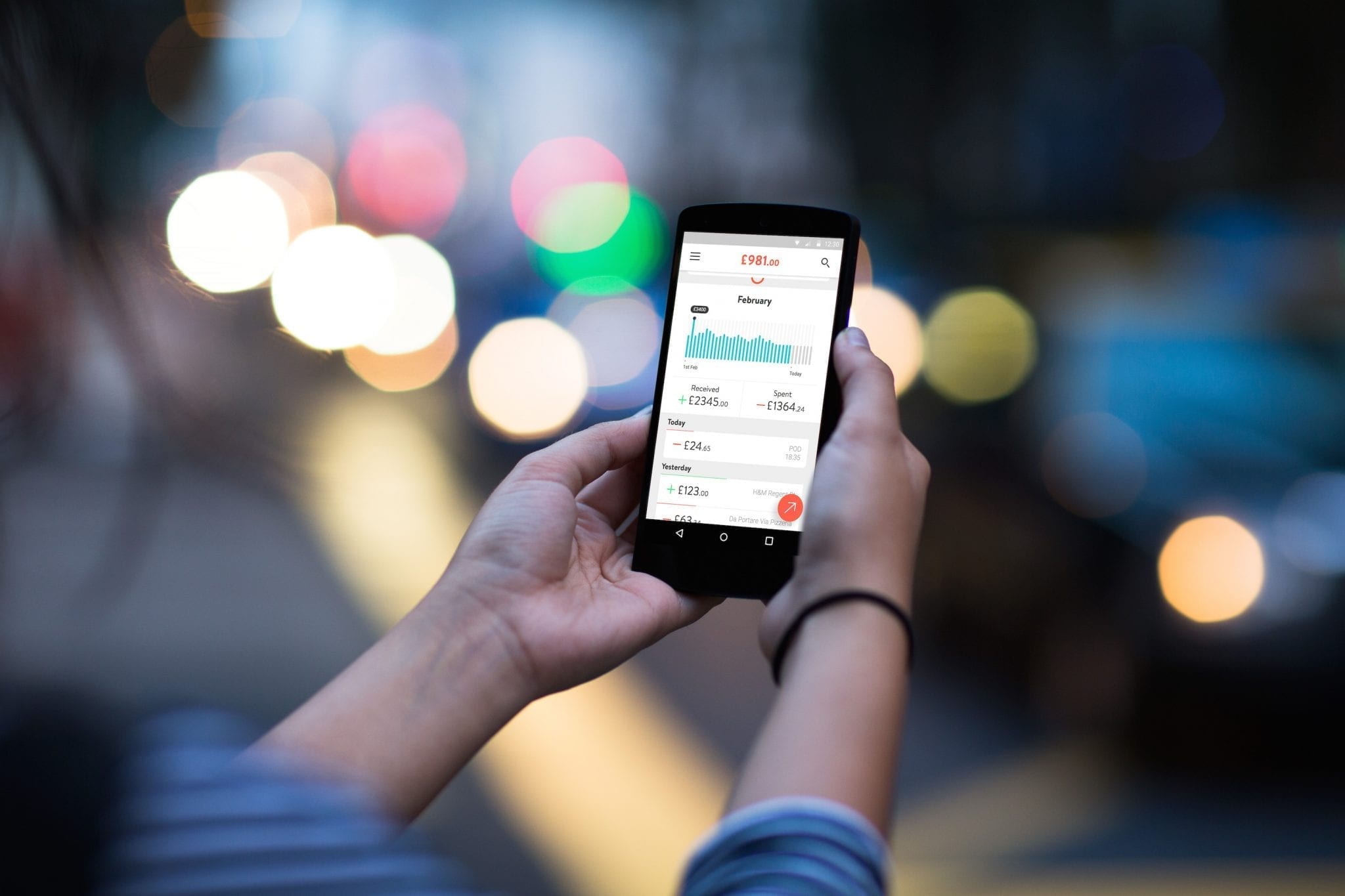
    Indonesia’s Lippo Group is turning e-commerce, electronic money and other information technology-related enterprises into a new pillar of its business, closely monitoring spending trends to gain a better foothold in the greater Southeast Asian market.

    The next phase for the banking and real estate conglomerate “will be the fourth industrial revolution,” CEO James Riady told The Nikkei Tuesday on the sidelines of the 18th Nikkei Global Management Forum here.

    Lippo Group was founded as a banking institution by Mochtar Riady, the current CEO’s father and a former head of Bank Central Asia. It branched out into real estate in the 1990s when subsidiary Lippo Karawaci developed a plot outside Jakarta that the group collected as collateral. Lippo Group has since also developed retail and hospital operations, which help boost property value. It now has more than 20 listed subsidiaries and rings up a total of about $7 billion in annual revenue.

    But the fall in resource prices and China’s economic slowdown have dealt a blow to the Indonesian economy, including to its real estate sector. Lippo Karawaci suffered a 23% drop in sales last year to 9.19 trillion rupiah ($702 million), as well as a 79% plunge in net profit to 535.3 billion rupiah.

    Business of the future

    Meanwhile, the proportion of smartphone users in Indonesia has risen from about 20% of the population in 2014 to almost 40% — about 100 million people — in 2015. “We must have inward creative disruption so that we can be transformed into a new area of growth, which is the digital economy,” James Riady said.

    In addition to its communications and media businesses, Lippo Group launched e-commerce site MatahariMall in September 2015. One of the platform’s strengths is that it can use Lippo Group’s retail network throughout Indonesia to move and distribute products — a definite plus in the face of competition from Lazada Group, a subsidiary of Chinese titan Alibaba Group Holding, and Tokopedia, in which Japan’s SoftBank Group has a stake. It was revealed in October that Japanese trading house Mitsui & Co., bullish on MatahariMall’s growth potential, was investing in the site’s operating company.

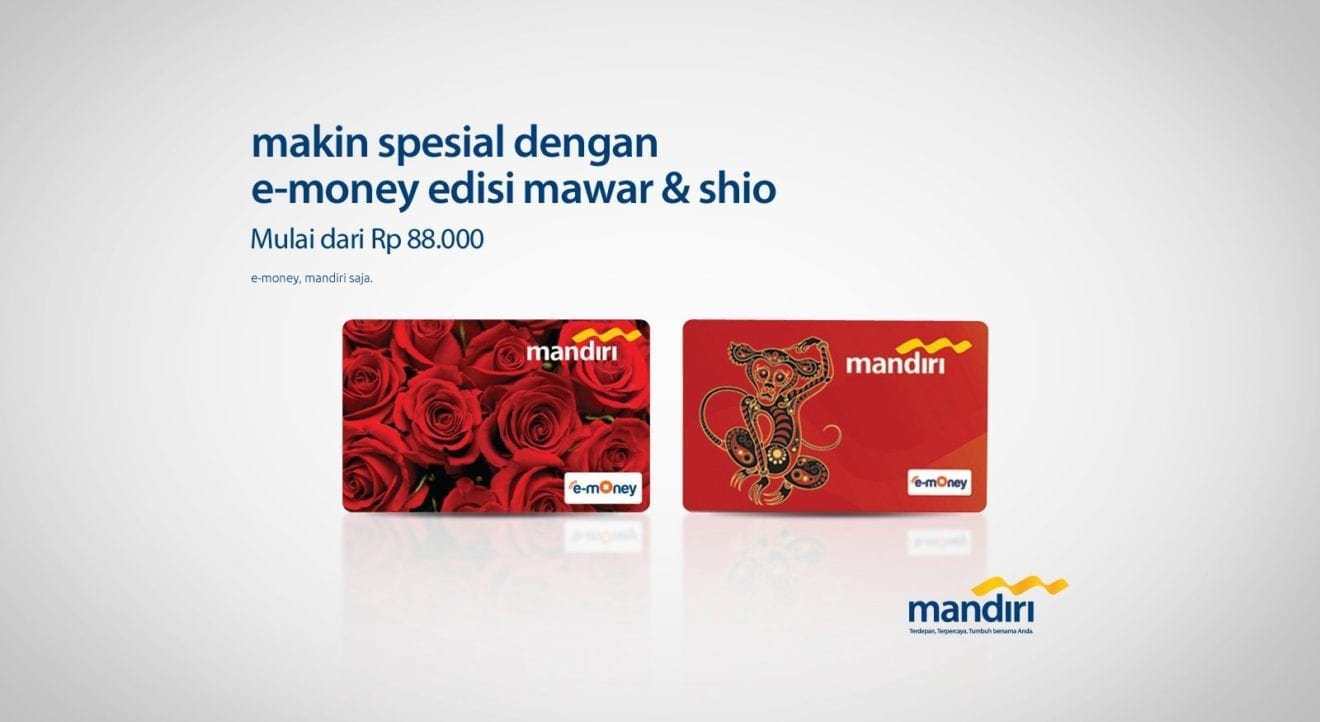
    Riady considers e-money his new focus. The goal is to get Lippo Group’s 120 million customers on board by allowing them to pay at hundreds of retail locations using the service. He plans to expand the group’s e-money offerings to other Southeast Asian countries, as well as include such services as depositing and transferring e-money. Riady sees a complete transformation in the way banks do business.

    Lippo Group and Singaporean ride-hailing company Grab agreed in July to cooperate on launching a mobile payment platform. The service will roll out in earnest at the end of the year.

    Following trends

    The spread of e-money will allow Lippo Group to closely track spending by its customers at retailers, e-commerce sites and other outlets. Riady hopes to use the service to bolster overseas expansion of the group and improve products and services associated with retail operations.

    Lippo Group is currently operating real estate businesses in Singapore and Hong Kong. But it will target Southeast Asia in the future to win over the region’s young, eager consumers. “What matters is how we can capture the [Association of Southeast Asian Nations] population of 600 million into our e-money accounts and world of services,” Riady said.

    In terms of Lippo Group’s real estate business, Riady expressed his interest not just in property development but in creating entire communities spanning retailers, hospitals and schools. The group has already built hospitals in Myanmar, and the CEO said the company is looking into Vietnam and Laos as well.

  • China Mobile deploys wideband Massive MIMO

    China Mobile deploys wideband Massive MIMO

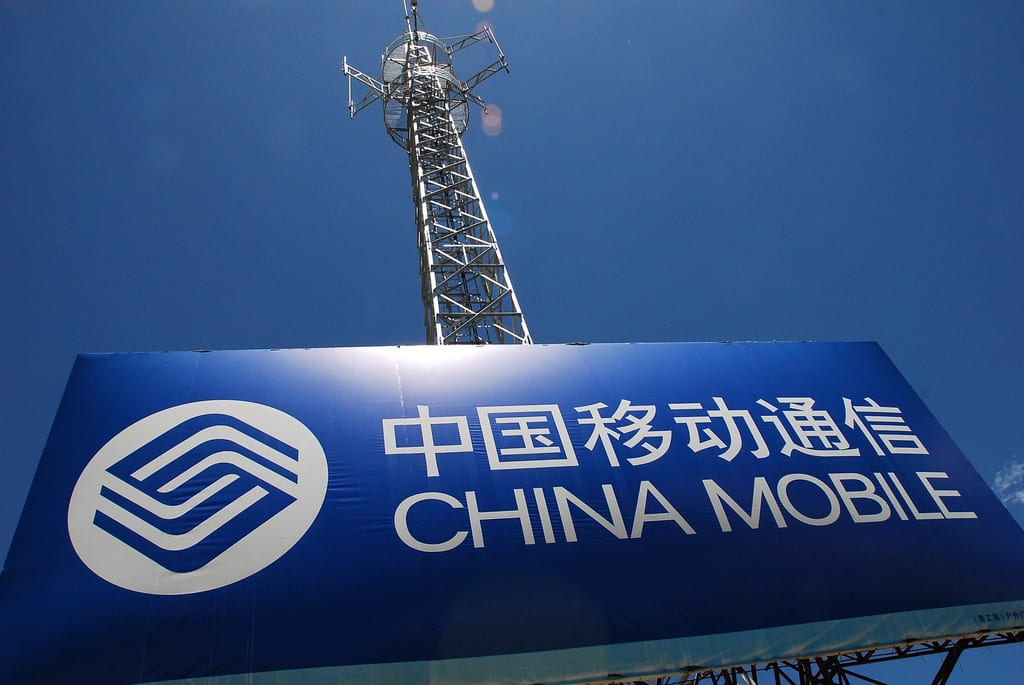
    China Mobile Shanghai and Huawei have jointly deployed the world’s first wideband Massive MIMO site to help improve 4G network spectral efficiency.

    China Mobile has been focusing on the design of wideband Massive MIMO as part of its research on 5G. The technology been oriented specifically towards large-scale commercial use by the operator.

    Wideband Massive MIMO allows a single module to support the activation of three 2.6-GHz carriers, potentially allowing for a three-fold increase in the spectral efficiency of cells.

    The live deployment in Shanghai has achieved peak cell throughput rates of 72Mpbs using an uplink 8-stream capability configuration, as well as 630Mbps downlink.

    Huawei said the technology supports a smooth transition to CloudRAN architecture, while its in-house developed chips and optimization techniques helps provide processing capabilities four times higher than that of the industry standard.

    The technology is particularly suited to meeting specialized coverage requirements such as high-rise buildings.

  • Airline Sriwijaya Air offering Initial Public Offerings (IPO) in Indonesia

    Airline Sriwijaya Air offering Initial Public Offerings (IPO) in Indonesia

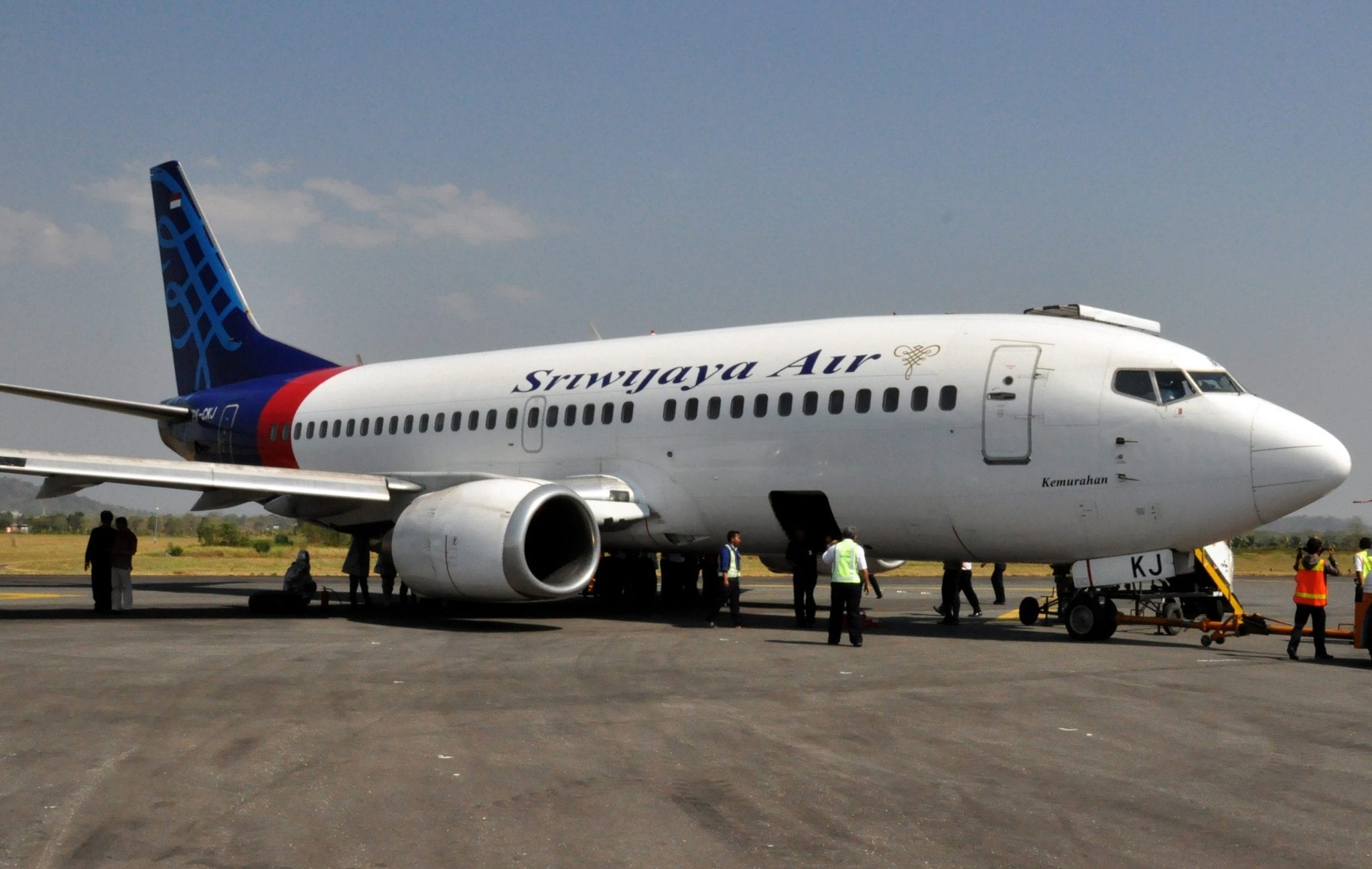
    Currently, Sriwijaya Air serves 46 domestic routes as well as seven international routes in the Asia Pacific with 51 narrow-body Boeing jets. With the larger fleet (after additional airplanes are purchased), the airline wants to add several domestic and regional routes as well as one to Jeddah (Saudi Arabia).

    Chandra Lie did not inform how much the company expects to raise from the initial public offering on the Indonesia Stock Exchange (IDX). In February 2011 Indonesia’s national flagship carrier Garuda Indonesia conducted an IPO on the IDX in which it raised IDR 3.3 trillion (approx. USD $252 million) by selling a 28 percent stake.

    Sriwijaya Air, founded by the brothers Chandra Lie and Hendry Lie in 2003, is Indonesia’s third-largest airline, controlling about ten percent of the domestic air passenger market. It currently carries about 800,000 passengers per month. The airline will move its administration and operational activities to the Cengkareng Business City complex from its current base at the Soekarno Hatta International Airport.

    The aviation industry in the Asia-Pacific region remains among the world’s fastest growing regions in terms of air passengers. Recently, the Indonesia National Air Carriers Association (INACA) says, whereas worldwide the number of air passengers is growing at a pace of nearly 7 percent (y/y), Indonesia’s air passenger growth is estimated at around 15 percent (y/y) in 2016.

    Number of Air Passengers in Indonesia 2011 – 2015:

    2011 2012 2013 2014 2015
    Air Passengers
    (in million)
    62.4 66.4 68.6 72.6 82.4

    Source: BPS

  • Dtac taps Nokia to revamp core network

    Dtac taps Nokia to revamp core network

    Thailand’s Dtac has become the market’s first mobile operator to implement an SDN-ready IP/optical network using equipment from Nokia.

    Dtac is implementing the technology to replace its existing IP core routing and DWDM infrastructure, in order to achieve the capacity to serve Thailand’s fast-growing mobile subscriber base.

    The deployment also includes Nokia’s security gateway for Dtac’s LTE network.

    “Over the last two years we’ve seen demand for mobile broadband grow exponentially,” Dtac CTO Prathet Tankuranun said.

    “As we prepare for future advanced technologies we’ve made a strategic choice for an SDN-ready IP/Optical network because it gives us the control and agility needed to run an efficient network that can rapidly adjust to evolving demand patterns. This deployment with Nokia is an important next step in our migration towards full SDN automation.”

    Nokia Thiland head Sebastien Laurent added that the deployment “provides the foundation for an SDN-centric network and will allow dtac to implement on-demand services while also easing operation and maintenance demands.”

  • Indonesia wants to lead the region in e-commerce

    Indonesia wants to lead the region in e-commerce

    With other Southeast Asian countries already having prepared the ground for the digital economy to prosper, the Indonesian government has finally taken the initiative to spur the growth of e-commerce within its own boarders.

    Announced on Thursday evening, the 14th economic policy package will tackle eight issues that could determine the success of President Joko “Jokowi” Widodo’s goal of turning Indonesia into the biggest digital economy of the region by 2020 with a targeted value of US$130 billion. The eight issues are funding, taxation, consumer protection, human resources, logistics, communication infrastructure, cyber security and the establishment of a project management office.

    The government expects the new policy package, dubbed the e-commerce road map, to create 1,000 “techno-preneurs” with businesses that have a total value of $10 billion by 2020.

    Coordinating Economic Minister Darmin Nasution said the e-commerce road map, which will be translated into a presidential decree, was essential to boost connectivity and efficiency in the industry.

    The government also expects the road map to better protect national interests and give priority to small and medium-sized enterprises and start-ups.

    “We also want to boost creative innovation and invention of new economic activities, especially for youths who enjoy playing around with new things,” he said during a press conference to unveil the package on Thursday.

    Indonesia’s e-commerce market is estimated to be worth Rp 18 trillion ($1.4 billion) as of 2015, with 37 million consumers from a total population of 255 million, according to World Economic Outlook data compiled by the Internet Service Providers Association. The association expects the e-commerce market will be worth Rp 25 trillion by 2016, with 49 million consumers.

    Meanwhile, Communications and Information Minister Rudiantara presented some details of the road map, which includes grants or subsidies to help start-ups boost their chances of surviving in the tough e-commerce industry.

    The government also aims to reduce taxes for locals investing in start-ups and simplify taxation procedures for e-commerce start-ups with a turnover of less than Rp 4.8 billion a year, so that the final income tax will only come to 1 percent.

    “In terms of logistics, this is interesting, because we have already decided to reposition state-owned postal company Pos Indonesia as a logistical platform for Indonesian e-commerce,” Rudiantara said.

    Since taking office in 2014, Jokowi has issued 13 stimulus packages aimed at eliminating business hurdles.

    A recent report from management consulting firm McKinsey & Company suggested that by going digital, Indonesia would be able to unleash its next level of economic growth to the tune of $150 billion in terms of impact by the year 2025 if it were able to address the most pressing issues adequately.

    The report suggested that while Indonesia was admirable in terms of the number of internet and smartphone users, it still did not adequately embrace modern technology. Internet penetration in Indonesia has only reached 39 percent of the population, despite smartphone penetration standing at 43 percent.

    The report partly places the blame for the low penetration on Indonesia’s relatively weak information and communication technology infrastructure. Indonesia’s internet bandwidth, for instance, is still at a relatively low average rate of 6.2 kbps per user, far below Malaysia’s 27.2 kbps and the Philippines’ 27.7 kbps.

    Bank Central Asia (BCA) economist David Sumual was optimistic about the latest economic policy package, saying Indonesia’s market was large and investors had already begun to show interest in the business.

    David, however, warned the government’s digital economy dream could end if the country failed to improve infrastructure and logistics.

    “It will not reach its maximum potential if our logistics remain the same. It may be alright in the bigger cities, but how will it work in the remote areas? Weak infrastructure remains our biggest task.”


  • Ericsson deploys Elastic RAN for SoftBank

    Ericsson deploys Elastic RAN for SoftBank

    Ericsson has completed the first commercial deployment of its new Elastic RAN for Japan’s SoftBank, and entered an agreement to build a 5G trial network in parts of Tokyo with NTT DoCoMo and Intel.

    SoftBank has implemented Ericsson’s Elastic RAN at Tokyo station, one of the biggest train stations in the world.

    The deployment allows for an unlimited number of cells to be co-ordinated across a network to improve flexibility in the aggregation of different network carriers.

    Ericsson said tests indicate that downlink throughput has increased by up to 40% during peak hours for commuters using three-carrier aggregation compatible smartphones.

    “The Japanese market is highly developed, and our customers enjoy using the latest mobile broadband technologies with their smartphones and applications,” SoftBank SVP and deputy head of technology Hideyuki Tsukuda said.

    “We are excited to partner with Ericsson in the first introduction of the Elastic RAN solution to enable peak performance of the most advanced smartphones in the world, in the densest and most challenging areas of our network.”

    He said SoftBank plans to continue deploying the RAN across these dense urban areas.

    Ericsson separately announced an agreement with DoCoMo and Intel to build a 5G trial network in parts of the city from 2017.

    Ericsson will provide 5G radio, baseband, virtualized RAN and core networks, while Intel will contribute its chipset in user devices. The trial will use the 28-GHz spectrum band that the Japanese government is considering designating for 5G use.

  • StarHub launches device leasing service for SMEs

    StarHub launches device leasing service for SMEs

    StarHub has launched a new service that provides SMEs with the devices, software and technical support necessary to meet their IT needs at a monthly flat fee.

    The “device subscription service” was designed to help SMEs seeking to make a successful start quickly, raise productivity with an IT upgrade, or scale up operations by adding employees.

    StarHub has partnered HP to provide desktop and notebook PCs, as well as print devices for the new Device Subscription Service.

    SMEs can choose from a variety of price plans to access the right combination of devices that best address their needs over 24 or 36 months. All new and existing StarHub Business Fibre Broadband or Business Mobile customers can enjoy a limited-time offer of S$15 ($10.60) monthly savings for every Device Subscription Service plan subscribed.

    After this discount, the Office User plan charges S$43.00 per month for the use of an HP desktop while the Mobile User plan, priced at S$48.00 per month provides access to an HP notebook. A printing plan can also be selected for S$22 or S$35.00 per month depending on device.

    SME customers can subscribe to Device Subscription Service on top of StarHub’s Smart Office Suite, to enjoy a bundle consisting of fiber broadband, mobile connectivity, office phone service, and related hardware, software and IT support.

    All HP devices from Device Subscription Service will come pre-installed with Windows 10 Pro, McAfee internet security software and the option to subscribe to business productivity tool, Office 365, allowing customers to start sending emails and enjoying protection from cyber malware right from the point they turn on the devices, alleviating the hassle of purchasing and installing the software separately themselves.

    Device Subscription Service provides a dedicated technical helpdesk as well as next business day, on-site technical support for devices. This will also save customers the hassle of sending faulty devices to a service center for repair, allowing them to fully focus on their core business.

    “Rising business costs and hiring difficulty remain top concerns among local SMEs. With Device Subscription Service, StarHub can help SMEs manage these challenges effectively by lowering upfront IT investment as well as taking away the complexity of maintaining an IT team,” StarHub vice president of enterprise solutions, services and delivery Sebastian Tan said.

    “As the IT spending is incurred as a monthly expense rather than an upfront capital investment, SMEs will be able to better allocate resources towards growing their core business.”