Author: Mei Ling Tan

  • MatchMove adds HCE functionality to Wallet OS

    MatchMove adds HCE functionality to Wallet OS

    Mobile wallet company MatchMove has added host card emulation (HCE) functionality to its Wallet operating system, in partnership with US-based contactless technology vendor SimplyTapp.

    The deployment is expected to benefit MatchMove’s existing partners and future customers who wish to offer a contactless payment experience to consumers globally, but do not wish to be tied to a specific payment network.

    MatchMove’s HCE-enabled technology is device agnostic and able to operate on any Android device running version 4.4 and above with NFC capability.

    Starting in Singapore, users with MatchMove-powered virtual cards will soon be able to enjoy a hassle-free tap and pay experience at relevant NFC-enabled in-store terminals, for instance, Mastercard’s Paypass. The Asiawide capability will be available for new enterprise and startup customers by the end of Q4.

    “By leveraging on SimplyTapp’s expertise in HCE and pairing it with our current MatchMove platform, we are enabling our customers who use our OS for a wide range of new services and capabilities, such as using only a virtual card for physical payment, using the virtual wallet for loyalty across multiple merchants and even for instant cross-border remittance,” Matchmove CEO Shailesh Naik said.

    This further differentiates MatchMove from other payment solutions that still require digitising plastic cards on mobile devices.”

  • Japan’s Nissan to sell parts maker Calsonic Kansei to KKR

    Japan’s Nissan to sell parts maker Calsonic Kansei to KKR

    Nissan Motor Co has decided to sell its entire stake in Japanese auto parts maker Calsonic Kansei Corp to U.S. private equity firm KKR &Co as part of a $3.8 billion takeover, the Nikkei daily reported, without citing its sources.

    KKR then will try to buy the remaining shares in Calsonic from other shareholders through a takeover bid, bringing the total deal to as large as 400 billion yen ($3.80 billion), the report said.

    Bain Capital and MBK Partners were also bidding to buy the auto parts maker, which has a market value of about 280 billion yen, Thomson Reuters LPC had reported earlier.

    Trading of Calsonic Kansei was suspended by the Tokyo Stock Exchange on Friday morning. A Calsonic Kansei spokesman said the company had not announced a sale to KKR.

  • DHL launches air freight service for emergency logistics

    DHL launches air freight service for emergency logistics

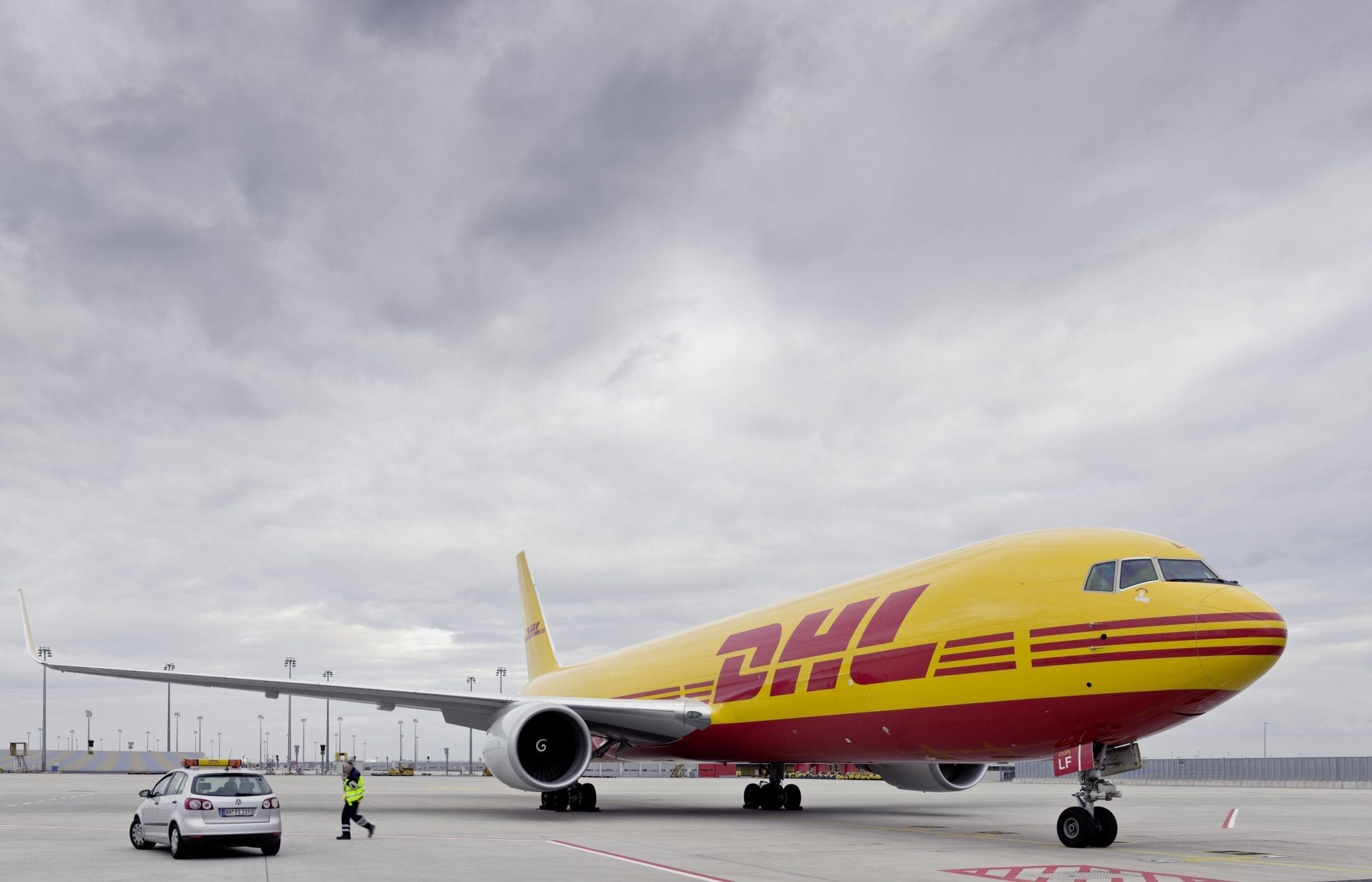
    DHL Global Forwarding extends its product portfolio and launches DHL SameDay Speedline. This new air freight product offers forwarding customers a mission critical solution for emergency shipments. Providing a best flight out service at an optimal cost-performance ratio, each unaccompanied shipment will be proactively monitored from origin to destination.

    With benefits such as 24/7/365 pickup and delivery, collection within 120 minutes and quotations within 60 minutes, the DHL SameDay Speedline product will fill the gap for a much needed global expedited solution. This new service covers urgent delivery of spare parts, critical medical supplies or newly launched products.

    Although DHL SameDay Speedline is a multisector product, it‘s especially attractive for aerospace & aviation, automotive, electronics, energy and life sciences industries.

    “The emergency shipment market is growing with just-in-time inventories for industries from aerospace and energy to manufacturing to adapt their supply chains. The need for mission critical shipment delivery to avoid line down situations continues to arise and requires a partner that has the global reach combined with the technology to provide transparency to each sector specific logistical challenge. DHL SameDay Speedline fills this gap and provides added value through its many service features,” states Ingo-Alexander Rahn, Global Head of Air Freight, DHL Global Forwarding.

    The launch of DHL SameDay Speedline’ s global network of 50+ stations will cover the greatest geographical demand for emergency shipments, with the expectation, that the network will grow through customer demand. A core strength of DHL SameDay Speedline are the 24/7/365 SameDay Contact Centers in the US, Singapore and Ireland, where each shipment is proactively monitored from origin to destination.

    Dedicated customer service representatives will handle the majority of quotes and routing option for door-to-door transits in less than 60 minutes. Customers of DHL SameDay Speedline will receive customized milestone updates of their shipments movement after the logistical event. In case of an irregularity, a resolution to the issue is available within minutes.

    Next to specific industry sectors solutions, the scope of DHL SameDay are those customers that need to ship time-critical cargo regularly or experience unplanned emergencies.

    “We see DHL SameDay Speedline as a multi sector product offering that is especially attractive for aerospace & aviation, automotive, technology, energy, marine logistics and life sciences industries, including temperature controlled, dangerous or out-of-gauge goods,” Rahn adds.

    After surveying more than 200 customers from various industry sectors with emergency shipment needs, DHL Global Forwarding saw a need to develop a product utilizing the best of both worlds, the leverage of the DHL relationships in country with the emergency product technology and intelligence of the DHL SameDay team.

    “Our customers will choose DHL SameDay Speedline for the best flight options to meet just-in-time demand at an optimal cost performance ratio,” stresses Ingo-Alexander Rahn.

  • Big data market to grow three times faster than tech overall

    Big data market to grow three times faster than tech overall

    Forrester’s latest forecast predicts that the big data technology market will grow at a 12.8% CAGR over the next five years.

    In the first forecast of its kind from Forrester, the market is segmented into six buckets — enterprise data warehouse, NoSQL, Hadoop, big data integration, data virtualization, and in-memory data fabric.

    Forrester data found that, in 2016, almost 40% of firms are implementing and expanding big data technology adoption. Another 30% are planning to adopt big data in the next 12 months.

    In-memory data fabric is taking off. In-memory data fabric will grow 29% annually over the forecast period, according to Forrester data.

    Interest in non-relational databases (NoSQL and Hadoop) is increasing. NoSQL will grow 25%, and Hadoop will grow 33% annually over the forecast period.

    Among respondents, 41% have implemented and are expanding use of NoSQL, and another 20% plan to implement NoSQL in the next 12 months.

    Also, 30% of respondents implemented Hadoop in 2016 versus only 26% in 2015. The increase in unstructured data stored in the cloud using Hadoop increased from 29% in 2015 to 35% in 2016.

    Further, market growth varies by industry. In the next five years, the pharmaceutical, transportation, and primary production industries will see the highest adoption of big data technology. Currently the professional services, telecoms, government, and financial service sectors are the largest users.

  • Airtel Q2 profit falls 4.9%

    Airtel Q2 profit falls 4.9%

    Bharti Airtel has reported a 4.9% decline in net profit for its fiscal second quarter, as the operator cut tariffs to prepare for competition from disruptive newcomer Reliance Jio Infocomm.

    India’s largest operator by subscribers reported a profit for the quarter ending September 30 of 14.61 billion rupees ($218.5 million).

    Revenue grew 5.6% year-on-year to 246.52 billion rupees, with India revenues up 10.1% to 192.19 billion rupees.

    But while total ARPU rose to 201 rupees from 193 rupees the year before, aggressive price cutting led to a decline in voice ARPU to 140 rupees from 132 rupees.

    Mobile data revenues grew 21% year-on-year to 45.36 billion rupees, thanks largely to a 62.2% year-on-year growth in Indian mobile data customers to 41.3 million. Mobile data revenues accounted for 24.7% of Indian mobile revenues for the quarter, up from 21.5% a year earlier.

    Africa revenues meanwhile grew 4.7% on an underlying bases. Airtel has divested its operations in Burkina Faso and Sierra Leone over the past two quarters, reducing its African footprint to 15 countries.

    “Our strong focus on enhancing customer experience and building a robust network has resulted in continued acceleration of revenue market share. Overall revenue momentum in India has been sustained during Q2 with a growth of 10.1% year-on-year,” Airtel CEO of India and South Asia Gopal Vittal said.

    “This is primarily due to the strong performance of our non-mobile businesses, which grew in aggregate at 18.8% year-on-year, albeit our mobile business has experienced a slowdown in growth due to free services being offered by a new operator.”

  • Jurong Point put on market with over S$2b price tag

    Jurong Point put on market with over S$2b price tag

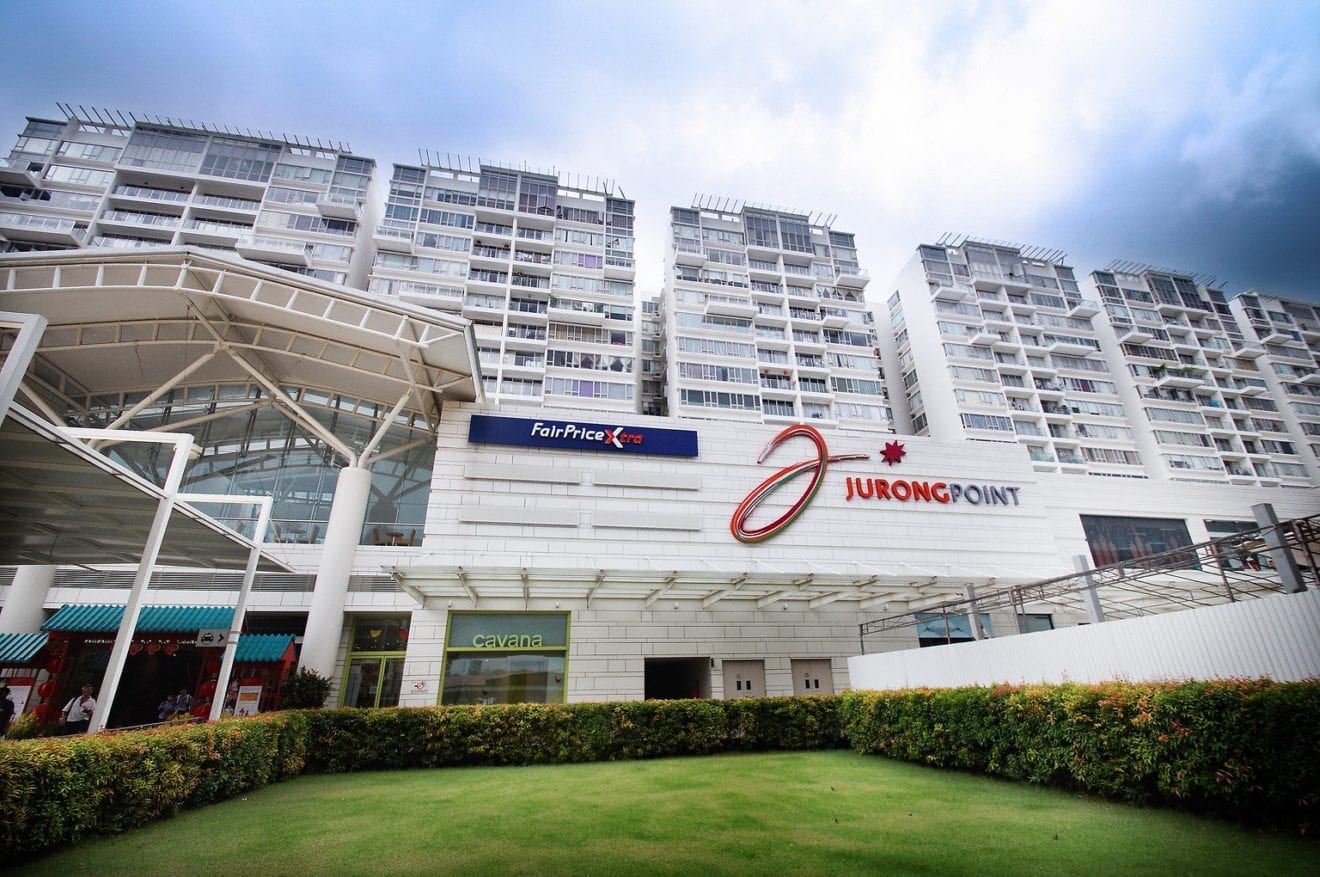
    biggest suburban shopping centre, Jurong Point, has been put up for sale with a price tag exceeding S$2 billion.

    This works out to more than S$3,000 per square foot based on the commercial net lettable area of about 658,000 sq ft that is being offered for sale by an equal joint venture between Guthrie GTS and Lee Kim Tah Holdings, both of which have been delisted.

    At over S$2 billion, the price tag translates to a sub-4 per cent net yield, Michael Leong, director of sole marketing agent Array Realty said.

    Array in turn is working exclusively with JLL to conduct an expressions of interest exercise that will close on Nov 18.

    Guthrie and Lee Kim Tah are divesting a total net lettable area of 702,000 sq ft – including 44,000 sq ft of space under the government’s Community/Sports Facilities Scheme (CSFS) which is currently being used by occupiers such as NTUC First Campus Co-operative’s My First Skool and voluntary welfare organisations.

    There is a further space of about 59,000 sq ft under three strata retail units divested by Lee Kim Tah and Guthrie about two decades ago to Golden Village, NTUC FairPrice and POSB – taking the total net lettable area in Jurong Point to 761,000 sq ft.

    Guthrie and Lee Kim Tah are offering their 702,000 sq ft in the mall through the sale of shares in companies that own this space. “The two partners have owned the property for many years and want to look at pursuing new interests and opportunities,” said Mr Leong. Lee Kim Tah was delisted in early 2015 and Guthrie in November 2013.

    Most stockmarket analysts would think that a net yield of 3-plus per cent based on Guthrie and Lee Kim Tah’s asking price is too low to make for a yield-accretive acquisition by Singapore mall Reits (real estate investment trusts).

    However, JLL regional director of Singapore capital markets Anthony Barr expects Jurong Point to appeal to a broad range of other institutional investors including sovereign wealth funds, pension funds and insurance groups.

    “Rarely do stabilised assets of this scale become available. There have been no comparable sales of a suburban retail property of this size on the open market for more than a decade in Singapore’s tightly held retail sector; other large sales have been either related party transactions involving listed Reits or sales of partial interests.”

    A high-performing mall, Jurong Point is regarded as “fortress retail”, he added. “This, combined with the dynamic growth planned for the Jurong district, will ensure a broad range of interest at the indicated pricing.”

    Jurong Point is seamlessly linked to the Boon Lay MRT Station and Bus Interchange. It currently draws an average monthly visitorship of six million and has a catchment of 150,000 households within a five-km radius, with potential for growth as the new town planned in Tengah is progressively developed.

    Major tenants for the space at Jurong Point owned by Guthrie and Lee Kim Tah include FairPrice Xtra, Courts, Harvey Norman, Uniqlo and Kiddy Palace in addition to three foodcourts. Joining their ranks soon will be BHG, which will open a nearly 50,000 sq ft department store on three levels in December; part of this space was previously occupied by John Little.

    The mall is nearly fully let.

    Jurong Point stands on two sites; one has a balance lease term of about 76 years and the other, 89 years. Their combined land area is 557,288 sq ft.

    The original Jurong Point was completed in 1995 and spans four levels of retail space (Basement 1 to Level three). The CSFS space is on Levels 4, 5 and 6.

    The extension, which was completed in 2008, has three retail floors – Basement 1 and Levels 1 and 3.

    About 1,000 carpark lots in Jurong Point are available for use by shoppers.

    The mall’s total gross floor area (GFA) is 1.07 million sq ft; there is no unutilised GFA.

  • Recall, product launch costs slash Ford third-quarter profit

    Recall, product launch costs slash Ford third-quarter profit

    Ford Motor Co reported a more than 50 percent drop in third-quarter net income on Thursday, saying its North American business suffered from lower sales, higher recall costs and a complicated introduction of a new pickup truck.

    The profit exceeded Wall Street expectations, however. The automaker said it still expected full-year earnings of $10.2 billion and a return to positive cash flow after burning through $2 billion in the third quarter.

    Net income dropped to $961 million, or 24 cents a share, from $2.2 billion, or 55 cents a share, a year earlier.

    Excluding one-time items, Ford said earnings were 26 cents a share, beating the analysts’ average estimate of 20 cents compiled by Thomson Reuters I/B/E/S.

    Third quarter revenue was $35.9 billion, down 6 percent, and North American operations revenue was $21.8 billion, down 8 percent.

    Ford had signaled most of the major numbers at a September investors presentation, and the results released on Thursday were little changed. The company’s shares were down about 1.4 percent at $11.76 in afternoon trading.

    Ford’s pretax operating margins were down by about half at 5.8 percent in North America and 3.3 percent worldwide.

    “What’s happening to the company is what’s happening in North America,” Chief Financial Officer Bob Shanks told reporters on Thursday.

    Shanks said three factors accounted for a $1.6 billion decline in Ford’s North American pretax profit: costs of ramping up the new Super Duty pickup truck, which has an average price of about $62,000; a door-latch recall charge of $600 million recall; and lower profits from the company’s F-150 pickup truck.

    Ford is cutting production of the F-150 in the fourth quarter and, in a new action, will idle one shift for a week at a plant in Kansas City, Missouri, to reduce inventories of the truck, Shanks said. The F-150 is Ford’s best-selling vehicle and one of its most profitable models.

    The company said pretax profit in Europe jumped to $138 million from $9 million.

    However, Shanks said the falling value of the British pound would cost Ford $140 million in the second half of 2015 and $600 million next year. Ford is 80 percent hedged against the currency for 2017, he said.

    Income from Ford’s Chinese joint ventures rose 26 percent to $320 million. “China is very, very strong,” Shanks said.

  • These could be the world’s fanciest duty-free stores

    These could be the world’s fanciest duty-free stores

    Airport travelers shuffling between security checks and their boarding gate often grab duty-free perfume or a cut-price bottle of spirits before an international flight.

    But that’s far from the reality of some passengers at Singapore’s Changi Airport, who in some cases shell out more than $100,000 dollars for a bottle of their favorite tipple before hopping onto a flight.

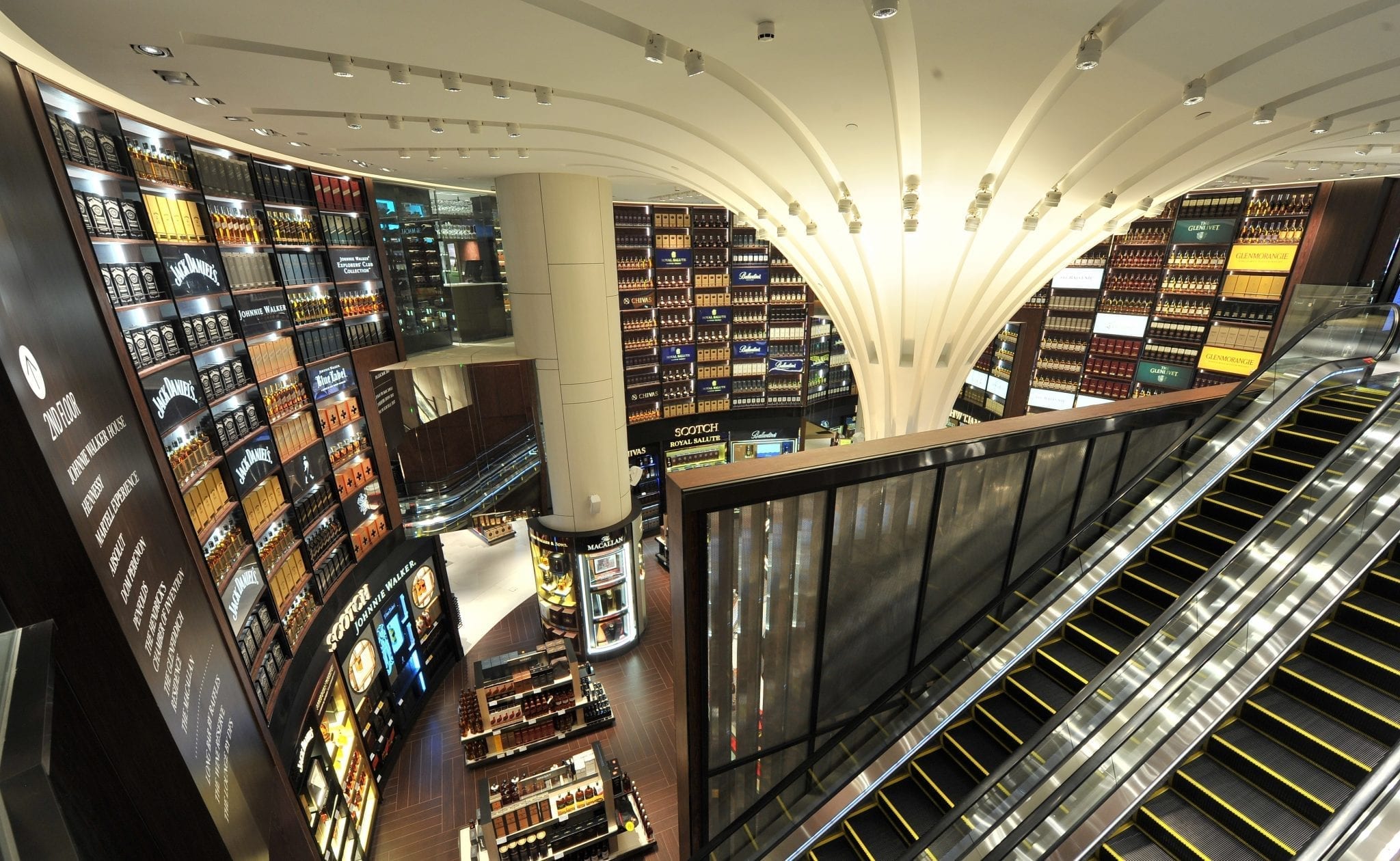
    High-end duty-free retailer DFS opened its new concept stores – complete with whiskey, wine, cigar and tobacco rooms, bartenders, complementary tastings and even virtual reality installations – in Changi’s Terminals 2 and 3 with precisely these customers in mind.

    “We drew inspiration from stylish restaurants and bars around the world when we created this space,” Wilcy Wong, DFS’s vice president of store operations in Singapore.

    He said there would be no hard sell when it came to the pricey products.

    “These days a lot of the customers are very knowledgeable themselves, so to be able to engage them and teach them something new is important,” Wong said.

    Not that the hard sell would be necessary; as well as knowledgeable, many customers are big spenders.

    DFS Wine & Spirits store at Singapore's Changi Airport
    DFS Wine & Spirits store at Singapore’s Changi Airport

    DFS staff recounted that one traveler recently bought a bottle of Glenfiddich 50-year-old single malt whisky priced at 43,910 Singapore dollars ($31,611) on a whim after passing the store. And that paled in comparison to the most expensive bottle ever sold at Changi, for S$250,000 ($180,000).

    Hong Kong-based DFS Group, which is majority owned by LVMH, has outlets at 17 major international airports, mostly in Asia, but has also staked flags in New York and San Francisco.

    The global travel retail market is estimated to grow to $85 billion by 2020, according to the Fung Business Intelligence Center, and Asia-Pacific is the largest single sector of the market, accounting for 39 percent, followed by Europe at 32 percent.

    This forecast growth is in contrast to the fall in retail mall traffic, particularly in the U.S., which has slumped as consumer spending lags and online shopping grows in popularity.

    Singapore’s Changi Airport, repeatedly ranked the best in the world by the influential Skytrax annual survey, hosts 55 million passengers a year, all of whom are classified as traveling internationally because Singapore is a city-state, and thus are free to buy duty-free items.

    DFS declined to provide any change in sales or foot traffic since opening of the new stores in Changi, but the concept has been praised by the retail and travel industry, winning “Best Shopping Experience” this year by Singapore’s Tourism Board, and Singapore’s Retailers Associations “Best Retail Concept of the Year”.

  • Upset Hindus urge Australian company to recall Hindu gods’ leggings

    Upset Hindus urge Australian company to recall Hindu gods’ leggings

    Upset Hindus have urged for the immediate withdrawal of leggings carrying images of various Hindu gods and goddesses, sold on a Melbourne headquartered online marketplace Redbubble, calling it highly inappropriate.

    Hindu statesman Rajan Zed, in a statement in Nevada today, said that Hindu deities printed on Redbubble leggings—Shiva, Vishnu, Brahma, Krishna, Ganesha, Durga, Lakshmi, Skanda, Saraswati, Hanuman, Kali, Seshnarayana—were highly revered in Hinduism and was meant to be worshipped in temples or home shrines and not to be worn around one’s legs. Inappropriate usage of Hindu deities or concepts for commercial or other agenda was not okay as it hurt the devotees.

    Zed, who is President of Universal Society of Hinduism, also urged Redbubble CEO Martin Hosking and Board Chair Richard Cawsey to offer a formal apology.

    Hinduism was the oldest and third largest religion of the world with about one billion adherents and a rich philosophical thought and it should not be taken frivolously. Symbols of any faith, larger or smaller, should not be mishandled, Rajan Zed noted.

    Zed further said that such trivialization of Hindu deities was disturbing to the Hindus world over. Hindus were for free artistic expression and speech as much as anybody else if not more. But faith was something sacred and attempts at trivializing it hurt the followers, Zed added.

    Award-winning Redbubble, founded in 2006 and listed on Australian Securities Exchange, which also has offices in San Francisco (USA), claims to be “a global online marketplace powered by artists” and sells “high-quality, everyday products”. “More than 4.2 million Customers from over 196 different countries have shopped on Redbubble”, it states.

  • DDoS attacks caused StarHub broadband outages

    DDoS attacks caused StarHub broadband outages

    Singapore’s StarHub has blamed DDoS attacks originating from its customers’ own infected devices for two broadband outages over the past few days.

    At a press conference yesterday, StarHub announced the latest findings of an investigation into the outages on October 22 and 24.

    Both outages lasted for around two hours, leaving many home broadband customers unable to surf the web due to a spike in DNS traffic originating from infected machines.

    Because the traffic originated from StarHub’s own subscribers, it appeared legitimate. But when the attack was detected, StarHub manually filtered out the traffic from the infected devices to restore services for its other customers.

    StarHub announced it plans to send technicians to help customers clean up any infected devices at their homes.

    Singapore’s Cyber Security Agency and the Infocomm Media Development Authority have urged operators to strengthen their defense against DDoS attacks, and noted that this marks the first time Singapore has experienced such and attack on its network infrastructure.

    Darktrace managing director for APAC Sanjay Aurora said operators and ISPs are likely to find themselves increasing targets of attack.

    “The core infrastructure of telecommunications companies is a very desirable target for cybercriminals [but] gaining access is extremely difficult and requires deep expertise in specialist architecture,” he said.

    “What ISPs should be wary of, is the possibility of similar DNS amplification attacks on a more regular basis, given that they require relatively little skill and effort but can cause a large amount of damage. This makes them increasingly popular among hackers.”

    He said DNS-based DDoS attacks can impact networks by saturating bandwidth with malicious traffic, while also increasing volumes of support calls and negatively impacting  the customer experience and ultimately revenue.

    Aurora added that there is a possibility that the DDoS attack was caused by Mirai, the IoT botnet responsible for the recent DDoS attack against US-based DNS service provider Dyn. This attack used infected IoT devices.

  • Singapore retail sector’s weakness continues in 3Q

    Singapore retail sector’s weakness continues in 3Q

    Prime retail rents fell faster in Q3

    Orchard rents fell 0.9% to $39.86 per sq ft.

    Leasing activity slowed and the rental decline quickened in Q3 2016 due to continued headwinds from poor overall retail sales and online competition.

    Based on rental records captured by the Urban Redevelopment Authority’s Real Estate Information System (URA REALIS) as at 18 October 2016, there were a total of 2,460 leasing deals in Q3 2016, down 12.5% quarter on quarter (QOQ) and 14.7% year on year (YOY). This was a sharp contrast to the 41.4% QOQ jump in leasing volume in Q2 2016.

    According to Colliers International, the fall in leasing transactions in Q3 2016 reflected the weak sentiment in the retail sector which continued to face numerous challenges including Singapore’s weak economy, cost concerns, manpower shortages and intensifying competition from online retailers.

    Moreover, although the latest available figures showed tourist arrivals stayed on the uptrend and rose 6.7% YOY in July, the retail sales index (excluding motor vehicles) contracted by 3.1% YOY and 6.5% YOY in July and August, respectively.

    In light of the above, the decline in prime retail rents accelerated in Q3 2016, after slowing down in the second quarter.

    In the Orchard Road sub-market, the average monthly gross rent for prime ground floor shopping mall space contracted by 0.9% QOQ from SGD40.21 per sq ft in Q2 2016 to SGD39.86 per sq ft in Q3 2016. This is faster than the 0.5% QOQ slide in Q2 2016.

    Likewise, the rate of rental decline picked up pace in the Regional Centres.

    The average monthly gross rent for prime ground floor shopping mall space reached SGD33.38 per sq ft, after falling by 0.8% QOQ in Q3 2016. In comparison, rents fell by 0.3% QOQ in Q2 2016.

  • Huawei applies machine learning to network control

    Huawei applies machine learning to network control

    Huawei has developed a prototype technology involving using machine learning to achieve intelligent, automated network traffic control.

    The vendor’s Noah’s Ark Laboratory has announced results of tests into Network Mind, a prototype technology designed to enable automatic detection and accurate prediction of traffic changes on a network, applying optimizations based on service changes.

    Huawei said Network Mind can facilitate the management of millions of network elements with millisecond response time.

    It uses cutting edge machine learning technologies such as online deep reinforcement learning and real-time big data mining

    The technology is being designed for operators and enterprises maintaining ultra-large networks. The prototype was first developed in December last year, and is being tested in collaboration with operators.

    Tests indicate that Network Mind is is up to 500% more efficient in realizing KPIs such as task completion or policy generation compared to existing template or heuristic algorithm-based optimization methods.

    Network Mind is also over 50 times more efficient when analyzing paths of large optical networks, which has the potential to reduce the time it takes to analyze use cases such as optical network failure prevention from 5 hours to as little as 6 minutes.

  • Brussels Airport has launched its cool dolly

    Brussels Airport has launched its cool dolly

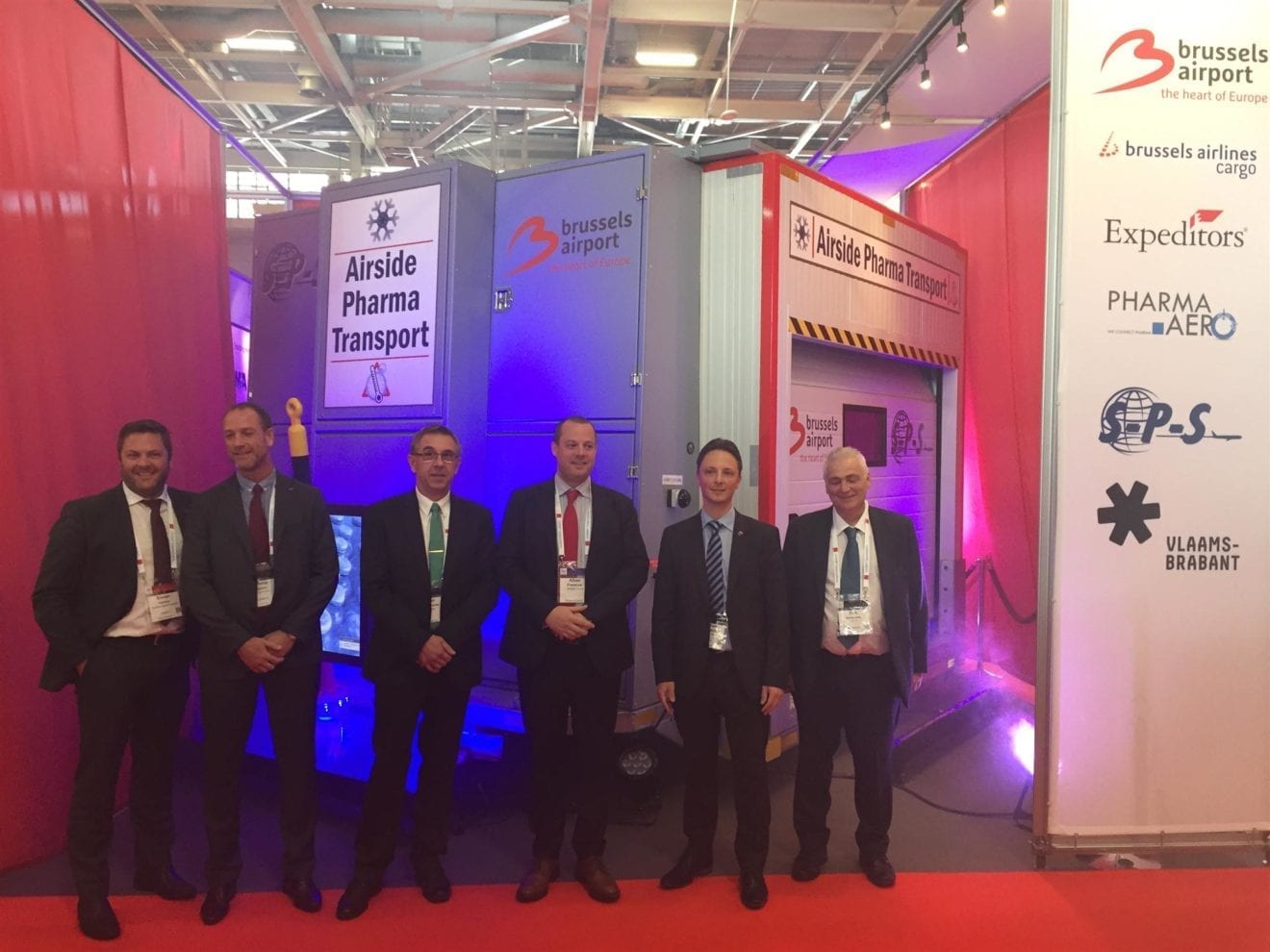
    Brussels Airport has launched its cool dolly on the opening day of the The International Air Cargo Association’s Air Cargo Forum in Paris.

    Following two years of work with its partners, the new airside pharma transport dolly is designed to be the missing link in the cool chain link. The pharmaceutical sector is of major economic importance to Belgium, explained Nathan de Valck, cargo and product development manager at Brussels Airport [second from right in photo], and this dolly had to meet 17 requirements identified by the industry.

    “We wanted to make a cost-effective temperature-controlled airside transport solution available to the market,” said de Valck.

    The pharmaceutical sector has been actively involved in this project, de Valck went on to say, along with airlines, forwarders, handlers and an engineering company.

    One of the requirements of the new dolly was to avoid extremes of temperatures. Temperatures below 5 degrees Celsius or above 25 were unacceptable, but temperatures in between, as long as they were stable, were acceptable.

    Solar panels on the roof allow the dolly to operate autonomously for several days without needing to be plugged in, and the unit is designed to reach the required temperature quickly, meaning the dolly can be used several times a day.

    Brussels Airport has currently ordered four dollies, and will look to increase the number if needed.

  • Singapore commercial property faces a gloomy outlook. Here’s why

    Singapore commercial property faces a gloomy outlook. Here’s why

    The outlook for Singapore’s commercial property, including retail, office and industrial space, may have turned grim, according to forecasts from real-estate services provider Colliers.

    Singapore’s retail landlords and tenants face “challenging times,” Colliers said in a note dated Monday, forecasting demand for retail space to lag behind supply this year, with a rise in new space pushing up island-wide vacancy rates.

    Colliers said leasing activity slowed and rental declines accelerated in the third quarter amid poor retail sales and online competition.

    Singapore’s retail sales fell 1 percent in August on year overall and excluding the 30 percent jump in car sales, fell 6.5 percent, with drops in categories including jewellery, restaurants and recreational goods, according to official data.

    “In the near term, the uncertain economic outlook and heightened unemployment risk will probably be dampening factors on consumer spending,” Colliers said, although it expected the year-end holiday shopping season would mitigate the hit to retail sales.

    It forecast ground-level shopping-mall rents in 2016 would fall by 2.0-2.5 percent in regional centers and by 2.5-3.0 percent in the prime Orchard Road shopping belt.

    Singapore’s office segment may not fare much better.

    “Overall office rentals across Singapore continue to slide under pressure of oversupply and lacklustre demand as the market saw the fifth consecutive quarter-on-quarter rental decline in the third quarter,” Colliers said.

    “Underpinned by gloomier economic outlook from potential U.S. rate hikes, an uncertain Chinese economy and concerns on the repercussions of Brexit, business sentiments and overall office space expansion remain restrained,” it added.

    Colliers noted that Singapore’s preliminary gross domestic product estimate for the third quarter showed a 4.1 percent on-quarter contraction, with some economists saying a technical recession was a possibility.

    When it comes to office rents, grade-B office buildings were taking a bigger hit as tenants fled to better quality space, it said.

    “We expect competition among landlords to fill the backfill spaces, especially in older office buildings, to intensify over the next few quarters,” it said.

    Colliers forecast the office vacancy rate would surge, with premium and grade-A supply in the central business district (CBD) set to rise 5.6 percent this year and another 12.1 percent next year as more buildings were completed.

    It expected rents in that segment would decline by up to 3.0 percent in the fourth quarter, for a full-year decline of 7.0-12 percent.

    When it came to industrial property, Colliers advised it was an “opportune time” for tenants to evaluate their needs.

    “Given the tentative economic outlook, we expect industrial rents to remain soft over the next three to six months,” it said. “Coupled with the ample space options available, there will be opportunities for industrialists to secure choice business premises at competitive rents. ”

    It expected 20 million square feet of new industrial space to be added this year, pushing up vacancy rates island-wide.

    Colliers forecast that rents for prime multi-user conventional industrial space would fall 7.0-14.0 percent this year.

    Amid tough competition for tenants, it expected rents at independent high-specification industrial buildings located outside the science and business parks would fall further in the fourth quarter, for a full-year decline of 9.0 percent.

    But in business parks, it expected rents would rise a modest 1.0-2.0 percent for the year as higher rents were attainable at newer developments.

    Colliers noted, however, in the third quarter, landlords didn’t cut rents by much across industrial properties.

    Most landlords weren’t willing to cut rents by large margins in the period after sharp cuts in the first half of the year and were instead giving tenants more incentives, such as longer rent-free and fitting-out periods, covering alteration works and subsidizing repairs, it said.

    Leslie Shaffer

  • Singapore’s Mall Vacancies Jump to Highest Level in a Decade

    Singapore’s Mall Vacancies Jump to Highest Level in a Decade

    Singapore mall vacancies rose to the highest level in a decade in the third quarter as an oversupply of shop spaces added to muted spending by shoppers.

    A gauge of mall vacancies rose 0.6 percent to 8.4 percent in the three months ended Sept. 30, even as rents declined 1.5 percent in the quarter, data from the Urban Redevelopment Authority showed Friday. That’s the highest vacancy rate since Sept. 2006.

    Demand for shopping space is being dented as consumers rein in spending amid slowing growth and buyers increasingly turn to shopping online. That’s converging with a rising supply of mall space, which threatens to further squeeze rents. Singapore will add almost 4 million square feet of retail space over the next three years, according to data from Cushman & Wakefield.

    Singaporeans are among the most tech-savvy spenders in Asia, with a greater percentage shopping online than customers in Hong Kong and Malaysia, according to data from MasterCard. Singapore’s retail market is also reeling from the impact of China’s slowing economy, and a pullback in spending by tourists, especially those from the mainland. Tourism spending fell for the first time in six years in 2015, even as tourist arrivals rose.

    It’s not just the retailers feeling the heat. Office landlords too are struggling to maintain rents amid rising supply. Office vacancies rose to the highest in more than four years despite rents sliding 1.1 percent in the quarter. Prices of office space decreased 0.4 percent in the quarter compared with a 1.5 percent decline in the previous three months.

    Residential rents dropped 1.2 percent in the three months to Sept. 30 to the lowest since June 2010, the data showed. Singapore home prices dropped by the most in more than seven years as developers offered discounts amid signals from the government that it won’t roll back property curbs initiated in 2009. The price index fell 1.5 percent in the third quarter, the data show.