Author: Mei Ling Tan

  • Henkel opens global supply chain hub in Singapore

    Henkel opens global supply chain hub in Singapore

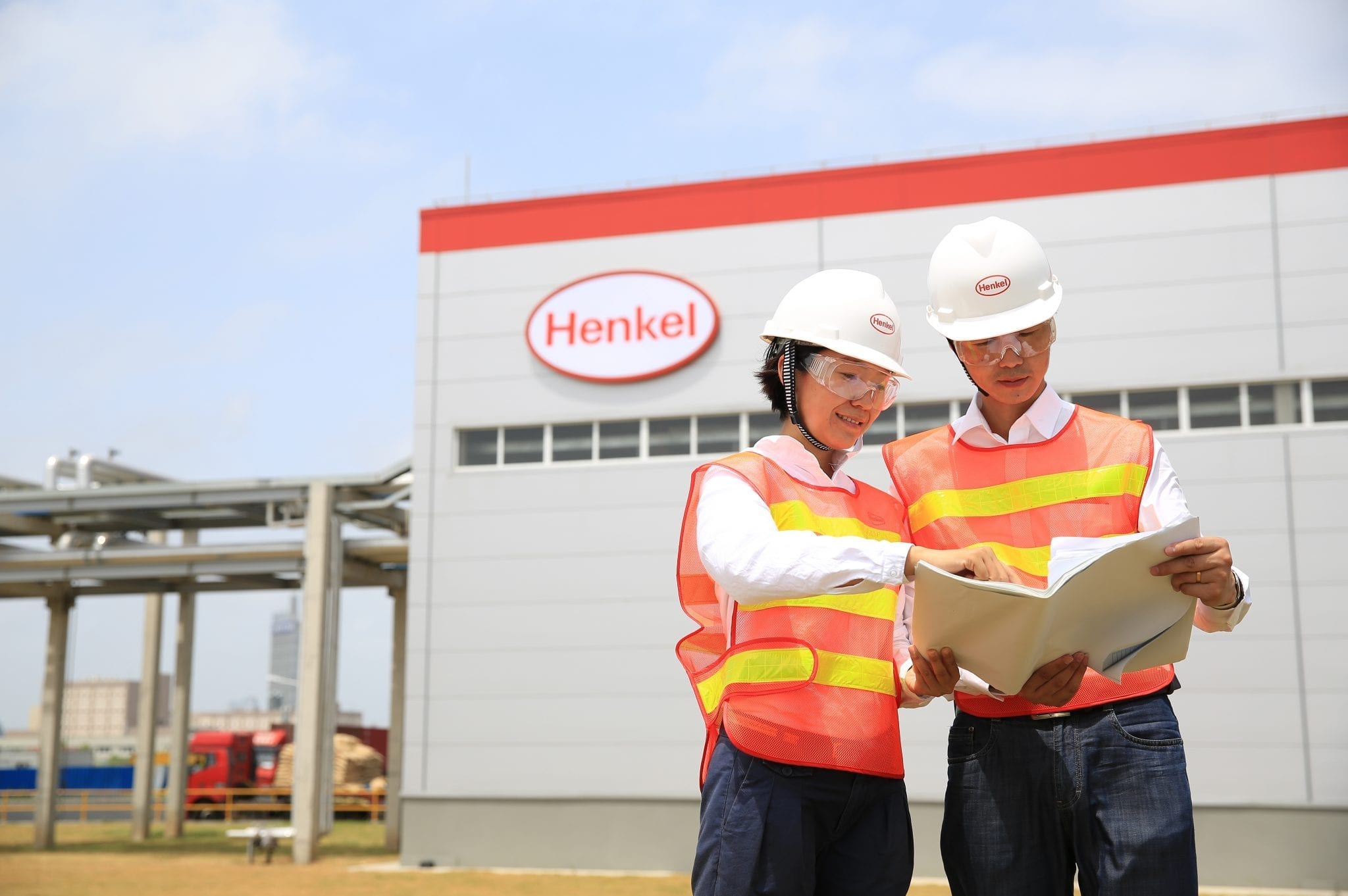
    Henkel has officially opened its global supply chain hub in Singapore. This is a major milestone which follows the successful set-up of the company’s global supply chain headquarters in Amsterdam. Working closely together, the two hubs in Amsterdam and Singapore will steer Henkel’s strategic initiative to consolidate all its supply chains company-wide around the world.

    A single global supply chain is a key initiative of Henkel‘s strategic priority to continuously simplify the organization in order to drive operational excellence and build a scalable business model, increasing Henkel’s competitiveness in terms of speed, agility and efficiency. As such, the initiative will be a key driver for realizing the company’s vision to be ‘a global leader in brands and technologies’.

    The global hubs will centrally manage the purchasing, production and logistics processes of Henkel’s three business units – Adhesive Technologies, Beauty Care and Laundry & Home Care. The effort spans across supply planning, sourcing, manufacturing, inventory and distribution. This harmonization across the entire company will lead to higher process standardization, improved customer service levels and enhanced efficiency.

    Bertrand Conquéret, Corporate Senior Vice President of Global Purchasing at Henkel, said, “Together, the Amsterdam and Singapore global supply chain hubs will steer Henkel’s biggest initiative in business transformation. Singapore was selected for its excellent logistics capabilities, availability of supply chain talent and geographical location in the heart of Asia, which is a key growth market for Henkel.”

    Singapore also serves as a conduit to the trade routes that extend to India and the Middle East and Africa region. Both Singapore and Amsterdam are amongst the largest sea ports and logistics centres in the world. With their strategic locations, the two global hubs are well-positioned to manage the supply chains that connect all our markets globally.

    Notably, the new global supply chain hub builds upon the success of Henkel Singapore, which was established in 1983 and serves as a strategic business and technical services sub-regional hub for the company’s adhesive and beauty care businesses in Southeast Asia.

    Thomas Holenia, Managing Director of the global supply chain hub in Singapore and President of Henkel Singapore, said, “Our successful business presence here of more than 30 years and the global supply chain hub provide a strong foundation for developing Singapore into a global centre of excellence for Henkel – through the implementation of best practices in supply chain management, sustainability, digitalization and talent management.”

    In terms of sustainability, the Singapore hub is partnering with suppliers and business partners to continually improve the sustainability impact across the entire value chain.

    Digitalization is a key component of the global supply chain hub, enabling the standardization and harmonization of data and processes across the businesses and functions. It creates transparency on the vast amount of data on customers, products, raw materials and logistics. This improves the exchange of knowledge significantly, brings consistency in customer service and enables managers to make informed decisions faster resulting in quality processes across markets.

    With a corporate culture that strongly promotes diversity and inclusion, the global supply chain hub currently employs an international and cross-functional team of more than 14 nationalities. In the global supply chain hub, employees from purchasing, supply chain, operations and IT collaborate with other departments as an integrated team on a common agenda. As a result, the team is able to harness the diversity of knowledge, insights and experiences to deliver best solutions.

    In its ramp-up phase, the global hub is in the process of hiring new graduates and experienced managers. It is working closely with the National University of Singapore and Nanyang Technological University to identify local talents who have a global mind-set and strong leadership skills. With an inclusive corporate culture and attractive career development opportunities, Henkel aims to be an employer of choice.

    Chan Ih-Ming, Director of Consumer Businesses for the Singapore Economic Development Board (EDB), said, “Henkel’s decision to house one of its two global supply chain bases in Singapore marks a significant milestone in the Henkel-Singapore partnership. Henkel’s expansion in Singapore is testament to our strategic position as a key supply chain control tower for both Asia and the world. This investment also builds on the growing community of German companies – both Mittelstand and multi-national companies – that are using Singapore as a business hub for the region.

    “The EDB will accelerate our work with companies to equip the Singapore workforce with the right capabilities to seize the exciting professional opportunities in the logistics industry, such as those created to enable Henkel’s sustainable supply chain.

    Dr Steffen Koch, Acting Head of Mission of the German Embassy in Singapore, congratulated Henkel on choosing the city-state to base its global supply chain hub, and said, “Singapore’s prime geo-economic location at the core of the dynamically developing Asia, its business-friendliness as well as its highly efficient ports and airport make it an ideal choice for all kinds of logistical operations.”

    Dr Tim Philippi, Executive Director of the Singaporean-German Chamber of Industry and Commerce (SGC) congratulated Henkel on opening the new global supply chain hub in Singapore, which is a highly desired location in Southeast Asia for its favourable business environment. “The SGC is tasked to promote bilateral business relations between Singapore and Germany and as a chamber, we welcome companies such as Henkel as they contribute towards the bilateral relations between our two nations.”


  • Mitsubishi Motors overstated fuel economy on eight more models

    Mitsubishi Motors overstated fuel economy on eight more models

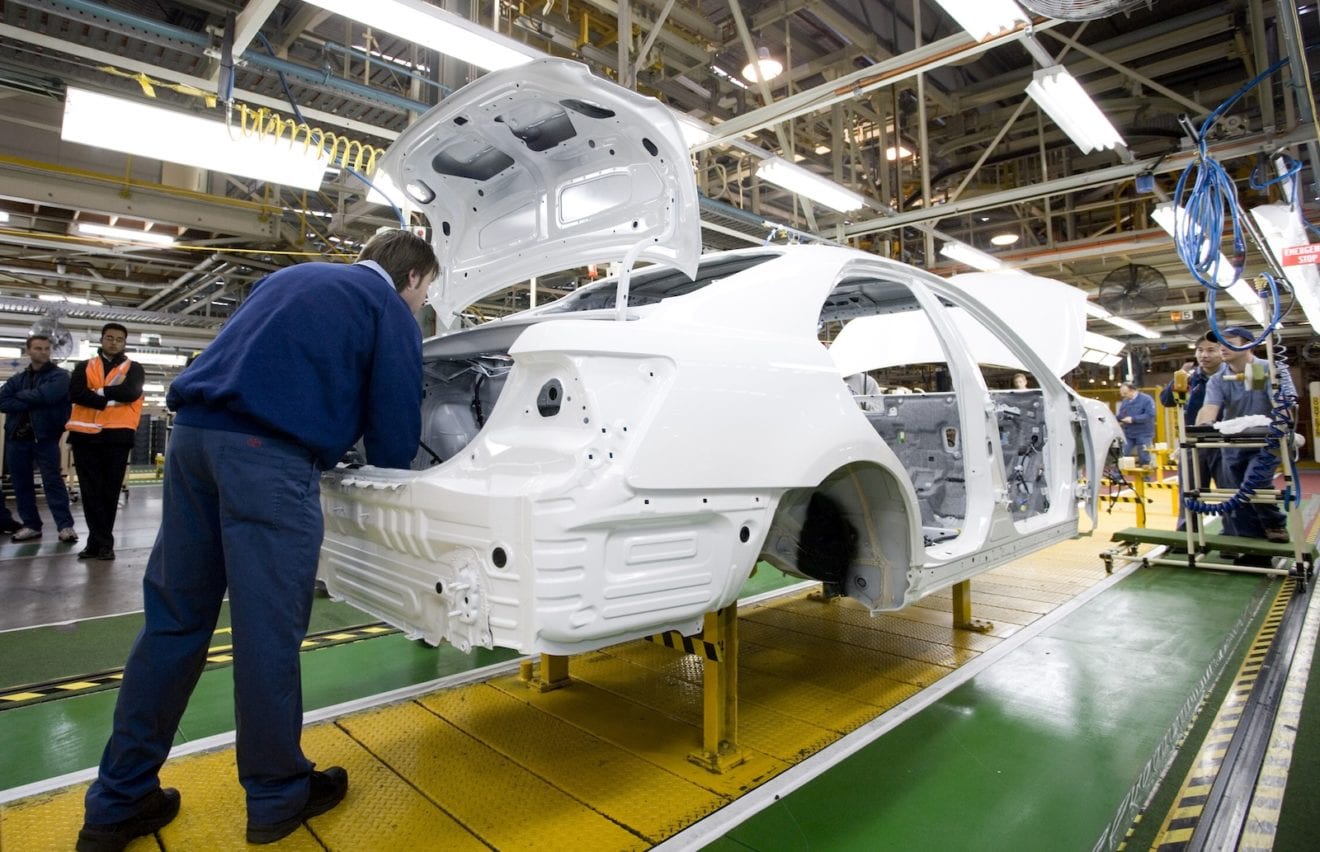
    Mitsubishi Motors Corp overstated the fuel economy on eight of its vehicle models, in addition to four others the embattled Japanese automaker admitted to earlier this year, the Nikkei newspaper reported on Tuesday.

    Japan’s transport ministry, which had been investigating the fuel economy on Mitsubishi models including the Pajero SUV, would report its findings as early as Tuesday, the Nikkei said, citing an unnamed source.

    The Nikkei said the company would likely withdraw the affected vehicles from the market to revise its catalogs, a process which could take about two to three weeks. Compensation to customers was a possibility, it added.

    Both Mitsubishi and the transport ministry declined to comment on the report. Shares in the automaker slipped 0.8 percent in early trade.

    Japan’s sixth-largest automaker has been struggling to recover after admitting in April that it had falsified the fuel economy on two of its minivehicle models, along with two similar models produced for Nissan Motor Co (7201.T).

    The scandal led to a suspension of sales for nearly three months, and prompted a slump in Mitsubishi’s market value. The company sought financial assistance from Nissan, which agreed to buy a controlling one-third stake for $2.2 billion.

    An internal investigation has uncovered poor communication, slack governance and pressure on resource-starved engineers at the root of Mitsubishi’s problems.

    Mitsubishi said last month that the resulting slump in domestic sales led to a 75 percent plunge in first-quarter operating profit, while the company said it booked an extraordinary loss of 125.9 billion yen ($1.24 billion) in the first quarter as a result of the cheating.

  • Indonesia-based HappyFresh announces Series B round, leaves Philippines and Taiwan

    Indonesia-based HappyFresh announces Series B round, leaves Philippines and Taiwan

    HappyFresh, the Jakarta-based grocery delivery platform, announced yesterday it has raised an undisclosed Series B round while also revealing it will be consolidating operations and pulling out of the Philippines and Taiwan.

    The round was led Dubai-based private equity firm Samena Capital, with HappyFresh CEO Markus Bihler said a major reason for the partnership was Samena’s status as a leading investment firm for logistics.

    “Number one, given that our business is, to a significant extent, a logistics business, we feel the support on logistics is very value-add,” said Bihler.

    “And number two, they are a classic large-cap private equity firm with significant ties to offline retail, which is the second arm of the HappyFresh business,” he said.

    Other participants in the round were Vertex Ventures, the venture-arm of Singapore’s Temasek Holdings, Sinar Mas Digital Ventures of Indonesia’s Sinarmas Group and Endeavor Catalyst, a New York-based venture arm of Endeavor Capital.

    The fundraising, which was larger than the US$12 million Series A the company raised in September 2015, remains undisclosed in large part because Bihler said it brought unnecessary attention to the number.

    In regards to the decision to pull out of the Philippines and Taiwan, Bihler said a crucial goal for HappyFresh is to focus on its core markets.

    “I believe that companies who are profitable and independently sustainable are companies that last, and therefore can continue to serve, in our case, the end customers and offline retail partners,” he said.

    The decision to consolidate the company to Indonesia, Thailand and Malaysia was a fast decision. It comes six months after the company entered the Philippines back in March and less than a year since it launched in Taiwan.

    “What we have decided is we will focus our effort on the three core markets that we have chosen to operate in, which is Indonesia, Malaysia and Thailand,” said Bihler.

    Because HappyFresh puts emphasis on the role of logistics in the decision to go with Samena Capital, e27 asked Bihler to provide some details as to how that looks on-the-ground.

    “I think if I go back and look at what HappyFresh is, we are a digital marketplace for offline retailers on the front end. And on the backend we are a digitally enabled fulfillment operation. So the largest efficiency gains that we have seen historically, and I am very sure that we will see in the future, is driven by technology,” said Bihler.

    This means intelligent use of routing, the increase of prediction software, and more efficient usage of resources (the time and availability of the shopper and drivers in the company).

    HappyFresh was founded in October 2014 and began operating in March of 2015.

    Its operating model is similar to that of competitor honestbee — in which shoppers visit specific grocery stores and shop for the consumer before the food is delivered. As a comparison, another grocery delivery player, RedMart, has its own warehouses and thus does not ‘shop’ for customers.

  • Toyota to introduce new safety features in future vehicles

    Toyota to introduce new safety features in future vehicles

    Japanese auto major Toyota plans to introduce its new global architecture and latest safety technologies in future vehicles as it seeks to play a major role in bringing down fatalities in road accidents.

    The company, which has introduced its Toyota New Global Architecture (TNGA) in its 4th generation hybrid car Prius, plans to introduce it in its future models as well.

    Besides, it is also looking to introduce pre-collision system (PCS) in vehicles from next year in Japan, Europe and the US.

    “We have introduced the TNGA in the market with our 4th generation Prius. We will introduce it in vehicles following the Prius and eventually introduce it to all our products when there is a model change,” Toyota Motor Corporation Assistant Chief Safety Technology Officer Seigo Kuzumaki said here.

    Stating that TNGA has resulted in new collision safety body structure, he said in oblique frontal crash test, the new Prius has about 55 per cent decline in cabin deformation percentage compared to the previous 3rd generation.

    The test was conducted at a speed of 90 kmph as compared to 64 kmph done in the previous generation, he added.

    According to Toyota, TNGA incorporates wide reaching structural innovations that promises substantially improved basic performance and product appeal.

    Commenting on the PCS, Kuzumaki said: “The plan is to introduce this technology to our vehicles in Japan, Europe and the US in 2017. Later on, it will be rolled out country wise depending on suitability.”

    The PCS is a feature that helps prevent collisions using a camera and millimetre wave radar and engaging brake assistance system after warning when a driver fails to use brake.

    Although the company hasn’t specified a timeline for these technologies to be brought to India, it assumes significance as Indian roads account for registering the highest number of road fatalities in the world.

    Deaths due to road accidents in the country increased by around 5 per cent to 1,46,000 in 2015 from the previous year.

    As per WHO, fatalities due to road accidents globally were at 1.42 million people and is projected to increase to 1.85 million by 2030.

  • Volkswagen decides not to sue South Korea over sales ban

    Volkswagen decides not to sue South Korea over sales ban

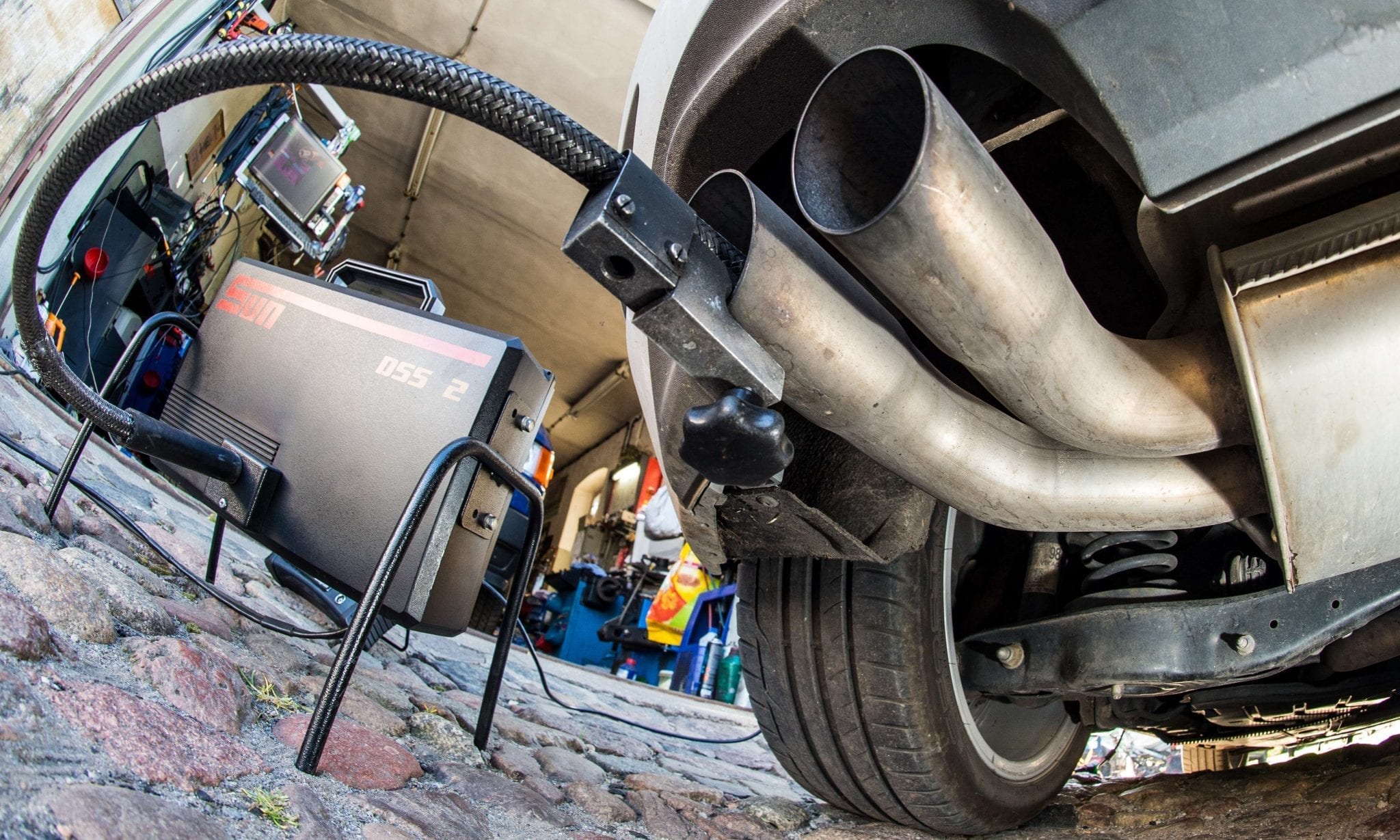
    Volkswagen decided against suing South Korea which last month suspended sales of most of its models and slapped a fine of 17.8 billion won ($15.93 million) on the German carmaker.

    Instead, Volkswagen will try to achieve certification for the affected models and resume sales quickly rather than taking on a lengthy legal process, a spokesman for Volkswagen’s South Korean unit said.

    Last month, the government revoked certification for 80 model variants of VW, Audi and Bentley vehicles on grounds that the German automaker fabricated certificates of vehicle emissions and noise-levels.

    At that time, Volkswagen described the ruling as “most severe” and said it would consider a legal challenge.

    Volkswagen’s sales slumped 40 percent to 12,888 vehicles from January to July in South Korea, after jumping 17 percent last year, in the wake of its emissions-test cheating scandal.

    Nissan Motor’s (7201.T) South Korean unit has filed a lawsuit over claims by the environment ministry that it had cheated on emissions with its Qashqai diesel sport utility vehicle.

  • 5G connections tipped to reach 690m by 2025

    5G connections tipped to reach 690m by 2025

    There will be around 690 million 5G connections by 2025, five years after the standard is expected to be approved, Strategy Analytics predicts.

    The research firm expects 5G to account for 7% of mobile connections by this time, driven by early adopters in the US, South Korea and Japan.

    China has also laid out a 2020 5G launch plan, Strategy Analytics notes, which will help accelerate adoption.

    Operators including NTT DoCoMo, SK Telecom, Verizon and AT&T are leading the charge

    Commercial 5G handset sales are meanwhile expected to exceed 300 million by 2025, according to Strategy Analytics director Ken Hyers.

    “While the first commercial 5G handsets will appear in small numbers in 2020 in South Korea and Japan, from 2021 more countries including the US, UK, Sweden, UAE and China will see their own launches,” he said.

    “By 2022 tens of millions of 5G handsets will be sold, and as a proportion of total handset sales will reach low single digit percentages.”

    The first trial 5G handsets expected to emerge in 2018 are expected to have issues including short battery life, no 4G handover or unstable connectivity, Strategy Analytics said. But these teething problems are expected to have been largely resolved once commercial handsets reach the market.

  • Thailand aims to rethink Thaicom concession

    Thailand aims to rethink Thaicom concession

    Thailand’s ICT ministry plans to renegotiate the terms of Thaicom’s satellite concession, in the wake of a recent Supreme Court ruling against the amendment allowing Shin Corp to reduce its minimum holding in the company.

    The court recently found former ICT Minister Surapong Suebwonglee guilty of criminal malfeasance over the agreement to amend the terms of the concession, and sent him to jail for a year.

    Shin Corp was allowed to reduce its stake in what is now Thaicom to 40% from 51%, which the court found was against telecoms law. The court held that the move unfairly boosted Thaicom’s competitiveness and put the business at risk of foreign dominance.

    As a result of the ruling the ministry plans to device a new investment model for the satellite industry to replace the licensing regime.

    The government is considering four investment options – turning Thaicom into a state enterprise, a public-private joint venture majority owned by the state, a more flexible public-private joint venture model or the existing licensing model with higher fees.

    Negotiations with Thaicom are expected to be complete by early next year. The current concession, which involves fees amounting to 20.5% of revenue, is due to expire in 2021.

    Thaicom operates three of its satellites under the concession regime, while two more are operated under an NBTC licensing system involving a license fee of 5.75% of total revenue.

  • Apple said to plan iPhone for Japan that supports FeliCa

    Apple said to plan iPhone for Japan that supports FeliCa

    Apple is reportedly planning to launch an iPhone in Japan that supports FeliCa, the contactless mobile payment standard widely used in the market.

    Sources told that a future iPhone designed for the market will include a FeliCa chip to support payments using the Sony-developed standard.

    FeliCa is used in multiple public bus and train pass payment systems across Japan. The standard dominates in Japan over the NFC standard used in Apple Pay – there are an estimated 1.9 million FeliCa payment terminals in the country handling around $46 billion worth of transactions per year.

    According to the report, Apple plans to work with multiple transit card providers on the launch, and is currently planning to store virtual representations of transit passes within the iPhone’s wallet app.

    Apple is said to currently plan to introduce the FeliCa functionality into the next iPhone models bound for the market, although the introduction could be held back to next year if talks with Japanese payment networks stall.

    One hurdle that could complicate the plan is the fact that FeliCa chips are designed to process transactions in a tenth of a second to accommodate Japan’s very busy transit system, whereas transactions using Apple Pay currently go through servers and require bank approval.

  • Telstra taps drones to improve network repair times

    Telstra taps drones to improve network repair times

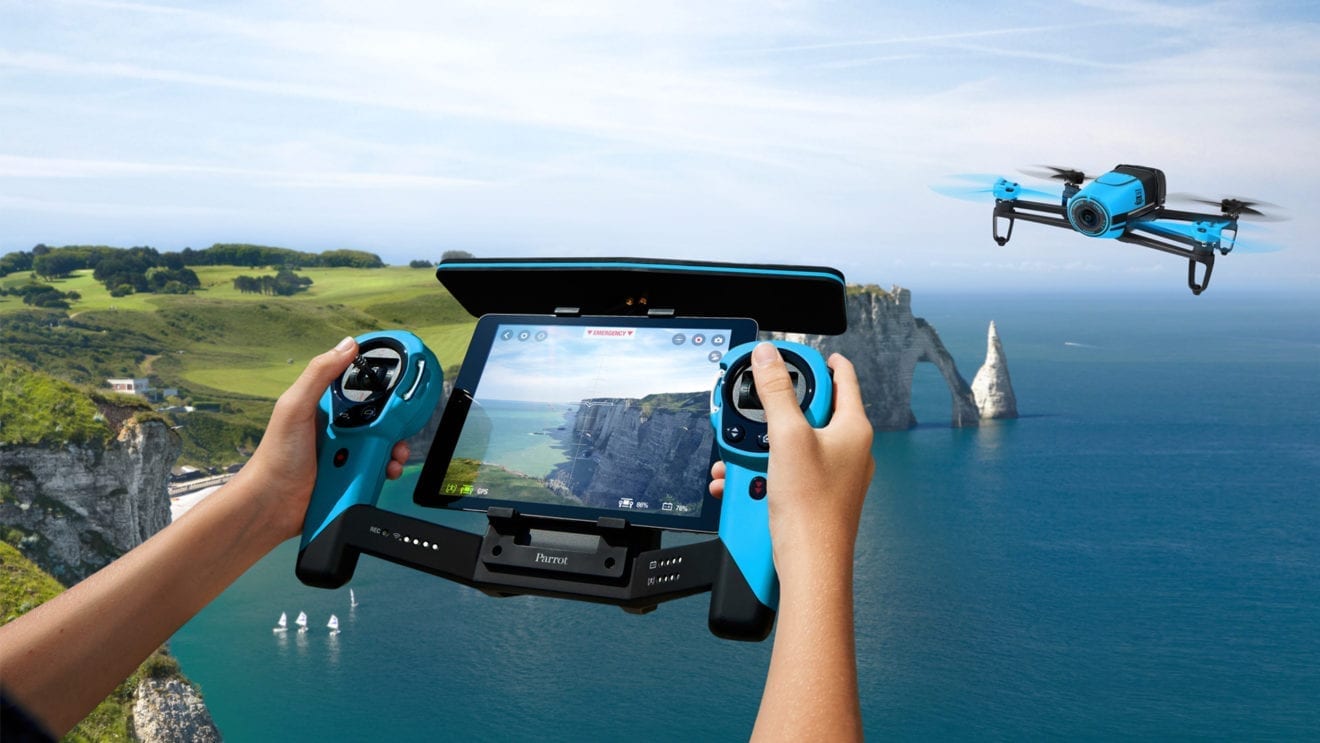
    Australia’s Telstra has revealed plans to use drone technology to improve network resilience and disaster readiness during the tropical state of Queensland’s upcoming storm season.

    The operator will use drones as an “eye in the sky” to help technicians inspect local base stations following a storm or cyclone, checking for damage before technicians are deployed on-site for repairs.

    According to Telstra, this will decrease the time needed to conduct repairs following a natural disaster related outage.

    Drones from 3D Robotics fitted with sophisticated cameras and capable of flying up to 120 meters high will be used to look for damage to network assets.

    Telstra previously used a drone to check for damage to mobile infrastructure following bushfires in another state in late 2015.

    “With more than 8,500 mobile network sites around Australia, delivering coverage spanning 2.4 million square kilometers, our mobile network is the largest in the country,” Telstra group managing director for networks Mike Wright said.

    “The maintenance of our network is key to ensuring customers get the best possible service available and using drones is revolutionizing the way we inspect base stations.”

  • Apple Pay, Android Pay purchases may hit $8b by 2018

    Apple Pay, Android Pay purchases may hit $8b by 2018

    In-app purchases and website retail payments are projected to drive annual spend via Apple Pay and Android Pay up to $8 billion in 2018, up from $540 million this year, Juniper Research reveals.

    The company also projects that the value of digital and physical goods purchased through mobile ‘OS-Pay’ platforms will increase by fifteen times in the next two years.

    Meanwhile, despite the continued contraction of the consumer tablet market, more than 85% of remote goods payments are forecast to be made using mobile devices in 2021.

    The new study, “Mobile & Online Remote Payments for Digital & Physical Goods: Opportunities & Forecasts 2016-2021,” found that the integration of OS-Pay into apps will be standard for developers looking to reduce buyer friction, where password entry on smartphones remains cumbersome.

    “It is clear that even in markets where PCs and laptops have a high installed base, the smartphone is playing an increasingly important role where remote goods purchases are concerned,” noted research author Steffen Sorrell. “For merchants, this means that the buyer experience must be made as frictionless as possible – from product search and discovery to purchase.”

    Apple has recently signalled its intent to offer Apple Pay to online merchants by the end of 2016, offering a similar payment mechanism to PayPal. Juniper anticipates that this move will be welcomed by most merchants as long as integration into their storefronts is made simple and rates are competitive.

    The research firm also expects the entry of Android Pay into this space as it expands to more countries. This will no doubt boost the market further in terms of merchants who may have been undecided where Apple Pay is concerned.

    Juniper believes that these OS-Pay solutions are likely to pose a threat to PayPal’s Western dominance, although it said it does not anticipate that combined sales via Apple Pay and Android Pay will approach those via PayPal within the next five years at least.

  • UPS wins package network visibility tool award

    UPS wins package network visibility tool award

    UPS has been named to the 2016 CIO 100 listing for the successful launch and integration of the UPS Near Real-Time Service Performance Reporting tool (NRT) – marking the tenth time the company has been honored at the annual IDG CIO 100 Awards.

    The annual listing to recognize technology innovation is selected by the CIO editorial team, working with more than three dozen judges including industry experts, academics and former CIOs.

    A business intelligence platform, NRT uses advanced analytics to take traditional network management, package tracking and package visibility tools to the next level. It provides UPS operations with the ability to see the state and performance of the service network across all packages moving through all modes of transportation and all buildings, for all UPS customers.

    “NRT is an industry-first solution, designed to find new ways to improve our network performance, overall customer service, and ultimately, customer satisfaction,” said Juan Perez, UPS chief information officer.

    “NRT represent the next step in UPS’s big data and analytics journey, complementing proven customer visibility services like UPS My Choice, and our award-winning route optimization platform, ORION. It’s another example of how UPS is using data to transform our operations and continually improve the customer experience.”

    With the ability to execute complex analytics processes for over 1.5 billion information records daily, NRT consumes data at a rate of 8,700 transactions per second from multiple global sources around the clock, including pick-ups, sorting, transfers and deliveries being moved by truck, train or airplane.

    Applying predictive analytics, NRT provides the ability to proactively identify weather or other conditions that may require alternate plans to meet service commitments and maintain an on-time network. UPS ships more than four billion packages worldwide each year using this real time status monitoring platform.

    The end result is improved visibility across the supply chain and enhanced quality of service for millions of customers every day.

    “Delivering innovation and business value are top priorities for CIOs everywhere, and our CIO 100 awards program celebrates the leading IT organizations that excel at both,” said Maryfran Johnson, Editor in Chief of CIO Events.

    “Our 2016 winners are raising the bar even higher this year with their outstanding work in digital transformation, customer focus and IT-business collaboration.”

    The 29th annual award program recognizes organizations around the world that exemplify the highest level of operational and strategic excellence in information technology.

  • Kemper introduces air monitoring system

    Kemper introduces air monitoring system

    Clearly verify the presence of dust in production: Companies check the hall air quality efficiently with the new air monitoring system AirWatch. Kemper GmbH’s sensor technology is able to determine and document the number and weight of nanoparticles and then analyze it with smartphone, tablet or PC and compare it to limit values.

    Raising employees’ awareness regarding fine dust risk.

    A traffic light display visualizes permanently the status of air quality. The system is suited for any workplace in production facilities, warehouses and logistics halls. With AirWatch, Kemper wants to raise awareness of the dangers behind fine dust.

    “With our new air monitoring system AirWatch, we introduce for the first time a system on the market that is in a position to efficiently measure the number of fine dust particles,” emphasizes Björn Kemper, Managing Director of Kemper GmbH. For this purpose, the highly sensitive sensor technology is essential as it can capture particles right up to the nano range.

    Checks are not depending on the workplace

    Whether industrial production facility, warehouse or logistics operation: AirWatch continuously monitors the air quality regardless of the type of workplace. The air monitoring system measures fine dust particles in a radius of up to 30 meters using a laser-powered sensor. An integrated fan draws in ambient air.

    It is possible to save individual limit values for hazardous substances. A traffic light shows the current air quality level measured against these values. At the same time, the system saves the data across a long time period. Users access the data simply using a smartphone, tablet or PC. A trend display for day, week, month or year also allows companies to analyze concentration of hazardous substances in more detail.

    Verify the presence of fine dust according to WHO standards

    AirWatch captures particles in the range of 100 nanometers up to 16 micrometers. This area includes the fine dust categories PM2.5 for alveolar common dust (A dust) and PM10 for all inhalable dusts (E dust) as defined by WHO. AirWatch automatically classifies the captured particles accordingly.

    In addition to checking the air quality, AirWatch also monitors the effectiveness of ventilation measures. Companies can independently check their compliance with regulations issued by professional associations apart from official checks made by professional associations.

    Highlight the value of employee health
    With the system, Kemper aims to raise awareness of the fine dust risk. “Companies are wise to continuously check air quality with regards to employee productivity.” Yet, dust in warehouses is also a threat to the quality of products and can develop into a tremendous cost factor.

    A best-practice example shows how it is done: Once the Airwatch traffic light jumps to red at the workplace of a metal processor, the employees ask the welder to switch on the extraction and filter plant. “Not only employees consider their health more thanks to AirWatch,” explains Kemper. Employers show that they consider their employees’ health as important. “Within the framework of a successful recruitment of specialists, they place themselves as a sustainable business.”

    Verify hazards despite adherence to limit values

    Counting fine dust particles has great advantage compared to applicable limit values, which analyze the weight of fine dust: If coarse dust particles in the production move around then a limit value is surpassed quickly.

    Mr Kemper explains that the invisible fine dust on the other hand often remains undetected – with fatal consequences: “Millions of fine dust particles which do not reach the weight of the specified limit value make employees sick.”

    Even if the limit value is adhered to, a permanent exposure to fine dust can lead to serious health problems. Current studies show that fine dust is the cause of increased heart attack risk, accelerates dementia, causes cancer and may even lead to death. The WHO classes fine dust as a direct cause of lung cancer.

  • Relaunch of Freightbook with new online ratings feature

    Relaunch of Freightbook with new online ratings feature

    Based in the UK, Freightbook Ltd was formed by Rachel Humphrey who has been actively involved with global freight networks since the mid-90s.

    Rachel Humphrey launched Freightbook www.freightbook.net in July 2009 as a new concept of linking forwarders together at a low-cost and as an alternative to a traditional freight network.

    Since then 1500+ companies in 140+ countries have registered and are promoting their services on a global scale whilst at the same time driving traffic to their own websites.

    Today, Freightbook is enjoying an exciting relaunch with a fabulous new feature inspired by the fact that ratings are now an essential element to any online directory.

    “Personally, I always refer to customer ratings before purchasing products online. This applies to service providers too. A recent survey showed that 91% of businesses are influenced by recommendations when making a decision to use a company so we’ve made it super quick and easy to share feedback on our advertisers,” said Rachel Humphrey, Founder.

    She also recently launched v3.0 of their Smartphone Service at m.freightbook.net where forwarders and suppliers to the freight industry can be found quickly on mobile devices

    The online directory costs £50 for 2 years registration and boasts additional benefits including contact details listed in the monthly FB Index, dedicated online news/PR service, direct quote request leads (approved by in-house staff to avoid spam), automatic amendments to profile pages and the ability to post ratings and reviews for fellow advertisers.

    “Freightbook is an online business directory dedicated to the transportation industry. There are no rules, registered users are not governed and Freightbook offers no financial protection or arbitration. There are many freight networks already established but some forwarders dislike the ties that are enforced by membership. Freightbook provides an alternative solution for forwarders to find overseas agents … and to be found,” said Humphrey.

  • Asia leads Tiffany sales decline

    Asia leads Tiffany sales decline

    Asia has led a decline in global sales for US jeweller Tiffany & Co in both the first half year and the second quarter periods to July 31.

    Same-store Tiffany sales plunged 13 per cent in the six months in Asia-Pacific – excluding Japan where they rose 10 per cent, but fell on a constant currency basis.

    Sales growth in China and Korea was offset by a continuation of significant declines in Hong Kong and more moderate declines in most other markets, the company reported.

    Same-store North America sales declined 9 per cent in the six months, largely due to declining spending by Chinese tourists in the US.

    “The global environment continues to reflect well known challenges that we believe have had broad effects on spending by local customers, as well as foreign tourists, especially from China,” said CEO Frederic Cumenal.

    “We are managing expenses efficiently, but also maintaining our marketing spending as a percentage of sales and continuing to invest in key strategic initiatives and opportunities to further strengthen Tiffany’s competitive position among global luxury brands.”

    In the Asia-Pacific region, total sales of US$230 million in the second quarter and US$469 million in the first half were down 6 per cent and 7 per cent, respectively, and comparable store sales declined 12 per cent and 13 per cent. On a constant-exchange-rate basis, total sales and comparable store sales declined 3 per cent and 9 per cent in the second quarter and 4 per cent and 11 per cent in the first half.

    During the second quarter, worldwide net sales declined 6 per cent to $932 million and comparable store sales declined 8 per cent. Net earnings rose 1 per cent to $106 million, in the prior year. Net earnings declined 5 per cent from the prior-year period’s $111 million, which excludes a specific charge in that period.

    In the first half, worldwide net sales of $1.8 billion were down 7 per cent and comparable store sales declined 9 per cent. On a constant-exchange-rate basis, worldwide net sales and comparable store sales declined 6 per cent and 9 per cent, respectively.

    Net earnings for the half year were $193 million.

    Gross margin increased to 61.9 per cent in the second quarter and 61.6 per cent in the first half, due to lower product input costs, changes in product sales mix and price increases taken in the past year.

  • Carrefour Taiwan launches digital vouchers

    Carrefour Taiwan launches digital vouchers

    In a world first, Carrefour Taiwan has launched the supermarket’s first digital voucher service.

    Carrefour Ticket Xpress enables both retail and mobile payments, and was launched jointly with international payment service Edenred.

    Partners in Taiwan include banks as well as loyalty and employee benefit programs. The vouchers can be distributed, managed and redeemed easily via mobile devices. It offers mobile payments for Carrefour’s consumers in Taiwan, and the company plans to roll out the service in other countries.

    carrefour voucher

    In Taiwan the service partners include 113, Cathay United Bank, Chunghwa Telecom online mall, CTBC Bank, E.Sun Bank, Hua Nan Commercial Bank, JihSun Bank, MyCard, PayEasy, Ta Chong Commercial Bank, Taishin Bank and Tree Mall.

    Consumers can use reward points to have Carrefour Ticket Xpress vouchers delivered directly to their mobile device, and cash them in by scanning the barcode at any of 87 Carrefour stores in Taiwan.
    Carrefour Taiwan has also updated its mobile app with the “reward wallet”, an in-app Carrefour Ticket Xpress gift catalog for CTBC and E.Sun credit card holders. An “e-voucher clip” feature is also available for consumers to manage vouchers received outside the app.