Author: Mei Ling Tan

  • Madiun develops tourism villages to attract tourists

    Madiun develops tourism villages to attract tourists

    Madiun district government in the Indonesian province of East Java is making efforts to develop a number of areas into tourism villages to attract local and foreign tourists, according to an official.

    “Of all 206 villages in Madiun district, 11 have been surveyed to be developed into tourism villages to attract both local and foreign tourists,” said the head of Department of Cooperatives, Industry, Trade and Tourism (Diskoperindagta), Sawung Rehtomo, here.

    He said the 11 villages are Brumbun, Kresek, Segulung, Dolopo, Durenan, Kare, Batok, Tawangrejo, Gunungsari, Pilangrejo, and Mruwak.

    According to him, the concept of the tourism village will highlight the potential that exists in each village for sale to tourists.

    In Brumbun village, for example, tourists will have the opportunity to cruise down the beautiful riven on the slopes of Mount Wilis, or to have the sensation of picking durian fruits in Kare village.

    Rehtomo explained that the development of tourist villages will be carried out as part of efforts to build the tourism industry in Madiun district, both nature and cultural tourism.

  • eOne’s ‘Peppa Pig’ Gains Momentum in China

    eOne’s ‘Peppa Pig’ Gains Momentum in China

    Entertainment One (eOne) has announced details of Peppa Pig’s rapidly growing popularity in China. Since launching on-air in Mainland China in 2015, eOne’s Peppa Pig has surpassed 5.4 billion views on its three on demand platforms, IQIY, Youku and Tudou. It is one of the most popular programs for pre-schoolers on state television broadcaster CCTV, where its repeat was the No. 1 animated show in its 7am timeslot.

    Peppa Pig also launched on VOD portals Tencent and LeEco in May 2016. To date Peppa episodes have already clocked up 1.7 billion views on Tencent and 850 million views on LeEco, making it the No. 1 animation on both platforms since its launch. In addition, Mango TV has recently acquired the rights to Peppa Pig and the VOD platform debuted the series earlier this month in Mandarin.

    Alongside its growing on-air presence, eOne is also nurturing the property’s digital profile through a range of social, online and interactive content. The brand’s official Peppa WeChat account, available on mobile devices, provides followers with regular news updates, tips, and activities for all the family. Peppa’s WeChat account launched in April 2016 and has already generated thousands of sign-ups.

    The Peppa Pig apps eOne has released to date have had tremendous download rates, making China the biggest territory for Peppa app downloads worldwide. Following their entrance on the App Store in late 2015, Peppa’s Paintbox and Peppa’s Actvitiy Maker have been hugely popular in China, with over 400,000 and 195,000 downloads respectively.

    Peppa’s online presence also extends onto e-commerce platforms as major Chinese online retailers Jing Dong and Tmall have launched a wide range of Peppa merchandise on their popular online shopping sites. Products now available to buy include Peppa’s house playset, vehicles, role-play sets, and plush.

    Toys are spearheading the brand’s licensing program in China and a newly launched Peppa Pig Ferris Wheel playset was sold exclusively at Toys “R” Us stores nationwide during the country’s Children’s Day celebrations in June 2016. The publishing category also continues to accelerate. A new series of Peppa Pig storybooks launched at retail in April 2016 and over 75k copies have been distributed nationally both online and in-store. Peppa Pig products will also have a presence in China’s first Hamleys toy store that is set to open its doors on October 10th. eOne’s Hong Kong team is developing bespoke Peppa artwork for a branded bay in the store.

    “We are thrilled to welcome our new broadcast partners for Peppa in China and we’re confident that these additional consumer touchpoints will significantly increase exposure for the brand as it continues to grow in popularity,” commented Olivier Dumont, Managing Director of eOne Family. “Building Peppa Pig’s digital footprint in the territory, through app downloads and social media channels, enables us to engage with audiences beyond the TV show and create the loyal fan base that is key to its longevity.”


  • Japan Home Centre revenue increases

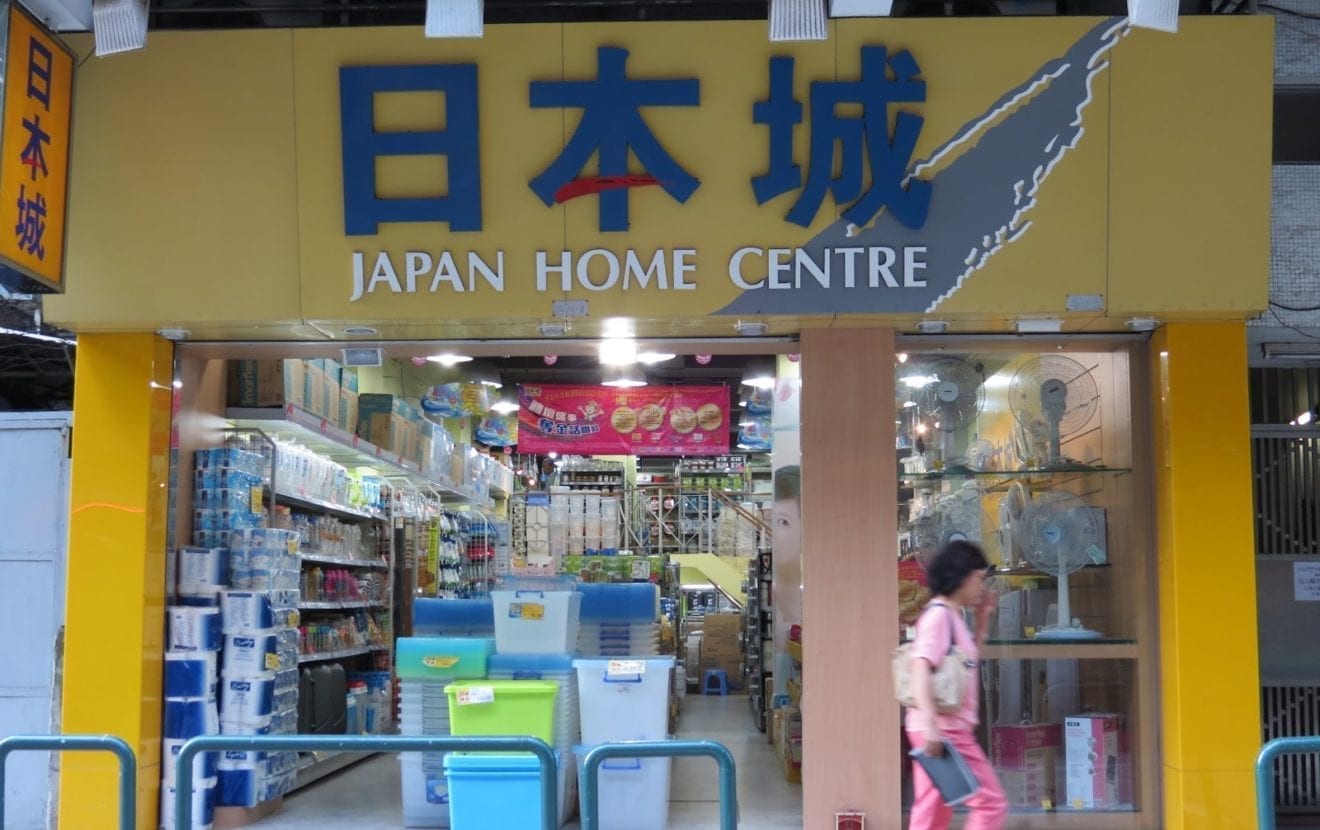
    Japan Home Centre revenue increases

    Japan Home Centre (Macau) posted an increase of 7.6 per cent revenue year-on-year to HK$39.3 million (MOP40.5 million/US$5.7 million) for its fiscal year ended June 30, according to the annual report released yesterday on the Hong Kong Stock Exchange by the International Houseware Retail Company Limited (IH Retail).

    The comparable store sales growth rate of the stores in Macau is 1.3 per cent, down compared to the 5.9 per cent of the previous fiscal year.

    The total revenue of IH Retail went up to HK$2.04 billion (MOP2.10 billion/US$263 million), indicating a growth of 4.5 per cent year-on-year despite the short-term fluctuation and challenges of the retail market.
    ‘The increase in revenue for the year was mainly due to the opening of new stores and growth in comparable store sales,’ the report noted.

    Eight self-managed stores in Macau are under IH Retail, with 277 stores in Hong Kong.

    IH Retail and its subsidiaries is the largest house ware retail chain in Hong Kong, Singapore and Macau. Stores can also be found in Cambodia, Indonesia, East Malaysia, Saudi Arabia and New Zealand.

  • Toyota to Continue to Invest Big in Indonesia

    Toyota to Continue to Invest Big in Indonesia

    Toyota will continue its major investment plan in Indonesia, particularly in manufacturing, up to Rp20 trillion by 2020.

    PT Toyota Motors Manufacturing Indonesia (TMMIN) deputy president director Warih Andang Tjahjono in Tokyo, Japan, said Sunday, August 28, 2016, that Toyota has made Rp10 trillion investment of its planned investment in Indonesia, as promised by Toyota Motor Corp (TMC) president director Akio Toyota.

    “Major projects have been realized, the third plant has been completed,” he said.

    Since 2013, he went on, Toyota’s production capacity in Indonesia continues to increase, from 110,000 units to currently 25,000 units per day.

    According to Warih, the total TMC investment in the past few years have reached roughly Rp10 trillion, in which the biggest investment had been made to develop the production capacity of Kijang Innova and Fortuner at approximately Rp5 trillion, followed by the production of Sienta at around Rp2.5 trillion, and NR engine production with an investment value of roughly Rp2.3 trillion.

    “Investment will continue, although it would not be as big as the current investment,” Warih said.

  • Airtel to help multinationals enter India

    Airtel to help multinationals enter India

    India’s Bharti Airtel has launched a new suite of end to end networking and connectivity services for global companies looking to set up businesses in the market.

    The new India with Airtel services are aimed at improving the ease of setting up a business in India by offering companies a complete suite of fixed, mobile and added services.

    Besides telephony, India with Airtel combines global and domestic data capacity and connectivity services, VSAT, VPN, data center and cloud cervices, VAS and payment/billing integration, M2M and managed services, among others.

    “Given the impetus from the government’s ‘Make in India’ and ‘Digital India’ initiatives, India is fast becoming a definite strategic market for multinationals across the globe,” Airtel CEO for global voice and data business Ajay Chitkara said.

    “Given Airtel’s integrated product portfolio, we believe that we are uniquely placed to seamlessly serve the connectivity needs of companies looking to set up businesses in India. Also, companies can leverage Airtel’s deep understanding of the Indian market and leverage our vast customers and distribution network.”

    Airtel’s domestic mobile network covers around 95.6% of India’s population, and its global network spans around 225,000 route kilometers of subsea cable capacity, covering 50 countries across 5 continents.

  • Differentiation can make or break Singapore brands as competition heats up

    Differentiation can make or break Singapore brands as competition heats up

    Consumers are hungry for novelty, innovation.

    Tight competition online and a tough operating environment have pushed many offline retailers—especially in the footwear and apparel sub-sectors—to downsize or flee Singapore.

    However, RHB noted in a report that brands that are able to spin unique selling point will weather the sector headwinds well, as consumers continue to be attracted to novelty and differentiated experience.

    “H&M, for instance, has numerous sub-collections each year to refresh its inventories. It also rolls out special collections each year, which are tie-ups with famous brands’ designers or style icons… Uniqlo, on the other hand, is known for its product innovation including HeatTech and AIRism technologies catered specially for cold and warm weather, respectively,” RHB stated.

    Meanwhile, BreadTalk comes out on top in terms of product innovation and willingness to experiment.

    “BreadTalk launched a new bakery concept every four years to maintain a fresh brand image. It also rolled out 50 new products along with its latest concept launch,” RHB noted.

    “Furthermore, the group is also up to date in using technology to engage customers. It is planning to build a new integrated system that allows the public to view its kitchen baking processes on external screens. The new system will also allow consumers to get alerts when new buns are up on the shelves,” it added.

  • HK privacy commissioner weighs in on e-wallets

    HK privacy commissioner weighs in on e-wallets

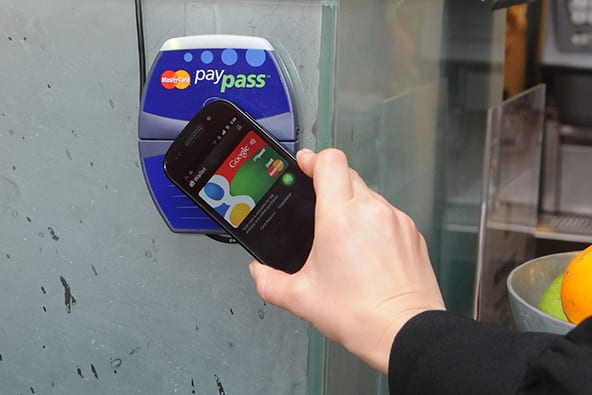
    Privacy commissioner for personal data Stephen Kai-yi Wong has urged Hong Kong residents to vigilantly keep control of their personal data in wake of the Hong Kong Monetary Authority’s (HKMA) decision to grant Stored Value Facilities (SVF) licensesto five mobile e-wallet providers.

    Wong also called on e-wallet operators to win customers’ trust by respecting their privacy rights and safeguarding their personal data.

    While he acknowledged that e-wallet operators may need to collect significant amounts of personal data as part of their operations, he said providers should give consumers control over the types of data e-wallet apps are allowed to access, and the ability to revoke these permissions at any time.

    To keep their personal data safe, Wong recommended that users of e-wallet services find out how e-wallet operators will handle and process personal data collected, understand the apps’ privacy settings and permissions and avoid operating e-wallet apps over public or insecure Wi-Fi connections.

    Users should also use complex, unique passwords, make sure devices with the app installed have appropriate anti-theft features switched on and regulatory monitor transaction records for unauthorized payments.

    Wong said e-wallet operators are required under the new Stored Value Facilities Ordinance to clearly explain to users what personal data is collected and the reasons why.

    Operators planning to use collected data for purposes not directly related to payment should obtain the user’s explicit and voluntary consent, and are legally required to ensure the accuracy and security of personal data collected. Customers are also entitled to access this data and request corrections.

  • Singapore’s services industry business receipts edge up 0.4% in Q2

    Singapore’s services industry business receipts edge up 0.4% in Q2

    Singapore’s services sector saw a mixed performance in the second quarter with overall revenue edging up 0.4 per cent year on year.

    This is according to the latest business receipts index, released on Friday (Aug 26) by the Department of Statistics Singapore, which excludes wholesale & retail trade and accommodation & food services.

    The health & social services industry reported the largest revenue growth of 7.7 per cent in April-June quarter from the same period a year ago.

    Other industries with higher business receipts included education services (5.0 per cent) and information & communications services (1.4 per cent).

    Industries that saw lower turnover included transport & storage services (-2.2 per cent) and recreation & personal services (-1.6 per cent).

  • Lotte forecasts $5bn for 2016 after first-half surge

    Lotte forecasts $5bn for 2016 after first-half surge

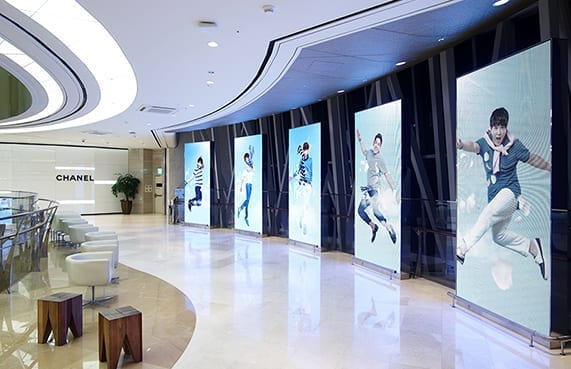
    South Korean duty free and travel retailer, Lotte Duty Free Group, is targeting a +20% increase in total duty free revenue to reach just over $5bn in 2016 after first half growth of +25%. Driving the big increase have been high-spending Chinese visitors shopping in its stores.

    First half sales reached almost $3bn, a senior Lotte Duty Free source said on condition of anonymity. The sales boost comes at a time when the company was preparing to close its Lotte World Tower store in June after failing to renew the shop’s licence.

    “Chinese tourist numbers are very strong (and) we are forecasting a +20% increase in total revenue for 2016. Sales have increased a lot (so far) this year because in 2015 we had the MERS epidemic problem,” the source said. “Last year, our total revenue in South Korea was $4.2bn.”

    Lotte-World-Tower-hero-P&C

    Chinese travellers continue to boost sales.

    Sales in the second half of 2016 also got off to a good start with July revenue climbing +45% as the summer peak season got underway, the source noted.

    To cope with the closure of the Lotte World Tower store the company has expanded its Sogong downtown flagship unit in central Seoul. The shop has been expanded to occupy four floors in the Lotte Sogong department store building – adding floor 12 to floors nine to 11.

    The duty free shop took over the 12th floor in February which has been converted to the new perfume and cosmetics space and opening in June. It replaces the food court that was previously there.

    BEAUTY GETS ITS OWN FLOOR

    Moving beauty to the 12th floor from the 9th floor has increased the total duty free beauty area by around +35% to 3,500 sq m. In addition, Lotte will use about one third of its 11th floor retail area to display mid-priced South Korean cosmetics brands which are also popular with Chinese visitors.

    Space for the South Korean cosmetics brands zone on the 11th floor is being created by moving some fashion brands from this level to the ninth floor area where perfume and cosmetics were located previously. The ninth floor area is being developed as an open display fashion floor and Lotte plans to bring in a number of new South Korean and international fashion brands as well for the first time.

    The group has taken over the Seoul Gimpo Airport beauty and general merchandise licence, previously operated by Shilla Duty Free, which was recently retendered by Korea Airports Corporation (KAC).Meanwhile, responding quickly to the loss of its Lotte World Tower store licence, Lotte has recently acquired two new airport duty free licenses, emphasising the company’s intention to retain its leading position in  Korea’s DF&TR market.

    SME operator City Plus was awarded the Gimpo liquor, tobacco and general merchandise licence, that was previously operated by Lotte, after KAC reserved the concession for SME bidders only.

    Elsewhere, Lotte Duty Free has also taken over the Gimhae Airport perfume and cosmetics licence in Busan, after Shinsegae Duty Free decided to give up after losing money and it was retendered.

    FIGHTING ON FOR LOTTE WORLD

    Meanwhile, Lotte is aiming to reopen its Lotte World Tower store and has set its sights on winning one of four new duty free licenses for downtown shops in Seoul that Korea Customs Service is due to tender towards the end of 2016.

    “The 7th floor is being used for the Lotte Internet duty free centre and the customer lounge. As the government recently issued new duty free licenses, we will do our best to acquire a licence to repay the love our customers have shown to us. Thank you.”Following the World Tower closure: Lotte posted the following announcement on its website: “We express our deep thanks to our customers for shopping at Lotte World Tower. Due to the expiry of our duty free shop licence, Lotte World Tower store was closed on 26 June, 2016.

    Of the four new downtown duty free shop licenses that KCS will award, three are for large conglomerates and one for SME operators. In addition to Lotte, Shilla Duty Free and Shinsegae Duty Free may make bids even though both companies have already opened new downtown stores in Seoul this year.

    Newcomer Hyundae Department Store is another likely bidder, as is WalkerHill Duty Free which had to close its newly-rebuilt downtown store after losing its licence. It is keen to re-open its now empty shop.


  • Globe fast-tracking LTE 700 rollout

    Globe fast-tracking LTE 700 rollout

    The Philippines’ Globe Telecom is fast-tracking the rollout of LTE over its recently-acquired 700-MHz spectrum.

    The operator revealed it has recently rolled out more than 150 700-MHz base stations, mostly in Metro Manila.

    The new sites cover major business districts and populated areas in the country. Globe launched its first 700-MHz base station Quexon City in June, and the company said its LTE 700 sites now cover the majority of the city.

    Globe is planning an initial rollout of 200 compatible LTE 700 base stations, and has committed to deploying around 4,500 multiband, multimode software defined radio base stations covering 95% of municipalities and cities in the country.

    “We are confident that more and more of our customers will experience improved services as adoption of LTE-capable devices increases and as we continue to deploy LTE 700 in more sites,” Globe senior vice president for network technical group program governance Joel Agustin said.

    “This is consistent with our strategy of continuously improving internet services using the previously idle 700 MHz spectrum that the NTC now allowed us to co-use.”

    Globe acquired rights to co-use the 700-MHz spectrum after joining with rival Smart to acquire San Miguel Corporation’s telecoms assets for a combined 69.1 billion pesos ($1.5 billion) earlier this year.

  • Pos Malaysia Q1 net profit jumps 40% to RM32mil

    Pos Malaysia Q1 net profit jumps 40% to RM32mil

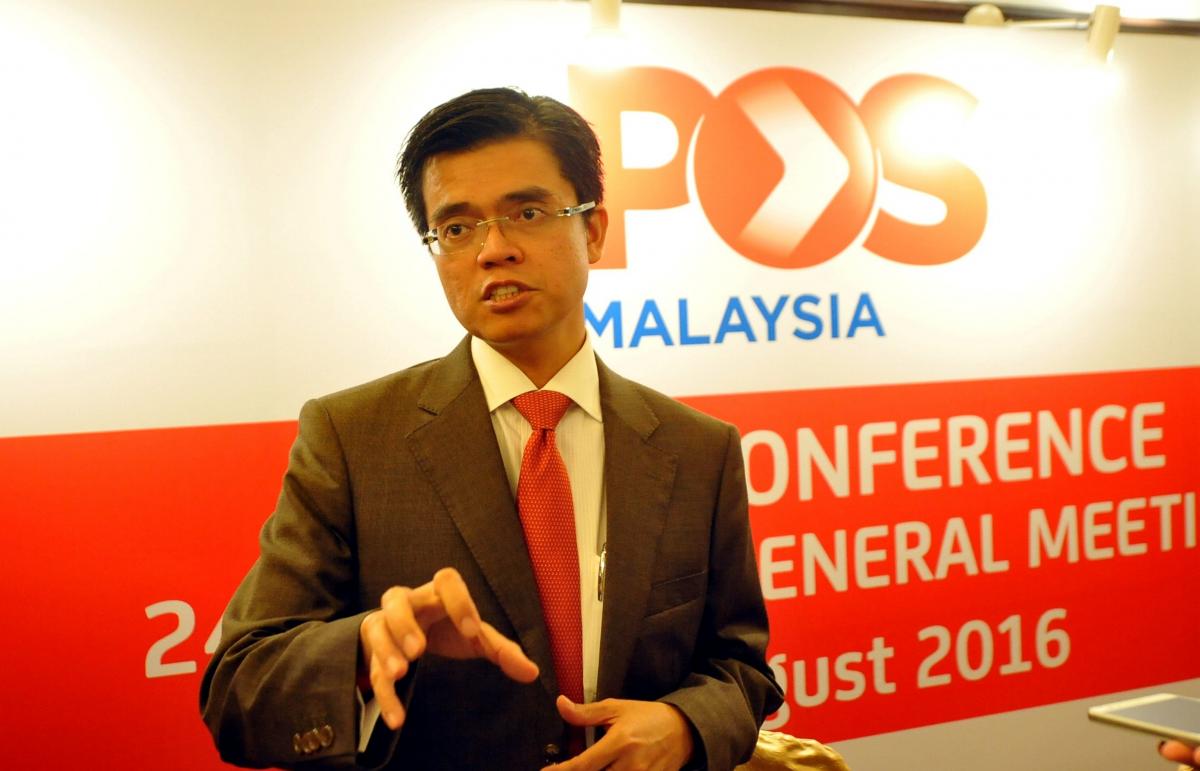
    Pos Malaysia Bhd’s net profit for its first quarter ended June 30, 2016 grew 40% to RM31.84mil, from RM22.74mil a year ago, despite operating in the current challenging environment, said group chief executive officer Datuk Mohd Shukrie Mohd Salleh.

    The increase was due to higher profits generated from its courier segment that was driven by demand from its e-commerce and online businesses. First quarter revenue rose to RM415.87mil from RM390.37mil a year earlier.

    Shukrie said Pos Malaysia is focussing to transform itself into a one-stop fully integrated logistics services provider through the recently approved and soon-to-be-completed corporate exercise of acquiring Kuala Lumpur Airport Services Sdn Bhd (KLAS) group of companies.

    The company will also introduce more new 24/7 e-commerce convenient touch points when it unveils a slew of new services. The company will also enhance facilities at all Pos Laju Centres and post offices nationwide. It is planning a total of 110 more touch points from the current total of 1,030 throughout Malaysia by end of 2016, Shukrie said.

    In a separate Bursa filing yesterday, the company said its courier segment registered higher revenue of RM162.8mil in the first quarter of this year compared with RM148.1mil a year ago.

    The upward performance was driven by increase in demand from e-commerce, the company said. Its postal services segment registered lower revenue of RM206.7mil in the first quarter of 2016 compared with RM230.6mil a year ago.

    “This is due to lower revenue for direct mail for mail segment and decrease of transactions from bill payment for retail segment,” Pos Malaysia said.

    Its international segment registered lower revenue by RM16.4mil as compared to RM36.1mil a year earlier due to lower transactions from transhipment business segment.

    Meanwhile, Pos Malaysia’s other segments which consist of digital certificates, printing and insertion registered higher revenue by RM7.8mil in the first quarter of this year due to higher business volume attributed to sales of digital certificates, as well as printing and insertion.

    Going forward, the company said its longer term prospects remain closely tied to the growth in the fulfilment and delivery of merchandise arising from the growth of e-commerce.

    “Investments by global e-commerce giants into the South-East Asia’s e-commerce players, for example the acquisition of Lazada by Alibaba, support the growth and development of the industry in the region.”

  • New Louis Vuitton perfumes

    New Louis Vuitton perfumes

    Louis Vuitton perfumes are available again, with the French fashion house offering seven choices for its first fragrance launch in 70 years.

    Ingredients for the perfumes have been sourced internationally, including CO2 extractions from jasmine and May roses native to Grasse, the French town known as the world’s perfume capital. The extraction process is a first in the perfume industry.

    The 162-year-old label’s master perfumer, Jacques Cavallier Belletrud, whose creations include Issey Miyake’s L’Eau d’Issey and Stella by Stella McCartney, spent months travelling the five continents to seek out exotic and rare materials for the fragrances.

    “I wanted to surprise people who smell the perfumes – create emotion, bring them back to childhood or moments of pleasure,” says Belletrud, who is a native of Grasse.

    His new fragrances include elements from countries including China, France, Indonesia, Italy, Laos and Peru.

    For Rose des Vents, he blended a trio of roses, centifolia, Bulgarian and Turkish; with Apogee, he uses lily of the valley, Grasse jasmine and Chinese magnolia.

    While most of the scents are floral, the range also has the more masculine notes of leather and wood (in the perfumes Contre Moi and Matiere Noire).

    Louis Vuitton gave Belletrud the freedom to work without a deadline, and he took four years to produce the range. “The challenge was to create something that would last over the years,” he says.

    The fragrances will be available in Singapore next month at Louis Vuitton boutiques at Marina Bay Sands and Ngee Ann City.

  • Huawei, Indonesian partners build cloud platform

    Huawei, Indonesian partners build cloud platform

    PT Huawei Tech Investment (Huawei Indonesia) has worked with Accenture, Cloudera, Anabatic, IDPRO, Infosys and Telkomsigma to build a new cloud ecosystem.

    The new solution, FusionSphere 6.0, was launched during the recent Huawei Cloud Conference Indonesia.

    FusionSphere 6.0 is an enterprise-class cloud operating system that helps customers deploy virtual servers, private clouds, public clouds, hybrid clouds, cloud desktops and NFVI.

    The ecosystem brings the concept of open source which used in components, architecture, and ecosystem enabling customers to have more choices in software. Huawei FusionSphere 6.0 keeps pace with the open-source OpenStack community, complies with the native OpenStack standards, and supports OpenStack APIs.

    Third-party applications developed based on native OpenStack can run on Huawei FusionSphere 6.0 without having to make changes.

    The platform is designed to help enterprises overcome the challenges faced during different stages of IT transformation, making enterprise business and workflow more effective and efficient in the deal with changes in the market, lowering investments on IT assets and human resources.

    “Huawei enthusiastically built a win-win cloud ecosystem with partners,” Huawei Indonesia CEO Liu Haosheng said.

    “We would like to share our successful practices in the global ICT sector, and to use the most innovative and competitive ICT technologies, products, and solutions to support our strategic business partners in Indonesia , creating values and benefits for their users in the cloud era.”

    At the conference, Huawei Indonesia also shared its successful practices in cloud transformation in cooperation with Accenture, as partners, for Telkomsigma.

    This successful practice in cloud transformation embodies Huawei Indonesia’s commitment to do innovation together with partners in an effort to build an open cloud ecosystem to help customers accelerate the transformation toward cloud solutions.

  • Robust profit for 7-Eleven Malaysia

    Robust profit for 7-Eleven Malaysia

    Despite a sluggish retail market, 7-Eleven Malaysia had robust after tax profit, growing 40.3 per cent, in its second quarter compared with the same period last year.

    Gross profit margin continued to improve, and the average customer spend edged up 4 per cent.

    A milestone was the opening of the 2000th 7-Eleven store in Malaysia.

    CEO Gary Brown says the net profit growth was achieved in a tough market in which the introduction of GST on April 1 last year dampened consumer FMCG spending.

    “We remain confident that continuous store expansion, refurbishment, promotional activity, improved merchandise mix and expanded in-store services will continue to deliver positive results despite the challenging headwinds.”

    Revenue for the second quarter, ended June 3, grew by 4.8 per cent to RM505.7 million (US$125.7 million). This was driven by store expansion, improved merchandise mix and promotional activity.

    Gross profit was up 6.8 per cent to RM156.7 million, mainly because of the revenue growth and gross profit margin expansion of 0.6 per cent.

    Profit before tax of RM21 million surged by 38.1 per cent, driven mainly by the revenue growth, gross profit margin expansion, other income growth and cost control.

    For the six months ended June 30, the group’s revenue grew 4.5 per cent to RM1.03 billion, driven by expansion (at the period end, the group had 2001 stores). Gross profit improved by RM18.9 million, or 6.3 per cent, thanks to the revenue growth plus gross profit margin edging up 0.5 per cent.

    Profit before tax was RM43.3 million, up 22 per cent.

  • Philippines Mactan casino project to start in 2017: Calata

    Philippines Mactan casino project to start in 2017: Calata

    Philippine fertiliser product distributor Calata Corp says construction works for its Mactan casino resort are scheduled to start in January 2017.

    “There will be a 36-month construction schedule with six months for warranty works giving it a total of 42 months to complete. The projected date of completion would be in the middle of 2020,” the firm stated in a Friday filing to the Philippine Stock Exchange. The filing was in response to a query from the exchange on the Mactan project and the parties involved.

    The project – named Mactan Leisure City – is being developed in partnership with U.S.-based Sino-America Gaming Investment Group LLC and the latter’s subsidiary Macau Resources Group Ltd. Mactan is an islet linked by bridge to the Philippine holiday island of Cebu.

    Macau Resources Group’s registration on the OTC Markets Group exchange, based in New York, United States, was revoked last month, after the firm’s failure to make required periodic filings with the U.S. Securities and Exchange Commission. Calata said in its Friday filing that Macau Resources Group shareholders had “agreed to deregister” the firm from the exchange “to provide management the ability to effectively rebrand and position the company”.

    Calata added: “Once rebranded, the company will then be re-registered as Jade Leisure and Entertainment Group, on the [OTC Markets Group exchange], with a goal to list on the Nasdaq at the earliest opportunity.”

    The partnership between Calata, Sino-America Gaming and Macau Resources Group was first announced on Tuesday. The Philippine firm explained at the time that it would involve “the creation of a corporate vehicle intended for the future establishment of a real estate and investment trust (REIT)” which would be used for the Mactan project. The corporate vehicle – in which Calata will have a 51 percent stake – is to be established by next month, the firm said in Friday’s filing.

    Under the Philippines’ constitution and public land laws, only Filipinos, or entities owned at least 60 percent by Filipino citizens, are allowed to own land.

    In a story published by GGRAsia in April 2015, Sino-America Gaming managing director Michael Foxman had provided several details about the group’s plans for Mactan. At the time, Calata’s name was not mentioned.

    Mactan Leisure City has been presented by Calata as “a PHP65-billion [US$1.4-billion] integrated resort incorporating three hotels, casino and entertainment complex, commercial, retail, and conference facilities, and yacht club, situated at a 14-hectare property located on Mactan Island, Cebu”.

    The firm stated on Friday it expected to secure a casino licence for the project from the country’s gaming regulator – the Philippine Amusement and Gaming Corp (Pagcor) – by the end of 2017.

    “The target submission of the complete application with Pagcor will be by late October 2017,” Calata stated. The firm added that the project had already received support from local authorities, civic groups and the Catholic Church.