Author: Mei Ling Tan

  • Hi Brunch Philippines to debut in Robinsons

    Hi Brunch Philippines to debut in Robinsons

    Expanding for the first time outside its home market of Korea, cafe chain Hi Brunch is set to make the Philippines its number three market.

    Korean food franchisor Sim Woo has partnered with Filipino-American entrepreneur Susan Barlin, for the Hi Brunch Philippines and Southeast Asia franchises. Barlin is a real estate executive who also owns a multi-level marketing business.

    Hi Brunch Philippines will offer porridge and desserts along with coffee.

    Formed in 2015, Sim’s holding company Midang FC already has 250 stores in Korea and two in Tokyo. The company is eyeing franchise stores Taipei, Taiwan, Kazakhstan, China, and Southeast Asia, particularly Singapore, Indonesia and Malaysia.

    Hi Brunch Philippines is set to open a store in Robinsons Galleria in two to three months.

    It will also open in Bonifacio Global City, Alabang, Tagaytay and Cebu. Barlin said the master franchise in the Philippines will open six company-owned stores among the 25 outlets planned for one year.

    Barlin said the food will be prepared in Korea and shipped frozen to the Philippines for cooking. Authentic Korean dessert bingsu (snow ice flakes topped with sweets) will also be offered at Hi Brunch.

    “We will not only import but we’ll make things here,” Sim said, adding that if food products are available in the Philippines, these may be locally sourced. For example, for the snow ice flakes, fresh Philippine mangoes are better than frozen, he said.

  • Philippines prepares for nationwide rollout of 911 hotline

    Philippines prepares for nationwide rollout of 911 hotline

    The Philippines’ Department of Interior and Local Government (DILG), operators, private organizations, media partners and other government agencies have started testing the nation’s new 911 emergency hotline.

    The new emergency hotline will be rolled out nationwide on August 1. The new service was made possible by an agreement signed by the the different government agencies including the DILG, Department of Information and Communications Technology (DICT), and National Telecommunications Commission (NTC).

    The agencies were responding to the instruction of newly elected President Rodrigo Duterte to designate a number people can call in response to a national disaster.

    Other signing agencies were the Foundation for Crime Prevention (FCP), Philippine Information Agency (PIA), and the Kapisanan ng mga Brodkaster ng Pilipinas (KBP).

    The agreement covers the transition to make the existing 117 hotline and the new 911 emergency hotlines accessible to call for the general public through each party’s respective networks.

    The DILG said the existing 117 hotline will be utilized for 911 hotline operation starting next month. The current hotline has 15 seats, 43 agents and database of Philippine National Police (PNP) units, including their mobile, local government Units and its emergency numbers and teleconference capability.

    Retired General Eliseo Rio Jr. of the Department of Information and Communications Technology (DICT) and currently consultant to 117, said that after August 1, the current 15 seats will increase to 30 and the existing 43 call center agents will be increased to 90.

    The country’s two leading telecommunications players – PLDT and Globe Telecom – both expressed support for the government project. In a statement, Globe’s Legal Counsel Froilan Castelo said the company is ready to comply with the government directive to provide access to 911 and 8888 numbers for government emergency hotline and complaint hotline.

    Globe has long used the 8888 number as its own customer hotline. However, the company will give way to the government request and will instead change to a new hotline number for its more than 57 million customers.

    At the start of the testing period last week, DILG Secretary Ismael Sueno reportedly called 911 twice using a landline and a cellular phone in the presence of officials from concerned agencies to see how the operation will flow.

    The test calls – as well as the simulation exercises that will be made between July 21 to July 31 – seek to close possible gaps that will be encountered once 911 goes public.

  • SoftBank lifts June quarter profit by 19.1%

    SoftBank lifts June quarter profit by 19.1%

    Japan’s SoftBank lifted its net profit for the June quarter by 19.1% year-on-year to 254.16 billion yen ($2.42 billion), largely as a result of solid growth from the company’s domestic telecoms business.

    Domestic telecoms service revenue grew 5.4% to 761.8 trillion yen following steady growth of the operator’s SoftBank Hikari fiber service. Total FTTH subscribers grew to 2.24 million, from 1.72 million in the previous quarter.

    The company meanwhile grew its mobile subscriber base by 580,000 year-on-year to 32.15 million, with smartphone and tablet subscribers outweighing net losses for feature phones.

    Total ARPU declined by 50 yen to 4,610 yen, but service ARPU increased by 40 yen to 560 yen, reflecting an increase in the number of subscribers to the operator’s content services.

    Revenues from SoftBank’s US subsidiary Sprint meanwhile declined 9.6% year-on-year to 848.09 billion yen, but remained largely flat in US dollar terms.

    SoftBank CEO Masayoshi Son assured reporters at an event announcing the company’s results that Sprint is about to turn into a revenue generator for the company after multiple quarters of negatively affecting the company’s results.

    SoftBank paid $21.6 billion to acquire control of Sprint in 2013, and the company has repeatedly insisted that Sprint’s fortunes are about to turn around.

    Now SoftBank is planning another big bet. The operator recently arranged to acquire chipmaker ARM for $31 billion to pursue opportunities in the emerging IoT sector, which Son believes will be the “biggest paradigm shift in human history.”

  • DMI, Wing launch mobile payments in Cambodia

    DMI, Wing launch mobile payments in Cambodia

    Enterprise mobility vendor DMI has teamed up with Cambodian mobile banking service provider Wing to offer mobile payment services in the market.

    The companies have developed an app for iOS and Android to allow customers to transfer, deposit and withdraw money via any mobile phone.

    Using the app, customers can pay bills, top up their mobile credit, send money to other users, donate to charity and find the nearest Wing Cash Xpress outlet.

    Cambodia has a significant unbanked population – only around 10% of the population of 15.5 million are in possession of bank cards. The mobile app is designed to address this customer segment.

    The app is available in both English and Khmer and has been designed by DMI to be quick to set up and use.

    “Following the launches of hundreds of mobile solutions all over the world, DMI is very proud to deliver a project in Cambodia for Wing,” DMI International COO Daniel Karlstrom said.

    “DMI is one of the leading technology companies in Cambodia and our collaboration has resulted in a world-class solution that is tailored for the Cambodian market and developed in-country by our Khmer team.”

  • Oracle will buy NetSuite for $9.3b

    Oracle will buy NetSuite for $9.3b

    Oracle has arranged to acquire pioneering cloud company NetSuite for $9.3 billion.

    The addition of NetSuite will enable Oracle to expand its ability to support customers of any size in more industries and more countries.

    Oracle co-CEO Safra Catz said the company expects this acquisition to be immediately accretive to Oracle’s earnings on a non-GAAP basis in the first full fiscal year after closing.

    The proposed transaction is expected to close in 2016. Until the transaction closes, Oracle and NetSuite will continue to operate independently.

    “Oracle and NetSuite cloud applications are complementary, and will coexist in the marketplace forever,” Oracle CEO Mark Hurd, said. “We intend to invest heavily in both products—engineering and distribution.”

    “NetSuite has been working for 18 years to develop a single system for running a business in the cloud,” said Evan Goldberg, CRO and chairman of NetSuite. “This combination is a winner for NetSuite’s customers, employees and partners.”

    Zach Nelson, CEO of NetSuite, said the company will benefit from Oracle’s global scale and reach to accelerate the availability of our cloud solutions in more industries and more countries.

    NetSuite was established in 1998 as the world’s first company dedicated to delivering business applications over the internet.

    Today NetSuite provides a suite of cloud-based financials/Enterprise Resource Planning (ERP) and omnichannel commerce software that runs the business of more than 30,000 companies, organizations, and subsidiaries in more than 100 countries.

  • Datapipe drives Baozun digital transformation

    Datapipe drives Baozun digital transformation

    Datapipe, a leading global provider of managed hosting and cloud services for the enterprise, has led the cloud migration and digital transformation of China’s largest brand eCommerce services provider Baozun Inc.

    Baozun has shifted its IT systems to Datapipe’s managed cloud, tapping Datapipe’s expertise as a Managed Services Provider to handle its cloud migration and maintenance. Results include decreasing the time to on-board new clients by 500 per cent, reducing the cost of hosting by 20 per cent, reducing maintenance  from 200 man hours to virtually zero, freeing Baozun’s IT team of over 20 employees to focus on core business activities. Datapipe also reduced Baozun’s server downtime to zero per cent, enabling Baozun to guarantee a 99.95 per cent uptime to its clients – which include over 100 global brands in over 50 countries.

    With operations across China, Hong Kong, Taiwan and the rest of Asia Pacific, Baozun offers end-to-end brand eCommerce solutions to more-than 100 international clients. These include brands in the apparel, appliances, electronics, home and furnishing, food and health, cosmetics, insurance and automobile categories. Baozun helps these companies operate eCommerce sites on China’s most popular online marketplaces, such as Alibaba’s Tmall and JD.com. Key to ensuring their clients’ success is the ability for Baozun to provide scalable, highly available and secure end to end solutions integrating front end shopping experiences with supply chain management and distribution systems.

    Colin Chan, VP of Asia at Datapipe says Baozun has hundreds of global business partners, spanning millions of customers and transactions.

    “Given the scope of its operations, ‎and the unique nature of eCommerce in China, where some days have 1000-times the transaction and visitor numbers than others, the challenge of ensuring infrastructure is able to scale up to meet business demand‎ is very real. We’re pleased to work with Baozun, by migrating their core workloads to a 100 per cent scalable cloud environment and providing management of their infrastructure 24×7.

    “With their IT now supporting their ever-growing business, Baozun is better positioned to take aim at the multi-trillion dollar eCommerce opportunity in China and Asia wide.”

    Prior to working with Datapipe, all of Baozun’s data ran on web servers hosted externally – unsustainable given the business’ rapid growth, because as transactions volumes grew, so too did the server load; consequently, server sizes increased, placing significant pressure on its IT team around maintenance, cost, speed and scale.

    Tony Wu, CTO at Baozun, says Datapipe came highly recommended. “They brought significant expertise in managing cloud environments – including for other large eCommerce ‎businesses in China. They delivered a high-level of customer support, were very affordable and are able to provide open source as well as private cloud services to meet our unique needs. By Datapipe managing our cloud deployment, Baozun is able to focus on other crucial technology processes, accelerating our growth and delivering shareholder value.”

    China surpassed the US last year to become the world’s largest retail eCommerce market, and is expected to cross US$1.21 trillion in retail eCommerce sales in 2017, according to eMarketer. While eCommerce is growing strongly, running an eCommerce business comes with its own set of unique challenges, particularly around scale. When online promotions are launched, for example, Baozun sees significant spikes in sales volumes – up to 100x that of a normal day. On Singles Day in 2015 (11 November), Baozun processed 650,000 orders in the first hour and 3.5 million orders within a span of 24 hours.

    Datapipe recently drove the eCommerce transformation of Challenger Technologies Limited, Singapore’s largest electronics retailer. The company is seeing rapid growth across Asia-Pacific. It has doubled regional manpower year-on-year, with close to 100 employees now in Hong Kong and double the customer base in the region.

    Datapipe is the managed hosting and cloud services provider with the most complete set of services, global locations, and industry leading partners. Datapipe delivers choice, control and confidence in architecting, deploying, and managing multi-platform hybrid IT solutions tailored to individual customer needs. Optimising mission-critical and day-to-day enterprise IT operations, Datapipe enables businesses to transform, innovate, and scale. Backed by a global team of experienced professionals and next-generation data centers Datapipe provides comprehensive security, governance, orchestration, and analytics solutions.

  • Apple China’s quarter sales slump

    Apple China’s quarter sales slump

    Apple China’s sales fell 30 per cent in what one retail analyst described as “another fairly rotten quarter” for the tech giant globally.

    Apple’s international decline has accelerated with total sales revenue sliding by 14.6 per cent and operating income by 28.2 per cent.

    “That the numbers are down come as no real surprise given that Apple has launched very few significant products or initiatives since the last reporting period. However, that they are sequentially worse than last quarter is a cause for some concern, especially so as all geographies, bar Japan, are now in strong decline,” observed Neil Saunders, CEO of Conlumino.

    But Apple’s current problems are a lot more worrying for the company than a couple of bad sets of  quarterly figures, even though the company remains highly profitable and cash-rich. At the core of Apple’s challenge is the long period of sustained innovation and ingenuity seems to have dried up.

    The same day as Apple announced its latest results, one of the most reliable Apple leak sources, Evan Blass, revealed the next iPhone scheduled for release on September 16 will now be called the iPhone 6SE, because there are insufficient upgrades to warrant a new generation 7 model number. The iPhone – once the mainstay of Apple’s stellar rise – used to be the most-coveted smartphone handset on the market. But Samsung’s Galaxy Edge has well and truly evolved into the most beautiful handset on the market, and a raft of brands around Asia are producing phones with features and specifications equal to or better than the iPhone 6, usually at prices substantially lower.

    That partly explains why iPhone sales fell 23 per cent in revenue terms in the latest quarter: it’s just not as sexy as it once was; customers have a wider choice now, and owning an Edge has as much street cred as owning an Apple in many parts of the world.

    Laptop sales are weak globally as more and more consumers who do not need computers for work purposes find Phablets and tablets are more portable and just as convenient for social networking, email and watching videos. Mac sales fell 13 per cent last quarter – and again Apple has offered little reason to upgrade in recent years, save the high-resolution retina screens. New models are slated for later this year, but expect this to be another round of higher spec for a reduced price as Apple tries to hold its own against the likes of Samsung and arguably the biggest innovator in Windows-platform computers, Lenovo.

    Sales of other Apple physical products fell by 16 per cent.

    The only ‘innovation’ from Apple in the last two years is the Apple Watch, which, as Saunders observes, was supposed to be “the next best thing”.

    “However, its performance has been disappointing [because] it doesn’t really do very much.

    “In most cases it simply replicates what can be done on a phone, albeit less effectively. As such, other than as a status symbol, most consumers do not see the value in spending hundreds of dollars simply to remove the effort of having to lift up their phones. This is a great example of Apple’s genius in producing what remains a technically impressive and aesthetically pleasing device, while missing the bigger picture of how that device fits into people’s lives.”

    Ouch. But he is right: The Apple Watch is a solution searching for a problem. It is not a ‘must-have’, life-changing product, merely a gimmick; an expensive, flashy replacement for a pedometer which, wait, you can download onto your iPhone for free on iTunes…

    “All of this is characteristic of a company that, while still highly successful, has simply lost the edge that once persuaded consumers to continually upgrade and buy into more expensive pieces of kit.  Apple has become too obsessed with the technical minutiae of products rather than developing radically new devices which capture the imagination, and cash, of consumers,” says Saunders.

    Services a bright spot

    Saunders says the one bright spot in an otherwise gloomy set of Apple figures comes from the services segment. Here revenue grew by 19 per cent, thanks to more Apple Music subscribers and the strong performance of the App Store. “However, the ground gained here is nowhere near enough to make up for the decline in product revenue, which is where Apple takes the bulk of its sales and makes most of its profit.”

    Just what Apple is working on behind the scenes as it seeks its next life-changing product is uncertain. There have been long-running reports it is developing a motor vehicle, for example, a huge investment which the company certainly has the cash reserves to fund. But reinventing the motor vehicle is a hard concept to conceive. Elsewhere it seems to be searching for acquisitions which could aid its growth – among the recent rumours is a bid for Formula 1, one of the world’s most-watched televised sports which could bring access to technical innovation, and most importantly content for a planned TV concept and its existing devices. Neither F1 or Apple has denied those rumours.

    Saunders argues that if the company is to return to its once stellar growth, it needs either a radical step change in its existing product line-up or needs to come up with a completely new device that creates a whole new market.

    “This is easier said than done, but there are emerging areas of technology – like virtual reality – where Apple should be at the forefront of developments.”

    Saunders also praises Apple’s latest incarnation of its retail store.

    “Apple’s latest store format is impressive and provides just the type of experience that modern consumers enjoy and will engage with. However, without great products this new format will not deliver very much. As such, Apple needs to put the same sort of forward thinking into its kit as it has done its new shops.”

    He concludes: “As much as this may all sound harsh and critical, it is simply because Apple set such a high benchmark to begin with. It remains a very impressive business and retailer, but it is one that is in desperate need of that magical ‘one last thing’ to transform its trend of declining sales.”


  • McDonald’s Singapore and Malaysia for sale

    McDonald’s Singapore and Malaysia for sale

    Franchise rights for 20 years for McDonald’s Singapore and Malaysia could fetch S$542.8 million (US$400 million).

    The rights have been put on the market as part of McDonald’s Corp’s international turnaround plan put in place by new CEO Steve Easterbrook last year. With a US$112 billion market value, the corporation is revamping its ownership models throughout Asia, including plans to offload its China, Hong Kong and South Korea master franchises.

    McDonald’s has adopted a “development licensee model” for Malaysia and Singapore, says a Singapore spokesman. It is negotiating with candidates “committed to helping accelerate growth and innovation in Malaysia and Singapore”.

    McDonald’s owns most of its outlets in Asia, and eventually aims to have 95 per cent of its restaurants in the region under local ownership.

    Singapore has more than 120 McDonald’s restaurants with about 9000 employees, while in
    Malaysia there are more than 250 restaurants.

  • Viavi, Brocade readying subscriber data analytics solution

    Viavi, Brocade readying subscriber data analytics solution

    Viavi Solutions and Brocade are developing a joint solution that enables mobile operators to capture and analyze subscriber data to quickly resolve quality of experience (QoE) issues.

    Viavi’s xSIGHT Targeted Subscriber Search (TSS) leverages the Brocade Packet Broker and Brocade Session Director to filter and deliver targeted subscriber traffic so only the data required to resolve customer experience problems is forwarded to xSIGHT TSS. In addition to significantly reducing resolution time for QoE issues, the solution enables mobile operators to open up opportunities for new value-added services.

    The joint solution is in production at a US Tier-1 mobile operator to help provide better QoE to their subscribers and enable new premium services.

    The xSIGHT TSS and Brocade Packet Broker target specific subscribers—for example, VIPs or corporate customers covered by SLAs—and capture correlated control and user plane traffic, at a scale applicable to a Tier-1 mobile network.

    By reducing the average time spent gathering end-to-end subscriber traces from several hours to minutes, xSIGHT TSS and the Brocade Packet Broker may save mobile carriers up to tens of thousands of labor hours per year.

    xSIGHT is Viavi’s customer experience assurance portfolio including an analytics platform fed by agents distributed throughout the network. The agents passively analyze traffic in real time, build network and application performance metrics and selectively store traffic for troubleshooting purposes. xSIGHT TSS is an agent which can be programmed to capture all control and user plane data for targeted subscribers defined by the service provider.

  • MapR debuts data science-led Quick Start solution

    MapR debuts data science-led Quick Start solution

    MapR Technologies has made available the MapR Risk Management Quick Start Solution for financial services, powered by the MapR Converged Data Platform.

    With more data available to detect, identify and avoid loss from fraud, cybercrime, or regulatory non-compliance, financial services companies can engage with MapR data scientists and deploy the MapR Converged Data Platform to quantify and manage risk.

    “With this new Risk Management Quick Start solution, we have created a proven, repeatable and demonstrable approach to identifying fraud and other illicit activities using the scale and reliability of the MapR Converged Data Platform,” said Dave Jespersen, VP of worldwide services, at MapR Technologies.

    Traditional messaging and processing technologies are insufficient to handle the increasing scale and complexity of risk management and its associated data. With the MapR data science-driven approach to risk management combined with the MapR platform, important vulnerabilities can be identified, modeled and analyzed to detect fraud, money laundering, identity theft, rogue trading and terrorist financing.

    The MapR Financial Services Risk Management QSS is data science driven and delivers a working data science model and solution and a path forward from a five week consulting engagement.

    Two QSS paths are offered including the fraud detection path of the QSS that uses predictive analytics models to tackle vulnerabilities beyond fraud, and the anti-money-laundering path of the QSS that uses advanced anomaly detection to identify hard-to-detect risk management challenges.

  • Mahindra Comviva unveils MobiLytix Suite

    Mahindra Comviva unveils MobiLytix Suite

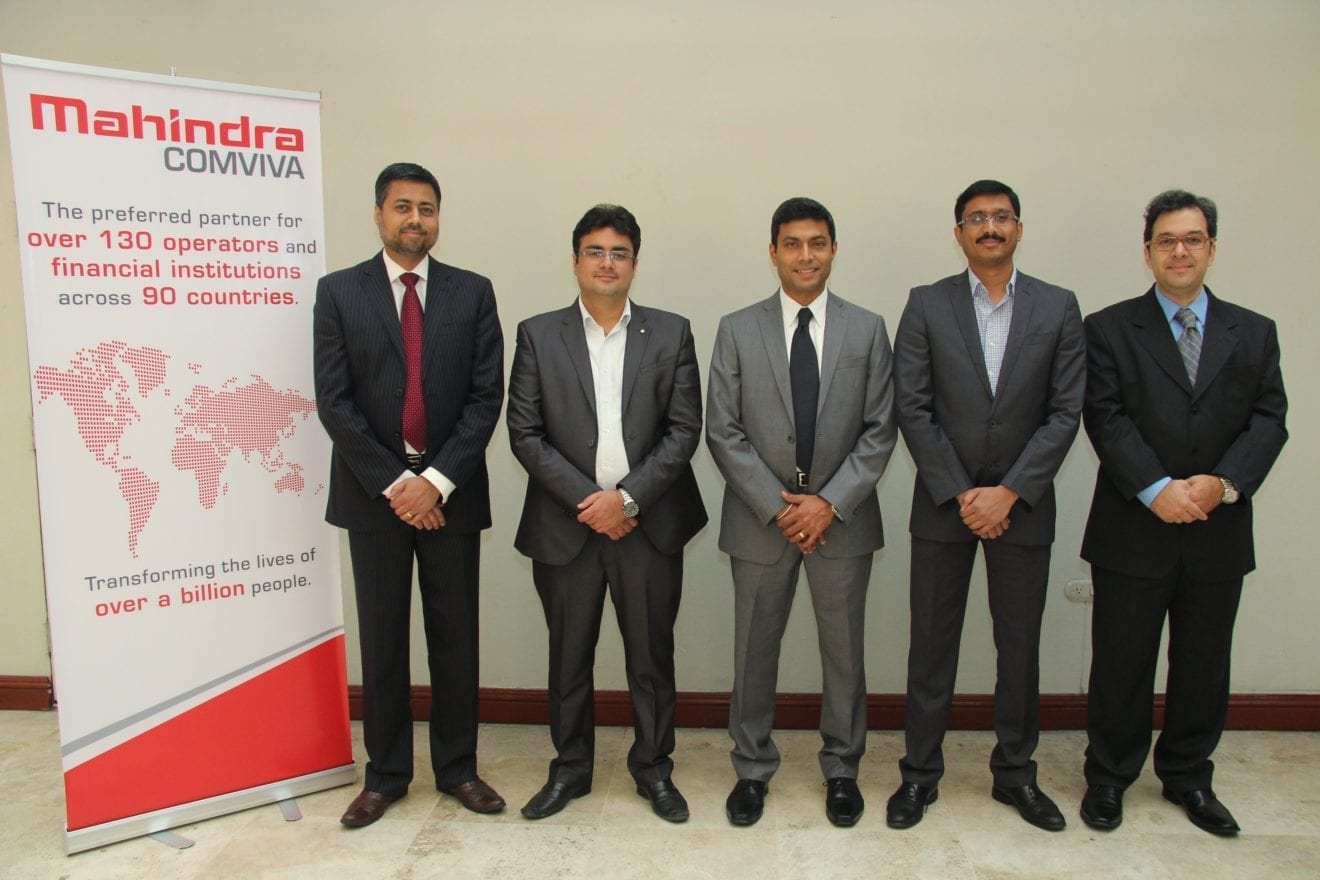
    Mahindra Comviva has launched the MobiLytix Suite, a big data-driven mobile analytics solution that generates actionable customer insights.

    The solution aggregates subscriber usage data across multiple touch points, enabling deeper and superior customer experience while improving revenue growth of telecom operators.

    The MobiLytix Suite promises to enable service providers to enhance customer experience. Its backbone is an analytical engine aimed at understanding the various events across a customer’s lifecycle and helps develop strategies to maximize a customer’s lifetime value.

    It also aids chief marketing officers and marketers to analyze hidden revenue generating patterns and formulate the appropriate product and growth strategies. In addition, seamless, real-time and omni-channel execution of personalized contextual marketing promotions ensure faster go-to-market and help operators realize incremental revenue opportunities.

    “Globally, operators are increasingly concerned about customer retention. They are also trying to monetize existing customers by cross-and-up selling additional services,” said Manoranjan Mohapatra, CEO of Mahindra Comviva.

    “With the MobiLytix Suite, we hope to establish a new business niche for customer and channel value management, driven by analytics and actionable insights,” the CEO said. “With our MobiLytix product line, we expect to be a significant player in one of the fastest growing segment in the mobility space.”

    Mahindra Comviva’s MobiLytix Suite enables operators to obtain real-time actionable insights with usage growth of about 5%. In addition, telecom operators can also get significant increase in the response and reach rates.

  • India’s YES BANK taps Gemalto for secure m-payments

    India’s YES BANK taps Gemalto for secure m-payments

    India’s YES BANK has deployed Gemalto technology to secure mobile payment transactions for its customers under India’s recently implemented Unified Payments Interface (UPI).

    YES BANK, India’s fifth largest private sector bank, has adopted Gemalto’s SafeNet Network HSM for the purpose.

    UPI, India’s online payments solution, enables all account holders to send and receive money from their smartphones with a single identifier – such as mobile number or virtual payments address – without entering any bank account information.

    The SafeNet Network HSM (formerly SafeNet Luna SA HSM) provides end-to-end data security and encryption to protect user credential confidentiality and the private keys responsible for digital signing.

    “With a widespread network of over 860+ branches and 1,625+ ATMs Pan India, we’re committed to taking a customer-centric approach to our banking services,” said Anup Purohit, CIO at YES BANK.

    “The Unified Payments Interface offers clients revolutionary convenience when it comes to banking and payments, and we want to ensure the highest levels of security for users of the platform. We’re thrilled to integrate Gemalto’s industry-leading SafeNet HSM technology into the UPI application to support this initiative.”

  • Nokia launches real-time mobile network analytics platform

    Nokia launches real-time mobile network analytics platform

    Nokia is launching “Real-Time Mobile Network Analytics”, said to be the industry’s first solution to give operators an end-to-end view of mobile networks from individual subscribers, applications, devices and operating systems, network elements, cells and calls.

    The analytics link the performance of applications and devices to network issues in real-time, effectively making every mobile device part of a network test bed.

    This enables operators to pinpoint potential causes of service degradation much more rapidly than they can today since they no longer need to consult a myriad of tools and correlate the data from them manually. It also offers engineering teams a proactive way to understand over the top (OTT) application impacts on the network and optimize opportunities.

    The Real-Time Mobile Network Analytics solution integrates three network analytics tools widely deployed by more than 200 operators.

    These include Nokia Wireless Network Guardian that provides engineering teams with analytics on applications, network and devices; Nokia Traffica that supports Network Operations Centers by linking application-level analytics to real-time troubleshooting and root-cause analysis in radio and core networks; and Nokia Network Performance Optimizer that provides deeper, call-level analytics.

    The combination of tools, sources data directly from radio access and core networks with fewer tapping points than standard solutions.  This reduces the need to expand interfaces for legacy network probes. It also offers open Application Programming Interfaces (APIs) that enable operators to use the collected data for their big data strategies.

  • Singtel launches mobile newsstand service

    Singtel launches mobile newsstand service

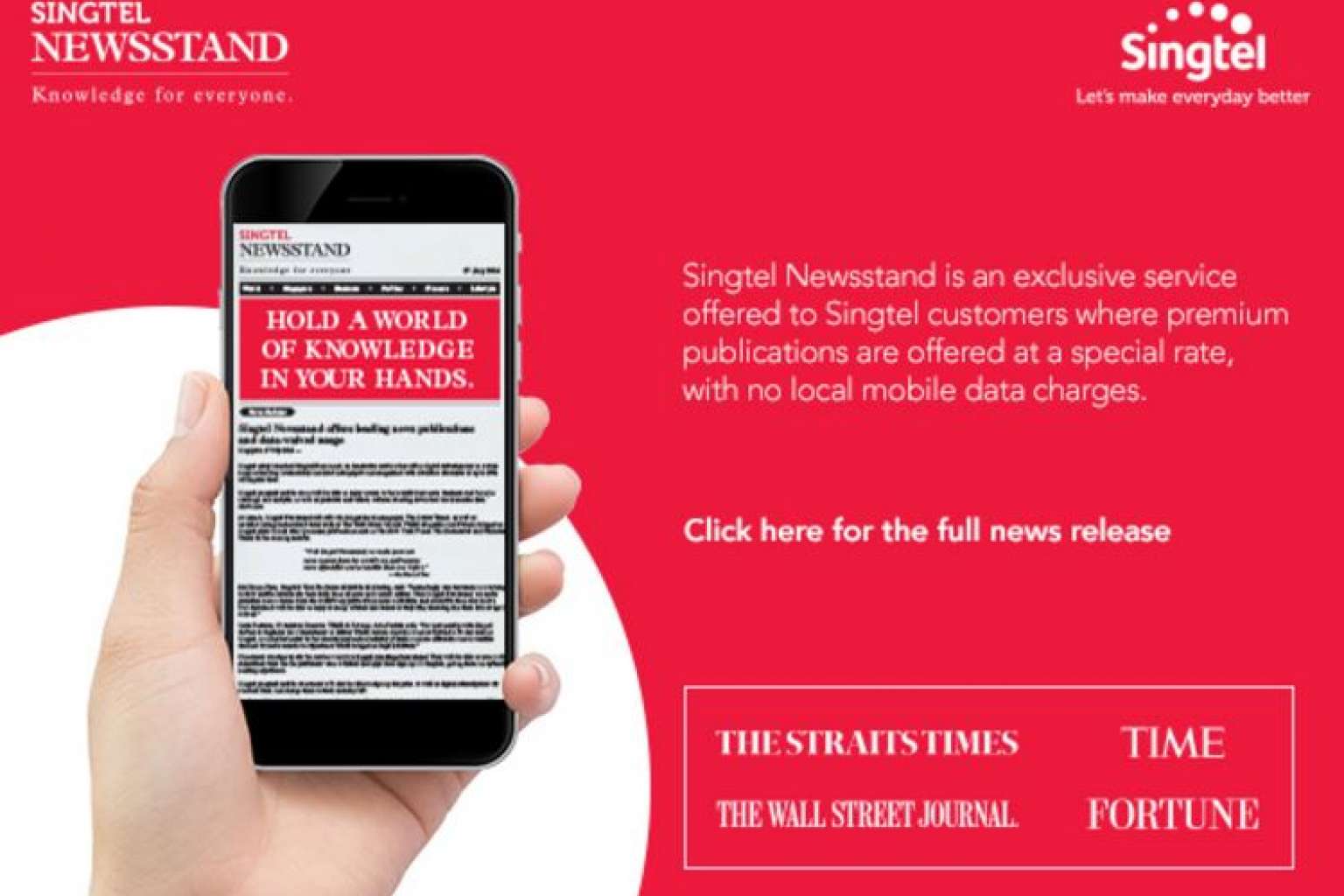
    Singtel has launched a new service offering subscriptions to digital newspapers and magazines at discount rates, and with unmetered access to their content.

    The Singtel Newsstand service will at launch offer Singapore’s largest newspaper the Straits Times, as well as international publications including the Wall Street Journal, TIME and Fortune Magazine.

    The titles will be offered at discounts of up to 20% off regular rates, and Singtel postpaid customers will be able to access online articles, podcasts and videos from the publications without drawing on their data allowances.

    Singtel said it plans to add other publications including the New York Times, the Economist and the Financial Times in the coming months.

    The operator will also offer postpaid customers the option to sign up for print subscriptions to the publications and be charged via their monthly mobile bill.

    Singtel has partnered with Samsung to offer a free three months subscription to Singapore customers who purchase Samsung devices from Singtel from now until mid next year.

    Singtel vice president of mobile marketing Diana Chen said the new initiative reflects the fact that the operator’s customers are increasingly using their mobile devices to access news and current affairs daily.

    “With Singtel Newsstand, we make premium news content from the world’s top publications more affordable and accessible than ever before,” she said.

  • Ayala launches Philippines’ most luxurious condo

    Ayala launches Philippines’ most luxurious condo

    Ayala Land Premier (ALP), the top-tier market segment unit of Ayala Land Inc. is launching the country’s most expensive residential development to date with a total value of P20.5 billion—including an ultra-luxurious unit sold at P477 million.

    “ALP competes in a valuable segment in the market. The players are very select, and it is by delivering these one-of-a-kind properties in choice locations that ALP handily distinguishes itself,” said ALP Managing Director Jose Juan Jugo in a press briefing.

    Park Central Towers will be an ultra-luxury, two-tower development at the corner of Paseo de Roxas and Makati Avenue. The 69-storey Park Central South Tower worth P20.5 billion will rise across Ayala Triangle and shall have 281 private residences with 12 different unit designs and layouts.

    Unit sizes range from a two-bedroom unit at approximately 138 sqm to a three-level penthouse unit called Anadem Villa One at approximately 1,635 sqm (inclusive of a limited common area, 281 sqm pool deck).

    “Park Central South Tower will sell for an average price of about P300,000 per sqm. Unit prices range from P32 million to an unprecedented P477 million with an average unit costing close to P80 million,” said ALP Sales Head Mike Jugo adding that the units are the size of houses in exclusive subdivisions.

    Jugo said they have so far sold 40 percent of the project, or 116 units, with a total value of P8.3 billion in a preview sale to their most valued clients. Units sold include the $10 million Anadem Villa.

    There will be 54 Aquaview Villas, which feature their own private elevators and a 5.7 meter high living room area that flows out to a private plunge pool and lounge deck.

    At the corners opposite the Aquaview Villas are 54 Skyview Villas. While the Skyview Villas do not have the private elevators and pool areas, they feature floor-to-ceiling and wall-to-wall windows that wrap around a 5.7-meter high living room space.

    The 54 Gallery Villas meanwhile provide a heightened level of exclusivity, with their private elevators opening up to a gallery where discerning homeowners can feature prized possessions or works of art.

    The 112 Glass Suites are aptly named because all of the rooms feature floor-to-ceiling and wall-to-wall windows maximizing views and bathing these luxury apartments with natural light.

    “There are typically only five units per floor. Since most units have their own dedicated private elevators, well-heeled residents will likely not see each other in the elevator lobbies or lifts,” said Jose Juan Jugo.

    Park Central Towers will rise on a vast 15,860-sqm. parcel adjacent to an equally opulent Ayala Land Premier project, Roxas Triangle Towers.

    The building’s unique architectural design includes special four-storey high common spaces called Sky Terraces that will house either a gym, swimming pools, residents’ lounge or spas.

    Anchoring the luxury appointments and central location is an upscale retail podium that will house highly-curated shops and restaurants.

    The renowned Leandro V. Locsin & Partners collaborated with a boutique luxury Singaporean architectural firm, Soo Chan Design Associates (SCDA), and noted Japanese design group, Studio Taku Shimizu to come up with an iconic design for the structure, befitting its exceptional Makati CBD address.