Author: Mei Ling Tan

  • Netflix beams ‘Star Trek’ in 188 countries

    Netflix beams ‘Star Trek’ in 188 countries

    Netflix has signed a licensing agreement with CBS Studios International to be the exclusive premiere home of “Star Trek” in 188 countries, excluding the United States and Canada.

    Each episode of the new series will be available globally within 24 hours of its US premiere.

    The all-new Star Trek will begin production in Toronto in September for its January 2017 premiere. The iconic and influential global franchise will return to television for the first time since 2005 with a new ship, new characters and new missions, while embracing the same ideology and hope for the future that inspired a generation.

    “The launch of the new Star Trek will truly be a global television event,” said Armando Nuñez, president and CEO of CBS Studios International. “Star Trek is already a worldwide phenomenon and this international partnership will provide fans around the world, who have been craving a new series for more than a decade, the opportunity to see every episode virtually at the same time as viewers in the US.”

    In the US, the new Star Trek will launch with a special premiere episode on the CBS Television Network in January 2017. The premiere episode and all subsequent episodes will then be available in the United States exclusively on CBS All Access, the Network’s digital subscription video on demand and live streaming service.

  • Google to train 2m app developers in India

    Google to train 2m app developers in India

    In a bid to bridge the skills gap in the mobile app development segment in India, Google has launched a new certification program to train two million Android app developers over the next three years.

    The company hopes to support the government’s Skill India initiative through this program.

    India is expected to have the largest developer population globally, overtaking the United States, by 2018, with four million developers. However, currently only 25% of developers are building for mobile.

    Google has also launched an instructor-led training program on Android Fundamentals, available across public, private universities and training institutes of the National Skill Development Corporation of India.

    “By building a world class curriculum and making it easily accessible to millions of students and developers in India, we want to contribute to the Skill India initiative and help make India the global leader in mobile app development,” Google VP of product management Caesar Sengupta said.

    The in-person training will be integrated with Computer Science curricula of universities within this calendar year.

    The Android Developer Fundamentals course material will also be covered on NPTEL (an IIT Madras project in collaboration with the IITs and IISc) as part of its online Mobile Computing Course starting this month. The Android Developer Fundamentals reference course and all practicals and courseware will also be available as open source to everyone for free.

    In addition to partnering with the National Skill Development Corporation of India, Google has also teamed up with training partners such as Edureka, Koenig, Manipal Global, Simplilearn, Udacity and UpGrad – Google will train their trainers and update their Android courseware to prepare their students for the Android Certification and a career in Android development.

  • More than half the world is still offline

    More than half the world is still offline

    Despite falling prices for ICT services, more than half of the world’s population is still not connected to the internet, the latest ITU figures show.

    The UN agency estimates that 3.9 billion people remain cut-off from the vast resources available on the internet.

    The newly released report ICT Facts & Figures 2016 shows that developing countries now account for the vast majority of internet users with 2.5 billion users compared with one billion in developed countries. Internet penetration rates, however, tell a different story.

    In developed countries, internet penetration is pegged at 81% of the population, compared with 40% in developing countries and 15% in the least developed countries. It is also higher for men than for women in all regions of the world.

    The report noted that the global internet user gender gap actually grew from 11% in 2013 to 12% in 2016. The regional gender gap is largest in Africa, at 23%, and smallest in the Americas, at 2%.

    By early 2016, international internet bandwidth had reached 185,000 gigabits per second, up from a low of 30,000 gigabits in 2008. However, bandwidth is also unequally distributed globally, and lack of bandwidth remains a major bottleneck to improved Internet connectivity in many developing and least developed countries.

    ITU Secretary-General Houlin Zhao said more needs to be done to bridge the digital divide and bring the more than half of the global population not using the internet into the digital economy.

    “ITU, given the tremendous development of ICTs, has a key role to play in facilitating their attainment,” affirmed Brahima Sanou, the Director of the ITU’s Telecommunication Development Bureau.

  • Philippines to develop national broadband plan

    Philippines to develop national broadband plan

    Philippine president Rodrigo Duterte announced in his first State of the Nation Address (SONA) on Monday that he wants the newly created Department of Information and Communications Technology (DICT) to develop a national broadband plan to accelerate the deployment of fiber and wireless technologies to improve internet speed.

    He also announced that Wi-Fi access shall be provided at no charge in selected public places, including parks, places, public libraries, schools, government hospitals, train stations, airports, and seaports.

    A previous government initiative to establish a National Broadband Network (NBN) was scrapped in 2007 after the $329-million contract awarded to Chinese telecommunications firm ZTE for the project had been investigated in the Senate.

    In 2011, the then Commission on Information Communications Technologies (CICT) had also released a five-year digital roadmap that aimed to craft a vision for ICT use in governance, including the creation of a national broadband policy that would enable the environment for broadband development and use.

    Duterte’s call for a new national broadband plan came on the heels of a wide public clamor for fast and affordable internet. The Philippines had ranked poorly in many global indices for digital readiness.

    The country trails behind its Southeast Asian neighbors, for example, in the latest Network Readiness Index published by the World Economic Forum, which measures how economies use the opportunities offered by ICT for increased competitiveness. At 77th place in a 139-country study, the Philippines was behind Singapore (1st), Malaysia (31st), Thailand (62nd), Indonesia (73rd).

    Duterte’s assumption into office on June 30 came at a favorable time as the law mandating the creation of the DICT as the primary body that would create policies and drive the national ICT agenda was signed by former President Benigno Simeon Aquino III last May.

    The country’s first appointed DICT Secretary Rodolfo A. Salalima affirmed in his first media interview that the government cannot expect the commercial service providers to be in all parts of the country and there would be a need for the government to establish an ‘infostructure’ in the countryside and provide service.

    Shortly before Duterte’s inauguration as the country’s 16th president last June, Globe Telecom had called on the government to help develop broadband access in the Philippines by investing in internet infrastructure in rural and far-flung areas.Globe President and CEO Ernest Cu said in a media statement that telecommunication operators in the country are unable to deploy infrastructure in rural areas due to business viability issues.

    “There are a lot of localities in the country that cannot be reached economically. What we propose is for the government to build the infrastructure, such as submarine cables, and then rent these facilities out to telco operators,” he said, citing the case of Sulu and Basilan provinces in the Autonomous Region for Muslim Mindanao.

  • TOT said to plan TD-LTE trial next month

    TOT said to plan TD-LTE trial next month

    Thai state-owned operator TOT reportedly plans to launch trial TD-LTE services over the 2.3-GHz band early next month.

    The operator is waiting for permission from regulator NBTC to use network equipment for the non-commercial trial service.

    Private operators AIS, Dtac and True Corp have been invited to join the trial, which is scheduled to begin on August 4, which is National Communications Day in Thailand.

    The trial will be conducted in Bangkok and Ratchaburi. TOT plans to install 20 2.3-GHz base stations along parts of the routes of Bangkok’s Skytrain public transport service. The trial in Ratchaburi will meanwhile use Huawei equipment.

    TOT holds 60 MHz in the 2.3-GHz band, and plans to invite international network suppliers and local operators to jointly introduce wireless broadband services over the spectrum, the report states, citing sources.

    The report states that TOT has already approached Huawei, Nokia, and Ericsson to discuss the project and plans to select the supplier with the best proposal to roll out the network.

    According to the sources, TOT plans to initially wholesale the 2.3-GHz bandwidth to local operators, and use the revenue from this agreement to finance its own 2.3-GHz rollout.

  • Ericsson CEO Hans Vestberg steps down

    Ericsson CEO Hans Vestberg steps down

    Ericsson has announced the resignation of long-serving CEO Hans Vestberg, effective immediately, as the company seeks to transform to adapt to changing market dynamics.

    Vestberg has also stepped down as president and as a member of the board of directors, but remains “at the company’s disposal” for a six month term of notice, the company announced.

    Executive vice president and CFO Jan Frykhammar will take the role of interim CEO until a permanent replacement is found.

    Vestberg has been with Ericsson for 28 years and has been serving as CEO for the last seven. But he has been facing pressure to step down as the company struggles with profitability in a period of slowing demand and intense competition.

    Last week the company reported a 24% decline in second-quarter net profit, along with an aggressive cost reduction plan aimed at turning around the company’s operations.

    “Hans has been instrumental in building strong relationships with key customers around the world and his leadership and energy have been an inspiration to employees and leaders across Ericsson,” Ericsson chairman Leif Johansson commented.

    “However, in the current environment and as the company accelerates its strategy execution, the Board of Directors has decided that the time is right for a new leader to drive the next phase in Ericsson’s development.”

  • Trinity Pictures co-makes two films with Chinese partners

    Trinity Pictures co-makes two films with Chinese partners

    Trinity Pictures, India’s first franchise feature film studio, is planning two landmark Indo-China co-productions to be released in fiscal 2018, according to Eros International Media.

    These are Kabir Khan’s travel drama The Zookeeper (working title) and Siddharth Anand’s cross-cultural romantic comedy Love in Beijing (working title), to be co-produced with China’s Peacock Mountain Culture & Media and Huaxia Film Distribution.

    The two films are the first ever Indo-China co-productions set in both India and China and will have Han Sanping, former chairman of China Film Group, as their creative producer. Sanping has produced more than 300 films and 100 TV series, including Red Cliff, Karate Kid and Let the Bullet Fly

    With the cast from both India and China — a leading Indian male actor and leading Chinese actress — Kabir Khan’s human drama, The Zookeeper, tells the journey of an Indian zoo keeper to China to find a panda to return to India with in order to save his zoo.

    Siddharth Anand’s cross-cultural romantic comedy, Love in Beijing — also with an A-lister Indian actress and leading Chinese male actor — is based on an Indian girl who falls in love with a Chinese man.

    Production costs for The Zookeeper by Kabir Khan are expected to be at about $25 million and Love in Beijing $15 million.

  • Ooyala launches server-side ad insertion

    Ooyala launches server-side ad insertion

    Ooyala now offers live server-side ad insertion (SSAI) for broadcasters and media companies distributing live, ad-supported video.

    A part of Ooyala Live and its ad-serving platform, Ooyala Pulse, the technology provides smooth transitions between ads and content during live feeds for seamless, TV-like playback.

    SSAI helps circumvent ad blockers so customers can reclaim lost revenue. Unique to Ooyala’s SSAI technology is its focus and method to deliver hyper-personalized ad experiences to live-streaming audiences.

    Ooyala’s SSAI technology allows publishers and advertisers to merge programming and personalized advertisements together into a single video stream. As a result, the video content and advertising play continuously, eliminating any buffer time or latency between the content and ads.

    There is also no distinction between where the content ends and the ads begin, therefore it prevents video advertising from being blocked.

    Ooyala’s live SSAI technology personalizes every ad, for every user, on any device — every time, regardless if the user is watching live or catching up in DVR mode. The most relevant ad is delivered based upon the individual’s watching environment.

    Ooyala Live gives broadcasters and media companies full control over their live stream and ad experience. Customers can set their ad-monetized stream to autodetect ad markers, dictating when the stream needs to cut to an ad break and back again, or manually manage the process due to unforeseen events such as a power outages, a delay of game or injuries, which require more frequent ad breaks to fill air time.

  • Viacom unit debuts Nickelodeon block

    Viacom unit debuts Nickelodeon block

    Viacom International Media Networks (VIMN) Asia is expanding its collaboration with Vietnamese multimedia communication group International Media Corp (IMC), to launch the first Nickelodeon-branded block on IMC’s YouTV channel, available on satellite, cable and free digital terrestrial platforms in Vietnam.

    By the end of September, over 5 million Vietnamese households that access YouTV will be able to enjoy up to four and half hours of Nickelodeon’s world-renowned content every day during the after-school hours on weekdays and the mornings during the weekends.

    The multi-year deal includes Nickelodeon animation titles like SpongeBob SquarePants, Dora the Explorer, Teenage Mutant Ninja Turtles, PAW Patrol and select popular live action series like The Thundermans and Haunted Hathaways.

    “Nickelodeon blocks offer broadcasters a robust and varied entertainment solution for kids 4 to 14 years and we are delighted to partner with YouTV to bring our first Nickelodeon branded block to Vietnam,” said Mark Whitehead, VIMN Asia Pacific’s EVP and managing director.

    “We are excited that YouTV will be the first to exclusively carry a Nickelodeon block in Vietnam,” said IMC’s executive chairman Lam Chi Thien. “YouTV currently has a leading position in the Vietnamese market for families and this collaboration will provide significant added value for the kids’ programming line-up for our viewers.”

    IMC currently has an existing collaboration with VIMN as a licensee partner for MTV Vietnam.

  • Rising sales at department stores suggest recovery of retail sector

    Rising sales at department stores suggest recovery of retail sector

    South Korea’s major department store chains saw their sales move up 2.4 percent in the first quarter from a year earlier, government data showed Sunday, indicating a recovery may be under way in the retail sector.

    According to the data compiled by the Ministry of Trade, Industry and Energy, South Korea’s top three department store brands — Lotte, Hyundai and Shinsegae — saw their sales improve in the January-March period from a year earlier, recovering from the 1.2 percent on-year drop posted for all of 2015.

    Last year, local department stores suffered a drop in performances due to the outbreak of the Middle East Respiratory Syndrome (MERS) here, which induced South Koreans to avoid crowded areas and stay indoors.

    The department stores also saw their sales advance 4.3 percent on-year in April. While sales dropped 2.7 percent on-year in May, they still were better than at large-sized supermarket chains, which suffered a 6.3 percent drop in sales over the cited period.

    Industry watchers said the recovery may give birth to a new department store branch with annual sales of 1 trillion won (US$879 million).

    Last year, only three branches managed to post annual sales above 1 trillion won, with two of them being Lotte and the other Shinsegae.

    “As the sales of large branches are recovering, and as department stores are aggressively rolling out renewal projects, it is believed that the number of the so-called 1 trillion-won club branches will increase,” an industry watcher said.


  • Zee acquires Sarthak Entertainment for $17m

    Zee acquires Sarthak Entertainment for $17m

    Zee Entertainment Enterprises has decided to acquire fully Sarthak Entertainment, which operates Odia-language Sarthak TV.

    The acquisition shall be from current shareholders of Sarthak Entertainment, subject to requisite regulatory approvals, as an all-cash deal at a consideration of maximum of 1.15 billion rupees or about $17 million.

    With this acquisition, Zee has entered the rapidly expanding regional market in Odisha. Sarthak TV would complement Zee’s regional bouquet of channels that includes Zee Marathi, Zee Talkies, Zee Bangla, Zee Bangla Cinema, Zee Telugu, Zee Kannada and Zee Tamizh.

    “The acquisition of an already profitable, market leading venture is going to be a value accretive investment in line with our philosophy of enhancing shareholder value,” said Punit Goenka, managing director and CEO of Zee. “Sarthak will further add to our formidable bouquet of 33 channels in the domestic market.”

    “Being the oldest and market leading network in India, Zee would provide the perfect platform for Sarthak to grow further in the future,” said Sitaram Agrawalla, founder and managing director of the Sarthak Group. “With a history of successful operations, we are sure Sarthak will be a great value-add for Zee.”

  • SM Seaside City Cebu recognized in ULI Philippine Healthy Places Awards

    SM Seaside City Cebu recognized in ULI Philippine Healthy Places Awards

    SM Prime’s SM Seaside City Cebu was recognized recently by the Urban Land Institute (ULI) Philippines Building Healthy Places Awards in the Commercial-Retail category.

    Building Healthy Places Awards recognize outstanding and innovative projects that add value to the community, promote healthy life choices and enhance the environment.

    SM Seaside City Cebu is the center of a future 30-hectare mixed-use masterplan which will hold office, residential, and hospitality components. It provides not only convenient retail, food and beverage outlets, services, and leisure activities, but also public transport access, outdoor roof-gardens, and a green inner courtyard in which social and communal activities can take place.

    The mall holds outlets for several physical and leisure activities, such as fitness centers, bowling-lanes and ice-skating. It also contains medical clinics, health-food outlets, drug-stores and spas. Outdoor playgrounds and water-playgrounds in the roof-garden provide physical outlets for kids, while a perimeter jogging path allows visitors, workers, and residents to stay fit.

    Aside from the mall’s content, its architecture aim to promote human interaction in the mall, which is considered critical to its success. SM Seaside City Cebu is not just a place to shop; it is designed to be the social hub of the local community, and the architecture aims to reflect this role, with its grand entrances, central courtyard, and sweeping gardens.

  • Fei Fah Novelty Food to open first flagship retail store and cafe 155 South Bridge

    Fei Fah Novelty Food to open first flagship retail store and cafe 155 South Bridge

    “A woman teared (up) when she tried our mooncake at the Hong Kong Food Expo,” recalled Lawrence Lau, the chief executive officer and managing director of Fei Fah International Group, which produces Chui Lau Heung mooncakes.

    That was when he realised how similar the food business is to his family’s traditional trade, said the 50-year-old, third-generation owner of Fei Fah, which started out as a medical hall on South Bridge Road and continues to produce medicinal balms under the brand, Fei Fah Medical. He explained that his grandfather had started the medical hall with the intention of providing for his family. “But once he sorted out his finances, he took up skills as a Chinese physician to help lessen the suffering of others and make them happy.

    “Food does the same thing: I might not be lessening your pain but I am creating joy and happiness through good taste. I am creating bonding experiences between people by selling a product that they can share and enjoy.”

    Lau entered the food business by chance, when he was looking to diversify the family business. “Our Hong Kong office for the medical business was bleeding and I was looking for a breakthrough to turn things around.” It was then that he met a durian mooncake manufacturer in Singapore, who was seeking partners to help export the confection. This led to the creation of Chui Lau Heung mooncakes in 2003 and the subsequent inception of Fei Fah Novelty Food in 2005. “It was challenging understanding the product, learning about food storage, logistics, and how to market the product in Hong Kong,” he said. It was a bold move given the small market in Hong Kong, as few as two out of 10 consumers were receptive to durian. But the company decided to enter the market anyway, said Lau. The subsequent rise of budget airlines made travelling to Singapore and Malaysia affordable for those in Hong Kong and around the South China Sea. This meant more of them were spending time on our shores and getting acquainted with local flavours. “And with durian, once they tried it, they went nuts over it. Today, 70 per cent of Hong Kongers are not put off by durians and demand is so much higher. In fact we are seeing demand also from mainland China, and that is a huge market,” he added. Chui Lau Heung is currently one of Hong Kong’s top five selling mooncake brands.

    When Fei Fah Novelty Food’s first flagship retail store and cafe 155 South Bridge opens at Pagoda Street on August 1, Singaporeans will finally get a chance to taste this homegrown product that is sold across continents, from Hong Kong, Macau and Guangzhou, to Los Angeles, San Francisco, San Jose, Seattle, Houston, Honolulu, New York, and Chicago, to Toronto, Calgary, Edmonton, Montreal and Vancouver.

    Look out for their new offering of crystal durian mini mooncake — the brand’s 2016 creation that features a creamy mix of D24 and Mao Shan Wang durian filling encased in a tender, see-through crystal skin. The novelty mooncake is made to resemble a faceted jewel. Lau shared that the idea was conceived in November last year, and that it took a long time for his master chef to perfect the recipe, as creating the crystal skin proved more challenging than anybody had thought. While not revealing numbers, Lau said that quantities are limited and stocks for this mooncake will not be replenished once they are sold. The crystal mooncakes are already available for early bird orders in Hong Kong, Macau and the United States.

    Apart from the mooncakes, the shop and cafe spanning two levels will showcase products under Fei Fah Novelty Food, which includes items such as durian honey and fish bak kuah, and also those from Fei Fah Medical, such as traditional balms and medical oils. Koh Yuen Lin

  • Korean retailers ride on ‘Pokemon Go’ craze

    Korean retailers ride on ‘Pokemon Go’ craze

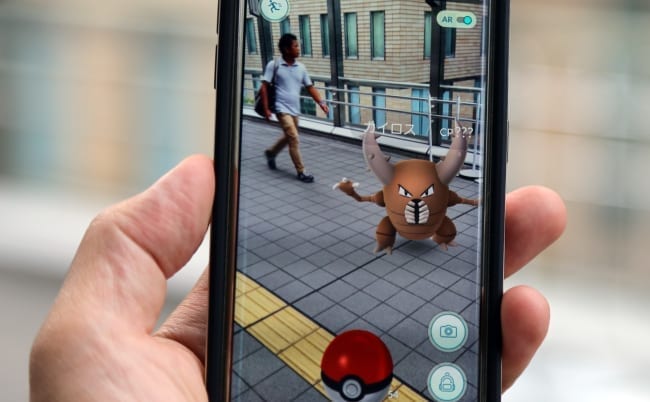
    South Korean retailers are capitalizing on the explosive popularity of Nintendo’s augmented-reality mobile game “Pokémon Go” with new products and services targeting local Pokémon game enthusiasts and fans.

    From a sudden rise in consumer spending at select Pokémon-appearing cities in Korea to the launch of Pokémon-inspired hotels, tour packages and goods, the smash-hit game appears to be leaving a notable imprint on the local retail sector.

    “Pokémon Go,” produced jointly by Nintendo and U.S.-based Google spinoff Niantic, Inc., is a GPS-based mobile game that has users running through real-life locations to discover and collect virtual monsters, such as the all-famous Pikachu, via their smartphones.

    Though the game has yet to officially launch in Korea, it has been operational in parts of the country, including Sokcho of Gangwon Province since mid-July and most recently parts of Ulsan and Busan, where the game’s GPS signal is active due to technical glitches.

    Eager to play, hundreds of avid Pokémon fans here have been flocking to such locations in the past few weeks, boosting business at local retailers in the region and prompting online retailers to introduce an array of Pokémon-inspired products.

    Among the biggest beneficiaries are convenience stores in Sokcho which have been enjoying a sudden sales boom thanks to peaking demand for cell phone battery charging services as well as portable battery chargers.

    CU, the nation’s top convenience store operated by BGF Retail, said its outlets in Sokcho saw their sales from July 11-17 almost double compared to the previous week, thanks to the legions of “Pokémon Go” players in the area.

    During the period, sales of “battery charging” services at CU stores in Sokcho rose by 388 percent from the week before while sales of small electronic devices including portable batteries and earphones rose by 82.4 percent, BGF Retail said.

    Game players to Sokcho have been frequenting convenience stores in the area to rest and stock up on necessities such as ice, ice cream and water to fight the summer heat as well, boosting their daily sales, a CU official said.

    Joining other smaller businesses, discount supermarket chain E-mart’s Sokcho branch has reportedly begun offering free ice water to “Pokémon Go” players who capture a Pokémon on its premises.

    Targeting Sokcho-bound travelers, scores of mobile-commerce companies including Ticket Monster, 11st Street, Gmarket and Auction began organizing day-trip bus services from Seoul to Sokcho starting from July 12.

    Meanwhile in Busan, the beachside Haeundae Grand Hotel has partnered with Pokémon Korea Co. to offer specialized Pokémon-themed rooms, merchandise and eateries that tug at the hearts of local fans.

    Reflecting Pokémon’s resurgent appeal, sales of Pokémon-related toys, stationary and mobile accessories have surged as well. Online retailer 11st Street saw sales of Pokémon items rise by 57 percent during July 11-17 compared to the previous week, while Ticket Monster said sales of such products rose by 211 percent during the same time frame.

    11st Street is even holding a promotional event inspired by “Pokémon Go” — dubbed the “11Mon Go,” in which users can find and collect “11Mon” character while shopping on the website. Those who collect all the characters are eligible for prizes including round-trip bus tickets from Seoul to Sokcho, according to 11st Street.

    By Sohn Ji-young

  • Bottom line: brands chase China’s high-end lingerie market

    Bottom line: brands chase China’s high-end lingerie market

    High-end lingerie sales are outpacing China’s generally downbeat luxury market, and heating up competition between international brands and local rivals looking to go upmarket.

    U.S. brand Victoria’s Secret will open its first store, and companies including Italy’s ultra-luxury La Perla and Germany’s Triumph are adding stores and moving beyond China’s mega-cities to tap a lingerie market that has more than doubled in five years to $18 billion, according to Mintel Group.

    Chinese consumer tastes are maturing, women are more confident about buying for themselves and President Xi Jinping’s drive against conspicuous consumption is likely diverting spending from flashy branded bags and accessories to sports and ath-leisure wear and the more discreet lingerie.

    “Luxury is … not about buying to show off, it’s about buying items that make you feel good,” says Chiara Scaglia, La Perla’s Asia chief.

    China’s women’s underwear market is expected to have a retail value of $25 billion by next year – double that of the United States – and will grow to $33 billion by 2020, according to Euromonitor.

    Chinese firms such as Beijing Aimer, Maniform and Ordifen are also chasing that money, targeting higher-end customers and raising their quality.

    “That means foreign brands will have to out-compete local brands not just on quality, but also innovation,” said Matthew Crabbe, director at Mintel.

    For now, the market is highly fragmented, with none of the leading firms having more than around a 3 percent share. International brands see China as a priority to help bolster overall sales given a fairly bleak global outlook.

    La Perla, which sells bras priced around 2,000 yuan ($300), has eight stores in China and plans additional outlets in Chengdu and Chongqing within the year. It also aims to open a men’s store in Beijing.

    “The perception of the lingerie sector has changed,” Scaglia told Reuters. “At the beginning many people we spoke to were confused as to why anybody should spend over $1,000 on panties for something nobody sees.”

    EXPANDING FOOTPRINT

    Victoria’s Secret will open a 20,000 square foot (1,860 square meter) flagship store in Shanghai this year, taking over a prime downtown location that used to house a Louis Vuitton store. “I think it will announce our arrival in China in a very significant way, and should be the beginning of an enormous business for us,” said Martin Waters, L Brands International President.

    Triumph, which already has 1,000 China stores, plans to open in five new cities this year and up to 11 cities next year.

    Cosmo Lady (2298.HK), a Chinese firm that has focused on the mass market, selling bras from 50 yuan ($7.50), last year bought Ordifen to increase its presence in the luxury market.

    “We would like to gradually step into the high-end market,” said Peter Lam, Cosmo Lady’s assistant chief financial officer.

    Gao Qiannan, a 22-year-old Shandong student who says she spends upwards of 1,500 yuan a year on lingerie, doesn’t think there’s a big difference between Chinese and foreign brands.

    “If I can buy a domestic brand, I will, but if I particularly like the international brand’s style, I’ll get that,” she said.

    The international brands say they don’t offer products specifically for the Chinese market, though La Perla notes that some colors – red and baby pink – sell far better in Asia than in Europe or the United States. The Italian brand has also used Chinese supermodel Liu Wen in its campaigns.

    Japanese and South Korean brands are also growing in popularity in China.

    Yin Huijuan, 23, who spends 800 yuan ($120) on lingerie every three months, said she prefers Japanese brands such as Wacoal and Narue. “I feel foreign brands’ style is more detailed and diversified, these are areas where domestic brands fall short,” she said.

    CONSUMER CAUTION, ONLINE COMPETITION

    Even in the lingerie market, though, there are bumps.

    Cosmo Lady, which has 8,600 outlets including Ordifen’s 550 China stores, saw robust growth in its mass market sales last year, but has warned about its profits for the first half of this year, citing China’s slowing economic growth, consumer caution and competing online sales.

    Hong Kong-listed Embry Holdings (1388.HK), which owns the Embry Form lingerie brand, said its group retail sales slipped by nearly a fifth in April-June on tougher competition and the economy.

    Despite those bumps, the lingerie sector retains a strong appeal, said Eugene Mak, an analyst at China Merchant Securities in Hong Kong, and firms like Cosmo Lady are still outperforming other apparel retailers.

    He predicts the market will hit a consolidation phase at some time. “It’s a very young market, but in the near-term it’s going to be messy,” he said.

    (Reporting by Farah Master, with additional reporting by Giulia Segreti in Milan, Shanghai newsroom, and Sharon Shi and Joyce Zhou in Hong Kong; Editing by Ian Geoghegan)