Author: Mei Ling Tan

  • APAC pay TV faces slowing growth

    APAC pay TV faces slowing growth

    The Asia-Pacific pay-TV industry is expected to grow at a 5.8% average annual rate from 2016 to 2021, according to Media Partners Asia (MPA).

    MPA projects pay-TV industry sales across 18 major markets in Asia Pacific to climb from $54 billion in 2016 to $72 billion by 2021, rising thereafter to $81 billion by 2025.

    The pace of pay-TV subscriber and revenue growth is slowing however, weakened by an economic slowdown and increasing competition from both legal and illegal alternatives.

    Pay-TV subscriber growth declined or substantially decelerated in Hong Kong, Indonesia, Malaysia and Singapore in particular.

    At the same time however, India and Korea remain two of the region’s largest and most scalable pay-TV opportunities. Revenue growth will also accelerate in Australia and the Philippines, largely thanks to subscriber growth.

    However, MPA analysts have lowered subscriber growth forecasts across much of Southeast Asia, especially for Indonesia, Malaysia and Singapore, although ARPU should remain resilient in both Malaysia and Singapore.

    The pay-TV industry in China, meanwhile, remains the largest in the region and is becoming increasingly digitalized. Pay-TV growth opportunities for broadcasters are limited however, due to increasing regulation as well as competition from free and paid online video services.

    Elsewhere in the region, subscription-based video-on-demand (SVOD) services have had a negligible impact on pay-TV so far, despite the global launch of Netflix earlier this year, in addition to increasing competition among lower-priced regional and local SVOD services.

  • Fast food giant eyes Jollibee China expansion

    Fast food giant eyes Jollibee China expansion

    Philippine fastfood giant Jollibee Foods Corp is keen to expand its footprint in China.

    Jollibee China is likely to add 20 to 40 new stores to its 400 outlets, according to Jollbee CEO Ernestro Tanmantiong. He said the company continues to target 5 to 10 per cent growth in stores.

    “We are exploring acquisitions. Our focus is on food service,” he said, adding that the company had acquired a commissary to support its business.

    Early this year, Jollibee Foods took over a food manufacturing facility that services Yonghe King, a famous non-Western restaurant in China.

    Asked about the recent international ruling on the West Philippine Sea and its impact on the business, Tanmantiong said the company thinks the ongoing dispute is unlikely to hurt the company’s operations in China.

    “I think the move of the government to employ diplomacy is the best way to settle the differences. It is the best solution,” Tanmantiong said.

    “Our vision in the future is to achieve a 50-50 ratio of international versus Philippines. Today, it’s 80 per cent Philippines and 20 per cent international. We hope to achieve a 50-50 ratio but it doesn’t mean we are slowing down in the Philippines,” he said.

  • Vietnam retail on brink of  convenience store boom

    Vietnam retail on brink of convenience store boom

    Vietnam retail is on the brink of a convenience store boom as multinationals muscle up against fast-expanding local players.

    The increasing pace of life in urban Vietnamese cities is fuelling demand for convenience stores which, until three to four years ago, seemed few and far between on the streets of Ho Chi Minh City and Hanoi.

    Since then, numerous c-stores have been opened by foreign retailers, such as Japan’s Family Mart, Thailand’s B’smart and US-founded Circle K, competing against local ones, such as C-Express, VinMart, and Co.op Food. According to a Nielsen survey, six out of 10 Vietnamese buyers shop at c-stores because of their advantageous location and five out of 10 because of good design and displays. Local students are the main customers during lunchtime, attracted by comfortable dining spaces, cool temperature and free wifi.

    Pham Ngoc Hung, VP of HCMC Business Association, said the HCMC market is attractive to Thai retailers with 98 B’smart stores and 10 C-Express by Big C stores already trading. In the meantime, local chain VinMart by VinGroup, is approaching 700 stores and is reportedly opening an average of two new stores nationwide each day.

    The fastest-growing chain in the HCMC is Circle K, the local rights owned by Vong Tron Do company. It has 150 stores and promises for further expansion. Today, in every residential quarter, there are two or three Circle K  stores, usually less than 600m apart.

    But the c-store boom is only just beginning. Last year, Japanese c-store giant 7 Eleven signed a master franchise agreement with Seven System Vietnam to expand across the country. The first stores are scheduled to open in 2017, and the target is 1000 within 10 years. CP All, which operates more than 8000 7-Eleven stores in Thailand, is a partner in the Vietnam venture and says it plans for 40 per cent of its stock to be locally sourced, with the balance from Thailand and elsewhere.

    Existing operators are waiting to see what type of stores 7-Eleven will roll out in the Vietnam market – given the considerable difference in sizes of its Thai stores – and the morphing of the format by Circle K in Vietnam to include dining area and fast food focus.

  • Singapore retail rent decline worsens

    Singapore retail rent decline worsens

    The Singapore retail rent decline gathered pace in the last quarter according to data from Edmund Tie & Company.

    In the second quarter, retail rents across the board fell by 3.9 per cent quarter-quarter.  That was double the 1.9 per cent decline of the preceding quarter.

    Amid weaker demand, occupancy levels also dipped, falling by 0.5 percentage points quarter-on-quarter to 92.2 per cent.

    “In light of declining rents, several established retailers have taken – or are taking – advantage of the lower rents to reinforce their brand presence in Singapore through flagship stores,” the company’s quarterly review said.

    These include:

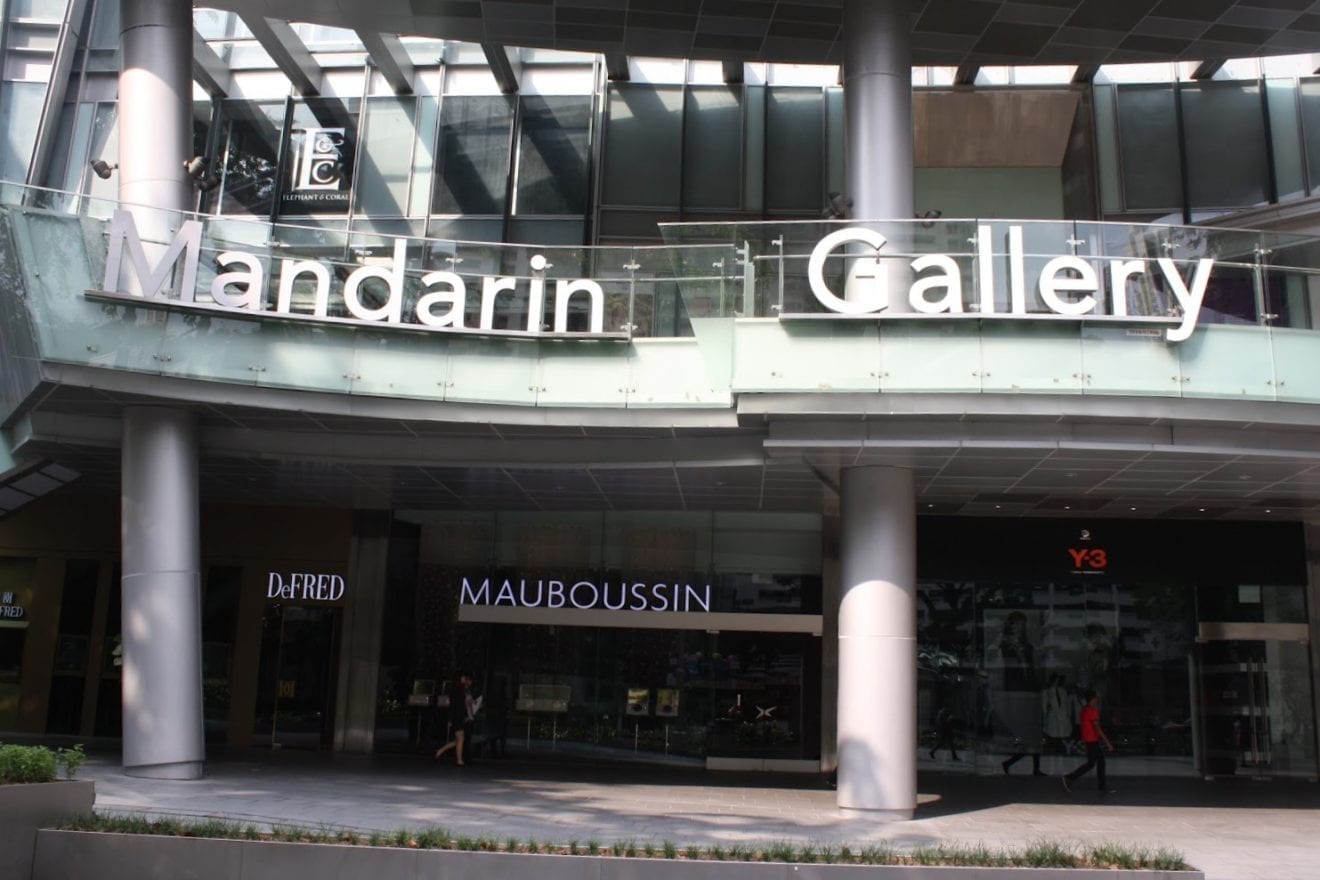
    • Choo Yilin at Mandarin Gallery.
    • HP at Marina Square.
    • Christian Dada at 268 Orchard.
    • Victoria’s Secret at Mandarin Gallery.
    • Uniqlo at Orchard Central.
    • Michael Kors at Mandarin Gallery.

    victoria secret

    “As the sector undergoes bouts of restructuring, retailers are also constantly reinventing themselves to reach out to the rising number of technological-savvy consumers. This includes the recent launch of digital wallets (eg: Apple Pay, Samsung Pay, Android Pay) which a string of established retailers have adopted, including Starbucks, Uniqlo, NTUC FairPrice and Cold Storage.”

    Headquartered in Singapore and supported by offices in Kuala Lumpur and Bangkok, Edmund Tie & Company is an established real-estate consulting firm that operates across Malaysia, Thailand and other countries in Southeast Asia.

  • Grab partners Lippo Group for e-payment platform

    Grab partners Lippo Group for e-payment platform

    The partnership is an extension of a strategic deal signed between the two companies in March this year.

    According to the agreement, Lippo Group will develop a universal payments platform that enables Indonesians to top-up an e-money account and use it to pay digitally at Lippo companies.

    Grab will then integrate the payments platform into the Grab app as a mobile wallet option within GrabPay, enabling any mobile user to use the Grab app to pay for not only their daily transport needs, but also other lifestyle services.

    “We commend the government’s efforts to push Indonesia towards a cashless society and look forward to contributing towards this goal. Grab’s partnership with the Lippo Group to develop a universal payments platform will be a leap forward for e-money in Indonesia,” said Grab Group CEO and co-founder Anthony Tan.

    “With a rapidly growing middle class, people will want to have a mobile wallet option in the Grab app, which they can use every day, whether for transport, or payments for basic transactions,” he added.

    Tan believed that the potential of developing a mobile payments platform in Southeast Asia is “limitless”. The majority in Southeast Asia are unbanked but are armed with mobile phones. Thus, the only way forward is to find a cashless solution that will help customers manage their money and mobile wallets.

    “We will work with local partners to make cashless transactions a reality for the majority in Southeast Asia,” he concluded.

    The universal platform will be rolled out in the fourth quarter this year.

    With that, over 50 million existing customers from the Lippo and Grab will be able to pay via their mobile phones or use their Grab App to pay for a full suite of services from Lippo’s retail companies, including department stores, hypermarts, cinemas, coffee shops and e-commerce.

    Lippo Group director Adrian Suherman said his company will introduce more partner merchants in unrelenting efforts to push cashless transactions.

    “Lippo Group is committed to transforming lives in Indonesia, and we want to work with partners like Grab that have this common vision,” Suherman said in a statement.

    “Indonesians can enjoy the convenience of using their mobile phones and the Grab app to top-up and pay, as well as better manage their cash flow,” he added.

    Grab is determined to expand new services specifically for Indonesian preferences, as the country is Grab’s largest market. Nearly 95 per cent of Indonesians do not use credit cards. Grab said it will continue to partner with leading companies to launch innovative services to cope with these challenges.

    Began as a taxi-hailing app in 2012, Grab has expanded its core product platform to include private cars and motorbikes. The region’s largest transport network is now testing new services such as social carpooling, as well as last mile and food deliveries.

    Grab currently offers services in Singapore, Indonesia, Philippines, Malaysia, Thailand and Vietnam.

    Meanwhile its partner Lippo Group is a pan-Asian investment holding company with investments in real estate, department stores, retailing, financial services, telecommunications, hospitality, healthcare, news media, and IT services.

    With Riady family’s second generation at the helm, Lippo Group has been increasing its presence in the digital scope through aggressive investments in technology, media and online platforms.

    Its latest and largest investment is through Mataharimall.com, an online marketplace, which has pledged $500 million of funds for the platform.

  • Pokemon no-go for Indonesian civil servants

    Pokemon no-go for Indonesian civil servants

    Indonesian civil servants have been ordered not to play Pokemon Go at work in a bid to protect “state secrets”, the latest sign of a growing backlash in the country against the smartphone game.

    Resistance is mounting in official circles to Pokemon Go, with the military and police already having banned their personnel from seeking to catch virtual monsters while on duty, and the Jakarta presidential palace prohibiting the game around its premises.

    The top echelons of the security establishment have expressed fears that the game’s hi-tech capabilities could be used by foreign spies to access sensitive data-although security experts are sceptical there is any danger.

    A Frenchman was briefly detained this week after accidentally wandering onto an Indonesian military base as he hunted for monsters.

    Yuddy Chrisnandi, the minister for bureaucratic reform, has now sent a letter to all government departments across the archipelago, from ministries to the intelligence agency and local leaders, calling on them to ban staff from playing Pokemon Go.

    “We are taking preventative measures to maintain the state’s security and state secrets,” he said in a statement posted on his ministry’s website yesterday, addressed to the country’s approximately 4.5 million civil servants.

    “We cannot endanger the stability of the country.”

    Indonesians have been swept up in the frenzy for Pokemon Go, which has been a worldwide hit since its launch two weeks ago among hordes of users who have taken to the streets with their smartphones.

    While it is not available officially in Indonesia, gamers have managed to download unauthorised copies and have set out to hunt for virtual monsters everywhere from shopping malls to mosques.

    Some local leaders were already heeding Chrisnandi’s order, with the mayor of Bandar Lampung city on western Sumatra island threatening to fire civil servants caught playing the game.

    However there appeared to be resistance in other areas-the governor of Central Java province suggested the game could be used to attract more tourists.

    Pokemon Go uses smartphone satellite location, graphics and camera capabilities to overlay cartoon monsters on real-world settings, challenging players to capture and train the creatures for battles.

  • Yamaha, Honda, Suspected of Cartel Practice

    Yamaha, Honda, Suspected of Cartel Practice

    PT Yamaha Indonesia Motor Manufacturing (YIMM) and PT Astra Honda Motor (AHM) have been suspected of involved in motorcycle cartel practice. The suspicion was raised after an investigation conducted by the Commission for the Supervision of Business Competition (KPPU). Both companies are suspected of controlling prices of 110 to 125cc Automatic Scooter products.

    KPPU’s investigation team, led by Frans Adiyatma, explained that they have found an electronic mail sent by YIMM President Director Yoichiro Kojima to Yamaha Indonesia marketing team.

    “Kojima instructed the marketing team to adjust their prices in accordance with Honda motorcycle price increase,” Frans said on Tuesday.

    The price fixing was suspected to occur following an agreement made between Kojima and Mr. Inuma, President Director of Astra Honda Motor. An email dedicated to YIMM Vice President Dyonisius Beti mentioned that “President Kojima-san has requested us to follow Honda price increase many times since January 2014, because of his promise with Mr Inuma, president of AHM at a golf course.”

    KPPU Chief Syarkawi Rauf said that the investigation was carried out to protect consumers and to allow consumers to purchase motorcycles at competitive prices.

    In response to the allegation, Yamaha General Manager M. Masykur argued that his company had never been involved in cartel practices. “Yamaha has been doing business in Indonesia for 42 years, the company will certainly comply with Indonesian laws,” Masykur stated.

  • Indonesia the most favorite destination for Australian tourists

    Indonesia the most favorite destination for Australian tourists

    Indonesia has so far proven to be the most favorite destination for Australian tourists, overtaking New Zealand, Indonesian Ambassador to Australia Nadjib Riphat Kesoema said.

    “The variety of natural wealth and beauty, culture and world-class tourist facilities that the Indonesian government offers to tourists have become special attractions for Australian tourists,” he stated in a press statement released on Saturday.

    His remarks came when the Indonesian Tourism Ministry and the Indonesian Embassy in Australia were conducting a promotional activity at Hotel Hyatt in Canberra recently.

    Besides helping promote mutual understanding between the peoples of the two countries, the tourism sector can also create jobs in Indonesia, he added.

    He underlined that he supported the program to conduct tourism promotion in several Australian cities such as Canberra, Sydney, Melbourne and Brisbane.

    The program will serve as a venue for a meeting between Australian travel agents and their Indonesian counterparts directly, he said.

    The ambassador has called on Australian tourism companies to encourage Australian citizens to visit other Indonesian tourist destinations than Bali.

    Data from the Indonesian Embassy in Canberra showed that almost 85 percent of 1.2 million Australian tourists visited Bali in 2015.

    Nadjib offered potential visitors from Australia other tourist destinations such Toraja, Lake Toba, Raja Ampat, Labuhan Bajo, Tanjung Kalayang, Seribu Islands, Borobudur Temple, Mount Bromo, Wakatobi and Morotai Island.

  • Large customer base benefits RI start-ups

    Large customer base benefits RI start-ups

    Indonesia’s mushrooming start-up companies have the potential to boost the country’s economy, thanks to their large customer base.

    According to Sillicon Valley-based Fenox Venture Capital, the movement could drive the Indonesian economy to expand faster than its Southeast Asian neighbors.

    “Indonesian start-ups are very powerful, in the sense that Indonesia has a very big consumer base. There are actually a lot of customers who can give feedback,” president and CEO Anis Uzzaman said on Friday.

    He said they had the advantage of endorsement from President Joko “Jokowi” Widodo’s administration, resulting in supportive regulations.

    Indonesia’s current rules are quite liberal in terms of supporting start-ups, compared to several other countries, particularly in the field of financing. For instance, Indonesia allows venture capital firms to invest with convertible notes, which are banned in many countries, said Uzzaman.

    A convertible note is a short-term debt that converts into equity. Under the scheme, investors can lend money to a start-up during the first round of funding and receive shares of preferred stock, rather than getting a payback loan plus interest rates.

    “Regulation issues are a common problem across the world, but the current Indonesian government is willing to make changes. It is a good thing,” he said.

    The Jokowi administration expressed its seriousness in expanding into the digital economy when the President visited Silicon Valley, the world’s center of technological innovation, during a working visit to the US in February.

    Envisioning the birth of 1,000 technopreneurs in the country, the administration allows foreign e-commerce players valued over Rp 100 billion (US$7.62 million) to open businesses and team up with financial authorities to support funding for IT companies and small and medium enterprises (SMEs).

    Several start-ups in Indonesia have gained prominence, such as Go-Jek, a motorcycle taxi service application.

    However, Uzzaman claimed that Indonesia often thwarted the efforts of venture capitalists and investors to reach out to start-ups in regions beyond Java.

    In an effort to provide business opportunities for start-ups across the country, Fenox Venture Capital, a Silicon Valley-based venture capital firm, plans to hold a global contest called the Startup World Cup 2017, in partnership with the government’s Creative Economy Agency (Bekraf).

    The event will comprise a start-up conference and competition with participants coming from 15 countries, including Indonesia.

    The countries will hold their own regional qualifications to select the top 10 participants to present their ideas in front of international judges, as well as world investors and tech company CEOs.

    The regional winners will compete to win a $1 million prize in the grand finale, which will be held in Silicon Valley on March 24 next year. Part of the prize will take the form of investments in the winning start-up.

    Fenox expects to see at least 750 startup entrepreneurs from the ASEAN region apply for the competition.

    In Indonesia, the company is conducting road shows in six cities to ensure that start-ups in the region take part in the event.

    “The start-ups should be a PT and we prefer those that already obtained financing, whether from institutional or individual investors,” said Aldi Adrian Hartanto, an associate member at the firm’s Jakarta branch office.

  • BCA records profit of Rp9.6 trillion

    BCA records profit of Rp9.6 trillion

    PT Bank Central Asia Tbk. (BCA) made a net profit of Rp9.6 trillion in the first semester of this year, reflecting a growth of 12.1 percent year-on-year, mostly from interest income following the bright growth of corporate credits.

    BCA President Director Jahja Setiaatmadja said here on Wednesday that although domestic economic condition was still in the process of recovering, corporate credits had contributed the highest to the growth reaching 19.6 percent year-on-year or Rp135.4 trillion.

    Commercial and small and medium credits on the other hand have been the biggest portfolio but their growth was only recorded at 6.5 percent or Rp146.5 trillion while consumer credits were up 9.1 percent year-on-year, reaching Rp105.2 trillion.

    “We indeed saw that demand is still slow, but thanks to our efficiency and growth of transaction accounts, the business has registered a boost,” he added.

    In the consumer line, housing credits rose by 8.5 percent to Rp61.7 trillion and motor-vehicle credits were up 11.4 percent to reach Rp34.0 trillion.

    The BCA credits in all segments grew 11.5 percent to Rp387 trillion, year-on-year.

    According to Jahja, the efficiency attained through reduction of cost of funds has contributed to the growth of profit and revenues.

    “Before the monetary easing effected by Bank Indonesia since 2015, we have been able to lower the interest rates of deposits and, in turn, reduce the cost of funds. In February, we also reduced the loan interest,” he explained.

    BCAs operational income in the first semester this year rose 15.5 percent to Rp26.1 trillion while operational burden also increased by 7.3 percent, failing to reach double digits, and touching Rp12.07 trillion.

    The compensation of growth in credit distribution was seen in the hike of non-performing loan ratio to 1.4 percent by the end of June 2016 from 0.7 percent in June last year. Jahja, however, saw the trend of NPL hike would weaken.

    “The NPL is indeed predicted to rise until September but the rise will not be drastic and may have a tendency of slowing seeing the start of improvement in the economy,” he underlined.

    To anticipate problem credits, the BCA has set up an additional reserve fund worth Rp2 trillion. In June, the ratio of the reserve to total problem credits reached 193 percent.

    The BCAs liquidity condition seemed to be easing continuously. Although the credit growth reached double digits, the ratio of funds to lending (LFR) was recorded at only 77.9 percent.

    The LFR position was still below the central banks existing standard, which is at 78 to 92 percent. The newest standard is at 80-92 percent.

    In the first half of this year, the BCA collected Rp490.6 trillion in third-party funds, reflecting a growth of 7.8 percent.

    With the credit achievement and the third party funds, BCA assets in the period were recorded at Rp626.1 trillion.

  • BNI reports healthy growth with profit up 79.9 percent

    BNI reports healthy growth with profit up 79.9 percent

    State lender PT. Bank Negara Indonesia Persero Tbk (BNI) reported a strong growth of 79.9 percent year-on-year in profit to Rp4.37 trillion in the second quarter of 2016 despite a decline in credit quality.

    President Director of the countrys fourth largest bank in assets Achmad Baiquni attributed the rise in profit to high growth in credits and fee based income, and efficiency in cost of fund.

    “Our cost of funds dropped to 3.1 percent from 3.2 percent,” Baiquni said here on Friday.

    BNI outstanding credit grew in two digit by 23.7 percent year on year (yoy) to Rp288.7 trillion.

    However, the non performing loan (NPL) of the bank also rose from 2.7 percent to 3 percent gross by the end of the first half of this year.

    He acknowledged the quality of credit assets became a problem shadowing the performance of the bank in the first six months of the year.

    Therefore, BNI has to increase its reserve funds from 138.8 percent in the second quarter 2015 to 142.8 percent in the same period in 2016.

    The increase in the credit of the publicly listed bank resulted in a rose in its net interest income to Rp13.91 trillion or an increase of 11.7 percent yoy.

    Its non interest income including fee based income grew 28.7 percent to Rp4.43 trillion.

    Baiquni said business credit disbursements sustained credit portfolio as high as 73 percent with annual growth of 25.6 percent to Rp260.7 trillion.

    Corporate credits accounted for 25.1 percent of its business credits.

    The bank also recorded a soaring growth of 331 percent or Rp7.3 trillion in low interest Peoples Business Credit (KUR) pushing up KUR contribution to outstanding credit to 19.9 percent from 5.6 percent earlier.

    Baiquni attributed the high growth to facility of guarantee and subsidy on interest offered by the government.

    “Speaking about target, we prefer the government to set target for us,” he said.

    The bank holds Rp391.4 trillion in third party funds or an increase of 19.6 percent yoy, dominated by cheap funds (current account saving account (CASA) making up 60.4 percent and deposits making up the rest, he said.

    With the outstanding credits and third party funds, BNI has assets valued at Rp539.1 trillion by the end of he second quarter of 2016.

  • Epicentre Asia raises cash for expansion

    Epicentre Asia raises cash for expansion

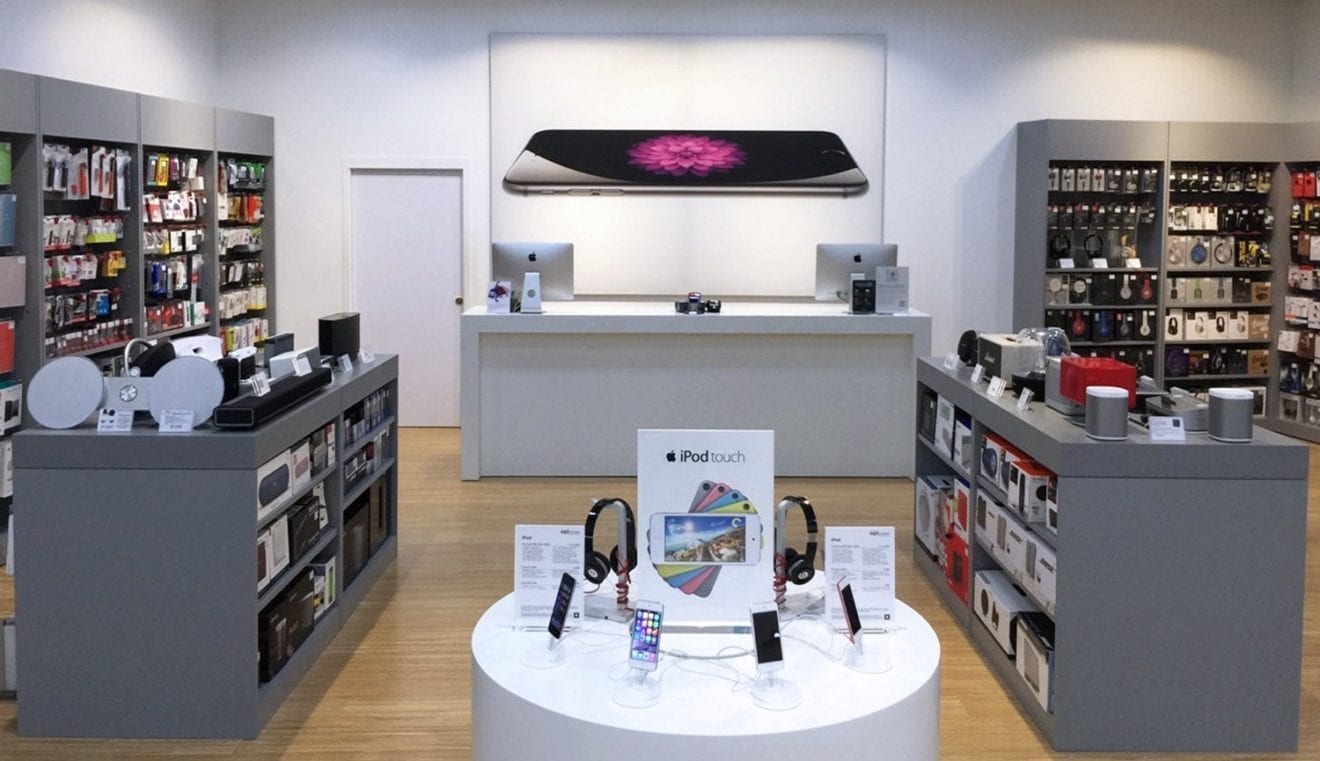
    Apple products retailer Epicentre Asia plans to raise S$11.45 million (US$8.44 million) by issuing 45.8 million private shares to new buyers.

    KGI Fraser Securities is the placement agent for the issue, with the price being not be less than 25 cents per new share. These placement shares represent 49.1 per cent of the current
    share capital of Epicentre.

    Epicentre has five stores in Singapore, including two on Orchard Rd which could be expected to take a big hit in turnover terms when Singapore’s first Apple Store opens later this year. It has six stores in Malaysia and also sells online.

    Half of the net proceeds raised by the share issue will be used to support business development and provide liquidity for expansion. The rest will be deployed for general working capital purposes, the company says.

    Earlier this year, Epicentre raised $1 million on debt crowd-finance platform MoolahSense, and the company says this debt will be repaid through the sale of merchandise.

  • 3 HK unveils new roaming services

    3 HK unveils new roaming services

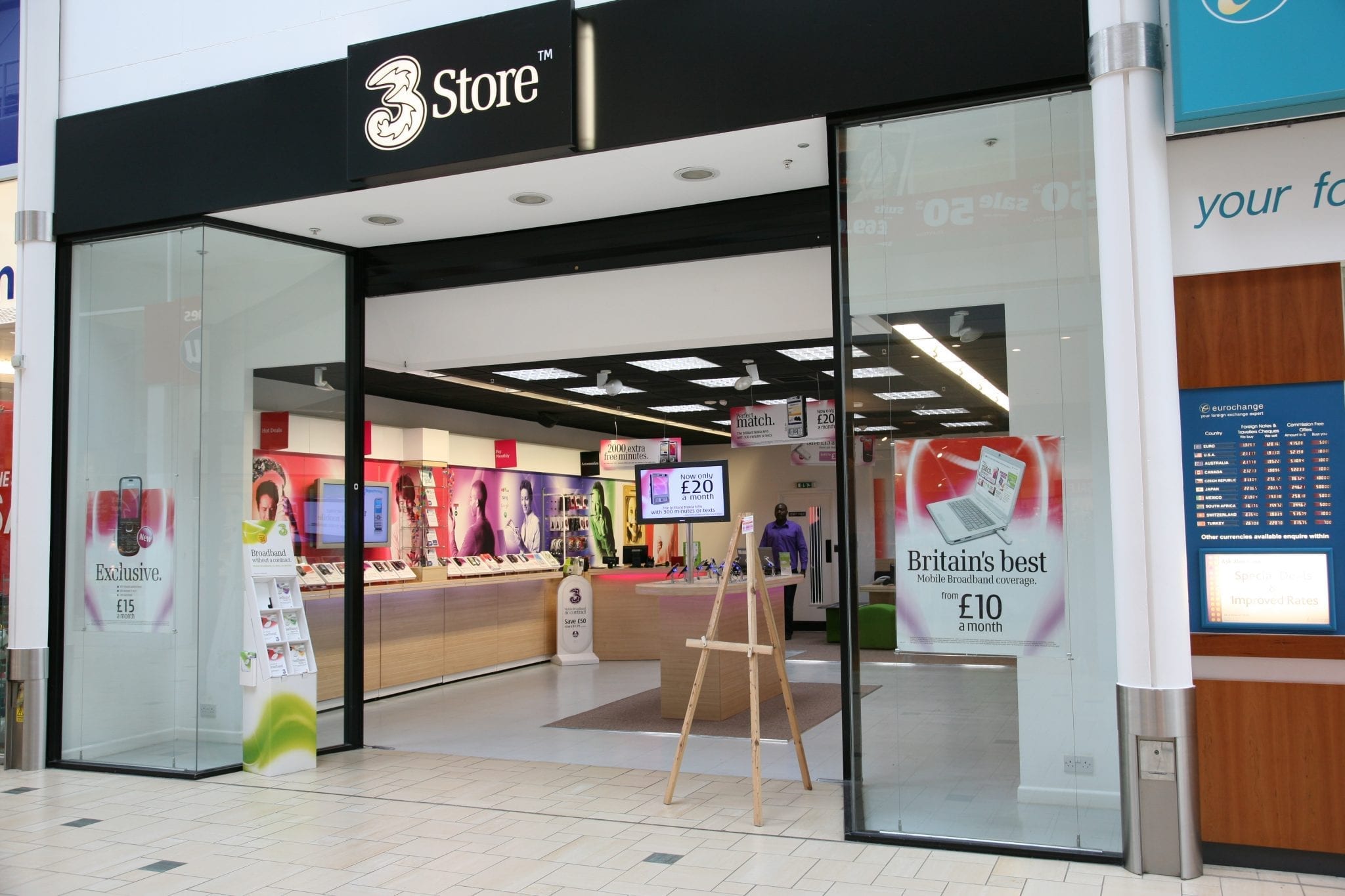
    3 Hong Kong, the mobile division of Hutchison Telecommunications Hong Kong Holdings Limited (HTHKH), has introduced new monthly plans and roaming passes, enabling customers to use mobile services in Macau and six European countries.

    HTHKH chief operating officer Jennifer Tan said the monthly 3Like Home plans and two types of roaming pass are tailored to the needs of frequent leisure and business travelers traversing Macau and Europe.

    The monthly “3LikeHome” plans, which start at HK$168/month ($21.66) (HK and Macau) and HK$508 (HK, Macau and six European countries), will offer equal local and roaming data usage entitlements, plus a quota of voice minutes to be shared between local use and when roaming.

    Devices will be automatically connected to 3 Group networks when in Austria, Denmark, Ireland, Italy, Sweden and the UK, as well as Macau.

    The new plans will allow customers to make calls to numbers in the locality where they are present, and Hong Kong, or receive calls from any region without incurring additional charges. The roaming data element of usage allows customers making frequent business trips to access the internet in Macau and the six designated European countries as if they were in Hong Kong, the operator said.

    To meet demand at this busy travel time of the year, 3 Hong Kong has also launched one-off roaming plans including a 3-day ‘3 Macau Roaming Pass’ and a 10-day ‘3 Europe Roaming Pass’, which will provide free-to-use voice and data entitlements in Macau and six European countries for families and frequent leisure travelers.

    In addition, 3 HK is offering 90-minutes free daily WiFi service to all mobile users in the city, as the number of its hotspots exceeding 20,000 across the city.

    Until the end of September, any mobile user in Hong Kong can access WiFi service for three sessions to a total of 90 minutes a day using a smartphone, tablet or laptop at more than 20,000 WiFi hotspots run by 3HK.

    Tan said 3 HK will build 3,000 more WiFi hotspots in the second half of this year, bringing the total number to more than 23,000.

  • Aussie ISP takes on NBN with microwave broadband

    Aussie ISP takes on NBN with microwave broadband

    Lightning Broadband is offering fiber connectivity in parts of Melbourne and plans to guide its roll out plans based on demand. Potential customers are able to register for interest on the website.

    The ISP is offering 100Mbps symmetrical plans with unlimited data for A$120 ($90) per month on a 24-month contract. The NBN’s 100Mbps downlink plans offer only 25Mbps uplink.

    Lightning Broadband is also offering 25Mbps, 50Mbps and 75Mbps plans, starting from A$75.

    For business customers, Lighting Broadband will offer dedicated 1000Mbps symmetrical microwave links that will not share equipment with other users.

    Founder Jeremy Rich told that the company believes that many Australians are sick of waiting for the NBN to arrive in their area, and are interested in adopting high-speed broadband today.

    The NBN’s ambitious rollout plans have been delayed repeatedly since the project was announced.

    The project has also been scaled back under the recently re-elected government – the NBN was originally intended to deliver FTTH providing wholesale speeds of up to 100Mbps to 93% of the population, but has since been redesigned to use a mix of access technologies, including FTTN, HFC and fixed wireless.

  • Huawei grows 1H16 revenue by 40%

    Huawei grows 1H16 revenue by 40%

    Huawei grew its sales revenues for the first half of the year by 40% to 245.5 billion yuan ($36.6 billion), despite a decline in its operating margin.

    The vendor reported an operating margin of 12%, down from 18% in the same period last year, partly as a result of increased investment in the company’s smartphone business as part of an aggressive push to become the market leader in 4-5 years.

    “We achieved steady growth across all three of our business groups, thanks to a well-balanced global presence and an unwavering focus on our pipe strategy,” Huawei’s CFO Sabrina Meng commented.

    “We are confident that Huawei will maintain its current momentum, and round out the full year in a positive financial position backed by sound ongoing operations.”

    Huawei has not yet disclosed its profit for the half-year period. Looking ahead, the company said it plans to continue to adhere to its pipe strategy, and invest heavily in R&D in areas including 5G and the IoT.

    In the carrier business, Huawei said it is focusing its attention on supporting operators’ digital transformation in four core areas – business, operations, architecture, and networks.