Author: Mei Ling Tan

  • Profit slump for supplement retailer Eu Yan Sang

    Profit slump for supplement retailer Eu Yan Sang

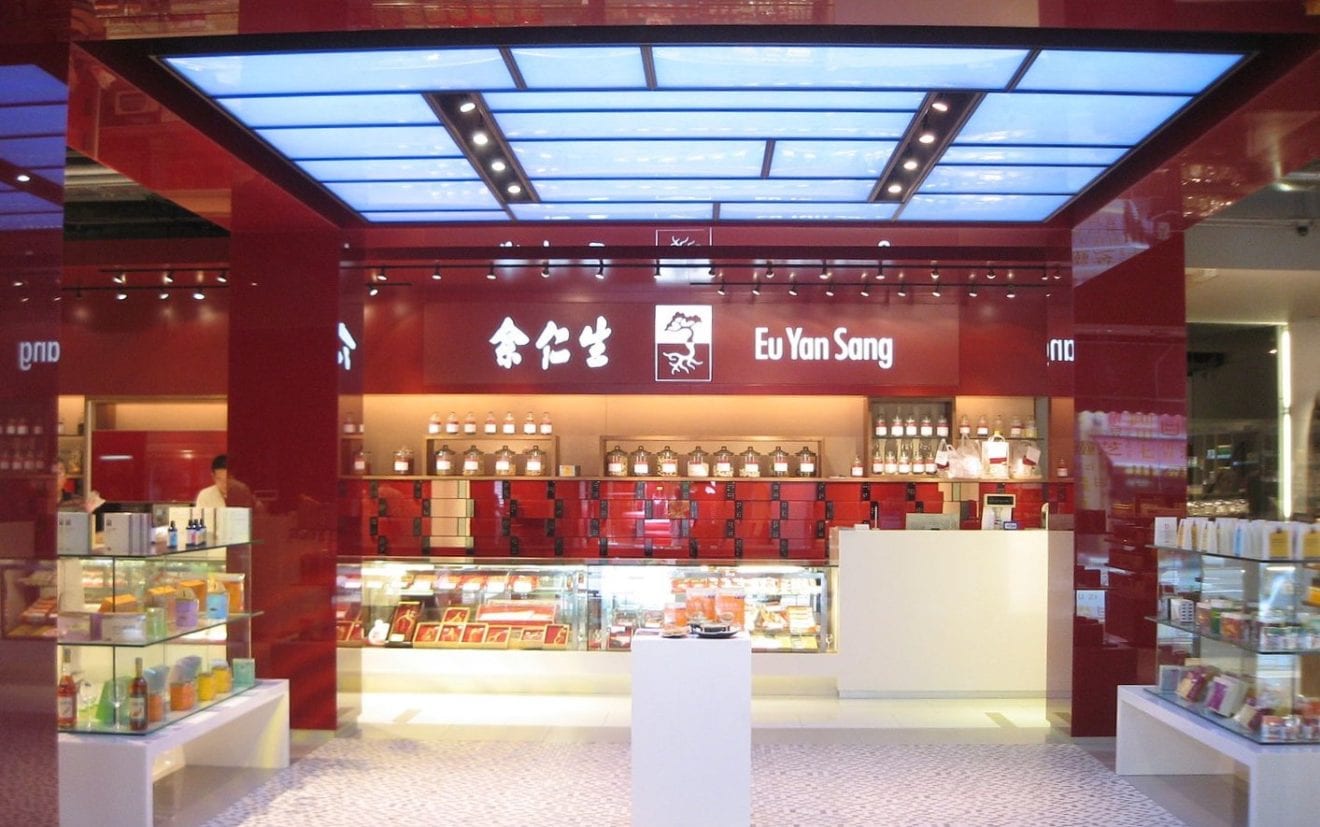
    Singapore supplement retailer Eu Yan Sang International has had its third-quarter net profit slump to S$286,000 (US$208,515) from $5.45 million as a result of declining revenue, foreign exchange losses and expenses related to closing F&B outlets in China.

    Revenue for the four months ending March 31 slipped 6 per cent to $103.87 million, mainly because of lower revenue from the Malaysian market as well as its weakening currency.

    Foreign exchange losses of $1.9 million resulted from the weakening Hong Kong dollar during the third quarter as well as the outlet closures.

    “Despite the sluggish regional economy, we are heartened by the green shoots of recovery budding in some of our markets,” says group CEO Richard Eu. ”We remain committed to improving our performance through cost-reduction initiatives and rationalisation, while seeking greater levels of efficiency through technology.

    “On the other hand, weak macroeconomic conditions continue to weigh down our market performance in Hong Kong and Malaysia.”

  • Smartphone startup Letv plans 1500 stores

    Smartphone startup Letv plans 1500 stores

    Chinese mobile phone retailer D.Phone is expanding its offerings with a new CNY2 billion (US$305.5 million) deal with online video provider and newly minted smartphone company Letv.

    D.Phone will add up to 1500 Letv ecosystem experience stores into its retail outlets.

    The deal covers Letv’s second-generation super phones, mobile TV services, membership promotions, ecosystem experience stores and customer service.

    Under the deal, D.Phone will this year sell one million Letv super phones, 200,000 Letv super TVs and 200,000 Letv memberships.  From now until the end of next month, the two parties will jointly host the offline debut of Letv’s second-generation super phones.

    Letv, which runs a streaming video website, has officially rolled out its second-generation super phones, ranging in price from CNY1099 to CNY2499.

    Letv mobile president Feng Xing says the strategic co-operation represents an important expansion of Letv’s offline retail channel. Letv has previously signed deals with China Unicom and JD.com.

  • Reliance Jio said to close in on iPhone deal

    Reliance Jio said to close in on iPhone deal

    India’s Reliance Jio Infocomm is reportedly on the verge of securing a long-term partnership with Apple covering the supply of VoLTE iPhones for the operator’s upcoming 4G network.

    Executives from Reliance Jio parent Reliance Industries and Apple recently reached an in-principle agreement at a meeting in Mumbai, citing senior executives aware of the meeting.

    The prospective deal would reportedly see Apple supplying “a couple of million” iPhones with VoLTE support that will work on the operator’s network. Reliance plans to sell bundled iPhones through its sales and distribution network covering 120,000 retailers and e-commerce companies.

    Reliance Jio also plans to adopt the enterprise retail offerings developed by Apple and IBM for its retail network, to help improve the customer experience.

    Apple CEO Tim Cook has given in-principle agreement to such a partnership with Reliance Jio, the report states.

    Cook is said to have also used the meeting to make a pitch for Reliance Jio to adopt Apple Pay in Reliance Retail stores, and the company has agreed to evaluate the possibility of such a deployment.

    Reliance Jio recently revealed it had exceeded 500,000 LTE users despite only so far launching services for its employees and those of its partners and vendors. The operator’s long-awaited public launch is expected for later this year.

  • Babyshop mulls major GCC expansion to reach 270 stores in 2016

    Babyshop mulls major GCC expansion to reach 270 stores in 2016

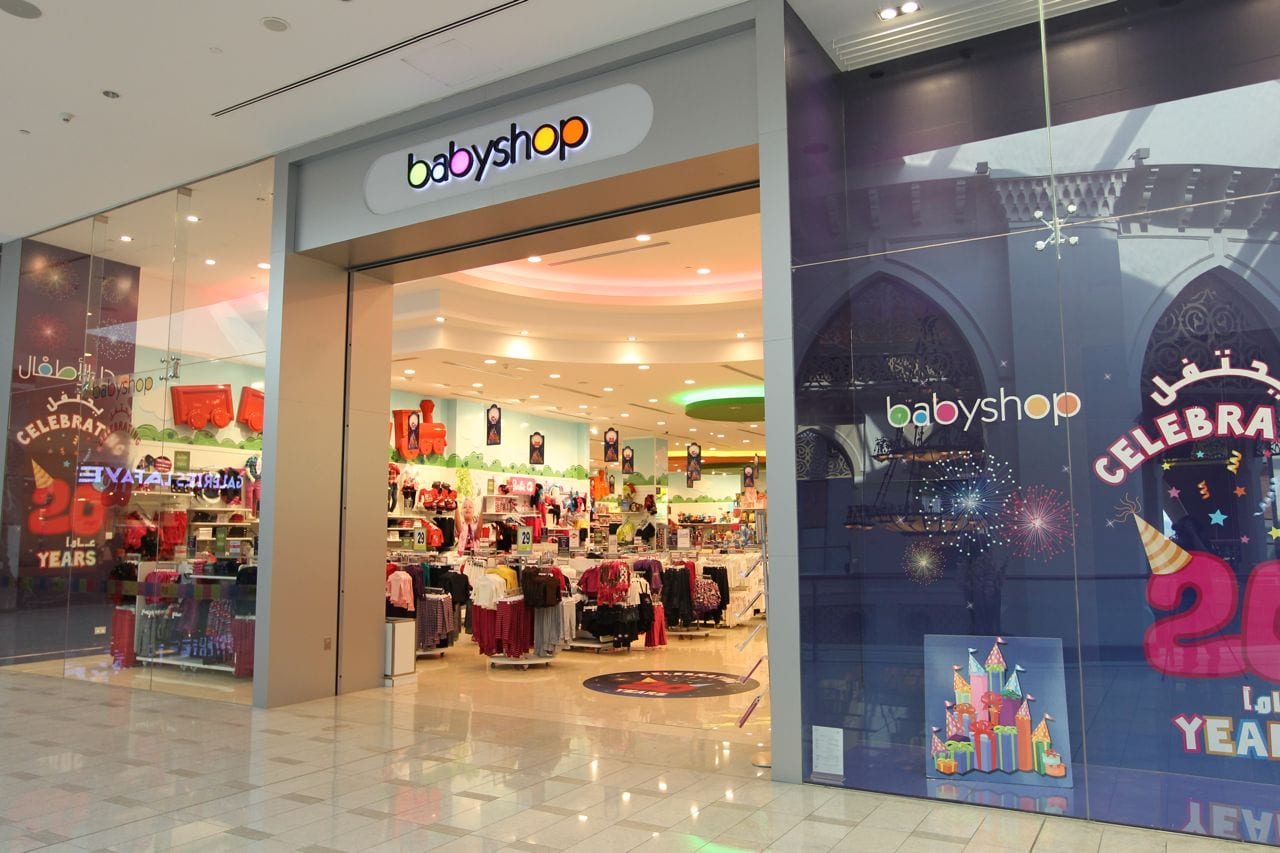
    Babyshop is looking to launch 25 stores in Saudi Arabia alone in two years, says Vinod Talreja, CEO of the retail unit under Dubai-based Landmark Group.

    Retail sector data from various markets, including the US, highlights the current global economic outlook. The markets in the MENA region, the UAE in particular, have already been hit by the dip in tourist flow. What are your projections?

    The retail sector in the MENA region has witnessed strong growth over the years, driven by strong economies, high disposable incomes and increased population, and will continue to see growth in the coming years.

    Having said this, in business, there could be periods where markets and situations could be a little slower than the other highly aggressive times. Such situations only give us retailers the opportunity to fuel innovation and strive even harder, working towards improved business growth using various different channels and activities that are in sync with the objectives of the business. Enhancing value propositions while closely catering to customers’ needs and requirements is one way of dealing with situations such as these.

    At Babyshop, we are continuing to expand. We are a company that has been expanding consistently for the past many years and our growth plans will not be affected by any short-term market challenges, as our business plans are laid out with long-term future strategy in mind.

    In terms of tourism to the region and to the UAE in particular, the upcoming Expo 2020 will definitely propel economic growth, thereby boosting the overall retail sector.

    The emirate is targeting 20 million visitors per year by 2020 and this will clearly have a tremendous impact on the sales of every category, proportionate with this massive number of visitors and thus taking retail to new heights.

    In 2015 alone, Dubai attracted more than 14.2 million overnight visitors, recording a solid 7.5 per cent increase over 2014, which is double the United Nations World Travel Organisation’s (UNWTO) projected three to four per cent global travel growth for the same period.

    These numbers clearly reiterate that the region is geared and well-positioned for the expected huge numbers which in turn will surge sales to significant levels across, thus fostering growth and invigorating the local economy.
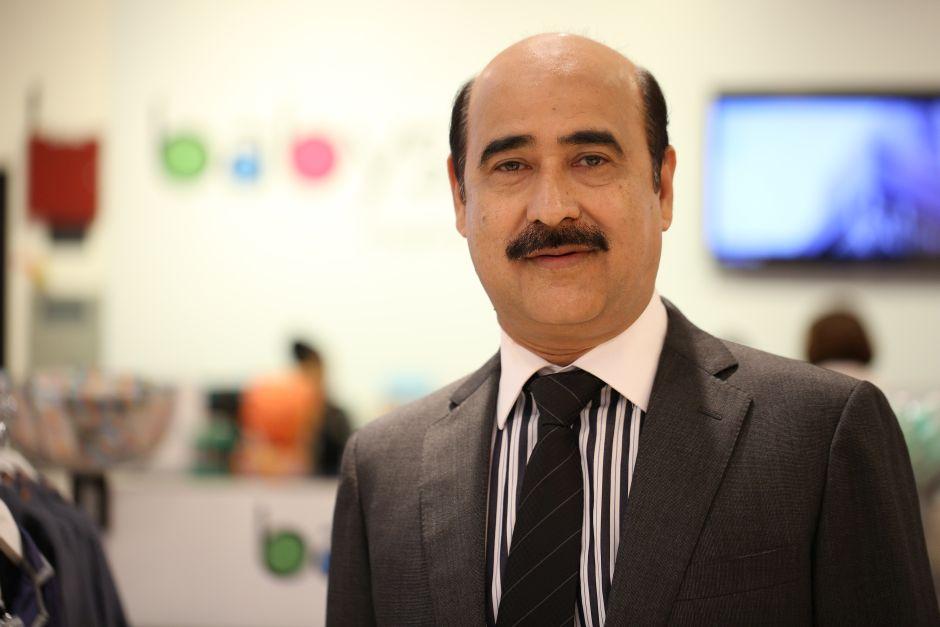
    Vinod Talreja, CEO Babyshop

    Babyshop, as well as its parent group Landmark, has an impressive footprint in the GCC. Although it has a few stores in the regions beyond MENA, the presence there is not much felt.

    Is it that the mid-market retailer is not so optimistic about those markets or is it that the “comfort zone” in the home region pulls it back?

    Babyshop, started in 1973, has 235 stores across 19 countries in the MENA region. The number is expected to reach 270 by end 2016. The brand is also well on track to achieve its target of 300 stores by end 2017, expanding into regions beyond the GCC.

    With a strong retail sector, Saudi Arabia today stands as our largest market, with 116 stores, followed by the UAE with 47 stores. We also have significant presence across the rest of the GCC and Egypt, Jordan, Lebanon, Iraq, Yemen, Libya, Kenya, Nigeria, Tanzania, Pakistan, Thailand and Kazakhstan.

    With a long-term vision of having significant footprint across the world, Babyshop has plans to expand into three new territories in 2017, with a major focus on the GCC, predominantly Saudi Arabia; Africa, with an emphasis on North Africa; and Thailand.

    We are extremely optimistic about our foray into newer markets in the MENA region and beyond, where retail sales are expected to continue and the retail space pipeline remains strong. These markets continue to be hotspots for the growth of retailers at both the regional and international levels.

    In a clear indication of the fundamental role the brand plays, this noteworthy presence of Babyshop and the aggressive expansion plans beyond this region into newer territories confirms its leading position at the frontline of the retail industry.

    What factors do you consider when choosing a new market for entry?

    Entering a new geography is a very important decision any brand can make and requires significant effort and commitment to implement an appropriate entry plan. In fact, target-marketing selection is a key part of our overall strategy at Babyshop and typically involves a significant in-depth analysis to understand various factors.

    Keeping in mind the vision and mission of Babyshop, the key factors that we consider before entering any market are the size of the market, its growth potential, the consumers and their purchase patterns and habits, competition, ease of accessibility to the local residents and, most importantly, the capital investment required to enter the chosen market.

    Is India on the list of new markets that you will be entering as part of your expansion plans, bearing in mind that it is going to be one of the fastest-growing economies this year?

    Our expansion plans set for the coming years are focused on the GCC, Africa and Thailand. These are highly favourable regions, with continued backing and support of the local governments, increased business prospects and growing population.

    As per AT Kearney’s Global Retail Development Index 2015, with a population of 30.8 million in Saudi Arabia, total retail sales grew at a CAGR of 7.7 per cent during 2010-2014 to reach $103 billion. In the next two years, we are looking to launch 25 stores in that market alone.

    India is currently not on the cards; however, with the market being a promising retail segment, we might consider it within our strategy in the future.

    Is franchising in retail by regional brands a new direction that is being witnessed? Landmark is seen to be taking the lead on this. How is Babyshop doing this?

    Franchising in general is just another way of reaching out to larger and booming retail segments, while being able to respond to local tastes, the changing needs of consumers and catering to distinct consumer groups by offering them a different product mix of high-quality products.

    Today, we are present in Nigeria, a market that we tapped into in January 2016 in a franchising model with Artee Group, along with Splash and Lifestyle, the other leading fashion and lifestyle brands of Landmark Group. We also have a presence in Thailand under the same model with Robinson, the exclusive distributor for Babyshop products in the market, as well as in Kenya, where The Junction and Sarit Centre are a franchise held with Deacons, a leading retail company in the East Africa region.

    The fresh approach adopted for the brand has showcased incredible success so far with great consumer feedback garnered. In Thailand alone, we plan to open ten stores over the next year.   We will be continuing to launch in various other regions under the franchising model in the coming years as well.

  • Apple CEO Tim Cook in China hails Chinese app developers

    Apple CEO Tim Cook in China hails Chinese app developers

    Apple CEO Tim Cook has hailed Chinese app developers and their contribution to world’s second biggest economy, as he began his visit here days after the tech-giant invested $1 billion in local ride hailing app Didi Chuxing.

    “The momentum is absolutely incredible,” Cook said in a meeting with developers, government officials and journalists.

    He said developers in China have earned over $7 billion, more than half of it in last one year.

    Their apps are popular around the world, with many of them having been downloaded in hundreds of countries, Cook said.

    “We are in the early phases of a tremendous growth,” the 55-year-old CEO said.

    “Government policies like Internet Plus act as the foundation of why I think the growth can be so incredible from here. They foster innovation and entrepreneurship throughout the Chinese economy,” state-run Xinhua news agency quoted him as saying.

    Cook is on his eighth China visit since becoming Apple CEO in 2011.

    He took a Didi taxi with Jean Liu Qing, president of Didi, to meet the developers.
    The Apple chief regularly meets entrepreneurs when in China, and he said he continues to be impressed by them.

    “[China] is one of the most vibrant places in the world. There are so many entrepreneurs now that they’ll drive the next generation of innovation in China,” he said.

    Apple Inc chief executive Tim Cook visited Beijing last Monday, days after announcing a $1 billion deal with ride-hailing app Didi Chuxing, and as the US firm tries to reinvigorate sales in China, its second-largest market after the United States.

    Cook explained that Apple had chosen to invest in Didi as it has been “an incredibly great success story on the App Store,” aside from being a leading ride sharing service both in and outside China.

    He said the investment reflected Apple’s excitement about Didi’s fast-growing business and Apple’s “continued confidence” in China’s economy in the long term.
    Cook did not give a direct answer when asked about rumours that the Didi investment has some connection with Apple’s own plans for an electric car.

    Currently, he said, Apple’s focus when it comes to the car market is on CarPlay, it’s device for connecting Apple smartphones to in-car entertainment systems.

    “We’ll see where that takes us,” he said.
    But Cook became far more direct when asked whether the investment was a sign of Apple losing its innovative edge.

    “No, no, there is no truth behind that at all,” he said, arguing that it was a sign of Apple placing greater focus on China.

    Apple has already put a lot of money into opening retail stores in China, which is Apple’s second biggest market after the US.

    It is expecting the 37th Apple Store to open this Saturday, approaching Cook’s goal of having 40 before the end of 2016.

  • Private Fixed Asset Investment In China Is Crashing

    Private Fixed Asset Investment In China Is Crashing

    We often think of liquidation events exclusively in terms of price, but in the real economy there is volume to consider. When financing dries up as financial agents run for cover lest they receive only further margin or collateral calls, it enacts a short run disruption in economic flow. At the margins, some firms are forced to delay activity while others can only give up altogether. It is difficult to figure how much in any liquidation is temporary and how much ends up as a permanent reduction.

    The dramatic events of January and February all across the globe undoubtedly created just this kind of mix. As it ended around February 11, there was going to be some bounce back in economic terms as funding began to flow again, allowing delayed projects and activity to restart. Because of that, it wasn’t surprising to see certain economic accounts and factors seemingly improve especially in March. That did not mean anything other than the end of the liquidation crunch, as the baseline decay remains in place and, as we are finding out again, was only amplified by further reduced capacity during the liquidations – those projects and activity that will never be restarted.

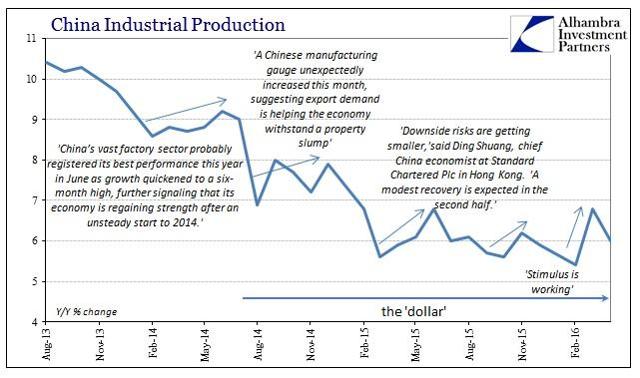
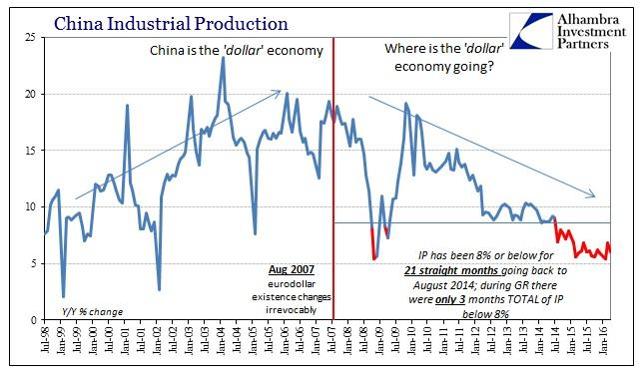
    As usual, this global process is most evident in China. Despite a burst of optimism especially in March statistics, the temporary part of the liquidation rebound is increasingly within view. Industrial production had jumped to 6.8% from a multi-year low of 5.4% in the January-February holiday combination and brought with it the usual “it’s all over” commentary. Instead, IP dropped back to just 6.0% in April which, like exports, suggests only what I propose above; a (very) brief respite only because the “dollar” hasn’t been as obviously stifling as it was to start 2016.

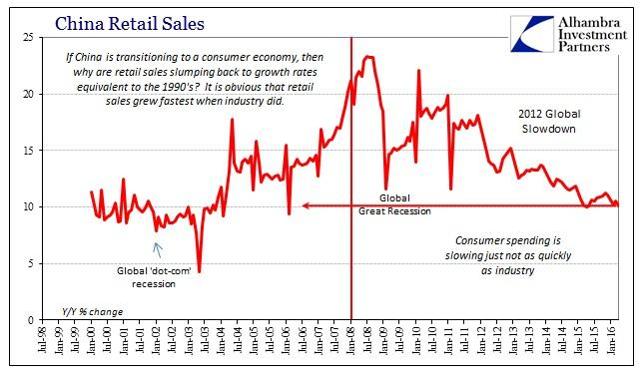
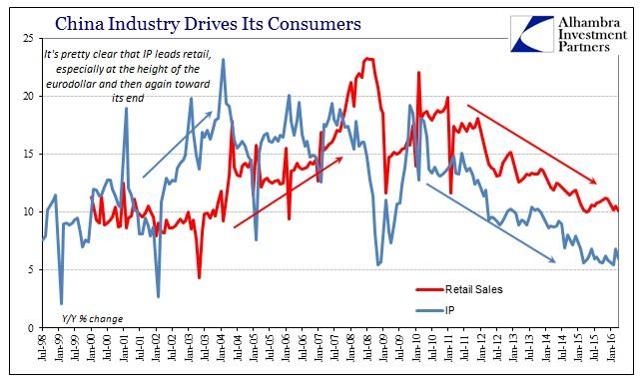
    The same trend was recorded in Chinese retail sales as well, which is perhaps a bigger blow to March’s hopeful sentiment. Even economists have started to admit China’s industrial “miracle” may never be resumed so they have turned in near desperation to the idea of a “consumer driven” economy, as if there is some plan being carried out to replace the manufacturing/export orientation of the rising eurodollar period. This wishful thinking gained traction only because retail sales have decelerated at a lag to industrial production.

    It is clear, however, through a wider perspective that China’s consumers are slowing just as China’s industry where “stimulus” can at best explain the delayed reaction. Even in 2016, the same pattern emerges as in manufacturing and export; retail sales were atrocious to start the year (Jan/Feb) at just 10.2%, nearly as bad as the worst of 2015, rebounding to 10.5% in March. The latest update for April is even worse than the Jan/Feb period, as Chinese retail sales slowed again to just 10.1%.

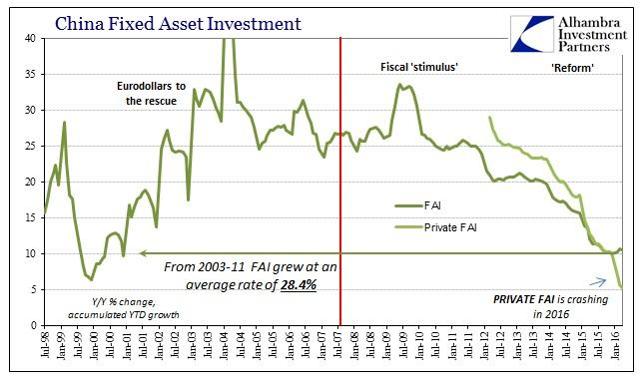
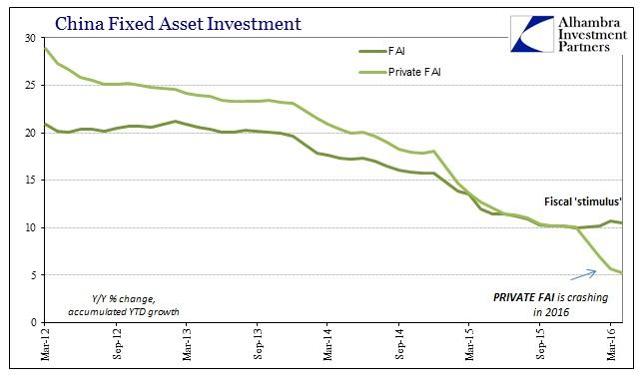
    As bad as those end results are for the direction of the Chinese economy, the real bad news is buried in productive capacity. Where industrial production and retail sales may have picked up the temporary portion of the economy disrupted by liquidation, fixed asset investment (FAI) suggests the reduction in baseline economic reality might be even worse than feared. Private FAI is crashing in China.


    Overall, total fixed asset grew 10.5% in April, down from 10.7% in March. Private FAI was just 5.2%, however, as it is clear the Chinese government is back to fiscal “stimulus” once again. The National Bureau of Statistics reports FAI in “accumulated” annual growth, which means the stated estimates for April include all months of the year through April. Since Private FAI was 6.9% to start the year but only 5.2% in April, actual growth in capex was less than that still. In other words, rather than rebound Private FAI has only slowed further into this year.


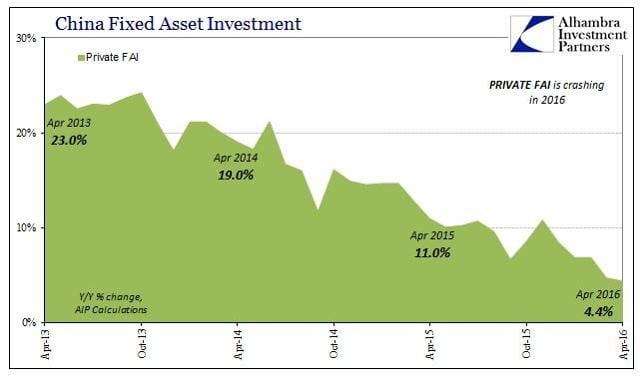
    By simple calculation we find that Private FAI for April alone was just 4.4% more than April 2015. That compares to 11.0% growth in April 2015 over April 2014. Before the “rising dollar”, private-driven capex in China was expanding at and above 20%, and had been nearly 30% when the NBS first broke out the private component in 2012. That would be a level more consistent with what China was expecting of the “recovery”, which can only suggest 4.4% (and the obvious trajectory to get to that level) really is crashing industrial investment.

    Unlike the remaining components in FAI, private sources of capital investment are the primary expressions of job growth and Chinese economic advance. Any “stimulus” that flows through the State-Owned Enterprises is largely inefficient and ineffective, the usual waste of spending for the sake of spending. Because China is still oriented toward manufacturing, private spending to increase that capacity accounts for about a third of all Chinese labor! Further, state-owned media has reported that Private FAI is responsible for 90% of new urban employment. China is in big trouble at 4.4% (with the arrow still pointing further down).


    This helps explain the lagged deceleration in retail sales and the Chinese economy overall, more so the persistent and stubborn slowing than the lag. Unlike temporary bursts of production levels, capex investment growth is determined by longer run projections and harder reality than the overflowing optimism that arrives with every minor, short-term uptick in monthly variation. In many ways, this descent in the Chinese baseline is incredibly simple and intuitive unlike the orthodox commentary that tries to deny it month after month:


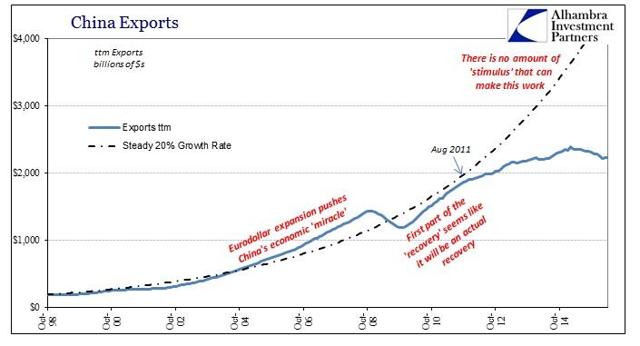
    The fact that Private FAI is now crashing in 2016 is related to the effects of the liquidation(s). The lack of financial flow in “dollars” convinces more and more firms that despite all the promises the global economy will never rebound while at the same time mothballing projects that will never be restarted and canceling many before they ever get that far. It is the brutal reality of this ongoing paradigm shift – the slowdown that will not stop slowing down. From this perspective, as noted on the chart above, it is easy to understand that there is no amount of “stimulus” (read: waste) that can make it work; without a eurodollar resurrection there is no path back to 2005. The manner of this decline is often uneven and lumpy, but it is uniform across China and the global economy. It will be undisturbed by anything except further liquidations to carry out the business end of the capacity reduction.

    That is the most important piece of the economic update for China in April. Industrial production and retail sales demonstrate that despite some optimism that March wasn’t January/February, the direction of the Chinese economy has not actually changed. The dramatic slowing in Private FAI suggests an even sharper incline in the already downward tilted baseline. (Jeffry P.)

  • A $5 Billion South Korean Startup Is Beating Amazon At Its Own Game

    A $5 Billion South Korean Startup Is Beating Amazon At Its Own Game

     Jeff Bezos has no interest in bringing Amazon to the 51 million people in South Korea, and Bon Kim is the reason for that. Kim is the CEO of Coupang, the fastest growing e-commerce site of all time in South Korea. The startup, founded in 2010, grossed nearly $300 million in 2014 and is expected to show it quadrupled that amount in 2015, when those numbers are available. Last summer, Coupang raised $1.3 billion in funding. Kim has a 19% stake in the company, which gives him a net worth of $950 million.

    Kim and Coupang have mastered something Jeff Bezos and Amazon are still trying to figure out. Coupang offers on-demand e-commerce with same-day delivery. Amazon is trying to offer this to its bajillion customers, but so far, hasn’t been able to make the margins work. It is either too expensive for the consumer or for Amazon and often for both. Remember, Coupang was founded in 2010, the company has managed to do this in remarkably less time in business than Amazon.

    Bon Kim didn’t set out to become the e-commerce king of South Korea. He was born in Seoul and from the age of seven, he spent much of his life abroad. At 13, he went to boarding school in Massachusetts. He was a varsity athlete in track and wrestling. When it came time for college, Kim stayed local and went to Harvard, where he started a student magazine called the Current. Newsweek took the magazine over in 2001, a year after Kim graduated. He also interned at the New Republic.

    DENIS CHARLET/AFP/Getty Images

    Kim enrolled in Harvard Business School in 2010, but dropped out a year later. He had been bitten by the e-commerce bug and wanted to start a business in Seoul. At the time, Groupon was a hot commodity and Kim set his sights on the daily deal model. Coupang became the 30th Groupon clone in South Korea. Kim registered as a limited liability corporation in the U.S. to make it easier to raise money from American investors. He spent nearly a million on advertising. However, he soon learned that daily deals are a lousy business model. Customer retention is nearly nil.

    By the summer of 2013, Kim had transformed Coupang into an e-Bay style site while experimenting with true e-commerce. Two years later, Coupang had $400 million in capital from Silicon Valley behemoths Sequoia Capital and BlackRock and had made a big commitment to its own inventory. Kim made a more than billion dollar investment in logistics infrastructure.

    Remember, Kim spent many years in the U.S. and Coupang’s structure reflects that. The company’s head of marketing is a former Zappos employee whom Kim convinced to move to Seoul with his family last year. Kim wanted Coupang to have a Western perspective to e-commerce. Coupang has more than 200 non-Koreans on its staff, including former Amazon executives, consultants, and engineers fresh from Silicon Valley. Kim hired a battalion of translators to act as translators for its American employees and as mediators for its Korean employees.

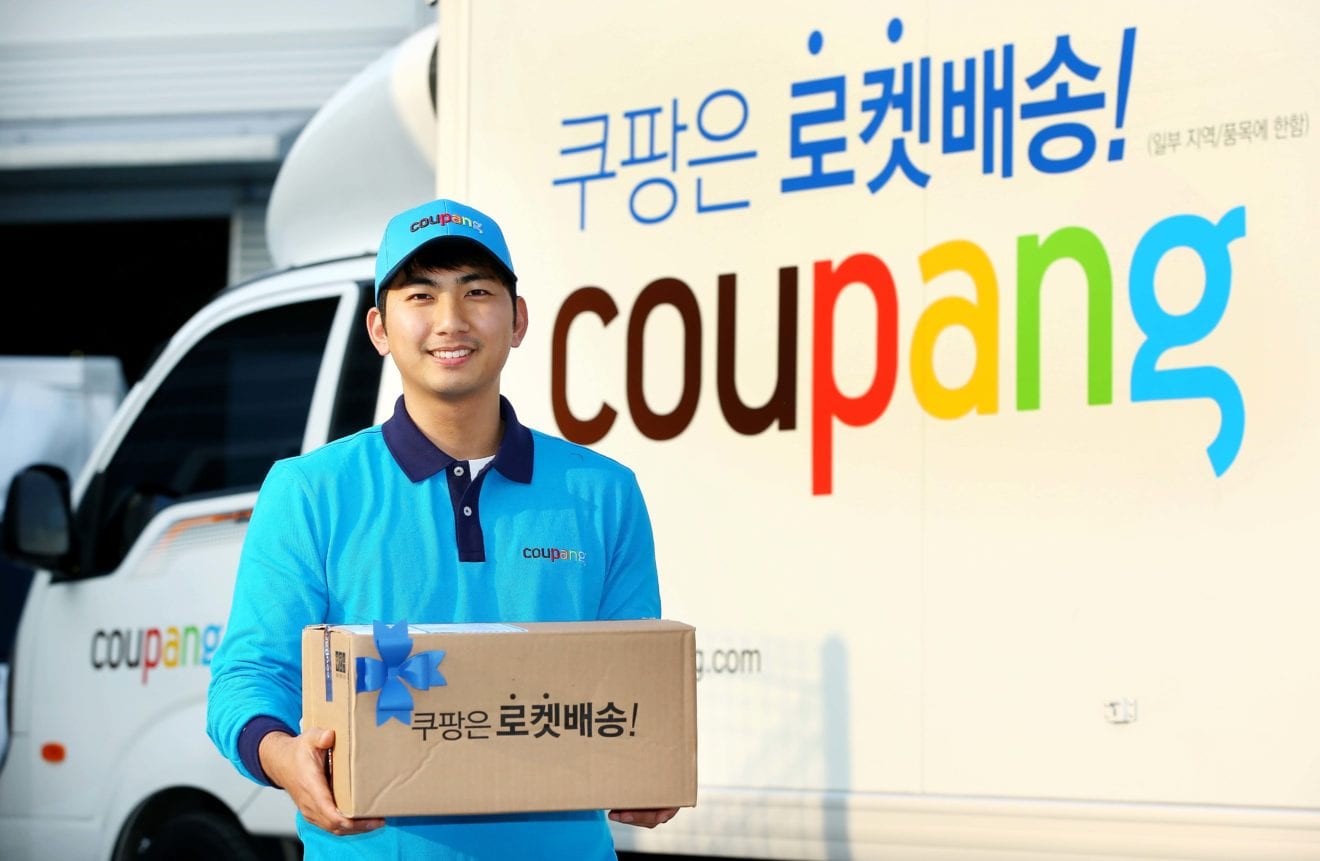
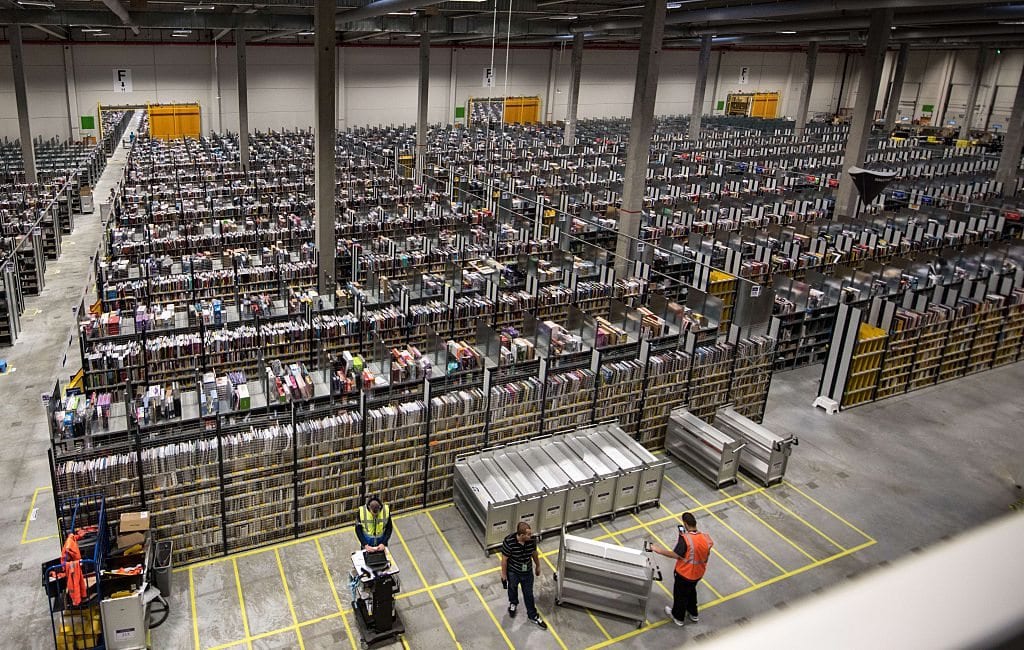
    In just the past two years, Coupang has built a network of customized delivery truck, warehouses controlled by an algorithm that allows it to be the fastest delivery in Korea. The company’s algorithms allow it to inform employees on which stock to move where, so that the most frequently purchased items are closest to the people buying them. Deliveries are made by 3,600 “Coupangmen,” who hand out balloons and candy to kids and text customers pictures of their boxes when delivered, if they are not home to receive them. The average Coupang driver delivers 120 packages each during a 10-hour shift. In South Korea, other retail establishments take two to three days to deliver their goods. Coupang is blowing the competition completely out of the water by delivering in a day or less. Customers can even cancel a shipment already on its way. Oh, and by the way, they don’t charge for delivery.

    South Korea has the second largest GDP in Asia. Almost everyone is on a smartphone and a high-speed network. Half of the country’s population lives in and around Seoul, making it easier for Coupang to deliver on their impressive promise of same day delivery. In South Korea, 15 cents of every retail dollar is spent online. In the U.S. that figure is nine cents.

    Bon Kim has become the e-commerce king of Korea and beaten Jeff Bezos at his own game. Amazon currently operates in 13 countries. Alibaba dominates China and Rakuten is the leader in Japan. Kim is content to keep his business running in Korea alone. At least for now.

  • Lalamove Delivers Lifestyle Services with LINE

    Lalamove Delivers Lifestyle Services with LINE

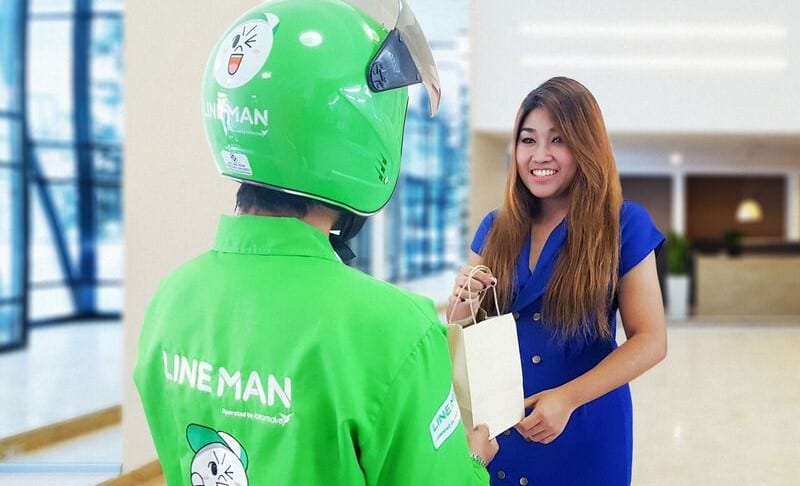
    Hong Kong based on-demand delivery app Lalamove is partnering with the world’s leading mobile platform LINE to expand on its delivery services in Bangkok.  The LINE MAN app is aimed at bringing reliable on-demand services to consumers as well as providing convenience to their increasingly busy lifestyles.  LINE MAN is one of LINE’s first ventures to “be more than a chat app” and LINE has chosen Thailand to be the first market to launch LINE MAN.

    The LINE MAN smartphone platform offers three services: document and package delivery, food purchase and delivery, and convenient goods purchase and delivery.  The delivery of all 3 services is provided by Lalamove, and currently limited to within Bangkok for now with plans for expansion.  LINE has a large user base of over 33 million in Thailand.

    Lalamove-LINE_3

    The announcement follows a global conference in March 2016 where LINE revealed a five-year plan to create a ‘smart portal’. The goal is to close the loop between businesses and LINE users and go beyond their original chat app strategy.

    Santit Jirawongkraisorn, Co-founder and Managing Director of Lalamove Thailand believes partnering with LINE is a natural progression. “This year, we have been marketing our online delivery services primarily to small and medium sized businesses. The addition of LINE MAN will bring Lalamove’s high quality services that many businesses have enjoyed to general consumers, which appeals to the Lalamove strategy and brand.”

    Meanwhile, the choice of Lalamove to deliver LINE MAN services demonstrates real confidence in the logistics app profile. According to Ariya Banomyong, Managing Director of LINE Thailand, “LINE MAN aims to offer best quality lifestyle services and help businesses leverage digital tools to connect with consumers, and Lalamove, as a leading on-demand delivery service provider in Thailand, made them a natural choice for LINE MAN”.

    LINE MAN will offer courier services through the Lalamove fleet of motorcycles, with cash payments.  Consumers will be able to order food via restaurant database app, Wongnai.

    LINE MAN is free to download at the Google Play store and Apple store.

    https://onelink.to/lineman

  • 11street Academy is the First E-commerce Certification Programme in Malaysia

    11street Academy is the First E-commerce Certification Programme in Malaysia

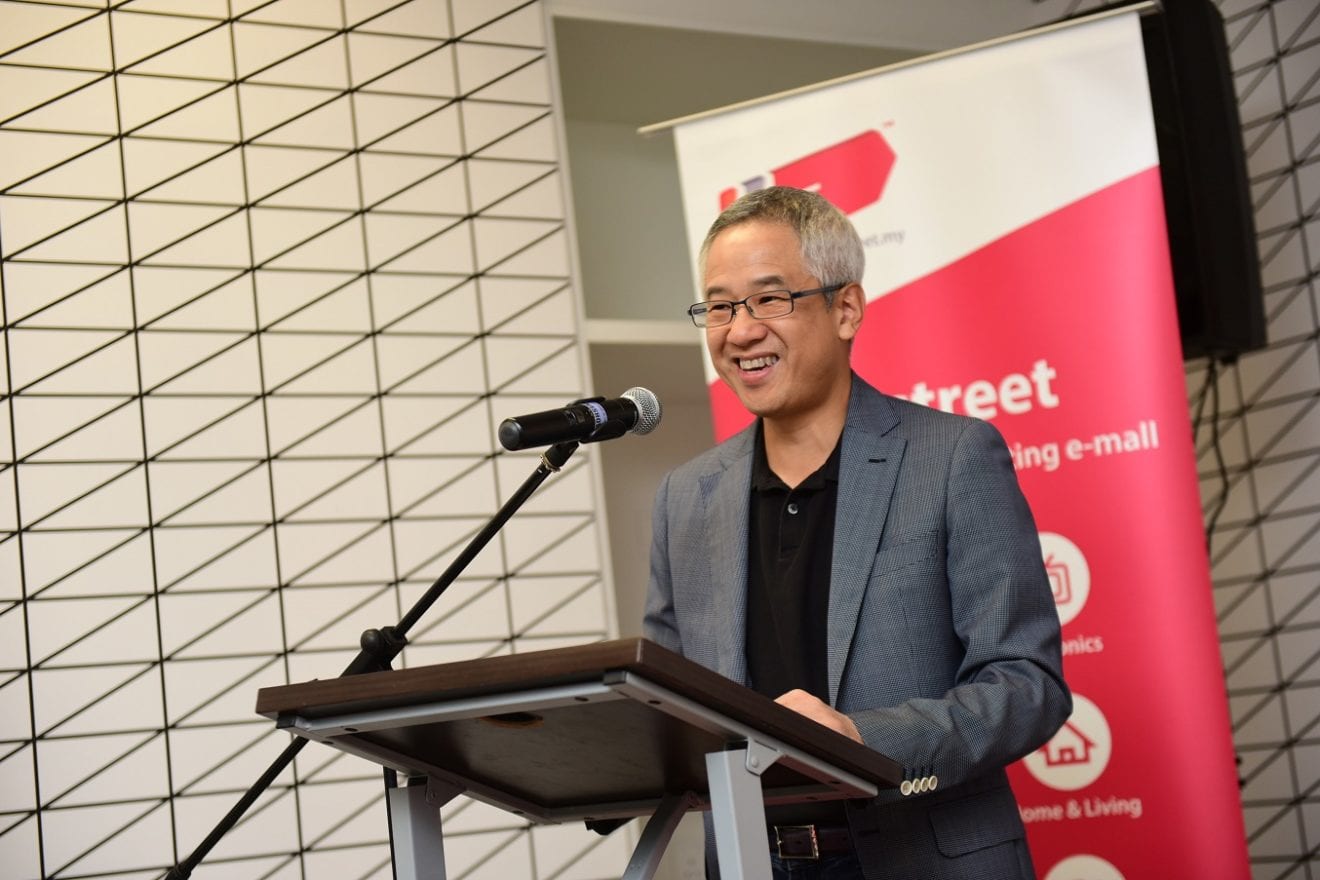
    11street (www.11street.my), one of the largest online marketplaces in Malaysia, launched ‘11street Academy’, the first ever e-commerce certification programme in the nation, targeting to help at least 1000 sellers and entrepreneurs to grow their businesses online.

    According to Hoseok Kim, Chief Executive Officer of 11street, this initiative aims to impart every facet of e-commerce knowledge to help sellers expand their online businesses. “We have been receiving overwhelming response to 11street’s existing and basic training courses, which is an introductory level of e-commerce training session for the past one year. Majority of our sellers who took up the basic courses has purportedly reported a hike in month-on-month sales.”

    “As a result, they have been yearning to deepen their knowledge in e-commerce to explore untapped opportunities in hopes of maximizing their online businesses. Hence, with the launch of 11street Academy, we will be offering up to advance level of e-commerce-related education to reinforce many more local sellers with in-depth knowledge, expertise and know-hows to achieve significant growth and success in e-commerce,” Kim added.

    Photo 1_Low Res

    11street Academy will kick start by offering a well-structured education program with a comprehensive syllabus to enhance sellers with state of art knowledge. This includes essential marketing skillsets offered by our partners, Google AdWords and Facebook, which allow online sellers to proceed to the next level as the market matures while fulfilling their drive in finding more effective ways to excel in e-commerce.

    Kim further shared, “Working hand-in-hand with Malaysia Digital Economy Corporation (MDEC), Google AdWords and Facebook, we are committed to fuel the success of Malaysian online sellers by providing top-notch e-commerce trainings offered only by industry leaders in which we strongly believe will help our sellers’ businesses bloom and generate greater revenue.”

    “11street Academy’s strategic collaboration with the partners, including MDEC is the forefront of an emerging informative e-commerce community, which intends to empower Malaysian SMEs and entrepreneurs to grow their business, and coherently boost the economic growth in Malaysia,” said Chief Executive Officer of MDEC, Datuk Yasmin Mahmood.

    Denise Gamo, Head of SMB Marketing at Google Malaysia also said, “According to Google’s Consumer Barometer study, Malaysia is a mobile-first nation with a 70% smartphone penetration and 1 in 3 Malaysians exclusively using their mobile device to access the Internet. By attending the workshop, the audience will better understand Malaysia’s digital landscape, consumer behaviours and learn about platforms such as Google My Business and Google AdWords on Search, YouTube, and on the Display Network. With these, the sellers will be geared with knowledge, tools and online presence that is crucial in reaching their potential customers.”

    Facebook will provide custom Blueprint Training that will include extensive e-learning modules, offering sellers an opportunity to learn more effective ways to leverage Facebook advertising to drive real business results.

    Sandhya Devanathan, Group Head of e-commerce, Retail, Financial Services and Travel, for Facebook in Southeast Asia added that, “Mobile News Feeds are the new storefront for retailers looking to reach Southeast Asia’s mobile first consumers. We know that 94% of Malaysians discover products and brands on Facebook while 62% make a purchase after discovery. There’s an unprecedented opportunity for businesses in Malaysia to connect with the 18 million people on Facebook – 94% of them connecting through mobile devices. We’re committed to helping support and educate partners similar to these workshop sessions that will ultimately help e-commerce companies in Malaysia build and grow their businesses.”

    Apart from the basic syllabus, the advanced courses established under 11street Academy will also cover a large breadth of topics such as ‘Marketing, Advertising & Promotion’, ‘Shipment & Inventory Management’, ‘Product Photography – Theory & Practical’, ‘Sale & Online Supply Chain Management’ and many more.

    Learning the Ropes of E-commerce with 11street

     With no fees required, 11street Academy will be opened to all Small and Medium Enterprises (SMEs), businesses owners, and individual online sellers aged 18 and above and it only targets 100 participants per batch every month.

    Participants are required to attend 5 classes to complete the full course within 4 weeks. To graduate with certification, attendees are required to pass its qualification exam, complete the given assignments with a set minimum class attendance.

    The certification programme is open for registration from 16 May 2016 onwards on a first come, first served basis, whereby shortlisted candidates will be informed via email. For those who are interested, please register at https://bit.ly/registeracademy.

    Kim also shared, “11street Academy is our long term commitment to build a strong seller ecosystem because we value their contribution and we view sellers as the strongest support to the evolution of entire e-commerce market when it comes to providing the best products and services to local consumers. The programme is scheduled to operate for at least 12 months and shall be extended as we foresee an overwhelming response from our sellers.”

    “By supporting them to grow via the most recent 11street Academy’s e-commerce certification programme, we hope that our sellers will be able to grow their businesses and increase sales by implementing effective online retailing strategy and practices,” Kim concluded.

  • BOLLORÉ TRANSPORT & LOGISTICS participates in the Breakbulk Europe Conference & Exhibition 2016

    BOLLORÉ TRANSPORT & LOGISTICS participates in the Breakbulk Europe Conference & Exhibition 2016

    Bolloré Transport & Logistics, one of the 10 world’s leading transport and logistics groups, will be present as an exhibitor at the next Breakbulk Conference, from 23-26 May in Antwerp, Belgium.

    This major event in Europe gathers companies involved in the shipping of heavy-lift, project cargo and traditional breakbulk cargoes. On this occasion, Bolloré Transport & Logistics is showcasing its tailormade solutions through its different brands : Bolloré Logistics, for industrial projects logistics, and Bolloré Ports for cargo handling and shipping services.

    BOLLORÉ LOGISTICS, an expert in Industrial Projects Logistics

    Customers and suppliers will have the opportunity to meet Bolloré Logistics Industrial Projects teams coming from Africa, the Americas, Asia Pacific and Europe. This will also be the opportunity to share the latest information on our group where greater synergies, both commercially and operationally have been established between the regional projects divisions in Europe, Africa, Asia and the United States.

    Bolloré Logistics proposes tailor-made solutions in sectors such as oil and gas, petrochemical and chemical, mining, construction and equipment and in various other industries. At a time of continued turbulence in the oil and gas market, the impact of which can be keenly felt in various project sectors, we believe that now more than ever we need to stay strong and resilient as a group. “We need to remain even closer to our customers in this sector by travelling this difficult path together and looking for project solutions that can mitigate and reduce costs and add efficiency to the overall supply chain” said Philippe LEJEUNE, Industrial Projects Europe Director.

    One area that Bolloré Logistics does foresee as having significant growth in the coming years, especially in the developing world, is the power sector. With this in mind, Bolloré Logistics has created at the start of 2016 a global industry vertical specializing in Energy and Renewables which will look to implement efficient project logistics solutions in industries such as wind, solar, hydro, thermal as well as standard diesel and nonrenewable power.

    “This vertical will work closely with all our project divisions worldwide where our footprint and expertise mean that we are able to meet the logistics challenge of energy projects in even the most demanding of locations” added Philippe LEJEUNE.

    Our unique operational solutions meet stringent specifications requested by the major global players and the success of each project is supported, among other things, by this network of experts in Europe as well as all over the Bolloré Logistics network in the world.

    BOLLORÉ PORTS

    Present in the maritime sector for over 90 years, Bolloré Ports has developed the first network of shipping agencies in Africa and the Indian Ocean, known primarily under the brand of AFRITRAMP. With a network of 100 agencies (75 of which are located in Africa), Bolloré Ports handles in excess of 9,000 vessel calls per year and in addition provides a range of services customized to regular international shipping lines, tramp operators as well as charterers.

    In France, Bolloré Ports is an important player in specialized port handling operations, with a presence in 14 major ports and the handling of 250,000 TEUs per year. Bolloré Ports is the first port infrastructure operator in Africa, with 16 concessions.

    Being part of Bolloré Logistics and Transportation allows Bolloré Ports to offer to both local and international customers a wide range of complementary services (storage yards, warehousing, logistics, inland haulage).

  • KFC tests its robot orders

    KFC tests its robot orders

    Customers at a new digital KFC concept store in Shanghai give their orders to a voice-activated robot.

    Dumi the robot is sophisticated enough to handle changes and substitutions in orders.

    Dumi is the result of 10 years of research and development into artificial intelligence by Chinese web services company Baidu, which says the robot will appear soon in other real-world environments.

    Inside Shanghai’s National Exhibition and Convention Center, the KFC store has been designed to be completely digitalised. Called “Original+”, as a reference to the brand’s traditional recipe, it features wireless charging stations where customers can simultaneously stream music. They can also pay for their meals via mobile payment services including Alipay and Baidu Wallet.

    Introduced at last year’s Baidu World Congress 2015, Dumi integrates the company’s AI technologies such as voice recognition and intelligent search. The robot will use KFC’s customer behaviour data to gain a better understanding of users’ needs and improve business efficiency.

    As well as ordering and paying through Dumi, the customers can see how KFC dishes are made through the robot’s holographic imaging technology.

    Baidu VP Wang Haifeng says the robot may become a big part of the company’s application of more AI technology into fields that range from internet financing to driverless cars.

    There is only one problem with Dumi, admits Baidu: it has trouble distinguishing between certain dialects and accents. But then again, so might a human employee.

    Jason Yu, GM of the consumer research firm Kantar Worldpanel China, describes the Shanghai concept store as “a very interesting experiment”.

    “It is expected to generate increased customer experience, and raise efficiency for restaurants. And in turn it is expected to attract more young and middle class customers.”

  • SuperGroup’s stellar performance

    SuperGroup’s stellar performance

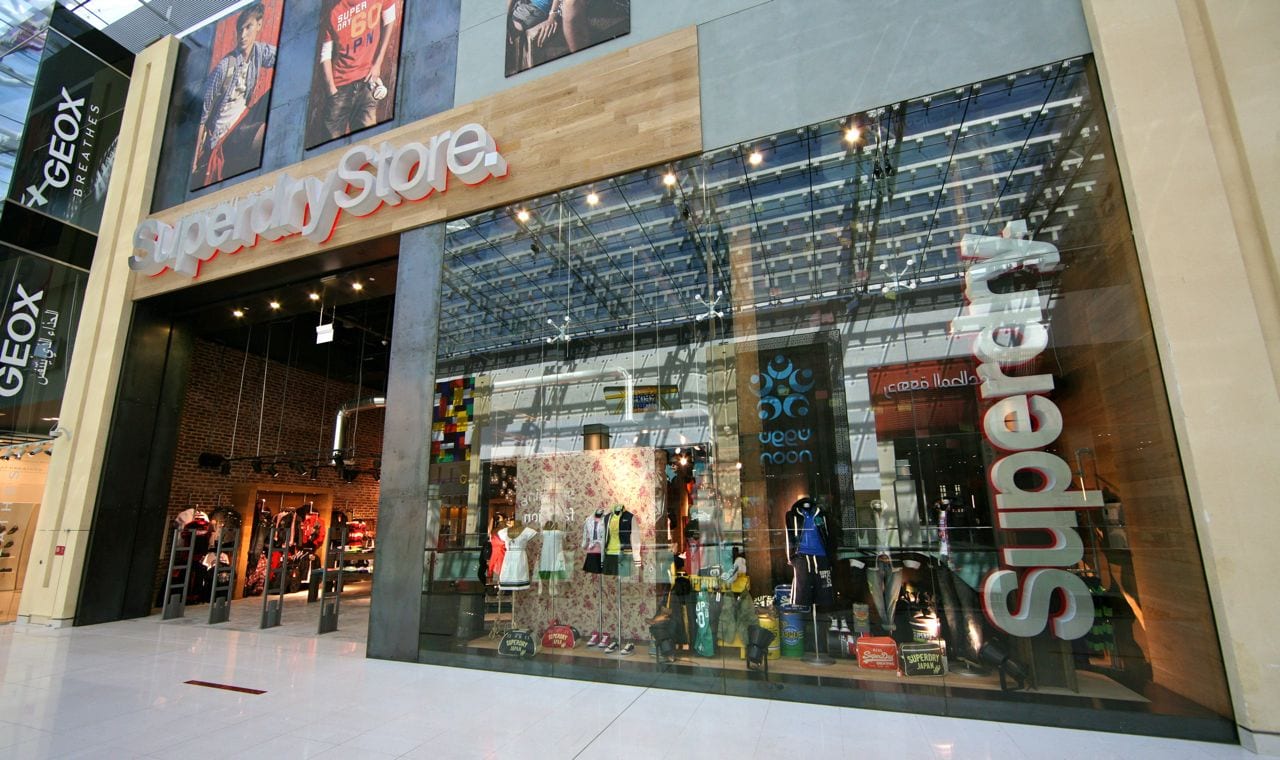
    Against a bleak background of stalling sales from major high street players such as Next and Primark, SuperGroup has posted a stellar set of full-year results.

    Strong growth was achieved across both its retail and wholesale divisions – 24.5 per cent and 13.7 per cent respectively – contributing to total group revenue of £589.5 million.

    There was no mention of poor weather affecting fourth quarter retail sales, which were up by 29.9 per cent on a top line basis and by 15.4 per cent on a like-for-like basis, highlighting how Superdry’s transeasonal ranges are more aligned with the manner in which consumers shop than many other retailers. Consumers’ shopping habits are changing, and seasonal product drops are increasingly irrelevant when shoppers prefer to buy across seasons – a lesson several clothing retailers would do well to learn.

    No doubt, the net 24 stores the retailer opened during the year were major contributors to its full-year results, but robust like-for-like growth indicates consumer demand remains strong for Superdry’s distinctive product. 2015 was a year of product development and range extensions for the retailer, with new sports and activewear ranges added, a highly-publicised collaboration with actor Idris Elba, and greater focus on womenswear – all initiatives which have driven spend from existing shoppers while recruiting new ones.

    On a slightly less upbeat note, founder James Holder has resigned as brand & design director of the business. However, he will be creating and working exclusively in SuperDesign Lab – a design consultancy where he intends to focus on innovation to support Superdry. It’s a well-thought out move especially as Verdict Retail data shows that consumers are increasingly demanding value for money.

    Incorporating fabric and technology innovation into key product ranges such as sports and activewear, will help Superdry provide more value to existing and prospective customers – thereby positioning it well for long-term growth.

  • Gaming boosts Macau retail

    Gaming boosts Macau retail

    Macau retail and wholesale has tripled in value thanks to the knock-on effect of the territory’s gaming industry.

    Macau government research shows that as the gaming industry has developed, it has scaled up the added value of other industries. Conducted by Institute for the Study of Commercial Gaming at the University of Macau, the report looks at the spread of added value through gaming in Macau over the 10 years to 2013.

    The gaming industry was liberalised in 2002, and this is the first report following a mid-term review on the sector. It notes that the added value of the gaming industry has increased 6.9 times in the 10 years, with the hotel industry increasing 11.4 times.

    Data from six gaming companies showed that their non-gaming activities created an income of 23.2 billion patacas (US$2.9 billion) in 2014, while the total non-gaming spend of tourists in Macau is comparable to that of Las Vegas.

    Gaming dominates the Macau economy with a 58.3 per cent slice of the pie, while the wholesale/retail sector has a humble 5.2 per cent.

    Meanwhile, the report will probably help Macau set policy direction for the $30 billion gaming industry as units of casino groups such as Melco Crown Entertainment Group and MGM Resorts International struggle to cope with Macau’s two-year gambling downturn, reports Bloomberg.

  • Indonesia & Vietnam leading Asian beauty industry growth

    Indonesia & Vietnam leading Asian beauty industry growth

    Indonesia and Vietnam are the fastest-growing markets in the Asian beauty industry.

    According to research from Euromonitor International, Markets of the Future: ASEAN in 2020, the two countries significantly outperform the most obvious contenders, Korea and China.

    Vietnam’s beauty and personal care market experienced healthy value growth in 2015. With the developing of the Internet network and online retailing, more consumers from rural areas can buy products more easily, and it also strongly boosts retail value sales of beauty and personal care due to changing consumer behavior. On the other hand, thanks to dynamic marketing activities by leading manufacturers and media, consumers are aware of the importance of using branded products from reliable sources after many scandals of cosmetics containing toxic ingredients.

    People are willing to spend more on all types of beauty and personal care, instead of using unbranded goods, in order to protect their health.

    Asia beauty chart

    In October 2015, the draft TPP trade pact was signed, which means Indonesia and Vietnam are set to open up to other nations by removing barriers and decreasing tariffs by up to 100 per cent. As a result, it will open significant change in beauty and personal care over the forecast period such as lower pricing and more international companies entering the two markets.

    Countires across Asia were ranked by Euromonitor by actual and forecast growth between 2008 and 2018, as the chart shows.

    The data was revealed by UBM Asia, organiser of Vietbeauty 2016 at Ho Chi Minh City in August, which will showcase products from more than 150 exhibitors from Japan, Korea, Australia, Hong Kong, Thailand, Taiwan, Mainland China, Indonesia, the Philippines, Malaysia, India, Singapore, the US and Europe.

  • Paris designs for Starbucks Taiwan

    Paris designs for Starbucks Taiwan

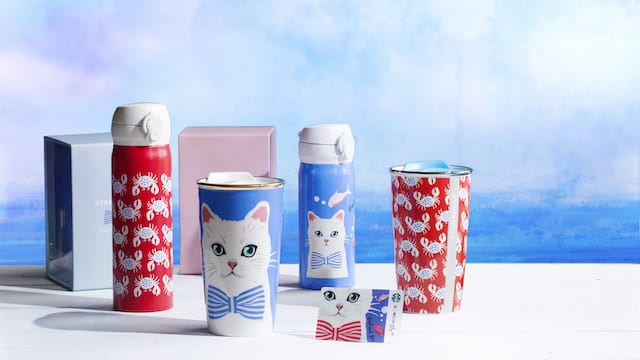
    Starbucks Taiwan is to feature merchandise co-created with Paris fashion designer Sophie Mechaly, the founder of the international brand Paul & Joe.

    “We wanted to give our coffee-related merchandise a unique style and attitude for summer,” says Starbucks Taiwan president John Hsu.

    Starbuck - Paul & joe 4


    Starbuck - Paul & joe 3

    Mechaly founded Paul & Joe in 1995, and the label now has several dozen boutiques and hundreds of retail stores around the world. Méchaly designs clothing, shoes and accessories for both men and women.

    Starbuck - Paul & Joe

    Starbuck - Paul & joeSeveral of the Starbucks merchandise designs feature a Chinchilla Persian cat owned by Mechaly. Crabs and fish also feature in the artwork to represent the beaches in the Mediterranean, near her childhood home.