Author: Mei Ling Tan

  • JDA expands in Australia

    JDA expands in Australia

    JDA Software Group, Inc. announced the opening of a new North Sydney office that expands on the company’s Australia and New Zealand (ANZ) presence, which includes an office in Melbourne.

    JDA opened its first office in Sydney in 1994 and now counts more than 100 customers across retail, manufacturing, third-party logistics and wholesale distribution.

    “Since its beginning in 1994, JDA’s ANZ presence has continually grown and we’re proud to count so many customers across industries and solutions that count on JDA to power their supply chains,” said Amit Bagga, regional vice president for Asia-Pacific, JDA.

    “The move to a new office in Sydney represents a commitment by the business to continue to build on the success that our team has achieved.”

    JDA offers a rich portfolio of solutions that have been delivering great value for its customers for more than 30 years, including technology from its merger with RedPrairie (2012), and acquisitions of i2 Technologies (2010) and Manugistics (2006).

    “The Australian and New Zealand market is unique globally. In all of our target market segments, customers face a highly competitive landscape and high operating costs. In addition, their consumers are rapidly embracing omni-channel and demanding a more personalized experience. In such a market, our customers are continuously looking to reduce inventories, increase supply chain velocity, and use their people and capital assets efficiently,” said Bruce How, vice president of sales, ANZ, at JDA.

    “JDA’s solutions are backed by years of experience and driven by continuous customer feedback and research thereby enabling success for our customers. Looking ahead, we plan to continue our focus in empowering customers and driving profitable customer commerce, adaptable manufacturing, and intelligent fulfillment,” continued How.

    The new office is located at Level 3, 60 Miller St, North Sydney.

  • VMware launches cross-cloud architecture

    VMware launches cross-cloud architecture

    VMware launched its Cross-Cloud Architecture at VMworld 2016, along with a partnership with IBM Cloud and plans to extend to Google, Microsoft Azure and Amazon Web Services.

    The architecture is designed to let network operators manage, provide uniform policies for and secure applications running across public, private and hybrid clouds.

    Cross-Cloud Architecture is available in two main parts:

    • The VMware Cloud Foundation is designed to allow network operators to launch private clouds and extend them to the public cloud. It is an integration that VMware says will combine some of its existing compute, storage and networking virtualization offerings, helping organizations run and manage existing on-premises applications on both private and public clouds.
    • Cross Cloud Services, announced as a technology preview, runs applications across multiple public clouds, including IBM, AWS, Microsoft Azure and Google, as well as VMware’s vCloud Air hybrid cloud architecture and the vCloud Air Network of 4,000 service providers.

    The new Cross-Cloud strategy sees the company focusing more on selling products that work with existing leaders, rather than trying to establish itself as an alternative to AWS, Google or Azure. It will also provide an essential orchestration layer that helps network operators coordinate cloud applications

    As more companies run applications on rented infrastructure over the internet rather than their own data centers, providing the link to the different technologies customers use is a growing opportunity for VMware and something that it can also provide to partners like IBM.

    Earlier this year, IBM and VMware set out to tackle one of the industry’s most pressing challenges: extending existing VMware workloads from on-premises environments to the cloud without incurring the cost and risk associated with retooling operations, re-architecting applications and re-designing security policies.

    During a presentation, Guido Appenzeller, chief technology strategy officer of networking and security at VMware and Robert LeBlanc, senior vice president, IBM Cloud said that Cloud Foundation will “automatically provision pre-configured” software-defined data centers on IBM Cloud “in hours versus weeks or months.”

  • Alibaba Cloud, IIPL to support Singapore startups

    Alibaba Cloud, IIPL to support Singapore startups

    Alibaba Cloud and Infocomm Investments (IIPL) have announced plans to collaborate to drive technology innovations in Singapore, built upon Alibaba Cloud’s support network and suite of cloud infrastructure services.

    The announcement was made at the Create@Alibaba Cloud Start-up Contest (CACSC).

    The collaboration will combine Infocomm Investments’ existing initiatives for local startups and technology innovations and Alibaba Cloud’s cloud computing resources.

    It will focus on extending sophisticated networking solutions and big data intelligence to a broader base of Singaporean start-ups under Alibaba Cloud’s first global startup program, Create@Alibaba Cloud.

    Alibaba Cloud will also pave way for start-ups in Singapore to leverage Alibaba Cloud’s ecosystem and to gain access to the China market as well as multiple business network resources and funding opportunities.

    In addition, the collaboration will foster innovative exchanges between Singapore and China’s startup ecosystems by inviting accelerators, incubators, and start-ups in Singapore to participate in startup activities in China and vice versa.

    This marks the start of a long term collaboration between both ecosystems to drive innovation, the companies said.

    “We are very proud to work with Infocomm Investments to build a more robust start-up ecosystem in Singapore,” said Sicheng Yu, vice president of Alibaba Group and general manager of Alibaba Cloud Global.

    “This underscores our on-going commitment to drive technology innovation in Singapore, as well as to support local start-ups in their business growth through our cloud capabilities and extensive support network in both local and global markets.”

    The Create@Alibaba Cloud Start-up Contest (CACSC), organized in partnership with Infocomm Investments, is Alibaba Cloud’s first ever global start-up competition, which is aimed at championing start-ups and maximizing their potential.

  • Iflix wants to become a social media platform for TV

    Iflix wants to become a social media platform for TV

    Emerging subscription-based streaming video service iflix intends to set itself apart from Netflix by becoming a social media platform for television, according to company executive.

    “Netflix is very much into an original production base… they are really focusing their investment on content and user experience and interface,” Cam Walker, chief executive of iflix Indonesia, told telecomasia.net at the sidelines of Communic Indonesia and Broadcast Indonesia 2016, which kicked off Wednesday at the Jakarta International Expo in Kemayoran, Central Jakarta.

    “We have just most recently decided to venture beyond entertainment into becoming a truly social platform for television.”

    To do that, Walker said the company is planning to introduce more social media components and interactive features to the service. For instance, the company will offer a social feature later this year where users can chat with others or interact with local celebrities who have drawn up movie playlists for them.

    Iflix launched its service in Indonesia in mid-June this year and garnered 250,000 activations in about two-and-a-half months.

    Walker said the Indonesian market is relatively new from an OTT perspective and doesn’t see other streaming services as competitive, as they are all heading in different paths.

    “We’re the new kid on the block. We started a couple of years as a cool internet TV concept, with a vision to provide a better service to piracy and a viable alternative at an affordable price point,” he said.

    iflix is now offering 2,000 seasons of 900 programs, 5,000 episodes of 200 kids programs and local content acquired from partners for its Indonesian viewers.

    Walker said iflix will soon produce its first local Indonesian content that will open more opportunities for local actors, producers, directors, scriptwriters and “the new breed of Indonesian talents.”

    “We’re going to be investing heavily in local productions and local acquisitions as well, which I think will differentiate us from the major international players,” he said.

  • Ericsson to launch 5G New Radio in 2017

    Ericsson to launch 5G New Radio in 2017

    Ericsson has announced plans to commercially launch the first 5G New Radio (NR) equipment in 2017, a key enabling technology for future 5G networks.

    The 5G NR radio supports Ericsson’s Massive MIMO and Multi-User MIMO 5G plugins. It uses advanced antennas and a large number of steerable ports to support these new technologies, as well as beamforming, another expected component of 5G networks.

    In addition to being 5G ready the 5G NR supports LTE, so it will be deployable in today’s networks. They support Gigabit speeds for LTE and advanced TDD beamforming.

    New network builds will be supported by Ericsson’s new Industrialized Network Rollout Services offering, which involves providing configuration, installation, integration, shakedown and handover in a single site visit.

    China Mobile Research Institute deputy head Huang Yuhong has welcomed the planned launch.  “Massive-MIMO, also known as 3D MIMO, is an important milestone in China Mobile’s technology roadmap from 4G to 5G,” he said.

    “We are very happy that Ericsson’s new radio product is coming to market soon to meet our needs and enable us to integrate 5G technologies into our existing networks.”

    “Mobile operators, today, are clearly focused on the race to 5G commercialization, while also continuing to invest in their existing LTE networks,” Current Analysis VP of consumer and infrastructure services Peter Jarich added.

    “With a new 5G radio and LTE offerings which echo key 5G concepts – small cells, licensed-unlicensed band combinations, Cloud RAN, network densification, spectrum optimization – Ericsson’s new portfolio additions and Ericsson Radio System innovations provide a compelling way forward.”

  • Philippine court freezes PCC probe into SMC sale

    Philippine court freezes PCC probe into SMC sale

    The Philippines’ Court of Appeals has halted the Philippine Competition Commission’s (PCC) investigation into Globe and PLDT’s joint acquisition of San Miguel Corporation’s telecoms assets.

    The court has agreed to a request by PLDT to grant temporary relief while the case is before the courts, issuing a preliminary injunction against the competition regulator’s proe.

    Accordingly the PCC will be prohibited from continuing the investigation into the acquisition until further notice.

    The court agreed with PLDT’s assertion that the “deemed approved” status assigned to the acquisition gives PLDT a right to be protected from the investigation.

    But before the injunction can take effect, PLDT will be required to submit a 1 million peso ($21,500) cash bond to address any damages the regulator will suffer if the court decides that PLDT is not entitled to an injunction.

    Globe and PLDT arranged in May to acquire San Miguel’s telecoms assets for a combined $1.5 billion, finally giving the incumbent operators access to the 700-MHz spectrum they had been seeking for a long time.

    But the PCC announced in July it plans to conduct a full investigation into the deal to evaluate the potential impact on competition. Both PLDT and Globe responded by petitioning the court seeking to have the “deemed approved” status upheld, and these actions were later consolidated into one case.

    Despite the ongoing case, the operators have wasted no time taking advantage of the new spectrum, with Globe recently announcing it had deployed more than 150 compatible 700-MHz base stations in the past three months.

  • Manulife in upbeat mood after first half surge

    Manulife in upbeat mood after first half surge

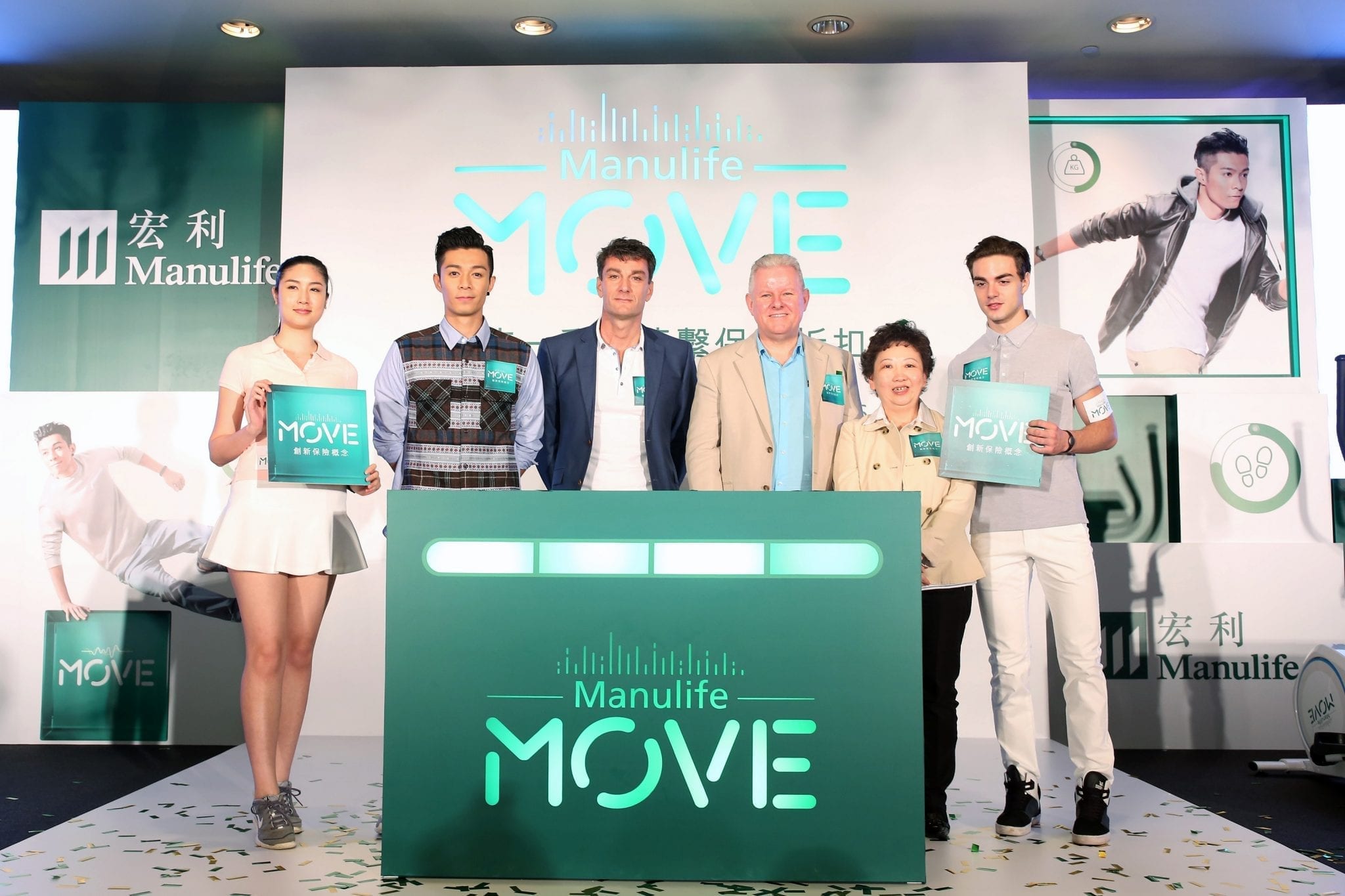
    Manulife Indonesia president director and chief executive officer (CEO) Indren S. Naidoo (right) and Manulife Aset Manajemen Indonesia chief economist and investment strategist Katarina Setiawan talk on the sidelines of a press briefing in Jakarta on Wednesday.

    Despite the country’s weak economy, life insurer Manulife Indonesia enjoyed a sharp increase in new business premiums during the first semester of the year on the back of surging wealth and insurance sales.

    Its total new business premiums soared by 28 percent year-on-year (yoy) to Rp 1.8 trillion (US$135 million) in the first semester, according to Manulife’s unaudited financial results for the first semester of 2016.

    During the January and June period, Manulife’s wealth sales rose 27 percent yoy to Rp 1 trillion from
    Rp 785 billion, while its insurance sales increased 17 percent yoy to Rp 764 billion from the corresponding period in 2015.

    As of June, Manulife’s total premium and deposits amounted to Rp 9.1 trillion, a 12 percent hike from Rp 8.1 trillion recorded in the same month last year. The number of the company’s in-force policies, meanwhile, grew steadily to 2,297,305 from 2,250,210 recorded in June last year.

    “We are confident that our business will book positive growth over this year,” Manulife’s newly appointed president director and chief executive officer Indren S. Naidoo told a press briefing on Wednesday.

    Indren, who assumed his position in May, said he was optimistic that the company could tap into the growing insurance market in Indonesia, which is the most populous country in Southeast Asia, but has low insurance penetration.

    Indonesia’s economy expanded an annual 4.92 percent in the January-March quarter, below analysts’ expectation of 5.05 percent. Growth weakened for the fifth straight year in 2015, to 4.8 percent, amid poor commodity prices and contracting exports.

    Financial Services Authority (OJK) data showed that conventional insurance premiums accounted for just 2.37 percent of the country’s gross domestic product (GDP) during the first quarter of the year. Life insurance penetration rates, meanwhile, reached 0.93 percent of the GDP in the January-March period.

    “Compared to some other markets in Asia, we are actually quite low. So, the opportunity is there,” said Indren, who previously assumed CEO positions at Manulife units in the Philippines, Thailand, Vietnam and Cambodia prior to his current position.

    Indren said Manulife would continue to expand its unit-linked products, which have become the main driver of the company’s business growth.

    The contribution of Manulife’s unit-linked products, which combine insurance and investment products such as government bonds and stocks, “was close to 80 percent of our business”, Indren said, explaining that the insurer would continue to promote the instrument as customers still expected double-digit returns on their investment amid the downward trend in banks’ deposit interest rate.

    In the first half of the year, Manulife launched unit-linked product Mi Wealth Insurance to further boost its investment-linked insurance products.

    He expressed his optimism that the burgeoning middle-income segment in the country, expected to reach 100 million of people by 2020, would be a boon for Manulife’s unit-linked products, which are aimed to higher-end customers.

    The CEO said Manulife would continuously educate potential customers on life insurance, as well as its unit-linked instruments by leveraging its 8,000 agents in 25 branches across the country and its bankassurance service, for which the insurer has forged partnerships with three lenders in the country: DBS, Bank Danamon and sharia-based Bank Muamalat.

    “We are here not to sell, but to teach [the customers]. At the end of the day, you, as a customer, will make the decision [on whether to buy Manulife’s products],” Indren said.


  • Indonesia’s inflation rate at seven-year low

    Indonesia’s inflation rate at seven-year low

    Indonesia’s inflation slowed to the weakest in almost seven years and fell below the central bank’s target, bolstering the case for further interest rate cuts by Bank Indonesia (BI).

    Consumer price gains eased to 2.79 per cent last month from a year earlier, compared with economists’ 3.02 per cent estimate.

    Prices fell 0.02 per cent in August from the previous month, the National Statistics Office said yesterday, adding that the annual rate was the lowest since December 2009.

    “If you ask me now whether there is room for (monetary) easing, the room is more open. But whether it would be used or not, it is up to BI,” Coordinating Minister for Economics Darmin Nasution said after the lower-than-expected data was announced.

    Mr Nasution said BI had wanted to cut the benchmark rate “since last month” but then decided to delay to better introduce its new policy rate, the seven-day reverse repo rate, which stands at 5.25 per cent.

    The authorities have set their 2016 inflation target at 3 per cent to 5 per cent and expect consumer price gains to end the year at around 3.5 per cent.

    “Easing inflation – along with stability in both the current account deficit and exchange rate – has created policy space for rate cuts,” said economist Ng Weiwen at Australia & New Zealand Banking Group (ANZ).

    “The degree of easing will be dependent on the size of tax amnesty inflows.”

    ANZ expects the Indonesian central bank to lower its new benchmark rate by another 25 basis points to 5 per cent as soon as its September meeting, Mr Ng said.

    Indonesia’s 10-year bond yield slid four basis points to 7.07 per cent yesterday afternoon in Jakarta, set for the biggest daily gain in three weeks. Shares fell, with the Jakarta Composite Index extending its drop to 0.9 per cent and set for the lowest close since Aug 15.

    Falling airfares, inter-city transport costs and cheaper food were the biggest factors driving the monthly drop in prices, said National Statistics Office deputy Sasmito Hadi Wibowo.

  • Minister sees off organic rice export to Belgium

    Minister sees off organic rice export to Belgium

    Agriculture Minister Andi Amran Sulaiman here on Thursday saw of the shipment 40 tons of organic rice produced by a farmer group of Simpatik in Mekar Wangi village, West Java to Belgium.

    The shipment marked eight years of organic rice export from the farmer group to Belgium.

    The exported rice was packed in airtight plastic that can last for months. One pack of rice weighed five kilograms with a label of Indonesia Rice on it.

    In addition to Belgium, the other importer countries are Singapore, Italy, United States, and United Arab Emirates.

    The rice price at the farm level reaches Rp 20 thousand per kilogram, but in Belgium it is Rp90,000 per kilogram.

    At the farmers level, the price of the rice is Rp20,000 per kilogram, while in Belgium it reaches Rp90,000 per kilogram.

    Amran said every year Indonesia is able to export 100 thousand tons of organic rice, so that it will be the future of Indonesian agricultural products.

    “It is a smart agriculture. I have asked the Research Agency to support the organic rice farming. This is the future of rice exports. We just improve the regulation to make this sector competitive,” he said.

    The minister said that in addition to Java, Sumatra and Kalimantan also have potential in the rice organic agriculture.

  • Pelican BioThermal expands in Asia

    Pelican BioThermal expands in Asia

    Pelican BioThermal, providing temperature-controlled packaging solutions serving the life sciences industry, has expanded its operations in Asia with the launch of a new network of distribution partners in the region.

    Pelican BioThermal announced it has joined forces with the region’s distinguished distributors, Pharmaserv Express of the Philippines and CMC Element of China, to further enhance its operations offering in Asia.

    Pharmaserv Express works closely with national health services to skillfully transport pharmaceutical products throughout the complex geography of the Philippines.

    CMC Element distributes a variety of health care products, including pharmaceuticals protected in temperature controlled packaging, across the vast Chinese market using their extensive network.

    The latest development demonstrates Pelican BioThermal’s continued growth in Asia and follows the company’s recent launch of its new operational facility in Singapore.

    The new industry partnerships with these key distributors signals another major development in it’s expanding presence and support network in Asia, further enhancing the extending range of products and services offered by the company in the region.

    In particular, the new distributors enhance customer support for global customers shared with Pelican BioThermal, by offering local hours, local language and local service and inventory at the point of final distribution of pharmaceuticals.

    Pelican BioThermal’s growing global network supports customers wherever they are located and establishing productive partnerships with reliable, reputable, dedicated distributors further strengthens the Asia based business offering.

    The increasing network of distribution partners complements the company’s newly established Asia headquarters, which is co-located with Pelican BioThermal’s authorized distributor for Singapore, Enviropac.

    Benson Teo, Pelican BioThermal’s Senior Director of Sales for Asia, said: “We are delighted to announce the latest additions to our expanding network of dedicated distributors. We welcome Pharmaserv Express and CMC Element to our Asia operations; these well-established partners will play a pivotal part in our expansion efforts in Asia.

    “As the global cold chain logistics industry continues to thrive we want to further demonstrate we have the critical capabilities to support the growing Asia pharma marketplace.”

    The region continues to be an area of pronounced growth for Pelican BioThermal and forging links with these well-established distribution partners will increase the company’s global reach and support network for customers.

  • DJI Hong Kong opening flagship in Causeway Bay

    DJI Hong Kong opening flagship in Causeway Bay

    Unmanned aerial vehicle (UAV) technology company DJI Hong Kong is about to open a flagship store featuring flight cages, experience zones, an aerial photo gallery, technical support centre and its full range of consumer and professional products.

    In Causeway Bay, the three-storey store, covering more than 10,000 sqft (930 sqm) will open at the end of next month. It will display animated DJI and drone silhouettes to add to the Victoria Harbour evening backdrop.

    Its ground floor will feature the company’s full range of aerial and handheld products, while the SkyPixel Gallery on the first floor will showcase UAV photography from around the world. The technical support centre is on the second floor along with a space for workshops, seminars and special events.

    DJI HKFS 1st Floor

    “Discovery is an important part of the learning process, and when people understand how easy it is to use the technology they will find ways to incorporate it into their lives or for their businesses,” says DJI founder/CEO Frank Wang.

    DJI HKFS

    This will be the company’s third foray into retail following the December opening of its first flagship store in in Shenzhen, followed by a Seoul flagship in March.

    DJI’s global network spans the Americas, Europe and Asia, with customers in more than 100 countries using its products for such purposes as filmmaking, construction, emergency response, agriculture and conservation.

    DJI HKFS 1st Floor

  • More stores in Asia for Guzman y Gomez

    More stores in Asia for Guzman y Gomez

    Australia’s Mexican food chain Guzman y Gomez (GYG) has done so well in Japan and Singapore it is planning to open more outlets in both countries this year.

    It opened its first taqueria in Singapore in 2014, since adding three more, plus a second in Tokyo. It plans to open at least five more in Japan this year, plus two in Singapore.

    Guzman y Gomez Japan 1

    “We have outstanding partners in both Japan and Singapore who are incredibly experienced in introducing Australian brands into their local markets,” says CEO Mark Hawthorne. “They are executing the brand to a very high standard.”

    GYG opened its first restaurant in Sydney in 2006, and now has 73 outlets across Australia. It was named Australia’s fastest-growing fast-food brand in the latest Consumer Report on Eating Share Trends.

  • Isetan to open Japan Store Kuala Lumpur

    Isetan to open Japan Store Kuala Lumpur

    The Isetan Mitsukoshi Group will open a new specialty store, Isetan The Japan Store Kuala Lumpur in Malaysia at the end of October.

    “As global interest in Japan continues to grow, we are pleased to introduce Japanese history, culture, technology, diversity and lifestyle designs,” the company said, announcing the initiative.

    “The new store will deliver Japanese lifestyles and aesthetics to customers. We will bring not only the best of Japan, but authentic Japanese experiences as well.”

    The venture has the support of the government-financed Cool Japan Fund Inc.

    Comprising 11,000 sqm of floor space, Japan Store Kuala Lumpur will be located in the renovated Lot 10 and have six storeys introducing high-quality products, experiences and services:

    • LGF: New dining style based on authentic Japanese tastes and technologies – groceries, sake, beer & whisky, Japanese and Western sweets and green tea, delicatessen, eat-in dining space, fresh foods, etc.

    Isetan Japan store KL - LGF

    • GF: Fashion, art, technology.

    Isetan Japan store KL - GF

    • 1F: Japan’s fashion culture, a melting pot of unique combinations.

    Isetan Japan store KL - 1F

    • 2F: A collection of products featuring unique Japanese materials and technology to “enhance beautiful, healthy lifestyles”.

    Isetan Japan store KL - 2F

    • 3F: Experience Japanese culture – bookstore, culture academy, photo lounge, etc.

    Isetan Japan store KL - 3F

    • 4F: Restaurant floor featuring authentic Japanese cuisine to open in January 2017.

    Hiroshi Ohnishi, Isetan Mitsukoshi president and CEO said the company will introduce Japan’s exceptional products, experiences and services to the world.

    “In 2011, Japan’s Ministry of Economy, Trade and Industry (METI) launched Cool Japan, a program promoting the introduction of regional products, fashion and other content to the world. In this context, the Isetan Mitsukoshi Group has promoted the Japan Senses campaign, introducing to our customers remarkable traditional crafts from all over Japan, styling them with a newborn originality. Now, to more clearly convey the spirit of Cool Japan, we are ready to show the world the exceptional craftsmanship Japan is proud to offer.”

  • Apple slugged with $19 billion tax bill

    Apple slugged with $19 billion tax bill

    The European Commission is ordering Apple Inc to pay Ireland unpaid taxes of up to €13 billion euros (A$19.15 billion), after ruling the firm had received illegal state aid.

    Apple and Dublin said on Tuesday the US company’s tax treatment was in line with Irish and European Union law and they would appeal the ruling, which is part of a drive against what the EU says are sweetheart tax deals that usually smaller states in the bloc offer multinational companies to lure jobs and investment.

    The US feels its firms are being targeted by the EU and a US Treasury spokesperson warned the move threatens to undermine US investment in Europe and “the important spirit of economic partnership between the US and the EU”.

    Starbucks Corp has been ordered to pay up to €30 million to the Dutch state, while Amazon.com Inc and McDonald’s Corp are also under investigation by the Commission, the EU’s executive arm.

    EU Competition Commissioner Margrethe Vestager questioned how anyone might think an arrangement that allowed Apple to pay a tax rate of 0.005 per cent, as Apple’s main Irish unit did in 2014, was fair.

    “Tax rulings granted by Ireland have artificially reduced Apple’s tax burden for over two decades, in breach of the EU state aid rules. Apple now has to repay the benefits,” Vestager told a news conference.

    Analysts said the size of the claim underlined the Commission’s aggressive stance, but since each case involves different circumstances and tax rules, lawyers said it was hard to see if further big claims were any more or less likely.

    Apple, which had more than US$200 billion (A$266 billion) in cash and readily marketable securities at the end of June, is likely to see the case drag out for years in EU and possibly Irish courts.

    The EU’s ruling challenges the way that Ireland agreed to tax the profits of Irish registered Apple subsidiaries, through which most of its non-US profits flowed.

    Apple Inc licences the rights to technology designed in the United States to Irish subsidiaries.

    These then hire contract manufacturers to make devices which they sell to Apple retail subsidiaries around Europe and Asia.

    Since the manufacturing cost is a small portion of device sales prices and retail subsidiaries are allocated a small operating margin, Apple Ireland is very profitable.

    In 2011, it earned US$22 billion after paying US$2 billion to its US parent in relation to the rights to Apple intellectual property.

    However, the Irish tax authority agreed only €50 million of this was taxable in Ireland, the European Commission said.

    Under the terms of Apple’s tax deal, first agreed in 1991 and renewed in 2007, Apple could allocate most of the profits earned by its Irish operating units to a “head office” that did not have any employees or own any premises.

    The Commission said this agreement had no basis in tax law and was not available to others, and so represented state aid.

    Irish Finance Minister Michael Noonan said he profoundly disagreed with the decision and in order to preserve Ireland’s attractiveness for investment he would appeal.

    Ireland’s low corporate tax rate has been a cornerstone of the country’s economic policy for decades, drawing investors from multinational companies whose staff account for almost one in 10 of the country’s workers.

    For many technology firms like Google and Facebook, a key attraction is that Ireland allows companies to adopt tax structures which see them pay much less than the 12.5 per cent headline rate. The companies say they follow all tax rules.

    Apple said it was confident of winning an appeal.

  • C. Banner details plans to open first flagship Hamleys store in Nanjing, China

    C. Banner details plans to open first flagship Hamleys store in Nanjing, China

    C. Banner International has detailed its plans to open its first Hamleys flagship store in Nanjing, China this October.

    The announcement follows the retail group’s latest 2016 interim results in which it saw revenue and gross profit increase 6.1 per cent and 2.2 per cent respectively.

    C. Banner acquired the iconic toy brand Hamleys last year in a bid to maintain its lead of competitors to become the leading international integrated retailer and the second largest retailer in the world.

    The firm believes that the expansion plans for Hamleys will help the retailer enhance its overall brand value, image and exposure.

    Chen Yixi, chairman of C. Banner, said: “Although the global economy and retail industry remained weak in the first half of 2016, china still recorded a GDP growth of 6.7 per cent.

    “To gain a head start over competitors, we had acquired the Hamleys brand last year, which is one of the most famous toy brands in the world.

    “We are planning to open its first Hamleys flagship store in Nanjing this October and expect the addition of Hamleys brand will provide a great boost to enhance the company’s overall brand value, image and exposure.”