Author: Mei Ling Tan

  • Amazon China Registers As Ocean Freight Forwarder

    Amazon China Registers As Ocean Freight Forwarder

    Online retail giant Amazon has registered its China arm as an ocean freight forwarder, the US Federal Maritime Commission has announced.

    The move will give the retailer more control over shipping goods from its factories in China to customers.

    By expanding its logistics operations in this way, the retailer can cut costs with the possibility of being in a position to offer third-party logistics services at a later stage.

    In response to the news, Sian Hopwood, senior vice president for B2B operations at supply chain software supplier Kewill, commented, “Delivering products direct from manufacturers to consumers is not a new concept, but this is the first time we have seen this ‘drop shipping’ model on a global scale.”

    Retailers wanting to regain market share will have to step up their efforts to ensure they are able to respond more flexibly and responsively to demand – “importing stock as it is ordered rather than having to predict stockpiling requirements and risk warehousing unwanted items”, added Hopwood.

    “By removing the middleman, retailers can reduce costs and provide customers with an always-on, always-available shopping experience which traditional models can’t sustain.”

    With the retail environment still being in a state of flux with the rise of digital and mobile shopping, a key part of making this system work is visibility.

    “If companies are to retain customer trust, they will need to have supply chain management solutions in place to ensure shoppers know exactly what’s happening to their shipment.”

  • How Chinese Companies Borrow Without Banks

    How Chinese Companies Borrow Without Banks

    China’s new credit surged the most since June as companies increased borrowing in the corporate bond market. Aggregate financing rose to 1.82 trillion yuan ($276 billion) in December, according to a report from the People’s Bank of China. That compares with the median forecast of 1.15 trillion yuan in a Bloomberg survey.

    The data shows companies are turning to alternative sources for credit given banks’ reluctance to lend. It also adds to signs the economy is stabilizing, not slumping as its falling currency and plunging stock market seem to suggest. The First Word Asia team spoke with Mikio Kumada, Executive Director/Global Strategist, LGT Capital Partners.

  • Singapore developer plans healthcare hubs in 20 to 40 Chinese cities

    Singapore developer plans healthcare hubs in 20 to 40 Chinese cities

    Less than a year after making its first foray into China’s healthcare sector, Singapore developer Perennial Real Estate Holdings has now set ambitious goals for itself: to set up integrated healthcare hubs in 20 to 40 Chinese cities.

    The concept will be similar to that of the Perennial International Health and Medical Hub in south-western Chengdu city, which is touted as the largest integrated healthcare development in western China with 280,000 sq m of gross floor area.

    Located next to the Chengdu East high-speed rail station, the hub will include eldercare homes, hotels, serviced apartments, commercial offices and retail.

    Perennial chief executive officer Pua Seck Guan said at a briefing yesterday that the company is already in talks over similar projects in several cities.

    He hinted that they are provincial capitals and located in the western regions.

    “The projects should be located around transportation hubs to reach a sizeable population. Also, a capital city can provide sufficient human resources for hospitals,” said Mr Pua, at a media briefing yesterday after Perennial secured key tenants for its Chengdu project.

    Perennial, whose businesses were largely retail, residential, office and hotel till its entry into healthcare last July, entered a joint venture on Thursday with two Chinese firms – Shanghai Summit and Shanghai RST Chinese Medicine – to operate the eldercare segment of its Chengdu hub.

    Yesterday, Singapore healthcare operator Parkway Pantai held a lease-signing ceremony to set up the ParkwayHealth Chengdu Hospital that will occupy 48,000 sq m and provide up to 350 beds.

    It will be the first foreign tertiary hospital in western China and also a first for Parkway Pantai, which is a subsidiary of IHH Healthcare, the world’s second-largest healthcare operator by market capitalisation.

    Parkway Pantai Group CEO Tan See Leng said in his speech that the company is investing 900 million yuan (S$197 million) into the hospital, which is targeted to open next year. He added that the company decided to expand into Chengdu as it is one of the fastest-growing cities in western China and that the location at the Chengdu East rail station is ideal, providing transport to some 148 million people within a two-hour train ride.

    Mr Pua said Perennial and Parkway are working together because they are familiar with each other’s strengths, which is crucial for their first healthcare project and first hospital in China, respectively.

    Now with the key tenants settled, the next step is to ensure that the hub, which is set to complete construction this year, would be able to provide top-notch medical treatment and quality service, said Mr Pua.

    He also outlined potential challenges, such as the need to keep costs low as Perennial has to operate the hub over time, instead of just building and selling properties.

    “Another challenge is to win stakeholders in those cities over to our concept.”

  • Shoppers spent more last Xmas than in 2014

    Shoppers spent more last Xmas than in 2014

    Economic growth in Singapore may have slowed to about 2 per cent last year, but that did not dampen the spirit of shoppers last Christmas.

    Overall Christmas spending has grown from a year ago, say credit card companies.

    There was a 16 per cent increase in overall spending last December from the same month in 2014, said Mr Vincent Tan, head of cards at OCBC Bank. Visa also saw a 10 per cent growth in the volume of overall transactions.

    At the same time, the rise in spending on online platforms outpaced that at brick-and-mortar shops. In-store transactions grew by 8 per cent, said MasterCard, while e-commerce transactions grew last month by 25 per cent from the previous year. It did not give absolute figures.

    Online spending over the festive period also grew by 36 per cent last year at OCBC, compared with a 13 per cent gain at physical shops.

    At Visa, there was a 20 per cent year-on-year growth in online transactions in November and December last year. The number of Visa cardholders shopping online has also grown by the same proportion.

    Spending patterns over the festive period mirror wider trends.

    According to a study commissioned by PayPal in partnership with market research firm Ipsos, online shopping growth in Singapore is expected to hit 16 per cent next year, the third fastest in the Asia Pacific after India and China.

    Consumers are attracted to the convenience of shopping online, as well as the competitive prices offered by online retailers, according to a survey of 500 people by Visa.

    These trends have brought good news for local online retailers, which have seen a huge growth in profits from festive sales last year.

    Local e-commerce platform Shopback, which has 200,000 customers and sells a wide range of goods, enjoyed a tenfold growth in profits last month, as compared with December 2014. It declined to give absolute figures.

    Sales performance in early to middle of last month was also better than the days right before Christmas, said a spokesman. This could be due to the buffer period required for shipping, he added.

    Online fashion retailer Zalora, which has its headquarters here, also saw a growth of 73 per cent for a four-day online shopping extravaganza held last month, compared with the same event a year earlier, said a spokesman.

    Teacher Lye Pin Quan, 28, spent about $1,000 online on gifts for friends and family, as well as on Christmas decorations. He shopped on local e-commerce sites like Qoo10 and Lazada, as well as overseas ones like Taobao, purchasing mainly electronic products.

    “The long queues at retail stores are quite off-putting during the festive period, and I also find that there are better sales and discounts on items online. Sometimes, you can save as much as 50 per cent or more,” he said.

  • Singapore rents dip, says DTZ Research

    Singapore rents dip, says DTZ Research

    First-storey rents throughout SIngapore have fallen by 1.2 per cent to about $30.50 a square foot, according to the DTZ Research South-east Asia fourth-quarter report on the retail sector.

    This is the third consecutive decline since the second quarter of last year, says the report, released today. For the whole of 2015, average first-storey rents fell at a faster pace (5.9 per cent) compared to the 0.3 per cent decline the previous year. The fall was mainly attributed to weakened consumer sentiments amid uncertain global economic conditions.

    Orchard Road rents were the most resilient. Average first-storey rents in Orchard and Scotts Roads saw a more gentle decline than other areas, falling by 1 per cent quarter-on-quarter and 5 per cent year on year to $38.05 a sq ft in the fourth quarter. The Orchard/Scotts Road rates were buoyant because of the likelihood of no new completions for the next four years. Only pockets of new retail spaces will be added through asset enhancement initiatives and other mixed-use projects.

    Average first-storey rents in suburban areas were relatively resilient, says the report, dipping by 1.2 per cent q-o-q and 5.7 per cent y-o-y to $30.70 a sq ft in the same period. In contrast, average first-storey rents in the other city areas had a greater decline – 1.4 per cent and 6.9 per cent to about $21.80 a sq ft, mainly because of the dependence on the weekday office crowd for sales volume.

    Although islandwide rental values have softened over the past year, occupancy rates stayed healthy for the first three quarters of last year as landlords become more flexible. In fact, according to the latest Urban Redevelopment Authority statistics, overall retail occupancy inched up 0.3 per cent to 92.1 per cent in the third quarter. Occupancy rates in Orchard/Scotts Road were unchanged at 92 per cent q-o-q in Q3, while rates edged up in the other city and suburban areas by 0.6 per cent q-o-q and 0.1 per cent y-o-y to 90.6 and 93.1 per cent respectively.

    Looking forward, says the DTZ report, expected completions this year coupled with consumer sentiment are expected to exert further downward pressure on rental values, especially in the other city areas. About 743,000 sq ft of net lettable area (NLA) of retail space (or 60 per cent of the 1.2 million sq ft of NLA in this year’s pipeline) will be added to the existing stock of retail space in other city areas. This is more than double the annual net demand (302,000 sq ft) for retail space in other city areas between 2009 and 2014. Retail developments heading for completion in the other city areas include OUE Downtown Gallery, The Heart at Marina One and Tanjong Pagar Centre, each a mixed-use development comprising more than 100,000 sq ft of retail NLA.

    “While the pending completions will pressure retail rents in other city areas to fall, the decline is likely to be temporary,” says DTZ director of research Dr Lee Nai Jia. “We anticipate retail rents will recover when the residential components in the mixed-use developments receive their temporary occupation permits. The increase in resident population in the other city areas will support the retail trade.”

    Despite many retail completions lined up for the new year, 2015 also saw the exit of such brands as Goods of Desire, Lowrys Farm and M)phosis because of the challenging operating environment within the retail sector. Additionally, big players like Isetan, FJ Benjamin and Metro also reported disappointing sales figures in the same period. In a bid to revitalise the retail scene, landlords have collaborated with online retailers such as Zalora and Love Bonito via pop-up stores to reignite consumer interest. During the year, brick-and-mortar retailers extended their market outreach by adopting omnichannel marketing amid competition from e-commerce.

    “With the softer market, landlords have certainly become more open to exploring new retail concepts,” says DTZ director of retail Anna Lee. “As landlords become more flexible, brick-and-mortar retailers have more leeway to experiment with new retail offerings to improve the overall shopping experience.”

    Anna Lee cites the launch of Café&Meal Muji in September at Paragon, next to its Muji store. After opening the F&B outlet, Muji recorded a y-o-y increase of about 40 per cent in its store sales. At the same time, lifestyle concept store Latulle also introduced a full-service cafe.

  • Giant Malaysia plans six new hypermarkets

    Giant Malaysia plans six new hypermarkets

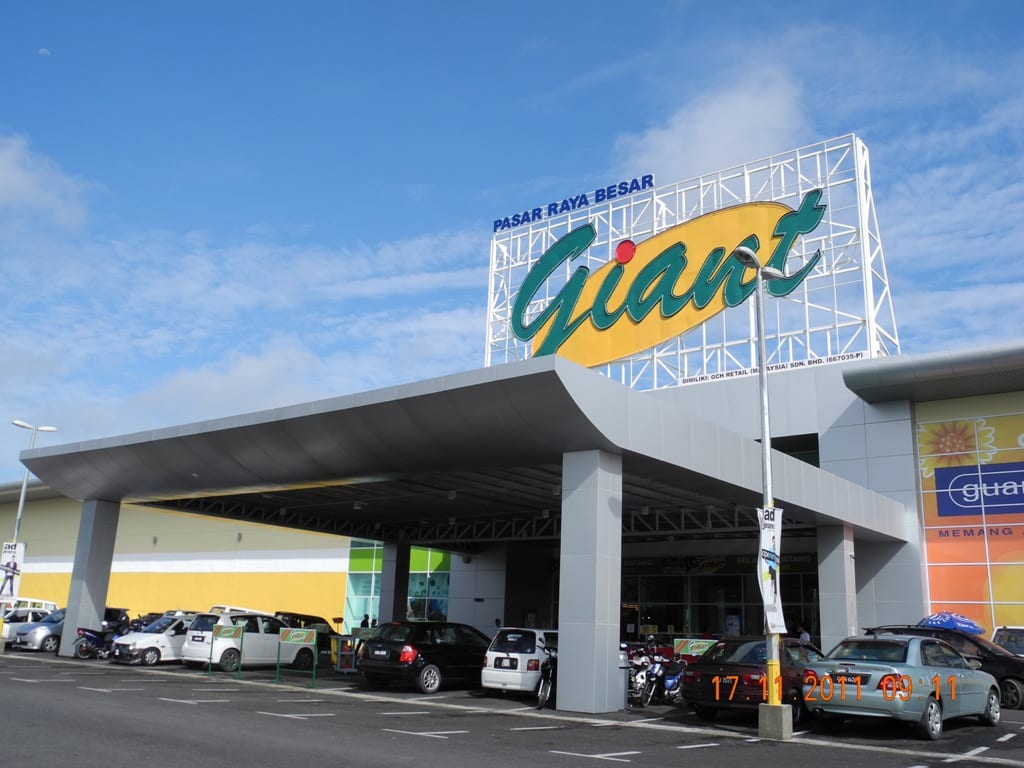
    Malaysian retailer GCH Retail plans to add six stores to its Giant hypermarket network this year and relaunch 28 outlets.

    The new Giant Malaysia stores will open in Setapak (Kuala Lumpur), ICangar (Kedah), Kota Baru (Kelantan) and Jeneh (Terenggam), with the other two sites yet to be revealed.

    Operations director Ernest Potgleter said this week that Giant decided to relaunch its stores after customer complaints they had started to look outdated.

    “We have to revive the business. The stores have not been refurbished for five years, and It is time for a new look.”

    Giant Malaysia serves 23 million customers a week, and Potgleter said the group has to be cheaper than other retailers while providing good service, good products and a good instore environment.

    He was speaking at the relaunch of Giant Hypermarket Shah Alam, in the Selangor state capital, which has been refurbished at a cost of RM2.5 million ($568,000).

    General merchandising director Lee Slew Mei said the store’s layout had been changed to make shopping a one-stop experience for its customers.

    “Child-related products are put together, and we have a seasonal promotional area. A back-to-school promotion is running for six weeks with related products, including stationery, school bags and uniforms, all in one place.”

    At the same time, Giant had brought in new ranges, some of them exclusive, said Lee Slew Mei.

    “We have the O’Fresh range which comes directly from farms in Cameron Highlands. The vegetables do not go through distribution centres so are of better quality and the price is also lower.”

  • Aeon booms despite ‘harsh’ retail conditions

    Aeon booms despite ‘harsh’ retail conditions

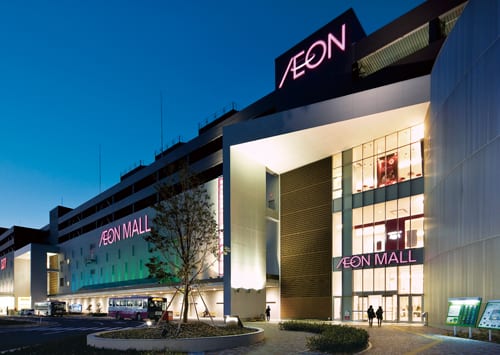
    Against a background of rising consumer prices, harsh retail conditions and increased competition in the shopping centre industry, Japanese developer Aeon opened four new malls in its home country last year and expanded regionally.

    It also renovated existing malls in Japan, and set up promotional programs to stimulate the market.

    Overseas, the company has been working to establish a business foundation with the aim of attracting customers to its malls in China and the ASEAN region, which it reports have been performing well. It has also added three malls in China, opened its first mall in Indonesia and launched its third in Vietnam. It has also announced plans to build a new luxury mall in Bangkok.

    Aeon’s operating revenue for the three quarters totalled 167,704 million yen ($1.4 billion), which is a 113.4 per cent year-on-year increase.

    However, because of expansion, operating costs rose 116.8 per cent year on year to 120,848 million yen, resulting in a gross profit of 46,856 million year (up 105.6 per cent).

    But in an extraordinary loss, the company incurred expenses of 1838 million yen when it closed Aeon Mall Neyagawa and Aeon Mall Fujidera, both in Osaka. This led to a decline in net income to 14,944 million yen (83.8 per cent).

    Several new malls were opened, including, in March, Aeon Mall Asahikawa Ekimae in Hokkaido, which is directly connected to a railway station; in April, Aeon Mall Okinawa Rycom, which has the concept of being a fully fledged resort mall; and in July, Aeon Mall Tonami, Toyama. As the Hokkaido and Okinawa malls are in leading tourist spots, their services were bolstered for foreigners. Meanwhile, the Okinawa mall has started accepting group tours in co-operation with nine travel agencies.

    Replacing Aeon Tonami Store, which closed in 2013, Aeon Mall Tonami opened in an area undergoing urban development, and in October opened Aeon Mall Shijonawate in Osaka, which has one of the largest food offerings in the region.

    Aeon also renewed five malls in the third quarter in addition to the six malls upgraded during the first half, including Aeon Lake Town in Koshigaya City. This comprises three individual malls – Kaze urban mall, Mori lifestyle mall and the Lake Town Outlet – making the complex one of the largest shoppings malls in Japan.

    Overseas, Aeon saw its revenue rise to 7795 million yen (up 186.4 per cent) in China, with an operating loss of 2994 million yen. Openings included Aeon Mall Suzhou Yuanqu Hudong, its second mall in Jiangsu Province, in May; Aeon Mall Beijing Fengtai, its second mall in the capital, in September; and Aeon Mall Hangzhou Liangzhu Xincheng, its first mall in Zhejiang Province, in November. This brings its number of malls in China to nine.

    A series of explosions on August 12 damaged part of Aeon Mall Tianjin Teda. Business was suspended, but general merchandise store Aeon resumed selling food and daily necessities on September. Business resumed for the rest of the mall on November 1.

    ASEAN business saw a revenue rise of 493.1 per cent to 2617 million yen, with an operating loss of 729 million yen. In October, Aeon Mall Long Bien became its first outlet in the Hanoi area and the third in Vietnam.

    Aeon Mall Phnom Penh opened in June 2014 as the company’s first mall in Cambodia, attracting more than 15 million customers in its first year. In Indonesia, BSD City in Tangerang, Banten Province, which opened in May as the first Aeon mall in Indonesia, also performed strongly.

    In its fiscal statement, the company says overseas business is considered as the driver of future growth, but is still at the stage of upfront investment and has yet to contribute to profits.

    In its information on its operating forecast, the company talks about its development plans for the Aeon Mall Tokoname in Japan, which opened in December. There was also an extension to the Aeon Mall Chikushino in the Fukuoka Prefecture, plus a revamp.

    Meanwhile, the company aims to cut costs through improved operations using the economies of scale with more than 140 malls in Japan.

    In China, also in December, the company opened Aeon Mall Wuhan Jingkai as its second property in Hubei Province, and Aeon Mall Guangzhou Panyu Square as its first mall in Guangdong Province. This month it is opening its third mall in Jiangsu, Aeon Mall Suzhou Xinqu, and plans to roll out dominant stores in Beijing-Tianjin, Jiangsu Province-Zhejiang Province, Hubei Province and Guangdong Province.

    In the ASEAN region, construction work has started on Aeon Mall Jakarta Garden City with another mall planned to open in Bogor, West Java Province, in October. New malls are also planned for Vietnam and Cambodia.

  • Louis Vuitton and Chinese dispute

    Louis Vuitton and Chinese dispute

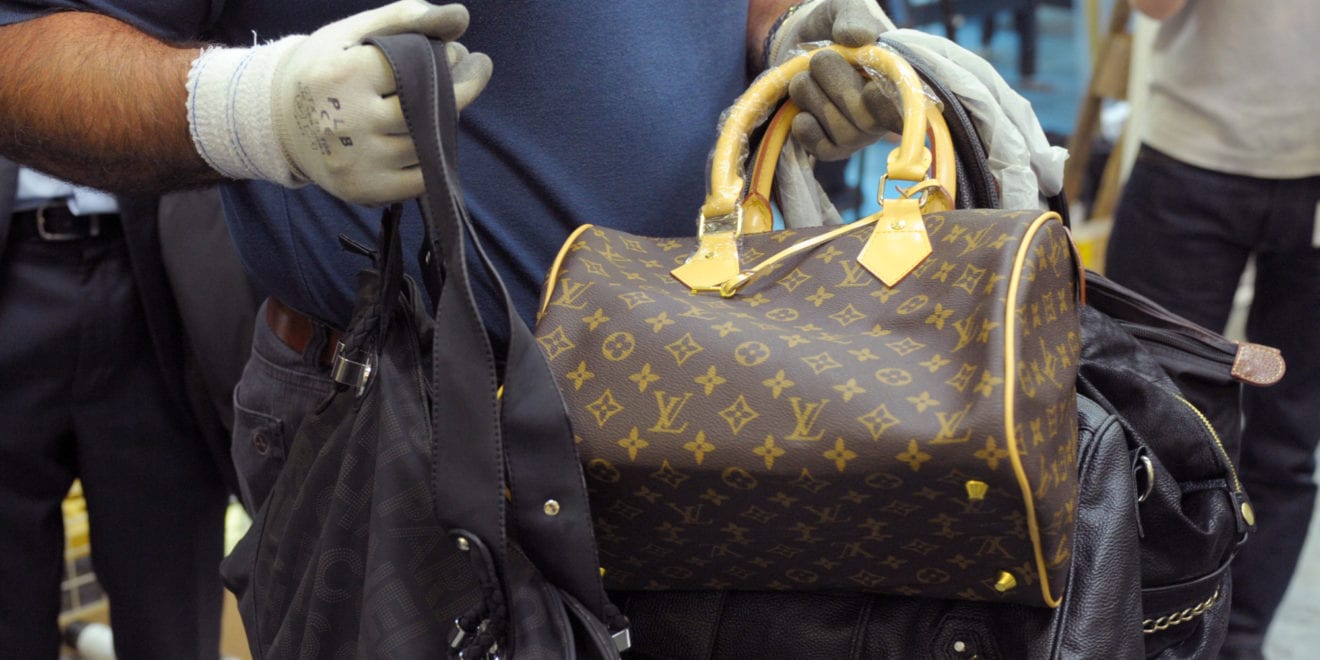
    Luxury retailer Louis Vuitton is suing three individuals in China for selling counterfeit items on Alibaba’s online shopping outlet Taobao.

    Damages of 250,000 RMB ($37,900) are being sought by the LVMH-owned company, says a statement on a Beijing court’s website uploaded yesterday. It says the suits are against a person surnamed Liang and two with the surname Han, who were sentenced in 2014 for selling counterfeit Louis Vuitton clothing, shoes and handbags between 2011 and 2014.

    This move comes nine months after luxury conglomerate Kering pursued legal action over fakes on Alibaba’s platforms. The group sued Alibaba directly, filing the suit in the US rather than China.

    In 2013 LVMH signed a co-operation agreement with Taobao to fight fakes on its platforms. Under the agreement, Taobao agreed to proactively track down and remove listings of counterfeit LVMH items.

    Meanwhile, Alibaba has been working to defend its reputation. It hired a former counterfeit investigator from Apple in December as its new head of global intellectual property enforcement. This followed the American Apparel & Footwear Association calling on the US Trade Representative to add Alibaba back to its blacklist of “notorious markets” for fakes (it was removed in 2012). Alibaba has also hired extra staff to fight fakes and is releasing an English-language version of its intellectual property reporting system.

    The courts’ decisions on the Kering and Louis Vuitton lawsuits could have an impact on the way brands formulate their China anti-counterfeit strategy in the years to come, observes Jing Daily. Kering has challenges with its US lawsuit as the Bank of China has refused to comply with a subpoena to disclose information about counterfeiters’ bank accounts to the New York District Court. The bank is also appealing a $50,000-a-day fine imposed by the court, arguing that the order violates Chinese bank secrecy laws.

  • Chinese demand to drive growth in Australian luxury

    Chinese demand to drive growth in Australian luxury

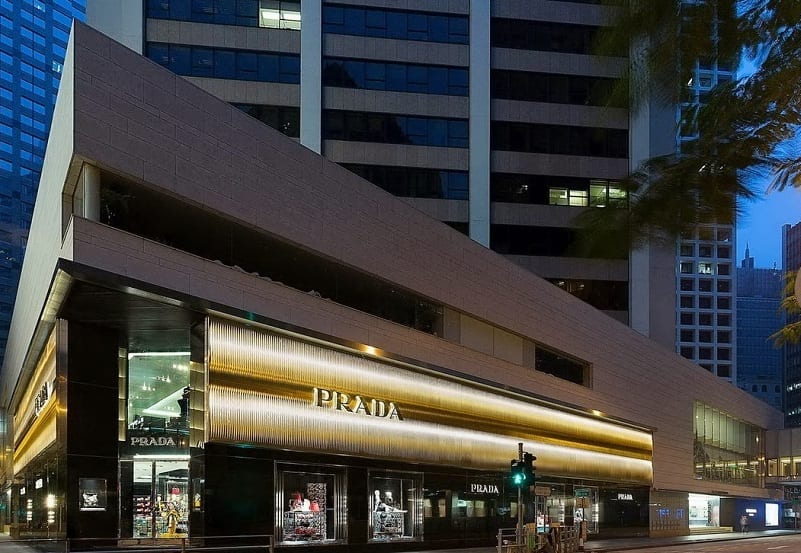
    A surge in demand for luxury goods has seen Chinese-led spending overwhelmingly turn to international markets including Australia, according to the latest research from property group CBRE.

    According to the latest report, Luxury Retail 2015, 70 per cent of all Chinese-led luxury purchases are now transacted overseas, resulting in increased sales across the world, including Australian markets.

    “Chinese purchasers account for 30 per cent of the luxury spend worldwide and 70 per cent of these purchases take place overseas, showing that the downward shift in their economy has prompted Asian consumers to rethink their purchasing habits,” said CBRE head of research and consulting EMEA, Andrew Phipps.

    “The advent of the new ‘anti-extravagance legislation’ in China and their consumers’ growing awareness of price differentials of up to 70 per cent has led to many preferring to make their purchases overseas, where the prices are far more attractive,” said Phipps.

    CBRE head of retail brokerage leasing, Australia, Leif Olson said international brands were looking to capitalise on the uptick in demand for luxury goods by securing a presence in Australia’s biggest fashion hubs.

    “In 2015, the Australian retail landscape has transformed significantly, with a plethora of global brands lining up to open stores across the country,” said Olson. “This momentum shows no sign of slowing down, with affordable luxury brands to lead the charge in Australia over the next year, while top tier brands will look at securing flagship assets in core locations.”

    Olson said the next wave of growth in Australia’s luxury retail market would be centred on the expansion of retailers in Brisbane, Perth and Adelaide; the addition of food and beverage to luxury retail; and growth of premium childrenswear.

    “The addition of food and beverage to luxury retail stores is an untapped market in Australia, and a widespread concept already seen in the world’s largest fashion meccas, including Hong Kong and Macau,” said Olson.

    “Not everyone is in a position to splash out on a luxury branded handbag or wallet, but being able to have a coffee or meal at Armani, for example, broadens the brand’s appeal and makes it more accessible for everyone.“

    Luxury childrenswear represents another opportunity for growth in Australia says Olson.

    “Shifting the appeal of a brand from adults to families will be a major focus of retailers expanding in Australia, with this helping them to engage and reinforce relationships with their key clients – the parents – while building their future consumer base from the next generation.”

  • Sa Sa feels pinch of Chinese policy

    Sa Sa feels pinch of Chinese policy

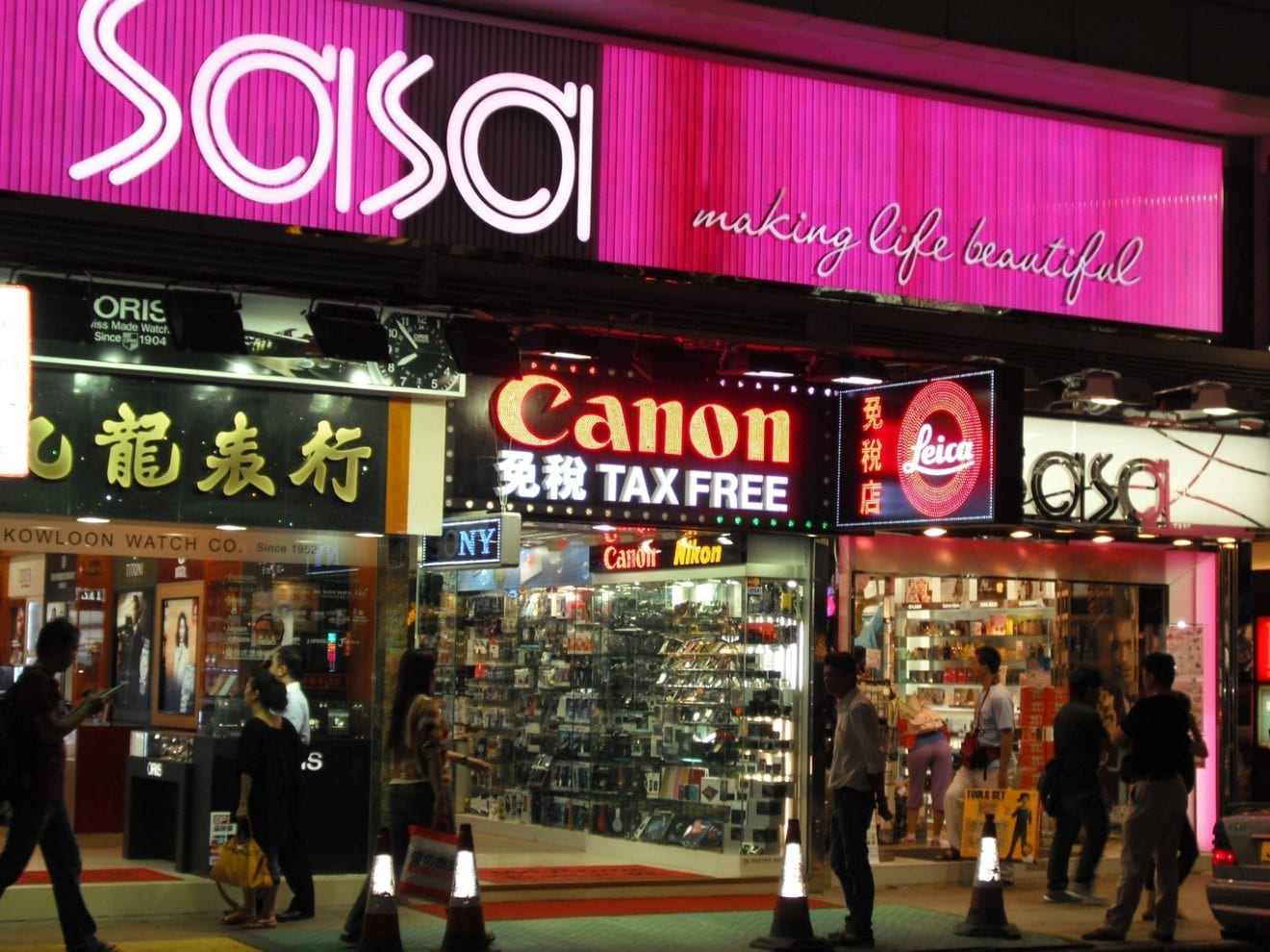
    China’s policy of one trip a week for mainlanders plus the strength of the Hong Kong dollar against a weaker yen have gouged sales for cosmetics retailer Sa Sa International.

    Both its retail and wholesale turnover dropped 14.2 per cent for the third quarter (October 1 to December 31), the company has announced. Turnover declined by 15.8 per cent in the Hong Kong and Macau markets, where same-store sales dropped 12.2 per cent.

    Overall, transactions were 7 per cent weaker, average sales per transaction fell 9.1 per cent and there was a 12.1 per cent dip in same-store sales. The group’s total turnover in other markets, including Mainland China, Malaysia, Singapore, Taiwan and online, dropped 6.7 per cent.

    Chairman/CEO Dr Simon Kwok says the impact of the “one-trip-per-week” policy had gradually gained momentum, leading to a notable year-on-year decline in the number of same-day visitor arrivals.

    “We expect the negative trend will continue to influence the local retail market.”

    In response, he says the group will optimise its product offering and enhance the shopping experience for its customers.

    Back in October, Sa Sa International Holdings already warned that its net profit for the six months to September 30 would be slashed in half because of the sluggish retail scene.

  • Hong Kong entrepreneur Ricky Wong plans HK$100m ad campaign boost for online shopping

    Hong Kong entrepreneur Ricky Wong plans HK$100m ad campaign boost for online shopping

    Ricky Wong Wai-kay has ambitious plans to boost his online shopping venture with a HK$100 million ad campaign and staff expansion despite a grim economic outlook and still being a long way from breaking even.

    The HKTV boss said that a year after the official launch of his online shopping mall, it had recorded an average of 700,000 to 800,000 unique visitors per month and the number of customers had doubled in the last two months to tens of thousands.

    He said each customer placed orders ranging between HK$400 and HK$1,000.

    “We will broaden the range of goods available. We will soon offer fresh seafood, chicken and vegetables among some 99,000 items available in our online store.”

    Wong said the company had set aside a HK$80 million to HK$100 million advertising budget for e-commerce in the coming year.

    READ MORE: HKTV and boss Ricky Wong win HK$1.3m libel payout from ATV and ex-director James Shing

    He also planned to expand the logistics team from around 300 to 800 or 1,000.

    “The cost will still be much lower than operating a physical shop,” he said. “High rent is killing Hong Kong’s retail sector.”

    Wong cited a recent report from CBRE Research, which named Hong Kong as the world’s most expensive retail market.

    According to the report, rent for retail spaces in Hong Kong had reached US$4,334 per sq ft per year – 3.3 times more than in Paris, ranked at No 3, and 3.6 times more than in London.

    He said some Hong Kong retailers spent nearly 50 per cent of turnover on rent.

    “Tourists who come to Hong Kong won’t shop here. They would rather shop in London or Paris,” he said.

    But he admitted there was still a long way to go before breaking even.

    Wong initially intended to develop a TV business that operated alongside his e-commerce venture with HKTV. But HKTV did not get a free TV licence from the government and his internet TV business did not take off due to lack of advertising.

    But he has not given up his TV dreams completely. He said he was still negotiating with the government on mobile TV development, and a multimedia centre under construction in Tseung Kwan O was expected to be completed by the end of this year.

    However, Wong has no concrete plans to revive any TV productions.

  • Investors sought for top-yielding Oud production project in Laos

    Investors sought for top-yielding Oud production project in Laos

    Two companies from Malaysia are on the lookout for investors to set up a big agarwood tree plantation in Laos to produce Oud oil and other agarwood products for markets in Asia, the Middle East and Europe.

    Agricultural contractor Aseagate on January 6 signed an agreement valued 200mn with forestry management and agriculture technology firm Richwood Capital both companies are based in Kuala Lumpur to operate and run a 2,000-hectare agarwood tree plantation in the central Lao province of Bolikhamsai, one of the largest plantations projects in the landlocked Southeast Asian country so far.

    According to Richwood Capital’s CEO Kendrick Ho Qing Tyat, the project will be implemented in four phases. The initial investment in the first phase is about 18mn for the planting of 200,000 agarwood trees aged between 18 and 22 years at costs of 90 per tree, which should yield a return of 200mn in three years based on calculations that one liter of high-quality agarwood oil fetches at least 14,000 on the wholesale market.Over four phases in the coming six to eight years, with the planting of new trees and new investors on board, the venture’s business plan is to reach a total return of no less than 7.2bn, Tyat said at a press conference in Kuala Lumpur last week. The venture plans to set up its own production plant in Laos or to collaborate with a Lao partner. To produce the resin from which the Oud essence can be distilled, a special technique developed by a Singapore laboratory using a unique and effective enzyme will be deployed to multiply the resin output per tree.

    Main export markets will be the Middle East and China, and also Southeast Asia to tap the big potential that opened up with the recent launch of the ASEAN Economic Community. Top European perfume makers are also on the potential client list. The venture will also sell agarwood leaves, which can be made into tea, and explore ways of producing wood chips from the agarwood trees as well as offer “agriland banking” to investors to tap into the growing ptential of agarwood farming.

    Both companies hailed agarwood as a safe investment, as it was “more resilient to economic fluctuations as compared to stocks and bonds,” and insurance will be purchased to provide protection against possible natural calamities.

    Aseagate has been awarded the sole rights to the management of the agarwood plantation, while Richwood Capital will supply and plant the trees. The plantation concession has been exclusively awarded by the Lao government to the Singapore branch of non-governmental organisation Global Outstanding Chinese 100, or GOC100, an association of international Chinese industrialists, business people and entrepreneurs, which will cooperate with the two Malaysian firms in setting up the plantation and is working out profit-sharing and other details for the collaboration with the Lao government.

    GOC100 in August 2015 signed an exclusive agreement with the Lao Ministry of Agriculture and Forestry for the concession of the plantation which is located within a Lao military base and guarded by the army. Infrastructure-wise, the plantation will benefit from a new railway network linking Laos with China to be set up by 2020.

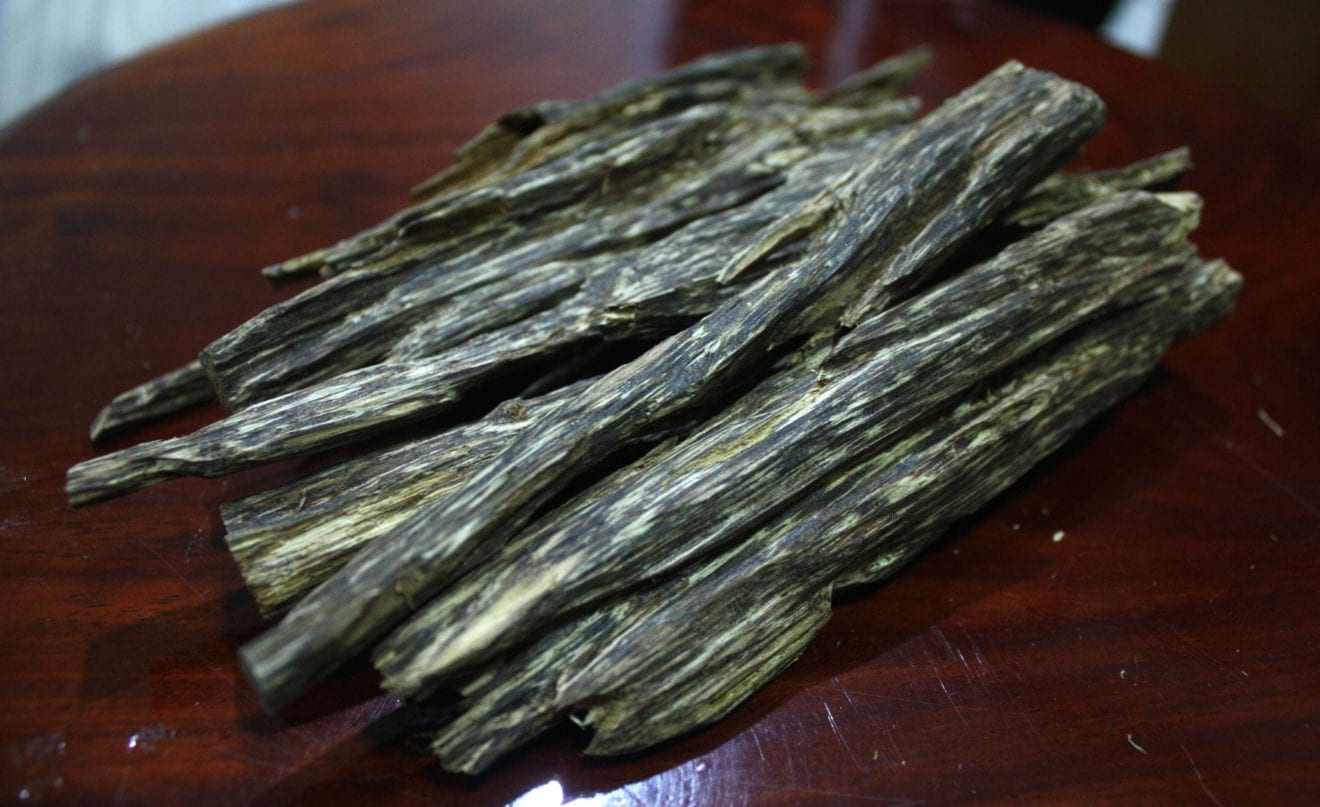
    Agarwood is increasingly becoming an investment commodity due to its valuable resin of which Oud oil is being distilled. Pure Oud is highly in demand as a natural fragrance throughout East and Southeast Asia, as well as in the Middle East and by global perfume manufacturers. It is a popular fragrance for both men and women in the Arab world, while it is also used in traditional Chinese medicine, by Ayurvedic and Tibetan physicians and as meditation incense by various religious groups. In some Arab cultures, it is also used as inhaled incense as a natural remedy against insomnia.

    What makes investment in an agarwood plantation particularly attractive is the fact that, due to its scarcity, the mature wood is pricier than gold with a retail price of between 5,600 and 10,000 per kilogramme, making it one of the most expensive natural raw materials in the world.

  • African exports to China descend by 40 percent

    African exports to China descend by 40 percent

    African exports to China fell by 40 percent in 2015, China’s customs office reports. China is Africa’s greatest single trading partner and its interest for African products has fuelled the continent’s recent financial development. The decrease in exports mirrors the recent slowdown in China’s economy. This has, thus, put African economies under weight and to some extent represents the falling estimation of numerous African currencies.

    Exhibiting China’s previous year trading figures, customs representative Huang Songping advised that African exports to China aggregated $67bn (£46.3bn), which was 38% down on the figure for 2014. BBC Africa Business Report editor Matthew Davies says that as China’s economy sets out toward what numerous experts say will be a hard finding, its requirement for African oil, metals and minerals has fallen quickly, taking commodity prices lower.

    There is likewise less funds coming from China to Africa, with direct investment from China into the mainland falling by 40% in the initial six months of 2015, he says. In the mean time, Africa’s interest for Chinese products is rising. In 2015 China sent $102bn worth of products to the mainland, an expansion of 3.6%. A year ago, South Africa facilitated a China-Africa summit amid which President Xi Jinping declared $60bn of aid and loans, symbolizing the nation’s growing part on the Continent.

  • Milk producers Lewis Road Creamery eyes up China for exports

    Milk producers Lewis Road Creamery eyes up China for exports

    Lewis Road Creamery, the premium dairy brand organization based in New Zealand, is eyeing on Chinese market to export their products. The company said the final decision would be made this year. The premium dairy brand organization is considering sending out fresh natural milk into Shanghai and likewise wants to release different product extensions. It has already started making baked goods apart from dairy items.

    The Auckland-based brand saw 340 percent development in retail deals to $40 million of its butter, cream, natural drain, and flavored milk items amid 2015; the year of what founder Peter Cullinane calls “the chocolate milk frenzy.” His big choices this year incorporate the exporting decisions and expansion of product range. For the recent months it has been carrying out tests sales of Lewis Road Bakery premium kibbled grain bread in 12 Auckland retail outlets.

    Cullinane said it’s at present exporting butter to Australia and has been researching a more extensive move, specifically fresh organic milk to Shanghai following a trip to China a year ago. Different markets the company plans to export to incorporate Australia, the UK, and the US, however he supposes the last might be past the organization’s current reach.

    The organization’s extraordinary growth in chocolate milk sales, which on its launch in Oct. 2014 saw queues in supermarkets, has decreased from 48 percent between the last quarter of 2014 and first quarter of 2015 to more normal levels.

  • 2 Reasons Why China’s Macro Woes Won’t Affect Apple, Inc. as Much as You Think

    2 Reasons Why China’s Macro Woes Won’t Affect Apple, Inc. as Much as You Think

    The market certainly woke up on the wrong side of the bed for 2016, and most fingers are pointed to troubling macro-economic data out of China along with The Middle Kingdom’s brutal market sell-off. The Shanghai Composite Index is already down 10% year to date, and it’s only been a week. You probably also saw those headlines about the day that the Chinese market was only open for less than 30 minutes before circuit breakers (which have since been suspended) were triggered, ending the day down 7%.

    Meanwhile, pessimism surrounding Apple continues to build as well, in part because China is such an important market for the Mac maker. But there are two important reasons why all of the China-related storylines won’t affect Apple as much as you might think.

    China’s stock market participation is very low
    It’s true that China’s stock market is largely dominated by retail investors instead of institutional investors (a stark contrast to the U.S.), with an estimated 90% of all capital accounts owned by retail investors. Chinese investors also tend to be short-term traders instead of long-term investors, which contributed to heightened volatility.

    But it’s also true that overall stock market participation is fairly low in China, so the gyrations aren’t directly affecting the average consumer. For example, the Southwestern University of Finance and Economics in Chengdu conducts a regular China Household Finance Survey led by professor Gan Li. According to the survey, just 6% of households in China owned stock during the first quarter of 2015.

    So while the volatility of the Chinese stock market makes for some panicky headlines, the average Chinese consumer’s discretionary spending and income is just fine. They can still go out and buy that iPhone.

    China’s slowing GDP growth is not affecting the mainstream consumer
    The other recurring theme is China’s slowing macroeconomy, as evidenced by decelerating GDP growth rates. But again, these GDP figures aren’t directly translating into reduced income or spending on the consumer level. Quite the contrary, in fact.

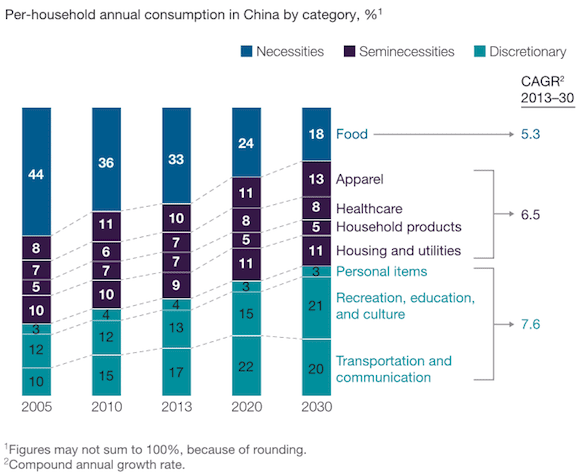
    Much of China’s GDP growth over the past decade has been driven by investing and exports, but China’s economy is now transitioning toward consumer consumption, which will only benefit consumer-oriented companies like Apple. Consider per-household annual consumption by category from 2005, along with forecasts through 2030, where discretionary categories are growing the fastest:

    China Spending

    Source: McKinsey.

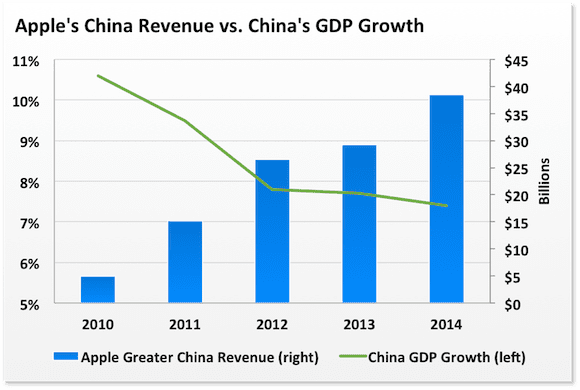
    Or consider the fact that Apple’s China business has grown incredibly against a backdrop of slowing GDP:

    Aapl Gc Vs Gdp

    Source: SEC filings and The World Bank. China GDP growth measured in constant local currency. Calendar years shown.

    The rising middle class in China won’t be stopped, and that’s good news for Apple.