Author: Mei Ling Tan

  • TPP and RCEP ‘will be good for Thailand’

    TPP and RCEP ‘will be good for Thailand’

    In an interview with regional media, he said Thailand should benefit from joining both trade blocs as the RCEP’s centre points are China, Japan and India, while the TPP is spearheaded by the US and Japan, with Thailand’s automotive industry among the potential gainers for exports to the huge TPP markets.

    The RCEP is the extended trade bloc of the AEC, with a combined economy worth US$2.6 trillion (Bt83.8 trillion).

    Incalcaterra said the AEC, which ushered in a new era at the start of this year, would lead to more effective flows of capital and trade in services, in addition to the freer flow of goods.

    However, he said trade in services was more difficult due to non-tariff barriers, but the situation should now continue to improve as member countries hope to achieve their liberalisation goal in 2025.

    Within the AEC area, he said, the “single window” facility for cross-border trade had lowered transaction costs, while global supply chains had benefited from cost savings in the area’s single production base.

    However, the economist said Asean countries needed more political will to further integrate the member states and boost foreign direct investment from outside the region, while implementing structural reforms to boost auto and other industries, as well as infrastructure investment projects using the public-private partnership model.

    Regarding the TPP, he said, the 12-nation trade bloc should complement the RCEP of the Asean countries plus their partners – China, India, Japan, South Korea, Australia and New Zealand – as more free trade was better for the region.

    “In the AEC, Thailand is among those at the forefront with a head start due to its large consumer market, big auto industry, et cetera, hence many Thai firms can take advantage [of the opportunities],” he said, adding the country’s political challenge has, however, hindered the economy in the past one or two years.

    In addition to Thailand, he said, other Asean countries such as the Philippines and Indonesia were moving towards joining the TPP trade bloc over the next two years.

    In the case of Thailand, there are clear benefits in joining the TPP in addition to the RCEP, he added.

    At present, Singapore, Vietnam, and Malaysia are already members of both the RCEP and the TPP.

    For this year, Incalcaterra said Thailand’s economic growth rate would likely remain the lowest among Asean countries, with HSBC projecting 3.3-per-cent expansion.

    China’s slowdown will affect Thailand and Malaysia significantly, due to the two countries’ large share of exports to China, where growth this year is projected to be less at 6.7 per cent, against 7.1 per cent in 2015, he said.

    On the US Federal Reserve’s interest-rate hike – the first in nine years – the economist said the move would create short-term volatility, but the gradual cycle of rate adjustments would not lead to a major disruption.

    Meanwhile, Hai Pham, HSBC’s chief executive officer in Vietnam, said there was plenty of room for intra-trade growth among Asean economies, which currently represented only 20 per cent of their total trade, compared to more than 60 per cent among members of the European Union.

    He said cross-border investment was another high-growth area for Asean companies, citing Thailand’s Berli Jucker and other firms as examples of Asean firms investing in Vietnam’s retail and electronic-goods sectors.

    For Vietnam, GDP growth is projected to be around 6-7 per cent this year, but the challenge is for local businesses to step up their efforts to meet the challenges presented by the AEC, as many are still not ready to take on increased competition.

    The CEO also expects more consolidation of companies in Vietnam in 2016, due to the coming into effect of the AEC.

  • Starbucks app debuts on the Samsung Gear S2 smartwatch in Korea

    Starbucks app debuts on the Samsung Gear S2 smartwatch in Korea

    Starbucks Coffee Korea launched in November the new Starbucks app on the Samsung Gear S2 smartwatch in South Korea. 

    Through the  app, customers can track their My Starbucks Rewards status and pay for Starbucks purchases directly from the wearable device, a first in Asia.

    “We’re pleased to make the Starbucks digital experience convenient and rewarding for our customers,” said SJ Paik, chief marketing officer, Starbucks Korea. “This new Starbucks app for the Gear S2 smartwatch reflects Starbucks continued commitment globally to lead, innovate and connect with customers using mobile technology.”

    With the circular design of the Samsung Gear S2 smartwatch, Starbucks fans can access uniquely designed Starbucks smartwatch face designs, such as the My Starbucks Rewards cup icon design.

    The Starbucks smartwatch face designs were specially created by Starbucks and it said new designs will be regularly available on the Samsung Gear S2 Manager app to bring even greater personalization to the mobile Starbucks experience.

    Samsung launched the Gear S2 smartwatch in the market last September.

  • Singapore needs to boast about its entrepreneurial success

    Singapore needs to boast about its entrepreneurial success

    Singapore and London can use more “buzz” to promote their technology ecosystems to the world – though each is already an innovation and finance hub in its own right, said Eileen Burbidge, the UK government’s first Special Envoy for FinTech, and venture capital partner at Passion Capital.

    “Tech is a noisy industry, just look at (what’s happening on) Twitter,” she told BT in an interview. While the buzz can be a distraction, it is legitimate when “something happens”, she said, which in the startup world could entail a successful fundraise, an exit, or even a favourable review of a new product.

    But compared to Silicon Valley, London and Singapore are “not boasting enough” about their entrepreneurial successes, said Ms Burbidge. And investors care for buzz, which can also spur ambition and competition among entrepreneurs, she added.

    Asked why London is excelling as a fintech hub, she said: “London combines the innovation of Silicon Valley with the financing heritage of New York’s Wall Street and the policy-making of Washington – all in one city.”

    Plus, the UK government genuinely supports entrepreneurship, she pointed out. “The 2007/2008 financial crisis crippled London’s services industry, and London doesn’t want to go through that again. So the government encourages companies to embrace innovation, and recognises that this is an ecosystem.”

    For instance, the UK now leads the world in equity crowdfunding, an industry that has matured and burgeoned owing to “progressive” policy-making by regulators, said Ms Burbidge. Retail investors in the UK are allowed to invest in companies in exchange for shares – an act reserved only for accredited investors elsewhere – though they must certify that they are not committing more than a 10th of their net investable assets.

    While the US is reportedly following the UK’s lead, other countries, such as Singapore, remain wary. Said Ms Burbidge: “It’s tricky. Singapore is being more protective (of its retail investors) and is still testing the waters . . . It’s got to let it happen and see how it pans out.”

    Policies and standards should not be enemies of innovation, according to Steve Leonard, executive deputy chairman of the Infocomm Development Authority of Singapore (IDA).

    He had pitched this last December to an innovation festival audience at unBOUND London 2015, an event that observers said capped off a good year of fraternising between Singapore and London, the two cities having forged stronger synergies in tech and entrepreneurship.

    unBOUND, for instance, was organised by Singapore- and London-based tech conference producer AcreWhite, and supported in great measure by Singapore companies, which include Singtel Innov8, NUS Enterprise, IDA and IDA’s venture arm Infocomm Investments (IIPL).

    Jeremy Basset, head of the Unilever Foundry and a speaker at unBOUND, pointed out: “Just as Singapore is the hub to test interesting opportunities and business models for South-east Asia, London is the gateway to Europe.”

    For that reason, the London-based corporate innovation platform, which connects startups to Unilever’s over 400 consumer brands, in January 2015 set up shop in Singapore – its fourth market after the UK, Australia and the Philippines.

    Entrepreneur First (EF), another London-based initiative, a “pre-idea, pre-team” startup accelerator that finds and grooms the best technical individuals into entrepreneurs, is also considering a launch in Singapore.

    Co-founder Alice Bentinck said: “I visited Singapore (in 2014) and was impressed. There are good universities and good technical talent. The startup ecosystem is also in its nascent stage like where Britain was three years ago.” Last July, EF raised £8.5 million (S$17.7 million) in a funding round in which IIPL participated.

    Then there was the 2015 Founders Forum (FF) Smart Nation Singapore launch in April, organised by IDA and FF (a London-based private network of tech entrepreneurs) to invite global tech influencers to join Singapore in discussions on Smart Nation. That had been FF’s first meeting in Asia.

  • After Indonesia, dating app Spotted eyes Malaysia and Thailand

    After Indonesia, dating app Spotted eyes Malaysia and Thailand

    The German dating app Spotted is out to woo Southeast Asian users. Dating apps have become relatively widespread in Indonesia, with Germany’s Spotted merely the latest aiming to carve out a piece of the pie.

    Having entered Indonesia in October 2015, Spotted is now eyeing Malaysia and Thailand as its next two Southeast Asian markets, its optimistic outlook fuelled by its US$14.5-million (RM62.6 million) Series A round in August 2015.

    That investment round, which involved Media Ventures, Wolfman Holdings, and a Deutsche Balaton affiliate based in Heidelberg, Germany, brought Spotted’s total funding to US$15.3 million to date.

    “Once we get the funds from our investors, we want to expand to Asia and other parts of the world,” its business development head Andre Sierek told via email.

    “However, at this moment our focus is first on Southeast Asia, especially Indonesia, as well as Malaysia and Thailand in 2016,” he added.

    After its founding in 2013, Spotted initially targeted German-speaking countries such as Austria, Switzerland and North Africa, describing its product not so much as a dating app but a “social discovery” app.

    The hyper-local app helps users meet again with others they have met before. For instance, if you met someone in a café and are interested in them, Spotted will help you meet up with them again.

    According to Sierek, Spotted currently has one million users across the world, with its app being downloaded 10,000 times daily.

    To increase its user base, it realised it could not depend on just the European market – which explains its Southeast Asian foray, and Indonesia being established as its launchpad.

    Sierek said Spotted’s internal research found that people in Southeast Asia were enthusiastic users of social and dating apps.

    Two months after launching in Indonesia, the app had been downloaded by 15,000 users.

    “Our users in Indonesia really like our app, and they mostly like our ‘anonymous love notes’ feature,” said Sierek.

    Content localisation

    Moving from a German-only market to the diverse Southeast Asian region has not been easy, Sierek admitted. It had to tweak its content to cater to the local market and local language.

    “Our main challenge would be building the local user base, as well addressing the different needs of each market in the region,” he said.

    Although it has not established an office in Indonesia yet, Spotted has formed a partnership with a local company, mainly to localise its content and conduct online promotions.

    “We will use the same approach for the Malaysian and Thai markets — that is, cooperating with local companies,” said Sierek.

    He said the company does intend to open an office in Southeast Asia, as well as one in San Francisco, sometime this year, although he did not elaborate on which Southeast Asian country would house this office.

    Not a ‘booty call’ app

    Spotted was founded by Nik Myftari, Nicolas Amann, Christian Kapp, Alexander Pelz, and Tung Nguyen, who met as students at the University of Heidelberg in Germany.

    Its goal is “revolutionise” the way people connect to others, by giving them a second chance to form a relationship.

    “Spotted is not a dating app that brings random people together,” said Sierek.

    “The concept is more like a time machine – it brings together people who have actually met before, but did not have the time or opportunity then to follow up on a relationship.

    “Our approach is unique, and focuses on establishing serious relationships and finding true love,” he declared.

    The app’s main function, called “Deja-Vu,” allows the user to “see” people who once crossed his or path – say, at a restaurant or while travelling. The user can use the “Wink” function to hail that other person, and if that person is interested, he or she can send a “Wink” back in response.

    From there, they can go on to private online chatting or messaging.

    Users can also send anonymous love letters or notes if they are looking for potential partners – but only with people they have met before and not random partners, Sierek emphasised.

    Users must turn on the location-based feature on their smartphones so that Spotted can accurately record the location and date where users might have met their potential partners.

    “The more users, the more opportunities to record people who have crossed our paths,” he added.


  • Singapore’s Migme snaps up Shopdeca Indonesia

    Singapore’s Migme snaps up Shopdeca Indonesia

    Singapore digital media company Migme is to buy Shopdeca Indonesia.

    Shopdeca sells a curated range of lifestyle products online through two websites: shopdeca.com andsportdeca.com.

    The move buys Migme a gateway into the neighbouring Indonesia market – as well as boosting the Migme executive team and Shopdeca.com founder Andreas Thamrin will joing Migme as global head of eCommerce once the deal is settled during the first half of 2016.

    Migme CEO Steven Goh said the acquisition would give the company valuable local Indonesia market expertise.

    “We look forward to the acquisition being a positive contributor to group results in 2016.”

    In January this year Migme bought Sold.sg after listing on the ASX last year. It owns the chat app LoveByte and a share in MatchMe.

  • Malaysians sell Singapore mall

    Malaysians sell Singapore mall

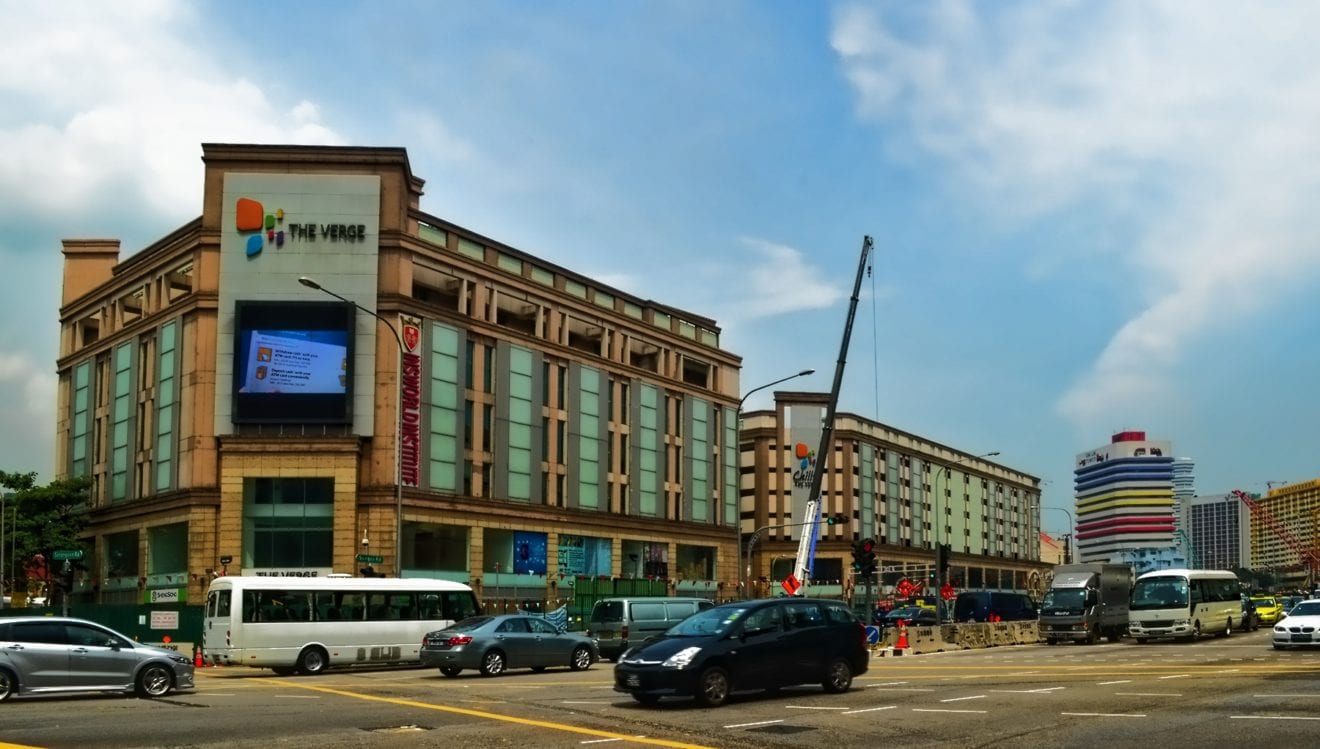
    Malaysia-listed DRB-Hicom and minority partner investors are selling at property at Little India which will be converted into a mixed use development including a multi-storey shopping centre.

    The property, previously named Tekka Mall and now known as The Verge, is located opposite the Tekka Centre in Serangoon Rd and has been on the market for a year.

    Heritage Group, headed by Keith Tang, the grandson of the late Tang Choon Keng, who founded Tangs department store, has spent $317 million to buy the site.

    Heritage owns a network of luxury hotels and serviced apartments in Australia and New Zealand and this project will be the company’s first in Singapore.

    DRB-Hicom stands to record a gain of about MYR427.5 million (S$139.4 million) from the sale of the Little India mall.

    The property comprises two blocks: The Verge, a six-storey shopping mall with two basement levels; and adjoining block Chill@The Verge, an eight-storey building with two storeys of retail units and a six-storey car park. The two buildings boast a combined 238,527 sqft of retail GFA.

    Leslie Ang, a spokesman for Mr Keith Tang, told the Straits Times Tang plans to redevelop the property into “Studio by Tang” serviced apartments, a mall and a “Signature” block which is likely to be offices or retail space.

  • International Housewares profit slumps

    International Housewares profit slumps

    Hong Kong listed retailer International Housewares has reported a 52.6 per cent slump in profits in the first half year, despite improved sales in key markets.

    The company reported a seven per cent same store sales growth in Hong Kong in the six months to October. Macau revenue rose 16.6 per cent to HK$18.7 million, with same store sales up 2.5 per cent.

    But despite a healthy 6.6 per cent increase in total group sales to $960.4 million, the listed retailer reported a 52.9 per cent fall in profit attributable to shareholders, to just $21.1 million (down from $44.8 million during the same period last year) – a decline flagged in a profit warning in early December.

    It said the decrease was mainly the result of increasing operating costs across the group, weak consumer sentiment in Singapore and Malaysia and an exchange loss arising from the depreciation of the Renminbi fixed deposit.

    International Housewares trades under the retail banners Japan Home Centre (JHC), City Life and Epo Gifts and Stationery. It ended October with 368 stores worldwide, in Hong Kong, Singapore, Malaysia, Mainland China, Macau, Cambodia, Indonesia, Saudi Arabia and New Zealand.

    Despite Singapore’s stagnant retail market, International Housewares reported growth there of 9.6 per cent on a local currency basis, compared with a 6.9 per cent fall in the corresponding period last year. Same store sales grew 0.3 per cent compared with a 6.9 per cent decline last year, reflecting “conservative consumer spending patterns”.

    In Mainland China, sales decreased 11.6 per cent in local currency terms to HK$2.28 million, but comparable store sales growth was a healthy 40.4 per cent, reflecting the closure of underperforming stores.

    And in west Malaysia, revenue was down 46 per cent in local currency; same store sales were down 19.3 per cent.

  • National Park’s rental income surges with new tenants

    National Park’s rental income surges with new tenants

    The National Parks Board (NParks) collected a lot more rent in its last financial year, ending March 2015, with rental income surging by 48 per cent, or about $2.6 million.

    It had a new museum tenant in Fort Canning Park, as well as two fairly new retail shops in the Singapore Botanic Gardens, to thank for boosting its coffers.

    NParks said the opening of Singapore Pinacotheque de Paris, the first global offshoot of France’s largest private museum, as well as two shops by gift retail chain Risis, helped to increase rental income.

    According to NParks’ latest annual report, its rental income rose from about $5.5 million in financial year (FY) 2013 to about $8.2 million in FY2014. Rental income made up about 34 per cent of its total income for FY2014.

    The increase in rental income reflects how parks today have evolved to include many amenities and attractions, said Mr Chris Koh, director of estate agency Chris International.

    He said: “In the past, parks used to be just places of greenery, but now you have museums, retail and food and beverage shops.

    “While NParks needs revenue for these places, members of the public will also stand to benefit by having such amenities.”

    There are more than 60 tenants in public parks around the island, with most being dining outlets, according to NParks’ website.

    Overall, NParks’ income increased by 29 per cent to about $24 million in FY2014, mainly because of more income from rents and admission charges, said a spokesman.

    The rise in admission charges was due to ticket sales for the Singapore Garden Festival in August 2014, which had about 300,000 visitors, she added.

    Both the museum and Risis declined to say how much rent they are paying.

    Risis now has three outlets in the Singapore Botanic Gardens which opened in 2013 and 2014, ranging in size from 49 to 215 sq m. The rent for shops at the gardens could be about 20 per cent lower than those in shopping malls, said R’ST Research director Ong Kah Seng. A 49 sq m shop space in a mall could cost $7,000 to $10,000 a month. He added: “Retailers these days have more avenues to get niche retail spaces which are unlike those in conventional shopping malls.

    “The shoppers are those who like to visit interesting places and they may like the greenery that NParks can provide.”

    Mr Sanchit Bhatnagar, director of sales, marketing and communications at Art Heritage Singapore, which manages the Singapore Pinacotheque de Paris museum, said it chose Fort Canning Park for its central location and greenery, among other reasons.

    Since its opening in May last year, the museum, which is in the Fort Canning Arts Centre, has attracted 30,000 visitors to both paid and free galleries.

    “Visitors have shared that the museum is suitably placed at a venue with strong local history. We are working with the relevant stakeholders to further enhance accessibility for the public,” he added.

    Ms Wee Swee Poh, chief executive officer of BP de Silva, the parent company of Risis, which manages the three outlets at the Singapore Botanic Gardens, said it had space constraints when it had just one outlet there.

    She said: “Having three stores within the gardens allows us to better cater to visitors. ”

  • Metro Retail starts expansion

    Metro Retail starts expansion

    Newly listed Visayan retailing giant Metro Retail Stores Group Inc. (MRSGI) is riding on the buoyant consumer spending in the country by expanding its delivery fleet and distribution infrastructure.

    “We aim to be a leader in retail supply chain management and meet our customers’ demand for world-class services,” MRSGI chair and chief executive officer Frank Gaisano said in a recent statement.

    Gaisano recently led the turnover of 37 new delivery trucks from Isuzu Philippines Corp. and 30 new delivery trucks from Hino Philippines to MRSGI’s logistics facility in Silangan, Laguna.

    In line with MRSGI’s objective to improve logistic capabilities, the company teamed up with Isuzu Philippines for the acquisition of 13 units of Isuzu FVM 10-wheeler trucks with aluminum wing van, 12 units of NKR71 with refrigerated van body and 12 units of NKR71 with aluminum body.

    The company also teamed up with Hino Philippines for the acquisition of 16 units of SH1E tractor head and 14 units of WU342L 6-wheeler truck with aluminum van body.

    The new fleet will be deployed to MRSGI’s 46-store network that serves over 250,000 customers daily, the company said.

    To ensure timely delivery of goods and improve overall cost efficiency, MRSGI plans to equip all its in-house delivery trucks with tracking devices that will enable real-time monitoring from the company’s control center. “Employing the latest technology is a key innovation that will drive our business forward,” said Gaisano, highlighting the company’s commitment to continuously upgrade its infrastructure.

    Alongside its investments in technology and equipment, MRSGI also plans to hire 130 personnel to join its team of engineers, mechanics, customer service representatives, traffic controllers, and cost and transport specialists who support the company’s growing logistics and supply chain network.

    MRSGI has also committed to train its drivers on safety, driving efficiency, and customer service delivery in line with its thrust to provide friendly and responsive service to its customers. “We have a comprehensive approach to improving service delivery,” said Gaisano, who explained that “good customer service does not stop with store associates, but is reflected in every aspect of the company’s operations, including supply chain management and back-end services.”

    Armed with fresh capital for expansion, MRSGI—which listed back in November—planned to open 50 to 70 new stores to double its nationwide retailing footprint in the next five years.  The group currently has around 400,000 square meters of gross floor area across its 46 stores, making it the largest retailer in Visayas and the fourth largest nationwide.

  • China’s Top Boutique Openings in 2015

    China’s Top Boutique Openings in 2015

    IMG_2022

    Last year is yet another in a line of several that proved tough for the luxury retail industry in China. The anti-graft campaign has continued in full force, causing some shoppers to steer clear of flashy, high-cost purchases, while online shopping has driven many malls around the country to close. Still, 2015 was a big year for several international high-end labels, independent boutiques, and department stores that entered China for the first time or were revamped to give consumers an updated look. Here are six brands that made headlines in the style sector this year.

    Fei Space

    _DSC0251

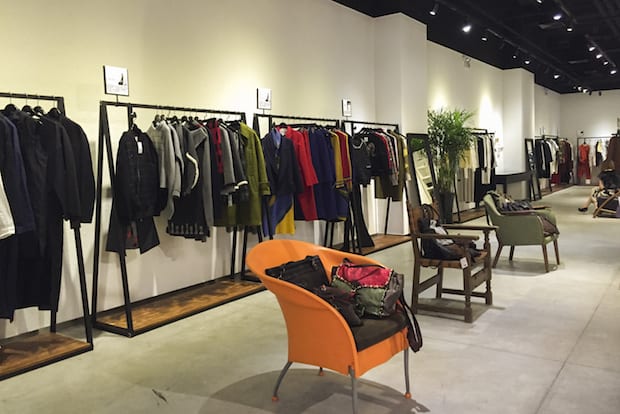
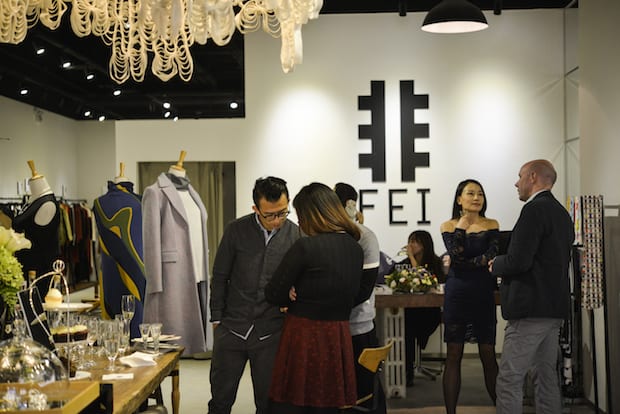
    Formerly located in 798 Art District, Fei Space is a culmination of local designers and stylish brands from around the world. Shoppers may also recognize the boutique for its pop-up store in Beijing’s U-Town mall that featured past-season collections from Topshop and Topman. Now that the official Topshop has opened in Galeries Lafayette (see below), the new Fei Space now is primarily focused on Chinese independent designers and some casualwear, such as Beijing-based American workwear brand Taciturnli and Shenzhen designer VMajor. It’s located in the Grand Summit mall, an evolving shopping center in the capital’s embassy district that includes a multitude of high-end Chinese boutiques and local health food chains aimed at the discerning shopper.

    Triple Major Beijing

    triple_major

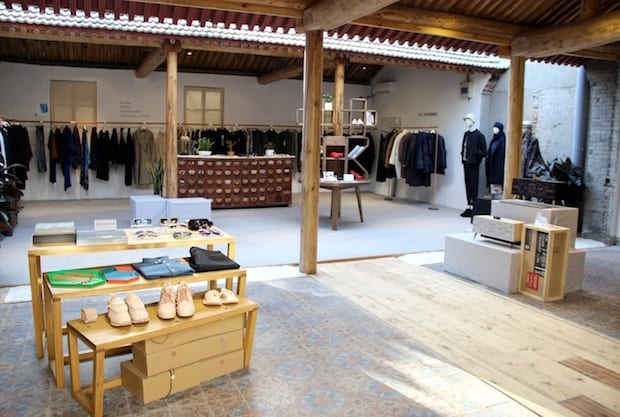
    The year was off to a good start as far as openings go—Triple Major wowed media with its expansive new store in Beijing’s developing Dashilar district, which was designed in part to reflect the building’s former use: a Chinese pharmacy. Owner Ritchie Chan moved the concept store featuring both international and local brands from its home in Beijing’s central hutongs to an area that’s quickly transforming into a hub for young creatives with no shortage of locally-owned third-wave coffee shops, art galleries, and small, artisan boutiques.

    Topshop at Galeries Lafayette

    The new Topshop location at Galeries Lafayette in Beijing. (China Daily)

    The new Topshop location at Galeries Lafayette in Beijing. (China Daily)

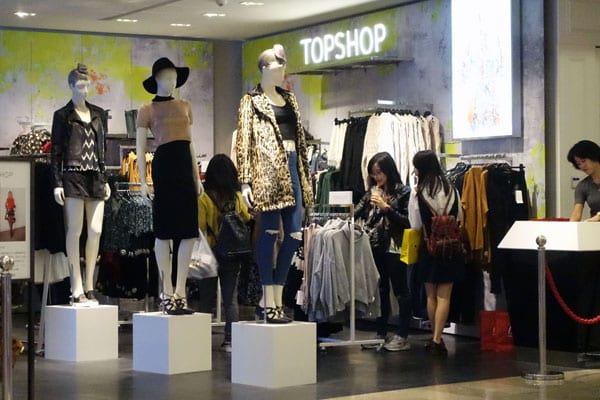
    Topshop has been open in Hong Kong for a few years, but only this year has the brand decided to put roots in the mainland, namely in the French department store Galeries Lafayette, a mall that has been struggling to attract shoppers in Beijing’s Xidan area. This version is tiny compared to its flagship and blends in on a floor mainly reserved for Asian independent labels.

    Tommy Hilfiger

    Tommy Hilfiger (L) with socialite Olivia Palermo (R) at the brand's new store opening in Beijing. (Tommy Hilfiger/Facebook)

    Tommy Hilfiger (L) with socialite Olivia Palermo (R) at the brand’s new store opening in Beijing. (Tommy Hilfiger/Facebook)

    Tommy Hilfiger kicked off opening its largest store in Beijing’s In88 shopping center with a football-themed runway show in the spring, hoping to gain Chinese fans by pushing an all-American aesthetic.

    JNBY Concept Store

    A look from JNBY's latest collection. (Courtesy Photo)

    A look from JNBY’s latest collection. (Courtesy Photo)

    The JNBY Concept Store is nothing new outside of China, but Beijing gained its first in the new Grand Summit mall this year along with an art exhibit in cooperation with Beijing’s UCCA to kick things off. Fans of the international, Hangzhou-born brand that’s known for supporting independent Chinese designers with high-end clothing for adults and children also get a selection of contemporary jewelry and handbags and artisan chocolate.

    Macy’s (Tmall)

    Macys

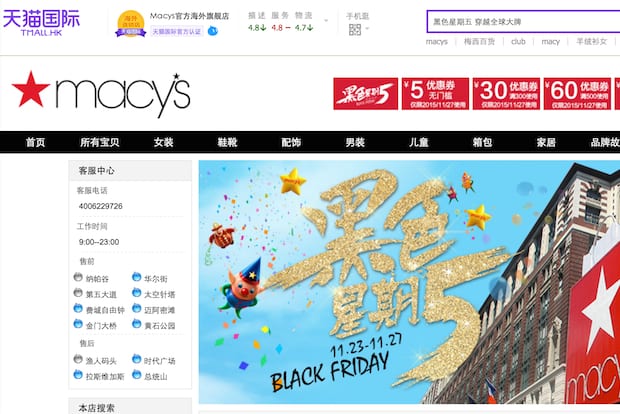
    Macy’s entered China this year on more official terms when it opened its shop on Alibaba Group’s Tmall, becoming the first U.S. department store to do so. It steered away from opening a brick-and-mortar shop, unlike its competitors who have done so and struggled, like the UK brand Marks & Spencer. M&S closed a chunk of its stores in Shanghai and instead opened a brand new space in Beijing’s business district shopping center, The Place.

    Michael Kors

    Model Ming Xi makes an appearance at the Michael Kors opening in Beijing. (Michael Kors/Facebook)

    Model Ming Xi makes an appearance at the Michael Kors opening in Beijing. (Michael Kors/Facebook)

    Huamao Shopping Center in Beijing acquired a 9,000-square-foot Michael Kors flagship store last month, which was celebrated with a photo exhibition done in collaboration with Vogue China. The new shop is now the largest in Asia, followed by the Shanghai flagship that opened last year alongside a high-profile campaign to attract jet-set Chinese consumers.

  • Bridgestone pulls out of bidding war for Pep Boys

    Bridgestone pulls out of bidding war for Pep Boys

    Japanese tire maker Bridgestone Corp said it would not counter Carl Icahn’s raised offer to buy Pep Boys – Manny Moe & Jack, ending a bidding war for the U.S. auto parts retailer.

    Icahn sweetened his offer for Pep Boys for the second time to $18.50 per share on Monday, after Bridgestone raised its bid by $1.50 to $17 per share on Dec. 24.

    Pep Boys said on Monday Icahn’s latest offer was superior to the deal it accepted from Bridgestone, and moved to terminate its agreement with the Japanese company.

    Icahn, whose latest bid values Pep Boys at about $1 billion, had reported a 12.12 percent stake in Pep Boys earlier in December and said the company’s retail automotive parts business would be a perfect fit for Auto Plus, a competitor he owns.

    The auto parts retailer has been on the block since June, when it said it was considering selling itself as part of a strategic review.

    Bridgestone had said on Oct 26 that it would buy Pep Boys to boost its retail network by more than a third in the United States.

  • Score Alarm Plans to Expand from Germany to Asia

    Score Alarm Plans to Expand from Germany to Asia

    Score Alarm, a start-up from Zagreb, has become the official technology platform used by mobile applications for Oddset, the most popular sports betting service in Germany. It is a service which is offered by almost all lotteries in Germany and is represented at more than 15,000 retail outlets, reports Poslovni.hr on December 26, 2015.

    Ivan Klarić, the founder and director of Score Alarm, said that he was pleased with the latest success of his company. “Now we can truly say that we do business with German lotteries, given that they are the ones which distribute the Oddset service whose mobile applications are running on our platform”, Klarić said. He added that currently they have eight large corporate clients, including Bet Live, the biggest provider of gaming services in Bosnia and Herzegovina, then the Romanian Casa Pariurilor and Hungarian state lottery Szerencsejatek. With these clients, Score Alarm has become a platform used by more than 250,000 end users. By the end of 2016, they expect the number of end users to exceed one million.

    Klarić explained that he could not go into details about his customers, but did say that the applications which are being used in Germany have been downloaded several thousand times and are achieving high growth. “The German market is one of the most valuable in the industry, and Oddset – Die Sportwette is one of the first and most recognizable sports betting games in that market. Together with new clients and technological solutions which we are going to present soon, that will enable us to reach a million end users of our platforms in 2016″, Klarić said.

    Score Alarm began its expansion in spring of 2012. A mobile application which displays results of sporting events appeared on Google Play and AppStore at a cost of two dollars. Six months later, Score Alarm already had more than 13,000 paying customers and the Croatian Lottery expressed its interest. For 250,000 kuna, it bought exclusive rights to the Croatian market for a year. Cooperation was continued in the following years, and Score Alarm in the meantime transformed from an application for end users into a platform, a specialized IT system for large national lotteries and other companies offering sports betting services.

    Klarić said that he expected that most of the growth in the sports betting industry in the next few years will switch to mobile platforms. This represents an opportunity for Score Alarm to become the market leader in this new and rapidly growing industry. He added that they are now preparing for the ICE conference in London next year, which is the largest annual gathering of gaming industry. “Once we achieve good results in the European market, we want to spread to Asia, where there are opportunities in the Far East, and to Africa, where there is also interest for our platform”, Klarić concluded.

  • Amazon is Secretly Testing Air Cargo Operations

    Amazon is Secretly Testing Air Cargo Operations

    Amazon.com, Inc. has been conducting secret trial flights that have carried thousands of packages to and from its fulfillment centers in the United Kingdom. Evening Standard reports that the tech-giant has chartered a Boeing 737 aircraft, which has been flying on routes between Poland, Germany, and England since mid-November.

    The online-retail giant has reportedly chartered the aircraft from DB Schenker, a German logistics company. Five weekly flights have been determined so far, on which the planes travel first from Katowice, Poland to Kassel, Germany. Katowice and Kassel are both significant stops, as the airports in these towns are within close proximity of the e-commerce giant’s huge warehouses in the two countries, respectively.

    The flight then continues from Germany to England, where the plane finally lands at one of the airports in Luton, Doncaster or East Midlands. The packages are dispatched from these airports to Amazon’s various fulfillment centers, including its biggest one at Dunfermline and another in Hemel Hempstead. The company is also rumored to extend the trials by chartering more planes and include its centers in Italy and Spain in this network.

    The move highlights Amazon’s urgency to limit reliance on traditional courier firms. The company has already built its own van delivery fleet in the UK this year, after one of its couriers, CityLink, went bankrupt. On a global-scale, the company has locked horns with its chief carrier UPS. Amazon provides business worth around $1 billion to UPS, but its dissatisfaction has risen due to the increasing shipment charges. Shipping cost has increased 10.4% in a year, compared to revenues growth of 11.7% in the same period.

    This means generating higher revenues did not have the expected positive impact on earnings, if supply chain costs had been further streamlined. Amazon was further unhappy with UPS services, when during last two Christmas periods the courier services was unable to deliver consumer packages on schedule, due to delivery overload. Consequentially, the e-commerce giant has sought to build its own distribution network to restrict costs, and have more control over its distribution network.

    Even within the US, recent reports suggest Amazon is looking to lease 20 Boeing 767 freight aircrafts. While these are positive cost control strategies for the online-retail firm, its air cargo expansion spells trouble for traditional freight carriers such as UPS, FedEx, and DHL. These couriers will likely lose a great chunk of business when Amazon starts carrying its own inter and intra-continental freight.

    An Amazon spokesman was quite tight-lipped when the Evening Standard asked for a comment over the European flights, and did not reveal information beyond the fact that the retail-firm employs various distribution and fulfillment modes, including air transport. No other official statement was made by the company.

  • Kulon Progo Airport construction to kick off in May

    Kulon Progo Airport construction to kick off in May

    The construction of an international airport in Kulon Progo district, Yogyakarta province, will kick off in May 2016, Vice President M. Jusuf Kalla has hinted.

    “God willing, it will be built starting May. Hopefully, land clearance and design will be completed in May so it can be completed in 2019 or 2020,” he said after holding a closed-door meeting at Congot Radar in Kulon Progo, Saturday.

    All serious problems related to the planned construction of the airport have been resolved so that the project can be started soon, he said.

    “There are no longer any land problems. The Yogyakarta governor has ordered (his staff) to resolve them. Furthermore, state airport operator Angkasa Pura I is also ready,” he said.

    The funds needed to construct the airport will come from Angkasa Pura Is budget and the company will cooperate with foreign parties to build and manage the airport, he said.

    The project will also include the construction of roads and railway tracks. In the initial phase of the project, an estimated three thousand workers will be employed, he said.

    After holding a closed-door meeting for nearly one and a half hours, the Vice President and his entourage observed the planned location for the construction of the airport from the third floor of the Congot radar.

  • Kuta tourist area needs reform and management

    Kuta tourist area needs reform and management

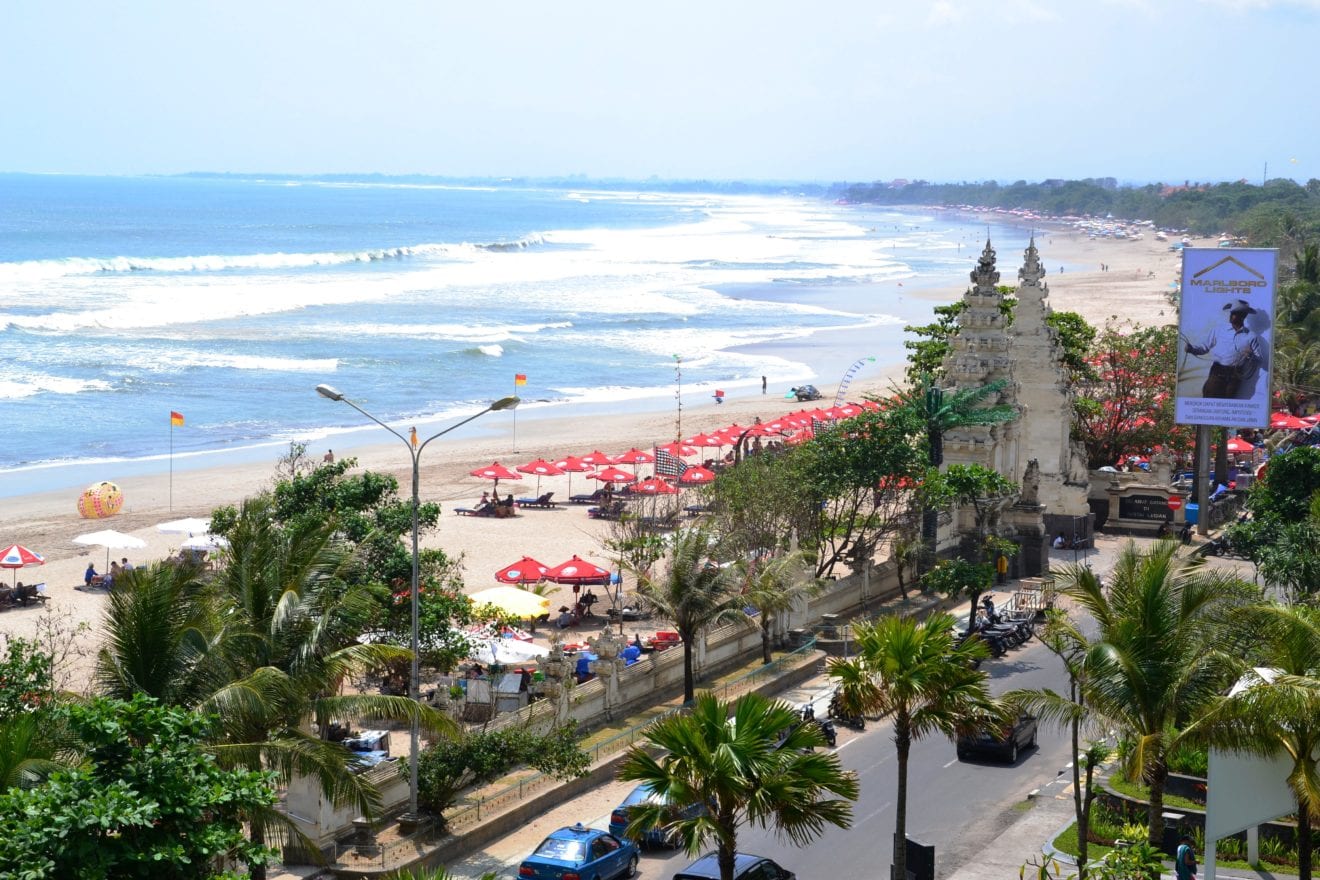
    The tourist region of Kuta, in the Indonesian island resort of Bali, in 2016 needs reform and management in various supporting sectors such as traffic management and environmental hygiene, according to tourism practitioner Nyoman Sarjana.

    “The Kuta tourist area will face a great challenge in the future because from year to year the traffic there continues to get crowded. Therefore, the government and stakeholders in the tourism sector should all move to improve tourism in Bali, particularly in Kuta,” Nyoman remarked here Friday.

    If the iconic tourism of Bali is not properly managed, it is feared that the tourists will be bored of coming to Kuta and find another destination instead, he noted.

    a”It is because other areas in Indonesia are also managing their tourist attractions to attract more tourists,” Nyoman said, and added that foreign tourists who come to Bali feel comfortable and safe, and therefore this factor should be the priority while developing tourism.

    “Indeed, Bali is famous for art and culture since the ancient times. However, if it is not accompanied by comfort and security, domestic and foreign tourists will look for the other tourist attractions outside Bali,” he went on.

    In addition, the government and stakeholders should pay attention to hygiene, because the presence of garbage is in the spotlight in the world of tourism, he noted.

    “We have to find the solution to overcome the garbage problem in Bali, and all parties must be concerned about the environment,” he said.

    Furthermore, all parties should make every effort to keep the island resort of Bali clean and green, he added.