Author: Mei Ling Tan

  • Ice-Watch expands into east Malaysia

    Ice-Watch expands into east Malaysia

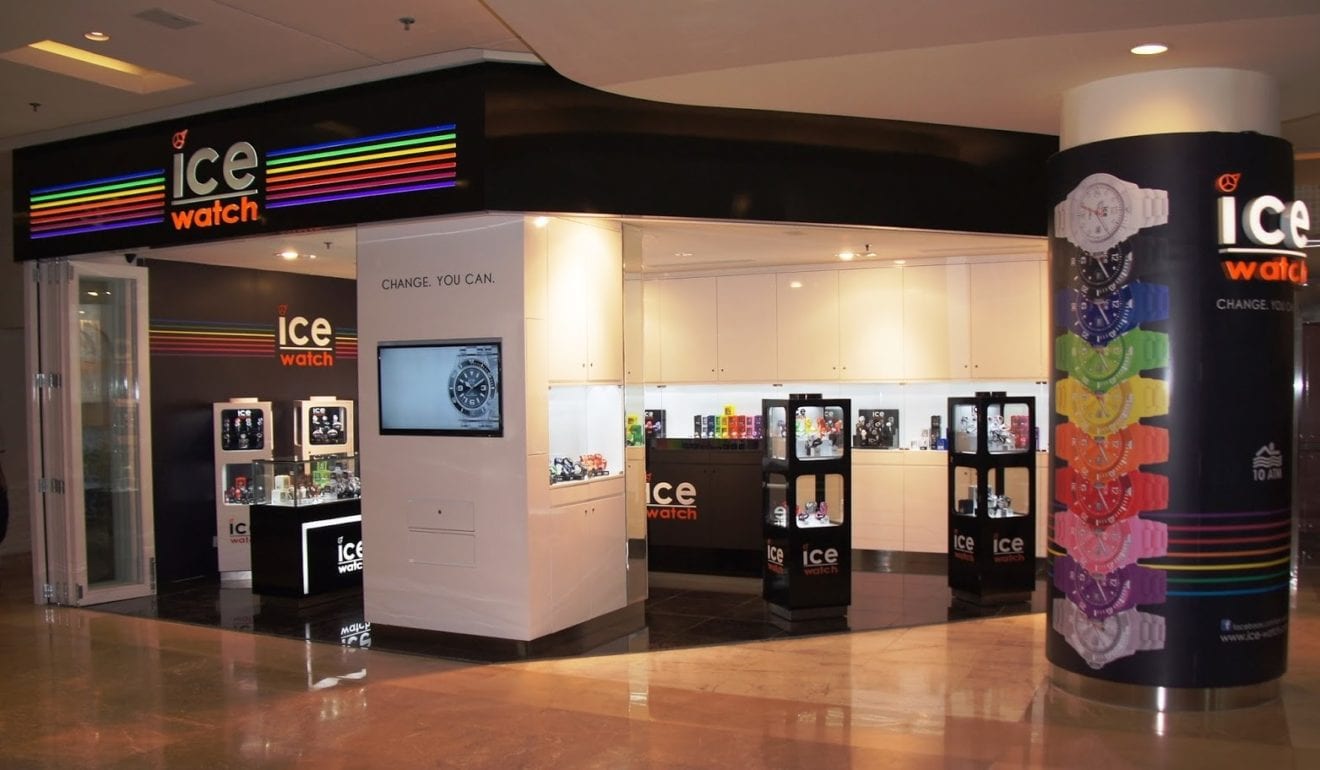
    Belgian watch brand Ice-Watch has opened its first store in east Malaysia, at Vivacity Megamall in Sarawak.

    It marks the retailer’s 15th gallery in the Malaysian market, showcasing the brand’s wide range of collections and its novelty timepiece line Ice City, which combines a modern design with an ultra-slim steel case and a pared-down dial.

    Ice-Watch Malaysia chairman Datuk Seri Meer Sadik Habib said the brand has grown rapidly since it launched in the country just last year.

    “This is our first shop in east Malaysia, so it’s something very exciting for us,” he said at the opening ceremony.

    He said Ice-Watch is “a strong, young brand” which cuts across age, style and background, appealing to a broad customer base.

    “With its accessible price, multiple colours and design combinations, our highly versatile brand allows you to switch watches based on your outfit or mood.”

    He believes the company’s moderate price points had helped it ride out Malaysia’s tumultuous retail market post April 1’s introduction of GST.

    “People still want to buy, so instead of buying something very expensive and exclusive, you get something with a brand but reasonable in price,” he said.

  • Used phone chain launches in Seoul subway stations

    Used phone chain launches in Seoul subway stations

    Stores purchasing used cell phones are set to open at Seoul subway stations.

    Seoul Metro, which manages lines No.1 to No.4, says it will open stores that buy used mobile phones at 12 subway stations including Seoul Station, in a bid to stop wasting resources and promote reusing and recycling.

    The new businesses will pay rent to Seoul Metro as well as a commission per phone of at least 7660 won (US$6.50) including VAT. During the contract period of two years, which is the standard agreement period per store, it is expected that 28,800 phones will be purchased.

    Seoul Metro has stipulated the businesses will only be permitted to purchase used phones, and the contract will be invalidated if other forms of business are conducted or the location of the store is changed.

    Clauses forbidding the sale of other items at the store, and limiting the opening hours to within the subway’s hours of operation will be added to the contract.

    However, due to the strict conditions, Seoul Metro is having a hard time attracting investors for the new business.

    Seoul Metro officials emphasised they are starting the venture to strengthen their management efficiency and enhance the convenience of customers. The additional business could be a countermeasure to overcome the organisation’s chronic deficit.

    The selected stations are Dongdaemun Station, Seoul Station, Chungjeongno Station, Sindorim Station, Sillim Station, Seolleung Station, Wangsimni Station, Jongno 3(sam)-ga Station, Oksu Station, Express Bus Terminal Station, Mia Sageori Station and Sadang Station.

  • Study reveals Asian dining spending trends

    Study reveals Asian dining spending trends

    One in three millennials in Asia are eating at fine dining restaurants at least once a month – more often than those aged over 30.

    The surprise finding is one of a list of revelations uncovered by a MasterCard survey of Asian dining trends away from home. It featured consumers in 17 Asia Pacific markets: Australia, Bangladesh, China, Hong Kong, India, Indonesia, Japan, Malaysia, Myanmar, New Zealand, Philippines, Singapore, South Korea, Sri Lanka, Taiwan, Thailand and Vietnam.

    The most frequent fine-diners in Asia Pacific are millennials (18-29 year olds) from China – on average they visit more expensive establishments two or three times a month. This is higher than the average for millennials across the region and higher than any other age group.

    When choosing where to eat, consumers in Asia Pacific still prefer to rely on word of mouth and recommendations from friends and family (50 per cent). This was applicable for all consumers, regardless of age group, with even millennials trusting word of mouth recommendations (52 per cent) more than online reviews (38 per cent).

    This is despite the fact that more than a third of millennials (36 per cent) post comments and reviews of their dining experiences online. This is especially true of Chinese (61 per cent) and Thai (52 per cent) millennials, where more than half of the young people polled regularly post reviews after a meal.

    Beyond millennials, people in Thailand (39 per cent) and China (30 per cent) are also the most likely to spend more on dining over the next six months with around one in three indicating they plan to eat at more expensive establishments.

    But while consumers may be enjoying fine dining, they are still cost conscious. Sixty-four per cent of consumers in Asia Pacific regularly check for discounts or dining deals from coupon websites, mobile applications or credit card promotions. Sixty-eight per cent of millennials regularly look out for deals before choosing a place to eat.

    Eric Schneider, regional head, Asia Pacific, with MasterCard Advisors, said Asia has always had a strong dining out culture and so it is not surprising that affluent millennials in the region are ‘foodies,’ with many sharing their dining experiences on social media and posting reviews online.

    “While the survey has shown that people are increasingly moving from the hawker centres and into restaurants, young people are still cost conscious, taking a practical and savvy approach by looking for discounts and deals. Young people also still rely on word of mouth recommendations, despite many posting online reviews of dining spots. As Asia’s economies continue to grow, and with technology and social media revolutionizing the dining experience, people will increasingly demand top quality experiences when dining out,” he said.

    Other findings from the survey included:

    • Overall, consumers in Asia Pacific are not looking to make any significant changes to their dining out plans with 61 per cent of all consumers indicating they will look to eat out at the same frequency in the next six months. Twenty per cent plan to eat out more and 19 per cent plan to eat out less in the next six months.
    • The most popular dining option for consumers in Asia Pacific are mid-range restaurants and cafes, followed by fast food outlets and then hawker centres and food courts.
    • Consumers in the Philippines (44 per cent) are looking to tighten their belts with close to one in two planning to eat at less expensive venues in the next six months. Forty-nine per cent also plan to eat out less regularly.
    • A significant proportion of older consumers are going online to check for dining discounts whether on coupon websites/applications or credit card promotions. More than one-third of consumers aged 55 years old and above (36 per cent) indicated they regularly do so before deciding on a dining option.
    • Consumers in China (58 per cent), Taiwan (44 per cent) and Thailand (44 per cent) are the most likely to book dining deals on coupon sites or coupon applications; while consumers in Bangladesh (1 per cent) and Indonesia (11 per cent) were least likely to do so.
    • Diners in Thailand (60 per cent) and China (57 per cent) are most likely to post comments or reviews on social networking sites like Facebook and Twitter with about one in two respondents in these markets reporting that they regularly post comments online following their dining experience.

    The results are based on interviews with 8698 individuals aged 18 to 64 years-old.

  • Omnichannel marketing from a Chinese perspective

    Omnichannel marketing from a Chinese perspective

    If you have been paying attention to developments in the e-commerce world, it’s unlikely that you have missed the news about the outcome of Singles’ Day.

    Chinese e-commerce giant Alibaba recorded US$14.3 billion in sales on Nov. 11, eclipsing the most recent Black Friday shopping event in the United States, which only saw US$10.4 billion in sales.

    Data from the China Internet Network Information Center shows that China has the world’s largest online population at 632 million people, and more than half of them, about 332 million, shop online.

    Business-savvy Chinese retailers have not been shy on tapping into this massive pool, and their momentum has not shown any sign of slowing down.

    According to iResearch, China’s online sales could reach 5.63 trillion yuan (US$867.1 billion) by 2017, or 15.7 percent of the country’s total retail sales.

    The massive online market, especially in China, has lured many traditional retailers into establishing their own online channels, while interestingly, many pure-click retail businesses in China have also started to establish an offline presence with brick-and-mortar stores.

    We refer to this strategy of leveraging both online and offline platforms to market a brand as “omnichannel marketing”.

    This approach is becoming increasingly popular in recent years, especially with smartphones becoming a staple of modern life.

    More and more retailers are seeking ways to unify the whole ecosystem, both technologically and logistically, with a view towards giving customers a mobile seamless interface to every service that the mall or retailer has to offer.

    With the view that an effective omnichannel marketing strategy will help boost sales, improve brand recognition and strengthen customer loyalty, here are some tips for retailers yet to devise their own strategies to get a head start:

    1. Mobile devices are your friend

    It’s safe to assume that the majority of your customers own at least one smartphone. They’re the perfect gateway for you to communicate with your customers. First and foremost, make sure your online presence is mobile-optimized so that your customers get the best experience even when they’re on the road. Other things you can do to improve your brick-and-mortar shopping experience include making available an in-store map and letting customers check for stock while they’re connected to the Wi-Fi on-premises. Explore your options to interact with your customers meaningfully on mobile.

    2. Understand your customers 

    There are many products widely available on the market to help you capture data about your customers. By analyzing the data with the right tools, you can get insights into your customers’ behavior to help you devise future sales strategies that are more attuned to your customers’ interests.

    3. Tailor your content

    Make good use of the insights gleaned from your Big Data analytics to tailor your communications content. Retailers who exploit mobile channels to disseminate generic marketing materials risk alienating their customers, while who those who make good use of their understanding towards their target audience and develop personalized content will win the hearts, and purses, of shoppers.

    While there are a lot that can be done in omnichannel retailing, retailers should also keep in mind the importance of having a robust mobile engagement solution when pursuing different omnichannel strategies.

    One of the first steps a retailer should take is to find the right technology partner. There are many successful cases across the Greater China region.

    In China, for example, Wanda Group partnered with Aruba to improve the retail shopping experience in over 50 shopping malls through improved mobility.

    Bauhaus, on the other hand, deployed Aruba’s solutions in its stores in Hong Kong and Macau to provide Wi-Fi to its customers and push out relevant, personalized content such as new arrivals and discount offers.

    All these bring unprecedented experience to customers. When you combine location services with Wi-Fi and beacon technology, customers have a magical experience while retailers gain more loyal and engaged visitors who have a higher propensity to return and spend more.

    We are entering the Mobile Engagement 2.0 era. For retailers without a sound omnichannel marketing strategy, especially those who haven’t made it online for fear that their efforts would be overshadowed by established e-commerce companies, it’s not too late to start.

  • The McDonald’s of the future has opened in Hong Kong

    The McDonald’s of the future has opened in Hong Kong

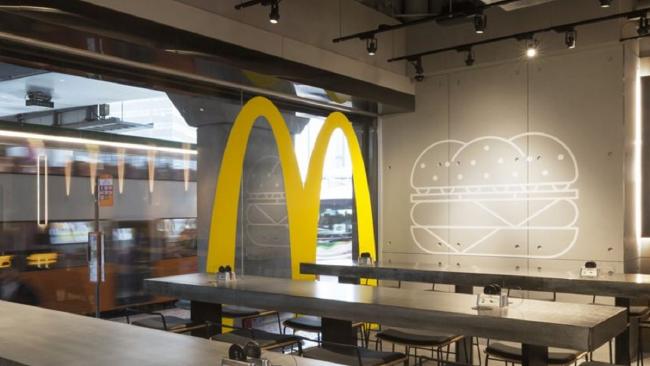
    Neutral, modern look … inside the McDonald’s Next store in Hong Kong. With mood lighting and a much more modern menu, this restaurant has been hailed as the McDonald’s of the future.

    The fast food chain has opened a new concept store in Hong Kong located near Admiralty Station known as McDonald’s Next.

    The new eatery has been designed by Landini Associates, an Australian-based company, and is said to be “an experiment in non-design” with more neutral colour tones.

    It has moved away from the former design of McDonald’s, which was historically characterised by bold and bright red and yellow colours.

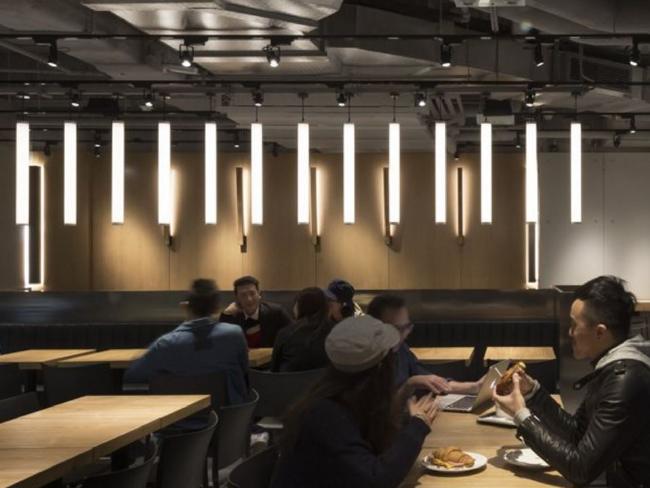
    Instead, the new concept store features concrete tables where diners can enjoy their meals in booths, and on bar stools with communal bench tops.

    “The colourful graphic environments, that became a signature for McDonald’s globally, are now replaced with a simpler, quieter and more classic approach,” Landini Associates posted on Instagram.

    “An experiment in ‘No Design’, the intention is to hero the food, the service and the people who come to enjoy it.”

    New way to dine ... what the new McDonald’s store looks like. Picture: Landini Associates website

    New way to dine … what the new McDonald’s store looks like. 

    The new design has also transformed the kitchen, which is now open for customers to see.

    Staff uniforms have been revamped and the walls are plain and covered in simple graphics including a white outline of a burger.

    Open kitchen ... customers can see food being made. Picture: Landini Associates website

    Open kitchen … customers can see food being made. 

    There are also multiple ways that customers can order a meal. They can order through a member of staff at a counter, use a computerised kiosk, or order at their table.

    The restaurant has the popular Create Your Taste option, where customers can build their own burgers.

    There is also a bar where salads, desserts and drinks can be bought.

    Customers can also access wireless charging for their devices including laptops and smartphones at the tables inside the eatery.

    News of the new concept store being introduced comes after the world’s biggest Macca’s — located in Orlando, America — is set to close its doors in 2016.

    A new 19,000 square-foot McDonald’s building will replace the current premises that was built in 1976 and features a bowling alley.

    The new building will feature a two-lane drive through and a self-order kiosk for customers to build their own burgers. It will also boast an exclusive open design pizza and pasta area, and a wood-fire oven.

    The restaurant will continue to sell the famous McDonald’s items, as well as its popular gourmet options.

  • Is E-commerce Threatening Singapore Malls?

    Is E-commerce Threatening Singapore Malls?

    With the advent of e-commerce and online shops selling anything you could ever think about buying, some fear for the safety of the shopping malls that have made Singapore the shopping haven that it is famous for.

    There have been a number of cities where e-commerce has overtaken the physical means of shopping. However, in-depth research into the shopping behaviors and statistics of Singaporean shoppers prove that the physical shopping stores’ performance has improved and that they are here to stay with e-commerce actually augmenting sales.

    There are 4 main reasons why experts think that shopping malls will still be standing strong in Singapore.

    Online and Offline Retail Worlds are not Really Competitors

    Singapore is no different from all other countries in the world. With the advent of the digital age, its e-commerce sector is booming. Boasting staggering growth of nearly 50% in the past two years, the online retail market in 2015 is estimated to be SG$4.4 billion.

    The much smaller e-commerce retail scene might be showcasing incredible growth rates, but the physical in-store sales comes out to be the champion in this matchup.

    An enormous market valued at SG$52.4 billion in 2015, in-store retail sales have shown strong CAGR growth of 8.3% over the past two years and shows no signs of stopping.

    To put things into perspective, at this moment, only 4% of household spending is done online in Singapore

    Singapore’s E-commerce is Still at a Premature Stage

    Singapore is home to a very late e-commerce scene. Relative to other countries such as US and UK, much fewer things are done online. The research looked at three key metrics to measure how advanced a country’s e-commerce is.

    First, only 49% of Singaporeans book their flights online, falling way behind the UK’s 80%.

    Secondly, the proportion of hotel bookings was examined. In comparison to the US’ 73%, only 40% of Singaporeans are using the internet to book their hotel rooms.

    Lastly, apparel purchases online are at an alarmingly low 4% of all purchases. This is a significant indicator because the majority of online shops on the market are selling apparel.

    Shopping is a Huge Part of Singaporean Culture

    According to Letty Lee, CBRE’s Retail Director and an expert on real estate in Singapore, “Singapore is a shopping nation. Shopping isn’t just about buying something, it is about socializing and experiencing.”

    Singapore as a nation has developed its shopping culture to an extent that many of its citizens prefer spending the time in malls rather than just quickly browsing on the internet. It is not only about the purchases consumers are making but the experience of “shopping” they’re after.

    85% of all Singapore denizens shop in stores at least once a month compared to 49% of those who shop online.

    In fact, to put things into perspective, Singapore has twice the retail space per person than Australia even though it is 10,000 times smaller.

    Physical Stores Have Irreplaceable Features

    There are some things that the internet and all the technology in the world will never replace. And those are the advantageous features that malls offer.

    In addition to physically being there, malls offer the shoppers the opportunity to socialize with their fellow shoppers, dine with their friends, and enjoy the atmosphere of a mall which cannot be replicated for a person just browsing through the net.

    The Omnichannel Shopping Experience

    The management of the malls themselves are aware of the fact that they will still be here to stay for some time and are looking for ways to augment the strength of the malls with the technology of the online shops to create an “omnichannel” integrating both online and offline shops.

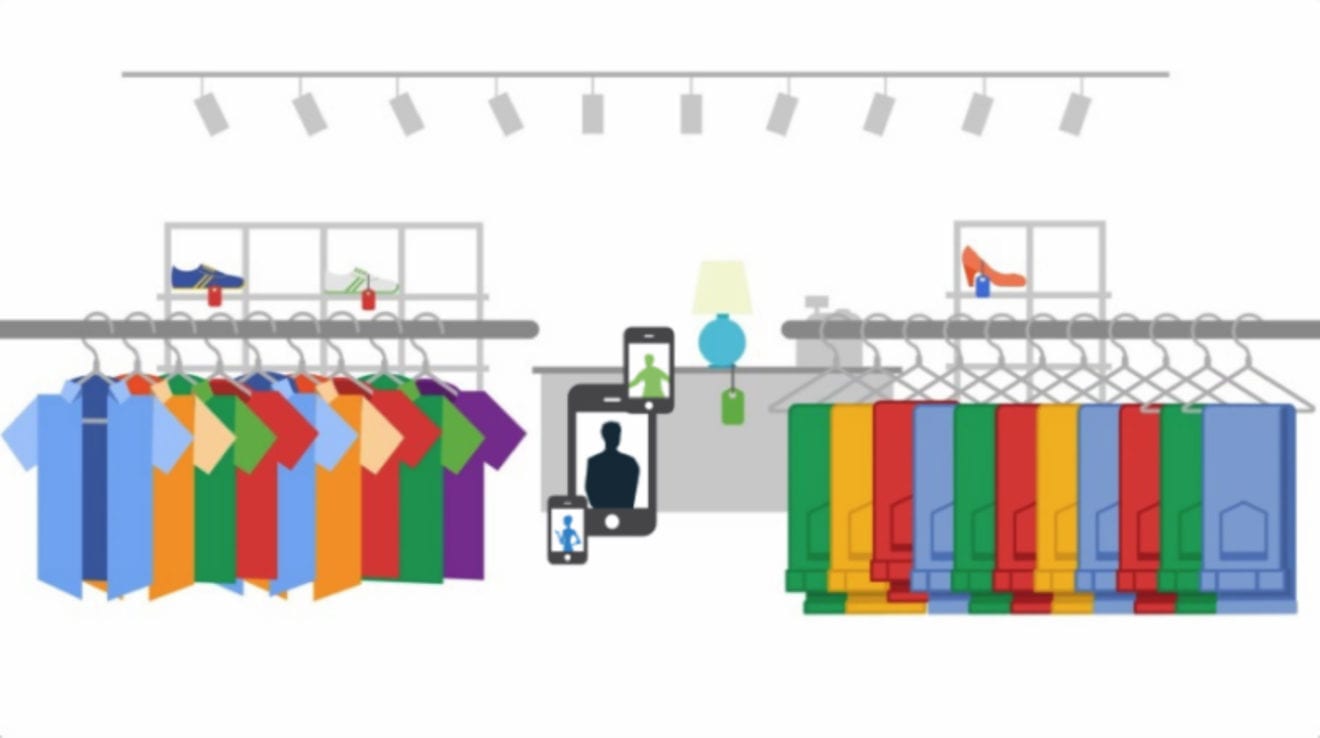
    Some of the things that they have started include but are not limited to, Magic Mirrors where a shopper can virtually try on items, and “click-and-mortar” stores in which store items are tagged with a QR code that shoppers can scan and add to their online shopping carts for later buy.

    E-commerce may be disruptive to physical stores in other places, but in Singapore it’s here to improve the shopping experience in both online and offline stores.

  • Hong Kong Retail Slows as Mainland Tourists Stay Away

    Hong Kong Retail Slows as Mainland Tourists Stay Away

    Hong Kong, once a shopping mecca for mainland Chinese seeking Swiss watches and luxury handbags, is on track to record its biggest annual decline in retail sales since the outbreak of Severe Acute Respiratory Syndrome, or SARS, in 2003.

    The city may also post the first annual decline in mainland tourists since it started allowing individual visitors from China, also in 2003, prompting calls for extensive diversification of the tourism trade—a key pillar of the city’s economy.

    Chinese tourism spending has been the main driver of retail and commercial property-sector strength in Hong Kong in recent years, as the number of mainland tourists shot up. During the boom, long lines outside the city’s numerous Louis Vuitton, Chanel and Gucci shops were commonplace, as luxury goods sold in Hong Kong were up to 40% cheaper than in China.

    Those lines have largely disappeared as inflows of Chinese tourists slowed. The number of Chinese tourist arrivals was 15.4% lower in November compared with a year ago, the steepest decline all year, extending the year-to-date fall in Chinese visitors.

    Hong Kong’s tourism commission acknowledges that the city’s tourism industry has “entered a consolidation period” after a decade of growth, and says it is now targeting “high-spending overnight visitors” from other markets to help fill the city’s myriad shopping malls and hotel rooms.


    ENLARGE


    Meanwhile, retail sales in the formerly-bustling shopping hub have fallen for eight straight months on lower tourist spending, with total retail sales down 2.7% year-over-year for the first 10 months of 2015. That is steeper than the 2.6% decline recorded in 2003, when tourists shunned Hong Kong for several months during the SARS outbreak.

    In October, Hong Kong saw a 38.5% drop in sales of Swiss watches, said the Federation of the Swiss Watch Industry. Other brands, like Chanel, went the unusual route of slashing the price of an iconic bag by over 24% in Hong Kong, among other rare discount offers, in a sign of the trying times.

    “The ‘luxury supermarket’ image is no longer attractive” for Hong Kong, said Clement Kwok, chief executive at The Hongkong and Shanghai, owner of the city’s iconic Peninsula Hotel. The Peninsula Hotel saw occupancy rates drop 3% in the third quarter from a year earlier.

    “There is an urgent need for a new marketing campaign to rebrand Hong Kong as a dynamic, exciting and relevant modern city,” said Mr. Kwok.

    Luxury sales began their decline in late 2013 after Beijing started cracking down on corruption and conspicuous consumption. The slump has spread to mass market retailers this year as the Chinese economy slowed. Milan Station, a vendor of secondhand handbags, said revenue in its Hong Kong shops fell over 28% in the first half of the year, while cosmetic retailers Sa Sa and Bonjour reported revenue declines of 10.6% and 14.4% in the six months ended September and June, respectively.

    Though shop rents and retail prices have dropped, they are still some of the highest in the world and could continue diverting tourist shoppers away from Hong Kong to cheaper prices elsewhere.

    “The city has been very focused on Chinese tourists and shopping, and underinvesting in building new tourist attractions and experiences,” said Mariana Kou, an analyst at brokerage CLSA.

    “Hong Kong needs to transform into a more diversified tourist destination,” she said.

    China’s increasingly mobile and affluent middle class has meant big business for travel-related companies including airlines, travel agencies and luggage makers. And despite a slowing economy and a stock-market collapse this summer, they are projected to spend over $200 billion abroad for 2015.

    While many countries have relaxed visa requirements to attract Chinese tourists, Hong Kong this year tightened visa limits for Chinese visitors from neighboring Shenzhen to one rather than multiple visits a week, amid heightened tensions between the local population and Chinese tourists. Mass protests against Beijing’s encroaching rule last year also kept visitors away.

    The stronger U.S. dollar has also made traveling to Hong Kong more expensive, as the local currency is pegged to the dollar. Destinations with weaker currencies such as Japan and Europe have attracted Chinese vacationers there instead.

    For its part, the Hong Kong government plans to host more large-scale dining and sporting events to boost tourism. It has already committed billions of dollars to develop new cultural and arts venues, and plans new waterfront attractions. It is also in talks to build a second Disneyland theme park.

    But their construction could take years, and it could take a long time for the sites to attract a new, varied crowd. Until then, analysts say Hong Kong retail will likely continue its slump and companies will need new ways to attract business, as they can no longer depend on mainland tourists.

    When Gao Hang, 26, first visited Hong Kong in 2013 she found it a “flourishing, great city.” She visited again in 2014, but this year, the customer service professional from the port town of Dalian opted for a vacation in Europe instead.

    “There’s not that much to do in Hong Kong. One trip is really enough,” she said.

  • Digital Push In China: Can This Impact Starbucks’ Revenues In The Region?

    Digital Push In China: Can This Impact Starbucks’ Revenues In The Region?

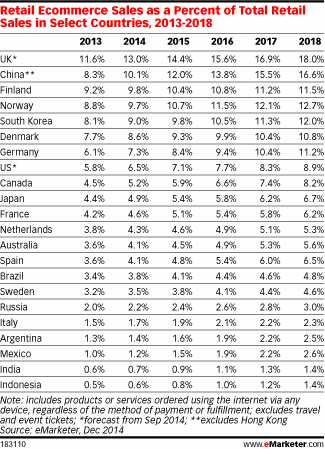
    Recently, Starbucks Corporation China announced the opening of its first online store in China’s popular ecommerce site, Tmall, which will feature unique and specially designed e-cards, Starbucks cards and coffee vouchers providing an easy gifting option. [].While this initiative is part of the company’s increased focus on digital presence, it could tap into the significant growth of retail ecommerce in China. According to eMarketer, retail ecommerce sales in China are projected to grow at more than 30% each year, over the next three years and reach more than $1500 billion by 2018. []. While mobile is expected to account for nearly half of the total ecommerce sales in China in 2015, this figure is expected to increase to 70% by 2019. []. We believe Starbucks’ ecommerce initiative in China should benefit from the growing internet users in the region and the online shopping habits of Chinese consumers.

    More Than 16% Of Total Retail Sales In China Through Ecommerce By 2018

    It is estimated that in 2015, ecommerce sales will account for nearly 7% of the total retail sales in the U.S., while this number is much higher at 12% for China. By 2018, it is estimated that these figures will increase to nearly 9% for the U.S. and more than 16% for China.

    183110

    Given the preference of Chinese consumers towards online shopping, we believe Starbucks’ initiative to expand its digital presence in the region is the right strategy.  China is a growth market for Starbucks. For the fiscal year 2015, comparable store sales in the China Asia Pacific region grew by 9% compared to a 7% number for the Americas. This growth was driven by a 8% increase in traffic while the corresponding number for Americas was 3%. []. The company plans to double its store count in the China Asia Pacific region to 10,000 stores in the next five years, with the store account in China projected to be 3,400 by the end of 2019. As the Chinese economy shifts from an export focussed industrial region to one relying on services and domestic demand, we believe Starbucks will benefit from this trend with the urban middle class increasing and becoming well off. With aggressive expansion plans in China, which the company expects will be its biggest international market; we believe the ecommerce entry could drive growth in the region and also provide a boost to the Starbucks loyalty program.


  • Indonesia’s E-commerce Industry to Double Its Earnings Next Year

    Indonesia’s E-commerce Industry to Double Its Earnings Next Year

    Indonesia’s e-commerce industry is projected to rake in Rp 20 trillion ($1.46 million) next year, double this year’s estimate of Rp 8 trillion to Rp 10 trillion as Internet and smartphone penetration in Southeast Asia’s largest economy continue to rise, according to an industry group.

    Daniel Tumiwa, chief of the Indonesian E-commerce Association (idEA), noted that the country’s ever-expanding pool of middle-class consumers has provided a significant boost to its e-commerce sector, estimating that the number of online shoppers could reach 10 million next year. The continued rise of smartphone usages across the country will also bolster growth, he added.

    “The e-commerce industry is already becoming one of the pillars of Indonesia’s economy,” said Daniel, who’s also chief executive of marketplace platform OLX.com.

    Indonesia is forecast to see some 34 million smartphones shipped into the country by the end of this year, up 21 percent from an initial 2015 forecast of 28 million units, according to information technology research firm International Data Corporation (IDC).

    MatahariMall.com CEO Hadi Wenas separately added that online retail has great potential in Indonesia, forecasting the industry to contribute up to 5 percent of the economy by 2020 from the current 0.7 percent.

    “Since it was first introduced in Indonesia, the industry has continued to grow and it will grow bigger going ahead,” he added.

  • 2015 Indonesia’s blossoming fashion scene

    2015 Indonesia’s blossoming fashion scene

    The year 2015 has been special for Indonesia’s fashion scene — thanks to the rising popularity of local brands.

    Throughout the year, new fashion labels have been popping up, while fashion events have continued to be a paradise for fashion enthusiasts looking for trendy fashion products.

    Fashion observer Diaz Parzada said that this year the country had seen a phenomenal wave of ready-to-wear fashion, which became the main focus of many designers and brands.

    Ready-to-wear has been thriving for the past two years due to its ability to reach a wider audience, and of course, to generate profit.

    “This is a breakthrough as designers are not just people who make clothes but also professional business players that have many doors through which to distribute their works,” said Diaz, who is also the advisor for designer mentoring program Indonesia Fashion Forward and the business development director at the British Council.

    Veteran designers like Biyan Wanaatmadja and Sebastian Gunawan were the first to tap into the ready-to-wear industry, and many young designers are now following their lead.

    Young couturier Tex Saverio, who is known for his high fashion pieces, is one example.

    He launched his second ready-to-wear line, TXID, earlier this year after receiving good responses to his first ready-to-wear line, Tex Saverio Jakarta, and his collaboration with a couple of foreign online ready-to-wear brands.

    “Through ready-to-wear, I want to promote Indonesian fashion to the world. In addition to that, I want to educate the Indonesian market, to teach them that a fashion house should not have only one line,” Tex said.

    Many celebrities and fashion lovers also set up their own fashion ventures this year, offering fashion products at more competitive prices through various online platforms or fashion bazaars.

    However, that online phenomenon has also made the executive director of the Indonesian Fashion Designers Association (IPMI), Tri Handoko, concerned about a paucity of strong design characteristics differing from one brand to another.

    “Most of those new brands offer similar designs; their lookbooks are even similar with no distinct identity visible in their collections,” he said.

    “On one hand, that movement shows support for local fashion, but on the other hand, the creativity level is stagnant to some extent.”

    From left : Obin (JP/Don), Norma Hauri (Courtesy of Jakarta Fashion Week), Major Minor with Eko Nugroho (JP/Don)

    Diaz also voiced the same concern, saying that some designers had shared with him that their designs had been copied by many online fashion sellers.

    “Like it or not, designers have to accept it. But moving forward, they must explore more creative ideas for their new designs while creating powerful campaign strategies to build strong fashion brands,” he said.

    Another highlight of the year came from Muslim fashion, better known nowadays as modest wear.

    Earlier this year international retailers Uniqlo, from Japan, and Sweden’s H&M, launched a campaign to promote modest wear, moves that have been greatly welcomed by Indonesia’s hijab communities.

    Modest wear designer Norma Moi said that 2015 had been a good year for her business and she had recorded a steady increase in demand.

    “My profit increase has been in line with the increase in my resources — around 40 to 50 percent,” Norma said.

    The thriving business of modest wear in Indonesia has prompted the government to aim to make the country the center of Islamic fashion by 2020.

    It is not an ambitious goal, so long as designers continued to innovate.

    “We have to keep innovating and always be creative, making our designs interesting and unique, if we want to be the center of Muslim fashion,” she said.

    But to really realize the plan, the government must also participate by providing designers with proper production supplies, such as materials.

    Norma said many designers, including her, still used imported fabrics due to the quality and availability.

    “There are local textile producers that also make fine fabric, but most of them only want to sell to big retailers that buy in bulk. We don’t have the capacity to make our own fabric yet, so we have no choice but to import,” she said.

    “The producers and the government should understand that there’s also us in this fashion business, not only big retailers.”

    Though modest wear recorded a strong performance this year, other designers saw lower sales from the middle of the year forward.

    Tri said that his business was declining as it entered the second semester, blaming the slowing economy as a key factor.

    Another designer, Sapto Djojokartiko, echoed him, saying that he also saw slower sales in his mid-priced pieces.

    “I’m not sure about the cause, but I have prepared some strategies to improve the whole business next year,” he said.

    As 2015 moved toward the end, Indonesia’s fashion scene was shocked by the resignation of seven senior members of Association of Indonesian Fashion Designers and Entrepreneurs (APPMI), including the chairman who is also the president director of Indonesia Fashion Week (IFW), Ali Charisma, Deden Siswanto and Lenny Agustin.

    Different visions to those of the association is reportedly behind their resignations. As a consequence, those who replace the steering committee of IFW have their work cut out for them to ensure the continuation of IFW early next year.

    “The resignation of APPMI leading members should be a cause for reflection for our fashion scene; what form of fashion association fits the situation today? Or is it still important to have such an association? Regarding whether it will impact our fashion scene or not, we have to wait and see,” Diaz said.

    In 2016, Indonesian fashion products are predicted to remain favorites for fashion enthusiasts who have developed more pride in wearing local designs.

    Indonesian designers will continue to wow the international fashion audience next year as some will participate in prestigious fashion events, such as London and Paris Fashion Weeks.

  • Seoul shares edge up on pharmaceutical, retail gains

    Seoul shares edge up on pharmaceutical, retail gains

    South Korean stocks rose marginally high on Tuesday, propped up by rallies in pharmaceutical and retail companies. The local currency lost against the greenback.

    The benchmark Korea Composite Stock Price Index (KOSPI) added 2.25 points, or 0.11 percent, to end at 1,966.31. Trade volume was thin at 394.49 million shares worth 3.76 trillion won (US$3.21 billion), with winners beating losers 461 to 368.

    The market started lower and moved in and out of positive terrain. Propping up the market are individual investors who picked up about 265 billion won worth of shares, while institutions and foreign investors remained net sellers.

    “The mood remained subdued in the KOSPI market as investors locked in taking profits from gains prompted ahead of the ex-dividend date when shares lose the right to receive dividends,” said Kim Hyung-rae, a KDB Daewoo Securities analyst.

    Large-cap shares ended mixed, with pharmaceutical companies leading the upward move.

    No. 1 drug maker Hanmi Pharm jumped 14.46 percent to 736,000 won, while Green Cross gained 4.91 percent to 181,500 won. Furniture maker Hansem surged 6.73 percent to 238,000 won.

    Banking and steel issues weighed on the market. The Industrial Bank of Korea shed 5.26 percent to 12,600 won, while steelmaker POSCO fell 3.69 percent to 169,500 won.

    Telecom giant SK Telecom plunged 6.52 percent to 215,000 won following media reports over the SK Group chairman’s planned divorce with his long-estranged wife, which prompted uncertainty over its corporate governance.

    The local currency ended at 1,169.6 won against the greenback, down 4.2 won from Monday’s close.


  • Indonesia’s Tourism Growth Exceeds Target

    Indonesia’s Tourism Growth Exceeds Target

    Tourism Minister Arief Yahya said that the tourism sector had contributed 4.23 percent to Indonesia’s gross domestic product (GDP). The number exceeds the four percent target set by the government. As for labor absorption, the sector managed to absorb 12.16 million laborers from the intial target of 11.3 million.

    “Overall, policies in the tourism development in 2015 were on track and we could achieve our targets,” said Arief Yahya on Wednesday, December 30, 2015.

    Arief estimated that Indonesia’s tourism growth by the end of 2015 could reach 5.81 percent, which is higher compared to other ASEAN countries, such as Malaysia, which experienced negative growth of 9.43 percent from January to June 2015.

    Singapore and Vietnam also suffered negative growth from January to October 2015 with 0.09 percent and 1.27 percent, respectively. Thailand, on the other hand, experienced 22.34 percent growth from January to November 2015.

    “From our major tourist destinations compared with those in neighboring countries, we can see that Indonesia has a large tourism potential, but it hasn’t been fully harnessed,” said Arief.

  • Indonesia’s Muslim women hail female-only motorbike taxis

    Indonesia’s Muslim women hail female-only motorbike taxis

    Female motorbike taxi drivers in headscarves zig-zag through heavy traffic in the Indonesian capital Jakarta, the latest two-wheeled transport service for women making a dent in the male-dominated world of ride-hailing apps in the Muslim nation.

    A flurry of new motorbike taxi options have in the past year appeared in the metropolis of 10 million, led by popular service Go-Jek, giving Indonesia’s growing middle class a greater choice of transport to get through some of the world’s worst traffic jams.

    The services — many inspired by ride-sharing app Uber and accessible on smartphones — are a challenge to traditional motorbike taxis in Indonesia, known as “ojeks”, which are ubiquitous but have drawn criticism with their dishevelled, dangerous drivers and unpredictable pricing.

    Several services with women drivers entered the market in 2015 after years of growing piety in Indonesia, which has the world’s biggest Muslim population, and amid heightened safety concerns following reports of attacks on women by male motorbike taxi drivers.

    Popularly known by its nickname “Ojesy”, it is the service that aims most clearly at devout female passengers, requiring its drivers to be Muslim women wearing headscarves and loose-fitting clothes.

    Ojesy drivers can currently only be hailed by a phone call or through mobile messaging service WhatsApp, but the service is also developing an app that was being tested out this month.

    The service, which began in Indonesia’s second-biggest city Surabaya in March before expanding across the main island of Java, only accepts female passengers or children.

    Calls have been growing for heightened security after reports of women being stalked and harassed by male motorbike taxi drivers, while the rape of a young woman in India by an Uber driver last year also added to safety concerns about ride-hailing services.

  • An Investor’s Guide: The Owners of Orchard Road

    An Investor’s Guide: The Owners of Orchard Road

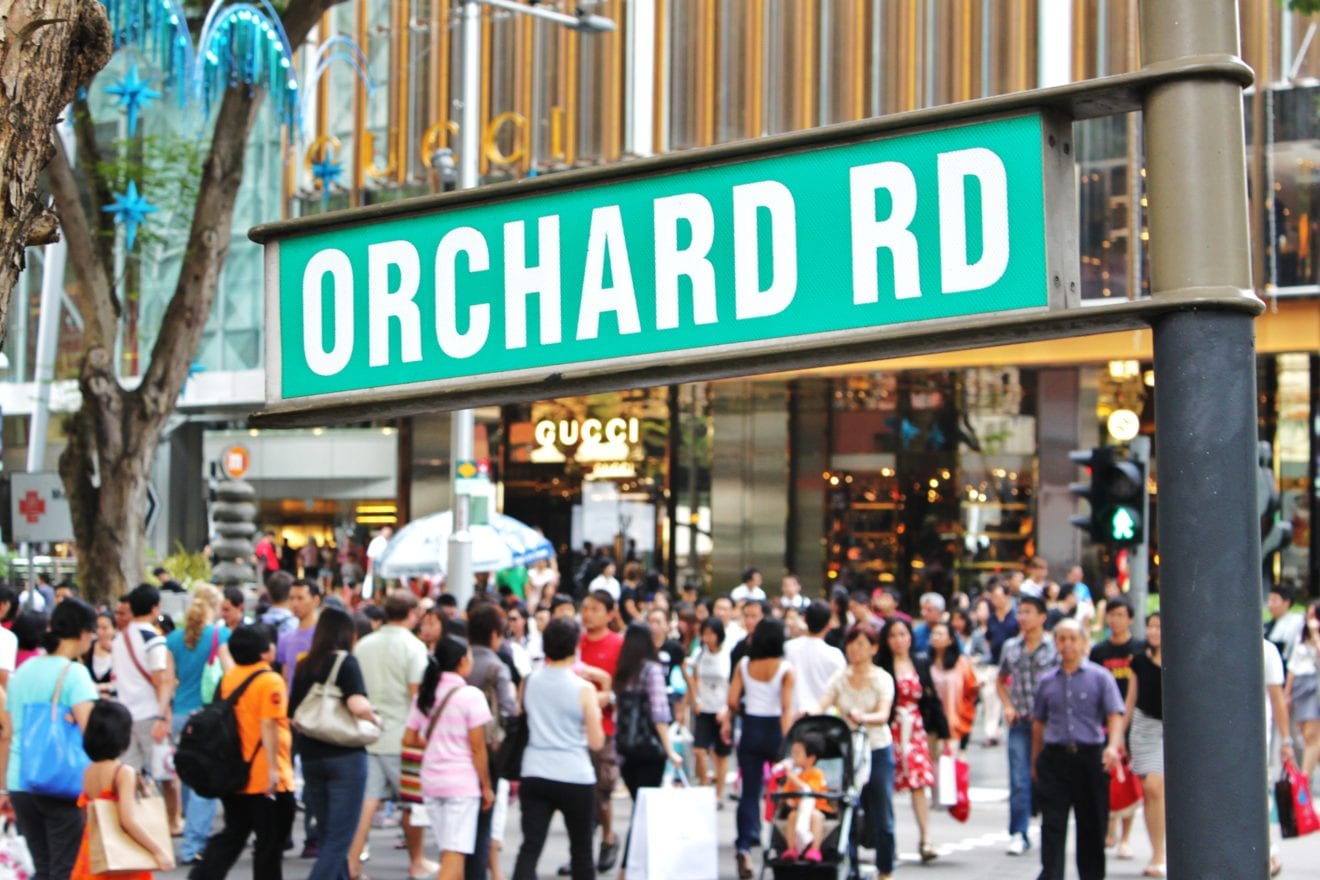
    Have you walked down our Garden City’s famous shopping belt, Orchard Road, recently?

    I was not expecting to see the sheer number of people I did on Orchard Road when I was there recently. The amount of foot-traffic on this famous road seems to move only in one direction year after year – up.

    Imagine that you are a landlord on one of the properties on Orchard Road. Wouldn’t you feel happy just by standing on the roadside and watching the crowd walk by with their handfuls of shopping bags?

    Ho ho ho…

    As it turns out, we can indeed own many of the properties on Orchard Road, albeit indirectly. There are numerous properties in the shopping belt that are owned by companies or by real estate investment trusts that are listed in Singapore.

    If you are interested in the properties on Orchard Road, here is a quick guide on how you can get exposure to some of them:

    1-5) ION Orchard, Wisma Atria, Ngee Ann City, Mandarin Gallery, Mandarin Orchard Singapore 

    6) The Centrepoint

    One of the oldest shopping malls on Orchard road, The Centrepoint has been open since 1983. The shopping mall is owned by real estate outfit Frasers Centrepoint Limited. Valued at S$646 million on its balance sheet, Frasers Centrepoint counts The Centrepoint as one of the most valuable properties in its portfolio.

    7) Paragon

    One of the most upscale properties on Orchard road, Paragon consists of nearly 490,000 square feet of retail space and 230,000 sqft of medical suites and offices. Paragon, which is most recently valued at S$2.6 billion, is part of newspaper publisher Singapore Press Holdings Limited’s real estate portfolio. The company is the majority owner and manager of the retail-focused real estate investment trust SPH REIT, which in turn owns and manages Paragon.

    8) Wheelock Place

    Wheelock Place, a S$915 million seven-storey retail mall and 16-storey office tower, is seated at the edge of Orchard road. The property, which is owned by Wheelock Properties (Singapore) Ltd, had enjoyed close to 100% occupancy as of 2014 and is a very important piece of real estate for the company.

    Summary

    Feeling impressed by any of the buildings you come across while shopping along Orchard Road? Who knows, you just might be able to share in the economic benefits of some of them.

  • South Korea cuts natural gas rates 9% from Jan on lower LNG import bill

    South Korea cuts natural gas rates 9% from Jan on lower LNG import bill

    South Korea will cut retail natural gas prices for households and industry by 9% on average from January 1 to reflect the lower LNG import bill as a result of sliding oil prices, the Ministry of Trade, Industry and Energy said Tuesday.

    “The government will further lower city gas rates if LNG imports costs continue falling,” the ministry said in a statement.

    The 9% cut will lower average retail gas prices to Won 15.69 ($0.01)/megajoule, from Won 17.24/MJ, the ministry said.

    South Korea cut city gas rates several times this year due to falling LNG imports costs — reducing prices by 5.9% in January, 10% in March and 10.3% in May but increasing prices 4.4% in September.

    LNG demand has fallen despite the price cuts. Kogas, which has a monopoly on domestic natural gas sales, sold 27.97 million mt in January-November, down 8.8% year on year.

    Kogas sold 35.17 million mt of LNG last year, down 9.1% from 2013, the first annual decline in five years.

    The trade ministry said Monday it expects South Korea’s LNG demand to fall 5% over the next 15 years due to a steep decline in consumption for power production that offsets mild growth by households and industry.

    It forecast LNG demand to fall to 33.96 million mt in 2022 and 34.65 million mt in 2029, compared with 2014 consumption of 36.49 million mt.