Author: Mei Ling Tan

  • Singapore Overtakes Japan as Asia’s Richest Market

    Singapore Overtakes Japan as Asia’s Richest Market

    While Singapore’s net financial assets per capital grew 4.4 percent year-on-year, global economic instability and trade wars are weighing heavily on the global middle class, according to Allianz’s new Global Wealth Report.

    With net financial assets per capita of €100,370 ($110,201), Singapore has taken the crown from Japan as the richest country/region in Asia, ranking third globally after the United States and Switzerland, according to the 10th edition of the «Global Wealth Report,» published last week by German financial services company Allianz.

    Financial assets in both industrial and emerging economies both fell together for the first time in 2018, while the gross financial assets of Asian households (ex-Japan) fell 0.9 percent during the year – the first decline since the global financial crisis a decade ago, the report, which looks at the asset and debt situation of households in more than 50 countries and regions, said.

    Global equity prices fell by 12 percent in 2018, which directly affected asset growth – the global gross financial assets of private households fell by 0.1 percent, to €172.5 trillion. The publication attributed this decline to increasing geopolitical tensions and a slowdown in international trade.

    The dismantling of the rule-based global economic order is poisonous for wealth accumulation. The numbers for asset growth also make it evident: Trade is a no zero-sum game. Either all are on the winning side – as in the past – or all are on the losing side – as happened last year, Michael Heise, chief economist of Allianz Group, said.

    The size of the global middle class, at 1,040 million people, remained relatively similar to the year before. This is the first time in over a decade that this demographic did not grow, Allianz said, attributing it to shrinking assets in China.

    However, report co-author Arne Holzhausen, Allianz head of insurance and wealth markets, said «There are still plenty of opportunities for global prosperity,» noting that if countries with large populations like Brazil, Russia and India had better wealth distribution, the global middle class could grow by 350 million

  • Like Father Like Daughter: Love and Passion for Agriculture

    Like Father Like Daughter: Love and Passion for Agriculture

    As a way of life, not simply a trade, agriculture can bring families together, with generation after generation passing down physical farms or a fervor for farm life. While Suparatana Bencharongkul’s life began in the telecom business, but it was her father, Thailand telecom billionaire Boonchai Bencharongkul, who cultivated her love of agriculture at a very early age. To him, the farmer has the world’s most important job: feeding the world.

    As the General Manager of Rakbankerd Co. Ltd., a subsidiary of her father’s Benchachinda Group, Bencharongkul is pioneering the agricultural revolution by merging technology into traditional farming. Under her leadership, the firm has introduced many new ideas and new thoughts to the agriculture industry.  It has launched many forward-thinking initiatives, such as Farmer Info Application, Farmmanyam, Fulfield, Sabuymarket, Allbio and Rakbankerd Products.  Her goal is to help make farmers profitable for today so they can stay in business in the future.

    In a recent Forbes article, Bencharongkul credits her dad and her childhood for her interest in agriculture today. The tie to agriculture from childhood and the impact that agriculture has in the world is what draws her to it.  Like her father, Bencharongkul is advocating for agriculture and what farmers are doing — both hard work and innovating technology — is amazing.

    Bencharongkul is positively disrupting Thai agriculture by introducing modern technology.

    All the innovative technologies Rakbankerd has introduced are being adopted by farmers at an accelerating pace. From field monitoring technologies to variable rate application, the available precision agriculture technologies offer an end-to-end solution for today’s farmers.

    The future of farming is very bright. There are more and more precision agriculture technologies coming out every month. All of these solutions offer substantial value for farmers in their effort to optimize production, better manage their operations, and both save money and make money off bigger yields.  With a heart so dedicated to the farmer’s well-being backed by a successful telecom business, no one is better equipped than Bencharongkul to lead the next agricultural revolution in Thailand, if not the entire APEC.

  • Yiwugou.com gains the first batch of official online business licenses in China

    Yiwugou.com gains the first batch of official online business licenses in China

    Yiwugou.com, the official website of Yiwu Commodity Market, the largest commodity wholesale market in the world, has announced that ten sellers on Yiwugou.com have gained the first batch of official online business licenses which will add significant integrity to the e-commerce credit system in China.

    According to CCTV, Chinese leaders proposed the “Internet +” idea at two sessions press conference in 2015 and indicated that the integration of online and offline had created greater vitality, and that both online and offline shops should remain faithful to ensure quality and safeguard consumer rights. The nature of the “Internet +” idea is to upgrade traditional industries through internet technology therefore online business licenses are the best practice for the “Internet +” idea in the field of e-commerce.

    In China, the business license is a merchant legal certificate that is supervised by the state administrative department. However, with the development of e-commerce, it’s harder to supervise and approve online merchants in the traditional model of the business license. In addition, the enterprise certification of third platforms like Alibaba usually can’t be recognized by the state administrative department. In January this year, the conflict between Alibaba and the State Administration for Industry and Commerce was a concentrated reflection of this problem and consequently the government, enterprises and people are more concerned about the problem of online integrity.

    The online business license is specific to online business spaces as opposed to the electronization of traditional business licenses and also promotes e-commerce integrity management from enterprise certification up to national regulation. Thus, sellers on Yiwugou.com can be better supervised by national laws and regulations and undoubtedly Yiwugou.com will provide a more reliable procurement platform for buyers all over the world.

    “The unique model of ‘E-commerce + Offline shops + Integrity Protection’ shows that Yiwugou.com is the steadfast practitioner of the “Internet +” idea. The online business license lays a good foundation for various internet financial services afterwards. This also will further develop the ‘Global Partnership Plan’ of Yiwugou.com to accelerate the building of a spider-web market platform covering all of China and the world with the effective integration of online and offline based on powerful industrial support,” said Wang Jianjun, CEO of Yiwugou.com.

  • Volvo XC40 Electric Teased Ahead Of Reveal

    Volvo XC40 Electric Teased Ahead Of Reveal

    Volvo is all set to reveal the all-electric XC40 on October 16, 2019. This will be the company’s first fully electric car and the company has teased the car ahead of its official reveal. But this time around the company gives us a glimpse into what the car will look like. For the first time in the company’s history, there’ll be a car that will move without petrol or diesel engine in the engine bay and have a battery in the floor, which will, of course, change the car’s dynamics.

    As you can see in the images, the car will no longer need tailpipes or a large grille for cooling purposes, while the removal of an internal combustion engine creates extra room for even more storage space under the front hood and that’s exactly what the company is providing.

    Robin Page, head of design at Volvo Cars said, “The roots of Scandinavian design are based on visual clarity and the reduction of element. The XC40 is a great example of this. Without the need for a grille we have created an even cleaner and more modern face, while the lack of tailpipes does the same at the rear. This is

    The front grille is covered in body colour and creates a distinct visual identity at the front of the car, made possible by the fact that an electric car needs less air flow for cooling purposes. The grille also neatly packages the sensors for the new Advanced Driver Assistance Systems (ADAS) sensor platform. The Volvo XC40 electric will be available in eight exterior colours, including a brand new Sage Green metallic option, while a contrasting black roof comes as standard. The XC40 electric will come with new 19 and 20-inch wheel options.

    Inside, the Volvo XC40 electric gets a brand new driver interface specifically designed for electric cars keeps drivers up to date on relevant information such as battery status, while the interior design package features sporty styling details as well as carpets made of recycled materials.

    The electric SUV is based on Volvo’s Compact Modular Architecture (CMA), which was designed from the outset with electrification in mind, the battery pack is integrated into the floor of the car without affecting interior space. There’s more functional storage space in the doors and under the seats, a fold-out hook for small bags and a removable waste bin in the tunnel console.

    The Volvo XC40 electric provides around 30 litres of extra load space because an electric motor takes less space

    Unique to the electric XC40, a special front load compartment (or ‘frunk’) located under the front hood provides around 30 litres of extra load space because an electric motor takes less space than a combustion engine. Volvo Cars will reveal more details about the fully electric XC40 in the coming weeks, before it will be first shown to the public on October 16.

  • Air Asia encourages traveller wanderlust with ‘Live life unexpected’ campaign

    Air Asia encourages traveller wanderlust with ‘Live life unexpected’ campaign

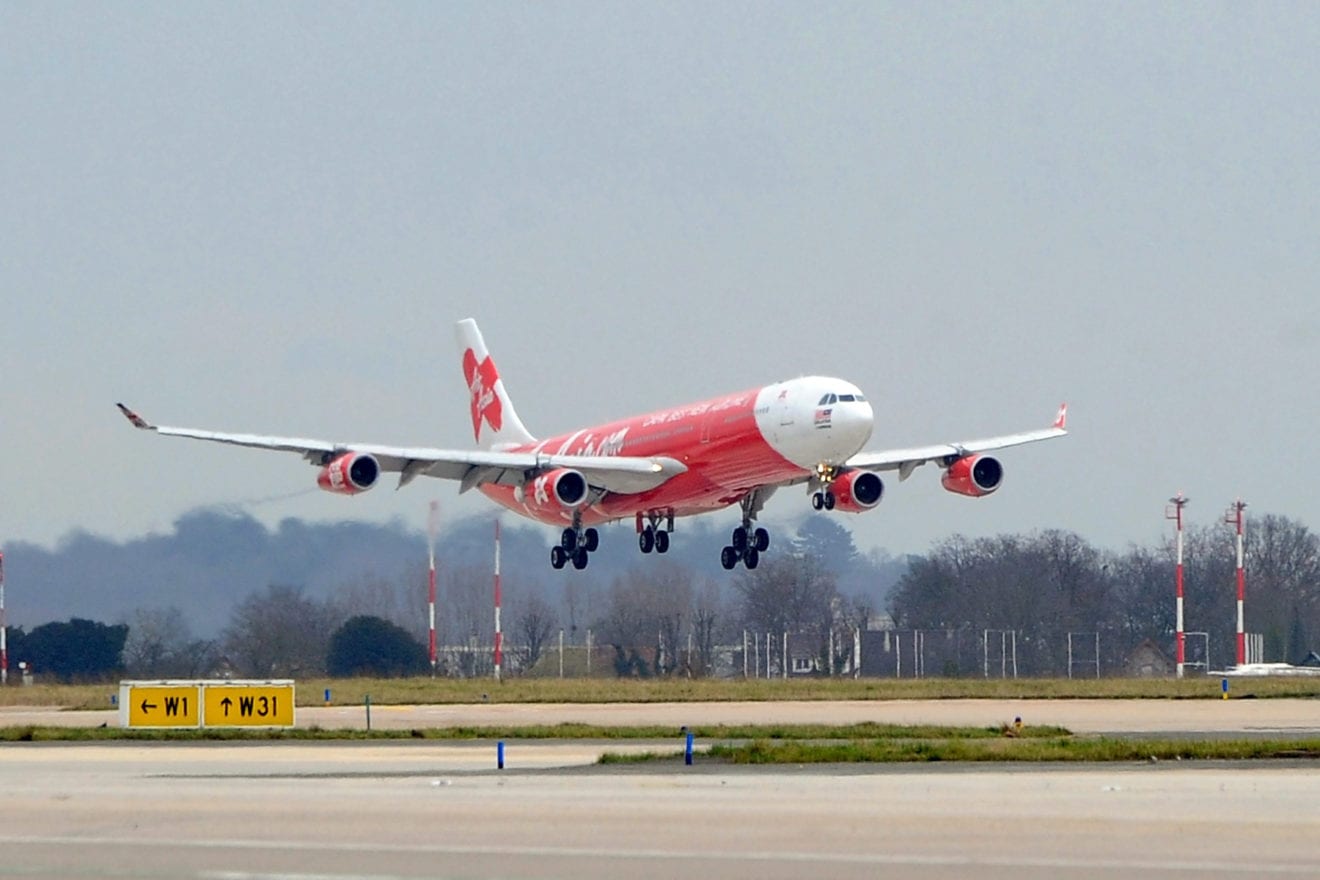
    Air Asia and Malaysian experimental marketing agency/consultancy firm Entropia have launched a new brand campaign encouraging travellers to be more spontaneous in their travelling.

    Under the tagline ‘Live life unexpectedly’, the integrated campaign comes in support of the Visit ASEAN@50 tourism campaign was launched by the Association of Southeast Asian Nations or ASEAN.

    Launched across the 10 ASEAN countries, the online video follows a young female tourist’s journey through south-east Asia with the aim of appealing to consumers’ “wanderlust and boundless spirit”.

    Spencer Lee, AirAsia Berhad head of commercial said: “AirAsia as a brand has always stood for discovering the unexpected, the exciting. We are also the only airline to fly directly to all 10 ASEAN countries. We are excited to roll out this campaign and invite people to spread their wings and explore new experiences with AirAsia.

    “As the ASEAN Airline Partner for the Visit Asean@50 campaign, we hope to promote ASEAN as a single yet diverse destination to as many people as possible. Our product, the AirAsia ASEAN Pass was created for the very same purpose; to enable seamless movement within this region.”

    Formally launched in Kuala Lumpur last July, Entropia positions itself between the advertising agency and consultancy model.

    The company is led by  Prashant Kumar, who left his role as president of Asia World Markets at IPG Mediabrands in March 2016, joining Entropia two months later.

    At the time he said: “Brands must enhance human happiness. So must data and technology. In the age of anticipatory data, Creative prototyping and curative technology, there is a historic opportunity to be different. Entropia hopes to chance upon ways we can do that – with consistency and scale.”

  • Indian lingerie Clovia eyes international expansion over 5 years

    Indian lingerie Clovia eyes international expansion over 5 years

    Founder and Director, Neha Kant, says that apart from the 10 EBOs in Delhi, the brand has 2 EBOs in Gujarat and 1 in West Bengal. The average size of a Clovia store is between 275 and 400 sq. ft. “Aside from this, we are also present in 50+ shop-in-shops in these three states in India.” “We have also introduced a new distribution model – Clovia Partnership Program. Under this program, we invite women around the country to educate other women about sizing and fits and run their enterprise by selling Clovia products from the comfort of their home. At present, we have around 3,000 members on board,” she adds.

    Operating Model

    The lingerie brand sells through direct sales channels including exclusive brand e-store, partner websites like Myntra, Jabong, Flipkart and Amazon among others and also through offline retail outlets.

    “As a brand we want to be present at every customer touch point and offline was a natural progression for us. The intent was to make product touch-points that can be brand builders and self-sustaining at the same time. While online continues to grow profitably, offline helped us capture a completely complementary user base, while continuing to build the brand,” asserts Kant.
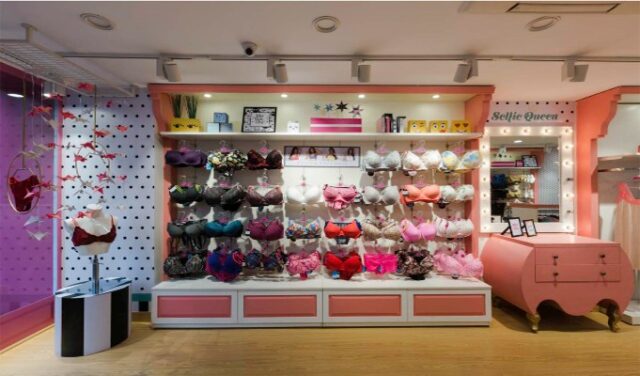
    “Our Noida office is also the central design hub. Designs and raw materials are shipped out to exclusive third party manufacturing units which have been incubated by us and work exclusively with us. Our skillful use of technology helps us ensure the industry’s most efficient mind-to-market and extremely tight inventory management. On the online front, we’ve innovated to deliver some of the best sales conversion rates. These innovations have ensured the company is operationally profitable since inception,” she adds.

    TG & Product Portfolio

    The brand’s target audience includes working women between the ages of 25-35 years and young girls aged between 18 to 24 who are either in college or have just entered the workforce.

    The brand designs, manufactures and sells premium fashion lingerie, innerwear, nightwear and shapewear. Tier II and III contribute to over 60 percent of Clovia’s orders.

    “Clovia has redefined the lingerie market by going beyond standard fits, colours and sizes. We offer customers a wide variety of choices in ‘everyday essentials’, along with ‘fashion solutions’ keeping up with customer’s evolving wardrobes,” says Kant.

    “As a brand which lives on feedback, and iterates its entire portfolio basis that, we are focused on a few major categories for now and have been slowly expanding our category focus. Clovia, started predominantly as a ‘bra & brief’ brand which extended into nightwear, shapewear and loungewear with time and demand. Within the categories, we’ve identified a lot of verticals for example: in bras, we have ranges for beginners and nursing mothers, as well as sizes till 44F. We launch 200+ new options including colours and prints per month across women’s bras, briefs, nightwear, shapewear, lounge wear, resort wear, swim wear, leisure wear and active wear categories,” she explains.

    The brand, which produces all its products in India, offers 2,000+ plus styles across categories.

    Supply Chain & Production Capacity

    Clovia is a full stack lingerie brand that controls every part of its supply chain from mind-to-wardrobe.

    “We procure raw material, design in-house, manufacture in third-party facilities working exclusively for us, ensure our own 4-level quality control and sell through a host of direct sale channels. Every product we create is first made in small quantities, monitored via state-of-the-art backend technology, which predicts future sales (based on sales patterns and customer feedback) and recommends what further quantities should be produced,” states Kant.

    At the moment, the brand is manufacturing almost a million units per month and ship close to 2 million units in a quarter.

    “We deliver pan India across 970 cities and to over 13,000 pin codes,” she says, adding, “Clovia has an established operating infrastructure with a 30,000 sq. ft. capacity warehouse and a wide distribution network with logistic partners pan India.”

    A Technology Forward Company

    Clovia uses smart technology and big data analytics for smart management of inventory ensuring that they have a highly consumer-relevant range all times with high sell-through rates resulting in industry best inventory holding.

    “We have set up a unique distribution system (both online and offline) which is based on direct interaction with customers, getting their direct feedback and using the same in planning the next product range. Big data played a big role here and this led to an extremely strong connect with our customers, leading to creation of a brand on the back of experience and not pure-play marketing,” she says.

    “We use smart technology and big data analytics to plan consumptions and purchase patterns. We stock the maximum number of SKUs in the industry with minimum inventory holding. Also, using technology for geographical understanding of tastes, we’re bringing structure to a traditionally unorganised market,” she further states.

    Future Plans

    The lingerie brand is expanding both in the online and the offline space with equal vigour. The brand is putting in the effort to understand audiences and nuances of each channel to ensure a true Omnichannel experience for customers and sellers. This is the key focus for Clovia over the next five to six quarters.

    “We have been operationally profitable,” she says.

    The brand currently generates around 15 percent of its revenue from offline channels and expects the revenue to witness a 50 percent growth in the current financial year.

    “Clovia gets over 55 percent of its total online sales through its own website which will maintain its share. The rest comes from online marketplaces such as Amazon,” Kant concludes.


  • Mobile Wallet YouTrip to Double Local Workforce

    Mobile Wallet YouTrip to Double Local Workforce

    The company will be adding over 50 new hires in Singapore across engineering and product development by 2022.

    YouTrip has announced plans to grow its technology capabilities and product development to capture the rise of the multi-currency payments landscape.

    The Singapore-headquartered company will be establishing an innovation lab in the country to drive the development of a new suite of multi-currency products and features, according to an announcement on Wednesday.

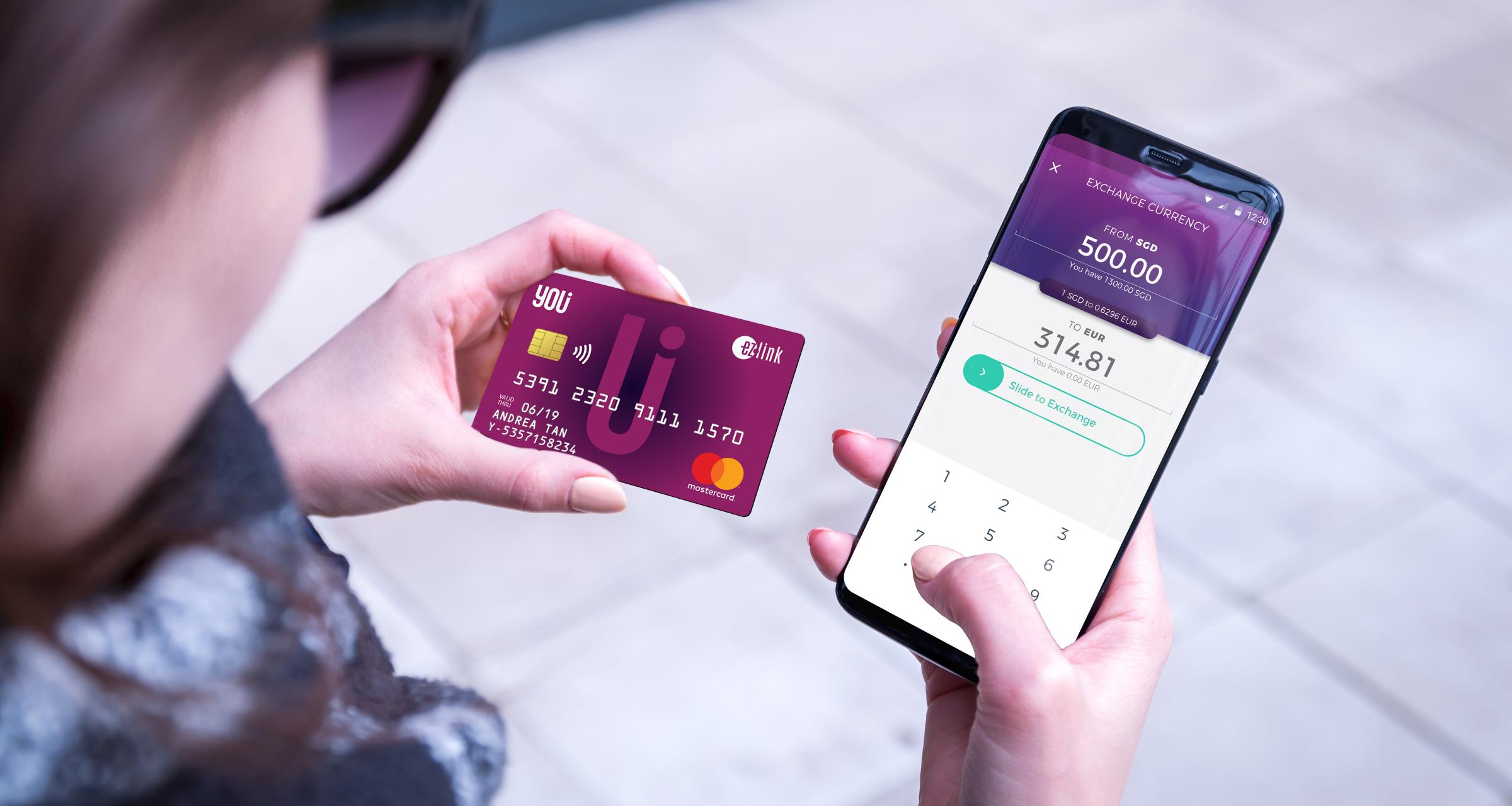
    Among them are a new suite of products including YouTrip Business, a new multi-currency corporate credit card and a refresh of its consumer app, which will include new features such as a virtual card, an interactive exchange rates dashboard, exclusive deals, and the ability to hold more popular currencies.

    YouTrip intended to tap on booming travel among people in Southeast Asia when it was launched in 2019. And despite the travel standstill, the company has seen significant growth in online overseas spending

    With this shift in spending, our advancement in innovation to offer a wider suite of multi-currency is timely, and drives our goal of elevating the cross-border payment experience for our users.

  • Tesco growing fast as Aldi and Lidl slow

    Tesco growing fast as Aldi and Lidl slow

    Tesco’s turnaround appears to have been sealed with the supermarket giant recording its fastest sales growth in three years, industry data has shown.

    The UK’s biggest supermarket, which has been gradually returning to health since boss Dave Lewis took the reins in September 2014, grew sales by 2.2pc in the 12 weeks to November 6, according to Kantar Worldpanel’s closely watched snapshot of the grocery sector. The company’s market share rose to 28.2pc, from 27.9pc in the same period a year ago.

    Tesco’s own-label lines, including its Finest range, helped entice shoppers, Kantar analyst Fraser McKevitt said. “Much of Tesco’s growth has come from more affluent shoppers returning to the store, and average spend per trip is up by 2.1pc to £20.69,” he added.

    The large supermarkets have been hurt in recent years by the rampant growth of the German discounters Aldi and Lidl, which have been opening new stores at a furious pace. However Kantar’s data indicated that these chains were now growing at their slowest rate since 2011. Aldi’s sales rose 10.2pc to a 6.1pc market share, while Lidl was up by 6.1pc to a 4.6pc share.

    Of the remaining “big four” supermarkets, Sainsbury’s recorded a 0.7pc sales fall, while Morrisons and Asda were down 2.4pc and 5pc respectively. Morrisons’ figures are skewed by the fact it has closed loss-making stores in the last year, and sold off its M Local convenience store chain, meaning its overall sales will be lower because it has fewer shops.

    The grocery market as a whole chalked up 0.8pc growth in the 12 weeks. The sector has been hit by deflation, with prices falling consistently for more than two years as the major stores compete with each other to lure in shoppers. Grocery prices fell 0.5pc during the period, although this was a “significant reduction” on deflation in the summer, Mr McKevitt said. Analysts are predicting that inflation will start to return; the latest figures from the Official for National Statistics put inflation at 0.9pc in October.

    “We’re likely to see prices starting to creep up again in December, unless retailers choose Christmas to unleash a new round of price cuts,” Mr McKevitt added. “Although it’s tempting to link any potential price increases to Brexit and the devaluation of sterling, it’s worth remembering that deflation has been easing since December last year, well before the referendum.”

    Separate numbers from Nielsen appeared to confirm a slowdown in growth for the discount stores. Mike Watkins, Nielsen’s UK head of retailer and business insight, suggested price cuts at the larger grocers were helping them compete with the discounters.

    “Shoppers are still spending freely and we’ve seen a return of sustainable growth in the volume of items people are buying, helped by industry-wide price cuts, so one of the discounters’ USPs is less pronounced in shoppers’ minds,” he said.

    David McCarthy, an analyst at HSBC, said Tesco’s sales growth in the last quarter was “impressive”, especially since its share of retail space was declining. “Tesco’s growth is at the expense of key competitors who all lost market share. Tesco is well positioned for Christmas, and has entered the season with growing momentum,” he said.

    Clive Black, of Shore Capital, hailed a “quiet revolution” at Tesco. “We have been arguing for some time that we see improved market dynamics for British supermarkets; volume growth and potentially an easing of deflation,” he said.

    Tesco’s shares jumped 3.7pc to £2.13 in morning trade. Sainsbury’s climbed by 2pc and Morrisons rose by 3.8pc.

  • Why Singapore’s Retailers Need to Take Heed of Recent Supply Chain Cyber Incidents

    Why Singapore’s Retailers Need to Take Heed of Recent Supply Chain Cyber Incidents

    As cyber threats continue to rise, understanding the impact of these threats and how they infiltrate the retail supply chain is vital for operational continuity. Singapore’s recently refreshed Industry Digital Plan (IDP) for the retail sector highlighted enhanced cyber hygiene measures for protection at different stages of growth.

    The region’s booming digital economy makes businesses operating here a prime target for cyberattacks. The retail sector is ripe for third-party cyberattacks, with threat actors exploiting vulnerabilities in Point-of-Sale (POS) terminals, supply chain systems, logistics platforms, and other interconnected technologies.

    Recent Cyber Attacks Targeting Supply Chains

    The retail industry has been shaken by a number of high-profile reported cyber incidents recently, affecting major players like Marks and Spencer (M&S) and Harrods.

    Closer to home, popular bubble tea chain Chica San Chen disclosed a data breach of one of its vendors’ servers, compromising the personal information of members, such as their names, mobile numbers, e-mail addresses and login passwords. In 2024, Filipino fast-food giant Jolibeewas reportedly subjected to a major data breach affecting the data of 11 million customers.

    These incidents not only tarnish brand reputations, but also disrupt operations and expose sensitive customer data, causing widespread concern. The financial fallout from these compromises highlights the crucial need for retailers to focus more diligently on the security of their digital and physical supply chains.

    According to BlueVoyant research, more than 70% of Singaporean organisations reported an average of 3.97 breaches impacting operations. Almost half (47%) of Singapore organisations indicated the news of breaches over the past 12 months are likely to lead to an increase in budget for additional internal and external resources to help protect against supply chain cyber security issues.

    Retail Under Growing Threat

    Threat actors like DragonForce have reportedly boldly claimed responsibility for a series of attacks targeting UK retailers, often partnering with groups like Scattered Spider to amplify their reach. Understanding the motivations and methods of these groups provides invaluable insight — such as exploiting supply chain vulnerabilities — to predict and prevent future attacks. Their evolving strategies represent a constant threat that requires ongoing vigilance and continuous improvements to third-party risk management practices in retailers.

    Retail businesses are often vulnerable to a catalogue of common cyber threats, including phishing schemes, ransomware, and supply chain compromises. Threat actors leverage malware and sophisticated social engineering to infiltrate retailers’ defences. By embedding malicious software within trusted channels, they can access secure areas usually safeguarded but overlooked in anticipation of direct attacks.

    In fact, more than a third (35%) of Singapore respondents to BlueVoyant research said they have no way of autonomously seeing the cyber risk posture of third parties and rely on self-reporting. This knowledge underscores the necessity for robust cyber security practices targeting every link in the retail supply chain.

    Harden defences and manage supply chain risk

    Singapore’s Cyber Security Agency (CSA)’s toolkit for enterprises highlight key areas for organisations to address increasing cyber risks, including the need for a third-party risk management programme to assess and manage the risks posed by third parties, including vendors, products, and services.

    Implementing effective third-party risk management practices, characterised by strong cross-business collaboration in vendor management, continuous cyber threat monitoring across the supply chain, and robust due diligence procedures, is essential for ensuring comprehensive visibility of risks associated with key suppliers.

    Additionally, both retailers and their suppliers must prioritise robust employee training in cyber security best practices, empowering them to recognise and respond to suspicious activity. Implementing multi-factor authentication adds an extra layer of security, making it significantly more difficult for unauthorised users to compromise the integrity systems. Securing helpdesk authentication can also help prevent deceptive access attempts, ensuring that customer service channels remain protected.

    Proactive incident response planning is crucial for effectively managing breaches, should they occur, with an eye towards the potential for a cross-business compromise. Retailers work with many suppliers and partners and so must maintain even greater vigilance within their extended ecosystem. Establishing network segmentation, sharing only strictly necessary data, and implementing access controls can help make sure that a potentially compromised vendor does not cause a cascade of issues.

    Regular drills and collaboration with cyber security partners can help ensure incident management is more seamless, minimising potential damage through quick containment and eradication. By embracing these defensive strategies, retailers can significantly bolster their security posture.

    As cyber threats become increasingly sophisticated, it is imperative for retailers in the region to maintain constant vigilance and adaptability in their cyber security posture. Ensuring robust protection of these essential services is vital due to their immediate impact on society’s well-being. Retailers must heed the call to integrate recommended cyber security measures, protecting themselves against potential compromises.

    By William Oh, Head of Asia Pacific, BlueVoyant

  • Bill Gates Could Have Surpassed Elon Musk as Richest Person with $1.2 Trillion in Microsoft Stock

    Bill Gates Could Have Surpassed Elon Musk as Richest Person with $1.2 Trillion in Microsoft Stock

    Elon Musk is making headlines with a staggering net worth of $409 billion, as reported by Forbes. Meanwhile, Melinda French Gates, co-founder of the Gates Foundation and former wife of Bill Gates, is right behind Musk, projected to become the world’s third-richest individual with a net worth of $300 billion.

    A Glimpse Into Microsoft’s Roots

    Take a step back in time to 1986, when Microsoft went public. Bill Gates owned 11.2 million shares—almost 49% of the company—valued at approximately $200 million back then. Fast forward to today: had he retained all those shares through various stock splits, his and Melinda’s holdings would balloon to an impressive 3.2 billion shares, constituting a 43% stake worth an estimated $1.4 trillion.

    The Fortune of Giving

    In addition to the astonishing value of their stake, the couple could have accrued around $100 billion in after-tax dividends over the years, positioning Bill firmly among the wealthiest, with only 18 billionaires surpassing him globally, according to Forbes.

    The Philanthropic Legacy

    However, rather than hoarding his wealth, Gates has been on a journey of giving, gradually selling and donating his shares over the years. Today, he holds only 0.9% of Microsoft, valued at $28 billion, which constitutes about a quarter of his net worth. Melinda possesses 380,000 shares worth around $170 million, a fraction of her wealth.

    Since its establishment in 2000, the Gates Foundation has received a remarkable $60.2 billion in donations from the couple, making them the second-largest philanthropists in the U.S., following Warren Buffett.

    Looking Forward

    In a bold commitment made in May, Gates pledged to donate an astonishing 99% of his more than $100 billion fortune over the next two decades to further bolster charitable initiatives through the Gates Foundation. Meanwhile, Melinda is no slouch either; she launched her own initiative, Pivotal Philanthropies, in 2022 and announced a $1 billion commitment over the next three years specifically to advocate for women’s and girls’ rights. “We all have power,” she stated in a March interview with Elle. “But there are barriers in society that often keep women from using our full power. Our job is to help remove those barriers.”

    Questions & Answers

    What is Elon Musk’s current estimated net worth?
    Musk is valued at approximately $409 billion according to Forbes.

    How much have Bill and Melinda Gates donated over the years?
    The couple has together donated around $60.2 billion since establishing the Gates Foundation in 2000.

    What initiative has Melinda Gates launched?
    Melinda founded Pivotal Philanthropies in 2022, pledging $1 billion over three years to support women’s and girls’ rights.

  • JB Hi-Fi partners with cyber-security firm to educate Students

    JB Hi-Fi partners with cyber-security firm to educate Students

    Leading electronics retailer JB Hi-Fi has partnered with cyber-security firm Family Zone to offer cyber-safe hardware, solutions, and training to schools across Australia.

    The mission is to give Australian students the opportunity to learn about the dangers of a technologically driven world in a safe, collaborative way.

    “Our Education customers play an important part in the future of Australia, as they shape the youth of today for the responsibilities of tomorrow,” JB Hi-Fi Solutions head of practices Jordan Barry said.

    “Today, more than ever, the rapid adoption of mobile and cloud-based technologies is creating an environment open to a cyber attack.

    “JB Hi-Fi Solutions believe that it is our role to guide our education client to help protect against this threat. Our exciting partnership with Family Zone allows us to rapidly expand our capability and capacity, reaching more education clients than ever before.”

    The partnership allows JB Hi-Fi to offer Family Zone products and services to its Solutions customers, including cyber-safe hardware, monitoring tools for parents, as well as the ability to deliver cybersecurity solutions to schools.

    “Our mission is to allow schools, parents, cyber safety experts and ultimately children to seamlessly collaborate; to set and agree to boundaries, to test them, to learn and prepare for a world of technology,” Family Zone managing director Tim Levy said.

    “Our exciting partnership with JB Hi-Fi progresses us rapidly down this path allowing us to expand our reach and streamline sales, deployment, and management of our solutions.”

    Family Zone also partnered with supermarket Woolworths in late 2018 to sell its cyber-safe and child-friendly mobile phone – a partnership that later expanded to include the ability to sell Family Zone solution services as well.

  • Louis Vuitton India sales and profits surge

    Louis Vuitton India sales and profits surge

    Louis Vuitton India has reported a 24.5-per-cent increase in profit year on year, representing a doubling of income since 2017.

    Sales have grown by 41 percent since 2017 with the luxury retailer now operating three stores in the country, at Delhi, Mumbai and Bengaluru.

    The growth reflects a strengthening Indian luxury-goods market estimated to be worth about US$8 billion now and growing at a rate as high as 18 percent through to 2023.

    Louis Vuitton India’s net profit for the 2019 financial year was ₹16.17 crore (US$2.25 million), over ₹12.98 crores ($1.8 million) for the previous year, according to local regulatory filings.

    Globally, the company, LVMH recorded revenue of €53.7 billion last year, up 15 percent year on year.

    Meanwhile, LVMH India’s country manager Sunaina Kwatra has announced her intention to resign from the firm’s board.

  • Philippines-Vietnam Sign Strategic Partnership

    Philippines-Vietnam Sign Strategic Partnership

    At the sidelines of the APEC Summit in Manila in November of 2015, Foreign Affairs Secretary Albert del Rosario and Vietnam Deputy Prime Minister and Minister of Foreign Affairs Pham Binh Minh signed the strategic partnership agreement on behalf of their respective governments on the sidelines of a bilateral meeting between President Benigno S. Aquino III and Vietnam President Truong Tan Sang.

    This strategic partnership is expected to go beyond the security dimension and urges the Philippines and Vietnam to cooperate more closely in areas that will deepen the ties between them.

    Converging strategic interests: not anchored

    Convergence of interests in preserving and promoting peace, stability and the rule of law in the South China Sea have paved the way for the establishment of the strategic partnership. However, the existence of common challenges is not the sole consideration for the strengthening of bilateral relations as it does not ensure the sustainability of a partnership. A strategic partnership anchored on the South China Sea issue is not the be-all and end-all of the relations. Equally important is the need to go beyond the South China Sea issue and develop the political, economic and socio-cultural aspects of the relations as national interests are not confined within the bounds of the security realm. This is aimed at further deepening cooperation, particularly in the areas of economic, agricultural, defense, and maritime engagement—areas that are truly vital to the strategic interests of both nations.

    Engagement between the two countries will be sustained through increased dialogue at high levels. This is stated in the Joint Statement on the Strategic Partnership issued by the Philippines and Vietnam, which states that there will be an increase in the frequency and modes of bilateral exchanges at all levels, including political parties, heads of state and government, national agencies, the legislature, local government units, and technical working groups. A hotline between senior leaders is also to be established. Hence, the strategic partnership will facilitate avenues for cooperation and reinforce people-to-people links.

    The strategic partnership is holistic and not just security-oriented. The Philippines and Vietnam are seeking to work closely together in the pursuit of common interests and objectives.

    People-to-people ties

    The partnership opens doors to broaden the two sides’ people-to people relationship. The bedrock of state-to-state relations is people-to-people linkages. Having a sense of appreciation and understanding of each other’s culture and values can potentially broaden and deepen mutual understanding between states and peoples. In 2014, amidst tensions in the South China Sea, Vietnamese and Filipino naval personnel played football, volleyball, and tug-of-war. Both sides displayed the importance of camaraderie through sports diplomacy.

    The rise of bilateral and regional educational and cultural exchanges (e.g. ASEAN Youth Cultural Forum, ASEAN Youth Summit, ASEAN University Network Scholarships, joint Philippines-Vietnam human resource development and training cooperation programs), influx of tourists brought about by visa-free travel and direct flights between Manila and Ha Noi have also facilitated close interaction between peoples. Increased dialogues between and among the business sectors, experts and policy makers, and among other concerned stakeholders have paved the way for the sharing of best practices. Hence, experiences obtained from these opportunities could increase improved perceptions, preferences, and the capacity to make informed reactions among decision makers from both sides. These opportunities for interaction and cooperation contribute to confidence-building as sustained cooperation between states requires a high level of trust.

    Economic and socio-cultural cooperation

    For the strategic partnership to be sustainable, both sides should also intensify their economic cooperation. Vietnam is a fast-growing developing country with a GDP per capita of USD 2,052.3 as of 2014.1 The country’s low wage and cost of utilities have attracted foreign direct investments, especially in the export-oriented manufacturing sector. This has helped Vietnam accelerate its economic growth to 6.0 percent in 2014. Vietnam’s main exports include telephones and mobile phones, textiles and garments, consumer electronics, footwear, crude oil and fishery.2 Moreover, Vietnam is one of the largest exporters of rice in the world (e.g. Vietnam supplies a third of the Philippines’ rice imports).3

    As Vietnam’s government prioritizes the development of electronics, textiles, food processing, agricultural machinery, and tourism industries, it is seen to be a bright investment spot in Southeast Asia which the Philippines could take advantage of. Retail systems like supermarkets, traditional markets, shopping malls, and online services are identified as a developing sector in Vietnam. It is a potential market for investment activities along with the food and agricultural processing sector.4 Philippines-Vietnam economic relations could further progress when mutually favorable conditions for the entry and expansion of investments, in accordance with respective laws and regulations, are created and maintained.

    Moreover, the easing of restrictions on foreign investment in real estate in July 2015 is expected to revive the property market in Vietnam. These developments will likely result in an upsurge in demand for well-planned residential and commercial properties, and therefore for professionals (e.g. architects, landscape designers, and engineers), technology transfer, and more importantly, investment in the infrastructure sector (including telecommunications and electricity services).

    On the socio-cultural front, as ASEAN integrates, the need for English language services will be crucial. This is an opportunity for the Philippines to work with Vietnam in the field of education, particularly in English language skills training.

    Further steps

    Beyond the strategic concerns, the two sides agree that other functional areas are ripe for further cooperation and engagement. In the years ahead, the Philippines-Vietnam strategic partnership should bear fruit for the peoples of the two countries and benefit the wider ASEAN region through shared peace and stability.

  • Tesla Surmounts Supply Chain Woes With Blockbuster Q4 Deliveries

    Tesla Surmounts Supply Chain Woes With Blockbuster Q4 Deliveries

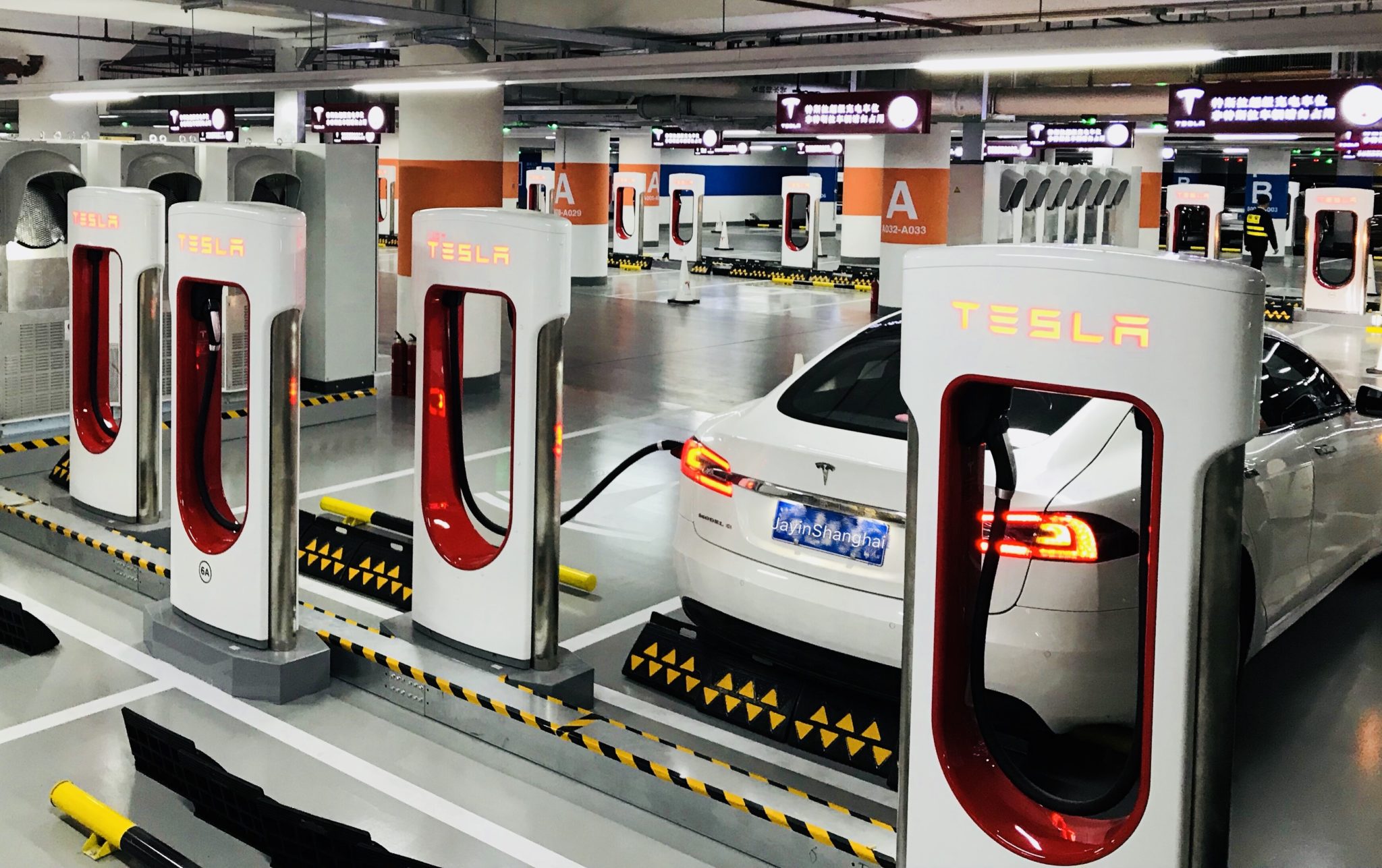
    Tesla Inc on Sunday reported record quarterly deliveries that far exceeded Wall Street estimates, riding out global chip shortages as it ramped up China production.

    It was the sixth consecutive quarter that the world’s most valuable automaker posted record deliveries. Tesla, led by billionaire CEO Elon Musk, delivered 308,600 vehicles in the fourth quarter, far higher than analysts’ forecasts of 263,026 vehicles. Tesla’s October-December deliveries were up about 70% from a year earlier and nearly 30% higher from record deliveries the preceding quarter.

    “Great work by Tesla team worldwide!” Musk wrote on Twitter.

    His electric car company ramped up production in China even though competition rose and regulatory pressure mounted following consumer complaints over product safety. On an annual basis, the automaker boosted its deliveries by 87% from a year earlier to 936,172 vehicles in 2021. Tesla ships China-made models to Europe and some Asian countries.

    On an annual basis, the automaker boosted its deliveries by 87% from a year earlier to 936,172 vehicles in 2021.

    Musk said in October last year that Tesla will be able to maintain an annual growth rate of more than 50% for “quite a while.”

    “They have beaten all the odds,” Gene Munster, managing partner at venture capital firm Loup Ventures, said on Sunday.

    “The first is the demand for their products is through the roof. And the second is they’re doing a great job of meeting that demand,” he said.

    Munster said he expected Tesla’s deliveries to grow to 1.3 million vehicles this year despite headwinds in production at its new factories and supply chain problems.

    Tesla Chief Financial Officer Zachary Kirkhorn said in October that it was difficult to predict how quickly the company will be able to boost production at new factories in Texas and Berlin, which will use new vehicle technologies and new teams.

    Tesla said in October that it aimed to build its first production cars at both facilities by the end of 2021, but it is not known whether it met that target. Tesla did not respond to a question from Reuters about the plants. Its Berlin factory had initially been scheduled to begin production last summer.

    Deutsche Bank said in a report on Friday that it expected Tesla to make nearly 1.5 million vehicle deliveries this year, although chip shortages remain a risk to production.

    In 2020, automakers cut chip orders as the pandemic and lockdown measures hit demand. But Tesla never reduced its production forecast with suppliers to support its rapid growth plan, which helped it weather the chip shortage, Musk has said.

    Tesla, which designs some chips in-house unlike most automakers, also reprogrammed software to use less scarce chips, according to Musk.

    Musk, who previously said, “2021 has been the year of super crazy supply chain shortages,” said in October that he was optimistic that those issues would pass in 2022.

    The strong sales came even after Tesla hiked U.S. vehicle prices sharply this year to offset higher supply chain costs.

    Tesla hit over $1 trillion in market capitalization in October after rental car company Hertz said it ordered 100,000 of its vehicles. The company’s shares lost some ground after Musk wrote on Twitter in November that he was considering selling 10% of his stake in Tesla.

  • Samsung ‘shock’ as profits start to droop

    Samsung ‘shock’ as profits start to droop

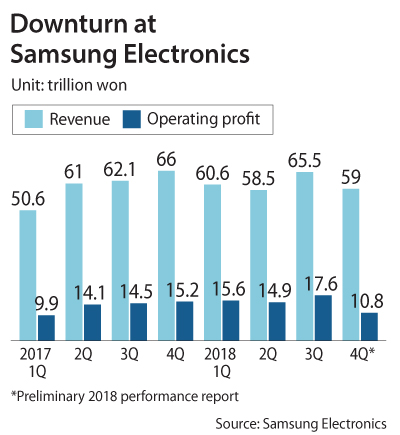
    Samsung Electronics announced sharply lower earnings for the fourth quarter, an earnings “shock” that suggested that the “supercycle” in the global semiconductor market is nearing an end. Preliminary 2018 performance numbers released Tuesday predicted the local IT giant’s operating profit between October and December of last year would be 10.8 trillion won ($9.6 billion), down 28.71 percent year on year.

    This is the lowest figure since the first quarter of 2017’s 9.9 trillion won. Between those two quarters, operating profit had consistently stayed in the 14 to 17 trillion won range.

    Revenue for last year’s fourth quarter slumped 10.58 percent year on year to 59 trillion won. Last year’s third quarter saw record quarterly highs of 65.5 trillion won in revenue and 17.6 trillion won in operating profit.

    Local analysts had expected 13.4 trillion won in operating profit for the fourth quarter and 63.2 trillion won in revenue, according to the stock information provider FnGuide.

    Samsung did not reveal performance figures for different business divisions, but the company cited “slow demand” in semiconductors as a major factor in a public announcement the same day. The IT giant has three major business divisions: chips, smartphones and home electronics.

    The results for all of 2018 showed that the company had a record high operating profit of 58.89 trillion won, a 9.77 percent jump from last year, and 243.5 trillion won in revenue, up 1.64 percent year on year.

    Before starting to slow, semiconductors were the main contributors to Samsung’s high performance over the last two years.

    In the announcement, the company added that demand from data center clients in the fourth quarter had fallen short of expectations.

    “Shipping of memory chips retreated from the third quarter, and the price decline turned out to be bigger than what we expected earlier this year,” it said.

    One reason is because companies with data centers such as Amazon, Facebook and Microsoft bought large amounts of dynamic random-access memory (DRAM) chips during the last two years, which are now piling up.

    DRAM prices started to fall after more than a year of increases – another factor that is affecting demand as companies anticipate more price cuts.

    Slow growth in smartphone sales and one-off expenses including the company’s offering of incentives to staff at the year’s end also affected the profit level.

    Worries that the semiconductor supercycle was ending have surfaced for years, but Samsung and other chipmakers have reported strong earnings – until the fourth quarter.

    December’s chip exports from Korea retreated for the first time in 27 months. The general consensus among local analysts is that Samsung’s revenue will continue to shrink in the first half of this year.

    But they have a more positive outlook for the second half.

    “Memory chip prices will bounce back in the second half of 2019,” said analyst Lee Jae-yun of Yuanta Securities. “Because the supply growth rate of major chipmakers in 2019 will be 19 percent [year on year], whereas demand growth is expected to reach 20 percent.”