Author: Mei Ling Tan

  • Jim Thompson’s new lifestyle store heralds the brand’s global ambition

    Jim Thompson’s new lifestyle store heralds the brand’s global ambition

    Jim Thompson, a global lifestyle brand from Thailand, has opened a stunning lifestyle store in Bangkok. For the first time, the store showcases the brand’s stylish blend of on-trend fashion for men and women, homewares, and contemporary Thai cuisine in a single mall location.

    The 550sqm duplex in the newly opened One Bangkok shopping centre, near the Thai capital’s embassy and expat hub of Silom-Sathorn, is home to the new store that telegraphs the fast-rising company’s global aspirations as a lifestyle brand, entering a new era of refinery and haute couture – without the price tag.

    Founded by James H.W. Thompson in 1951 as The Thai Silk Company, Jim Thompson was a visionary and the driving force behind the current-day emergence of Thailand’s silk industry. For decades, his apparel was popular with tourists. Elephant motifs – the quintessential Thai icon – featured prominently on shirts, ties and other apparel.

    While the brand has been trying to expand beyond that somewhat tourist-driven design element, elephants still have their place in the range, whether as tiny motifs in a silk tie or subtly embroidered into polo shirts or t-shirts.

    “Some tourists still like the elephants because it is distinctly Thai. So we still keep the elephant, but we have made it more sophisticated, like this,” Panjarat Limpinon, chief commercial officer at Jim Thompson, told Inside Retail.

    Jim Thompson is now entering a new era, epitomised by its new brand positioning slogan, ‘Beyond Silk,’ that symbolises an evolution beyond its world-renowned Thai silk heritage to embrace a more comprehensive lifestyle approach that covers all business units – fashion, home furnishings, and hospitality – and its embrace of linen and cotton fabrics, and silk blends.

    “This new store aligns with Jim Thompson’s mission to offer our customers an immersive shopping experience that combines a wide range of products, dining options, and cultural experiences,” said Frank Cancelloni, Group CEO at Jim Thompson.

    “This opening marks another milestone in our transformation journey to become Asia’s first global lifestyle brand.”

    Limpinon told Inside Retail during an exclusive tour that the One Bangkok lifestyle store is the first location in a shopping mall to combine food, fashion and homewares. The three were also linked in the upgraded Jim Thompson Heritage Quarter, where the Jim Thompson House is located, which officially opened last year. The Quarter features a retail store, cafe, bar, restaurant, and event space alongside Thompson’s home on the banks of the Khlong Saen Saep (canal).

    “We are offering the immersive Jim Thompson experience of retail and dining culture.”

    At the Jim Thompson Lifestyle Store at One Bangkok, that experience starts downstairs with a towering entranceway and dazzling displays of men’s and womenswear, including scarves.

    The designs of Jim Thompson’s famous silk scarves are so intricate and striking that customers often buy them to be framed and mounted on walls as art. The One Bangkok store features framed scarves to inspire visitors.

    Upstairs, accessed by a stylish glass lift or stairs, the homewares include cushions, throws, dining tableware, and a limited-edition range of outdoor chairs created in partnership with Thai furniture brand Kitt.Ta.Khon.

    Next to that is a mini-exhibition with a vintage silk loom at its heart, highlighting the brand’s rich heritage. Interactive tablet screens show the process of producing silk at Jim Thompson’s farm several hours outside the capital and share the story – and the mystery – of Jim Thompson, the man.

    “You can see the story from the beginning of our brand history to today,” explains Jirames Suriwongsewarakul, senior manager of retail operations for Jim Thompson.

    “While the Heritage Quarter site focuses on the story of the man, the One Bangkok display focuses more on how Jim Thompson built a company around using Thai silk to make fine garments and furnishings.”

    There is also a display showing some high-profile projects worldwide in which architects and designers have specified Jim Thompson fabrics and furnishings for upmarket hotels, resorts, restaurants, and luxury retail spaces.

    A colour wall created from multiple spools of coloured silk arranged like a rainbow serves as a backdrop for selfies and Instagram photos.

    Food is a growing focus for Jim Thompson, which considers hospitality a key brand element.

    “When we decided to become a global lifestyle brand, we wanted to combine everything: food, art, culture and the retail experience, all in the same place,” explains Limpinon. “That started in the Jim Thompson Heritage House, and now we will roll out this idea to other locations.”

    In preparation for the evolution, Jim Thompson closed down restaurants it operated in Singapore and Japan around the Covid era as it worked to reform the brand in Thailand and create a new offer that could then be rolled out in selected Thai locations before being exported to other markets in the future.

    Jim’s Terrace, the One Bangkok restaurant and bar, serves crafted beverages and delicious Thai foods to be enjoyed with panoramic views over One Bangkok’s green landscape and The Wireless House One Bangkok – Thailand’s first telegraph station built in 1914, revived with a modern contemporary exhibition.

    In design terms, Jim Thompson has been careful to retain what it considers its iconic style. The colours, elements such as the cushion covers, the wooden floors (upstairs) and the framed hero portrait of the brand’s late founder all lend a familiarity to any customer who has experienced the company’s multi-storey Bangkok flagship store or the newer showcase within the heritage compound.

    In time, products will be created exclusively for the store, along with collaborations with other One Bangkok tenants and partners that are already in planning.
  • Inditex posts solid nine-month revenue growth

    Inditex posts solid nine-month revenue growth

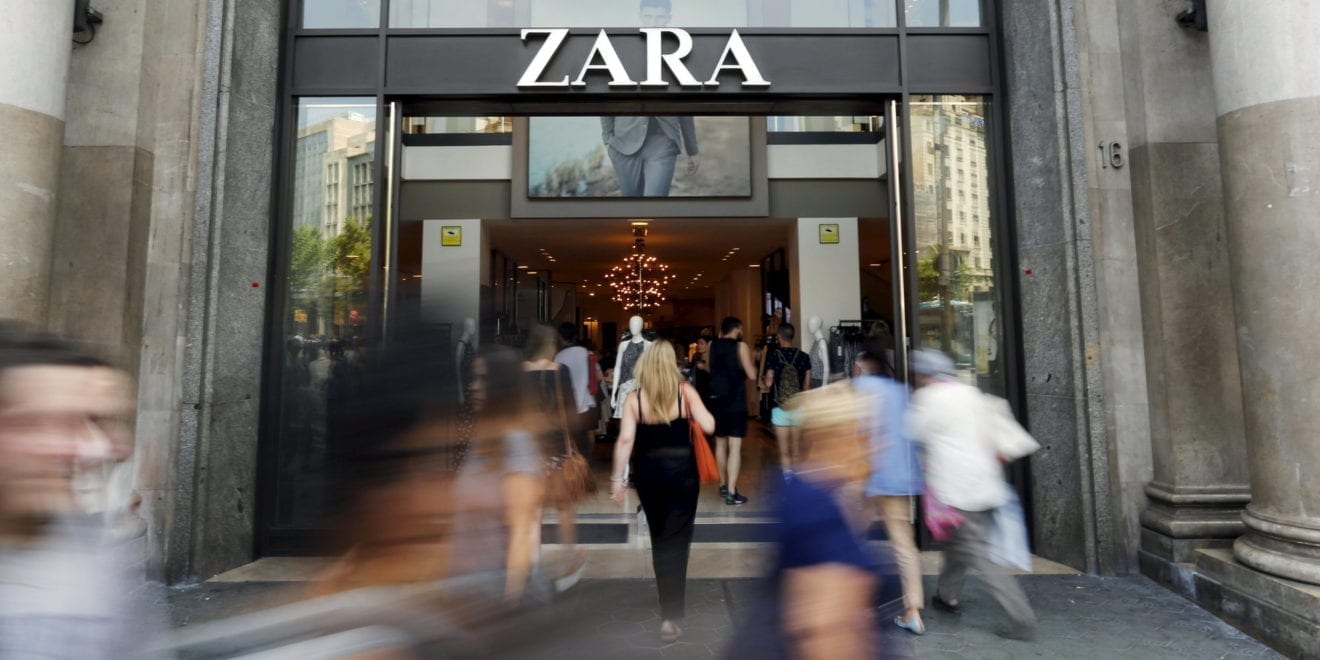
    Apparel giant Inditex says its net revenue grew by 7.1 per cent, reaching US$29.04 billion (€27.4 billion) for its first nine months.

    The company says the results reflect strong growth for its physical stores and online channels.

    Inditex’s gross profit increased by 7.2 per cent, totalling $17.33 billion (€16.3 billion), while its EBITDA jumped by 9.3 per cent, reaching $6.09 billion (€5.7 billion).

    The company continued its expansion, with 45 new store openings across multiple markets. By the end of the period, Inditex operated 5659 stores globally.

    Looking ahead, Inditex said it’s focused on its long-term growth, with an investment of $951 million (€900 million) annually in logistics for this year and the next. This investment aims to improve the company’s logistics capacity and enhance its integrated business model.

    Zara, Inditex’s flagship brand, continues to lead the portfolio, along with other brands such as Bershka, Massimo Dutti, Oysho, Pull&Bear, Stradivarius, Uterqüe, and Lefties.

  • Hanoi aims to create 169,000 new jobs in 2025

    Hanoi aims to create 169,000 new jobs in 2025

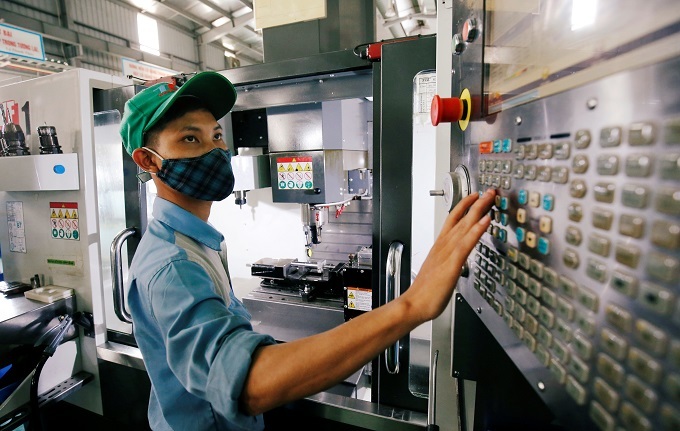
    Hanoi plans to create 169,000 new jobs, reduce urban unemployment rate to below 3%, and increase the proportion of trained workers to 75% in 2025, its People’s Committee said.

    The city will implement policies and solutions to support the comprehensive recovery and development of the labor market, with a focused and targeted approach.

    Vu Thu Ha, the committe’s vice chair, said to achieve the targets, the city will focus on ensuring social welfare, developing the labor market, and strengthening the workforce.

    At the same time, efforts will be made to promote economic growth, improve the quality of human resources, and raise the efficiency of job-creation loan programs funded by the city budget through the Vietnam Bank for Social Policies’s Hanoi branch, the official added.

    A total of 255 job fairs are planned throughout the year, aiming to create 50,600 job opportunities, including 4,600 positions overseas.

    The People’s Committee has asked the Department of Labour, Invalids, and Social Affairs to take measures to boost the labor market, create jobs, and continue sending workers abroad.

    In 2024, the city generated about 225,000 new jobs, surpassing the set target by 36.3%. The number of participants in mandatory social insurance exceeded 2.1 million, an increase of 4.5% compared to 2023. Meanwhile, 107,000 people joined voluntary social insurance, a rise of 21.2% year-on-year.

  • Spotify searches return explicit videos after moderation systems fail to spot them

    Spotify searches return explicit videos after moderation systems fail to spot them

    Spotify has a moderation problem on its hands at the moment. Searching for popular artists on the music streaming platform instead sometimes returns explicit videos and audio posted by unmoderated accounts. The situation recently came to light when users started reporting the problem on social media and The Verge reached out to Spotify for comment.

    This isn’t the first time something like this has happened to Spotify. However, previous instances usually consisted of explicit audio clips. Accounts posting those clips have apparently grown more brazen in recent months and have started posting videos instead. The ‘Video’ tab in particular has multiple examples of explicit content being uploaded to the platform.

    A Spotify representative has said that the examples recently brought to light have been removed. How these videos made it past the content moderation systems in the first place is a mystery. I’d have thought these systems would be a lot more effective now with AI powering them but apparently that might not be the case.

    Spotify is hardly the only platform suffering from behavior like this: YouTube has had a similar problem for a very long time. Videos on YouTube marketed towards children have been found to contain some awful content not suitable for those ages in the slightest. Dozens of accounts pop up in a short amount of time and post hundreds of these videos to flood YouTube feeds.

    The Spotify and YouTube issue is also a symptom of a larger matter in my opinion: a lack of care. Yes, both platforms do have systems in place to detect content like this before it’s uploaded but over the years I’ve seen companies care more about ridiculous copyright laws.

    YouTube in particular has a big problem when it comes to this. Advertising containing explicit content runs free on the site while someone humming a song for five seconds is enough to get their video a copyright strike. Their priorities just aren’t where they should be.

    The examples posted by users online may have been taken down but I’d wager that many more are soon to follow. I don’t know what these accounts get from doing this — aside from views perhaps — but they’re unlikely to stop anytime soon.

  • Vietnam’s coconut industry eyes billion-dollar markets

    Vietnam’s coconut industry eyes billion-dollar markets

    Coconut has emerged as a key economic driver for the Mekong Delta and south-central coastal regions as it gains entry into billion-dollar markets such as the U.S. and China.

    According to the Ministry of Agriculture and Rural Development, Vietnam currently boasts over 200,000 hectares of coconut cultivation. Coconut is now one of the six key crops included in the national program for industrial crop development by 2030. From generating US$180 million in export revenue in 2010, coconut exports reached $900 million in 2023, and the sector is expected to surpass the billion-dollar mark in 2024. With this trajectory, the ministry aims to enhance the scale and quality of the coconut industry for further global expansion.

    On the global map of coconut production and exports, Vietnam ranks sixth among the top ten coconut-producing countries, with an annual output of nearly 2 million tons. The country’s coconut quality and yield place it among the global leaders, with coconut meat making up 35% and coconut water 27%, both surpassing the global average by 5%. Dr. Tran Thi My Hanh, from the Southern Horticultural Research Institute (SOFRI), highlighted these exceptional figures.

    In terms of coconut cultivation, the Mekong Delta province of Ben Tre is the largest producer, with over 80,000 hectares dedicated to the crop. Huynh Quang Duc, Deputy Director of the Ben Tre Department of Agriculture and Rural Development, noted that the province is the coconut capital of the nation, accounting for 42% of Vietnam’s total coconut area. Coconut farming is a vital source of income for over 200,000 rural households in the province. In recent years, many farmers have switched from less profitable rice farming to coconut cultivation, boosting incomes and providing a sustainable livelihood. Ben Tre’s coconut products are expected to generate $500 million in export revenue in 2024, contributing over 50% of the nation’s total coconut export value.

    The Chinese market is seen as a significant opportunity for Vietnamese coconuts. China, with its large population, has a high demand for coconut-based products, including fresh coconuts, coconut water, coconut oil, and processed coconut products. With its proximity to Vietnam, the country enjoys a competitive advantage in shipping costs compared to Southeast Asian and African competitors. Additionally, free trade agreements between ASEAN and China have facilitated easier access to this lucrative market. Vietnam’s large coconut production capacity, particularly from Ben Tre and the Mekong Delta, ensures a stable supply for China.

    It is estimated that China consumes around 4 billion coconuts annually, with approximately 2.6 billion being fresh. Despite the high demand, China’s domestic production is insufficient, presenting an opportunity for Vietnam’s coconut exports to fill this gap.

    Maximizing the value of coconut

    While the Vietnamese coconut sector has several advantages, experts in the coconut processing industry warn that strict management of production and exports is crucial to sustaining growth. Nguyen Phong Phu, technical director of Vina T&T Group, emphasized that the approval of Vietnam’s fresh coconut exports to China has opened up significant economic opportunities. However, to maintain this success, both government authorities and producers must work together to manage production standards and combat fraudulent practices. The government must implement digital systems for managing export regions and enforce strict penalties against fraudulent activities to protect the reputation of Vietnamese coconut products.

    Coconuts offer high economic value not only through the export of fresh fruits to markets like the US, Australia, and China, but also through by-products such as coir, activated carbon, and coconut-based handicrafts. Nguyen Thi Kim Thanh, chairwoman of the Vietnam Coconut Association, pointed out that of the 200,000 hectares of coconut plantations across the country, 120,000 are dedicated to the processing industry. To increase coconut value, Vietnam must invest in quality coconut varieties while also focusing on maintaining a strong processing industry.

    Currently, Vietnam is emerging as a supplier of raw coconut materials to global processing markets. However, infrastructure improvements are needed in rural coconut-growing areas to reduce intermediaries and shorten the supply chain. This would allow farmers to access the market more directly, enhancing their income and creating incentives to continue growing coconuts.

  • IFC and Partners Invest USD 900 Million in Malaysia Data Center

    IFC and Partners Invest USD 900 Million in Malaysia Data Center

    The consortium, which includes DBS, Deutsche Bank, Global Infrastructure Partners (BlackRock subsidiary), HSBC, ING, and Natixis CIB, joined IFC in funding the first phase of the project in Johor Bahru. This initial 98-megawatt facility is part of a larger 72.5-acre campus that aims to deliver 300 megawatts of critical IT capacity upon completion. Once operational, the campus is expected to become one of the largest and most advanced data centers in the Asia Pacific, addressing the region’s surging demand for data processing capabilities.

    In May, 2024, the IFC initially announced a USD 150 million financing package for the project, which included a USD 50 million bridge loan that proved to be instrumental in advancing the development and attracting additional funding from the consortium. The IFC has now committed its second tranche (totaling USD 100 million) as part of this latest financing round, marking a significant milestone in the project’s development.

    “Our Johor campus is a landmark development for Yondr and will become an important part of Asia’s infrastructure as demand for capacity continues to grow in the region, driven by the acceleration of artificial intelligence (AI) and digital services,” said Chester Reid, Chief Financial Officer at Yondr. “Our success in securing a substantial loan facility to help complete the first phase of this campus highlights trust in the Yondr brand from leading financial institutions, following a number of major project milestones we have delivered this year in Europe and North America.”

    The hyperscale data center campus in Johor Bahru will be certified under the Excellence in Design for Greater Efficiencies (EDGE) program—the IFC’s flagship green building certification system. The certification highlights the project’s commitment to resource efficiency and sustainable design.

    The IFC served as the mandated lead arranger (MLA) for the financing package, with DBS, Deutsche Bank, HSBC, ING, and Natixis CIB also acting as MLAs, underwriters, and bookrunners.

    This marks IFC’s third investment in Malaysia since establishing its operations in the country in 2023.

    Judith Green, the World Bank Group’s Country Manager for Malaysia, is satisfied with the IFC’s commitment to a second tranche of financing for Yondr’s data center campus in Malaysia, stating, “This project will not only help to accelerate the digital transformation of the wider Asia-Pacific region, but also serves as a strong example of how IFC’s tailored financing solutions can de-risk projects and drive private-sector investment into emerging markets.”

  • Taiwan blocks Uber’s $950M Foodpanda deal over competition concerns

    Taiwan blocks Uber’s $950M Foodpanda deal over competition concerns

    Taiwan has blocked Uber Technologies’ $950 million purchase of Delivery Hero’s Foodpanda business on the island because of concerns it would be anti-competitive, the Fair Trade Commission (FTC) said on Wednesday.

    Uber and Foodpanda did not immediately respond to requests for comment outside regular business hours.

    Delivery Hero said in a statement Uber may either appeal the commission’s decision or terminate the acquisition.

    In a media briefing, the commission said the merger’s negative impact would outweigh the overall economic benefits, and corrective measures would not be able to address the competition concerns.

    “In the food delivery platform market, UberEats’ main competitive pressure comes from Foodpanda. The merger would eliminate this competitive pressure,” Chen Chih-min, vice chairman of Taiwan’s FTC, said.

    “Post-merger, UberEats would be less constrained by competition, giving it more incentive to raise prices for consumers and even increase commissions for restaurant operators.”

    Chen added that post-merger, the combined market share of both companies in Taiwan would exceed 90%.

    Uber and Delivery Hero announced in May the Taiwan deal that included a separate agreement for Uber to purchase $300 million worth of newly issued shares of the German food delivery firm.

    The U.S. company expected the acquisition to contribute at least $150 million annually to the adjusted core profit of its delivery business within a year of the deal’s closing, which was seen likely in the first half of 2025.

    Online food delivery platforms represent a small fraction of Taiwan’s competitive food delivery market. Foodpanda’s operations on the island were break-even in terms of adjusted core earnings for the 12 months ended March 31, 2024, the companies said.

  • Gasoline prices slip from 3-month high

    Gasoline prices slip from 3-month high

    Gasoline and diesel prices both fell Thursday afternoon, hovering around the same level since mid-October, after reaching a three-month peak last week.

    The popular fuel RON95 dropped 2.19% to VND20,540 (US$0.81) per liter.

    Diesel declined by 0.53% to VND18,630.

    Regulators said that fuel prices in the last seven days were affected by the European Union’s adoption of a sanction package against Russia, geopolitical tensions in the Middle East, and the ongoing military conflict between Russia and the Ukraine.

    RON95 dropped 3-3.1% in the period while oils fell 0.8-1.9%. RON95 is now priced at $83.7 per barrel and diesel at $88.8.

  • Stocks fail to sustain 2-month high

    Stocks fail to sustain 2-month high

    Vietnam’s benchmark VN-Index fell 0.09% to 1,272.87 points Thursday, after hitting a two-month peak in the previous session.

    The index closed 1.2 points lower after gaining 13.68 points in the previous session.

    Trading on the Ho Chi Minh Stock Exchange decreased dropped 27% to VND18.8 trillion (US$739 million).

    SSB of SeABank dropped 2%, followed by BVH of insurance company Bao Viet Holdings with a 1.9% decline.

    MWG of electronics retail chain Mobile World dropped 1.1% and VRE of retail real estate arm Vincom Retail closed 0.9% lower.

    Eleven blue chips gained, led by six banks.

    VIB of Vietnam International Commercial Bank posted the largest increase at 2.9%, followed by STB of Ho Chi Minh City-based lender Sacombank, up 2.3%.

    Foreign investors were net sellers to the tune of VND365 billion.

    They mainly net sold VCB of state-owned lender Vietcombank and FPT of IT giant FPT Corporation.

    The HNX-Index for stocks on the Hanoi Stock Exchange, home to mid and small caps, rose 0.04%, while the UPCoM-Index for the Unlisted Public Companies Market dropped 0.19%.

    Asia shares eased in holiday-thinned trade on Thursday, paring some of their gains from earlier in the week, while the dollar rose alongside U.S. Treasury yields.

    As the year-end approaches, trading volumes have begun thinning out and the main focus for investors remains that of the Federal Reserve’s rate outlook. Markets in Hong Kong, Australia and New Zealand were closed for a holiday on Thursday.

  • Keppel, Sovico Plan Vietnam-Singapore Subsea Cable Project

    Keppel, Sovico Plan Vietnam-Singapore Subsea Cable Project

    Currently, there are four operational submarine cable systems linking Vietnam to the rest of the world: AAE-1, AAG, TGN-IA, and APG. The SEA-ME-WE 3 cable system previously connected with Vietnam, however, it was retired in early December.

    Three new cables are under construction to connect Vietnam: ADC, ALC, and SJC2. Moreover, Viettel and Singtel have signed a Memorandum of Understanding (MOU) to construct the Vietnam-Singapore Cable System (VTS).

    Vietnam has experienced frequent internet disruptions due to faults in its underwater cables. For instance, both the APG and AAE-1 cables are currently not functioning and awaiting repairs. In June, three out of five undersea cables connecting Vietnam to the world (APG, AAE-1, and TGN-IA) encountered issues, causing internet speed reductions across the country. The repair of the AAE-1 cable is still pending. In January 2023, four out of five undersea cables (AAG, IA, APG, and AAE-1) were not operational, leading to slow internet speeds across Vietnam.

    In January 2024, the Prime Minister of Vietnam issued Decision 36/QD-TTg (Decision 36), approving Vietnam’s Digital Infrastructure Master Plan 2030. According to this plan, Vietnam aims to add two-to-four international internet cables by 2025 and another four-to-six international undersea fiber optic cables by 2030.

    Furthermore, by 2030, Vietnam plans to increase the total number of submarine cables to 15, each with a total capacity of at least 334 Tbps. Sovico Group will focus on providing high-quality products and services in various sectors to meet customer needs and integrate with the global economy. In September, Sovico Group signed an MoU with U.S.-based tech company, Supermicro, to develop a hyperscale data center in Vietnam.

    According to SCMP, Keppel and Sovico Group are considering laying a cable that will directly connect Vietnam with Singapore, predicted to cost an estimated USD 150 million.

    The new projects led by Keppel and Sovico Group will be separate from previous investments announced by Vietnamese companies in four new undersea cables. These include the ADC and SJC2 cables, built by Japan’s NEC; ALC, built by China’s HMN Tech; and the Vietnam-Singapore submarine cable system announced by Vietnam’s Viettel and Singapore’s Singtel.

    Given its proximity to China, Vietnam faces challenges in aligning with the U.S. on strategies and policies related to digital infrastructure and undersea cables.

  • L’Oreal acquires South Korea’s Dr.G in skincare deal with Migros

    L’Oreal acquires South Korea’s Dr.G in skincare deal with Migros

    French cosmetics giant L’Oreal said on Monday it had agreed to buy Gowoonsesang Cosmetics, which includes South Korean skincare brand Dr.G., from Swiss retailer Migros.

    The Korean beauty market is dominated by local brands known for being among the world’s most innovative, and increasingly popular overseas as part of a trend for ‘K-Beauty’.

    Dr.G will meet rising demand for K-Beauty and effective yet affordable skincare, L’Oreal said in a statement, adding that it has a growing pan-Asian presence and global growth potential.

    “We have been following the brand and its success for many years and we look forward to accelerating its growth in South Korea and the rest of the world,” said Alexis Perakis-Valat, global president of L’Oréal’s consumer products division.

    Reuters reported on Friday that L’Oreal and Migros were in final talks on a deal. Migros announced a strategic review of its Mibelle cosmetics group in February, saying it wanted to find a new home for the owner of Gowoonsesang and other brands.

    L’Oreal did not give a valuation for the deal, which comes amid a slowdown in China, previously one of the fastest-growing beauty markets.

  • E-commerce market soars to $25B

    E-commerce market soars to $25B

    Vietnam’s e-commerce market surpassed US$25 billion this year after growing by 20% from 2023 and exceeding earlier estimates.

    Online remains a key distribution channel, especially for agricultural products during harvest season, and businesses have achieved a breakthrough by leveraging e-commerce, according to a report by the Ministry of Industry and Trade.

    It valuation of the e-commerce market places Vietnam in the third place in Southeast Asia behind Indonesia ($65 billion) and Thailand ($26 billion), and also exceeded an earlier estimate of $22 billion by Google and its partners.

    E-commerce accounted for 60% of Vietnam’s digital economy this year, and is a key growth pillar along with online tourism.

    Other sectors that contributed to the digital economy were ride-hailing and food delivery and online media.

    The top e-commerce platforms are Shopee, TikTok Shop, Lazada, Tiki, and Sendo, with new ones such as Temu and Shein trying to move in on the market this year.

    The ministry said e-commerce models are becoming increasingly complex and diverse, and admitted a legal framework to regulate them is lacking.

    For instance, it pointed out, live-stream sales are currently governed by general e-commerce regulations, which treats them as a combination of advertising and sales activities.

    But there are no specific rules for live-stream sellers, account identification or the supervision of information during live sessions, it said.

    The proliferation of counterfeit and substandard goods remains a big challenge, particularly as online violations grow more sophisticated, it said.

    Managing cross-border activities poses difficulties due to inadequate regulations, enabling platforms like Temu and Shein to enter Vietnam without completing legal procedures, it said.

    This lack of oversight allows goods from other countries to enter Vietnam, affecting domestic producers, it said.

    It called for the passage of an E-Commerce Law to enhance government oversight, especially of cross-border platforms.

    Vietnam has nearly 725,000 vendors on e-commerce platforms, with these vendors’ total transactions exceeding VND75 trillion (US$2.95 billion), according to data from 439 platforms submitted to tax authorities.

    Taxes on e-commerce activities increased by 20% in 2024 to VND116 trillion.

  • Durian exports surge by 44% to $3.1B

    Durian exports surge by 44% to $3.1B

    Durian exports in the first 11 months of this year fetched US$3.1 billion, 44% up from a year earlier, customs data shows.

    China was the biggest market, accounting for $2.8 billion, or 90% of all exports, a 43% year-on-year increase.

    Thailand followed with $177 million, up 82%, while Hong Kong and Japan stepped up purchases by 16% and 85%. Shipments to Cambodia rose by 139 times to $3 million.

    Dang Phuc Nguyen, general secretary of the Vietnam Fruit and Vegetable Association, said 2024 has been a bumper year for exports, especially of durian.

    The association estimated fruit and vegetable exports would hit $7.1 billion for the year, up 27% from 2023, with durian accounting for half the value.

    Durian exports are expected to rise next year as Vietnam begins to ship durian pulp and puree to China.

    These products will bring more value than fresh durian, helping farmers make use of fruits that meet quality standards but are misshapen.

    Vietnam has around 154,000 hectares under durian and produces 1.2 million tons of the fruit annually.

    Exports of other fruits such as banana, jackfruit, mango, and coconut have also seen year-on-year increases of 20-400% in the first 11 months.

  • Two new ride-hailing platforms set to launch in Singapore in 2025

    Two new ride-hailing platforms set to launch in Singapore in 2025

    Two ride-hailing platforms, namely Geolah and Trans-cab Services, will begin operations in Singapore next year.

    They have received one-year provisional licenses that allow them to provide ride-hailing services, the city-state’s Land Transport Authority said on Monday.

    The new brands will join the five other ride-hailing platforms currently on the market, namely Grab, Ryde, TADA, Gojek and CDG Zig.

    Trans-cab Services, established in 2003 in Singapore, is the city-state’s third-largest taxi operator with a fleet of 2,079 taxis as of October, trailing Comfort (6,388) and CityCab (2,136).

    A Trans-cab spokesperson informed The Business Times that the company is preparing to launch its ride-hailing platform, which is “nearing completion,” without announcing a specific launch date.

    Geolah, founded in 2020, is a Singapore-based mobility platform powered by artificial intelligence. Its smartphone application of the same name will offer ride-hailing services in addition to its current limousine bookings and parcel delivery services.

    Its smartphone app, also named Geolah, will expand to include ride-hailing services alongside its existing limousine booking and parcel delivery options.

    The company stated that it operated in a “beta phase” for two weeks last February and now has 900 registered drivers.

  • Grab, Gojek to hike fees in Singapore by up to 37 cents

    Grab, Gojek to hike fees in Singapore by up to 37 cents

    Ride-hailing operators Grab, Gojek, TADA and CDG Zig in Singapore will hike their platform fees by up to 50 Singapore cents (37 U.S. cents) starting Jan. 1, 2025.

    Grab, the largest ride-hailing firm, will raise its platform fee from 70 cents to 90 cents per trip. For its food, groceries and parcel delivery services, fees will go up from 40 cents to 60 cents.

    It said the new “platform & partner fee” will support Central Provident Fund contributions, work injury compensation coverage and other welfare initiatives for its platform workers, as well as platform maintenance and service improvements.

    Similarly, Gojek will raise its platform fee from 30 cents to 50 cents per trip, saying these changes are to “protect drivers and their earnings in support of the Bill” on top of improving and maintaining its services.

    ComfortDelGro, the largest taxi operator in Singapore, will follow suit and raise its platform fee from the current rate of 70 cents to S$1-1.2, based on factors such as distance and travel time.

    As for TADA, fees per ride will go up by 50 cents, excluding goods and services tax. It noted that besides maintaining current features and developing new ones to provide a better ride-hailing experience, this adjustment is also essential to support the implementation of the government’s Platform Workers Bill.