Author: Mei Ling Tan

  • Spotify enhances podcasts with new commenting feature

    Spotify enhances podcasts with new commenting feature

    Spotify is launching Comments for podcasts and a new mobile app for podcasters to build stronger relationships with their listeners. These new tools allow podcasters to manage their shows and engage with fans in a deeper and more convenient way.

    The company has been adding features to their podcasts for some time now. A few years ago, the platform introduced Q&A and polls to allow listeners to interact with podcasts. Since their introduction, over 9 million unique Spotify users have engaged with a Q&A or poll and interactions have grown by 80% year-over-year. This suggests that interactive features like Comments are in high demand.

    Ben Wilson, the creator of “How to Take Over the World,” shared that he uses Comments to get feedback from his audience and understand which takeaways from the podcast resonate most with them. This feedback helps him create a stronger connection with listeners and makes podcasting more rewarding for him.

    The new Comments feature builds on the existing Q&A and polls functionality. With Comments, Spotify hopes to further enhance the interactive experience for both podcasters and listeners. This feature is available to all podcast creators, regardless of where their episodes are hosted. Creators can manage listener feedback, track their podcast’s growth, and interact with listeners, all through the new Spotify for Podcasters mobile app.

    The new Spotify for Podcasters mobile app has been rebuilt to be more inclusive and now works for all podcasters, regardless of where their show is hosted. It also includes new notification features that help podcasters stay informed about their show’s performance and listener feedback. The ability to manage comments has also been added to the app.

    Spotify’s VP of Podcast Product, Maya Prohovnik, stated in an interview that Comments were a highly requested feature by podcasters and listeners alike. Furthermore, she stated that since Spotify is committed to making its platform the best place for creators to connect with their fans, the addition of Comments aims to achieve that goal. Historically, podcasts have been a one-sided experience, and while features like Polls and Q&A have been available for some time, there has been a desire for more direct interaction.

    The new features and app are designed to offer a better podcasting experience for everyone involved. For podcast creators, these tools provide a meaningful way to grow their audience and strengthen relationships with listeners. For fans, the biggest benefit is the ability to connect with their favorite podcasters on a deeper level, directly on the platform where they are already listening.


  • Google Maps “Promoted Pins” feature that’s freaking everyone out is not new

    Google Maps “Promoted Pins” feature that’s freaking everyone out is not new

    When Anthony Higman, the person who first posted about the feature, was told the same, he was adamant that he did not tap anything, and the suggestion popped up on its own. The good news is that Higman said that the popup disappeared on its own in less than a minute.

    While it’s not clear if “Promoted Pins” can sometimes show up on their own, it’s a relief that they disappear after a while

    As X user Anthony Higman has shared, Google’s map app will not shy away from suggesting a quick detour to get you to visit one of the locations paying it to advertise on the app. Highman was asked to make a stop at Royal Farms, which is rated 2.9.

    Apparently, these hangouts are suggested arbitrarily and don’t have anything to do with your search history, which is how online ads usually work.

    As if we don’t already have enough ads all around us, be it billboards on the road or on websites we frequent, Google has somehow decided it’s a good idea to blast ads in your face when you are driving.

    Since the ads appear while you are driving, they are quite distracting and potentially dangerous. And from the looks of it, the popup doesn’t go away unless you tap on “Cancel” or “Add stop.” Given many people rely on audio instructions while driving, tempting them to interact with the screen could jeopardise their safety.

    A sponsored ad in Google Maps in the middle of your journey could potentially cause you to lose sight of where you were supposed to be going, especially if you are a new or inexperienced driver.

    Google seems to have lifted this bright idea from its subsidiary Waze, which is allegedly only supposed to show sponsored suggestions when your vehicle is not moving, but, as some users have observed, that’s not the case.

    It’s not known whether this feature is in testing or is here to stay. Higman has already declared that he will stop using the app if he gets sponsored suggestions every time he is driving. Not everyone hates the feature though, with one X user mentioning that it could be a good way to discover new places to go to.

  • DHL Express and CIMB join forces to reduce CO₂e through sustainable aviation fuel

    DHL Express and CIMB join forces to reduce CO₂e through sustainable aviation fuel

    DHL Express has signed an agreement with CIMB Group Holdings Berhad (“CIMB” or “the Group”) to welcome the banking group onboard its GoGreen Plus programme.

    The partnership enables CIMB to leverage the use of sustainable aviation fuel (SAF) to mitigate the CO2e emissions associated with its international shipments. Through the partnership, CIMB will deploy the programme across Malaysia and Singapore.

    CIMB recognises the importance of aligning business interests with climate practice. In September 2022, the Group announced a net-zero by 2050 goal for Scope 3 emissions, emphasising the indirect greenhouse gases generated through transportation and distribution activities. DHL’s GoGreen Plus service helps to facilitate a pathway towards cleaner operations and contributes to scaling the wider SAF ecosystem.

    SAF is considered the aviation industry’s most promising means of decarbonisation. Made from alternative raw materials such as used cooking oil, waste, and hydrogen, SAF cuts approximately 80 percent of carbon emissions for air transport shipments over its lifecycle compared to conventional jet fuel. In collaboration with DHL Express, CIMB expects to lower the carbon emissions of its time-definite international air shipments from Malaysia and Singapore by 20 percent via DHL. An independent auditor, Société Générale de Surveillance, verifies the greenhouse gas emission reductions to be counted against CIMB’s Scope 3 carbon emission footprint.

    “Many of our customers look at sustainability as a business imperative today. In Asia Pacific alone, more than 12,000 customers have signed up for our GoGreen Plus service and this number continues to grow consistently,” said Ken Lee, CEO DHL Express Asia Pacific. “As a leading express logistics company, we always connect people and businesses across borders. GoGreen Plus serves as a vital avenue for businesses to cut carbon emissions, and we are convinced more will come on board.”

    “SAF is widely acknowledged as a truly viable route to decarbonising the aviation sector. There is still significant progress to be made, as SAF makes up only 0.1 percent of aviation fuel consumed today. We are impressed with the leadership CIMB has demonstrated in the sustainability space and we are delighted to have CIMB partner us for this important initiative. This motivates us to accelerate efforts to promote SAF availability, accessibility, and affordability so that our customers realise their environmental ambitions,” said Julian Neo, Managing Director of DHL Express Malaysia and Brunei.

    “Sustainability is a key focus at CIMB and central to that are our 2050 net-zero commitments. In our roadmap to achieve these targets, we have long advocated the need to strategically partner and drive innovative solutions. CIMB is pleased to be partnering DHL in their sustainable fuel proposition that will help us mitigate our Scope 3 carbon emissions and in that regard, help us get closer to our 2050 net-zero commitments. DHL’s innovative solution in bringing such an option to its key clients is commendable and will accelerate the commercialisation of such technology,” said Gurdip Singh Sidhu, Chief Executive Officer of CIMB Malaysia and CIMB Bank Berhad.

    Launched in February 2023, GoGreen Plus is among the DHL Group’s initiatives to achieve net-zero missions by 2050, which is made possible by three of the most significant SAF agreements with bp, Neste, and World Energy. The air freight network accounts for around 70 percent of the company’s carbon footprint, so sustainable air transportation solutions are crucial for greener logistics.

  • Vietnam Airlines takes delivery of first A320neo

    Vietnam Airlines takes delivery of first A320neo

    Vietnam Airlines recently received its first Airbus A320neo as part of its fleet rejuvenation efforts.

    This is the first among the three A320neo planes, each seating 182 passengers, to be delivered to the carrier this year.

    By adding the A320neo family, the airline affirms the resolve to leverage its operation capacity to meet passengers’ increasing demand, particularly during the peak summer travel season.

    The new aircraft will help Vietnam Airlines provide an additional nearly 40,000 seats during the summer peak, and some 300,000 in the second half of the year.

    They will be used on such domestic routes as Hanoi – Da Lat, Hanoi – Phu Quoc, Ho Chi Minh City – Thanh Hoa and Ho Chi Minh City – Chu Lai.

    The modern narrow-body aircraft is equipped with a new-generation engine that helps save 16% of fuel consumption, reduce noise by 75% and cut some 50% of toxic exhaust compared to previous models.

    Vietnam Airlines stressed that it has made unceasing efforts to improve its services and fleet, hoping to bring passengers safety and comfort.

    The carrier will add large-body Boeing 787-10, the biggest passenger aircraft used in Vietnam at present, to its fleet in the coming time.

  • Google, Facebook, other foreign giants pay $159M taxes online

    Google, Facebook, other foreign giants pay $159M taxes online

    Companies that engage in e-commerce and other digital businesses without having an establishment in Vietnam have paid taxes of VND4.04 trillion (US$158.9 million) online in 2024, up 18.5% year-on-year.

    According to the Ministry of Finance, the number of foreign service providers, as they are called, who registered to pay taxes through the electronic portal increased by 26 from the end of 2023 to 102 in June.

    They include Google, Meta (Facebook), Microsoft, Netflix, and Apple.

    So far, around 383 international and domestic e-commerce platforms are registered on the electronic portal, up 22 from the end of 2023.

    E-commerce activities are categorized into eight groups: e-commerce platforms, online trading websites or applications, social media platforms, transportation and delivery platforms, digital agency platforms, subscription services, advertisement services, and app store platforms.

    According to the General Department of Taxation, tax payments from e-commerce activities amounted to VND97 trillion last year, up 14% from 2022.

  • Rice export prices surge in H1

    Rice export prices surge in H1

    According to data from the General Department of Customs, the average rice export price increased by over 18% over the same period last year.

    The grain was sold at US$959 per ton in Brunei, $868 in the US, $857 in the Netherlands, $847 in Ukraine, $836 in Iraq, and $831 in Turkey.

    The Vietnam Trade Office in the EU said Vietnam’s specialty fragrant rice varieties such as ST25, ST24, Nang Hoa, and OM are favored in the market thanks to their standout quality, leading to their high prices there.

    In the first half, Vietnam’s rice exports reached 4.7 million tons, a rise of 10.4% year-over-year, and its export turnover reached nearly $3 billion, up 32%.

  • Only 25% of Vietnamese firms have website

    Only 25% of Vietnamese firms have website

    According to the Vietnam Internet Network Information Center, only 25% of businesses in Vietnam have a website with a national domain, compared to over 70% in Europe.

    Amid a growing trend of omnichannel commerce, many retailers invest only in social media and e-commerce platforms, and do not build websites, causing many shoppers to worry about the legitimacy of the shops they encounter, thus detracting the shopping experience, VNNIC director Nguyen Hong Thang said. “Many entities are not fully aware of the importance of a legitimate online presence.”

    He said a website is like the home or headquarters of a retail store on the Internet, and could integrate and link to other sales platforms without being dependent on the policies and algorithms of social networks and e-commerce platforms.

    According to the Ministry of Information and Communications, there are 14 million grocery stores and over 9,000 traditional markets in the country, accounting for 75% of the retail market and meeting 85% of consumer needs.

    If their digital transformation is not ensured, the business activities of small traders would be affected and have social consequences, it warned.

    To encourage businesses to go digital and promote e-commerce, it has launched a program to support their online presence with digital services using the national domain “.vn.”

    The program offers free domain names and accompanying digital services for two years, including email and website services for their “.vn” domain for new businesses and individuals aged 18-23, and support for creating a website within one hour.

    The government seeks to have 350,000 id.vn domain names and 50,000 biz.vn domain names by 2025.

  • Vietnam Railways reports record half-year revenue

    Vietnam Railways reports record half-year revenue

    Vietnam Railways, the monopoly state-owned railroad operator, has reported record half-yearly revenues of VND4.5 trillion (US$177.13 million), surpassing its full-year earnings for the years 2019-2021.

    At a recent conference, it announced that revenues had increased by more than 10% compared to the same period last year. It targets revenues of VND6.258 trillion for the full year.

    It said passenger numbers increased by nearly 21%. It launched specialized services such as the “heritage connection” train between Hue and Da Nang, and charter trains, offering custom itineraries and services in March, and the “Da Lat night train journey” in April.

    It has expanded international freight transport, including to Russia, Europe, Mongolia, and Central Asia.

    Last year VNR turned the corner after three years of losses, reporting a profit of VND77 billion. But it had accumulated losses of over VND2.08 trillion.

    The company has 25 subsidiaries, 17 directly managed units and eight joint venture and associated companies, and manages a railway infrastructure totaling 3,143 km of tracks on 15 routes that run from north to south.

    Hanoi Railway Transport and Saigon Railway Transport are the two largest members, and last year they reported profits of VND14 billion and VND11 billion.

    Thanks to surging passenger demand, their profits were three times their full-year target in the first quarter of this year.

    The two companies are soon set to merge after receiving shareholder approval. They are in the process of completing the procedures for this.

  • Tasco buys 100% stake in sole Volvo distributor

    Tasco buys 100% stake in sole Volvo distributor

    Tasco Auto, a subsidiary of auto distributor Tasco, has bought out Sweden Auto, the sole distributor of Volvo cars in Vietnam.

    The deal made Tasco the importer and distributor of the Chinese-owned Swedish luxury brand, and it has since increased its number of showrooms by four to almost 90, maintaining its position as the biggest auto distributor in the country, the company said in a statement.

    Sweden Auto started distributing Volvo cars five years ago and reported pre-tax profits of VND54 billion ($2.1 million) last year, but the figure jumped to VND105 billion in the first five months this year thanks to a double-digit surge in sales.

    In May Volvo accounted for 14% of Vietnam’s luxury car market, Tasco said.

    The distributor of 15 auto brands last month announced that it would branch into car assembling and launch its first products next year.

    Tasco Auto chairman Pham Van Dung said at the time the company wanted to work with a global top 10 auto producer.

  • Durian prices jump 32% as Thai supply dries up

    Durian prices jump 32% as Thai supply dries up

    Monthong durian prices have risen by 32% in southern Vietnam in the last two months to VND103,000 (US$4.05) per kilogram amid growing demand from China and other foreign markets.

    Traders are competing to buy from provinces such as Dak Lak, Binh Phuoc and Tien Giang.

    Hoa An, a trader, said demand in mainland China has been rising and therefore traders are willing to pay high prices to meet its needs.

    Other markets such as Japan, Hong Kong, Taiwan and Australia are also buying more Vietnamese durian, he added.

    Another trader, Manh Khuong, said Thailand has run out of supply for now and therefore Chinese buyers are sourcing more from Vietnam.

    But the Thai durian crop is set to ripen in another two weeks, and Vietnamese prices are likely to drop then, he added.

    Dang Phuc Nguyen, general secretary of the Vietnam Fruits & Vegetables Association, said since May China has doubled its monthly purchases of Vietnamese durian.

    Vietnam’s exports were worth nearly $500 million in May and are estimated to reach $600 million in June, he said.

    This means the country exported around $1.5 billion worth of the fruit in the first half of the year, he said.

    “More stringent quality control is needed to ensure the country meets its full-year export target of $3.5 billion.”

    Vegetable and fruit exports overall are expected to rise by 15-20% this year to around $7 billion.

  • Garuda Indonesia and Singapore Airlines receive regulatory approval for commercial joint venture

    Garuda Indonesia and Singapore Airlines receive regulatory approval for commercial joint venture

    Garuda Indonesia and Singapore Airlines (SIA) received the Competition and Consumer Commission of Singapore’s (CCCS) approval of their commercial joint venture agreement.

    With this approval, the airlines will be able to deepen their strategic partnership on a wider range of commercial activities that will bring greater benefits to both airlines, as well as Indonesia and Singapore. These potentially include operating joint revenue sharing flights between the two countries, coordinating flight schedules to offer travellers more options and seamless connectivity between Singapore and Indonesia and beyond, and exploring joint sales and marketing initiatives that provide greater value to both airlines’ customers.

    Since Garuda Indonesia and Singapore Airlines signed an agreement to deepen their partnership in May 2023, the carriers have been working on initiatives including giving GarudaMiles and KrisFlyer members the option to earn and redeem miles on codeshare routes. They have also embarked on joint marketing initiatives to promote tourism activities.

    The airlines today codeshare on a wide range of flights, including between Singapore and Indonesian cities of Bali, Jakarta, Medan, and Surabaya, as well as on long-haul routes between Singapore and Johannesburg, London (Heathrow), and Mumbai.

    Mr Irfan Setiaputra, President and Chief Executive Officer, Garuda Indonesia, said, “We are very pleased to receive this approval, as it marks significant progress towards our commitment to enhance service quality as well as broaden both Garuda Indonesia and Singapore Airlines’ networks through a deepening partnership.

    The joint venture initiative that we are preparing today has been one of the strategies to ensure extensive value creation for our loyal customers. Having regulatory approval as the first step in a commercial agreement will provide more opportunities for developing well-executed strategic ideas.

    “Moreover, we hope that this joint venture agreement can provide seamless services for passengers with more flight schedule options and ease in earning and redeeming mileage. Also, this collaboration may deliver concrete action to contribute to boosting Indonesian tourism activities, which will support the post-pandemic economic recovery progress,” Mr Irfan explained.

    Mr Goh Choon Phong, Chief Executive Officer, Singapore Airlines, said, “The robust strategic partnership between Garuda Indonesia and Singapore Airlines has enabled us to broaden our codeshare services over the last few years, offering our customers more choices on flights. With the CCCS’s approval, we are poised to deepen our collaboration across a wider scope of commercial activities.

    Along with the ongoing work to strengthen the links between our frequent flyer membership programmes, this will provide our customers with even more options and enhanced value. This partnership underscores both airlines’ commitment to improving connectivity between Indonesia and Singapore and beyond, boosting both business and leisure travel, and contributing to economic growth.”

  • Emirates Group announces senior appointments

    Emirates Group announces senior appointments

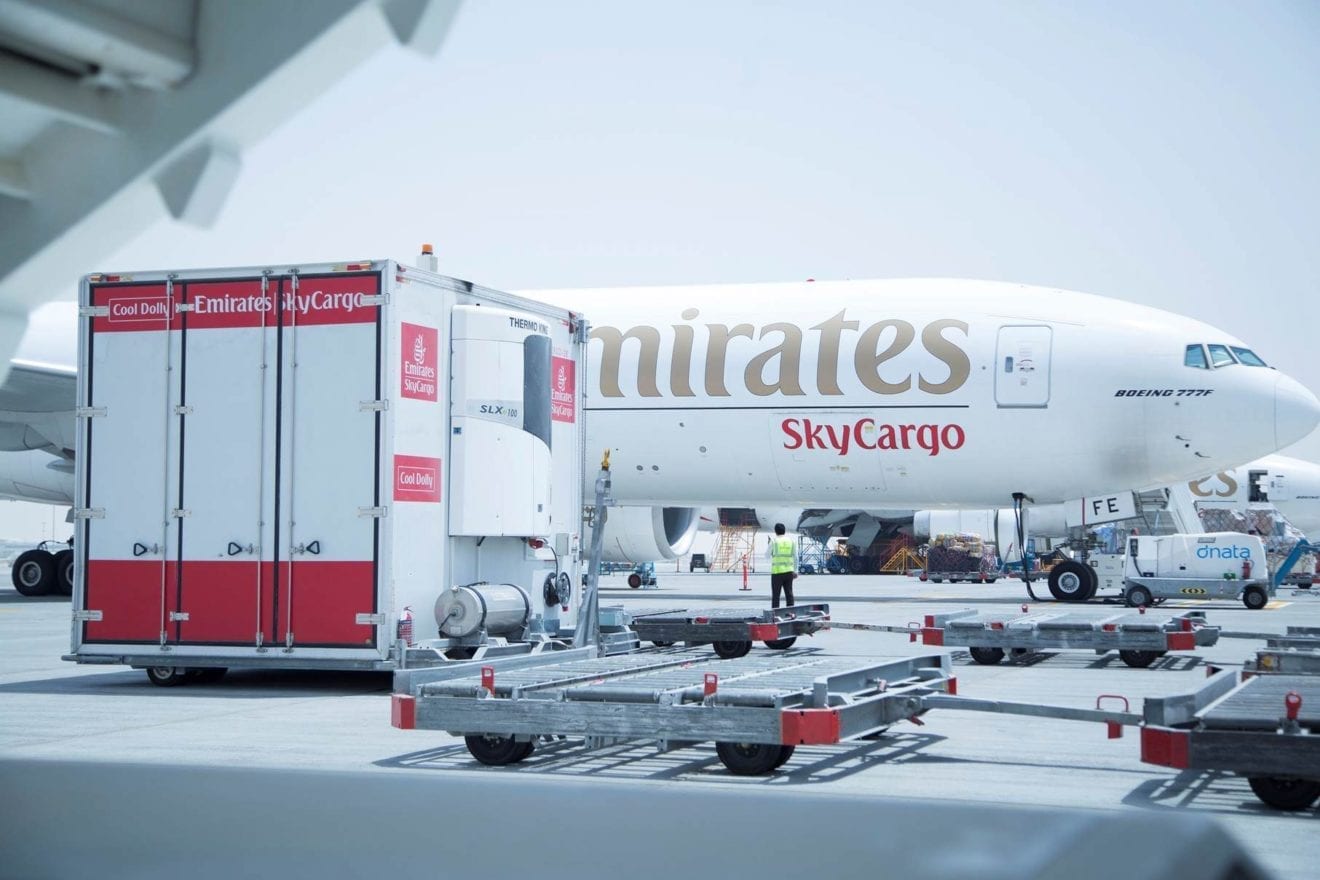
    His Highness Sheikh Ahmed bin Saeed Al Maktoum, Emirates Group Chairman and Chief Executive, announced senior appointments to support the organisation’s growth and strengthen its leadership bench.

    This latest list of promotions and senior appointments includes 7 UAE nationals, many of whom have grown their careers at the Emirates Group in different roles and continue to play key roles in the organisation’s success.

    HH Sheikh Ahmed said, “These appointments reflect the expanded scale, breadth, and ambition of our business. I’m heartened that we have been able to fill these roles with internal talent, including UAE nationals. The Emirates Group will continue to invest in being an employer of choice for the best talent in the industry, to deliver world-leading products and services, and reflect Dubai’s vision to be number one in everything we do.”

  • 3 Key Retail Trends to Watch for Remainder of 2024

    3 Key Retail Trends to Watch for Remainder of 2024

    Last month over 5,000 people attended the first ever NRF APAC event in Singapore and the post analysis after three days of presentations from leaders in retail, supply chain and IT is that innovation is the key to growth now more than ever. While challenges will remain for retailers around the globe as we move through 2024, emerging technologies and innovative strategies will provide opportunities to disrupt the status quo, improve operational efficiencies, and take customer experience to new heights.

    Here are three key trends to watch out for in the remainder of 2024:

    1. AI: Beyond the Hype

    The buzz and excitement created by generative AI bursting into the mainstream dominated the headlines in 2023, with ChatGPT alone reaching 100 million users within just a couple of months. In the second half of 2024, the AI space will get even more exciting as it becomes the year of deployment – the point where the rubber hits the road and theory meets practice. AI and augmented reality are no longer the future; they are the now. As AI applications evolve from being novelties to core components of business operations, 2024 is set to witness widespread implementation across various sectors.

    Key Developments to Watch:

    • Supply Chain Optimisation: AI’s impact on supply chains is crucial as retailers seek greater efficiency and responsiveness. Predictive analytics enable better demand forecasting, minimising stock issues. Automated systems and robotic automation in warehouses streamline operations, ensuring products are replenished and orders fulfilled more accurately and swiftly.
    • Personalisation at Scale: AI excels in delivering personalised experiences to consumers. By analysing vast amounts of customer data, AI tailors marketing efforts and product recommendations with remarkable precision, enhancing customer satisfaction and loyalty while boosting sales.
    • Customer Engagement and Interaction: AI enhances customer service through chatbots and virtual assistants, providing consistent support and simplifying the purchasing process. Innovative tools like voice and visual searches make interactions more engaging, catering to modern consumer preferences for fast and effortless shopping experiences.
    • Store Operations and Management: In physical stores, AI optimises layouts and product placement based on real-time data on customer movements and behaviour. Smart checkout systems and AI-enhanced security measures improve operational efficiency and security, respectively, aligning with today’s retail needs.
    1. The Tech-Enabled Human Touch

    Another significant retail trend to watch is the evolution of the tech-enabled human touch. This trend capitalises on the advances made in digitising physical retail spaces, transforming them from perceived liabilities to pivotal assets in a post-pandemic world.

    Key Developments to Watch:

    • From Digital to Physical Enhancements: The focus for the remainder of 2024 is on making digital interactions more tangible and engaging. Innovations like virtual try-ons and live shopping sessions have started to blur the lines between online and offline shopping experiences. Social commerce and virtual consultations further enhance this integration, offering more immersive and interactive shopping encounters that extend beyond traditional e-commerce platforms.
    • Emergence of Mixed Reality: Mixed reality technologies are set to revolutionise retail environments by merging digital and physical elements in unprecedented ways. This integration will necessitate seamless visibility and transparency across retail inventory systems, ensuring that if a product is available, it can be sold through any channel—be it online or in-store.
    • Leveraging Technology for Personalised Service: As retail moves towards a multi-dimensional approach, physical stores will increasingly need to leverage their staff differently. Technology can empower sales associates to provide concierge-level services, enhancing customer interactions with a personal touch that combines efficiency and customisation. From on-the-spot checkouts to rapid online order processing and returns, technology will enable staff to deliver superior service that caters to the modern shopper’s expectations.
    1. ESG: Firmly Back on the Agenda

    Over the last 18 months, progress on the Environmental, social, and governance (ESG) agenda may have quietly stalled as both retailers and consumers prioritised cost efficiencies. However, the sustainability agenda is one trend that is never going away, and sustainability and the environment will once again be a top priority for retailers in 2024 and beyond.

    Key Developments to Watch:

    • Renewed Focus on Transparency and Accountability: This year, transparency is critical as consumers increasingly demand clarity and honesty in how products are sourced, manufactured, and sold. The backlash against greenwashing and bluewashing has intensified, pushing retailers to substantiate their sustainability claims with verifiable data. Retailers now face greater scrutiny not only for the authenticity of their environmental claims but also for their factual accuracy.
    • Supply Chain Visibility: The need for comprehensive supply chain transparency has never been more acute. Retailers must ensure that their supply chains are not only efficient but also sustainable and ethical. This involves greater traceability from source to store, which will be crucial in meeting both consumer expectations and regulatory requirements.
    • Enhancing Product Durability and Circularity: Following significant global environmental commitments, such as those made at COP 28, retailers are expected to invest more in durable and traceable products. The push towards a circular economy will see retailers enhancing their efforts in recycling, reusing, and reducing waste, with the supply chain playing a pivotal role in these initiatives.

    2024 and Beyond

    Together, these trends are not just shaping the current landscape but are also paving the way for a more resilient and innovative future in retail. As we move forward, the ability of retailers to adapt and thrive amidst these changes will likely dictate their success in this new era of retail, where technology, human touch, and sustainability converge to redefine what it means to be a leader in the industry.


  • Vietjet boosts air travel between Southeast and Northeast Asia with new China and South Korea services

    Vietjet boosts air travel between Southeast and Northeast Asia with new China and South Korea services

    Vietjet has kicked off the direct service between Ho Chi Minh City and Xi’an, China, and introduced the new Nha Trang – Daegu, South Korea, route. These expansions highlight Vietjet’s commitment to providing more affordable and seamless travel options while strengthening air connectivity across Southeast and Northeast Asia.

    On this occasion, Vietjet offers an exclusive promotion from now to July 7, 2024, featuring one million tickets starting from USD0 across its entire flight network. Bookings are available for travel between August 22, 2024, and May 22, 2025 through the Vietjet website and the Vietjet Air mobile app, presenting an exciting opportunity for travelers planning their next getaway.

    The introduction of the Nha Trang – Daegu route on July 1, 2024, coincides with Vietjet’s 10th anniversary of successful operations between Vietnam and South Korea. Starting October 27, 2024, the service linking Vietnam’s coastal city Nha Trang with South Korea’s fourth-largest city Daegu will operate seven round trips per week, further enhancing Vietjet’s extensive South Korean services.

    Vietjet currently holds the largest capacity between Vietnam and South Korea, seamlessly connecting Ho Chi Minh City, Hanoi, Hai Phong, Da Nang, Nha Trang, Phu Quoc, and Da Lat with Seoul, Busan, and Daegu. Over the past decade, Vietjet has facilitated convenient travel between the two countries, transporting ten million passengers across 37 regular and charter services, significantly contributing to economic, investment, tourism, and cultural exchanges.

    Additionally, on July 1, 2024, Vietjet expands its footprint in China with inaugural flights on the route connecting Ho Chi Minh City Vietnam’s largest metropolis, to Xi’an, China’s prominent historical city. Vietjet is the sole airline offering this direct connection with four round trips per week, following the launch of Shanghai and Chengdu services earlier this year.

    The airline’s route expansion aligns with increasing demand in international air travel and cargo markets across Asia-Pacific, driven by global economic activities. In May, airlines in the region transported 27.9 million passengers, marking a significant 23.9% year-on-year increase, as reported by the Association of Asia Pacific Airlines (AAPA).

    The new routes strengthen Vietjet’s flight network, providing travelers with convenient access to destinations across Vietnam, Southeast Asia, and beyond. During the first half of 2024, the airline launched several international services, linking Hanoi, the capital of Vietnam, with Sydney and Melbourne in Australia, and Hiroshima in Japan, as well as connecting the island of Phu Quoc to Kaohsiung and Taichung in Taiwan.

  • Google is about to make posting Notes for search results easier

    Google is about to make posting Notes for search results easier

    We’re currently more and more reliant on AI for searching and solving all kinds of problems. However, human opinion still matters, and it’s the best way to get reliable input. Since last fall, Google has been experimenting to offer a more human touch to people with Notes – a commentary on the search results a person got that other users can view.

    Now, the folks at Android Authority have dug into some code and have discovered that Google is working on making posting Notes easier for its Android app.

    Right now, Notes in Search is an opt-in feature part of Search Labs, and it’s currently available only to users in the US and India. Code in version 15.26.34 of the Google app for Android reveals that Google may be letting you quickly share your take on Search Results without having to choose a theme (choosing a theme appeared very important so far when posting a Note as if how things look is more important than the contents).

    With this new tweak, Google is giving you options to still choose a theme, but you can also quickly set a background to your Note by attaching an image. This change hasn’t been rolled out publicly yet, but it probably should be available pretty soon. At least to the users that get to have access to Notes anyway.

    I personally believe this feature is super useful and just wish it was available to more people. However, maybe Google needs time to refine it before it becomes globally available. Anyway, it will actually be a good thing so we don’t always have to rely on AI for feedback on something. Having someone else’s review of sorts on search results is actually a beneficial thing.