Author: Mei Ling Tan

  • Banks see massive layoffs

    Banks see massive layoffs

    Faced with difficulties that are expected to linger, large western banks are slashing costs by downsizing their payrolls and increasing the use of artificial intelligence.

    Deutsche Bank has said it is laying off 3,500 employees, or 4% of its workforce, to reduce costs by 2.5 billion euros (US$2.7 billion) a year by 2025.

    One of the ways the German lender has chosen to cut costs is to promote “simplified workflows and automation,” and so most of the jobs will be shed in the back office. Its pre-tax net profit fell by 14% last year to 4.9 billion euros ($5.3 billion).

    Deutsche Bank is the latest of a number of lenders to announce layoffs in recent months. UBS is cutting 3,000 jobs in Switzerland, where it is headquartered.

    Citibank, the third largest American bank, last month said it would cut 20,000 jobs in the next two years, equivalent to 10% of its global workforce, to save $2.5 billion in the long term.

    January was also when the U.S. financial industry laid off the most workers, 23,238, since Sept. 2018, according to a report by recruitment company Challenger, Gray & Christmas.

    The layoff announcements continue in early 2024 amid massive downsizing by the global financial industry.

    Major banks around the world axed more than 60,000 jobs in 2023, among the highest in a year since the financial crisis.

    Citibank started sacking workers in November 2023.

    In the U.K., a number of lenders, including Barclays, Lloyds and Metro Bank, announced staff reduction at around the same time.

    Some banks cited increased automation and the use of artificial intelligence as reasons to reduce their payroll.
    Lloyds is eliminating certain roles and only hiring data and technology personnel.

    The downsizing is also intended to prepare for a more difficult business environment as rising interest rates impact the economy.

    Deutsche Bank said it had increased provisions for potential bad debts by 300 million euros to 1.5 billion euros ($1.6 billion) in 2023, which reflected “the continued challenging impact of macro-economic and interest rate conditions.

    Investment banks, which had to slash wage costs last year, are expected to continue downsizing.

  • Chinese EV giant BYD to begin Vietnam sales in May

    Chinese EV giant BYD to begin Vietnam sales in May

    The world’s biggest electric vehicle maker, China’s BYD, will set up shop in Hanoi in May.

    It would sell its first cars in the sedan and SUV segments, sources familiar with the matter said.

    Its SUV BYD Atto 3 is among the most sought-after cars globally. It has large demand in Sweden and is the best-selling EV in Thailand.

    It has a 60.48-kilowatt-hour battery that allows travel of up to 480 kilometers.

    Its prices start from US$30,750 in Thailand.

    In Vietnam, BYD cars will be imported as complete units from China.

    The company is building a $504-million plant in Thailand, its biggest market outside China, and expects to start production there this year.

    In future BYD cars can be imported to Vietnam from Thailand to enjoy the zero import tax applicable to Southeast Asian countries.

    BYD, established in 2003, sold 1.62 million electric cars last year, second globally behind Tesla with 1.8 million units, though in the last quarter it outpaced past the U.S. company 526,000 to 484,000.

    Ninety percent of its sales were in China.

  • Dollar steps up over dong

    Dollar steps up over dong

    The U.S. dollar rose against the Vietnamese dong Wednesday morning.

    Vietcombank sold the dollar at VND24,570, up 0.16% from Tuesday.

    It fell 0.40% to VND24,850 on the black market.

    The greenback has increased by 0.61% against the dong since the beginning of the year.

    Globally the dollar remained under pressure on Wednesday after retreating from a nearly three-month high against the euro in the previous session with a decline in U.S. bond yields adding to the drag.

    Analysts pointed to technical factors for the dollar’s pullback, following a two-day rally of as much as 1.4% against the euro after unexpectedly strong U.S. jobs data and more hawkish rhetoric from Federal Reserve Chair Jerome Powell scuppered bets for an early interest rate cut.

    The U.S. dollar index – which measures the currency against six major peers, including the euro – was flat at 104.14 after Tuesday’s 0.29% slide. On Monday, it had reached its highest since Nov. 14 at 104.60.

  • VinFast recalls 5,900 EVs for headlight issue

    VinFast recalls 5,900 EVs for headlight issue

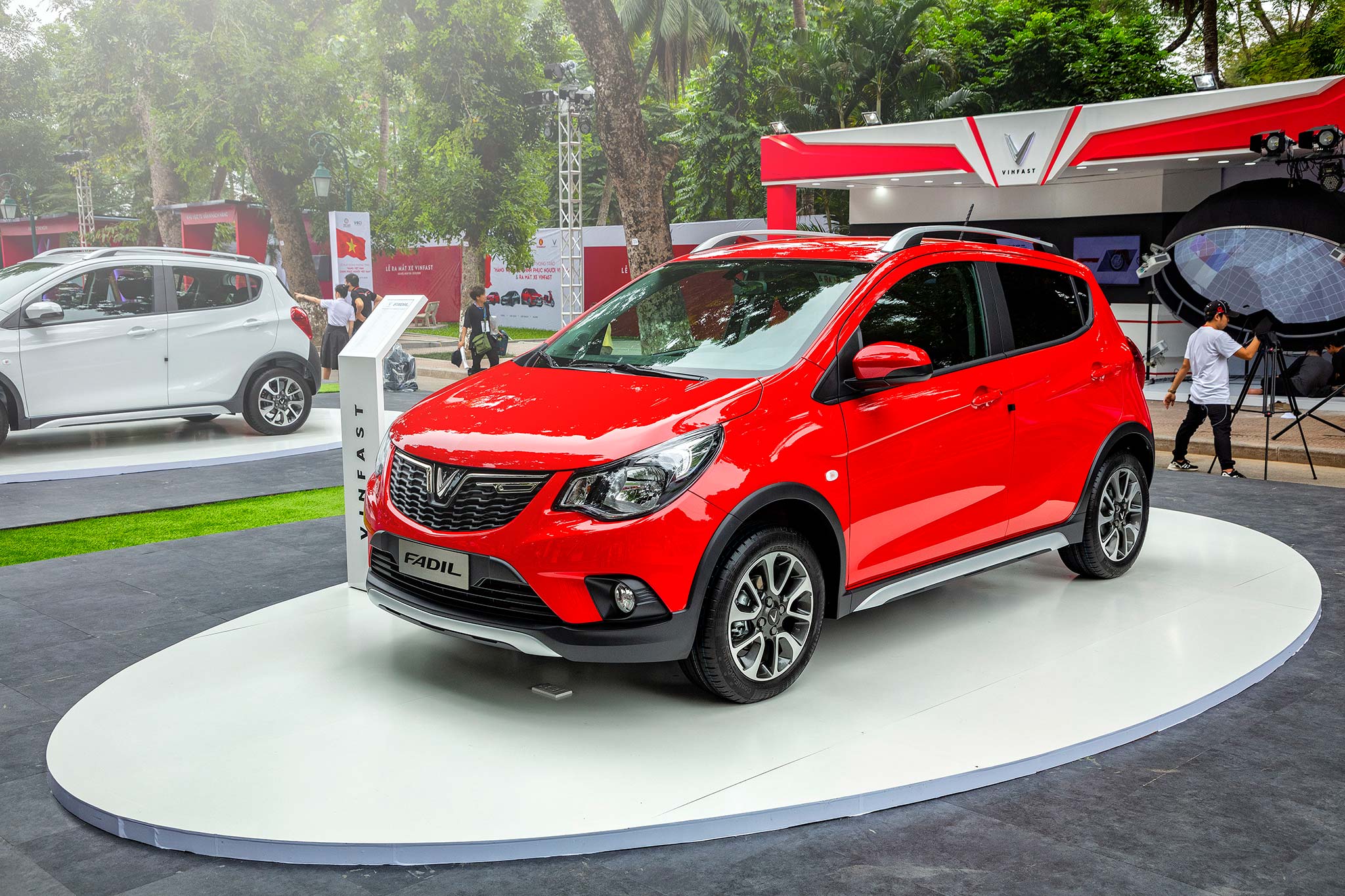
    VinFast is recalling 5,912 VF 5 Plus electric vehicles manufactured last year to fix the issue of headlights turning off when the left turn signal is switched on.

    The company said the headlights in some VF 5 Plus cars, the smallest in its EV lineup, could turn off when the car is traveling at 50-55 kilometers per hour and the headlights are in auto mode.

    This is due to a hardware issue in the circuit board the company received from its supplier, it said.

    The supplier would replace the necessary parts for free, and the task will take around 40 minutes, it added.

    There have been no incidents due to the issue so far, but the company is recalling all vehicles produced between March and December last year.

  • Nokia signs 5G patent deal with vivo

    Nokia signs 5G patent deal with vivo

    Nokia has signed a lot of 5G patent agreements in the last year. The Finnish company recent convinced Oppo that it’s better to make use of technology that other companies patent by simply paying for it.

    Today, Nokia is signing yet another 5G patent agreement, this time with another Chinese smartphone maker, vivo. Granted, this is a multi-year cross-license agreement that will benefit both companies, it’s vivo that gains on the short run since it can now return to the German market after losing the lawsuit filed by Nokia.

    The announcement mentions that the new deal “resolved all pending patent litigations between the parties, in all jurisdictions.” However, the terms of the agreement remain confidential, so there’s not much we can add to this.

    With this licensing agreement, Nokia “has now almost completed its smartphone license renewal cycle,” the company notes. The Finnish giant signed similar agreements with other big smartphone companies like Samsung, Honor, Huawei, Oppo, and even Apple.

    “This is the sixth major smartphone patent license agreement we have signed in the past thirteen months, and we have now almost completed our smartphone license renewal cycle. Together these licensing agreements demonstrate Nokia’s significant contribution to developing key technologies relied upon by the entire smartphone industry and they will provide long-term stability to our licensing business for years to come,” said Jenni Lukander, President of Nokia Technologies.

    Nokia expects its intellectual property licensing business to generate around €1.4 billion ($1.5 billion) in the mid-term, which isn’t that much considering that the company invested around €150 billion in R&D.

  • Cross-border e-commerce Vietnam’s next big thing in exports

    Cross-border e-commerce Vietnam’s next big thing in exports

    According to U.S. e-commerce giant Amazon, cross-border e-commerce is expected to be the fifth-highest value export of Vietnam by 2027, with a value of US$12 billion.

    “2023 Performance Report: Empowering Small and Medium-sized Enterprises in Vietnam” published by the firm’s Amazon Global Selling Vietnam, a unit that supports sellers, said by 2027 cross-border e-commerce exports could reach $5 billion under “normal” circumstances and $12 billion in the best-case scenario if small, medium- and micro-sized businesses get support from the government.

    In the latter case, cross-border e-commerce will account for the country’s fifth biggest exports.

    Amazon Global Selling said online exports of Vietnamese goods could thrive since more and more global consumers are shifting from offline.

    Last year Vietnam’s exports were worth nearly $356 billion, according to the General Statistics Office.

    The top exports items, all exceeding $20 billion, are electronics – computers, phones and components, machinery – equipment, textiles, and agriculture – forestry – fisheries.

    Vietnamese retailers sold over 17 million products on Amazon last year, up 50% from 2022, according to the e-commerce platform.

    The number of sellers increased by 40% and those with revenues exceeding $100,000 increased by 70%.

    The top five product categories were household appliances, kitchen tools, health-personal care, clothing, and beauty products.

    These reflect Vietnam’s long experience in manufacturing and exporting products such as furniture, home decor and apparel.

    “The growth of emerging sectors such as health and personal care and beauty products contributes to the increasing diversity of Vietnam’s online exports,” the report said.

    According to a study by the technology advisory firm Access Partnership, the main export markets were Southeast Asia and China.

    In the next five years the U.S. and Europe are likely be priority markets as consumers in those regions are growing increasingly fond of Vietnamese goods on online platforms, the study said.

    “E-commerce is one of the next major trends for businesses who are looking to expand globally,” Gijae Seong, head of Amazon Global Selling Vietnam, said.

    The challenge for these businesses is whether they could quickly leverage this trend, grasp global consumer demand and build long-term development plans, he said.

    Access Partnership said Vietnamese businesses face challenges in online transactions like high customs duties and post-clearance costs.

    It said businesses need more legal and financial support to capitalize on the opportunities for e-commerce exports.

    So measures like establishing cross-border e-commerce zones and providing grants for exports and e-commerce businesses would play a crucial role, it added.

  • Cathay Cargo volume up 20 percent in December

    Cathay Cargo volume up 20 percent in December

    Cathay Pacific’s cargo business ended 2023 on a high note, finishing with around 1.4 million tonnes, compared with about 1.2 million tonnes in 2022, in what it described as ‘an encouraging result.’

    Cargo volume in December jumped 20.7 percent year on year, as the airline carried 128,546 tonnes with cargo revenue increasing 14.1 percent year on year for the month. The cargo load factor slid 6.5 percentage points to 60.8 percent, as capacity measured in available cargo tonne kilometres (AFTKs) increased by 26.3 percent year on year.

    In the full year of 2023, the tonnage increased by 19.6 percent against a 59.7 percent increase in AFTKs and a 40.3 percent increase in RFTKs, as compared with 2022, the airline noted.

    “Our cargo business performed well in December, and finished on a high, primarily driven by the strong year-end demand for e-commerce products. Additionally, there was increased demand for perishable goods for the holiday season. December also saw a pickup in our Live Animal solutions with significant numbers of racehorses being moved across our network in support of the Hong Kong international race events.

  • Meet Rufus, Amazon’s new AI shopping assistant

    Meet Rufus, Amazon’s new AI shopping assistant

    Amazon is among the companies that has iterated a lot when it comes to artificial intelligence. The US-based giant continues to develop new AI tools, especially now that AI is the main buzzword in the tech world.

    The latest AI-powered feature introduced by Amazon is Rufus, an AI assistant that’s supposed to help users with their shopping sprees. As the biggest retailer in the United States, it’s only fitting for Amazon to launch such a product.

    According to Amazon, Rufus has been trained on its product catalog, customer reviews, community Q&As, as well as information from the web. The AI shopping assistant has been specifically designed to answer customer questions on a wide range of shopping needs and products. Rufus can even provide comparisons and make recommendations based on conversational context.

    Rufus is now available in beta, but Amazon will be starting to roll it out to customers in waves, beginning with a small subset of customers in the United States via the mobile app. Rufus will eventually be rolled out to the rest of the US customers in the coming weeks, Amazon says.

    If you’re interested in checking this one out, here are some of Rufus’ key features:

    • Learn what to look for while shopping product categories
    • Shop by occasion or purpose
    • Get help comparing product categories
    • Find the best recommendations
    • Ask questions about a specific product while on a product detail page

    To start using Rufus, simply start typing or speaking your question into the search bar in Amazon’s mobile app and the shopping assistant chat dialog box will pop up at the bottom of the screen. Keep in mind that this is only available for select customers in the US while it’s in beta.

  • Waze for iOS gets update that fixes one issue but fails to exterminate two key bugs

    Waze for iOS gets update that fixes one issue but fails to exterminate two key bugs

    Waze for iOS received an update in the App Store as January ended. Version 4.101 of the crowdsourced navigation app was supposed to fix an issue that incorrectly showed railroad crossings on the app. You don’t have to be Snidely Whiplash to want to know where the tracks are located and the railroad crossing warnings prevent accidents from occurring. Most times when train meets automobile, fatalities ensue.

    The update, according to Autoevolution, was the first for the iOS version of the Waze app since version 4.100 was dropped on December 14th. And Waze users are a bit peeved considering that other issues need to be addressed. In Android Auto and CarPlay, some users are upset to see the icon representing their vehicle randomly disappear from the display whether navigation is on the screen or not.

    Autoevolution’s Bogdan Popa notes that his icon vanishes on CarPlay when turn-by-turn guidance is running. As you might have figured out already, you can’t find the location of your vehicle on the map. Users also complain that the app sends them on alternate routes that don’t make sense. But this could be due to the app’s goal which is to get drivers to their destination using the fastest route even if it is not an easy one for the driver to navigate. As long as you have certain navigation settings disabled, such as the one that will “Avoid tolls,” and the one that will “avoid freeways,” Waze will suggest the fastest route.

    Another issue is that the voice command feature for the iOS version of Waze is not working and it hasn’t been for a few weeks. This prevents users from telling Waze where they want to go by using their voice. For example, when I tapped the microphone icon on the “Where to?” field in the Waze app and said “navigate to Madison Square Garden,” the app said “Got it” and repeated my request but did not act on it. In other words, it did not show me how to get to the venue. I was using Waze for iOS on my iPhone 15 Pro Max.

    Doing the same thing using the Android version of Waze on my Pixel 6 Pro resulted in the app showing me the directions to the world’s most famous arena from my location. So yes, this is a problem for iPhone users although navigation will work if you type in the name of the destination. This could be a big issue if you’re driving and want to change your destination by voice command. Since this is not working, what you have to do is pull over to the side of the road and type in the name of the new destination.

    Even though Google owns both Google Maps and Waze, the latter is focused on navigation and getting you to your destination quickly and safely. Waze is also about getting traffic updates and road conditions from your fellow drivers who can help you avoid some issues on your journey. Google Maps is about getting you to your destination quickly and safely, but that app also shows recommendations from Google Local Guides showing you places to dine, places to spend the night, and things to do when you get to your destination.

    Of course, having the icon that represents your vehicle disappear from the display is a hardship as is the broken voice command. These are just as important, if not more important, than incorrectly placed railroad crossings. Waze decided to fix only the latter in the latest update to its iOS app and that is a good reason why some users are upset.

  • Shopify has your back if you want to try the AI magic with a new image editor

    Shopify has your back if you want to try the AI magic with a new image editor

    Back in ancient times, supermarkets used to hand out paper brochures with the week’s top offers. Naturally, you didn’t pay much attention to the product image – you focused on the price.

    It’s only after you try to sell something online – and you need a cool product photo – that you realize there’s a thing called “product photography” and the eggs, ham or pineapple images didn’t just materialize out of thin air on the brochure’s pages.

    See, the better photo an offer has, the higher the chances for a successful deal.

    That’s why Shopify introduces a new tool to help out all who are selling products online. It’s an AI image editor that should aid users in creating more appealing and attractive images for their offers.

    Moving beyond the product-on-a-rug aesthetic can be challenging, and you’ll be surprised to see just how much money big companies spend on setting up dedicated product photography studios with expensive backdrops. Not to mention the cameras, lenses and manpower a brand has to invest in.

    Most people don’t have anything close to that, most people just have their iPhones and their bedrooms.

    The way Shopify’s AI editor will operate is you’ll upload an image of your product, and suggest certain edits that can be made to it. For example, if you have a picture of a pair of headphones, and you want to look like they are in the sky, you can upload the image and ask the AI to generate a background of the sky. Just like other image generators, this tool has different visual styles.

  • Vietnam wins bid to export 300,000 tons of rice to Indonesia

    Vietnam wins bid to export 300,000 tons of rice to Indonesia

    Seven Vietnamese firms have won a bid to export 300,000 tons of rice to Indonesia, or more than half the volume that country’s plans to import in January.

    Their lowest quote was US$648 per ton, including transportation costs.

    Earlier this year Indonesia said it wanted to import 500,000 tons of rice in January to increase its food reserves.

    Last year it imported more than one million tons of Vietnamese rice, making it the second biggest customer.

    According to the Vietnam Food Association and the Thai Rice Exporters Association, the current export prices of standard 5% broken rice are $656 per ton in Thailand, $642 in Vietnam and $638 in Pakistan.

    Last year Vietnam exported eight million tons of rice to rank third in the world after India and Thailand.

  • Vietcombank continues to achieve record profits

    Vietcombank continues to achieve record profits

    State-owned lender Vietcombank reported record pre-tax profits of VND41.2 trillion (US$1.68 billion) for 2023.

    Its previous highest was VND37.4 trillion a year earlier.

    It made the bank the most profitable in the industry by a margin of tens of trillions of dong.

    Profits before credit risk provisioning were worth VND45.8 trillion, a 2.2% decline.

    But halving the provisioning to VND4.5 trillion meant the lender maintained profit growth.

    Vietcombank’s bad debts ratio (groups three to five) increased from 0.68% at the beginning of the year to 1% by the end, while loans that require attention (group two debts) surged by 40% to over VND5.55 trillion.

  • Apple chip builder TSMC not yet ready to move to next-gen lithography system

    Apple chip builder TSMC not yet ready to move to next-gen lithography system

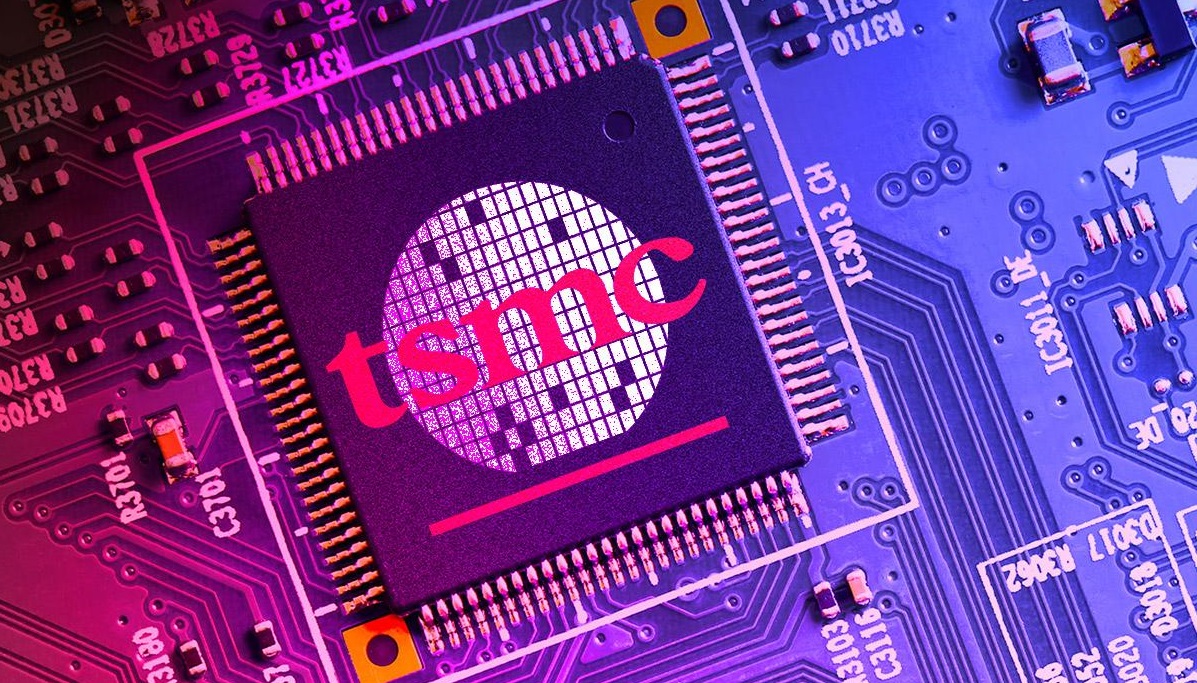
    Back in December, Dutch tech giant ASML shipped its first High-NA Extreme Ultraviolet (EUV) lithography machine (EXE:5000) to Intel. The $400 million machine will take us to the next tier of chip production with a process node of 2nm and less. The original EUV machines, also made by ASML, were necessary to get chip foundries to manufacture components under 10nm. A lower process node means smaller transistors, meaning more can fit inside a chip. The higher a chip’s transistor count, the more powerful and/or energy efficient it is.

    The reason that the EUV machine is so important is that it prints circuitry patterns on silicon wafers that are thinner than human hair. This is required when you are building a chip with billions of transistors inside. The 7nm A13 Bionic SoC, used to power 2019’s iPhone 11 series, contained 8.5 billion transistors. The 3nm A17 Pro used to run the iPhone 15 Pro and iPhone 15 Pro Max sports 19 billion transistors.

    The 8 nm resolution of the EXE:5000 means that chipmakers can pack more transistors into a single chip. Smaller transistors are more energy efficient – that means the chips will be able to do more with less.-ASML

    The new High-NA EUV machine has a 0.55 numerical aperture (NA) lens giving it a resolution of 8nm compared to the current machines’ resolution of 13nm (.33 NA). This means that the new machines can print transistors 1.7 times smaller resulting in transistor densities 2.9 times larger with a single exposure. The result? More powerful or energy-efficient chips. The new machines can also print 185 wafers per hour, rising to 220 by 2025. That compares to the 160 wafers per hour that can be printed with the current EUV machines.

    The current Low-NA EUV machines can produce the same resolution but only after two exposures are made using double patterning. However, there are risks with double patterning including longer production times, and increased risk that a defect will occur. It can also lead to performance variability among manufactured chips.

    ASML is quick to tell you what can go wrong with double patterning since it would prefer foundries spend the bigger bucks on the newer machines. But TSMC’s N3B process node, which supposedly relies on double patterning, was used to manufacture the A17 Pro application processor used on all of those iPhone 15 Pro and iPhone 15 Pro Max units made by Apple, and the M3 chip used to power high-end Macs. ASML says that its clients are just now doing their research into the High-NA EUV.

    Financial institution China Renaissance (via

    Eventually, TSMC, Samsung Foundry, and others will have to join Intel and start making the investments needed to move to the High-NA EUV. That time might end up being soon with TSMC and Samsung looking to start 2nm production in 2025 moving to 1.4nm production in 2027.

  • JD.com partners with parcel company Evri in the UK

    JD.com partners with parcel company Evri in the UK

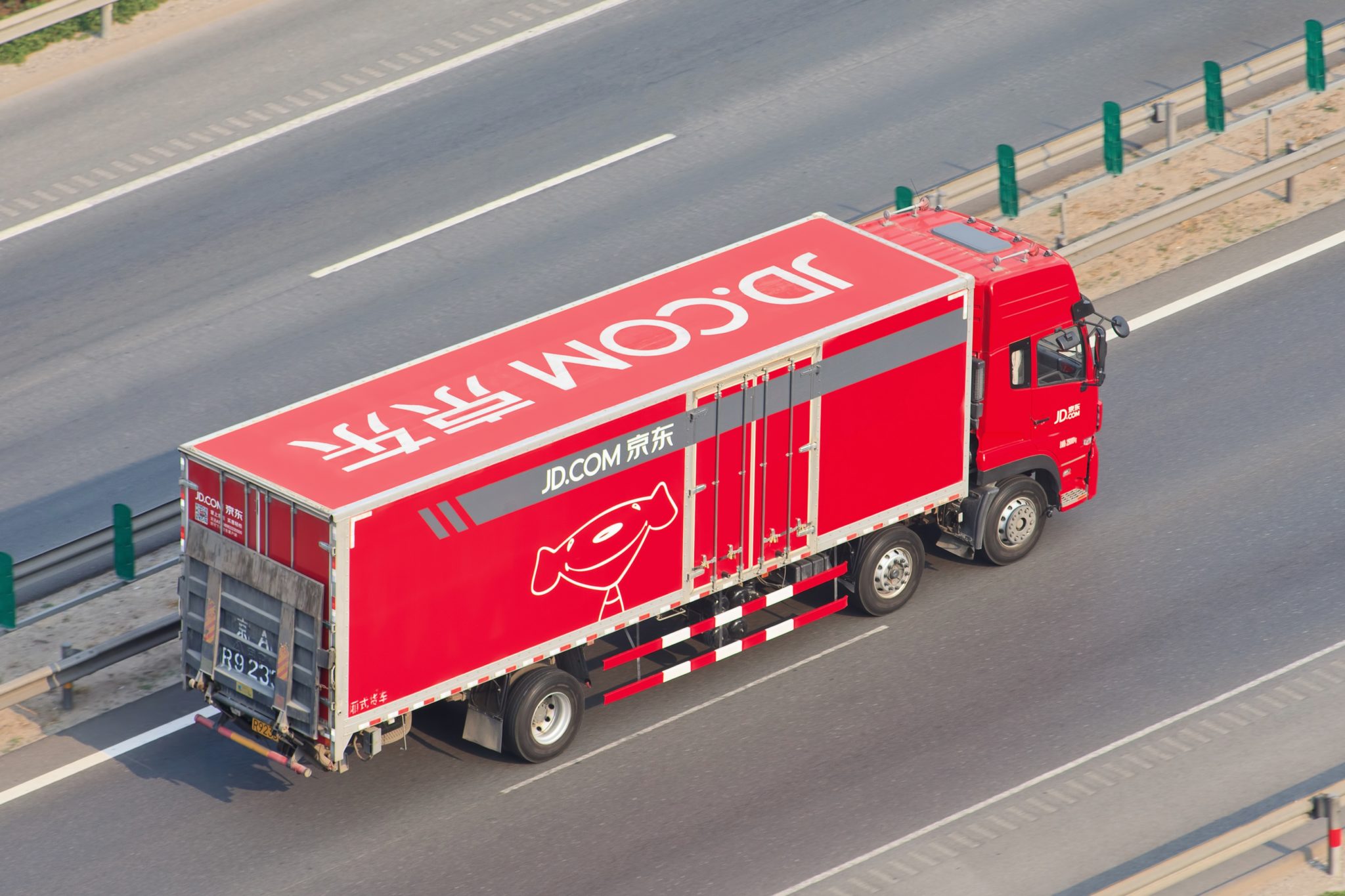
    JD.com is supporting the growth of British businesses in the Chinese market as it partnered with parcel delivery company Evri to combine their expertise and resources in e-commerce and logistics.

    The partnership will combine JD.com’s advanced e-commerce capabilities with Evri’s extensive delivery network across Europe. The services will include local pickup, warehousing, international transportation, access to Chinese bonded warehouses, customs clearance, and comprehensive delivery across China.

    The team-up will initially focus on the beauty and apparel sectors, where JD.com has substantial insights, including consumer behaviour, marketing and pricing strategies, product selection advice, and online operational strategies specific to the Chinese market.

    The collaboration will also enable JD Logistics to offer integrated warehousing and comprehensive delivery solutions to European clients by leveraging its self-operated overseas warehouses and Evri’s local distribution network.

    Qun Xue, Vice President of JD.com and Head of JD Logistics International said: “This partnership underscores our dedication to building a robust global logistics network and our commitment to the success of international brands.”

  • Google expands passkey support to more devices with new partners in tow

    Google expands passkey support to more devices with new partners in tow

    Logging into internet accounts can be quite a challenge, especially when you have to keep track of multiple passwords. This is why Passkeys, the sign-in method that is touted as the safer alternative to passwords, have become Google’s preferred authentication method for personal accounts.

    Last year, Google made a concerted effort to encourage more people to use passkeys, going as far as working with industry partners to ensure that passkeys are easily accessible on various websites and apps. However, there is still work to be done.

    As part of the December Pixel Feature Drop, Google introduced a new feature to Google Password Manager, allowing users to easily identify which of their accounts support passkeys and upgrade to them with just a few taps. This feature is currently accessible on the Pixel 5a and newer as well as the Pixel tablet, with plans to expand its availability to other platforms shortly.

    However, in a blog post today, Google announced that it has partnered with several companies, such as Adobe, Best Buy, DocuSign, eBay, Kayak, Money Forward, Nintendo, PayPal, Uber, and Yahoo! Japan, to enhance the passkey update process for more users. For users who are already signed up with one of the early launch partners, Google Password Manager for Pixel will assist in locating the precise location on the website or app where users can easily upgrade to a passkey, essentially eliminating the need for manual searching in account settings.

    Passkeys provide an added layer of security as they are unique to each account, making them more resistant to phishing attacks compared to regular passwords. They are also more user-friendly since users don’t have to remember a complicated password, and can instead have the option to sign in using their fingerprint, face recognition, or PIN. With the increasing adoption of passkeys by websites and apps, they seem to be on their way to becoming the standard for online authentication.