Author: Mei Ling Tan

  • Vietnam’s coffee export value doubles in January

    Vietnam’s coffee export value doubles in January

    Vietnam shipped 230,000 tonnes of coffee abroad in January, earning $623 million, up 61.6% in volume and 100.3% in value year-on-year, according to the Ministry of Agriculture and Rural Development.

    In the last days of the Year of the Cat, the average coffee price in the Central Highland provinces continued to increase compared to the previous week. Coffee is being purchased at prices ranging from VND78,200 – 79,400 ($3.2-3.25) per kg in some localities. With the current upward trend, domestic coffee prices are likely to exceed VND80,000 per kg soon.

    A surge in domestic coffee prices was attributed to the fact that traders actively purchased coffee before the Lunar New Year (Tet) holiday while exporters were afraid of supply shortages like last year so they tended to buy more.

    The coffee output of the 2023-2034 crop in Dak Lak province is forecast to reach 580,000 tonnes, thus the coffee export volume is estimated at 330,000 tonnes. If prices stay as high as they are now and fluctuate slightly in the near future, the province’s coffee export turnover could hit $900 million.

    Lam Dong province has about 175,700 ha of coffee and the output for 2023-2024 crop is expected to hit 535,000 tonnes.

    In 2023, Vietnam exported over 1.6 million tonnes, down 8.7% in quantity but up 4.6% in value compared to last year, reaching a record turnover of $4.24 billion.

    According to the Vietnam Coffee-Cocoa Association (Vicofa), Vietnam’s coffee production in the 2023-2024 crop will be 1.6-1.7 million tonnes, lower than 1.78 million tonnes in 2022-2023.

  • Federal judge is forcing Musk to talk with the SEC again over his purchase of Twitter

    Federal judge is forcing Musk to talk with the SEC again over his purchase of Twitter

    Elon Musk has been ordered by a federal judge to testify once again as the Securities and Exchange Commission (SEC) continues its investigation of Musk’s $44 billion acquisition of Twitter. The court gave Musk and the SEC one week to come up with a date and location for both sides to meet. If neither side can agree to a date and time for the interview, the judge said that she would hear from both parties and come up with a date and time for them.

    The SEC sued Musk last October in an attempt to force the multi-billionaire to testify about the purchase of Twitter which he made in 2022. Musk, who famously renamed Twitter “X,” had failed to show up during a scheduled meeting with the SEC in September which was related to the agency’s probe of the transaction. Twitter was a publicly-traded company before Musk took it private which means that any deep dive into the transaction by the government would start with an SEC investigation. In filling out the required paperwork for his purchase of Twitter, the question is whether Musk followed the letter of the law or included misleading statements with his submissions.

    Musk accused the SEC of harassment as he attempted to prevent the regulatory agency from interviewing him again about the Twitter acquisition. He complained that the SEC had already spoken with him twice. Judge Beeler said that the SEC, seeking relevant information from Musk, did have the authority to subpoena him.

    The SEC and Musk have battled before. In 2018, Musk posted a tweet that said, “Am considering taking Tesla private at $420. Funding secured.” The tweet led Tesla’s shares to soar 11% that day, but no deal was ever announced. The SEC, Musk, and Tesla agreed to a settlement. Musk and Tesla paid $20 million in fines, and Musk had to leave his post as Tesla chairman although he retained the CEO job. The settlement also required that any tweet Musk sent out with material information about Tesla had to be approved by the SEC in advance.

  • Software update is coming to fix annoying bug on Apple Watch Series 9 and Ultra 2

    Software update is coming to fix annoying bug on Apple Watch Series 9 and Ultra 2

    Apple has sent out an internal memo to these authorized repair shops to let them know that the company is aware of an issue with the Apple Watch models released last year.

    The memo, which MacRumors obtained, says “Some customers may report their Apple Watch Series 9 or Apple Watch Ultra 2 is experiencing false touches on their display.” Apple adds that some customers might say that their Apple Watch model is experiencing “ghost touches.” Owners of impacted Apple Watch models say that the screen will “jump erratically” or take other actions even if the user has not interacted with the device. The problem could cause users to be unable to enter their passcode or have an accidental phone call made

    The tweet from @StellaFudge notes that Apple has told technicians working at authorized service centers and, we assume, at Apple Stores as well, not to replace any Apple Watch Series 9 or Apple Ultra 2 units exhibiting this problem. Instead, Apple is telling technicians to inform customers that Apple will soon be issuing a software update that will resolve the problem.

    With that in mind, Apple is telling Apple Watch owners to make sure that they keep their devices updated and running the latest version of watchOS, especially since the touch issue is expected to be fixed via a software update. Apple didn’t give a timeframe as to when we can expect the update to arrive. However, the company is recommending that those experiencing this problem on their Apple Watch Series 9 or Apple Watch Ultra 2 force restart their timepieces to see if that helps solve the problem before any update is sent.

    To force restart either Apple Watch model, hold down the Digital Crown and the side button at the same time for at least 10 seconds, until the Apple logo appears. If this doesn’t rid your Apple Watch of the “ghost touch” issue, you will have to be patient and wait for Apple to push out a software update aimed at exterminating this bug.

  • JD.com partners with parcel company Evri in the UK

    JD.com partners with parcel company Evri in the UK

    JD.com is supporting the growth of British businesses in the Chinese market as it partnered with parcel delivery company Evri to combine their expertise and resources in e-commerce and logistics.

    The partnership will combine JD.com’s advanced e-commerce capabilities with Evri’s extensive delivery network across Europe. The services will include local pickup, warehousing, international transportation, access to Chinese bonded warehouses, customs clearance, and comprehensive delivery across China.

    The team-up will initially focus on the beauty and apparel sectors, where JD.com has substantial insights, including consumer behaviour, marketing and pricing strategies, product selection advice, and online operational strategies specific to the Chinese market.

    The collaboration will also enable JD Logistics to offer integrated warehousing and comprehensive delivery solutions to clients in Europe by leveraging its self-operated overseas warehouses and Evri’s local distribution network.

    Qun Xue, Vice President of JD.com and Head of JD Logistics International said: “This partnership underscores our dedication to building a robust global logistics network and our commitment to the success of international brands.”

  • Google renames Bard to “Gemini” and launches Google One AI Premium plan with advanced access

    Google renames Bard to “Gemini” and launches Google One AI Premium plan with advanced access

    Google Bard is now Gemini, just “Gemini.” As announced today by Google, Bard — the company’s web-based chatbot — has now been improved, rebranded, and expanded by adding a new Advanced tier bundled into Google One. This is in addition to the new Gemini Android app launched today.

    Google One, the company’s cloud storage subscription service, now has a new tier called “AI Premium.” This tier includes access to Gemini Advanced — the new version of Gemini, formerly called “Bard”, which includes the latest Ultra 1.0 AI model — for $19.99 a month. Additionally, this new Google One tier gives you 2TB of storage, as well as other Google One benefits currently found in the Premium tier.

    Google states that Gemini’s Ultra 1.0 LLM model brings new advancements to the world of AI interaction, such as superior processing efficiency, advanced comprehension of instructions and programs, and innovative problem-solving abilities. The model is said to be capable of analyzing and explaining information, and it can even generate high-quality code in multiple programming languages.

    Additionally, Google is set to bring Gemini to a range of services including Gmail and Docs. This will allow users to enjoy automated text writing, create unique images, and even enhance video quality in Google Meet.

    With the Google One AI Premium plan, users can try out Gemini Advanced free for two months before the $19.99 subscription kicks in. This should allow users to fully explore Gemini’s capabilities before committing. If you’re someone who heavily relies on Google services and craves advanced functionality, the higher price point of these Google One plans might just be worth it, especially when you consider the 2TB of storage it includes and the upcoming integration with Gmail, Docs, and other Workspace apps.

    Gemini Advanced is currently only available in English and can be accessed through the web at gemini.google.com or the old bard.google.com URL, which automatically redirects. It is also worth mentioning that Gemini is currently in the development phase, and its overall effectiveness in the long run is yet to be determined. In addition, the plan’s emphasis on AI capabilities may not be suitable for all users, especially those who prefer straightforward cloud storage solutions.

  • Apple takes a long time to remove fake app posing as a popular password manager

    Apple takes a long time to remove fake app posing as a popular password manager

    Imposter app LassPass posing as the popular password manager LastPass has been removed from the App Store one day after the creators of the original app issued a warning against it.

    Apple prides itself on keeping the App Store safe by performing numerous safety checks before approving an app. It does seem to have a higher bar for security than its immediate competitor. That doesn’t mean it’s doing a perfect job of keeping the App Store safe, as the latest incident shows.

    What makes the oversight feel particularly worrisome, though, is that LastPass is a service people use to store logins and passwords for various platforms. A fake copycat app designed to trick people into revealing their master password could give the bad actors behind it access to every or most apps a person uses.

    The app in question, LassPass, had a name resembling the original app and copied LastPass’s branding and interface.

    There were some telltale signs that it was a fake that many users quickly noticed, such as misspellings and a different publisher. It also had only one rating, whereas the legitimate app has more than 52 thousand. All of the reviews for it also noted that it was a deceptive app.

    LastPass created a blog post on February 7 to warn its users against the app, which was removed from the App Store on February 8. According to the analytics platform Appfigures, the app has been on the platform since January 21. TechCrunch reports.

    It’s not known how many people fell for the app, but it can be assumed that it failed to attract many downloads, as it never made it to any of Apple’s Top Charts.

    If you have LassPass on your iPhone, not only should you delete it, but also change your LastPass password.

  • Waze updates how users report traffic conditions on its iOS and Android apps

    Waze updates how users report traffic conditions on its iOS and Android apps

    Google purchased Waze in June 2013 and the crowdsourced navigation app continues to focus on the actual journey from point “A” to point “B.” Google Maps, on the other hand, not only gets users from point “A” to point “B” quickly and safely, but it will also recommend to travelers places to eat, sleep, or find entertainment once they arrive at point “B.” Waze users report on certain traffic, road, and weather conditions to help others know what to expect in terms of delays or detours while alerting them to areas where there is a police presence.

    In the latest update to the iOS and Android versions of Waze, there is a new round orange hazard icon in the lower right corner. Tapping that icon takes the user to a screen that says “What do you see?” From this page, users can report various conditions that are affecting their journey on the highway and could impact fellow travelers. Some of these options include:

    Traffic

    •    Heavy
    •    Standstill
    Police
    •    Hidden
    •    Other side
     Crash
    •    Pile-up
    •    Other side
     Hazard
    •    Construction
    •    Car on shoulder
    •    Broken traffic light
    •    Pothole
    •    Objec
    Bad weather
    •    Slippery road
    •    Flood
    •    Unlowed road
    •    Fog
    •    Icy road
    Blocked lane
    •    Left lane
    •    Center lane
    •    Right lane
    Map Issue
    Closure
    Gas Prices
    Roadside help
    Map chat
    Place

    Waze also removed some traffic conditions from the app such as roadkill which had been listed under the “Hazard” category on the app. Another hazard, a car stuck in the middle of the road has been removed although there is an option under “Hazard” for a car on the shoulder of the road

    The update is currently rolling out to the iOS and Android versions of the Waze app. Interestingly, the update is live on my iPhone 15 Pro Max running iOS 17.3.1. You can install the Waze appon your iPhone by tapping on this link. If you have an Android device, press this link to get the app from the Play Store.

  • SOTI Research Finds 93% of Australian consumers use in-store tech, but 80% express security concerns with personal data

    SOTI Research Finds 93% of Australian consumers use in-store tech, but 80% express security concerns with personal data

    The retail industry is facing a critical juncture where consumers are experiencing a disconnect between their shopping expectations and the in-store reality. As global retail markets continue to evolve, the industry grapples with the challenges of rolling out in-store technology and integrating advanced AI technology while optimising the supply chain and addressing growing security concerns.

    According to SOTI’s new global retail report, Techspectations: Consumer Demand for Digital Transformation in Retail, retailers are grappling with the heightened expectations of consumers anticipating seamless in-store interactions, personalised recommendations and instant access to inventory online and in-store to ensure their continued loyalty.

    Emerging Technologies and the Consumer Experience

    While consumers crave technology to improve their in-store shopping experience, those offered by retailers do not always meet expectations. The study found that while 93% of Australian consumers have used an in-store device, many believe these devices make the shopping experience worse. Consumers cite challenges in-store such as a lack of staff to assist with issues relating to self-serve machines (35% of users) and as many as 38% of users complain about poor Wi-Fi connectivity when using an in-store device.

    The report suggests that consumer expectations have risen, largely due to the sophisticated personalisation and seamless processes available online, which in-store technologies currently fail to match. To address this, retailers must invest in AI-driven solutions and device management to provide consistent, personalised and convenient shopping experiences in both physical stores and online.

    Retail Supply Chains Must Meet Real-Time Demands

    Supply chain optimisation in the retail industry is critical, as consumers now demand real-time information, efficient product availability and rapid delivery in-store and online. The report reveals that 57% of consumers expect to be able to pick up an item ordered online from a physical store on the same day. Further, 77% of consumers expect to always know the status of their orders, highlighting the need for efficient supply chain visibility.

    “Acknowledging the pivotal role of AI in unlocking advanced capabilities in devices is essential. Using AI for predictive diagnostics and proactive support enables retailers to address potential problems before they affect customer interactions,” explained Michael Dyson, VP for Sales, APAC at SOTI. “AI’s ability to combine data such as location, signal quality and speed with vital business metrics, including stock levels and shipment updates, ensures that the convenience and tailored experience offered by online shopping can be mirrored in physical stores.”

    Consumer Trust and Data Vulnerability

    Security is a significant concern in the retail industry. More than three-quarters (80%) of consumers express concerns about entering personal details online or through in-store devices, indicating a pervasive lack of trust in the data collection and payment technologies used in retail. Security concerns extend to fraud, with 42% of Australian consumers worrying about becoming a victim of financial fraud and another 39% expressing concerns about identity fraud.

    Additionally, the report emphasises the importance of in-store device security, as 42% of consumers have concerns that the retailer will not keep their details securely, including the potential exposure of personal details (31%) and the risk of the next user seeing personal information (30%). Despite this, 34% of consumers view in-store devices as tools to enhance shopping convenience and speed, highlighting the need for retailers to balance convenience and security while building trust among those making purchases in the retail space.

    “In the next few years, our priorities should be establishing trust, ensuring data protection and crafting integrated experiences that seamlessly connect digital and physical retail spaces,” said Dyson. “Progress towards digital sophistication in the retail industry has been gradual. Advanced operational intelligence tools like SOTI XSight Live View are pivotal in offering real-time visualisation of retail operations and supply chain. Live View offers immediate detection and reaction to operational challenges by integrating device data and operational data. Retailers need to be aware of how devices are being used and be proactive in resolving any issues. The future of retail is not about rapid adoption of technology; it is equally about strategic planning and enhancing scalability through thoughtful implementation.”

    SOTI’s latest report, Techspectations: Consumer Demand for Digital Transformation in Retail, can be downloaded here.

    Report Methodology

    SOTI’s research was conducted between September 3 and September 14, 2023, via 11,000 self-completed interviews from nine markets around the world. All interviewees were consumers aged 18 to 65. The markets represented were: The U.S. (2,000), Canada (1,000), Mexico (1,000), UK (2,000), Germany (1,000), France (1,000), Sweden (1,000), the Netherlands (1,000) and Australia (1,000). In addition to presenting global, overarching trends, the results were broken down into these individual market tables and regional sets for Europe and North America.


  • This Google patent may extend the battery life of your next smartwatch

    This Google patent may extend the battery life of your next smartwatch

    The tech world is never sleeping. Google’s latest patent has to do with a new antenna design for wearable devices like smartwatches.

    The just-filled patent for the new design makes the antenna more compact and optimized for communications.

    According to Google, the refreshed antenna design uses a microwave dielectric substrate with a high relative permittivity. That makes this particular antenna design special – it can store electrical energy (meaning better battery life) and transmit (send and receive) signals a lot better.

    Google also says that the antenna design is extremely compact – with dimensions of less or equal to 8 mm in width and length. Impressive!

    The search engine giant said some of the possible applications of this new design could be in the likes of a smart ring

    Antennas are important in many ways in wearable tech. They are crucial for gathering data from tracking sensors (like blood pressure trackers or GPS functionality on fitness watches), and then transmitting them to the part of the device that does analysis or storage.

  • Changes to the Google Maps UI should make you feel less cut off from navigating your journey

    Changes to the Google Maps UI should make you feel less cut off from navigating your journey

    In an effort to make Google Maps feel less cluttered, some changes are being made by Google to the app’s UI on Android now and iOS later down the road, so to speak. After all, when you’re driving on the road and you’re at a red light, you want to be able to take a quick glance at the Maps screen without other elements taking up your time or distracting you. One change can be spotted after you type in the name of a location that you want directions to.

    Currently, the screen is divided in two with the top half showing a map of the area surrounding the place you typed in. Underneath that, the other half of the screen has photos of the location you typed in and that sheet goes edge-to-edge. With the new UI look, the sheet at the bottom half of the app is no longer full-screen and it is slightly narrower at the top; there is another sheet behind it. When you pull the top sheet up, with the updated UI, you’ll be able to view a small section of the map at the top of the screen.

    It might not be a big deal, but with the change, you don’t feel completely cut off from the navigation map. And this is also the case with Public Transport as that sheet is no longer edge-to-edge at the top and it also no longer takes up the full screen.

    9to5Google reports seeing the new UI on one version of Google Maps (version 11.113.x), but this seems to be more of an A/B test since my Pixel 6 Pro is running version 11.115.x of Google Maps on Android 14 QPR2 Beta 3.2 and has yet to receive the new UI. The new look is also expected to eventually reach the iOS version of Google Maps, although it has not arrived on my iPhone 15 Pro Max running iOS 17.3.

    Some of you Google Maps users will consider this a nothing burger while others will bite into the UI changes like a quarter-pound sirloin burger.

  • Amazon Surpasses eBay as Leading Australian Marketplace for First Time

    Amazon Surpasses eBay as Leading Australian Marketplace for First Time

    In an industry first, Amazon has overtaken eBay to become the leading marketplace in Australia according to new research from global ecommerce accelerator, Pattern.

    Marketplace shopping has also become mainstream in Australia, with research highlighting 93% of people shopped on a marketplace in 2023 and 94% plan to buy from platforms like Amazon, Catch, Temu, and eBay over the coming year.

    The findings were revealed as part of Pattern’s sixth annual Marketplace Consumer Trends Report – 2024,’ which researched Australian shoppers’ changing ecommerce habits and the latest marketplace trends.

    Australian marketplace sector experiences major disruption

    The Australian marketplace sector is expanding and being disrupted. Emerging platforms Temu and Shein have rapidly gained significant market share, with 25% of shoppers buying from Temu and 21% from Shein, while established platforms like Catch and eBay underperformed in 2023.

    Amazon has grown to become the dominant local marketplace and is projected to reach $5.5 billion in Australian turnover by the end of the current financial year. Amazon now outperforms all other marketplaces on average monthly site visits, including eBay by a significant 48% over the last three months of 2023, to achieve an average of 75.2 million monthly site visits.

    “New marketplace entrants into Australia, like Temu, are shaking-up the sector and quickly attracting consumer interest. However, it’s expected that Amazon’s leading market position will only grow, as the platform wins shoppers with competitive prices, the widest product range and ease-of-use shopping via Prime,” said Merline McGregor, General Manager, Pattern Australia.

    Amazon is also on track to achieve the highest growth rate of any marketplace in 2024, with 63% of Australians planning on buying from the site (+6% annual growth) compared to a projected 8% decrease in people planning to buy from eBay. Notably, 80% of shoppers who were in the $200k income bracket bought on Amazon, reflecting its strong reach among higher-income consumers.

    Ecommerce shopping habits evolve in the face of cost-of-living challenges

    Despite the increased pressure on Australian consumers’ discretionary spending, research shows that shoppers will continue to buy online. The ecommerce market is projected to reach AU$64.14bn this year, with the share of retail goods purchased online set to increase from 15.6% in 2023 to 17% by the end of 2024.

    Nevertheless, cost-of-living pressures will impact consumer budgets in 2024, with many looking to stabilise their retail spending. This is represented by a significant decline (-29%) in those intending to spend more online this year.

    “With cost-of-living pressures and an uncertain economic outlook, many consumers will cut costs and evolve their shopping habits this year. For instance, shoppers are more likely to take advantage of major sales events, following a 20% growth in consumer participation in Black Friday / Cyber Monday in 2023. Research also shows that shoppers are opting to visit retail stores for a hands-on evaluation of products. This trend suggests a more thorough pre-purchase assessment, evidenced by a notable 36% decrease in consumers intending to buy products online that can typically be found in-store,” observed McGregor.

    The evolution of product discovery

    Google’s product search supremacy is slipping, with a year-on-year decrease in the percentage of people using it to research products. Shoppers are now also going direct to retailers for inspiration (+6%), along with marketplaces, such as Amazon, which has grown by 59% in popularity. However, marketplaces rising as a research tool is not uniform, with eBay dropping by 19%.

    “Marketplaces today have an abundant volume of goods for consumers to search. These platforms build confidence with shoppers to research and purchase new products through enhanced transparency and credibility. This is achieved by providing real-world product reviews and informative answers to product page questions,” said McGregor.

    What products will consumers buy from which marketplace in 2024?

    Pattern’s research asked consumers what they were likely to buy in 2024 and through which marketplace, with the results indicating:

    • Amazon’s key shopper categories are Books & eBooks (26%), Electronics & Computer (24%) and Home & Kitchen (24%).
    • eBay is competitive across a range of categories, including Electronics & Computer (17%), Home & Kitchen (16%) and Clothes, Shoes & Accessories (16%).
    • Catch is popular for Toys, Kids & Baby (12%), Home & Kitchen (10%).
    • Kogan will remain strong in Electronics & Computer (11%), Home & Kitchen (9%).
    • Shein is set to grow through Clothing, Shoes & Accessories (16%).
    • Temu attracts shoppers with Clothing, Shoes & Accessories (10%), Home & Kitchen (7%).
    • My Deal’s sales will come from Home & Kitchen (5%) and DIY Home Improvement (4%).

    “The popularity of key product categories across marketplaces is linked to numerous sellers offering similar items which brings about fierce competition, ongoing promotions, and aggressive pricing. In this dynamic and challenging landscape, brands must implement an effective marketplace strategy and collaborate with the right partners to attract business and thrive,” concluded McGregor.

    For more information and to download the full report please click here: Australian Marketplace Consumer Trends Report – 2024

    Latest research from Pattern reveals current Australian consumer trends, with 94% of shoppers to buy from a marketplace over the coming year


     

  • Meta will begin to label AI-generated content across Facebook, Instagram, and Threads

    Meta will begin to label AI-generated content across Facebook, Instagram, and Threads

    In an effort to bolster transparency, Meta — the parent company for Facebook, Instagram, and Threads — is implementing new measures on its platforms. The company recently made an announcement about its plans to label content created using artificial intelligence (AI) and its goal is to provide users with clearer context about what they see and share on social media.

    The company will begin this initiative by labeling images, stating that “In the near future we will start adding labels to images created by AI tools across Facebook, Instagram, and Threads.” It is currently working on an automated detection system that can identify markers commonly used for AI-generated content, including watermarks and metadata. Meta’s initial focus will be on images, but the long-term goal is to be able to identify AI-generated videos and audio as well.

    Meta already applies the “Imagined with AI” label on images created with Meta AI, and by working with other industry partners, the company hopes to have the new detection capabilities ready in the coming months for content created outside of Meta’s own tools. So far, the company has determined that it is capable of labeling images from Google, OpenAI, Microsoft, Adobe, Midjourney, and Shutterstock.

    However, a hurdle presents when it comes to video and audio. Because tools that generate this type of content have not yet widely embraced standardized markers, it is difficult for Meta to detect them.

    In order to address this issue, Meta has announced its intention to launch a new “disclosure and label tool,” which will enable the users to manually indicate when video and audio content has been generated using AI. Users will be required to make this disclosure for digitally created or altered “photorealistic videos or realistic-sounding audio,” and Meta has the authority to enforce penalties on those who do not comply.

    There is a growing concern about the potential misuse of AI-generated content, leading to a push for labeling. Deepfakes, for example, have the potential to be incredibly realistic, which can be concerning when it comes to spreading misinformation and manipulating content — specially when it comes to things like the upcoming U.S. elections.

    Although not a perfect solution, particularly when relying on the user to label video and audio, Meta hopes the detection system will be effective and not easily bypassed. It remains to be seen if Meta’s approach will successfully achieve its goals, but the initiative certainly ignites an important discussion about the responsible use of AI across social media.

  • Snapchat’s parent company Snap loses 30% of its value after releasing its Q4 report

    Snapchat’s parent company Snap loses 30% of its value after releasing its Q4 report

    The parent company of social-media platform Snapchat, Snap Inc., lost over 30% of its valuation this afternoon after releasing its fourth-quarter earnings release. The company reported revenue of $1.36 billion for the fourth quarter of 2023 slightly topping the year-earlier figure of $1.30 billion. But the $1.38 billion in Q4 gross did not meet Wall Street expectations of $1.38 billion. And at $4.61 billion, 2023 revenue barely topped the $4.60 billion Snap generated in 2022.

    In a letter to stockholders, Snap said that its flat 2023 revenue was “reflecting a challenging operating environment.” Just yesterday, Snap said that it will lay off 10% of its workforce or approximately 500 employees. Back in 2022, Snap eliminated 20% of its headcount. Heavily reliant on advertising income, Snapchat has been unable to recover from Apple’s App Tracking Transparency feature which allows iPhone users to choose whether they want to block advertisers from tracking them when using an app.

    In the letter to stockholders, Snap said that it was “encouraged by the progress we are making with our ad platform,” but noted that it is battling a headwind with the conflict in the Middle East. According to the company, violence in the region cost Snap about two percentage points in growth. Snapchat had 414 million active daily users during the fourth quarter of 2023, up 10% year-over-year. 800 million users worldwide visit Snapchat every month the company said.

    Half of the users are in North America and Europe, indicating that the social media platform will no longer focus on gaining users in emerging markets who mostly use Android phones. The company did note that the number of Daily Active Users DAUs rose both sequentially and year-over-year on both iOS and Android.

    CEO Evan Spiegel wrote in the stockholder’s letter, “We are shifting more of our focus toward user growth and deepening engagement in our most highly monetizable geographies. Focusing on these initiatives will help us increase daily active usage of Snapchat, deepen content engagement, improve performance for advertisers, and ultimately accelerate revenue growth and drive increased free cash flow.”

    Snapchat incurred a loss of $248.7 million for the fourth quarter, an improvement from the $288 million in red ink Snap spilled during Q4 of 2022. For the three months, Snap lost 15 cents per share compared with an 18 cents per share loss during the same quarter in 2022. For all of 2023, Snap lost $1.32 billion which was a 7% improvement from the $1.43 billion it lost the preceding year. 2023 saw the company lose 82 cents per share, 8% lower than the 89 cents per share loss Snap suffered in 2022.

    During the regular trading day, Snap shares rose 70 cents or 4.18% to $17.45 right near the 52-week high of $17.90. But that peak now seems very far away after the stock tumbled $5.45 to $12 in after-hours trading following the report’s release. That is a decline of 31.23%.

  • Google Maps update finally adds weather information on Android

    Google Maps update finally adds weather information on Android

    Google’s apps don’t always offer the same features on iOS and Android, but the Mountain View company is trying to not keep any important functionality exclusive to just one platform for too long.

    In that regard, one of the Google Maps features that were only available for iOS users was the weather and AQI widget overlay that provided much-needed information in real-time.

    Now the feature is finally making its way to Android, 9to5 Google reports. The update is rolling out in waves, so you’ll know you got the feature if you see a small rectangular box in the app’s top-left corner.

    It’s a very small box that only shows the temperature and AQI (air quality index). However, you can tap on the box for more detailed weather information, including a 12-hour forecast. The AQI part of the small widget shows the existing Air Quality map layer if you tap on it.

    Keep in mind that if you select anything else in the app, the weather box will disappear. Apparently, this update has started rolling out to Android users for a few weeks now, but it’s only been recently that Google decided to expand its availability, so expect it to arrive very soon if you don’t have it yet.

  • WhatsApp is working on a pinning feature for its Android app

    WhatsApp is working on a pinning feature for its Android app

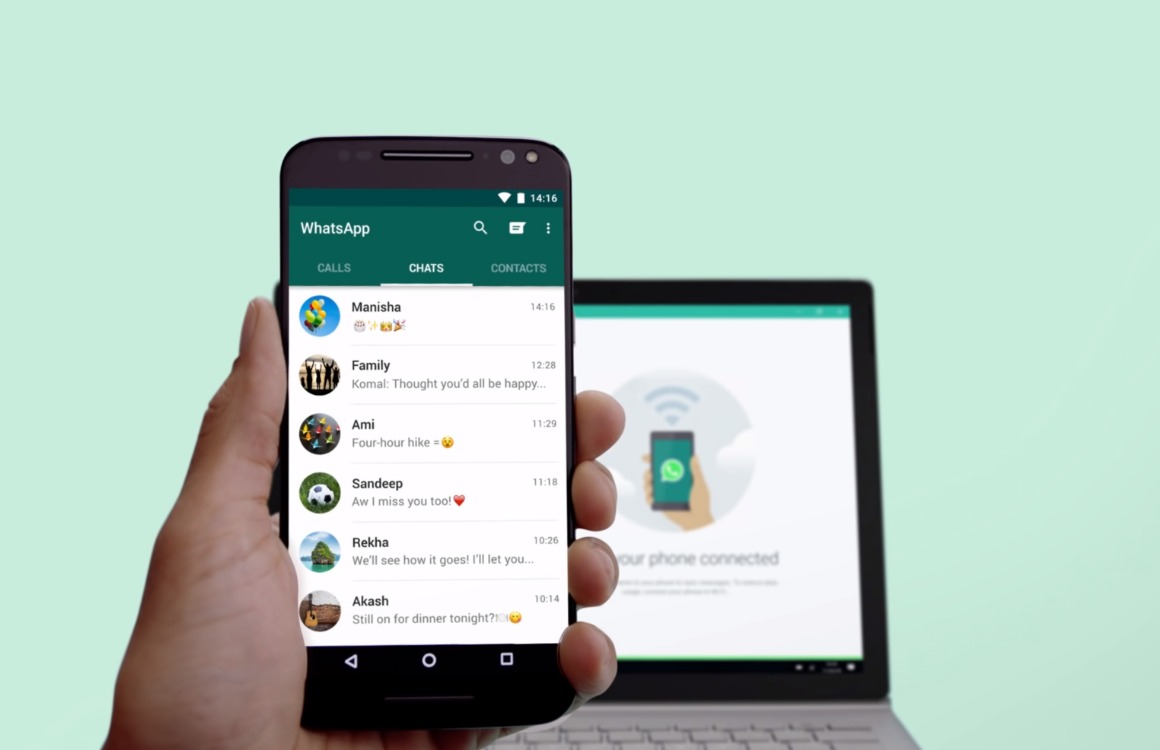
    WhatsApp’s next feature will allow users to pin channels. After gaining Channels a while ago, WhatsApp desperately needs a way to declutter the long list some users have joined.

    The ability to pin channels in WhatsApp is now in the works, WABetaInfo reports. The new feature popped up in version 2.24.4.3 of WhatsApp for Android, which means it’s actively being tested and should be rolled out to everyone if developers decide to give it the green light.

    As noted in the report, the new feature will probably be implemented with a slightly different interface for channels, which will reportedly look like the interface of the chats tab.

    Naturally, there’s no guarantee that this feature will make it in the stable version of WhatsApp, although chances are that it will be available in some form in the not-so-distant future. Stay tuned for more info about WhatsApp’s upcoming features.