Author: Mei Ling Tan

  • Hermes reopens expanded Macau store with playful, nature-inspired design

    Hermes reopens expanded Macau store with playful, nature-inspired design

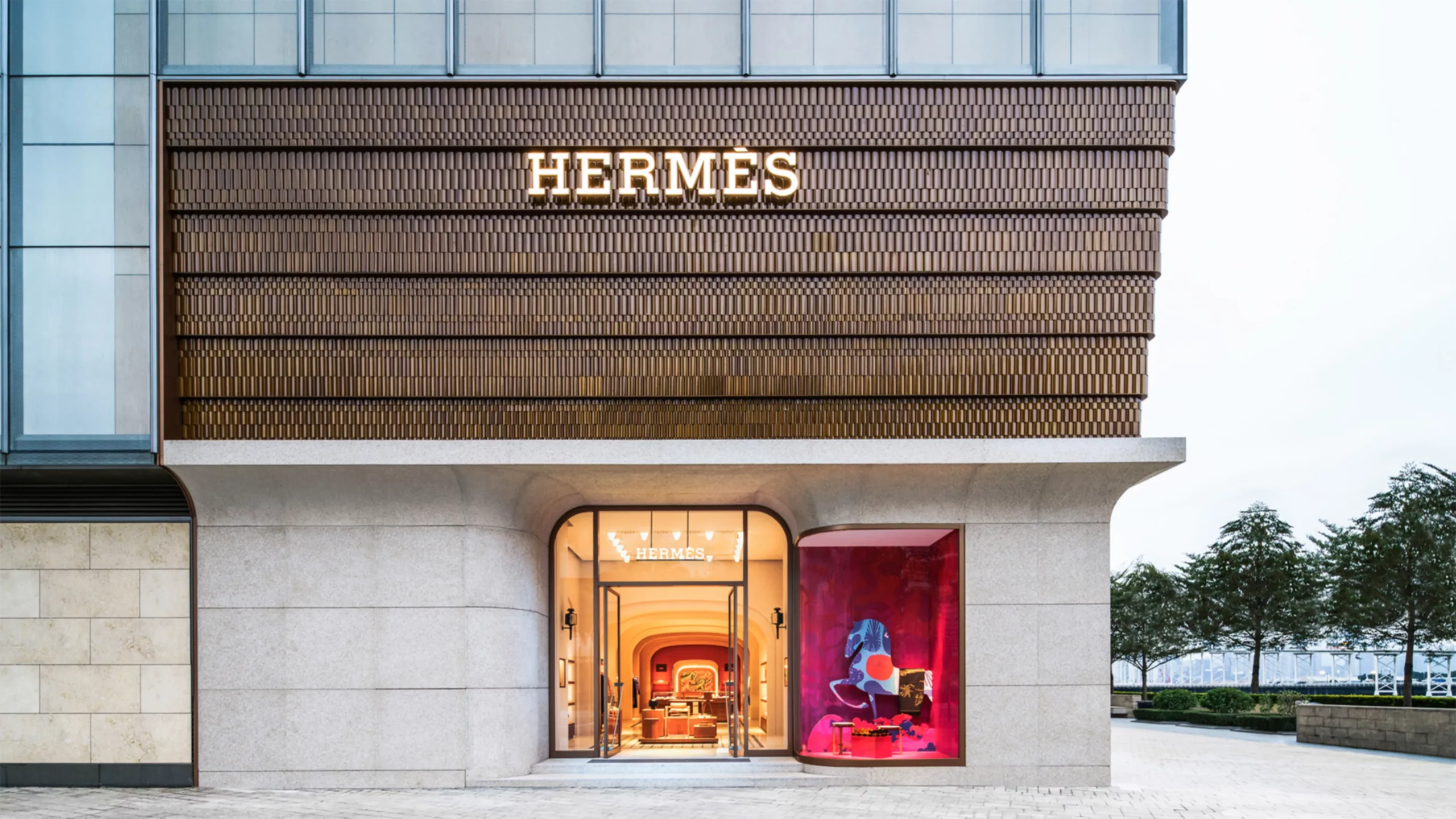
    Hermes, the renowned French luxury brand, has recently re-opened its expanded store in Macau. The newly renovated space is a unique blend of natural materials and symmetrical design elements, subtly incorporating references to traditional games in a nod to the city’s playful spirit.

    The store, which initially opened its doors in 2008, now proudly displays all 16 of the brand’s métiers within its redesigned interior. The renovation was orchestrated by RDAI, a leading Parisian architecture firm.

    New Design Elements

    The re-envisioned space introduces a new colour palette, a soothing blend of greens that transition from cool to warm hues. The store’s interior is adorned with jade-coloured ceramic bricks that are cleverly arranged to resemble mahjong tiles, adding a unique touch of local culture to the aesthetic. This design is further enhanced by large windows framed with sliding triangular panels.

    The interior is marked by earthy tones and the use of luxurious materials, creating a welcoming environment for its visitors. The store’s signature Faubourg mosaic serves as a striking centrepiece, anchoring the women’s silk and home collections. The terrazzo flooring, embedded with fragments of green, amber, and ochre, seamlessly connects the men’s silk, fashion jewellery, and beauty and fragrance departments.

    Contrasting Themes

    The watches and jewellery salon feature a rich lacquered green wood finish, forming a contrast with the darker cherrywood used in the sections housing equestrian and leather goods. These sections are framed by diamond-patterned panels reflecting influences from the traditional game of backgammon.

    The rear portion of the store is dedicated to women’s and men’s ready-to-wear and footwear collections. These are tastefully presented in zones delineated by shaded carpets and intricate timber detailing. A private salon and fitting rooms complete the store’s new layout.

    Aesthetic Touches

    The revamped space is further enhanced by artworks from the Émile Hermes collection and the Hermes Collection of Contemporary Photographs. These pieces, featuring botanical prints, equestrian imagery, and Douglas Lance Gibson’s Esi Ni Daimani-inspired by playing cards, add layers of visual depth to the store. The overall design is tied together with elements like the ex-libris motif, Grecque lighting, and game-inspired aesthetics.

    Questions & Answers

    When was the Hermes store in Macau initially opened?
    The Hermes store in Macau was initially opened in 2008.

    What are the new design elements introduced in the renovated store?
    The renovated store introduces a green-toned colour palette, jade-coloured ceramic bricks arranged like mahjong tiles, large windows with sliding triangular panels, and a signature Faubourg mosaic among other features.

    What collections are presented in the renovated store?
    The renovated store presents all 16 of Hermes’ métiers, including women’s and men’s silk, home collections, fashion jewellery, beauty and fragrance departments, ready-to-wear and footwear collections, and equestrian and leather goods.

  • Mastering Retail: Top Three Strategies to Navigate Supply Chain Disruptions

    Mastering Retail: Top Three Strategies to Navigate Supply Chain Disruptions

    Retailers must focus on shifting consumer preferences.

    In the past decade, global retail supply chains have navigated a storm of challenges, from the COVID-19 pandemic and advancements in artificial intelligence to tariffs and threats to shipping routes. These disruptions have compelled industry leaders to continuously adapt in an environment rife with uncertainty.

    Shifting Consumer Demands

    According to Kearney, the key to survival lies in understanding three pivotal aspects: what consumers are buying, how they are buying it, and why. Between 2010 and 2020, demand gravitated toward convenience and price. However, a noticeable shift occurred after 2021, with emphasis moving towards essential and value-oriented products. Looking towards 2030, Kearney forecasts a landscape of polarized preferences, with consumers divided between budget-conscious and premium offerings. Retailers are responding by streamlining their assortments, reducing the variety of products in favor of higher-margin, private-label options.

    The Evolution of Shopping Experiences

    The “how” in retail has undergone a remarkable transformation. A decade ago, shopping was dominated by malls and big-box stores. Today, there is a burgeoning growth of smaller urban outlets and hybrid shopping formats seamlessly blending digital and physical experiences—think cashier-less stores and VR-enhanced retail atmospheres that feel like stepping into the future.

    Fulfillment models have also transitioned from distinct e-commerce and in-store approaches to a fully integrated omnichannel strategy. Options like buy online, pick up in store (BOPIS), curbside pickup, and rapid last-mile delivery have become the new norm. As we approach 2030, expect stores to evolve into distribution hubs, enhancing efficiency and accessibility.

    The Role of Marketplaces and Changing Motivations

    Marketplaces are poised to play an increasingly vital role in the fulfillment chain as retailers seek to expand without heavy investments in infrastructure. Meanwhile, the motivations driving purchases are shifting, significantly influenced by digital platforms and ESG (Environmental, Social, and Governance) concerns. Up until 2020, traditional digital ads were the primary traffic drivers; now, platforms like TikTok and innovations within retail media networks are reshaping consumer engagement.

    By 2025, it’s anticipated that around 80% of the top 100 U.S. retailers will develop their own media platforms or partner to create them. As AI technology continues to advance, personalizing engagement at scale is on the horizon, while trends like social commerce, community engagement, and buy-now-pay-later options gain traction.

    Rising Consumer Expectations

    As consumers become increasingly conscientious, expectations for sustainability are on the rise. The traditional compliance-driven approach to corporate social responsibility (CSR) no longer suffices. Shoppers now gravitate towards brands that ensure traceability, ethical sourcing, and effective carbon tracking, basing their purchasing decisions on these values.

    Macroeconomic and geopolitical shifts will further transform the retail landscape. Factors such as supply chain disruptions, inflation, and ESG regulations are already influencing demand. Additionally, tariffs and evolving trade policies will necessitate changes in sourcing and pricing strategies. AI innovations are also redefining the rules of engagement when it comes to pricing and planning. In this new era, consumers will be more discerning, favoring brands that resonate with their values and offer swift, seamless services.

    Kearney emphasizes that for retailers to build resilience, they must identify risks, diversify their supplier base, and gain greater control over product flow. Flexibility is key, prompting the adoption of agile models that accommodate rapid shifts in demand and distribution channels. Harnessing digital tools for real-time visibility will empower retailers to make quicker, more informed decisions.

    Retailers must adjust or risk becoming out of touch—with a little help from AI and a sprinkle of creativity, who knows what wonders await in the future of retail?

    Questions & Answers

    What are the three key areas retailers should focus on according to Kearney? Retailers should concentrate on what customers are buying, how they are purchasing, and the underlying reasons for their buying behavior.

    How has the shopping landscape changed since 2020? There has been a notable shift towards smaller urban stores and integrated shopping experiences that incorporate both digital and physical elements, moving away from traditional malls and big-box stores.

    What does Kearney suggest for retailers to build resilience? Kearney advises retailers to identify risks, diversify suppliers, and adopt agile models, while also leveraging digital tools for quicker decision-making and enhanced supply chain visibility.

  • PetO to cease live animal sales across its network

    PetO to cease live animal sales across its network

    PetO, a renowned family-owned pet retail company, has made the substantial decision to halt the sale of live animals throughout its 58 nationwide stores. The decision has been driven by mounting concerns about animal welfare and the notable absence of industry regulation.

    The Impetus Behind the Decision

    The decision from PetO comes at a time when the live animal sales sector is under increased scrutiny, particularly in an industry dominated by sizeable chains and multinational corporations. With over two-thirds of Australian households currently owning a pet, PetO posits that current industry practices are falling short of societal expectations.

    PetO’s spokesperson voiced concerns over the handling and sale of pets in pet shops, which presents ethical challenges and potentially leads to issues surrounding animal welfare and irresponsible pet ownership.

    Industry Influence

    In addition to implementing these changes within its own operations, PetO is encouraging other retailers to follow suit, particularly those who hold substantial influence on a national scale. The goal is to elevate the ethical standards across the industry.

    Expansion and Forecasted Growth

    In its recent expansion, PetO absorbed 41 retail stores and 25 veterinary clinics formerly under the ownership of Petstock and Woolworths, raising its total number of stores from 17 to 58. Although this transition may cause short-term commercial effects, the company views it as a strategic move aligned with its long-term growth vision. PetO aims to attain an annual revenue of $250 million by the year 2028.

    Questions & Answers

    Why has PetO chosen to cease the sale of live animals in its stores?
    In response to the growing concerns over animal welfare and the lack of industry regulation, PetO has decided to stop live animal sales in its stores.

    How is PetO encouraging other retailers to change their practices?
    PetO is publicly calling on other retailers, especially those with significant national reach, to follow its example and cease live animal sales, thereby raising the ethical standards of the industry.

    How does PetO’s recent acquisition of 41 retail stores and 25 veterinary clinics align with its long-term business strategy?
    While the acquisition may have some short-term commercial impacts, PetO sees this expansion as part of its long-term plan to achieve an annual revenue of $250 million by 2028.

  • Korean beauty startups bet booming US demand outlasts tariff pain

    Korean beauty startups bet booming US demand outlasts tariff pain

    Following their impressive online achievements in the US, South Korean cosmetic start-ups are seeking to strengthen their physical presence in the world’s largest consumer market. These brands, including Tirtir, D’alba, Torriden and Beauty of Joseon, are currently in discussions with major retailers to make their products available on US shelves. The expectation is that the popularity and broad appeal of their products will outweigh any potential impact from tariffs.

    K-Beauty: Global Competitor

    Known for their high-quality products, competitive pricing, and clever marketing strategies, South Korean beauty products have successfully established a global presence. This success has been largely facilitated by the wider popularity of South Korea’s other cultural exports, including music, film, and television.

    According to Tirtir CEO An Byung-Jun, the increased interest in South Korean culture has paved the way for the country’s cosmetic industry, especially given the good quality of the products and their affordability compared to existing luxury brands such as L’Oreal or Estee Lauder.

    Tirtir’s reputation significantly increased last year due to the viral online success of its cushion foundation shades designed for dark skin. The company aims to double its US sales this year, with its products being made available in Ulta Beauty stores over the summer.

    US Expansion

    Major US retailers, including Sephora, Ulta Beauty, Costco, and Target, are currently in discussions with South Korean cosmetic brands about launching their products in physical stores. Industry experts believe Korean brands’ higher margin business models will allow them to withstand tariffs better than their competitors.

    South Korea became the world’s third-largest beauty product exporter in 2024, after France and the US. The majority of its cosmetic output, valued at $13 billion, is for export, with e-commerce sales driving most of this success.

    Challenges and Opportunities

    While tariffs pose a potential threat to South Korea’s beauty industry, the strong demand for their products is expected to mitigate some of this risk. Olive Young, South Korea’s leading beauty retailer, plans to establish its first US store in Los Angeles later this year.

    Despite concerns about tariffs, South Korean cosmetic brands are persisting with their US expansion plans. Brands such as D’alba, Torriden, and Beauty of Joseon are set to launch in Sephora stores over the summer.

    The Power of Social Media

    South Korea’s success in the cosmetic industry has been significantly bolstered by social media. Viral videos and influencer endorsements can transform a product into a global bestseller. However, industry experts caution that long-term success will require an increase in physical store sales.

    Despite rising competition and the emergence of cheaper alternatives, investors remain optimistic about South Korea’s potential in the cosmetic industry.

    Questions & Answers

    What has contributed to the success of South Korean beauty products in the global market?
    South Korean beauty products have risen in popularity due to their high quality, competitive pricing, and effective marketing strategies. They have also been boosted by the wider global interest in South Korean culture, including its music, film, and television.

    What is the current status of South Korean cosmetics in the US market?
    South Korean cosmetic start-ups are currently in discussions with major US retailers to launch their products in physical stores, following their successful online performance.

    What are the potential challenges for South Korean cosmetic brands in the US market?
    Potential challenges include tariffs and increasing competition. However, the strong demand for their products is expected to mitigate some of these concerns, and many brands have business models that allow them to withstand tariffs better than their competitors.

  • Shein hit with complaint from EU consumer group over ‘dark patterns’

    Shein hit with complaint from EU consumer group over ‘dark patterns’

    The BEUC, a Pan-European consumer organization, has lodged a complaint with the European Commission against Shein, an online fast-fashion retailer. The grievance centers on Shein’s use of “dark patterns”, a series of strategies designed to increase purchases via its app and website.

    Manipulative Tactics

    The tactics employed by Shein, as described by BEUC, include pop-up messages urging customers to stay on the app to avoid missing out on deals, countdown timers creating a sense of urgency to finalize purchases, and an infinite scroll feature on the app. All these methods, BEUC asserts, could fall under the definition of “aggressive commercial practices”. The consumer advocacy group further highlighted Shein’s frequent use of notifications, with one instance showing a single phone receiving 12 alerts from the app in one day.

    Agustin Reyna, BEUC’s director general, commented on the matter, stating that such tactics align with the fast-fashion trend of stimulating mass consumption through volume. The issue, according to Reyna, lies in whether Shein is willing to abolish these “dark patterns”, given their potential impact on sales numbers.

    Shein’s Response and the Role of Gamification

    Shein, in response to the allegations, stated, “We are actively collaborating with national consumer authorities and the EU Commission to demonstrate our commitment to compliance with EU laws and regulations.” The company also mentioned that BEUC declined their request for a meeting.

    Shein and its competitor, Temu, another online discount platform, have experienced a surge in popularity in Europe, partly due to their apps’ gamified features. These apps engage shoppers with games that offer the chance to win discounts and products. One of the games on Shein’s app, “Puppy Keep”, encourages users to log into the app daily, feed a virtual dog, and collect points that can be exchanged for free items. Points can be earned by browsing the app and making purchases.

    Dark Patterns Across the Industry

    The BEUC acknowledged that “dark patterns” are not exclusive to Shein, but are commonly employed by many mass-market clothing retailers. In this line, they’ve called on the consumer protection network to broaden its investigation to include other retailers. BEUC’s complaint was supported by 25 of its member organizations across 21 countries, including France, Germany, and Spain.

    Last month, the European Commission issued a notification to Shein about practices breaching EU consumer law and warned of potential fines should the company fail to address these concerns. The firm is also under review from EU tech regulators regarding its compliance with EU online content rules.

    Questions & Answers

    What exactly are “dark patterns”?
    Dark patterns are tactics used by companies on their websites or apps designed to manipulate users into making purchases or taking certain actions.

    What is the “Puppy Keep” game on Shein’s app?
    “Puppy Keep” is a game on the Shein app where users feed a virtual dog and collect points that can be used to win free items. Users can earn more points by browsing the app and making purchases.

    What actions has the European Commission taken regarding Shein’s practices?
    The European Commission has notified Shein about practices that violate EU consumer law and warned of potential fines if they do not rectify these issues. Additionally, the company is under investigation from EU tech regulators regarding its adherence to EU online content rules.

  • Peggy Hartanto debuts first standalone store, in Jakarta

    Peggy Hartanto debuts first standalone store, in Jakarta

    The fashion brand Peggy Hartanto has achieved a significant landmark in its retail journey with the inauguration of its first independent store in Plaza Senayan, Jakarta.

    Reflecting the Brand’s Aesthetic

    The store’s design draws on the brand’s aesthetic, harmoniously blending dark brown and powder blue hues to craft a warm, grounded ambiance. The minimalist nature of the space is characterised by the balance between clean, structural lines and delicate, organic forms. The inclusion of clay walls adds an earthy, tactile aspect, underscoring the brand’s dedication to craftsmanship and materiality.

    More Than a Retail Space

    Peggy Hartanto, the brand’s creative director, shared her perspective on the design of their premier standalone store. She expressed the desire to offer more than just a shopping space. Their vision was to establish a habitat that encapsulates the brand’s language and philosophy, utilising elements of minimalism, materiality, and colour. The aim was to create an environment that is immersive, calm, and focused, devoid of the commonly overwhelming functions and distractions found in retail architecture.

    Peggy Hartanto was established in 2012 by sisters Peggy, Petty, and Lydia Hartanto. The Jakarta-based label has gained a reputation for its contemporary womenswear, characterised by bold silhouettes, meticulous construction, and a forward-thinking design philosophy. The brand’s garments strive to empower today’s women by embodying both femininity and strength.

    Acknowledged Internationally

    Peggy Hartanto has received international acclaim, which includes being named on Forbes Asia’s ’30 Under 30 – The Arts’ list in 2016 and being chosen as a finalist for the International Woolmark Prize Asia in 2017.

    Questions & Answers

    What is the design philosophy behind Peggy Hartanto’s first standalone store?
    The store reflects the brand’s language and philosophy, featuring a minimalist design that balances clean, structural lines with soft, organic shapes. The colour palette and tactile elements like clay walls underline the brand’s commitment to craftsmanship and materiality.

    What characterises the clothing offered by Peggy Hartanto?
    Peggy Hartanto’s clothing is defined by bold silhouettes, precise construction, and a progressive design ethos. The brand’s pieces aim to empower modern women by embracing both femininity and strength.

    What are some of the recognitions received by the fashion label Peggy Hartanto?
    Peggy Hartanto has been internationally recognised, including being listed in Forbes Asia’s ’30 Under 30 – The Arts’ in 2016 and selected as a finalist in the International Woolmark Prize Asia in 2017.

  • CJ Group opens its first Tous les Jours store in Malaysia

    CJ Group opens its first Tous les Jours store in Malaysia

    CJ Foodville Corp, the restaurant division of the CJ Group, has launched its inaugural Tous les Jours bakery location in Kuala Lumpur, Malaysia.

    Expansion Plans

    This expansion is an integral part of the corporation’s global strategy, with another location set to be unveiled in Kuala Lumpur later this month.

    Master Franchise Agreement

    CJ Foodville has entered a master franchise deal with Stream Empire Holding, a local Malaysian retailer. This agreement provides the franchisee with the right to establish, manage, and grant sub-franchise rights to other parties.

    Global Presence

    Tous les Jours has approximately 560 outlets in nine countries, including the United States, Canada, Indonesia, and Vietnam. The company is also set to broaden its reach across the Southeast Asian market within the year.

    Moreover, the company operates a bakery factory in Indonesia and plans to develop another one in Georgia, United States, scheduled to open by the end of the year.

    Questions & Answers

    What is the significance of the master franchise agreement between CJ Foodville and Stream Empire Holding?

    This agreement allows the local Malaysian retailer, Stream Empire Holding, to open, manage, and grant sub-franchise rights to other parties, aiding in the expansion of Tous les Jours across Malaysia.

    How many countries does Tous les Jours currently operate in?

    Tous les Jours currently operates in nine countries, running approximately 560 outlets.

    What are CJ Foodville’s expansion plans for Tous les Jours in the Southeast Asian Market?

    CJ Foodville plans to broaden the reach of Tous les Jours across the Southeast Asian market within the current year.

  • Feeling Out of Place: My Experience Wearing a $230 Replica Rolex to a Wedding

    Feeling Out of Place: My Experience Wearing a $230 Replica Rolex to a Wedding

    A few years ago, I made the mistake of purchasing a fake Rolex for VND6 million (US$230) online, which led to a rather embarrassing predicament.

    The seller touted it as a first-rate “authentic” replica, claiming it looked so convincing that no one would suspect it wasn’t the real deal. Back then, I was young and impressionable, and I thought wearing a flashy watch would elevate my status and boost my confidence. In reality, I simply liked the design, but the thought of splurging on a genuine model was daunting. It was a paradox—trying to save money while blowing VND6 million on a counterfeit—but my impulsive side prevailed.

    The true test of my purchase came during a wedding where I was accompanying my girlfriend. In a moment of casual conversation, an older gentleman asked for the time. I glanced at my wrist only to discover that the watch hands had fallen off. Mortified, I had to produce my phone to check the time instead. It was a cringeworthy moment—I wished I could vanish right there.

    The lesson was clear: the fake watch did nothing to enhance my image or self-assurance. My attempt to project sophistication was as phony as the watch itself.

    Many people find themselves in this dilemma, desiring luxury without the budget to back it up. They turn to knockoff watches, handbags, shoes, and sunglasses—often influenced by what they see others doing or lured by how good these replicas appear for the price. However, once a fake is recognized, the embarrassment can be crushing.

    Today, I’ve learned my lesson. If I’m in the market for a watch but can’t splurge on something lavish, I opt for a lesser-known, authentic brand. People’s choices often reflect their realities. Wearing something that doesn’t align with one’s circumstances tends to be noticeable, sometimes without uttering a single word.

    Questions & Answers

    What led the author to buy the fake Rolex?
    The author, wanting to enhance his social status and confidence, was drawn to the flashy design of the fake Rolex, despite not being able to afford the real thing.

    What happened at the wedding?
    During a wedding, when asked for the time, the author discovered the watch hands had fallen off, forcing him to check his phone instead, which caused him great embarrassment.

    What is the author’s current perspective on buying watches?
    Now, the author prefers to buy authentic timepieces from lesser-known brands rather than opting for fakes, recognizing that authenticity aligns better with one’s circumstances.

  • US Implements Anti-Dumping Duties Targeting Vietnamese Shrimp Exporters Amid Trade Tensions

    US Implements Anti-Dumping Duties Targeting Vietnamese Shrimp Exporters Amid Trade Tensions

    In a recent decision that has sent ripples through the seafood industry, the U.S. Department of Commerce (DOC) released its 19th administrative review of frozen warmwater shrimp imports from Vietnam. This review, covering shipments between February 1, 2023, and January 31, 2024, has raised eyebrows among exporters, revealing surprising outcomes that are reshaping trade dynamics.

    Unexpected Outcomes for Vietnamese Shrimp Exporters

    The Vietnam Association of Seafood Exporters and Producers (VASEP) announced that the DOC found Thong Thuan Co.—including its Cam Ranh branch—has not sold shrimp below fair value, resulting in a commendable zero dumping margin for the company. However, the situation turned grim for STAPIMEX, which was slapped with a staggering preliminary dumping rate of 35.29%. This hefty rate was also assigned to 22 other companies with separate rate status that were not selected as mandatory respondents, diverging from the customary practice of using a weighted average of the mandatory respondents’ rates.

    VASEP and the affected companies expressed astonishment and concern over the unexpectedly high preliminary rate. “In the 19 years that Vietnam has participated in the administrative reviews of the anti-dumping case, no company has ever been subjected to a double-digit preliminary duty,” the association stated in frustration. This sentiment is compounded by memories of the 12th review, when a preliminary rate of 25.76% assigned to FIMEX was later revised to a mere 4.58% due to calculation errors.

    The possibility of miscalculations looms large as VASEP and the affected enterprises call for a review of the current findings. Confident in its meticulous accounting records, STAPIMEX plans to submit supplementary evidence in a bid to sway the outcome. Both VASEP and the company remain optimistic that the final ruling, expected in December 2025, will accurately reflect the true state of Vietnamese shrimp exports, reaffirming their position against any claims of dumping.

    Though these preliminary results are not final, they have already cast a shadow over U.S. importers, disrupted trade plans, and shaken the confidence of Vietnamese shrimp farmers. This unsettling development emerges amidst the U.S. administration’s broader strategy of imposing high reciprocal tariff policies on Vietnam and other nations, presenting yet another hurdle for the industry.

    VASEP has urged the DOC to meticulously review and reconsider its preliminary calculations, highlighting the necessity for fairness, consistency with previous reviews, and protection of Vietnamese seafood exporters’ interests to ensure stable trade relations between the two countries.

    Vietnam ranks as the fourth-largest supplier of frozen shrimp to the U.S., trailing only India, Ecuador, and Indonesia, with an impressive $691 million in export value last year. As the shrimp saga unfolds, one can only wonder what other surprises lie ahead for this vibrant industry.

    Questions & Answers

    What was the DOC’s preliminary finding regarding Thong Thuan Co.? The DOC determined that Thong Thuan Co. did not sell shrimp below fair value, resulting in a zero dumping margin for the company.

    Why are VASEP and companies concerned about the high dumping rate assigned to STAPIMEX? The 35.29% preliminary dumping rate is unprecedented; VASEP noted that no company has ever faced a double-digit rate in the 19 years of reviews, raising concerns about potential miscalculations.

    What impact could these preliminary findings have on the shrimp industry? The preliminary findings have already unsettled U.S. importers, disrupted trade plans, and shaken the confidence of Vietnamese shrimp farmers, complicating an already challenging trade environment.

  • Hanoi Authorities Seize Thousands of Counterfeit Marshall Speakers and Smartwatches in Facebook Scam Bust

    Hanoi Authorities Seize Thousands of Counterfeit Marshall Speakers and Smartwatches in Facebook Scam Bust

    The streets of Hanoi have witnessed a significant crackdown on counterfeit products as local authorities recently dismantled a network that expertly peddled fake goods via Facebook. Among the impressive haul are 25,500 fraudulent items, including well-known products such as counterfeit Marshall speakers, smartwatches, and vacuum cleaners, all of which have led to a staggering seizure valued at around VND22 billion (approximately US$844,000).

    Operating under the leadership of 30-year-old Le Huu Minh, the group ingeniously set up a social media presence to promote their goods, mostly highlighting audio equipment falsely attributed to the renowned U.K. brand Marshall. Their marketing tactics included elaborate fake promotional campaigns celebrating the fictitious “10 years of establishment” of the Marshall brand, with eye-catching discounts reaching a jaw-dropping 70% on speakers, headphones, and amplifiers.

    To further deceive unsuspecting customers, the group launched a counterfeit website, marshall-store.com, designed to mirror the official Marshall site closely. Once the orders were placed, buyers received their goods through various delivery services, a strategy that morphologically shifted as the sellers often changed logistics companies to evade authorities.

    The prices of these knock-off items were irresistibly low, generally under VND1 million (around $38), making them an enticing option compared to their authentic counterparts. In addition to the impressive volume of fake technology, the police discovered a treasure trove of fashion products and accessories lacking valid proof of authenticity, inclusion in the grand sweep of the counterfeit operation.

    As this crackdown brings to light the extent of brand infringement, it also leaves us to wonder: just how savvy can counterfeiters get? Will online shoppers become more vigilant in their purchasing behaviors? And could this be the beginning of a larger wave of actions against online fraud in the retail sector?

    Questions & Answers

    What prompted the police raid on this counterfeit operation?
    The police acted on reports of a network selling counterfeit products on Facebook, leading to the discovery of a massive inventory of fake goods in Hanoi.

    Who was leading the counterfeiting group?
    The group was led by 30-year-old Le Huu Minh, who is currently under investigation alongside four other members.

    What types of products were seized during the operation?
    The police confiscated a wide array of items, including 12,200 smartwatches, 6,000 fake Marshall earbuds, 1,700 Marshall Emberton speakers, and 2,550 Fujisu vacuum cleaners, among other counterfeit fashion products.

  • Dollar Strengthens Against Dong in Black Market Surge

    Dollar Strengthens Against Dong in Black Market Surge

    The U.S. dollar rose against the Vietnamese dong on the black market on Monday morning.

    On unofficial exchange platforms, the dollar was selling for VND26,380, marking a slight 0.2% increase since the weekend. Meanwhile, Vietcombank set its rate at VND26,220, while the State Bank of Vietnam maintained a reference rate of VND24,992.

    Globally, the dollar remained stable against major currencies as Monday unfolded, blending enthusiasm from a strong U.S. employment report with a cautious atmosphere ahead of crucial U.S.-China trade talks in London later in the day, according to Reuters.

    The dollar index, which measures the currency’s performance against six others, stood firm at 99.169. In early trading in Asia, the yield on 10-year Treasury notes remained unchanged following a significant rise of over 10 basis points on Friday.

    Against the yen, the dollar dipped by 0.3% to 144.39, slightly offsetting its 0.9% gain from Friday. The euro, however, climbed 0.2% to reach $1.1422.

    Watchful eyes will be on the impending inflation report from the U.S. for May, crucial for investors and Federal Reserve policymakers, as they seek to assess the economic toll of trade-restrictive policies.

    “May will be the first month reflecting the impact of Trump’s 10% universal tariff on imports outside of the USMCA,” analysts at ANZ Bank noted. “The Fed will likely await several months of inflation data to fully gauge the tariff’s effects, particularly its durability.”

    Questions & Answers

    What was the dollar’s rate against the Vietnamese dong on the black market?
    The dollar reached a rate of VND26,380, reflecting a 0.2% gain compared to the weekend.

    How did the dollar perform against other international currencies?
    Globally, the dollar held steady amidst mixed sentiments, with a slight dip against the yen but a rise against the euro.

    Why is the upcoming inflation report significant?
    This report is anticipated to shed light on the economic impact of recently instated trade tariffs, which could influence Federal Reserve policy decisions moving forward.

  • Circle Co-Founder Jeremy Allaire Joins Billionaire Ranks Following Impressive Crypto Firm Stock Debut

    Circle Co-Founder Jeremy Allaire Joins Billionaire Ranks Following Impressive Crypto Firm Stock Debut

    Jeremy Allaire, the co-founder of cryptocurrency powerhouse Circle Internet Group Inc., experienced a remarkable surge in wealth on Thursday, surpassing the $1.7 billion mark as the company’s stock soared nearly threefold on its first trading day.

    Circle’s Spectacular IPO Debut

    The stablecoin issuer strategically priced its shares at $31 each during an expanded initial public offering (IPO), successfully raising close to $1.1 billion. In a thrilling market debut, the shares skyrocketed by 168%, closing at $83.23 in New York trading, despite facing several volatility halts, as reported by Bloomberg.

    Allaire, 54, who sold approximately 1.6 million shares during the IPO, still retains about 18 million shares, along with additional options and restricted stock units. With a rich history of steering technology firms, Allaire co-founded Circle in 2013 and currently serves as its CEO.

    His entrepreneurial journey began in 1995 when he co-founded Allaire Corp. with his brother, a company focused on internet-centered technology. Allaire Corp. went public in 1999 and was later acquired by Macromedia Inc. for a staggering $360 million just two years later. In 2004, he launched Brightcove, a video platform, where he remained CEO until 2013.

    Based in New York, Circle issues USDC, an asset-backed stablecoin that had a market circulation of approximately $61 billion as of May 29, according to its website. These stablecoins are digital tokens pegged to the value of a currency and underpinned by reserves.

    Circle competes primarily with Tether, which currently boasts a circulation of nearly $154 billion. Meanwhile, the financial landscape is also seeing new players like World Liberty Financial, owned by Donald Trump, which recently rolled out its own stablecoin, USD1, with a circulation exceeding $2 billion.

    It’s a fascinating time in the cryptocurrency world—who knew that launching a financial product could lead to such dramatic wealth changes faster than you can say “blockchain”?

    Questions & Answers

    What was the opening price of Circle’s stock during its IPO?
    Circle’s shares opened at $31 each during their initial public offering.

    How much funding did Circle raise through its IPO?
    The company raised approximately $1.1 billion through its expanded IPO.

    Who is Circle’s primary competitor in the stablecoin market?
    Tether is Circle’s main competitor, with a current circulation nearing $154 billion.

  • Dollar Dips Against Dong in Vibrant Black Market Trading

    Dollar Dips Against Dong in Vibrant Black Market Trading

    The U.S. dollar saw a slight decline against the Vietnamese dong in the black market as trading began on Saturday morning. Unofficial exchange points reported the greenback selling for 26,325 VND, marking a 0.02% drop. Meanwhile, major player Vietcombank maintained its rate at 26,220 VND, while the State Bank of Vietnam’s reference rate held steady at 24,992 VND.

    Beyond Vietnam’s shores, the dollar performed quite differently on the global stage. On Friday, it experienced a notable uptick against major currencies, buoyed by encouraging U.S. jobs data from May. This news, while highlighting a slowdown from the previous month, indicated that the Federal Reserve may be in no hurry to cut interest rates. As reported by Reuters, the dollar surged 0.95% against the Japanese yen, reaching 144.87, and climbed 0.26% to 0.822 against the Swiss franc. This trend means that the dollar is on track for a second consecutive weekly gain against these safe-haven currencies, though it still lags behind, down approximately 8% year-to-date against the yen and nearly 9% against the franc.

    In a world where currency rates seem to dance with the latest economic news, it’s almost as if the dollar has a flair for drama!

    Questions & Answers

    What is the current exchange rate of the U.S. dollar against the Vietnamese dong?
    The U.S. dollar is currently being traded at approximately 26,325 VND in the black market.

    How did the dollar perform globally recently?
    Recently, the dollar rose against major currencies based on stronger-than-expected U.S. jobs data, indicating the Federal Reserve might hold off on interest rate cuts.

    What is the trend for the dollar against the yen and franc?
    The dollar is experiencing a second consecutive weekly gain against both the Japanese yen and Swiss franc, although it remains down year-to-date against both currencies.

  • H&M Founding Persson Family Increases Stake, Sparking Privatization Rumors

    H&M Founding Persson Family Increases Stake, Sparking Privatization Rumors

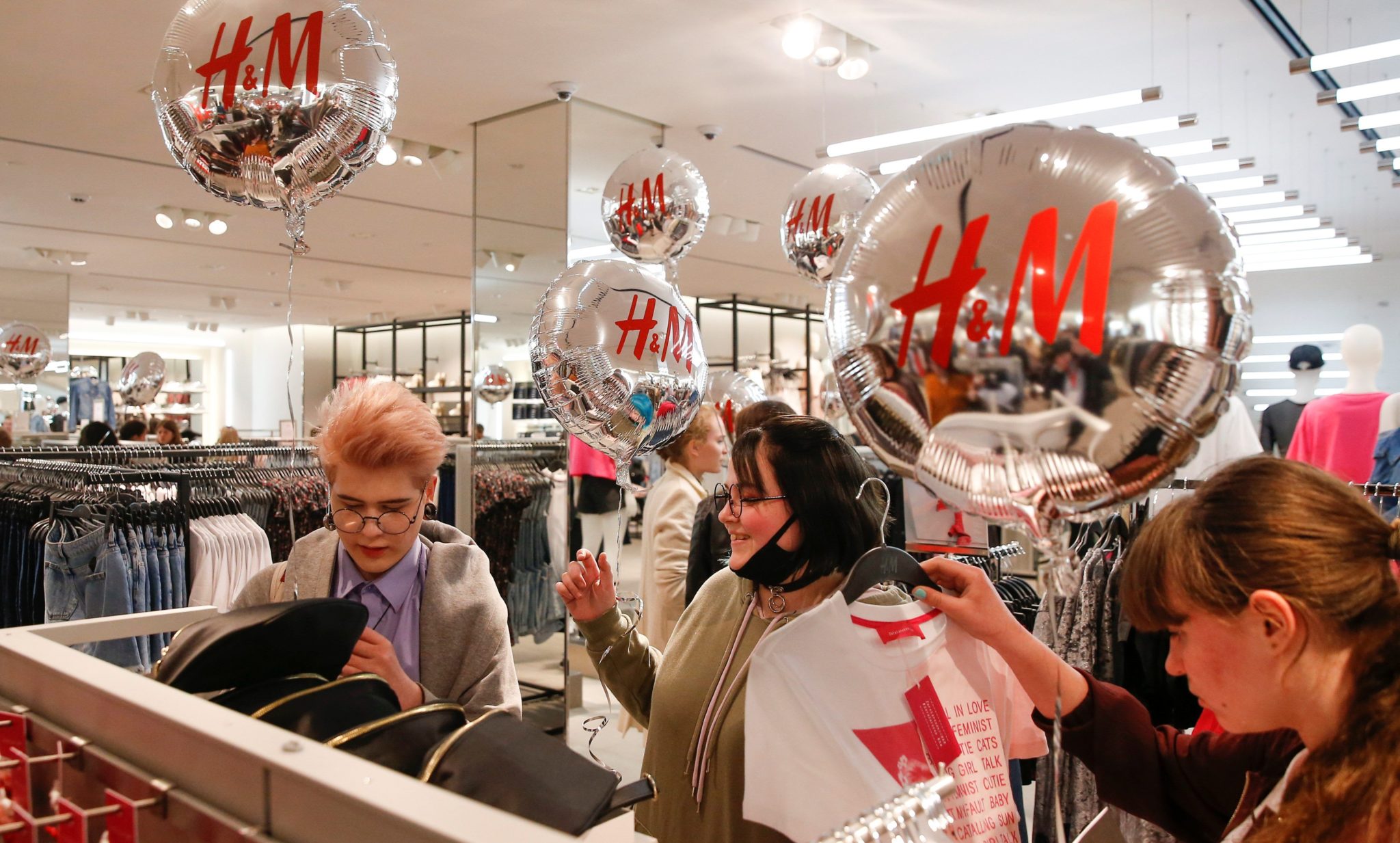
    The Persson family, one of Sweden’s wealthiest clans, has made quite the splash in the fashion world. Since 2016, they’ve poured over US$6.6 billion into H&M, claiming nearly two-thirds ownership of the brand. This move has sparked lively speculation about a possible return to private ownership, even though the family asserts otherwise, as reported by Bloomberg.

    Increasing their stake through Ramsbury Invest, the Perssons have offered minimal insight into their intentions, merely stating their unwavering belief in H&M.

    Despite their denials about taking H&M private, their steady accumulation of shares is raising eyebrows among minority shareholders. “This is something we’ve been discussing for years, and few would doubt that this is the direction things are headed,” remarked Sverre Linton, chief legal officer and spokesperson for the Swedish Shareholders’ Association.

    Linton urged the family to clarify their intentions and consider halting their share acquisitions if they truly aren’t planning a switch to private ownership.

    Thanks to reinvested dividends, the Perssons have inflated their H&M stake from 35.5% to nearly 64% over the past nine years. When considering extended family holdings, the Perssons command about 70% of the capital and roughly 85% of the voting rights, according to H&M’s own website.

    In an interview with Bloomberg last year, H&M Chairman Karl-Johan Persson, the founder’s grandson, brushed aside rumors of privatization, asserting, “There are no plans. We just buy because we believe in the company.”

    However, competition is heating up, with H&M wrestling against heavyweights like Zara and the rapid-fire fashion disruptor Shein. Last year, this iconic Swedish brand, nearly 80 years in the making, dropped its margin targets for 2024 as higher discounting, increased costs, and stiff competition eroded their operating profits, as Reuters reported.

    Analysts, such as Niklas Ekman at DNB Carnegie, speculate that the family’s ongoing share purchases might signify intentions that extend beyond mere confidence. In a recent note to clients, he indicated a buyout could materialize within two years if the family’s current pace continues, with the potential for a delisting after reaching 90% ownership.

    Ekman mused that a transition to private ownership would likely stem from “emotional rather than financial motives,” given the family’s existing dominance and historical penchant for prioritizing their vision over that of minority shareholders.

    At the heart of this drive is Stefan Persson, 77, who transformed H&M into a global fast-fashion behemoth during his 16-year CEO stint and subsequent two decades as chairman. He remains heavily engaged in the brand’s future. With a fortune of $18.6 billion, largely in H&M stock, he stands as Sweden’s wealthiest individual, according to the Bloomberg Billionaires Index.

    As H&M’s shares have plummeted by about 60% since peaking a decade ago, the company now holds a valuation of around US$23 billion, a stark contrast to its former glory.

    Questions & Answers

    What is the Persson family’s current stake in H&M?
    The Persson family’s stake has risen from 35.5% to almost 64% over the past nine years, giving them control of around 70% of the capital.

    Why are minority shareholders concerned?
    Their concerns stem from the family’s ongoing share purchases, which some believe could indicate intentions to take H&M private, despite family denials.

    How has H&M been performing recently?
    H&M has struggled against fierce competition and has dropped its margin targets for 2024 due to increased costs, higher discounting, and declining operating profits.

  • Gold Prices Climb as Global Markets Experience a Surge

    Gold Prices Climb as Global Markets Experience a Surge

    Gold prices in Vietnam experienced a modest uptick on Friday morning, buoyed by a positive trend in global bullion markets. The Saigon Jewelry Company reported a 0.25% increase in gold bar prices, bringing them to VND 118 million (approximately US$4,526.46) per tael. Meanwhile, gold ring prices rose by 0.26%, reaching VND 114.3 million per tael. For those not in the know, a tael is equivalent to 37.5 grams or 1.2 ounces.

    As we look beyond Vietnam’s borders, global gold prices rose on the same day and were poised for a weekly gain. Investors were reacting to a slew of underwhelming economic data from the U.S., which overshadowed initial optimism stemming from a recent call between U.S. President Donald Trump and his Chinese counterpart, Xi Jinping. All eyes are now on the upcoming U.S. payroll data, as reported by Reuters.

    Spot gold saw an increase of 0.5%, landing at $3,368.49 an ounce, and has enjoyed a 2.5% gain for the week. Similarly, U.S. gold futures also picked up 0.5%, reaching $3,391.40. Tim Waterer, chief market analyst at KCM Trade, noted that the initial enthusiasm for risk-taking triggered by the Trump-Xi call has begun to wane, allowing gold to edge higher. He pointed out that the excitement over Trump’s remarks masked recent weak U.S. economic indicators.

    In fact, the number of Americans filing new applications for unemployment benefits has surged to a seven-month high. Waterer hinted that the forthcoming Non-Farm Payroll (NFP) report could serve as a game-changer, especially if the data significantly deviates from expectations.

    Federal Reserve policymakers have communicated that inflation remains a bigger worry than a cooling labor market, suggesting that adjustments to monetary policy may be on hold for some time. Historically, gold is regarded as a safe-haven asset, thriving amidst economic uncertainty and low-interest-rate climates—a fact that has undoubtedly punctuated its recent upward trend.

    As the gold market continues to shimmer, it seems like investors are tuning in to the allure of safe havens. After all, you never know when you might want to turn a little anxiety into a thriving fortune!

    Questions & Answers

    What caused the rise in gold prices?
    The increase in gold prices was primarily driven by a surge in global bullion rates, as soft U.S. economic data overshadowed initial optimism stemming from a significant diplomatic call between the U.S. and China.

    How are gold prices in Vietnam comparing to global trends?
    Gold prices in Vietnam are mirroring the positive momentum seen internationally, with local gold bar and ring prices rising in tandem with their global counterparts.

    Why is gold considered a safe-haven asset?
    Gold is often viewed as a safe-haven asset due to its historical stability during times of economic uncertainty and its tendency to perform well in low-interest-rate environments.